US Business

Firefighters brace for mudslides as storm moves into California

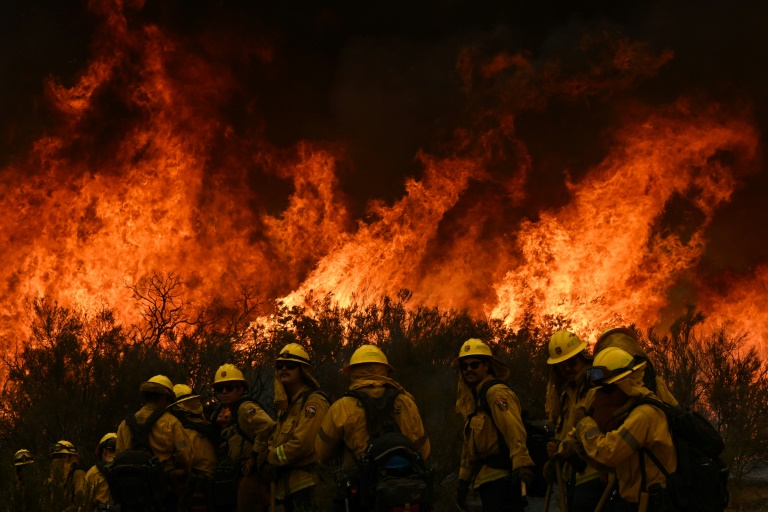
Firefighters battling a growing blaze outside Los Angeles were bracing Friday for mudslides and flooding as a storm barrels into burn areas.

The remnants of a hurricane that hit Mexico could also bring strong winds that could further fan the Fairview fire, prompting wider evacuation orders.

The 24,000-acre (9,700-hectare) fire, which erupted on Monday at the midpoint of a ferocious heat wave, is continuing to spread, fanned by “extreme downslope winds” from nearby mountains, fire officials said.

“I have not seen a fire burn like this in Riverside County in my career,” said Cal Fire division chief John Crater.

“It’s a very stubborn fire. It’s doing things that we just haven’t seen.”

An already widespread evacuation zone was expanded to cover more than 20,000 people as emergency managers tried to out-flank the fire and get ahead of the winds.

Sheriff’s deputies were going door to door to urge residents to get out of harm’s way.

At least two people have already died in the blaze, apparently trapped by fast-moving flames as they tried to flee.

Meanwhile, Hurricane Kay made landfall in Mexico on Thursday and began moving northwards.

Even as it weakened into a tropical storm, it was expected to bring heavy rain to parts of California and Arizona.

Forecasters at the National Weather Service said up to seven inches (18 centimeters) of rain could fall in the area around the fire, creating the risk of flash flooding and mudflows in areas where burned-out soil cannot absorb the sudden downpour.

“We could go from a fire suppression event into significant rain, water rescues, mudslides, debris (flows),” Jeff Veik of Cal Fire’s Riverside Unit told a community meeting.

“We have challenging days ahead.”

The tropical storm moving up from Mexico looked set gradually to bring an end to the punishing heat wave that has enveloped a large chunk of the western United States for more than a week.

But temperatures — some of which have exceeded 110 Fahrenheit (43 Celsius) in places for multiple days — remained high in central and northern California.

“Overnight lows will continue to rival records this weekend as the increased cloud cover traps warm air at the surface,” the National Weather Service said.

“Approximately 29 million Americans are currently under an Excessive Heat Warning.”

The warm and dry air was also increasing the chances of fires over a vast area, a risk that was being further elevated by winds that are whipped up as pressure systems move around.

The western United States is more than two decades into a historic drought that scientists say is being worsened by human-made climate change.

Much of the countryside is parched and overgrown, creating the conditions for hot, fast and destructive wildfires.

Climatologists predict that as the Earth continues to warm because of the unceasing burning of fossil fuels, these conditions will further worsen.

UK business mourns queen as souvenir sales boom

British business paid tribute Friday to Queen Elizabeth II, with department stores shut, flags lowered, clocks stopped and meetings postponed, but souvenir sales boomed near Buckingham Palace as well-wishers thronged.

London’s iconic Selfridges, on the capital’s Oxford Street shopping thoroughfare, and nearby Liberty on Regent Street closed out of respect for the nation’s longest serving monarch who died Thursday.

Many company headquarters lowered flags, while the Bank of England has delayed an interest rate meeting until after the funeral.

Fortnum and Mason, the Royal Family’s tea supplier, was shuttered and even stopped the clock on the front of its luxury department store in London’s Piccadilly quarter.

“We are proud to have held a warrant from Her Majesty since 1954, and to have served her and the royal household throughout her life,” F&M said on their website.

“As a sign of our deep respect, we have lowered our flag to half-mast and stopped the Piccadilly facade clock.”

Elsewhere, the remembrance business was in full swing nearer the palace, as well-wishers gathered to pay respects to the Royal Family — and hoped to catch a glimpse of King Charles III and Queen Consort Camilla.

– ‘Everyone wants a souvenir’ –

“Everyone wants a queen souvenir,” shop manager Nassir Abdel told AFP at Buckingham Gate, a stone’s throw from the main royal residence.

Abdel, who kept his shop open overnight owing to keen demand, said he had placed an order for souvenirs featuring King Charles III — but they will take a couple of weeks to arrive.

Customer Janet Saxton, a 73-year-old pensioner from Yorkshire in northern England, browsed the shop’s key rings, mugs and other trinkets bearing the likeness of the late monarch before heading to the palace gates.

On Oxford Street, souvenir salesman Nazz said business was brisk.

“In the coming days we’re going to sell” even more objects featuring the queen while awaiting Charles merchandise, he told AFP.

– ‘Object of fascination’ –

Worldwide coverage of the queen’s passing is expected to boost Britain’s economy to some extent as it looks to stave off recession caused by decades-high inflation.

Her funeral due September 19 “should have an impact on the tourism sector and the souvenir industry”, according to Mirabaud analyst John Plassard.

“The royal family, which regularly features on the front pages of newspapers, is an object of constant fascination, including well beyond the kingdom’s borders.

“Souvenir sales are expected to rise by £60 million ($69 million) as a result of the funeral,” he added.

Most shops remained open on Oxford Street, including department store John Lewis, where accountant Jo-Anne Allen was seeking out a coat.

Britain’s economy “needs to be kept going, it is no time to shut the country”, she said.

“I do not think she would have wanted more disruption to the country after her death, after Covid and the cost-of-living crisis.”

Tony Danker, head of UK business lobby group CBI, echoed the sentiment. 

“Times are hard right now — made more so by the loss of our much-loved queen — and our tribute should be to work tirelessly to build a better future for the people of this country in memory of Her Majesty.”

Stocks and oil rally as dollar drops

Stock markets and oil prices rallied Friday, with investors largely pricing in more interest rate hikes aimed at taming runaway inflation.

The dollar slid as much as one percent versus the pound and euro after recent hefty gains.

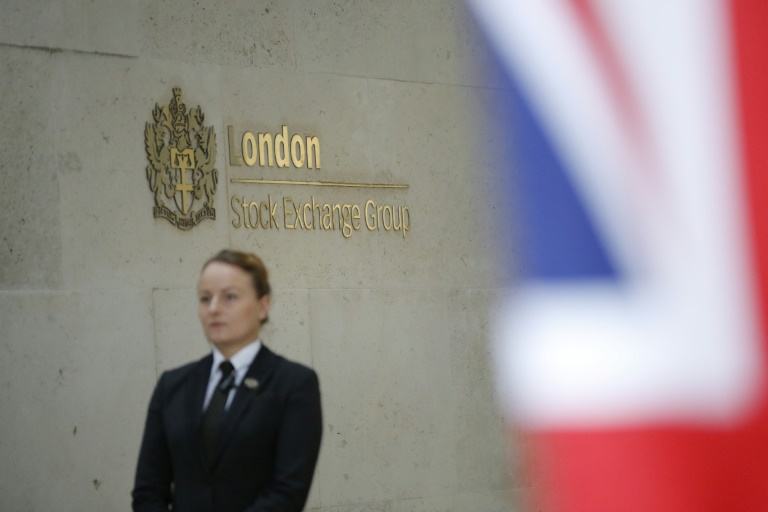
London’s stock market jumped 1.2 percent, mirroring advances in Paris and Frankfurt, while the British capital’s exchange mourned the death of Queen Elizabeth II.

“We are deeply saddened at the passing of Her Majesty Queen Elizabeth II,” the London Stock Exchange said in a message posted on its website.

The LSE is expected to shut on the day of the queen’s funeral following her death on Thursday.

“Markets are being very British about the whole thing, carrying on in a fashion that I suspect she would have approved of,” said IG analyst Chris Beauchamp.

– Dollar off highs –

The more confident mood across equity and oil markets was reflected in a cooler dollar, which had surged to multi-decade highs against major peers in recent weeks owing to the US Federal Reserve’s hawkish tilt to tighter monetary policy.

“There are hopes that the sharp rate increases from the Fed may already have dampened demand, causing US inflation to weaken,” said City Index and FOREX.com analyst Fawad Razaqzada. 

The greenback’s softness came even after Fed chief Jerome Powell reasserted the US central bank’s determination to keep hiking interest rates to fight prices, even at the cost of economic growth.

His warning that “we need to act now forthrightly, strongly” followed comments from his deputy Lael Brainard, who said policymakers would lift borrowing costs for as long as it takes to bring inflation down from 40-year highs.

Nevertheless, Wall Street has pushed higher on Thursday and Friday, putting markets on course for a weekly gain and easing some pressure after hefty losses in August caused by worries that rising rates would spark a recession.

In Asia, Hong Kong rose close to three percent heading into a long weekend.

Edward Moya, analyst at trading platform OANDA, said traders cheered as “Powell stuck to his hawkish script and affirmed the commitment to tighten policy until inflation is back towards their target.”

There was also some cheer from news that inflation in China had eased slightly in August, giving the government more room to introduce more economy-supporting measures, though the recovery remains hostage to leaders’ strict zero-Covid strategy of growth-sapping lockdowns.

A Thursday pledge by Britain’s new Prime Minister Liz Truss to freeze domestic energy bills for two years also helped temper inflation concerns and boosted sentiment about the economy.

The euro was holding well above parity with the dollar, one day after the European Central Bank announced its own 75 basis-point rise as it warned inflation was “far too high” and likely to stay above target for “an extended period”.

ECB chief Christine Lagarde suggested policy would continue to be tightened for some time.

The yen strengthened as officials began speaking up after the unit approached a 32-year low versus the greenback.

The pick-up came after Bank of Japan chief Haruhiko Kuroda met Prime Minister Fumio Kishida on Friday before saying “the rapid weakening of the yen is undesirable”. 

The talks were seen as a sign of intent to act in support of the currency if it continued to weaken. 

– Key figures at around 1530 GMT –

New York – Dow: UP 1.0 percent at 32,086.36 points

EURO STOXX 50: UP 1.2 percent at 3,570.04

London – FTSE 100: UP 1.2 percent at 7,351.07 (close)

Frankfurt – DAX: UP 1.4 percent at 13,088.21 (close)

Paris – CAC 40: UP 1.4 percent at 6,212.33 (close)

Tokyo – Nikkei 225: UP 0.5 percent at 28,214.75 (close)

Hong Kong – Hang Seng Index: UP 2.7 percent at 19,362.25 (close)

Shanghai – Composite: UP 0.8 percent at 3,262.05 (close)

Euro/dollar: UP at $1.0037 from $1.0001 on Thursday

Pound/dollar: UP at $1.1580 from $1.1500

Euro/pound: DOWN at 86.66 pence from 86.93 pence

Dollar/yen: DOWN at 142.52 yen from 144.07 yen 

Brent North Sea crude: UP 3.0 percent at $91.82 per barrel

West Texas Intermediate: UP 3.1 percent at $86.15 per barrel

burs-rl/lth

Netflix suspends 'The Crown' filming after death of Queen Elizabeth

Netflix suspended filming of its British royals drama “The Crown” on Friday following the death of Queen Elizabeth II, the company said.

The acclaimed show is currently filming its sixth season, having charted the late monarch’s life through multiple decades over the course of its previous seasons.

“As a mark of respect, filming on ‘The Crown’ was suspended today,” a Netflix spokeswoman said in a statement to AFP.

“Filming will also be suspended on the day of Her Majesty The Queen’s funeral.”

The multiple Emmy-winning series began in its first season with Queen Elizabeth’s wedding to Prince Philip in 1947.

A fifth season is due to be released in November, and is expected to chronicle 1990s events involving the monarchy including the death of Princess Diana, with Imelda Staunton stepping into the role of the Queen.

Netflix has not released details about season six, but it is expected to portray more recent events including the aftermath of Diana’s passing in a fatal car accident, and its impact on the royal family.

The announcement came as Hollywood stars and executives from Netflix and other major studios gathered in Toronto for the city’s international film festival.

Theaters turned off their illuminated marquees in the Canadian city on Thursday to mark the death of the Commonwealth monarch, while flags were lowered and the famous CN Tower also dimmed its lights.

Former “Harry Potter” star Daniel Radcliffe was among the stars to address the Queen’s death at the festival, telling reporters that her absence felt “weirdly inconceivable and surreal right now.”

“My parents and I, nobody of my age or their age has ever lived in a country without her,” he said on the red carpet for his new movie “Weird: The Al Yankovic Story.”

Later on Friday in Toronto, Stephen Frears and Steve Coogan will introduce the world premiere of their monarchy-themed “The Lost King,” about the discovery of King Richard III’s remains.

EU ministers fast-track 'unprecedented' energy plan

The EU executive pledged Friday to come up with unprecedented measures in the coming days to solve an energy price shock triggered by Russia’s war on Ukraine, including a controversial gas price cap that could further anger the Kremlin.

Moscow’s invasion has seen the price of natural gas hit record levels, throwing the EU economy into deep uncertainty, with all eyes on whether Russian President Vladimir Putin will cut off the flow entirely.

European energy ministers tasked the European Commission in Brussels to work through the weekend to draw up legal texts that will include emergency funding for consumers sinking under the weight of soaring bills.

The EU will table “unprecedented measures next week for an unprecedented situation”, energy commissioner Kadri Simson said, after meeting the ministers.

Simson said compensation for struggling households and businesses would be covered by a levy on non-gas electricity companies, such as nuclear, solar or renewable firms, that are seeing a revenue bonanza on the back of high prices for electric power.

The market price of electricity in Europe is closely linked to the gas price, meaning non-gas utilities are enjoying huge revenues despite far lower costs.

Simson said fossil fuel companies would also be levied on their mega profits from the inflated energy prices.

– Gas price cap –

Despite heated debate among European countries, the EU will also attempt to lower the price on natural gas, possibly through a price cap on Russian imports or through negotiations with other suppliers.

Czech Industry and Trade Minister Jozef Sikela, whose country holds the EU presidency, said there was a “prevailing view” among EU countries that some form of price ceiling was necessary.

But he called for patience “to fine tune where properly … the cap should be implemented”, adding that nothing was decided at this stage.

Fears are rife that targeting Russia alone would only further rile Moscow, which has threatened to cut off the supply to Europe entirely if a cap is imposed.

Last week Russia caused a major scare when it halted gas deliveries to Germany via a key pipeline for an indefinite period, a move the Kremlin blamed on Western sanctions.

One leading approach would be for EU countries to jointly negotiate with major suppliers such as Norway, Algeria or the United States in order to squeeze out better terms.

“Countries are calling for new thinking about capping the gas price … and the question arises in different technical terms,” said French energy transition minister Agnes Pannier-Runacher. 

Despite the differences, she added, “what is interesting is that there is a common desire to move forward on this subject.”

– Binding measures? –

One proposal that has broad backing is an idea to rescue electricity companies that are struggling to hedge their spending on energy markets that have been extremely volatile.

This would be done by relaxing EU rules on state rescues of companies that are suddenly facing more onerous terms for cash as fears of a crisis spread.

The commission will also design a mechanism to cut back on energy demand, with mandatory cuts imposed if voluntary limits at peak hours fail.

“Member states are us usually very reluctant to support binding measures, but this is exactly what Commission is considering,” Simson said.

The commission, which draws up laws that are then ratified by member states and the European Parliament, will likely make its proposals as early as Tuesday.

“We will have a busy weekend and first days of next week before the final product…will be really ready,” Simson said.

Russia reinforces Kharkiv to counter Ukraine push

Russia said on Friday it was dispatching reinforcements to the Kharkiv region in eastern Ukraine where Kyiv’s forces have announced robust gains as part of a broader counter-offensive.

State media broadcast footage of columns of Russian tanks, support vehicles and artillery travelling along paved roads and dirt tracks, emblazoned with the letter “Z”, the symbol of Moscow’s invasion.

US Secretary of State Antony Blinken said meanwhile that Russia’s push to send reinforcements showed Moscow was paying “huge costs” in its bid to capture and then hold Ukrainian territory.

A Moscow-installed official in the region, Vitaliy Ganchev, said in televised remarks that “fierce battles” were under way near Balakliya, a town in the Kharkiv region that Ukraine said it had recaptured on Thursday.

“We do not control Balakliya. Attempts are being made to dislodge the Ukrainian forces, but there are fierce battles and our troops are being held back on the approaches,” Ganchev said.

“Now Russian reserves have been brought there, our troops are fighting back,” he added.

His comments come after President Volodymyr Zelensky shared footage late Thursday showing camouflage-clad Ukrainian soldiers holding his country’s blue-and-yellow flag over Balakliya.

The town, which had been under Russian control for around six months and had a pre-war population of around 30,000 people, fell easily and early on to Russian forces who invaded in February.

Now, Russian officials in the Kharkiv region say they are evacuating civilians towards Russia “until the situation stabilises”. 

“We have been trying to focus all our efforts on evacuating the local population for three or four days,” Russian-appointed official Maxim Gubin said.

– Donetsk shelling –

On the Ukrainian side, the road from Kharkiv — the country’s second-largest city — heading southeast towards recaptured Balakliya was open Friday, AFP journalists said, with queues at several checkpoints and civilian and military vehicles dotting the road.

Zelensky said Thursday that in total Ukraine’s army had clawed back from Russian forces some 1,000 square kilometres (nearly 400 square miles) since the beginning of the month.

In the area around Kharkiv city, Ukrainian forces penetrated 50 kilometres (30 miles) beyond Russian lines and took back more than 20 towns and villages, military officials said earlier.

The counter-offensive has shown progress in the south of the country too, particularly in the Kherson region, as well as in Kharkiv and in the industrial Donbas province in the east.

“It’s very tough, but we are moving forward,” commander-in-chief General Valeriy Zaluzhny said Friday.

Regional governor Pavlo Kyrylenko said that Russian attacks on the frontline city of Bakhmut killed eight people and wounded 17 others.

Bakhmut, with an estimated population of 70,000, “has been without water and electricity for the fourth day,” he said, adding that “repairs are impossible due to ongoing fighting”.

In one eastern Ukraine village, children have been adapting to their new reality, donning camouflage and manning pretend checkpoints.

It is a game many children have been playing over the summer on roads throughout the war-torn Donbas and Kharkiv regions.

“We stand here and stop cars to check if the people are Russian,” said Nazar, 11, putting on a menacing look.

“We stop them and say: ‘the 93rd brigade salutes you'” he added, referring to a unit fighting in the northeast Kharkiv region near Russia.

– Russian losses –

Blinken’s comments on the cost of the war came during a visit to Brussels on Friday where he was meeting with NATO Secretary General Jens Stoltenberg.

Blinken said President Vladimir Putin’s decision to send reinforcements towards Kharkiv region underlined the scale of Russia’s military losses.

“There are a huge number of Russian forces that are in Ukraine and unfortunately, tragically, horrifically President Putin has demonstrated that he will throw a lot of people into this at huge cost to Russia,” he said.

His assessment comes just one day after a surprise visit to Kyiv during which he unveiled another $2.8 billion in military aid and hailed Ukraine’s “clear and real” frontline gains.

Defence Secretary Lloyd Austin said during a visit to Prague that Ukrainian troops were using US-supplied weapons and “successfully changing the dynamics on the battlefield”.

Key to the Ukrainian advances has been a steady stream of Western-donated weapons.

Long-range precision artillery has played a crucial role, allowing Kyiv to disrupt Russian supply lines.

“They’ve used those munitions… to begin to shape the battlespace in such a manner that they are changing the dynamics on the battlefield,” Austin said during a press conference with the Czech defence minister.

“So we see success in Kherson now, we see some success in Kharkiv, and so that’s very, very encouraging,” he added.

Tesla looking at building lithium refinery in Texas

US electric car maker Tesla is studying the possibility of building a lithium refinery in Texas and is seeking tax breaks from the state to complete the project, according to documents made public Friday. 

While the project is only in the feasibility stage, Tesla said the factory on the Gulf coast would be the first of its kind in North America, producing an element critical to the batteries used in the growing EV market. 

In an application sent to the Texas Comptroller at the end of August and made public on Friday, Tesla said the plant “will process raw ore material into a usable state for battery production.”

The finished product, battery-grade lithium hydroxide, would be shipped by road and rail to various Tesla battery plants throughout the country. 

Construction could begin by the end of the year with production staring by the end of 2024. 

The company led by billionaire Elon Musk stressed that “Tesla is still evaluating the feasibility of this project” which is in a “very preliminary” phase, so no contracts have been signed and no permits have been issued for construction.

The decision to go ahead “will be based on a number of commercial and financial considerations, including the ability to obtain relief regarding local property taxes,” the document said.

The cost of the project has not been quantified.

Tesla also is studying the possibility of building a similar site in the state of Louisiana as an alternative. 

Tesla’s proposed project comes amid soaring lithium prices due to strong demand for the component, essential for making electric batteries. 

Musk complained about the rising costs in a tweet in April, and hinted at the possibility of moving into production. 

“Price of lithium has gone to insane levels! Tesla might actually have to get into the mining & refining directly at scale, unless costs improve,” he said on Twitter. 

China, Australia, Chile and Argentina, where the world’s largest lithium resources are located, dominate the market for the production and exploitation of this highly coveted mineral.

Tesla looking at building lithium refinery in Texas

US electric car maker Tesla is studying the possibility of building a lithium refinery in Texas and is seeking tax breaks from the state to complete the project, according to documents made public Friday. 

While the project is only in the feasibility stage, Tesla said the factory on the Gulf coast would be the first of its kind in North America, producing an element critical to the batteries used in the growing EV market. 

In an application sent to the Texas Comptroller at the end of August and made public on Friday, Tesla said the plant “will process raw ore material into a usable state for battery production.”

The finished product, battery-grade lithium hydroxide, would be shipped by road and rail to various Tesla battery plants throughout the country. 

Construction could begin by the end of the year with production staring by the end of 2024. 

The company led by billionaire Elon Musk stressed that “Tesla is still evaluating the feasibility of this project” which is in a “very preliminary” phase, so no contracts have been signed and no permits have been issued for construction.

The decision to go ahead “will be based on a number of commercial and financial considerations, including the ability to obtain relief regarding local property taxes,” the document said.

The cost of the project has not been quantified.

Tesla also is studying the possibility of building a similar site in the state of Louisiana as an alternative. 

Tesla’s proposed project comes amid soaring lithium prices due to strong demand for the component, essential for making electric batteries. 

Musk complained about the rising costs in a tweet in April, and hinted at the possibility of moving into production. 

“Price of lithium has gone to insane levels! Tesla might actually have to get into the mining & refining directly at scale, unless costs improve,” he said on Twitter. 

China, Australia, Chile and Argentina, where the world’s largest lithium resources are located, dominate the market for the production and exploitation of this highly coveted mineral.

UK rail, postal staff halt strikes after queen's death

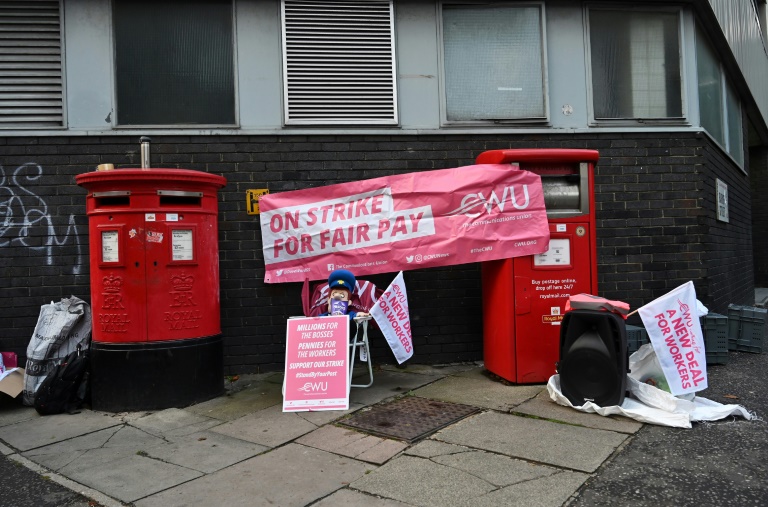
British railway and postal workers, at the forefront of sector-wide strikes over a cost-of-living crisis, have halted upcoming walkouts following the death of Queen Elizabeth II.

The Communication Workers Union had planned to continue a 48-hour stoppage Friday but it was called off “out of respect for” the queen, CWU general secretary Dave Ward said in a statement following the queen’s passing in Scotland on Thursday.

The Trades Union Congress said it had postponed its four-day annual conference due to have begun Sunday.

“The UK’s trade union movement sends our condolences to the Royal Family on the death of the Queen, and recognises her many years of dedicated service to the country,” the TUC added in a statement.

The RMT rail union said it was suspending walkouts planned for next week and the TSSA transport union has called off its September strikes.

Train drivers’ union Aslef has also suspended a planned stoppage.

“RMT joins the whole nation in paying its respects to Queen Elizabeth,” its general secretary Mick Lynch said in a statement.

“The planned railway strike action on 15 and 17 September is suspended. 

“We express our deepest condolences to her family, friends and the country,” Lynch added.

Network Rail, which manages Britain’s railways, said it welcomed “the unions’ decision to call off” strikes.

In Scotland, refuse collectors had already decided a week ago to suspend walkouts as they mull an improved pay offer.

– Summer of strikes –

Tens of thousands of workers went on strike across Britain over the summer as decades-high inflation erodes earnings.

The walkouts have been spearheaded by the rail sector, which has carried out its biggest industrial action in 30 years.

Some proposed non-rail strikes were halted after unions and companies agreed pay deals at the eleventh hour.

But walkouts have still gone ahead by Amazon warehouse staff and criminal lawyers in recent weeks.

Analysts are forecasting sector-wide stoppages to continue this year as inflation keeps on rising.

New Prime Minister and Conservative party leader Liz Truss is seen as wanting to take on the unions, which are traditionally allied to the main opposition Labour party.

In a bid to ease the cost-of-living crisis, Truss this week announced a huge financial package that will cap domestic energy bills.

This will eventually help to trim inflation but not before many households and business first see bills increase in October.

Teachers and health workers have meanwhile hinted at possible walkouts should they not receive new pay deals deemed acceptable.

Voice-operated smartphones target Africa's illiterate

Voice-operated smartphones are aiming at a vast yet widely overlooked market in sub-Saharan Africa — the tens of millions of people who face huge challenges in life because they cannot read or write.

In Ivory Coast, a so-called “Superphone” using a vocal assistant that responds to commands in a local language is being pitched to the large segment of the population — as many as 40 percent — who are illiterate.

Developed and assembled locally, the phone is designed to make everyday tasks more accessible, from understanding a document and checking a bank balance to communicating with government agencies.

“I’ve just bought this phone for my parents back home in the village, who don’t know how to read or write,” said Floride Jogbe, a young woman who was impressed by adverts on social media.

She believed the 60,000 CFA francs ($92) she forked out was money well spent.

The smartphone uses an operating system called “Kone” that is unique to the Cerco company, and covers 17 languages spoken in Ivory Coast, including Baoule, Bete, and Dioula, as well as 50 other African languages. 

Cerco hopes to expand this to 1,000 languages, reaching half of the continent’s population, thanks to help from a network of 3,000 volunteers.

The goal is to address the “frustration” illiterate people feel with technology that requires them to be able to read or write or spell effectively, said Cerco president Alain Capo-Chichi, a Benin national.

“Various institutions set down the priority of making people literate before making technology available to them,” he told AFP. 

“Our way skips reading and writing and goes straight to integrating people into economic and social life.”

Of the 750 million adults around the world who cannot read or write, 27 percent live south of the Sahara, according to UN figures for 2016, the latest year for which data is available.

The continent also hosts nearly 2,000 languages, some of which are spoken by tens of millions of people and are used for inter-ethnic communication, while others are dialects with a small geographical spread.

Lack of numbers or  economic clout often means these languages are overlooked by developers who have already devised vocal assistants for languages in bigger markets.

– Twi and Kiswahili –

Other companies investing in the voice-operation field in Africa include Mobobi, which has created a Twi language voice assistant in Ghana called Abena AI, while Mozilla is working on an assistant in Kiswahili, which has an estimated 100 million speakers in East Africa.

Telecommunications expert Jean-Marie Akepo questioned whether voice operation needed the platform of a dedicated mobile phone.

Existing technology “manages to satisfy people”, he said.

“With the voice message services offered by WhatsApp, for example, a large part of the problem has already been solved.”

Instead of a new phone, he recommended “software with local languages that could be installed on any smartphone”.

The Ivorian phone is being produced at the ICT and Biotechnology Village in Grand-Bassam, a free-trade zone located near the Ivorian capital.

It  came about through close collaboration with the government. The company pays no taxes or customs duties and the assembly plant has benefited from a subsidy of more than two billion CFA francs.

In exchange, Cerco is to pay 3.5 percent of its income to the state and train around 1,200 young people each year.

The company says it has received 200,000 orders since launch on July 21.

Thanks to a partnership with French telecommunications giant Orange, the phone will be distributed in 200 shops across Ivory Coast.

Close Bitnami banner
Bitnami