US Business

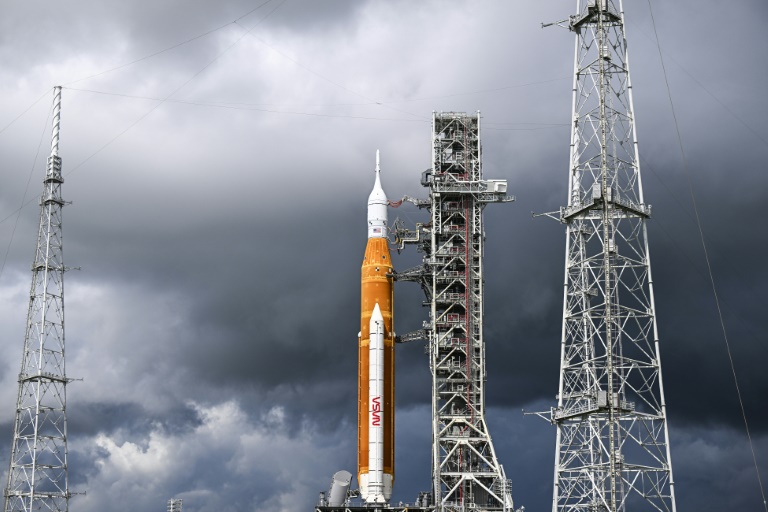
NASA eyes two more dates in September for possible Moon launch

NASA is looking at September 23 and September 27 as possible dates for its next attempt at launching its Artemis 1 mission to the Moon, senior official Jim Free told reporters Thursday.

Two previous attempts were scrapped after the giant Space Launch System rocket experienced technical glitches including a fuel leak.

The launch window for the 23rd would open at 6:47am (1047 GMT), while the 27th would open at 11:37am (1537 GMT), added Free, associate administrator for the agency’s exploration systems development directorate.

The dates were chosen to avoid a conflict with the DART mission, in which a probe will strike an asteroid on September 26 to test its ability to divert the object. 

Both missions require use of an international array of antennas called the Deep Space Network.

The launch dates still depend, however, on NASA receiving a special waiver to avoid retesting batteries on an emergency flight system that is used to destroy the rocket if it strays from its designated range to a populated area.

If it does not receive the waiver, the rocket will have to be wheeled back to its assembly building, pushing the timeline back several weeks.

Mike Bolger, exploration ground systems manager, added that teams were working to replace seals to fix the hydrogen leak issue — work that could be completed by the end of Thursday, which would pave the way for a tanking test on September 17.

The Artemis 1 space mission hopes to test the SLS as well as the unmanned Orion capsule that sits atop, in preparation for future Moon-bound journeys with humans aboard.

Once launched, it will take several days for the spacecraft to reach the Moon, flying around 60 miles (100 kilometers) at its closest approach.

The capsule will fire its engines to get to a distant retrograde orbit (DRO) of 40,000 miles beyond the Moon, a record for a spacecraft rated to carry humans.

The trip is expected to last several weeks, and one of its main objectives is to test the capsule’s heat shield, which at 16 feet (5 meters) in diameter is the largest ever built.

Artemis is named after the twin sister of the Greek god Apollo, after whom the first Moon missions were named.

The next mission, Artemis 2, will take astronauts to the Moon without landing on its surface, while the third — set for the mid-2020s — would see the first woman and person of color on lunar soil.

NASA wants to build a lunar space station called Gateway and keep a sustained presence on the Moon to gain insight into how to survive very long space missions, ahead of a mission to Mars in the 2030s.
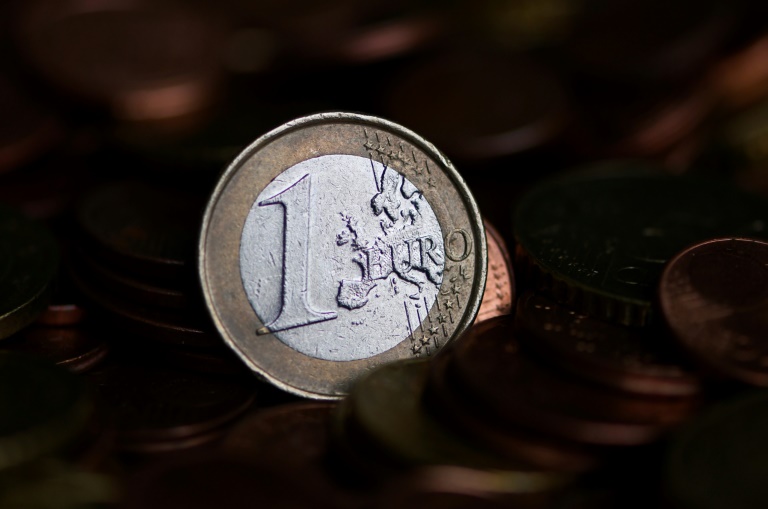

Euro slides as Fed chief steals ECB's rate hike thunder

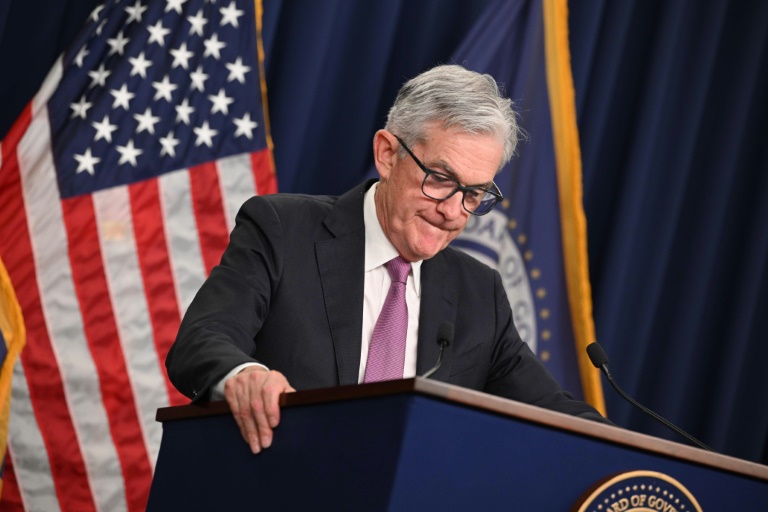
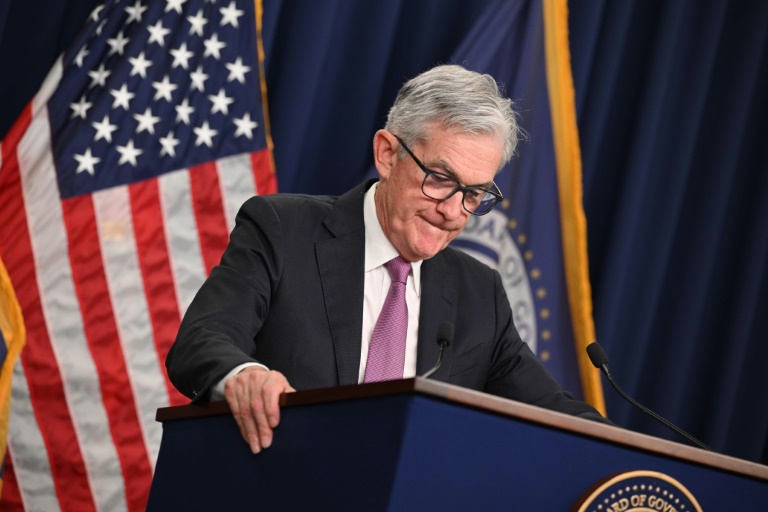
The euro slid on Thursday despite a record interest rate hike by the European Central Bank as US Fed chief Jerome Powell made hawkish comments.

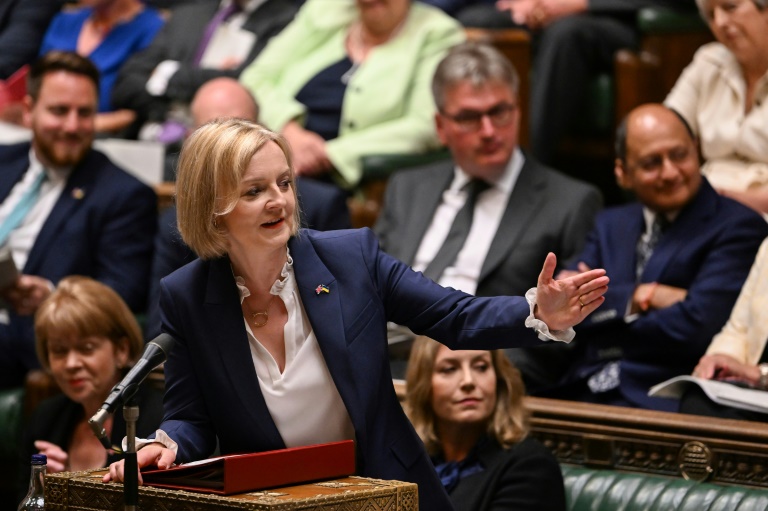
Meanwhile, the pound remained close to a 37-year low against the dollar that was struck Wednesday, as new British Prime Minister Liz Truss announced that she will freeze domestic fuel bills for two years to help ease the burden of a UK cost-of-living crisis.

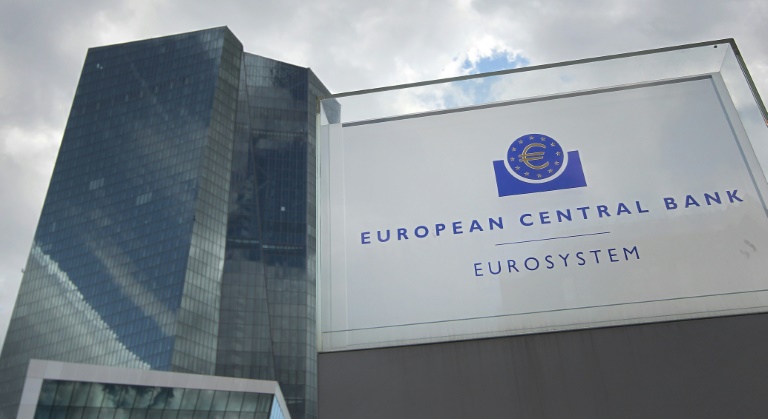
The ECB warned Thursday that inflation was “far too high” and likely to stay above target for “an extended period” as it announced its record 0.75 percentage point hike.

ECB chief Christine Lagarde made clear interest rates were far from where they need be to bring inflation down.

“We actually took the decision today that we would continue to raise interest rates… because we believe that we are far away from the rate at which we hope we’ll see inflation return to the two percent medium term target,” she said.

Lagarde also warned the eurozone risks recession if Russia completely cuts off gas, which it has nearly done.

But comments by Fed chief Jerome Powell were seen as even more hawkish than those by Lagarde.

“We need to act now forthrightly, strongly as we have been doing and we need to keep at it until the job is done to avoid … the kind of very high social costs” of the surge in inflation in the 1970s and 1980s, Powell told a US think tank.

– Greenback ‘more attractive’ –

Chris Beauchamp, chief market analyst at online trading platform IG, said “Investors clearly believe that the Fed is more committed to higher rates than the ECB, while the stronger economic performance of the US means the greenback and not the euro seems the more attractive prospect.”

The euro, which had broken back above parity with the dollar, slid down as far as $0.9934 before recovering some ground.

The Fed has made it clear it plans to continue to aggressively raise interest rates to rein in surging inflation, even at the cost of causing some economic pain.

The dollar has moved ever higher against its major peers in recent weeks as investors flood into the currency hoping for better returns as the Fed raises rates and as they seek a haven in the face of economic turmoil.

The euro on Wednesday touched a fresh 20-year dollar low.

The US unit is closing in on a 32-year peak against the yen owing to the Bank of Japan’s refusal to raise interest rates.

Observers expect the dollar to keep attracting strong interest as long as the Federal Reserve keeps ramping up US interest rates by sizeable amounts.

The Fed holds its next policy meeting on September 21, with a third successive 75-basis-point lift forecast.

In equities trading, eurozone stocks closed the day mostly higher, and Wall Street was also up in morning trading.

“It has been slow going, but stocks look like they are in a mood to continue yesterday’s rebound,” said IG’s Beauchamp.

“The selling of late August and early September seems to have been exhausted for now, although the broader outlook is still less than encouraging,” he added.

– Key figures at around 1530 GMT –

New York – Dow: UP 0.5 percent at 31,736.76 points

EURO STOXX 50: UP 0.3 percent at 3,512.38

London – FTSE 100: UP 0.3 percent at 7,262.06 (close) 

Frankfurt – DAX: DOWN less than 0.1 percent at 12,904.32 (close)

Paris – CAC 40: UP 0.3 percent at 6,125.90 (close)

Tokyo – Nikkei 225: UP 2.3 percent at 28,065.28 (close)

Hong Kong – Hang Seng Index: DOWN 1.0 percent at 18,854.62 (close)

Shanghai – Composite: DOWN 0.3 percent at 3,235.59 (close)

Euro/dollar: DOWN at $0.9960 from $1.0012 on Wednesday

Pound/dollar: DOWN at $1.1492 from $1.1535

Euro/pound: DOWN at 86.66 pence from 86.74 pence

Dollar/yen: UP at 143.94 yen from 143.79 yen 

West Texas Intermediate: UP 1.7 percent at $83.29 per barrel

Brent North Sea crude: UP 1.0 percent at $88.87 per barrel

burs-rl/cdw

NASA may attempt Moon launch on September 23: official

NASA is looking at September 23 and September 27 as possible dates for its next attempt at launching its Artemis 1 mission to the Moon, senior official Jim Free told reporters Thursday.

Two previous attempts were scrapped after the giant Space Launch System rocket experienced technical glitches including a fuel leak.

“The 23rd is a 6:47am window open for 80 minutes, and the 27th is an 11:37am window with a 70-minute duration,” said Free, associate administrator for the agency’s exploration systems development directorate.

The dates were chosen to avoid a conflict with the DART (Double Asteroid Redirection Test), in which a probe is set to strike an asteroid on September 26.

The launch dates depend, however, on NASA receiving a special waiver to avoid having to retest batteries on an emergency flight system that is used to destroy the rocket if it strays from its designated range to a populated area.

If it does not receive the waiver, the rocket will have to be wheeled back to its assembly building, pushing the timeline back several weeks.

Mike Bolger, exploration ground systems manager, added that teams were working to replace seals to fix the hydrogen leak issue — work that could be completed by the end of Thursday, which would pave the way for a tanking test on September 17.

The Artemis 1 space mission hopes to test the SLS as well as the unmanned Orion capsule that sits atop, in preparation for future Moon-bound journeys with humans aboard.

Ukraine claims battlefield breakthroughs as Blinken ramps up aid

Ukraine on Thursday claimed a military breakthrough in its counter-offensive against Russian invaders as US Secretary of State Antony Blinken, on a surprise visit to Kyiv, unveiled another $2.8 billion in military aid.

Ukraine said its forces made gains both in the north, the south and the east, prying back land seized by Russia which had hoped for a swift victory when it attacked nearly seven months ago.

In the area around Kharkiv, Ukraine’s second city, forces penetrated 50 kilometres (30 miles) beyond Russian lines and “liberated” more than 20 towns and villages, senior military official Oleksiy Gromov said.

Hoping to build the momentum, Blinken secretly travelled to Kyiv for his second trip during the war, passing through dark hallways with sandbags in the sealed presidential compound to discuss the military aid with President Volodymyr Zelensky.

Presenting a state award to Blinken, the Ukrainian leader voiced gratitude for the “enormous support” from the United States, saying it was “a guarantee that we can return our territories.”

Blinken vowed that the United States would keep up assistance “until the aggression ceases and Ukraine is fully sovereign”.

“You have our word — and our track record,” said Blinken, sporting a tieless suit across from the unshaven Zelensky in his now signature military green T-shirt.

“What we see is costs on Russia that are already extraordinary and they are going to get heavier and heavier,” Blinken said.

The latest package includes $675 million to be shipped shortly in arms, ammunition and supplies and another $1 billion in longer-term loans and grants for Ukraine to buy more US equipment.

The State Department also approved $1.2 billion for 18 other nations seen as facing threats from Russia including Baltic states, Moldova and Georgia, which both have breakaway regions backed by Moscow.

A day after the United Nations said there were “credible reports” of Russia forcing Ukrainian children into its territory, Blinken started his trip by visiting toddlers injured in the war at a hospital. 

In a room with toy trucks and alien figurines, he arrived with a basket of stuffed animals, announcing, “I brought some friends.”

“The spirit of your children sends a very strong message around the world,” he said. 

Blinken also knelt down to pat Patron, a fabled Jack Russell terrier that has helped Ukraine’s military find more than 200 mines laid by Russian forces.

– Allies pledge support –

In a coordinated display of resolve, Biden was to speak by telephone with leaders of allies on Ukraine and Defence Secretary Lloyd Austin met his counterparts at Ramstein air base in Germany.

“Now, we’re seeing the demonstrable success of our common efforts on the battlefield,” Austin said.

Amid Ukraine’s reports of gains, Russia also trumpeted battlefield successes, saying it had hit five command posts and downed 13 drones on Thursday.

Addressing a forum in Moscow, Prime Minister Mikhail Mishustin said Russia had withstood Western sanctions over the war better than expected, estimating that GDP had fallen just over one percent year-on-year in the first six months of 2022.

Russia’s central bank expects a contraction of four to six percent for the year, while Blinken cited an estimate of an even steeper drop.

“Unprecedented sanctions were imposed on our country. But their initiators did not achieve their main objective. They failed to undermine our financial stability,” Mishustin said. 

But as the war grinds on, both sides have increasingly been facing a crunch on military supplies with US officials saying Russia, long a major defence exporter, was buying drones from Iran and large quantities of rocket and artillery shells from North Korea.

Speaking at Ramstein, top US General Mark Milley said there was “significant consumption of munitions” by Ukraine that will need to be addressed by allies.

In new pledges to Ukraine, Norway offered 160 Hellfire missiles and night-vision equipment, Germany offered winter supplies and The Netherlands joined Germany with demining training.

– US aid tops $15 bn –

The latest package by the United States — Ukraine’s largest supplier — includes 105mm howitzers, precision-guided GMLRS rockets and artillery ammunition. 

It brings  US military aid to Ukraine since the invasion to $15.2 billion.

Among the most efficient weapons sent by Washington are the HIMAR multiple rocket launch systems, which are paired with GMLRS rockets that can reach targets up to 80 kilometres (50 miles) away.

But Kyiv is seeking ATACMS — precision-guided, medium range tactical missiles capable of striking 300 kilometres.

The United States has so far refused as it fears the missiles could land in Russian territory, sparking an even bigger conflict.

“Right now, the policy of the United States government is that we’re not sending ATACMS,” Milley said. 

“The range of the HIMARS is sufficient to meet the needs of the Ukrainians as they are currently fighting.” 

burs-sct/brw/bp

Fed Must act 'strongly' to avoid repeat of 1980s inflation spike: Powell

The Federal Reserve must continue to act “strongly” to cool demand and contain price pressures to avoid a repeat of the inflation surge the US economy suffered in the 1970s and 1980s, Fed Chair Jerome Powell said Thursday.

With soaring prices in recent months pushing US annual inflation to the fastest in four decades, Powell’s Fed has raised the benchmark lending rate four times this year, with a third massive, three-quarter point hike possible later this month.

His predecessor from that era, Paul Volcker, had to take extreme measures because high inflation had become entrenched, resurging and surpassing the peak of the mid-1970s after repeated failed efforts to tame the price increases.

“We need to act now forthrightly, strongly as we have been doing and we need to keep at it until the job is done to avoid … the kind of very high social costs” of the Volcker era, Powell said.

The comments, which reaffirm his steadfast commitment to bring inflation back down, come as the European Central Bank announced its first ever increase of 75 basis points — underscoring the pressure on policymakers worldwide to combat the global threat of rising prices.

American families have been struggling with the prices sparked initially by high demand but exacerbated by supply chain woes, Covid lockdowns in China and surging gasoline prices due to Russia’s war in Ukraine.

Powell said inflation would not have spiked the way it did without the pandemic effects, which included a shortage of labor. The inflation rate this year hit 9.1 percent in June, before slowing to 8.5 percent in July. Data for August are due to be released next week.

The US jobs market remains tight, with nearly two openings for everyone looking for work, and Powell noted that even with new data last week showing more people joined the labor force last month, it remains well below the pre-pandemic level.

With many people remaining on the sidelines, that has driven up worker pay, which policymakers fear could fuel a dangerous wage-price spiral.

Though the Fed is hoping the world’s largest economy will continue growing, Powell has acknowledged that the Fed’s aggressive inflation-fighting campaign could cause some pain.

But he has stressed repeatedly that acting now will prevent more damaging consequences down the road.

“The clock is ticking,” Powell warned.

US annual inflation spiked to a painful 12.3 percent in December 1974 before trending down, but then resurged. It peaked at 14.8 percent in early 1980 and didn’t fall into single digits until late the following year amid Volcker’s campaign. 

Powell said “history cautions strongly against prematurely loosening policy,” once again dousing hopes the central bank might cut interest rates next year as the economy slows.

Fed Must act 'strongly' to avoid repeat of 1980s inflation spike: Powell

The Federal Reserve must continue to act “strongly” to cool demand and contain price pressures to avoid a repeat of the inflation surge the US economy suffered in the 1970s and 1980s, Fed Chair Jerome Powell said Thursday.

With soaring prices in recent months pushing US annual inflation to the fastest in four decades, Powell’s Fed has raised the benchmark lending rate four times this year, with a third massive, three-quarter point hike possible later this month.

His predecessor from that era, Paul Volcker, had to take extreme measures because high inflation had become entrenched, resurging and surpassing the peak of the mid-1970s after repeated failed efforts to tame the price increases.

“We need to act now forthrightly, strongly as we have been doing and we need to keep at it until the job is done to avoid … the kind of very high social costs” of the Volcker era, Powell said.

The comments, which reaffirm his steadfast commitment to bring inflation back down, come as the European Central Bank announced its first ever increase of 75 basis points — underscoring the pressure on policymakers worldwide to combat the global threat of rising prices.

American families have been struggling with the prices sparked initially by high demand but exacerbated by supply chain woes, Covid lockdowns in China and surging gasoline prices due to Russia’s war in Ukraine.

Powell said inflation would not have spiked the way it did without the pandemic effects, which included a shortage of labor. The inflation rate this year hit 9.1 percent in June, before slowing to 8.5 percent in July. Data for August are due to be released next week.

The US jobs market remains tight, with nearly two openings for everyone looking for work, and Powell noted that even with new data last week showing more people joined the labor force last month, it remains well below the pre-pandemic level.

With many people remaining on the sidelines, that has driven up worker pay, which policymakers fear could fuel a dangerous wage-price spiral.

Though the Fed is hoping the world’s largest economy will continue growing, Powell has acknowledged that the Fed’s aggressive inflation-fighting campaign could cause some pain.

But he has stressed repeatedly that acting now will prevent more damaging consequences down the road.

“The clock is ticking,” Powell warned.

US annual inflation spiked to a painful 12.3 percent in December 1974 before trending down, but then resurged. It peaked at 14.8 percent in early 1980 and didn’t fall into single digits until late the following year amid Volcker’s campaign. 

Powell said “history cautions strongly against prematurely loosening policy,” once again dousing hopes the central bank might cut interest rates next year as the economy slows.

UK's Truss freezes energy bills in first big policy shift

New British Prime Minister Liz Truss on Thursday said domestic fuel bills would be frozen for two years, marking her first week in office with a costly plan to tackle a worsening cost-of-living crisis.

Two days after taking over, Truss unveiled emergency measures that include authorising more oil and gas drilling in the North Sea and lifting a ban on fracking, a controversial method to dig for fossil fuels.

The government said it would also review progress towards its legally enshrined target to achieve net-zero carbon emissions by 2050, to ensure no “undue burdens on businesses or consumers”, but stressed it remained committed to the goal.

Households are facing an 80-percent hike in gas and electricity bills next month due to the rise in the cost of wholesale energy made worse by a squeeze on supplies after Russia’s invasion of Ukraine.

Businesses whose bills are not capped have warned they could go to the wall because of even bigger rises, while inflation has reached 40-year highs of 10.1 percent and is predicted to go worsen.

“Extraordinary challenges call for extraordinary measures, ensuring that the United Kingdom is never in this situation again,” Truss said.

The government expects the state-backed energy scheme to cost tens of billions of pounds (dollars), but Truss and new finance minister Kwasi Kwarteng insisted it would have “substantial benefits” to the economy.

It would curb inflation by four to five percentage points, they said in a statement.

Kwarteng said the freeze means worried households and businesses “can now breathe a massive sigh of relief”.

– No windfall tax –

Tackling the cost-of-living crisis, which has led to widespread strike action over pay, threatens to define Truss’s premiership, who succeeded Boris Johnson on Tuesday.

Truss said energy bills for an average British household would be capped at £2,500 ($2,872) a year — £1,000 less than October’s planned level.

Non-domestic energy users, including businesses, charities, and public sector organisations such as schools and hospitals, will see a six-month freeze.

Analysts predict the plan, which will likely be in place at the next general election expected in 2024, could top well over £100 billion, surpassing Britain’s Covid-era furlough jobs scheme.

Truss confirmed that the government will pay energy suppliers the difference in price but did not put an exact figure on how much it could cost the public purse, pending a mini-budget this month by Kwarteng.

Truss, a former Shell employee, has rejected opposition calls to impose windfall taxes on energy giants whose profits have surged on the back of higher wholesale prices. 

In her campaign to succeed Johnson, she had also ruled out direct handouts to consumers, but the new scheme reverses course on that.

Paying for the freeze by increased borrowing has stoked concern on the financial markets about the prospect of worsening public finances already damaged by emergency Covid spending.

On bond markets, the UK’s 10-year borrowing rate topped three percent on Tuesday for the first time since 2014, and the pound has slumped to its lowest dollar level since 1985.

– Fracking –

The end to the fracking moratorium comes despite Truss’s Conservative party having pledged in 2019 to keep it in place, after onshore drilling for shale gas had caused seismic tremors in northern England.

She said that lifting the ban “could get gas flowing in as soon as six months”.

But Kwarteng himself wrote in March that it could take up to a decade to get enough gas from fracking. At the same time, there is concern about the environmental damage of restarting the process.

Like Johnson, Truss committed to diversifying Britain’s energy sources to renewables and nuclear.

But to the anger of environmentalists, the new support package offered nothing about insulating UK buildings better, to reduce Europe’s highest rates of energy leakage.

“Millions of people will breathe a sigh of relief at being pulled back from the brink of fuel poverty, but it’s the fossil fuel giants that will be uncorking the bubbly,” Rosie Rogers of Greenpeace UK said.

And by capping prices without curbing usage, observers said the plan could trigger power blackouts this winter.

“Liz Truss needs to start levelling with the British public,” a senior Conservative backbencher told AFP. 

“We’re ducking the hard choices, and we’re staring at a 1970s energy crisis at this rate.”

ECB unleashes historic rate hike to battle record inflation

The European Central Bank announced the largest rate hike in its history Thursday and said there were more to come as it scrambles to pull inflation down from record heights.

Policymakers lifted the ECB’s key rates by 75 basis points, a leap matched only by a technical move made in 1999 shortly after the central bank’s founding.

Eurozone inflation hit a record 9.1 percent in August, as steep increases in the price of energy in the wake of the Russian invasion of Ukraine heaped pressure on households and businesses.

Consumer prices were likely to continue to rise quickly “for an extended period”, the ECB said in a statement, with its latest forecasts expecting inflation to average 8.1 percent in 2022.

The “major step” quickened the ECB’s move away from a “highly accommodative level of policy rates” to one that would bring inflation back to its two-percent target, it said.

The Frankfurt-based institution was on a “journey” to raise interest rates and tame inflation, ECB President Christine Lagarde said at a press conference.

The ECB already exceeded expectations at its July meeting with a 50-basis-point increase in interest rates, its first hike in more than a decade.

Thursday’s drastic increase was not the end of the ECB’s work, however, with the central bank saying it “expects to raise interest rates further” at its next meetings.

The ECB had “given up on inflation targeting and forecasting and has joined the group of central banks focusing on bringing down actual inflation”, said Carsten Brzeski, head of macro at the ING bank

– ‘Serious’ –

Ahead of the meeting, a growing chorus of voices called for the central bank to show greater “determination” in the face of inflation.

Thursday’s gathering marked the beginning of a new “meeting-by-meeting” approach for the ECB. 

In July, policymakers scrapped so-called forward guidance, which had limited the ECB’s room for manoeuvre, giving them a free hand for more aggressive hikes.

The ECB is playing catch-up with central banks in the United States and Britain, which started raising rates harder and faster in response to inflation.

The 75-basis-point increase matches the largest step taken by the Federal Reserve in its current hiking cycle.

The bumper hike was not “the norm”, Lagarde said, but the governing council had been “unanimous” in their support for the move.

The ECB was still “so far away” from interest rates that would bring inflation back to its two-percent target, she said, with more hikes to come.

“We want all economic actors to understand that the ECB is serious about returning inflation back to two percent,” Lagarde said.

– Growth struggles –

In an updated set of economic forecasts, the ECB said it expected inflation to fall back to 5.5 percent in 2023 and 2.3 percent in 2024.

The central bank also slashed its forecast for economic growth in 2023 to 0.9 percent, from its previous prediction of 2.1 percent.

Recent gloomy economic data meant the eurozone was “expected to stagnate later in the year and in the first quarter of 2023”, the ECB said.

“Very high energy prices are reducing the purchasing power of people’s incomes and, although supply bottlenecks are easing, they are still constraining economic activity,” said the bank. 

The war in Ukraine was also still weighing on the confidence of businesses and consumers, it added.

The eurozone risked slipping into a recession in 2023 in a “downside” scenario that included the full cut off of Russian gas supplies, Lagarde said.

Repeated upwards revisions to the inflation forecast have drawn criticism of the ECB’s economic models.

“I take the blame,” Lagarde said of the prediction errors, but stressed that “all the international institutions” had been caught out by the surge.

US begins clinical trial to test monkeypox vaccine

US health authorities announced Thursday they would carry out a clinical trial to test different dosing strategies of the Jynneos monkeypox vaccine, amid uncertainty over its effectiveness.

The trial will enroll 200 adults aged 18-50 across the country, and is sponsored by the National Institute of Allergy and Infectious Diseases.

The Jynneos vaccine, manufactured by Denmark-based Bavarian Nordic, has been approved by the United States for the prevention of smallpox and monkeypox in people aged 18 and older. 

But while the highest-risk group, men who have sex with men, are encouraged to get the vaccine, there is no clear picture of how well it works in real world settings.

The new trial isn’t designed to produce an efficacy estimate, but rather measure the immune response of different dosing levels and administration methods.

“NIAID’s trial of JYNNEOS will provide important information on the immunogenicity, safety, and tolerability of alternative dosing approaches that would expand the current supply of vaccine,” said NIAID director Anthony Fauci in a statement.

Among the participants, one group will be injected subcutaneously — that is, under the skin. The vaccine is based on attenuated virus that is modified so it can’t replicate, and is given in two doses 28 days apart.

A second group will receive their shots intradermally, meaning between the layers of the skin. This strategy is meant to expand the availability of vaccines because it uses one-fifth of the standard dose.

A third group will also receive their shots intradermally, but at half the dosing level of the second group.

Scientists will test the peak immune responses and compare the side effects across the groups.

President Joe Biden’s administration has bet heavily on the Jynneos vaccine to stem the spread of monkeypox, which has affected more than 20,000 people in the United States since May.

But the question of how well the shot prevents infection versus minimizing disease would require further study to answer.

The current global outbreak is primarily affecting gay and bisexual men.

Historically, the virus has been spread via direct contact with lesions, body fluids and respiratory droplets, and sometimes through indirect contamination via surfaces such as shared bedding. 

But in this outbreak, there is preliminary evidence that sexual transmission may also play a role.

The virus causes painful skin lesions and flu-like symptoms. 

Most people fully recover, but the disease can cause serious complications, including bacterial infections, brain inflammation and death.

ECB unleashes historic rate hike to battle record inflation

The European Central Bank announced the largest rate hike in its history Thursday, as runaway energy prices drove eurozone inflation to new heights. 

Policymakers resolved to raise the ECB’s key rates by 75 basis points, a leap matched only by a technical move made in 1999 shortly after the central bank’s founding. 

The “major step” quickened the ECB’s move away from a “highly accommodative level of policy rates” to one that would bring inflation back to its two-percent target, it said in a statement.

Eurozone inflation hit a record 9.1 percent in August, as steep increases in the price of energy in the wake of the Russian invasion of Ukraine heaped pressure on households and businesses.

Consumer prices were likely to continue to rise at a very quick pace “for an extended period”, the ECB predicted, with its latest forecasts expecting inflation to average 8.1 percent for 2022.

“Given the level of inflation and the uncertainties about its evolution, for the ECB, there is less risk in doing more than in doing less,” said Franck Dixmier, head of fixed income at Allianz Global Investors.

The ECB already exceeded expectations at its July meeting with a 50-basis-point increase in interest rates, its first hike in more than a decade.

Thursday’s drastic increase was not the end of the ECB’s work, however, with the central bank saying it “expects to raise interest rates further” in its next meetings.

– ‘Determination’ –

Ahead of the meeting, ECB board member Isabel Schnabel called on her colleagues to show “determination” to tame price rises.

Speaking at the annual Jackson Hole central banking symposium at the end of August, Schnabel urged the central bank to respond “more forcefully to the current bout of inflation, even at the risk of lower growth and higher unemployment”.

The ECB is playing catch-up with central banks in the United States and Britain, which started raising rates harder and faster in response to inflation.

The 75-basis-point increase matches the largest step taken by the Federal Reserve in its current hiking cycle.

Meanwhile, a weak euro, which fell below $0.99 for the first time in 20 years this week, has bolstered the case for bigger interest rate hikes.

The gathering Thursday also marked the beginning of a new “meeting-by-meeting” approach by the ECB. In July, policymakers scrapped so-called forward guidance, which had limited the ECB’s room for manoeuvre, giving them a free hand for more aggressive hikes.

– Recession rising –

In an updated set of economic forecasts, the ECB said it expected inflation to fall back to 5.5 percent in 2023 and 2.3 percent in 2024.

The central bank also slashed its forecast for economic growth in 2023 to 0.9 percent, from its previous prediction of 2.1 percent.

Recent gloomy economic data meant the eurozone was “expected to stagnate later in the year and in the first quarter of 2023”, the ECB said.

“Very high energy prices are reducing the purchasing power of people’s incomes and, although supply bottlenecks are easing, they are still constraining economic activity,” said the bank. 

The war in Ukraine was also still weighing on the confidence of businesses and consumers, it added.

With energy prices still soaring unabated and winter approaching, EU economic affairs commissioner Paolo Gentiloni warned Wednesday that the threat of a recession in Europe was “rising”.

“We may well be heading into one the most challenging winters in generations,” he added.

Close Bitnami banner
Bitnami