US Business

Blinken boosts aid on Ukraine visit as US sees battlefield wins

Secretary of State Antony Blinken paid a surprise visit to Kyiv Thursday as the United States unveiled more than $2.6 billion in new military aid, saying the assistance was visibly paying off on the battlefield.

The latest package includes $675 million to be shipped shortly in arms, ammunition and supplies, $1 billion in longer-term loans and grants for Ukraine to buy more US equipment and an equivalent amount for purchases by neighbouring countries seen as threatened by Russia.

Blinken, paying his second visit to Kyiv since Russia invaded in February, met Foreign Minister Dmytro Kuleba and started his trip by touring a hospital for children who have suffered in the war.

In a room with toy trucks and alien figurines, Blinken arrived with a basket of stuffed animals.

“I brought some friends,” Blinken told the children.

“The spirit of your children sends a very strong message around the world,” he said. 

Blinken also knelt down to pat Patron, a fabled Jack Russell terrier that has helped Ukraine’s military find more than 200 mines laid by Russian forces.

– Allies pledge support –

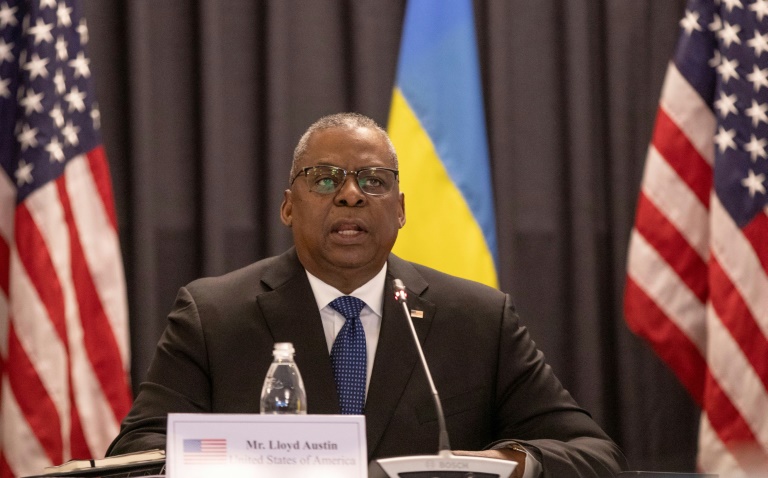
As Blinken was heading secretly to Kyiv, US Defense Secretary Lloyd Austin gathered with allies at the Ramstein air base in Germany to discuss support for Kyiv.

“Now, we’re seeing the demonstrable success of our common efforts on the battlefield,” Austin said, stressing that allies are in it “for the long haul”.

US President Joe Biden will separately hold a call Thursday with allies to “underscore our continued support for Ukraine”, a White House official said, speaking anonymously.

The official did not specify when the call would take place nor what countries would participate.

Austin’s meeting came hours after Ukrainian President Volodymyr Zelensky said his forces had recaptured several settlements in the northeastern Kharkiv region from the Russians.

Ukraine’s army said Thursday over 20 settlements in Kharkiv had been taken.

Kyiv has repeatedly urged its allies for more heavy weapons as it pursues its pushback. Prime Minister Denys Shmygal reiterated the request when he visited Germany on Sunday. 

Germany and the Netherlands said at Ramstein that they would start training and equipping Ukrainian soldiers on demining.

German Defence Minister Christine Lambrecht said her country will also be sending material for power generation and winter equipment, with both sides bracing for fighting in the bitter cold.

Among the issues raised at Ramstein are the restocking of arms, as “there is a significant consumption of munitions” in the war, said top US General Mark Milley.

Having already exhausted all its Russian-made armaments, Ukraine is now entirely dependent on Western military support.

Russia, under heavy sanctions, is meanwhile turning to North Korea for huge quantities of rocket and artillery shells, said Washington.

– ‘More effective’ –

The United States has been Ukraine’s biggest armaments supplier. 

Its latest package would include 105mm howitzers, precision-guided GMLRS rockets and artillery ammunition. 

This brings the US military aid to Ukraine since February 24 to $15.2 billion worth of various weapons, including anti-tank Javelin missiles and shells compatible with NATO’s artillery systems.

Among the most efficient weapons sent lately by Washington are the HIMAR multiple rocket launch systems, paired with GMLRS rockets that can reach targets up to 80 kilometres (50 miles) away.

But Kyiv is seeking ATACMS — precision-guided, medium range tactical missile that can be launched by the HIMAR systems and which are capable of striking at 300 kilometres.

The United States has so far refused, as it fears the missiles could land in Russian territory, sparking an even bigger conflict.

“Right now, the policy of the United States government is that we’re not sending ATACMS,” Milley said. 

“The range of the HIMARS is sufficient to meet the needs of the Ukrainians as they are currently fighting,” he added. 

In the territories occupied by Russian forces, the United Nations said there were “credible accusations” that Ukrainian children were being forcibly taken to Russia.

Some Ukrainians judged as close to the Ukraine government or military have also been tortured and forcibly removed and sent to Russian penal colonies and other detention centres, Ilze Brands Kehris, the assistant UN secretary general for human rights, told the Security Council on Wednesday.

But Russian UN Ambassador Vasily Nebenzya called the allegations unfounded and said what was labelled “filtration” was simply registering Ukrainians willingly fleeing the war to Russia.
Japan says ready for 'necessary response' as yen dives

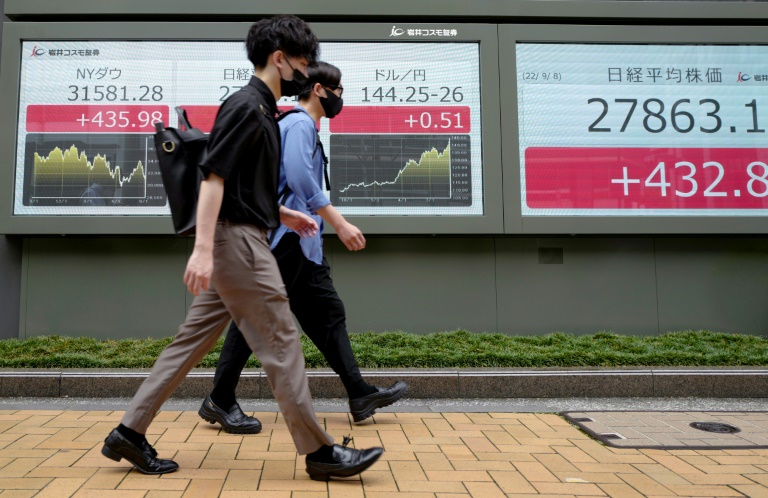
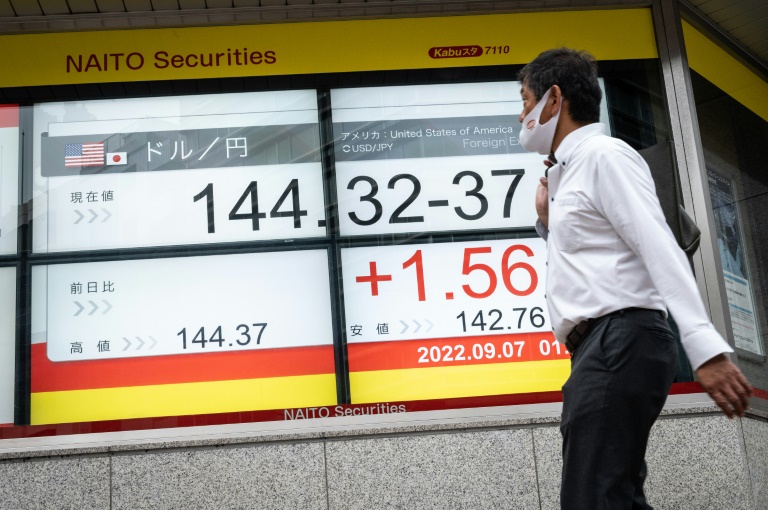
Japan is ready to take action if the yen’s plummeting value remains volatile, officials repeated on Thursday, after the currency hit 24-year lows.

The yen has tumbled from around 115 per dollar in March to lower than 140 last week, as the Bank of Japan (BoJ) sticks with its monetary easing policies in contrast to rate hikes from other central banks including the US Federal Reserve.

It has continued to drop fast, nearly touching 145 per dollar overnight in New York, as investors flooded into the US currency hoping for better returns and as a safe-haven hedge.

Japan has not announced any specific measures to bolster the yen, such as instructing the central bank to buy it against other currencies.

But on Thursday, officials from the BoJ, the finance ministry and the government’s fiscal services agency held a meeting while the yen hovered close to 144 per dollar.

“If (the yen) continues to fluctuate like this, the government is ready to take the necessary response in financial markets,” Masato Kanda, Vice-Minister of Finance for International Affairs, told reporters after the meeting.

“Various measures” are on the table, he said without giving details. His comments closely echoed remarks made Wednesday by Japan’s finance minister, who said rapid shifts in foreign exchange rates were “not desirable”.

Ray Attrill, head of FX strategy at National Australia Bank, said the rhetoric would have little effect.

“The market’s not buying what the Japanese officials are selling in terms of their public concerns about the moves in the yen. They’ve basically been singing from exactly the same hymn sheet,” he told AFP.

A weaker yen can help Japanese companies to sell products overseas, but “at these levels, the disadvantages of a weak yen are starting to outweigh the benefits,” with households and businesses facing higher import prices, Attrill said.

Inflation more broadly has risen to seven-year highs in Japan, partly due to the impact of the war in Ukraine on energy prices, but it is still less severe than in many major economies.

Prime Minister Fumio Kishida announced Thursday that the government will use 3.5 trillion yen ($24 billion) of reserve funds to address the domestic impact of inflation, and will deliver cash relief packages to low-income households.

UK's Truss freezes energy bills in first big policy shift

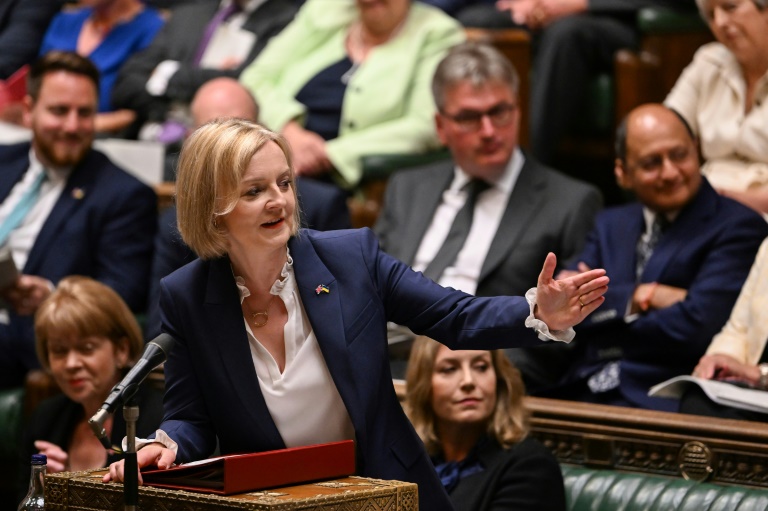
New British Prime Minister Liz Truss on Thursday said domestic fuel bills would be frozen for two years, marking her first week in office with a costly plan to tackle a politically perilous cost-of-living crisis.

The government said it would also review progress towards its legally enshrined target to achieve net-zero carbon emissions by 2050, to ensure the needs of consumers and businesses are taken into account, while stressing it remained committed to the goal.

Households are facing an 80-percent hike in gas and electricity bills next month due to the rise in the cost of wholesale energy made worse by a squeeze on supplies after Russia’s invasion of Ukraine.

Businesses whose bills are not capped have warned they could go to the wall because of even bigger rises, at the same time as inflation is at 40-year highs of 10.1 percent and predicted to go higher.

The government expects the state-backed scheme to cost tens of billions of pounds (dollars), but Truss and new finance minister Kwasi Kwarteng insisted it would have “substantial benefits” to the economy.

It would curb inflation by four to five percentage points, they said in a statement.

They also announced an end to a ban on fracking — a controversial method to drill for fossil fuels — and more drilling licences for North Sea oil and gas.

Truss said “decades of short-term thinking on energy” and failing to secure supplies had left Britain, which is heavily reliant on gas for its energy needs, vulnerable to price shocks.

“Extraordinary challenges call for extraordinary measures, ensuring that the United Kingdom is never in this situation again,” she said.

Kwarteng said the freeze means worried households and businesses “can now breathe a massive sigh of relief”.

– No windfall tax –

Tackling the cost-of-living crisis, which has led to widespread strike action over pay, threatens to define Truss’s premiership, just two days after she formally took over from Boris Johnson.

Truss said energy bills for an average British household would be capped at £2,500 ($2,872) a year — £1,000 less than October’s planned level.

Non-domestic energy users, including businesses, charities, and public sector organisations such as schools and hospitals, will see a six-month freeze.

Analysts predict the plan, which will likely be in place at the next general election expected in 2024, could top well over £100 billion, surpassing Britain’s Covid-era furlough jobs scheme.

Truss confirmed that the government will pay energy suppliers the difference in price but did not put an exact figure on how much it could cost the public purse, pending a mini-budget this month by Kwarteng.

Truss, a former Shell employee, has rejected opposition calls to impose windfall taxes on energy giants whose profits have surged on the back of higher wholesale prices. 

In her campaign to succeed Johnson, she had also ruled out direct handouts to consumers, but the new scheme reverses course on that.

She said the new price cap was calculated by temporarily removing green levies worth some £150 a year from household bills.

Paying for the freeze by increased borrowing has stoked concern on the financial markets about the prospect of worsening public finances already damaged by emergency Covid spending.

On bond markets, the UK’s 10-year borrowing rate topped three percent on Tuesday for the first time since 2014, and the pound has slumped to its lowest dollar level since 1985.

– Fracking –

The end to the fracking moratorium comes despite Truss’s Conservative party having pledged in 2019 to keep it in place, after onshore drilling for shale gas had caused seismic tremors in northern England.

She said that lifting the ban “could get gas flowing in as soon as six months”.

But experts have cast doubt about the effect on bills, given the time taken to start production and the amount of gas it could yield.

Kwarteng himself wrote in March that it could take up to a decade to get enough gas from fracking. At the same time, there is concern about the environmental damage of restarting the process.

Like Johnson, Truss committed to diversifying Britain’s energy sources to renewables and nuclear.

But she said the net-zero review, scheduled to conclude by the end of the year, would “ensure delivering the target is not placing undue burdens on businesses or consumers”.

The new support package offered nothing about insulating UK buildings better, to reduce high rates of energy leakage, and the government also ruled out any campaign to encourage the public to save energy.

ved-rfj-jit-phz/lth

European stocks diverge before major UK, ECB announcements

European stock markets traded mixed Thursday, ahead of major policy decisions from Britain and the European Central Bank aimed at tackling sky-high inflation.

The pound remained close to a 37-year low against the dollar that was struck Wednesday, as new British Prime Minister Liz Truss prepared to announce that she will freeze domestic fuel bills to help ease the burden of a UK cost-of-living crisis.

The euro steadied versus the greenback, with the ECB forecast to hike eurozone interest rates by a record-high 75 basis points.

Oil prices dropped further on fears of a global recession but losses were far less sharp than on Wednesday.

“There may be fresh storms brewing for the global economy but inflation is the tornado to tame and the drop in crude prices has lifted hopes in the US at least that the price spiral may be easier to control,” noted Susannah Streeter, senior investment and markets analyst at Hargreaves Lansdown.

Fears abound that global central bank moves to rein in runaway inflation by ratcheting up borrowing costs will spark recessions in leading economies.

The dollar has moved ever higher against its major peers in recent weeks as investors flood into the currency hoping for better returns and as they seek a haven in the face of economic turmoil.

The US unit is closing in on a 32-year peak against the yen owing to the Bank of Japan’s refusal to raise interest rates.

Observers expect the dollar to keep attracting strong interest as long as the Federal Reserve keeps ramping up US interest rates by sizeable amounts.

The Fed holds its next policy meeting on September 21, with a third successive 75-basis-point lift forecast.

“For years, central bank interest rate decisions used to be background noise, with investors confident that rates would stay low,” Russ Mould, investment director at AJ Bell, said Thursday.

“This year they’ve become must-watch events, with every word studied by the market. The current theme is not whether central banks will raise rates, but by how much.”

On the corporate front, shares in cyber security company Darktrace crashed around 30 percent after US private equity firm Thoma Bravo ended its takeover interest in the British group.

– Key figures at around 1000 GMT –

London – FTSE 100: UP 0.3 percent at 7,256.23 points

Frankfurt – DAX: DOWN 0.1 percent at 12,901.90

Paris – CAC 40: UP 0.4 percent at 6,130.18

EURO STOXX 50: DOWN 0.2 percent at 3,507.91

Tokyo – Nikkei 225: UP 2.3 percent at 28,065.28 (close)

Hong Kong – Hang Seng Index: DOWN 1.0 percent at 18,854.62 (close)

Shanghai – Composite: DOWN 0.3 percent at 3,235.59 (close)

New York – Dow: UP 1.4 percent at 31,581.28 (close)

Euro/dollar: DOWN at $0.9996 from $1.0012 on Wednesday

Pound/dollar: DOWN at $1.1486 from $1.1535

Euro/pound: UP at 87.01 pence from 86.74 pence

Dollar/yen: UP at 143.87 yen from 143.79 yen 

West Texas Intermediate: DOWN 0.6 percent at $81.43 per barrel

Brent North Sea crude: DOWN 0.3 percent at $87.71 per barrel

burs-bcp/rfj/cdw

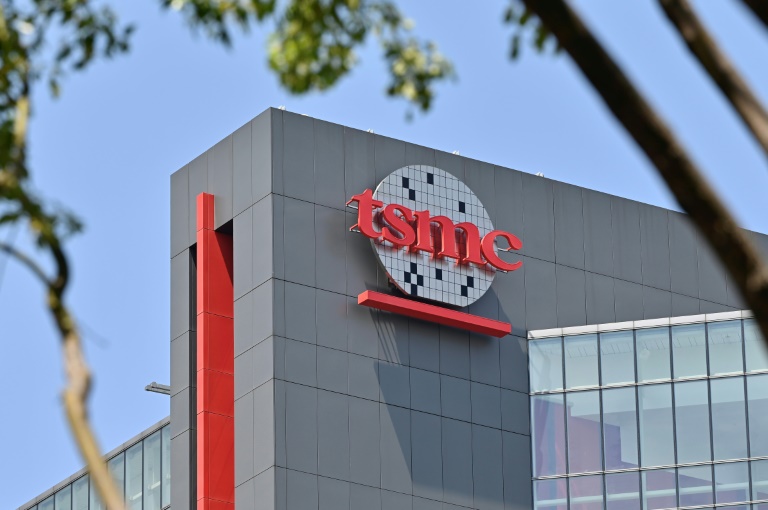
Taiwan chip giant TSMC sees all-time high revenue in August

Taiwanese semiconductor giant TSMC said Thursday its August revenue rose nearly 60 percent to a record high of Tw$218.13 billion ($7.06 billion) on soaring global demand. 

Taiwan Semiconductor Manufacturing Company operates the world’s largest silicon wafer factories and produces some of the most advanced microchips used in everything from smartphones and cars to missiles. 

The vast majority of the world’s top-notch microchips are made by just two companies — TSMC and Samsung — both of which are running at full capacity to alleviate a global shortage. 

The Taiwanese firm controls more than half of global foundry output, with clients including Apple and Qualcomm.

Its August revenue rose 58.7 percent on-year and 16.8 percent from July to an all-time high of Tw$218.13 billion — the first time it has reached the Tw$200 billion mark, according to a company statement. 

Revenue for the first eight months of the year totalled Tw$1.4 trillion, a 43.5 percent increase on the same period in 2021. 

TSMC chief executive C.C. Wei told an investor conference in July that customer demand continued to exceed the company’s ability to supply and he expected capacity to remain tight throughout 2022. 

But he also expected “a few quarters of inventory adjustment” through the first half of 2023 due to softening demand for some products including smartphones and personal computers.

While Taiwan’s semiconductor and high-tech industry has shown impressive growth, other parts of the economy are showing signs of an impact from the general global slowdown. 

Taiwan’s exports in August grew at their slowest pace in more than two years by just two percent to $40.34 billion, the finance ministry said.

That compared to 14.2 percent growth in July and was the slowest pace of increase since July 2020’s 0.3 percent when exports were hammered by the emergence of the coronavirus pandemic.

Exports would have dropped 4.2 percent from a year earlier without the electronic components industry, which accounted for over 40 percent of overseas shipments in August, according to the ministry. 

Semiconductor exports rose 14.3 percent from a year earlier to $15.69 billion last month but a slowdown in demand for consumer electronic products saw shipments for information/communication, audio and video products drop 1.6 percent on-year. 

Exports in the “old economy sector” largely declined last month, with plastics/rubber falling by 21.8 percent while chemicals were down 17.1 percent on-year.

US boosts Ukraine aid, sees battlefield 'success'

The United States on Thursday announced $675 million in additional military equipment for Ukraine, as it said allies’ efforts in bolstering Kyiv were now visibly paying off on the battlefield.

Hosting a new round of talks with partners in Germany, US Defense Secretary Lloyd Austin said Kyiv was now not only resisting Russian invaders, but is mounting a counter-offensive in the south.

“It’s fitting that we’re meeting back here at Ramstein,” he said, referring to the US airbase in western Germany where the first of the “Ukraine Defence Contact Group” meetings on coordinating armaments support for Kyiv took place.

“Now, we’re seeing the demonstrable success of our common efforts on the battlefield,” he said, stressing that allies are in it “for the long haul”.

The meeting came hours after Ukraine President Volodymyr Zelensky said his forces had recaptured several settlements in the northeastern Kharkiv region from the Russians.

Ukraine has also claimed it had retaken several villages in the south of the country where it has been waging a counter-offensive since last week.

Kyiv has repeatedly urged its allies for more heavy weapons as it pursues its pushback. Prime Minister Denys Shmygal reiterated the request when he visited Germany on Sunday. 

– ‘Significant consumption’ –

Among the issues to be raised at Ramstein are the challenges of producing and restocking arms, as “there is a significant consumption of munitions in the conduct of this war that’s occurring in Ukraine”, said top US General Mark Milley.

The aim would be to look at what stocks are available in which countries and what would need to be sourced from industry, he said.

Artillery is proving decisive in the war and projectiles of all sorts are in huge demand.

With Ukraine and Russia fighting a war of attrition of munitions, stocks are similarly a crucial factor.

Having already exhausted all its Russian-made armaments, Ukraine is now entirely dependent on Western military support.

Russia, under heavy sanctions, is meanwhile turning to North Korea for huge quantities of rocket and artillery shells, said Washington.

– ‘More effective’ –

The United States has been Ukraine’s biggest armaments supplier. 

Its latest package would include 105mm howitzers, precision-guided GMLRS rockets and artillery ammunition. 

It comes on top of $13.5 billion worth of various weapons, including anti-tank Javelin missiles and shells compatible with NATO’s artillery systems.

Among the most efficient weapons sent lately by Washington are the HIMAR multiple rocket launch systems, paired with GMLRS rockets that can reach targets up to 80 kilometres (50 miles) away.

But Kyiv is seeking ATACMS — precision-guided, medium range tactical missile that can be launched by the HIMAR systems and which are capable of striking at 300 kilometres.

The United States has so far refused, as it fears the missiles could land in Russian territory, sparking an even bigger conflict.

“Right now, the policy of the United States government is that we’re not sending ATACMS,” said Milley. 

“We’ve had this conversation several times with my counterpart and others in the Ukrainian government.”

Rather, he noted that the HIMARS and GMLRS have “proven to be very, very effective systems… against Russian forces”. 

“The range of the HIMARS is sufficient to meet the needs of the Ukrainians as they are currently fighting,” he added. 

US command spokesman Dave Butler also assessed that while Russia was firing its artillery at a higher rate than Ukraine, Kyiv’s “are more effective”.

– Russia taking Ukrainian children –

Zelensky has declined to name the settlements recaptured by Kyiv forces, but the US Institute for the Study of War, which follows in detail the fighting, said the Ukraine counterattack was near Balakliya and probably drove Russian forces back to the north side of the Siverskyi Donets and Serednya Balakliika rivers.

It appeared Ukraine forces also recaptured Verbivka and that Russian forces may have destroyed bridges to prevent Ukrainian fighters from pursuing them, ISW said.

“Russia’s deployment of forces from Kharkiv and eastern Ukraine to Ukraine’s south is likely enabling Ukrainian counterattacks of opportunity,” it said.

In the territories occupied by Russian forces, the United Nations said there were “credible accusations” that Ukrainian children were being forcibly taken to Russia.

Some Ukrainians judged as close to the Ukraine government or military have also been tortured and forcibly removed and sent to Russian penal colonies and other detention centres, Ilze Brands Kehris, the assistant UN secretary general for human rights, told the Security Council.

But Russian UN Ambassador Vasily Nebenzya called the allegations unfounded and said what was labelled “filtration” was simply registering Ukrainians willingly fleeing the war to Russia.
Former Trump advisor Bannon to face fraud charges in New York

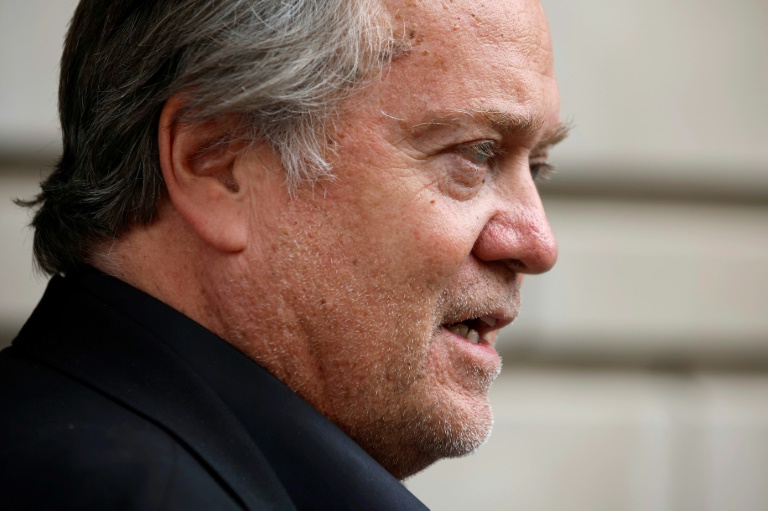
Donald Trump’s former advisor Steve Bannon is due to appear in court Thursday to be charged with fraud in a case of alleged misappropriation of funds for the construction of a wall between the United States and Mexico, US media reported. 

Bannon, 68, a popular ideologue who was closely involved in Trump’s rise to the American presidency, was en route Wednesday night to New York to surrender to the office of Manhattan’s prosecutor and to face the charges, his lawyer Robert Costello told CNBC television.

The Manhattan prosecutor’s office did not respond to AFP’s request for comment. 

Details about the exact nature of the charges were not public, as the indictment is sealed, but the Washington Post, CNBC and CNN reported that they relate to the same case that saw Bannon indicted in 2020 for financial fraud. 

The former White House advisor was arrested in August 2020 in that case, where he was accused alongside three others of fraud and embezzling a part of $25 million of donor funds set aside to build a wall between the US and Mexico.

The construction of the wall was a key campaign promise by Trump in his run to the presidency in 2016. 

Bannon was never tried for those charges, after then president Trump pardoned him in January last year, a day before he left the White House. 

In a statement, Bannon denounced “bogus lawsuits” against him 60 days before the November 8 midterm legislative elections.

He blasted “an armed partisan politicization of the criminal justice system.” 

The criminal indictment comes six weeks after Bannon was convicted in a federal court in Washington of obstructing the investigative powers of Congress. 

He had refused to cooperate with the House committee investigating the January 6, 2021 assault on Capitol Hill. 

Even after leaving the White House in August 2017, Bannon had remained close to Trump, speaking with him the day before the Capitol riot. 

'Everyone wants me to run in 2024': Trump

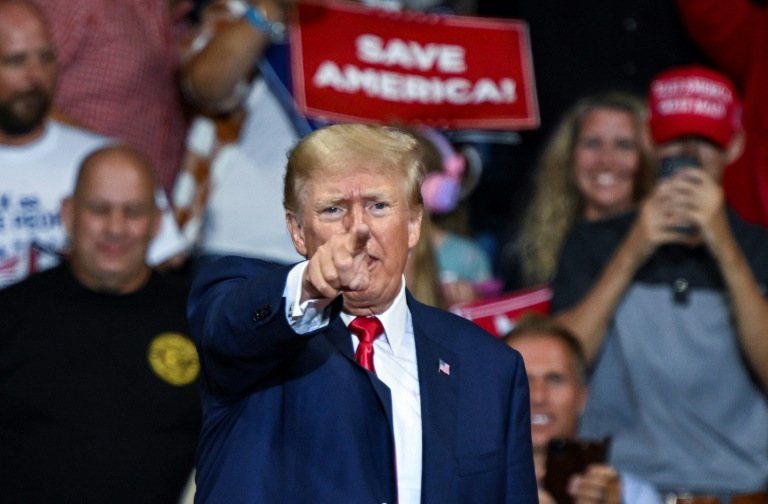
Donald Trump has dropped another hint at a White House campaign in 2024, with the former US president telling Indian television that a run for office would “make a lot of people very happy”.

“Everyone wants me to run. I am leading in the polls,” Trump said in an excerpt of an interview with NDTV to be broadcast in full later on Thursday.

“In every poll, in Republican polls and in Democrat polls, and I will make a decision in the very near future, I suspect. And I think that a lot of people are going to be very happy,” he added.

The billionaire former reality TV star, 76, also repeated false claims that the 2020 election in which he lost to current President Joe Biden was rigged.

“There is tremendous proof, there is tremendous evidence,” Trump said.

The Republican has faced intense legal scrutiny over his efforts to overturn the results of the poll and over an attack on the US Capitol by his supporters on January 6 last year.

Since leaving office, he has remained America’s most divisive figure, continuing to sow falsehoods that he won the vote.

He is currently under investigation for potential mishandling of classified documents, with the FBI raiding his Florida home last month.

Trump has denied wrongdoing and called the raid “one of the most egregious assaults on democracy in the history of our country”.

In a speech on Saturday in Pennsylvania he hit back at assertions by Biden that he and his supporters are undermining US democracy, calling Biden an “enemy of the state”.

Four killed in Memphis shooting rampage, suspect arrested

A man killed at least four people and wounded three others in an hours-long shooting rampage across Memphis on Wednesday, before a high-speed chase that ended with his arrest, police in the US city said.

Officers identified the suspect as Ezekiel Kelly, 19, and said he was apprehended with two weapons in his vehicle at approximately 9:00 pm local time (01:00 GMT on Thursday).

“(Kelly) was taken into custody without incident by the Memphis police department and the Shelby County sheriff’s office,” said Memphis police chief Cerelyn Davis at a news conference.

Kelly is alleged to have killed his first victim just after midnight on Wednesday, and gone on a shooting spree across the Tennessee city in the afternoon and early evening, Davis said.

There were at least eight different crime scenes, police said, including carjackings and a shooting at a local store, and Kelly had live-streamed parts of his spree.

“Ezekiel Kelly was on Facebook Live when he opened fire inside the store,” said Davis.

Authorities issued a “shelter in place” order while the shootings were ongoing, effectively locking down parts of the city. 

The United States regularly sees mass shootings and other gun violence, but Congress has been reluctant to pass strict gun control legislation as the issue remains politically divisive.

At least 490 people have been killed in mass shootings and mass murders in the US in 2022 so far, according to the Gun Violence Archive, with 14,050 people dying in gun-related incidents over the same period, excluding suicides.

Memphis has seen a string of high-profile killings in recent months, including the murder of a pastor during a carjacking and the abduction and murder last week of a woman who was on a pre-dawn run.

“I am angry. I am angry for (the victims) and I’m angry for our citizens who had to shelter in place for their own safety until this suspect was caught,” said Memphis Mayor Jim Strickland following Wednesday’s shootings. 

“This is no way for us to live, and it is not acceptable.”

Markets see much-needed bounce, but nerves remain

Most markets enjoyed a rare advance on bargain-buying Thursday, tracking a Wall Street rally after a series of losses, while dovish comments on future interest rate hikes by Australia’s central bank boss provided a boost to sentiment.  

The dollar resumed its upward march with the Federal Reserve and European Central Bank expected to announce more bumper increases in borrowing costs.

Equities have been ravaged for weeks by fears that global central bank moves to rein in runaway inflation by ratcheting up borrowing costs will spark fresh recessions in some leading economies.

In turn, the greenback has moved ever higher against its major peers as investors flood into the currency hoping for better returns and as a safe-haven hedge against uncertainty and worldwide turmoil.

On Wednesday, the US unit hit a 37-year high against sterling, while it was also closing in on a 32-year peak above 147.60 yen owing to the Bank of Japan’s refusal to tighten its monetary policy, seen as the key driver of that rally.

Still, Japanese officials said they were tracking the price movements and hinted at possible action if things did not improve.

The euro dipped ahead of an expected hefty rate hike by the European Central Bank later in the day.

However, there was some light, where Reserve Bank of Australia head Philip Lowe said the case for a weaker pace of monetary tightening gained momentum as rates rise. The comments provided a little hope that central banks could be ready at some point for a change of course.

Australian bond yields and the country’s dollar fell, while US Treasury yields also slipped.

For now, observers are certain the US dollar will continue to attract strong interest for as long as the Fed keeps ramping up interest rates.

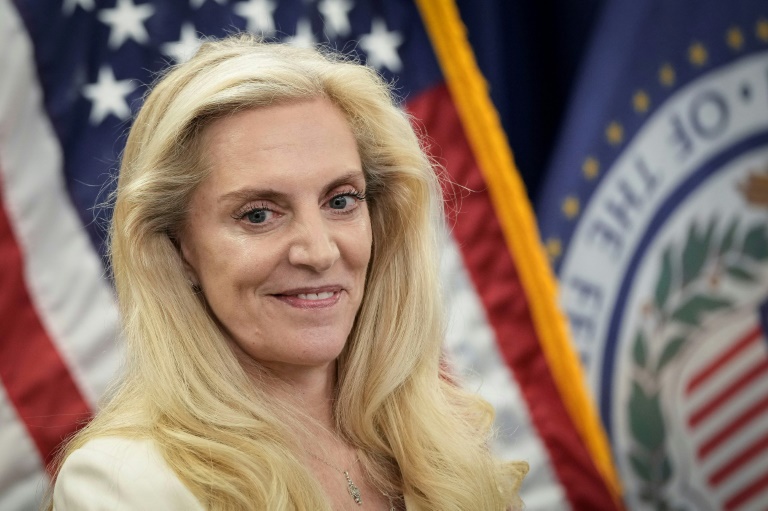
Those views were justified by Vice Chair Lael Brainard, who warned that policymakers would keep hiking rates until they have finally brought prices under control.

“We are in this for as long as it takes to get inflation down,” she said in comments prepared for a conference in New York, adding that she understood this would have a severe impact on families. 

The Fed holds its next policy meeting on September 21, with a third successive 75-basis-point lift forecast.

– ‘Dead-cat bounce’ –

Equity traders mostly followed their US counterparts in returning to buying, with many believing the market had fallen too far too fast.

Tokyo led the gains, helped by data showing the Japanese economy performed better than initially thought in the second quarter, while Sydney was also boosted by the prospect of a slowdown in the pace of Australian rate hikes.

There were also gains in Seoul, Singapore, Wellington, Taipei, Manila, Mumbai, Bangkok and Jakarta.

London rose ahead of an expected announcement by new Prime Minister Liz Truss that she will cap energy bills to fight a cost-of-living crisis. Paris and Frankfurt were also well up.

However, Hong Kong and Shanghai fell.

Still, the mood on trading floors remains downbeat, with OANDA’s Craig Erlam saying: “Given the economic backdrop, this could be nothing more than a dead-cat bounce. Of course, there may be more potential next week if the US delivers a favourable inflation report.”

News that China had extended a lockdown in the megacity of Chengdu added to worries about the world’s number-two economy as officials stick rigidly to their growth-killing zero-Covid strategy.

The shutdowns in China, which have impacted tens of millions across the country, were adding to hefty oil sales as traders fret over the impact on demand.

The commodity was already under pressure owing to bets on a recession caused by bank rate hikes, with both main contracts down around $50 from the peaks seen in the immediate aftermath of Russia’s invasion of Ukraine. They are now around eight-month lows.

And while Brent and WTI rose Thursday, they were nowhere near recovering the previous day’s rout of more than five percent, which came despite Russian President Vladimir Putin warning he would cut off energy to Europe if it imposed price cap sanctions.

“Some bargain-hunting buying is to be expected after a dive like” Wednesday’s, said Vandana Hari at Vanda Insights.

– Key figures at around 0810 GMT –

Tokyo – Nikkei 225: UP 2.3 percent at 28,065.28 (close)

Hong Kong – Hang Seng Index: DOWN 1.0 percent at 18,854.62 (close)

Shanghai – Composite: DOWN 0.3 percent at 3,235.59 (close)

London – FTSE 100: UP 0.3 percent at 7262.17

Dollar/yen: UP at 143.83 yen from 143.79 yen on Wednesday

Euro/dollar: DOWN at $0.9983 from $1.0012 

Pound/dollar: DOWN at $1.1487 from $1.1535

Euro/pound: UP at 86.90 pence from 86.74 pence

West Texas Intermediate: UP 0.7 percent at $82.49 per barrel

Brent North Sea crude: UP 0.5 percent at $88.42 per barrel

New York – Dow: UP 1.4 percent at 31,581.28 (close)

Close Bitnami banner
Bitnami