US Business

'Lord of the Rings' prequel is Amazon Prime Video's biggest premiere

Amazon announced Saturday that its big budget series “The Lord of the Rings: The Rings of Power,” based on the works of J.R.R. Tolkien, had marked the biggest premiere in the history of Prime Video — with 25 million viewers. 

With this flagship production that started streaming Friday, Prime Video aims to counter the lure of HBO and its prequel to the hit series “Game of Thrones”, “House of the Dragon”, which began airing on August 21. 

HBO also has said it had its best premiere, with its prequel, with nearly 10 million viewers in the United States alone. 

“The Lord of the Rings: The Rings of Power attracted more than 25 million global viewers on its first day, breaking all previous records, marking the biggest premiere in the history of Prime Video,” a company statement said. It has aired the first two episodes. 

“It is somehow fitting that Tolkien’s stories — among the most popular of all time, and what many consider to be the true origin of the fantasy genre — have led us to this proud moment,” said Jennifer Salke, head of Amazon Studios.

The series, which will air until October 14, is crucial for Amazon, which wants to play in the ultra-competitive streaming landscape, where Netflix, Disney+ and HBO Max are already battling it out. 

“The Rings of Power” is set during Tolkien’s Second Age in Middle-earth, thousands of years before the events of “The Hobbit” and “Lord of the Rings”, Tolkien’s cult trilogy which has already been adapted for film.

Amazon paid $250 million to buy the rights, and some $465 million was spent on the first season alone. The group having committed to five seasons, the final sum should top one billion dollars by far. 

NASA will not try new Moon rocket launch attempt in coming days

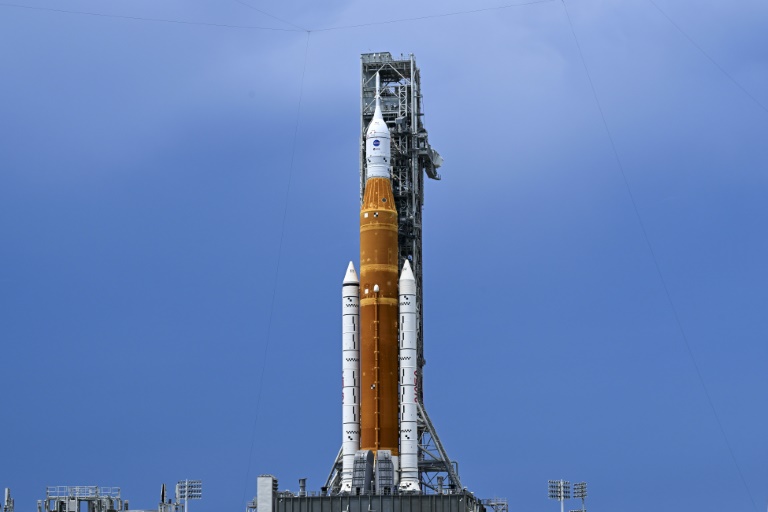
After scrapping a second attempt to get its new 30-story rocket off the ground due to a fuel leak, NASA announced on Saturday it will not try again during its current window of opportunity, which ends early next week.

Determined by the position of the Earth and Moon, the current launch period for NASA’s Artemis 1 mission ends Tuesday and is “definitely off the table,” said Jim Free, associate administrator for Exploration Systems Development, at a press conference Saturday, without confirming a new date.

The next possible launch windows according to NASA are September 19 to October 4 and then October 17 to 31.

Millions around the globe and crowds gathered on beaches in Florida had hoped to witness the historic blastoff of the Space Launch System (SLS), but a leak near the base of the rocket was found as ultra-cold liquid hydrogen was pumped in.

“The launch director waived off today’s Artemis I launch,” NASA said in a statement. “Multiple troubleshooting efforts to address the area of the leak… did not fix the issue.”

The latest postponement “was the right decision after you develop this kind of leak,” astronaut Victor Glover told reporters.

“These (are) really incredibly complex machines. When you see a scrub, people should gain confidence, not lose confidence.” 

The initial launch attempt on Monday was also halted after engineers detected a fuel leak and a sensor showed that one of the rocket’s four main engines was too hot.

– Next month? –

The rocket will likely have to be hauled back into its assembly building to undergo certification tests that are carried out periodically.

Soon after Saturday’s launch was scrubbed, NASA Administrator Bill Nelson said that a next attempt may have to be put off until mid-October because early next month a crew will use the Kennedy Space Center to travel to the International Space Station.

Early in the morning, launch director Charlie Blackwell-Thompson had given the go-ahead to start filling the rocket’s tanks with cryogenic fuel.

About three million liters of ultra-cold liquid hydrogen and oxygen were due to be pumped into the spacecraft, but the process soon hit problems, with Artemis mission manager Mike Sarafin later describing the issue as “not a manageable leak.”

The purpose of the Artemis 1 mission is to verify that the Orion capsule, which sits atop the SLS rocket, is safe to carry astronauts in the future.

Mannequins equipped with sensors are standing in for astronauts on the mission and will record acceleration, vibration and radiation levels.

– Apollo’s twin sister –

Once launched, it will take several days for the spacecraft to reach the Moon, flying around 60 miles (100 kilometers) at its closest approach.

The capsule will fire its engines to get to a distant retrograde orbit (DRO) of 40,000 miles beyond the Moon, a record for a spacecraft rated to carry humans.

The trip is expected to last around six weeks and one of its main objectives is to test the capsule’s heat shield, which at 16 feet in diameter is the largest ever built.

On its return to Earth’s atmosphere, the heat shield will have to withstand speeds of 25,000 miles per hour and a temperature of 5,000 degrees Fahrenheit (2,760 degrees Celsius) — roughly half as hot as the Sun.

Artemis is named after the twin sister of the Greek god Apollo, after whom the first Moon missions were named.

Unlike the Apollo missions, which sent only white men to the Moon between 1969 and 1972, Artemis missions will see the first person of color and the first woman step foot on the lunar surface.

A successful Artemis 1 mission would come as a huge relief to the US space agency, after years of delays and cost overruns.

A government audit estimates the Artemis program’s cost will grow to $93 billion by 2025, with each of its first four missions clocking in at a whopping $4.1 billion per launch.

The next mission, Artemis 2, will take astronauts to the Moon without landing on its surface.

The crew of Artemis 3 is to land on the Moon in 2025 at the earliest, with later missions envisaging a lunar space station and a sustainable presence on the lunar surface.

A crewed trip to the red planet aboard Orion, which would last several years, could be attempted by the end of the 2030s.

Turkey offers to mediate in Ukraine nuclear plant standoff

Turkey’s President Recep Tayyip Erdogan offered on Saturday to mediate in the standoff over a Russian-occupied nuclear power station in Ukraine stoking fears of an atomic disaster.

The offer came hours before the global atomic energy watchdog said that Ukraine’s Zaporizhzhia nuclear facility had been disconnected from its last remaining main power line to the grid and was now relying on a reserve line.

Alarm has grown in recent weeks over shelling in the area of Europe’s largest nuclear plant.

Ukraine said Friday it had bombed a Russian base in the nearby town of Energodar, destroying three artillery systems as well as an ammunition depot.

Erdogan on Saturday told his Russian counterpart Vladimir Putin that “Turkey can play a facilitator role in the Zaporizhzhia nuclear power plant, as they did in the grain deal,” the Turkish presidency said. 

Ukraine, one of the world’s largest grain exporters, was forced to halt almost all deliveries after Russia invaded in late February, raising fears of a global food crisis.

Exports of grain across Black Sea ports resumed after Kyiv and Moscow signed a deal in July, with the United Nations and Turkey acting as guarantors. 

There was no immediate mention of Erdogan having also spoken to Ukraine’s President Volodymyr Zelensky on Saturday to offer his mediation.

– Gas deliveries halted –

Last month, Erdogan warned of the danger of a nuclear disaster when he visited the western city of Lviv for talks with the Ukrainian leader. 

The Turkish president said he wanted to avoid “another Chernobyl”, referring to the world’s worst nuclear accident in another part of Ukraine in 1986, when it was still part of the Soviet Union.

This week, a 14-strong team from the International Atomic Energy Agency (IAEA) visited Zaporizhzhia, with the UN nuclear watchdog’s chief Rafael Grossi saying the site had been damaged in fighting.

“Ukraine’s Zaporizhzhia Nuclear Power Plant (ZNPP) has once again lost the connection to its last remaining main external power line,” the IAEA said in a statement Saturday.

“But the facility is continuing to supply electricity to the grid through a reserve line,” the agency added.

The Russian invasion of pro-Western Ukraine has killed thousands of people and caused millions to flee their homes.

Western powers have reacted by dispatching military aid to Kyiv in a bid to stem the Russian advance and slapping economic sanctions on Moscow.

On Friday, the Group of Seven major industrial democracies vowed to move urgently to set a price cap on Russian oil imports, a crucial source of revenue for Moscow.

As if on cue, Russian energy giant Gazprom said it had halted gas deliveries to Germany for an indefinite period as there were leaks in a turbine. 

Its German manufacturer said that was not a valid reason to halt gas flows.

– ‘We need more unity’ –

EU Economy Commissioner Paolo Gentiloni said Saturday the European Union was in better shape to handle the possibility of a total halt in Russian gas deliveries, thanks to storage capacity and energy-saving measures.

“We are well prepared to resist Russia’s extreme use of the gas weapon,” he told reporters on the sidelines of the European House-Ambrosetti economic forum. 

In the European Union, “gas storage is currently at about 80 percent, thanks to the diversification of supplies,” even if the situation varies from one country to another, Gentiloni said.

Zelensky picked up on the theme in his evening address Saturday.

“Russia wants to destroy the normal life of every European — in all countries of our continent,” he said, referring to the shutdown of the Nord Stream pipeline.

Where it could not do so by military means, it weaponised its energy resources, he added.

“To protect ourselves in Europe, we need more unity, more coordination, more help to each other.”

Ukraine has accused Russia of storing ammunition at Zaporizhzhia and deploying hundreds of soldiers there.

It also suspects Moscow is intending to divert power from the plant to the nearby Crimean peninsula, annexed by Russia in 2014. 

Turkey offers to mediate in Ukraine nuclear plant standoff

Turkey’s President Recep Tayyip Erdogan offered on Saturday to mediate in the standoff over a Russian-occupied nuclear power station in Ukraine stoking fears of an atomic disaster.

The offer came hours before the global atomic energy watchdog said that Ukraine’s Zaporizhzhia nuclear facility had been disconnected from its last remaining main power line to the grid and was now relying on a reserve line.

Alarm has grown in recent weeks over shelling in the area of Europe’s largest nuclear plant.

Ukraine said Friday it had bombed a Russian base in the nearby town of Energodar, destroying three artillery systems as well as an ammunition depot.

Erdogan on Saturday told his Russian counterpart Vladimir Putin that “Turkey can play a facilitator role in the Zaporizhzhia nuclear power plant, as they did in the grain deal,” the Turkish presidency said. 

Ukraine, one of the world’s largest grain exporters, was forced to halt almost all deliveries after Russia invaded in late February, raising fears of a global food crisis.

Exports of grain across Black Sea ports resumed after Kyiv and Moscow signed a deal in July, with the United Nations and Turkey acting as guarantors. 

There was no immediate mention of Erdogan having also spoken to Ukraine’s President Volodymyr Zelensky on Saturday to offer his mediation.

– Gas deliveries halted –

Last month, Erdogan warned of the danger of a nuclear disaster when he visited the western city of Lviv for talks with the Ukrainian leader. 

The Turkish president said he wanted to avoid “another Chernobyl”, referring to the world’s worst nuclear accident in another part of Ukraine in 1986, when it was still part of the Soviet Union.

This week, a 14-strong team from the International Atomic Energy Agency (IAEA) visited Zaporizhzhia, with the UN nuclear watchdog’s chief Rafael Grossi saying the site had been damaged in fighting.

“Ukraine’s Zaporizhzhia Nuclear Power Plant (ZNPP) has once again lost the connection to its last remaining main external power line,” the IAEA said in a statement Saturday.

“But the facility is continuing to supply electricity to the grid through a reserve line,” the agency added.

The Russian invasion of pro-Western Ukraine has killed thousands of people and caused millions to flee their homes.

Western powers have reacted by dispatching military aid to Kyiv in a bid to stem the Russian advance and slapping economic sanctions on Moscow.

On Friday, the Group of Seven major industrial democracies vowed to move urgently to set a price cap on Russian oil imports, a crucial source of revenue for Moscow.

As if on cue, Russian energy giant Gazprom said it had halted gas deliveries to Germany for an indefinite period as there were leaks in a turbine. 

Its German manufacturer said that was not a valid reason to halt gas flows.

– ‘We need more unity’ –

EU Economy Commissioner Paolo Gentiloni said Saturday the European Union was in better shape to handle the possibility of a total halt in Russian gas deliveries, thanks to storage capacity and energy-saving measures.

“We are well prepared to resist Russia’s extreme use of the gas weapon,” he told reporters on the sidelines of the European House-Ambrosetti economic forum. 

In the European Union, “gas storage is currently at about 80 percent, thanks to the diversification of supplies,” even if the situation varies from one country to another, Gentiloni said.

Zelensky picked up on the theme in his evening address Saturday.

“Russia wants to destroy the normal life of every European — in all countries of our continent,” he said, referring to the shutdown of the Nord Stream pipeline.

Where it could not do so by military means, it weaponised its energy resources, he added.

“To protect ourselves in Europe, we need more unity, more coordination, more help to each other.”

Ukraine has accused Russia of storing ammunition at Zaporizhzhia and deploying hundreds of soldiers there.

It also suspects Moscow is intending to divert power from the plant to the nearby Crimean peninsula, annexed by Russia in 2014. 

Mississippi capital struggles without running water

With an increasingly acute crisis leaving many residents of Mississippi’s capital without drinkable water, soldiers in fatigues have been called in to help, using forklifts and diggers to unload huge pallets of bottled water for distribution to those in dire need.

The city of Jackson, where 80 percent of the population is Black and poverty is rife, has experienced water crises for years. But this one is particularly severe, with many residents lacking clean running water for nearly a week. 

Days of major flooding disrupted the operation of a critical but aging water treatment plant.

So when residents turn on the tap, brown water — undrinkable, even if boiled — sometimes sputters out, under very low pressure. 

“At my home the water is running very slowly. It’s a horrible situation in the entire city,” said Jackson resident Mary Jones, 55.

– White House gets involved –

“No one seemed to know how to solve the problem. But now that the White House has gotten involved, hopefully we can get some fresh, clean running water again, because this has been going on for years,” said Jones, a disabled widow.

“It’s utterly ridiculous that we have to go through this.”

Indeed, the problem has received the attention of Washington. President Joe Biden has promised federal resources to help Mississippi resolve the crisis.

Major repair work is under way, but for now, people rely on bottled water that arrives stacked high on pallets.

Residents are entitled to two cases each when they go to a distribution center.

“I’m not able to cook like I want to cook, not able to brush my teeth like I want to,” said Natina Thompson, a 41-year-old bus driver.

She said she was “eternally grateful” that the National Guard and others were now providing help.  

Mary Jones said she goes to several sites around town to get enough water to help older people in her neighborhood who cannot get out.

“You need to sacrifice for our neighbors, you know, because that’s what we do in Mississippi,” she told AFP. “We love each other and we unite (with) each other in any type of situation.”

People waiting in long lines in their cars to get water appeared patient. 

Many compared their situation to the water crisis in Flint, Michigan from 2014 to 2016. That city’s water supply was dangerously contaminated with lead because of mismanagement and neglect.

– Echoes of Flint –

“I hope we won’t be like Flint,” said Tracey Edwards, a retiree who blames this mess on city officials.  

“We can’t drink it. We can’t brush our teeth with it. I’m wondering if there’s anything hazardous in the water that, long-term, may affect the residents of Jackson,” said Edwards.

“That’s something we have  to be aware of.”

Jackson is the largest city in Mississippi, which is one of the poorest US states. City finances are troubled; the tax base shrank for years as many more affluent white residents moved to the suburbs. Today, a quarter of Jackson’s residents live in poverty.

One resident who did not wish her name to be used described her daily routine.

“I need some water… because I do have grandchildren and children. And that’s why I’m out in this heat trying to get it.”

Turkey offers to mediate in Ukraine nuclear plant standoff

Turkey’s President Recep Tayyip Erdogan offered on Saturday to mediate in the standoff over a Russian-occupied nuclear power station in Ukraine stoking fears of an atomic disaster.

The offer came hours before the global atomic energy watchdog said that Ukraine’s Zaporizhzhia nuclear power plant had been disconnected from its last remaining main power line to the grid and was now relying on a reserve line.

Alarm has grown in recent weeks over shelling in the area of Europe’s largest nuclear plant, Zaporizhzhia.

Ukraine said Friday it had bombed a Russian base in the nearby town of Energodar, destroying three artillery systems as well as an ammunition depot.

Erdogan on Saturday told his Russian counterpart Vladimir Putin that “Turkey can play a facilitator role in the Zaporizhzhia nuclear power plant, as they did in the grain deal,” the Turkish presidency said. 

Ukraine, one of the world’s largest grain exporters, was forced to halt almost all deliveries after Russia invaded in late February, raising fears of a global food crisis.

Exports of grain across Black Sea ports resumed after Kyiv and Moscow in July signed a deal, with the United Nations and Turkey acting as guarantors. 

There was no immediate mention of Erdogan having also spoken to Ukraine’s President Volodymyr Zelensky on Saturday to offer his mediation.

Last month, Erdogan warned of the danger of a nuclear disaster when he visited Lviv for talks with the Ukrainian leader. 

The Turkish leader said he wanted to avoid “another Chernobyl”, referring to the world’s worst nuclear accident in another part of Ukraine in 1986, when it was still part of the Soviet Union.

This week, a 14-strong team from the International Atomic Energy Agency visited Zaporizhzhia, with the UN nuclear watchdog’s chief Rafael Grossi saying the site had been damaged in fighting.

– ‘Gas weapon’ –

“Ukraine’s Zaporizhzhia Nuclear Power Plant (ZNPP) has once again lost the connection to its last remaining main external power line, but the facility is continuing to supply electricity to the grid through a reserve line, the International Atomic Energy Agency (IAEA) was informed at the site today,” the agency said in a statement Saturday.

The Russian invasion of pro-Western Ukraine has killed thousands of people and caused millions to flee their homes.

Western powers have reacted by dispatching military aid to Kyiv in a bid to stem the Russian advance, and slapping economic sanctions on Moscow.

On Friday, the Group of Seven major industrial democracies vowed to move urgently to set a price cap on Russian oil imports, a crucial source of revenue for Moscow.

As if on cue, Russian gas giant Gazprom said it had halted gas deliveries to Germany for an indefinite period as there were leaks in a turbine. Its German manufacturer said that that was not a valid reason to halt gas flows.

EU Economy Commissioner Paolo Gentiloni on Saturday however said the European Union was in better shape to handle the possibility of a total halt in Russian gas deliveries, thanks to storage capacity and energy-saving measures.

“We are well prepared to resist Russia’s extreme use of the gas weapon,” he told reporters on the sidelines of an economic forum. 

In the European Union, “gas storage is currently at about 80 percent, thanks to the diversification of supplies,” even if the situation varies from one country to another, Gentiloni said. 

Ukraine has accused Russia of storing ammunition at Zaporizhzhia and deploying hundreds of soldiers there. 

It also suspects Moscow is intending to divert power from the plant to the nearby Crimean peninsula, annexed by Russia in 2014. 

NASA postpones rocket launch to Moon after fuel leak

NASA on Saturday scrapped a second attempt to get its new 30-story rocket off the ground and send an uncrewed test capsule toward the Moon after engineers detected a fuel leak.

Millions around the globe and crowds gathered on beaches in Florida had hoped to witness the historic blastoff of the Space Launch System (SLS), but a leak near the base of the rocket was found as ultra-cold liquid hydrogen was pumped in.

“The launch director waived off today’s Artemis I launch,” NASA said in a statement. “Multiple troubleshooting efforts to address the area of the leak… did not fix the issue.”

The latest postponement “was the right decision after you develop this kind of leak,” astronaut Victor Glover told reporters.

“These (are) really incredibly complex machines. When you see a scrub, people should gain confidence, not lose confidence.” 

The initial launch attempt on Monday was also halted after engineers detected a fuel leak and a sensor showed that one of the rocket’s four main engines was too hot.

– Next week? –

Another attempt could take place Monday or Tuesday next week but NASA has to consider data from the latest aborted flight before making a decision.

After Tuesday, the rocket has to be hauled back into its assembly building to undergo tests that are carried out periodically.

The mission management team will meet Saturday afternoon and later hold a news conference.

They need to determine if another attempt can be made soon, said NASA administrator Bill Nelson.

The launch may have to be put off until mid-October because early next month a crew will use the Kennedy Space Center to travel to the International Space Station, Nelson said on NASA’s internal video network.

Early Saturday, launch director Charlie Blackwell-Thompson had given the go-ahead to start filling the rocket’s tanks with cryogenic fuel.

About three million liters of ultra-cold liquid hydrogen and oxygen were due to be pumped into the spacecraft, but the process soon hit problems.

The purpose of the Artemis 1 mission is to verify that the Orion capsule, which sits atop the SLS rocket, is safe to carry astronauts in the future.

Mannequins equipped with sensors are standing in for astronauts on the mission and will record acceleration, vibration and radiation levels.

– Apollo’s twin sister –

It will take several days for the spacecraft to reach the Moon, flying around 60 miles (100 kilometers) at its closest approach.

The capsule will fire its engines to get to a distant retrograde orbit (DRO) of 40,000 miles beyond the Moon, a record for a spacecraft rated to carry humans.

The trip is expected to last around six weeks and one of its main objectives is to test the capsule’s heat shield, which at 16 feet in diameter is the largest ever built.

On its return to Earth’s atmosphere, the heat shield will have to withstand speeds of 25,000 miles per hour and a temperature of 5,000 degrees Fahrenheit (2,760 degrees Celsius) — roughly half as hot as the Sun.

Artemis is named after the twin sister of the Greek god Apollo, after whom the first Moon missions were named.

Unlike the Apollo missions, which sent only white men to the Moon between 1969 and 1972, Artemis missions will see the first person of color and the first woman step foot on the lunar surface.

A successful Artemis 1 mission would come as a huge relief to the US space agency, after years of delays and cost overruns.

A government audit estimates the Artemis program’s cost will grow to $93 billion by 2025, with each of its first four missions clocking in at a whopping $4.1 billion per launch.

The next mission, Artemis 2, will take astronauts to the Moon without landing on its surface.

The crew of Artemis 3 is to land on the Moon in 2025 at the earliest, with later missions envisaging a lunar space station and a sustainable presence on the lunar surface.

A crewed trip to the red planet aboard Orion, which would last several years, could be attempted by the end of the 2030s.

Serena greatness will never be matched, says former coach

The departure of Serena Williams from tennis will leave a void in the sport that may never be completely filled, according to the coach who played a pivotal role in nurturing her talent more than 30 years ago.

The 40-year-old 23-time Grand Slam champion bowed out of the US Open on Friday in what is widely expected to be the final singles tournament of her 27-year professional career.

For Rick Macci, the Florida-based coaching guru who oversaw the development of Williams and sister Venus in the early 1990s, Williams leaves a legacy that will never be beaten.

In the end, Serena fell just short of matching Margaret Court’s all-time mark of 24 Grand Slam titles.

But for Macci, the totality of his former protege’s achievements, on and off the court, represents a more fundamental and lasting legacy than a mere tally of titles won.

“She’s the greatest female tennis player ever to hold a racquet, and the greatest female athlete that we’ve seen,” Macci told AFP.

“I tell other people she should go on Mount Rushmore not just because of the size, the speed, the quickness, the agility, the best serve ever, the ability to dominate you.

“No, she should be on the Mount Rushmore because when you played Serena she literally made everybody ‘rush more’.”

– Checking every box –

Macci believes Williams’ array of technical talents and physical strengths, allied to her remarkable longevity and an indomitable spirit honed by her upbringing in Compton, made her unique.

“You’re never going to see a player like Serena Williams again,” said the 67-year-old. 

“She checks every box – size, speed, quickness, strength, agility. She had muscles on muscles even at aged nine. 

“Technically she hits the ball very clean. We moulded the best serve in the history of tennis. But at the end of the day it’s that Compton street fight. 

“Serena was like a pit bull. When she got a hold of you she wouldn’t let go. And that’s an amazing quality. She has no weaknesses.”

In addition to Williams’ 23 singles Grand Slams — part of an overall haul of 73 titles — she also added 14 doubles titles with sister Venus and four Olympic gold medals.

Macci, who has also coached world number ones Andy Roddick, Jennifer Capriati and Maria Sharapova in a Hall-of-Fame career, believes Williams could easily have won more titles.

“She didn’t play all the Grand Slams. She was injured. She had a child. She could have had 30 Grand Slams. 

“But it’s not even about the numbers. They just kind of mesmerize you when you hear them all. She could do it all. She’s the mentally strongest female athlete that we’ve ever seen.”

– Doubles encore? –

Williams departs the stage at a time when there is no obvious successor in the women’s game. Macci said the shock retirement of Australia’s Ashleigh Barty, and the inconsistent form of Naomi Osaka, reflected a sport in a state of flux.

“There will be a little bit of a void,” Macci said. “It will take time to create rivalries, and that’s why women’s tennis right now is very fluid. 

“For someone to be the face and dominate like Serena — you’re never going to see that again. 

“Forget the numbers, the numbers are off the charts. And that’s one thing. But you’re never going to see someone who has influenced so many people around the world.”

Macci does believe, however, there is a strong chance Williams will continue to grace the doubles court alongside sister Venus. 

“I could see her and Venus playing doubles two or three years,” he said. 

“You only cover half the court. They’ve both got good serves. Their return of serve is brutal. I could see them still playing doubles and mixed doubles. Nothing would surprise me.

“I don’t think we’ve heard the last of either of the sisters.”

A renaissance of the Williams sisters doubles partnership would provide a satisfying bookend to their careers for Macci, who first saw the siblings play on a rundown court in Compton 31 years ago. 

“At age nine, Venus and Serena were skipping and holding hands,” he said. 

“And even now in their 40s they’re still skipping and holding hands. Two peas in a pod – like no other.”


NASA postpones rocket launch to Moon after fuel leak

NASA on Saturday scrapped a second attempt to get its new 30-story rocket off the ground and send its uncrewed test capsule toward the Moon after engineers detected a fuel leak.

With millions around the globe and hundreds of thousands on nearby beaches waiting for the historic launch of the massive Space Launch System (SLS), a leak near the base of the rocket was found as ultra-cold liquid hydrogen was being pumped in.

“The launch director waived off today’s Artemis I launch,” NASA said in a statement. “Multiple troubleshooting efforts to address the area of the leak… did not fix the issue.”

Though the area around the launch site was closed to the public, an estimated 400,000 people had gathered nearby to see — and hear — the most powerful vehicle that NASA has ever launched climb into space.

The initial launch attempt on Monday was also halted after engineers detected a fuel leak and a sensor showed that one of the rocket’s four main engines was too hot.

Early Saturday, launch director Charlie Blackwell-Thompson had given the go-ahead to start filling the rocket’s tanks with cryogenic fuel.

About three million liters of ultra-cold liquid hydrogen and oxygen were due to be pumped into the spacecraft, but the process soon hit problems.

No new date for another try was immediately announced.

After the latest delay, there are backup opportunities on Monday or Tuesday. After that, the next launch window will not be until September 19, due to the Moon’s position.

The purpose of the Artemis 1 mission is to verify that the Orion capsule, which sits atop the SLS rocket, is safe to carry astronauts in the future.

Mannequins equipped with sensors are standing in for astronauts on the mission and will record acceleration, vibration and radiation levels.

– Apollo’s twin sister –

It will take several days for the spacecraft to reach the Moon, flying around 60 miles (100 kilometers) at its closest approach. The capsule will fire its engines to get to a distant retrograde orbit (DRO) of 40,000 miles beyond the Moon, a record for a spacecraft rated to carry humans.

The trip is expected to last around six weeks and one of its main objectives is to test the capsule’s heat shield, which at 16 feet in diameter is the largest ever built.

On its return to Earth’s atmosphere, the heat shield will have to withstand speeds of 25,000 miles per hour and a temperature of 5,000 degrees Fahrenheit (2,760 degrees Celsius) — roughly half as hot as the Sun.

Artemis is named after the twin sister of the Greek god Apollo, after whom the first Moon missions were named.

Unlike the Apollo missions, which sent only white men to the Moon between 1969 and 1972, Artemis missions will see the first person of color and the first woman step foot on the lunar surface.

A government audit estimates the Artemis program’s cost will grow to $93 billion by 2025, with each of its first four missions clocking in at a whopping $4.1 billion per launch.

The next mission, Artemis 2, will take astronauts to the Moon without landing on its surface.

The crew of Artemis 3 is to land on the Moon in 2025 at the earliest, with later missions envisaging a lunar space station and a sustainable presence on the lunar surface.

According to NASA chief Bill Nelson, a crewed trip to the red planet aboard Orion, which would last several years, could be attempted by the end of the 2030s.

Turkey offers to mediate in Ukraine nuclear plant standoff

Turkey’s President Recep Tayyip Erdogan offered on Saturday to mediate in the standoff over a Russian-occupied nuclear power station in war-torn Ukraine that has raised fears of an atomic disaster.

Alarm has grown in recent weeks over shelling hitting the area of Europe’s largest nuclear plant, Zaporizhzhia.

Ukraine on Friday said it bombed a Russian base in the nearby town of Energodar, destroying three artillery systems as well as an ammunition depot.

Erdogan on Saturday told his Russian counterpart Vladimir Putin “that Turkey can play a facilitator role in the Zaporizhzhia nuclear power plant, as they did in the grain deal,” the Turkish presidency said. 

Ukraine, one of the world’s largest grain exporters, was forced to halt almost all deliveries after Russia invaded in late February, raising fears of a global food crisis.

Exports of grain across Black Sea ports resumed after Kyiv and Moscow in July inked a deal with the United Nations and Turkey acting as guarantors. 

There was no immediate mention of Erdogan having also spoken to Ukraine’s President Volodymyr Zelensky on Saturday to offer his mediation.

Last month, Erdogan warned of the danger of a nuclear disaster when he visited Lviv for talks with the Ukrainian leader. 

The Turkish leader said he wanted to avoid “another Chernobyl”, referring to the world’s worst nuclear accident in another part of Ukraine in 1986, when it was still part of the Soviet Union.

This week, a 14-strong team from the International Atomic Energy Agency visited Zaporizhzhia, with the UN nuclear watchdog’s chief Rafael Grossi saying the site had been damaged in fighting.

Russia’s envoy to Vienna, Mikhail Ulyanov, said six IAEA inspectors would stay behind for several days and that two more would remain there “on a permanent basis”.

– ‘Gas weapon’ –

The Russian invasion of pro-Western Ukraine has killed thousands of people and caused millions to flee their homes.

Western powers have reacted by dispatching military aid to Kyiv in a bid to stem the Russian advance, and slapping economic sanctions on Moscow.

On Friday, the Group of Seven major industrial democracies vowed to move urgently to set a price cap on Russian oil imports, a crucial source of revenue for Moscow.

As if on cue, Russian gas giant Gazprom said it had halted gas deliveries to Germany for an indefinite period as there were leaks in a turbine. Its German manufacturer said that was not a valid reason to halt gas flows.

EU Economy Commissioner Paolo Gentiloni on Saturday however said the European Union was “well prepared” in the event of a total halt in Russian gas deliveries, thanks to storage capacity and energy-saving measures.

“We are well prepared to resist Russia’s extreme use of the gas weapon,” he told reporters on the sidelines of an economic forum organised by The European House — Ambrosetti. 

In the European Union, “gas storage is currently at about 80 percent, thanks to the diversification of supplies,” even if the situation varies from one country to another, Gentiloni said. 

Ukraine has accused Russia of storing ammunition at Zaporizhzhia and deploying hundreds of soldiers there. 

It also suspects Moscow is intending to divert power from the plant to the nearby Crimean peninsula, annexed by Russia in 2014. 

Close Bitnami banner
Bitnami