US Business

NASA Moon rocket ready for second attempt at liftoff

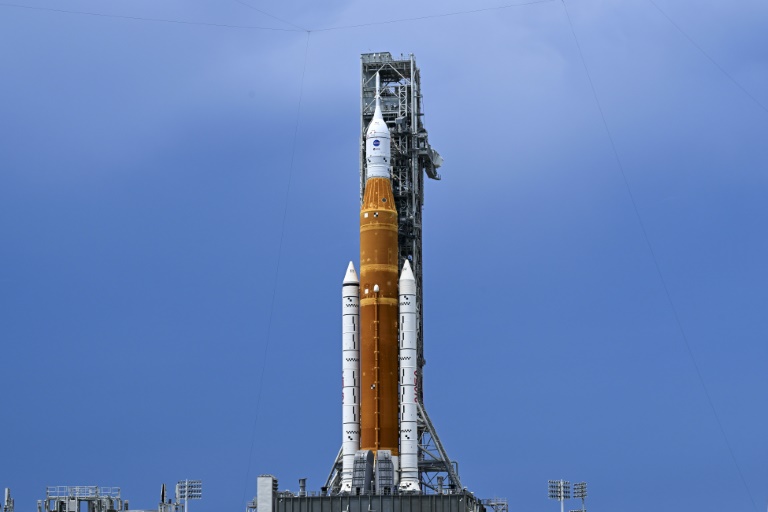
After technical issues halted its first launch attempt, NASA will try again on Saturday to get its new 30-story rocket off the ground and send its uncrewed test capsule toward the Moon.

If the massive Space Launch System (SLS) lifts off successfully, it will be historic for NASA, marking the first of its Artemis program plotting a return to the Moon, 50 years after the final Apollo mission.

The launch is scheduled for 2:17 pm (1817 GMT) from Kennedy Space Center in Florida, with a possible two-hour delay.

“Our team is ready,” said Jeremy Parsons, deputy manager of exploration ground systems at Kennedy Space Center, on Friday.

“They are getting better with every attempt and actually performed superbly during launch countdown number one… I think if the conditions with weather and the hardware align, we’ll absolutely go.”

Though the area around the launch site will be closed to the public, 400,000 people are expected to gather on beaches nearby to see — and hear — the most powerful vehicle that NASA has ever launched climb into space.

NASA’s initial launch attempt on Monday was halted after engineers detected a fuel leak and a sensor showed that one of the rocket’s four main engines was too hot.

Both issues have since been resolved, the launch team said.

Shortly before 06:00 am (1000 GMT), launch director Charlie Blackwell-Thompson gave the go-ahead to start filling the rocket’s tanks with cryogenic fuel.

About three million liters of ultra-cold liquid hydrogen and oxygen is expected to be pumped into the spacecraft.

And the weather appears to be cooperating: the US Space Force predicts a 60 percent chance of favorable weather at the scheduled liftoff time, growing to 80 percent later in the launch window.

If something requires NASA to stand down again on Saturday, there are backup opportunities on Monday or Tuesday. After that, the next launch window will not be until September 19, due to the Moon’s position.

The purpose of the Artemis 1 mission is to verify that the Orion capsule, which sits atop the SLS rocket, is safe to carry astronauts in the future.

Mannequins equipped with sensors are standing in for astronauts on the mission and will record acceleration, vibration and radiation levels.

– Apollo’s twin sister –

It will take several days for the spacecraft to reach the Moon, flying around 60 miles (100 kilometers) at its closest approach. The capsule will fire its engines to get to a distant retrograde orbit (DRO) of 40,000 miles beyond the Moon, a record for a spacecraft rated to carry humans.

The trip is expected to last around six weeks and one of its main objectives is to test the capsule’s heat shield, which at 16 feet in diameter is the largest ever built.

On its return to Earth’s atmosphere, the heat shield will have to withstand speeds of 25,000 miles per hour and a temperature of 5,000 degrees Fahrenheit (2,760 degrees Celsius) — roughly half as hot as the Sun.

Artemis is named after the twin sister of the Greek god Apollo, after whom the first Moon missions were named.

Unlike the Apollo missions, which sent only white men to the Moon between 1969 and 1972, Artemis missions will see the first person of color and the first woman step foot on the lunar surface.

Fittingly, NASA’s first woman launch director, Blackwell-Thompson, will give the final “go” for liftoff on Saturday.

A successful Artemis 1 mission will come as a huge relief to the US space agency, after years of delays and cost overruns.

A government audit estimates the program’s cost will grow to $93 billion by 2025, with each of its first four missions clocking in at a whopping $4.1 billion per launch.

The next mission, Artemis 2, will take astronauts to the Moon without landing on its surface.

The crew of Artemis 3 is to land on the Moon in 2025 at the earliest, with later missions envisaging a lunar space station and a sustainable presence on the lunar surface.

According to NASA chief Bill Nelson, a crewed trip to the red planet aboard Orion, which would last several years, could be attempted by the end of the 2030s.

NASA Moon rocket ready for second attempt at liftoff

After technical issues halted its first launch attempt, NASA will try again on Saturday to get its new 30-story rocket off the ground and send its unmanned test capsule towards the Moon.

If the massive Space Launch System (SLS) lifts off successfully, it will not only be awe-inspiring but also historic for NASA, marking the first of its Artemis program plotting a return to the Moon, fifty years after the final Apollo mission.

The launch is scheduled for 2:17 pm local time (1817 GMT) from Kennedy Space Center in Florida, with a possible two-hour delay if necessary.

“Our team is ready,” said Jeremy Parsons, deputy manager of exploration ground systems at Kennedy Space Center, on Friday.

“They are getting better with every attempt and actually performed superbly during launch countdown number one… I think if the conditions with weather and the hardware align, we’ll absolutely go.”

Though the area around the launch site will be closed to the public, hundreds of thousands of people are expected to gather on beaches nearby to see — and hear — the most powerful vehicle that NASA has ever launched climb into space.

NASA’s initial launch attempt on Monday was halted after engineers detected a fuel leak and a sensor showed that one of the rocket’s four main engines was too hot.

Both issues have since been resolved, and the weather appears to be cooperating: the US Space Force predicts a 60 percent chance of favorable weather at the scheduled liftoff time, growing to 80 percent later in the launch window.

If something requires NASA to stand down again on Saturday, there are backup opportunities on Monday or Tuesday. After that, the next launch window will not be until September 19 at the earliest, due to the Moon’s position.

The purpose of the Artemis 1 mission is to verify that the Orion capsule, which sits atop the SLS rocket, is safe to carry astronauts in the future.

Mannequins equipped with sensors are standing in for astronauts on the mission and will record acceleration, vibration and radiation levels.

– Apollo’s twin sister –

It will take several days for the spacecraft to reach the Moon, flying around 60 miles (100 kilometers) at its closest approach. The capsule will fire its engines to get to a distant retrograde orbit (DRO) of 40,000 miles beyond the Moon, a record for a spacecraft rated to carry humans.

The trip is expected to last around six weeks and one of its main objectives is to test the capsule’s heat shield, which at 16 feet in diameter is the largest ever built.

On its return to Earth’s atmosphere, the heat shield will have to withstand speeds of 25,000 miles per hour and a temperature of 5,000 degrees Fahrenheit (2,760 degrees Celsius) — roughly half as hot as the Sun.

Artemis is named after the twin sister of the Greek god Apollo, after whom the first Moon missions were named.

Unlike the Apollo missions, which sent only white men to the Moon between 1969 and 1972, Artemis missions will see the first person of color and the first woman step foot on the lunar surface.

Fittingly, NASA’s first woman launch director, Charlie Blackwell-Thompson, will give the final “go” for liftoff on Saturday.

A successful Artemis 1 mission will come as a huge relief to the US space agency, after years of delays and cost overruns.

A government audit estimates the program’s cost will grow to $93 billion by 2025, with each of its first four missions clocking in at a whopping $4.1 billion per launch.

The next mission, Artemis 2, will take astronauts to the Moon without landing on its surface.

The crew of Artemis 3 is to land on the Moon in 2025 at the earliest, with later missions envisaging a lunar space station and a sustainable presence on the lunar surface.

According to NASA chief Bill Nelson, a manned trip to the red planet aboard Orion, which would last several years, could be attempted by the end of the 2030s.

US approves $1.1 billion in arms for Taiwan, angering China

The United States on Friday announced a $1.1 billion arms package for Taiwan, vowing to keep boosting the island’s defenses as tensions soar with Beijing, which warned Washington of “counter-measures.”

The sale comes a month after House Speaker Nancy Pelosi defiantly visited the self-governing democracy, prompting mainland China to launch a show of force that could be a trial run for a future invasion.

The package — the largest for Taiwan approved under President Joe Biden’s administration — includes $665 million for contractor support to maintain and upgrade a Raytheon early radar warning system in operation since 2013 that would warn Taiwan about an incoming attack.

Taiwan will also spend $355 million on 60 Harpoon Block II missiles, which can track and sink incoming vessels if China launches an assault by water.

The deal also includes $85.6 million for more than 100 Sidewinder missiles, a mainstay of Western militaries for their air-to-air firepower.

Taiwanese Presidential Office spokesman Chang Tun-han in a statement thanked the United States for its continued support for the island’s security and defense. 

“This arms sale will not only help our soldiers fight against grey zone coercion, it will also enhance the island’s early warning capabilities against long range ballistic missiles,” he said.

The announcement of the sale comes one day after Taiwanese forces shot down an unidentified commercial drone amid a sudden spate of mysterious incursions that have unnerved the island following the earlier show of force by Beijing, which said it fired ballistic missiles over the capital Taipei.

China, calling Taiwan an “inalienable” part of its territory, urged the United States to “immediately revoke” the arms sales.

“It sends wrong signals to ‘Taiwan independence’ separatist forces and severely jeopardizes China-US relations and peace and stability across the Taiwan Strait,” said Liu Pengyu, spokesman for the Chinese embassy in Washington.

“China will resolutely take legitimate and necessary counter-measures in light of the development of the situation,” he added.

– ‘Essential’ for Taiwan –

A spokesperson for the State Department, which approved the sale, said the package was “essential for Taiwan’s security” and stressed that the United States still recognized only Beijing and not Taipei.

“We urge Beijing to cease its military, diplomatic and economic pressure against Taiwan and instead engage in meaningful dialogue with Taiwan,” the spokesperson said in a statement.

The sales “are routine cases to support Taiwan’s continuing efforts to modernize its armed forces and to maintain a credible defensive capability,” the spokesperson said on condition of anonymity in line with protocol.

“The United States will continue to support a peaceful resolution of cross-Strait issues, consistent with the wishes and best interests of the people on Taiwan.”

The sale needs the approval of the US Congress, which is virtually assured as Taiwan enjoys strong support across party lines.

Ahead of the visit by Pelosi, who is second in line to the White House, Biden officials quietly made the case to China that she did not represent the administration’s policy, as Congress is a separate and equal branch of government.

The weapons approval, by contrast, clearly comes from the Biden administration, although it is consistent with sales since 1979 when the United States switched recognition to Beijing but agreed to maintain Taiwan’s capacity for self-defense.

Biden, on a trip to Tokyo in May, appeared to break with decades of US policy by saying the United States would defend Taiwan directly if it was attacked although his aides later walked back his remarks, insisting that US policy remained deliberately ambiguous.

China considers Taiwan a province awaiting reunification, by force if necessary. China’s nationalists set up a rival government in Taiwan in 1949 after losing the civil war on the mainland, although the island has since blossomed into a vibrant democracy and major technological hub.

Russia’s invasion of Ukraine has raised growing questions on whether China may follow suit in Taiwan and whether the island is equipped to defend itself.

In a July appearance, CIA chief Bill Burns said that Chinese President Xi Jinping was still determined to assert control over Taiwan but that Russia’s woes in Ukraine may have prompted Beijing to wait and make sure it would have an overwhelming military advantage.

New York polio case stirs fear, vaccine push

When Brittany Strickland heard that the United States recorded its first polio case in almost a decade, she was “deathly scared” — the 33-year-old wasn’t vaccinated against the disabling disease.

“My mom was an anti-vaxxer, so I found out that I had never had any polio vaccines as a child,” the designer explained to AFP, after finally receiving a shot this week.

Strickland was inoculated in Pomona, in New York’s Rockland County where the first US polio case since 2013 was identified in July.

Since then, the disease has been detected in wastewater samples in the area, as well as in a neighboring county and in New York City sewage, suggesting the virus is spreading.

The developments are leading experts to fear that polio, once one of the most feared diseases in America but now endemic to just a couple of developing countries, may wreak devastation stateside again. 

“I had considered it a virus that was on its way to extinction,” John Dennehy, a virologist at the City University of New York, told AFP.

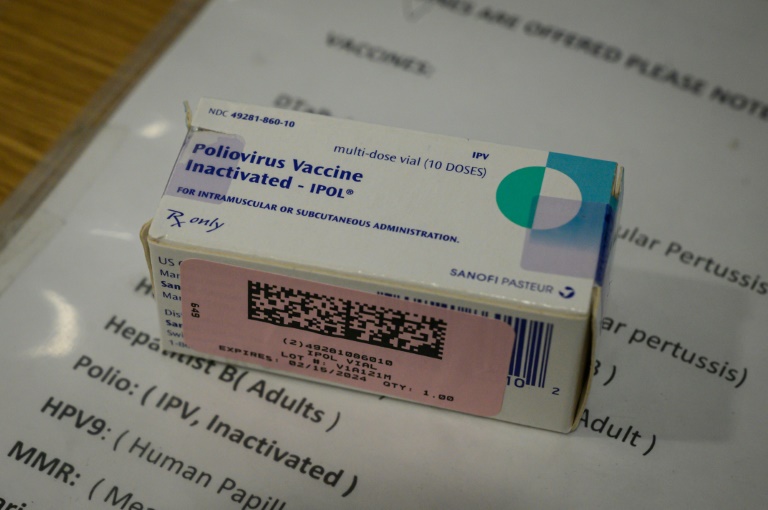
Health officials are urging anyone not immunized to get vaccinated, with Rockland County offering free shots.

The area, 30 miles (48 kilometers) north of Manhattan, has a polio vaccination rate well below the national average.

Only 60 percent of two-year-olds have received a vaccine, compared to 79 percent statewide, New York’s health department says.

Nationally, the figure is 92 percent, according to the Centers for Disease Control and Prevention that recommends people receive the first of four doses at two months old.

Polio is a crippling and potentially fatal viral disease that mainly affects children under the age of five, but can be devastating to unvaccinated adults.

Periodic outbreaks killed thousands of children and left thousands more in wheelchairs and leg braces before a vaccine was developed in the late 1950s.

A massive global effort in recent decades has come close to wiping out the disease, with wild poliovirus now only existing in Afghanistan and Pakistan.

The last naturally occurring US cases of polio were reported in 1979.

“It’s horrifying,” said Strickland. “You don’t think it’s gonna happen here, and then a bunch of people don’t get vaccinated and now we’re in this situation.”

Polio is extremely contagious and can spread from person to person through stools, sneezes, coughs and contaminated water before infected people even show symptoms.

– ‘Silver lining’ –

Analysis of the Rockland case led officials to believe that the original source of the infection was someone who had received the oral polio vaccine, which was discontinued in the United States in 2000.

OPV replicates in the gut and can be passed to others through fecal-contaminated water. While weaker than wild poliovirus, the variant can cause serious illness and paralysis in the unvaccinated.

The case identified in July was in a young man who was not inoculated and the disease was causing him paralysis, officials said.

They said he had not traveled abroad, suggesting the disease had transmitted locally.

Local news reports say the infected man was a member of the Orthodox Jewish community, where vaccine hesitancy tends to run high.

Rockland is home to a large population of Orthodox Jews. Last week, more than a dozen rabbis published an open letter urging members to get vaccinated.

Shoshana Bernstein, an independent health communicator and Orthodox Jew who is educating members on the importance of getting immunized, says “any community that’s more insular” is susceptible to anti-vax messaging.

“The silver lining with polio is that we do have elders in the community who can talk from first-hand experience. In a community that very much values the family system and its elders, that does make an impact,” she told AFP.

While it is too early to say whether the solitary case is part of a limited or more widespread outbreak, Dennehy fears it could just be “the tip of the iceberg.”

“Only a proportion of the people who are infected will ever show any symptoms, and only a fraction of those people will ever get paralytic polio,” he said.

“But if enough people are getting infected, eventually we start seeing more and more paralytic polio.”

Heat waves: what you need to know

A blistering heat wave is baking the western United States, the latest to blast the northern hemisphere in a summer that has brought extreme temperatures across Europe, Asia and North America.

Climatologists say the kiln-like conditions in California, Nevada and Arizona are caused by a heat dome — a huge bubble of stationary high pressure that is trapping ever-hotter air.

And, they say, human-caused climate change is making these oppressive heat waves worse — hotter, longer and more frequent.

Here’s what you need to know about heat waves.

– What is a heat wave? –

Anyone suffering through sultry nights and sweltering days knows they’re in a heat wave, but there are a few technical definitions.

The one the US government chooses is: at least two consecutive days when the minimum temperature for the area is hotter than 85 percent of July and August days in the same area, based on historical averages.

That minimum usually comes at night, which is important — after a very hot day, our bodies tend to cool off at night. But if the temperature remains elevated, that’s much harder. This is when people get ill.

It’s also important to localize the definition. People accustomed to 85 Fahrenheit (29 Celsius) days are likely not fazed by 90 degrees. But if you live in a chilly, damp spot and the mercury hits 90, you’ll find it much harder to cope.

– What causes heat waves? –

Generally it’s an area of high pressure that parks itself in one spot, forming a heat dome — imagine a huge greenhouse that lets in the sun’s heat, but won’t let any air flow through.

The high pressure prevents clouds from forming as it pushes air downwards, compressing and heating the air — think of how a tire gets hot as you pump more air in.

Jet streams — air that flows high in the Earth’s atmosphere — usually move pressure systems around the planet.

But they can meander. As the waves of a jet stream widen, they slow and can even stop. This is what leaves a ridge of high pressure in one place.

– Are heat waves dangerous? –

Yes, very. More people die from the heat every year in the United States than from any other extreme weather, including floods, tornadoes, and cold snaps, according to government figures.

A ferocious heat wave in Spain and Portugal in July left more than 1,700 people dead.

And hundreds died last year when a heat wave frazzled Canada and the western US, with temperatures of up to 121F (49C).

When it’s very hot, our bodies find it more difficult to keep cool, which can result in a “cascade of illnesses,” according to the World Health Organization.

These include heat cramps, heat exhaustion, heatstroke, and hyperthermia.

“Deaths and hospitalizations from heat can occur extremely rapidly (same day), or have a lagged effect (several days later) and result in accelerating death or illness in the already frail,” the WHO says.

That means anyone who already suffers from problems with their heart or respiratory system is particularly at risk.

The effects of intense heat are not evenly felt across societies, and tend to be more acute in poorer, and more marginalized communities. 

Homeless people or those who work outside during the heat of the day are obviously at risk, but so are people living in neighborhoods without tree cover, or near to sources of pollution like roads.

– What is climate change doing? –

Like all weather phenomena, climate change is super-charging heat waves.

Human activity, specifically the burning of fossil fuels, has warmed the Earth by an average of around 1.9F (1.2C) since pre-industrial times. Much of this warming has happened in the last 50 years.

US government data shows heat waves worsening in concert with a warming planet: Every decade since the 1960s they have got longer, hotter and more frequent.

“Their frequency has increased steadily, from an average of two heat waves per year during the 1960s to six per year during the 2010s and 2020s,” the Environmental Protection Agency says.

“In recent years, the average heat wave in major US urban areas has been about four days long. This is about a day longer than the average heat wave in the 1960s.”

A study after last year’s record-breaking heat wave in Canada found it would have been “virtually impossible” without human-caused climate change.

The World Weather Attribution group said that global warming, caused by greenhouse gas emissions, made the heat wave at least 150 times more likely to happen.

California opens cooling centers for heat wave vulnerable

It is too hot in Nelly Amaya’s place when the mercury surges into triple digits, driven by the punishing heat wave gripping the western United States.

“We don’t have air conditioning at our house, we only have a fan,” Amaya, a retiree, told AFP. 

“We come here because we can’t stay at home.”

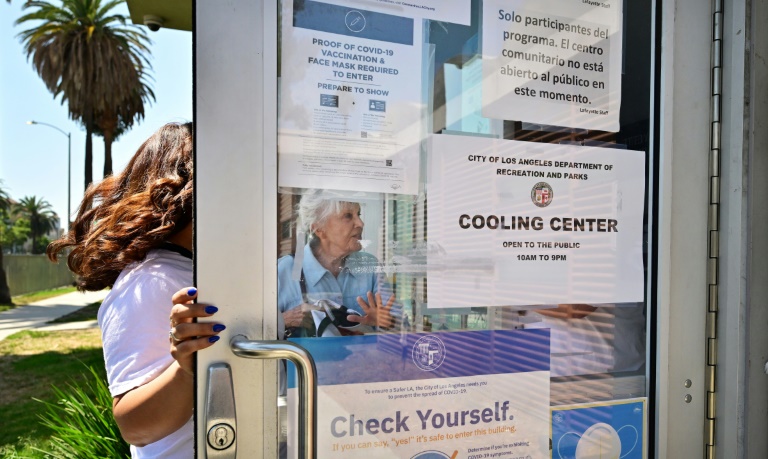
Amaya is one of hundreds of people in Los Angeles who are making use of the 40 cooling centers set up by the county’s emergency department as a fearsome heat dome sends temperatures soaring.

The centers have been established in libraries, recreation and park facilities, and senior living facilities, offering shelter in air-conditioned rooms and cold drinks during the heat of the day.

Forecasters have issued an excessive heat warning for most of California, as well as parts of Nevada and Arizona, with thermometers logging highs over 110 Fahrenheit (43 Celsius) in some places.

The oppressive heat is expected to last well into next week, smothering a holiday weekend, with little relief in the way of cooler nights.

Doctors say when temperatures remain elevated for long periods — particularly overnight — it puts strains on the human body that can cause a cascade of illness, sometimes even leading to death.

Joseph Riser of the Los Angeles emergency management department said the city was doing its best to look out for those in need of help when the mercury rises over 100 Fahrenheit.

“Once that hits that peak… then the plans we have for adverse weather kick in and we begin rallying the troops, getting the supplies, making sure which centers can be open and that we have enough,” he said.

– ‘Stay hydrated’ –

The effects of intense heat are not evenly felt across societies, and tend to be more acute in poorer and more marginalized communities. 

Homeless people or those who work outside during the heat of the day are obviously at risk, but so are people living in neighborhoods without tree cover, or near to sources of pollution like roads.

“It may be people who are living in homes where there’s no air conditioning, and maybe people who are unhoused,” Riser said.

“It may be just young people seeking shelter from the heat, from maybe a home where the air conditioning doesn’t work very well.”

For Ruth Rivera, the Lafayette Park center near downtown Los Angeles is a godsend.

“It helps a lot, we have to stay hydrated, because it’s really hot outside,” she said.

The operator of California’s creaking electricity grid on Friday called a third consecutive “Flex Alert,” asking households to conserve power and turn up their thermostats to help reduce power demand.

“Reducing energy use during a Flex Alert can help stabilize the power grid during tight supply conditions and prevent further emergency measures, including rotating power outages,” California Independent Service Operator said.

The heat dome is expected to last well into next week, with thermometers set to peak at 116 degrees Fahrenheit in some densely populated areas around Los Angeles over the upcoming Labor Day holiday weekend.

It is not unusual for southern California to experience heat waves in September, but temperatures above 100 degrees Fahrenheit are considered hot even for a place almost perpetually baked by sunshine.

Scientists say global warming, which is being driven chiefly by the unchecked burning of fossil fuels, is making natural weather variations more extreme.

Heat waves are getting hotter and more intense, while storms are getting wetter and, in many cases, more dangerous.

Google allows Parler app back into Play Store

Google allowed social media network Parler back into its Play Store Friday, more than a year after banning the platform popular with conservatives in the wake of the insurrection at the US Capitol.

Google pulled the Parler app from its online marketplace just days after the deadly attack on the seat of US government on January 6, 2021, saying it had allowed “egregious content” that could incite more violence.

Parler had become a haven for far-right personalities who say they have been censored by other social media platforms such as Twitter. 

The attack on the Capitol, incited in part by online misinformation and violent rhetoric on sites such as Parler, was carried out by far-right supporters of former president Donald Trump, who sought to overturn the results of the 2020 election which he lost to Joe Biden.

Parler was allowed back in the Play Store after meeting requirements regarding removing abusive posts and blocking users who break the app’s rules, according to Google.

“All apps on Google Play that feature user generated content are required to implement robust moderation practices that prohibit objectionable content,” a Google spokesperson said in response to an AFP inquiry.

“Apps are able to appear on Google Play provided they comply with Play’s developer policies.”

Parler agreed to abide by Play Store rules and modified its app for Android-powered mobile devices to comply with its policies, according to Google.

Versions of the Parler app tailored for iPhones or iPads were also banned at Apple’s App Store after the insurrection.

But they were put back on its virtual shelves last year after updates aimed at curbing incitements to violence, Apple said at the time.

Parler claimed to have more than 20 million users before being pulled from the Apple and Google online marketplaces.

Conservatives backing Trump’s bid to overturn his election loss sparked a migration to alternative social media sites whose lax moderation policies have allowed misinformation to flourish.

Google allows Parler app back into Play Store

Google allowed social media network Parler back into its Play Store Friday, more than a year after banning the platform popular with conservatives in the wake of the insurrection at the US Capitol.

Google pulled the Parler app from its online marketplace just days after the deadly attack on the seat of US government on January 6, 2021, saying it had allowed “egregious content” that could incite more violence.

Parler had become a haven for far-right personalities who say they have been censored by other social media platforms such as Twitter. 

The attack on the Capitol, incited in part by online misinformation and violent rhetoric on sites such as Parler, was carried out by far-right supporters of former president Donald Trump, who sought to overturn the results of the 2020 election which he lost to Joe Biden.

Parler was allowed back in the Play Store after meeting requirements regarding removing abusive posts and blocking users who break the app’s rules, according to Google.

“All apps on Google Play that feature user generated content are required to implement robust moderation practices that prohibit objectionable content,” a Google spokesperson said in response to an AFP inquiry.

“Apps are able to appear on Google Play provided they comply with Play’s developer policies.”

Parler agreed to abide by Play Store rules and modified its app for Android-powered mobile devices to comply with its policies, according to Google.

Versions of the Parler app tailored for iPhones or iPads were also banned at Apple’s App Store after the insurrection.

But they were put back on its virtual shelves last year after updates aimed at curbing incitements to violence, Apple said at the time.

Parler claimed to have more than 20 million users before being pulled from the Apple and Google online marketplaces.

Conservatives backing Trump’s bid to overturn his election loss sparked a migration to alternative social media sites whose lax moderation policies have allowed misinformation to flourish.

Strong evidence of obstruction by Trump, says his ex Justice chief

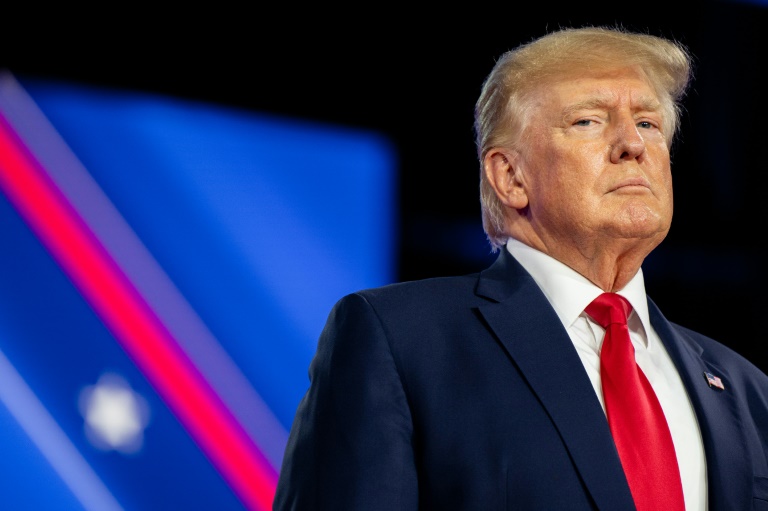
Donald Trump’s former attorney general said Friday the US government appeared justified in raiding the former president’s home to recover classified materials — and that he suspected they have “good” evidence of obstruction.

Legal pressure on Trump has ratcheted up since the FBI’s August 8 raid, with details emerging of documents labeled secret improperly stored at his Mar-a-Lago resort home in Florida, his team delaying authorities’ access to the material, and then falsely claiming they had turned over all classified papers.

“For them to have taken things to the current point, they probably have good evidence,” Bill Barr, who led the Justice Department in the latter half of the Trump administration, said on Fox News.

“If they clearly have the president moving stuff around, hiding stuff in his desk, and telling people to dissemble with the government, they may be inclined to bring that case,” he said.

Barr spoke after a Florida court filing by the Justice Department detailed what the Federal Bureau of Investigation retrieved in its raid on the former president’s estate, which is also an exclusive club for dues-paying members.

The filing showed highly classified government documents, including some marked “Top Secret,” were discovered in his personal office, two months after Trump attorneys told Justice officials in a sworn certification that there were no more classified materials on the premises.

The detailed list of what was seized August 8 also showed Trump held on to more than 11,000 unclassified government records that he claims are his to keep — but legally are owned by the National Archives.

“People say this was unprecedented,” Barr said of the raid. “Well, it’s also unprecedented for a president to take all this classified information and put them in a country club.”

The list appeared to provide support for the Justice Department’s probe.

In their warrant for the raid, they cited the Espionage Act which forbids the retention and sharing of highly sensitive documents pertaining to national defense; the law against obstructing investigation; and a law against destruction of government documents.

Among the papers seized were 18 documents labelled “top secret”, 53 labelled “secret” and another 31 marked “confidential.”

Of those, seven top secret files, 17 secret files and three confidential files were retrieved from Trump’s private office.

Agents also found several dozen empty folders labelled “classified” in the office, raising speculation that sensitive documents may have been lost, destroyed or moved.

Much of what agents found there and in a separate storeroom was intermixed in boxes with Trump’s personal legal files, clothing, gifts and books gathered in his final days in the White House in January 2021.

– ‘Smash and grab’ –

Trump has sued to have the documents turned over to a neutral “special master,” a move which could slow the government’s investigation and possibly allow him to regain control of files he does not want made public or used in other probes.

The August action came after 15 months of haggling between Trump, the National Archives and FBI over the records he took with him to Florida.

In January he gave back 15 boxes of material to the Archives which, after discovering top secret documents mixed in with them, informed the Justice Department.

Using a subpoena, top Justice officials visited the estate in June and collected another batch of classified files.

But it discovered that more remained there, and obtained a court warrant to return in August.

Trump spokesman Taylor Budowich said on Twitter that the inventory of seized items, including personal affects, “was not some surgical, confined search and retrieval that the Biden administration claims, it was a smash and grab,” a reference to jewellery store thefts.

Barr, who as attorney general supported Trump strongly in 2019 and 2020 but is now a critic, called Trump’s actions with the documents “foolish” and “inexplicable.”

But he also said he hopes the Justice Department will not charge Trump.

“Given the fact that this is a former president, given the state of the nation, and given the fact that the government has gotten its documents back, does it really make sense to bring a case?”

The Florida judge, Aileen Cannon, still has not ruled on Trump’s request for a special master to take control of the documents for a review.

Williams looks to extend US Open farewell, Wu eyes upset

Serena Williams aims to extend her emotional farewell tour at the US Open on Friday as China’s Wu Yibing targets a mammoth upset against men’s champion Daniil Medvedev.

After knocking out world number two Anett Kontaveit on Wednesday, Williams has fans daring to dream of a fairytale 24th Grand Slam title as she prepares to retire from the sport.

The 40-year-old tennis icon will crank up the hysteria further on Friday if she beats Australia’s Ajla Tomljanovic on the Arthur Ashe Stadium court to reach the last 16.

Williams, who didn’t play for a year before returning to singles tennis at Wimbledon in June, has been careful to dampen down expectations in what is likely to be her final tournament, dismissing her chances of victory as “fan fantasy.”

But the manner of her second round win over Kontaveit, when she reeled off a series of vintage winners to clinch the decisive third set, has left many wondering if the fantasy may yet become reality.

“There are a lot of very strong girls there in the draw but I think if she plays really good tennis, I think she always has a chance to win,” was Kontaveit’s verdict.

Certainly, Williams’ path to what would be a record-equalling 24th Grand Slam singles final has been blown open by the early demise of several higher-ranked rivals.

Three of the top four seeds have already fallen, as well as both of last year’s finalists, 2021 champion Emma Raducanu and Canada’s Leylah Fernandez.

Williams herself says she is playing without pressure, liberated from the customary expectation that accompanied her Grand Slam campaigns through the years.

“I don’t have anything to prove, I don’t have anything to win. I have absolutely nothing to lose,” Williams said.

Williams’ campaign will also be boosted by the fact that she is no longer expending energy in the doubles.

The veteran and elder sister Venus were eliminated in the first round on Thursday.

Elsewhere in the women’s draw on Friday, Tunisia’s fifth-seeded Ons Jabeur made it to the fourth round at the 10th attempt with a 4-6, 6-4, 6-3 victory over 31st seed Shelby Rogers.

“I know that I don’t play the best on hard court, but it’s always amazing to see how I’m improving, how I’m pushing my limits,” Jabeur said. 

“I just don’t want to stop here … I’m just gonna keep fighting and keep pushing and breaking records here.”

Jabeur will face 18th seed Veronika Kudermetova in the last 16. The Russian blew past Hungary’s Dalma Galfi 6-2, 6-0.

– David v Goliath –

In the men’s draw, Chinese youngster Wu would create one of the biggest shocks in Open history with an upset in his ‘David & Goliath’ meeting with world number one Medvedev.

The charismatic 22-year-old has been quietly accumulating milestones in New York, becoming the first man from China to win a Grand Slam singles match in 63 years in the opening round, before becoming the first Chinese man ever to reach the third round of the US Open with Wednesday’s win over Nuno Borges.

Wu, winner of the US Open junior crown in 2017, hardly played for three years prior to this season due to injury and the Covid-19 pandemic.

In March, his world ranking stood at 1,869, but he has rapidly ascended to 174th since then.

“I think there’s more to come,” Wu said after his second round defeat of Borges. 

“I feel like I have this level to play here in the Grand Slam. Hopefully I keep health, keep playing more Grand Slams.”

Wu has been part of a successful contingent of Chinese players at the US Open. 

Four Chinese women have reached the third round of the tournament, another Grand Slam first, and one of them, Zhang Shuai advanced to the fourth round on Friday with a 6-2, 6-4 win over Canada’s Rebecca Marino.

Close Bitnami banner
Bitnami