US Business

Greenpeace drops boulders on UK seabed to curb bottom-trawling fishing

Greenpeace UK said Friday it had dropped 18 large boulders on the seabed in a marine conservation zone off the coast of southwest England to prevent “destructive” industrial fishing.

The environmental campaigners sailed to the western part of the Channel between the UK and France, loaded with the boulders of Portland limestone, each weighing between 500 and 1,400 kilograms (1,100 and 3,100 pounds). 

The giant rocks were dropped on Thursday from its Arctic Sunrise research vessel in an area of the South West Deeps (East) Conservation Zone, which lies some 190 kilometres (120 miles) off Land’s End, the most westerly point of mainland England.

“We are placing large limestone boulders on the seabed to create a protective underwater barrier which will put the area off limits to destructive fishing,” Anna Diski, UK oceans campaigner, told AFP on board.

The action would make it “impossible for them to drag the heavy fishing gear along the seabed, destroying the habitat and disturbing the carbon”, she added.

Artists created a giant ammonite sculpture — inspired by the fossil often found in Portland limestone — out of one of the boulders, which was also placed on the seabed.

The names of the action’s celebrity backers and supportive politicians were also inscribed on the rocks.

“Right now, there’s an industrial fishing frenzy happening in UK waters, and what’s our government doing about it?” asked Greenpeace UK’s head of oceans, Will McCallum.

“Greenpeace UK has created this underwater boulder barrier as a last resort to protect the oceans. We’d much rather the government just did their job.” 

McCallum said it was “outrageous” that bottom-trawlers are allowed to operate on the seabed in protected areas.

“They destroy huge swathes of the marine ecosystem and make a mockery of our so-called ‘protection’,” he added.

– ‘Get serious!’ –

The action comes after the latest round of UN talks to try to secure protection for marine life in international waters broke up without agreement.

Greenpeace said the 4,600-square-kilometre (1,776-square-mile) South West Deeps is “one of the most heavily fished so-called Marine Protected Areas in the UK”.

It cited figures from the Global Fishing Watch monitoring agency that said that 110 vessels — more than half of them from France — fished for 18,928 hours in area in the 18 months to July.

Of that, industrial vessels with bottom-towed fishing gear spent 3,376 hours fishing in the zone. 

Bottom-trawling is only banned in four out of the UK’s 76 offshore Marine Protected Areas, and the government is consulting over the possible bans in a further 13. 

“The problem is that the majority of the UK’s MPAs don’t have any actual protection at all,” said Jasmine Watkiss, one of those on board the Arctic Sunrise.

“The government needs to get serious about ocean protection before it’s too late.

“The next prime minister should ban industrial fishing in all of the UK’s Marine Protected Areas by tweaking commercial fishing licences,” she added.

Neil Whitney, a fisherman from East Sussex in southern England, said bottom-trawling was “like ploughing a combine harvester through a national park”. 

“They’re able to take out entire ecosystems, and if they cause a fishery to collapse, they just move on to the next one,” he added.

“Industrial fishing, like fly-shooters (vessels which tow lead-weighted ropes along the seabed) and supertrawlers (trawlers over 100 metres long), are killing our marine environment, and small-scale UK fishermen like me are losing out big time.”

He said it was “absurd” that bottom-trawling was legal in MPAs. “MPAs are supposed to be the areas where fish stocks can recover, so that we fish for generations to come.

“It’s a case of common sense.”

video-jwp/phz/lth
Markets mixed as traders focus on US jobs data

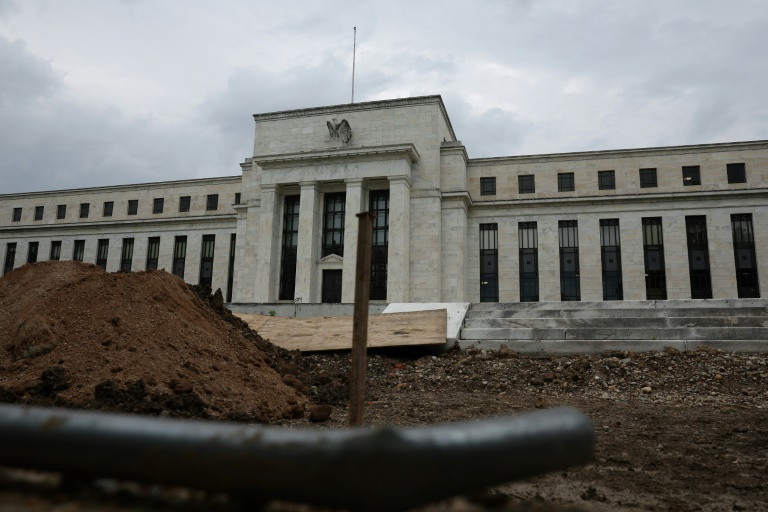
Asian markets were mixed Friday and the dollar held gains as rate hike expectations grew, with traders now focusing on a key US jobs report later in the day.

Oil prices rose on fading expectations for an Iran nuclear deal anytime soon, but they remained under severe pressure from a range of issues including the strengthening dollar, Covid lockdowns in China and worries about a demand-sapping recession.

Healthy readings on US factory activity, unemployment claims and private jobs creation indicated the world’s top economy remained strong despite rising interest rates and four-decade-high inflation.

But analysts said the figures were a case of “good news in bad news” as they would give the US Federal Reserve more room to keep tightening monetary policy, with officials lining up to commit to beating inflation even if that causes a recession. 

Bets are increasing on a third successive 75-basis-point increase at its September meeting. 

OANDA’s Edward Moya warned Fed officials could even start considering rising into 2023, with inflation data later this month becoming increasingly important.

“If the economy remains resilient over the next few months, the Fed-funds futures market might believe the Fed won’t be done tightening at the end of year,” he wrote in a commentary.

“Markets might start pricing in a February rate hike as well, if pricing pressures don’t show further signs of easing with the September 13th inflation report.”

Wall Street ended with a late rally, with the Dow and S&P 500 snapping a four-day retreat, though the Nasdaq extended its losing streak.

European markets fell again after record inflation figures ramped up expectations the European Central Bank will announce a big increase in costs next Thursday.

Asia continued to struggle, though there were some positives.

Hong Kong, Sydney, Singapore, Seoul, Taipei and Bangkok fell, while Tokyo was marginally down. Shanghai, Wellington, Mumbai, Manila and Jakarta were up.

London, Paris and Frankfurt all rose Friday morning.

Michael Hewson, of CMC Markets, said: “Not only did we hear Fed chairman Jay Powell offer the unequivocal message that the Federal Reserve would continue to hike rates until the job is done, but every Fed official since then has offered the same message, along with the postscript that rates were unlikely to come down any time soon, and certainly not before 2024.

“This week’s economic data out of the US has merely served to bolster the message in respect of the Fed’s determination to raise rates and mitigate any concern their actions might have on the US economy.”


– Dollar strength –

With US rates expected to keep rising, the dollar has rallied to highs not seen for decades including against the pound and euro.

On Thursday, it broke 140 yen for the first time since 1998.

Expectations are that it could strengthen further as the Bank of Japan keeps rates ultra-low to kickstart the economy, while analysts said an intervention to prop up the yen was unlikely as the effects would be brief.

The dollar also hit a record against the Philippine peso, increasing pressure for a rate hike by the country’s central bank, which has signalled it wants to ease up on tightening.

The rising greenback was adding to downward pressure on oil, which is priced in dollars, while demand hopes were dealt a hefty blow Thursday by news that China had effectively locked down around 20 million people in Chengdu to fight a Covid outbreak.

The closure of the tech manufacturing hub follows a similar shutdown of Shanghai, which sent shockwaves through the economy, and has battered hopes for a recovery in the world’s number-two economy.

“Lockdowns/mass testing continues to impede stimulus efforts to revive the economy, with announced stimulus to date unlikely to gain much traction if the zero-Covid policy continues,” said National Australia Bank’s Tapas Strickland.

“Given Chengdu is also a production hub for high tech manufacturing,” global supply chains will likely continue to be disrupted, he added.

Crude, which has lost all the gains made in the aftermath of Russia’s February invasion of Ukraine, rose Friday after US officials said they had received a new response from Iran on reviving a nuclear deal but that it was not “constructive”.

– Key figures at around 0810 GMT –

Tokyo – Nikkei 225: FLAT at 27,650.84 (close)

Hong Kong – Hang Seng Index: DOWN 0.7 percent at 19,452.09 (close)

Shanghai – Composite: UP 0.1 percent at 3,186.48 (close)

London – FTSE 100: UP 0.5 percent at 7,182.14

Dollar/yen: UP at 140.28 yen from 140.20 yen on Thursday

Euro/dollar: UP at $0.9985 from $0.9947

Pound/dollar: UP at $1.1559 from $1.1542

Euro/pound: UP at 86.38 pence from 86.16 pence

West Texas Intermediate: UP 2.1 percent at $88.46 per barrel

Brent North Sea crude: UP 2.0 percent at $94.23 per barrel

New York – Dow: UP 0.5 percent at 31,656.42 (close)

Amid financial uncertainty, Brazilians prepare to vote

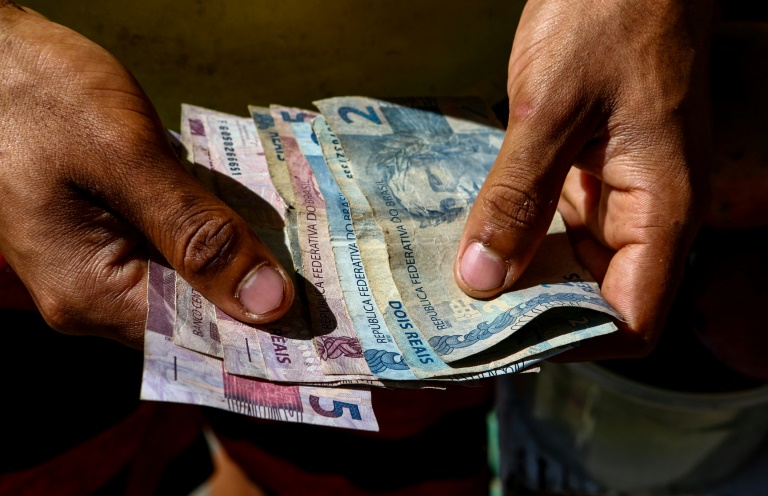
At a market in Sao Paulo, Celia Silva counts her cash, hoping Brazil will soon be “back on track” and she will no longer struggle to make ends meet.

The 61-year-old marketing analyst is not alone: a majority of Brazilians will be thinking of their own pocketbooks first when they cast ballots in presidential elections next month.

According to a Datafolha poll, the economy will be the top issue for 53 percent of Brazilians as they choose among candidates including far-right incumbent Jair Bolsonaro and leftist ex-president Luiz Inacio Lula da Silva. 

The largest economy in Latin America has shown recent signs of recovery after being hit hard by the coronavirus pandemic.

It registered growth of 1.1 percent in the first quarter and 1.2 percent in the second after advancing 4.6 percent in 2021 compared to 2020, when the economy declined 3.9 percent.

These figures, coupled with a drop in unemployment to 9.1 percent and a 0.68 percent decline in inflation in July, are campaign gold for Bolsonaro, who insists they prove Brazil is “better than many other countries” in a gloomy global context. 

As economic metrics have improved, so has Bolsonaro’s standing in the pre-election opinion polls.

But Datafolha figures released Thursday showing Lula still garnering more favor, with 45 percent of the vote intention, compared to 32 percent for Bolsonaro.

In July, the difference was 18 points.

– ‘Worst is over’ –

“The worst is over: there is an improvement in the economy and employment recovered faster than expected,” said Igor Barenboim, chief economist of the consulting firm Reach Capital.

In the three months to July, unemployment reached a near seven-year low of 9.1 percent, down from 13.7 percent in the same period in 2021.

But the effects are not yet always apparent in Brazilian households.

“The average real wage of the Brazilian (2,693 reais, about $540 per month) is at one of the worst levels in a decade,” said Andre Perfeito of the Necton consultancy.

Despite slowing in July, year-on-year inflation was at 10.07 percent and has been in the double digits since September last year.

The July drop, said Perfeito, was largely due to fuel and electricity price cuts backed by the government of Bolsonaro, with his eye on re-election.

But food inflation continued a relentless climb to reach 14.72 percent over the 12 months to July, aggravating the scourge of hunger. 

“There have never been so many hungry people in Brazil,” said Paulo Feldmann, professor of economics at the University of Sao Paulo.

“Brazil is today above the world average… Sixty percent of the population today suffer from food insecurity,” he added.

While Bolsonaro publicly denies a hunger crisis, Lula could benefit from public anger over the issue, Feldmann said.

When Lula was president from 2003 to 2010, some 30 million Brazilians emerged from poverty, according to official data.

– No more chicken feet –

But the left is up against the government machine.

For the period August to December this year, the government has increased allowances under an aid program started during the Lula presidency from 400 reais (about $80) to 600 reais ($120) per month for more than 20 million poor families. 

It has also increased gas subsidies and expanded truck drivers’ benefits.

Amid these announcements, perceptions about the economy improved, with 58 percent of Brazilians polled expecting their finances to improve in the coming months, according to Datafolha. 

The market forecast for 2022 economic growth for Brazil has increased from 0.28 percent in January to 2.1 percent, according to the latest central bank survey.

This was due in large part due to higher global prices for commodities, of which Brazil is a major exporter.

But analysts warn of a fiscal mismatch caused by increased public spending.

A big question is whether the fiscal debt, at 77.6 percent of GDP, “will follow an explosive trajectory,” said Barenboim. 

At the Sao Paulo market, shoppers are clear about their voting intention.

Edelzuita Ferreira, a 71-year-old pensioner, falls in the Lula camp.

“If Lula wins, it will be easy, we will be able to eat meat again. With Bolsonaro, we are eating chicken feet,” she told AFP.

But Adriana Do Prado, 38, will opt for Bolsonaro.

“We are only standing today thanks to the things he (Bolsonaro) did during the pandemic,” she said, underlining the president’s refusal to shutter public establishments, such as the restaurant she runs, as a Covid preventative measure.

“If it wasn’t for him, I would have had to close,” said Do Prado.

Google's immersive Street View could be glimpse of metaverse

Fifteen years after its launch, a Google Maps feature that lets people explore faraway places as though standing right there is providing a glimpse of the metaverse being heralded as the future of the internet.

There was not yet talk of online life moving to virtual worlds when a “far-fetched” musing by Google co-founder Larry Page prompted Street View, which lets users of the company’s free navigation service see imagery of map locations from the perspective of being there.

Now the metaverse is a tech-world buzz, with companies including Facebook parent Meta investing in creating online realms where people represented by videogame-like characters work, play, shop and more.

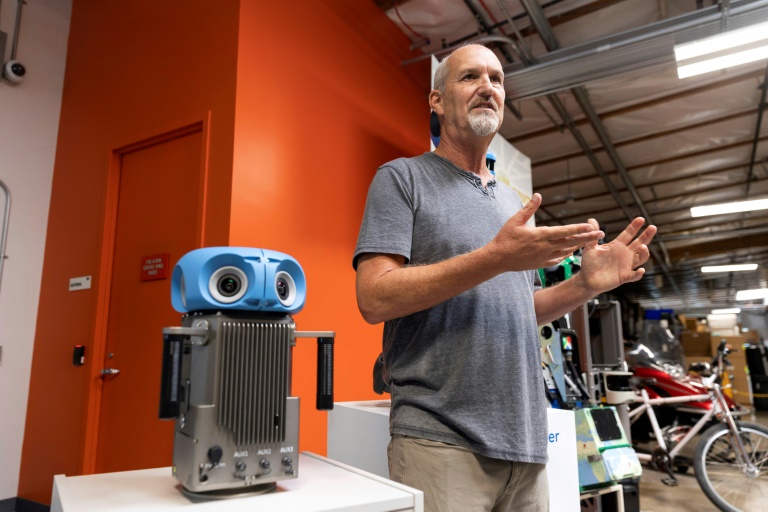
“Larry Page took a video camera and stuck it out the window of his car,” Google senior technical program manager Steven Silverman said, while showing AFP the garage where the company builds cameras for cars, bikes, backpacks, and even snowmobiles dispatched to capture 360-degree images worldwide.

“He was talking to some of his colleagues at the time, saying, ‘I bet we can do something with this.’ That was the start of Street View.”

Street View lets people click on locations in Google Maps to see what it might look like were they at that spot, and even look around.

Now, the internet behemoth is introducing an “immersive view” that fuses Street View images with artificial intelligence to create “a rich, digital model of the world,” Miriam Daniel, Google Maps Experiences vice president, said in a post.

“You’ll be able to experience what a neighborhood, landmark, restaurant or popular venue is like — and even feel like you’re right there before you ever set foot inside,” Daniel said.

“With a quick search, you can virtually soar over Westminster to see the neighborhood and stunning architecture of places, like Big Ben, up close.”

Google will start rolling out immersive view later this year, starting in Los Angeles, London, New York, San Francisco and Tokyo.

– From maps to metaverse –

Street View imagery has been gathered in more than 100 countries and territories, ranging from places such as Mount Fuji and Grand Canyon National Park to the Great Barrier Reef.

“If you want to see what it’s like to go down a ski slope, you can see where that snowmobile has gone,” Silverman said, nodding toward a maroon snowmobile in the garage in the Silicon Valley city of Mountain View, California.

“That trike was really funny because it went around Stonehenge; and we put it on a barge and went down the Amazon River,” he said of another vehicle.

He pointed to a backpack camera system taken for a zip-line ride in the Amazon, to provide a bird’s-eye perspective.

Years spent capturing the real world in 360-degree imagery bodes well for Google when it comes to a future in which internet life shifts to immersive digital worlds, said Creative Strategies tech analyst Carolina Milanesi.

“It absolutely plays into the metaverse,” Milanesi said.

“The idea of a digital twin of the world is certainly one aspect of it that Google will solve.”

Silverman reasoned that, in a sense, Street View has been giving users a virtual experience for more than a decade, and the imagery naturally lends itself to depicting the real world in virtual settings.

“Ideally, that metaverse, that world that we move into, we’re going to be there,” Silverman said.

Scores of tech firms have been rushing to invest in building the metaverse, a loose term covering the growing ecosystem of interactive online worlds, games and 3D meeting places that are already attracting millions of users.

Facebook renamed its parent company to Meta last year to emphasize its virtual reality vision, and opened Horizon World virtual reality platform to the North American public.

Earlier this year, Japanese giant Sony and Lego’s Danish parent firm announced a $2 billion investment in US gaming powerhouse Epic Games for its work toward joining the metaverse vision for the internet’s future.

In the form of video games such as Epic’s hit Fortnite, the precursors of the metaverse already exist in minimalist ways, with people coming together not only to play, but also to interact and participate in events.

What started as a “far-fetched idea” by Page is “critical to our mapping efforts — letting you see the most up-to-date information about the world, while laying the foundation for a more immersive, intuitive map,” Google Maps product director Ethan Russell said in a blog post.

Google's immersive Street View could be glimpse of metaverse

Fifteen years after its launch, a Google Maps feature that lets people explore faraway places as though standing right there is providing a glimpse of the metaverse being heralded as the future of the internet.

There was not yet talk of online life moving to virtual worlds when a “far-fetched” musing by Google co-founder Larry Page prompted Street View, which lets users of the company’s free navigation service see imagery of map locations from the perspective of being there.

Now the metaverse is a tech-world buzz, with companies including Facebook parent Meta investing in creating online realms where people represented by videogame-like characters work, play, shop and more.

“Larry Page took a video camera and stuck it out the window of his car,” Google senior technical program manager Steven Silverman said, while showing AFP the garage where the company builds cameras for cars, bikes, backpacks, and even snowmobiles dispatched to capture 360-degree images worldwide.

“He was talking to some of his colleagues at the time, saying, ‘I bet we can do something with this.’ That was the start of Street View.”

Street View lets people click on locations in Google Maps to see what it might look like were they at that spot, and even look around.

Now, the internet behemoth is introducing an “immersive view” that fuses Street View images with artificial intelligence to create “a rich, digital model of the world,” Miriam Daniel, Google Maps Experiences vice president, said in a post.

“You’ll be able to experience what a neighborhood, landmark, restaurant or popular venue is like — and even feel like you’re right there before you ever set foot inside,” Daniel said.

“With a quick search, you can virtually soar over Westminster to see the neighborhood and stunning architecture of places, like Big Ben, up close.”

Google will start rolling out immersive view later this year, starting in Los Angeles, London, New York, San Francisco and Tokyo.

– From maps to metaverse –

Street View imagery has been gathered in more than 100 countries and territories, ranging from places such as Mount Fuji and Grand Canyon National Park to the Great Barrier Reef.

“If you want to see what it’s like to go down a ski slope, you can see where that snowmobile has gone,” Silverman said, nodding toward a maroon snowmobile in the garage in the Silicon Valley city of Mountain View, California.

“That trike was really funny because it went around Stonehenge; and we put it on a barge and went down the Amazon River,” he said of another vehicle.

He pointed to a backpack camera system taken for a zip-line ride in the Amazon, to provide a bird’s-eye perspective.

Years spent capturing the real world in 360-degree imagery bodes well for Google when it comes to a future in which internet life shifts to immersive digital worlds, said Creative Strategies tech analyst Carolina Milanesi.

“It absolutely plays into the metaverse,” Milanesi said.

“The idea of a digital twin of the world is certainly one aspect of it that Google will solve.”

Silverman reasoned that, in a sense, Street View has been giving users a virtual experience for more than a decade, and the imagery naturally lends itself to depicting the real world in virtual settings.

“Ideally, that metaverse, that world that we move into, we’re going to be there,” Silverman said.

Scores of tech firms have been rushing to invest in building the metaverse, a loose term covering the growing ecosystem of interactive online worlds, games and 3D meeting places that are already attracting millions of users.

Facebook renamed its parent company to Meta last year to emphasize its virtual reality vision, and opened Horizon World virtual reality platform to the North American public.

Earlier this year, Japanese giant Sony and Lego’s Danish parent firm announced a $2 billion investment in US gaming powerhouse Epic Games for its work toward joining the metaverse vision for the internet’s future.

In the form of video games such as Epic’s hit Fortnite, the precursors of the metaverse already exist in minimalist ways, with people coming together not only to play, but also to interact and participate in events.

What started as a “far-fetched idea” by Page is “critical to our mapping efforts — letting you see the most up-to-date information about the world, while laying the foundation for a more immersive, intuitive map,” Google Maps product director Ethan Russell said in a blog post.

NASA readies for Saturday Moon rocket launch attempt

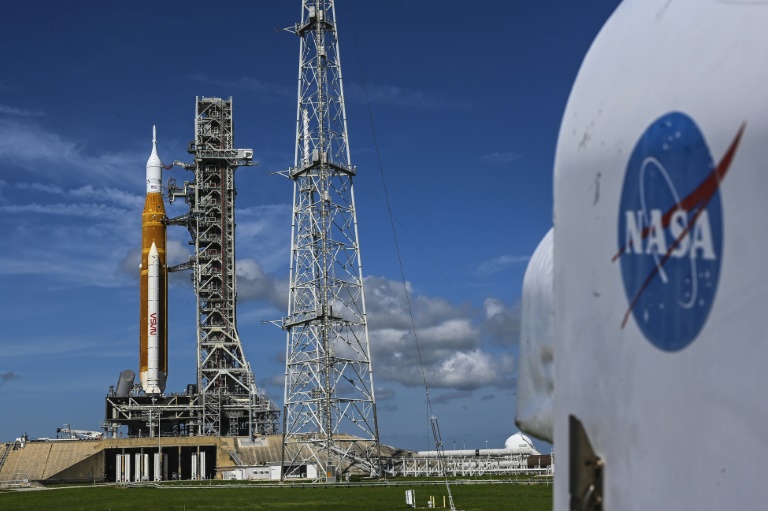
The stars appear to be aligned for NASA’s Moon rocket to finally blast off on Saturday, with weather forecasts favorable and technical issues that postponed the launch earlier this week resolved.

Liftoff is scheduled for 2:17 pm local time (1817 GMT) from Kennedy Space Center in Florida, with the potential for up to a two-hour delay if necessary.

The chance for favorable weather conditions within that window sat at 60 percent Thursday evening. 

“The weather looks good,” and isn’t expected to be a “showstopper,” forecast analyst Melody Lovin said at a press conference.

NASA has also been working to correct the technical difficulties that lead to the last-minute delay of the launch during its originally scheduled window Monday.

At first, it seemed that one of the rocket’s four main engines was too hot, though it turned out just to be a reading from a “bad sensor,” the rocket’s program manager John Honeycutt said Thursday. 

In the future, the incorrect information will simply be ignored. 

Then a fuel tank leak had to be patched. 

“We were able to find what we believe is the source of the leak and correct that,” launch director Charlie Blackwell-Thompson said. 

The Artemis 1 mission is an uncrewed test flight. It will be the first launch for the Space Launch System (SLS) rocket, the most powerful in the world and which has been in development for more than a decade. 

“There’s no guarantee that we’re going to get off on Saturday, but we’re going to try,” Artemis mission manager Mike Sarafin said. 

If the mission goes ahead Saturday, the Orion capsule fixed atop the rocket will spend 37 days in space, orbiting the Moon from about 60 miles (100 kilometers) away. 

It is the Orion that will then take future astronauts back to the Moon — including the first woman and the first person color to walk on its surface — in 2025 at the earliest. 

Artemis is named for the twin sister of the Greek god Apollo, for whom the first Moon missions were named. With the new flagship program, NASA hopes to test technology someday meant for sending humans to Mars.

Biden slams Trump 'extremist' assault on democracy

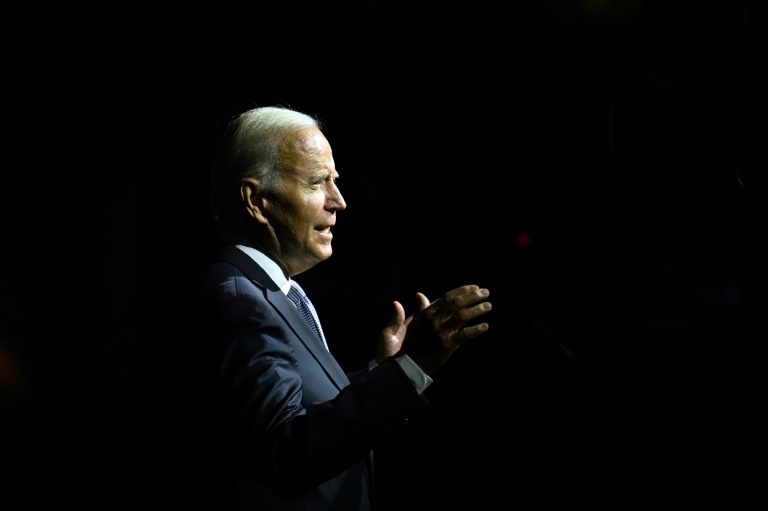
US President Joe Biden took fierce aim Thursday at Donald Trump and his “extremist” supporters, labeling them enemies of American democracy in a prime-time address that sought to fire up voters ahead of key midterm elections.

Speaking in Philadelphia, the cradle of US democracy, the president launched an extraordinary assault on those Republicans who embrace Trump’s “Make America Great Again” ideology — and urged his own supporters to fight back.

“Donald Trump and the MAGA Republicans represent an extremism that threatens the very foundations of our republic,” thundered Biden, speaking near the spot where the Declaration of Independence and the US Constitution were adopted more than two centuries ago.

“They embrace anger. They thrive on chaos. They live not in the light of truth but in the shadow of lies.” 

“There is no place for political violence in America. Period. None. Ever,” warned the 79-year-old Democrat — in a reference to last year’s assault on the US Capitol by hardline Trump supporters refusing to accept his defeat.

Citing the nationwide assault on abortion rights by hardline conservatives — and fears for other freedoms ranging from contraception access to same-sex marriage — the US leader charged that “MAGA forces” were “determined to take this country backwards.” 

With control of Congress in the balance come November, Biden appealed directly to mainstream Republicans to join forces with Democrats and repudiate Trump’s brand of politics — which still holds sway over much of his party.

And he made it clearer than ever that Democrats intended to make the midterms a referendum on Trump, saying the Republican Party was wholly “dominated, driven and intimidated” by the former president and his MAGA agenda.

“And that is a threat to this country,” he said, insisting American democracy had to be defended. 

“Protect it. Stand up for it,” Biden urged.

Trump hit back at Biden on his Truth Social site late on Thursday, saying the president is unfit for office.

“If he doesn’t want to Make America Great Again, which through words, action, and thought, he doesn’t, then he certainly should not be representing the United States of America!” Trump wrote.

– ‘Soul of the Nation’ –

Biden’s speech — billed as an address on the “battle for the Soul of the Nation” — harked back to an article he published in The Atlantic magazine in 2017, after a deadly white nationalist rally in Charlottesville, Virginia, that he says spurred his presidential run. 

“We are living through a battle for the soul of this nation,” Biden wrote then.

After his election in 2020, the veteran politician initially planned for more dialogue with moderate Republican lawmakers, and through economic and social policies aimed at the middle class.

But the talk of reconciliation has died down, as polls seem to indicate the Democratic leader is better served by being more aggressive.

Last week, Biden accused Trump’s supporters of being consumed by “semi-fascism.”

The term sparked indignation in conservative ranks — with Republican Senate Minority Leader Kevin McCarthy charging that it “vilifies” millions of “hardworking, law-abiding citizens.

“With all due respect Mr President, there’s nothing wrong with America’s soul,” retorted Republican senator and longtime Trump loyalist Lindsey Graham after Biden’s speech. 

“The American people are hurting because of your policies.”

A new poll published Thursday by The Wall Street Journal shows that if the midterm elections were held today, 47 percent of eligible voters would cast ballots for Democrats, and 44 percent would vote Republican. 

In March, the Republicans had a five-point advantage.

The Democrats are hoping for an upset in November’s elections, in which all of the seats in the House of Representatives and a third of the Senate seats are on the ballot. Traditionally, the midterms don’t favor the ruling party.

Things have been going well for Biden lately, however, with inflation slowing, a series of his landmark reforms finally pushed through Congress and Trump fighting off a series of criminal investigations. Polls show widespread support for abortion rights, which could put many Republicans on the back foot.

This would be enough to give hope to the Democrats, who are battling to keep their hold on the House and preserve their Senate majority — or even strengthen it.

And Pennsylvania will be crucial for any of that to happen.

Historically a key battleground in US politics, the Keystone State will likely prove vital to both parties in the midterms — and Biden will visit three times this week alone.

Trump is also planning an appearance in the state on Saturday to support his candidate in the Senate race, TV physician Mehmet Oz.

Most Asian markets down as traders focus on US jobs data

Asian markets struggled again Friday and the dollar held gains as rate hike expectations grew, with traders now focusing on a key US jobs report later in the day.

Oil prices rose on fading expectations for an Iran nuclear deal anytime soon, but they remained under severe pressure from a range of issues including the strengthening dollar, Covid lockdowns in China, and worries about a demand-sapping recession.

Healthy readings on US factory activity, unemployment claims and private jobs creation indicated the world’s top economy remained strong despite rising interest rates and four-decade-high inflation.

But analysts said the figures were a case of “good news in bad news” as they would give the US Federal Reserve more room to keep tightening monetary policy, with officials lining up to commit to beating inflation even if that causes a recession. 

Bets are increasing on a third successive 75-basis-point increase at its September meeting. 

OANDA’s Edward Moya warned Fed officials could even start considering rising into 2023, with inflation data later this month becoming increasingly important.

“If the economy remains resilient over the next few months, the Fed-funds futures market might believe the Fed won’t be done tightening at the end of year,” he wrote in a commentary.

“Markets might start pricing in a February rate hike as well, if pricing pressures don’t show further signs of easing with the September 13th inflation report.”

Wall Street ended with a late rally, with the Dow and S&P 500 snapping a four-day retreat, though the Nasdaq extended its losing streak. European markets fell again after record inflation figures ramped up expectations the European Central Bank will announce a big increase in costs next Thursday.

Asia continued to wobble, though there were some positives.

Tokyo, Hong Kong, Sydney, Wellington and Taipei fell, while Shanghai, Seoul, Manila and Jakarta edged up.

Meera Pandit at JPMorgan Asset Management said the near-term outlook was not positive.

“We don’t have a lot of reasons to be bullish in this type of environment for the next couple of weeks and months,” she told Bloomberg Television.

– Dollar gains –

With US rates expected to keep rising, the dollar has rallied to highs not seen for decades including against the pound and euro,

On Thursday, it broke 140 yen for the first time since 1998.

Expectations are that it could strengthen further as the Bank of Japan keeps rates ultra-low to kickstart the economy, while analysts said an intervention to prop up the yen was unlikely as the effects would be brief.

The rising greenback was adding to downward pressure on oil, which is priced in dollars, while demand hopes were dealt a hefty blow Thursday by news that China had effectively locked down around 20 million people in Chengdu to fight a Covid outbreak.

The closure of the tech manufacturing hub follows a similar shutdown of Shanghai, which sent shockwaves through the economy, and has battered hopes for a recovery in the world’s number-two economy.

“Lockdowns/mass testing continues to impede stimulus efforts to revive the economy, with announced stimulus to date unlikely to gain much traction if the zero-Covid policy continues,” said National Australia Bank’s Tapas Strickland.

“Given Chengdu is also a production hub for high tech manufacturing,” global supply chains will likely continue to be disrupted, he added.

Crude, which has lost all the gains made in the aftermath of Russia’s February invasion of Ukraine, rose Friday after US officials said they had received a new response from Iran on reviving a nuclear deal but that it was not “constructive”.

– Key figures at around 0300 GMT –

Tokyo – Nikkei 225: DOWN 0.2 percent at 27,604.37 (break)

Hong Kong – Hang Seng Index: DOWN 0.7 percent at 19,461.46

Shanghai – Composite: UP 0.1 percent at 3,186.68

Dollar/yen: DOWN at 140.12 yen from 140.20 yen on Thursday

Euro/dollar: UP at $0.9960 from $0.9947

Pound/dollar: UP at $1.1546 from $1.1542

Euro/pound: UP at 86.26 pence from 86.16 pence

West Texas Intermediate: UP 1.3 percent at $87.72 per barrel

Brent North Sea crude: UP 1.2 percent at $93.43 per barrel

New York – Dow: UP 0.5 percent at 31,656.42 (close)

London – FTSE 100: DOWN 1.9 percent at 7,148.50 (close)

Most Asian markets down as traders focus on US jobs data

Asian markets struggled again Friday and the dollar held gains as rate hike expectations grew, with traders now focusing on a key US jobs report later in the day.

Oil prices rose on fading expectations for an Iran nuclear deal anytime soon, but they remained under severe pressure from a range of issues including the strengthening dollar, Covid lockdowns in China, and worries about a demand-sapping recession.

Healthy readings on US factory activity, unemployment claims and private jobs creation indicated the world’s top economy remained strong despite rising interest rates and four-decade-high inflation.

But analysts said the figures were a case of “good news in bad news” as they would give the US Federal Reserve more room to keep tightening monetary policy, with officials lining up to commit to beating inflation even if that causes a recession. 

Bets are increasing on a third successive 75-basis-point increase at its September meeting. 

OANDA’s Edward Moya warned Fed officials could even start considering rising into 2023, with inflation data later this month becoming increasingly important.

“If the economy remains resilient over the next few months, the Fed-funds futures market might believe the Fed won’t be done tightening at the end of year,” he wrote in a commentary.

“Markets might start pricing in a February rate hike as well, if pricing pressures don’t show further signs of easing with the September 13th inflation report.”

Wall Street ended with a late rally, with the Dow and S&P 500 snapping a four-day retreat, though the Nasdaq extended its losing streak. European markets fell again after record inflation figures ramped up expectations the European Central Bank will announce a big increase in costs next Thursday.

Asia continued to wobble, though there were some positives.

Tokyo, Hong Kong, Sydney, Wellington and Taipei fell, while Shanghai, Seoul, Manila and Jakarta edged up.

Meera Pandit at JPMorgan Asset Management said the near-term outlook was not positive.

“We don’t have a lot of reasons to be bullish in this type of environment for the next couple of weeks and months,” she told Bloomberg Television.

– xxxx –

With US rates expected to keep rising, the dollar has rallied to highs not seen for decades including against the pound and euro,

On Thursday, it broke 140 yen for the first time since 1998.

Expectations are that it could strengthen further as the Bank of Japan keeps rates ultra-low to kickstart the economy, while analysts said an intervention to prop up the yen was unlikely as the effects would be brief.

The rising greenback was adding to downward pressure on oil, which is priced in dollars, while demand hopes were dealt a hefty blow Thursday by news that China had effectively locked down around 20 million people in Chengdu to fight a Covid outbreak.

The closure of the tech manufacturing hub follows a similar shutdown of Shanghai, which sent shockwaves through the economy, and has battered hopes for a recovery in the world’s number-two economy.

“Lockdowns/mass testing continues to impede stimulus efforts to revive the economy, with announced stimulus to date unlikely to gain much traction if the zero-Covid policy continues,” said National Australia Bank’s Tapas Strickland.

“Given Chengdu is also a production hub for high tech manufacturing,” global supply chains will likely continue to be disrupted, he added.

Crude, which has lost all the gains made in the aftermath of Russia’s February invasion of Ukraine, rose Friday after US officials said they had received a new response from Iran on reviving a nuclear deal but that it was not “constructive”.

– Key figures at around 0300 GMT –

Tokyo – Nikkei 225: DOWN 0.2 percent at 27,604.37 (break)

Hong Kong – Hang Seng Index: DOWN 0.7 percent at 19,461.46

Shanghai – Composite: UP 0.1 percent at 3,186.68

Dollar/yen: DOWN at 140.12 yen from 140.20 yen on Thursday

Euro/dollar: UP at $0.9960 from $0.9947

Pound/dollar: UP at $1.1546 from $1.1542

Euro/pound: UP at 86.26 pence from 86.16 pence

West Texas Intermediate: UP 1.3 percent at $87.72 per barrel

Brent North Sea crude: UP 1.2 percent at $93.43 per barrel

New York – Dow: UP 0.5 percent at 31,656.42 (close)

London – FTSE 100: DOWN 1.9 percent at 7,148.50 (close)

NASA readies for Saturday Moon rocket launch attempt

The stars appear to be aligned for NASA’s Moon rocket to finally blast off on Saturday, with weather forecasts favorable and technical issues that postponed the launch earlier this week resolved.

Liftoff is scheduled for 2:17 pm local time (1817 GMT) from Kennedy Space Center in Florida, with the potential for up to a two-hour delay if necessary.

The chance for favorable weather conditions within that window sat at 60 percent Thursday evening. 

“The weather looks good,” and isn’t expected to be a “showstopper,” forecast analyst Melody Lovin said at a press conference.

NASA has also been working to correct the technical difficulties that lead to the last-minute delay of the launch during its originally scheduled window Monday.

At first, it seemed that one of the rocket’s four main engines was too hot, though it turned out just to be a reading from a “bad sensor,” the rocket’s program manager John Honeycutt said Thursday. 

In the future, the incorrect information will simply be ignored. 

Then a fuel tank leak had to be patched. 

“We were able to find what we believe is the source of the leak and correct that,” launch director Charlie Blackwell-Thompson said. 

The Artemis 1 mission is an uncrewed test flight. It will be the first launch for the Space Launch System (SLS) rocket, the most powerful in the world and which has been in development for more than a decade. 

“There’s no guarantee that we’re going to get off on Saturday, but we’re going to try,” Artemis mission manager Mike Sarafin said. 

If the mission goes ahead Saturday, the Orion capsule fixed atop the rocket will spend 37 days in space, orbiting the Moon from about 60 miles (100 kilometers) away. 

It is the Orion that will then take future astronauts back to the Moon — including the first woman and the first person color to walk on its surface — in 2025 at the earliest. 

Artemis is named for the twin sister of the Greek god Apollo, for whom the first Moon missions were named. With the new flagship program, NASA hopes to test technology someday meant for sending humans to Mars.

Close Bitnami banner
Bitnami