US Business

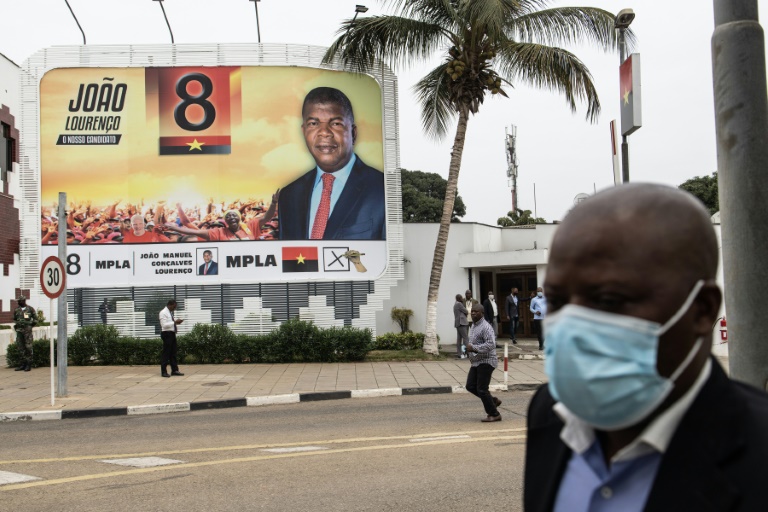
Angola's leader faces uphill battle after narrow win

President Joao Lourenco faces Herculean tasks of fixing Angola’s economy and winning over its disillusioned youth as he enters his second term with decimated support, analysts say.

Lourenco’s Movement for the Liberation of Angola (MPLA), which has been in power for nearly half century, won 51.17 percent of the vote in the August 24 elections for the National Assembly.

The leader of the winning party automatically ascends to the presidency, which means Lourenco has earned a second spell at the helm.

But it was also the MPLA’s poorest showing since the first democratic vote in the former Portuguese colony in 1992. In 2017, it picked up 61 percent of the ballot.

The falloff will hike pressure on Lourenco to deliver on touted economic reforms and will reinvigorate the opposition, Augusto Santana of the non-profit Democracy Works Foundation predicted.

He could face possible street protests and dissent from within the MPLA, Santana told AFP by phone from Luanda, the capital.

“He faces quite a lot of challenges,” he said.

Lourenco, 68, came to power in 2017 when he took over from long-time ruler Jose Eduardo dos Santos, who bequeathed a country deep in recession and riddled by corruption and nepotism.

The former general embarked on an ambitious reform programme to tackle graft, attract foreign investors and diversify the oil-dependent economy. 

– ‘No quick fix’ –

The country eventually emerged from a five-year slump in 2021, but reforms have not translated into better living conditions for most Angolans.

Analyst Justin Pearce said that, because of the economic crisis, Lourenco’s government had so far not “been able to address the immediate demands from the poor in society”.

Now the president will be expected to deliver long-promised economic diversification away from oil.

But “there’s no quick fix,” said the Angola expert at South Africa’s Stellenbosch University.

The economic crisis, compounded by the coronavirus pandemic and a drought, has squeezed most people, pushing them into the arms of the opposition.

The leading opposition party and former rebel movement, the National Union for the Total Independence of Angola (UNITA), gained 43.95 percent of the vote, up from 26.67 percent in 2017, also winning the capital, Luanda.  

Its charismatic leader Adalberto Costa Junior, 60, has proved popular in urban areas and among youth disaffected with a ruling party many think has run out of ideas.

Turnout was low, with only about 45 percent of those registered bothering to cast their ballots. 

On Tuesday, large numbers of angry onlookers heckled a motorcade of MPLA supporters celebrating the victory in Luanda — something unthinkable only a few years ago, Santana said. 

“There will be more protests, because this time people think that there’s nothing else that the MPLA can still do, that the MPLA should just go and leave space for others to try,” he said.

– Dialogue or oppression? –

UNITA is contesting the vote’s outcome, alleging discrepancies in the count, but similar attempts have failed in the past. 

Still, it will have more lawmakers, which will give the opposition more leverage in parliament.

They could also make further gains in local elections set to be held within the next two years.

Lourenco struck a conciliatory tone in his inaugural address, pledging to promote “dialogue” and pay particular attention “to the expectations of young people”. 

But resources to turn things around are limited. 

Angola is Africa’s second largest crude producer, but it has to import back fuel to cover most of its needs, having developed only limited refining capacity over the past decades.

And while the war in Ukraine has pushed up oil prices it also raised food costs, partially offsetting gains from crude sales, said Pearce.

As this should be Lourenco’s last term, Santana added, he will also have to deal with growing internal opposition, as party cadres jostling to replace him are likely to become more vocal in their criticism of his leadership.

Alex Vines, of the UK-based think tank Chatham House, said all eyes were on the president.

“Will Lourenco really have heard what the electorate is saying? Will he… try and grow the economy, reduce inequality and provide more jobs?” he asked.

“Or will there be a… posture of increased oppression and defensiveness?”
Asian investors step up selling as rate hikes loom

Investors further unloaded equities in Asia on Thursday as they girded themselves for more interest rate hikes aimed at quelling runaway inflation, with some analysts warning that markets could retest the lows touched in June.

Data showing prices rose at a record clip in the eurozone in August reinforced fears that central banks have a long road to run before they win their battle, which has fanned warnings of a recession in the world’s leading economies.

Another drop on Wall Street came as Treasury yields — a key gauge of future interest rates — rose further as a broadly healthy report on US private jobs showed there was still plenty of wiggle room for the Fed to continue tightening monetary policy.

Meanwhile, another top Fed official signalled the bank was determined to keep lifting borrowing costs, mirroring comments by head Jerome Powell last week that there would be no let-up in the fight against inflation.

“My current view is that it will be necessary to move the Fed funds rate up to somewhat above four percent by early next year and hold it there,” said Cleveland Fed President Loretta Mester in remarks prepared ahead of an event for the Dayton Area Chamber of Commerce.

“I do not anticipate the Fed cutting the Fed funds rate target next year.”

Interest rates are currently at 2.25-2.5 percent, and there is a growing expectation they will be hiked by a bumper 75 basis points for a third successive meeting later this month.

A government jobs report Friday will be closely watched by traders hoping for an idea about the next move by the bank, which has said it will make its decision based on data.

In a further warning that policymakers had a win-at-all-costs mentality, Mester later told the audience: “Even if the economy were to go into a recession, we have to get inflation down.”

The hawkish remarks out of the Fed have dealt a hefty blow to a rally in markets from their June lows.

And some have warned that more pain could be on the way, with Frances Stacy, of Optimal Capital Advisors, telling Bloomberg Radio: “I don’t think we’ve seen the bottom for this year.”

CMC markets analyst Michael Hewson added: “When you have the likes of a typical Fed dove like Minneapolis Fed President Neel Kashkari talk about the unlikely prospect of rate cuts in 2023, it’s hard to envisage a scenario of anything other than a 75-basis-point rate hike later this month, as the Fed continues to insist that their priority is to keep going on rates until the job is done.”

The downbeat mood in New York and Europe, which is also being buffeted by a major energy crisis, spread to Asia.

Tokyo, Hong Kong, Sydney, Seoul, Mumbai, Bangkok and Taipei were all deep in the red, though Singapore, Wellington, Manila and Jakarta eked out small gains.

Shanghai gave up an early advance following news that the Chinese city of Chengdu would effectively lock down around 16 million people in a bid to contain a Covid-19 outbreak, likely dealing another blow to an already stuttering economy.

London, Paris and Frankfurt fell further in early trade.

The prospect of more US rate hikes continued to press the dollar higher against all other currencies, with the psychological 140 yen mark well within sight for the first time since 1998.

And analysts are speculating that a breach of that barrier could see the Bank of Japan intervene, though they also warned it was unlikely to make much difference owing to Tokyo’s refusal to tighten its own monetary policy despite rising prices.

“There will likely be some sort of verbal intervention as 140 approaches,” said David Lu, of NBC Financial Markets Asia.

“But an actual intervention is likely to be ineffective at this point where the dollar is rising broadly on US monetary policy prospects while there is no support for the yen from the Bank of Japan.”

The greenback was also at its strongest level against the pound since the height of the pandemic in 2020, with sterling buying less than $1.16 in afternoon Asian trade.

– Key figures at around 0810 GMT –

Tokyo – Nikkei 225: DOWN 1.5 percent at 27,661.47 (close)

Hong Kong – Hang Seng Index: DOWN 1.8 percent at 19,597.31 (close)

Shanghai – Composite: DOWN 0.5 percent at 3,184.98 (close)

London – FTSE 100: DOWN 1.0 percent at 7,212.26

Euro/dollar: DOWN at $1.0026 from $1.0054 on Wednesday

Pound/dollar: DOWN at $1.1590 from $1.1619

Euro/pound: DOWN at 86.46 pence from 86.50 pence

Dollar/yen: UP at 139.40 yen from 138.98 yen

West Texas Intermediate: DOWN 0.6 percent at $88.99 per barrel

Brent North Sea crude: DOWN 0.6 percent at $95.09 per barrel

New York – Dow: DOWN 0.9 percent at 31,510.43 (close)

Moscow approves Japan stakes in Sakhalin energy project

Two Japanese trading houses will maintain stakes in a Russian energy project despite Tokyo joining sanctions on Moscow over the war in Ukraine, as the Asian country looks to secure its power supply.

Moscow is transferring operation of the Sakhalin-2 oil and gas project to a new Russian firm, with foreign stakeholders required to apply for approval to maintain their interests.

Like other countries that have joined sanctions, Japan is seeking to reduce its reliance on Russian energy imports but struggling to find alternatives.

The resource-poor country faced a power crunch during a summer heatwave this year, and is looking ahead to a potentially difficult winter.

Mitsubishi Corp said Thursday that its 10 percent stake in the Sakhalin-2 project had been approved by Moscow, a day after Mitsui said its 12.5 percent interest had also been given the green light.

The Japanese government had backed both firms continuing in the project.

Russia supplies around nine percent of Japan’s liquified natural gas (LNG) demands, almost all of which comes from Sakhalin-2.

“This decision is extremely significant for our nation’s stable energy supply,” government spokesman Hirokazu Matsuno said at a regular briefing on Thursday.

“We will continue to monitor the situation to ensure stable LNG supplies, together with the public and private sectors.”

Japan is heavily dependent on imported fossil fuels, in part because many of its nuclear reactors have been offline since the 2011 Fukushima disaster.

The country had previously ruled out withdrawal from the Sakhalin-2 project, despite joining Western-led energy sanctions on Russia.

Last week, Prime Minister Fumio Kishida called for a push to revive the country’s nuclear power industry in a bid to tackle soaring imported energy costs linked to the war.

Before the Fukushima meltdown, around a third of Japan’s power generation came from nuclear sources, but in 2020 the figure was less than five percent.

“LNG accounts for over one-third of electricity generation in Japan, while the recent closure of ageing thermal power plants has further constrained policymakers’ options,” wrote James Brady, vice president of Teneo consultancy, in a note.

“The Sakhalin decisions reflect the pragmatic realities of keeping the country’s heat and lights on during the most challenging international energy market environment for decades.”

Volkswagen shifts gears with Oliver Blume taking wheel

Volkswagen on Thursday hands over the reins to new CEO Oliver Blume, tasked with steering the German automotive giant through challenging economic conditions after four turbulent years under his predecessor, Herbert Diess.

In July, the storied manufacturer announced its decision to part ways with Diess, who stirred up discontent with his uncompromising push to electrify the group.

Blume, the current boss of sports car brand Porsche, takes the wheel at a “really difficult time” for Volkswagen, said Matthias Schmidt, an analyst specialising in electric cars.

Russia’s invasion of Ukraine has not only compounded supply chain problems unleashed by the coronavirus pandemic, but introduced uncertainties over energy supplies across Europe.

The economic turmoil comes as Volkswagen is ploughing tens of billions into an ambitious switch to electric vehicles, opening a clutch of battery factories across Europe.

Meanwhile, the new boss will also be tasked with sorting persistent setbacks at the group’s software arm and guiding premium brand Porsche to a tricky stock market entry. 

– Electric strategy –

Diess took over at Volkswagen in 2018 with a mandate to turn the page on the “dieselgate” emissions-cheating scandal.

The Austrian’s response was to launch Volkswagen on a headlong drive into electric vehicles, but his often combative style ruffled feathers at the legacy auto manufacturer.

The 63-year-old finally lost the confidence of Volkswagen’s main shareholders — the Porsche-Piech family — as problems mounted in the group’s software division, headed by the CEO himself.

His successor, Blume, a longtime Volkswagen employee, is set to cut a more conciliatory figure than Diess, hired as an outsider from rival BMW.

“Blume is not known as someone who wages wars. He takes less risk than Diess,” Ferdinand Dudenhoeffer, head of the Center of Automotive Research, told AFP.

Following Diess’s exit, Volkswagen’s chief financial officer, Arno Antlitz, was sent out to stress that there would be “continuity” at the manufacturer.

But Blume has signalled that he could be more open to extending the life of old combustion engines with alternative fuels. 

In a recent interview with weekly Automobilwoche, Blume said he saw synthetic fuels as a “sensible complement of electric mobility”.

In theory, such “e-fuels”, made from carbon dioxide using renewable electricity, allow traditional engines to be run with almost no net carbon emissions. 

While Diess remained unconvinced by the alternative to petrol and diesel, synthetic fuels would allow Volkswagen to keep working on a future for combustion engines. 

Blume was unlikely to perform a full U-turn on the electrification plan laid out by Diess, Dudenhoeffer said. 

But the carmaker could “move a little further away from the purely electric strategy” given the risks of an abrupt move to battery-powered vehicles, he said.

– Legacies –

In the end, the issue is likely to be decided in Brussels, where lawmakers have backed a ban on new non-electric vehicles from 2035.

Blume may also chart a different course in the area of software. Where Diess led an ambitious drive to bring development almost completely in-house, Blume could be open to using more external suppliers.

“It’s a massive profit centre, that’s the reason they want to keep it all in-house,” said Schmidt, but the analyst pointed out that “you need software people to run a software company, not car people”.

Meanwhile, Blume was likely to support Volkswagen’s renewed emphasis on the American market, following years of struggles in the wake of dieselgate.

The move would mesh with a decision for Volkswagen to invest massively in developing and making its own batteries, thereby reducing its reliance on suppliers in China. 

“That could be Diess’s legacy in a way, that and getting the electrification post-dieselgate in motion, those are probably the two biggest legacies to leave behind,” said Schmidt.

Asian investors step up selling as rate hikes loom

Investors further unloaded equities in Asia on Thursday as they girded themselves for more interest rate hikes aimed at quelling runaway inflation, with some analysts warning that markets could retest the lows touched in June.

Data showing prices rose at a record clip in the eurozone in August reinforced fears that central banks have a long road to run before they win their battle, which has fanned warnings of a recession in the world’s leading economies.

Another drop on Wall Street came as Treasury yields — a key gauge of future interest rates — rose further as a broadly healthy report on US private jobs showed there was still plenty of wiggle room for the Fed to continue tightening monetary policy.

Meanwhile, another top Fed official signalled the bank was determined to keep lifting borrowing costs, mirroring comments by head Jerome Powell last week that there would be no let-up in the fight against inflation.

“My current view is that it will be necessary to move the Fed funds rate up to somewhat above four percent by early next year and hold it there,” said Cleveland Fed President Loretta Mester in remarks prepared ahead of an event for the Dayton Area Chamber of Commerce.

“I do not anticipate the Fed cutting the Fed funds rate target next year.”

Interest rates are currently at 2.25-2.5 percent, and there is a growing expectation they will be hiked by a bumper 75 basis points for a third successive meeting later this month.

A government jobs report Friday will be closely watched by traders hoping for an idea about the next move by the bank, which has said it will make its decision based on data.

In a further warning that policymakers had a win-at-all-costs mentality, Mester later told the audience: “Even if the economy were to go into a recession, we have to get inflation down.” 

The hawkish remarks out of the Fed have dealt a hefty blow to a rally in markets from their June lows.

And some have warned that more pain could be on the way, with Frances Stacy, of Optimal Capital Advisors, telling Bloomberg Radio: “I don’t think we’ve seen the bottom for this year.”

The downbeat mood in New York and Europe, which is also being buffeted by a major energy crisis, spread to Asia.

Tokyo, Hong Kong, Sydney, Seoul, Singapore, Wellington, Taipei and Jakarta were all deep in the red, though Shanghai eked out small gains with Manila.

The prospect of more US rate hikes continued to press the dollar higher against all other currencies, with the psychological 140 yen mark well within sight for the first time since 1998.

And analysts are speculating that a breach of that barrier could see the Bank of Japan intervene, though they also warned it was unlikely to make much difference owing to Tokyo’s refusal to tighten its own monetary policy despite rising prices.

“There will likely be some sort of verbal intervention as 140 approaches,” said David Lu, of NBC Financial Markets Asia.

“But an actual intervention is likely to be ineffective at this point where the dollar is rising broadly on US monetary policy prospects while there is no support for the yen from the Bank of Japan.”

– Key figures at around 0230 GMT –

Tokyo – Nikkei 225: DOWN 1.5 percent at 27,673.14 (break)

Hong Kong – Hang Seng Index: DOWN 0.8 percent at 19,795.76

Shanghai – Composite: UP 0.3 percent at 3,210.75

Euro/dollar: DOWN at $1.0026 from $1.0054 on Wednesday

Pound/dollar: DOWN at $1.1584 from $1.1619

Euro/pound: UP at 86.55 pence from 86.50 pence

Dollar/yen: DOWN at 139.62 yen from 138.98 yen

West Texas Intermediate: DOWN 0.2 percent at $89.35 per barrel

Brent North Sea crude: DOWN 0.3 percent at $95.34 per barrel

New York – Dow: DOWN 0.9 percent at 31,510.43 (close)

London – FTSE 100: DOWN 1.1 percent at 7,284.15 (close)

Secret files 'likely concealed' at Trump home to block FBI probe

Top secret documents found at Donald Trump’s Florida home were “likely concealed” to obstruct an FBI probe into the former US president’s potential mishandling of classified materials, the Department of Justice said in an explosive new court filing.

The filing released late Tuesday provides the most detailed account yet of a year-and-a-half long effort to recover hundreds of classified documents that were improperly taken to Trump’s Mar-a-Lago estate when he left office in January 2021.

And the claim of obstruction piles further legal pressure on the Republican ex-president — who denies all wrongdoing and has denounced an unprecedented FBI raid on his palatial home this month as part of a “witchhunt.”

Trump’s legal team responded Wednesday with a filing that described the government’s pursuit of the documents as “unjustified,” said the former president’s possession of sensitive information “should have never been cause for alarm,” and described the raid as “unprecedented, unnecessary, and legally unsupported.”

The August 8 raid was triggered by a review of “highly classified” records that Trump finally surrendered to authorities in January this year — after months of back and forth with the National Archives and Records Administration (NARA).

The Justice Department began investigating the matter after the 15 boxes were found to contain national defense information, including 184 documents marked as confidential, secret or top secret, a government affidavit showed.

After prompting from the FBI, Trump’s lawyer would eventually turn over an additional 38 classified documents — and provide “sworn certification” that they represented the last of the material.

But it did not stop there: the FBI went on to uncover “multiple sources of evidence” showing classified documents remained at Mar-a-Lago, the new filing says.

When agents conducted their court-ordered search, they found material so sensitive that “even the FBI counterintelligence personnel and DOJ attorneys conducting the review required additional clearances before they were permitted to review certain documents,” it says.

Strikingly, the filing included a photograph of color-coded documents spread out over a carpet, marked “SECRET” and “TOP SECRET.”

Now, as the filing made clear, prosecutors are seeking to determine whether Trump or anyone in his immediate orbit acted criminally to prevent federal agents from retrieving classified documents.

It cited “evidence that government records were likely concealed and removed from the Storage Room (at Trump’s estate) and that efforts were likely taken to obstruct the government’s investigation.” 

Trump hit back at the photo’s release in a post on his Truth Social network.

“Terrible the way the FBI, during the Raid of Mar-a-Lago, threw documents haphazardly all over the floor (perhaps pretending it was me that did it!), and then started taking pictures of them for the public to see,” he wrote.

– ‘Significantly harm’ government interest –

During the raid, the Tuesday filing says, agents found more than 100 documents with classification markings — taking the total number of secret documents recovered from the former president to more than 300.

Trump, who is weighing another White House run in 2024, has accused the Justice Department under Democratic President Joe Biden of pursuing a vendetta against him, and said the judge “should never have allowed the break-in of my home.”

The former president has taken legal action to seek the appointment of an independent party, or “special master,” to screen the seized files for materials protected by personal privilege.

The government argues that naming a special master, potentially blocking investigators’ access to the seized documents, “would significantly harm important governmental interests, including national security interests.”

In their response on Wednesday, Trump’s lawyers again insisted on the appointment of a special master.

“Assuring access by (Trump’s) counsel to the seized materials, sharing an actual (detailed) inventory, making independent attorney-client privilege assessments, and making executive privilege determinations are all responsibilities that are best served by appointment of a special master,” they wrote.

The Mar-a-Lago search warrant, personally approved by Attorney General Merrick Garland, was based on suspicions of violations of the US Espionage Act related to the illegal retention of sensitive defense documents, on suspicion of obstruction, and of illegal destruction of government documents.

Democratic congressman Adam Schiff, who chairs the House Intelligence Committee, said the actions outlined in the brief were “reckless in the extreme” and showed “deliberate” deception.

In addition to investigations in New York into his business practices, Trump faces legal scrutiny for his efforts to overturn results of the 2020 election, and for the January 6, 2021 attack on the US Capitol by his supporters.

Trump was impeached for a historic second time by the House of Representatives after the Capitol riot — he was charged with inciting an insurrection — but was acquitted by the Senate.

End of the road for New York's horse-drawn carriages?

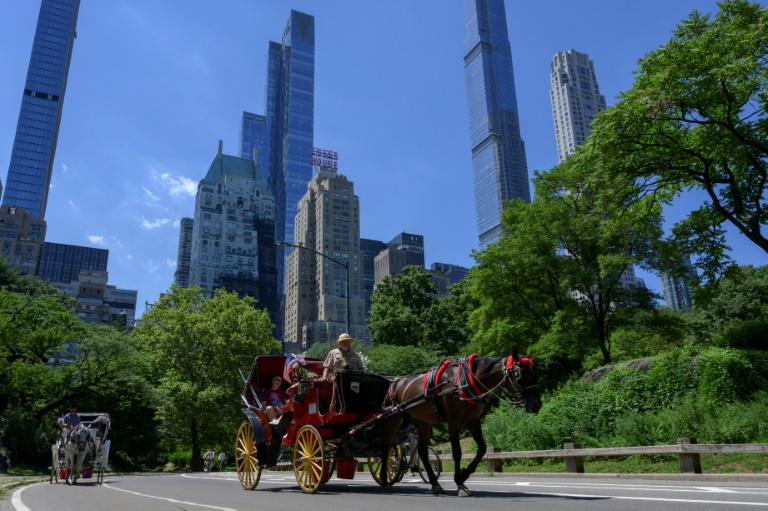
A charming, must-do tourist attraction or a cruel, outdated commercial activity? New York’s horse-drawn carriages have operated since the 1800s, but lawmakers now want to replace them with electric vehicles.

For some, the equine-driven rides around Central Park are part of the fabric of the Big Apple, like yellow taxis and Broadway shows.

But for others, the horses-for-hire are not in keeping with the ethos of a leading progressive city in 21st century America.

“Manhattan is probably the worst place in the world to have a horse work, in traffic, in noise, with pollution, in terrible heat and terrible conditions,” says council member Robert Holden, who has introduced a bill to replace the animals with horseless e-carriages by June 2024.

Animal rights activists have for years tried to shut down the industry, which comprises 130 drivers sharing 68 licenses for roughly 200 horses that live in stables in the city. 

Their latest push was given impetus this month by the collapse of a horse on busy Ninth Avenue that sparked anger after a video showing the driver shouting at the animal to get up went viral on social media.

On Instagram, supermodel Bella Hadid urged lawmakers to pass Holden’s legislation, calling the tourist rides “barbaric.”

Opponents say the horses live in cramped conditions, are often malnourished and dehydrated, get spooked by cars en route to the park, and are worked against their will.

“They’re literally treated as machines, and they’re not machines,” says Edita Birnkrant, executive director of anti-horse carriage group NYCLASS.

“This shouldn’t be happening in modern-day New York City.”

Operators say the horses are well looked after, noting that the industry is regulated by the city, with the equines and stables subject to inspections by the health and sanitation departments.

“They’re happy and healthy. You can’t make a 1,500-pound animal do something they don’t want to do,” insists Christina Hansen, who has been driving carriages in New York for 10 years.

The horses are required by law to work no more than nine hours a day and don’t operate when temperatures hit 32 degrees Celsius (90 degrees Fahrenheit) or fall below minus 7 C.

– Migrant drivers –

Forty-two-year-old Hansen, who wears a top hat when steering her horse Oreo, says each horse gets at least five weeks “vacation” on a farm every year.

She says New York would not be the same if the carriages are banned.

“We’ve been in movies and television. We’re as iconic as the Empire State Building and Statue of Liberty,” she tells AFP.

In Central Park, where 45-minute-long rides cost upwards of $160, views are mixed among tourists.

“It’s absolutely immoral,” says Briton Cailey Tyler, agreeing with a ban.

Marina Perry, from Argentina, doesn’t have a problem with the rides as long as the horses are treated well.

“It’s a cultural aspect of New York City that has been going on for generations,” she says. 

Hansen says the industry is “predominantly an immigrant business,” with drivers from 20 countries, including Italy, Ireland, Turkey, Brazil and Mexico. They can earn around $100,000 a year.

Holden’s bill has 14 sponsors and needs 26 votes to be adopted. Activists hope a vote will be held by October.

Passing the law will be difficult though, with the drivers backed by the city’s powerful transport workers union.

Hansen says “nobody wants to drive an electric golf cart,” but Holden insists the drivers will earn more with e-carriages because they will be able to work in all weather.

“It’s clean technology. It’s win-win,” he says.

US Democrats prop up right-wingers in midterm gamble

Often accused of bringing a knife to a gunfight, Democrats are finally matching Republicans for cunning in the US midterms — but their new embrace of the political dark arts is proving divisive.

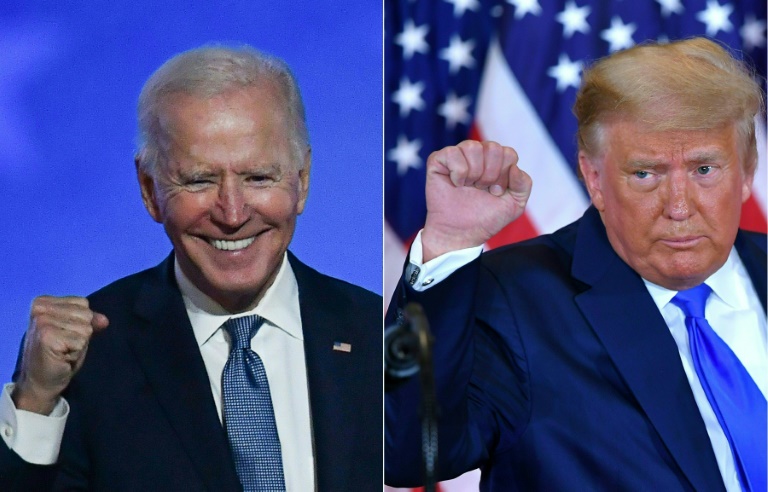
With both sides choosing candidates for the next Congress, the party of President Joe Biden has been wading into Republican contests across the nation to help extremist candidates and hurt moderates.

In swing states from Arizona to Michigan, Democrats have poured tens of millions of dollars into TV ads calculated to boost Republican conspiracy theorists who deny that Biden won in 2020, as well as anti-abortion hardliners.

The bet is that, come November, voters will recoil from the radicals — often backed by former president Donald Trump — in favor of Democrats who look much more reasonable by comparison.

Many partisans have voiced relief that the party is finally showing some of the guile that has enabled Republicans to bend protocol on Senate voting rules and Supreme Court nominations.   

But analysts and prominent voices within the party’s own ranks are warning that while manipulating the process to get more beatable opponents may look like smart politics, Democrats are playing with fire. 

“Burning down villages in the name of saving them tends to leave only ashes,” Peter Loge, director of the Project on Ethics in Political Communication, based at George Washington University, told AFP.

“Meddling in opposing party primaries by raising policy issues can be strategically clever… But amplifying lies about elections, promoting baseless conspiracies, and giving airtime to attacks on democratic institutions is wrong.”

– ‘By the people’ –

In the Michigan primary, Trump-backed election conspiracy theorist John Gibbs narrowly pipped Peter Meijer, one of 10 House Republicans who voted to impeach Trump over the 2021 insurrection. 

Gibbs can thank the Democratic Congressional Campaign Committee for spending half a million dollars effectively promoting the former missionary, who has spread a conspiracy theory about Democrats and satanic rituals.

In the guise of attacking Gibbs, its TV spot archly claimed Gibbs was “too” conservative — using language much more likely to be taken as a commendation than a warning by much of Trump’s base.

Democrats also spent big on election deniers in Pennsylvania, Maryland and Arizona, while in Illinois Governor J.B. Pritzker and the Democratic Governors Association are reported to have parted with a staggering $35 million.

The strategy comes with obvious pitfalls, and Democrats from former White House aide David Axelrod to lawmakers Stephanie Murphy, Pramila Jayapal and Jason Crow have spoken out against it.

Dan McMillan, who heads the Save Democracy in America non-profit, believes that claiming to protect democracy while throwing fortunes at election conspiracy theorists is “big money at its worst.”

“Having for decades listened to their donors and ignored the voters, politicians of both parties forgot that government by the people is what this country is supposed to stand for,” he told AFP.

“They manipulate the voters instead of listening to them. Disgusting.”

– ‘Hardball politics’ –

Liberals helping unserious right-wingers into Congress also risks undercutting the credibility of the Democratic-led panel probing the US Capitol assault, whose members often warn of the danger Trumpists pose to democracy. 

Some Democrats and independent analysts have dismissed the criticism, claiming that tougher tactics are required to highlight the extent to which the Republican Party has become radicalized.

“In a two-party system, one party is already adept at hardball politics,” said Aron Solomon, chief legal analyst for lawyers’ marketing agency Esquire Digital.

“It’s just a disservice to the electorate not to play the same game. Being above the fray may be honorable, but today it’s also a great way to be out of power for not an election but a generation.”

He acknowledged however that this particular “game” could backfire, as Republicans with no moderate option in the election proper coalesce around the extreme candidates.

Veteran political campaigner Richard Gordon, an aide to 1980s and 90s New York governor Mario Cuomo, agrees that most Republican voters would back their party’s candidate whoever it was.

“This will lead to more extreme candidates winning, bringing more toxicity to government, which will turn more people off… This is a dangerous and cyclical process,” he told AFP.

“What the Democrats did this year, and Republican dirty tricks have done over the years, is extraordinarily dangerous and will lead to unintended consequences.”

Lies, damn lies and social media: fake news stalks Brazil vote

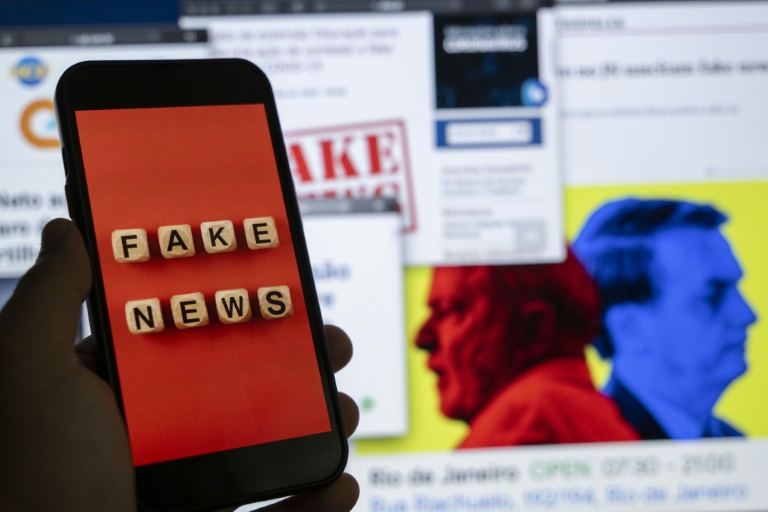
In a divisive election campaign blighted by fears of unrest if far-right President Jair Bolsonaro refuses to accept defeat, Brazil is waging an uphill battle against disinformation wielded as a political weapon.

Analysts say Bolsonaro’s 2018 electoral victory was in no small part due to an effective fake news smear campaign against his opponents.

Four years later, his backers have sought to replicate that feat, turning their attention to leftist ex-president and opinion poll frontrunner Luiz Inacio Lula da Silva.

“Disinformation has run wild” on newer platforms such as Telegram and TikTok, which allow for the rapid dissemination of easily manipulated video content, says Ana Regina Rego, coordinator of the National Network to Combat Disinformation.

Social media videos and other posts have sought to portray Lula, among other things, as an alcoholic who will shut down churches if elected in October.

Bolsonaro also has been targeted by fake news posts that have questioned, for example, whether he was really stabbed on the campaign trail in 2018. 

And despite nonstop work to debunk these and other false claims, such posts find fertile ground in a country where a 2018 study found that almost half of Brazilian voters relied on WhatsApp to read news about politics and elections.

The figure was even higher among Bolsonaro voters.

In 2022, spreaders of disinformation have even more avenues including Telegram, the fast-growing messaging system that Bolsonaro has publicly embraced after having posts blocked on Facebook, Twitter and YouTube.

Despite stricter rules adopted and better policing introduced against fake news, experts say new technology is complicating the task.

– Facts, lies, sensationalism –

The reach of fake news is impressive. 

Three TikTok videos alleging to show Lula getting drunk on a transparent liquid — which is actually water — were seen 6.6 million times, while another five on the same platform that try to cast doubt on Bolsonaro’s stabbing had 3.3 million views.

Content that combines “facts, lies and decontextualizations with sensationalism has a 70 percent greater chance to go viral than something informative,” Rego noted.

TikTok told AFP its policy is to withdraw content that violates its “community norms” and may affect the electoral process, and to avoid highlighting “potentially misleading information that cannot be verified.”

At the outset of the 2022 presidential campaign, Supreme Electoral Court president Alexandre de Moraes vowed the justice system would be “resolute” in the fight against fake news.

And there have been some successes.

Moraes has since ordered social networks to remove several Bolsonaro posts on grounds of disinformation, along with many others from his supporters.

The court oversaw the creation of a group with companies such as Facebook, Instagram, WhatsApp, Google and TikTok to screen out fake news and report offenders.

Campaigns have been rolled out to boost digital literacy among social media users. 

WhatsApp agreed to delay until after the election the launch in Brazil of a new “Communities” feature that would allow the creation of groups of groups, with administrators able to send messages to all — thus vastly increasing the potential for viral information spread.

Telegram bowed to pressure to take down disinformation content under threat of being blocked for not collaborating with the authorities.

“Without the collaboration of the platforms, it is very difficult” to pursue the spreaders of disinformation, said sociologist Marco Aurelio Ruediger of the Getulio Vargas Foundation, a Rio think tank.

“It takes a long time to adopt punitive measures, and by then the damage is already done, because the information has already circulated,” he said.

– ‘Even worse’ –

It is not only on social media, however, where lies are spread.

Bolsonaro himself has repeatedly criticized Brazil’s electronic voting system, which he alleges — without evidence — is riddled with fraud.

The president is under investigation for the claims.

Bolsonaro, who is fond of saying “only God” can remove him from office, has warned Brazil faces “an even worse problem than the United States.”

This has led to fears that his supporters might not accept the results, and that Brazil could see a burst of violence akin to the attack on the US Capitol in January 2021 in the wake of Donald Trump’s loss to Joe Biden.

Trump’s backers were riled up in part on social media, where Bolsonaro has tens of millions of followers.

“I fear that the results will not be accepted and that violence will be encouraged; we could experience a situation similar to that of the United States,” said Ruediger. 

Five things on Brazil's voting machines

Brazil has used electronic voting machines in its elections since 1996. But it is only recently they became controversial, with allegations by far-right President Jair Bolsonaro that they are plagued by fraud.

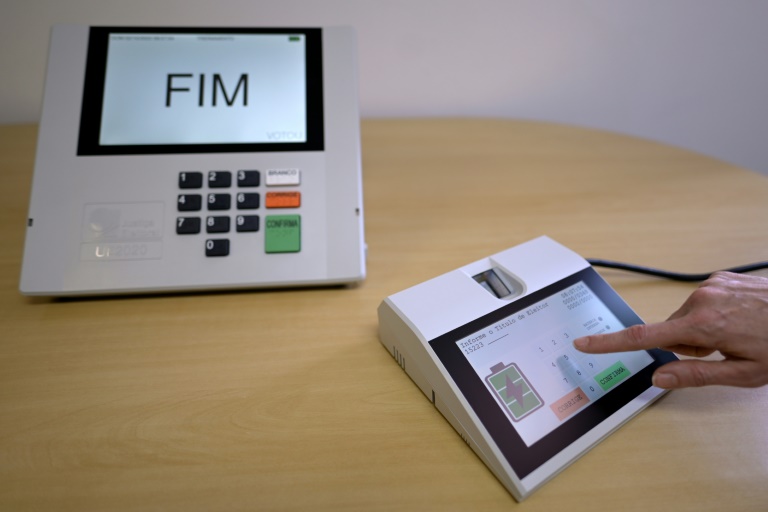
Here are five things to know about the squat beige computers fueling a raging debate on democracy in Latin America’s biggest country.

– How did they start? –

Ironically, given Bolsonaro’s bashing, the electronic voting machines were introduced partly to combat fraud.

Brazilians used to vote on paper ballots where they would check a box or write in a name, depending on the type of election.

In a country where 14 percent of the adult population was illiterate, the system was chaotic, slow and fraud-prone.

“There were always problems with the count. Illegible writing, names written in the wrong place, X’s outside the box — all that meant a ballot was declared null,” says Henrique Neves da Silva, a former judge on Brazil’s Superior Electoral Tribunal.

“There was also a lot of fraud and ballot-box stuffing.”

With help from the military, computer experts developed the country’s first electronic voting machine, rolled out in 57 cities for the 1996 local elections.

– How widespread are they? –

Celebrated as a success, the voting machines were expanded to 67 percent of the electorate for Brazil’s 1998 elections, and 100 percent for the 2000 elections.

Brazil is one of 23 countries using electronic voting for general elections, according to the International Institute for Democracy and Electoral Assistance.

Another 18 use them for regional elections.

– How do they work? –

The machines are equipped with a number pad.

When voters type the two-digit code for their chosen candidate, his or her picture appears.

They then press a green button to confirm.

“It’s a very simple machine, with one function: to tally votes,” says Da Silva.

A key detail: the machines are not connected to the internet.

When voting closes, poll workers remove the memory card from each machine and send them to the local office of the electoral authority, which in turn sends the information to the central counting system in Brasilia via an independent network.

In remote regions such as the Amazon rainforest, a satellite connection is sometimes used.

Results are usually finalized in around two hours — not bad for a sprawling country with 156 million voters.

– How secure are they? –

The vote-counting software is updated for every election.

Political parties, the judiciary and the military are allowed to inspect the source code.

Security tests are also held in which IT experts attempt to hack into the system.

“They literally take the machines apart, touch whatever they want. There is way more leeway than what (a theoretical hacker) would actually have on election day,” says Da Silva.

No major security flaw has ever been detected.

– What does Bolsonaro say? –

Bolsonaro insists the system is plagued by fraud, but has provided scant evidence.

He claims he should have won the 2018 presidential election in the first round, instead of the runoff, but has offered no proof.

He is pushing for a paper print-out to be made of every vote, so the count can be checked.

But election authorities say that would only introduce an avenue for fraud.

Prosecutors are investigating the president on charges of spreading disinformation about the voting system, including during a meeting with foreign ambassadors in July that was spattered with falsehoods.

The US embassy said after that meeting that Brazil’s elections are “a model for the world.”

Bolsonaro has repeatedly threatened not to recognize the election result if the system is not changed.

Close Bitnami banner
Bitnami