US Business

Semiconductor giant Micron to invest $15 bn in Idaho

Semiconductor giant Micron announced Thursday it will invest $15 billion over the next decade to expand its operations in the US state of Idaho to build memory capacity for automotive and other sectors.

The plan, part of a Micron global investment strategy to invest $150 billion, will create 17,000 new jobs, the Boise, Idaho-based company said.

The initiative, which Micron called the “largest private investment ever made in Idaho,” follows a Micron pledge last month to spend $40 billion in “leading-edge memory manufacturing” in the United States.

The project will tap into state funds that are part of the $52 billion to promote production of microchips included in the Chips and Science Act, which President Joe Biden signed into law on August 9. 

“Today’s announcement by Micron is another big win for America,” Biden said  Thursday in a statement that also highlighted announcements in recent days from Toyota to ramp up the production of batteries for electric vehicles, as well as plans unveiled by First Solar, Honda and Corning.

“In our future, we will make (electric vehicles), chips, fiber optics and other critical components here in America, and we will have an economy built from the bottom up and middle out,” Biden said.

Semiconductor giant Micron to invest $15 bn in Idaho

Semiconductor giant Micron announced Thursday it will invest $15 billion over the next decade to expand its operations in the US state of Idaho to build memory capacity for automotive and other sectors.

The plan, part of a Micron global investment strategy to invest $150 billion, will create 17,000 new jobs, the Boise, Idaho-based company said.

The initiative, which Micron called the “largest private investment ever made in Idaho,” follows a Micron pledge last month to spend $40 billion in “leading-edge memory manufacturing” in the United States.

The project will tap into state funds that are part of the $52 billion to promote production of microchips included in the Chips and Science Act, which President Joe Biden signed into law on August 9. 

“Today’s announcement by Micron is another big win for America,” Biden said  Thursday in a statement that also highlighted announcements in recent days from Toyota to ramp up the production of batteries for electric vehicles, as well as plans unveiled by First Solar, Honda and Corning.

“In our future, we will make (electric vehicles), chips, fiber optics and other critical components here in America, and we will have an economy built from the bottom up and middle out,” Biden said.

Afghanistan: one year later, US relies on drones to battle jihadists

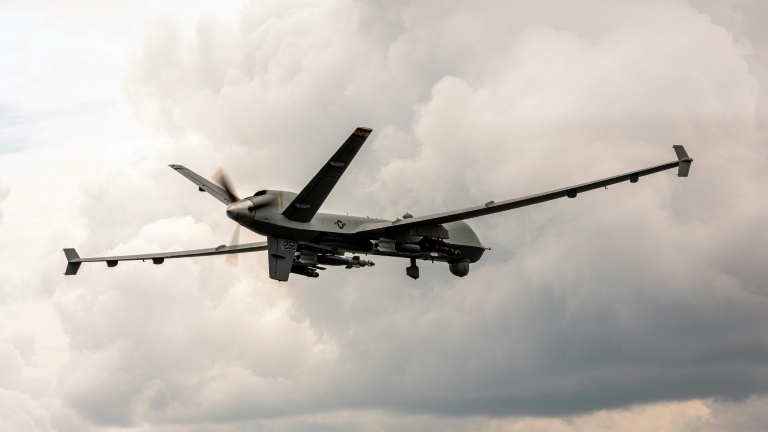
One year after US forces retreated from Afghanistan, Washington now counts only on its drones to continue the fight against the Islamic extremist groups that drew it to invade the country 21 years ago.

But experts say that is not going to be enough to counter the resurgence of Al-Qaeda, or its jihadist rival Islamic State, inside the country now back under the rule of the Islamist Taliban.

US forces entered Afghanistan on October 7, 2011, to remove the Taliban government from power over its protection of Al-Qaeda and its founder Osama bin Laden, responsible for the September 11 attacks on the United States.

Criticized for the decision to end the US military presence in the country, President Joe Biden promised that the American military and intelligence agencies would be able to keep up the war on the two jihadist groups via “over-the-horizon” operations.

That was a reference to the ability of the US military and CIA to surveil the country via high-flying unmanned aircraft operated from distant locations and, when necessary, to use drones to strike targets, as the US did on July 31 when it fired two rockets that killed Al-Qaeda leader Ayman al-Zawahiri in his home in Kabul.

But besides that, there are few signs that the over-the-horizon approach can prevent the jihadists from reestablishing Afghanistan as a base from which to carry out attacks around the globe, as Al-Qaeda did up to 2001.

For retired general Frank McKenzie, who as commander of the US Central Command oversaw the operations in Afghanistan through last year’s pullout, the presence of Zawahiri in Taliban-controlled Kabul illustrates how hard it is to fight the Islamic extremists without a US presence on the ground there.

“I’ve said publicly in testimony that counterterrorism operations from over the horizon in Afghanistan would be very hard but not impossible,” McKenzie told the BBC in a recent interview.

“We are going to have to continue to apply pressure, and that’s going to be very difficult,” he said.

– Not safer after withdrawal – 

McKenzie’s predecessor at Central Command, retired general Joseph Votel, said the Zawahiri strike shows that the US does have the capability to pressure Qaeda and Islamic State from outside Afghanistan.

Nevertheless, he told the Voice of America, “I think that we’re not in a safer place.”

“Whether we find ourselves back in Afghanistan, like we found ourselves back in Iraq just literally three-plus years after we left, I don’t know. I hope not,” he said.

“But I think we have to be prepared for that.”

The Pentagon maintains that it does not share those worries.

“At this stage, it would be our assessment that in terms of external planning, operations external to Afghanistan, I think we are in a safe situation,” said the Pentagon spokesman Brigadier General Pat Ryder.

“We absolutely have the means to respond wherever and whenever we need, around the world, to any counterterrorism threat,” he said.

Without forces inside Afghanistan, Ryder said, it is “more of a challenge,” but it is “not something that is insurmountable,” he said.

Under Secretary of Defense Colin Kahl said that US intelligence believes both Al-Qaeda and Islamic State’s Afghanistan arm intend to undertake external attacks, including against the United States, but currently lack the capacity to do so.

However, he told Congress, Islamic State could developed that capability “in somewhere between 6 or 12 months.”

Doug London, a former official at the CIA, which is believed to have executed the Zawahiri strike, “America neglects Afghanistan at its peril.”

London, now a professor at Georgetown University, wrote on the Just Security website that instead of relying wholly on the over-the-horizon drone strategy, Washington needs to communicate more directly with the Taliban.

“There is always something to gain being on the ground and talking to your adversaries, regardless of their intentions,” he said.

Brazil economy grows 1.2% in Q2, beating expectations

Brazil’s economy posted higher-than-expected growth of 1.2 percent in the second quarter, official data showed Thursday, giving President Jair Bolsonaro a boost ahead of elections next month.

The result beat analyst expectations for 0.9 percent growth in Latin America’s largest economy. It was the fourth straight quarter of expansion for the Brazilian economy as it rebounds from the effects of the coronavirus pandemic.

This latest spurt of growth was fueled by rises in manufacturing (up 2.2 percent) and the service sector (1.3 percent), the state statistics agency IBGE said.

Compared to the second quarter of last year, the expansion was 3.2 percent.

Accumulated growth in the first half of the year was 2.5 percent compared to projections of close to stagnation.

The figures are good news for Bolsonaro, who is fighting to narrow a 15-point deficit in public opinion polls as he takes on leftist ex-president Luiz Inacio Lula da Silva.

On Wednesday, the government reported a decline in unemployment to fewer than 10 million people for the first time since 2016.

Claudia Moreno, an economist at digital bank C6, pointed to a “recovery in investments (4.8 percent) and family consumption (2.6 percent) in the second quarter compared to the previous one” despite high inflation as significant drivers.

The improved performance of the economy has led analysts to revise their 2022 growth predictions from under 0.3 percent in January to 2.1 percent, according to the latest central bank survey.

Even so, economists expect growth to slow in the third quarter due to the delayed effect of the central bank’s hike in interest rates in a bid to slow down inflation.

Interest rates have risen from a historic low of two percent in March 2021 to 13.75 percent last month.

Inflation, which is one of the main issues worrying voters, was over 10 percent in the 12 months to July, with Bolsonaro’s government cutting utility rates and fuel prices in a bid to put the brakes on.

Moreno believes another reason for slowing growth over the second half of the year is that the service sector has now recovered from the pandemic.

She says the economy will also be affected by “a drop in the price of raw materials and the global slowdown.”

Analysts believe there will be an injection of cash into the economy thanks to a 50 percent increase in social assistance to 20 million vulnerable families from 400 to 600 reais ($80 to $120).

Brazil ended 2021 with 4.6 percent growth compared to the previous year, when the economy shrank by 3.9 percent due to the pandemic.

Global stocks selloff intensifies on recession fears

Global stock markets sank Thursday, propelled by rampant inflation and growing recession fears as another major Chinese city went into lockdown.

Frankfurt, London and Paris equities each slid about 1.5 percent in afternoon trading as record-high eurozone inflation fuelled fears that borrowing costs are set to climb even higher, as the region faces rocketing winter energy costs due to Russia’s war on Ukraine.

On Wall Street, the Dow opened down 0.5 percent at 31,359.86 points.

Asian markets posted losses as investors braced for more interest rate hikes, which seek to quell runaway inflation but could derail economic activity, while oil prices tumbled on demand worries.

“More pain is likely for investors as Europe’s energy crunch gets worse”, said City Index analyst Fawad Razaqzada.

The European Central Bank will announce its latest monetary policy decision next Thursday, after delivering its first rate hike in a decade in July.

– ‘Tougher times ahead’ –

“Markets remain unable to snap their recent losing streak, with investors still positioning for tougher times ahead,” said Interactive Investor analyst Richard Hunter.

“Central to current concerns are recessionary fears in the US and a beleaguered China. 

“With the world’s two largest economies under pressure, the immediate outlook is poor.”

Asian equities weakened further Thursday as traders continued to digest shrinking factory activity in powerhouse economy China.

Shanghai also dropped after news that the Chinese city of Chengdu would effectively lock down around 16 million people in a bid to contain a Covid-19 outbreak, likely dealing another blow to a stuttering economy.

It was a “morose session with a flight to the dollar”, said Swissquote Bank analyst Ipek Ozkardeskaya.

Wall Street had slid Wednesday as Treasury yields — a key gauge of future interest rates — rose further as a broadly healthy report on US private jobs showed there was room for the Federal Reserve to continue tightening monetary policy.

A government jobs report Friday will be closely watched by traders hoping for an idea about the next move by the bank.

“Rising Treasury yields, reports that China has locked down Chengdu (city of 21.2 million residents) for Covid testing, a litany of manufacturing PMI readings for August around the globe that were sub-50.0 (i.e. indicative of contraction), and some disappointing earnings guidance … are among the headline catalysts contributing to the weak disposition of the futures market,” Briefing.com analyst Patrick J. O’Hare wrote to clients ahead of the start of trading in New York.

PMIs, which are surveys of executives about current business conditions and the outlook for the future, are valued by the market as providing near real-time indications about the condition of the economy.

However Fed officials have made clear they are willing to tolerate an economic slowdown in order to bring interest rates down. 

The prospect of more US rate hikes continued to push the dollar higher, with 140 yen within reach for the first time since 1998.

The greenback was also at its strongest level against the pound since the height of the pandemic in 2020, with sterling buying less than $1.16.

– Key figures at around 1330 GMT –

New York – Dow: DOWN 0.5 percent at 31,359.86 points

London – FTSE 100: DOWN 1.7 percent at 7,163.46

Frankfurt – DAX: DOWN 1.3 percent at 12,669.90

Paris – CAC 40: DOWN 1.6 percent at 6,029.01

EURO STOXX 50: DOWN 1.4 percent at 3,466.46

Tokyo – Nikkei 225: DOWN 1.5 percent at 27,661.47 (close)

Hong Kong – Hang Seng Index: DOWN 1.8 percent at 19,597.31 (close)

Shanghai – Composite: DOWN 0.5 percent at 3,184.98 (close)

Euro/dollar: DOWN at $0.9982 from $1.0054 on Wednesday

Pound/dollar: DOWN at $1.1565 from $1.1622

Euro/pound: UP at 86.31 pence from 86.50 pence

Dollar/yen: UP at 139.55 yen from 138.96 yen

West Texas Intermediate: DOWN 2.1 percent at $87.65 per barrel

Brent North Sea crude: DOWN 2.0 percent at $93.73

burs-lcm/rl

Twitter says it is actively testing edit button

Twitter said Thursday it has begun actively testing an edit button, after months of publicly discussing such a tweak.

The trial of “Edit Tweet” will begin with internal employees, then be expanded out to the platform’s “Twitter Blue” subscription population, the company said.

“Edit Tweet is a feature that lets people make changes to their Tweet after it’s been published,” the company said on its blog. “Think of it as a short period of time to do things like fix typos, add missed tags, and more.”

Under the revision being studied, users could edit a tweet “a few times” in the 30 minutes after the initial posting, in ways that transparently note the changes to “help protect the integrity of the conversation and create a publicly accessible record of what was said,” the company said.

Tesla Chief Executive Elon Musk, who is locked in a lawsuit with Twitter over a potential acquisition of the micro-blogging platform, had backed an edit button shortly before the company said in April it was studying the change.

Users of Twitter Blue — the subscription offering now available in the United States, Canada, Australia and New Zeeland– “receive early access to features and help us test them before they come to Twitter,” the company said.

An aim of the tweak is that “Tweeting will feel more approachable and less stressful, Twitter said. “You should be able to participate in the conversation in a way that makes sense to you, and we’ll keep working on ways that make it feel effortless to do just that.”

However, a Twitter spokesperson said the test will not necessarily be employed universally on the platform.

On risky mission, UN team reaches Ukraine nuclear plant

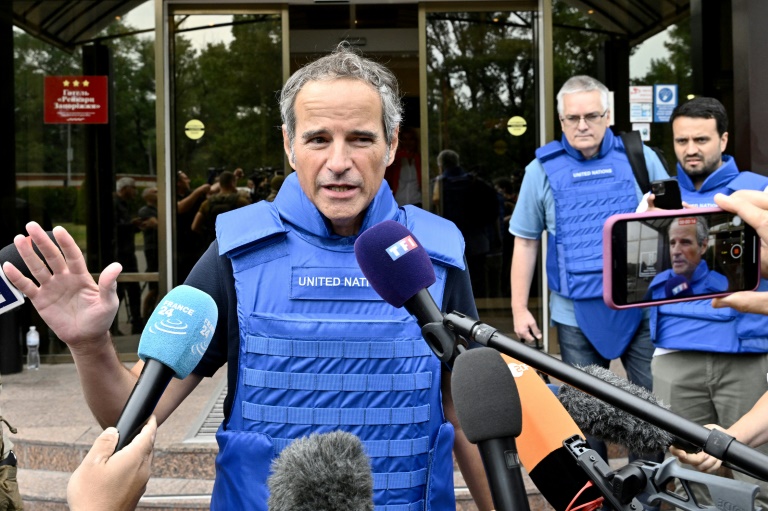
UN inspectors arrived at a Russian-held nuclear plant in southern Ukraine Thursday despite an early shelling attack, as the ICRC warned the consequences of a strike on the facility could be “catastrophic”.

After crossing the frontline into Russian-held territory, the 14-strong team from the International Atomic Energy Agency (IAEA) reached the facility around 3:00 pm, the agency said on Twitter. 

“IAEA’s support and assistance mission to #Zaporizhzhya (ISAMZ) led by Director General Rafael Grossi has just arrived at Zaporizhzhya nuclear power plant to conduct indispensable nuclear safety and security and safeguards activities,” it said.

Wearing bright blue flak jackets and helmets, they had vowed to press ahead to reach Europe’s biggest nuclear facility despite early-morning shelling in the area that forced the closure of one of its six reactors.

Energoatom, Ukraine’s nuclear agency, said it was “the second time in 10 days” that Russian shelling had forced the closure of a reactor. 

It said the plant’s emergency protection system kicked in shortly before 5:00 am (0200 GMT), shutting reactor five, “due to another (Russian) mortar shelling” and that a backup power supply “was damaged” in the attack. 

The area around the plant, which lies on the southern banks of the Dnipro River, has suffered repeated shelling, with both sides blaming the other, sparking global concern over the risk of an accident.

– ‘Stop playing with fire’ –

“It is high time to stop playing with fire and instead take concrete measures to protect this facility… from any military operations,” ICRC chief Robert Mardini told reporters in Kyiv. 

“The slightest miscalculation could trigger devastation that we will regret for decades.”

After Russian forces seized the plant on March 4, Energoatom shut two reactors, followed by a third after shelling on August 5. With a fourth in repairs, Thursday’s incident leaves only one of the six reactors working. 

Mardini said it was “encouraging” the IAEA team was going to inspect the plant because the stakes were “immense”.

“When hazardous sites become battlegrounds, the consequences for millions of people and the environment can be catastrophic and last many years,” he said.

On leaving Zaporizhzhia, the IAEA chief said his team  would be travelling through areas where “the risks are significant” but had decided to go ahead anyway. 

“We have to proceed with this. We have a very important mission to accomplish.”

– Shelling, saboteurs and back-to-school –

The town of Energodar which is located next to the plant came under sustained attack at dawn, with Russian troops firing “mortars and using automatic weapons and rockets”, its mayor Dmytro Orlov said on Telegram. 

But Moscow accused Kyiv of smuggling in up to 60 military “saboteurs”, saying they reached the area near the plant at dawn and that Russian troops had taken “measures to annihilate the enemy”. 

Grossi has said the IAEA will seek to establish a “permanent presence” at the facility “to prevent a nuclear accident and preserve the largest nuclear power plant in Europe”.

Ukraine has accused Russia of deploying hundreds of soldiers and storing ammunition at the plant. 

Meanwhile, Ukrainian troops pressed ahead with a counter-offensive in the nearby region of Kherson to retake areas seized by Russia at the start of the invasion.

In its morning update, the presidency said “heavy explosions continued for the last 24 hours” across Kherson, while five people were killed and 12 others wounded in the eastern Donetsk region. 

Despite the conflict, now in its seventh month, September 1 marked the start of a new school year for children across Ukraine. 

Figures from Ukraine’s education ministry show 2,199 educational institutions have been damaged in the fighting, with 225 completely destroyed.

Just over half of the 23,000 institutions surveyed by the ministry are equipped with bomb shelters, meaning they can physically reopen, while those without will only offer online learning. 

But in Kharkiv, Ukraine’s second city, all learning will be online due to constant Russian shelling, the mayor said last month, with a British charity charging Thursday that dozens of its schools had been “targeted”. 

An investigation by the Centre for Information Resilience found 41 institutions had been “partially or completely destroyed” with researchers finding the shelling “was targeted, rather than a by-product of indiscriminate attacks on civilian infrastructure”.

Meanwhile, the Kremlin denounced as “ridiculous” the decision by EU foreign ministers to suspend a 2007 visa facilitation deal with Russia over the Ukraine conflict.

Ministers agreed the measure on Wednesday but stopped short of closing its borders to all Russians, as demanded by Ukraine. 

Russian firm Lukoil says chairman dies after 'serious illness'

Russian energy firm Lukoil said Thursday its chairman Ravil Maganov had passed away following a “serious illness”, after Russian media reports said he died after falling out of a hospital window.

Lukoil was one of the few major Russian companies to call for end of fighting in Ukraine after Moscow sent its troops to the pro-Western country in February.

In a statement at the time, the Lukoil board called for an “immediate” end to the fighting, expressing its sympathy to those affected by the “tragedy”. 

“We deeply regret to announce that Ravil Maganov… passed away following a serious illness,” Lukoil said on Thursday without providing further details about his death. 

Several Russian media had earlier reported that Maganov died after falling out of a window of the Central Clinical Hospital in Moscow. 

It is often called the Kremlin Hospital because it counts Russia’s political and business elites among its patients.

“This morning Maganov fell out of a window of the Central Clinical Hospital. He died from his injuries,” Interfax news agency reported quoting an “informed” source.

According to a police source of RBC business daily, Maganov fell from the sixth-floor window of the hospital.

President Vladimir Putin’s spokesman Dmitry Peskov told reporters on Thursday that Maganov’s death was not a matter for the Kremlin. 

Maganov was born in 1954. He had worked at Lukoil since 1993 and was also the company’s president. 

He was among the first leaders of Lukoil and, according to the company, came up with its present name.

Maganov was appointed chairman in 2020.

In its statement on Thursday, Lukoil said Maganov “immensely contributed” to the company and the Russian oil and gas sector.

It credited Maganov’s “managerial talent” with making Lukoil one of the world’s leading energy companies.

In April, Lukoil announced the resignation of its billionaire chief executive Vagit Alekperov after he was hit by UK sanctions over the Ukraine offensive.

Global stocks selloff intensifies on recession fears

Global stock markets sank Thursday, propelled by rampant inflation and growing recession fears.

Frankfurt, London and Paris equities each slid about 1.5 percent, while oil prices tumbled on demand worries.

That followed losses across Asia as investors braced for more interest rate hikes, which seek to quell runaway inflation yet could derail economic activity.

Europe’s stocks also fell Wednesday as record-high eurozone inflation fuelled fears that borrowing costs are set to climb even higher, as the region faces rocketing winter energy costs due to Russia’s war on Ukraine.

The European Central Bank will announce its latest monetary policy decision next Thursday, after delivering its first rate hike in a decade in July.

– ‘Tougher times ahead’ –

“Markets remain unable to snap their recent losing streak, with investors still positioning for tougher times ahead,” said Interactive Investor analyst Richard Hunter.

“Central to current concerns are recessionary fears in the US and a beleaguered China. 

“With the world’s two largest economies under pressure, the immediate outlook is poor.”

Asian equities weakened further Thursday as traders continued to digest shrinking factory activity in powerhouse economy China.

Shanghai also dropped after news that the Chinese city of Chengdu would effectively lock down around 16 million people in a bid to contain a Covid-19 outbreak, likely dealing another blow to a stuttering economy.

Wall Street slid Wednesday as Treasury yields — a key gauge of future interest rates — rose further, as a broadly healthy report on US private jobs showed there was room for the Federal Reserve to continue tightening monetary policy.

Another top Fed official signalled the bank was determined to keep lifting borrowing costs, mirroring recent comments by the US central bank’s head Jerome Powell that there would be no let-up in the fight against inflation.

US interest rates are currently at 2.25-2.5 percent, and there is a growing expectation they will be hiked by a bumper 75 basis points for a third successive meeting later this month.

A government jobs report Friday will be closely watched by traders hoping for an idea about the next move by the bank.

The prospect of more US rate hikes continued to push the dollar higher, with 140 yen within reach for the first time since 1998.

The greenback was also at its strongest level against the pound since the height of the pandemic in 2020, with sterling buying less than $1.16.

– Key figures at around 1040 GMT –

London – FTSE 100: DOWN 1.5 percent at 7,175.82 points

Frankfurt – DAX: DOWN 1.3 percent at 12,673.46

Paris – CAC 40: DOWN 1.5 percent at 6,032.09

EURO STOXX 50: DOWN 1.4 percent at 3,467.88

Tokyo – Nikkei 225: DOWN 1.5 percent at 27,661.47 (close)

Hong Kong – Hang Seng Index: DOWN 1.8 percent at 19,597.31 (close)

Shanghai – Composite: DOWN 0.5 percent at 3,184.98 (close)

New York – Dow: DOWN 0.9 percent at 31,510.43 (close)

Euro/dollar: DOWN at $1.0011 from $1.0054 on Wednesday

Pound/dollar: DOWN at $1.1564 from $1.1622

Euro/pound: UP at 86.56 pence from 86.50 pence

Dollar/yen: UP at 139.34 yen from 138.96 yen

West Texas Intermediate: DOWN 2.1 percent at $87.64 per barrel

Brent North Sea crude: DOWN 2.5 percent at $93.22

burs-rfj/rl

Volkswagen shifts gears with Oliver Blume taking wheel

Volkswagen on Thursday hands over the reins to new CEO Oliver Blume, tasked with steering the German automotive giant through challenging economic conditions after four turbulent years under his predecessor, Herbert Diess.

Blume, nurtured in house at Volkswagen and the current CEO of premium sports brand Porsche, is unlikely to signal a significant departure from the electric strategy laid out by his predecessor.

The board under “Herbert Diess has done a good job strategically and technologically,” Blume said at a conference Thursday. “We will keep up the current pace and where possible, increase it.”

The success of a business is “always the product of a strong team”, said Blume, who will head up a trimmed nine-person board.

Diess owed his exit in part to tensions with workers’ representatives, riled by his uncompromising leadership style.

As such, Blume takes the wheel at a “really difficult time” for Volkswagen, said Matthias Schmidt, an analyst specialising in electric cars.

Russia’s invasion of Ukraine has not only compounded supply chain problems unleashed by the coronavirus pandemic, but introduced uncertainties over energy supplies across Europe.

The economic turmoil comes as Volkswagen is ploughing tens of billions into an ambitious switch to electric vehicles, opening a clutch of battery factories across Europe.

Meanwhile, the new boss will also be tasked with sorting out persistent setbacks at the group’s software arm and guiding premium brand Porsche to a tricky stock market entry. 

– Electric strategy –

Diess took over at Volkswagen in 2018 with a mandate to turn the page on the “dieselgate” emissions-cheating scandal.

The Austrian’s response was to launch Volkswagen on a headlong drive into electric vehicles, but his often combative style ruffled feathers at the legacy auto manufacturer.

The 63-year-old finally lost the confidence of Volkswagen’s main shareholders — the Porsche-Piech family — as problems mounted in the group’s software division, headed by the CEO himself.

His successor, Blume, a 28-year Volkswagen veteran, is set to cut a more conciliatory figure than Diess, hired as an outsider from rival BMW.

“Blume is not known as someone who wages wars. He takes less risk than Diess,” Ferdinand Dudenhoeffer, head of the Center of Automotive Research, told AFP.

Following Diess’s exit, Volkswagen’s chief financial officer, Arno Antlitz, was sent out to stress that there would be “continuity” at the manufacturer.

But Blume has signalled that he could be more open to extending the life of old combustion engines with alternative fuels. 

In a recent interview with weekly Automobilwoche, Blume said he saw synthetic fuels as a “sensible complement of electric mobility”.

In theory, such “e-fuels”, made from carbon dioxide using renewable electricity, allow traditional engines to be run with almost no net carbon emissions. 

While Diess remained unconvinced by the alternative to petrol and diesel, synthetic fuels would allow Volkswagen to keep working on a future for combustion engines. 

Blume was unlikely to perform a full U-turn on the electrification plan laid out by Diess, Dudenhoeffer said. 

But the carmaker could “move a little further away from the purely electric strategy” given the risks of an abrupt move to battery-powered vehicles, he said.

– Legacies –

In the end, the issue is likely to be decided in Brussels, where lawmakers have backed a ban on new non-electric vehicles from 2035.

Blume may also chart a different course in the area of software. Where Diess led an ambitious drive to bring development almost completely in-house, Blume could be open to using more external suppliers.

“It’s a massive profit centre, that’s the reason they want to keep it all in-house,” said Schmidt, but the analyst pointed out that “you need software people to run a software company, not car people”.

Meanwhile, Blume was likely to support Volkswagen’s renewed emphasis on the American market, following years of struggles in the wake of dieselgate.

The move would mesh with a decision for Volkswagen to invest massively in developing and making its own batteries, thereby reducing its reliance on suppliers in China. 

“That could be Diess’s legacy in a way, that and getting the electrification post-dieselgate in motion, those are probably the two biggest legacies to leave behind,” said Schmidt.

Close Bitnami banner
Bitnami