US Business

UK political upheaval and stagflation fears weigh on pound

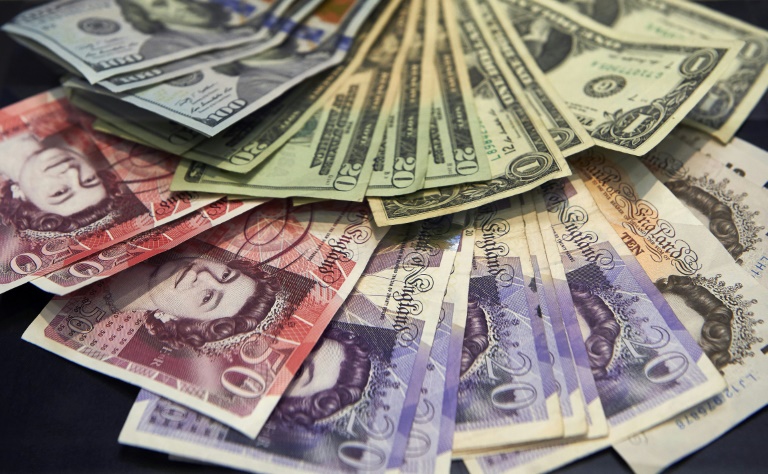
Political uncertainty and growing economic woes, including spiralling inflation and the threat of a recession, are weighing heavily on the British pound, against both the US dollar and the also struggling euro.

The British currency, which is currently trading at around $1.16 for £1, is a barometer of the UK’s attractiveness to international investors and has dropped to levels last seen in early 2020 and the shock of the Covid-19 outbreak. 

Before that, sterling has not been so cheaply traded since 1985. 

Many currencies are struggling against the greenback, which has been galvanised by the US Federal Reserve’s stated intention to continue raising its key rates.

European currencies are also suffering from the war in Ukraine and the energy crisis, currently heightened by the threat of a total interruption of Russian gas deliveries. 

But the pound is particularly badly hit, losing more than 15 percent against the dollar over the past year.

That has occurred despite the Bank of England (BoE) beginning to raise its key rates at the end of 2021 and repeatedly indicating that it intends to continue this tightening. 

Against the euro, which has been weighed down by the European Central Bank’s difficulties in tightening its monetary policy, the pound has fallen by two percent this year. 

The UK has the highest inflation in the G7, at more 10 percent year-on-year. The BoE estimates that it could rise to 13 percent in October. 

Private bank analysts are even more pessimistic: Citi estimates that the peak could reach 18.6 percent in early 2023, while Goldman Sachs suggests 14.8 percent. 

– All-time low looming? –

However, inflation could hit 22.4 percent next year if the country’s energy prices — which are set to jump 80 percent in October — continue their upward spiral as predicted.

That has prompted analysts at Capital Economics to warn sterling could plunge to an all-time low of $1.05, given the toxic cocktail of a likely recession alongside persistently high inflation — elements of dreaded so-called stagflation.

The term refers to long-running high inflation combined with weak growth and rising unemployment.

Capital Economics argues the BoE will have to stop tightening monetary policy in the coming months, but cannot afford to loosen it either amid that spectre.

Its analysts also note downside risks loom in the form of Liz Truss, the favourite to become prime minister next week, who has threatened to renege on a key element of the country’s post-Brexit deal with the European Union. 

Former finance minister Rishi Sunak, the other candidate in the race, warned this week it would be “complacent and irresponsible” to ignore the risk of markets losing confidence in Britain, as he attacked Truss’s plans to slash taxes. 

“The lack of credibility issue Sunak mentions may see the pound continue to weaken” if Truss is confirmed as the ruling Conservatives’ next leader on Monday, said Derek Halpenny, a currency analyst at MUFG.

Meanwhile, the broader consequences of leaving the EU and its single market and customs union continue to weigh on the pound, according to economists. 

It was trading at less than 80 pence against the euro and more than $1.40 on the eve of the Brexit vote. 

Since then, it has lost more than a fifth of its value against the greenback and more than 10 percent against the European single currency. 

Greenhouse gas, sea levels at record in 2021: US agency

Earth’s concentration of greenhouse gases and sea levels hit new highs in 2021, a US government report said Wednesday, showing that climate change keeps surging ahead despite renewed efforts to curb emissions.

“The data presented in this report are clear — we continue to see more compelling scientific evidence that climate change has global impacts and shows no sign of slowing,” said Rick Spinrad, administrator of the National Oceanic and Atmospheric Administration.

“With many communities hit with 1,000-year floods, exceptional drought and historic heat this year, it shows that the climate crisis is not a future threat but something we must address today,” he said in a statement.

The rise in greenhouse gas levels comes despite an easing of fossil fuel emissions the previous year as much of the global economy slowed sharply due to the Covid-19 pandemic.

The US agency said that the concentration of greenhouse gas in the atmosphere stood at 414.7 parts per million in 2021, 2.3 parts higher than in 2020.

The level is “the highest in at least the last million years based on paleoclimatic records,” the annual State of the Climate report found.

The planet’s sea levels rose for the 10th straight year, reaching a new record of 3.8 inches (97 millimeters) above the average in 1993 when satellite measurements began.

Last year was among the six warmest on record since the mid-19th century, with the last seven years all the seven hottest on record, it said.

The less headline-grabbing average temperatures were in part due to La Nina, an occasional phenomenon in the Pacific that cools waters, which took place early in the year and contributed to February being the coldest since 2014.

But water temperatures were also at records, with exceptionally high recordings documented in particular in lakes in Tibet, an environmentally crucial region as a water source for many of Asia’s major rivers.

– Rising disasters and fears –

Tropical storms, which are expected to increase as the planet warms, were sharply up in 2021, the report said. They included Typhoon Rai, which killed nearly 400 people in the Philippines in December, and Ida, which swept the Caribbean before becoming the second strongest hurricane to hit Louisiana after Katrina.

Among other extraordinary events cited in the report, the celebrated cherry trees in Kyoto, Japan, bloomed at their earliest since 1409.

Wildfires, also expected to rise due to climate change, were comparatively low following recent years although devastating blazes were witnessed both in the American West and Siberia.

The 2021 report comes days after a study said Greenland’s ice sheet is already set to melt at dangerous levels, even without any future warming, with major effects for low-lying areas around the globe that are home to hundreds of millions of people.

The planet remains far off track from an ambition set by the Paris climate accord in 2015 to aspire to limit warming to 1.5 degrees Celsius (2.7 Fahrenheit) above pre-industrial levels to avoid the worst effects of climate change.

In August, the United States under President Joe Biden pushed through the most expansive government package ever to address emissions from the world’s largest economy.

The effort will invest heavily in clean energy and comes as California moves to require all cars to be zero-emission by 2035, a decision with far-reaching consequences for the automobile industry.

Obamas to unveil White House portraits after Trump snub

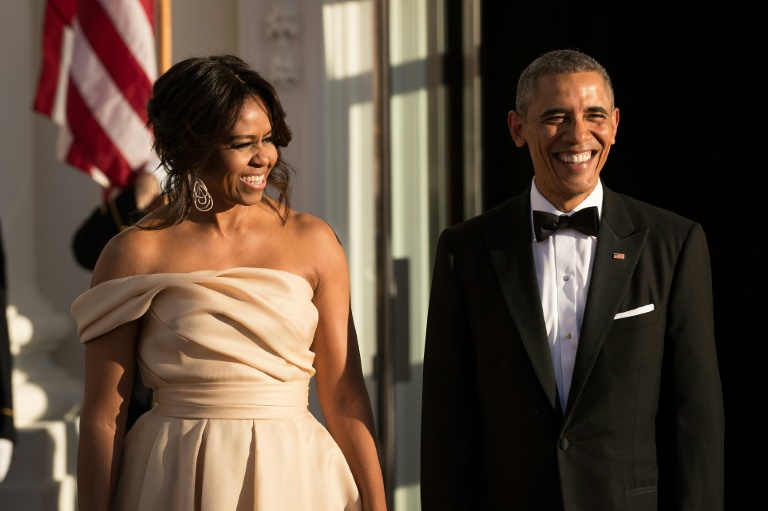
Former US president Barack Obama and first lady Michelle Obama will finally unveil their official portraits at the White House next week after being denied the honor by Donald Trump.

The September 7 ceremony, announced by the administration on Wednesday, traditionally gives presidents the chance to pay homage to their predecessors. 

But Trump, who led the United States for a single term after Obama’s eight years in office and frequently attacks his predecessor, declined to continue with the custom.

Instead President Joe Biden — who served as Obama’s vice president — and his wife Jill Biden will host the couple. 

The 44th president’s latest visit since he vacated the Oval Office in 2017 comes five months after he made a high-profile homecoming for a public event on health care spending. 

Trump, a world-renowned aficionado of the decade-spanning contretemps, demonstrated repeatedly during his tenure that he was untroubled by the mandates of tradition and protocol.

The norm-shredding Republican reportedly removed portraits of presidents Bill Clinton and George W. Bush from the White House’s Grand Foyer, considered the most prominent position in the executive mansion.

They were not restored until Biden took office last year.

European stocks drop on record eurozone inflation

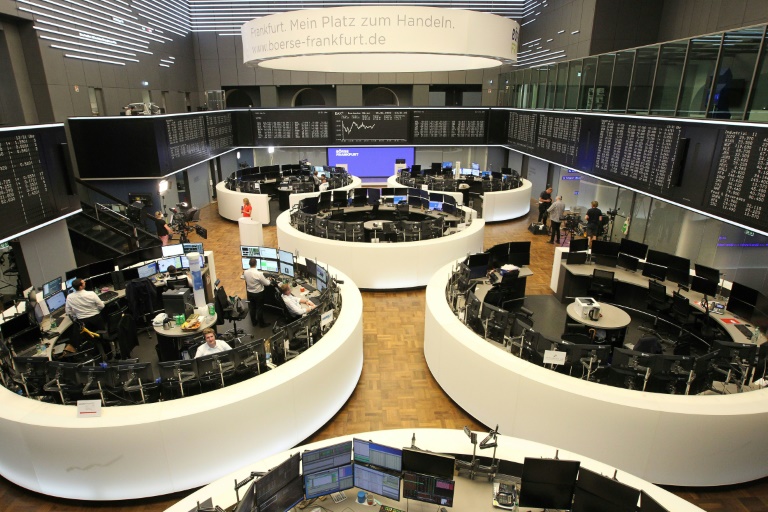
European stock markets slid Wednesday as record-high eurozone inflation fanned fears that more interest rate hikes could herald recession.

Frankfurt, London and Paris stocks all dropped as data showed eurozone inflation hit 9.1 percent in August on surging fuel prices, raising pressure on the European Central Bank to tighten its monetary policy.

Wall Street’s main stock indices were lower in late morning trading, while most Asian markets closed lower on concerns the US Federal Reserve’s rate-hiking policy would send the world’s biggest economy into recession.

Meanwhile, oil prices fell on demand jitters as China imposes further pandemic restrictions, and the possibility a deal on Iran’s nuclear programme could unlock crude exports.

“Traders aren’t just ready to back riskier assets and losing their appetite for them because there are concerns about the Fed’s hawkish monetary policy,” said Naeem Aslam, chief market analyst for Markets.com.

“The data from the EU has confirmed that inflation is moving in one direction only, and the ECB has a long way to go before it can put a leash on inflation,” he said.

The ECB is set to lift borrowing costs next week, having increased them in July for the first time in a decade to help tackle rampant inflation.

– Recession risk –

“The reality is that a more aggressive (ECB) tightening is going to be needed, and when the economy is already as fragile as it is, the situation quickly starts to look quite problematic,” OANDA analyst Craig Erlam told AFP.

“That’s not good for stocks as it’s extremely difficult for companies to prosper if the bloc is in a deep recession made worse by higher interest rates, which is now a real risk.”

Major central banks are rushing to contain runaway consumer price inflation that has largely been prompted by fallout from key energy supplier Russia’s invasion of Ukraine.

State energy giant Gazprom suspended gas deliveries to Germany on a major pipeline on Wednesday.

It was the latest in a series of supply halts that have fuelled Europe’s energy crisis and sent gas and electricity prices soaring before the peak-demand winter.

European gas prices, however, fell on Wednesday after flirting with a record high last week.

Markets have struggled since Fed chief Jerome Powell warned last Friday that the US central bank would need to tighten policy much more to tackle sky-high inflation.

“Inflation remains the key issue, with commentary from both the Fed and ECB serving to highlight the fact that controlling prices will remain the central target irrespective of economic suffering,” IG analyst Joshua Mahony told AFP.

“A drawn out period of higher costs, higher wages, and lower demand point towards further downside for equity markets,” he noted.

Traders are now awaiting the release of US job-creation figures on Friday for a better idea about the state of the economy.

– Key figures at around 1530 GMT –

New York – Dow: DOWN 0.3 percent at 31,689.95 points

EURO STOXX 50: DOWN 1.3 percent at 3,517.25

London – FTSE 100: DOWN 1.1 percent at 7,284.15 (close)

Frankfurt – DAX: DOWN 0.7 percent at 12,873.48 (close)

Paris – CAC 40: DOWN 1.4 percent at 6,125.10 (close)

Tokyo – Nikkei 225: DOWN 0.4 percent at 28,091.53 (close)

Hong Kong – Hang Seng Index: FLAT at 19,954.39 (close)

Shanghai – Composite: DOWN 0.8 percent at 3,202.14 (close)

Euro/dollar: UP at $1.0074 from $1.0015 on Tuesday

Pound/dollar: DOWN at $1.1643 from $1.1656

Euro/pound: UP at 86.45 pence from 85.92 pence

Dollar/yen: DOWN at 138.61 yen from 139.00 yen

West Texas Intermediate: DOWN 1.4 percent at $90.32 per barrel

Brent North Sea crude: DOWN 2.6 percent at $96.72 per barrel

burs-rl/

Tributes from West as Gorbachev dies at 91

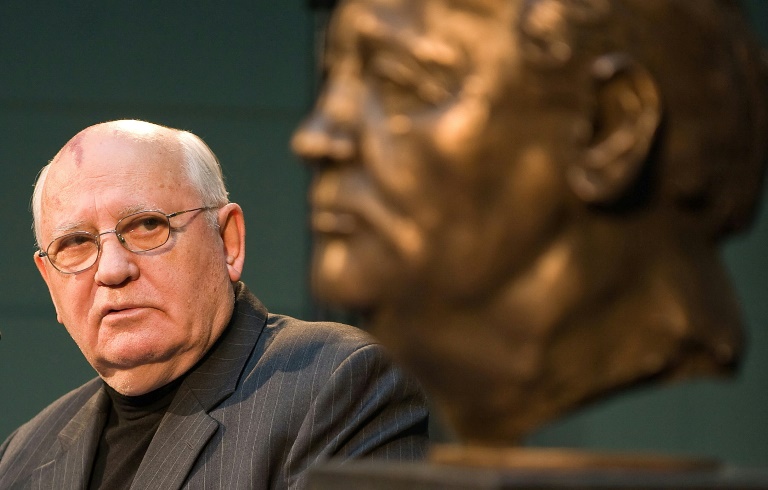
The death of Mikhail Gorbachev triggered an outpouring of tributes from Western leaders on Wednesday but reaction was muted in Russia, where many blamed the last Soviet leader for the loss of the country’s status as a global superpower.

Gorbachev, who changed the course of history by triggering the demise of the Soviet Union and was one of the great figures of the 20th century, died on Tuesday aged 91.

Russian news agency reports said he had died in a central Moscow hospital “after a serious and long illness” and that his funeral would be held in the capital on Saturday.

His life was one of the most influential of his times, and his reforms as Soviet leader transformed his country and allowed Eastern Europe to free itself from Soviet rule.

While the changes he set in motion saw him lionised in the West, they earned him the scorn of many Russians after the country was plunged into economic chaos and saw its international influence decline.

President Vladimir Putin, who called the Soviet collapse the greatest geopolitical catastrophe of the 20th century, has spent much of his more than 20-year rule reversing parts of Gorbachev’s legacy.

By cracking down on independent media and political opposition, critics say, Putin has worked to undo Gorbachev’s efforts to bring “glasnost”, or openness, to the Soviet system.

And with the launch earlier this year of a military campaign in Ukraine, he has sought to reassert Russian influence in one of the countries that won its independence when the Soviet Union fell apart.

– Funeral on Saturday –

In a letter of condolences published by the Kremlin, Putin said Gorbachev “was a politician and statesman who had a huge impact on the course of world history”.

Other senior Russian officials also described Gorbachev as an important figure, but said little of his political accomplishments.

In an hour-long televised meeting of Putin and his cabinet on Wednesday, Gorbachev’s name did not come up.

His daughter Irina and his foundation told news agencies a public memorial service would be held on September 3 in the Moscow Hall of Columns, historically used for funerals of high officials, including Joseph Stalin in 1953.

Gorbachev will then be buried at the prestigious Novodevichy cemetery alongside his wife Raisa, who died in 1999.

Russian officials had yet to say whether Gorbachev would have a state funeral like previous Soviet leaders or if Putin would be in attendance.

On the streets of Moscow many refused to comment on Gorbachev’s death, one young Russian even asking who he was.

Those willing to discuss his legacy, mainly pensioners who fondly remembered the Soviet era, were overwhelmingly negative.

“He was some kind of illiterate politician, who let such a great country fall apart. And anything good he may have done is crossed out by that,” said 70-year-old Vladimir Zavkov, as he walked near Red Square.

“So to me he is just a traitor.”

– ‘Man of peace’ –

But in the West, where Gorbachev was regarded fondly and affectionately referred to as Gorby, he was hailed as an iconic figure.

US President Joe Biden credited Gorbachev with creating “a safer world and greater freedom for millions of people.”

British Prime Minister Boris Johnson said Gorbachev’s “tireless commitment to opening up Soviet society remains an example to us all”, while UN chief Antonio Guterres called him “a one-of-a-kind statesman”.

French President Emmanuel Macron praised Gorbachev as a “man of peace whose choices opened up a path of liberty for Russians,” and former German chancellor Angela Merkel said he demonstrated how “one single statesman can change the world for the better”.

Gorbachev was best known for defusing US-Soviet nuclear tensions in the 1980s as well as bringing Eastern Europe out from behind the Iron Curtain.

He won the Nobel Peace Prize in 1990 for negotiating a historic nuclear arms pact with US leader Ronald Reagan, and his decision to withhold the Soviet army when the Berlin Wall fell a year earlier was seen as key to preserving Cold War peace.

He was also championed in the West for spearheading reforms to achieve transparency and greater public discussion that hastened the breakup of the Soviet empire.

He spent much of the past two decades on the political periphery, intermittently calling for the Kremlin and the White House to mend ties as tensions soared after Russia annexed Crimea in 2014 and launched the offensive in Ukraine earlier this year.

– Backed Crimea annexation –

Gorbachev had supported the Crimea annexation, saying that most people in the peninsula “wanted to be reunited with Russia”.

He made no public statements on Russia’s military action in Ukraine, though his foundation called for “an early cessation (to) hostilities and immediate start of peace negotiations”.

He spent the twilight years of his life in and out of hospital with increasingly fragile health. 

He remained a controversial figure and had a difficult relationship with Putin.

Many Russians still look back fondly on the Soviet period, and Putin leans on its achievements to buttress Russia’s claim to greatness and his own prestige.

As the USSR collapsed, Gorbachev was superseded by Boris Yeltsin, who became post-Soviet Russia’s first president.

From then on, Gorbachev was relegated to the sidelines, devoting himself to educational and humanitarian projects. 

– Supporter of free press –

Russia’s leading opposition figure — jailed Kremlin critic Alexei Navalny — praised Gorbachev in a series of tweets, highlighting his willingness to give up power.

“He stepped down peacefully and voluntarily, respecting the will of his constituents. This alone is a great feat by the standards of the former USSR,” Navalny said. 

An early supporter of Russia’s leading independent newspaper Novaya Gazeta, founded in 1993, Gorbachev donated part of his Nobel winnings to help it buy its first computers. 

But the newspaper came under increasing pressure under Putin and suspended publication in late March.

In a tribute published after Gorbachev’s death, its chief editor Dmitry Muratov, who last year won the Nobel Peace Prize, hailed him as a man who “put human rights above the state, and valued a peaceful sky more than personal power”.

Ethiopian Airlines bucks regional trend with profit surge

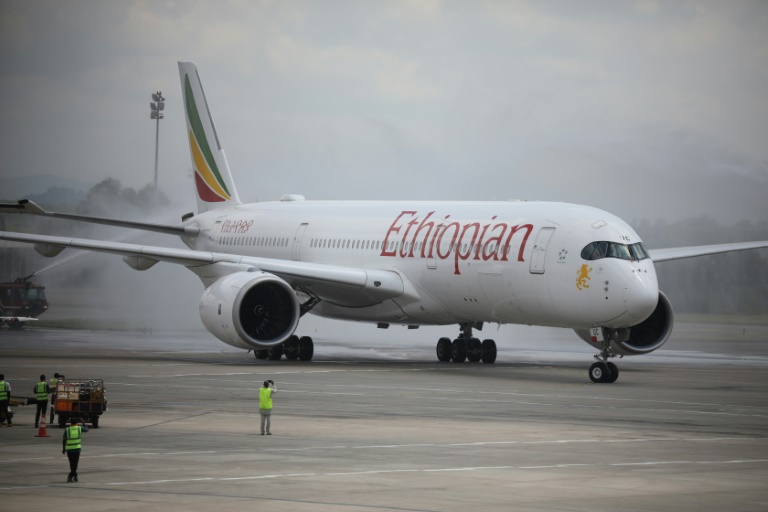
Ethiopian Airlines, the leading African flag carrier, on Wednesday reported a surge in profit for the last financial year, in sharp contrast to the ailing fortunes of other airlines in the region.

The state-owned airline saw a 79 percent jump in revenue to $5 billion for 12 months to July while profit skyrocketed 90 percent to $937 million, according to the country’s sovereign wealth fund Ethiopian Investment Holdings (EIH).

The results were “despite the headwinds of worsening global economic outlook, rising fuel cost, global pandemic”, EIH chief executive Mamo Mihretu said on Twitter.

He gave no further details, although state media said the airline had transported 6.9 million international travellers last year alone.

Other carriers in East Africa have been buffeted by the Covid-19 pandemic and its devastating impact on air travel, and are now grappling with the fallout from the war in Ukraine which has sent global fuel prices soaring.

Kenya Airways, for example, last week reported a 9.8 billion shilling ($82 million) loss in the six months to June, although it was an improvement on the 11.48 billion shilling ($95 million) deficit in the first half of last year.

The airline, which has been stuck in the red for years and is relying on state bailouts, reported a 76 percent increase in revenue to 48.1 billion shillings (about $400 million) over the same period as passenger numbers almost doubled to 1.6 million.

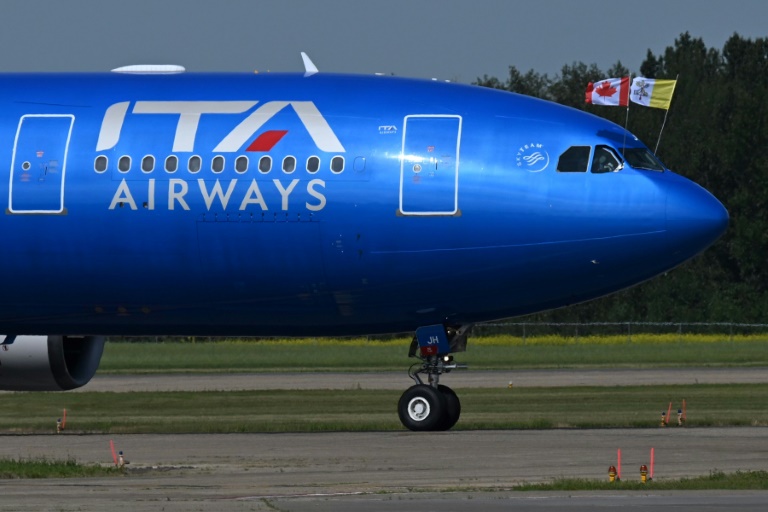
Italy picks bid by US fund, Delta and Air France for ITA Airways

Italy announced Wednesday it chose a bid by US investment fund Certares, in partnership with Delta Airlines and Air France-KLM, for exclusive talks to take over national carrier ITA Airways.

The decision came as a surprise, as Swiss-Italian shipping group MSC and its ally, German airline Lufthansa, had appeared frontrunners in the race to buy Alitalia’s successor.

The offer by Certares and its partners “was deemed to be the most in line with the objectives set” by the state, which owns 100 percent of the company, the Italian economy ministry said in a statement, without disclosing the amount on the table.

“At the end of the exclusive negotiations, binding agreements will only be signed if their content is fully satisfactory for the public shareholder,” the ministry said.

According to the Italian daily Il Messaggero, the Certares fund, which specialises in tourism, has proposed to buy nearly 56 percent of ITA for around 600 million euros ($599 million).

The Italian state would retain a 44 percent stake and have two of the five seats on the future ITA board.

MSC and Lufthansa had proposed at the end of August to pay 850 million euros for 80 percent of ITA, a lower offer than a previous one of 1.3 billion to 1.4 billion euros made in January, due to the expected decline of the airline market after the summer.

Soaring energy prices, the war in Ukraine, a lack of staff and the Covid pandemic all contribute to a hazy outlook for the industry.

“From our point of view, our joint offer with MSC was the better solution for ITA,” Lufthansa said in a statement.

“Evidently, a path is now being chosen that allows more state influence and does not envisage the complete privatisation of ITA.

“Even without a cooperation with ITA, the Lufthansa Group remains excellently positioned in Italy.”

– A turbulent ride –

The travel agency network controlled by Certares will enable ITA to expand its presence in the United States.

French-Dutch airline group Air France-KLM also said the companies had stressed the opportunity for an “increased presence on the North Atlantic axis” during the bidding process.

In a statement, the group said that along with Delta Air Lines, it “looks forward to fostering closer ties with ITA and building upon the existing commercial partnership the airlines have formed”.

Air France-KLM has previously set its sights on Alitalia — in 2009, it acquired a 25 percent stake in the Italian company before gradually withdrawing from it from 2013.

Its hands are tied by EU conditions set in return for state aid it received during the coronavirus pandemic.

It was prevented from taking a stake of more than 10 percent in another company in the sector.

The Italian government gave the green light in February to the privatisation of the state-owned airline, which took to the skies in October last year.

ITA Airways replaced the loss-making national carrier Alitalia, which was put under state administration in 2017, after years of fruitless attempts to find a buyer.

The Italian state has spent more than 13 billion euros trying get the national airline back on its feet.

The announcement comes in the middle of Italy’s legislative elections campaign. 

Just over one month before the September 25 vote, opinion polls put Giorgia Meloni on course to take power in the eurozone’s third largest economy as part of a right-wing coalition.

Her post-fascist Brothers of Italy party criticised the move.

Decisions on the future of the national airline “belong to the next executive that comes out of the ballot box,” warned Marco Silvestroni, the party’s representative on the parliamentary transport committee.

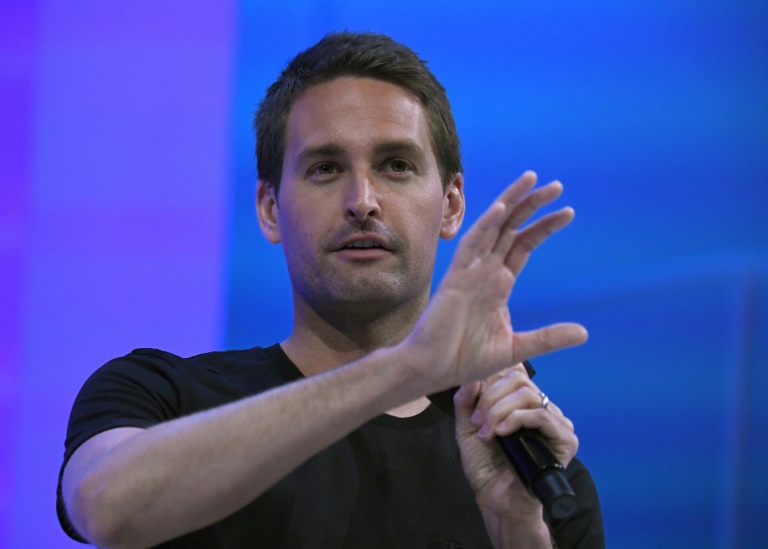
Snap confirms cutting 20 percent of staff

Snapchat’s parent company confirmed Wednesday it is cutting 20 percent of staff, as the troubled messaging app attempts to dig itself out amid competition and revenue woes, as well as recent quarterly losses.

A hit with young internet users in its early days, Snapchat has remained a small player in the social networking space as competition from other apps, such as TikTok, has grown ever more intense.

“We must now face the consequences of our lower revenue growth and adapt to the market environment,” Snap CEO Evan Spiegel said in a note to employees Wednesday announcing the decision “to reduce the size of our team by approximately 20 percent.”

In July, the company reported that quarterly losses nearly tripled to $422 million amid conditions “more challenging” than expected.

Tech news website The Verge first reported the southern California-based company would be making the steep cuts to its approximately 6,400 staff.

Restructuring, Spiegel said, would focus on “three strategic priorities: community growth, revenue growth and augmented reality” with unrelated projects to “be discontinued or receive substantially reduced investment.”

Snap said it would discontinue its Snap Originals show programming, third-party app integration known as Minis, its games, and its lightweight drone offering called Pixy. 

It also said it was “winding down” its standalone geolocation app Zenly and music creation app Voisey, which it acquired through takeovers.

Like other social networks, Snap has taken a hit as advertisers have tightened their belts, as well as from new privacy changes by Apple that have bitten into firms’ sales of costly but highly-targeted ads.

Snap also announced a new chief operating officer, Jerry Hunter, who is being promoted from senior vice president of engineering. Google executive Ronan Harris will become president of the company’s Europe, Middle East and Africa division in October.

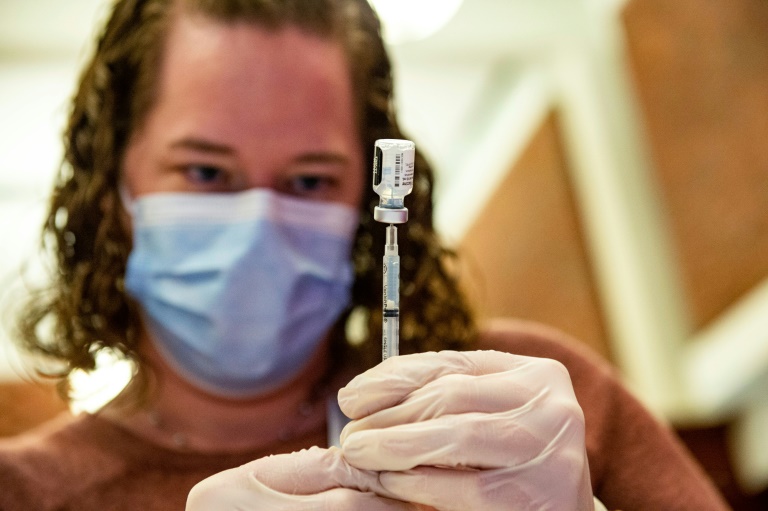
US approves updated Pfizer, Moderna shots targeting Omicron

US health officials on Wednesday authorized updated Covid-19 vaccinations by Moderna and Pfizer-BioNTech that specifically target the latest strains of the Omicron variant, with the goal of jump-starting a new booster campaign.

The two updated booster shots aimed at providing “better protection against Covid-19 caused by the Omicron variant” are approved for people age 12 and above for the Pfizer shot and 18 and older for Moderna, the Food and Drug Administration (FDA) said in a statement.

This new generation of anti-Covid vaccines targets both the original strain of coronavirus and the BA.4 and BA.5 lineages, the subvariants of Omicron that are causing the most cases in the United States and which the FDA predicts will circulate in the coming months.

Earlier this summer the US health department announced it had purchased 105 million doses from Pfizer and 66 million from Moderna for use over the fall and winter.

The vaccines have yet to be recommended by the Centers for Disease Control and Prevention, the nation’s health protection agency. But an independent panel of experts is scheduled to be convened by the CDC on Thursday to discuss the updates. 

CDC director Rochelle Walensky will be in charge of giving the final green light.

The new versions of the vaccines could potentially be available in the United States as early as next week.

“Receiving a booster that specifically targets the Omicron BA.4/.5 variant, currently the most prevalent strain of SARS-CoV-2, is an important public health measure that people can take to help protect themselves, especially as we head into a season filled with indoor gatherings,” Moderna chief executive Stephane Bancel said in a statement.

The vaccines currently in circulation target the initial strain of the virus that first appeared in Wuhan, China. But they have gradually proven to be less effective against the variants that have appeared over time, due to rapid evolution of the virus. 

In contrast to the Alpha and Delta variants, which eventually waned, Omicron and its subvariants have come to dominate infections worldwide in 2022.

Pfizer and Moderna have also filed for approval of their updated vaccines with the European Medicines Agency.

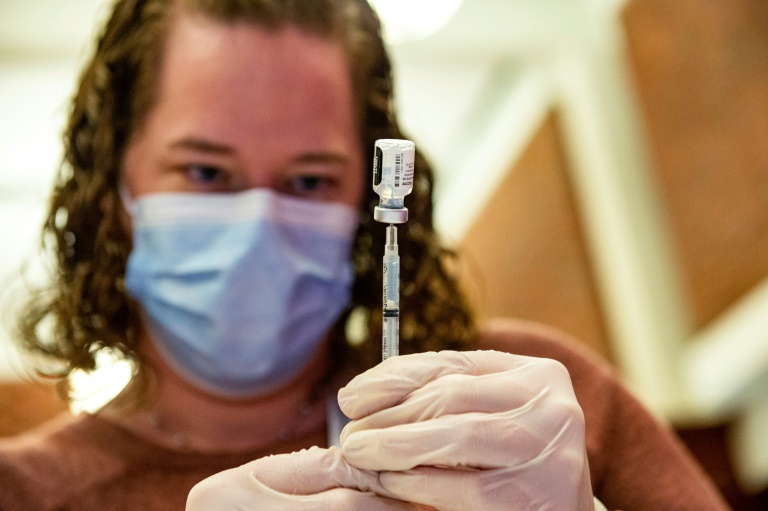
US approves updated Pfizer, Moderna shots targeting Omicron

US health officials on Wednesday authorized updated Covid-19 vaccinations by Moderna and Pfizer-BioNTech that specifically target the latest strains of the Omicron variant, with the goal of jump-starting a new booster campaign.

The two updated booster shots aimed at providing “better protection against Covid-19 caused by the Omicron variant” are approved for people age 12 and above for the Pfizer shot and 18 and older for Moderna, the Food and Drug Administration (FDA) said in a statement.

This new generation of anti-Covid vaccines targets both the original strain of coronavirus and the BA.4 and BA.5 lineages, the subvariants of Omicron that are causing the most cases in the United States and which the FDA predicts will circulate in the coming months.

Earlier this summer the US health department announced it had purchased 105 million doses from Pfizer and 66 million from Moderna for use over the fall and winter.

The vaccines have yet to be recommended by the Centers for Disease Control and Prevention, the nation’s health protection agency. But an independent panel of experts is scheduled to be convened by the CDC on Thursday to discuss the updates. 

CDC director Rochelle Walensky will be in charge of giving the final green light.

The new versions of the vaccines could potentially be available in the United States as early as next week.

“Receiving a booster that specifically targets the Omicron BA.4/.5 variant, currently the most prevalent strain of SARS-CoV-2, is an important public health measure that people can take to help protect themselves, especially as we head into a season filled with indoor gatherings,” Moderna chief executive Stephane Bancel said in a statement.

The vaccines currently in circulation target the initial strain of the virus that first appeared in Wuhan, China. But they have gradually proven to be less effective against the variants that have appeared over time, due to rapid evolution of the virus. 

In contrast to the Alpha and Delta variants, which eventually waned, Omicron and its subvariants have come to dominate infections worldwide in 2022.

Pfizer and Moderna have also filed for approval of their updated vaccines with the European Medicines Agency.

Close Bitnami banner
Bitnami