US Business

Greenhouse gas, sea levels at record in 2021: US agency

Earth’s concentration of greenhouse gases and sea levels hit new highs in 2021, a US government report said Wednesday, showing that climate change keeps surging ahead despite efforts to curb emissions.

“The data presented in this report are clear — we continue to see more compelling scientific evidence that climate change has global impacts and shows no sign of slowing,” said Rick Spinrad, administrator of the National Oceanic and Atmospheric Administration.

The rise in greenhouse gas levels comes despite an easing of fossil fuel emissions the previous year as much of the global economy slowed sharply due to the Covid-19 pandemic.

The US agency said that the concentration of greenhouse gas in the atmosphere stood at 414.7 parts per million in 2021, 2.3 parts higher than in 2020.

The level is “the highest in at least the last million years based on paleoclimatic records,” the annual State of the Climate report found.

The planet’s sea levels rose for the 10th straight year, reaching a new record of 3.8 inches (97 millimeters) above the average in 1993 when satellite measurements began.

Last year was among the six warmest on record since the mid-19th century, with the last seven years all the seven hottest years on record, it said.

The number of tropical storms were also well above average last year including Typhoon Rai, which killed nearly 400 people in the Philippines in December, and Ida, which swept the Caribbean before becoming the second strongest hurricane to hit Louisiana after Katrina.

'I never corrupted anyone,' diamond magnate tells Swiss court

A French-Israeli businessman and diamond magnate insisted Wednesday he had never bribed anyone, as he sought to overturn his conviction in a vast corruption case involving mining rights in West Africa.

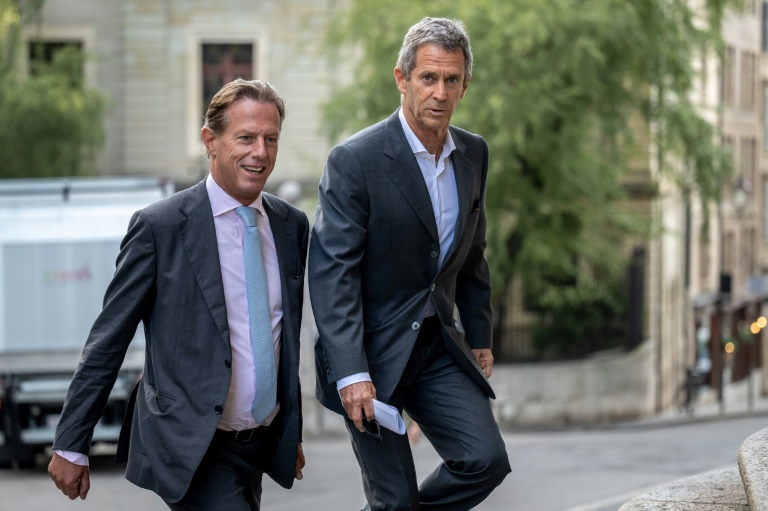
Beny Steinmetz, 66, told the Geneva appeals court he was innocent and “had done nothing wrong”.

“I never corrupted anyone.”

Steinmetz was found guilty in January 2021 of setting up a complex financial web to pay bribes to ensure his company could obtain permits in Guinea’s southeastern Simandou region, which is estimated to contain the world’s biggest untapped iron ore deposits.

He was sentenced by a Geneva court in 2021 to five years in prison and ordered to pay 50 million Swiss francs ($52 million) in compensation.

Wearing a grey suit and white shirt with his collar unbuttoned, Steinmetz told court president Catherine Gavin he was proud of the massive mining project Beny Steinmetz Group Resources, BSGR, had set up in Guinea, claiming it would have been hugely beneficial for the country.

“I am fully convinced that BSGR never crossed the red line,” and the company had become victim to a local power struggle and corruption, he said.

Steinmetz, who maintained his innocence throughout the original trial, changed his lawyers and beefed up his communications team for the appeal.

– ‘Pact of corruption’ –

During the first trial, prosecutors convinced the court Steinmetz and two associates had bribed a wife of then Guinean president Lansana Conte and others in order to win lucrative mining rights in Simandou.

The prosecutors said Steinmetz obtained the rights shortly before Conte died in 2008 after about $10 million was paid in bribes over a number of years.

Conte’s military dictatorship ordered global mining giant Rio Tinto to relinquish two concessions that were subsequently obtained by BSGR against an investment of $160 million.

Just 18 months later, BSGR sold 51 percent of its stake in the concession to Brazilian mining giant Vale for $2.5 billion.

But in 2013, Guinea’s first democratically-elected president Alpha Conde launched a review of permits allotted under Conte and stripped the VBG consortium formed by BSGR and Vale of its permit.

To secure the initial deal, prosecutors claimed Steinmetz and representatives in Guinea entered a “pact of corruption” with Conte and his fourth wife Mamadie Toure.

– ‘Local tragedy’ –

Toure, who has admitted to having received payments, has protected status in the United States as a state witness.

A request from Steinmetz’s lawyer Daniel Kinzer for her written testimony to be deemed inadmissible due to lacking insight into the “opaque” US deal, was rejected by the court.

The defence meanwhile maintains there was nothing inappropriate about how BSGR obtained the permits, and that Rio Tinto lost half the concessions for failing to develop them.

Steinmetz rejected suggestions his company was seeking to cash in and make “a quick exit”, saying the BSGR and Vale consortium had planned to stay for the long term.

“This was not a 20-year deal, but a 50-year deal,” he told the court, calling it “Africa’s largest mining project” that would have included  building a railway system.

It would have tripled Guinea’s gross domestic product, he said.

The abandonment of the project was “a local tragedy, created by local corruption,” according to Steinmetz, indicating Conde’s decision to strip VBG of the rights was linked to promises made to secure his election.

Crisis-hit Sri Lanka's inflation hits another record

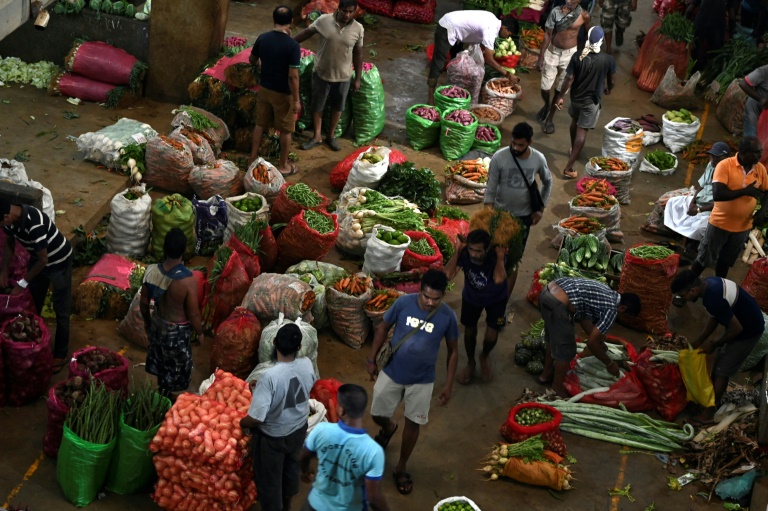
Crisis-hit Sri Lanka’s inflation hit an eleventh consecutive monthly record in August, official data showed on Wednesday, rising to 64.3 percent as the International Monetary Fund extended bailout talks by one more day.

The benchmark year-on-year Colombo Consumer Price Index (CCPI) in August was more than eight times higher than the 7.6 percent recorded in October 2021. Since then it has set a new record high every month.

According to the department of census and statistics, food inflation in August was even higher, hitting 93.7 percent.

Inflation in August was impacted by a more than threefold increase in electricity tariffs and kerosene oil prices that hit in the middle of the month.

The CCPI figures were released hours after the IMF said it had extended by a day official-level talks with the Sri Lankan government on a possible bailout.

“The IMF Mission in Colombo has been extended by one day because discussions are still ongoing with the authorities,” the IMF said in a brief statement.

The IMF had asked Sri Lanka to contain spiralling inflation and address corruption as part of efforts to salvage the troubled economy, which has been ravaged by a foreign exchange crisis.

The Sri Lankan rupee has lost more than 45 percent of its value against the US dollar this year.

An unprecedented economic crisis — which saw the country default on its $51 billion debt in April — forced Gotabaya Rajapaksa to step down as president last month, after prolonged protests against acute shortages of food, fuel and medicines.

The country’s 22 million people have also been enduring lengthy electricity blackouts due to the government’s inability to import enough fuel to run generators.

India quarterly GDP up 13.5% on pandemic rebound, below expectations

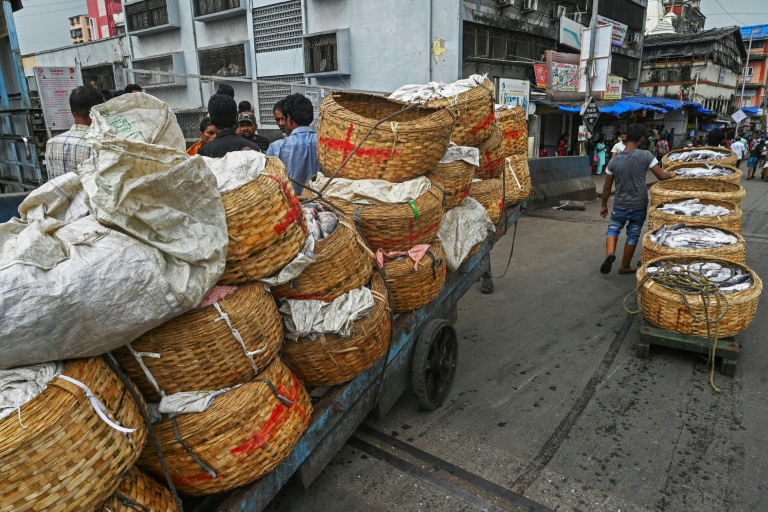
A post-pandemic rebound saw India’s economy grow 13.5 percent in the June quarter, official figures showed Wednesday, but the expansion was below forecasts thanks to the headwinds buffeting Asia’s third-largest economy.

The increase from the same quarter last year reflects a dramatic uptick in activity since mid-2021, when the peak of the country’s most devastating coronavirus wave began to recede.

That outbreak saw thousands of people dying across India each day, overwhelming hospitals and crematoriums, and came after an extended lockdown that pummelled consumer spending and brought factories to a standstill. 

Wednesday’s figure was the highest since the 20.1 percent expansion recorded during the same period last year, at a time when business activity was recovering from government shutdown edicts.

But the result is well below the 16.2 percent forecast by the Reserve Bank of India (RBI), the country’s central bank, with inflation and other indications of economic weakness dragging down performance. 

“The numbers are lower than we expected,” State Bank of India chief economic advisor Soumya Kanti Ghosh told AFP. 

He added that the RBI would most likely revise down its 7.2 percent growth forecast for the year to March 2023, with weakness in the manufacturing sector a cause for concern.

Elevated crude oil prices and a seven percent fall in the rupee this year have left India struggling with a deteriorating trade balance. 

India’s merchandise trade deficit widened to a record $31 billion in July, compared to $10.6 billion in the same month last year, provisional data showed.

Import costs, led by petroleum products and coal, were more than twice as high as export revenues.

India imports more than 80 percent of its crude oil needs and shocks to the market since Russia’s invasion of Ukraine have left its 1.4 billion people struggling with higher fuel charges.

Consumer inflation has consistently overshot the central bank’s two-to-six percent target range this year, hitting an eight-year high of 7.79 percent in April before cooling to 6.71 percent in July.

But Bank of Baroda chief economist Madan Sabnavis said household spending had remained resilient because of pent-up demand left over from the shock to the economy during the pandemic.

“Normally with high inflation, purchasing power comes down, but that doesn’t seem to have played out so far,” he told AFP. 

In August, India’s central bank hiked interest rates for the third time in four months, pushing borrowing costs up to pre-pandemic levels.

The International Monetary Fund last month slashed its growth outlook for India to 7.4 percent, a figure that still exceeds every other major economy besides Saudi Arabia.

Secret files 'likely concealed' at Trump home to block probe: Justice Dept

Top secret documents found at Donald Trump’s Florida home were “likely concealed” to obstruct an FBI probe into the former president’s potential mishandling of classified materials, the Department of Justice said in an explosive new court filing.

The filing released late Tuesday provides the most detailed account yet of the motivation for the raid on Trump’s Mar-a-Lago estate — which was triggered by a review of highly classified records that he had previously surrendered to authorities.

It appeared to clarify that prosecutors are seeking to determine whether Trump or anyone in his immediate orbit took criminal action to prevent federal agents from retrieving classified documents from the former president’s possession.

Before the raid, the FBI uncovered “multiple sources of evidence” showing that “classified documents” remained at Mar-a-Lago, the filing says.

“The government also developed evidence that government records were likely concealed and removed… and that efforts were likely taken to obstruct the government’s investigation,” the filing adds.

When agents conducted their court-ordered search on August 8, they found material so sensitive that “even the FBI counterintelligence personnel and DOJ attorneys conducting the review required additional clearances before they were permitted to review certain documents,” the filing says.

In a striking image sure to reverberate around Washington, the filing included a photograph of color-coded documents spread out over a carpet, marked “SECRET” and “TOP SECRET.”

Trump fired back at the photo’s release in a post on his Truth Social network.

“Terrible the way the FBI, during the Raid of Mar-a-Lago, threw documents haphazardly all over the floor (perhaps pretending it was me that did it!), and then started taking pictures of them for the public to see,” he wrote. 

“Thought they wanted them kept Secret? Lucky I Declassified.”

– ‘Delayed access’ –

Trump, who is weighing another White House run in 2024, has accused the Justice Department under Democratic President Joe Biden of conducting a “witch hunt” and said the judge “should never have allowed the break-in of my home.”

Trump has taken legal action to seek the appointment of an independent party, or special master,” to screen files seized in the raid for materials protected by personal privilege.

The government’s filing argues that such an appointment, which would potentially block investigators’ access to the documents, is “unnecessary and would significantly harm important governmental interests, including national security interests.”

The Justice Department said it provided the detailed background on the build-up to the raid “to correct the incomplete and inaccurate narrative set forth in (Trump’s) filings.”

The department opened its investigation after the National Archives and Records Administration (NARA) received 15 boxes of records in January 2022 that had been improperly removed from the White House and taken to Mar-a-Lago.

According to the affidavit used to justify the raid, sensitive National Defense Information was among the “highly classified” records recovered including 67 documents marked as confidential, 92 as secret and 25 as top secret.

According to the Department of Justice’s new filing, “the former president delayed the FBI’s access to the fifteen boxes” once they had been surrendered to NARA.

The subsequent search warrant at Mar-a-Lago, personally approved by Attorney General Merrick Garland, authorized the FBI to search the “45 office” — a reference to the 45th US president’s private office at Mar-a-Lago — and storage rooms.

It said the probe was related to “willful retention of national defense information,” an offense that falls under the Espionage Act, and potential “obstruction of a federal investigation.”

In addition to investigations in New York into his business practices, Trump faces legal scrutiny for his efforts to overturn the results of the November 2020 election, and for the January 6, 2021 attack on the US Capitol by his supporters.

Trump was impeached for a historic second time by the House of Representatives after the Capitol riot — he was charged with inciting an insurrection — but was acquitted by the Senate.


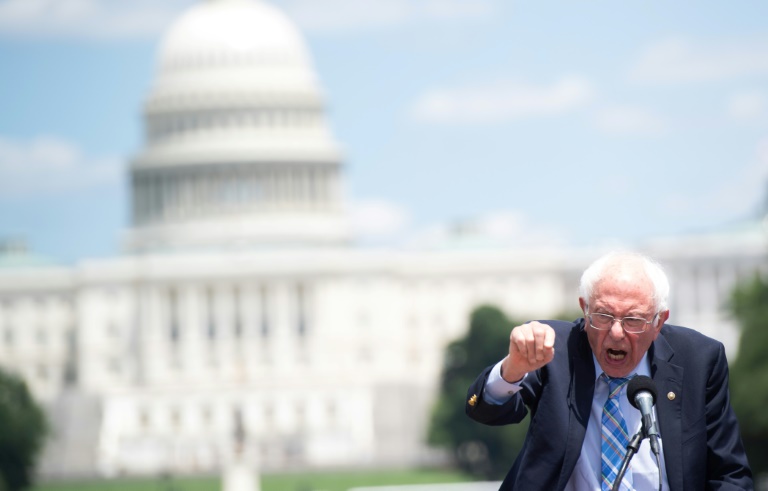
US senator Bernie Sanders backs UK strikers

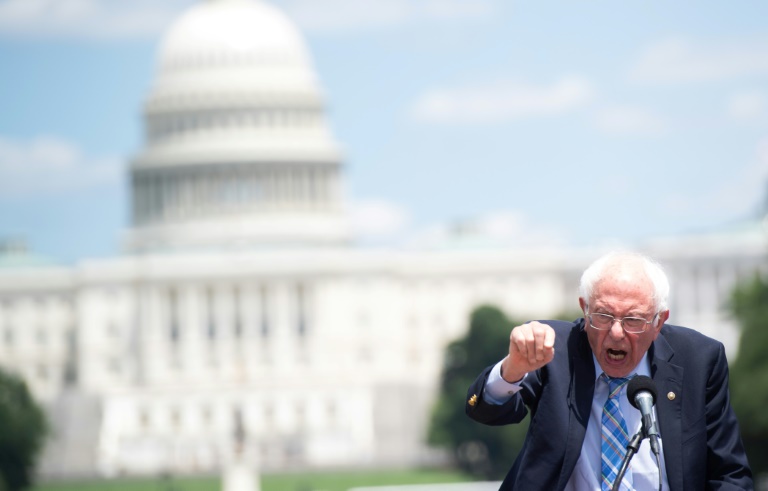
The independent US senator Bernie Sanders on Wednesday gave his backing to striking British railway workers, adding an international dimension to the growing push for higher wages in the UK.

The influential progressive lawmaker was slated to join members of the RMT union at a rally for transport workers in London on Wednesday night.

The rally, outside the headquarters of the Trades Union Congress (TUC), coincides with strike action by postal workers, telecoms staff as well as journalists.

“People are tired of being ignored while the rich get richer,” Sanders, 80, told The Guardian in an interview.

The UK is in the grip of a cost of living crisis, with inflation at a 40-year high of 10.1 percent and spiralling energy prices.

Investment bank Goldman Sachs has predicted rates could even top 20 percent from early next year if wholesale gas prices stay high.

Industrial action has been increasing for months, spreading from the railways and aviation sector to postal services, telecoms and even criminal lawyers.

Health service workers, including nurses and junior doctors, are currently being balloted for strike action.

– ‘Summer of discontent’ –

On Wednesday, the TSSA union representing transport and travel sector workers, announced a 24-hour strike by train drivers on September 26-27.

The walk-out over pay, job security and conditions is timed to coincide with the final days of the Labour party’s annual conference in Liverpool.

“As a Labour affiliated union TSSA will be looking for support from conference delegates and MPs to join them on the picket line to show solidarity in fighting the Conservatives’ cost of living crisis,” the union said in a statement.

Unions, major donors to the country’s main opposition party, have criticised its leader Keir Starmer for his lukewarm support for striking workers.

The scale of the current industrial unrest has not been seen since the 1980s, when Conservative prime minister Margaret Thatcher sought to weaken the unions as part of free market economic policy.

It has been widely dubbed “the summer of discontent”, in a conscious nod to the “winter of discontent” of 1978-79, the wave of public sector strikes before Thatcher came to power.

Prime Minister Boris Johnson, who leaves office next week, has done little to tackle the crisis since he announced his resignation in July.

Last week, households were told they face an 80-percent increase in energy bills, stoking fears that millions will be unable to pay.

Johnson’s successor will be announced on Monday, with the Thatcherite Foreign Secretary Liz Truss favourite against former finance minister Rishi Sunak.

Truss has rejected handouts to help those most in need, while Sunak is in favour of direct government support.

US senator Bernie Sanders backs UK strikers

The independent US senator Bernie Sanders on Wednesday gave his backing to striking British railway workers, adding an international dimension to the growing push for higher wages in the UK.

The influential progressive lawmaker was slated to join members of the RMT union at a rally for transport workers in London on Wednesday night.

The rally, outside the headquarters of the Trades Union Congress (TUC), coincides with strike action by postal workers, telecoms staff as well as journalists.

“People are tired of being ignored while the rich get richer,” Sanders, 80, told The Guardian in an interview.

The UK is in the grip of a cost of living crisis, with inflation at a 40-year high of 10.1 percent and spiralling energy prices.

Investment bank Goldman Sachs has predicted rates could even top 20 percent from early next year if wholesale gas prices stay high.

Industrial action has been increasing for months, spreading from the railways and aviation sector to postal services, telecoms and even criminal lawyers.

Health service workers, including nurses and junior doctors, are currently being balloted for strike action.

– ‘Summer of discontent’ –

On Wednesday, the TSSA union representing transport and travel sector workers, announced a 24-hour strike by train drivers on September 26-27.

The walk-out over pay, job security and conditions is timed to coincide with the final days of the Labour party’s annual conference in Liverpool.

“As a Labour affiliated union TSSA will be looking for support from conference delegates and MPs to join them on the picket line to show solidarity in fighting the Conservatives’ cost of living crisis,” the union said in a statement.

Unions, major donors to the country’s main opposition party, have criticised its leader Keir Starmer for his lukewarm support for striking workers.

The scale of the current industrial unrest has not been seen since the 1980s, when Conservative prime minister Margaret Thatcher sought to weaken the unions as part of free market economic policy.

It has been widely dubbed “the summer of discontent”, in a conscious nod to the “winter of discontent” of 1978-79, the wave of public sector strikes before Thatcher came to power.

Prime Minister Boris Johnson, who leaves office next week, has done little to tackle the crisis since he announced his resignation in July.

Last week, households were told they face an 80-percent increase in energy bills, stoking fears that millions will be unable to pay.

Johnson’s successor will be announced on Monday, with the Thatcherite Foreign Secretary Liz Truss favourite against former finance minister Rishi Sunak.

Truss has rejected handouts to help those most in need, while Sunak is in favour of direct government support.

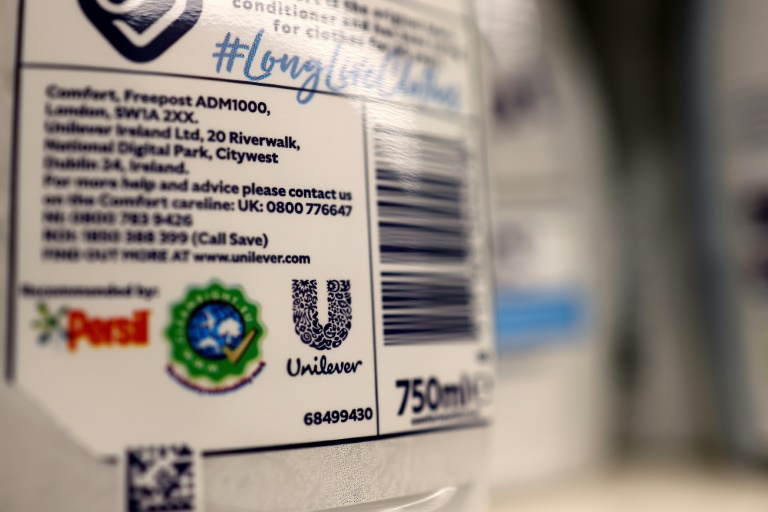
UK regulator bans Unilever's 'misleading' green ad

Britain on Wednesday banned an advertisement from consumer goods group Unilever over “misleading” environmental claims for its laundry detergent brand Persil.

The Advertising Standards Authority (ASA) said the television advert, which claimed Persil was “kinder to our planet”, had failed to demonstrate environmental benefits.

The ad, featuring children picking up litter on rivers and beaches, stated that Persil bottles were made with 50-percent recycled plastic and that the liquid detergent cleaned at low temperatures.

“We concluded that the basis of the claim ‘kinder to our planet’ had not been made clear,” the ASA said in a statement.

“Additionally, in the absence of evidence demonstrating that the full life cycle of the product had a lesser environmental impact compared to a previous formulation, we concluded the ad was likely to mislead.”

The regulator ruled that the ad must not appear again in its current form.

Unilever said in response to the ruling: “We are disappointed with the ASA adjudication as this TV advertisement.

“We are committed to making on-going improvements to all our products to make them more sustainable and will continue to look at how we can share this with our shoppers.” 

India GDP surges 13.5% on pandemic rebound, despite headwinds

A post-pandemic rebound saw India’s economy grow 13.5 percent in the June quarter, official figures showed Wednesday, but inflation and other headwinds signal a looming slowdown in Asia’s third-largest economy.

The double-digit expansion from last year reflects a dramatic uptick in activity since mid-2021, when the peak of the country’s most devastating coronavirus wave began to recede.

That outbreak saw thousands of people dying across India each day, overwhelming hospitals and crematoriums, and came after an extended lockdown that pummelled consumer spending and brought factories to a standstill. 

Wednesday’s figure from the national statistics office was the highest since the 20.1 percent expansion recorded during the same period last year, at a time when business activity was recovering from government shutdown edicts.

State Bank of India chief economic advisor Soumya Kanti Ghosh said in a note that India was navigating well through global uncertainty “with leading indicators continuing to show acceleration”.

A rebound in capital inflows in August after months of investor flight from Indian debt and equities also pointed to improved sentiment, Ghosh said.

But Wednesday’s result is lower than the 16.2 percent forecast by India’s central bank, and other economists expect headwinds to buffet the economy and dampen growth into the next year. 

Elevated crude oil prices and a seven percent fall in the rupee this year have hit living costs and left India struggling with a deteriorating trade balance. 

India’s merchandise trade deficit widened to a record $31 billion in July, compared to $10.6 billion in the same month last year, provisional data showed.

Import costs, led by petroleum products and coal, were more than twice as high as export revenues.

India imports more than 80 percent of its crude oil needs and shocks to the market since Russia’s invasion of Ukraine have left its 1.4 billion people struggling with higher fuel charges.

Consumer inflation has consistently overshot the central bank’s two-to-six percent target range this year, hitting an eight-year high of 7.79 percent in April before cooling to 6.71 percent in July.

In August, India’s central bank hiked interest rates for the third time in four months, pushing borrowing costs up to pre-pandemic levels.

The Reserve Bank of India forecasts 7.2 percent growth for the current financial year owing to “geopolitical tensions” and the risk of “global recession”. 

The International Monetary Fund last month slashed its own outlook for the same period to 7.4 percent, a figure that still exceeds every other major economy besides Saudi Arabia.

Insurance payments on defaulted Russia debt to move forward

Russia’s default on its international debt was fully acknowledged Wednesday by a little-known panel of financial firms when they set a date for the procedure to compensate insured investors.

The Credit Derivatives Determinations Committee (CDDC) for Europe said it was scheduling an auction to settle credit derivate transactions on certain Russian government bonds on September 12.

Moody’s ratings agency said in June that Russia defaulted on its foreign debt for the first time in a century, after bond holders did not receive $100 million in interest payments.

But as Western ratings agencies were no longer able to rate Russian debt under Western sanctions, an official determination on whether Russia had defaulted and therefore payment of insurance claims could go forward, fell to the CDDC.

Based in London, the CDDC is made up of 15 leading banks and financial firms that field requests from investors who want to know whether a missed debt payment constitutes a “credit event”.

If they do so, they schedule a procedure called an auction to determine the price paid on credit default swaps, a sort of insurance bondholders can purchase to protect against default by borrowers.

The CDDC has since June been considering the case of Russia.  

At the end of June it determined a credit event had indeed occured, but it did not launch the procedure for payment of credit default swaps as is it sought to ensure the payments were in compliance with Western sanctions.

Russian authorities have insisted throughout they have the funds to honour the country’s debt, but Western sanctions prevented them from making payment in dollars as the bonds required.

Moscow called the predicament a “farce” and accused the West of pushing an “artificial” default.

Wednesday’s statement triggered the auction process on eight Russian government bond issues.

The country last defaulted on its foreign debt in 1918, when Bolshevik revolution leader Vladimir Ilyich Lenin refused to recognise the massive debts of the deposed tsar’s regime.

Close Bitnami banner
Bitnami