US Business

European stocks drop on record eurozone inflation

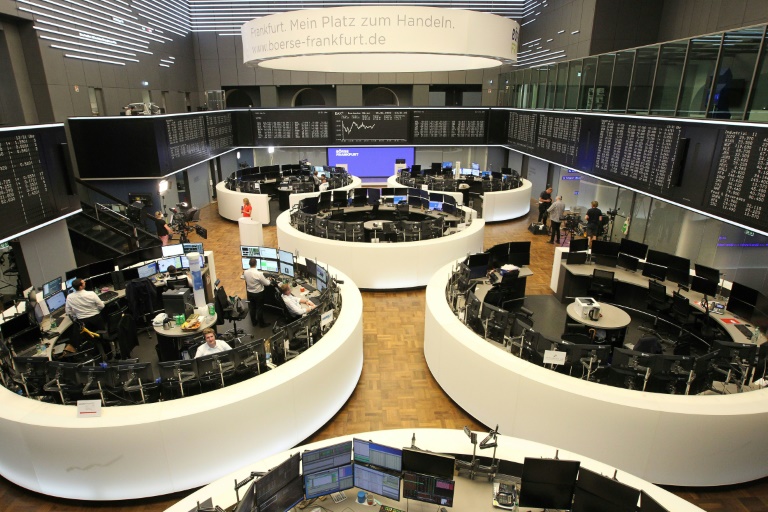
European equities slid Wednesday as record-high eurozone inflation fanned fears that more interest rate hikes could herald recession.

Frankfurt, London and Paris stocks dropped as data showed eurozone inflation hit 9.1 percent in August on surging fuel prices, sparking talk of rising European Central Bank rates.

Most Asian markets meanwhile fell on concerns the US Federal Reserve’s rate-hiking policy would send the world’s biggest economy into recession, with oil prices diving on demand jitters.

The ECB is set to lift borrowing costs next week, having increased them in July for the first time in a decade to help tackle rampant inflation.

– ‘Real’ recession risk –

“The reality is that a more aggressive (ECB) tightening is going to be needed, and when the economy is already as fragile as it is, the situation quickly starts to look quite problematic,” OANDA analyst Craig Erlam told AFP.

“That’s not good for stocks as it’s extremely difficult for companies to prosper if the bloc is in a deep recession made worse by higher interest rates, which is now a real risk.”

Major central banks are rushing to contain runaway consumer price inflation that has largely been prompted by fallout from key energy supplier Russia’s invasion of Ukraine.

State energy giant Gazprom suspended gas deliveries to Germany on a major pipeline on Wednesday.

It was the latest in a series of supply halts that have fuelled Europe’s energy crisis and sent gas and electricity prices soaring before the peak-demand winter.

– Sentiment takes a hiding –

Wall Street’s three main indexes fell for a third straight day Tuesday to sit at a one-month low, despite healthy data on US consumer sentiment and job openings.

Investor sentiment took a hiding after Fed chief Jerome Powell warned last Friday that the US central bank would need to tighten policy much more to tackle sky-high inflation.

“Inflation remains the key issue, with commentary from both the Fed and ECB serving to highlight the fact that controlling prices will remain the central target irrespective of economic suffering,” IG analyst Joshua Mahony told AFP.

“A drawn out period of higher costs, higher wages, and lower demand point towards further downside for equity markets,” he noted.

Traders are now awaiting the release of US job-creation figures on Friday for a better idea about the state of the economy.

– Key figures at around 1130 GMT –

London – FTSE 100: DOWN 1.1 percent at 7,279.75 points

Frankfurt – DAX: DOWN 0.4 percent at 12,912.99

Paris – CAC 40: DOWN 0.7 percent at 6,168.14

EURO STOXX 50: DOWN 0.5 percent at 3,545.14

Tokyo – Nikkei 225: DOWN 0.4 percent at 28,091.53 (close)

Hong Kong – Hang Seng Index: FLAT at 19,954.39 (close)

Shanghai – Composite: DOWN 0.8 percent at 3,202.14 (close)

New York – Dow: DOWN 1.0 percent at 31,790.87 (close)

Euro/dollar: DOWN at $0.9996 from $1.0015 on Tuesday

Pound/dollar: DOWN at $1.1629 from $1.1656

Euro/pound: UP at 85.95 pence from 85.92 pence

Dollar/yen: DOWN at 138.71 yen from 139.00 yen

West Texas Intermediate: DOWN 2.7 percent at $89.16 per barrel

Brent North Sea crude: DOWN 3.3 percent at $96.00 per barrel

burs-rfj/lcm

US life expectancy drops for 2nd straight year, due to Covid

Life expectancy for Americans dropped in 2021 for the second straight year — the biggest two-year decline in a century — notably due to the Covid-19 pandemic, US health officials announced Wednesday.

US life expectancy at birth dipped by nearly a full year from 2020 to 2021, to 76.1 years, the lowest average since 1996, according to provisional data from the Centers for Disease Control and Prevention (CDC).

By comparison, Americans in 2020 were expected to live 77 years, a sharp drop from the 78.8 years in 2019.

“The declines in life expectancy since 2019 are largely driven by the pandemic,” said the CDC’s National Center for Health Statistics.

Coronavirus-related deaths accounted for three quarters of the drop in 2020, and about half of the decline in 2021, it said.

Some 15 percent of the 2021 slide could be attributed to deaths from accidents or unintentional injuries, notably drug overdoses.

The sharpest decline in life expectancy last year occurred among Native Americans and Alaska Natives, at 1.9 years, followed by white Americans (1.0) and Black Americans (0.7), according to the CDC.

Life expectancy for Native Americans was estimated at a mere 65.2 years in 2021, compared to 70.8 years for Black Americans and 76.4 years for white Americans.

Health officials also noted the growing gap in life expectancy between men and women, a difference which widened from 5.7 years in 2020 to 5.9 in 2021 — the largest gap since 1996. 

American women in 2021 had a life expectancy of 79.1 years, compared to 73.2 years for men.

Covid-19 was the third-leading cause of death in the United States last year, just as it was in 2020, after heart disease and cancer, according to a previous CDC report.

More than 1.04 million people with Covid-19 have died in the United States since early 2020.

After a peak in early 2022, Covid-related US deaths have dropped, although the country still records about 400 such deaths per day. 

Eurozone inflation jumps to new record 9.1%

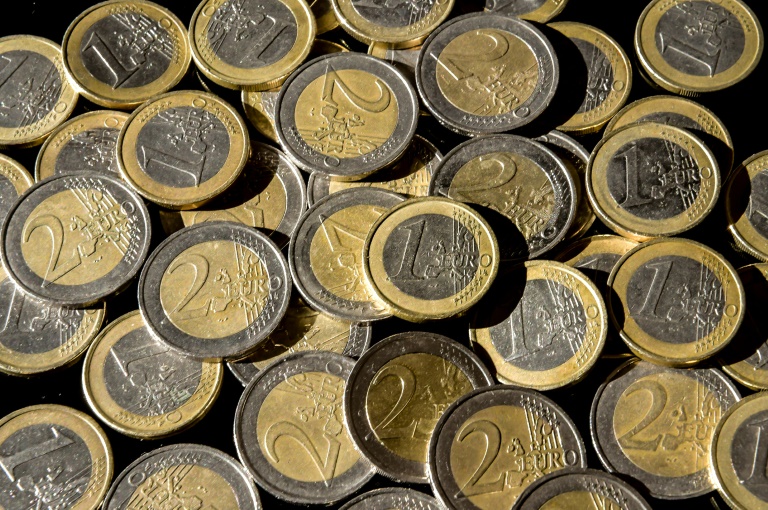
The eurozone inflation rate hit a new record in August, official data showed on Wednesday, increasing pressure on the European Central Bank to hike rates to tame Ukraine war-fuelled prices.

Driven by soaring energy prices caused by Russia’s invasion in Ukraine, the yearly inflation rate in the 19-country single currency area reached 9.1 percent, its highest since records began, according to Eurostat.

Consumer prices had accelerated to 8.9 percent in July.

The president of Germany’s powerful federal central bank, Joachim Nagel, immediately declared that the ECB should plan for a “strong rise in interest rates for September”.

“Otherwise, inflation expectations could become permanently entrenched above our target of two percent,” he warned.

The headline rate has been rising since November 2021, amid global supply chain stresses. War erupted in Ukraine in February and the European summer was marked by a drought that helped force up food prices.

The ECB is expected to raise interest rates at its next meeting on September 8, after first increasing them in July for the first time in a decade. Rates had been kept low as Europe emerged from its coronavirus slump.

France, which has moved to cap energy prices saw the lowest rate within the eurozone, with 6.5 percent in August, according to Eurostat. 

But powerhouse Germany was high on 8.8 percent, Italy saw nine percent and Spain 10.3. 

Russia’s neighbours on the Baltic, Estonia, Lithuania and Latvia suffered the most, at 25.2 percent, 21.1 and 20.8 respectively.

Economist Jack Allen-Reynolds of Capital Economics warned that the eurozone inflation rate could hit 10 percent by the end of the year, even if the bank hikes rates.

“The balance of probabilities is shifting towards a 75 basis points hike next week,” he said. The ECB raised rates by 50 basis points in July, from a zero interest rate to 0.5 percent.

– Slam on the brakes? –

For Bert Colijn, a senior economist at the bank ING, the increase in the price of goods contained within the broader inflation rate should worry observers as much as the hikes in energy. 

“The increase from 4.5 percent to 5 percent was much larger than expected and fuels worries about second-round effects from the input cost shock lasting longer,” he said.

But he noted that wage growth data for the second quarter of the year — salaries rose only 2.1 percent — suggested that Europe was tightening its belt already.

“As the economy is slowing rapidly –- and perhaps already contracting at this point — the question is how much the ECB needs to slam the brakes,” he said.

“Another hike of at least 50 basis points in September seems to be a done deal, with the hawks pushing for 75 basis points,2 he said.

“The big question is how the ECB will respond after this, if indeed signs of economic distress become more apparent, and inflation remains highly driven by supply-side factors.”

Among the items in the eurozone inflation basket, energy prices once again experienced the highest annual increase in August, although they slowed slightly to 38.3 percent compared to 39.6 in July. 

Food prices including alcohol and tobacco increased by 10.6 percent, from 9.8 in July. Industrial goods and services increased by five percent and 3.8 respectively, also accelerating compared to the previous months.

Tributes from West as Gorbachev dies at 91

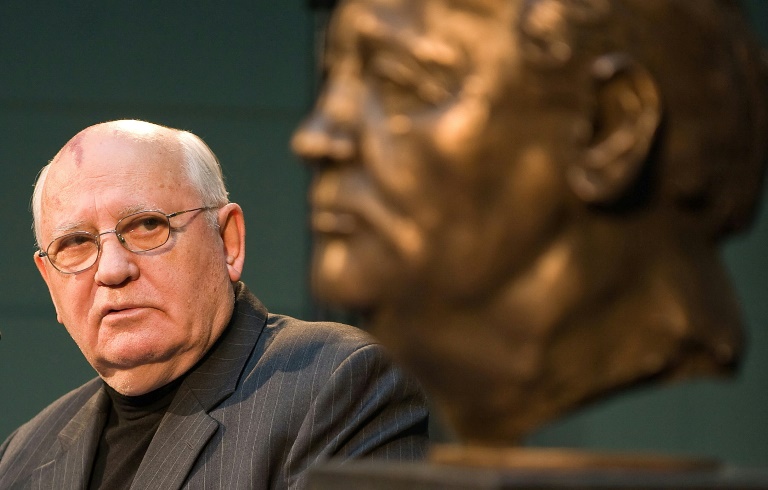
The death of Mikhail Gorbachev triggered an outpouring of tributes from Western leaders on Wednesday but reaction was muted in Russia, where many blamed the last Soviet leader for the loss of the country’s status as a global superpower.

Gorbachev, who changed the course of history by triggering the demise of the Soviet Union and was one of the great figures of the 20th century, died on Tuesday aged 91. 

Russian news agency reports said he had died in a central Moscow hospital “after a serious and long illness”.

Gorbachev, in power between 1985 and 1991, helped bring US-Soviet relations out of a deep freeze and was the last surviving Cold War leader.

His life was one of the most influential of his times, and his reforms as Soviet leader transformed his country and allowed Eastern Europe to free itself from Soviet rule.

The changes he set in motion saw him lionised in the West — he won the Nobel Peace Prize in 1990 — but also earned him the scorn of many Russians after the country was plunged into economic chaos and saw its international influence decline.

President Vladimir Putin, who called the Soviet collapse the greatest geopolitical catastrophe of the 20th century, has spent much of his more than 20-year rule reversing parts of Gorbachev’s legacy.

By cracking down on independent media and political opposition, critics say, Putin has worked to undo Gorbachev’s efforts to bring “glasnost”, or openness, to the Soviet system.

And with the launch earlier this year of a military campaign in Ukraine, he has sought to reassert Russian influence in one of the countries that won its independence when the Soviet Union fell apart.

– ‘One-of-a-kind’ –

In a letter of condolences published by the Kremlin, Putin said Gorbachev “was a politician and statesman who had a huge impact on the course of world history” but said little of his political accomplishments.

Kremlin spokesman Dmitry Peskov told Russian news agencies it was not yet clear if a state funeral would be held and that a decision would be made later based on the family’s wishes.

On the streets of Moscow many Russians refused to comment on his death, with one muttering that he was “a traitor” and a young Russian asking who he was.

But in the West, where Gorbachev was regarded fondly and affectionately referred to as Gorby, he was hailed as an iconic figure.

US President Joe Biden credited Gorbachev with having “the imagination to see that a different future was possible and the courage to risk his entire career to achieve it”.

“The result was a safer world and greater freedom for millions of people,” he said.

British Prime Minister Boris Johnson said Gorbachev’s “tireless commitment to opening up Soviet society remains an example to us all,” while UN chief Antonio Guterres called him “a one-of-a-kind statesman” who “did more than any other individual to bring about the peaceful end of the Cold War”.

French President Emmanuel Macron praised Gorbachev as a “man of peace whose choices opened up a path of liberty for Russians,” and former German chancellor Angela Merkel said he demonstrated how “one single statesman can change the world for the better”.

Gorbachev was best known for defusing US-Soviet nuclear tensions in the 1980s as well as bringing Eastern Europe out from behind the Iron Curtain.

He won the Nobel Peace Prize for negotiating a historic nuclear arms pact with US leader Ronald Reagan, and his decision to withhold the Soviet army when the Berlin Wall fell a year earlier was seen as key to preserving Cold War peace.

He was also championed in the West for spearheading reforms to achieve transparency and greater public discussion that hastened the breakup of the Soviet empire.

He spent much of the past two decades on the political periphery, intermittently calling for the Kremlin and the White House to mend ties as tensions soared to Cold War levels after Russia annexed Crimea in 2014 and launched the offensive in Ukraine earlier this year.

– Backed Crimea annexation –

Gorbachev had supported the Crimea annexation, saying that most people in the peninsula “wanted to be reunited with Russia”.

He made no public statements on Russia’s military action in Ukraine, though his foundation called for “an early cessation (to) hostilities and immediate start of peace negotiations”.

He spent the twilight years of his life in and out of hospital with increasingly fragile health and observed self-quarantine during the pandemic. 

He remained a controversial figure and had a difficult relationship with Putin.

Many Russians still look back fondly on the Soviet period, and Putin leans on its achievements to buttress Russia’s claim to greatness and his own prestige.

As the USSR collapsed, Gorbachev was superseded by the younger Boris Yeltsin, who became post-Soviet Russia’s first president. 

From then on, Gorbachev was relegated to the sidelines, devoting himself to educational and humanitarian projects. 

– Supporter of free press –

He made a disastrous attempt to return to politics and ran for president in 1996 but received just 0.5 percent of the vote.

An early supporter of Russia’s leading independent newspaper Novaya Gazeta, founded in 1993, he donated part of his Nobel winnings to help it buy its first computers. 

But the newspaper, like Russian independent media across the board, came under increasing pressure under Putin.

Novaya Gazeta, whose chief editor Dmitry Muratov last year won the Nobel Peace Prize, suspended publication in late March after the military intervention in Ukraine.

In a tribute published after Gorbachev’s death, Muratov hailed him as a man who “put human rights above the state, and valued a peaceful sky more than personal power”.

Russia's Gazprom halts pipeline gas flow in new jitters for Europe

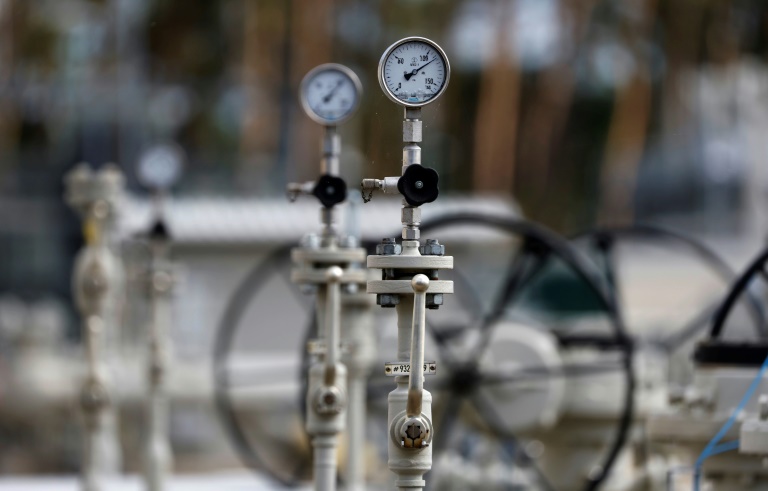
Russian energy giant Gazprom suspended gas deliveries to Germany on a major pipeline on Wednesday, the latest in a series of supply halts that have fuelled an energy crisis in Europe.

Gazprom said supplies via Nord Stream 1 were “completely stopped” for “preventative work” at a compressor unit, shortly after European gas network operator ENTSOG announced that deliveries had ceased.

Gazprom has also said it would suspend gas supplies to France’s main provider Engie from Thursday after it failed to pay for all deliveries made in July.

The latest stop comes as European countries have faced soaring energy prices since Russia invaded Ukraine in late February and subsequently curbed its gas deliveries to the region.

Germany, which is heavily dependent on Russian gas, has accused Moscow of using energy as a “weapon”.

But Gazprom has said the three-day maintenance work was “necessary” and had to be be carried out after “every 1,000 hours of operation”.

Germany’s Federal Network Agency chief Klaus Mueller has called it a “technically incomprehensible” decision, warning that it was likely just a pretext by Moscow to wield energy supplies as a threat.

Experience shows that Moscow “makes a political decision after every so-called maintenance”, he said, adding that “we’ll only know at the beginning of September if Russia does that again”. 

– ‘Much better position’ –

With winter around the corner, European consumers are bracing for huge power bills. Some countries like France have warned that rationing is a possibility.

The European Union is preparing to take emergency action to reform the electricity market in order to bring galloping prices under control, with energy ministers scheduled to hold extraordinary talks next week.

Asked if gas supplies would resume after the three-day works were completed on Saturday, Russian government spokesman Dmitry Peskov said “there is a guarantee that, apart from technical problems caused by sanctions, nothing interferes with supplies”.

Western capitals “have imposed sanctions against Russia, which do not allow for normal maintenance, repair work”, he added, in what appeared to hint at a replay of an earlier round of start-stop rigmarole.

Gazprom had already carried out 10 days of long-scheduled maintenance works in July. While it restored gas flows following the works, it drastically dwindled supplies just days later, claiming a technical issue on a turbine.

The Russian company insists that a key turbine could not be sent to Russia because of sanctions on Moscow. But Germany, where the turbine was located, has said Moscow was itself blocking the component’s delivery to Russia.

An official at Gascade, which operates the distribution network within Germany, also viewed Gazprom’s latest actions sceptically.

“In July, it was regular maintenance planned for a long time by Nord Stream 1, this time it was not planned and we don’t know what is behind this operation,” the official said on condition of anonymity.

A day ahead of the new shutdown, Chancellor Olaf Scholz said Germany was now “in a much better position” in terms of energy security, having achieved its gas storage targets far sooner than expected.

Germany’s gas storage tanks were now almost at 85 percent of capacity, said Mueller, assessing that “Germany is better prepared for the new ‘maintenance’ by Nord Stream”. 

Europe as a whole was also getting a march on filling its gas storage tanks. On Sunday, storage levels were already at 79.9 percent of capacity in the EU.

– ‘Gas emergency’ –

At the same time, fears over throttled supplies have also driven companies to slash their energy usage.

Germany’s industry consumed 21.3 percent less gas in July than the average for the month from 2018 to 2021, said the Federal Network Agency.

Mueller has said such pre-emptive action “could save Germany from a gas emergency this winter”.

And Europe’s biggest economy was already racing to turn its back on Russian gas. 

At the German coastal city of Lubmin, where Nord Stream 1 comes onshore, plans are already well underway for the switch to liquefied natural gas (LNG).

The LNG, transported in by ships, will arrive at Lubmin’s industrial port and be converted back into gas and pumped into Gascade’s distribution network, which has so far been used to funnel Russian gas around the country.

“We expect to be able to inject gas into the distribution network on December 1,” said Stephan Knabe of Deutsche ReGas — the company managing the LNG project.

Chinese electric carmaker BYD plummets after Buffett sale

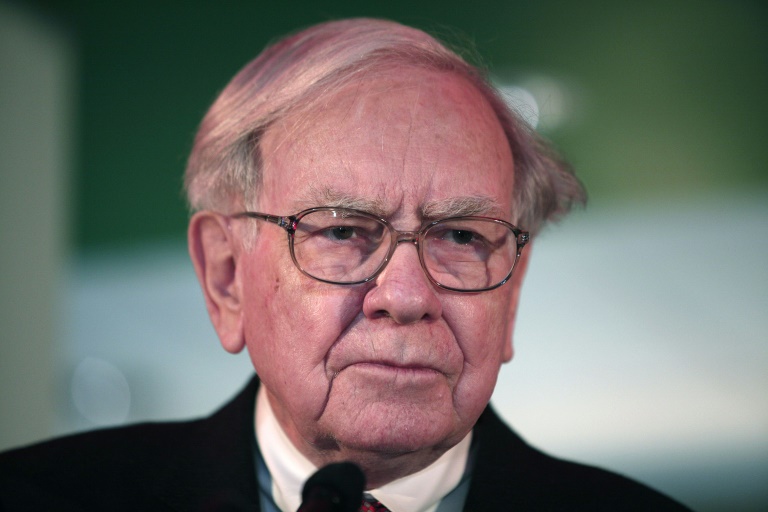
Shares in Chinese electric carmaker BYD plunged on Wednesday after its largest backer, Warren Buffett’s Berkshire Hathaway, reduced its stake amid speculation of a potential exit.

Hong Kong-listed shares of the EV manufacturer fell by as much as 13 percent, a day after a regulatory filing showed Berkshire reducing its holdings from 20.04 percent to 19.92 percent.

It ended the day 7.9 percent lower, while its Shenzhen-listed stock finished 7.4 percent down.

The sale of around 1.33 million securities was valued at approximately $47 million.

Electronic carmakers in China were left scrambling after the government response to coronavirus outbreaks this year disrupted supply chains, with plants across the country suspending production for weeks.

While the Shenzhen-based firm reported strong earnings this week, rumours have swelled that the legendary American investor behind Berkshire may be looking to offload his entire stake.

Berkshire first bought 225 million BYD shares in 2008 and has been the biggest stakeholder in the company, now China’s largest EV manufacturer and a major rival to Tesla.

Berkshire sold around 6.3 million shares in BYD between June 30 and August 24, Bloomberg News reported, citing filings from both companies.

BYD told Chinese media that there was “no need to over-interpret” the stake sale, adding that the company was operating normally and had no major moves to disclose.

On Monday, the Shenzhen-based company reported that net income had tripled to 3.6 billion yuan ($521 million) from a year earlier, overcoming supply chain disruptions caused by the pandemic and China’s economic slowdown.

BYD said in a filing that it achieved record output and sales in the first half, with revenue jumping 66 percent year-on-year to 151 billion yuan.

The carmaker added that it was leading the domestic new energy vehicle sector with 24.7 percent market share in the first six months, citing data from the China Automobile Association.

“Investors could interpret this as the beginning of Berkshire closing its position in BYD,” Bridget McCarthy, a market research analyst at hedge fund Snow Bull Capital, told Bloomberg.

“I would expect arguably one of the world’s greatest investors to take some profits after over a decade, especially on his highest-returning investment, percentage-wise.”

Some analysts have argued that BYD’s strong fundamentals, coupled with Beijing’s push to develop its domestic green energy sector, means the company still has room to grow.

“Despite the short term share price struggle, there is value to invest in the company with its solid business model in the medium to long term,” Andy Wong, fund manager at LW Asset Management Advisors in Hong Kong, said.

Last month, a stake identical to the size of Berkshire’s holdings was entered into Hong Kong’s Central Clearing and Settlement System. 

Hong Kong requires anyone who owns more than five percent of a listed company to notify the stock exchange when initiating a trade that changes the stake percentage into the next whole number.

Asian markets mostly drop as traders eye more monetary tightening

Most Asian markets resumed their downward trend Wednesday, with traders fearing the Federal Reserve’s determination to beat inflation with higher interest rates will tip the world’s top economy into recession.

After bouncing from their June lows, global equities are once again taking a hiding from worried investors after Fed chief Jerome Powell warned last week the bank would need to tighten policy much more to succeed in its battle against prices.

Wall Street’s three main indexes fell for a third straight day Tuesday to sit at a one-month low, with healthy data on US consumer sentiment and job openings indicating the economy remained resilient despite recent rate hikes and four-decade-high inflation.

But analysts said the readings were a case of good news being bad news as they would allow the Fed to stick to its plan of lifting borrowing costs further. Expectations are growing for a third successive three-quarter-point increase next month.

Traders are now awaiting the release of US job-creation figures on Friday for a better idea about the state of the economy.

However, commentators said trying to plot a course through the next few months would be tricky owing to inflation and rate increases as well as other issues such as the Ukraine war, geopolitical tensions and China’s Covid-damaged economy.

“What’s clear is that predicting this market is not clean cut,” Angeline Newman, of UBS Global Wealth Management, told Bloomberg Television.

“We are living in a world where conflicting economic signals are making the path of monetary policy very difficult to determine.”

Shanghai dropped after a report on Chinese factory activity showed another contraction, as the sector was buffeted by lockdowns due to Beijing’s zero-Covid strategy and high temperatures that led to energy rationing.

The reading reinforced the view that the world’s number-two economy continued to struggle.

There were also losses in Tokyo, Sydney, Singapore, Wellington, Manila and Bangkok, though Seoul, Jakarta and Taipei rebounded from early losses. Hong Kong was flat.

London, Paris and Frankfurt all fell after reversing a positive start.

“Having seen such a promising start to August, last week’s speech by… Powell appears to have been the final straw for any sort of hope that we might see another positive month for equity markets,” said CMC Markets analyst Michael Hewson.

Worries about an economic slowdown and the possible hit to demand were also dragging on oil, which was on course for a third monthly drop, with both main contracts tumbling more than five percent Tuesday.

However, market watchers pointed out the commodity had plenty of upside potential as investors grapple with a range of supply issues including unrest in Libya and Iraq and expectations that Iran nuclear talks will not end any time soon.

Adding to the upward pressure was news that Russian energy giant Gazprom had shut off gas deliveries for three days from Wednesday via the Nord Stream pipeline through Germany.

– Key figures at around 0810 GMT 

Tokyo – Nikkei 225: DOWN 0.4 percent at 28,091.53 (close)

Hong Kong – Hang Seng Index: FLAT at 19,954.39 (close)

Shanghai – Composite: DOWN 0.8 percent at 3,202.14 (close)

London – FTSE 100: DOWN 0.3 percent at 7,340.96

Euro/dollar: DOWN at $1.0007 from $1.0024 on Tuesday

Pound/dollar: DOWN at $1.1644 from $1.1661

Euro/pound: DOWN at 85.92 pence from 85.95 pence

Dollar/yen: DOWN at 138.59 yen from 138.66 yen

West Texas Intermediate: DOWN 0.5 percent at $91.18 per barrel

Brent North Sea crude: DOWN 0.7 percent at $98.60 per barrel

New York – Dow: DOWN 1.0 percent at 31,790.87 (close)

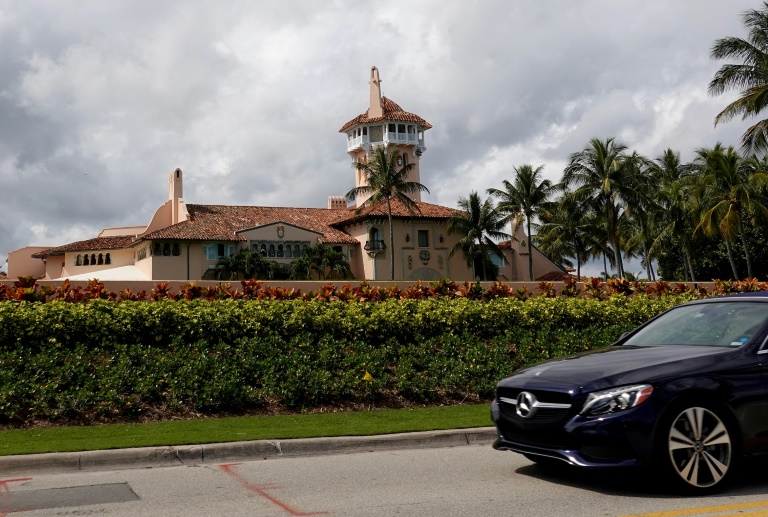
Documents 'likely concealed' to obstruct Trump probe: Justice Dept

Documents at former US president Donald Trump’s Florida home were “likely concealed” to obstruct an FBI probe into his potential mishandling of classified materials, the Justice Department said in a court filing Tuesday.

The filing provides the most detailed account yet of the motivation for the FBI raid this month on Trump’s Mar-a-Lago estate, which was triggered by a review of records he previously surrendered to authorities that contained top secret information. 

Before the raid, the FBI uncovered “multiple sources of evidence” showing that “classified documents” remained at Mar-a-Lago, the filing says.

“The government also developed evidence that government records were likely concealed and removed… and that efforts were likely taken to obstruct the government’s investigation,” the filing adds.

The DOJ said it provided the detailed background on the build-up to the raid “to correct the incomplete and inaccurate narrative set forth in (Trump’s) filings.”

The filing responds to Trump’s request last week for an independent party, or “special master,” to screen files seized in the FBI raid for materials protected by personal privilege.

Naming a special master could potentially block investigators’ access to the documents, especially if he or she accepts Trump’s claims that most were privileged.

The filing argues that the court should not appoint a special master, “because those records do not belong to (Trump).”

The “appointment of a special master is unnecessary and would significantly harm important governmental interests, including national security interests,” the filing adds.

Trump, who is weighing another White House run in 2024, has accused the Justice Department under Democratic President Joe Biden of conducting a “witch hunt” and said the judge “should never have allowed the break-in of my home.”

Gazprom halts pipeline gas flow in new jitters for Europe

Russian energy giant Gazprom suspended gas deliveries to Germany for maintenance on a major pipeline on Wednesday, the latest in a series of supply halts that have fuelled an energy crisis in Europe.

Gazprom said supplies via Nord Stream 1 were “completely stopped” for “preventative work” at a compressor unit, shortly after the the pipeline’s operator, Entsog, announced that deliveries had stopped.

The move comes as European countries have faced soaring energy prices since Russia invaded Ukraine in late February and subsequently curbed its gas deliveries to the region.

Germany, which is heavily dependent on Russian gas, has accused Moscow of using energy as a “weapon”.

But Gazprom has said the three-day maintenance work was “necessary” and had to be be carried out after “every 1,000 hours of operation”.

Germany’s Federal Network Agency chief Klaus Mueller has called it a “technically incomprehensible” decision, warning that it was likely just a pretext by Moscow to wield energy supplies as a threat.

Experience shows that Moscow “makes a political decision after every so-called maintenance”, he said, adding that “we’ll only know at the beginning of September if Russia does that again”. 

– ‘Much better position’ –

With winter around the corner, European consumers are staring down the barrel of huge power bills. Some countries like France have warned that rationing is a possibility.

The European Union is preparing to take emergency action to reform the electricity market in order to bring galloping prices under control, with energy ministers scheduled to hold extraordinary talks next week.

Asked if gas supplies would resume after the three-day works were completed on Saturday, Russian government spokesman Dmitry Peskov said “there is a guarantee that, apart from technical problems caused by sanctions, nothing interferes with supplies”.

Western capitals “have imposed sanctions against Russia, which do not allow for normal maintenance, repair work”, he added, in what appeared to hint at a replay of an earlier round of start-stop rigmarole.

Gazprom had already carried out 10 days of long-scheduled maintenance works in July. While it restored gas flows following the works, it drastically dwindled supplies just days later, claiming a technical issue on a turbine.

The Russian company insists that a key turbine could not be sent to Russia because of sanctions on Moscow. But Germany, where the turbine was located, has said Moscow was itself in fact blocking the turbine’s delivery to Russia.

An official at Gascade, which operates the distribution network within Germany, also viewed Gazprom’s latest actions sceptically.

“In July, it was regular maintenance planned for a long time by Nord Stream 1, this time it was not planned and we don’t know what is behind this operation,” the official said on condition of anonymity.

A day ahead of the new shutdown, Chancellor Olaf Scholz said Germany was now “in a much better position” in terms of energy security, having achieved its gas storage targets far sooner than expected.

Europe as a whole was also getting a march on filling its gas storage tanks. On Sunday, storage levels were already at 79.9 percent of capacity in the EU.

– ‘Gas emergency’ –

At the same time, fears over throttled supplies have also driven companies to slash their energy usage.

Germany’s industry consumed 21.3 percent less gas in July than the average for the month from 2018 to 2021, said the Federal Network Agency.

Mueller has said such pre-emptive action “could save Germany from a gas emergency this winter”.

And Europe’s biggest economy was already racing to turn its back on Russian gas. 

At the German coastal city of Lubmin, where Nord Stream 1 comes onshore, plans are already well underway for the switch to liquefied natural gas (LNG).

The LNG, transported in by ships, will arrive at Lubmin’s industrial port and be converted back into gas and pumped into Gascade’s distribution network, which has so far been used to funnel Russian gas around the country.

“We expect to be able to inject gas into the distribution network on December 1,” said Stephan Knabe of Deutsche ReGas — the company managing the LNG project.

The company believes that up to 4.5 billion cubic metres of gas can be imported via the Lubmin LNG terminal alone, making up around eight percent of Nord Stream 1’s capacity.

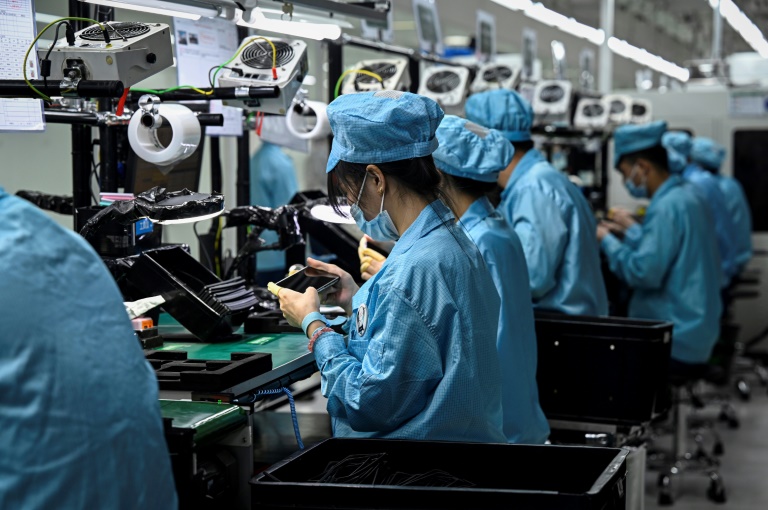
China's factory activity contracts for second straight month in August

China’s factory activity shrank in August for the second month in a row, official data showed Wednesday, as the sector was hit by strict zero-Covid restrictions and extreme heat.

The Purchasing Managers’ Index (PMI), a key gauge of manufacturing in the world’s second-biggest economy, came in at 49.4, up from July’s 49.0 but still below the 50-point mark separating growth from contraction, National Bureau of Statistics (NBS) data showed.

Sporadic Covid-19 lockdowns around China have dampened consumer enthusiasm and business confidence, while searing temperatures across large parts of the country this summer prompted power rationing for factories.

The economy faced “unfavourable factors including the epidemic and high temperatures” this month, NBS senior statistician Zhao Qinghe said in a statement.

Zhao said the data showed “the recovery of manufacturing production and demand still needs to be strengthened”, though he noted an uptick in activity in agricultural product processing and food producers ahead of the mid-Autumn festival on September 10.

China’s manufacturing PMI has been in contraction territory for five out of the past six months, in the wake of a disruptive months-long lockdown in Shanghai and Covid-related restrictions elsewhere.

But officials show few signs of relaxing strict pandemic curbs, with the southern tech hub of Shenzhen sealing off the world’s largest electronics market this week despite just dozens of daily cases in the city of more than 18 million.

Chinese leaders had originally set a full-year GDP growth target of around 5.5 percent, but with economic expansion of just 0.4 percent in the second quarter, analysts believe it is unlikely to hit that goal.

Zhao noted that while larger businesses saw an expansion in activity this month, small and medium-sized enterprises reported contractions, dragging the overall PMI down.

“China’s economic weakness is increasingly becoming demand-driven,” ANZ’s Greater China chief economist Raymond Yeung, said.

“Consumption and investment sentiment among households and enterprises are weak, increasing the risk of a deflationary spiral.”

China’s non-manufacturing PMI came in at 52.6 points in August, down from 53.8 in July, NBS data showed.

Statistician Zhao said that the accommodation, food and beverage and telecommunications industries saw “sustained rapid growth” in the past month.

But ANZ’s Yeung noted that weak expansion in the service sector “bodes ill for China’s overall growth outlook”.

He said authorities were likely to continue their tough Covid approach in the leadup to a key political meeting in October — the 20th Communist Party Congress.

Close Bitnami banner
Bitnami