US Business

UN high-seas biodiversity treaty struggles to leave port

A two-week negotiating session on a treaty to protect the high seas wraps up Friday, but UN observers were holding their breath with many points remaining contentious between member states.

After 15 years, including four prior formal sessions, negotiators have yet to reach a legally binding agreement to address the growing environmental and economic challenges involving the high seas, also known as international waters — a zone which encompasses almost half the planet.

Many had hoped that this fifth session, which began on August 15 at the United Nations headquarters in New York, would be the last and yield a final text on “the conservation and sustainable use of marine biodiversity beyond national jurisdiction,” or BBNJ for short.

But a new version of the treaty — distributed to delegates on Friday morning just hours before the official end of negotiations, and seen by AFP — still included many paragraphs open to negotiations.

A meeting scheduled for noon (1600 GMT) was canceled to allow consultations to continue, which observers suggest could run into Saturday.

One of the most sensitive issues revolves around the sharing of possible profits gained from developing genetic resources in international waters, where pharmaceutical, chemical and cosmetic companies hope to find miracle drugs, products or cures.

Such costly research at sea is largely the prerogative of rich nations, but developing countries do not want to be left out of potential windfall profits drawn from marine resources that belong to no one.

The new draft text seems to still side with the developing nations, with a requirement that two percent of all future sales be redistributed, eventually rising to eight percent.

Greenpeace’s Will McCallum accuses the EU, United States and Canada of rejecting the proposal. 

“It’s not even real money. It’s just hypothetical money one day. That is why it is really frustrating,” he told AFP.

The EU pushed back on that characterization, with one European negotiator telling AFP: “We are willing to contribute to the BBNJ agreement through various funding sources, which in our view shall include a fair sharing of benefits from marine genetic resources globally.”

Similar issues of equity between the Global North and South arise in other international negotiations, such as on climate change, where developing nations feel outsized harms from global warming and try in vain to get wealthier nations to help pay to offset those impacts.

– ‘Too close to fail’ –

Some are hopeful for an agreement.

“This is the final stage and delegates are working hard to come to an agreement,” said Liz Karan with the NGO Pew Charitable Trusts.

Jihyun Lee, a youth ambassador with conservation group the High Seas Alliance, said: “We’re too close to fail.”

The high seas begin at the border of nations’ exclusive economic zones (EEZs) — which by international law reach no more than 200 nautical miles (370 kilometers) from each country’s coast — and are under no state’s jurisdiction.

Sixty percent of the world’s oceans fall under this category.

And while healthy marine ecosystems are crucial to the future of humanity, particularly to limit global warming, only one percent of international waters are protected.

One of the key pillars of an eventual BBNJ treaty is to allow the creation of marine protected areas, which many nations hope will cover 30 percent of the Earth’s ocean by 2030.

“Without establishing protections in this vast area, we will not be able to meet our ambitious and necessary 30 by 30 goal,” said US State Department official Maxine Burkett at a press conference.

But delegations still disagree on the process for creating these protected areas, as well as on how to implement a requirement for environmental impact assessments before new activity on the high seas.

“I think they have made a lot of progress in the last two weeks on issues that were very controversial,” said Klaudija Cremers, a researcher at the IDDRI think tank, which like multiple other NGOs has a seat with observer status at the negotiations.

She told AFP that the final talks Friday “could be the push to get an agreement.”
Taming inflation will inflict 'pain' on Americans: Fed's Powell

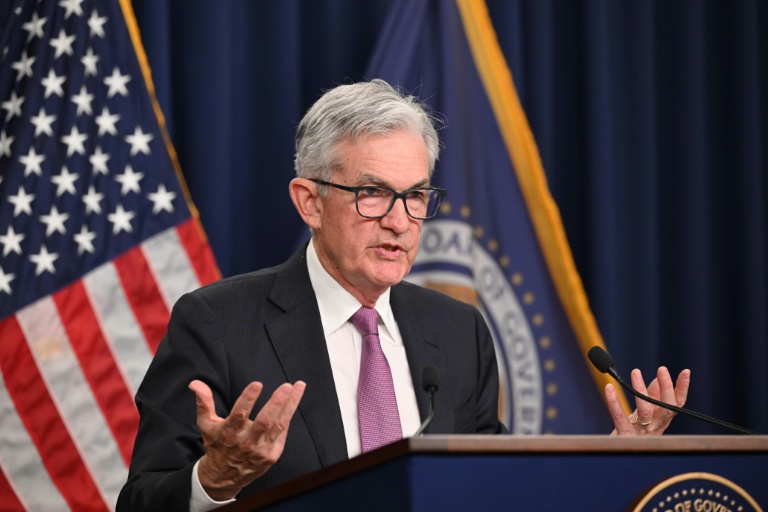
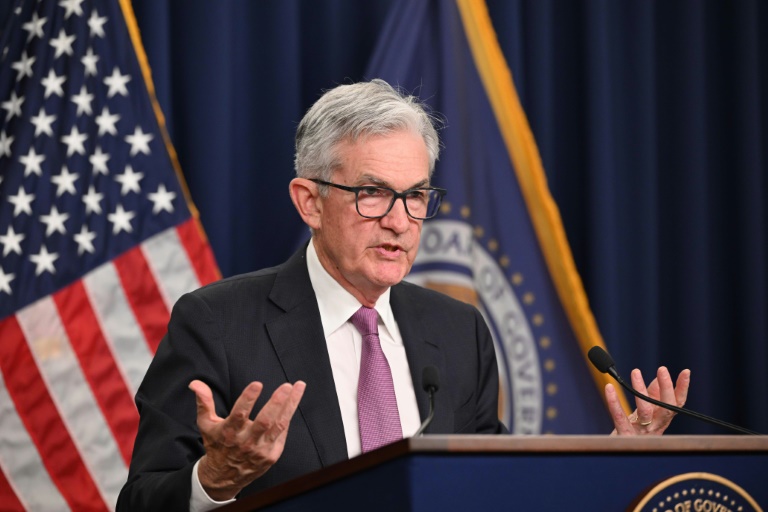
Taming US inflation will inflict “pain” on American families and businesses, but failure to wrestle prices down from their current 40-year high would be even more harmful, Federal Reserve Chair Jerome Powell said Friday in a hotly-anticipated speech to global policymakers.

Addressing the annual gathering of central bankers in Jackson Hole, Wyoming, Powell did not hold back or leave room for doubt about the Fed’s plans, pledging to act “forcefully.”

He warned that the world’s largest economy is likely to slow for a sustained period, and the strong US job market will suffer in order to get prices down — consequences he called the “unfortunate costs of reducing inflation.”

The Fed this year launched an aggressive campaign to raise interest rates — and in his unusually short, notably direct remarks, Powell made it clear that the fight against inflation is not over.

“Restoring price stability will take some time and requires using our tools forcefully to bring demand and supply into better balance,” he told the gathering, held against the backdrop of the majestic Grand Teton mountains.

“While higher interest rates, slower growth and softer labor market conditions will bring down inflation, they will also bring some pain to households and businesses,” Powell said.

“But a failure to restore price stability would mean far greater pain.”

Modest signs of slowing in the US economy and easing price pressures spurred hope in financial markets that the central bank might ease up on its aggressive rate hikes, and perhaps even start to reverse course next year.

But Powell doused those hopes, making it clear that Fed policy and the benchmark borrowing rate would have to remain “sufficiently restrictive” to bring inflation back down to the two percent target.

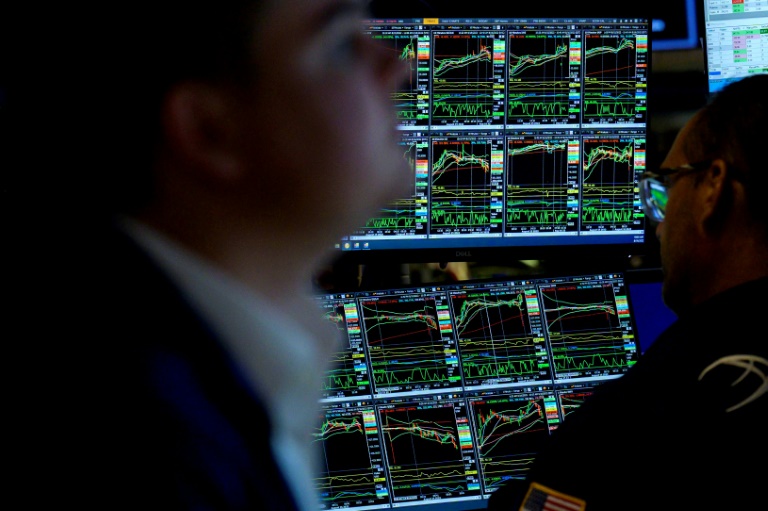
Markets turned negative on the news, with all three major stock indices down two percent or more around midday.

– Improving data –

The supply chain issues that have beleaguered the global economy have continued, worsened by a series of Covid lockdowns in China, which have combined with Russia’s war in Ukraine to send prices soaring worldwide.

In the battle to contain red-hot US inflation, which topped nine percent in June, the Fed has increased rates four times, including three-quarter-point increases in June and July — steep moves unheard of since the early 1980s — to the current level of a range of 2.25 to 2.5 percent.

Powell repeated Friday that another giant 75 basis point hike could be appropriate at the September policy meeting.

But recent data has shown signs of a slowing in price increases. Annual consumer price inflation dipped to a still-high 8.5 percent in July.

And data released Friday showed the Fed’s preferred inflation measure, the personal consumption expenditures price index, actually fell 0.1 percent in July — a dramatic slowdown from the 1.0 percent surge in June, largely reflecting the recent sharp retreat in global oil prices.

Over the last 12 months, the PCE price index slowed to 6.3 percent, the Commerce Department reported.

But Powell did not take much comfort in the figures.

“While the lower inflation readings for July are welcome, a single month’s improvement falls far short of what (policymakers) will need to see before we are confident that inflation is moving down,” he said.

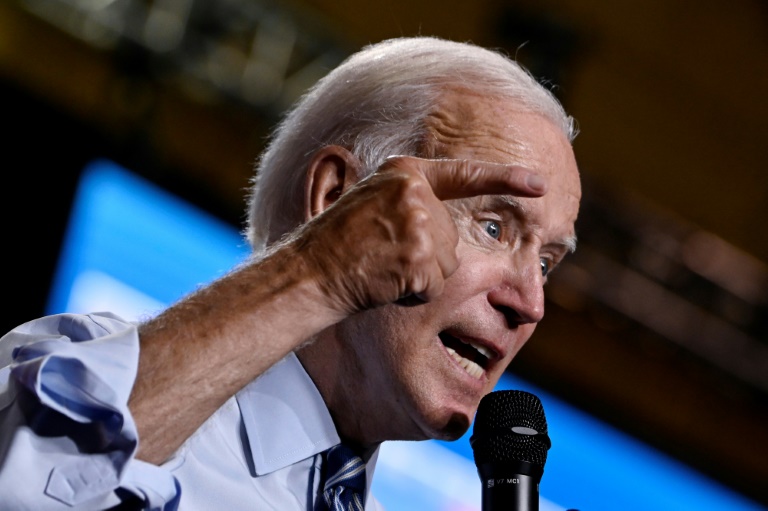
But President Joe Biden cheered the figures, saying, “The American people are starting to get some relief from high prices.”

Still, he added, “We have more work to do. We have to help families who have been squeezed by decades living paycheck to paycheck.”

Powell pointed to the experience of one of his predecessors, famed inflation dragonslayer Paul Volcker — who used aggressive measures to quell runaway prices — and said officials cannot retreat from their responsibility.

“That means the Fed must hammer demand to come in line with what is becoming a global economy of scarcities or constrained supply,” KPMG economist Diane Swonk said on Twitter.

“That is no small challenge. Powell sees a window to avoid a Volcker outcome of deep recessions w/some pain today. Rock/hard place.”

Taming inflation will inflict 'pain' on Americans: Fed's Powell

Taming US inflation will inflict “pain” on American families and businesses, but failure to wrestle prices down from their current 40-year high would be even more harmful, Federal Reserve Chair Jerome Powell said Friday in a hotly-anticipated speech to global policymakers.

Addressing the annual gathering of central bankers in Jackson Hole, Wyoming, Powell did not hold back or leave room for doubt about the Fed’s plans, pledging to act “forcefully.”

He warned that the world’s largest economy is likely to slow for a sustained period, and the strong US job market will suffer in order to get prices down — consequences he called the “unfortunate costs of reducing inflation.”

The Fed this year launched an aggressive campaign to raise interest rates — and in his unusually short, notably direct remarks, Powell made it clear that the fight against inflation is not over.

“Restoring price stability will take some time and requires using our tools forcefully to bring demand and supply into better balance,” he told the gathering, held against the backdrop of the majestic Grand Teton mountains.

“While higher interest rates, slower growth and softer labor market conditions will bring down inflation, they will also bring some pain to households and businesses,” Powell said.

“But a failure to restore price stability would mean far greater pain.”

Modest signs of slowing in the US economy and easing price pressures spurred hope in financial markets that the central bank might ease up on its aggressive rate hikes, and perhaps even start to reverse course next year.

But Powell doused those hopes, making it clear that Fed policy and the benchmark borrowing rate would have to remain “sufficiently restrictive” to bring inflation back down to the two percent target.

Markets turned negative on the news, with all three major stock indices down two percent or more around midday.

– Improving data –

The supply chain issues that have beleaguered the global economy have continued, worsened by a series of Covid lockdowns in China, which have combined with Russia’s war in Ukraine to send prices soaring worldwide.

In the battle to contain red-hot US inflation, which topped nine percent in June, the Fed has increased rates four times, including three-quarter-point increases in June and July — steep moves unheard of since the early 1980s — to the current level of a range of 2.25 to 2.5 percent.

Powell repeated Friday that another giant 75 basis point hike could be appropriate at the September policy meeting.

But recent data has shown signs of a slowing in price increases. Annual consumer price inflation dipped to a still-high 8.5 percent in July.

And data released Friday showed the Fed’s preferred inflation measure, the personal consumption expenditures price index, actually fell 0.1 percent in July — a dramatic slowdown from the 1.0 percent surge in June, largely reflecting the recent sharp retreat in global oil prices.

Over the last 12 months, the PCE price index slowed to 6.3 percent, the Commerce Department reported.

But Powell did not take much comfort in the figures.

“While the lower inflation readings for July are welcome, a single month’s improvement falls far short of what (policymakers) will need to see before we are confident that inflation is moving down,” he said.

But President Joe Biden cheered the figures, saying, “The American people are starting to get some relief from high prices.”

Still, he added, “We have more work to do. We have to help families who have been squeezed by decades living paycheck to paycheck.”

Powell pointed to the experience of one of his predecessors, famed inflation dragonslayer Paul Volcker — who used aggressive measures to quell runaway prices — and said officials cannot retreat from their responsibility.

“That means the Fed must hammer demand to come in line with what is becoming a global economy of scarcities or constrained supply,” KPMG economist Diane Swonk said on Twitter.

“That is no small challenge. Powell sees a window to avoid a Volcker outcome of deep recessions w/some pain today. Rock/hard place.”

Europe electricity prices soar as tough winter looms

European electricity prices soared to new records on Friday, presaging a bitter winter as Russia’s invasion of Ukraine inflicts economic pain across the continent.

The year-ahead contract for German electricity reached 995 euros ($995) per megawatt hours while the French equivalent surged past 1,100 euros — a more than tenfold increase in both countries from last year.

In Britain, energy regulator Ofgem said it would increase the electricity and gas price cap almost twofold from October 1 to an average £3,549 ($4,197) per year.

Ofgem blamed the increase on the spike in global wholesale gas prices after the lifting of Covid restrictions and Russian curbs on supplies.

The Czech Republic, which holds the rotating European Union presidency, announced Friday that it would convene an EU energy crisis summit “at the earliest possible date”.

Energy prices have soared in Europe as Russia has slashed natural gas supplies to the continent, with fears of more drastic cuts in the winter amid tensions between Moscow and the West over the war.

One-fifth of European electricity is generated by gas-fired power plants, so drops in supply inevitably lead to higher prices.

European gas prices on Friday reached 341 euros per MWh, near the all-time high of 345 euros it struck in March.

The war is not the only culprit in France.

The shutdown of several nuclear reactors due to corrosion issues has contributed to the French electricity price increase as power production has dramatically decreased in the country.

Only 24 of the 56 reactors operated by energy giant EDF were online on Thursday.

France, which traditionally exports electricity, is now an importer.

“Winter is going to be a tough period for all the countries in Europe,” Giovanni Sgaravatti, research assistant at the Bruegl think tank in Brussels, told AFP.

“Prices will stay high, possibly they can even go higher,” he said.

– Recession ‘probably unavoidable’ –

A Bruegel study found that European Union countries have allocated 236 billion euros from September 2021 to August 2022 to shield households and firms from rising energy prices, which began to increase as countries emerged from Covid restrictions and soared after the war.

In recent days and weeks, countries have announced energy savings campaigns to encourage the public to reduce power consumption during the winter.

Germany announced Wednesday that the temperature of public administrative offices this winter would be capped at 19 degrees Celsius (66 degrees Fahrenheit) while hot water would be shut off.

The German measures also include a ban on heating private swimming pools from September and over the six months that the decree is in place.

Finland is encouraging its citizens to lower their thermostats, take shorter showers and spend less time in saunas, a national tradition.

French households are shielded by an energy price cap until December 31 for now.

Industries are also affected by the soaring energy prices.

Factories that produce ammonia — an ingredient to make fertiliser — announced the suspension of their operations in Poland, Italy, Hungary and Norway this week.

HSBC bank warned in a note that “recession is probably unavoidable” in the eurozone, with the economy shrinking in the fourth quarter and the first three months of 2023.

White House blasts 'radical' Republican abortion bans

The White House on Friday blasted the latest set of “radical” abortion restrictions in four more states run by Republicans, signaling President Joe Biden’s determination to lean on the issue ahead of tight November congressional elections.

There are now full-scale abortion bans in 12 Republican-controlled states, which had prepared so-called trigger laws ready to be activated when the Supreme Court overturned the landmark Roe v. Wade decision ensuring automatic rights to abortion access nationwide.

“Today marks the latest attack against the fundamental rights of Americans as new abortion bans go into effect in Idaho, Oklahoma, Tennessee, and Texas,” Press Secretary Karine Jean-Pierre said in a statement.

“These near-total abortion bans are part of a growing effort by Republican legislators to roll back the freedoms Americans have relied on for nearly half a century. Today’s radical steps take away women’s reproductive rights and put personal health care decisions in the hands of politicians instead of women and their doctors,” she said.

The Supreme Court ruling two months ago put jurisdiction over abortion access in the hands of individual state legislatures, immediately turning swaths of the country into areas where getting the procedure has become all but impossible.

Jean-Pierre echoed Biden’s frequent demand for Congress to pass a new law enshrining nationwide abortion rights and urged “people across the country to make their voices heard” ahead of the November midterm elections, which will decide whether Democrats retain their narrow hold on the legislature.

Republicans have fought for decades to overturn the 1973 Roe v. Wade decision and finally achieved their goal in a Supreme Court that tilted sharply to conservative interpretations of the constitution after Donald Trump filled three vacancies during his one-term presidency.

Polls show the court’s ruling was unpopular with a majority of Americans, however, and Democrats hope the issue will help them fend off a previously predicted sweep by Republicans in the midterms. 

“I think the American people realize this is just beyond the pale, it goes too far,” Biden told reporters at the White House.

Meanwhile, the White House is trying to help women who want to circumvent the bans by supporting their travel to states that do allow abortions.

The health department on Friday announced increased federal funding for states where the authorities want to help such women.

“We have seen the gut-wrenching stories of women suffering and not getting the care they need because of newly-enacted laws that restrict abortion care,” Health Secretary Xavier Becerra said.

The new federal assistance will “protect women’s access to reproductive care, including abortion,” he said.

Stocks slump after Fed chair vows tough inflation fight

Stocks slumped on Friday after Federal Reserve boss Jerome Powell pledged to act “forcefully” against soaring inflation in a battle that will be painful for American families and businesses.

The Fed has been on an aggressive campaign to raise interest rates — and Powell made it clear at the Jackson Hole gathering of global monetary policymakers that the fight against inflation is not over.

“Restoring price stability will take some time and requires using our tools forcefully to bring demand and supply into better balance,” he told the gathering, held against the backdrop of the majestic Grand Teton mountains.

Modest signs of slowing in the world’s largest economy and easing price pressures spurred hope in financial markets that the central bank might ease up on its aggressive interest rate hikes, and perhaps even start to reverse course next year.

But Powell doused those hopes, making it clear that Fed policy and the benchmark borrowing rate would have to remain “sufficiently restrictive” to return inflation to its two percent target.

“While higher interest rates, slower growth, and softer labor market conditions will bring down inflation, they will also bring some pain to households and businesses,” Powell said.

“But a failure to restore price stability would mean far greater pain.”

Wall Street stocks moved higher as Powell wrapped up his speech, perhaps because he indicated the jury was out on making a third straight 0.75 percentage point hike in interest rates in September.

But then they promptly slumped lower, with the Dow down 1.6 percent in late morning trading, while the S&P 500 fell 1.9 percent and Nasdaq Composite tumbled 2.5 percent. 

“On balance, markets are viewing Powell’s comments as more hawkish than anticipated,” said Matt Weller, Global Head of Research at FOREX.com and City Index.

In addition to the reaction in equities trading, he pointed to the yield on two-year Treasury bonds rising to a near 15-year high.

“Mr. Powell clearly hit a hawkish note, emphasizing the importance of leaving policy tight until inflation was thoroughly licked,” he added.  

The dollar slid against the euro, but rose against the yen and pound.

Sentiment had been boosted ahead of Powell’s speech by the latest readings of the US personal consumption expenditures price index, the Fed’s preferred yardstick for inflation, which dipped 0.1 percent from in July from June, and slowed to 6.3 percent from 6.8 percent on an annual basis.

– Electricity prices shock European stocks –

European equities also saw losses deepen after Powell’s speech, but stocks there had already been struggling after signs that energy prices are likely to keep fuelling inflation.

Sentiment in London had been dented by news that UK domestic energy bills will rocket even higher this year on surging wholesale gas prices as Britain’s cost-of-living crisis worsens.

Frankfurt and Paris stocks retreated amid fears of a eurozone energy crunch in the coming peak-demand winter as Russia curbs supplies.

Europe’s benchmark Dutch TTF gas contract rose Friday 341 euros per megawatt hour, not far from the record high struck in March after key gas producer Russia invaded Ukraine.

Meanwhile, German and French electricity futures prices soared to new records that are at least 10 times above last year.

Elsewhere, Asia was buoyed by signs of progress in talks between US and Chinese regulators that could see tech titans including Alibaba and JD.com avoid a delisting in New York.

More than 200 Chinese firms have for months had the threat of a New York delisting hanging over them as they are caught in a wide-ranging row between the world’s two biggest economies.

– Key figures at around 1530 GMT –

New York – Dow: DOWN 1.6 percent at 32,760.77 points

EURO STOXX 50: DOWN 2.0 percent at 3,601.90

London – FTSE 100: DOWN 0.7 percent at 7,427.31 (close) 

Frankfurt – DAX: DOWN 2.3 percent at 12,971.47 (close)

Paris – CAC 40: DOWN 1.7 percent at 6,274.26 (close)

Tokyo – Nikkei 225: UP 0.6 percent at 28,479.01 (close)

Hong Kong – Hang Seng Index: UP 3.6 percent at 19,968.38 (close)

Shanghai – Composite: UP 1.0 percent at 3,246.25 (close)

Euro/dollar: UP at $0.9999 from $0.9974 on Thursday

Pound/dollar: DOWN at $1.1774 from $1.1832

Euro/pound: UP at 84.93 pence from 84.31 pence

Dollar/yen: UP at 137.31 yen from 136.49 yen

West Texas Intermediate: DOWN 0.2 percent at $92.35 per barrel

Brent North Sea crude: UP 0.2 percent at $99.54

burs-rl/ach 

'House of the Dragon' renewed for second season

HBO announced Friday that the “House of the Dragon” fantasy drama would return for a second season, after the “Game of Thrones” prequel debuted to nearly 10 million US viewers.

Set years earlier in the same universe of George R.R. Martin’s books, “House of the Dragon” depicts the glory days of the ancestors of popular “Thrones” characters, such as Daenerys Targaryen.

It is based on his book, “Fire and Blood.”

HBO’s return to Westeros, and its prequel show’s addictive blend of scheming dynasties, gory violence and arguably gratuitous sex, has boasted solid numbers and drawn generally warm praise from critics.

The show’s premiere drew 9.98 million viewers in the United States, making it “the largest audience for any new original series in the history of HBO,” the television network’s owner, WarnerMedia, said in a statement earlier this week.

“Game of Thrones” ran for eight seasons between 2011 and 2019, and other spin-offs are in the works.

Some analysts noted that that title drew a whopping 17.4 million viewers to the debut of its final season.

Still, the “House of the Dragon” premiere represents a success for newly merged Warner Bros Discovery, which is under intense scrutiny as it tries to navigate the rapidly changing entertainment landscape dominated by the so-called “streaming wars.”

On September 2, fierce competition will arrive in the form of “The Rings of Power,” another swords-and-dragons-themed epic of the small screen, this time taking place in J.R.R. Tolkien’s Middle Earth, and created by retail giant Amazon’s own streaming platform Prime Video.

'House of the Dragon' renewed for second season

HBO announced Friday that the “House of the Dragon” fantasy drama would return for a second season, after the “Game of Thrones” prequel debuted to nearly 10 million US viewers.

Set years earlier in the same universe of George R.R. Martin’s books, “House of the Dragon” depicts the glory days of the ancestors of popular “Thrones” characters, such as Daenerys Targaryen.

It is based on his book, “Fire and Blood.”

HBO’s return to Westeros, and its prequel show’s addictive blend of scheming dynasties, gory violence and arguably gratuitous sex, has boasted solid numbers and drawn generally warm praise from critics.

The show’s premiere drew 9.98 million viewers in the United States, making it “the largest audience for any new original series in the history of HBO,” the television network’s owner, WarnerMedia, said in a statement earlier this week.

“Game of Thrones” ran for eight seasons between 2011 and 2019, and other spin-offs are in the works.

Some analysts noted that that title drew a whopping 17.4 million viewers to the debut of its final season.

Still, the “House of the Dragon” premiere represents a success for newly merged Warner Bros Discovery, which is under intense scrutiny as it tries to navigate the rapidly changing entertainment landscape dominated by the so-called “streaming wars.”

On September 2, fierce competition will arrive in the form of “The Rings of Power,” another swords-and-dragons-themed epic of the small screen, this time taking place in J.R.R. Tolkien’s Middle Earth, and created by retail giant Amazon’s own streaming platform Prime Video.

Stocks slump after Fed chair vows tough inflation fight

Stock slumped on Friday after Federal Reserve boss Jerome Powell pledged to act “forcefully” against soaring inflation in a battle that will be painful for American families and businesses.

The Fed has been on an aggressive campaign to raise interest rates — and Powell made it clear at the Jackson Hole gathering of global monetary policymakers that the fight against inflation is not over.

“Restoring price stability will take some time and requires using our tools forcefully to bring demand and supply into better balance,” he told the gathering, held against the backdrop of the majestic Grand Teton mountains.

Modest signs of slowing in the world’s largest economy and easing price pressures spurred hope in financial markets that the central bank might ease up on its aggressive interest rate hikes, and perhaps even start to reverse course next year.

But Powell doused those hopes, making it clear that Fed policy and the benchmark borrowing rate would have to remain “sufficiently restrictive” to return inflation to its two percent target.

“While higher interest rates, slower growth, and softer labor market conditions will bring down inflation, they will also bring some pain to households and businesses,” Powell said.

“But a failure to restore price stability would mean far greater pain.”

Wall Street stocks moved higher as Powell wrapped up his speech, perhaps because he indicated the jury was out on making a third straight 0.75 percentage point hike in interest rates in September.

But then they promptly slid lower, with the Dow, S&P 500 and Nasdaq Composite all dropping more than one percent.

The dollar was mixed, slumping against the euro, but rising against the yen and pound.

Sentiment had been boosted ahead of Powell’s speech by the latest readings of the US personal consumption expenditures price index, the Fed’s preferred yardstick for inflation, which dipped 0.1 percent from in July from June, and slowed to 6.3 percent from 6.8 percent on an annual basis.

– Electricity prices shock European stocks –

European equities also saw losses deepen after Powell’s speech, but stocks had been struggling after signs that energy prices are likely to keep fuelling inflation.

Sentiment in London had been dented by news that UK domestic energy bills will rocket even higher this year on surging wholesale gas prices as Britain’s cost-of-living crisis worsens.

Frankfurt and Paris stocks retreated amid fears of a eurozone energy crunch in the coming peak-demand winter as Russia curbs supplies.

Europe’s benchmark Dutch TTF gas contract dipped Friday one day after soaring to 324 euros per megawatt hour, not far from the record high struck in March after key gas producer Russia invaded Ukraine.

But German and French electricity futures prices soared to new records that are at least 10 times above last year.

Elsewhere, Asia was buoyed by signs of progress in talks between US and Chinese regulators that could see tech titans including Alibaba and JD.com avoid a delisting in New York.

More than 200 Chinese firms have for months had the threat of a New York delisting hanging over them as they are caught in a wide-ranging row between the world’s two biggest economies.

– Key figures at around 1435 GMT –

New York – Dow: DOWN 1.2 percent at 32,901.09 points

EURO STOXX 50: DOWN 1.8 percent at 3,609.48

London – FTSE 100: DOWN 0.7 percent at 7,429.72 

Frankfurt – DAX: DOWN 1.9 percent at 13,023.47

Paris – CAC 40: DOWN 1.7 percent at 6,270.92

Tokyo – Nikkei 225: UP 0.6 percent at 28,479.01 (close)

Hong Kong – Hang Seng Index: UP 3.6 percent at 19,968.38 (close)

Shanghai – Composite: UP 1.0 percent at 3,246.25 (close)

Euro/dollar: UP at $1.0049 from $0.9974 on Thursday

Pound/dollar: DOWN at $1.1823 from $1.1832

Euro/pound: UP at 84.97 pence from 84.31 pence

Dollar/yen: UP at 137.10 yen from 136.49 yen

West Texas Intermediate: DOWN 0.8 percent at $91.75 per barrel

Brent North Sea crude: DOWN 0.7 percent at $98.69

burs-rl/lth

Moderna sues Pfizer, BioNTech for Covid-19 vaccine patent infringement

Moderna said Friday it is suing rival vaccine makers Pfizer and BioNTech, alleging the partners infringed on its patents in developing their Covid-19 shot administered to hundreds of millions around the world.

The lawsuits set up a high-stakes showdown between the leading manufacturers of Covid-19 shots that are a key tool in the fight against the disease.

“Moderna believes that Pfizer and BioNTech’s Covid-19 vaccine Comirnaty infringes patents Moderna filed between 2010 and 2016 covering Moderna’s foundational mRNA technology,” the US-based biotech firm said in a statement.

“Pfizer and BioNTech copied this technology, without Moderna’s permission, to make Comirnaty,” Moderna said.

Pfizer and BioNTech said they have not fully reviewed the complaint, but expressed surprise over the litigation.

“The Pfizer/BioNTech Covid-19 vaccine was based on BioNTech’s proprietary mRNA technology,” a statement said. “We will vigorously defend against the allegations of the lawsuit.”

The mRNA technology used in the Moderna and Pfizer-BioNTech shots differs from that in traditional vaccines, which rely on injecting weakened or dead forms of a virus to allow the immune system to recognize it and build antibodies.

Instead, mRNA vaccines deliver instructions to cells to build a harmless piece of the spike protein found on the surface of the virus that causes Covid-19. 

After creating this spike protein, cells can recognize and fight the real virus, hailed as a major advancement in development of vaccines.

– Key tool against deadly pandemic –

The shots have repeatedly been the subject of inaccurate claims that they are dangerous, but health authorities say they are both safe and effective.

The lawsuits — in US district court in Massachusetts, and in regional court in Dusseldorf, Germany — are not seeking the removal of the rival vaccine or an injunction on future sales.

Moderna said it had begun building up the technology in 2010 and patented work on coronaviruses in 2015 and 2016, which allowed for rollout of its shots in “record time” after the pandemic struck. 

The virus has killed at least 6.48 million people worldwide since 2020 and made nearly 600 million ill, according to a Johns Hopkins University tracker.

In addition to death and suffering, the disease has led to a re-shaping of life ranging from a change in norms on working from home to a scrambling of supply chains and workforces.

Moderna said it pledged in October 2020 not to enforce its Covid-19-related patents while the pandemic continued, but less than two years later changed that stance as the fight shifted gears.

“Moderna expected companies such as Pfizer and BioNTech to respect its intellectual property rights and would consider a commercially reasonable license should they request one for other markets,” it said. 

“Pfizer and BioNTech have failed to do so,” the firm added.

These types of lawsuits are not unheard of in the pharmaceutical industry, where patents can be worth billions of dollars, and can take years to resolve.

Close Bitnami banner
Bitnami