US Business

Ukraine nuclear plant back online as inspection prepared

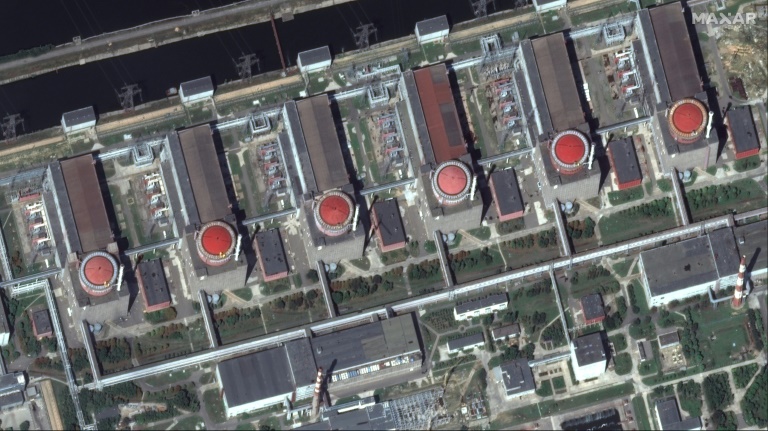
Ukraine’s Zaporizhzhia nuclear plant, occupied by Moscow’s troops, came back online Friday, the state operator said after Kyiv claimed it was cut from the national power grid by Russian shelling.

The plant — Europe’s largest nuclear facility — was severed Thursday from Ukraine’s power network for the first time in its four-decade history due to “actions of the invaders”, Energoatom said.

The operator said that as of 2:04 pm (1104 GMT) the plant “is connected to the grid and produces electricity for the needs of Ukraine” once again.

Ukrainian President Volodymyr Zelensky said his country’s nuclear experts had managed to protect the plant “from the worst case scenario which is constantly being provoked by Russian forces.”

But he added: “I want to underline that the situation remains very risky and dangerous.”

The Zaporizhzhia nuclear plant has been cause for mounting concern since Russian troops seized it in early March.

In recent weeks, Kyiv and Moscow have traded blame for rocket strikes around the facility in the southern Ukrainian city of Energodar.

Separately Friday, the EU presidency vowed to hold an emergency summit on the spiralling energy crisis caused by the war in Ukraine, which this week entered its seventh month.

The bloc has vowed to wean its 27 member states off Russian oil and gas in protest against the invasion, which has led to tough international sanctions against Moscow.

Friday saw Norway, a major natural gas producer, say it was joining the latest package of EU sanctions.

However, anxiety over supply has sent prices soaring, with Germany and France reporting Friday record electricity prices for 2023, more than 10 times higher than for this year.

Czech Prime Minister Petr Fiala said his country, which holds the EU presidency, “will convene an urgent meeting of energy ministers to discuss specific emergency measures”.

– Anxiety over plant –

Zelensky said late Thursday the power cut-off was caused by Russian shelling of the last active power line linking the plant to the network.

“Russia has put Ukrainians as well as all Europeans one step away from radiation disaster,” he said.

Energoatom said the outage was caused by ash pit fires at an adjacent thermal power plant, which damaged a line connecting the only two of the plant’s six reactors in operation.

Blaming Russian attacks for damage to the three other power lines linking the complex to the national grid, Energoatom said Friday afternoon one reactor had been reconnected “and capacity is being added”.

International Atomic Energy Agency head Rafael Mariano Grossi said Thursday he wants to visit the site within days, warning of potential disaster.

Ukraine energy minister adviser Lana Zerkal said an IAEA inspection “is planned for the next week”.

Zelensky said Friday that the team needs to get there as soon as possible “and help maintain the station under Ukrainian control on a permanent basis.”

Zerkal told Ukraine’s Radio NV late Thursday she was sceptical the mission would go ahead, despite Moscow’s formal agreement, as “they are artificially creating all the conditions so that the mission will not reach the site”.

– US warning –

Kyiv suspects Moscow intends to divert power from the Zaporizhzhia plant to the Crimean peninsula, annexed by Russian troops in 2014.

On Thursday, Washington warned against any such move.

“The electricity that it produces rightly belongs to Ukraine,” State Department spokesman Vedant Patel told reporters, saying attempts to redirect power to occupied areas were “unacceptable”.

Britain’s defence ministry said satellite imagery showed an increased presence of Russian troops at the power plant with armoured personnel carriers deployed within 60 metres (200 feet) of one reactor.

In another development Friday, French energy firm TotalEnergies said it was divesting its stake in a Russian gas field following a media report that some of its fuel was ending up in Russian fighter jets.

The company said it had signed a deal Friday with its local Russian partner Novatek to sell its 49 percent in the Termokarstovoye gas field “on economic terms enabling TotalEnergies to recover the outstanding amounts invested in the field”.

It said the divestment had been agreed in July and Russian authorities gave the approval on August 25.

A day earlier, French daily Le Monde had reported the alleged refining of natural gas condensates from Termokarstovoye into jet fuel for fighter-bombers involved in Russia’s assault on Ukraine.

TotalEnergies is the only major Western energy group to continue its operations in Russia but chief executive Patrick Pouyanne said in March Russian gas fields exploited by the company’s joint ventures were vital for supplying energy to Europe.
Stocks slump after Fed chair vows tough inflation fight

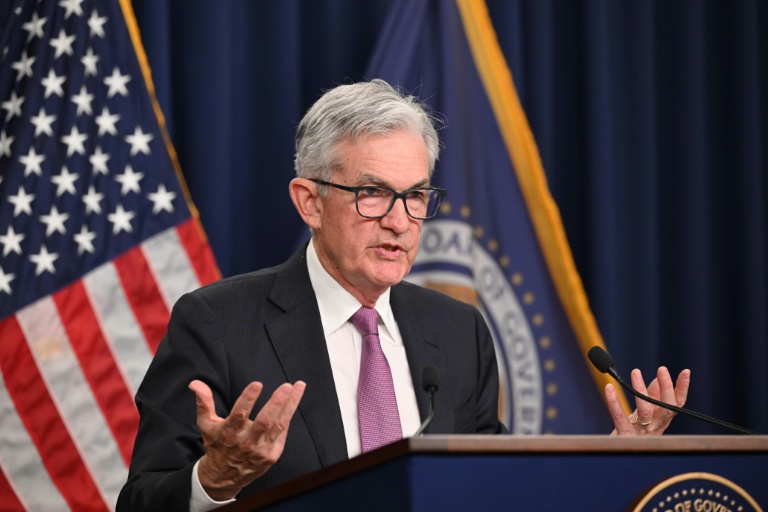
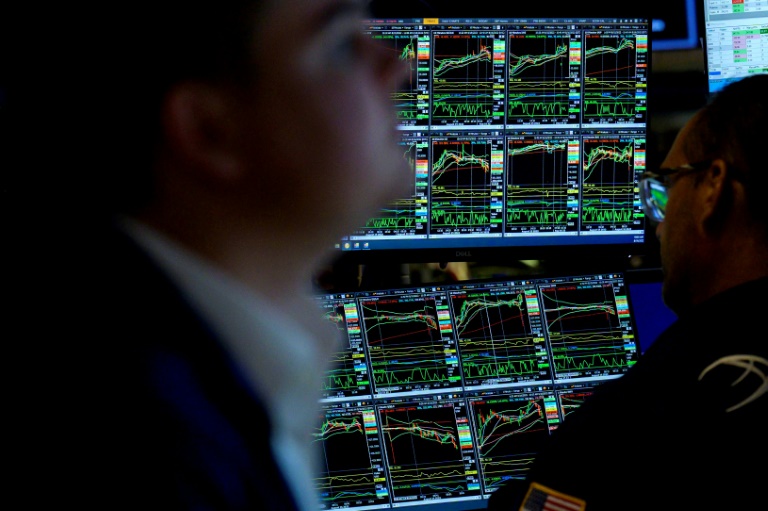
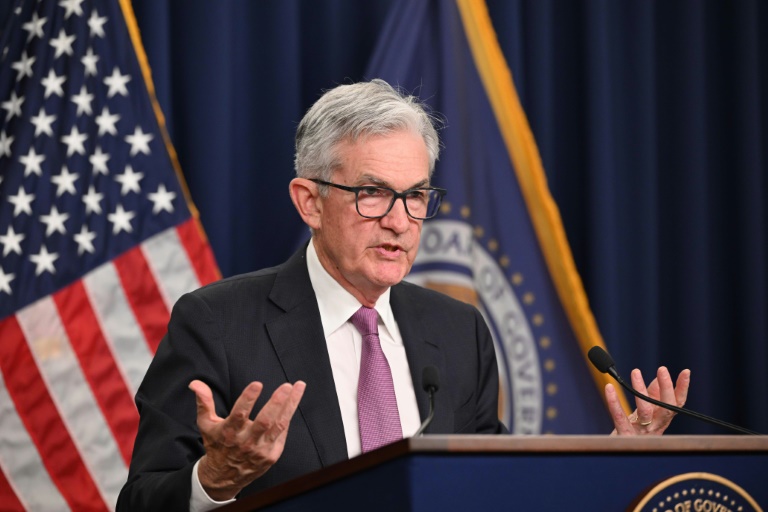
Stocks slumped on Friday after Federal Reserve boss Jerome Powell pledged to act “forcefully” against soaring inflation in a battle that will be painful for American families and businesses.

The Fed has been on an aggressive campaign to raise interest rates — and Powell made it clear at the Jackson Hole gathering of global monetary policymakers that the fight against inflation is not over.

“Restoring price stability will take some time and requires using our tools forcefully to bring demand and supply into better balance,” he told the gathering, held against the backdrop of the majestic Grand Teton mountains.

Modest signs of slowing in the world’s largest economy and easing price pressures had spurred hope in financial markets that the central bank might ease up on its aggressive interest rate hikes, and perhaps even start to reverse course next year.

But Powell doused those hopes, making it clear that Fed policy and the benchmark borrowing rate would have to remain “sufficiently restrictive” to return inflation to its two percent target.

“While higher interest rates, slower growth, and softer labor market conditions will bring down inflation, they will also bring some pain to households and businesses,” Powell said.

“But a failure to restore price stability would mean far greater pain.”

Wall Street stocks tumbled, with all three main indices ending with losses of three percent or more.

Keith Buchanan at Globalt Investments said, “This wasn’t a shocking speech by any stretch of imagination.”

He said the negative reaction was due to “the last possibility of a pivot being kind of shoved off the table.”

The dollar lost ground against the euro, but rose against the yen and pound.

Sentiment had been boosted ahead of Powell’s speech by the latest readings of the US personal consumption expenditures price index, the Fed’s preferred yardstick for inflation, which dipped 0.1 percent from in July from June, and slowed to 6.3 percent from 6.8 percent on an annual basis.

But Powell warned that one month of improvement is not enough to declare victory.

– Electricity prices shock European stocks –

European equities also saw losses deepen after Powell’s speech, but stocks there had already been struggling after signs that energy prices are likely to keep fuelling inflation.

Sentiment in London had been dented by news that UK domestic energy bills will rocket even higher this year on surging wholesale gas prices as Britain’s cost-of-living crisis worsens.

Frankfurt and Paris stocks retreated amid fears of a eurozone energy crunch in the coming peak-demand winter as Russia curbs supplies.

Europe’s benchmark Dutch TTF gas contract rose Friday 341 euros per megawatt hour, not far from the record high struck in March after key gas producer Russia invaded Ukraine.

Meanwhile, German and French electricity futures prices soared to new records that are at least 10 times above last year.

Elsewhere, Asia was buoyed by signs of progress in talks between US and Chinese regulators that could see tech titans including Alibaba and JD.com avoid a delisting in New York.

More than 200 Chinese firms have for months had the threat of a New York delisting hanging over them as they are caught in a wide-ranging row between the world’s two biggest economies.

– Key figures at around 2100 GMT –

New York – Dow: DOWN 3.0 percent at 32,283.4 points (close)

New York – S&P 500: DOWN 3.4 percent at 4,057.66 (close)

New York – Nasdaq: DOWN 3.9 percent at 12,141.71 (close)

EURO STOXX 50: DOWN 2.0 percent at 3,603.68 (close)

London – FTSE 100: DOWN 0.7 percent at 7,427.31 (close) 

Frankfurt – DAX: DOWN 2.3 percent at 12,971.47 (close)

Paris – CAC 40: DOWN 1.7 percent at 6,274.26 (close)

Tokyo – Nikkei 225: UP 0.6 percent at 28,479.01 (close)

Hong Kong – Hang Seng Index: UP 3.6 percent at 19,968.38 (close)

Shanghai – Composite: UP 1.0 percent at 3,246.25 (close)

Euro/dollar: UP at $0.9964 from $0.9974 on Thursday

Pound/dollar: DOWN at $1.1743 from $1.1832

Euro/pound: UP at 84.85 pence from 84.31 pence

Dollar/yen: UP at 137.38 yen from 136.49 yen

West Texas Intermediate: UP 0.5 percent at $93.00 per barrel

Brent North Sea crude: DOWN 0.1 percent at $98.88

burs-rl/ach/hs/dw

Raid on Trump home sparked by recovery of top secret info

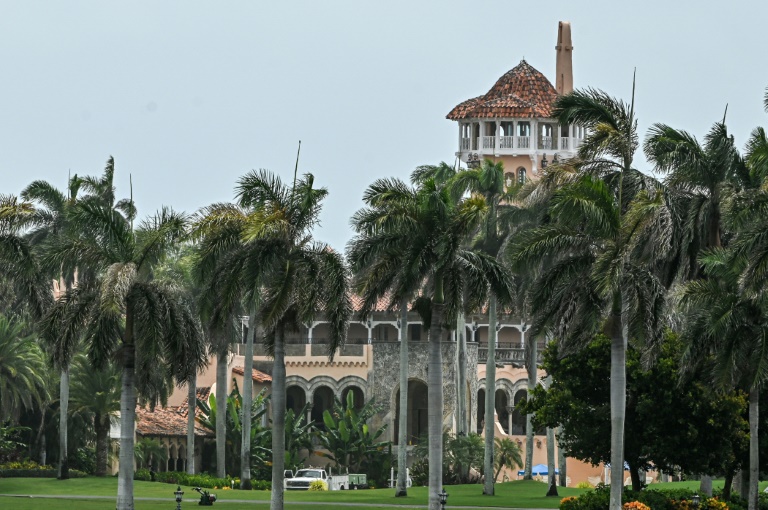
The stunning FBI raid on Donald Trump’s palatial Florida home was triggered by a review of 15 boxes of records previously surrendered by the former US president that contained top secret information — including about human intelligence sources.

The FBI, in the affidavit used to justify the August 8 raid of Mar-a-Lago, said it was conducting a criminal investigation into “improper removal and storage of classified information” and “unlawful concealment of government records.”

The heavily-redacted FBI affidavit released on Friday laid out the grounds for the authorization by a Florida judge of an unprecedented raid on the home of a former president, a move which ignited a political firestorm in a bitterly divided nation.

The Republican Trump, who is weighing another White House run in 2024, accused the Justice Department under Democratic President Joe Biden of conducting a “witch hunt” and said the judge “should never have allowed the Break-in of my home.”

According to the affidavit, the FBI opened the investigation after the National Archives and Records Administration (NARA) received 15 boxes of records in January 2022 that had been improperly removed from the White House and taken to Mar-a-Lago.

It said sensitive National Defense Information was among the records recovered including 67 documents marked as confidential, 92 as secret and 25 as top secret.

Among the documents was intelligence information received from “clandestine human sources” a classification which can include spies and informants and is among the most tightly-held of government secrets.

“Highly classified records were unfoldered, intermixed with other records and otherwise unproperly identified,” according to the affidavit. “Several of the documents also contained what appears to be (Trump’s) handwritten notes.”

In June, according to the affidavit, the Justice Department informed a Trump lawyer that Mar-a-Lago was “not authorized to store classified information.”

When they raided Trump’s estate in Palm Beach two months later, FBI agents seized a further stash of documents marked “Top Secret,” “Secret” and “Confidential.”

– ‘The movers’ –

In a May 25, 2022 letter to the Justice Department released along with the affidavit, a lawyer for Trump said classified information may have been “unknowingly included among the boxes brought to Mar-a-Lago by the movers.”

The lawyer, Evan Corcoran, said Trump had “readily and voluntarily” cooperated with NARA’s request that records be returned and that said any investigation should not “involve politics.”

Corcoran asserted that a president has the “absolute authority to declassify documents” and the “criminal statute that governs the unauthorized removal and retention of classified documents or material does not apply to the president.”

Government lawyers had opposed the release of the affidavit but the judge ordered it unsealed with redactions the Justice Department said were necessary to protect an ongoing investigation involving national security.

The redactions in the 38-page affidavit included, for example, the removal of the names of what the Justice Department said were a “significant number of civilian witnesses.”

“If witnesses’ identities are exposed, they could be subjected to harms including retaliation, intimidation, or harassment, and even threats to their physical safety,” the Justice Department said.

The search warrant, which was personally approved by Attorney General Merrick Garland, authorized the FBI to search the “45 office” — a reference to the 45th US president’s private office at Mar-a-Lago — and storage rooms

It said the probe was related to “willful retention of national defense information,” an offense that falls under the Espionage Act, and potential “obstruction of a federal investigation.”

In addition to investigations in New York into his business practices, Trump faces legal scrutiny for his efforts to overturn the results of the November 2020 election, and for the January 6, 2021 attack on the US Capitol by his supporters.

Trump was impeached for a historic second time by the House of Representatives after the Capitol riot — he was charged with inciting an insurrection — but was acquitted by the Senate.

Taming inflation will inflict 'pain' on Americans: Fed's Powell

Taming US inflation will inflict “pain” on American families and businesses, but failure to wrestle prices down from their current 40-year high would be even more harmful, Federal Reserve Chair Jerome Powell said Friday in a hotly-anticipated speech to global policymakers.

Addressing the annual gathering of central bankers in Jackson Hole, Wyoming, Powell did not hold back or leave room for doubt about the Fed’s plans, pledging to act “forcefully.”

He warned that the world’s largest economy is likely to slow for a sustained period, and the strong US job market will suffer in order to get prices down — consequences he called the “unfortunate costs of reducing inflation.”

The Fed this year launched an aggressive campaign to raise interest rates — and in his unusually short, notably direct remarks, Powell made it clear that the fight against inflation is not over.

“Restoring price stability will take some time and requires using our tools forcefully to bring demand and supply into better balance,” he told the gathering, held against the backdrop of the majestic Grand Teton mountains.

“While higher interest rates, slower growth and softer labor market conditions will bring down inflation, they will also bring some pain to households and businesses,” Powell said.

“But a failure to restore price stability would mean far greater pain.”

Modest signs of slowing in the US economy and easing price pressures spurred hope in financial markets that the central bank might ease up on its aggressive rate hikes, and perhaps even start to reverse course next year.

But Powell doused hopes of a policy pivot, making it clear that Fed policy and the benchmark borrowing rate would have to remain “sufficiently restrictive” to bring inflation back down to the two percent target.

US markets turned negative on the news, with all three major stock indices losing three percent or more, including a 1,000 point loss for the Dow.

– Improving data –

The supply chain issues that have beleaguered the global economy have continued, worsened by a series of Covid lockdowns in China, which have combined with Russia’s war in Ukraine to send prices soaring worldwide.

In the battle to contain red-hot US inflation, which topped nine percent in June, the Fed has increased rates four times, including three-quarter-point increases in June and July — steep moves unheard of since the early 1980s — to the current level of a range of 2.25 to 2.5 percent.

Powell repeated Friday that another “unusually large” 75 basis point hike could be appropriate at the September policy meeting.

But recent data has shown signs of a slowing in price increases. Annual consumer price inflation dipped to a still-high 8.5 percent in July.

And data released Friday showed the Fed’s preferred inflation measure, the personal consumption expenditures price index, actually fell 0.1 percent in July — a dramatic slowdown from the 1.0 percent surge in June, largely reflecting the recent sharp retreat in global oil prices.

Over the last 12 months, the PCE price index slowed to 6.3 percent, the Commerce Department reported.

But Powell did not take much comfort in the figures.

“While the lower inflation readings for July are welcome, a single month’s improvement falls far short of what (policymakers) will need to see before we are confident that inflation is moving down,” he said.

But President Joe Biden cheered the figures, saying, “The American people are starting to get some relief from high prices.”

Still, he added, “We have more work to do. We have to help families who have been squeezed by decades living paycheck to paycheck.”

Powell pointed to the experience of one of his predecessors, famed inflation dragon slayer Paul Volcker — who used aggressive measures to quell runaway prices — and said officials cannot retreat from their responsibility.

“That means the Fed must hammer demand to come in line with what is becoming a global economy of scarcities or constrained supply,” KPMG economist Diane Swonk said on Twitter.

“That is no small challenge. Powell sees a window to avoid a Volcker outcome of deep recessions w/some pain today. Rock/hard place.”

Taming inflation will inflict 'pain' on Americans: Fed's Powell

Taming US inflation will inflict “pain” on American families and businesses, but failure to wrestle prices down from their current 40-year high would be even more harmful, Federal Reserve Chair Jerome Powell said Friday in a hotly-anticipated speech to global policymakers.

Addressing the annual gathering of central bankers in Jackson Hole, Wyoming, Powell did not hold back or leave room for doubt about the Fed’s plans, pledging to act “forcefully.”

He warned that the world’s largest economy is likely to slow for a sustained period, and the strong US job market will suffer in order to get prices down — consequences he called the “unfortunate costs of reducing inflation.”

The Fed this year launched an aggressive campaign to raise interest rates — and in his unusually short, notably direct remarks, Powell made it clear that the fight against inflation is not over.

“Restoring price stability will take some time and requires using our tools forcefully to bring demand and supply into better balance,” he told the gathering, held against the backdrop of the majestic Grand Teton mountains.

“While higher interest rates, slower growth and softer labor market conditions will bring down inflation, they will also bring some pain to households and businesses,” Powell said.

“But a failure to restore price stability would mean far greater pain.”

Modest signs of slowing in the US economy and easing price pressures spurred hope in financial markets that the central bank might ease up on its aggressive rate hikes, and perhaps even start to reverse course next year.

But Powell doused hopes of a policy pivot, making it clear that Fed policy and the benchmark borrowing rate would have to remain “sufficiently restrictive” to bring inflation back down to the two percent target.

US markets turned negative on the news, with all three major stock indices losing three percent or more, including a 1,000 point loss for the Dow.

– Improving data –

The supply chain issues that have beleaguered the global economy have continued, worsened by a series of Covid lockdowns in China, which have combined with Russia’s war in Ukraine to send prices soaring worldwide.

In the battle to contain red-hot US inflation, which topped nine percent in June, the Fed has increased rates four times, including three-quarter-point increases in June and July — steep moves unheard of since the early 1980s — to the current level of a range of 2.25 to 2.5 percent.

Powell repeated Friday that another “unusually large” 75 basis point hike could be appropriate at the September policy meeting.

But recent data has shown signs of a slowing in price increases. Annual consumer price inflation dipped to a still-high 8.5 percent in July.

And data released Friday showed the Fed’s preferred inflation measure, the personal consumption expenditures price index, actually fell 0.1 percent in July — a dramatic slowdown from the 1.0 percent surge in June, largely reflecting the recent sharp retreat in global oil prices.

Over the last 12 months, the PCE price index slowed to 6.3 percent, the Commerce Department reported.

But Powell did not take much comfort in the figures.

“While the lower inflation readings for July are welcome, a single month’s improvement falls far short of what (policymakers) will need to see before we are confident that inflation is moving down,” he said.

But President Joe Biden cheered the figures, saying, “The American people are starting to get some relief from high prices.”

Still, he added, “We have more work to do. We have to help families who have been squeezed by decades living paycheck to paycheck.”

Powell pointed to the experience of one of his predecessors, famed inflation dragon slayer Paul Volcker — who used aggressive measures to quell runaway prices — and said officials cannot retreat from their responsibility.

“That means the Fed must hammer demand to come in line with what is becoming a global economy of scarcities or constrained supply,” KPMG economist Diane Swonk said on Twitter.

“That is no small challenge. Powell sees a window to avoid a Volcker outcome of deep recessions w/some pain today. Rock/hard place.”

Moderna sues Pfizer, BioNTech over Covid vaccine

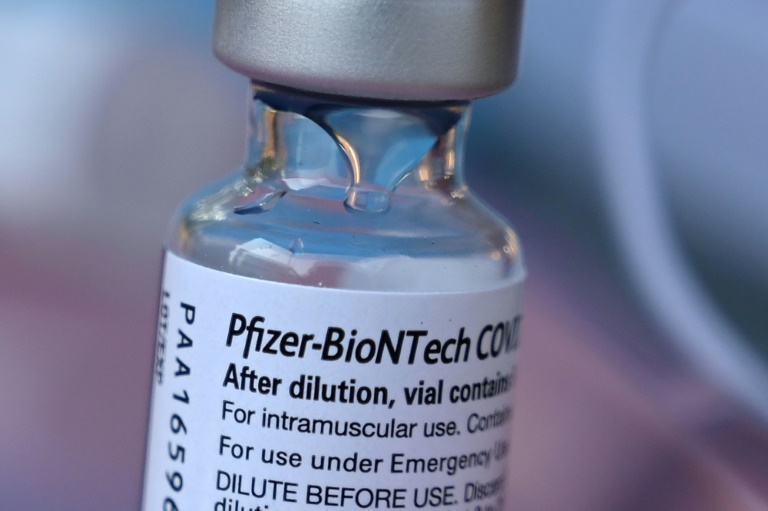
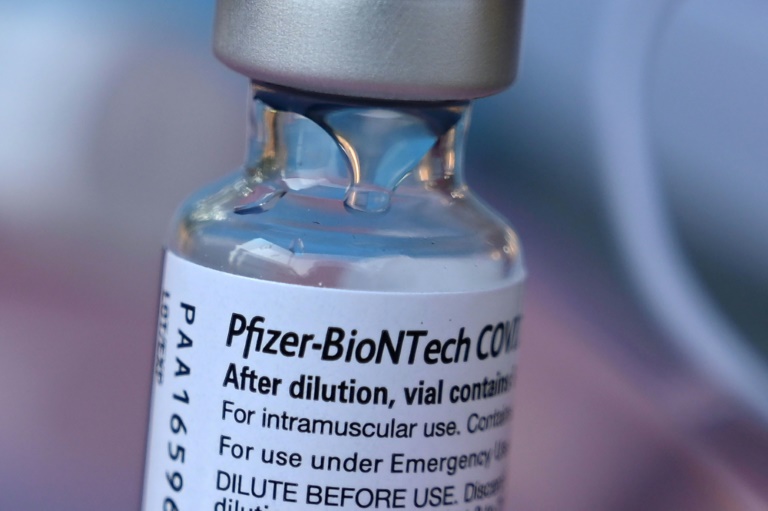
Moderna said Friday it is suing rival vaccine makers Pfizer and BioNTech, alleging the partners infringed on its patents in developing their Covid-19 shot administered to hundreds of millions around the world.

The lawsuits set up a high-stakes showdown between the leading manufacturers of Covid-19 shots that are a key tool in the fight against the disease.

“Moderna believes that Pfizer and BioNTech’s Covid-19 vaccine Comirnaty infringes patents Moderna filed between 2010 and 2016 covering Moderna’s foundational mRNA technology,” the US-based biotech firm said in a statement.

“Pfizer and BioNTech copied this technology, without Moderna’s permission, to make Comirnaty,” Moderna alleged.

Pfizer and BioNTech said they were aware of the litigation, and each issued statements denying any wrongdoing.

“BioNTech’s work is original, and we will vigorously defend against all allegations of patent infringement,” the firm said, adding it “respects valid and enforceable intellectual property rights of others.”

Pfizer pledged to “vigorously defend against the allegations of the lawsuit.”

The mRNA technology used in the Moderna and Pfizer-BioNTech shots differs from that in traditional vaccines, which rely on injecting weakened or dead forms of a virus to allow the immune system to recognize it and build antibodies.

Instead, mRNA vaccines deliver instructions to cells to build a harmless piece of the spike protein found on the surface of the virus that causes Covid-19. 

After creating this spike protein, cells can recognize and fight the real virus, hailed as a major advancement in development of vaccines.

– Key tool against deadly pandemic –

The shots have repeatedly been the subject of inaccurate claims that they are dangerous, but health authorities say they are safe and effective.

The lawsuits — in US district court in Massachusetts, and in regional court in Dusseldorf, Germany — are not seeking the removal of the rival vaccine or an injunction on future sales.

Moderna said it had begun building up the technology in 2010 and patented work on corona viruses in 2015 and 2016, which allowed for rollout of its shots in “record time” after the pandemic struck. 

The virus has killed at least 6.48 million people worldwide since 2020 and made nearly 600 million ill, according to a Johns Hopkins University tracker.

In addition to death and suffering, the disease has led to a re-shaping of life ranging from a change in norms on working from home to a scrambling of supply chains and workforces.

Moderna said it pledged in October 2020 not to enforce its Covid-19-related patents while the pandemic continued, but less than two years later changed that stance as the fight shifted gears.

“Moderna expected companies such as Pfizer and BioNTech to respect its intellectual property rights and would consider a commercially reasonable license should they request one for other markets,” it said. 

“Pfizer and BioNTech have failed to do so,” the firm added.

These types of lawsuits are not unheard of in the pharmaceutical industry, where patents can be worth billions of dollars, and can take years to resolve.

“It is an unfortunate but rather regular occurrence that other companies make allegations that a successful product potentially infringes their intellectual property rights,” BioNTech said in a statement.

Moderna sues Pfizer, BioNTech over Covid vaccine

Moderna said Friday it is suing rival vaccine makers Pfizer and BioNTech, alleging the partners infringed on its patents in developing their Covid-19 shot administered to hundreds of millions around the world.

The lawsuits set up a high-stakes showdown between the leading manufacturers of Covid-19 shots that are a key tool in the fight against the disease.

“Moderna believes that Pfizer and BioNTech’s Covid-19 vaccine Comirnaty infringes patents Moderna filed between 2010 and 2016 covering Moderna’s foundational mRNA technology,” the US-based biotech firm said in a statement.

“Pfizer and BioNTech copied this technology, without Moderna’s permission, to make Comirnaty,” Moderna alleged.

Pfizer and BioNTech said they were aware of the litigation, and each issued statements denying any wrongdoing.

“BioNTech’s work is original, and we will vigorously defend against all allegations of patent infringement,” the firm said, adding it “respects valid and enforceable intellectual property rights of others.”

Pfizer pledged to “vigorously defend against the allegations of the lawsuit.”

The mRNA technology used in the Moderna and Pfizer-BioNTech shots differs from that in traditional vaccines, which rely on injecting weakened or dead forms of a virus to allow the immune system to recognize it and build antibodies.

Instead, mRNA vaccines deliver instructions to cells to build a harmless piece of the spike protein found on the surface of the virus that causes Covid-19. 

After creating this spike protein, cells can recognize and fight the real virus, hailed as a major advancement in development of vaccines.

– Key tool against deadly pandemic –

The shots have repeatedly been the subject of inaccurate claims that they are dangerous, but health authorities say they are safe and effective.

The lawsuits — in US district court in Massachusetts, and in regional court in Dusseldorf, Germany — are not seeking the removal of the rival vaccine or an injunction on future sales.

Moderna said it had begun building up the technology in 2010 and patented work on corona viruses in 2015 and 2016, which allowed for rollout of its shots in “record time” after the pandemic struck. 

The virus has killed at least 6.48 million people worldwide since 2020 and made nearly 600 million ill, according to a Johns Hopkins University tracker.

In addition to death and suffering, the disease has led to a re-shaping of life ranging from a change in norms on working from home to a scrambling of supply chains and workforces.

Moderna said it pledged in October 2020 not to enforce its Covid-19-related patents while the pandemic continued, but less than two years later changed that stance as the fight shifted gears.

“Moderna expected companies such as Pfizer and BioNTech to respect its intellectual property rights and would consider a commercially reasonable license should they request one for other markets,” it said. 

“Pfizer and BioNTech have failed to do so,” the firm added.

These types of lawsuits are not unheard of in the pharmaceutical industry, where patents can be worth billions of dollars, and can take years to resolve.

“It is an unfortunate but rather regular occurrence that other companies make allegations that a successful product potentially infringes their intellectual property rights,” BioNTech said in a statement.

Russian Arctic militarization a 'strategic challenge': NATO chief

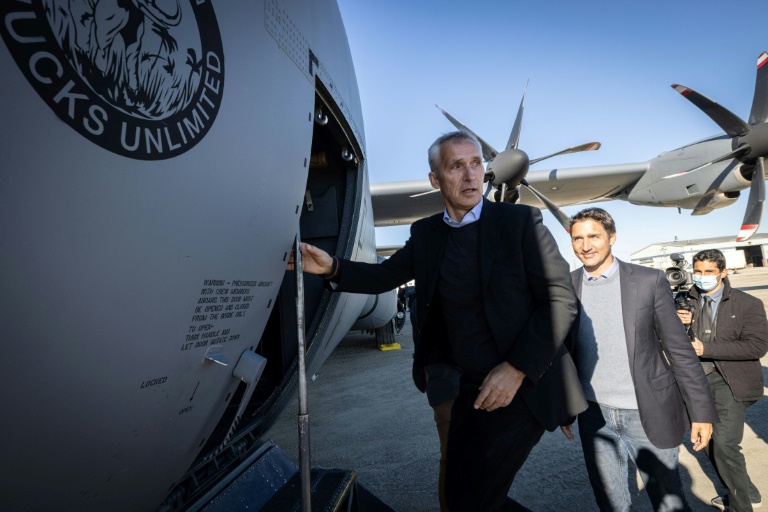
NATO Secretary-General Jens Stoltenberg on Friday stressed the need to beef up security along the alliance’s northern flank to counter Russia, as he wrapped up a visit to Canada that included a tour of its Arctic defenses.

“The high north is strategically important for Euro-Atlantic security,” Stoltenberg told a news conference at an air base in Cold Lake, Alberta, noting that with Finland and Sweden joining, seven of eight Arctic states will be NATO members.

“The shortest path to North America for Russian missiles and bombers would be over the North Pole,” he also warned. “This makes NORAD’s role vital for North America and therefore also for NATO.”

NORAD is the North American Aerospace Defense Command, a US-Canadian organization.

The NATO chief and Prime Minister Justin Trudeau toured a Cold War-era early warning radar site, and observed Canadian Arctic military exercises.

Russia’s capabilities in the far north “are a strategic challenge for the whole alliance,” he said, citing a significant Russian military buildup in the region.

This includes, he outlined, the reopening of “hundreds of new and former Soviet era Arctic military sites,” and its use of the high north “as a testbed for the most advanced weapons including hypersonic missiles.”

Stoltenberg also expressed concerns about China’s reach into the Arctic for shipping and resources exploration, with plans to build the world’s largest icebreaker fleet.

“Beijing and Moscow have pledged to intensify practical cooperation in the Arctic. This forms part of the deepening strategic partnership that challenges our values and our interests,” Stoltenberg said.

NATO, he said, must respond with an increased presence in the far north and investment in new capabilities.

He noted that climate change poses new “security challenges” that requires a fundamental rethink of NATO’s Arctic posture.

“Climate change is making the high north more important because the ice is melting and it’s becoming more accessible both for economic activity and for military activity,” he explained.

Trudeau said Canada, which currently falls short on NATO spending targets, will soon be replacing its aging fighter jet fleet and modernizing its continental defenses in partnership with the United States.

Ottawa has earmarked billions of dollars for new satellites and undersea sensors in the Arctic, and the replacement of an aging network of radar stations from Alaska to Quebec that Trudeau said will “increase our abilities to detect and indeed deter threats coming across the pole.”

TotalEnergies to sell stake in war-linked Russian gas field

French energy firm TotalEnergies said Friday it was divesting its stake in a Russian gas field that was reported this week to be providing fuel that ends up in Russian fighter jets.

The company said that it had signed a deal on Friday with its local Russian partner Novatek to sell its 49 percent in the Termokarstovoye gas field “on economic terms enabling TotalEnergies to recover the outstanding amounts invested in the field.”

It said the divestment had been agreed in July and submitted to Russian authorities in early August, with approval coming on August 25.

That was the day after an article appeared in French daily Le Monde reporting the alleged refining of natural gas condensates from Termokarstovoye into jet fuel for fighter-bombers involved in Russia’s assault on Ukraine since February.

TotalEnergies — formerly Total — owns 49 percent of Terneftegaz, the company that extracts gas from the Termokarstovoye field.

The other 51 percent is held by Novatek, in which the French firm also holds a 19.4 percent stake.

TotalEnergies initially said it had no control over the sales of its Russian partner.

On Friday, it said Novatek had denied that its condensates were being refined into Russian military jet fuel.

Instead, they were sent to processing at a refinery whose products are exclusively exported outside Russia, a Novatek statement relayed by the French firm said.

TotalEnergies also said it was considering legal action in a bid to end an “unfounded controversy which is damaging the reputation of the company.”

Clara Gonzales at Greenpeace France said that the Termokarstovoye sale must not be a “smokescreen for the ongoing commercial relations of TotalEnergies in Russia,” and called for it to offload its stake in Novatek which “supplies the Russian army”.

“We are grateful to (French President) Emmanuel Macron and the French people for supporting Ukraine. Against this background, it is a disgrace to France when French companies assist the murder of Ukrainians and the ruining of our cities,” Ukrainian Foreign Minister Dmytro Kuleba tweeted Friday.

“TotalEnergies, pull out of Russia!”

– ‘Exclusively exported’ fuel –

Le Monde reported Wednesday that condensates from Termokarstovoye were being sent to a refinery that had provided 42,700 tonnes of fuel from February-July sent to airbases hosting Russian planes.

They accounted for more than eight percent of the raw materials received at the refinery in Omsk since the invasion of Ukraine, it added.

Citing data from financial information firm Refinitiv, the newspaper said the jet fuel shipments could be tracked back to the by-products from Termokarstovoye.

Novatek said via TotalEnergies that all condensates from the gas field are “delivered to the Ust-Luga processing complex in the Leningrad region.

“The range of products derived during processing at the Ust-Luga complex includes jet fuel that is exclusively exported outside Russia, and it does not even have the certification to be sold inside the country”.

TotalEnergies is the only major Western energy group to continue its operations in Russia, which accounts for 16.6 percent of its hydrocarbon production and 30 percent of its gas.

Chief executive Patrick Pouyanne had said in March that Russian gas fields exploited by the company’s joint ventures “are going to operate whether I leave or not” and are vital for supplying energy to Europe.
Selling TotalEnergies’ assets at knock-down prices would amount to handing billions to Russian investors, he argued.

But the firm has since announced a partial withdrawal from Russia, including stopping financing the Arctic LNG 2 gas project.

In July, it sold its 20-percent stake in an Arctic oil field to Russia’s Zarubejneft.

Trump raid sparked by recovery of top secret info

The stunning FBI raid on Donald Trump’s Florida home was triggered by a review of 15 boxes of records previously surrendered by the former US president that contained top secret information — including about human intelligence sources.

The FBI, in the affidavit used to justify the August 8 raid of Mar-a-Lago, said it was conducting a criminal investigation into “improper removal and storage of classified information” and “unlawful concealment of government records.”

The heavily-redacted FBI affidavit released Friday laid out the basis for a Florida judge authorizing the unprecedented raid on the home of a former president, a move which ignited a political firestorm in an already bitterly divided country.

The Republican Trump, who is weighing another White House run in 2024, accused the Justice Department and FBI under Democratic President Joe Biden of conducting a “witch hunt” and said the judge “should never have allowed the Break-in of my home.”

According to the affidavit, the FBI opened the investigation after the National Archives and Records Administration (NARA) received 15 boxes of records in January 2022 that had been improperly removed from the White House and taken to Mar-a-Lago.

It said sensitive National Defense Information (NDI) was among the records recovered including 67 documents marked as confidential, 92 documents marked as secret and 25 marked as top secret.

Among the documents was intelligence information from “clandestine human sources,” which are among the most tightly-held government secrets.

“Highly classified records were unfoldered, intermixed with other records and otherwise unproperly identified,” according to the affidavit.

“Several of the documents also contained what appears to be (Trump’s) handwritten notes,” the affidavit said.

The affidavit said that in June, the Department of Justice informed a Trump lawyer that Mar-a-Lago was “not authorized to store classified information.”

When they raided Mar-a-Lago two months later, FBI agents seized a further stash of documents marked “Top Secret,” “Secret” and “Confidential.”

FBI agents also seized binders of photos, a handwritten note, information about the “President of France,” and the grant of clemency made by Trump to Roger Stone, an ally of the former president.

– ‘The movers’ –

In a May 25, 2022 letter to the Justice Department released along with the affidavit, a lawyer for Trump said classified information may have been “unknowingly included among the boxes brought to Mar-a-Lago by the movers.”

The lawyer, M. Evan Corcoran, said Trump had “readily and voluntarily” cooperated with NARA’s request that documents be returned and said any investigation should not “involve politics.”

Corcoran asserted that a president has the “absolute authority to declassify documents” and the “criminal statute that governs the unauthorized removal and retention of classified documents or material does not apply to the president.”

Government lawyers had opposed the release of the affidavit but the judge ordered it unsealed with redactions the Justice Department said were necessary to protect an ongoing investigation involving national security.

The affidavit was heavily redacted removing the names, for example, of witnesses whose identities the Justice Department and FBI want to keep concealed.

“The government must protect the identity of witnesses at this stage of the investigation to ensure their safety,” the Justice Department said.

In its application for a search warrant, the Justice Department said the investigation was related to “willful retention of national defense information,” an offense that falls under the Espionage Act, “concealment or removal of government records” and “obstruction of a federal investigation.”

The warrant, which was personally approved by Attorney General Merrick Garland, authorized the FBI to search the “45 office” — a reference to the 45th US president’s private office at his Mar-a-Lago residence — and storage rooms

In addition to investigations into his business practices, Trump faces legal scrutiny for his efforts to overturn the results of the November 2020 election, and for the January 6, 2021 attack on the US Capitol by his supporters.

Trump was impeached for a historic second time by the House after the Capitol riot — he was charged with inciting an insurrection — but was acquitted by the Senate.

Close Bitnami banner
Bitnami