US Business

Trump social media platform faces money woes, modest following

Signs are growing that Donald Trump’s social media platform Truth Social is in financial trouble, with just a modest following six months after launching.

Fox Business Network reported Thursday that the platform has halted payments to the company that hosts it, RightForge, and owes $1.6 million.

The platform’s parent company, Trump Media and Technology Group, did not respond to a request for comment.

A RightForge spokesman would not comment on the reports that Trump Social is not paying its bills.

“RightForge was on the ground floor of building Truth Social and will continue to support president Trump in his endeavors,” the company said.

Meanwhile the parent company’s merger with Digital World Acquisition Corp — a blank check company formed specifically to carry out a merger — has yet to take place, 10 months after the announcement that it would happen. This fusion is supposed to bring in fresh funding for the Trump platform.

DWAC published Thursday a call for a special shareholders meeting September 6 at which investors will be asked to approve a one-year delay for carrying out the merger, until Sept 8 of 2023.

Without a favorable vote for an extension the blank check company said it will be forced to dissolve.

Financial data published Thursday said that as of late June, DWAC had only $3,000 in cash on hand.

Truth Social bills itself as Trump’s answer to platforms like Twitter, which the former president used as a loud political bullhorn until he was ejected from it after a mob he had egged on assaulted the US Capitol in January 2021.

But six months later it is in 30th place in an Apple ranking of social media apps downloaded onto iPhones.

The Statista data base says Truth Social is downloaded only around 50,000 times per week.

Trump’s account on Truth Social has 3.91 million followers; on Twitter he had 79.5 million when he was booted.

Shares in DWAC have fallen 71 percent since hitting their peak in early March.

Trump social media platform faces money woes, modest following

Signs are growing that Donald Trump’s social media platform Truth Social is in financial trouble, with just a modest following six months after launching.

Fox Business Network reported Thursday that the platform has halted payments to the company that hosts it, RightForge, and owes $1.6 million.

The platform’s parent company, Trump Media and Technology Group, did not respond to a request for comment.

A RightForge spokesman would not comment on the reports that Trump Social is not paying its bills.

“RightForge was on the ground floor of building Truth Social and will continue to support president Trump in his endeavors,” the company said.

Meanwhile the parent company’s merger with Digital World Acquisition Corp — a blank check company formed specifically to carry out a merger — has yet to take place, 10 months after the announcement that it would happen. This fusion is supposed to bring in fresh funding for the Trump platform.

DWAC published Thursday a call for a special shareholders meeting September 6 at which investors will be asked to approve a one-year delay for carrying out the merger, until Sept 8 of 2023.

Without a favorable vote for an extension the blank check company said it will be forced to dissolve.

Financial data published Thursday said that as of late June, DWAC had only $3,000 in cash on hand.

Truth Social bills itself as Trump’s answer to platforms like Twitter, which the former president used as a loud political bullhorn until he was ejected from it after a mob he had egged on assaulted the US Capitol in January 2021.

But six months later it is in 30th place in an Apple ranking of social media apps downloaded onto iPhones.

The Statista data base says Truth Social is downloaded only around 50,000 times per week.

Trump’s account on Truth Social has 3.91 million followers; on Twitter he had 79.5 million when he was booted.

Shares in DWAC have fallen 71 percent since hitting their peak in early March.

Taiwan fruit, fish farmers feel squeeze of China's sanctions

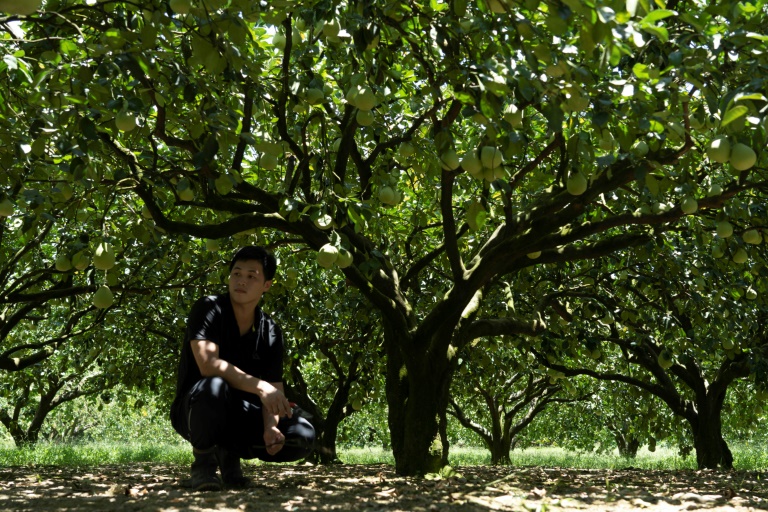
As a Taiwanese fighter jet screamed over the lush green fields of eastern Hualien county last week, pomelo farmer Mulin Ou sat in his orchard counting the cost of China’s latest push to squeeze the island.

Cross-strait tensions have risen to their highest level in decades as China rages over a visit by United States House Speaker Nancy Pelosi earlier this month.

Beijing, which claims democratic Taiwan as its own, launched drills in response, sending missiles into waters around the island — and it torpedoed exports of certain fruit and fish products to China with fresh import bans.

The overall impact of China’s latest economic sanctions is limited. But producers like Ou are paying a painful price.

“Our mainland orders have all been cancelled. Our pomelos have no way of getting there,” he said.

His farm in Hualien’s Ruisui township has dispatched about 180,000 kilogrammes (397,000 pounds) of the citrus fruit to the mainland every year for several decades.

“The clients are waiting for the pomelos, but there’s nothing we can do, it’s a political problem,” he shrugged.

– Grouper gap –

Taiwanese farmers and producers have increasingly had to get used to import bans from China — with Beijing authorities typically citing sudden regulatory discrepancies rather than a direct link to politics.

After Pelosi’s visit, China announced bans on Taiwanese citrus fruit and some mackerel, while halting its own exports to the island of natural sand used in construction.

The month before her visit, it targeted grouper fish, the vast majority of which had previously gone to Chinese consumers.

Taipei said the move was politically motivated, while China claimed it found some fish to be contaminated by banned chemicals.

A year earlier, pineapple imports were halted after Chinese authorities claimed to have discovered pests in shipments, just as the annual harvest was under way.

At a grouper facility in Pingtung, Taiwan’s southernmost county, third-generation farmer Hans Chen of the Lijia Green Energy and Biotechnology Company said he would be “severely impacted” if the sanctions were not lifted by the end of the year.

Chen, 35, manages a farm of some 500,000 groupers, and 90 percent of its exports go to China. 

He said the ban was imposed without any warning and came at the worst time for producers already bruised by the coronavirus pandemic.

The fish farmer says his business and others are relying too much on the lucrative China market and need to diversify away from their aggressive neighbour after the surprise ban.

“Everyone felt the Covid-19 situation was slowly improving and the China market is slowly stabilising and prices will rise again, so there will be… some profit to make up for the previous losses,” he said.

“That’s why everyone’s anxiety and (the sanctions’) impact are very big.”

– Symbolic and limited –

China remains Taiwan’s largest trading partner, with the mainland accounting for 28 percent of total exports.

But Taiwan’s government and businesses have also pushed economic diversification in response to Beijing’s increased aggression under President Xi Jinping, China’s most authoritarian leader in a generation.

Since 2016, Taiwanese President Tsai Ing-wen has pursued a “New Southbound Policy” to grow trade with the rest of Southeast and East Asia.

Taiwan is also seeing a surge of sympathy from like-minded democracies in the region. 

Much of last year’s pineapple harvest was saved when Japanese consumers rushed to purchase “freedom pineapples” in an act of solidarity.

And China has so far been careful with what it targets.

Taiwan is one of the world’s largest producers of semiconductor chips, and Beijing has steered clear of hitting a market it leans on to satisfy demand at home.

“China is highly selective in choosing the instruments of economic sanctions against Taiwan,” Christina Lai, a research fellow at Taiwan’s government-run Academia Sinica told AFP.

“It has always refrained from damaging its domestic economy and technology industries. Beijing cannot afford to ban the most crucial imports from Taiwan — semiconductors, high-end instruments, or machinery,” she added.

The overall impact on Taiwan’s economy is therefore “very limited”, said National Taiwan Normal University professor Fan Shih-ping.

“It is a political manipulation, as China wants to show it is calling the shots and has control over Taiwan,” he added.

But for farmers who have become the victims of the latest uptick in tensions, the scale of the sanctions feels seismic.

“We are looking for help from the government, if there’s any way they can help us,” said Ou. 

“We have to start to find some sales within the country. This is a big headache.”

Fed's Powell to hammer home inflation-fighting message

With US inflation at a 40-year high, economists say there is no doubt about the Federal Reserve’s policy course: Interest rates will continue to rise.

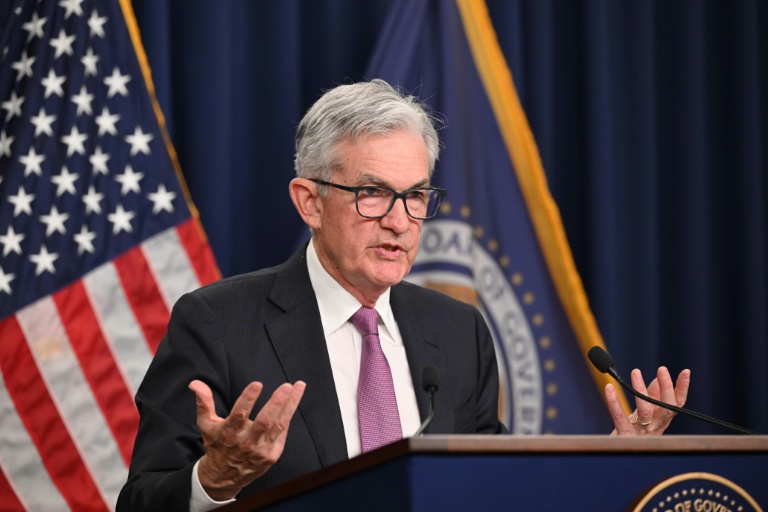
Against the backdrop of the majestic Grand Teton mountains, Fed Chair Jerome Powell is expected to once again send a clear message at the annual gathering of central bankers in Jackson Hole, Wyoming on Friday that the fight against inflation is not over.

Modest signs of slowing in the world’s largest economy and easing price pressures spurred hope in financial markets that the central bank might ease up on its aggressive rate hikes, and perhaps even start to reverse course next year.

But former Bank of England board member Adam Posen called that view “nonsense.”

“I think there’s wishful thinking on the part of the markets,” said Posen, who leads the Peterson Institute for International Economics in Washington.  

“Right now there’s no debate,” he told reporters. “They’ve got no choice but to hike.”

Until and unless there is a recession that also pushes down inflation expectations, “nothing else matters” besides bringing down prices.

A succession of Fed officials, even those like Posen who are considered to be “doves” on inflation, have repeated the same message.

Kansas City Fed President Esther George, host of the Jackson Hole conference, did so Thursday, telling Fox Business Network that rates are likely to rise through the end of the year until “inflation begins to meaningfully decelerate.”

Posen said he expects the benchmark lending rate will reach four percent by February, and will be “willing to go further if needed, with the chances of a reversal in 2023 year “very, very low.”

– New price data –

Economist Tim Duy of SGH Macro Advisors agreed, and said Powell will “push the story… they will do what they need to get inflation under control.” 

“What that means is pushing rates into restrictive territory,” he told AFP.

But he said the Fed chief will have to be “humble” about any forecasts on the path of the economy or inflation, after telling the conference last year that price spikes would be transitory.

Powell’s speech last year “didn’t age well, to say the least,” Duy said.

Supply chain issues have continued, worsened by a series of Covid lockdowns in China, and have combined with Russia’s war in Ukraine, to send prices soaring worldwide.

In the battle to contain red-hot US inflation, which topped nine percent in June, the Fed has hiked rates four times, including massive, three-quarter point increases in June and July — steep moves unheard of since the early 1980s — to the current level of a range of 2.25 to 2.5 percent.

But recent data has shown signs of a slowing in price increases. 

Before his speech, Powell will get a look at the latest report on the Fed’s preferred inflation measure, the personal consumption expenditures price index.

That is expected to show a dramatic slowdown from the 1.0 percent surge in June, although central bankers may not take much comfort since it is likely to reflect the recent sharp retreat in global oil prices.

Avoiding a recession as interest rates rise remains a tough job for central bankers everywhere.

“The post-pandemic economy globally will have more constraints that we faced for the last 25 years,” Duy warned.

More US states ban abortion as Democrats push back

Abortion became illegal in three more US states on Thursday, further restricting access to elective terminations for millions of women despite some signs of popular and judicial pushback.

Two months after the Supreme Court struck down the constitutional right to abortion, nearly 21 million women have already lost access to the procedure in their home states, according to an analysis by The Washington Post. 

And with Idaho, Tennessee and Texas joining 10 other Republican-controlled states on Thursday in implementing near-total bans on abortion, that number is set to rise. Another dozen states are expected to follow suit with their own restrictions.

The laws in Idaho, Tennessee and Texas were “triggered” after the Supreme Court on June 24 overturned the landmark 1973 “Roe v. Wade” decision enshrining a woman’s right to an abortion and allowed states to set their own laws.

In Texas, under the new law, doctors could face life in prison and a fine of no less than $100,000 for performing an abortion. Texas and Tennessee make no exceptions for rape or incest, though Idaho does.

State restrictions range from total bans on elective abortions to bans after six weeks, when many women do not even know they are pregnant. Many women have already been forced to travel hundreds of miles to obtain the procedure in other states.

Democratic President Joe Biden condemned the ruling by the conservative-dominated Supreme Court and has pledged to do everything within his power to ensure access to abortion.

The Biden administration notched up a narrow victory in Idaho on Wednesday when a judge ruled that federal law requires doctors to provide abortions to women suffering medical emergencies at hospitals that receive Medicare funding from the government.

In an illustration of the complicated legal landscape, however, a judge in Texas, an appointee of Republican Donald Trump, issued a contrary ruling in a similar case, setting the stage for further court battles.

White House Press Secretary Karine Jean-Pierre welcomed the outcome in Idaho but called the Texas ruling a “devastating decision for women in that state, who can now be denied the same life-saving care.” 

Besides battling in the courts, Democrats are hoping abortion will be a galvanizing issue for their candidates in the upcoming midterm elections.

US voters will decide control of Congress in November, with all 435 House seats up for grabs, as well as 35 of the 100 Senate seats and the governor’s mansion in 36 out of 50 states.

– ‘Health care is on the ballot’ –

“More women today are living with fewer freedoms thanks to Republicans’ relentless war to ban abortion in their states,” Democratic National Committee chairman Jaime Harrison said.

“Make no mistake: No matter what state you live in, reproductive health care is on the ballot this November, and GOP candidates will be held accountable for their extreme anti-choice agenda,” Harrison said.

A Democratic candidate notched up a victory in a special election in New York on Tuesday seen as a bellwether of the public mood on abortion ahead of November’s midterms.

According to political data firm Target Smart, women have been outpacing men in new voter registrations in numerous states.

In a Pew Research Center poll, 56 percent of registered voters said the abortion issue will be very important in their midterm vote, up from 43 percent in March.

Abortion rights advocates also recently celebrated a victory in a referendum in Kansas that would have removed the right to the procedure from the constitution of the conservative midwestern state.

The state is a Republican stronghold, but Kansans, by a 59 to 41 percent margin amid unusually heavy turnout, rejected the amendment that would have scrapped language in the state constitution guaranteeing the right to abortion.

Planned Parenthood, which lobbies for abortion access and plans to reportedly spend $50 million on the midterms, called the Kansas vote “a clear warning to anti-abortion politicians.”

While some two dozen Republican-led states are restricting access to abortion, a number of Democratic-controlled states, including giants California and New York, are putting protections in place.

Two plead guilty to stealing, selling Biden daughter's diary

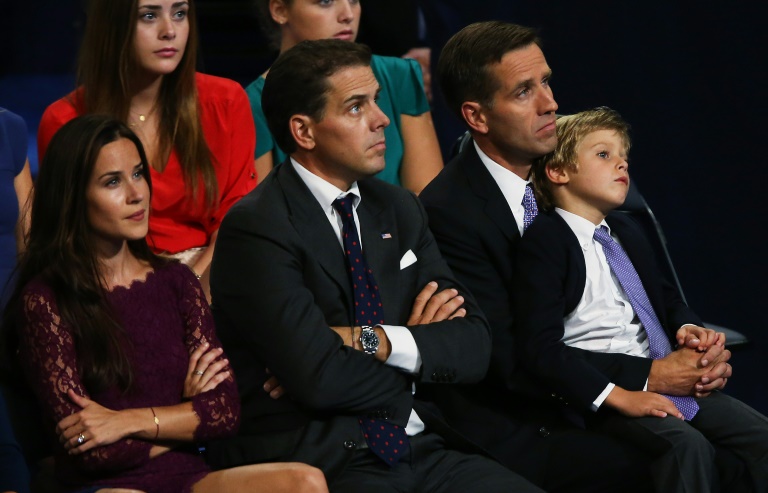
Two people pleaded guilty Thursday to stealing and selling for $40,000 the private diary of President Joe Biden’s daughter Ashley Biden, when he was running for office against Donald Trump in 2020. 

The Justice Department announced the guilty pleas by Aimee Harris and Robert Kurlander in court filings that refer to the victim as the daughter of “Candidate-1” — widely understood to be Biden.

According to the filings, the pair first sought to sell the diary to Trump’s campaign — named as “Candidate-2” — and when rebuffed they took it to a conservative activist group.

That group, previously identified as Project Veritas, offered them each $20,000 and allegedly encouraged them to return to steal other items, like digital files of family photographs, that Ashley Biden, 41, had left at a friend’s home in Florida, the department said.

Project Veritas is a Republican-aligned independent operation that has a record of seeking to infiltrate and trick progressive groups into actions that can be used to embarrass them politically.

While the organization never published the diary, a conservative website named National File did so — saying they obtained it from someone at Project Veritas, which sparked an FBI investigation.

The Justice Department said Harris and Kurlander pleaded guilty in a deal that requires them to forfeit the money they were paid and cooperate in the ongoing investigation.

They each face up to five years in prison on one count of conspiracy to transport stolen property.

Project Veritas defended itself in a statement, saying its “news gathering was ethical and legal.”

“A journalist’s lawful receipt of material later alleged to be stolen is routine, commonplace, and protected by the First Amendment” of the US Constitution, they said.

The FBI has also reportedly looked into the issue of the contents of a laptop owned by Biden’s son Hunter and left in a computer repair shop that were allegedly shared with conservative groups and mainstream media.

Emails that purportedly suggest Hunter Biden and his father were involved in shady dealings in Ukraine were published by the New York Post just before the November 2020 election.

Since then The Washington Post, The New York Times and others have also reported on some of the computer’s contents, which included 129,000 emails.

The files continue to be used in efforts to politically damage the president, and are reportedly part of an ongoing FBI investigation of Hunter Biden’s financial dealings.

Gas prices approach record peak on Russian supply fears

European natural gas prices climbed Thursday towards a record peak on heightened fears over Russian supplies, while equities rose on the eve of a key speech from Federal Reserve Chair Jerome Powell.

Europe’s benchmark Dutch TTF gas contract advanced to 322 euros per megawatt hour, not far from the record high 345 euros struck in March shortly after key gas producer Russia invaded Ukraine.

Prices have spiked in recent days as a three-day halt in Russian deliveries to Germany via the Nord Stream 1 pipeline approaches amid fears that Moscow will not turn the taps back on afterwards.

At the same time, one-year forward contracts for electricity prices in both France and Germany surged on Thursday to record pinnacles on worries over a winter energy crunch.

– ‘Unstoppable march upwards’ –

“Gas is on a seemingly unstoppable march upwards again, a dramatic move which will intensify the energy crisis,” said Hargreaves Lansdown analyst Susannah Streeter.

“Already plans are being brought in to save energy which will darken streets across Germany and make public buildings colder, but much tougher measures may have to be enforced given dwindling gas reserves.”

In stock market trade, European equities mostly advanced, with Frankfurt drawing some strength from news that the German economy expanded by an anemic 0.1 percent in the second quarter.

That was upgraded from the prior projection of zero growth, but analysts remain downbeat.

“I’m trying to find a reason to be optimistic on the back of that, but in reality it just means the economy may take a little longer to fall into recession,” warned OANDA analyst Craig Erlam.

“With the energy crisis unlikely to improve, this likely means another quarter of flat growth at best before the economy falls into recession later this year.”

Wall Street also pushed higher as traders looked to central banking symposium in Jackson Hole, Wyoming this week.

All eyes are on Powell’s speech Friday where he is expected to reiterate the message the Fed will continue to hike interest rates to tame high inflation.

Central banks around the world are trying to find a delicate balance between curbing inflation and avoiding recessions.

The challenge has been compounded this year by Russia’s invasion of Ukraine, which has sent energy and food prices skyrocketing.

There are concerns that the Fed’s fight against soaring inflation could lead to a recession in the United States, which could, in turn, hit a global economy that is still recovering from the Covid pandemic.

But the latest data out Thursday initial applications for unemployment benefits unexpectedly fell last week, dispelling concerns about a weakening job market, while GDP in the second quarter contracted by 0.6 percent, much less than first reported.

– China stimulus –

Asian indices rose after China unveiled fresh measures to boost its economy.

The moves to shore up the economy were announced by China’s State Council on Wednesday, including steps to encourage lending, consumption and investment, according to the official Xinhua news agency.

They also included support for electricity producers and agriculture, two sectors hit especially hard by the heatwave, though Xinhua’s readout of the State Council meeting did not mention the extreme weather.

– Key figures at around 2030 GMT –

New York – Dow: UP nearly 1.0 percent at 33,291.78 points (close)

New York – S&P 500: UP 1.4 percent at 4,199.12 (close)

New York – Nasdaq: UP 1.7 percent at 12,639.27 (close)

EURO STOXX 50: UP 0.2 percent at 3,674.02

London – FTSE 100: UP 0.1 percent at 7,479.74 (close)

Frankfurt – DAX: UP 0.4 percent at 13,271.96 (close) 

Paris – CAC 40: DOWN less than 0.1 percent at 6,381.56 (close)

Tokyo – Nikkei 225: UP 0.6 percent at 28,479.01 (close)

Hong Kong – Hang Seng Index: UP 3.6 percent at 19,968.38 (close)

Shanghai – Composite: UP 1.0 percent at 3,246.25 (close)

Euro/dollar: DOWN at 0.9968 from $0.9970

Pound/dollar: UP at $1.1826 from $1.1799

Euro/pound: DOWN at 84.28 pence from 84.47 pence

Dollar/yen: UP at 136.49 yen from 136.36 yen

West Texas Intermediate: DOWN 2.5 percent at $92.52 per barrel

Brent North Sea crude: DOWN 1.6 percent at $99.34

burs-rl/kjm/hs/mdl

California says new cars must be zero emission by 2035

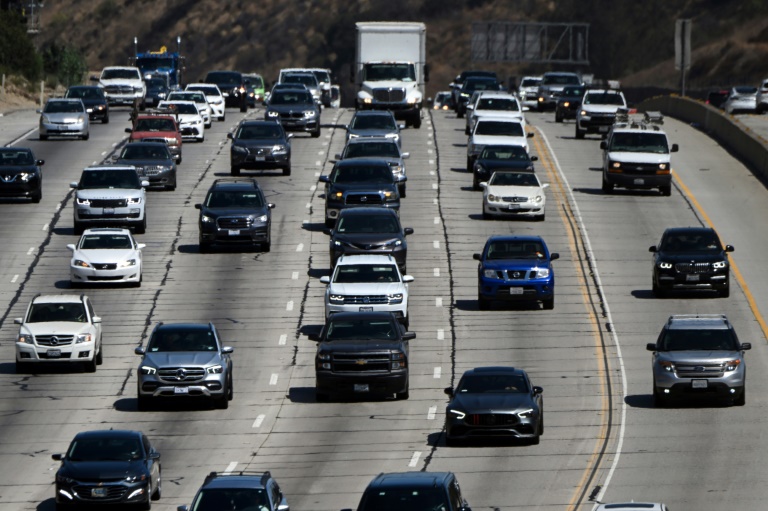
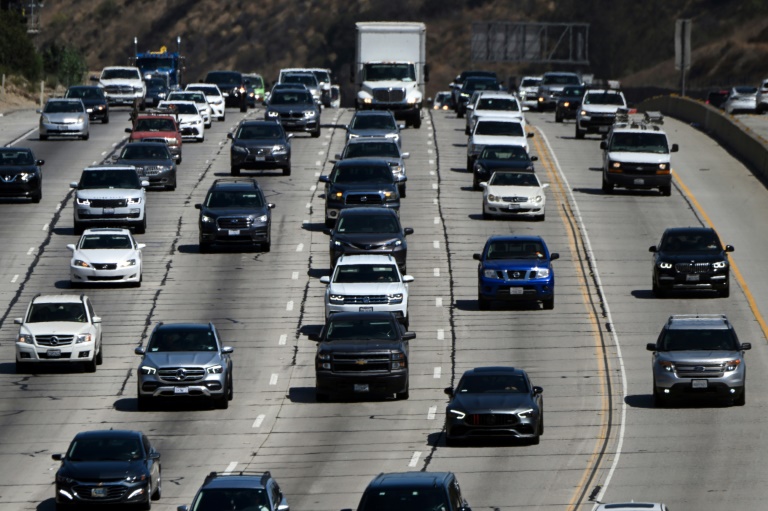
California ruled Thursday that all new cars sold in America’s most populous state must be zero emission from 2035, in what was billed as a nation-leading step to slash the pollutants that cause global warming.

The widely touted move has been hailed by environmentalists, who hope it will prod other parts of the United States to quicken the adoption of electric vehicles.

The rules demand an ever-increasing percentage of new cars sold to California’s 40 million inhabitants produce no tailpipe pollutants, until their total ban in 13 years’ time.

“The timeline is ambitious but achievable: by the time a child born this year is ready to enter middle school, only zero-emission vehicles or a limited number of plug-in hybrids (PHEVs) will be offered for sale new in California,” the California Air Resources Board said.

The board, which was tasked with finding a way to implement Governor Gavin Newsom’s order to transition the state’s automotive sector, said the health benefits would be significant.

“By 2037, the regulation delivers a 25 percent reduction in smog-causing pollution from light-duty vehicles.

“This benefits all Californians but especially the state’s most environmentally and economically burdened communities along freeways and other heavily traveled thoroughfares.”

From 2026 through 2040 the regulation is expected to result in 1,290 fewer cardiopulmonary deaths, 460 fewer hospital admissions for cardiovascular or respiratory illness, and 650 fewer emergency room visits for asthma, it said.

– Popularity –

California already accounts for the lion’s share of electric vehicles in the United States, with 1.13 million of them on the state’s roads — 43 percent of the nation’s total.

Their popularity has mushroomed in the years since they were seen as little more than novelty golf carts for tree-huggers content to drive no more than a few dozen miles (kilometers).

Ten years ago only two percent of new cars sold in the state were electric; that figure is now 16 percent, and Teslas and other premium offerings with a range of hundreds of miles are a common sight on roads around Los Angeles and San Francisco.

Still, the vehicles remain more expensive than their fossil fuel-powered equivalents and critics say only federal subsidies of up to $7,500 make them viable for many buyers.

But supporters say the incentives are necessary short-term supports that will fade away as increased adoption boosts economies of scale and drives down prices.

As the biggest auto market in the United States, one manufacturers cannot ignore, California has an outsized influence in effectively setting national standards.

Thursday’s ruling comes on the heels of a climate law signed last week by US President Joe Biden, which sets aside hundreds of millions of dollars in incentives for clean energy programs.

Biden and his Democratic Party are rushing to make up climate policy ground they feel was lost under former president Donald Trump, who yanked the United States out of the Paris Climate Accord and reversed what many environmentalists viewed as already-weak progress in reducing the fossil fuel emissions that drive global warming.

Newsom, a leading light in the Democratic Party, who is rumored to have presidential ambitions, welcomed the ruling.

– ‘Groundbreaking’ –

“California now has a groundbreaking, world-leading… roadmap to reducing dangerous carbon emissions and moving away from fossil fuels,” he said.

The reduction in the number of petrol and diesel-powered cars on the roads is equivalent to “915 million oil barrels’ worth of emissions that won’t pollute our communities.”

“With the historic $10 billion we’re investing to accelerate the transition… we’re making it easier and cheaper for all Californians to purchase electric cars.”

In recent years jurisdictions around the world, notably in Europe, have set their sights on the polluting automobile sector.

Norway is aiming to have all new cars produce zero tailpipe emissions by 2025.

The UK, Singapore and Israel are eyeing 2030, while the European Union wants to end the sale of new petrol and diesel cars by 2035. 

Human-caused global warming has already raised average temperatures around the planet, affecting weather patterns and worsening natural hazards like wildfires and storms.

Scientists say dramatic action is required to limit the damage, and point to curbing emissions from fossil fuels as key to the battle.

California says new cars must be zero emission by 2035

California ruled Thursday that all new cars sold in America’s most populous state must be zero emission from 2035, in what was billed as a nation-leading step to slash the pollutants that cause global warming.

The widely touted move has been hailed by environmentalists, who hope it will prod other parts of the United States to quicken the adoption of electric vehicles.

The rules demand an ever-increasing percentage of new cars sold to California’s 40 million inhabitants produce no tailpipe pollutants, until their total ban in 13 years’ time.

“The timeline is ambitious but achievable: by the time a child born this year is ready to enter middle school, only zero-emission vehicles or a limited number of plug-in hybrids (PHEVs) will be offered for sale new in California,” the California Air Resources Board said.

The board, which was tasked with finding a way to implement Governor Gavin Newsom’s order to transition the state’s automotive sector, said the health benefits would be significant.

“By 2037, the regulation delivers a 25 percent reduction in smog-causing pollution from light-duty vehicles.

“This benefits all Californians but especially the state’s most environmentally and economically burdened communities along freeways and other heavily traveled thoroughfares.”

From 2026 through 2040 the regulation is expected to result in 1,290 fewer cardiopulmonary deaths, 460 fewer hospital admissions for cardiovascular or respiratory illness, and 650 fewer emergency room visits for asthma, it said.

– Popularity –

California already accounts for the lion’s share of electric vehicles in the United States, with 1.13 million of them on the state’s roads — 43 percent of the nation’s total.

Their popularity has mushroomed in the years since they were seen as little more than novelty golf carts for tree-huggers content to drive no more than a few dozen miles (kilometers).

Ten years ago only two percent of new cars sold in the state were electric; that figure is now 16 percent, and Teslas and other premium offerings with a range of hundreds of miles are a common sight on roads around Los Angeles and San Francisco.

Still, the vehicles remain more expensive than their fossil fuel-powered equivalents and critics say only federal subsidies of up to $7,500 make them viable for many buyers.

But supporters say the incentives are necessary short-term supports that will fade away as increased adoption boosts economies of scale and drives down prices.

As the biggest auto market in the United States, one manufacturers cannot ignore, California has an outsized influence in effectively setting national standards.

Thursday’s ruling comes on the heels of a climate law signed last week by US President Joe Biden, which sets aside hundreds of millions of dollars in incentives for clean energy programs.

Biden and his Democratic Party are rushing to make up climate policy ground they feel was lost under former president Donald Trump, who yanked the United States out of the Paris Climate Accord and reversed what many environmentalists viewed as already-weak progress in reducing the fossil fuel emissions that drive global warming.

Newsom, a leading light in the Democratic Party, who is rumored to have presidential ambitions, welcomed the ruling.

– ‘Groundbreaking’ –

“California now has a groundbreaking, world-leading… roadmap to reducing dangerous carbon emissions and moving away from fossil fuels,” he said.

The reduction in the number of petrol and diesel-powered cars on the roads is equivalent to “915 million oil barrels’ worth of emissions that won’t pollute our communities.”

“With the historic $10 billion we’re investing to accelerate the transition… we’re making it easier and cheaper for all Californians to purchase electric cars.”

In recent years jurisdictions around the world, notably in Europe, have set their sights on the polluting automobile sector.

Norway is aiming to have all new cars produce zero tailpipe emissions by 2025.

The UK, Singapore and Israel are eyeing 2030, while the European Union wants to end the sale of new petrol and diesel cars by 2035. 

Human-caused global warming has already raised average temperatures around the planet, affecting weather patterns and worsening natural hazards like wildfires and storms.

Scientists say dramatic action is required to limit the damage, and point to curbing emissions from fossil fuels as key to the battle.

George Foreman sued for alleged sexual assault

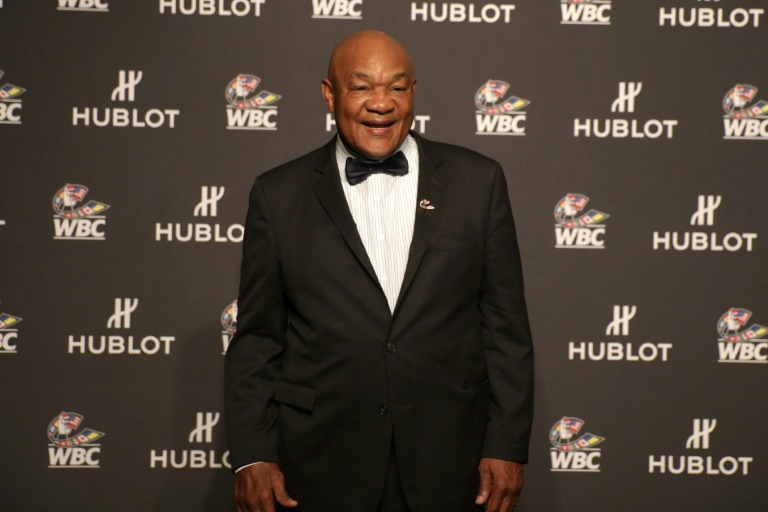
Former world heavyweight champion George Foreman was accused of sexual assault in the 1970s by two women who were teenagers, according to lawsuits filed in Los Angeles.

The lawsuits, obtained by People magazine and celebrity website TMZ, were filed by women identified as Denise S. and Gwen H.

Foreman was not identified by name but referred to as a former pro boxer who defeated Joe Frazier in 1973 to become heavyweight champion, as Foreman did.

Denise claimed to have met Foreman at age eight and said he raped her several times in 1976, including at a San Francisco hotel, with assaults taking place when she was 13-16 years old and Foreman was 24.

Gwen said she was 15 when Foreman began assaulting her. She said her father was employed by Foreman and the fighter threatened to fire her father is she was not cooperative.

The women seek a trial by jury saying they suffered physical and mental injuries at the hands of the fighter.

Foreman denied the lawsuit’s claims in a statement to the New York Times.

“Over the past six months, two women have been trying to extort millions of dollars each from me and my family,” Foreman said.

“They are falsely claiming that I sexually abused them over 45 years ago in the 1970s. I adamantly and categorically deny these allegations.”

Foreman, 73, was the 1968 Olympic heavyweight boxing champion and won the professional heavyweight boxing crown in 1973 by stopping Frazier in the second round.

He kept the crown until losing to Muhammad Ali in the famous “Rumble in the Jungle” fight in 1974 in what was then Zaire.

Foreman would become a pitchman after his boxing career, notably for a grill that carried his name.

In 1994, at age 45, Foreman reclaimed the heavyweight throne by knocking our Michael Moorer, becoming at the time the oldest fighter to ever win any boxing title.

Foreman ended his career at age 48 in 1997 with a loss to Shannon Briggs, his final record at 76-5 with 68 knockout triumphs.

Close Bitnami banner
Bitnami