US Business

Twitter ordered to give Musk additional bot account data

A US judge told Twitter on Thursday to surrender more data to Elon Musk on fake accounts, a key issue the billionaire is using to try to cancel his buyout bid.

While Judge Kathaleen McCormick allowed the Tesla boss’s team an opening to bolster its argument that Musk was misled, she chastised them for “absurdly broad” requests for “trillions upon trillions of data points.”

The judge ordered Twitter to hand over data on 9,000 accounts the firm audited at the end of 2021, which opens the door for that information to be used in Musk’s effort to quit the $44 billion deal.

“Some additional data from plaintiff (Twitter) seems warranted,” McCormick wrote, without elaborating, in her four-page ruling.

Musk has argued Twitter was dishonest on the number of false or spam accounts, prompting strong denials and a lawsuit from the social media firm that has led to a trial set for mid-October.

Musk’s lawyers pushed hard in a hearing Wednesday to force the firm to turn over mountains of information, while seizing upon a freshly revealed Twitter whistleblower’s claims of serious flaws inside the company. 

Twitter lawyer Bradley Wilson countered that the company deceived nobody, and that Musk wants a “do-over” regarding questions he should have asked before he made his unsolicited buyout offer early this year.

The firm opposed handing over certain types of data for reasons including the potential to violate user privacy protected by law, its attorney Wilson argued.

Even if Musk’s experts come to a different conclusion about the number of spam accounts at Twitter, that would not amount to a breach significant enough to let him break the buyout contract, Twitter attorneys argue.

Whistleblower Peiter Zatko’s complaint to US authorities accuses Twitter of issuing untrue statements on account numbers because “if accurate measurements ever became public, it would harm the image and valuation of the company.”

It was not immediately clear whether the complaint, and its use by Musk’s attorneys, will significantly alter the course of the case.

Twitter’s lawyers had expressed concern that Musk could misuse sensitive data they turn over to his lawyers.

The judge said the billionaire’s team “have agreed to treat this data as highly confidential.”

Twitter ordered to give Musk additional bot account data

A US judge told Twitter on Thursday to surrender more data to Elon Musk on fake accounts, a key issue the billionaire is using to try to cancel his buyout bid.

While Judge Kathaleen McCormick allowed the Tesla boss’s team an opening to bolster its argument that Musk was misled, she chastised them for “absurdly broad” requests for “trillions upon trillions of data points.”

The judge ordered Twitter to hand over data on 9,000 accounts the firm audited at the end of 2021, which opens the door for that information to be used in Musk’s effort to quit the $44 billion deal.

“Some additional data from plaintiff (Twitter) seems warranted,” McCormick wrote, without elaborating, in her four-page ruling.

Musk has argued Twitter was dishonest on the number of false or spam accounts, prompting strong denials and a lawsuit from the social media firm that has led to a trial set for mid-October.

Musk’s lawyers pushed hard in a hearing Wednesday to force the firm to turn over mountains of information, while seizing upon a freshly revealed Twitter whistleblower’s claims of serious flaws inside the company. 

Twitter lawyer Bradley Wilson countered that the company deceived nobody, and that Musk wants a “do-over” regarding questions he should have asked before he made his unsolicited buyout offer early this year.

The firm opposed handing over certain types of data for reasons including the potential to violate user privacy protected by law, its attorney Wilson argued.

Even if Musk’s experts come to a different conclusion about the number of spam accounts at Twitter, that would not amount to a breach significant enough to let him break the buyout contract, Twitter attorneys argue.

Whistleblower Peiter Zatko’s complaint to US authorities accuses Twitter of issuing untrue statements on account numbers because “if accurate measurements ever became public, it would harm the image and valuation of the company.”

It was not immediately clear whether the complaint, and its use by Musk’s attorneys, will significantly alter the course of the case.

Twitter’s lawyers had expressed concern that Musk could misuse sensitive data they turn over to his lawyers.

The judge said the billionaire’s team “have agreed to treat this data as highly confidential.”

Boeing eyes February for space capsule's first crewed flight

The first crewed flight of Boeing’s space capsule Starliner is scheduled for February 2023, the company and NASA announced Thursday, as the United States seeks to secure a second way for its astronauts to reach the International Space Station.

Since 2020, American astronauts have traveled to the ISS aboard SpaceX’s vessels but the US space agency wants to widen its options.

After a series of hiccups in its space program that led to serious delays, including a 2019 flight that did not reach the ISS, Boeing finally managed to send the gumdrop-shaped capsule to the station in May — without a crew.

This time, the aerospace giant will send the Starliner up with humans aboard, to earn NASA’s green light to begin regular missions — at an expected pace of one per year.

“Currently, we’re targeting a launch date as early as February of 2023,” Steve Stich, the manager of NASA’s Commercial Crew Program, told reporters.

“We’re in good shape to execute these plans to be ready for that flight in February,” added Mark Nappi, the Starliner program manager at Boeing.

The test flight — aptly named CFT, or Crew flight test — will carry US astronauts Barry Wilmore and Sunita Williams. 

They are expected to be docked for eight days at the ISS, where they will conduct a series of experiments, said ISS program manager Joel Montalbano.

“Our agency goal is to get two US commercial providers up and running as soon as we can.”

Boeing had hoped to conduct this test flight before the end of the year, but a few glitches experienced in the uncrewed May flight led to necessary adjustments to the vessel.

An issue was detected in the propulsion system: two thrusters responsible for placing Starliner in a stable orbit failed, though officials insisted there was plenty of redundancy built into the system to overcome the problem.

Boeing’s teams later determined that “debris-related conditions” were to blame, Nappi said, adding that the origin of said debris was still unknown.

Some filters were removed to fix a pressure problem, and flight software was updated to avoid a data overload.

Boeing and SpaceX were awarded contracts in 2014, shortly after the end of the space shuttle program, during a time when the United States was left reliant on Russian Soyuz rockets for rides to the ISS.

Elon Musk’s SpaceX filled the void first, providing space “taxi” service since a successful test mission for its Dragon capsule in 2020.

Boeing eyes February for space capsule's first crewed flight

The first crewed flight of Boeing’s space capsule Starliner is scheduled for February 2023, the company and NASA announced Thursday, as the United States seeks to secure a second way for its astronauts to reach the International Space Station.

Since 2020, American astronauts have traveled to the ISS aboard SpaceX’s vessels but the US space agency wants to widen its options.

After a series of hiccups in its space program that led to serious delays, including a 2019 flight that did not reach the ISS, Boeing finally managed to send the gumdrop-shaped capsule to the station in May — without a crew.

This time, the aerospace giant will send the Starliner up with humans aboard, to earn NASA’s green light to begin regular missions — at an expected pace of one per year.

“Currently, we’re targeting a launch date as early as February of 2023,” Steve Stich, the manager of NASA’s Commercial Crew Program, told reporters.

“We’re in good shape to execute these plans to be ready for that flight in February,” added Mark Nappi, the Starliner program manager at Boeing.

The test flight — aptly named CFT, or Crew flight test — will carry US astronauts Barry Wilmore and Sunita Williams. 

They are expected to be docked for eight days at the ISS, where they will conduct a series of experiments, said ISS program manager Joel Montalbano.

“Our agency goal is to get two US commercial providers up and running as soon as we can.”

Boeing had hoped to conduct this test flight before the end of the year, but a few glitches experienced in the uncrewed May flight led to necessary adjustments to the vessel.

An issue was detected in the propulsion system: two thrusters responsible for placing Starliner in a stable orbit failed, though officials insisted there was plenty of redundancy built into the system to overcome the problem.

Boeing’s teams later determined that “debris-related conditions” were to blame, Nappi said, adding that the origin of said debris was still unknown.

Some filters were removed to fix a pressure problem, and flight software was updated to avoid a data overload.

Boeing and SpaceX were awarded contracts in 2014, shortly after the end of the space shuttle program, during a time when the United States was left reliant on Russian Soyuz rockets for rides to the ISS.

Elon Musk’s SpaceX filled the void first, providing space “taxi” service since a successful test mission for its Dragon capsule in 2020.

Outgoing HRW chief says govts no longer able to hide repression

After three decades at the helm of Human Rights Watch, Kenneth Roth has come to believe that governments are “always tempted” to violate citizens’ rights.

But as he prepares to stand down later this month, Roth also believes that a more powerful human rights movement means they can no longer hide this “ugly reality.” 

In an interview ahead of vacating his role, Roth looked back on the “endless struggle,” the ups and downs, victories and defeats since he became HRW’s executive director in 1993.

“I think the big trend over the last 30 years is that the human rights movement has deepened and strengthened,” he told AFP in his New York apartment. “Every country I visit has human rights defenders in it.”

“Does that mean that human rights violations go away? Obviously not,” said Roth.

“Governments are always tempted to violate human rights,” he said, citing China’s repression of Uyghurs, Russia’s invasion of Ukraine, and regions he feels receives less attention, such as Tigray in Ethiopia, and Yemen.

But thanks to the stronger activism, “it’s virtually impossible for governments to hide their abuses, particularly in an era of social media where everybody has a smartphone.”

“And by spotlighting that discrepancy between the pretense and the ugly reality, we do generate pressure,” he insisted.

Looking back over the past 30 years, he believes the world has witnessed “enormous changes, some for the good, some for the bad.”

On the one hand, he highlights the birth of democracies in Eastern Europe and South America, but laments that the Middle East and North Africa, are “still pretty much the same” as they were.

– ‘Shame them’ –

As for Russia and China, after a “positive evolution with significant opening,” the former is “reverting back” towards the Soviet era and the latter towards Maoist-style rule, he said.

“It’s a struggle, it’s an endless struggle,” said the former lawyer, who plans to devote his time after leaving HRW to writing a book about how to put pressure on governments.

“At a minimum, you can shame them, you can embarrass them. But we also go to allied governments around the world and say, would you use your influence on our behalf to push for positive change?” Roth added.

“(And) abusive governments, they always care about something: they want the next military aid package, they want a trade deal, they want to be invited to some fancy summit,” he said. 

But does it work?

“I don’t pretend that we turn these governments into good guys,” he conceded. “Often, all they care about is staying in power.” 

“But if we put enough pressure on them, the benefits they see from violating human rights begin to be outweighed by the cost to their reputation,” Roth said.

“Sometimes we succeed in changing the cost-benefit analysis to make governments feel that it’s just not worth it to violate human rights, but other times we fail. And that’s just inevitable.” 

Iran exiles sue President Raisi in US ahead of UN meet

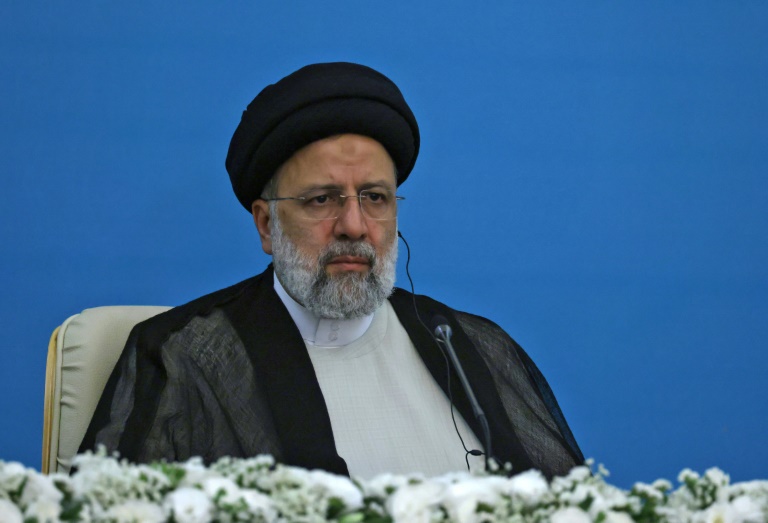
An exile group announced a New York lawsuit against Iranian President Ebrahim Raisi Thursday, challenging US authorities to take action against him as he is expected to arrive next month for the UN General Assembly.

The National Council of Resistance of Iran said the suit accused Raisi of torture and murder in a 1988 crackdown on Iranian dissidents.

Echoing similar complaints filed in England and Scotland, the civil lawsuit says that in 1988 Raisi was a member of the so-called “death commission,” four judges who directly ordered thousands of executions as well as torture of members of the opposition People’s Mojahedin Organization of Iran, known as the MEK.

The MEK is the largest partner of the NCRI. 

It is “beyond doubt that as deputy state prosecutor for Tehran province, Ebrahim Raisi, was a member of that death commission,” Steven Schneebaum, the lead attorney in the lawsuit, said in a Washington press conference organized by the NCRI.

The suit was filed in federal court in New York last week in the names of two people tortured at the time and a third person whose brother was executed.

It cites Amnesty International and US sanctions declarations that accuse Raisi of complicity in the 1988 events.

The suit asks for unspecified damages for torture, extrajudicial killings, genocide and crimes against humanity.

It also challenges the notion that Raisi, who was elected president last year, enjoys immunity under US law as a head of state or official representative attending the annual UN meeting in New York.

Schneebaum said that Raisi is not a diplomat accredited to the United Nations and, while he is president, Iran’s real head of state is Supreme Leader Ayatollah Ali Khamenei.

“Raisi is not a diplomat… and is not eligible for the privileges extended under the Vienna Convention. Nor is he in fact a head of state,” Schneebaum said.

If US authorities accept those arguments, they could serve Raisi with a warrant if he attends the UN meetings in September. He would then be required to submit a plea withing 21 days, said Schneebaum.

Asked about Raisi’s attendance, State Department spokesman Vedant Patel said that visa issues are “confidential under US law” but that the United States had obligations to let in foreign dignitaries.

“As host nation of the UN, the US is generally obligated under the UN Headquarters Agreement to issue visas to representatives of UN member states to travel to the UN headquarters district,” Patel told reporters.

The lawsuit comes as Iran and the United States move closer through indirect diplomacy to reviving a 2015 nuclear deal trashed by former president Donald Trump.

It is exceedingly rare for the United States to refuse entry for UN meetings. In 1988, Washington drew controversy by barring Palestinian leader Yasser Arafat, prompting the General Assembly to convene in Geneva instead.

More US states ban abortion as Democrats push back

Abortion became illegal in three more US states on Thursday, further restricting access to elective terminations for millions of women despite some signs of popular and judicial pushback.

Two months after the Supreme Court struck down the constitutional right to abortion, nearly 21 million women have already lost access to the procedure in their home states, according to an analysis by The Washington Post. 

And with Idaho, Tennessee and Texas joining 10 other Republican-controlled states on Thursday in implementing near-total bans on abortion, that number is set to rise. Another dozen states are expected to follow suit with their own restrictions.

The laws in Idaho, Tennessee and Texas were “triggered” after the Supreme Court on June 24 overturned the landmark 1973 “Roe v. Wade” decision enshrining a woman’s right to an abortion and allowed states to set their own laws.

In Texas, under the new law, doctors could face life in prison and a fine of no less than $100,000 for performing an abortion. Texas and Tennessee make no exceptions for rape or incest, though Idaho does.

State restrictions range from total bans on elective abortions to bans after six weeks, when many women do not even know they are pregnant. Many women have already been forced to travel hundreds of miles to obtain the procedure in other states.

Democratic President Joe Biden condemned the ruling by the conservative-dominated Supreme Court and has pledged to do everything within his power to ensure access to abortion.

The Biden administration notched up a narrow victory in Idaho on Wednesday when a judge ruled that federal law requires doctors to provide abortions to women suffering medical emergencies at hospitals that receive Medicare funding from the government.

In an illustration of the complicated legal landscape, however, a judge in Texas, an appointee of Republican Donald Trump, issued a contrary ruling in a similar case, setting the stage for further court battles.

White House Press Secretary Karine Jean-Pierre welcomed the outcome in Idaho but called the Texas ruling a “devastating decision for women in that state, who can now be denied the same life-saving care.” 

Besides battling in the courts, Democrats are hoping abortion will be a galvanizing issue for their candidates in the upcoming midterm elections.

US voters will decide control of Congress in November, with all 435 House seats up for grabs, as well as 35 of the 100 Senate seats and the governor’s mansion in 36 out of 50 states.

– ‘Health care is on the ballot’ –

“More women today are living with fewer freedoms thanks to Republicans’ relentless war to ban abortion in their states,” Democratic National Committee chairman Jaime Harrison said.

“Make no mistake: No matter what state you live in, reproductive health care is on the ballot this November, and GOP candidates will be held accountable for their extreme anti-choice agenda,” Harrison said.

A Democratic candidate notched up a victory in a special election in New York on Tuesday seen as a bellwether of the public mood on abortion ahead of November’s midterms.

According to political data firm Target Smart, women have been outpacing men in new voter registrations in numerous states.

In a Pew Research Center poll, 56 percent of registered voters said the abortion issue will be very important in their midterm vote, up from 43 percent in March.

Abortion rights advocates also recently celebrated a victory in a referendum in Kansas that would have removed the right to the procedure from the constitution of the conservative midwestern state.

The state is a Republican stronghold, but Kansans, by a 59 to 41 percent margin amid unusually heavy turnout, rejected the amendment that would have scrapped language in the state constitution guaranteeing the right to abortion.

Planned Parenthood, which lobbies for abortion access and plans to reportedly spend $50 million on the midterms, called the Kansas vote “a clear warning to anti-abortion politicians.”

While some two dozen Republican-led states are restricting access to abortion, a number of Democratic-controlled states, including giants California and New York, are putting protections in place.

Global monkeypox cases dropped last week: WHO

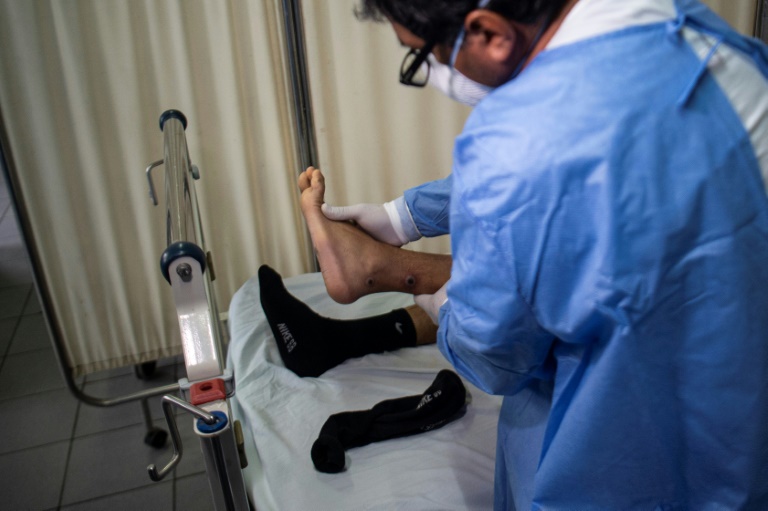
Monkeypox cases fell by a fifth last week as infections in Europe dropped but the outbreak is going through “intense transmission” in the Americas, the World Health Organization said Thursday.

The WHO sounded the alarm for Latin America in particular, pointing to a lack of awareness and public health measures to control the spread of the virus.

A surge in monkeypox infections has been reported since early May outside the African countries where it has long been endemic.

The WHO triggered its highest level of alarm on July 24, classifying it as a public health emergency of international concern, alongside Covid-19.

There have been 45,355 cases and 15 deaths this year, across at least 96 countries, according to the WHO’s dashboard.

After four consecutive weeks of increase, the number of monkeypox cases newly reported dropped by 21 percent last week compared to the previous seven days, from 5,907 to 5,213.

“In the early stages of the outbreak, most reported cases were in Europe, with a smaller proportion in the Americas,” WHO chief Tedros Adhanom Ghebreyesus told a press conference.

“That has now reversed, with less than 40 percent of reported cases in Europe and 60 percent in the Americas,” which is going through a steep rise, he said.

“There are signs that the outbreak is slowing in Europe, where a combination of effective public health measures, behaviour change and vaccination are helping to prevent transmission.

“However, in Latin America in particular, insufficient awareness or public health measures are combining with a lack of access to vaccines to fan the flames of the outbreak.”

– Cases breakdown –

The countries with more than a thousand cases are the United States (15,877), Spain (6,284), Brazil (3,984), Germany (3,387), Britain (3,340), France (2,889), Peru (1,207), Canada (1,206) and the Netherlands (1,136).

According to the WHO’s latest situation report issued Thursday, some 23 countries reported an increase in the weekly number of cases. Iran and Indonesia reported their first cases in the past seven days.

Sixteen countries have not reported new cases for more than 21 days, the maximum incubation period of the disease.

Among cases with sexual orientation reported, 96 percent identified as men who had sex with men. The median age of cases was 36.

A sexual encounter was the most commonly reported type of transmission, at 82 percent.

“The majority of cases were likely exposed in a party setting with sexual contacts,” said the WHO.

Among cases with known HIV status, 45 percent are HIV positive, it added.

Iran exiles sue President Raisi in US ahead of UN meet

An exile group announced a New York lawsuit against Iranian President Ebrahim Raisi Thursday, challenging US authorities to take action against him as he is expected to arrive next month for the UN General Assembly.

The National Council of Resistance of Iran said the suit accused Raisi of torture and murder in a 1988 crackdown on Iranian dissidents.

Echoing similar complaints filed in England and Scotland, the civil lawsuit says that in 1988 Raisi was a member of the so-called “death commission,” four judges who directly ordered thousands of executions as well as torture of members of the opposition People’s Mojahedin Organization of Iran, known as the MEK.

The MEK is the largest partner of the NCRI. 

It is “beyond doubt that as deputy state prosecutor for Tehran province, Ebrahim Raisi, was a member of that death commission,” Steven Schneebaum, the lead attorney in the lawsuit, said in a Washington press conference organized by the NCRI.

The suit was filed in federal court in New York last week in the names of two people tortured at the time and a third person whose brother was executed.

It cites Amnesty International and US sanctions declarations that accuse Raisi of complicity in the 1988 events.

The suit asks for unspecified damages for torture, extrajudicial killings, genocide and crimes against humanity.

The suit challenges the belief that Raisi, who was elected president last year, enjoys immunity under US law as a head of state and also an official foreign representative attending the United Nations annual general meeting at the UN headquarters in New York.

Schneebaum said that, for one, Raisi is not a diplomat officially accredited to the United Nations.

Secondly, he said, while Raisi is president, the real head of state of Iran is Supreme Leader Ayatollah Ali Khamenei.

“Raisi is not a diplomat… and is not eligible for the privileges extended under the Vienna Convention. Nor is he in fact a head of state,” Schneebaum said.

If US authorities accept those arguments, they could serve Raisi with a warrant if he attends the UN meetings beginning September 13.

That would require him to submit a plea withing 21 days, said Schneebaum.

The US State Department did not immediately respond to a questions on its view of Raisi’s status.

Russian-held nuclear plant cut from Ukraine grid as Putin orders troop boost

Ukraine’s Zaporizhzhia nuclear plant under occupation by Moscow’s troops was disconnected from the national power supply on Thursday, the state energy operator said, as President Vladimir Putin signed a decree to swell the ranks of Russia’s military.

The Zaporizhzhia plant — Europe’s largest nuclear facility — has been occupied by Russian troops in southern Ukraine since the opening weeks of the war, and remained on the frontlines ever since.

Recently Moscow and Kyiv have traded blame for shelling around the complex, a “highly volatile” development the International Atomic Energy Agency (IAEA) says “underlines the very real risk of a nuclear disaster”.

The development came on a day when Russian President Vladimir Putin signed a decree to increase the headcount of his country’s army to more than two million, including 1.15 million servicemen, from next January, according to the document published on a government portal. 

Putin last set the army headcount in 2017 at around 1.9 million people with 1.01 million soldiers.

Ukraine state operator Energoatom said the Zaporizhzhia plant was severed from the national network after a power line was twice disconnected by ash pit fires in an adjacent thermal power plant.

The three other power lines “were earlier damaged during terrorist attacks” by Russian forces, the operator said.

“The actions of the invaders caused a complete disconnection of the (Zaporizhzhia Nuclear Power Plant) from the power grid — the first in the history of the plant,” Energoatom added on Telegram.

It added that “start-up operations are under way to connect one of the reactors to the network”.

Kyiv officials have said they believe Moscow has seized the station in order to divert power to the Crimean peninsula annexed by Russia in 2014.

Energoatom could not be immediately reached for comment on whether the supply had been diverted, the cause of the ash pit fires, or the number of those without electricity.

However, the mayor of the city of Melitopol Ivan Fedorov said “Russian occupiers cut off the electricity in almost all occupied settlements of Zaporizhzhia”.

Earlier on Thursday Britain’s defence ministry said satellite imagery from the weekend “indicated that Russia maintained an enhanced military presence at the site”.

“The principal risks to reactor operations are likely to remain disruption to the reactors’ cooling systems, damage to its back-up power supply, or errors by workers operating under pressure,” the ministry added in a statement.

– Independence day deaths –

Meanwhile on Thursday the death toll from an air strike on a train station in central Ukraine rose to 25, as the EU warned those “responsible for Russian rocket terror will be held accountable”.

Russia issued a counter-claim saying it targeted soldiers and killed 200 Ukrainian servicemen in the attack Wednesday on a rail hub in Chaplyne city of the Dnipropetrovsk region. 

The attack struck six months to the day since Russia began its invasion of Ukraine and also on the day Ukraine celebrated its 1991 independence from the Soviet Union.

On Thursday, state rail operator Ukrainian Railways said the toll had risen overnight from 22 to 25, and included two children with a further 31 people injured.

Ukrainian President Volodymyr Zelensky had warned at the weekend Russia might do something “particularly cruel” to mark Ukraine’s independence celebrations.

In a daily press briefing, the defence ministry said the train was “en route to combat zones” in the eastern Donbas region of Ukraine, which Russia seeks to fully control.

But EU foreign policy chief Josep Borrell “strongly” condemned “another heinous attack by Russia on civilians”.

“Those responsible for Russian rocket terror will be held accountable,” he said on Twitter.

The UN humanitarian coordinator for Ukraine Denise Brown said the strike “is just one more example of the level of suffering that this war is causing the people of Ukraine”.

“In the six months since Russia’s invasion, Ukrainians have continued to see their loved ones killed, injured and traumatized, their families separated, and their homes, schools and hospitals attacked,” she said in a statement.

Meanwhile in Kyiv the city council renamed 102 streets in part of an ongoing effort to “de-Russify” public spaces.

Historic soviet and Russian road names have been replaced with titles lauding Ukrainian culture and commemorating patriots who have fought for the nation over the past six months.

Close Bitnami banner
Bitnami