US Business

Court denies Ben & Jerry's effort to prevent sales in Israeli settlements

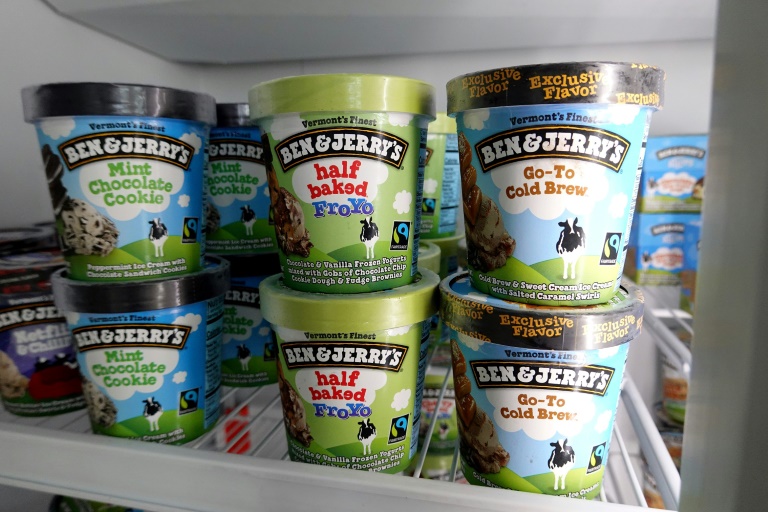
Ben & Jerry’s lost its bid Monday to block its parent company Unilever from selling its ice cream in West Bank settlements, which the US firm said would run counter to its values.

The company, known for its political activism, took the unusual step seeking an injunction after London-based Unilever announced it had sold its interest in the ice cream to an Israeli license-holder.

However, a US federal judge ruled Monday the ice cream company had “failed to demonstrate” that the move to sell the goods in the Israeli-occupied settlements caused it “irreparable harm.”

In July last year, Vermont-based Ben & Jerry’s announced it would no longer sell its ice cream in the Palestinian territories, which the Jewish state seized in 1967, saying it was “inconsistent with our values,” although it said it would keep selling its products in Israel.

However, Israeli license-holder Avi Zinger had continued to produce the ice cream in his factory in the suburbs of Tel Aviv and distribute it to the Israeli settlements, going against the company’s decision.

Hundreds of thousands of Jewish settlers live in the occupied West Bank and east Jerusalem, in communities widely regarded as illegal under international law.

On July 5, Ben and Jerry’s asked that any agreement allowing distribution or sale of its products in the West Bank be dissolved and that any further such transaction go before its board of directors to be given a green light. 

Unilever’s decision was “made without the consent of Ben & Jerry’s Independent Board,” and goes against the merger agreement that gave the board the ability to protect the founder’s values and reputation, the complaint said.

However, US District Court Judge Andrew Carter Jr in Manhattan said the idea the company’s messaging could be marred or customers could become confused about its core values was “too speculative.” 

Founded in the United States in 1978, Ben & Jerry’s is known for championing progressive causes, including protecting the environment and promoting human rights, and has frequently released special ice cream flavors to support causes or in protest.

Contacted by AFP Monday, Ben & Jerry’s declined to immediately comment on the decision.

Unilever did not respond to an AFP request for comment.

Rapper Fetty Wap pleads guilty to drug conspiracy

The rapper Fetty Wap on Monday pleaded guilty to a drug conspiracy charge that alleged he participated in a Long Island-based trafficking ring.

The “Trap Queen” rapper born Willie Junior Maxwell II pleaded guilty to distributing and possessing cocaine, the top count against him.

He was first arrested last fall on charges that he and other co-conspirators transported, distributed and sold more than 100 kilograms of cocaine, heroin, fentanyl, and crack cocaine across Long Island and New Jersey between June 2019 and June 2020.

He now faces a five-year mandatory minimum sentence. The plea deal allows him to avoid a potential life behind bars if he had been convicted on all counts.

The rapper did not request a release on bond and remains in custody awaiting sentencing at a yet-unscheduled date.

FBI agents originally arrested Maxwell on October 28, 2021 at the Citi Field baseball stadium in Queens, where he had been scheduled to perform at the Rolling Loud music festival.

He gained recognition when his debut single “Trap Queen” reached number two on the US charts in 2015.

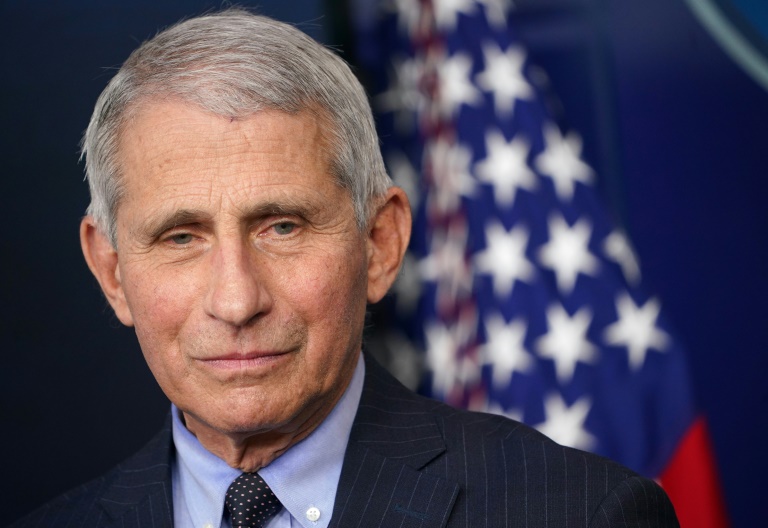
Anthony Fauci, face of US Covid fight, to step down in December

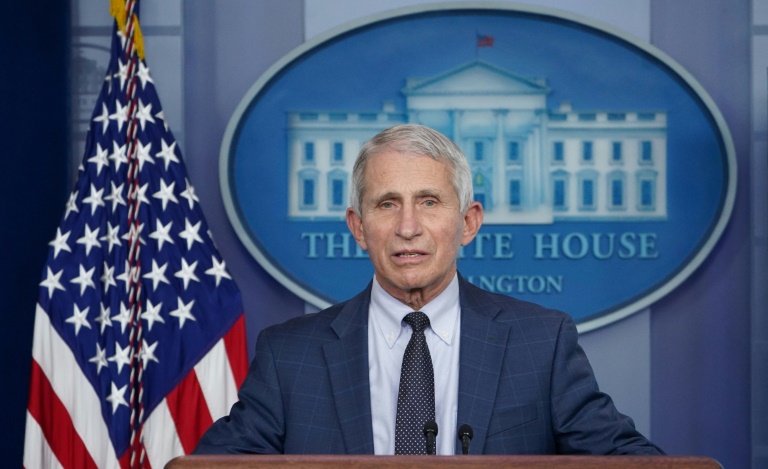
Anthony Fauci, the top infectious disease expert who became the face of America’s fight against Covid-19, announced Monday he will leave government service after more than 50 years in December, stepping down as advisor to President Joe Biden.

In the chaotic early days of the pandemic, Fauci became the nation’s most trusted expert on Covid — but his clashes with former president Donald Trump over the virus response drew anger from the right, and he now lives with security protection following death threats against his family.

The 81-year-old, who has served under seven presidents beginning with Ronald Reagan, said in a statement he would be leaving both his position as director of the National Institute of Allergy and Infectious Diseases (NIAID), and that of chief medical advisor to Biden.

But he added: “I am not retiring.” Instead Fauci, who had said he would leave by the end of Biden’s current term, said he now intended to “pursue the next chapter of my career.”

Biden extended his “deepest thanks” to Fauci in a White House statement, adding that the country is “stronger, more resilient, and healthier because of him.”

Fauci has helmed the United States’ response to infectious disease outbreaks since the 1980s, from HIV/AIDS to Covid.

When the coronavirus first spread globally from China in 2020, he became a credible source of reliable information, reassuring the public with his calm and professorial demeanor during frequent media appearances.

His straight-talking approach won him legions of fans, who bought T-shirts and bobbleheads in his likeness and made cocktails named after him.

“I will always be grateful that we had a once-in-a-century public health leader to guide us through a once-in-a-century pandemic,” tweeted former president Barack Obama upon news Fauci was stepping down.

But his honest takes on America’s early failures to get to grips with the virus soon brought Fauci into conflict with Trump. The White House at one point barred him from doing TV interviews and launched a media blitz against him.

The clash helped turn him into a hate figure for many on the right — already incensed by the pandemic protections Fauci was advocating, from masks and vaccines to lockdown measures.

“Dr. Fauci lost the trust of the American people when his guidance unnecessarily kept schools closed and businesses shut,” Republican House Minority Leader Kevin McCarthy tweeted Monday.

In emotional testimony earlier this year, Fauci slammed another prominent Republican, the vaccine skeptic Senator Rand Paul, for unleashing “crazies” against him, recounting “threats upon my life, harassment of my family, and my children with obscene phone calls.”

This month a West Virginia man was sentenced to three years in prison for threatening to drag Fauci and his family into the street and beat them to death.

But despite the threats, Fauci has been conciliatory towards Trump, telling Politico that they developed “an interesting relationship.”

– ‘Honor of a lifetime’ –

It was not the first time Fauci faced criticism and clashes. In the 1980s he became a lightning rod for accusations the government was not doing enough to stem the rise of HIV/AIDS — but he later forged a close collaboration with activists.

His accomplishments include implementing a fast-track system that widened access to antiretroviral medicines, and working with former president George H.W. Bush to plow in more resources.

Later, under president George W. Bush, Fauci was the architect of a relief plan credited with saving millions of lives in sub-Saharan Africa.

As a scientist, he is credited with developing effective treatments for formerly fatal inflammatory diseases, as well as for contributions into understanding how HIV destroys the body’s defenses.

Despite his many duties, he had continued to treat patients at the NIH’s Clinical Center in Bethesda, Maryland. It was not clear if that was part of his plans going forward.

Biden said that after winning the 2020 election, as he built a team to lead the Covid-19 response, Fauci was “one of my first calls.”

“I’ve been able to call him at any hour of the day for his advice,” the president stated.

Fauci said it had been the “honor of a lifetime” to lead the NIAID, which he has done since 1984.

He did not spell out what he will do next, but said he wants to inspire and mentor the next generation, citing the “energy and passion” he still has for the field despite his decades of service.

“I am proud to have been part of this important work,” he said.

Stocks slide as traders mull Fed outlook

World stocks sank Monday and the dollar rallied on concern the Federal Reserve will stick to its interest rate-hiking plans to combat steep inflation.

Wall Street equities tumbled, with all three major US indices ending with losses of about two percent or more, and the tech-rich Nasdaq Composite sinking 2.6 percent.

Eurozone equities also tanked as spiking natural gas prices sparked fears that winter energy shortages could cause recession, which helped push the euro down to a 20-year low, under parity against the greenback.

Meanwhile, oil slumped on speculation over an Iran nuclear deal that could ease a supply crunch caused by producer Russia’s invasion of Ukraine.

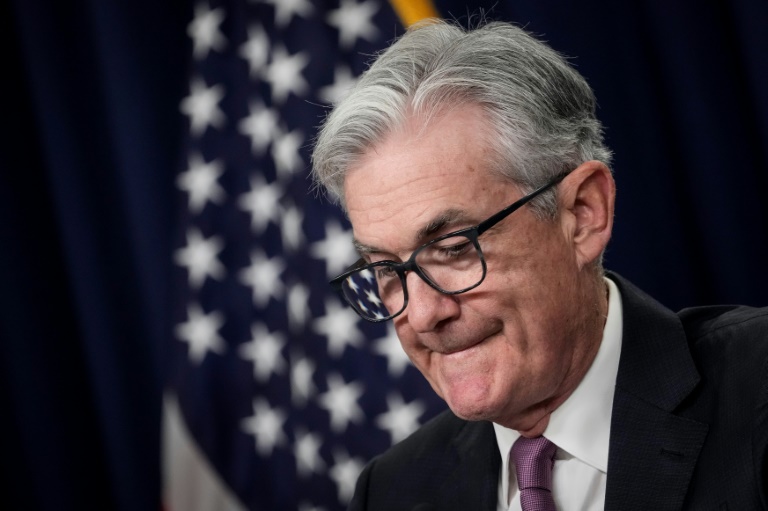
All eyes are on this week’s central banking symposium in Jackson Hole, Wyoming, where Fed Chair Jerome Powell will deliver a speech that is expected to repeat the message that policymakers are not done raising rates yet.

“This week is going to be an opportunity for the Federal Reserve to… send a very clear message to markets. And I think that message will be one that is still focused on inflation,” said Andy Kapyrin of Regent Atlantic.

“That creates risk for the market, particularly the higher valuation tech stocks” such as those on the Nasdaq, he told AFP.

Easing price pressures and signs of economic slowdown had raised hopes Fed policymakers would pause and possibly even cut rates next year after two successive, 75-basis-point hikes, helping equities rally globally in recent weeks.

But that optimism has slowly been eroded in recent weeks as Fed officials, including Powell, have warned that the battle against inflation was far from won, particularly as the jobs market remained resilient.

The recent rally in equities “was probably a little premature,” said Ross Mayfield at Baird.

“Really, nothing in the macro story had changed all that much. The Fed was still signaling rate hikes,” he told AFP.

– ‘Recessionary risk’ –

The euro has come under additional pressure after Russia’s Gazprom said late Friday that the Nord Stream pipeline would be closed for maintenance at the end of the month, cutting Europe’s daily gas deliveries.

As a result, Europe’s Dutch TTF Gas Futures contract soared on Monday close to 300 euros per megawatt hour — not far from record struck after Moscow launched its assault on Ukraine — due to worries that Russia will not resume supplies afterwards.

In Europe, London shed 0.2 percent, but both Paris sank 1.8 percent and Frankfurt 2.3 percent on spiking as prices.

Surging energy prices have this year driven inflation to 40-year peaks in nations including Britain and the United States, in turn prompting tighter monetary policy.

US banking group Citi has forecast that UK inflation would peak at 18.6 percent next January on the back of rocketing domestic energy prices.

Asian equity markets mostly fell, although Shanghai stocks rose after China’s central bank cut prime loan rates as it tries to bolster the world’s second-biggest economy, which has been ravaged by lockdowns as part of a zero-Covid strategy.

The prospect of more US hikes also sent the dollar rallying against the yen, and it is nearing the 140-yen mark for the first time in 24 years.

– Key figures at around 2030 GMT –

New York – Dow: DOWN 1.9 percent at 33,063.61 points (close)

New York – S&P 500: DOWN 2.1 percent at 4,137.99 (close)

New York – Nasdaq: DOWN 2.6 percent at 12,381.57 (close)

EURO STOXX 50: DOWN 1.9 percent at 3,658.22 (close)

London – FTSE 100: DOWN 0.2 percent at 7,533.79 (close)

Frankfurt – DAX: DOWN 2.3 percent at 13,230.57 (close)

Paris – CAC 40: DOWN 1.8 percent at 6,378.74 (close)

Tokyo – Nikkei 225: DOWN 0.5 percent at 28,794.50 (close)

Hong Kong – Hang Seng Index: DOWN 0.6 percent at 19,656.98 (close)

Shanghai – Composite: UP 0.6 percent at 3,277.79 (close)

Euro/dollar: DOWN at $0.9941 from $1.0037 Friday

Pound/dollar: DOWN at $1.1763 from $1.1829

Euro/pound: DOWN at 84.51 pence from 84.86 pence

Dollar/yen: UP at 137.48 yen from 136.97 yen

West Texas Intermediate: DOWN 0.6 percent at $90.23 per barrel

Brent North Sea crude: DOWN 0.2 percent at $96.48

burs-rl-bfm/

US says it is not delaying Iran nuclear talks

Washington denied Monday suggestions it is stalling a potential agreement to resurrect the Iran nuclear deal after a “final” draft was circulated, but said outstanding questions remain.

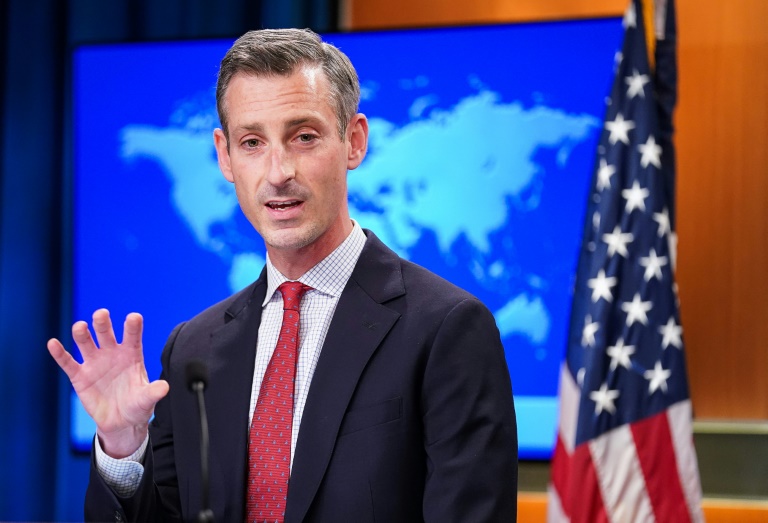
“The notion that we have delayed this negotiation in any way is just not true,” said State Department spokesman Ned Price.

After the EU sent the proposed text to both Tehran and Washington in late July, Iran “responded with several comments,” Price said, without being specific.

“This is why it has taken us some additional time to review those comments and to determine our response of our own,” he said.

“We are seriously reviewing those comments.”

Earlier Monday, EU foreign policy chief Josep Borrell, who is leading the effort to bring the United States and Iran together in agreement, suggested Washington was now slowing the process.

“There was an Iranian response that I considered reasonable to transmit to the United States,” he said.

“The United States has not formally replied yet. But we are waiting for their response and I hope that response will allow us to finish the negotiation — I hope so, but I can’t assure you of it.”

Price said Washington was “encouraged” by the fact that Tehran appeared to have dropped an earlier demand that, to complete a deal, the United States remove its formal designation of the Islamic Republican Guard Corps as an international terrorist organization.

That was one of the issues that has appeared to hold up progress on a final agreement that was sketched out in March.

However, Price added, “there are still some outstanding issues that must be resolved, some gaps that must be bridged, if we are able to get there.”

“We are working as quickly as we can to put together an appropriate response to the Iranian paper,” he said.

Iran and major global powers struck a deal in 2015 to limit Tehran’s nuclear program with the aim of preventing it from obtaining nuclear weapons.

But in 2018 US President Donald Trump, a strong critic of the so-called Joint Comprehensive Plan of Action (JCPOA), unilaterally pulled out and slapped heavier sanctions on Iran.

Since then Iran has accelerated its nuclear research and development activities, getting closer to where it would be able to create a nuclear bomb.

Since coming into office in January 2021, US President Joe Biden has pressed to revive the JCPOA in exchange for alleviating sanctions on Iran.

Ford confirms cutting 3,000 jobs as it pushes towards electric

US auto giant Ford confirmed Monday it is eliminating around 3,000 jobs, mainly in North America and India, as the company pushes to accelerate its transition to electric vehicles.

Challenged by Tesla and other start-ups, traditional carmakers have accelerated production of their electric models in recent years.

The restructuring involves 2,000 salaried positions and 1,000 contractors mostly in the United States, Canada and India but does not affect factory workers, a spokesman told AFP.

US media had already reported in July that Ford, which has around 182,000 employees worldwide, was preparing to cut several thousand jobs.

“We absolutely have too many people in certain places, no doubt about it,” president and CEO Jim Farley said in a conference call in late July.

“We have skills that don’t work anymore… and we have jobs that need to change,” he said, without specifying the number of positions to be eliminated.

The automaker has previously said it plans to spend $50 billion on electric vehicle production by 2026.

And Ford announced in March that it aimed to cut spending on traditional vehicles by up to $3 billion a year.

The job cuts announced Monday are “consistent with what we have been describing for quite some time” and are intended at making Ford “more efficient,” the spokesman said.

Ford confirms cutting 3,000 jobs as it pushes towards electric

US auto giant Ford confirmed Monday it is eliminating around 3,000 jobs, mainly in North America and India, as the company pushes to accelerate its transition to electric vehicles.

Challenged by Tesla and other start-ups, traditional carmakers have accelerated production of their electric models in recent years.

The restructuring involves 2,000 salaried positions and 1,000 contractors mostly in the United States, Canada and India but does not affect factory workers, a spokesman told AFP.

US media had already reported in July that Ford, which has around 182,000 employees worldwide, was preparing to cut several thousand jobs.

“We absolutely have too many people in certain places, no doubt about it,” president and CEO Jim Farley said in a conference call in late July.

“We have skills that don’t work anymore… and we have jobs that need to change,” he said, without specifying the number of positions to be eliminated.

The automaker has previously said it plans to spend $50 billion on electric vehicle production by 2026.

And Ford announced in March that it aimed to cut spending on traditional vehicles by up to $3 billion a year.

The job cuts announced Monday are “consistent with what we have been describing for quite some time” and are intended at making Ford “more efficient,” the spokesman said.

US school shooter's lawyer urges against death penalty

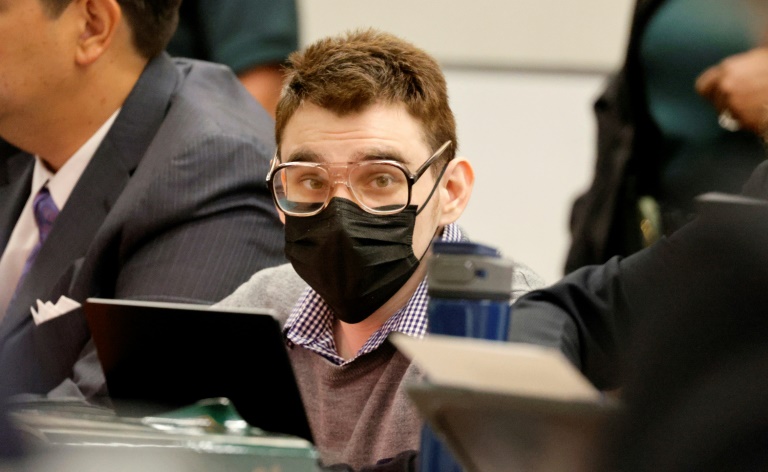
The defense attorney for Nikolas Cruz, who shot 17 people dead at a Florida school in 2018, told a jury Monday that as the child of an alcoholic birth mother his brain was “broken” and urged them not to sentence him to death.

Cruz has pleaded guilty to the mass shooting at the Marjory Stoneman Douglas high school in Parkland, Florida in 2018, and the jury is deciding only whether he should be executed or receive life in prison. 

Melisa McNeill, a public defender representing Cruz in Fort Lauderdale, Florida, told jurors that the 23-year-old was born to a “homeless, mentally ill” mother who was an addict who used alcohol and drugs during her pregnancy. 

“Because Nikolas was bombarded by all of those things, he was poisoned in the womb. Because of that, his brain was irretrievably broken, through no fault of his own,” she said. 

She said that throughout much of his life his developmental and behavioral problems were not addressed.

Yet even though teachers at Marjory Stoneman Douglas recognized he was a threat to himself and to others, he did not get adequate care, and any support he had disappeared after he was forced to drop out in 2017 aged 18.

One year later, on February 14, 2018, Cruz returned to the school with a high-powered assault rifle and killed 17 people, including 14 students.

McNeill said the circumstances of his birth and upbringing should mitigate the punishment, and that life in prison was more appropriate than execution.

“Nikolas Cruz’s decision to take an Uber to Marjory Stoneman Douglas High School and kill as many people as he could possibly kill is not where Nikolas Cruz’s story starts,” she said.

McNeill said Cruz was born with fetal alcohol stress disorder and assessed at three with antisocial personality disorder.

His birth mother gave him up in a brokered private adoption, she said — but his adoptive mother also became an alcoholic, and he grew up in a broken home.

After Cruz left school, McNeill said he ended up living with his brother and mother in a home where police and social services were called dozens of times after violent incidents.

“He didn’t stop being brain-damaged. He didn’t stop being emotionally handicapped. He didn’t stop having language impairment. He didn’t stop needing services. But they were all gone,” she said.

Jurors, who visited the scene of the school and were shown harrowing videos of the mass shooting by prosecutors in July, have to vote unanimously if he is to be executed.

Aiming to persuade just one juror otherwise, McNeill stressed that each jury member has to make “an individualized moral decision” on whether Cruz’s life story mitigates the punishment.

“We will tell you Nikolas’ life story so that we can give you reasons to vote for life,” she said.

Stocks slide as traders mull Fed outlook, gas price spike

World stocks sank Monday and the dollar rallied on concern the Federal Reserve will stick to its interest rate-hiking plans to combat runaway inflation.

Eurozone equities also tanked as spiking natural gas prices sparked fears that winter energy shortages could cause recession, which helped push the euro down to a 20-year low under parity against the greenback.

Oil slumped on speculation over an Iran nuclear deal that could ease a supply crunch caused by producer Russia’s invasion of Ukraine, as well as recession fears.

All eyes are on this week’s symposium in Jackson Hole, Wyoming, where Fed boss Jerome Powell will deliver a speech that traders will follow for an idea about the US central bank’s next moves.

– ‘Critical moment’ –

Stocks “began Monday in downbeat mood ahead of what could prove to be a critical moment for markets at the end of this week”, said AJ Bell investment director Russ Mould.

“The Jackson Hole summit of central bankers and finance ministers is widely expected to see Powell take to the floor — and puncture optimism which has built up over hopes the Fed may be nearing the point at which it pivots away from rate hikes.”

A dip in price rises and signs of economic slowdown had raised hopes policymakers would ease up — and possibly cut rates next year — after two successive, 75-basis-point hikes, helping equities rally globally.

But that optimism has slowly been eroded in recent weeks as Fed officials, including Powell, have warned that the battle against inflation was far from won, particularly as the jobs market remained resilient.

The euro is under additional pressure after Russia’s Gazprom said late Friday that the Nord Stream pipeline would be closed for maintenance at the end of the month, cutting Europe’s daily gas deliveries.

As a result, Europe’s Dutch TTF Gas Futures contract soared on Monday close to 300 euros per megawatt hour, not far from record struck after Russia launched its assault on Ukraine, amid worries that Russia will not resume supplies afterwards.

“It matters little whether Russia will decide to cut off flows completely,” said CMC Markets analyst Michael Hewson. “The market is behaving as if they will.”

– ‘Recessionary risk’ –

Rabobank analyst Jane Foley told AFP the rise in gas prices “focussed attention on recessionary risk for the eurozone. A clear break of parity risks a moves towards $0.95,” she added.

In early morning London deals, the euro dipped as low as $0.9990 before clawing its way back above the psychological barrier.

Surging energy prices have this year driven inflation to 40-year peaks in nations including Britain and the United States, in turn prompting tighter monetary policy.

US banking group Citi has forecast that UK inflation would peak at 18.6 percent next January on the back of rocketing domestic energy prices.

Asian equity markets mostly fell on Monday, although Shanghai stocks rose after China’s central bank cut prime loan rates as it tries to bolster the world’s second-biggest economy, which has been ravaged by lockdowns as part of a zero-Covid strategy.

In Europe, London shed 0.2 percent, but both Paris sank 1.8 percent and Frankfurt 2.3 percent on spiking as prices.

In late morning trading on Wall Street, both the Dow and S&P 500 were down more than one percent, while the tech-heavy Nasdaq fell more than two percent.

The prospect of more US hikes also sent the dollar rallying versus the yen, and it is nearing the 140 yen mark for the first time in 24 years.

– Key figures at around 1530 GMT –

New York – Dow: DOWN 1.4 percent at 33,236.26 points

EURO STOXX 50: DOWN 1.8 percent at 3,653.40

London – FTSE 100: DOWN 0.2 percent at 7,533.79 

Frankfurt – DAX: DOWN 2.3 percent at 13,230.57 

Paris – CAC 40: DOWN 1.8 percent at 6,378.74

Tokyo – Nikkei 225: DOWN 0.5 percent at 28,794.50 (close)

Hong Kong – Hang Seng Index: DOWN 0.6 percent at 19,656.98 (close)

Shanghai – Composite: UP 0.6 percent at 3,277.79 (close)

Euro/dollar: DOWN at $0.9941 from $1.0037 Friday

Pound/dollar: DOWN at $1.1758 from $1.1829

Euro/pound: DOWN at 84.49 pence from 84.86 pence

Dollar/yen: UP at 137.63 yen from 136.97 yen

West Texas Intermediate: DOWN 2.3 percent at $88.70 per barrel

Brent North Sea crude: DOWN 2.0 percent at $94.80

burs-rl/jj

Biden's Covid advisor Anthony Fauci to step down in December

President Joe Biden’s Covid advisor Anthony Fauci, America’s top infectious disease expert who became the face of the country’s fight against the pandemic, announced Monday that he will step down in December.

Fauci said in a statement he would be leaving both his position as director of the National Institute of Allergy and Infectious Diseases (NIAID), and that of chief medical advisor to Biden — though he added: “I am not retiring.”

The 81-year-old, who previously disclosed plans to leave by the end of Biden’s current term, announced he would go in December to “pursue the next chapter of my career.” 

Biden extended his “deepest thanks” to Fauci in a White House statement.

“Because of Dr. Fauci’s many contributions to public health, lives here in the United States and around the world have been saved,” the president said, adding that the country is “is stronger, more resilient, and healthier because of him.”

Fauci has helmed the United States’ response to infectious disease outbreaks since the 1980s, from HIV/AIDS to Covid-19, and has served under seven presidents.

When Covid first spread globally from China in 2020, he became a trusted source of reliable information, reassuring the public with his calm and professorial demeanor during frequent media appearances. 

But his honest takes on America’s early failures to get to grips with the virus brought Fauci into conflict with former president Donald Trump, and turned the physician-scientist into a hated figure for some on the right.

Fauci now lives with security protection after his family received death threats and harassment.

Biden said that after winning the 2020 election, as he was trying to build a team to lead the Covid-19 response, Fauci was “one of my first calls.”

“In that role, I’ve been able to call him at any hour of the day for his advice as we’ve tackled this once-in-a-generation pandemic,” the president stated.

Close Bitnami banner
Bitnami