US Business

Germany's Scholz denies influence in tax fraud probe

German Chancellor Olaf Scholz said on Friday he believed he had been exonerated after being grilled by a committee on his potential role in a huge tax fraud scam that cost the government billions.

Scholz had testified for the second time to the parliamentary committee in Hamburg, which is probing whether local political figures helped a bank to avoid paying back falsely claimed tax rebates.

Scholz was the mayor of Hamburg from 2011 to 2018 and has lately been repeatedly forced to beat back allegations he was involved in the decision to let the bank off the hook.

The hearing on Friday had produced a “clear conclusion”, Scholz said in a closing statement to the press: “There is nothing there. There was no influence.”

Scholz had answered questions for around three and a half hours — less time than expected — with the chancellor suggesting the relatively speedy finish “perhaps speaks for the fact that everything is now on the table”.

The parliamentary committee is probing why local finance authorities in 2016 dropped a bid to claw back 47 million euros ($48 million) in taxes from private bank M. M. Warburg over so-called cum-ex trades.

Arriving at the hearing, the chancellor had eyed the room with a grim expression before reiterating his innocence, declaring: “I had no influence on the Warburg tax proceedings.”

First exposed in 2017, the “cum-ex” scandal involved numerous participants swiftly exchanging company shares amongst themselves around dividend day to claim multiple tax rebates on a single payout.

The scam has seen dozens of people indicted in Germany, including bankers, stock traders, lawyers and financial consultants.

Warburg eventually had to pay back tens of millions of euros under pressure from the federal government under then chancellor Angela Merkel.

– Dismal ratings –

The grilling in Hamburg came with Scholz facing dismal popularity ratings after his first six months in office were tarnished by criticism over his perceived weak response to the war in Ukraine.

More recently, the chancellor has struggled to reassure Germans over possible energy shortages this winter and the very real prospect of a recession in Europe’s biggest economy.

Scholz also this week faced a backlash over his failure to immediately condemn comments on the Holocaust made in Berlin by Palestinian president Mahmud Abbas.

The chancellor appeared calm and confident at the hearing, standing by statements he made in his previous testimony. 

He described allegations of political influence in the Warburg case as “false and recognisably not supported by anything or anyone”. 

Some of the committee’s questions concerned conversations Scholz is alleged to have had in 2016 with Christian Olearius, then head of Warburg bank.

Critics have accused Scholz of making contradictory statements on his contacts with Olearius, initially admitting he had met the banker before later appearing to deny it. 

– ‘Lapses of memory’ –

The chancellor insisted he had no specific memories of any meetings with Olearius, pointing out that he had held a huge number of meetings with business figures during his time in Hamburg.

“There is not the slightest hint anywhere” of anything untoward being agreed in such meetings, he said, insisting he always behaved “correctly”. 

Scholz also denied exerting any influence “before or after the meetings” and said the city of Hamburg had suffered “no financial damage in this matter”.

Friedrich Merz, the leader of the opposition conservatives, told the Handelsblatt daily he did “not believe a word the chancellor says”.  

“There is hardly anyone in Germany who believes Olaf Scholz’s many lapses of memory,” he said.

Johannes Kahrs, a former MP with Scholz’s Social Democrats (SPD), is also under investigation as part of the Hamburg probe.

According to German media, investigators recently found around 200,000 euros in cash in a bank safe deposit box belonging to Kahrs, though it is unclear whether the find has anything to do with the cum-ex scandal.

Asked about the cash on Friday, Scholz said he knew “nothing about the safe deposit box, its contents or its origin”.
Biden to headline anti-extremism conference

President Joe Biden will host a conference on combating racist, anti-democratic and other extremist threats in September, less than two months before tense midterm elections, the White House said Friday.

The “United We Stand” summit on September 15 will address “the corrosive effects of hate-fueled violence on our democracy and public safety,” said Press Secretary Karine Jean-Pierre.

In addition to laying out the Biden government’s response to what it says is a dangerous spread of extremist violence, it will “put forward a shared vision for a more united America,” she said in a statement.

Citing mass-shootings that targeted Black, Hispanic, and Asian Americans over recent years, Jean-Pierre said “Americans remain overwhelmingly united in their opposition to such violence.”

Biden has made what he calls an existential threat to the viability of democracy around the world a centerpiece of his message since taking office in January 2021.

He says he campaigned for the presidency to topple Donald Trump after just one term because of the Republican’s initial failure to condemn a violent, high-profile white supremacist rally in Charlottesville, Virginia, in 2017.

The 79-year-old will give the main speech at the event, also set to feature representatives from law enforcement, business and civil society. Both Democrats and Republicans are being invited, the White House said.

In addition to Biden’s address, the conference will see “inclusive, bipartisan panels and conversations on countering hate-fueled violence, preventing radicalization and mobilization to violence, and fostering unity,” Jean-Pierre said.

The conference is scheduled just over seven weeks before congressional midterms, in which Republicans, many supportive of Trump’s ongoing attempt to undermine confidence in the 2020 presidential election, are hoping to take control of Congress.

While some Democrats have taken the highly unusual step of urging Biden not to run again for a second term in 2024, citing his age, the veteran politician, who is also a former senator and vice president, says he is running.

Biden has repeatedly cast himself as a bulwark against what he sees as an anti-democratic surge both in the United States and abroad, and is believed to consider himself the best candidate to defeat Trump, should the Republican also run again.

China banks to repay more customers after protests

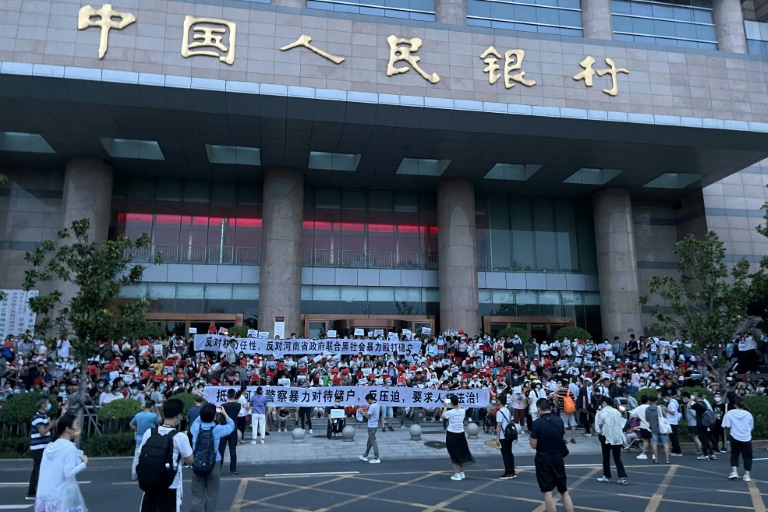
Chinese regulators on Friday offered repayments to more customers of rural banks whose withdrawals were frozen, in the ongoing saga of one of the country’s biggest-ever banking scandals that triggered rare mass protests. 

China’s rural banking sector has been hit hard by Beijing’s efforts to rein in a property bubble and spiralling debt, in a financial crackdown that has had ripple effects across the world’s second-largest economy.

Four banks in Henan province froze cash withdrawals in mid-April as regulators cracked down on mismanagement, locking hundreds of thousands of customers out from their funds and sparking sporadic protests.

The provincial banking regulator in mid-July said individual customers with deposits of up to 50,000 yuan ($7,341) would get their money back, after one of the largest protests erupted into violence.

Regulators have since been gradually offering repayments to more customers with deposits of higher value. 

On Friday, the Henan banking and insurance regulator promised to repay those who had deposited between 350,000 to 400,000 yuan ($51,300 to $58,600), saying in a statement that this group would begin receiving it on August 22.

The statement added that “repayments of (deposit amounts) under 350,000 will continue to be paid”, suggesting that not all customers with smaller bank balances had received their money yet.

Authorities have named the four banks as well as another rural bank in nearby Anhui province as involved in a scheme to defraud investors, and launched a police investigation.

The Henan banking scandal has dealt an unprecedented blow to public confidence in China’s financial system owing to the size and scale of the fraud, analysts say, with the banks involved allegedly operating illegally for more than a decade.

Chinese authorities are desperate to avoid disruptions to social stability just months away from a major congress of the ruling Communist Party. 

A July 10 mass demonstration in Henan’s provincial capital Zhengzhou was violently quashed, with demonstrators forced onto buses by police and beaten, according to eyewitness accounts given to AFP and verified photos on social media.

Chinese city dims lights in heatwave power crunch

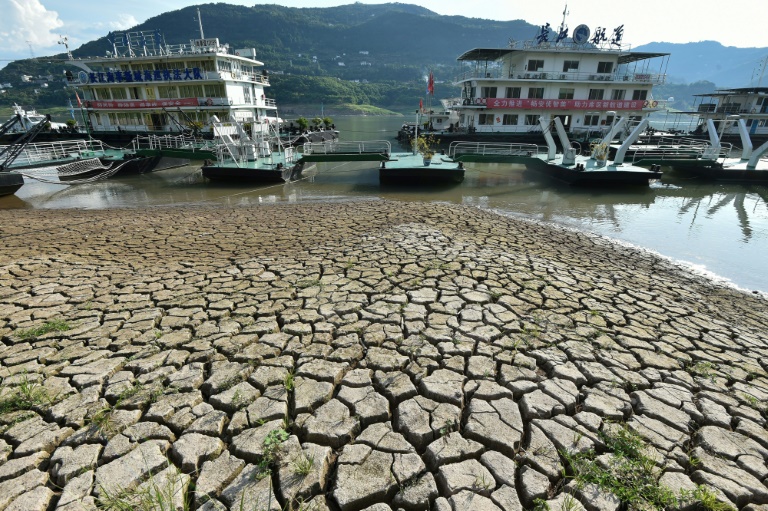
A provincial capital in southwest China has dimmed outdoor advertisements, subway lighting and building signs to save energy, official announcements said, as the area battles a power crunch triggered by record-high temperatures.

The mercury has soared beyond 40 degrees Celsius (104 Fahrenheit) in Sichuan province this week, fuelling massive demand for air conditioning and drying up reservoirs in a region reliant on dams for most of its electricity.

Factories including a joint venture with Japanese car giant Toyota in provincial capital Chengdu have been forced to halt work, while millions in another city Dazhou grappled with rolling power cuts.

“Hot and muggy weather has caused the city’s electricity supply for production and daily life to be pushed to its limit,” Chengdu’s urban management authorities said in a notice on social media Thursday.

Faced with a “most severe situation”, the city — home to over 20 million people — ordered landscape illumination and outdoor advertising lights to be switched off in notices issued Tuesday, the statement said. 

Building name signs will also be darkened.

The Chengdu metro said in a video on China’s Twitter-like platform Weibo that it would also turn off advertisement lights and “optimise” the temperature in stations to save energy.

Photos circulating on Weibo showed dimmed lights on metro platforms, walkways and in malls, with commuters walking in partial darkness.

The searing heat is also drying up the critical Yangtze River, with water flow on its main trunk about 50 percent lower than the average over the last five years, state media outlet China News Service reported Thursday.

Sichuan’s power woes could have ripple effects on the wider Chinese economy — the province is a key supplier of energy generated by hydropower to eastern industrial powerhouses including Jiangsu and Zhejiang.

China is battling extreme weather on several fronts, with 23 people killed and eight still missing after a flash flood in the northwest of the country on Thursday sparked by torrential rains.

Weather authorities in the eastern Jiangsu province warned drivers of tyre puncture risks on Friday as the surface temperature of some roads was poised to hit 68 degrees Celsius.

The China Meteorological Administration earlier said the nation was going through its longest period of sustained high temperatures since records began in 1961.

Scientists say extreme weather across the world has become more frequent due to climate change and that urgent global cooperation is needed to slow an impending disaster.

The world’s two largest greenhouse gas emitters are the United States and China. 

But this month Beijing announced it was freezing its cooperation with Washington on global warming in protest at a visit by US House Speaker Nancy Pelosi to Taiwan.

UK retail sales in surprise rebound

British retail sales surprisingly rose overall in July but consumer confidence is at a record-low level as the UK heads towards recession under a new leader, data showed Friday.

Sales by volume gained 0.3 percent last month following a slight drop in June, the Office for National Statistics said, while analysts’ consensus had been for another fall.

Online purchases “were boosted by a range of offers and promotions”, said Darren Morgan, ONS director of economic statistics.

“However, fuel sales fell with some evidence suggesting the very hot weather meant fewer people travelling.”

Morgan added that another fall in sales of clothing and household goods indicated “consumers are cutting back due to increased prices and concerns around affordability and cost of living”.

Separate data Friday showed UK consumer confidence at a record low.

“With headline after headline revealing record inflation eroding household buying power, the strain on the personal finances of many in the UK is alarming,” said Joe Staton, client strategy director at GfK.

Its Consumer Confidence Index fell three points in August to -44, the lowest level since records began in 1974.

The Bank of England expects the UK economy to fall into recession by the end of the year as consumers struggle with soaring energy and food prices.

British inflation stands above 10 percent, the highest level in 40 years, triggering big rises in BoE interest rates that in turn are putting further strain on consumers.

– Soaring interest payments –

The ONS on Friday added that interest payments on UK government debt surged more than 63 percent in July from a year earlier to £5.8 billion ($7 billion).

“Since mid-2021, the cost of servicing central government debt has increased considerably,” it said.

Sam Miley, senior economist at the Centre for Economics and Business Research, said ballooning interest payments reflected “the growing size of net public debt, as well as the mounting inflationary environment”.

Foreign Secretary Liz Truss, the favourite to replace under-fire Boris Johnson after he steps downs as prime minister next month, has pledged to cut taxes should she be voted into the top job by Conservative party members.

“The balance of risks to public finances has clearly shifted to the downside,” Michal Stelmach, senior economist at KPMG UK, said following Friday’s data.

“The cost-of-living crisis will likely require further support to households, while a slowing economy will put downward pressure on receipts.”

Fuel price hikes, scarce rice add to hardship in Myanmar

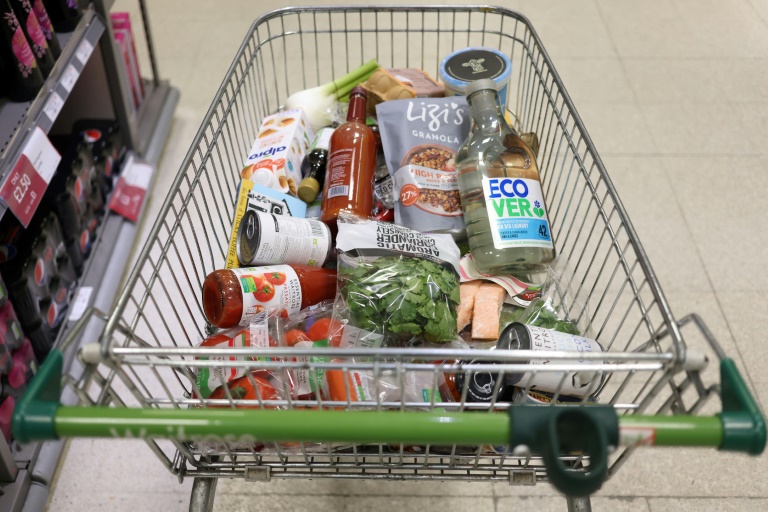
Dozens of people queue under monsoon drizzle for subsidised cooking oil in Myanmar’s commercial hub Yangon, waiting for one of the many commodities that have become scarce as economic misery strikes the city.

The country’s economy tanked following a military coup last year and has been further rattled by the junta’s attempts to seize foreign exchange as well as erratic rules governing businesses and imports.

Living standards are being hammered by global commodity price spikes sparked by Russia’s invasion of Ukraine, leaving many struggling to get by and relying on subsidies or charity to put food on the table.

“People can’t spend much of their income on food because of higher commodity prices,” said 55-year-old housewife Khin Khin Than as she waited to fill her plastic bottle with oil sold by a local association.

The market price for roughly 1.6 kilograms of oil has rocketed to 9,000 kyat ($4.25) from 5,000 kyat, she said. 

“If only one person is working, a family won’t have much money left for food.”

In July the World Bank said about 40 percent of the population were living under the national poverty line.

Consumer Price Index inflation hit 17.3 percent year-on-year in March, it added.

The price of rice has also shot up thanks to increased transport costs and as the military and anti-junta fighters turn swathes of the country into battlegrounds.

Even the state-backed Global New Light of Myanmar newspaper carries almost daily reports on the rising cost of rice, eggs, vegetables, bus travel and rent.

Last week the price of a litre of diesel jumped by around six US cents overnight, state media reported, to a high of 2,440 kyat ($1.15) per litre.

On the day before last year’s coup, customers in Yangon were paying 695 kyat at the pump in Yangon according to industry figures.

This week the junta announced it had formed a steering committee to purchase fuel from ally Russia, but gave no details on when or how this would begin.

Many people are relying on charity to make ends meet.

“If we cook at home, there is no electricity, rice is expensive to buy,” said Lay Lay, 68, one of hundreds queuing at a monastery for a free meal of curry and rice.

“Cooking costs are too high for someone who is retired.”

Ashin Ottamasiri, who supervises the distribution, said his monastery is giving out coupons to 500 people every day for food the monks cook using ingredients donated to them.

“But some days there are more than 600 people,” he said. “If we run out of rice and curry, we give cakes, snacks and fruits.”

“I can’t give shelter for many people but I can share food so people will have meals like I do.”

Chinese city dims lights in heatwave power crunch

A provincial capital in southwest China has dimmed outdoor advertisements, subway lighting and building signs to save energy, official announcements said, as the area battles a power crunch triggered by record-high temperatures.

The mercury has soared beyond 40 degrees Celsius (104 Fahrenheit) in Sichuan province this week, fueling massive demand for air conditioning and drying up reservoirs in a region reliant on dams for most of its electricity.

Factories including a joint venture with Japanese car giant Toyota in provincial capital Chengdu have been forced to halt work, while millions in another city Dazhou grappled with rolling power cuts.

“Hot and muggy weather has caused the city’s electricity supply for production and daily life to be pushed to its limit,” Chengdu’s urban management authorities said in a notice on social media Thursday.

Faced with a “most severe situation”, the city — home to over 20 million people — ordered landscape illumination and outdoor advertising lights to be switched off in notices issued Tuesday, the statement said. 

Building name signs will also be darkened.

And Chengdu metro said in a video on China’s Twitter-like Weibo platform that it would also turn off advertisement lights and “optimise” the temperature in stations to save energy.

Photos circulating on Weibo showed dimmed lights on metro platforms, walkways and in malls, with commuters walking in partial darkness.

The searing heat is also drying up the critical Yangtze River, with water flow on its main trunk about 51 percent lower than the average over the last five years, state media outlet China News Service reported Thursday.

Sichuan’s power woes could also have ripple effects on the wider Chinese economy — the province is a key supplier of energy generated by hydropower, including to eastern industrial powerhouses like Jiangsu and Zhejiang.

China is battling extreme weather on several fronts, with 17 people killed in a flash flood in the northwest of the country on Thursday following torrential rains.

Meanwhile, weather authorities in the eastern Jiangsu province warned drivers of tire puncture risks on Friday as the surface temperature of some roads were poised to hit 68 degrees Celsius.

The China Meteorological Administration earlier said the country was going through its longest period of sustained high temperatures since records began in 1961.

Scientists say extreme weather across the world has become more frequent due to climate change and that urgent global cooperation is needed to slow an impending disaster.

The world’s two largest emitters are the United States and China. 

But earlier this month Beijing announced it was freezing its cooperation with Washington on global warming in protest at a visit by US House Speaker Nancy Pelosi to Taiwan.

Trump executive pleads guilty to tax fraud, will testify at upcoming trial

Allen Weisselberg, the long-time chief financial officer of the Trump Organization, pleaded guilty on Thursday to tax fraud and agreed to testify at an upcoming criminal trial of the former US president’s real estate company.

The 75-year-old Weisselberg, who served as CFO of the Trump Organization from 2005 to 2021, pleaded guilty to 15 counts of tax fraud, Manhattan District Attorney Alvin Bragg said in a statement.

Weisselberg admitted his involvement in a 15-year scheme with co-defendant the Trump Organization to defraud federal, New York State and New York City tax authorities, Bragg said.

Weisselberg is to serve five months in prison contingent on his testifying truthfully at the October criminal trial of the Trump Organization on tax fraud charges, Bragg said.

Weisselberg has steadfastly refused to deliver testimony against Donald Trump personally. The 76-year-old Trump served as president and owner of the Trump Organization until 2017, when he entered the White House.

But the former Trump Organization executive could face additional prison time if he fails to testify at the criminal trial of the real estate company.

Jury selection in the Trump Organization trial on tax fraud charges is scheduled to begin October 24, Bragg said. 

In the plea agreement, Weisselberg admitted evading payment of taxes due on $1.76 million in unreported income. He will be required to repay nearly $2 million in taxes, penalties and interest.

“Today Allen Weisselberg admitted in court that he used his position at the Trump Organization to bilk taxpayers and enrich himself,” Bragg said.

“Weisselberg had the Trump Organization provide him with a rent-free apartment, expensive cars, private school tuition for his grandchildren and new furniture -– all without paying required taxes,” he said.

“This plea agreement directly implicates the Trump Organization in a wide range of criminal activity and requires Weisselberg to provide invaluable testimony in the upcoming trial against the corporation,” he said. “We look forward to proving our case in court against the Trump Organization.”

– Legal battles –

Trump’s business practices are the subject of a separate probe by New York Attorney General Letitia James and the former president was questioned for more than four hours last week in connection with that investigation.

According to US press reports, Trump, who is weighing another White House run in 2024, invoked his legal right not to answer questions more than 400 times during his deposition with James.

James suspects the Trump Organization fraudulently overstated the value of real estate properties when applying for bank loans, while understating them with tax authorities to pay less in taxes.

The New York cases are among myriad legal battles facing the former president.

FBI agents searched his palatial Mar-a-Lago residence in Florida on August 8 and seized documents marked “Top Secret,” “Secret” and “Confidential.”

The search warrant for the raid, which was personally approved by Attorney General Merrick Garland, directed the FBI to seize documents and records “illegally possessed” in violation of three criminal statutes, including one falling under the Espionage Act, which makes it a crime to illegally obtain or retain national security information.

Trump vehemently denounced the FBI raid on his home as a “witch hunt” and claimed that all of the material confiscated during the search had been previously “declassified.”

Trump is also facing legal scrutiny for his efforts to overturn the results of the November 2020 election and the January 6, 2021 attack on the US Capitol by his supporters.

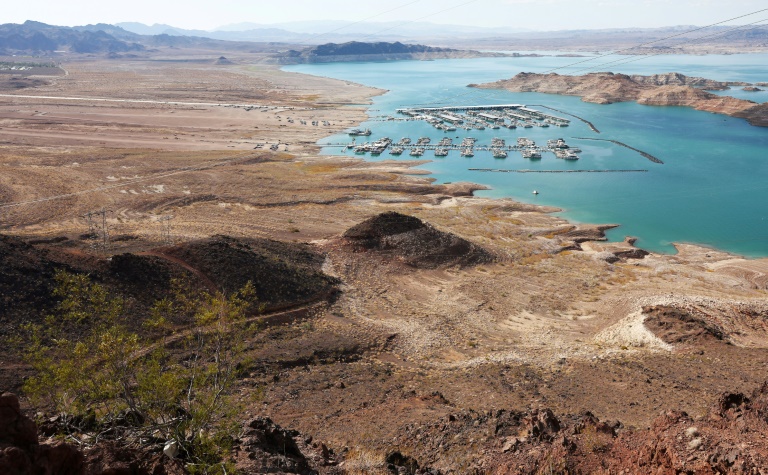
Lake Mead mob murder: Gun found near site of body in barrel

US detectives investigating a possible decades-old mob murder said Thursday they had found a gun near the spot on an evaporating Las Vegas lake bed where a body inside a barrel was discovered.

Numerous bodies have been revealed this year at rapidly receding Lake Mead, with Mafia-watchers speculating the body in the barrel was the handiwork of gangsters from the gambling haven’s crime-ridden past.

Police have revealed few details about the finds, but the victim discovered in May had been shot in the head and stuffed in a barrel before being thrown overboard — a trademark of the hitmen who stalked Las Vegas in the 1970s and 1980s.

“A firearm has been recovered in the Lake Mead National Recreation Area on August 17, 2022, in close proximity to where one of the human remains were found,” police in Las Vegas tweeted.

They added, however, that it was too early to determine whether it was connected to the current investigation.

A police spokesman confirmed the weapon, which was discovered by a journalist, had been located near the spot where the barrel was found.

Days after the body in the barrel surfaced, another corpse was reported. A third was discovered in July.

Two more sets of skeletal remains were found this month in the Swim Beach area.

A historic drought gripping much of the western United States is putting a strain on water sources, with reservoirs and lakes falling to record low levels.

Lake Mead once sat 1,200 feet (365 meters) above sea level. But after more than two decades of drought, it is rapidly shrinking.

On Thursday it was at only 1,042 feet — close to its lowest level since the reservoir was filled in the 1930s.

Scientists say human-caused climate change, fueled by the unchecked burning of hydrocarbons for energy, is exacerbating the natural drought cycle.

Asian markets drift as investors assess Fed outlook

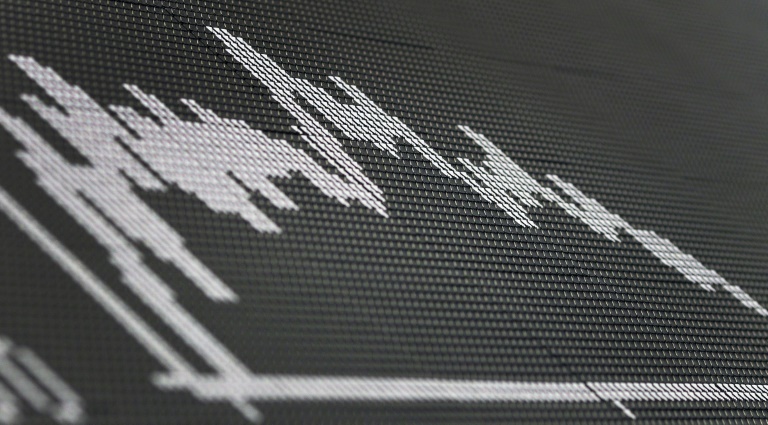
Stocks swung in Asia on Friday as investors tried to assess the Federal Reserve’s plans for lifting interest rates to fight inflation, with mixed data and differing opinions by bank officials providing little clarity.

The rally across markets from their June lows appears to have run out of steam this week after minutes from the Fed’s most recent meeting showed it was determined to keep lifting borrowing costs until prices were brought under control. 

The gains have come in the face of a number of problems that have caused unease on trading floors, including China-US tensions, the Ukraine war, supply chain snarls and extreme weather across much of the northern hemisphere.

A statement by policymakers and comments from Fed boss Jerome Powell after last month’s board meeting suggested they could be considering slowing the pace of rate hikes as the economy slows.

That was followed by a drop in inflation, which lifted markets, but was followed by several officials reasserting the need to continue to tighten monetary policy to get inflation down from four-decade highs.

This week’s minutes and comments from a number of Fed top brass reinforced that view, with some pouring cold water on hopes for possible rate cuts in the new year.

All eyes are now on next week’s central bankers symposium in Jackson Hole, Wyoming, where finance chiefs and central bankers will speak with all attention on the utterances of Powell.

“We don’t see how the Fed can pivot when they haven’t achieved anything pretty much,” said Marco Pirondini, of Amundi US. “The market will have to become more realistic on this.”

Still, Wall Street’s three main indexes edged up after Wednesday’s losses.

But Asian traders moved a little more cautiously.

Tokyo, Hong Kong, Sydney, Taipei, Manila and Jakarta rose but Shanghai, Singapore, Seoul and Wellington were down.

The prospect of tighter US monetary policy for an extended period lifted the dollar back up to multi-year highs against its peers.

And OANDA’s Edward Moya warned that markets would remain wobbly for a while.

“Stocks will most likely struggle for direction for the rest of the summer as Wall Street is still uncertain with how aggressive the Fed will be in September,” he said in a note.

“Traders however will continue to pay close attention to developments with the war in Ukraine.

“Turkish President (Recep Tayyip) Erdogan noted that he discussed ways on ending the war with (Ukrainian) President (Volodymyr) Zelensky. An imminent end to the war seems unlikely, but any de-escalations or improved passages for Ukraine grain exports would be welcome news for risk appetite.

However, others remained optimistic that the recent gains could be maintained.

Lewis Grant, of Federated Hermes, added: “We remain optimistic that the current rally will build into a longer term bull market, but cognisant that geopolitical risks remain elevated and it is too early to dismiss the possibility that we are witnessing a bear market rally.

“Investor risk appetite remains fragile.”

– Key figures at around 0230 GMT –

Tokyo – Nikkei 225: UP 0.1 percent at 28,967.64 (break)

Hong Kong – Hang Seng Index: UP 0.4 percent at 19,834.61

Shanghai – Composite: DOWN 0.1 percent at 3,273.79

Euro/dollar: DOWN at $1.0078 from $1.0095 Thursday

Pound/dollar: DOWN at $1.1917 from $1.1937

Euro/pound: DOWN at 84.54 pence from 84.56 pence

Dollar/yen: UP at 136.16 yen from 135.88 yen

West Texas Intermediate: DOWN 0.2 percent at $90.34 per barrel

Brent North Sea crude: DOWN 0.2 percent at $96.40 per barrel

New York – Dow: UP 0.1 percent at 33,999.04 (close)

London – FTSE 100: UP 0.4 percent at 7,541.85 (close) 

— Bloomberg News contributed to this story —

Close Bitnami banner
Bitnami