US Business

Academy unearths long-lost 'race films' in Black cinema exhibit

Long before Denzel Washington, Spike Lee or even Sidney Poitier, generations of pioneering and revolutionary Black US filmmakers played a key role in shaping early American cinema and dispelling pejorative stereotypes, a major new Hollywood exhibition argues.

“Regeneration: Black Cinema 1898–1971,” opening at the Academy Museum of Motion Pictures in Los Angeles on Sunday, charts key moments in Black film history that were either ignored by mainstream Hollywood studios and audiences in their day, or have been long forgotten.

Starting with a recently re-discovered 1898 reel of two Black vaudeville performers embracing, the exhibition tells the largely unknown history of “race films” — hundreds of pre-1960s independent movies made with Black casts specifically for Black audiences, at a time when theaters were racially segregated.

“Are you ready for the secret? That we Black folks have always been present in American film, right from the start,” said Oscar-nominated filmmaker Ava DuVernay, at a press preview this week.

“Present not as caricatures and stereotypes, but as creators and producers and innovators and eager audiences.

She added: “We should have seen it long before now. But this is the day it begins.”

“Regeneration” is only the second major temporary exhibit to be presented at the Academy Museum, which was opened by the organization behind the Oscars last September after years of delays.

It displays Poitier’s historic Oscar — loaned by his widow, from his 1964 best actor win for “Lilies of the Field” — as well as tap shoes worn by the Nicholas Brothers, a trumpet played by Louis Armstrong, and a costume worn by Sammy Davis Jr in “Porgy and Bess.”

Planning for the exhibition began back in 2016, as curators delved into the Academy’s extensive archives, and found early promotional posters for movies with blurbs boasting of “An All-Negro Cast” and a “Stupendous All-Star Negro Motion Picture.”

“I was surprised because I did not know about these films before we started to work on this exhibition,” co-curator Doris Berger told AFP.

“I asked myself ‘why don’t we know about this? We should know about this!’

“They are really exciting films and great proof that African-American performers had roles in all characters, and there were many story lines.

“And plus, they just look really cool!”

– ‘Harlem on the Prairie’ – 

Audiences can watch carefully restored footage of these movies, now known as “race films,” including a Western-musical called “Harlem on the Prairie,” gangster flick “Dark Manhattan,” and horror-comedy “Mr Washington Goes To Town.”

Many others have been lost forever, though their posters serve as “a sort of an imprint that they existed,” said co-curator Rhea Combs.

While mainstream Hollywood cast Black actors at the time as “butlers and mammies, in supporting roles,” this independent genre saw minority performers play “lawyers, and doctors, and nurses, and cowboys,” said Berger.

“So this is proof that (Hollywood) could have been so much richer and more exciting.”

The gallery ends with the early 1970s rise of the Blaxploitation genre, pioneered by Melvin Van Peebles who, like Poitier, died months before the exhibition could open.

“I hope that they would be very proud of this exhibition,”  Combs told AFP.

– ‘Overdue’ –

The exhibition is a major event for the Academy, which in recent years has had to navigate accusations of a lack of racial diversity in its ranks.

The group was also pummeled with criticism for a dearth of Black Oscar nominees during the #OscarsSoWhite movement, which emerged in 2015. 

It has since fulfilled a pledge to double the number of women and minority members by 2020.

In addition to educating the public at large, the works unearthed by “Regeneration” have even surprised leading contemporary Black filmmakers.

“I was more than surprised… I didn’t know about this,” said director Charles Burnett.

“If I knew about this — about the actresses, and things like that — I would have had a different whole notion and probably approach to film.”

DuVernay added: “This work had to happen. It’s overdue. It’s important, it’s crucial work.

“This exhibition showcases the generations of Black artists [on] whose shoulders we stand.”
Islamic State 'Beatle' faces life sentence for US hostage deaths

A member of the notorious Islamic State kidnap-and-murder cell known as the “Beatles,” is to be sentenced in a US court on Friday for the deaths of four American hostages in Syria.

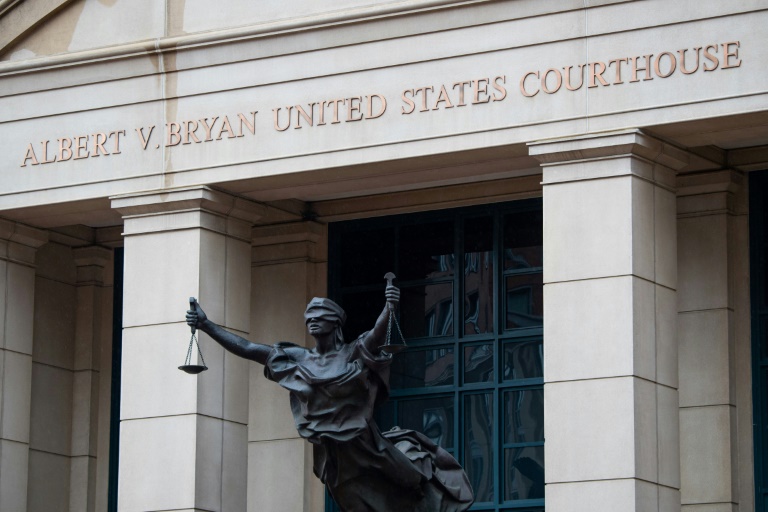
El Shafee Elsheikh, 34, faces a mandatory sentence of life in prison after being convicted in Alexandria, Virginia, in April of hostage-taking, conspiracy to murder US citizens and supporting a terrorist organization.

The grueling two-week trial of the former British national, which featured emotional testimony from former hostages and parents of the victims, was the most significant prosecution of an IS militant in the United States.

The 12-person federal jury deliberated for less than six hours over two days before finding Elsheikh guilty for his role in the deaths of four Americans — journalists James Foley and Steven Sotloff and aid workers Peter Kassig and Kayla Mueller.

Elsheikh and another former “Beatle,” Alexanda Amon Kotey, were captured by a Kurdish militia in Syria in January 2018 and handed over to US forces in Iraq.

They were flown to the United States in 2020 to face trial.

Kotey, 38, pleaded guilty in September 2021 and was sentenced to life in prison in April by US District Court Judge T.S. Ellis, who will also deliver the sentence on Friday against Elsheikh.

Another alleged “Beatle,” Aine Davis, 38, was deported to Britain last week from Turkey and was remanded in custody on terrorism charges.

The fourth “Beatle,” executioner Mohammed Emwazi, was killed by a US drone in Syria in 2015.

The hostage-takers, who grew up and were radicalized in London, were nicknamed the “Beatles” by their captives because of their distinctive British accents.

Active in Syria from 2012 to 2015, they are accused of abducting more than two dozen journalists and relief workers from the United States and other countries.

Ten former European and Syrian hostages testified at Elsheikh’s trial accusing the “Beatles” of months of brutal treatment including beatings, electric shocks, waterboarding and mock executions.

Foley, Sotloff and Kassig were beheaded by Emwazi, and videos of their deaths were released by IS for propaganda purposes.

Mueller was initially held by the “Beatles” but was later turned over to IS leader Abu Bakr al-Baghdadi, who reportedly raped her repeatedly.

IS announced Mueller’s death in February 2015. The group said she was killed in a Jordanian airstrike, a claim disputed by US authorities.

Baghdadi died during a US special forces raid in 2019.

Ahead of Elsheikh’s sentencing, British police revealed details on Wednesday of the years-long effort to identify the hostage-takers and bring them to justice.

Richard Smith, the head of London police’s counter-terrorism unit, compared it to “putting together very small pieces of a jigsaw” and following a “trail of breadcrumbs.”

3 charged in prison death of notorious Boston mobster Whitey Bulger

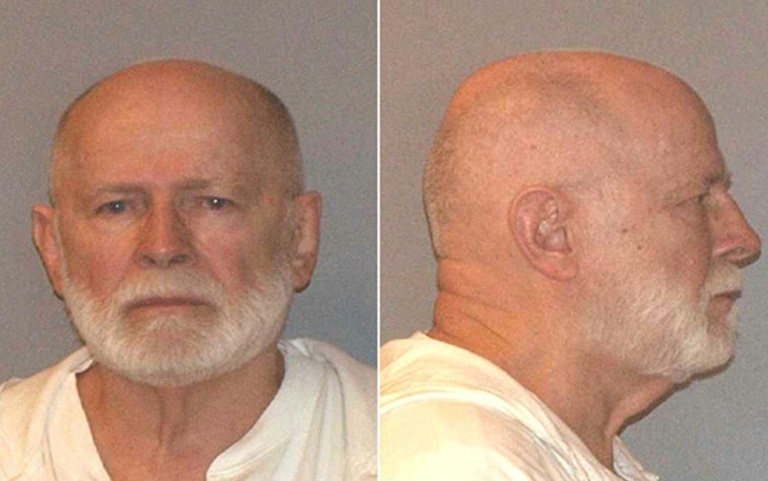
Three men have been indicted in connection with the 2018 killing of notorious Boston gangster James “Whitey” Bulger, who was beaten to death in a West Virginia prison, federal prosecutors said Thursday.

Fotios “Freddy” Geas, 55, Paul “Pauly” DeCologero, 48, and Sean McKinnon, 36, were charged on Wednesday with conspiracy to commit first degree murder by the US Attorney’s Office for the Northern District of West Virginia, according to a statement.

The three were imprisoned at Hazelton prison in Bruceton Mills, West Virginia, where the 89-year-old Bulger was also serving out his life sentence for a string of brutal crimes.

“Geas and DeCologero are accused of striking Bulger in the head multiple times and causing his death in October of 2018,” the statement said.

Geas and DeCologero have also been charged with aiding and abetting first degree murder, along with assault, while Geas faces a separate charge as well for murder by a federal inmate serving a life sentence.

McKinnon, who was on federal supervised release and was arrested on Thursday in Florida, was charged with making false statements to a federal agent. Geas and DeCologero were still imprisoned at the time of the indictment.

Bulger ruled the Boston underworld with an iron fist for nearly 30 years in the 1970s and ’80s while also working as an informant for the FBI.

Arrested in 2011 after 16 years on the run, a 12-person federal jury later found Bulger guilty on 31 separate charges.

He was found dead a day after he was transferred to the high-security Hazelton facility to serve the remainder of two life sentences for 11 murders, racketeering, extortion, money laundering, possession of firearms and other crimes.

Bulger’s life of crime has been the subject of several books and movies including “Black Mass,” a biopic featuring Johnny Depp as the Irish-American mobster.

Bulger also provided the inspiration for Jack Nicholson’s mob boss character in Martin Scorsese’s Oscar-winning 2006 gangster film “The Departed.”

Scientists find simple, safe method to destroy 'forever chemicals'

“Forever chemicals” used in daily items like nonstick pans have long been linked to serious health issues –- a result of their toxicity and extreme resistance to being broken down as waste products.

Chemists in the United States and China on Thursday said they had finally found a breakthrough method to degrade these polluting compounds, referred to as PFAS, using relatively low temperatures and common reagents.

Their results were published in the journal Science, potentially offering a solution to a longstanding source of harm to the environment, livestock and humans.

“It really is why I do science — so that I can have a positive impact on the world,” senior author William Dichtel of Northwestern University told reporters during a news conference.

PFAS, or per- and polyfluoroalkyl substances, were first developed in the 1940s and are now found in a variety of products, including nonstick pans, water-resistant textiles and fire suppression foams.

Over time, the pollutants have accumulated in the environment, entering the air, soil, groundwater and lakes and rivers as a result of industrial processes and from leaching through landfills.

A study published last week by Stockholm University scientists found rainwater everywhere on the planet is unsafe to drink because of PFAS contamination. 

Chronic exposure to even low levels has been linked to liver damage, high cholesterol, reduced immune responses, low birth weights and several kinds of cancer.

Although PFAS chemicals can be filtered out of water, there are few good solutions for how to dispose of them once they have been removed.

– 10 down, thousands to go –

Current methods to destroy PFAS require harsh treatments, such as incineration at extremely high temperatures or irradiating them with ultrasonic waves.

And incineration isn’t always foolproof, with one New York plant found to still be releasing some of the compounds into the air through smoke.

PFAS’ indestructability comes from their carbon-flouride bonds, one of the strongest types of bonds in organic chemistry. 

Fluorine is the most electronegative element and wants to gain electrons, while carbon is keen to share them.

PFAS molecules contain long chains of these bonds, but the research team was able to identify a glaring weakness common to a certain class of PFAS.

At one end of the molecule, there is a group of charged oxygen atoms which can be targeted using a common solvent and reagent at mild temperatures of 80-120 degrees Celsius, decapitating the head group and leaving behind a reactive tail.

“Once that happens, that provides access to previously unrecognized pathways that cause the entire molecule to fall apart in a cascade of complex reactions,” said Dichtel, ultimately making benign end products.

A second part of the study involved using powerful computational methods to map out the quantum mechanics behind the chemical reactions the team performed to destroy the molecules. 

The new knowledge could eventually guide further improvements to the method.

The current study focused on 10 PFAS chemicals including a major pollutant called GenX, which for example has contaminated the Cape Fear River in North Carolina, a water source for 350,000 people.

But it represents just the tip of the iceberg, since the US Environmental Protection Agency has identified more than 12,000 PFAS chemicals.

“There are other classes that don’t have the same Achilles’ heel, but each one will have its own weakness,” said Dichtel in a statement. 

“If we can identify it, then we know how to activate it to destroy it.”

Scientists find simple, safe method to destroy 'forever chemicals'

“Forever chemicals” used in daily items like nonstick pans have long been linked to serious health issues –- a result of their toxicity and extreme resistance to being broken down as waste products.

Chemists in the United States and China on Thursday said they had finally found a breakthrough method to degrade these polluting compounds, referred to as PFAS, using relatively low temperatures and common reagents.

Their results were published in the journal Science, potentially offering a solution to a longstanding source of harm to the environment, livestock and humans.

“It really is why I do science — so that I can have a positive impact on the world,” senior author William Dichtel of Northwestern University told reporters during a news conference.

PFAS, or per- and polyfluoroalkyl substances, were first developed in the 1940s and are now found in a variety of products, including nonstick pans, water-resistant textiles and fire suppression foams.

Over time, the pollutants have accumulated in the environment, entering the air, soil, groundwater and lakes and rivers as a result of industrial processes and from leaching through landfills.

A study published last week by Stockholm University scientists found rainwater everywhere on the planet is unsafe to drink because of PFAS contamination. 

Chronic exposure to even low levels has been linked to liver damage, high cholesterol, reduced immune responses, low birth weights and several kinds of cancer.

Although PFAS chemicals can be filtered out of water, there are few good solutions for how to dispose of them once they have been removed.

– 10 down, thousands to go –

Current methods to destroy PFAS require harsh treatments, such as incineration at extremely high temperatures or irradiating them with ultrasonic waves.

And incineration isn’t always foolproof, with one New York plant found to still be releasing some of the compounds into the air through smoke.

PFAS’ indestructability comes from their carbon-flouride bonds, one of the strongest types of bonds in organic chemistry. 

Fluorine is the most electronegative element and wants to gain electrons, while carbon is keen to share them.

PFAS molecules contain long chains of these bonds, but the research team was able to identify a glaring weakness common to a certain class of PFAS.

At one end of the molecule, there is a group of charged oxygen atoms which can be targeted using a common solvent and reagent at mild temperatures of 80-120 degrees Celsius, decapitating the head group and leaving behind a reactive tail.

“Once that happens, that provides access to previously unrecognized pathways that cause the entire molecule to fall apart in a cascade of complex reactions,” said Dichtel, ultimately making benign end products.

A second part of the study involved using powerful computational methods to map out the quantum mechanics behind the chemical reactions the team performed to destroy the molecules. 

The new knowledge could eventually guide further improvements to the method.

The current study focused on 10 PFAS chemicals including a major pollutant called GenX, which for example has contaminated the Cape Fear River in North Carolina, a water source for 350,000 people.

But it represents just the tip of the iceberg, since the US Environmental Protection Agency has identified more than 12,000 PFAS chemicals.

“There are other classes that don’t have the same Achilles’ heel, but each one will have its own weakness,” said Dichtel in a statement. 

“If we can identify it, then we know how to activate it to destroy it.”

Facebook bans major US anti-vaccine group

Facebook-owner Meta said Thursday it had kicked one of the most influential US anti-vaccination groups off the social media network for spreading Covid-19 misinformation.

The Children’s Health Defense (CHD), which has been a critic of Covid vaccines, immediately accused Meta of stifling its free speech rights.

“Facebook is acting here as a surrogate for the federal government’s crusade to silence all criticism of draconian government policies,” CHD founder Robert Kennedy Jr., nephew of late president John F. Kennedy, said in a press release.

Meta spokesperson Aaron Simpson told AFP that the group’s accounts at Facebook and Instagram were shuttered on Wednesday. The ban came after repeated violations of Meta’s misinformation rules.

CHD said its social media accounts were followed by hundreds of thousands of people, and claimed the action by Meta came as a surprise.

In a release, the group shared a screen capture showing messages stating the accounts were suspended for violating Meta policies regarding “misinformation that could lead to real world harm.”

CHD contended that the ban could be related to a lawsuit it filed against Meta accusing the tech giant of infringing free speech rights by relying on US Centers for Disease Control regarding what Covid-19 information is scientifically backed.

The anti-vaccine group has appealed a lower court ruling against it in the litigation, according to legal filings.

Facebook bans major US anti-vaccine group

Facebook-owner Meta said Thursday it had kicked one of the most influential US anti-vaccination groups off the social media network for spreading Covid-19 misinformation.

The Children’s Health Defense (CHD), which has been a critic of Covid vaccines, immediately accused Meta of stifling its free speech rights.

“Facebook is acting here as a surrogate for the federal government’s crusade to silence all criticism of draconian government policies,” CHD founder Robert Kennedy Jr., nephew of late president John F. Kennedy, said in a press release.

Meta spokesperson Aaron Simpson told AFP that the group’s accounts at Facebook and Instagram were shuttered on Wednesday. The ban came after repeated violations of Meta’s misinformation rules.

CHD said its social media accounts were followed by hundreds of thousands of people, and claimed the action by Meta came as a surprise.

In a release, the group shared a screen capture showing messages stating the accounts were suspended for violating Meta policies regarding “misinformation that could lead to real world harm.”

CHD contended that the ban could be related to a lawsuit it filed against Meta accusing the tech giant of infringing free speech rights by relying on US Centers for Disease Control regarding what Covid-19 information is scientifically backed.

The anti-vaccine group has appealed a lower court ruling against it in the litigation, according to legal filings.

NBA confidently resumes global games after pandemic hiatus

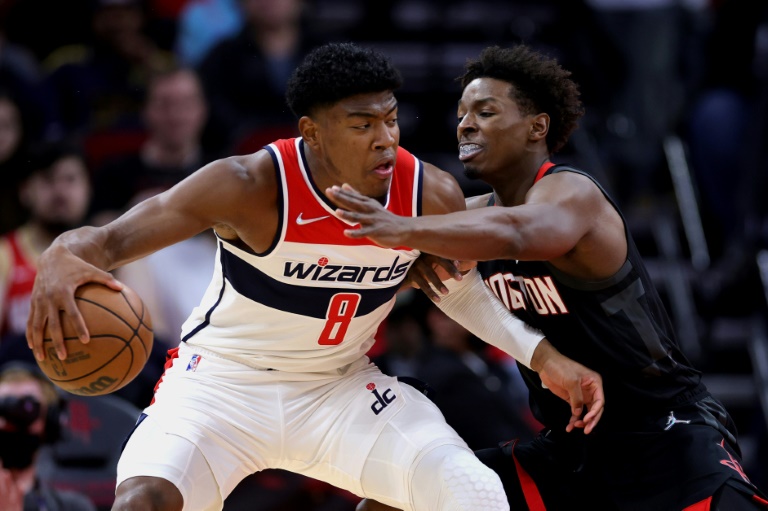
Japan’s Rui Hachimura and France’s Killian Hayes will have the chance to play before their home-nation fans with the NBA Global Games resuming next month after a two-year layoff due to the Covid-19 pandemic.

Pre-season contests are set for Japan and Abu Dhabi while Paris and Mexico City will host regular-season games as the NBA, with nearly 70 percent of social media followers from outside the United States, sends superstars to thrill its worldwide audience.

“We’re so excited to be bringing our live games back to our fans around the world,” NBA deputy commissioner Mark Tatum told AFP on Thursday.

“It’s a way for us to bring cultures together, to bring people together and to bring our fans together.”

Though NBA game telecasts were already viewed by fans in 214 nations and in more than 50 languages last season, Tatum says the return to live games overseas is “an important part of our business strategy.”

“There’s nothing like going to an NBA game for the hundreds of millions of fans around the world and we want fans to experience the game live.”

The NBA, with 25 percent of players from outside the United States, felt that this season teams could comfortably and confidently return overseas after a two-year hiatus due to Covid-19.

“It has been very difficult over the last two years with the pandemic,” Tatum said. “Our first and foremost concern is to have games where we can conduct them in a safe and secure manner.”

The NBA, with 97 percent of players and 100 percent of staff vaccinated, consulted doctors, medical specialists and officials in each city before finalizing the global schedule.

“We’ve learned, as the world has learned, to move on with Covid and this is the right time,” Tatum said. “We’re able to bring back the games. We’re confident we can keep everyone safe and healthy.”

That includes the Milwaukee Bucks, led by Giannis Antetokounmpo, and Atlanta Hawks playing the first NBA games in the Arabian Gulf when they meet for pre-season games October 6 and 8 in Abu Dhabi.

“They have got a world-class facility,” Tatum said. “They know how to do it well.”

The reigning NBA champion Golden State Warriors will visit Japan for pre-season games September 30 and October 2 against Washington, which boasts Japanese forward Hachimura.

“With the pride they have for him, it’s going to be huge there,” Tatum said. “These things mater. It’s going to excite people.”

Tatum expects much the same thrill when the Chicago Bulls meet Hayes and the Detroit Pistons in a regular-season game at Paris on January 19.

“For Killian Hayes to play in his home country is going to be tremendous,” Tatum said.

He also expects NBA fans from across Europe to attend the Paris matchup, which also features Chicago’s two-time NBA All-Star Nikola Vučević of Montenegro.

The Miami Heat and San Antonio Heat will meet in Mexico City in a regular-season game on December 17.

– NBA eyes India, Africa –

More global games are in the works, Tatum said, noting, “There are more markets that want games than we can have them.”

“The world is a big place. We’ve played in a lot of places but there are still a lot of opportunities.”

Germany, Italy and Greece are among several European possibilities while London has hosted several contests.

In total, the league has played 205 games in 20 nations outside US and Canadian cities since 1978.

“At some point we will be back in India,” Tatum said, adding, “I could see pre-season, regular-season games in Africa.”

In the 2019-20 season, the last before the pandemic struck, the NBA played pre-season contests in India, Japan and China and regular-season games in Mexico and France.

Last season, the NBA had a record 121 international players from 40 nations, with 18 from Canada and seven from Germany.

The past four NBA Most Valuable Player awards were won by Serbian Nikola Jokic of the Denver Nuggets in 2022 and 2021 and Greek star Antetokounmpo of Milwaukee in 2019 and 2020.

Those two and Cameroonian star big man Joel Embiid of Philadelphia were last season’s three MVP finalists, another first for global NBA talent.

Apple warns of flaw that lets hackers into iPhones, Macs

Apple is warning of a flaw that is allowing hackers to seize control of iPhones, iPads and Mac computers, and is urging users to install emergency software updates.

Patches were released Thursday and Wednesday by the tech titan to fix what it described as a vulnerability hackers already knew about and may be taking advantage of.

“Apple is aware of a report that this issue may have been actively exploited,” the Silicon Valley-based company said.

Apple did not disclose whether it had information regarding the extent to which the issue has been exploited.

The technical description indicated that a hacker could use the flaw to take control of devices, accessing any of its data or capabilities.

Patches were released for iPhones, iPads and Mac computers running on operating systems with the vulnerability.

US judge sentences wildlife trafficker to more than 5 years in jail

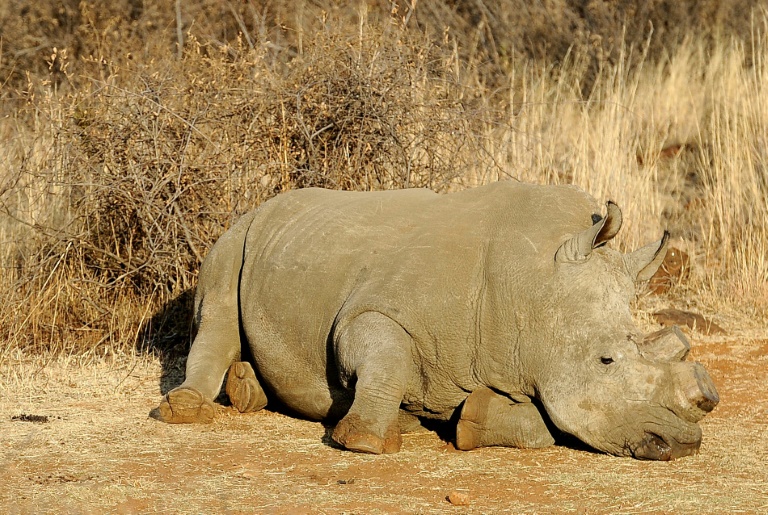
A US judge sentenced an extradited Liberian man to 63 months in prison for conspiring to traffic millions of dollars’ worth of horns and ivory from endangered rhinoceros and elephants, federal prosecutors said Thursday.

Moazu Kromah, a Uganda resident, was extradited from the west African country to the United States in June 2019, pleading guilty in March of this year to one count of conspiracy to commit wildlife trafficking and two counts of wildlife trafficking, the office of the US Attorney for the Southern District of New York, Damian Williams, said in a statement.

The trafficking plot involved the illegal poaching of more than around 35 rhinoceros and more than 100 elephants.

Williams praised the more than five-year sentence handed down by US District Judge Gregory H. Woods. 

“Today’s sentence demonstrates that those who are responsible for the decimation of global populations of endangered and threatened animals protected by international agreements will face serious consequences,” he said. 

Kromah, 49, and accomplices had buyers in the United States and Southeast Asia, trafficking some 190 kilograms (nearly 420 pounds) of rhinoceros horns and at least some 10 tons of elephant ivory from East African countries between roughly 2012 and 2019.

The estimated average retail value of the rhinoceros horn and elephant ivory was at least around $3.4 million and $4 million respectively.

During the investigation, law enforcement agents intercepted multiple packages bound for Manhattan buyers containing rhinoceros horns.

They concealed some of the animal parts in pieces of art such as African masks and statues, the New York investigators say. 

Poaching is fueled by a seemingly insatiable demand for rhino horn in Asia, where people pay huge sums for a substance — coveted as a traditional medicine — that is composed mainly of keratin, the same substance as in human nails.

Kromah is one of five men accused of being part of the criminal enterprise. 

Kenyan Mansur Mohamed Surur was extradited to the United States last year and pled guilty to trafficking and drug dealing charges, according to a June statement from Williams’s office.

Guinean Amara Cherif is also in US custody and pled guilty to the charges against him in April this year. 

Co-defendants Badru Abdul Aziz Saleh and Abdi Hussein Ahmed have reportedly been arrested.

Close Bitnami banner
Bitnami