US Business

Stocks mostly up as markets digest Fed rate signals

US and European stock markets mostly rose on Thursday as investors digested US economic data and Federal Reserve signals that it will maintain its aggressive monetary-tightening policy to combat inflation. 

European equities closed higher after seesawing earlier in the day.

Wall Street indices had a similar day, opening lower, amid expectations the market would need to “digest” recent gains, but eventually inching higher after a few swings.

“It’s meandering in low volume for sure,” said Art Hogan, chief market strategist at B Riley Wealth Management, adding that there has been relatively light economic news.

“We’re in the summer doldrums,” he said. “I’m not surprised to see this market action the way it is.”

Major Asian markets finished the day in the red.

Investors digested minutes of the Fed’s July meeting, in which central bankers remained committed to raising interest rates further to quell rising prices, but agreed that there would also come a time to slow the pace of the hikes.

The minutes show that a “September pivot is not in the cards,” said a Barclays note.

“The July minutes indicated more concerns about softening activity and downside risks to growth than communicated at the meeting,” Barclays said. “However, these concerns were outweighed by risks of sustained inflation, which, in the committee’s view, warrant further tightening to bring policy to a restrictive stance by year-end.”

Wall Street investors also digested US industry data showing that existing home sales fell sharply in July, the sixth consecutive monthly decline amid higher borrowing costs.

Other data in focus were better-than-expected initial jobless claims, and manufacturing activity in the very industrialized Philadelphia area, which was back in the green in August after two straight months of contraction.

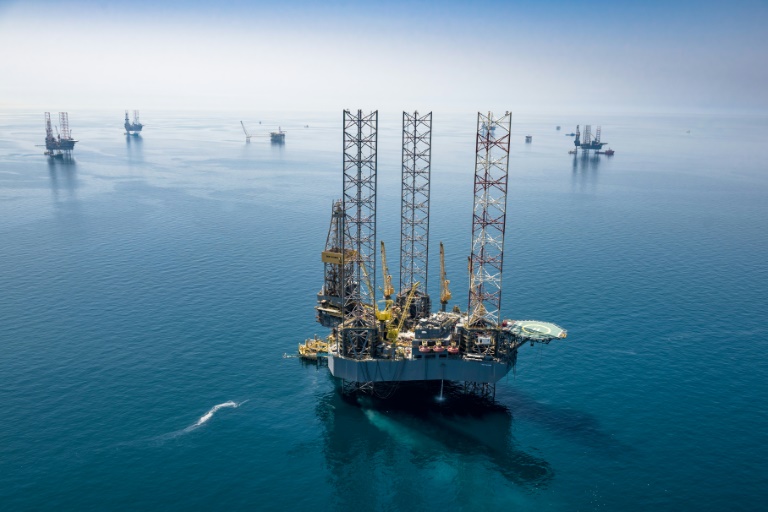
Oil prices, meanwhile, rallied by more than 2.5 percent on rising skepticism that a nuclear deal between Iran and western governments could imminently boost oil exports.

Elsewhere, Norway’s central bank raised interest rates by half a percentage point to 1.75 percent, and flagged another hike in September.

Turkey’s central bank, meanwhile, stunned the markets by lowering its main interest rate even as inflation soared to a 24-year high — the opposite approach of other countries facing rising prices.

Turkish President Recep Tayyip Erdogan subscribes to the unorthodox belief that high interest rates cause inflation rather than rein it in.

– Key figures at around 2030 GMT –

New York – Dow: UP 0.1 percent at 33,999.04 (close)

New York – S&P 500: UP 0.2 percent at 4,283.74 (close)

New York – Nasdaq: UP 0.2 percent at 12,965.34 (close)

London – FTSE 100: UP 0.4 percent at 7,541.85 (close) 

Frankfurt – DAX: UP 0.5 percent at 13,697.41 (close)

Paris – CAC 40: UP 0.5 percent at 6,557.40 (close)

EURO STOXX 50: UP 0.6 percent at 3,777.38 (close)

Tokyo – Nikkei 225: DOWN 1.0 percent at 28,942.14 (close)

Hong Kong – Hang Seng Index: DOWN 0.8 percent at 19,763.91 (close)

Shanghai – Composite: DOWN 0.5 percent at 3,277.54 (close)

Euro/dollar: DOWN at $1.0095 from $1.0180 Wednesday

Pound/dollar: DOWN at $1.1937 from $1.2048

Euro/pound: UP at 84.56 pence from 84.50 pence

Dollar/yen: UP at 135.88 yen from 135.05 yen

Brent North Sea crude: UP 3.1 percent at $96.59 per barrel

West Texas Intermediate: UP 2.7 percent at $90.50 per barrel

Rushdie stabbing suspect pleads not guilty to attempted murder

The man accused of stabbing Salman Rushdie at a literary event pleaded not guilty on Thursday to attempted murder and assault charges at a court hearing in upstate New York.

Cuffed and wearing a black and white striped prison outfit, Hadi Matar, 24, was answering to a grand jury indictment after he allegedly stormed the stage at last Friday’s event and stabbed Rushdie repeatedly in the neck and abdomen — leaving the British author in critical condition.

The judge ordered Matar remain detained without bail. 

Following the attack, Rushdie was airlifted to a nearby hospital for emergency surgery.

His condition remains serious but the 75-year-old has shown signs of improvement, and he has been taken off a ventilator.

The prize-winning writer spent years under police protection after Iranian leaders called for his killing over his portrayal of Islam and the Prophet Mohammed in his 1988 novel “The Satanic Verses.”

He was about to be interviewed as part of a lecture series at the Chautauqua Institution when a man rushed the stage and stabbed him repeatedly in the neck and abdomen.

Matar was wrestled to the ground by staff and audience members at the lecture, before police took him into custody.

His lawyer, public defender Nathaniel Barone, insisted on the presumption of innocence until proven guilty.

He also warned against litigating the case in the press, voicing concern over an interview with Matar that the New York Post published this week.

In it Matar told the tabloid he was “surprised” that Rushdie had survived the attack.

“I don’t like the person. I don’t think he’s a very good person,” he said of the author. “I don’t like him. I don’t like him very much.”

Barone said these kinds of interviews could render it impossible to assemble an impartial jury.

“Maybe, just maybe, prospective jurors hear about certain things that are always in the back of their mind,” Barone said to reporters.

According to prosecutor Jason Schmidt, such an interview could work against the defense: “Anytime there’s a statement you’re looking at the possibility of, you know, an admissions against interest.”

Judge David Foley agreed to the defense’s request to issue a temporary gag order, which bars the parties from discussing the case in interviews with the press.

– Continued threat to life –

Police and prosecutors have provided scant information about Matar’s background or the possible motivation behind the attack.

Matar’s family appears to come from the village of Yaroun in southern Lebanon, though he was born in the United States, according to a Lebanese official.

Rushdie, who was born in India in 1947, moved to New York two decades ago and became a US citizen in 2016.

Despite the continued threat to his life, he was increasingly seen in public — often without noticeable security.

In an interview given to Germany’s Stern magazine days before Friday’s attack, he had described how his life had resumed a degree of normality following his relocation from Britain.

Iran this week denied any link with Rushdie’s attacker but blamed the writer himself for “insulting” Islam in “The Satanic Verses.”

“By insulting the sacred matters of Islam… Salman Rushdie has exposed himself to the anger and rage of the people,” said Iranian Foreign Ministry spokesman Nasser Kanani said.

In Washington, US State Department spokesman Ned Price described Iran’s stance as “despicable.”

Oil prices fall but inflation stays high

Oil prices have dropped by a quarter since June and could fall further if a nuclear deal is reached with Iran as it would bring more crude to the market, yet inflation remains stubbornly high.

Crude prices soared to $140 per barrel in early March after Moscow invaded Ukraine, raising fears that Western sanctions would drastically cut supplies from Russia, a major producer and exporter.

But traders are now concerned about demand due to various factors, including fears of recession, a strong dollar and weak Chinese oil imports during the country’s Covid lockdowns, said Giovanni Staunovo, commodities analyst at UBS bank.

Oil prices are set in dollars, so any rise in the currency makes barrels more expensive for importers using other currencies.

In China, “oil demand has taken a hit as processing of crude imports were weak in July” although stockpiles still rose, said Geordie Wilkes, analyst at Sucden.

The price of Brent, the international benchmark, has dropped to $95 while WTI, the main US contract, is at around $90 — and fuel prices at the pump have fallen in the United States.

But UBS expects Brent prices to climb back to around $125 by the end of the year as Russia exports fall, Chinese imports rise and Western countries stop tapping their strategic reserves, Staunovo said.

– Iran wildcard –

The market, however, could fall again if Tehran reaches a nuclear deal that would allow the country to raise its exports, which are currently restricted by sanctions.

This could add around one million barrels per day to the market.

“Iran was able to bring capacity back online fast last time and this shocked the market,” Wilkes said.

The European Union and United States said Tuesday they were studying Iran’s response to a “final” draft agreement on reviving the 2015 nuclear accord with major powers.

“Our view continues to be that a deal is still unlikely in the short term,” said experts at investment firm Goldman Sachs in a note, adding that Tehran can live with a reduced volume of exports as long as prices remain high.

“An announcement by Iran indicating willingness to entertain nuclear talks is likely intended to draw out further ongoing discussion in our view, before more disruptive counter-measures are potentially taken by the US and its allies,” the Goldman Sachs experts said.

“The US is similarly incentivized to draw out negotiations given stricter sanctions enforcement would exacerbate the oil shortage.”

Iran’s return to the market would lower prices by $5 to $10 per barrel in 2023, according to the experts.

– ‘The world has changed’ –

While lower crude prices have eased the pain at the pump, analysts say it may not be enough to tame inflation that has reached decades high in many countries and raised fears of recession.

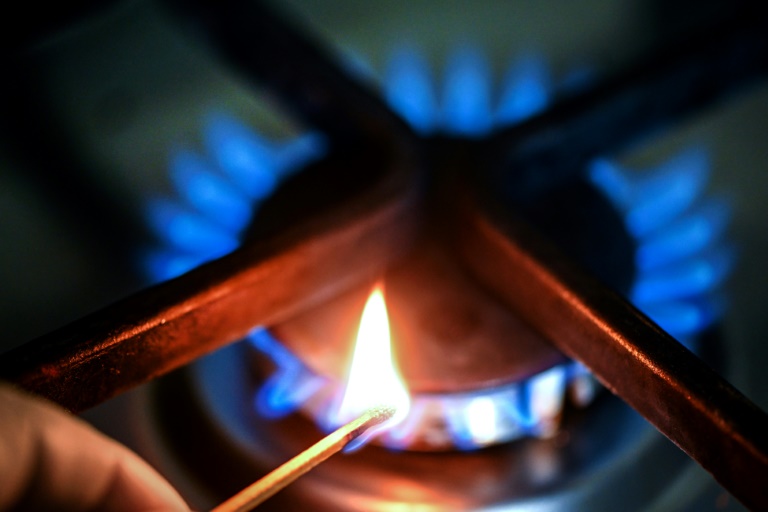
Natural gas prices have surged as Russia has slashed supplies to Europe.

Inflation in Britain accelerated to 10.1 percent in July, pushed up by rising food prices. They rose by 8.9 percent in the eurozone in July.

While consumer prices have eased in the United States — slowing to 8.5 percent in July from 9.1 percent in June — they remain at an elevated level.

“The world has changed,” Andrew Kenningham, Europe analyst at research firm Capital Economics, told AFP.

“We used to have a very simple way to look at the price of energy and electricity in Europe based on the price of oil. Now we have a much more complex equation with different trends for oil, gas and electricity,” he said.

In Europe, the recent drop in crude prices should take 0.5 percentage points off inflation, said Holger Schmieding, chief economist at Berenberg.

Small drops “mattered” when inflation was under two percent “but not when inflation is at nine percent”, Kenningham said.

UK pet owners face grim choices amid soaring costs

Unable to afford the cost of cremation for his much-loved dog Khan under the weight of sharply increasing living costs, David Mcauliffe turned to a social media group offering help for under-pressure pet owners.

With inflation in the UK at a 40-year high, millions are feeling the pinch from soaring bills. 

“Especially the way things are going: the gas, the electric, food prices, fuel everything is a struggle,” said Mcauliffe, as he sat with his partner Julie Fielding at Pet Cemetery in Holywell, North Wales. 

“(But) the dogs rely on you for everything and you’ve got to do right by them at the end of the day.”

The pair, who live on welfare, turned to a Facebook group that channels donations to families who otherwise would not be able to afford expenses such as cremations, which are becoming pricier as fuel bills soar.

It costs over £200 ($241) to cremate a medium-sized dog, with prices up 10 percent over the last two years.

Jason Ward, general manager of The Pet Cemetery, said most owners want their pets to have a private cremation so they can take the remains to bury or keep at home. 

“The alternative, for families who don’t have a private cremation, is for their body to be disposed of en masse with other pets,” he said, adding they are often collected in bags from veterinary surgeries with other clinical waste.

During Britain’s lengthy pandemic lockdowns, furry companions were many people’s main crutch and source of companionship.

That strong bond is on full display at Pet Cemetery, where many plots serve as the resting place for both pets and owners. 

The ashes of Mcauliffe’s mother and Fielding’s sister are already laid alongside Khan and their previous dog Flash, and it is the couple’s final wish to be interred with them. 

“When the time comes, that is where we want to rest,” they said.

– Costs of living –

It is not only pet cremation that has become more expensive. 

Mcauliffe and Fielding, who have two other dogs, have seen insurance and other costs increase.

“You just do what you have to do and take care of your pets the best you can,” said Mcauliffe.

“If we have to go without, then we’ll go without. As long as our pets are OK.”

Pets that have recently passed away often required emergency medical care soon before their death — delivering a brutal financial double blow to an already grieving family. 

Sometimes families have no choice but to send their pet’s body to be disposed of as waste, which Ward says can cause “distress”.

“(Pets) are a member of the family, they contribute a great deal to our well-being, and during the pandemic all families have spent more time with their pets,” he said.

Turkey stuns markets by cutting rate despite soaring inflation

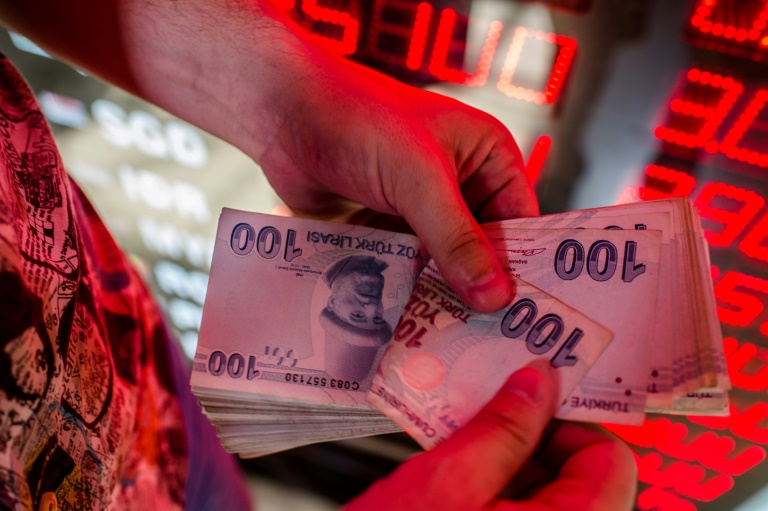
Turkey’s central bank on Thursday stunned the markets by lowering its main interest rate even as inflation soared to a 24-year high and looks set to climb further.

The central bank said “recession is increasingly assessed as an inevitable risk factor” as it lowered its one-week repo auction rate to 13 percent from 14 percent.

“Just insane — with inflation at 80 percent and rising,” BlueBay Asset Management economist Timothy Ash remarked in an emailed comment.

“Turkey’s central bank (has) stepped up its fight against economic orthodoxy,” Jason Tuvey of Capital Economics added in an ironic note.

“The move increases the risk of yet another currency crisis.”

The Turkish lira lost one percent of its value against the dollar within moments of the announcement.

Turkey’s monetary policy decision contradicts the approach pursued by most other countries as they try to combat the spike in consumer prices caused by Russia’s invasion of Ukraine.

The war has sent food and energy prices soaring and forced central banks to raise borrowing costs — even as economic growth remains anaemic. 

But Turkish President Recep Tayyip Erdogan subscribes to the unorthodox belief that high interest rates cause inflation rather than rein it in.

He has fired three central bank governors since 2019 who have tried to pursue a more conventional economic course.

– Election focus on growth –

Turkey now has a real interest rate of negative 66.6 percent when adjusted for inflation.

This forces businesses and ordinary people to spend as much as possible before their liras lose even more value with each month.

Turkey’s approach has propelled economic growth that Erdogan hopes can help him secure a third decade in power in a general election scheduled for next June.

But it has been accompanied by a sharp depreciation of the lira that has eroded living standards and pushed the financial sector to the brink of crisis.

The Turkish government has adopted a series of alternative measures to combat inflation which most economists dismiss as either insufficient or too complex and expensive to work.

These include limiting bank lending and offering state guarantees to ensure that Turks’ deposits do not lose too much value over time.

The central bank has also dug in deeply into its foreign currency reserves to try and prop up the lira’s exchange rate.

These interventions have made Turkey increasingly dependent on deals with petrodollar-rich nations such as Russia and Ankara’s one-time rivals in the Middle East.

Turkey reported a big jump in its hard currency holdings this month that the finance minister linked to a financial transaction with an unnamed foreign country.

Media reports said Russia’s state-held nuclear energy firm Rosatom had transferred billions of dollars for the construction of Turkey’s first nuclear power plant.

The central bank vowed on Thursday to push ahead with its “liraisation strategy” aimed at reducing the use of foreign currency.

It also spelled out its sharp focus on economic growth.

“It is important that financial conditions remain supportive to preserve the growth momentum in industrial production and the positive trend in employment,” it said.

– Weak lira –

Some economists interpreted the rate decision as a concerted effort by Erdogan’s team to devalue the lira in order to spur growth through cheaper exports.

Erdogan has touted this export-driven growth as a “new economic model” that a powerful and independent Turkey should pursue in order reduce its dependence on global powers.

“The need to devalue the lira is an integral component of this path,” economist Umut Akcay of the Institute for International Political Economy tweeted after the rate cut.

“This decision was driven by the need to support growth and further increase exports in the face of the global slowdown.”

Other economists question why Turkey would be spending tens of billion of dollars trying to prop up the lira if it actually wants the currency to fall.

The lira has lost more than half its value against the dollar in the past year alone.

Germany to lower tax on gas to help consumers

Chancellor Olaf Scholz said on Thursday that Germany would temporarily slash the sales tax on gas to help consumers facing soaring bills amid a crunch in Russian energy supplies.

Scholz said the move to cut the VAT on gas to seven percent from 19 percent currently was intended to offset an energy surcharge in the wake of the Ukraine war expected to cost households hundreds of euros.

“The discounted sales tax will apply as long as the gas surcharge is being applied, that is until March 31, 2024,” he told reporters.

“With this measure we are offering gas customers relief that is significantly larger than the extra burden imposed by the surcharges.”

Scholz said the government expected energy companies “to pass on this reduction in full to consumers,” while pledging further state relief measures “to ease the pressure” on households.

“The question of social justice is decisive so that the country remains united in this crisis,” Scholz said. 

Trading Hub Europe, a non-profit company of energy network operators in Germany, on Monday said the surcharge had been set at 2.419 cents per kilowatt hour.

For a family of four with an annual average energy usage of 20,000 kwh, this would come to about 483.80 euros ($491.85) before goods and services taxes.

The surcharge is aimed at sharing out the surging costs borne by energy importers after Russia drastically choked off gas supplies to Germany following its invasion of Ukraine.

Gas importers have so far swallowed the additional costs themselves, but a new rule agreed by the government allows them to pass on ballooning costs via the levy to households from October 1.

Scholz has attempted to reassure Germans that they will receive state aid to help cushion the blow of the additional costs, repeatedly intoning: “You’ll never walk alone.”

The centre-left-led coalition has expressed fears that the soaring bills could lead to social unrest in Europe’s top economy.

Far-right and left-wing parties have announced street protests beginning in September demanding relief for German consumers.

Crisis-hit Sri Lanka warns of record 8% economic contraction

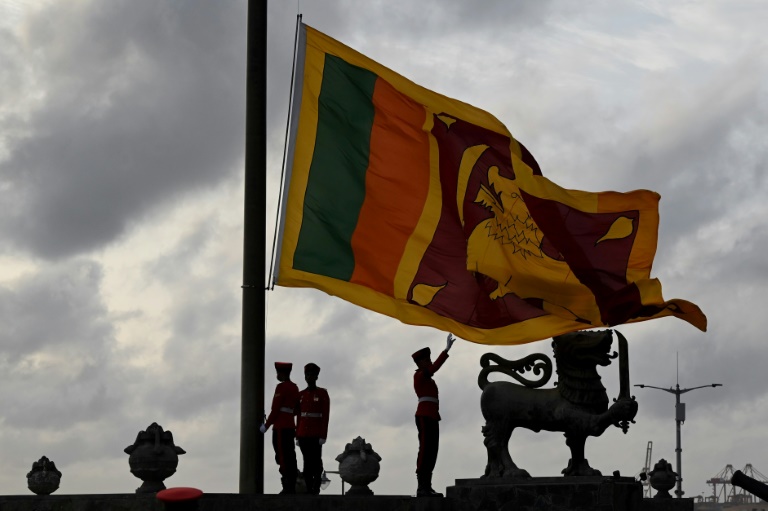
Sri Lanka’s economic meltdown will result in a record contraction of at least eight percent this year but the public could soon expect some relief from runaway inflation, the head of the country’s central bank said Thursday.

The island nation defaulted on its $51 billion foreign debt in April and is seeking an International Monetary Fund bailout after months of food, fuel and medicine shortages. 

Its 22 million people have also suffered through lengthy blackouts and spiralling cost-of-living pressures after scarcity and a currency crash drove up prices.

The Central Bank of Sri Lanka had already projected the economy could shrink a painful 7.5 percent for the calendar year, dwarfing the previous record 3.6 percent contraction in 2020 as the pandemic raged.

“But now we think it will exceed 8.0 percent,” governor Nandalal Weerasinghe told reporters in Colombo.

He said inflation — officially running at 60.8 percent — will peak at “about 65 percent” in September, followed by a gradual easing caused by lower demand and improvements in supplies.

The foreign exchange shortage that sparked the economic crisis had eased thanks to better currency inflows and lower imports, he added. 

“We are now able to finance the most essential imports such as petrol and diesel and medicines,” Weerasinghe said.

At the peak of Sri Lanka’s fuel shortages, motorists had to wait for days and sometimes weeks to top up, but strict fuel rationing has shortened queues.

Months of protests over the collapsing economy culminated in the resignation of president Gotabaya Rajapaksa, who was forced to flee his official residence after it was stormed by a huge crowd last month.

Rajapaksa is accused of mismanaging the island nation’s economy to the point where it was unable to finance even the most essential imports.

He has since travelled to Thailand and close associates have said he was desperate to return home, where he faces corruption charges that had been suspended because of his presidential immunity.

The political upheavals last month stalled talks with the IMF, but a delegation from the international lender of last resort is expected in Colombo before the end of August.

Weerasinghe said he was hopeful authorities would finalise a staff-level agreement with the Fund later this month ahead of a formal bailout deal.

US, Taiwan agree trade talks in face of 'growing China coercion'

Taiwan and the United States announced plans on Thursday for trade talks in the early autumn as a senior US diplomat warned Beijing will continue to squeeze the self-ruled democracy it claims as its own.

Tensions in the Taiwan Strait have soared to their highest in years after US House Speaker Nancy Pelosi visited Taipei, sparking a furious response from Beijing which launched its largest military drills around the island.

The negotiations would cover a variety of areas, including agriculture, digital trade, regulatory practices and removing trade barriers, the Office of the US Trade Representative said in a statement.

The talks “will deepen our trade and investment relationship, advance mutual trade priorities based on shared values, and promote innovation and inclusive economic growth for our workers and businesses,” said Deputy United States Trade Representative Sarah Bianchi. 

“We welcome this opportunity to deepen economic collaboration between our 2 freedom-loving countries while shaping a new model for trade cooperation in the Indo-Pacific,” Taiwan’s foreign ministry said in a tweet. 

Taipei’s representative in Washington Hsiao Bi-Khim wrote: “We welcome this announcement, and Taiwan’s ready to start!”

The United States and Taiwan share a longstanding trade and investment relationship. The island is also a crucial global supplier of some of the most advanced semiconductors, used in everything from mobile phones and laptops to cars and missiles. 

But Taiwan’s largest trading partner by far remains China, which bristled at the announcement and said it “firmly opposes this”.

“China has always opposed any official exchanges between any country and the Taiwan region of China,” Beijing’s commerce ministry spokeswoman Shu Jueting told reporters on Thursday, adding that the matter concerned China-US relations.

Beijing views Taiwan as its own territory to be seized one day, by force if necessary, and last year 42 percent of Taiwan’s exports went to China and Hong Kong compared with 15 percent for the United States.

Washington diplomatically recognises Beijing over Taipei, but maintains de facto relations with Taiwan and supports the island’s right to decide its future.

– ‘Intimidate and coerce’ –

The United States has said its position on Taiwan remains unchanged and has accused China of threatening peace in the Taiwan Strait and using the visit by Pelosi as a pretext for military exercises.

Its top envoy in East Asia on Thursday said Beijing will likely ramp up pressure on Taiwan in the coming months after the drills.

“While our policy has not changed, what has changed is Beijing’s growing coercion,” Daniel Kritenbrink, assistant secretary of state for East Asian and Pacific affairs, told reporters on a teleconference call.

“These actions are part of an intensified pressure campaign… to intimidate and coerce Taiwan and undermine its resilience,” he said.

The envoy said Washington would respond to China’s aggression with “calm, but resolute steps” to keep the Taiwan Strait open and peaceful.

His comments come after a top US naval commander said this week that Washington and its allies must contest China’s ballistic missile fire over Taiwan, which he called a “gorilla in the room”.

China’s exercises included firing multiple ballistic missiles into waters off Taiwan — some of the world’s busiest shipping routes — which was the first time China has taken such a step since the mid-1990s.

Taiwan has staged its own drills simulating a defence against invasion and on Wednesday displayed its most advanced fighter jet in a rare nighttime demonstration in the wake of China’s moves around the island.

“In the face of the threat from Chinese communist forces’ recent military exercises, we have stayed vigilant while establishing the concept of ‘battlefields everywhere and training anytime’… to ensure national security,” Taiwan’s air force said in a statement. 

Once hated by the left, FBI is now US conservatives' evil demon

Agents of the US Federal Bureau of Investigation are used to criticism, but never in the agency’s history have they faced anything like the attacks from conservatives after last week’s raid on former president Donald Trump’s Florida home.

Over its more than 100-year history, the FBI has been excoriated by southerners committed to racist segregation, by civil libertarians defending political activists and especially by African Americans whose 1960s liberation movement was treated as an acute national threat by the agency.

But the extraordinary threats of the past week originate in the FBI’s political bedrock: conservative Republicans.

“It’s the world turned upside down,” said Kenneth O’Reilly, a retired University of Alaska historian, who has written books about the FBI and politics.

According to O’Reilly, the FBI has historically been a “deeply conservative institution” with a bipartisan constituency in Washington.

But since Trump condemned the FBI as corrupt and fascist after they searched his Mar-a-Lago estate on August 8 for illegally retained top secret documents, the attacks have kept coming — and his supporters have fanned the flames. 

Republican National Committee chairwoman Ronna McDaniel accused the bureau of “abuse of power.”

Senator Marco Rubio, a Republican from Florida, compared the agency to secret police in a Marxist dictatorship, while Representative Paul Gosar declared: “We must destroy the FBI.”

Online, including on Trump’s own Truth Social network,  the threats were more violent — and turned real. 

On August 11, an armed 42-year-old man attacked the FBI’s branch in Cincinnati after writing on social media accounts attributed to him that people should “respond with force” to the raid on Trump and “kill the FBI on sight.”

The man failed to enter the office in the Ohio city, and was later shot dead by police.

One day later, a 46-year-old man in Pennsylvania was arrested for making similar threats. 

“If You Work For The FBI Then You Deserve To Die,” he wrote on social media. 

“My only goal is to kill more of them before I drop.”

– Criticism, but no violence –

Long mythologized in film and television, the FBI — the storied home of the 1930s G-Men and the powerful, inscrutable J. Edgar Hoover — has regularly fielded criticism from all sides, O’Reilly told AFP.

“Among southern racists in the early 60s, there was a big backlash against the FBI, treating it like the Gestapo” when it investigated the lynchings of African Americans.

The worst period, O’Reilly said, was in the 1960s when the FBI spied extensively on and sought to undermine the civil rights movement, smearing Martin Luther King Jr. and stoking violence between rival groups to discredit them.

But the reactions at the time, said O’Reilly, who documented the FBI’s war on the Black nationalist movement, were outrage and litigation, and then a sweeping Congressional probe that exposed the abuses.

“You didn’t have violence directed at FBI agents,” he said.

– Popular support until now –

In 1995, FBI actions did spark a violent attack. Anti-government extremists bombed a federal office building in Oklahoma City that included the regional FBI headquarters, killing 168 people.

The two extremists were motivated in part by the FBI’s poor handling of two hostage-like sieges in 1992 and 1993 that turned deadly.

But through all of that, the FBI maintained general political and popular support.

The current anti-FBI turn has its roots in Trump’s long battle with the bureau’s investigations, and specifically its probes into hundreds of his supporters who violently stormed the US Capitol on January 6, 2021.

For O’Reilly, the open threats by Trump supporters and politicians are what makes the current moment shocking.

“I would guess the overwhelming majority of FBI agents voted for Trump,” he said.

“So it’s just a wild idea that the most conservative elements of the Republican Party see the FBI as a tool of the radical left.”

– Climate of violence –

The strong response by US justice authorities to the threats has also been extraordinary.

Fences were erected to protect the FBI headquarters in Washington 

“Violence and threats against law enforcement, including the FBI, are dangerous and should be deeply concerning to all Americans,” warned FBI Director Chris Wray.

The Department of Homeland Security alerted in a special bulletin that agents could be in danger.

“I don’t recall a threat stream similar to this in the last many years,” Brian O’Hare, the president of the FBI Agents Association, told NPR.

“It’s troubling. It’s unacceptable. And it should be condemned by all who are aware of it,” he said.

“It’s a climate of acceptance of violence that needs to be changed.”

In UK, workers strike as inflation crushes earnings

Railway and postal staff, dockers too. Britain’s workers are striking in vast numbers as decades-high inflation erodes the value of wages at a record pace.

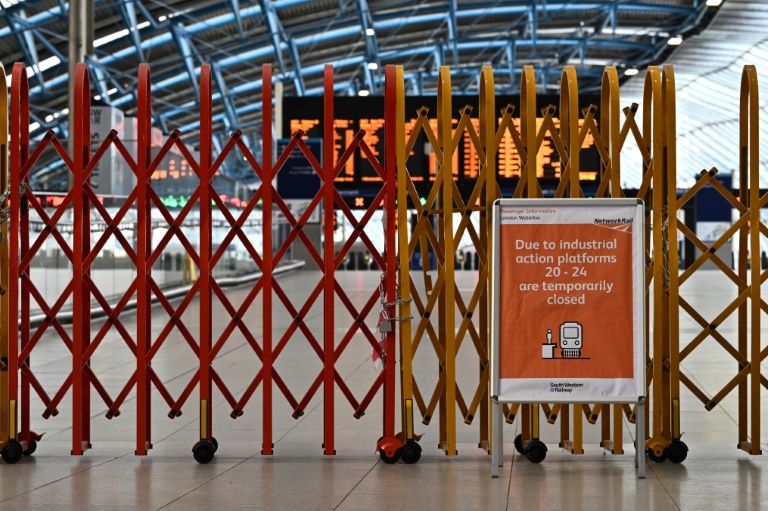
Britain’s train network faces further heavy disruption Thursday and Saturday in major walkouts that follow the sector’s biggest strike action for 30 years already this summer.

Tens of thousands of staff are expected to strike over the two days, leaving a skeleton train service that will hit holidaymakers and commuters, even if home-working continues for many office staff after Covid restrictions were lifted.

London’s underground railway, the Tube, will be hit by a strike Saturday, ahead of an eight-day stoppage starting Sunday by dockers at Felixstowe, Britain’s largest freight port that is situated in eastern England.

“We will continue to do whatever is necessary to defend jobs, pay and conditions during this cost-of-living crisis,” Sharon Graham, head of major British union, Unite, said this week.

Official data Wednesday showed UK inflation at a 40-year-high above 10 percent, as soaring food and energy prices hurt millions of Britons.

– Inflation to keep rising –

And the situation is set to worsen under a new prime minister, as under-fire Boris Johnson prepares to step down.

The Bank of England has forecast inflation to top 13 percent this year, tipping the British economy into a deep and long-lasting recession.

“This record fall in real wages demonstrates the vital need for unions like Unite to defend the value of workers’ pay,” Graham said, while hitting out at suggestions, including from BoE governor Andrew Bailey, that pay rises were fuelling inflation.

“Wages are not driving inflation,” she insisted ahead of the latest UK inflation data that showed rocketing food prices were the main factor behind July’s spike.

Inflation has soared worldwide this year also on surging energy prices, fuelled by the invasion of Ukraine by major oil and gas producer Russia.

– Pay deals –

Some proposed strikes planned for the British summer have been halted after unions and companies agreed pay deals at the eleventh hour.

But while British Airways ground staff and plane refuellers at Heathrow airport have scrapped proposed walkouts, other sectors are holding firm.

More than 115,000 British postal workers employed by former state-run Royal Mail plan a four-day strike from the end of August. 

Telecoms giant BT will face its first stoppage in 35 years and walkouts have recently taken place or are soon to occur by Amazon warehouse staff, criminal lawyers and refuse collectors.

Major UK business lobby group, the CBI, this week acknowledged workers’ ongoing “struggle with rising costs like energy prices” and said employers were “doing their level best to support staff”.

It also claimed, however, that “the vast majority” of companies “can’t afford large enough pay rises to keep up with inflation”.

Regarding the part-privatised British railway sector, unions accuse Transport Secretary Grant Shapps of not helping to resolve the impasse.

Shapps is part of the Conservative government that recently amended a law to allow agency staff to help fill gaps caused by strikes, further angering the RMT railway union.

According to Unite, London’s luxury department store Harrods has informed staff that it stands ready to use agency staff in the event of strike action by its workers.

Analysts are meanwhile forecasting sector-wide stoppages to last beyond the summer as inflation keeps on rising.

It comes as teachers and health workers have hinted at possible walkouts should they not receive new pay deals deemed acceptable.

Close Bitnami banner
Bitnami