US Business

Alleged British IS 'Beatle' held in jail after UK court appearance

A British man accused of being part of an Islamic State (IS) kidnap-and-murder cell known as the “Beatles” was remanded in custody Thursday on terrorism charges after Turkey deported him to the UK.

Aine Davis, 38, was an alleged member of the IS cell that held dozens of foreign hostages in Syria between 2012 and 2015 and was known to their captives as the “Beatles” because of their British accents.

Two of the four have already been brought to justice in the United States for the gruesome beheadings and killings of several American captives, while another of the quartet died in Syria.

British police arrested Davis after he was deported by Turkish authorities and landed at Luton airport near London late Wednesday.

He faces three counts under UK terrorism laws, two related to terrorism fundraising in 2014 and one related to possessing a firearm.

Appearing at a London magistrates’ court flanked by two suited police officers Thursday morning, Davis — sporting a short beard and grey T-shirt — spoke only to confirm his name and that he was of no fixed abode.

His lawyer confirmed he would not be entering a plea or seeking bail at this stage.

Chief magistrate Paul Goldspring said bail would in any case be refused partly due to Davis’ “propensity to travel on forged documents” and ordered him held in prison.

He referred the case to the crown court, which deals with serious criminal offences, with a pre-trial hearing set for September 2 at the central criminal court, known as the Old Bailey.

Goldspring noted that if convicted, Davis will face “years, not months” in jail.

– US trials –

The four members of the “Beatles” are accused of abducting at least 27 journalists and relief workers from the United States, Britain, Europe, New Zealand, Russia and Japan.

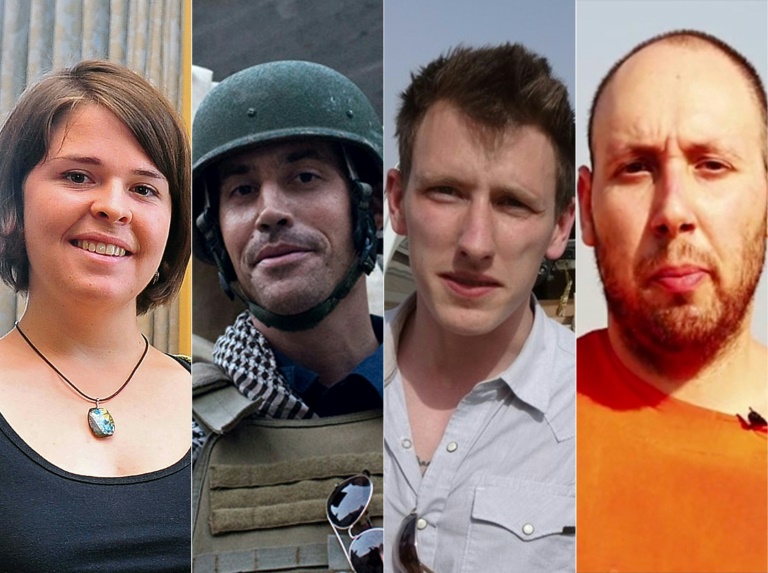
They were allegedly involved in the murders of American journalists James Foley and Steven Sotloff, as well as aid workers Peter Kassig and Kayla Mueller.

The accused cell members, who all grew up in west London, allegedly tortured and killed the four American victims, including by beheading, and IS released videos of the murders for propaganda purposes.

Alexanda Kotey, a 38-year-old former British national extradited from the UK to the US in 2020 to face charges there, pleaded guilty to his role in the deaths last September and was sentenced to life in prison in April.

El Shafee Elsheikh, 34, another former British national also extradited to the US at the same time, was found guilty of all charges in April, and will be sentenced next week.

They were captured in January 2018 by a Kurdish militia in Syria and turned over to US forces in Iraq before being sent to Britain and then the US.

There they faced federal court charges of hostage-taking, conspiracy to murder US citizens and supporting a foreign terrorist organisation.

The other “Beatles” executioner, Mohamed Emwazi, was killed by a US drone in Syria in 2015.

– Wife convicted –

Davis was arrested in Istanbul in 2015 by Turkish authorities on suspicion of being an IS member, and was using a forged travel document, the magistrates’ court heard Thursday. 

He was convicted in Turkey 18 months later, sentenced to seven-and-a-half years imprisonment, and released in July into an immigration detention centre where he remained until he was deported this week.

Detailing its case, CPS prosecutor Kashif Malik said Davis converted to Islam and adopted the name Hamza, visiting countries including Saudi Arabia and the United Arab Emirates between 2007 and 2012 with his wife Amal El-Wahabi.

In 2014, she became the first person in Britain to be convicted of funding IS jihadists after trying to send 20,000 euros — worth $25,000 at the time — to him in Syria.

She was jailed for 28 months and seven days following a trial in which Davis was described as a drug dealer before going to fight with IS in 2013.

“It’s believed that this (money) was to be collected by Mr Davis or an associate,” Malik told the court Thursday, noting it had been raised in the UK “to support terrorism”.

He said Davis had sent messages and photos to his wife from Syria.

“It is plain from images that Davis sent to El-Wahabi that he has been with fighters in Syria and was not in Syria for lawful purposes,” he added. “On occasions he was in possession of a firearm.”

A 2014 search of the couple’s London property found speeches by Osama bin Laden and prominent Al-Qaeda preacher Anwar al-Awlaki, Malik said. 

“We believe this was material left behind by Mr Davis,” he added.
European stocks dip as high inflation concerns linger

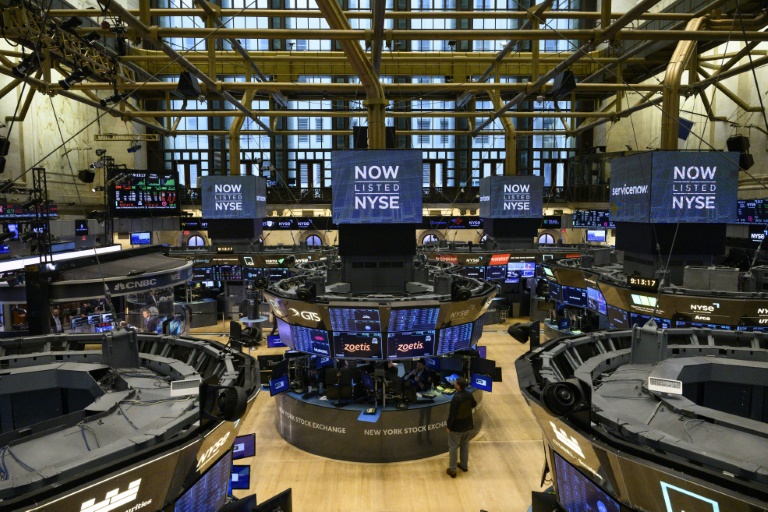
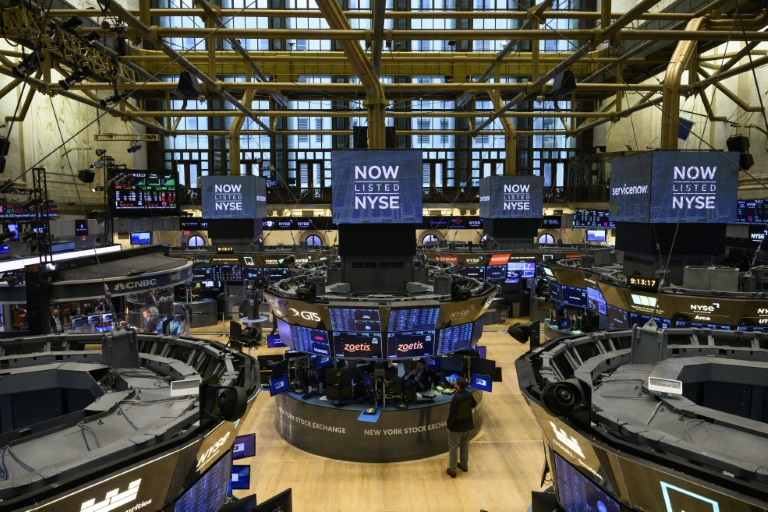
European stock markets eased on Thursday as investors took profit from the gains notched up the previous day on better-than-expected inflation data in the US.

But while overall sentiment was positive, investors remain on edge as officials at the US Federal Reserve seek to temper expectations of a possible end to the monetary policy tightening cycle, traders said.

The head of the Minneapolis Federal Reserve Bank, Neel Kashkari, warned: “We are a long way away from saying that we’re anywhere close to declaring victory”.

And according to the chief of the Chicago Federal Reserve Bank, Charles Evans, rates will continue to rise for “the rest of this year and into next year”.

“Investors are certainly in a more upbeat mood as the relief from the US inflation data ripples through the markets,” said OANDA analyst, Craig Erlam. 

However, “Fed policymakers remain keen to stress that the tightening cycle is far from done and a policy U-turn early next year is highly unlikely,” Erlam said.

Investors will therefore be watching out for further comments from policymakers over the next weeks to better gauge the likely pace of further rate hikes, as strong jobs growth shows how resilient the economy remains in face of higher borrowing costs and inflation.

“Inflation has been expected to peak over the summer for some time, so it was reassuring for markets that there are clear signs that this looks to be happening,” said Oliver Blackbourn, of Janus Henderson Investors.

“However, the Fed will doubtless be focused on the signs about underlying inflation, particularly against a very tight-looking labour market.”

On the oil market, crude prices climbed as US recession fears eased — but remained around six-month lows and below the levels seen before the Ukraine war.

– Key figures at around 1100 GMT –

London – FTSE 100: DOWN 0.4 percent at 7,479.08 points

Frankfurt – DAX: DOWN 0.1 percent at 13,686.67

Paris – CAC 40: DOWN 0.3 percent at 6,503.48

EURO STOXX 50: DOWN 0.2 percent at 3,742.36

Hong Kong – Hang Seng Index: UP 2.4 percent at 20,082.43 (close)

Shanghai – Composite: UP 1.6 percent at 3,281.67 (close)

Tokyo – Nikkei 225: Closed for a holiday

New York – Dow: UP 1.5 percent at 33,309.51 (close)

Euro/dollar: UP at $1.0336 from $1.0299 Wednesday

Pound/dollar: DOWN at $1.2206 from $1.2213

Euro/pound: UP at 84.69 pence from 84.29 pence

Dollar/yen: DOWN at 132.59 yen from 132.89 yen 

Brent North Sea crude: UP 0.8 percent at $98.16 per barrel

West Texas Intermediate: UP 0.8 percent at $92.67 per barrel

European stocks dip as high inflation concerns linger

European stock markets eased on Thursday as investors took profit from the gains notched up the previous day on better-than-expected inflation data in the US.

But while overall sentiment was positive, investors remain on edge as officials at the US Federal Reserve seek to temper expectations of a possible end to the monetary policy tightening cycle, traders said.

The head of the Minneapolis Federal Reserve Bank, Neel Kashkari, warned: “We are a long way away from saying that we’re anywhere close to declaring victory”.

And according to the chief of the Chicago Federal Reserve Bank, Charles Evans, rates will continue to rise for “the rest of this year and into next year”.

“Investors are certainly in a more upbeat mood as the relief from the US inflation data ripples through the markets,” said OANDA analyst, Craig Erlam. 

However, “Fed policymakers remain keen to stress that the tightening cycle is far from done and a policy U-turn early next year is highly unlikely,” Erlam said.

Investors will therefore be watching out for further comments from policymakers over the next weeks to better gauge the likely pace of further rate hikes, as strong jobs growth shows how resilient the economy remains in face of higher borrowing costs and inflation.

“Inflation has been expected to peak over the summer for some time, so it was reassuring for markets that there are clear signs that this looks to be happening,” said Oliver Blackbourn, of Janus Henderson Investors.

“However, the Fed will doubtless be focused on the signs about underlying inflation, particularly against a very tight-looking labour market.”

On the oil market, crude prices climbed as US recession fears eased — but remained around six-month lows and below the levels seen before the Ukraine war.

– Key figures at around 1100 GMT –

London – FTSE 100: DOWN 0.4 percent at 7,479.08 points

Frankfurt – DAX: DOWN 0.1 percent at 13,686.67

Paris – CAC 40: DOWN 0.3 percent at 6,503.48

EURO STOXX 50: DOWN 0.2 percent at 3,742.36

Hong Kong – Hang Seng Index: UP 2.4 percent at 20,082.43 (close)

Shanghai – Composite: UP 1.6 percent at 3,281.67 (close)

Tokyo – Nikkei 225: Closed for a holiday

New York – Dow: UP 1.5 percent at 33,309.51 (close)

Euro/dollar: UP at $1.0336 from $1.0299 Wednesday

Pound/dollar: DOWN at $1.2206 from $1.2213

Euro/pound: UP at 84.69 pence from 84.29 pence

Dollar/yen: DOWN at 132.59 yen from 132.89 yen 

Brent North Sea crude: UP 0.8 percent at $98.16 per barrel

West Texas Intermediate: UP 0.8 percent at $92.67 per barrel

Low Rhine deepens Germany's energy crisis

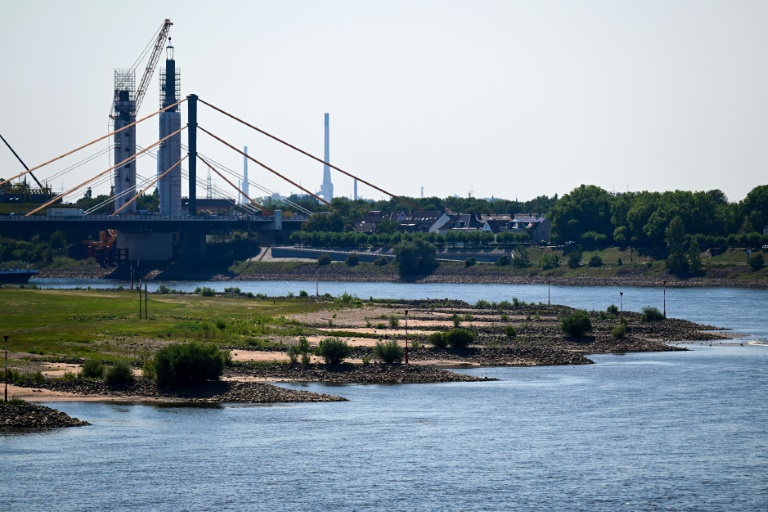
A hot, dry July made worse by climate change has raised the risk that the German economy could run aground as sinking Rhine waters make shipping along the river harder.

The prospect of severe, longer-term limits to traffic spells a new headache for the industries lined up on the river’s banks and threatens to further strain Germany’s efforts to wean itself off Russian energy imports as coal counts among key cargo moved on the waterway.

Roberto Spranzi, boss of DTG, a shipping cooperative, says the volumes that his fleet can carry are already limited by the unusually low water levels.

“At the moment we have a capacity where, we have to use three or four vessels where we would normally need one,” Spranzi tells AFP. 

Pointing at the worrying ebb at the entrance to the inland port of Duisburg in western Germany, Spranzi notes that “currently it’s at 1.70 metres (5.6 feet) In theory, the normal water level is over two metres”.

Further up the river in Kaub, a noted bottleneck for shipping where the Rhine runs narrow and shallow, the reference level is forecast to go below 40 centimetres by the end of the week and squeeze traffic further.

“We supply factories on the Rhine with their raw materials. When that’s not possible any more — or less often — that’s a threat to German industry, too,” Spranzi says.

– Coal power – 

Around four percent of freight in Germany is carried via its waterways, including the Rhine, which winds its way from Switzerland, along the border with France, through Germany’s industrial heartland and the Netherlands to the sea.

As Berlin turns to mothballed coal power capacity to plug the gap after Russia curtailed its energy deliveries, the Rhine has taken on added significance as a key artery for coal transport.

But the sinking water level has already led energy providers to warn they may have to limit output.

Uniper has said the low level of the Rhine may lead to the “irregular operation” of two of its coal plants into September.

EnBW, which runs sites in the southwestern region of Baden-Wurttermberg, has warned that deliveries of the fuel could be restricted.

The dwindling waters have seen “transport costs per tonne rise”, EnBW said in a statement, adding that it had preemptively built stocks of coal earlier in the year.

Alternative routes were available — either by road or rail — but capacity was “tight”, EnBW said.

The Rhine freight restrictions have added to the supply chain disruption seen by industry and increased the risk of scarcity. 

Across southern Germany, a shortage of fuel at the pump has been traced back to the dry weather, among other factors.

“Low water levels on the Rhine mean that in this area very important transportation of oil products, such as petrol, diesel or heating oil can’t operate as normal,” says Alexander von Gersdorff, spokesman for the German energy and fuel industry lobby.

– ‘Much earlier’ – 

A 2018 drought, which saw the Rhine’s reference depth at Kaub fall as low as 25 centimetres in October, shaved 0.2 percent off German GDP that year, according to Deutsche Bank Research.

“The low levels have come much earlier this time,” Deutsche Bank Research economist Marc Schattenberg tells AFP.

“If the problems we are now observing last longer (than in 2018), the loss of economic value becomes all the more serious.” 

Industrial heavyweights stationed along the Rhine rely on the waterway to ferry goods to and from their sites.

Duisburg-based conglomerate ThyssenKrupp said in a statement it had “taken measures” to assure its supplies of raw materials.

The chemical giant BASF, whose Ludwigshafen base sits south of the Kaub choke-point, said its production had not yet been limited by the low water levels, but warned that it could not rule out “reductions for specific units in the coming weeks”.

Brazil farmers bet on environmentally friendly cotton

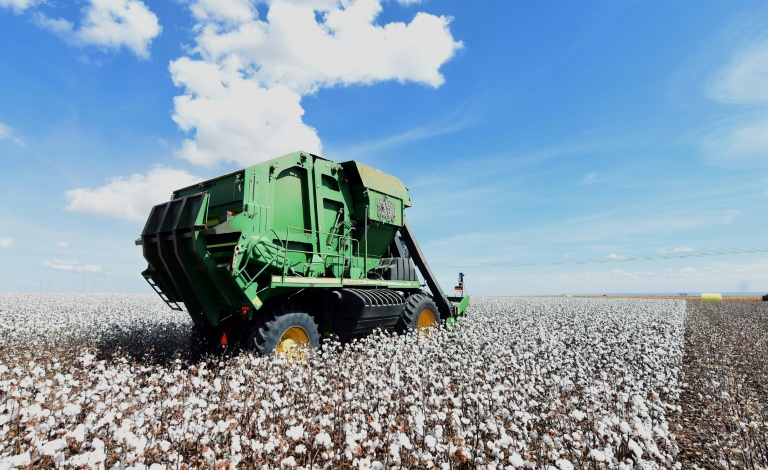
The road through Cristalina, Brazil is in the middle of the tropics, but the fields on either side look like they are covered in snow — little white puffs of cotton stretching to the horizon.

The alabaster plants interspersed with the corn and soybean fields outside the central-western town are part of a silent revolution in Brazil: facing negative attention over the agribusiness industry’s environmental impact, farmers are increasingly turning to cotton and adopting sustainable techniques to produce it.

After increasing exports 15-fold in the past two decades, Brazil is now the world’s second-biggest cotton supplier, after the United States — and the biggest producer of sustainable cotton.

No less than 84 percent of the cotton grown in the South American agricultural giant is certified by the Better Cotton Initiative (BCI), an international non-profit group to promote sustainable cotton farming.

“Consumers have changed. People don’t want to buy products any more that don’t respect nature and its cycles,” says entomologist Cristina Schetino of the University of Brasilia, who specializes in cotton farming.

The industry is trying to improve the international image of Brazilian farming, tarnished by a history of slave labor, heavy pesticide use and the destruction of the Amazon rainforest for agriculture, a trend that has accelerated under far-right President Jair Bolsonaro — an agribusiness ally.

In 2005, the Brazilian Cotton Producers’ Association (Abrapa) launched a sustainability training program for farmers and introduced protocols on efficiently using water and pesticides and phasing out toxic products in favor of biological fertilizers.

A new tracing program launched with Brazilian clothing brands, meanwhile, lets consumers check how cotton goods were produced.

Last season, cotton farmers in Brazil replaced 34 percent of chemical pesticides with biological ones, Abrapa says.

They have also started using drones to apply pesticides more efficiently.

Switching to sustainable techniques is “a re-education process,” says Abrapa’s executive director, Marcio Portocarreiro.

“At first, farmers tend to think mainly about the impact on their bottom line. But when they get past that phase… they realize that farming sustainably gives them a guaranteed market,” he told AFP.

– Added value –

Located outside Cristalina, around 130 kilometers (80 miles) south of Brasilia, the capital, Fazenda Pamplona is one of Brazil’s biggest proponents of sustainable cotton.

The 27,000-hectare (67,000-acre) operation, run by agribusiness giant SLC Agricola, is like a small city in the middle of the countryside, with a banquet hall, a children’s park, sports fields and housing for employees.

The farm aims to retain workers by creating a home where they will want to stay, says production coordinator Diego Goldschmidt.

He stands in front of two enormous bales of cotton, labeled with QR codes that detail their harvest.

“These are already sold,” he beams.

The farm produced more than 600,000 tonnes last year, 99 percent of it for export.

Sustainable cotton sells for prices up to 10 percent higher than conventional cotton.

“Besides being the right thing to do for society and the environment, it provides added value,” says Goldschmidt.

– Aiming high –

But cotton remains one of the most pesticide-intensive crops, using more than double that of soy per hectare.

The problem is the prevalence of pests such as boll weevils and the absence of organic products to stop them, says Schetino.

“There’s still a lot of dependence on chemical products, which have a negative environmental impact,” says the entomologist, who is researching alternatives.

Brazil cultivates around 1.6 million hectares of cotton a year. It is a key supplier for the global garment industry, exporting to the likes of China, Vietnam, Pakistan and Turkey.

Abrapa has set itself the ambitious goal of surpassing the US to become the world’s biggest cotton supplier in 2030.

“Brazil may not have a good image on sustainable farming yet,” says Goldschmidt.

“But we will soon. There’s a lot of potential.”

Chinese medical portal censored after doubting herbal 'Covid remedy'

A popular Chinese medical information site has been censored by authorities for “violation of relevant laws and regulations”, months after its criticism of a government-backed herbal Covid-19 treatment sent shares in a pharmaceutical giant tumbling.

DXY, which counts tech giant Tencent among its investors and runs a host of health-related services, previously questioned the value of Lianhua Qingwen, a herbal remedy marketed for fever and sore throats, as a Covid-19 treatment.

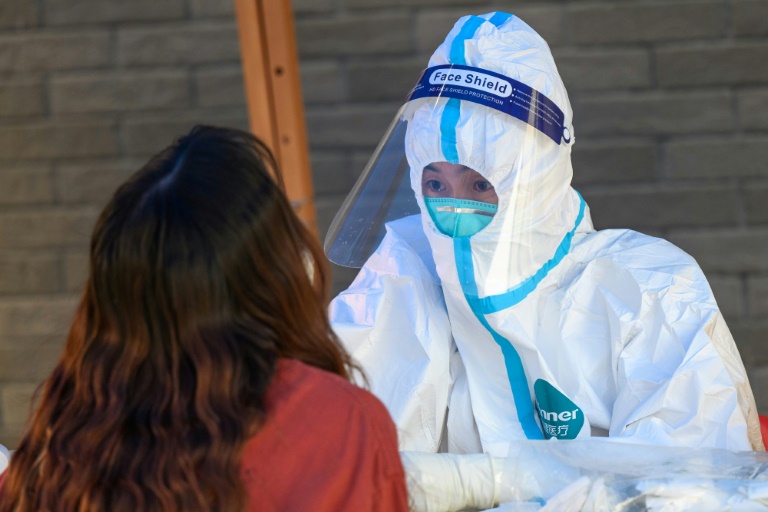
China approved the concoction — made up of ingredients like honeysuckle and apricot seeds — as a Covid-19 treatment in 2020, and it was distributed to Shanghai residents during the city’s outbreak this year.

DXY’s article, which has now been deleted from its website, was part of a wave of reports that caused shares in Lianhua Qingwen’s producer — one of China’s largest traditional medicine companies — to plunge.

The website has now been banned from posting on at least five of its Weibo social media accounts, with a notice at the top of its official page saying that due to “violation of relevant laws and regulations, this user is currently prohibited from posting”.

DXY’s official WeChat accounts, which typically publish multiple articles a day on medical topics, have not been updated since Monday.

The Weibo notice did not specify which regulations had been violated by DXY, which did not immediately respond to AFP’s request for comment.

– ‘No right to ban them’ –

The Chinese government has increasingly promoted traditional medicine at home and abroad in recent years, often with nationalistic undertones.

DXY’s coverage prompted criticism that it was targeting traditional Chinese medicine (TCM) in order to promote Western pharmaceuticals. 

The decision to freeze DXY’s social media accounts was lauded by some Weibo users, who accused the company of working with “anti-China forces” and peddling false information.

“For this vicious thing eating the anti-Chinese capitalists’ dog food, the best days are in the past,” one Weibo user wrote.

But others lamented the loss of a valued source of misinformation-free medical guidance and said they disagreed with the censorship.

“My mother used to be the kind of person who would make her kids eat chicken gallbladder for fevers,” one wrote, crediting DXY with giving her parent access to modern medical information.

“You have the right to (criticise) DXY on Weibo, but you don’t have the right to ban them,” the user wrote.

The United States and other countries have warned there is no evidence Lianhua Qingwen works to prevent or cure Covid-19, even as it has increasingly been promoted by government authorities in China and Hong Kong.

The US Food and Drug Administration has said it has not approved Lianhua Qingwen and that coronavirus-related claims about it were “not supported by competent and reliable scientific evidence”.

Beijing issued its first white paper on TCM in 2016, laying out plans to build medicine centres and dispatch practitioners to developing countries in Africa and Southeast Asia.

President Xi Jinping has described TCM as a “treasure of Chinese civilisation” and has said that it should be given as much weight as other treatments.

Beijing’s National Health Commission has also dispatched TCM practitioners as part of its medical reinforcement teams sent to fight Covid-19 outbreaks across the country.

Cheaper, changing and crucial: the rise of solar power

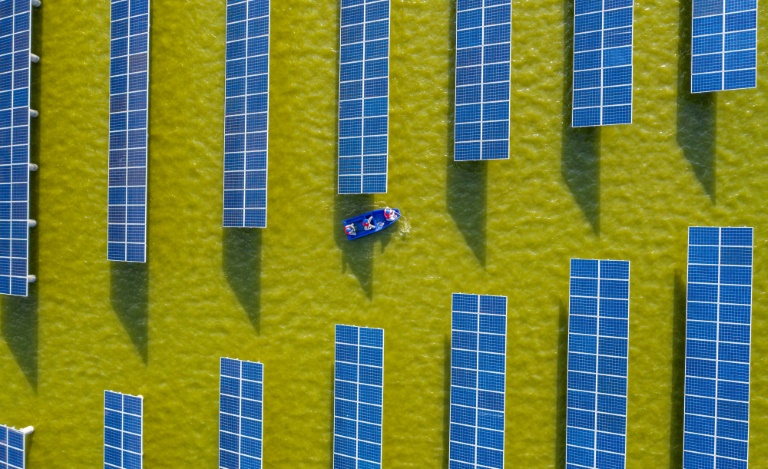
Generating power from sunlight bouncing off the ground, working at night, even helping to grow strawberries: solar panel technology is evolving fast as costs plummet for a key segment of the world’s energy transition.

The International Energy Agency says solar will have to scale up significantly this decade to meet the Paris climate target of limiting temperature rises to 1.5 degrees Celsius above pre-industrial levels.

The good news is that costs have fallen dramatically. 

In a report on solutions earlier this year, the Intergovernmental Panel on Climate Change said solar unit costs had dropped 85 percent between 2010 and 2019, while wind fell 55 percent. 

“There’s some claim that it’s the cheapest way humans have ever been able to make electricity at scale,” said Gregory Nemet, a professor at the University of Wisconsin–Madison and a lead author on that report.

Experts hope the high fossil fuel prices and fears over energy security caused by Russia’s invasion of Ukraine will accelerate the uptake of renewables. 

Momentum gathered pace on Sunday with the ambitious US climate bill, which earmarks $370 billion in efforts to cut greenhouse gas emissions by 40 percent by 2030.

An analysis by experts at Princeton University estimates the bill could see five times the rate of solar additions in 2025 as there were in 2020.

Nemet said solar alone could plausibly make up half of the world’s electricity system by mid-century, although he cautioned against looking for “silver bullets”. 

“I think there really is big potential,” he told AFP.

– Rapid changes –

The “photovoltaic effect” — the process by which solar cells convert sunlight to electrical energy — was first discovered in 1839 by the French physicist Edmond Becquerel.

After decades of innovations, silicon-based solar cells started to be developed in the United States in the 1950s, with the world’s first solar-powered satellite launched in 1958.

The IPCC said of all energy technologies, small-scale ones like solar and batteries have so far proved quicker to improve and be adopted than bulkier options like nuclear.

Today, almost all of the panels glimmering on rooftops and spreading across vast fields are made in China using silicon semiconductors. 

But the technology is changing quickly. 

In a recent report, the IEA said these new solar cells have proven to be one-fifth more efficient in converting light to energy than standard modules installed just four or five years ago.

There are also a host of new materials and hybrid cells that experts predict could supercharge efficiency.

These include cheap, efficient and lightweight “thin film” technologies, like those using perovskites that can be printed from inks. 

Experts say they raise the prospect of dramatically expanding where solar energy can be harvested — if they can be made durable enough to withstand a couple of decades of use. 

Recent research has raised hopes that it could be possible.

In one study, published in the journal Science in April, scientists added metal-containing materials to perovskite cells, making them more stable with efficiency near traditional silicon models.

Other research mixes materials for different purposes.

One study in Nature used “tandem” models, with perovskite semiconductors to absorb near-infrared light on the solar spectrum, while an organic carbon-based material absorbed ultraviolet and visible parts of the light.

And what happens after sunset? 

Researchers from Stanford said this year they had produced a solar cell that could harvest energy overnight, using heat leaking from Earth back into space.

“I think that there’s a lot of creativity in this industry,” said Ron Schoff, who heads the Electric Power Research Institute’s Renewable Energy and Fleet Enabling Technologies research.

– Location, location –

Generating more energy from each panel will become increasingly crucial as solar power is rolled out at greater scale, raising concerns about land use and harm to ecosystems.

Schoff said one efficiency-boosting design that is becoming more popular for large-scale projects is “bifacial” solar. 

These double-sided units absorb energy not just directly from the sun’s rays, but also from light reflected off the ground beneath. 

Other solutions involve using the same space for multiple purposes — like semi-transparent solar panels used as a protective roof for strawberry plants or other crops.

India pioneered the use of solar panels over canals a decade ago, reducing evaporation as they generate power.

Scientists in California have said that if the drought-prone US state shaded its canals, it could save around 63 billion gallons.

Construction on a pilot project is due to begin this year.

– All shapes, sizes –

Experts say solar will be among a mix of energy options, with different technologies more suitable for different places.

Schoff said ultimately those energy grids with more than 25 percent solar and wind need ways to store energy — with batteries or large-scale facilities using things like pumped water or compressed air.

Consumers can also play their part, said Nemet, by shifting more of their energy use to daytime periods, or even hosting their own solar networks in an Airbnb-style approach.

He said the modular nature of solar means it can be rolled out in developing countries with sparse access to traditional grids.

“You could have solar on something as small as a watch and something as big as the biggest power plants in the world,” he said.

“I think that’s what’s making people excited about it.”

Singapore trims 2022 growth forecast on strong global headwinds

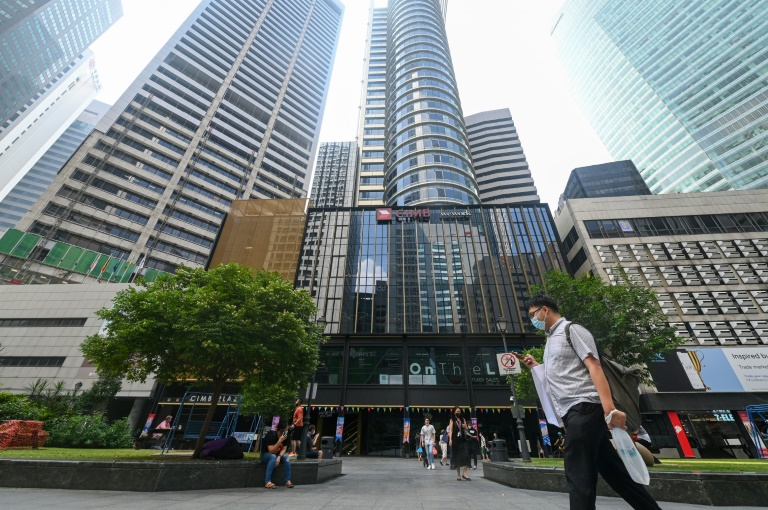
Singapore on Thursday narrowed its economic growth forecast this year after the economy contracted in the second quarter compared to the previous three months due to rising inflation and tighter monetary policies, the government said.

Moves by central banks worldwide to tighten borrowing costs in order to deal with rocketing prices have weighed down on global demand for Singapore’s exports, with the government painting a grim picture for the rest of the year.

Economists often see the performance of the city state’s open, trade-driven economy as a barometer for global trading activity.

Singapore’s economy is now projected to expand by 3.0 to 4.0 percent this year, trimmed from a 3.0 to 5.0 forecast earlier, the trade ministry said in a statement.

The economy grew by 4.4 per cent year-on-year in the second quarter to June, faster than the 3.8 per cent growth recorded in the previous quarter, it said.

But compared to the previous three months, the economy contracted by 0.2 per cent, reversing the 0.8 percent expansion in the first quarter.

“Since May, the global economic environment has deteriorated further,” the ministry said.

“Stronger than expected inflationary pressures and the more aggressive tightening of monetary policy in response are expected to weigh on growth in major advanced economies such as the US and Eurozone.”

China, a key market for global exports, “continues to grapple with a deepening property market downturn and recurring domestic Covid-19 outbreaks”, it said.

“Notwithstanding recent signs of a slight easing in global supply disruptions, the disruptions are likely to persist for the rest of the year as underlying factors such as the Russia-Ukraine conflict and China’s zero-Covid policy remain,” it added.

Growth in the United States is expected to slow further in the second half of the year, and “the persistent disruption in natural gas supplies from Russia could also trigger a sharp slowdown in the Eurozone economy”, it warned.

Selena Ling, chief economist at OCBC Bank, said the strong recovery in the aviation and tourism sectors after Singapore lifted coronavirus restrictions should help cushion the effects of slowing global demand.

Fresh fears after Facebook's role in US abortion case

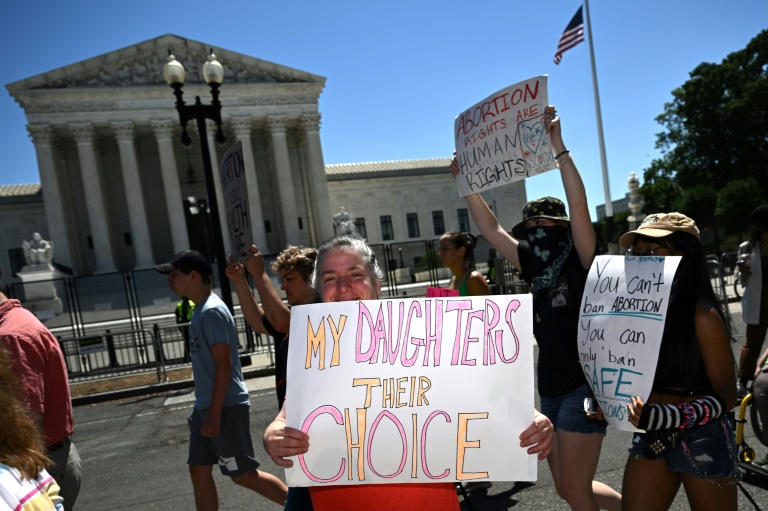
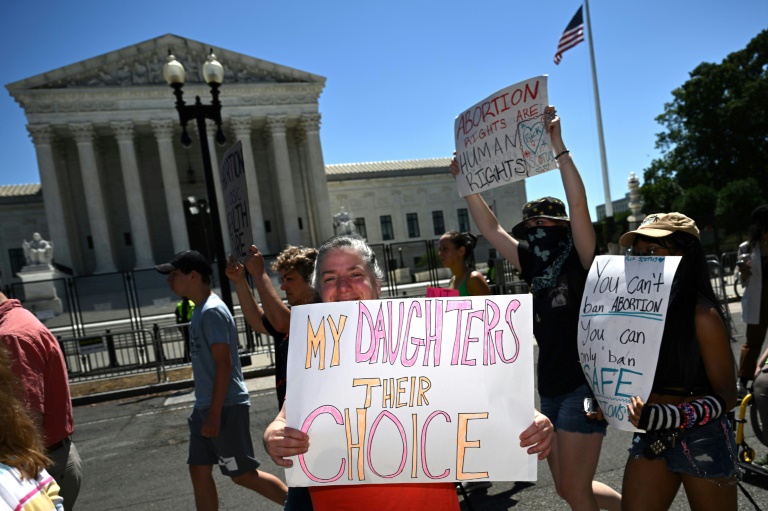
Facebook sparked outrage by complying with US police probing an abortion case, boosting simmering fears the platform will be a tool for clamping down on the procedure.

Criticism built after media reports revealed the social networking giant had turned over messages key to a mother being criminally charged with an abortion for her daughter.

Advocates had warned of exactly this kind of thing after America’s top court revoked the national right to abortion in late June, as big tech companies hold a trove of data on users locations and behavior.

Jessica Burgess, 41, was accused of helping her 17-year-old daughter to terminate a pregnancy in the midwestern US state of Nebraska.

She faces five charges — including one under a 2010 law which only allows abortion up to 20 weeks after fertilization.

The daughter faces three charges, including one of concealing or abandoning a corpse.

Yet Facebook owner Meta defended itself Tuesday by noting the Nebraska court order “didn’t mention abortion at all”, and came before the Supreme Court’s highly divisive decision in June to overturn Roe v Wade, the case which conferred right to abortion in the United States.

“That sentence would seem to imply that *if* the search warrants mentioned abortion, there would be a different result. But of course that’s not true,” tweeted Logan Koepke, who researches on how technology impacts issues like criminal justice.

When queried about handing over the data, the Silicon Valley giant pointed AFP to its policy of complying with government requests when “the law requires us to do so.”

Nebraska’s restrictions were adopted years before Roe was overturned. Some 16 states have outright bans or limits in the early weeks of pregnancy in their jurisdictions.

– ‘Can’t release encrypted chats’ –

For tech world watchers, the Nebraska case surely won’t be the last. 

“This is going to keep happening to companies that have vast amounts of data about people across the country and around the world,” said Alexandra Givens, CEO of the non-profit Center for Democracy & Technology.

She went on to note that if companies receive a duly-issued legal request, under a valid law, there are strong incentives for them to want to comply with that request. 

“The companies at a minimum have to make sure that they’re insisting on a full legal process, that warrants are specific and not a fishing expedition, searches are very narrowly construed and that they notify users so that users can try to push back,” Givens added.

Meta did not provide AFP the Nebraska court’s order. The police filing asked the judge to order the company not to tell Burgess’s daughter about the search warrant for her Facebook messages.

“I have reason to believe that notifying the subscriber or customer of the issuance of this search warrant may result in the destruction of or tampering with evidence,” police detective Ben McBride wrote.

He told the court he began investigating “concerns” in late April that Burgess’s daughter had given birth prematurely to a “stillborn child”, which they allegedly buried together.

Advocates noted that apart from not using Meta’s products, one sure way to keep users’ communications out of government hands would be for them to be automatically encrypted.

Meta-owned WhatsApp has end-to-end encryption, which means the company does not have access to the information, but that level of privacy protection is not the default setting on Facebook messenger.

“The company has never said it would not comply with a request from law enforcement in a situation related to abortions,” said Caitlin Seeley George, a campaign director at advocacy group Fight for the Future. 

“If users could rely on encrypted messaging, Meta wouldn’t even be in a position where they could share conversations,” she added.

Fresh fears after Facebook's role in US abortion case

Facebook sparked outrage by complying with US police probing an abortion case, boosting simmering fears the platform will be a tool for clamping down on the procedure.

Criticism built after media reports revealed the social networking giant had turned over messages key to a mother being criminally charged with an abortion for her daughter.

Advocates had warned of exactly this kind of thing after America’s top court revoked the national right to abortion in late June, as big tech companies hold a trove of data on users locations and behavior.

Jessica Burgess, 41, was accused of helping her 17-year-old daughter to terminate a pregnancy in the midwestern US state of Nebraska.

She faces five charges — including one under a 2010 law which only allows abortion up to 20 weeks after fertilization.

The daughter faces three charges, including one of concealing or abandoning a corpse.

Yet Facebook owner Meta defended itself Tuesday by noting the Nebraska court order “didn’t mention abortion at all”, and came before the Supreme Court’s highly divisive decision in June to overturn Roe v Wade, the case which conferred right to abortion in the United States.

“That sentence would seem to imply that *if* the search warrants mentioned abortion, there would be a different result. But of course that’s not true,” tweeted Logan Koepke, who researches on how technology impacts issues like criminal justice.

When queried about handing over the data, the Silicon Valley giant pointed AFP to its policy of complying with government requests when “the law requires us to do so.”

Nebraska’s restrictions were adopted years before Roe was overturned. Some 16 states have outright bans or limits in the early weeks of pregnancy in their jurisdictions.

– ‘Can’t release encrypted chats’ –

For tech world watchers, the Nebraska case surely won’t be the last. 

“This is going to keep happening to companies that have vast amounts of data about people across the country and around the world,” said Alexandra Givens, CEO of the non-profit Center for Democracy & Technology.

She went on to note that if companies receive a duly-issued legal request, under a valid law, there are strong incentives for them to want to comply with that request. 

“The companies at a minimum have to make sure that they’re insisting on a full legal process, that warrants are specific and not a fishing expedition, searches are very narrowly construed and that they notify users so that users can try to push back,” Givens added.

Meta did not provide AFP the Nebraska court’s order. The police filing asked the judge to order the company not to tell Burgess’s daughter about the search warrant for her Facebook messages.

“I have reason to believe that notifying the subscriber or customer of the issuance of this search warrant may result in the destruction of or tampering with evidence,” police detective Ben McBride wrote.

He told the court he began investigating “concerns” in late April that Burgess’s daughter had given birth prematurely to a “stillborn child”, which they allegedly buried together.

Advocates noted that apart from not using Meta’s products, one sure way to keep users’ communications out of government hands would be for them to be automatically encrypted.

Meta-owned WhatsApp has end-to-end encryption, which means the company does not have access to the information, but that level of privacy protection is not the default setting on Facebook messenger.

“The company has never said it would not comply with a request from law enforcement in a situation related to abortions,” said Caitlin Seeley George, a campaign director at advocacy group Fight for the Future. 

“If users could rely on encrypted messaging, Meta wouldn’t even be in a position where they could share conversations,” she added.

Close Bitnami banner
Bitnami