US Business

Twitter shareholders to vote on Musk buy in September

Twitter on Tuesday urged shareholders to endorse the $44 billion deal Elon Musk made to buy the online podium, setting a vote on the merger for September 13.

The firm is locked in a legal battle with the mercurial Tesla boss over his effort to walk away from the agreement, and a judge has called for a trial to begin in October.

“Twitter believes that Mr. Musk’s purported termination is invalid and wrongful, and the merger agreement remains in effect,” chief executive Parag Agrawal and board chairman Bret Taylor said in a copy of a letter to investors filed with the US Securities and Exchange Commission.

“Your vote at the special meeting is critical to our ability to complete the merger.”

Twitter shareholders were assured that they will be able to attend the meeting online, and vote remotely.

Twitter’s board unanimously recommended that shareholders vote in favor of Musk buying the company for $54.20 per share under the terms of a deal inked in April.

“We are committed to closing the merger on the price and terms agreed upon with Mr. Musk,” Tuesday’s letter said.

Twitter shares ended the formal trading day Tuesday at $39.34.

The company last week blamed disappointing quarterly earnings results on “headwinds,” including uncertainty imposed on the company by Musk’s chaotic buyout bid. 

The social giant reported that the number of “monetizable” daily active users — those who can be shown advertising — increased by 8.8 million to 237.8 million. 

Twitter’s results covered the period ending in June, and so don’t include Musk’s move in July to try to “terminate” the deal on the argument that the platform was not forthcoming about its tally of fake accounts.

The social media network has countered by saying Musk already agreed to the deal and can’t back out now.

A court in the eastern US state of Delaware agreed to a fast-track trial on whether to force the billionaire to complete the buyout.

Billions of dollars are at stake, but so is the future of Twitter, which Musk has said should allow any legal speech — an absolutist position that has sparked fears the network could be used to incite violence.

Russia doing better than expected despite sanctions: IMF

Despite damaging Western sanctions imposed on Moscow in the wake of the invasion of Ukraine, Russia’s economy appears to be weathering the storm better than expected as it benefits from high energy prices, the IMF said Tuesday.

The sanctions were meant to sever Russia from the global financial system and choke off funds available to Moscow to finance the war.

But the International Monetary Fund’s latest World Economic Outlook upgraded Russia’s GDP estimate for this year by a remarkable 2.5 percentage points, although its economy is still expected to contract by six percent.

“That’s still a fairly sizable recession in Russia in 2022,” IMF chief economist Pierre-Olivier Gourinchas told AFP in an interview.

A key reason that the downturn was not as bad as expected was that “the Russian central bank and the Russian policymakers have been able to stave off a banking panic or financial meltdown when the sanctions were first imposed,” he said.

Meanwhile, rising energy prices are “providing an enormous amount of revenues to the Russian economy.”

After starting the year below $80 a barrel, oil prices spiked to nearly $129 in March before easing back to under $105 on Tuesday for Brent, the key European benchmark, while natural gas prices are rising again and approaching their recent peak.

While major economies including the United States and China are slowing, the report said, “Russia’s economy is estimated to have contracted during the second quarter by less than previously projected, with crude oil and non-energy exports holding up better than expected.” 

Meanwhile, despite the sanctions, Russia’s “domestic demand is also showing some resilience” due to government support.

But Gourinchas said “there is no rebound” ahead for Russia. “In fact,” the IMF is “revising down the Russian growth in 2023,” 1.2 points lower than the April forecast for a contraction of 3.5 percent.

The penalties already in place, as well as new ones announced by Europe, mean “the cumulative effect of the sanctions is also growing over time,” he said.

The report indicates Europe is facing the brunt of the fallout from sanctions given its reliance on Russia for energy. The situation could worsen dramatically if Moscow cuts off gas exports, and once the European Union imposes a ban on Russian oil delivered by sea starting next year.

New York asks WHO to re-name 'stigmatizing' monkeypox

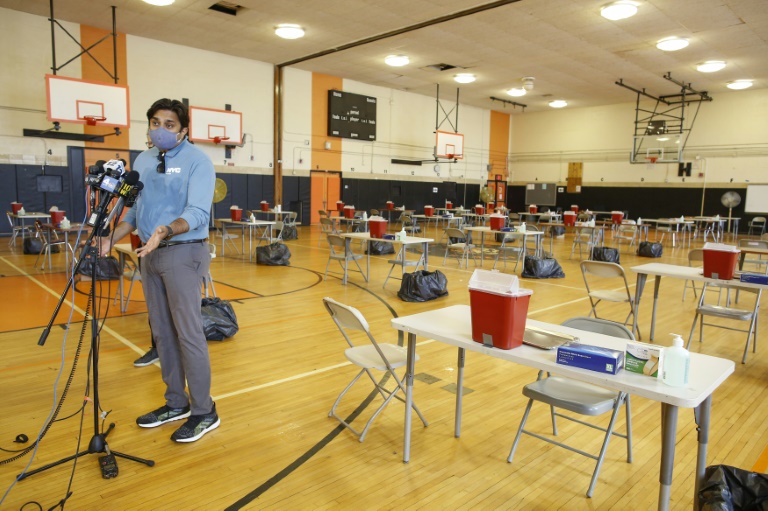
New York City asked the World Health Organization (WHO) on Tuesday to rename the monkeypox virus to avoid stigmatizing patients who might then hold off on seeking care.

New York has seen more cases of the disease, which the WHO declared a global health emergency over the weekend, than any other city in the United States, with 1,092 infections detected so far.

“We have a growing concern for the potentially devastating and stigmatizing effects that the messaging around the ‘monkeypox’ virus can have on… already vulnerable communities,” New York City public health commissioner Ashwin Vasan said in a letter to WHO chief Tedros Adhanom Ghebreyesus dated Tuesday. 

The WHO had floated the idea of changing the name of the virus, which is related to the eradicated smallpox virus, during a press conference last month, a proposal Vasan mentioned in his letter. 

Vasan referenced the “painful and racist history within which terminology like (monkeypox) is rooted for communities of color.”

He pointed to the fact that monkeypox did not actually originate in primates, as the name might suggest, and recalled the negative effects of misinformation during the early days of the HIV epidemic and the racism faced by Asian communities that was exacerbated by former president Donald Trump calling Covid-19 the “China virus.”

“Continuing to use the term ‘monkeypox’ to describe the current outbreak may reignite these traumatic feelings of racism and stigma — particularly for Black people and other people of color, as well as members of the LGBTQIA+ communities, and it is possible that they may avoid engaging in vital health care services because of it,” Vasan said.

Anyone is susceptible to contracting monkeypox, which has long been endemic in Central and Western Africa, but so far its spread in Europe and the United States has been mostly concentrated among men who have sex with other men. 

The first symptoms can include a fever and fatigue, followed a few days later by a rash that can turn into painful, fluid-filled skin lesions, which may last for a few weeks before turning into scabs that then fall off.

No deaths have been reported so far in Europe or the United States.

More than 16,000 confirmed cases have been recorded in 75 countries so far this year, the WHO said on Monday.

A limited number of doses of a smallpox vaccine found to protect against monkeypox, called Jynneos, have been administered in New York, mostly to gay and bisexual men. 

Saudi prince to sign deal for 'cheaper energy' in Greece

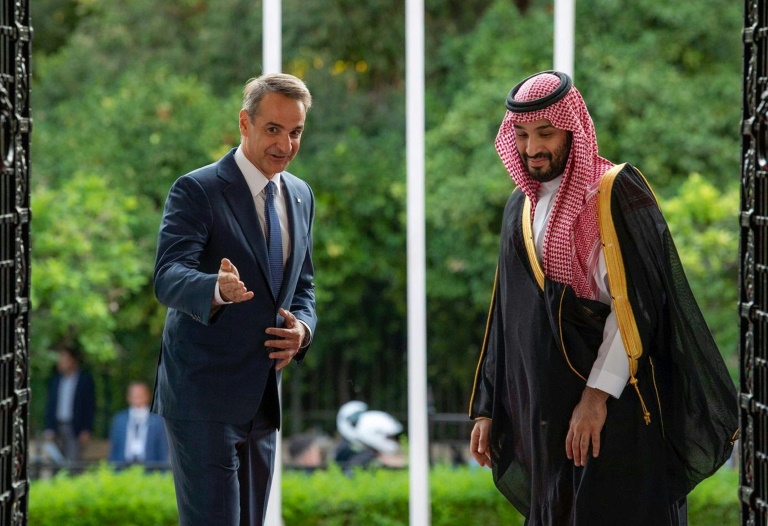
Saudi Crown Prince Mohammed bin Salman announced upcoming bilateral projects on a visit to Greece Tuesday, including for a power cable between both countries to provide Europe with “cheaper renewable energy”.

Prince Mohammed landed in Greece on Tuesday on his first Europe trip since the killing of Saudi journalist Jamal Khashoggi, and is set to head to France later in the week.

“I believe we have… historical opportunities, that we are going to finalise a lot of it today,” Prince Mohammed said at a press conference with Prime Minister Kyriakos Mitsotakis in the capital Athens.

This would include linking electricity grids to “provide Greece and southwest Europe through Greece with… much cheaper renewable energy,” he added.

The Greek foreign ministry said agreements on maritime transport, energy and defence technology among other things were due to be signed on Wednesday.

Khashoggi’s killing and dismemberment by Saudi agents in the kingdom’s Istanbul consulate in October 2018 brought the powerful crown prince international condemnation.

Prince Mohammed’s trip to Europe comes less than two weeks after US President Joe Biden visited the Saudi city of Jeddah for a summit of Arab leaders and met one-on-one with the prince, greeting him with a fist bump.

That move sealed Biden’s retreat from a presidential election campaign pledge to turn the kingdom into a “pariah” over the Khashoggi affair and wider human rights controversies.

– ‘Isolation’ over –

US intelligence agencies determined that Prince Mohammed, Saudi Arabia’s de facto ruler, had “approved” the operation that led to Khashoggi’s death, though Riyadh denies this, blaming rogue operatives.

Prince Mohammed’s stay in Europe represents a “highly symbolic move past his post-Khashoggi isolation”, said Kristian Ulrichsen, a research fellow at the Baker Institute at Rice University.

“While there has not been any formal coordination of policy in the ‘West’ against Mohammed bin Salman since 2018, the fact is that he has not visited any European or North American country since Khashoggi’s killing,” Ulrichsen said.

Prince Mohammed has also received a recent boost from Turkish President Recep Tayyip Erdogan, who visited Saudi Arabia in April, then welcomed Prince Mohammed in Ankara in June.

Erdogan had enraged the Saudis by vigorously pursuing the Khashoggi case, opening an investigation and briefing international media about the lurid details of the killing.

But with ties on the mend, an Istanbul court halted the trial in absentia of 26 Saudi suspects linked to Khashoggi’s death, transferring the case to Riyadh in April.

– Oil focus –

After Russia’s invasion of Ukraine triggered a spike in energy prices earlier this year, Saudi Arabia came under pressure from the United States and European powers to pump more oil.

Elevated oil prices have been a key factor in inflation in the US soaring to 40-year highs, putting pressure on the Biden administration ahead of mid-term elections later this year.

But the world’s biggest crude exporter has resisted pressure to open the supply taps, citing its commitment to production schedules determined by the OPEC+ exporting bloc it co-leads with Russia.

In May, Saudi Foreign Minister Prince Faisal bin Farhan stated that the kingdom had done what it could for the oil market.

Last week French President Emmanuel Macron received the new president of the energy-rich United Arab Emirates, Sheikh Mohamed bin Zayed Al-Nahyan, in Paris.

During that trip officials announced a deal between French energy giant Total Energies and UAE state oil company ADNOC “for cooperation in the area of energy supplies”.

Energy will probably be on the agenda again when Prince Mohammed goes to France, though it is unlikely the kingdom will change its position on oil production, said Huda al-Halisi, vice chair of the foreign affairs committee of the Saudi Shura Council, an advisory body.

“We’re on a set path and we need to see it through,” Halisi told AFP, while stressing there are many opportunities for deals on sustainable energy and other efforts to combat climate change.

Security concerns are also likely to get a lengthy hearing, Halisi said. 

Those include regional rival Iran’s nuclear programme and Tehran’s role in Yemen, where a truce is currently set to expire in early August between Iran-backed Huthi rebels and a Saudi-led military coalition supporting the internationally recognised government.

Google-parent Alphabet's profit slips as growth slows

Google-parent Alphabet reported Tuesday its profit and revenue slipped as the internet giant’s long sizzling ad revenue growth cooled, but the market seemed relieved the news wasn’t worse.

Big tech firms are grappling with multiple problems, from inflation to the war in Ukraine, and results in general for the quarter have not been great so far.

Alphabet’s revenue in the latest quarter grew 13 percent to $69.7 billion, with its global search and cloud computing services bringing in most of the money — but this was under analysts’ expectations.

“I think it’s a good time to sharpen our focus,” Alphabet chief executive Sundar Pichai told an earnings call. “It’s a chance to digest and make sure we are working on the right things.”

Net income at Alphabet fell 13 percent year-over-year to $16 billion in the latest quarter, but the flow of online ad dollars that fuels the company’s fortunes has slowed as inflation, war and other troubles vex the overall economy.

“Google’s earnings miss this quarter proves it’s not immune to the challenges facing the digital advertising industry at large,” said analyst Evelyn Mitchell.

“Still, with its tremendous market share in search advertising, Google is relatively well positioned to weather the rough waters that lie ahead,” she added.

The internet giant’s stock was up about 4.5 percent in after-hours trading, as the market appeared relieved by the results.

– Slowing hiring –

Google was also paying more to acquire online “traffic” from which it makes money, the earnings report showed.

Meanwhile, revenue from ads on video-sharing platform YouTube was up only slightly in the quarter. Google has looked to YouTube as a source of growth as people spend growing amounts of time looking at online videos.

“In the second quarter our performance was driven by Search and Cloud,” Pichai said.

Earnings season has gotten off to a rough start with less than stellar news from both Netflix and Snapchat’s parent firm, a decidedly different world than seen during the pandemic surge.

Netflix reported last week losing subscribers for the second quarter in a row as the streaming giant battles fierce competition and viewer belt tightening, but the company assured investors of better days ahead.

The loss of 970,000 paying customers in the most recent quarter was not as big as expected, and left Netflix with just shy of 221 million subscribers.

The company said in its earnings report that it had expected to gain a million paid subscribers in the current quarter.

At the same time, Snapchat’s owner announced plans last week to “substantially” slow recruitment after bleak results wiped some 30 percent off the stock price of the tech firm, which is facing difficulties on several fronts.

Snap reported that its loss in the recently ended quarter nearly tripled to $422 million despite revenue increasing 13 percent under conditions “more challenging” than expected.

In addition to current troubling economic conditions, analysts pointed to longer term issues for Google.

“The revenue is showcasing that they are reaching near saturation of their market,” said analyst Rob Enderle. “Their opportunity to grow is going to decrease over time.”

According to Insider Intelligence, Google is expected to reap nearly $175 billion in net ad revenue in 2022, or 29 percent of the global digital ad pie. 

Alphabet, with more than 174,000 employees worldwide, has recruited throughout the pandemic, but it recently announced a slowdown in hiring for the rest of the year.

“Although we expect the pace of headcount growth to moderate next year, we will continue hiring for critical roles, particularly focused on top engineering and technical talent,” said chief financial officer Ruth Porat. 

Many other tech companies have decided to lay off staff, including Netflix and Twitter, or slow the pace of hiring, such as Microsoft and Snap. 

Third body found in drought-hit lake outside Las Vegas

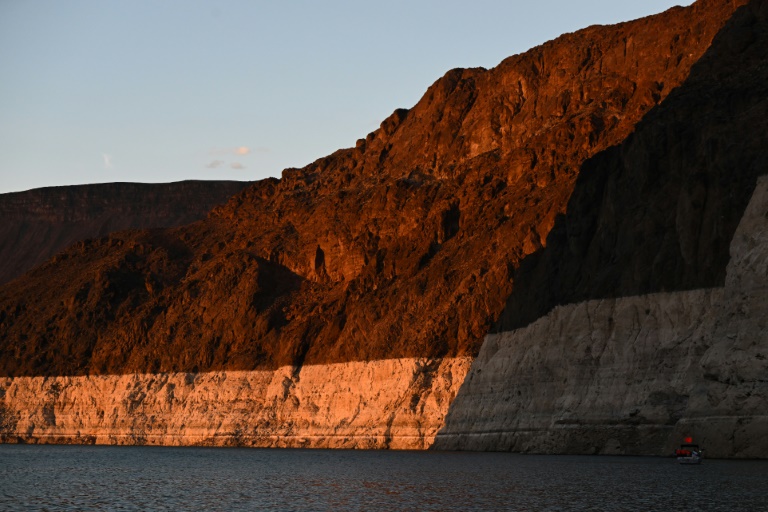
More human remains have been found at a lake near Las Vegas, officials said, months after the rapidly receding waters of drought-hit Lake Mead revealed the corpse of a long-submerged mob victim.

Park rangers responded Monday afternoon to a witness report of a body at Swim Beach and have begun efforts to recover the remains, the National Park Service said.

No details were immediately provided about the age or identity of the most recent discovery, with the local county coroner set to conduct an autopsy.

The giant man-made reservoir drew global attention in May when the decades-old skeleton of a man shot in the head were found stuffed in a barrel that had been dumped in the lake.

Police believe that murder occurred in the late 1970s or early 1980s, when the Las Vegas criminal underworld was particularly active in the desert gambling capital.

Another body was found days later, with no evidence of foul play, and authorities had predicted more bodies would be found as water levels drop in the country’s biggest reservoir.

A historic drought that is gripping much of the western United States is putting a strain on water sources, with reservoirs and lakes falling to unprecedently low levels.

Lake Mead once sat 1,200 feet above sea level. But after more than two decades of drought, it was at only 1,040 feet above sea level Tuesday — its lowest level since filling in the 1930s.

It is currently falling about 12 inches every week.

Stocks slide as gas prices and inflation erode confidence

Eurozone and US stocks sank on Tuesday on gas supply fears and fresh indications that inflation is denting consumer health following an earnings forecast downgrade from Walmart.

Wall Street indices finished firmly lower after Walmart cut its profit forecast, saying rising prices for gasoline, food and other staples were cutting into consumer demand for goods with higher profit margins.

That was followed by a downcast Conference Board reading on consumer confidence due to rising prices.

All three major US indices fell, with the broad-based S&P 500 losing 1.2 percent.

The declines came as the Federal Reserve kicked off a two-day monetary policy meeting expected to conclude with another large interest rate hike, as the central bank seeks to quell sky-high inflation.

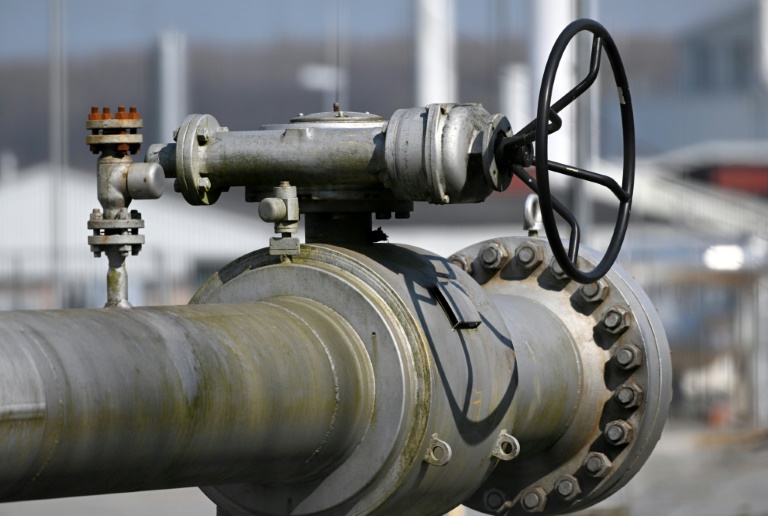
In Europe, the natural gas reference price Dutch TTF surged nearly 13 percent to 203 euros ($205) per megawatt hour, one day after Russia’s Gazprom said it would cut daily gas deliveries to Europe via the Nord Stream pipeline.

“With no clear timeline for when capacity is likely to increase, the prospect of further uncertainty over gas supplies is weighing on European markets today,” CMC Markets analyst Michael Hewson told AFP.

Frankfurt’s DAX slumped 0.9 percent while the CAC in Paris shed 0.4 percent. 

Gazprom’s announcement prompted European Union energy ministers agreed to steps to try to limit dependence on Russian supply.

The plan nominally commits EU countries to reduce their gas use by 15 percent during the winter, although exceptions were carved out for some countries and Hungary rejected the deal. 

Meanwhile, Asian stock markets closed mixed.

Investors welcomed news that e-commerce giant Alibaba would seek a primary listing in Hong Kong, which could pave the way for it to be traded by mainland Chinese investors.

The International Monetary Fund cut its forecast for global growth this year by four-tenths of a point to 3.2 percent due to surging inflation and severe slowdowns in the United States and China, the world’s two largest economies.

IMF chief economist Pierre-Olivier Gourinchas said the United States has only a slim chance of avoiding a downturn.

“The current environment suggest that the likelihood that the US economy can avoid a recession is actually quite narrow,” he said as the IMF cut its forecast for US economic growth this year by a drastic 1.4 percentage points to 2.3 percent.

– Key figures at around 2050 GMT –

New York – Dow: DOWN 0.7 percent at 31,761.54 (close)

New York – S&P 500: DOWN 1.2 percent at 3,921.05 (close)

New York – Nasdaq: DOWN 1.9 percent at 11,562.57 (close)

Frankfurt – DAX: DOWN 0.9 percent at 13,096.93 (close)

Paris – CAC 40: DOWN 0.4 percent at 6,211.45 (close)

London – FTSE 100: FLAT at 7,306.28 (close)

EURO STOXX 50: DOWN 0.8 percent at 3,575.36 (close)

Tokyo – Nikkei 225: DOWN 0.2 percent at 27,655.21 (close)

Hong Kong – Hang Seng Index: UP 1.7 percent at 20,905.88 (close)

Shanghai – Composite: UP 0.8 percent at 3,277.44 (close)

Euro/dollar: DOWN at $1.0126 from $1.0220 Monday

Pound/dollar: DOWN at $1.2030 from $1.2043 

Euro/pound: DOWN at 84.09 pence from 84.84 pence

Dollar/yen: UP at 136.95 yen from 136.69 yen

Brent North Sea crude: DOWN 0.7 percent at $104.40 per barrel

West Texas Intermediate: DOWN 1.8 percent at $94.98 per barrel

burs-jmb/hs

Croatia opens bridge around Bosnia to get to Dubrovnik

Croatia on Tuesday celebrated the opening of a long-awaited bridge linking its southern Adriatic coast including Dubrovnik with the rest of the country, bypassing a narrow strip of Bosnian territory.

The 2.4-kilometre (1.5-mile) span reaches out from the Croatian mainland to the Peljesac peninsula that connects with the southern part of Croatia’s coastline nestled between the sea and the Dinaric Alps.

Festivities stretched from the early morning into the evening, with boat races, fireworks, and pedestrians gathering along the bridge to snap pictures as musical performances added to the air of celebration.    

“This bridge represents the unification of Croatia, joining of the south and the north,” said Ivan Vranjes, a 45-year-old native of Split, who was visiting from abroad. 

As the sun set, a formal ceremony inaugurating the bridge took centre stage, which included a speech by Croatian Prime Minister Andrej Plenkovic along with a video address by Chinese Premier Li Keqiang.

Plenkovic said the opening of the bridge marked a “historic day for Croatia” and lauded the new infrastructure as a “project of a generation, a project of pride”.

The link will bring an end to the untold hours spent by commuters, merchants and tourists at the Bosnian border and is one of the country’s most ambitious infrastructure projects since Croatia declared independence from Yugoslavia in 1991.

– Balkan patchwork –

It was the bloody dissolution of the federation, however, that left a patchwork of divisions across the Balkans, with the frontiers between its six former republics transformed into international borders.

Bosnia maintained its coastal access in the end, but its small outlet leading to the Adriatic Sea cut right through Croatia. 

As a result, around 90,000 people, including residents in the country’s tourism hotspot of Dubrovnik, remained cut off from the rest of the country until now. 

The hard border brought lines and red tape for traders, and headaches for tourists hoping to get south by road.

Inhabitants of the picturesque region of red wines, pebble beaches and oyster farms are looking forward to the end of their geographic isolation caused by the Bosnian border.

The hours-long waits at the border and fears over missing the day’s last ferry will now become a thing of the past, they say.  

“It was really exhausting and made people living here bitter,” Sabina Mikulic, owner of a hotel, glamping site and winery in Orebic, the peninsula’s largest town, told AFP.

– EU funded, Chinese made –

The opening of the bridge has been a long time coming and not without controversy. 

Croatia took its first stab at building the bridge in 2007 only for the project to stall five years later due to budgetary constraints.

In 2017, the European Union — which Croatia joined in 2013 — allocated 357 million euros ($365 million), roughly 85 percent of the cost.

A Chinese firm was selected in 2018 to build the bridge — marking the first significant Chinese involvement in an infrastructure project in Croatia.

On Tuesday, China’s premier said the completion of the bridge marked a new era of cooperation between Beijing, Zagreb and Brussels. 

“The bridge also reflects cooperation between China and the EU,” said Li in his video address. 

But not all were happy with the bridge’s construction, with officials in Bosnia claiming it would hamper its maritime access by preventing high-tonnage vessels from entering its lone port. 

Zagreb eventually agreed to increase the height of the bridge to 55 metres (181 feet) in an attempt to quell the dispute.

The opening of the bridge comes as Croatia is angling for a tourism rebound this year as it hopes to attract pre-pandemic levels of visitors.

The country of 3.8 million people attracts millions of tourists every year hoping to soak up the sun along its stunning coast dappled with more than 1,000 islands and islets.

For retired piano teacher Smilja Matic, who has vacationed for years in the Croatian village of Komarna near the entrance to the new bridge, the link to the mainland is a win for locals and tourists alike.

“It means a new life for locals and for people who travel by plane to Dubrovnik, like me. It’s major progress,” she told AFP.

Outside of tourism, the bridge will likely serve as a boon for businesses and traders as well. 

For decades, oyster farmer Mario Radibratovic was subjected to hours of extra travel to bring his perishable shellfish north to market due to waiting times at the border.

But with the opening of the bridge, the journey north will shrink dramatically. 

For the 57-year-old, the opening of the bridge will bring “immeasurable relief”.

“We are finally becoming part of Croatia,” Radibratovic told AFP who farms oysters and mussels in the village of Mali Ston.

“Until now we felt like second-class citizens.”

Biden undecided on China tariffs ahead of Xi call: W.House

President Joe Biden has still not decided whether to end some trade tariffs on China ahead of a phone call expected this week with his Chinese counterpart Xi Jinping, a senior official said Tuesday.

John Kirby, spokesman for the National Security Council, said the administration believes the tariffs imposed during a trade war under former president Donald Trump are not working, but that Biden has yet to settle on a next move.

“He wants a review of the tariffs that are in place to make sure that they are aligned with our strategic economic priorities, that they’re in our best national interests, and quite frankly, the best interests of the American people, but he hasn’t made a decision,” Kirby told reporters.

“I don’t have any decision to speak to with respect to tariffs by the president. He’s working this out with his team,” Kirby added.

However, the senior official made clear that Biden is not happy with the tariffs, which slapped 25 percent duties on billions of dollars of Chinese imports in retaliation for what the United States says are Beijing’s routinely unfair trade practices.

“We do believe… that the tariffs that were put in place by his predecessor were poorly designed. We believe that they’ve increased costs for American families and small businesses, as well as ranchers. And that’s, you know, without actually addressing some of China’s, China’s harmful trade practices,” Kirby said.

“So we thought that the previous administration’s approach to tariffs was a, was a shoddy deal.”

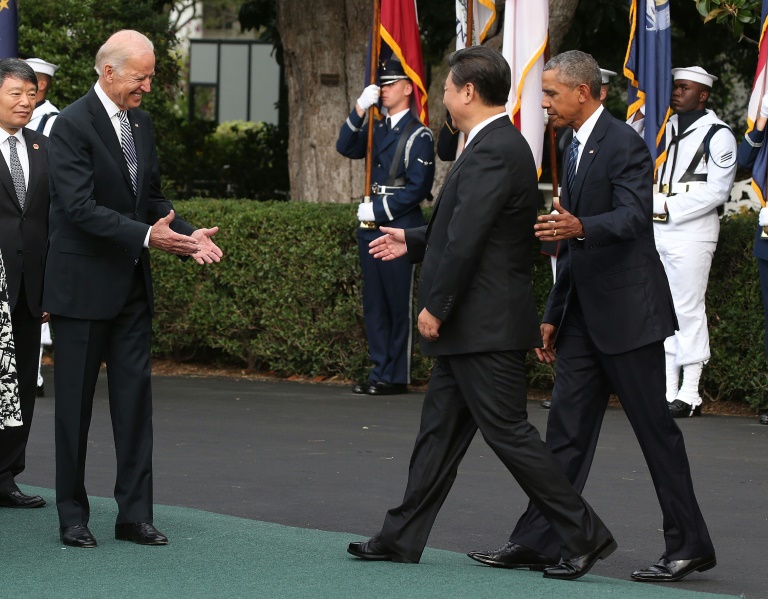
The call, which is expected this week but has yet to be finally scheduled, will be the fifth between Xi and Biden since the Democrat took office in 2021.

– Relationship tending –

Describing US-China ties as “one of the most consequential bilateral relationships in the world,” Kirby said Biden and Xi would cover “everything from the tensions over Taiwan, to the war in Ukraine, as well as how we better manage competition between our two nations, certainly in the economic sphere.”

“There’s a lot of focus on security challenges and tensions particularly in the Indo-Pacific region — with respect to Taiwan, with respect to the territorial claims in the South and East China Seas, but there’s also there’s also economic competition.”

One of the main goals of the call will be broadly what Kirby called Biden’s China “relationship tending.”

“He wants to make sure that the lines of communication with President Xi on all the issues, whether they’re issues again that we agree on or issues where we have significant difficulty with — that they can still pick up the phone and talk to one another candidly,” Kirby said.

One irritant in the relationship likely to come up is a reported plan by the speaker of the House of Representatives, Biden ally Nancy Pelosi, to visit Taiwan.

As second in line of succession to the US presidency, the speaker requires a significant security detail when she travels abroad and reports of her trip have infuriated Beijing, which claims sovereignty over Taiwan.

Kirby said he wanted to “stress the speaker has not announced any travel.” 

EU to cut Russian gas use as missiles strike Ukraine

The European Union agreed to reduce gas consumption to break its dependence on Russia Tuesday, as missile strikes on Ukraine’s Black Sea coast cast doubt on a grain export deal.

The effort to help Germany wean itself off Russian gas for the winter came as Turkey announced a meeting in Russia next week between Turkish President Recep Tayyip Erdogan and his Russian counterpart Vladimir Putin.

Erdogan wants Turkey — on good terms with both Moscow and Kyiv — at the centre of diplomatic efforts to halt the five-month war, just as the EU took another big step to cut ties to Moscow.

The EU gas use cut, approved by energy ministers in Brussels, was hailed as an effective response to Russia’s manipulation of its energy wealth as an economic weapon.

The plan nominally commits EU countries to reduce their gas use by 15 percent during the winter, although exceptions were carved out for some countries and Hungary rejected the deal as “useless”. 

“We have made a huge step towards securing gas supplies for our citizens and economies for the upcoming winter,” said Czech industry minister Jozef Sikela, whose country holds the rotating EU presidency.

“I know the decision was not easy, but I think at the end, everybody understands that this sacrifice is necessary,” he added.

Hungary was the only country to oppose the plan, which passed on a majority vote, further isolating Budapest as the only member state reluctant to go further against Russia.

“This is an unjustifiable, useless, unenforceable and harmful proposal that completely ignores national interests,” said Hungarian Foreign Minister Peter Szijjarto.

The deal “serves purely communication purposes, and aims to save the credibility of some Western European politicians”, he added. 

– German ‘mistake’ –

Germany, the EU’s economic powerhouse, is hugely dependent on Russian gas. Berlin takes a major share of the 40 percent of EU gas imports that came from Russia last year. 

“It is true that Germany, with its dependence on Russian gas, has made a strategic mistake but our government is working… to correct this,” German Economy Minister Robert Habeck said. 

The plan asks member states to voluntarily reduce gas use by 15 percent — based on a five-year average for the months in question — starting next month and over the subsequent winter through March.

The target will be adapted to the situation of each country, taking into account their level of stocks and whether or not they have pipelines to share gas. 

Exceptions were given for island states like Ireland, Cyprus and Malta and to Spain or Portugal, which have limited links to the interconnected gas supply grid. 

Baltic countries will be exempted if their electricity connections with Russia’s grid were to be cut.

In the final proposal, EU member countries also rewrote an earlier European Commission plan to give Brussels — rather than the member states — the power to impose gas use cuts in an emergency.

The regulation now foresees the possibility to trigger a “Union alert” that would make the target mandatory, but the decision would lie with member states, a statement said.

The EU deal landed a day after Gazprom said it is cutting daily gas deliveries intended for Europe to about 20 percent of capacity from Wednesday.

Gazprom claimed technical reasons for choking off supply, but EU Energy Commissioner Kadri Simson dismissed this claim.

“This is a politically motivated step and we have to be ready for that and exactly for that reason the pre-emptive reduction of our gas demand is a wise strategy,” she said.

The extent of Russia’s split with the West over Ukraine was also underlined by Moscow’s announcement that it would quit the International Space Station after 2024.

Until now space exploration was one of the few areas where cooperation between Russia, the United States and its allies had not been wrecked by tensions over Ukraine and elsewhere.

The decision to leave the ISS programme “has been made”, Roscosmos chief Yury Borisov told Putin.

– ‘Difficult’ winter  –

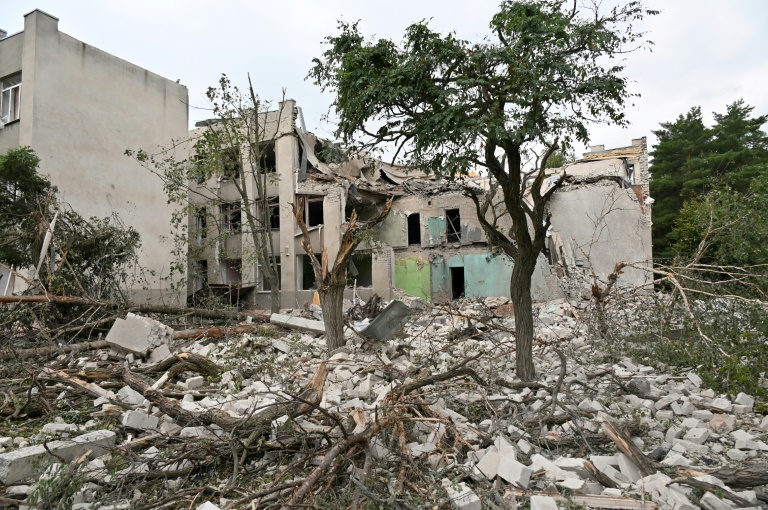
Meanwhile, fighting continued in Ukraine. Kyiv said Russian forces launched multiple missile strikes at targets on the Black Sea coast near the southern port city of Odessa and in Mykolaiv. 

The attacks come days after Russian strikes hit Odessa called into question a breakthrough deal to resume exports of grain from Ukraine, that have been disrupted by Moscow’s invasion.

Rescuers were working on the ground near Odessa where “residential buildings” near the coast were hit in the strikes, Ukraine’s southern military command said on Facebook.

In the east, Kramatorsk’s mayor Oleksandr Goncharenko said he was worried about how tens of thousands of mostly elderly residents would cope in the coming months without any gas to keep them warm.

“This winter will be very difficult,” he said.

He said that Ukrainian forces would have to push the Russians back at least 20 kilometres (12 miles) to be able to make repairs to broken gas pipes.

He called for more long-range weapons from Western allies to help repel the enemy.

Close Bitnami banner
Bitnami