US Business

Honduras extradites alleged drug matriarch to the US

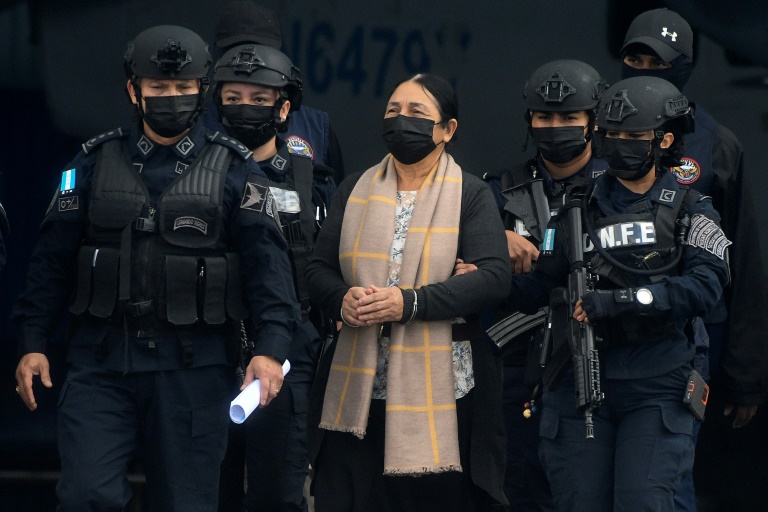
Honduras on Tuesday extradited Herlinda Bobadilla, a 61-year-old alleged gang leader arrested in a shootout that killed one of her sons, to the United States on drug charges.

A US indictment alleges Bobadilla, also known as Chinda, and two of her sons led the “Los Montes” drug cartel — one of the largest in Honduras.

Los Montes is “responsible for the distribution of multi-ton quantities of cocaine into the United States valued at millions of US dollars,” the indictment said.

The clan matriarch was captured with three other people in the mountainous department of Colon in the country’s northeast in May.

One of her sons, Tito, was killed in a shootout. Another fled and is still on the run.

The trio had allegedly taken control of Los Montes after Bobadilla’s other son, Noe Montes-Bobadilla, was arrested and extradited to the United States in 2017 and subsequently sentenced to 37 years in jail for drug trafficking.

In handcuffs and surrounded by members of the special forces, Bobadilla was taken Tuesday to the air force base at Toncontin near the capital Tegucigalpa.

She was handed over to six members of the US Drug Enforcement Administration (DEA) and escorted onto a plane that took off for the United States.

She will be tried in the Eastern District Court of Virginia on a charge of conspiracy to distribute cocaine to be “unlawfully imported into the United States,” according to the indictment.

Honduras is a major transit country for Colombian cocaine and other narcotics headed mainly to the United States.

The US had offered rewards of up to $5 million for information leading to the capture of Bobadilla and her sons.

In April, former Honduran president Juan Orlando Hernandez was also extradited to the United States on drug charges just over a year after his brother Tony was sentenced in New York to life in prison.

In May, Honduran former police chief Juan Carlos Bonilla was also sent to the United States to stand trial for allegedly supervising drug trafficking operations on behalf of his boss, Hernandez.

Shopify cuts staff as tech firms tighten belts

Canadian e-commerce platform Shopify laid off about 10 percent of its workers Tuesday as a pandemic-driven boom in online shopping has waned.

The reduction in workforce came while US tech giants scale back or even pause hiring due to economic conditions roiled by inflation and the war in Ukraine.

Most of the layoffs would be in areas not involved in building products, Shopify chief executive Tobias Lutke said in an email to employees that the firm posted online.

Shopify beefed up its team as online shopping boomed during the pandemic, gambling that the lifestyle shift would remain even when restrictions eased, Lutke told workers.

“It’s now clear that bet didn’t pay off,” Lutke said. “The next part of the journey will involve fewer teammates than we have picked up along the way.”

Based on the firm’s previous reporting of about 10,000 employees, the job cuts appear poised to impact about 1,000 workers.

The rate of online shopping is about where data projected it would be had there not been a pandemic, Lutke told employees.

“Ultimately, placing this bet was my call to make and I got this wrong,” Lutke said.

Shopify provides merchants and creators tools to set up online shops of their own, with payments, marketing and other features built into the platform.

From Amazon to social networking star Facebook, US tech firms that once grew with abandon have reined in hiring to endure tumultuous times.

Internet giants that saw business boom during the pandemic have taken a hit from inflation, war, supply chain trouble and people returning to pre-Covid lifestyles.

Corporate belt-tightening was a common theme as big tech firms reported earnings from the first three months of this year, and could be focused on anew as second-quarter earnings are reported in coming days.

Snapchat’s owner plans to “substantially” slow recruitment after bleak results disclosed last week caused the share price to plummet.

Snap reported that its loss in the recently ended quarter nearly tripled under conditions “more challenging” than expected.

Firefighters make progress battling latest California blaze

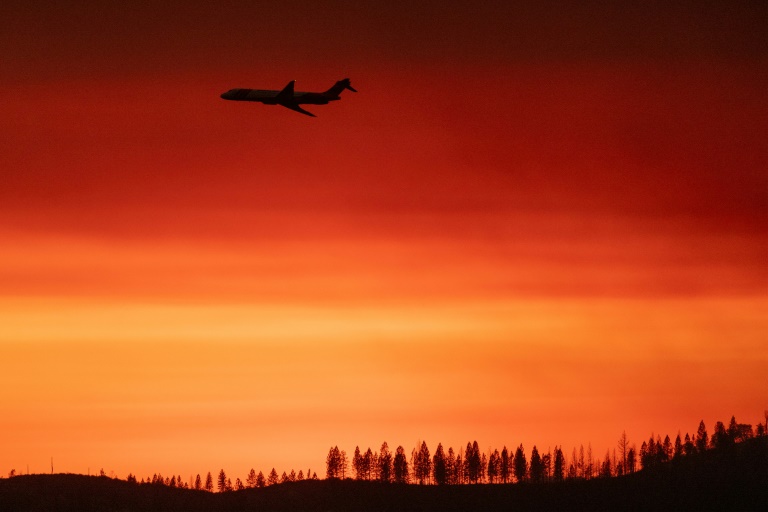
Firefighters made progress battling California’s largest wildfire of the summer on Tuesday, with more than one-quarter of the blaze near Yosemite National Park contained.

The Oak Fire in central California broke out on Friday and spread rapidly, destroying 41 buildings and forcing thousands to evacuate.

By Tuesday, nearly 3,000 firefighters and 24 helicopters at the scene had achieved some success containing the blaze, aided by slightly higher humidity levels, which are forecasted to increase further in the coming days.

Jonathan Pierce, a California fire department spokesman, told AFP that efforts to curtail the spread of the blaze could soon be aided as it approaches areas already ravaged by wildfires from recent years.

“If this fire hits the Ferguson fire scar, it will slow down a little bit because there is less fuel there,” he said.

“That fire was as recent as 2018, so all the vegetation that has come back will be more thin than a lot of the vegetation that has not been burnt.”

So far, the Oak Fire has burnt 18,000 acres — the largest by area this year, but relatively minor compared to the mega-blazes that have engulfed hundreds of thousands of acres in recent years.

Its spread has been driven by an abundance of combustible fuel following years of drought and hot, dry weather conditions.

California Governor Gavin Newsom on Saturday declared a “state of emergency” in Mariposa County, citing “conditions of extreme peril to the safety of persons and property.”

The Oak Fire is burning just a few miles from the smaller Washburn Fire, which briefly threatened Yosemite’s rare giant sequoia trees earlier this month. 

In recent years, California and other parts of the western United States have been ravaged by huge and fast-moving wildfires, driven by a warming climate.

The fire comes as the usually cooler Pacific Northwest is in the grip of extreme temperatures, forecast to top 100 degrees F (38C) in parts of Oregon.

Parts of the South-Central United States including Texas are also experiencing sweltering heatwaves.

But the Southwest is seeing monsoonal moisture, bringing heavy showers and thunderstorms to parts of the region, including sections of Arizona and Utah. 

Lufthansa to cancel nearly all German flights Wednesday

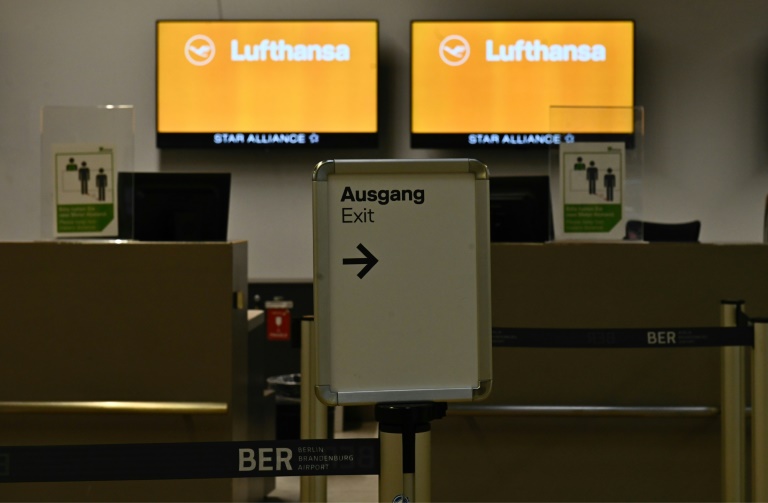
German national carrier Lufthansa said it would have to cancel almost all flights at its domestic hubs in Frankfurt and Munich on Wednesday because of a planned strike by ground crew, adding to a summer of travel chaos across Europe.

The one-day walkout called by Germany’s powerful Verdi union will have a “massive impact”, Lufthansa said in a statement on Tuesday.

More than 1,000 flights will be scrapped, including some already on Tuesday, affecting around 134,000 passengers.

“Lufthansa will have to call off almost the entire flight programme at its hubs in Frankfurt and Munich for Wednesday,” the group said, adding that a knock-on effect on some flights scheduled for Thursday and Friday could not be ruled out.

The strike — scheduled to last from 0145 GMT on Wednesday until 0400 GMT on Thursday — comes as ground workers seek a higher pay rise than the one offered by Lufthansa so far.

The airline said it cancelled 45 long-haul flights due to depart on Tuesday and arrive in Germany on Wednesday, stranding nearly 7,500 passengers in Asia, South America and the United States.

The stoppage promises to bring more pain to a turbulent summer for air travel across Europe.

The relaxation of coronavirus rules has boosted demand, but chronic staff shortages have left passengers facing flight disruptions, long queues and lost luggage.

The Verdi union, representing around 20,000 Lufthansa ground staff, is seeking a 9.5-percent pay rise, or at least 350 euros ($360) per month. It also wants a minimum hourly wage of 13 euros.

The union has said management’s offer so far “does not come close to compensating for inflation” which stood at 7.6 percent in Germany last month.

Lufthansa has countered that it has offered “very substantial pay increases” amounting to more than 10 percent for workers in the lowest wage categories, and a six-percent increase for higher-paid staff.

“The early escalation of a previously constructive collective bargaining round is causing enormous damage,” said Lufthansa labour director Michael Niggemann.

Germany’s aviation sector currently has a shortage of more than 7,000 employees, the nation’s IW economic institute calculated recently.

Many airport workers found jobs in other sectors when travel demand collapsed during the pandemic, and they have not returned now that tourism has bounced back, the economists found.

Slain Al Jazeera journalist's family in Washington to press for probe

The family of slain Palestinian-American journalist Shireen Abu Akleh on Tuesday pressed the United States for an independent probe and accountability from Israel on a visit to Washington at the invitation of Secretary of State Antony Blinken.

The family, which is also meeting lawmakers, said it was calling for the United States to launch its own “thorough, credible independent and transparent investigation” into Abu Akleh’s murder.

“For far too long, the United States has enabled Israel to kill with impunity by providing weapons, immunity, and diplomatic cover,” Shireen’s brother Tony Abu Akleh and her niece and nephew said in a statement.

“Impunity leads to repetition. We are here to do our part to ensure that this cycle ends,” they said.

“If we allow Shireen’s killing to be swept under the rug, we send a message that the lives of US citizens abroad don’t matter, that the lives of Palestinians living under Israeli occupation don’t matter, and that the most courageous journalists in the world, those who cover the human impact of armed conflict and violence, are expendable.”

Shireen Abu Akleh, an Al Jazeera journalist and a prominent Palestinian reporter, was killed on May 11 as she covered an Israeli operation in the West Bank.

The United States on July 4 released a statement saying she was likely shot by Israeli fire but that there was no evidence her killing was intentional and that the bullet was too damaged for a conclusive finding.

The statement outraged Abu Akleh’s family and Palestinian leaders who say that the United States is not seeking accountability from Israel over the death of the journalist, who also held US citizenship.

Israel says it is still probing her death and rejects suggestions it targeted a journalist. 

Abu Akleh’s family unsuccessfully sought to meet President Joe Biden when he visited Israel and the West Bank earlier this month.

Blinken, however, invited the family to visit Washington, National Security Advisor Jake Sullivan said during the trip.

Blinken had spoken earlier to her family by phone and publicly criticized Israel for using force at her funeral, when police grabbed Palestinian flags and pallbearers struggled not to drop her casket.

Stocks slide as gas prices and inflation erode confidence

Eurozone and US stocks sank on Tuesday on gas supply fears and renewed concerns about the impact of inflation.

In Europe, the natural gas reference price Dutch TTF surged nearly 13 percent to 203 euros ($205) per megawatt hour, one day after Russia’s Gazprom said it would cut daily gas deliveries to Europe via the Nord Stream pipeline.

“With no clear timeline for when capacity is likely to increase, the prospect of further uncertainty over gas supplies is weighing on European markets today,” CMC Markets analyst Michael Hewson told AFP.

Frankfurt’s DAX slumped 0.9 percent while the CAC in Paris shed 0.4 percent. 

“The euro is also under pressure as it becomes increasingly apparent that a slowing economy will make it increasingly difficult for the ECB to hike aggressively as we head into the winter months. Good luck raising rates against that sort of backdrop,” he added.

It fell by more than one percent to under $1.0120 at one point.

Eurozone bond yields also fell as investors fled to the relative safety of government debt.

Gazprom will cut gas deliveries to 33 million cubic metres a day — about 20 percent of the pipeline’s capacity — from Wednesday.

That has heightened market worries over supplies during the northern hemisphere winter later this year.

At the same time, European Union member states have reached agreement on how to cut their consumption of gas by 15 percent and reduce their dependence on Russian energy.

Gas prices remain way below the record March peak of 345 euros struck after Russia launched its assault on Ukraine.

EU states have accused Russia of squeezing supplies in retaliation for Western sanctions.

Elsewhere Tuesday, Asian stock markets closed mixed.

Investors welcomed news that e-commerce giant Alibaba would seek a primary listing in Hong Kong, which could pave the way for it to be traded by mainland Chinese investors.

Wall Street stocks slid, with a profit warning by Walmart rattling nerves about the impact of inflation on the economy and interest rates.

The retailer said it expects its earnings per share in its non-standard second quarter, which wraps up at the end of this month, to be down by 8-9 percent with an even bigger reduction next year.

Its shares were down around eight percent in morning trading.

“The basis for Walmart’s warning, though, is the real issue for the broader market,” said Patrick J. O’Hare at Briefing.com.

The retailer said food and fuel inflation was pushing consumers to defray discretionary spending on general merchandise.

“That is causing concerns about a trickle-down effect to other retailers, as well as suppliers to Walmart, that is weighing on sentiment and earnings expectations,” said O’Hare.

He said this was also fanning fears the US Federal Reserve, which began a two-day meeting Tuesday, will pursue aggressive rate hikes to tame inflation despite the risk of pushing the US economy into recession.

The International Monetary Fund also cut its forecast for global growth this year by four-tenths of a point to 3.2 percent surging inflation and severe slowdowns in the United States and China, the world’s two largest economies.

IMF chief economist Pierre-Olivier Gourinchas said the United States has only a slim chance of avoiding a downturn.

“The current environment suggest that the likelihood that the US economy can avoid a recession is actually quite narrow,” he said as the IMF cut its forecast for US economic growth this year by a drastic 1.4 percentage points to 2.3 percent.

– Key figures at around 1530 GMT –

New York – Dow: DOWN 0.6 percent at 31,798.59 points

EURO STOXX 50: DOWN 0.8 percent at 3,575.36

Frankfurt – DAX: DOWN 0.9 percent at 13,096.93 (close)

Paris – CAC 40: DOWN 0.4 percent at 6,211.45 (close)

London – FTSE 100: FLAT at 7,306.28 (close)

Tokyo – Nikkei 225: DOWN 0.2 percent at 27,655.21 (close)

Hong Kong – Hang Seng Index: UP 1.7 percent at 20,905.88 (close)

Shanghai – Composite: UP 0.8 percent at 3,277.44 (close)

Euro/dollar: DOWN at $1.0122 from $1.0223 Monday

Pound/dollar: DOWN at $1.2024 from $1.2046 

Euro/pound: DOWN at 84.20 pence from 84.83 pence

Dollar/yen: DOWN at 136.63 yen from 136.65 yen

Brent North Sea crude: DOWN 0.5 percent at $104.61 per barrel

West Texas Intermediate: DOWN 1.3 percent at $95.43 per barrel

burs-rl/lcm

Trump returns to Washington for first time since 2020 defeat

Donald Trump is back in Washington Tuesday for the first time since leaving in disgrace 18 months ago and his speech to a right-wing think tank will shed light on whether the Republican is serious about trying to return — as president.

Since taking his last Air Force One flight from Washington to Florida on January 20 last year, Trump has remained the country’s most polarizing figure, continuing his unprecedented campaign to sow doubts about his 2020 election loss to Joe Biden.

For weeks, Washington has been riveted by hearings in Congress on the January 6, 2021, riot by a Trump mob and the defeated president’s attempts to overturn the election.

Now, a short distance away across the same city, Trump will get his say.

With Biden’s approval rating currently below 40 percent and Democrats forecasted to lose control of Congress in November midterm elections, Trump is apparently bullish that he could ride the Republican wave all the way to the White House in 2024.

An announcement is not expected during his speech to the America First Policy Institute, a think tank run by allies.

But the timing of the Washington appearance and the symbolism of the setting reflect Trump’s growing confidence that he has survived the fallout from his supporters’ assault on Congress, emerging with his standing as the biggest name in Republican politics intact. 

A spokesman, Taylor Budowich, said Trump, 76, would look forward.

“President Trump sees a nation in decline that is driven, in part, by rising crime and communities becoming less safe under Democrat policies,” Budowich said in a statement.

“His remarks will highlight the policy failures of Democrats, while laying out an America First vision for public safety that will surely be a defining issue during the midterms and beyond.”

– Attack on democracy –

That Trump is headlining a high-profile Republican event in the US capital, let alone mulling an attempt to recapture the White House in two years, is remarkable.

In the hours after the January 6 riot, even some of his most senior boosters in Congress publicly disowned him. 

But a year and a half later, despite an ever-darkening picture of his attempts to undermine the election, just a handful of Republican lawmakers dare oppose Trump, while the party’s most active fringe embraces his election conspiracy theories.

On the Democratic side, fury at Trump is also providing energy in the run-up to the difficult midterms.

Hearings on a Democratic-run House of Representatives committee have laid out evidence that Trump oversaw nothing less than an attempt to break US democracy, first through trying to rig complex electoral procedures behind the scenes and finally in encouraging a mob to attack legislators certifying his loss.

Facing chatter that at 79 he is too old to be thinking about seeking a second term in 2024, Biden says the specter of another Trump candidacy is one of his main motivations for running again.

On the eve of Trump’s Washington return, Biden lashed out in unusually strong language, describing how police at the Capitol on January 6 “were subject to the medieval hell for three hours, dripping in blood, surrounded by carnage, face to face with the crazed mob that believed the lies of the defeated president.”

Trump, meanwhile, “watched it all happen as he sat in the comfort of the private dining room next to the Oval Office,” Biden said.

– Trump in pole position –

Potential Republican rivals are gaining ground as the negative publicity piles up around Trump.

All eyes are on the progress of Florida Governor Ron DeSantis, who has not declared a bid for the presidency, but has growing stature on the right.

And a recent New York Times/Siena College poll showed that nearly half of Republican primary voters would vote for any Republican other than Trump.

Last week, the right-leaning editorial boards of two newspapers owned by the Murdoch family, the Wall Street Journal and the New York Post, issued harsh critiques of Trump’s behavior during the January 6 calamity.

Trump showed he is “unworthy” of becoming president again, the usually friendly Post wrote.

However, Trump’s agenda portraying America as under attack by illegal immigrants, extreme leftists and the “woke” liberal culture, is unchallenged in the Republican party, while enormously popular commentators on Murdoch-owned Fox News continue to cheer for Trump himself.

Even Trump’s former vice president Mike Pence, whose life was threatened during the Capitol assault and is now touted as a more moderate alternative in 2024, was notably mild about his old boss during a speech at a separate event in Washington on Tuesday.

“I don’t know that the president and I differ on issues. But we may differ on focus,” Pence said of Trump.

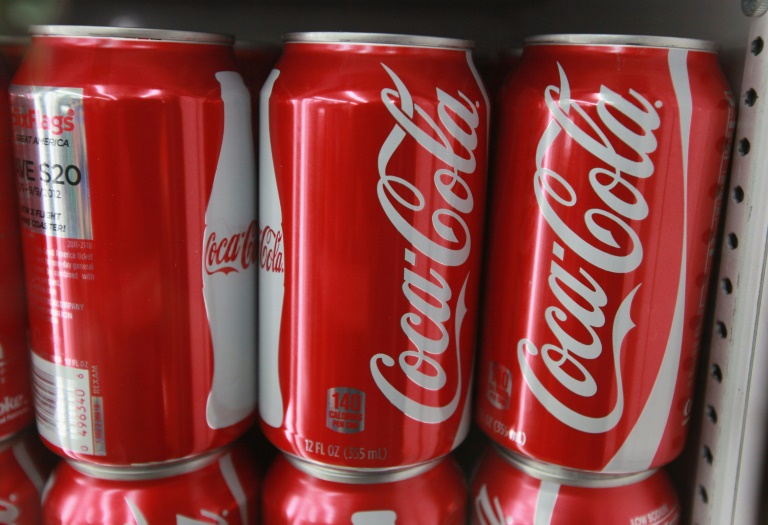
Coca-Cola results boosted by comeback in 'away-from-home' spending

Higher prices and a comeback in away-from-home sales helped Coca-Cola score solid quarterly profits Tuesday in spite of increased operating costs and the drag of the strong US dollar in international markets.

Shares rose after the better-than-expected results, as executives described a relatively limited response to inflation thus far from shoppers.

Among low-income consumers in developed markets, there are “some early signs of trading down… not necessarily in beverages yet,” Chief Executive James Quincey said on a conference call. 

“But then if you’re in the away-from-home channels, the theme parks, the leisure parks, that sort of thing, travel, it’s about as good as it’s ever been.”

Net income fell to $1.9 billion, a 28 percent decline from the same period of last year, in part due to higher costs. Revenues rose 12 percent to $11.3 billion.

With the ebbing of the pandemic, Coca-Cola has been helped by a return in sales tied to experiences, which generally garner higher profit margins compared with those at supermarkets.

The soft drink brand benefited from a 12 percent increase in overall “price/mix,” a category that reflects the venue of the sale, as well as its price. The biggest increases came in Europe/Middle East Africa, Latin America and North America.

An exception was Asia Pacific, where the company flagged China’s Covid-19 lockdowns as a weak area in spite of higher sales in India and the Philippines.

Coca-Cola’s dependence on away-from-home sales “clearly was a disadvantage at the height of Covid” but now is “favorable,” Quincey said. 

In a typical recessionary environment, consumers pull back on big-ticket items before cutting back elsewhere in a cycle that eventually hits groceries, Quincey said.

“You can see in some channels, in some countries, what looks like the beginning of that process,” he said. “It has not gone to us yet.” 

But the beverage giant pointed to a drag from higher operating costs and marketing spending compared to the prior year. The strong US dollar also dented revenues in overseas markets.

Coca-Cola raised some of its forecasts, now seeing “organic” net revenues growth of 12 to 13 percent, up from the prior range of seven to eight percent, when currency effects are excluded. 

However, Coca-Cola also now sees a six percent currency hit in 2022, up from the prior range of two to three percent.

Coca-Cola shares climbed 1.0 percent to $62.79 in morning trading.

Coca-Cola results boosted by comeback in 'away-from-home' spending

Higher prices and a comeback in away-from-home sales helped Coca-Cola score solid quarterly profits Tuesday in spite of increased operating costs and the drag of the strong US dollar in international markets.

Shares rose after the better-than-expected results, as executives described a relatively limited response to inflation thus far from shoppers.

Among low-income consumers in developed markets, there are “some early signs of trading down… not necessarily in beverages yet,” Chief Executive James Quincey said on a conference call. 

“But then if you’re in the away-from-home channels, the theme parks, the leisure parks, that sort of thing, travel, it’s about as good as it’s ever been.”

Net income fell to $1.9 billion, a 28 percent decline from the same period of last year, in part due to higher costs. Revenues rose 12 percent to $11.3 billion.

With the ebbing of the pandemic, Coca-Cola has been helped by a return in sales tied to experiences, which generally garner higher profit margins compared with those at supermarkets.

The soft drink brand benefited from a 12 percent increase in overall “price/mix,” a category that reflects the venue of the sale, as well as its price. The biggest increases came in Europe/Middle East Africa, Latin America and North America.

An exception was Asia Pacific, where the company flagged China’s Covid-19 lockdowns as a weak area in spite of higher sales in India and the Philippines.

Coca-Cola’s dependence on away-from-home sales “clearly was a disadvantage at the height of Covid” but now is “favorable,” Quincey said. 

In a typical recessionary environment, consumers pull back on big-ticket items before cutting back elsewhere in a cycle that eventually hits groceries, Quincey said.

“You can see in some channels, in some countries, what looks like the beginning of that process,” he said. “It has not gone to us yet.” 

But the beverage giant pointed to a drag from higher operating costs and marketing spending compared to the prior year. The strong US dollar also dented revenues in overseas markets.

Coca-Cola raised some of its forecasts, now seeing “organic” net revenues growth of 12 to 13 percent, up from the prior range of seven to eight percent, when currency effects are excluded. 

However, Coca-Cola also now sees a six percent currency hit in 2022, up from the prior range of two to three percent.

Coca-Cola shares climbed 1.0 percent to $62.79 in morning trading.

Croatia opens bridge around Bosnia to get to Dubrovnik

Croatia on Tuesday celebrated the opening of a long-awaited bridge linking its southern Adriatic coast including Dubrovnik with the rest of the country, bypassing a narrow strip of Bosnian territory.

The 2.4-kilometre (1.5-mile) span reaches out from the Croatian mainland to the Peljesac peninsula that connects with the southern part of Croatia’s coastline nestled between the sea and the Dinaric Alps.

Festivities started early Tuesday with musical performances and a boat race, while dozens of pedestrians snapped pictures on the bridge ahead of a ceremony this evening featuring a speech by Croatian Prime Minister Andrej Plenkovic and a video address by Chinese Premier Li Keqiang.    

“This bridge represents the unification of Croatia, joining of the south and the north,” said Ivan Vranjes, a 45-year-old native of Split, who was visiting from abroad. 

During a ceremony in Dubrovnik earlier in the day, the country’s prime minister also praised the completion of the bridge, citing the benefits it will bring ahead of Croatia’s joining of the Schengen free-travel zone.  

“This bridge is not a luxury, it is our necessity,” Plenkovic said. “This is a wonderful day for Croatia.”

The link will bring an end to the untold hours spent by commuters, merchants, and tourists at the Bosnian border and is one of the country’s most ambitious infrastructure projects since Croatia declared independence from Yugoslavia in 1991.

– Balkan patchwork –

It was the bloody dissolution of the federation, however, that left a patchwork of divisions across the Balkans, with the frontiers between its six former republics transformed into international borders.

Bosnia maintained its coastal access in the end, but its small outlet leading to the Adriatic Sea cut right through Croatia. 

As a result, around 90,000 people, including residents in the country’s tourism hotspot of Dubrovnik, remained cut off from the rest of the country until now. 

The hard border brought lines and red tape for traders, and headaches for tourists hoping to get south by road.

Inhabitants of the picturesque region of red wines, pebble beaches and oyster farms are looking forward to the end of their geographic isolation caused by the Bosnian border.

The hours-long waits at the border and fears over missing the day’s last ferry will now become a thing of the past, they say.  

“It was really exhausting and made people living here bitter,” Sabina Mikulic, owner of a hotel, glamping site, and winery in Orebic — the peninsula’s largest town” told AFP.

– EU funded, Chinese made –

The opening of the bridge has been a long time coming and not without controversy. 

Croatia took its first stab at building the bridge in 2007 only for the project to stall five years later due to budgetary constraints.

In 2017, the European Union — which Croatia joined in 2013 — allocated 357 million euros ($365 million), roughly 85 percent of the cost.

A Chinese firm was selected in 2018 to build the bridge — marking the first significant Chinese involvement in an infrastructure project in Croatia.

But not all were happy with the bridge’s construction, with officials in Bosnia claiming it would hamper its maritime access by preventing high-tonnage vessels from entering its lone port. 

Zagreb eventually agreed to increase the height of the bridge to 55 metres (181 feet) in an attempt to quell the dispute.

The opening of the bridge comes as Croatia is angling for a tourism rebound this year as it hopes to attract pre-pandemic levels of visitors.

The country of 3.8 million people attracts millions of tourists every year hoping to soak up the sun along its stunning coast dappled with more than 1,000 islands and islets.

For retired piano teacher Smilja Matic, who has vacationed for years in the Croatian village of Komarna near the entrance to the new bridge, the link to the mainland is a win for locals and tourists alike.

“It means a new life for locals and for people who travel by plane to Dubrovnik, like me. It’s major progress,” she told AFP.

Outside of tourism, the bridge will likely serve as a boon for businesses and traders as well. 

For decades, oyster farmer Mario Radibratovic was subjected to hours of extra travel to bring his perishable shellfish north to market due to waiting times at the border.

But with the opening of the bridge, the journey north will shrink dramatically. 

For the 57-year-old, the opening of the bridge will bring “immeasurable relief”.

“We are finally becoming part of Croatia,” Radibratovic told AFP who farms oysters and mussels in the village of Mali Ston.

“Until now we felt like second-class citizens.”

Close Bitnami banner
Bitnami