US Business

Stocks wobble as markets begin big week

European and American stocks moved in mixed directions Monday as markets began a busy week, with the US Federal Reserve poised to lift interest rates again and some of the world’s biggest companies scheduled to publish their latest earnings reports.

Asian markets ended lower.

The Fed is widely tipped to hike borrowing costs by 0.75 percentage points Wednesday as it battles soaring inflation.

US second-quarter gross domestic product data are due Thursday, with some observers warning it could show a second successive contraction — which is considered a technical recession.

Investors are also awaiting the release of earnings from business titans Apple, Amazon and Google parent Alphabet.

“Recent risk-on moves appear to be on thin ice as markets gear up for another bout of earnings and a crucial Fed rate decision,” said market analyst Joshua Mahony at trading platform IG.

Despite the deluge of market-moving news on the calendar, European stocks had been trading higher across the board until an announcement by Russia’s Gazprom that it was cutting back gas deliveries to Germany due to a faulty turbine, which pulled down the DAX index in Frankfurt.

It ended the day down 0.3 percent, while the CAC in Paris climbed 0.3 percent and London’s FTSE 100 rose 0.4 percent.

“Gazprom and turbine problems aside, today’s more resilient tone appears to suggest that the prospect of further economic weakness might act as a catalyst that could prompt central banks to pare back some of their more hawkish rhetoric when it comes to raising rates,” said Michael Hewson at CMC Markets.

On Wall Street, both the Dow and S&P 500 were showing modest gains in late morning trade, while the tech-heavy Nasdaq Composite was lower.

Markets were roiled last week when the European Central Bank finally began ramping up interest rates to tackle runaway consumer prices in the eurozone.

The ECB had surprised investors Thursday with a bigger-than-expected rate increase of 0.5 percentage points.

Consumer prices are soaring worldwide after economies reopened from pandemic lockdowns and as the war in Ukraine keeps energy prices elevated.

That, in turn, has sparked aggressive rate hikes from major central banks to try and dampen inflationary pressures.

Federal Reserve chiefs have already said their main priority was bringing inflation down from four-decade highs, even at the expense of growth.

“We still see further downside for risky assets as recession fears accumulate and central banks remain committed to fighting inflation at the expense of growth,” said Standard Chartered strategist Eric Robertsen.

Others warned that while inflation could begin to ease, the Fed could still push borrowing costs to around five percent and was unlikely to lower rates as soon as many traders hope.

– Key figures at around 1530 GMT –

New York – Dow: UP 0.3 percent at 31,996.90 points

EURO STOXX 50: UP 0.2 percent at 3,604.16

London – FTSE 100: UP 0.4 percent at 7,306.30 (close) 

Frankfurt – DAX: DOWN 0.3 percent at 13,210.32 (close)

Paris – CAC 40: UP 0.3 percent at 6,237.55 (close)

Tokyo – Nikkei 225: DOWN 0.8 percent at 27,699.25 (close)

Hong Kong – Hang Seng Index: DOWN 0.2 percent at 20,562.94 (close)

Shanghai – Composite: DOWN 0.6 percent at 3,250.39 (close)

Euro/dollar: UP at $1.0214 from $1.0213 Friday

Pound/dollar: UP at $1.2041 from $1.1999 

Euro/pound: DOWN at 84.82 pence from 85.11 pence

Dollar/yen: UP at 136.70 yen from 136.12 yen

Brent North Sea crude: UP 1.7 percent at $104.90 per barrel

West Texas Intermediate: UP 1.6 percent at $96.25 per barrel

burs-rl/raz

Adele announces rescheduled Vegas residency dates

Adele delighted fans Monday by detailing the dates for her rescheduled shows in Las Vegas, after postponing them earlier this year the day before she was due to start.

The residency entitled “Weekends With Adele” at the Colosseum at Caesar’s Palace will feature eight extra shows in addition to the 24 rescheduled dates, and is slated to run from November 18, 2022 through March 25, 2023.

“Words can’t explain how ecstatic I am to finally be able to announce these rescheduled shows. I truly was heartbroken to have to cancel them,” the Grammy Award-winning superstar said on her website.

“But after what feels like an eternity of figuring out logistics for the show that I really want to deliver, and knowing it can happen, I’m more excited than ever!”

In a tearful video in January the artist had pushed back the sold-out show saying it wasn’t ready, blaming “delivery delays and Covid.”

“Now I know for some of you it was a horrible decision on my part, and I will always be sorry for that, but I promise you it was the right one,” the 34-year-old said in her statement Monday.

“To be with you in such an intimate space every week has been what I’ve most been looking forward to and I’m going to give you the absolute best of me. Thank you for your patience, I love you.”

Last fall the British performer released her first record in six years — “30” — a cathartic, big-ballad album that lays bare the emotional torture of navigating divorce.

The album’s first single “Easy On Me” reigned over the US and British singles charts for weeks, proving the enduring strength of Adele’s prowess as a hitmaker with broad appeal.

Panama govt, protesters edge closer in talks to end road closures

The Panamanian government and protesters edged closer Monday to an agreement to end a weeks-long living cost revolt that has blocked roads, interrupted food supplies and damaged the economy.

Authorities agreed in the early morning hours to reduce the price of 72 basic consumer items by some 30 percent on average.

“The national government has every intention of continuing dialogue and today has shown it also has the will to reach agreements,” Labor Minister Doris Zapata said on the fifth day of marathon talks in Penonome, 150 kilometers (93 miles) southwest of the capital Panama City.

“There is already the first step on the road to solving the problems of the social crisis that this country is experiencing,” said Fernando Abrego, a spokesman for one of the demonstrators. 

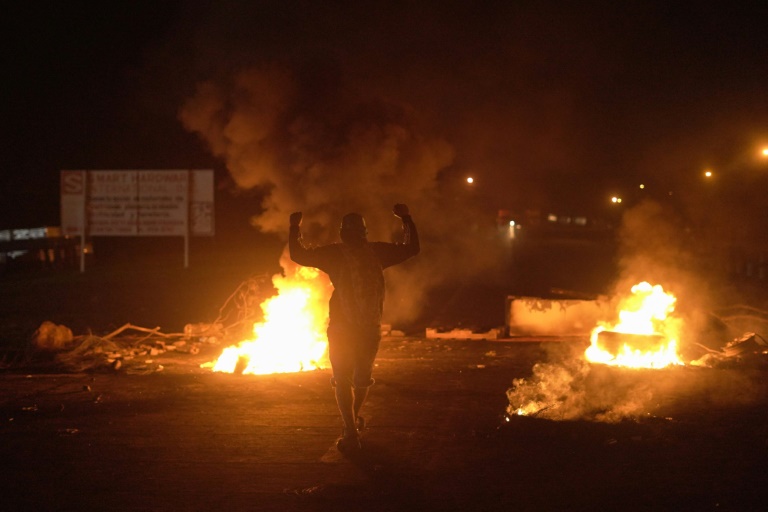
For three weeks, amid worsening economic woes for Panama, protesters demanding lower fuel, food and medicine prices have blockaded the crucial Pan-American Highway and other major roads with stalled trucks and burning tires. Some have clashed with police.

Despite its dollarized economy and impressive growth figures, the country of 4.4 million people has one of the world’s highest rates of social inequality, with poor access to health services, education and clean drinking water in some areas.

The demonstrations have triggered food and fuel shortages in some parts of the country, and the business sector says some $500 million has been lost.

Even before the talks started, the government had lowered the price of 18 basic products and that of fuel from $5.20 per gallon to $3.25 in an unsuccessful bid to end the standoff.

Protesters had demanded a lowering of the price of 82 products and want a limit to be imposed on company profits, a measure the government has rejected.

Other demands include reducing the price of medicines and electricity, increasing investment in education and the public health system, and measures against government corruption.

Luis Sanchez, another spokesman for the protesters, said some roads have been opened in a gesture of good faith.

But the government asked for all blockades to be ended.

“There is a population distressed by the closures,” said Zapata.

Philippines' Marcos Jr unveils economic blueprint for 'turbulent time'

Philippine President Ferdinand Marcos Jr vowed Monday to slash poverty, rein in soaring food prices and boost renewable energy, as he unveiled an ambitious blueprint for his six-year term. 

In his first State of the Nation address, Marcos Jr offered a laundry list of targets, ranging from getting children back into classrooms, easing the debt burden of farmers, and expanding internet access.  

Unlike his predecessor Rodrigo Duterte, who used to frequently go off script in a stream of consciousness and threaten to kill people, Marcos Jr stuck to a prepared speech that was methodical and heavy on numbers.

After inheriting an economy ravaged by Covid-19 lockdowns and inflation, the new president expressed cautious optimism for the future — even as the war in Ukraine and supply chain disruptions drive up food and fuel prices.

“I do not intend to diminish the risks and challenges that we face in this turbulent time in global history,” he told the audience of lawmakers, diplomats and judges.

“And yet I see sunlight filtering through these dark clouds. We have assembled the best Filipino minds to help navigate us through this time of global crisis.”

Marcos Jr, who is the son and namesake of the country’s late dictator, spoke for 74 minutes without mentioning human rights, corruption or peace talks with militant groups. 

Instead, the 64-year-old scion focused on the economy, clean energy, agriculture, and helping poor Filipinos.

Marcos Jr vowed to more than halve the poverty rate to single digits by the end of his term and offer financial relief to many farmers, including forgiving debts.

Renewable energy was “at the top of our climate agenda”, he said, insisting it was time to reconsider building nuclear power plants in the disaster-prone country.

He also pledged to boost agricultural productivity and bring down food prices.

“These will not be done in one day, one month or one year. But we need to start now,” he said.

– Peaceful rallies – 

Marcos Jr was swept to power by a landslide in the May 9 elections, completing his family’s remarkable comeback from pariahs in exile to the peak of political power.

Hours before his speech, several thousand protesters marched peacefully along a major avenue to oppose his victory and criticise his first weeks in office.

“He’s just sitting around, he’s busying himself revising history instead of doing the urgent work of stopping the rising costs of commodities especially food, distributing land to farmers and raising the wages of workers,” said Angelo Suarez, who volunteers for an agricultural workers union.

Outside Congress, thousands of Marcos Jr supporters wearing red, his campaign colour, also gathered, waving the Philippine flag and holding signs with slogans such as “Progress”.

Congressman Ralph Recto said the new president’s speech was “brave, not boring” and gave the country a “fiscal reality check”.

The higher cost of living is worsening the financial misery of millions of Filipinos already struggling to feed their families.

The central bank recently raised interest rates for the third straight month as it struggles to rein in surging energy prices.

Inflation hit 6.1 percent in June, the highest level in nearly four years.

Stock markets drift lower as traders prepare for big week

Equity markets in Asia and Europe slipped Monday at the start of a key week for equities as the Federal Reserve prepares to lift interest rates again and some of the world’s biggest companies report earnings.

While the US central bank is widely expected to hike borrowing costs by 75 basis points, traders will be poring over policymakers’ views on the outlook for the world’s biggest economy as they try to rein in inflation while nurturing growth.

The decision comes a day before second-quarter gross domestic product data is released, with some observers warning it could show a second successive contraction, which is considered a technical recession.

All three main indexes on Wall Street ended last week with a loss, ending a three-day rally, following a big data miss on the crucial services sector.

Asia and Europe fared little better, with Tokyo, Hong Kong, Shanghai, Sydney, Taipei, Mumbai, Manila, Jakarta and Wellington all in the red, while London, Paris and Frankfurt dropped in early trade.

There were small gains in Singapore, Bangkok and Seoul.

Investors are also awaiting the release of earnings from business titans Apple, Amazon and Google parent Alphabet.

The figures will provide a clearer idea about the impact of surging inflation and rising interest rates on consumer spending and companies’ bottom lines.

But analysts remain cautious about the outlook, while attention on trading floors turns from rising prices to economic growth, with some saying a slowdown could allow banks to ease up on their monetary tightening.

Fed chiefs have already said their main priority was bringing inflation down from four-decade highs, even at the expense of growth.

“We still see further downside for risky assets as recession fears accumulate and central banks remain committed to fighting inflation at the expense of growth,” said Standard Chartered strategist Eric Robertsen.

And Stephen Innes at SPI Asset Management added: “While rising jobless claims, softer home sales, and a buildup in gasoline inventory show the Fed front-loading rate hikes are causing a slowdown and bringing inflation under control, the issue is at what cost.”

Others warned that while inflation could begin to ease, the Fed could still push borrowing costs to around five percent and were unlikely to lower rates as soon as many traders hope.

The economic slowdown — and the expected hit to demand — continues to put pressure on oil prices, with both main contracts well down Monday.

Crude has given up most of the gains seen since Russia’s invasion of Ukraine, and Vandana Hari, of Vanda Insights, said she saw further losses.

“While prices have been volatile, I expect renewed downward pressure on crude,” she said, adding that the Fed decision “will likely serve as a fresh reminder of the economic headwinds ahead”.

– Key figures at around 0810 GMT –

Tokyo – Nikkei 225: DOWN 0.8 percent at 27,699.25 (close)

Hong Kong – Hang Seng Index: DOWN 0.2 percent at 20,562.94 (close)

Shanghai – Composite: DOWN 0.6 percent at 3,250.39 (close)

London – FTSE 100: DOWN 0.3 percent at 7,258.20

Euro/dollar: DOWN at $1.0206 from $1.0220 on Friday

Pound/dollar: UP at $1.2008 from $1.1998 

Euro/pound: DOWN at 85.00 pence from 85.07 pence

Dollar/yen: UP at 136.40 yen from 136.05 yen

West Texas Intermediate: DOWN 1.6 percent at $93.22 per barrel

Brent North Sea crude: DOWN 1.3 percent at $101.88 per barrel

New York – Dow: DOWN 0.4 percent at 31,899.29 (close)

— Bloomberg News contributed to this story —

Russia says Odessa strikes hit Western arms

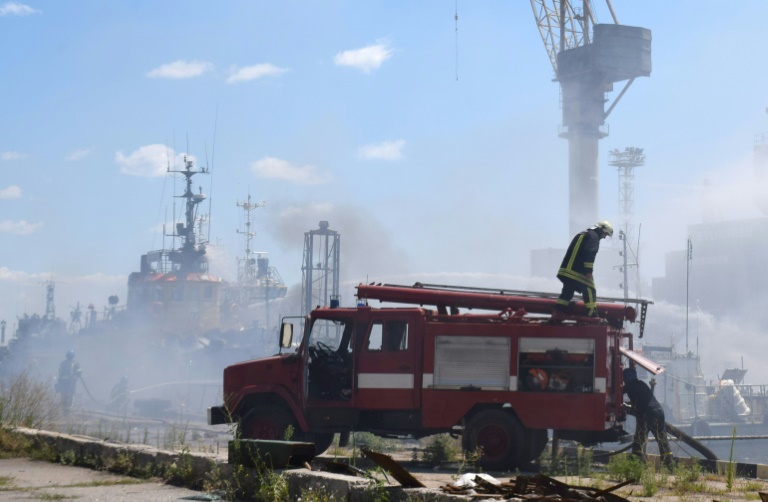
Russia said its missile barrage on a Ukrainian port central to a landmark grain export deal had destroyed Western-supplied weapons, after the attack sparked an outcry from Ukraine’s allies.

Russian Foreign Minister Sergei Lavrov was embarking on a tour of several countries in Africa and on his first stop in Egypt Sunday sought to reassure Cairo that Russian grain supplies would continue.

Ukrainian President Volodymyr Zelensky denounced Saturday’s strike on the Odessa port as “Russian barbarism” and said it amounted to desperation after the warring sides struck a deal to release exports from the facility.

“Even the occupiers admit that we will win. We hear it in their conversations –- all the time, in what they tell their loved ones when they contact them,” he said Sunday in his nightly address.

Turkey helped broker the accord and said immediately after the double cruise missile hits that it had received assurances from Moscow that Russian forces were not responsible.

But Russia’s defence ministry rolled back on the denial Sunday, saying the strikes had destroyed a Ukrainian military vessel and arms delivered by Washington.

“High-precision, long-range missiles launched from the sea destroyed a docked Ukrainian warship and a stockpile of anti-ship missiles delivered by the United States to the Kyiv regime,” it said.

“A Ukrainian army repair and upgrade plant has also been put out of order.”

The strikes have cast a shadow over the milestone accord — that was hammered out over months of negotiations and signed in Istanbul — to relieve a global food crisis.

– ‘Order of peace’ –

United Nations chief Antonio Guterres, who presided over the signing ceremony Friday, “unequivocally” condemned the attack. The United States meanwhile said it “casts serious doubt” over Russia’s commitment to the deal.

Western nations repeated their condemnation of Russia’s military assault on Ukraine after the strikes.

German President Frank-Walter Steinmeier called the invasion a war against the unity of Europe.

“We must not let ourselves be divided, we must not let the great work of a united Europe that we have begun so promisingly be destroyed,” he said in a speech Sunday.

Cereal prices in Africa — the world’s poorest continent where food supplies are critically tight — surged because of an exports slump.

Lavrov, who will visit Uganda, Ethiopia and Congo-Brazzaville on the tour, told his Egyptian counterpart Sameh Shoukry that Russia would meet grain orders.

“We confirmed the commitment of Russian exporters of cereal products to meet their orders in full,” he said in a press conference.

Zelensky said the strikes on Odessa showed Moscow could not be trusted to keep its promises.

Under the deal brokered by Turkish President Recep Tayyip Erdogan and Guterres, Odessa is one of three designated export hubs.

Ukrainian officials said grain was being stored in the port at the time of the strike, but food stocks did not appear to have been hit.

There was no response from Moscow until Sunday, but Turkish Defence Minister Hulusi Akar said before that Russia had denied carrying out the attack.

– Kherson ‘liberated’ by September –

Huge quantities of wheat and other grain have been blocked in Ukrainian ports by Russian warships and the mines Kyiv laid to avert a feared amphibious assault.

Zelensky has said around 20 million tonnes of produce from last year’s harvest and the current crop would be exported under the agreement, estimating the value of Ukraine’s grain stocks at around $10 billion.

Diplomats expect grain to only start fully flowing by mid-August.

The agreement in Istanbul has brought little reprieve on the battlefield where Russian forces were carrying out bombardments across the sprawling front line over the weekend, Ukraine’s presidency said Sunday.

It said among attacks in the industrial east and south, four Russian cruise missiles Saturday had hit residential areas in the southern city of Mykolaiv, injuring five people, including a teenager.

In a devastated village near Ukraine’s southern front line Stanislav, a 49-year-old who joined Ukraine’s armed forces after Russia’s invasion, said many people were afraid.

“But what can we do, we need to defend our homeland, because if I don’t do it then my children will be forced to do it,” he said.

An official in the nearby Kherson region in the south said a Ukrainian counter-offensive for the territory Russia captured early in the invasion would be over by September.

“We can say that a turning point has occurred on the battlefield. We are switching from defensive to counteroffensive actions,” Sergiy Khlan, an aide to the head of Kherson region, said in an interview with Ukrainian television.

burs-jbr/jfx/mtp

From war to peace: Vietnam's rubber sandals march on

Made from recycled military truck or aircraft tyres, Vietnam’s hand-made rubber sandals, the famously rugged footwear of the Viet Cong, have travelled vast distances over the decades.

In the bustling capital Hanoi, all kinds of shoes are on sale: from $1,000 Gucci heels to $2 plastic slippers.

But for those seeking a nod to yesteryear, the hard-soled rubber sandals — evocative of the communist state’s resourcefulness under fire — are available at markets and small stores alike.

– Uncle Ho’s sandals –

Dao Van Quang paid $8 for a standard pair at a shop outside a Hanoi museum devoted to the country’s revolutionary leader — and dedicated rubber sandal wearer — Ho Chi Minh.

“I wore rubber sandals when I was at school, in the 1980s,” the 47-year-old from central Quang Nam province told AFP.

“They are of historical value, easy to wear and look nice.”

At the museum, the well-worn pair belonging to the former North Vietnam president known affectionately as “Uncle Ho” are displayed in a glass box with his Chinese-style uniform.

Ho’s sandals have even been lauded in national songs praising his simple lifestyle.

“These sandals helped Uncle travel a long way, and with them, he overcame difficulties to build the country,” the lyrics of one song say.

The Vietnamese first began making rubber sandals in the late 1940s, during the First Indochina War against the French, using tyres from an ambushed army truck.

They found the sandals were cheap to make and survived well in wet, muddy and hilly conditions, as soldiers marched through thick jungle.

Later, during the Vietnam War, the simple but sturdy footwear became a symbol of the communist Viet Cong forces’ ingenuity in their fight against the United States’ military might.

Even in peacetime, the design remains popular for sustainability reasons, said Nguyen Duc Truong, who has spent his life crafting the shoes.

“I think there is still much potential for rubber sandals,” the 58-year-old said.

– Rising popularity –

Vietnam is one of the world’s top four countries for shoe manufacturing and its factories produce pairs for major brands such as Nike and Adidas.

The footwear export industry generated nearly $12 billion in the first half of this year, according to government figures.

While the humble rubber sandal does not quite generate the same revenue, it is high on heritage value and its popularity as a casual shoe is rising.

Vua Dep Lop, which started as a small business and became Vietnam’s rubber sandal leader, sells the footwear for around $10 a pair.

At its workshop in Hanoi, shoemakers use sharp knives and chisels to craft the sandals from huge tyres that are almost the same height as the workers.

While the traditional black models are bestsellers, a colourful modern twist is helping the sandal appeal to a younger demographic.

Nguyen Tien Cuong took over the business from his father-in-law in 2011, and has sold more than half a million pairs of rubber sandals since then.

“We tried to make them softer and more fashionable. After changing the style and format, we started having more customers,” he said. 

Thousands evacuated as California wildfire grows

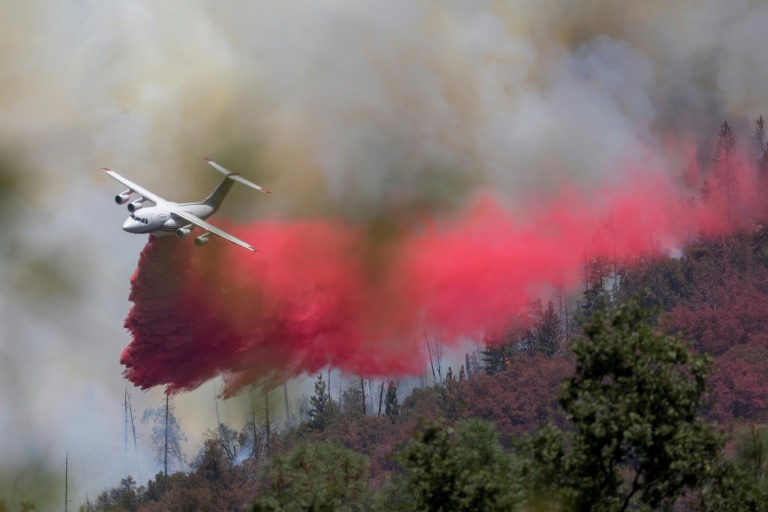
A fierce California wildfire expanded Sunday, burning several thousand acres and forcing evacuations as tens of millions of Americans sweltered through scorching heat.

More than 2,000 firefighters backed by 17 helicopters have been deployed against the Oak Fire, which broke out Friday near Yosemite National Park, the California Department of Forestry and Fire Protection (CAL FIRE) said in a report.

But two days after it began, the blaze has already consumed more than 15,600 acres (6,313 hectares) and remains zero percent contained, the report said, adding that heat combined with low humidity would “hamper” efforts Sunday.

“Extreme drought conditions have led to critical fuel moisture levels,” according to CAL FIRE’s report.

Described as “explosive” by officials, the blaze has left ashes, gutted vehicles and twisted remains of properties in its wake, as emergency personnel worked to evacuate residents and protect structures in its path.

It has already destroyed 10 properties and damaged five others, with thousands more threatened.

More than 6,000 people had been evacuated, said Hector Vasquez, a CAL FIRE official.

“It was scary when we left because we were getting ashes on us, but we had such a visual of this billowing. It just seemed like it was above our house and coming our way really quickly,” one woman who had to be evacuated, Lynda Reynolds-Brown, told local news station KCRA.

“We started getting our stuff together, and that’s when I went back up the hill and looked and I’m like, ‘Oh my God.’ It was coming fast,” her husband Aubrey Brown told the station.

California Governor Gavin Newsom on Saturday declared a state of emergency in Mariposa County, citing “conditions of extreme peril to the safety of persons and property.”

In recent years, California and other parts of the western United States have been ravaged by huge and fast-moving wildfires, driven by years of drought and a warming climate.

– Gore blasts ‘inaction’ –

Evidence of global warming could be seen elsewhere in the country, as 85 million Americans in more than a dozen states were under a weekend heat advisory.

The crisis prompted former vice president Al Gore, a tireless climate advocate, to issue stark warnings Sunday about “inaction” by US lawmakers.

Asked whether he believes US President Joe Biden should declare a climate emergency, which would grant him additional policy powers, Gore was blunt.

“Mother Nature has already declared it a global emergency,” he told ABC News talk show “This Week.”

And “it’s due to get much, much worse, and quickly,” he said separately on NBC.

But he also suggested that recent crises, including deadly heat waves in Europe, could serve as a wake-up call for members of US Congress who have so far refused to embrace efforts to combat climate change.

“I think these extreme events that are getting steadily worse and more severe are really beginning to change minds,” he said.

The central and northeast US regions have faced the brunt of the extreme heat, which is forecast to lessen somewhat on Monday.

“Searing heat will continue across the Mid-Atlantic and Northeast tonight before the upper trough over Canada dips down into the region to moderate temperatures a bit tomorrow,” the National Weather Service said Sunday afternoon.

But not all regions are expected to cool down: temperatures of 100 or more degrees Fahrenheit (37 degrees Celsius) are forecast in the coming days across parts of eastern Kansas and Oklahoma into southern Missouri and northern Arkansas.

Not even the usually cool Pacific Northwest will escape the far-reaching heat, with high temperatures “forecast to steadily rise over the next few days, leading to the possibility for records to be broken,” the weather service added.

Cities have been forced to open cooling stations and increase outreach to at-risk communities such as the homeless and those without access to air conditioning.

Various regions of the globe have been hit by extreme heat waves in recent months, such as Western Europe in July and India in March to April, incidents that scientists say are an unmistakable sign of a warming climate.

Why shark encounters are increasing along the US East Coast

Sun lotion, insect repellant, and the Sharktivity app are this summer’s must-have beach accessories along the US East Coast as human-shark encounters increase. 

Ironically, conservation wins for vulnerable species might be behind the unfortunate uptick, say experts, while there might also be a link to climate as the apex predators’ prey move to new waters.

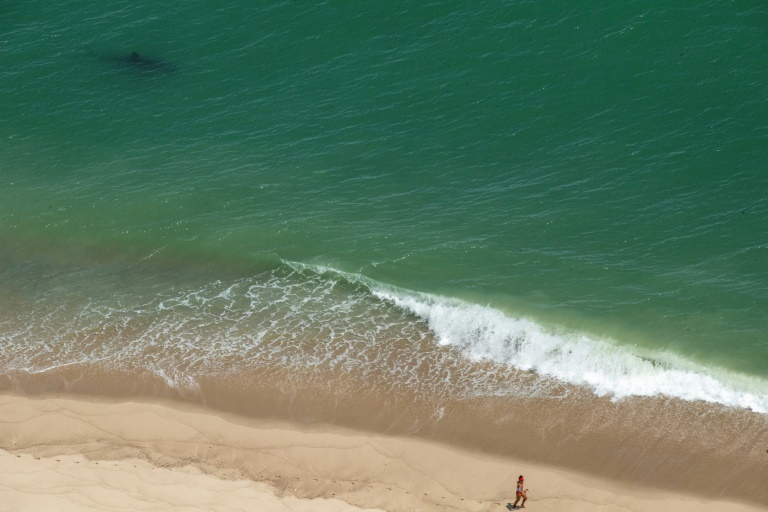
Every summer, great whites move up the Atlantic coast of the United States, toward New England, their number peaking between August and October.

“There’s a general increase in the population that we think is the population rebounding after being protected,” Gregory Skomal, a senior fisheries scientist for the state of Massachusetts, told AFP.

Around 300 of the animals, the world’s largest known fish, have been tagged over the years, with roughly a hundred or so passing through the waters around Cape Cod every year.

The iconic movie “Jaws” was shot in this region, and the creatures are a major tourism draw, adorning baseball caps and t-shirts. On the flipside, however, there have already been temporary beach closures this year after confirmed sightings close to shore.

A major part of the reason is their main prey, seals, are also rebounding thanks to increased protections.

“If you have more sharks feeding close to land and you have more people swimming, the chances for those kinds of negative interactions increases,” said Skomal.

Enter the Atlantic White Shark Conservancy Sharktivity app, which was developed with input from Massachusetts wildlife officials to provide information on shark sightings from researchers, safety officials, and user reports.

– Surveillance patrols –

In New York state, the governor has just announced additional surveillance patrols, including via drones and helicopters.

On the tourist beaches of Long Island, half a dozen shark bites have already come to light, after three years of none at all.

Here, great whites are less likely to be the culprits than other species of shark that operate in the region, in particular tiger sharks, sand tiger sharks and bull sharks.

Nick Whitney, a senior scientist at the New England Aquarium, believes the increasing encounters here might be linked to the sharks’ bait fish — menhaden, also known as porgies or bunkers, recovering.

This might be because of cleaner waters off New York and New Jersey, “but it’s tricky to figure out how much of it is increasing populations or just populations moving around as a result of changing ocean conditions from climate change.”

But if things can thus vary greatly from one year to another on a local level, the global level remains steady at around 75 shark attacks recorded each year, said Gavin Naylor, director of a research program on sharks at the University of Florida.

This follows a brief drop to around 60 during the two first years of the Covid-19 pandemic.

Annual global deaths are around five. In the past twenty years, only two deaths have been reported north of Delaware in the United States, in Cape Cod in 2018, and in Maine in 2020.

But in the future, it is reasonable to think that the number of victims will increase.

“We are going to get more fatalities. There’s more white sharks, the probability is going to increase,” predicts Naylor, even though the trend isn’t yet statistically significant.

Surfers, who venture farther into the water, accounted for half of unprovoked attacks in 2021. Farther south, Florida, with its many tourist beaches and tropical climate, is still where 60 percent of US and 40 percent of world attacks occur.

– Take precautions –

Sharks are far from the bloodthirsty beasts sometimes portrayed in movies. 

Studies have shown that they can mistake surfers or swimmers for their usual prey — notably white sharks, which have rather poor eyesight.

“With so many people on a global scale in the water, if sharks preferred to feed on prey upon humans, we would have tens of thousands of attacks each year,” said Skomal.

With climate change, the expert expects that the increase in ocean temperatures will gradually lengthen the season during which sharks are present in the northern United States.

So what can be done to limit the risks? People should download the Sharktivity app to track sightings. 

“Another thing we tell people is just to be aware of your surroundings,” said Whitney. Look around for birds flying around schools of baitfish, for example.

Don’t swim alone, stick to areas with cell phone coverage, and if bitten, the real danger is bleeding out, so it’s important to get to shore and control the bleeding until help arrives.

Vanilla spice: arid Israel produces potent tropical pods

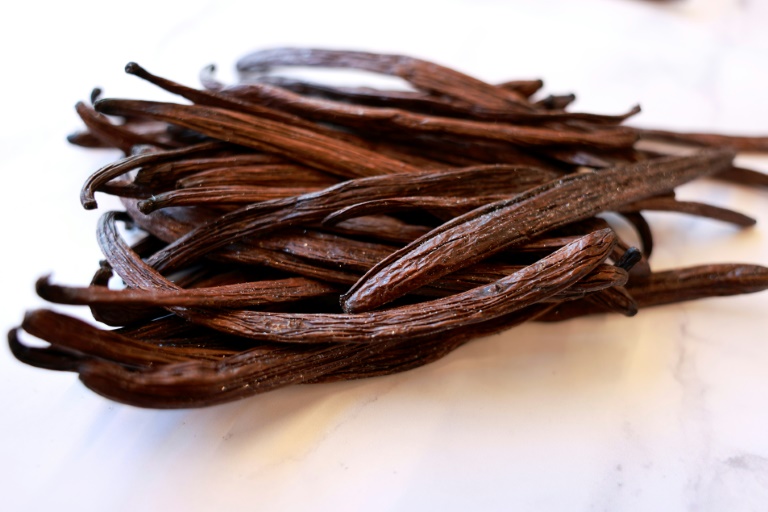
In his busy Tel Aviv restaurant, chef Yair Yosefi adds a magic ingredient to his signature cake: Israel’s first commercially produced vanilla providing what devotees claim is perhaps the strongest ever flavour.

It is made by Vanilla Vida, a new food-industry player that says its computer-guided curing process, along with other high-tech cultivation methods, can scientifically craft each batch of vanilla to a specific taste.

The company, founded in 2020, could prove to a be lucrative venture, producing what has become the world’s most precious spice after saffron.

Many mass-produced foods, from ice cream to milk shakes to soy milk, are usually flavoured with artificial vanilla — but the real organic stuff is still very expensive and sought-after.

Vanilla Vida has also developed greenhouses to recreate conditions the vanilla needs to flourish, but until the plants there achieve full size, the company imports fresh vanilla to its processing plant in Or Yehuda, a Tel Aviv suburb. 

Co-founder and CEO Oren Zilberman told AFP his company subjects the raw product to a highly-monitored ageing process.

This, he said, allows it to draw out desired flavours, accelerating the drying process and eliminating the various risks that come with open air drying in tropical environments like Indonesia or Madagascar, two major vanilla producers. 

“We know how, through drying processes with varying temperatures, humidity and other elements to get the raw material to go a certain way, to create slightly different aromas — the same way you roast coffee differently to create different aromas,” Zilberman said.

“If you understand the metabolism, you can create chocolatey vanilla, carameley vanilla, smokey woody vanilla like the French prefer, or very sweet vanilla for Americans,” he added.

Asked about the quality of the Israeli-aged vanilla, chef Yosefi said the proof was in the pudding, given the flurry of orders for his dacquoise cake and his bistro, Brut. 

“People ask for ‘the dish with the fruit and vanilla’,” he told AFP.

The difference between other commercially available vanilla and the highly-concentrated Vanilla Vida product is “day and night,” he said. 

Close Bitnami banner
Bitnami