US Business

Florida hurries to catch fast-spreading snail invasion

It might not be speedy, but it’s big, hungry and fast at reproducing: the giant African snail, a potential health risk to humans, has once again invaded the southern US state of Florida.

Jason Stanley, a biologist with Florida’s Department of Agriculture, says that the gastropod greedily “feeds on over 500 different kinds of plants.”

“We’re concerned with that being in our environment,” he told AFP.

Since June 23, employees from his agency have been combing through the gardens of New Port Richey, a small town on Florida’s west coast, where the invasive species has taken root.

A single giant African snail can lay up to 2,000 eggs each year, Stanley explains, which — coupled with its appetite — could spell disaster for the state’s robust agriculture industry.

In a grassy plot of land in New Port Richey, Mellon, a yellow Labrador trained to sniff out the snails, walks with his handler.

He darts under a tree and sniffs around in the grass. When Mellon eventually locates a snail, he sits directly on top of it, as he’s been trained to do.

Florida authorities believe that the snail, native to eastern Africa, was reintroduced to the state when someone brought it home as a pet.

Unlike other brown-tinted giant snails, this particular breed has white flesh.

“These white phenotypes are very popular in the pet trade,” Stanley noted.

Through the talents of Mellon and another snail-sniffing canine, more than 1,000 giant African snails have already been caught in Pasco County, where New Port Richey is located.

Authorities are also trying to stamp out the giant snails by applying metaldehyde, a pesticide that is harmless to humans and animals, according to the state.

The Florida Department of Agriculture has established a quarantine zone within New Port Richey: no plants or other vegetation can be removed from the area to try to prevent the snails from spreading further.

– Carries harmful disease –

“Another issue with this snail is that it carries the rat lungworm, which can cause meningitis in humans,” Stanley added.

That type of parasite, which has been detected among the snails caught in Pasco County, enters rats’ lungs when they eat the snails and then spreads when the rodents cough. 

If a human ingests one of the worms, Stanley says, it usually makes its way to the brain stem, where it can cause meningitis.

Local resident Jay Pasqua still can’t believe the stir caused by the giant African snail.

In late June, a Department of Agriculture official came to his lawn mower sales and repair store in New Port Richey to flag the presence of the invasive species.

“In the beginning, it was kind of funny to see all the attention that a snail was getting,” the 64-year-old told AFP.

“But (after) starting to understand the process of their growth, how they got here, and what diseases and what problems they cause, it did become a concern at that time.”

He has since found dozens of the pests in his garden, although he says he hasn’t seen any for three days.

The giant African snail has been eradicated from other parts of Florida twice before, first in 1975 and then again in 2021.

The latter extermination campaign took place in Miami-Dade County and was the result of 10 years of effort at a cost of $23 million.

Stanley says he’s optimistic that this time will be much easier.

“So far, it’s isolated in one area, and we’re already surveying and treating this area. So we’re very hopeful that it’s not going to take that amount of time here.”

Call for max working temperature cap after EU heatwave deaths

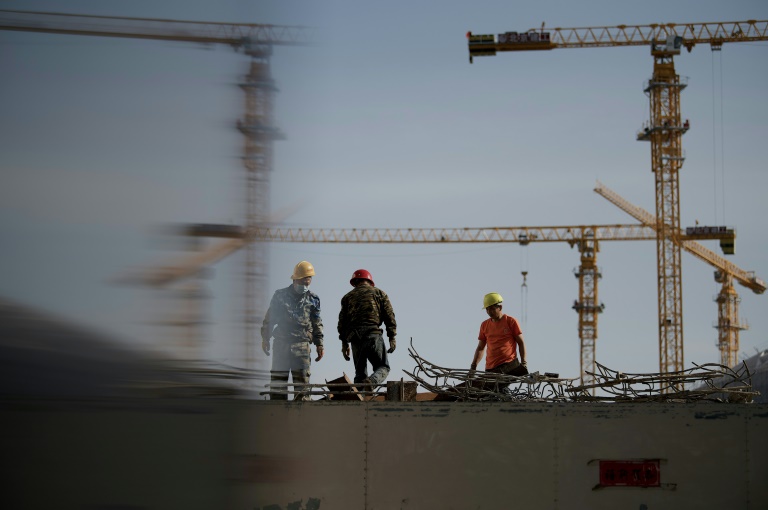
Trade unions called Monday for the European Commission to impose maximum temperature limits for outdoor workers, after three people died while on shift in Madrid during last week’s withering heatwave. 

While a handful of member states have legislation limiting working hours in excessive heat, the thresholds vary and many nations have no nationwide heat limits. 

According to research by the polling agency Eurofound, 23 percent of all workers across the EU were being exposed to high temperatures a quarter of the time. That figure rises to 36 percent in agriculture and industry and to 38 percent for construction workers. 

Previous research has linked high temperatures to a number of chronic conditions and an elevated risk of workplace injury. 

“Workers are on the frontline of the climate crisis every day and they need protections to match the ever-increasing danger from extreme temperatures,” said Claes-Mikael Stahl, deputy secretary general of the European Trade Union Confederation.

The ETUC said that most EU nations have no maximum temperature legislation for workplaces, although Belgium, Hungary and Latvia all have some curbs on activity. 

In France, where there are currently no working temperature limits, 12 workers died due to heat exposure in 2020 alone, the union said.

– ‘Can’t ignore the danger’ –

Spain, where three workers died in extreme heat last week, does have temperature limits in place, but only for certain professions. 

A 60-year-old street cleaner on a one-month contract died in Madrid on Saturday, after he collapsed in the street from heatstroke while working the previous day.

At the time temperatures in Madrid neared 40C.

A 56-year-old warehouse worker in a Madrid suburb also died on Saturday after suffering heatstroke while on the job.

Security forces on Thursday announced the death of a worker due to heat in Paracuellos de Jarama, on the outskirts of the capital.

Last week, the city reached a deal with unions to restrict manual street cleaning work to below 39C.

With global average temperatures more than 1.1C warmer than the pre-Industrial era, Europe is being hit with more and more record-breaking hot spells. 

Global heating will continue to make deadly heatwaves more frequent and intense with ever higher levels of atmospheric carbon pollution, scientists say. 

The UN’s climate science panel this year warned that tens of millions more people would be subjected to extreme heat days under 2C of warming; countries’ climate plans have Earth on course to warm by 2.7C.

“Heatwaves can be fatal for people working unprotected from the sun, as we’ve already witnessed in Spain this summer,” said Stahl.

“Workers are on the frontline of the climate crisis every day and they need protections to match the ever-increasing danger from extreme temperatures.”

He said the EU needed continent-wide legislation on maximum working temperatures, since “the weather doesn’t respect national borders”.

“Politicians can’t continue to ignore the danger to our most vulnerable workers from the comfort of their airconditioned offices,” he said.

Fed set for another big rate hike with economy on knife's edge

US central bankers face an increasingly difficult balancing act as they struggle to douse scorching inflation while still keeping the economy growing, though they have made it clear they are willing to risk a recession.

But with war still raging in Ukraine, and Covid-19 causing ongoing issues in Asia, avoiding an economic downturn will require luck and depend on many factors outside the Federal Reserve’s control.

As American families struggle to make ends meet amid surging prices for gas, food and housing, Fed officials have made clear that fighting inflation is their top priority even if that means inflicting pain.

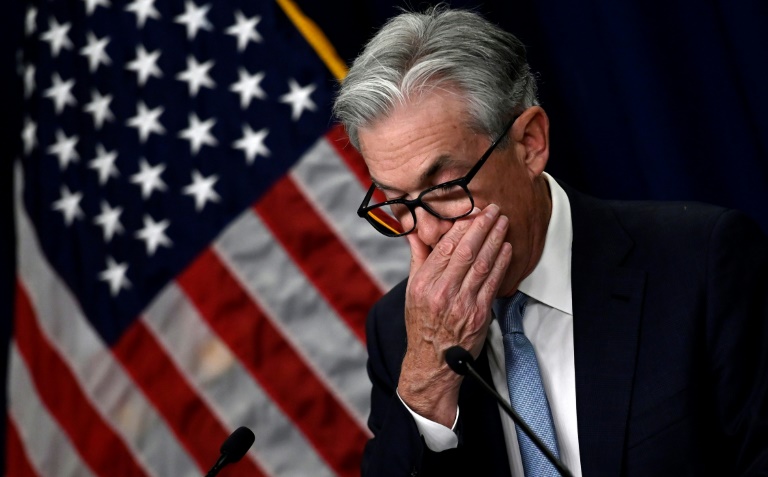
The Fed will hold its two-day policy meeting beginning Wednesday, when it is expected to hike the benchmark borrowing rate by another three-quarters of a percentage point in its aggressive campaign to cool demand and ease price pressures.

Despite a healthy job market with near-record low unemployment, workers are seeing their wage gains overwhelmed by consumer prices that rose by a new 40-year high of 9.1 percent in June.

Slowing the economy is likely to cause more job losses, but policymakers want to avoid at all costs the greater pain of a price spiral that becomes entrenched or spins out of control.

Treasury Secretary Janet Yellen, herself a former Fed chief, has previously warned that such a soft landing will require good luck. On Sunday she stressed again that while “growth is slowing,” data does not necssarily point to a recession.

“I’m not saying that we will definitely avoid a recession, but I think there is a path that keeps the labor market strong and brings inflation down,” she told NBC.

– Aggressive rate hikes –

Former Fed vice chair Donald Kohn told AFP it was a “very complicated, multi-dimensional issue,” especially due to the ongoing supply chain uncertainty.

After flooding the world’s largest economy with support during the pandemic — zero interest rates and a steady stream of liquidity into the financial system — Fed policymakers were congratulating themselves on how quickly the economy recovered, regaining millions of jobs in a matter of months.

But they were caught flat-footed by the rapid run-up in prices, as Americans flush with cash due to massive government aid went on a spending spree, buying up cars, houses and other goods at a time when the global supply chain was still bogged down by pandemic lockdowns that continue in China.

The Fed finally began liftoff — taking the policy interest rate off zero — in March, starting with a 25-basis-point increase, followed by 50 in May and 75 in June.

Higher lending costs make it more expensive to borrow funds to buy cars and homes or expand businesses, which should cool demand, while also making it more attractive to save rather than spend.

Fed Chair Jerome Powell last month said the policy-setting Federal Open Market Committee would consider either a 50 or 75 bps hike at the July meeting, and most economists expect a repeat of the June three-quarter-point increase.

Fed Governor Christopher Waller recently floated the idea of a mammoth 100-bps hike, which would be the first since the US central bank started using the federal funds rate for policy in the early 1990s.

The equivalent amount of tightening in a single move hasn’t been seen since the early 1980s, when then-Fed chief Paul Volcker was on a crusade to crush a wage-price inflationary spiral.

– Mixed data –

But even Waller noted it is important not to move too fast, and a full point hike would only be called for if data continue to show accelerating price increases.

“I think they will probably discuss 100 basis points just because the inflation picture is still very bad,” said Julie Smith, a Lafayette College economics professor.

But some recent data “indicate that previous rate increases have very likely started to work,” she said in an interview.

Housing prices have skyrocketed, hitting new records repeatedly, even as interest rates have risen, and consumer spending continues to increase, leading some economists to warn of a contraction in the second quarter.

But there are signs of cracks, including falling home sales, a dramatic drop in mortgage applications and an increasing share of spending going to necessities.

Officials have said the US economy is strong enough to withstand higher rates without a serious downturn, but others, including former Treasury secretary Lawrence Summers, say they are overly optimistic and job losses will have to rise sharply in order to tame inflation.

Kohn said it will be important for Powell to communicate clearly about what data the Fed is looking for to slow or pause the rate hike cycle.

“I think a fairly shallow recession,” with higher unemployment than the 3.7 percent the Fed projected last month, “will be necessary to break this inflation spiral,” he said.

“But, boy, the amount of uncertainty around it is just huge.”

Yep, 'Nope' rules at N.America box office

Universal’s new horror flick “Nope” opened atop the North American box office, hammering the latest edition of Marvel’s “Thor” franchise to earn an estimated $44 million, industry watcher Exhibitor Relations reported Sunday.

The alien-invasion sci-fi mystery, which features a Black family struggling to make ends meet on their bleached California horse ranch, is the highly-anticipated latest effort by writer and director Jordan Peele, whose 2017 debut “Get Out” earned rave reviews.

“This is an excellent opening for an original horror movie,” said analyst David A. Gross of Franchise Entertainment Research.

The film — which stars Daniel Kaluuya, who stole the show in “Get Out” — managed to bump “Thor: Love and Thunder” to second spot after the superhero blockbuster spent two weeks at number one.

The action comedy starring a muscle-clad, self-parodying Chris Hemsworth as the space viking who finds himself pining for his ex-girlfriend Jane Foster (Natalie Portman), pulled in $22.1 million for the Friday-to-Sunday period, for a worldwide cumulative total of $276 million.

Third spot belonged to “Minions: The Rise of Gru.” The latest goofy installment in Universal’s animated “Despicable Me” franchise took in $17.7 million, for a cumulative total of $298 million.

“Where the Crawdads Sing” also slipped one spot, to fourth. Sony’s adaptation of Delia Owens’ novel about an abandoned girl who grows up in marshland of 1950s and 60s North Carolina and, at a murder trial years later looks back on that rough and violent upbringing, earned $10.3 million.

Dropping from fourth to fifth was Paramount’s “Top Gun: Maverick,” the crowd-pleasing sequel to the original 1986 film that once again features Tom Cruise as cocky US Navy test pilot Pete “Maverick” Mitchell.

The fighter ace feature, in its ninth week in theaters, has now grossed an eye-popping $635 million worldwide.

Baz Luhrmann’s music biopic “Elvis” — starring Austin Butler as the King alongside Tom Hanks as his exploitative manager, Colonel Tom Parker — took sixth in the Warner Bros film’s fifth weekend of release, at $6.3 million.

Completing the top 10 were:

“Paws of Fury: The Legend of Hank” ($3.9 million)

“The Black Phone” ($3.4 million)

“Jurassic World: Dominion” ($3 million)

“Mrs Harris goes to Paris” ($1.3 million)

China launches second of three space station modules

China on Sunday launched the second of three modules needed to complete its new space station, state media reported, the latest step in Beijing’s ambitious space programme.

The uncrewed craft, named Wentian, was propelled by a Long March 5B rocket at 2:22 pm (0622 GMT) from the Wenchang launch centre on China’s tropical island of Hainan.

A quarter of an hour later, an official from the China Manned Space Agency (CMSA) confirmed the “success” of the launch.

Hundreds of people gathered on nearby beaches to take photos of the launcher rising through the air in a plume of white smoke.

After around eight minutes of flight, “the Wentian lab module successfully separated from the rocket and entered its intended orbit, making the launch a complete success,” the CMSA said.

Beijing launched the central module of its space station Tiangong — which means “heavenly palace” — in April 2021.

Almost 18 metres (60 feet) long and weighing 22 tons (48,500 pounds), the new module has three sleeping areas and space for scientific experiments.

It will dock with the existing module in space, a challenging operation that experts said will require several high-precision manipulations and the use of a robotic arm.

“This is the first time China has docked such large vehicles together, which is a delicate operation,” said Jonathan McDowell, an astronomer at the Harvard-Smithsonian Center for Astrophysics. 

He said until the next module arrives, the space station will have a “rather unusual L-shape” which will take a lot of power to keep stable. 

“These are all technical challenges that the USSR pioneered with the Mir station in the late 1980s, but it’s new to China,” he told AFP. 

“But it will result in a much more capable station with the space and power to carry out more scientific experiments.”

Wentian will also serve as a backup platform to control the space station in the event of a failure. 

The third and final module is scheduled to dock in October, and Tiangong — which should have a lifespan of at least 10 years — is expected to become fully operational by the end of the year. 

– Fast-paced space plan –

Under Chinese President Xi Jinping, the country’s plans for its heavily promoted “space dream” have been put into overdrive.

China has made large strides in catching up with the United States and Russia, where astronauts and cosmonauts have decades of experience in space exploration.

“The CSS (Chinese Space Station) will complete its construction… in one and half a year which will be the fastest in history for any modular space station,” said Chen Lan, analyst for the site Go-Taikonauts.com, which specialises in China’s space programme. 

“In comparison, the constructions of Mir and the International Space Station took 10 and 12 years respectively.”

China’s space programme has already landed a rover on Mars and sent probes to the Moon.

In addition to a space station, Beijing is also planning to build a base on the Moon and send humans there by 2030.

China has been excluded from the International Space Station since 2011, when the United States banned NASA from engaging with the country.

While China does not plan to use its space station for global cooperation on the scale of the ISS, Beijing has said it is open to foreign collaboration.

Cricket Australia sells India broadcast rights to Disney

Australian cricket chiefs said Sunday they had agreed to sell broadcasting rights in India to Disney Star in a seven-year deal reportedly worth hundreds of millions of dollars.

The Walt Disney-owned media group is believed to have forked out more than Aus$300 million (US$208 million) for the rights, with some Australian media giving an even higher figure for the total value of the contract.

The agreement, which comes into force from the 2023-24 season onwards, covers men’s and women’s international matches played in Australia as well as the Big Bash League and Women’s Big Bash League.

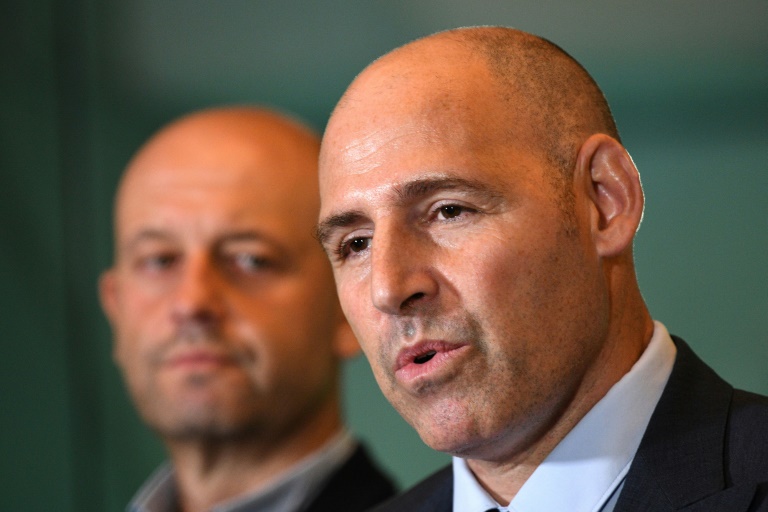
“Disney Star is synonymous with the game in India and we look forward to working with them to showcase the outstanding cricket played in Australia every summer,” Cricket Australia (CA) chief executive Nick Hockley said in a statement

CA did not provide financial details of the deal.

“The magnitude of this association is testament to the enduring rivalry and respect that exists between Australian and Indian teams, the excitement and popularity of WBBL and BBL, and the high regard of Australian cricket in India and global markets more broadly.”

Disney Star will have the rights to broadcast Australian cricket “throughout India and other territories across Asia”, the statement said.

Hockley said there had been “significant interest” in the rights, which are currently held by Sony in a contract running to the end of this season.

Russian strikes on Odessa port cast doubt over grain deal

Ukrainian President Volodymyr Zelensky denounced a missile strike on the port of Odessa as “Russian barbarism” just a day after the warring sides struck a deal to resume cereal exports blocked by the conflict.

The Ukrainian military said its air defences had shot down two cruise missiles but two more hit the port Saturday, threatening the landmark agreement hammered out over months of negotiations aimed at relieving a global food crisis.

Zelensky said the strikes on Odessa showed Moscow could not be trusted to keep its promises.

“Today’s Russian missile attack on Odessa, on our port, is a cynical one, and it was also a blow to the political positions of Russia itself,” Zelensky said in his nightly address, adding dialogue with Moscow was becoming increasingly untenable.

“This apparent Russian barbarism brings us even closer to obtaining the very weapons we need for our victory,” Zelensky added.

The strike came a day after Moscow and Kyiv agreed a deal brokered by Turkish President Recep Tayyip Erdogan and United Nations chief Antonio Guterres.

Odessa is one of three export hubs designated in the agreement and Ukrainian officials said grain was being stored in the port at the time of the strike, although the food stocks did not appear to have been hit.

Guterres — who presided over the signing ceremony on Friday — “unequivocally” condemned the attack, his deputy spokesman said, and urged all sides to stick to the deal.

“These products are desperately needed to address the global food crisis and ease the suffering of millions of people in need around the globe,” he said.

The EU’s foreign policy chief Josep Borrell directly blamed Russia for the strikes.

“Striking a target crucial for grain export a day after the signature of (the) Istanbul agreements is particularly reprehensible and again demonstrates Russia’s total disregard for international law and commitments,” he said.

UK Foreign Secretary Liz Truss said the attack was “absolutely appalling” and “completely unwarranted”.

The United States also “strongly condemned” the attack, with Secretary of State Antony Blinken saying it “casts serious doubt on the credibility of Russia’s commitment to yesterday’s deal”.

There was no official comment from Moscow, but Turkish Defence Minister Hulusi Akar said Russia had denied carrying out the attack.

“The Russians told us that they had absolutely nothing to do with this attack and they were looking into the issue very closely,” Akar said in comments to state news agency Anadolu.

“We will continue to fulfil our responsibilities under the agreement we reached yesterday,” he added.

Regional governor Maksym Marchenko said the strikes left people wounded and damaged port infrastructure in Odessa, without specifying the number or severity of the injuries.

– 20 million tonnes of wheat –

The first major accord between the countries since Russia’s February invasion of Ukraine aims to ease the “acute hunger” the UN says an additional 47 million people are facing because of the war.

Ukraine at the signing warned it would conduct “an immediate military response” should Russia violate the accord and attack its ships or stage an incursion around its ports.

Zelensky said responsibility for enforcing the deal fell to the UN, which along with Turkey is a co-guarantor of the agreement.

The deal includes points on running Ukrainian grain ships along safe corridors that avoid known mines in the Black Sea.

Huge quantities of wheat and other grain have been blocked in Ukrainian ports by Russian warships and the mines Kyiv laid to avert a feared amphibious assault.

Zelensky said that around 20 million tonnes of produce from last year’s harvest and the current crop would be exported under the agreement, estimating the value of Ukraine’s grain stocks at around $10 billion.

Russian Defence Minister Sergei Shoigu told Kremlin state media he expected the deal to start working “in the next few days” although diplomats expect grain to only start fully flowing by mid-August.

– Strikes on central Ukraine –

Russia is trying to fight deeper into the eastern Donetsk region after securing full control of neighbouring Lugansk.

The US State Department on Saturday said two Americans had died in the area, without saying whether the pair were in the country for combat purposes.

Russian missile strikes on railway infrastructure and a military airfield in the central area of Kirovograd on Saturday also killed at least three people and wounded 16 more, regional governor Andriy Raikovych said.

At least one of the dead was a serviceman, he said earlier — a rare admission of a military casualty as combat deaths have been closely guarded by both sides.

Russia also pursued an artillery campaign over Ukraine’s second city, Kharkiv, with attacks wounding one woman, the presidency said. An elderly farmer was killed in further shelling in Sumy, northwest of Kharkiv.

Two others, including a teenager, were wounded in strikes on Mykolaiv, the largest city under Ukrainian control near Russian-occupied Kherson and the southern front, which has been shelled persistently since the beginning of the invasion.

burs-dt/jbr/imm/ssy/mtp

Philippine bakeries shrink 'poor man's bread' as inflation bites

As the war in Ukraine pushes up wheat prices and a weaker peso raises the cost of imported edible oil, many Philippine bakers are shrinking the size of a popular breakfast roll to cope with higher inflation.

The slightly sweet and pillowy soft “pandesal”, which Filipinos often dunk in coffee or stuff with cheese, used to weigh 35 grams at Matimyas Bakery, a breadmaker in suburban Manila.

But as the cost of local and imported ingredients soared in recent months, co-owner Jam Mauleon gradually reduced the size of the roll — known as the “poor man’s bread” because it is cheap — to around 25 grams to avoid raising the 2.50 peso (about $0.04) price.

She feared that even a slight increase would send cash-strapped customers in her neighbourhood to a rival bakery five blocks away.

“We had to reduce the serving size to survive,” Mauleon told AFP, as children, workers and retirees arrived early to buy rolls baked in a brick oven that morning.

As the Philippines lifted Covid-19 restrictions and schoolchildren began returning to the classroom this year, Mauleon had hoped economic conditions for the bakery would improve. 

But since December, as wheat and fuel prices surged, the price of flour has increased by more than 30 percent, while sugar is up 25 percent and salt costs 40 percent more, she said.

The bakery survives day to day and does not make enough money to buy ingredients in bulk, leaving it vulnerable to changing prices in domestic and international markets.

After reducing the number of employees and absorbing higher costs, Mauleon was forced this week to raise the price of a pandesal by 20 percent to three pesos. 

Shrinking the size of the roll any further would affect its quality, she said.

“We will try it out if people will still buy it,” Mauleon said.

“Pandesal is very important in the lives of Filipinos.”

For mother-of-five Laarni Guarino, the price hike means her family now eats fewer rolls for breakfast.  

“We will have to redo our budget. From five pieces each, my children will have to eat just three to four,” Guarino, 35, told AFP. 

“Fifty centavos is a big thing for poor people like us.”

– ‘Shrinkflation’ – 

Lucito Chavez, president of an association representing local bakeries, said thousands of breadmakers were reeling from the higher cost for raw materials, most of which are imported. 

“All of us are struggling, not to make profit, but to survive,” Chavez told AFP. 

“We have to protect the pandesal industry.”

Inflation in the Philippines hit 6.1 percent in June, the highest level in nearly four years, as steep fuel price hikes pushed up food and transport costs. 

Lawmaker and economist Joey Salceda said bread would be hardest hit by “shrinkflation”, where the size of a product gets smaller but the price stays the same.

“Wheat prices have increased by 165 percent,” he told reporters recently, urging bakeries to fortify their products with vitamins and minerals.

Why is the world worried about China's property crisis?

China’s troubled property sector suffered another blow this month when frustrated homebuyers stopped making mortgage payments on units in unfinished projects.

The boycott came with many developers struggling to manage mountains of debt, and fears swirling that the crisis could spread to the rest of the Chinese — and global — economy.

How big is China’s property sector?

Colossal. Property and related industries are estimated to contribute as much as a quarter of China’s Gross Domestic Product (GDP).

The sector took off after market reforms in 1998. There was a breathtaking construction boom on the back of demand from a growing middle class that saw property as a key family asset and status symbol.

The bonanza was fuelled by easy access to loans, with banks willing to lend as much as possible to both developers and buyers.

Mortgages make up almost 20 percent of all outstanding loans in China’s entire banking system, according to a report by ANZ Research this month.

Many developments rely on “pre-sales”, with buyers paying mortgages on units in projects yet to be built.

Unfinished homes in China amount to 225 million square metres (2.4 billion square feet) of space, Bloomberg News reported.

Why did it plunge into crisis?

As property developers flourished, housing prices also soared.

That worried the government, which was already concerned about the risk posed by debt-laden developers.

It launched a crackdown last year, with the central bank capping the proportion of outstanding property loans to total lending by banks to try to limit the threat to the entire financial system.

This squeezed sources of financing for developers already struggling to handle their debts.

A wave of defaults ensued, most notably by China’s biggest developer, Evergrande, which is drowning in liabilities of more than $300 billion.

On top of the regulatory clampdown, Chinese property firms were also hit by the Covid crisis — the economic uncertainty forced many would-be homebuyers to rethink their purchase plans.

How have homebuyers reacted?

Evergrande’s decline had sparked protests from homebuyers and contractors at its Shenzhen headquarters in September last year.

In June this year, a new form of protest emerged: the mortgage boycott.

People who had bought units in still-unfinished projects announced they would stop making payments until construction resumed.

Within a month, the boycott spread to homebuyers in more than 300 projects in 50 cities across China.

Many of the unfinished projects were concentrated in Henan province, where mass protests in response to rural bank fraud broke out and were suppressed.

Chinese lenders said last week that the affected mortgages account for less than 0.01 percent of outstanding residential mortgages, but analysts say the fear is how far the boycotts will spread.

Why is there global concern?

China is the world’s second-largest economy, with deep global trade and finance links.

If the property crisis spreads to China’s financial system, the shock would be felt far beyond its borders, analysts say.

“Should defaults escalate, there could be broad and serious economic and social implications,” Fitch Ratings wrote in a note on Monday.

This echoed a warning by the US Federal Reserve, which said in May that while China has managed to contain the fallout so far, a worsening property crisis could impact the country’s financial system too.

The crisis could spread and impact global trade and risk sentiment, the Fed said in its May 2022 Financial Stability Report.

What can China do to fix it?

A bailout or rescue fund for the entire property sector is unlikely, even as mortgage boycotts mount, analysts say, as those would mean the government is admitting to the scale of the crisis.

A major bailout may also encourage developers and home buyers to continue with risky decisions as they would see the government and banks taking on responsibility.

But pressure has been building on Chinese banks to help ease the situation. China’s banking regulator said Thursday that it would help ensure that projects are completed and units handed over to buyers.

Some intervention has happened at the local level in Henan province, where a bailout fund was set up in collaboration with a state-backed developer to help stressed projects.

Chen Shujin at Jefferies Hong Kong said local governments, developers and homeowners might also be able to negotiate interest waivers and suspension of mortgage payments for a certain period on a case-by-case basis.

Why is the world worried about China's property crisis?

China’s troubled property sector suffered another blow this month when frustrated homebuyers stopped making mortgage payments on units in unfinished projects.

The boycott came with many developers struggling to manage mountains of debt, and fears swirling that the crisis could spread to the rest of the Chinese — and global — economy.

How big is China’s property sector?

Colossal. Property and related industries are estimated to contribute as much as a quarter of China’s Gross Domestic Product (GDP).

The sector took off after market reforms in 1998. There was a breathtaking construction boom on the back of demand from a growing middle class that saw property as a key family asset and status symbol.

The bonanza was fuelled by easy access to loans, with banks willing to lend as much as possible to both developers and buyers.

Mortgages make up almost 20 percent of all outstanding loans in China’s entire banking system, according to a report by ANZ Research this month.

Many developments rely on “pre-sales”, with buyers paying mortgages on units in projects yet to be built.

Unfinished homes in China amount to 225 million square metres (2.4 billion square feet) of space, Bloomberg News reported.

Why did it plunge into crisis?

As property developers flourished, housing prices also soared.

That worried the government, which was already concerned about the risk posed by debt-laden developers.

It launched a crackdown last year, with the central bank capping the proportion of outstanding property loans to total lending by banks to try to limit the threat to the entire financial system.

This squeezed sources of financing for developers already struggling to handle their debts.

A wave of defaults ensued, most notably by China’s biggest developer, Evergrande, which is drowning in liabilities of more than $300 billion.

On top of the regulatory clampdown, Chinese property firms were also hit by the Covid crisis — the economic uncertainty forced many would-be homebuyers to rethink their purchase plans.

How have homebuyers reacted?

Evergrande’s decline had sparked protests from homebuyers and contractors at its Shenzhen headquarters in September last year.

In June this year, a new form of protest emerged: the mortgage boycott.

People who had bought units in still-unfinished projects announced they would stop making payments until construction resumed.

Within a month, the boycott spread to homebuyers in more than 300 projects in 50 cities across China.

Many of the unfinished projects were concentrated in Henan province, where mass protests in response to rural bank fraud broke out and were suppressed.

Chinese lenders said last week that the affected mortgages account for less than 0.01 percent of outstanding residential mortgages, but analysts say the fear is how far the boycotts will spread.

Why is there global concern?

China is the world’s second-largest economy, with deep global trade and finance links.

If the property crisis spreads to China’s financial system, the shock would be felt far beyond its borders, analysts say.

“Should defaults escalate, there could be broad and serious economic and social implications,” Fitch Ratings wrote in a note on Monday.

This echoed a warning by the US Federal Reserve, which said in May that while China has managed to contain the fallout so far, a worsening property crisis could impact the country’s financial system too.

The crisis could spread and impact global trade and risk sentiment, the Fed said in its May 2022 Financial Stability Report.

What can China do to fix it?

A bailout or rescue fund for the entire property sector is unlikely, even as mortgage boycotts mount, analysts say, as those would mean the government is admitting to the scale of the crisis.

A major bailout may also encourage developers and home buyers to continue with risky decisions as they would see the government and banks taking on responsibility.

But pressure has been building on Chinese banks to help ease the situation. China’s banking regulator said Thursday that it would help ensure that projects are completed and units handed over to buyers.

Some intervention has happened at the local level in Henan province, where a bailout fund was set up in collaboration with a state-backed developer to help stressed projects.

Chen Shujin at Jefferies Hong Kong said local governments, developers and homeowners might also be able to negotiate interest waivers and suspension of mortgage payments for a certain period on a case-by-case basis.

Close Bitnami banner
Bitnami