US Business

Europe on tenterhooks over return of Russian gas to Germany

Europe anxiously awaits the return of Russian gas supplies on Thursday at the end of scheduled work on a crucial pipeline, as heavily dependent Germany accuses the Kremlin of using energy as a “weapon”.

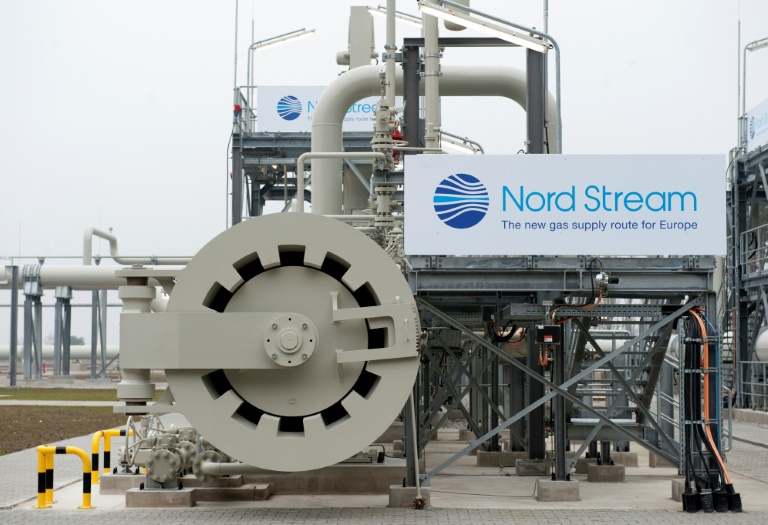
The Nord Stream 1 pipeline is due to reopen at 0400 GMT after 10 days of annual repairs, but Germany fears Russia will seize the opportunity to simply keep the taps entirely or nearly shut, plunging the continent into an energy crisis.

The showdown comes amid the worst tensions between Russia and the West in several years over the invasion of Ukraine.

“Moscow is not shying away from using grain and energy deliveries as a weapon,” German Chancellor Olaf Scholz told reporters this week, referring to allegations Moscow was also deliberately blocking food exports from Ukraine. 

“We have to be resolute in protecting ourselves.”

However, enduring German reliance on Russian gas coupled with distinctly negative signals from Moscow looked set to ratchet up the pressure on Europe’s top economy.

The IMF warned on Wednesday that a halt in supplies could slash 2022 GDP by 1.5 percent.

– ‘Will fulfil’ –

Russia’s state-owned energy giant Gazprom cut flows to Germany via the Nord Stream 1 pipeline under the Baltic Sea to some 40 percent of capacity in recent weeks, blaming the absence of a Siemens gas turbine that was undergoing repairs in Canada.

The repaired turbine is reportedly en route to Russia and expected to arrive on Sunday at the earliest.

Russian President Vladimir Putin insisted this week that Gazprom would meet all its delivery obligations.

“Gazprom has fulfilled, is fulfilling and will fulfil its obligations in full,” Putin told reporters in Tehran after holding talks with the leaders of Iran and Turkey.

However, he warned that as another gas turbine was due to be sent for maintenance at the end of this month, energy flows could fall to 20 percent of capacity from next week.

Since Putin sent troops to Ukraine on February 24 and the West responded with sanctions against Moscow, Russia has begun reducing its gas deliveries to prevent EU countries from replenishing reserves.

Gazprom has already blamed cuts in gas deliveries to Europe on “force majeure”, two major German customers said this week, adding to fears about further disruptions.

Force majeure is a legal measure allowing companies to free themselves from contractual obligations in light of circumstances beyond their control.

– ‘Blackmail’ –

The German government has rejected Gazprom’s turbine explanation as an “excuse”. However, Berlin acknowledges it would be largely powerless to dispute the force majeure claim and expect to be awarded damages from Russia.

As of Wednesday, German gas reserves were about 65 percent according to official estimates. Experts say that would leave Germany critically exposed if supplies via Nord Stream 1 didn’t resume before cold weather returns.

The European Commission on Wednesday urged EU countries to reduce their demand for natural gas by 15 percent over the coming winter months, and to give it special powers to force through needed demand cuts if Russia severs the gas lifeline.

“Russia is blackmailing us,” Commission president Ursula von der Leyen, a former German defence minister, told reporters. 

“Russia is using energy as a weapon and therefore, in any event, whether it’s a partial major cut off of Russian gas or total cut off… Europe needs to be ready.”

German Economy Minister Robert Habeck, who has said he’s started taking shorter showers to save energy, stressed that industry – but also consumers — would have to do their part to reduce Russia’s power in the current standoff.

“A decisive bit of leverage is reducing gas use,” he said in a statement. “We have to do everything in our power to work on that.” 
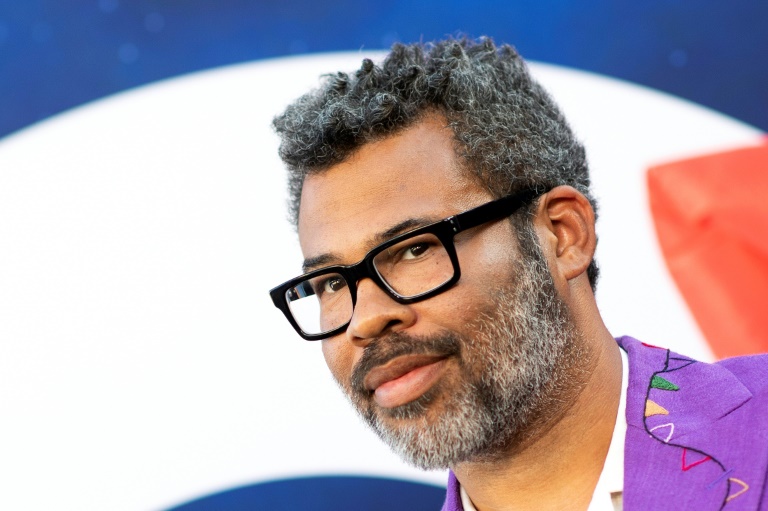
Peele skewers modern obsessions with 'Nope' film, theme park attraction

“Nope,” Jordan Peele’s latest withering horror-satire about our modern obsession with attention and spectacle, lands in movie theaters — and at a fittingly Instagram-friendly Los Angeles theme park attraction — this Friday.

The Oscar-winning writer-director — who is widely credited with elevating and revitalizing the horror genre with “Get Out” and “Us” — re-teams with Daniel Kaluuya, who plays OJ, a horse trainer spooked by otherworldly phenomena in the skies above his California ranch.

OJ and his sister Emerald (Keke Palmer) must juggle their fear of the mysterious and potentially dangerous UFO activity with their desire to achieve fame and wealth by capturing it on camera.

“The real villain is our addiction to attention and spectacle, and our inability to be able to actually react in real time,” Palmer told AFP on the red carpet at the film’s Hollywood premiere this week.

“It’s no different from all the rubbernecking on a freeway when there’s an accident — no one calls but everyone stops to watch.

“That’s the real horror that our film is talking about.” 

It builds on themes Peele introduced in his searing 2017 race satire “Get Out,” which was made for less than $5 million and grossed $255 million. It also earned him an Oscar for best original screenplay.

He followed that up with another hit, “Us,” securing a reputation as one of Hollywood’s most in-demand, daring directors and top Black filmmakers.

– ‘His vision’ –

Such was Universal Pictures’ confidence in Peele’s latest project, it took the unprecedented step of opening a permanent new “Nope” attraction at its Universal Studios theme park on the same day the movie opens.

“This is the first time that we’ve ever opened an attraction day-and-date with a new film,” said Universal Creative head Jon Corfino.

“It’s the first time I’ve ever heard of that happening.”

The actual movie set of Jupiter’s Claim — a fictional small Western-themed amusement park which features prominently in “Nope” — was carefully deconstructed when filming ended at the movie’s California desert shooting location, and meticulously rebuilt in the real-world Los Angeles theme park.

“This whole set was the actual authentic set that was used in the production,” said Corfino.

“It was actually broken apart and brought back here put together… it’s basically exactly his vision.”

Appropriately for the movie’s themes, visitors who pay for the VIP studio tour have the opportunity to wander around its fake but hyper-realistic streets, snapping selfies and shooting TikTok videos in front of the saloon, sheriff’s office and gold panning mill.

– ‘Ambitious’ –

It becomes the latest permanent attraction on Universal’s studio tour, where tourists are ferried around working soundstages, and sets from classic movies such as Steven Spielberg’s “Jaws” and Alfred Hitchcock’s “Psycho.”

“Jordan Peele takes his place among that lineage,” said Corfino.

Whether the film does so remains to be seen — early reviews have been mixed, with Empire praising an “ambitious, provocative swing,” but the Guardian describing Peele’s latest work as “clotted and heavy.”

“There’s a million storylines within this and metaphors that anyone in the audience can take differently,” said “Nope” star Brandon Perea.

“You can take it how you take it, and I think that’s great.”

'Severe' pain: a New Yorker's experience of monkeypox

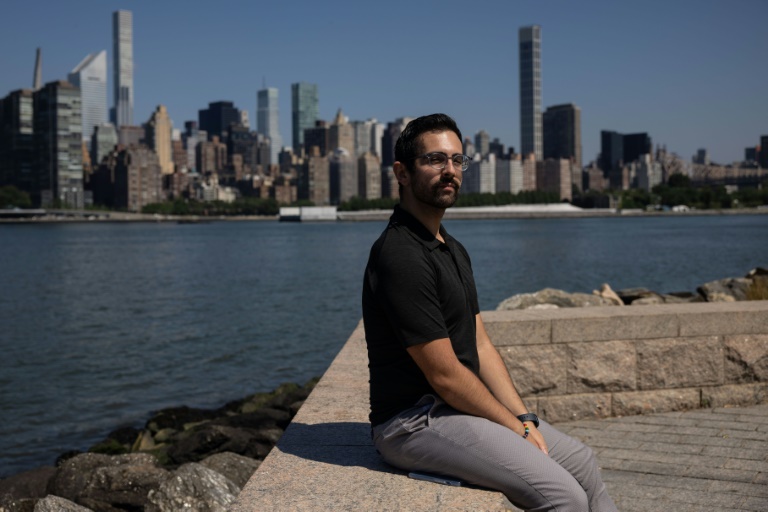
“It was the worst pain that I have experienced in my life,” says 26-year-old New Yorker Kyle Planck, recalling his recent monkeypox infection.

Although anyone can catch monkeypox, Planck first took note of the virus in spring when authorities said many of the first cases in Europe and America were in men who have sex with men.

“I was a little bit worried that it would eventually affect us here in the United States, especially being a member of the LGBTQ+ community,” he remembers.

At the end of June, the PhD candidate in pharmacology says he started to feel very sick.

A fever, swollen lymph nodes and a negative Covid-19 test made him think it could be monkeypox.

A doctor told him to wait and see how his symptoms evolved, but after four days of being feverish he developed spots that left him in no doubt.

“They had started on my arms and my hands and over the course of a day they spread all over my body.

“I had about 30 lesions develop at that point,” he says at his apartment in the borough of Queens.

Planck was able to get tested on July 5 and the following day started treatment with TPOXX, or Tecovirimat, an antiviral drug originally used against human smallpox but authorized in a trial against monkeypox.

Planck concedes that his proximity to the medical community made it easier for him to enroll in a study.

“I know that is not the reality for most people in New York, which is really unfortunate,” he says.

Monkeypox usually clears up on its own but can be extremely painful.

Planck was in intense pain for a week, especially from the lesions on his mucus membranes, before the drugs started to relieve his symptoms.

“The pain was so severe for me that I basically was taking warm baths six or seven times a day, just because that was the only thing that would make me feel better,” he says.

Planck found the experience “exhausting” and adding to his stress was a fear of contaminating his roommate, even though transmission occurs by close contact.

He believes his case was “relatively mild” because he was able to receive treatment and that “so many people are going through worse.”

Planck feels that US health authorities were too slow to react to the first outbreak of cases and says that preventative messaging has been too weak.

– Vaccine doses –

“I think the government was kind of like, ‘let’s wait and see what happens, let’s wait and see if this becomes a problem,’ and that really doesn’t take into account how infectious diseases work,” he says.

Planck has written multiple letters to elected officials asking them to increase access to the antiviral drug.

“We have millions of doses of the TPOXX treatment available. And months into this outbreak, we’re still not really able to mobilize those resources,” he says.

The United States initially had 100 million doses of the ACAM2000 vaccine. It is designed to treat human smallpox but can cause significant side effects and is not recommended for immunocompromised people.

Only a thousand doses of the newer and safer Jynneos vaccine were available as cases first started multiplying, largely because nearly 800,000 doses were blocked in Denmark pending approval by the Food and Drug Administration.

Availability is increasing, however. 

New York City — which has 711 confirmed cases, the highest concentrated number in the country — has received 21,500 doses and is awaiting a supply of 25,000 more.

Appointments have gone in minutes and long queues have formed outside clinics in recent days.

“I don’t want anyone to have to go through what I went through,” concludes Planck.

Alarm bells as US abortion ruling fuels rush on morning-after pill

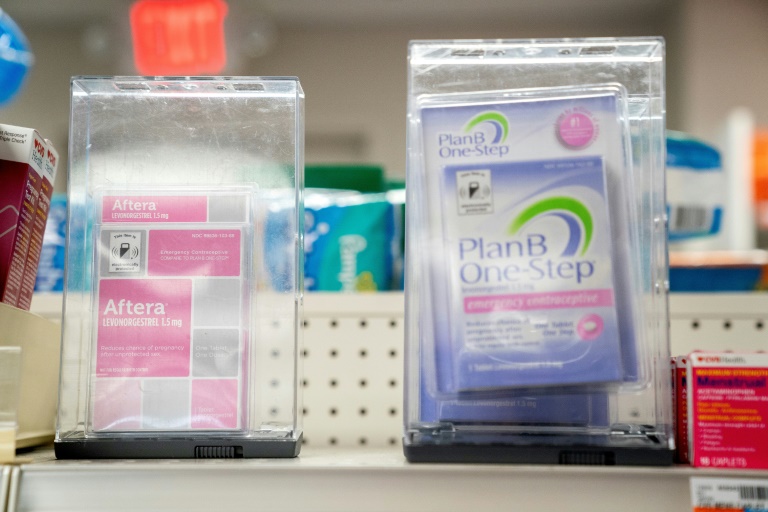
When the US Supreme Court overturned the nationwide right to abortion, Julie Crowe went straight online to do some shopping. She ordered 10 packs of the emergency contraceptive pill known as Plan B for immediate delivery.

Crowe, 52, is part of a larger trend of people who have rushed to purchase the so-called “morning-after” pill, often in bulk, following the loss of half a century of abortion rights.

Online reproductive and sexual health provider Wisp saw a 3,000 percent surge in emergency contraception sales in the 24 hours after the ruling — and they have kept rising in the month since, it told AFP.

But health experts warn that bulk-buying a medication that is legally sold over the counter nationwide is unnecessary, and risks taking pills away from those most in need.

Crowe, a public school teacher from Nashville, Tennessee, was eager to see if her largely conservative state would even allow the delivery to go through. But most of all, she wanted pills on hand to help anyone “in need of control of their own life.”

“It’s utterly ridiculous that as a nation we’re going backwards in time with civil rights and bodily autonomy,” she told AFP.

Distinct from the pills used to terminate pregnancies, emergency contraceptives prevent fertilization from occurring. They can be taken within five days, but the sooner a dose is taken, the more effective it will be.

Calls to stock up have rapidly gained traction on social media, leading both online giant Amazon and drugstore chains like CVS and Rite Aid to temporarily limit purchase quantities to avoid a shortage of the pills.

– ‘Really scary’ –

While healthcare professionals and reproductive health organizations like Planned Parenthood suggest having an extra emergency pill on hand, they do not advise stockpiling.

“I understand the urge,” said Hayley McMahon, a reproductive health researcher.

The prospect of being unable to terminate an unwanted pregnancy, she said, can trigger “a very visceral feel of having your body used against your will.”

But “pharmacies often have a fairly limited supply,” she told AFP. “You don’t want to buy up packs that you don’t need right now, when the next person who walks through the door could be running out of time.”

McMahon believes misinformation is driving the rush to stock up.

Morning-after pills are sometimes conflated with forms of abortion, she said, sometimes intentionally to spread confusion.

That can lead to uncertainty about their legal status, despite there being no legislation in the works to restrict emergency contraceptives.

Savannah Norvell, a nanny in Richmond, Virginia, did worry it could amount to hoarding when she bought a six-pack of Plan B.

But she ultimately decided that because she plans on giving the pills away, buying them would be justified.

Since she lives in a low-income area with a large student population, she ordered from Amazon so as not to decrease the local, immediately available stock.

It’s a particularly personal issue for Norvell, 27, who had to get an abortion at age 18 after she was raped.

She said she felt “ashamed” and alone, and didn’t know where to get Plan B until it was too late.

While she doesn’t regret her abortion, Norvell told AFP she wishes she’d had “another option.”

Norvell wrote on Twitter that she had extra pills to give away, and has requested to join Facebook groups whose members donate morning-after pills to people in need.

– ‘Reinvent the wheel’ –

However well-intentioned, experts say such actions are misguided.

“As long as emergency contraceptives are available from regular vendors, I don’t see the benefit of having individuals ship them to women out of state,” said Caroline Moreau, a reproductive health specialist and associate professor at the Johns Hopkins school of public health.

While it is legal to mail over-the-counter medication, she cautioned it will always be safer to buy the pills from a reliable vendor than from a stranger online.

“There’s no real reason to reinvent the wheel,” agreed McMahon, pointing out that abortion funds were already working to ensure access to emergency contraceptives obtained directly from manufacturers.

In one such initiative, a group called Students for Reproductive Freedom recently installed a Plan B vending machine on site at Boston University — and hopes to extend to other campuses.

Still, McMahon acknowledged that stockpiling was “an expression of autonomy” against the Supreme Court decision.

Norvell, meanwhile, wanted to feel she could somehow make a difference.

“It’s such an isolating feeling, not to be able to choose what’s best for you,” she said. “I don’t want anyone else to feel as alone as I did, and if I can help them, I will.”

Hit by China shutdown, Tesla boosts auto prices and sells bitcoin

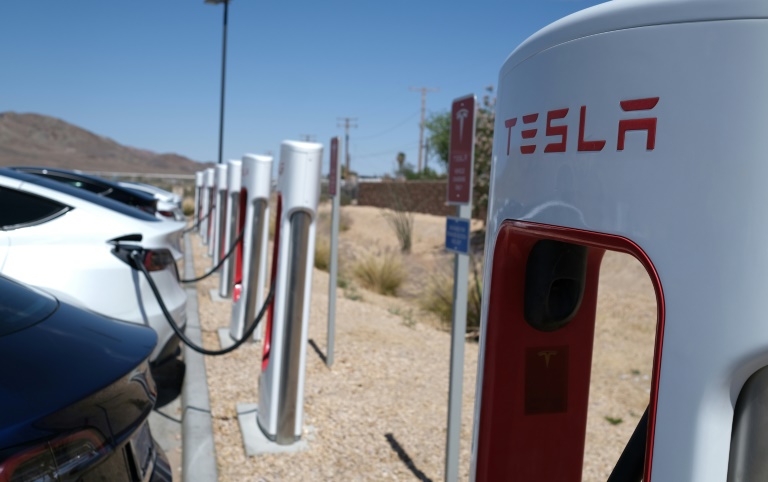
Tesla reported solid quarterly earnings Wednesday despite a hit from Covid-19 lockdowns in Shanghai that Chief Executive Elon Musk said prompted the company to liquidate most of its bitcoin holdings.

Musk, who has generated recent headlines over his controversial withdrawal from a $44 billion acquisition of Twitter, said the company had navigated a tricky environment with the Shanghai closure and lingering supply chain problems that have raised costs.

The electric vehicle maker reported second-quarter profits of $2.3 billion, about twice that in the year-ago period as the automaker lifted car prices to “embarrassing” levels, as Musk put it.

Although Tesla profits topped estimates, they lagged behind those in the first quarter, the first sequential profit drop since late 2020, which coincided with a fall in automotive profit margins due to rising costs.

And while revenues jumped 42 percent to $16.9 billion, they came in below the $17.1 billion projected by analysts.

Musk described the period as a “unique quarter,” but told investors and analysts on a conference call that the restart of the Shanghai plant and the ramp-up of new factories in Germany and Texas create “the potential for a record-breaking second half of the year.”

The company cited the drag from Shanghai, where its factory was shuttered for part of the quarter. But Tesla said it finished the three-month period with “a record monthly production level” after the China restart.

Tesla said supply chain challenges remain an ongoing headache, as factory shutdowns, labor shortages, logistics and other issues “limited our ability to consistently run our factories at full capacity.”

– Bitcoin sale –

During the quarter, Tesla liquidated about 75 percent of its holdings in bitcoin, the value of which has declined sharply in 2022.

The moves on bitcoin resulted in one-time costs of $106 million, said Chief Financial Officer Zachary Kirkhorn.

Musk attributed the move to the need to raise cash because of the uncertainty of when Shanghai operations would return.

The sale “should not be taken as some verdict on bitcoin,” Musk said at the outset of the call. 

But cryptocurrency is a “side show to the side show” compared with the goal of accelerating the energy transition, said Musk, who pointed to the scorching heat now plaguing many countries as underscoring the need for change.

Torrid demand for Musk’s electric vehicles has allowed Tesla to pass on higher prices to consumers. 

In the United States, Tesla’s cheapest vehicle, the Model 3, starts at nearly $50,000.

“We’ve raised our prices quite a few times, they’re frankly at embarrassing levels. ” Musk said. “But we’ve also had a lot of supply chain and production shocks and we’ve got crazy inflation.

“I am hopeful — this is not a promise or anything, but I’m hopeful that at some point we can reduce the prices a little bit,” he said.

– Bullish on rest of 2022 –

Several analysts had viewed the second quarter as the weakest of the year for Tesla in the aftermath of the Shanghai factory lockdown and other supply chain issues.

But many Tesla watchers are bullish on the second half of 2022 in light of the company’s growing production profile.

CFRA Research analyst Garrett Nelson told AFP the second quarter was “especially impressive” given the headwinds of the Shanghai closure and the costs of upping production at new plants.

Musk has shown boundless confidence in Tesla’s ability to shake up the auto market, leading the company as it has met production targets on its core product, even as the cars remain too expensive for many consumers.

But Musk has been less enthusiastic of late about the economy as a whole, saying last month that a recession “appears more likely than not” and confirming plans to reduce the company’s salaried work force by about 10 percent.

Most recently, the controversial CEO has become embroiled in a messy fight with Twitter after withdrawing his takeover bid. The case will go to trial in October to determine Musk will be forced to complete the transaction. 

Shares of Tesla added 1.6 percent to $754.45 in after-hours trading.

Hit by China shutdown, Tesla boosts auto prices and sells bitcoin

Tesla reported solid quarterly earnings Wednesday despite a hit from Covid-19 lockdowns in Shanghai that Chief Executive Elon Musk said prompted the company to liquidate most of its bitcoin holdings.

Musk, who has generated recent headlines over his controversial withdrawal from a $44 billion acquisition of Twitter, said the company had navigated a tricky environment with the Shanghai closure and lingering supply chain problems that have raised costs.

The electric vehicle maker reported second-quarter profits of $2.3 billion, about twice that in the year-ago period as the automaker lifted car prices to “embarrassing” levels, as Musk put it.

Although Tesla profits topped estimates, they lagged behind those in the first quarter, the first sequential profit drop since late 2020, which coincided with a fall in automotive profit margins due to rising costs.

And while revenues jumped 42 percent to $16.9 billion, they came in below the $17.1 billion projected by analysts.

Musk described the period as a “unique quarter,” but told investors and analysts on a conference call that the restart of the Shanghai plant and the ramp-up of new factories in Germany and Texas create “the potential for a record-breaking second half of the year.”

The company cited the drag from Shanghai, where its factory was shuttered for part of the quarter. But Tesla said it finished the three-month period with “a record monthly production level” after the China restart.

Tesla said supply chain challenges remain an ongoing headache, as factory shutdowns, labor shortages, logistics and other issues “limited our ability to consistently run our factories at full capacity.”

– Bitcoin sale –

During the quarter, Tesla liquidated about 75 percent of its holdings in bitcoin, the value of which has declined sharply in 2022.

The moves on bitcoin resulted in one-time costs of $106 million, said Chief Financial Officer Zachary Kirkhorn.

Musk attributed the move to the need to raise cash because of the uncertainty of when Shanghai operations would return.

The sale “should not be taken as some verdict on bitcoin,” Musk said at the outset of the call. 

But cryptocurrency is a “side show to the side show” compared with the goal of accelerating the energy transition, said Musk, who pointed to the scorching heat now plaguing many countries as underscoring the need for change.

Torrid demand for Musk’s electric vehicles has allowed Tesla to pass on higher prices to consumers. 

In the United States, Tesla’s cheapest vehicle, the Model 3, starts at nearly $50,000.

“We’ve raised our prices quite a few times, they’re frankly at embarrassing levels. ” Musk said. “But we’ve also had a lot of supply chain and production shocks and we’ve got crazy inflation.

“I am hopeful — this is not a promise or anything, but I’m hopeful that at some point we can reduce the prices a little bit,” he said.

– Bullish on rest of 2022 –

Several analysts had viewed the second quarter as the weakest of the year for Tesla in the aftermath of the Shanghai factory lockdown and other supply chain issues.

But many Tesla watchers are bullish on the second half of 2022 in light of the company’s growing production profile.

CFRA Research analyst Garrett Nelson told AFP the second quarter was “especially impressive” given the headwinds of the Shanghai closure and the costs of upping production at new plants.

Musk has shown boundless confidence in Tesla’s ability to shake up the auto market, leading the company as it has met production targets on its core product, even as the cars remain too expensive for many consumers.

But Musk has been less enthusiastic of late about the economy as a whole, saying last month that a recession “appears more likely than not” and confirming plans to reduce the company’s salaried work force by about 10 percent.

Most recently, the controversial CEO has become embroiled in a messy fight with Twitter after withdrawing his takeover bid. The case will go to trial in October to determine Musk will be forced to complete the transaction. 

Shares of Tesla added 1.6 percent to $754.45 in after-hours trading.

ADB slashes Asia growth forecast as fuel, food prices rise

The Asian Development Bank on Thursday slashed its 2022 growth forecast for developing Asia and warned economic conditions could worsen, as the war in Ukraine and supply chain disruptions drive up prices.

While the impact of Covid-19 had eased, the region was now grappling with the fallout from Russia’s invasion of Ukraine, lockdowns in China and aggressive interest rate hikes, the Philippines-based bank said.

To reflect the deterioration across developing Asia — which stretches from the Cook Islands in the Pacific to Kazakhstan in Central Asia — the bank cut its 2022 growth forecast to 4.6 percent.

That compares with its previous prediction in April of 5.2 percent and the 6.9 percent growth chalked up last year.

It also increased its inflation forecast for the region this year to 4.2 percent, from 3.7 percent, due to surging food and fuel prices.

Risks to the outlook “remain elevated”, the bank warned.

“A substantial slowdown in global growth could hurt exports, manufacturing activity and employment prospects, and cause turbulence in financial markets,” it said. 

Double-digit inflation has hit most of the Caucasus and Central Asia — which have close trade and financial ties to Russia — as well as Mongolia, Pakistan, Sri Lanka, Laos and Myanmar.

India’s inflation was above target at seven percent, but in the rest of the region’s large economies it was “manageable”.

But the bank warned: “A worsening fallout from the war in Ukraine could lead to a further surge in global energy and commodity prices, with likely knock-on effects on growth and inflation in developing Asia.”

Adding to the region’s woes was the strengthening US dollar, seen as a safe haven during periods of uncertainty, which the bank said was weighing on regional currencies and stock markets.

“With financial conditions tightening, growth in advanced economies is softening,” the bank said.

“And with activity in the PRC (China) hampered by supply chain disruptions, domestic demand and exports in developing Asia are set to face significant challenges.”

The growth forecast for East Asia, which includes China, was cut to 3.8 percent from 4.7 percent, as Covid-19 lockdowns batter the world’s second-biggest economy.

In South Asia, where bankrupt Sri Lanka is reeling from its worst economic crisis, the bank lowered its growth forecast to 6.5 percent from 7.0 percent previously.

But the bank revised up its forecast for the Pacific to 4.7 percent, from 3.9 percent, on a surprising rebound in tourism in Fiji.

Biden seeks to revive climate agenda as heat waves slam US, Europe

President Joe Biden, thwarted by lawmakers and the Supreme Court, sought Wednesday to revive his ambitions to tackle climate change as heat waves batter the United States and Europe.

Rocketing summer temperatures have highlighted the growing threat, with 100 million people in the United States currently under excessive heat alerts and devastatingly hot conditions causing misery across Europe.

“Climate change… is literally, not figuratively, a clear and present danger,” Biden said, announcing executive actions including $2.3 billion in investments to help build US infrastructure to withstand climate disasters.

“The health of our citizens and our communities is literally at stake… Our national security is at stake as well… And our economy is at risk. So we have to act.”

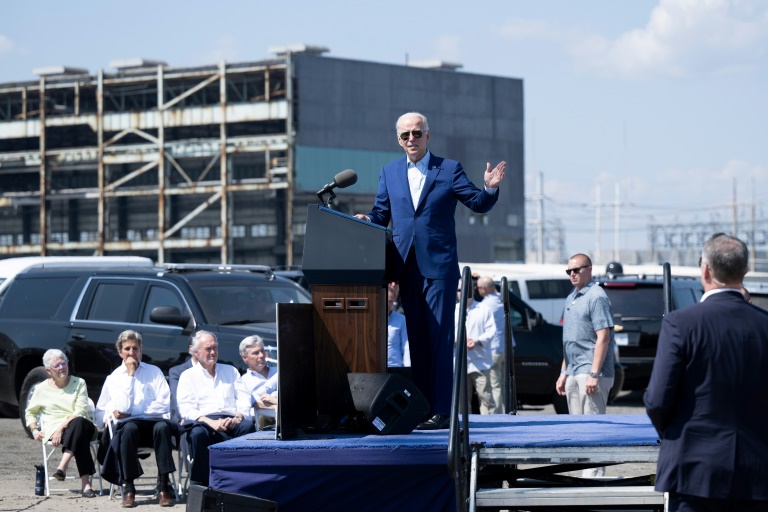
Biden, delivering a speech at a former coal-fired electricity plant in Massachusetts, said his administration would do whatever necessary, with or without lawmakers on board.

“Congress is not acting as it should… This is an emergency and I will look at it that way. As president, I’ll use my executive powers to combat the climate crisis,” he said.

But he stopped short of declaring a formal climate emergency, which would grant him additional policy powers. Upon his return home, when asked about the emergency designation, Biden told reporters: “I will make that decision soon.”

– Repeated setbacks –

Biden began his term last year promising to fulfill campaign pledges to tackle the global climate crisis, but his agenda has faced blow after blow.

His first day in office, Biden signed an executive order to bring the United States back into the Paris climate agreement, followed later by an ambitious announcement that he was targeting a 50-52 percent reduction from 2005 levels in US net greenhouse gas pollution by 2030.

But his signature Build Back Better legislation, which would have included $550 billion for clean energy and other climate initiatives, is all but dead after failing to receive the necessary backing in Congress as fellow Democrat Joe Manchin said he would not support the bill in a evenly divided Senate.

And last month, the conservative-leaning Supreme Court ruled that the Environmental Protection Agency (EPA) cannot issue broad greenhouse gas regulations without congressional approval.

“When it comes to fighting climate change, I will not take ‘no’ for an answer,” Biden said.

“I will do everything in my power to clean our air and water, protect our people’s heath, to win the clean energy future… Our children and grandchildren are counting on us. Not a joke.”

Among the new executive orders was funding to promote efficient air conditioning, and an order to advance wind energy development off the Atlantic Coast and Florida’s Gulf Coast.

The Biden administration has framed climate policies as a job creation project — and as a national security issue, made more urgent by soaring fuel prices in the wake of Russia’s invasion of Ukraine.

The White House said in a statement that Biden was seeking “to turn the climate crisis into an opportunity, by creating good-paying jobs in clean energy and lowering costs for families.”

His speech on Wednesday was at a shuttered coal-fired power plant that will be used for a cable manufacturing factory to supply offshore wind facilities.

State Department spokesman Ned Price this week pointed to the extreme heat wave tormenting Europe this week — with Britain recording a temperature of 104 degrees Fahrenheit (40 degrees Celsius) — as more proof that climate action cannot wait. 

“We are committed to taking advantage of this moment and doing everything we can, including on the world stage,” Price told reporters, “to ensure that this decisive decade does not go by without us taking appropriate action.”

United Airlines reports profit but sees higher recession risk

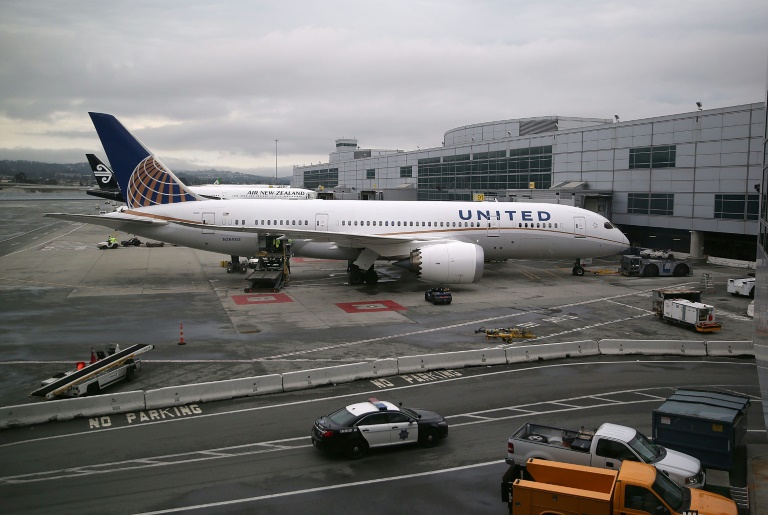
United Airlines reported a profitable second quarter Wednesday as strong travel demand boosted revenues, but signaled plans to rein in plane capacity as carriers confront operational challenges and recession worries.

The big US carrier said revenues “improved at a rapid pace” during the quarter and that it expects full-year profitability in light of still-strong demand.

But United said it expects full-year capacity in 2022 to be 13 percent below the 2019 level. It plans 2023 capacity growth of “no more than eight percent” from the 2019 level.

Chief Executive Scott Kirby cited the chance of a global recession as one of three major question marks facing the industry as the company reported quarterly profits of $329 million compared with a loss of $434 million in the year-ago period.

Revenues were $12.1 billion, more than twice that of the 2021 period and 6.2 percent above the 2019 level.

“It’s nice to return to profitability,” Kirby said. “But we must confront three risks that could grow over the next 6-18 months. 

“Industry-wide operational challenges that limit the system’s capacity, record fuel prices and the increasing possibility of a global recession are each real challenges that we are already addressing.”

Shares fell 6.8 percent to $38.84 in after-hours trading.

US to send more rocket systems to Ukraine, Moscow signals wider war aims

The United States on Wednesday promised to send more precision rocket systems to Kyiv, soon after Moscow signaled it was aiming to seize more Ukrainian territory beyond the eastern industrial region of Donbas.

The announcement came as the European Commission called on EU members to slash demand for natural gas to relieve dependence on Russian energy and the bloc agreed an embargo on Russian gold imports, measures that Kyiv nevertheless dismissed as insufficient.

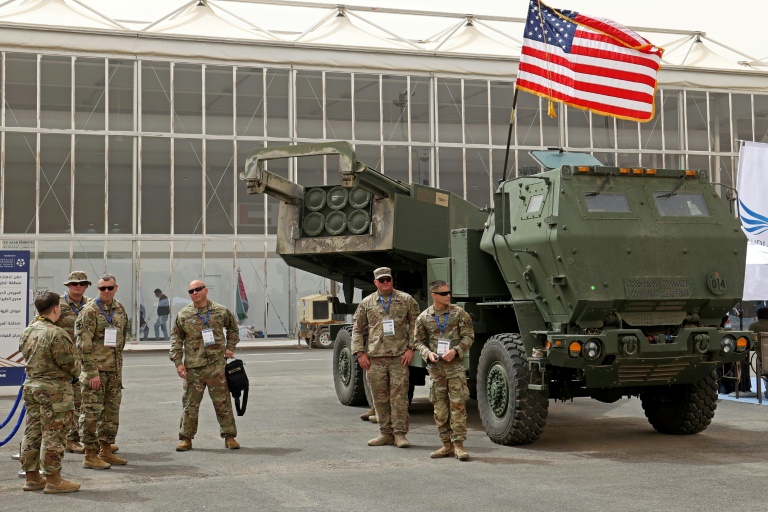
Pentagon chief Lloyd Austin said Washington would send four more M142 High Mobility Artillery Rocket System (Himars), which have notably boosted Kyiv’s capabilities on the battlefield in recent weeks by allowing Ukrainian forces to hit Russian targets from long distances.

“Ukraine needs the firepower and the ammunition to withstand this barrage and to strike back,” Austin told reporters, adding that the new shipment would bring the total of US Himars sent to Kyiv to 16.

Hours earlier, Russian Foreign Minister Sergei Lavrov said in an interview that Moscow’s military was no longer only focused on wresting control of the east Ukraine regions of Lugansk and Donetsk, which have been partially controlled by pro-Moscow rebels for years.

“The geography is different now. It is not only about the DNR and LNR, but also the Kherson region, the Zaporizhzhia region and a number of other territories,” he explained to state media.

On Tuesday, the United States said Russia was “beginning to roll out a version of what you could call an annexation playbook” — citing the same areas mentioned by Lavrov.

Russian forces, since invading Ukraine on February 24, have steadily advanced into each of those regions, wreaking destruction as they captured key cities and met fierce Ukrainian resistance.

In recent weeks, they have also hit Ukrainian civilian targets in cities and towns far away from the frontline, leaving scores of civilians dead, in what Ukrainian President Volodymyr Zelensky has called a terror campaign.

– ‘Russian terror must lose’ –

In an emotional speech before the US Congress on Wednesday, Ukrainian First Lady Olena Zelenska described the suffering of millions of Ukrainian parents and children, and asked Washington for air-defence systems to fend off Russian missiles.

Zelenska, stepping into a more public role after staying sheltered in the first weeks of the war, displayed images of children who were killed or maimed by Russia, including a four-year-old killed by a strike in the city of Vinnytsia.

Photos of her blood-spattered pink stroller and footage of her final moments went viral on social media.

“Help us to stop this terror against Ukrainians,” Zelenska said.

Later in the day, Zelensky expressed hope that Kyiv’s pleas for anti-missile systems would be heard, saying: ” I hope the answers to our requests won’t be long in coming.”

– Western arms a ‘direct threat’ to Russia –

The steady progress of Russian troops in the east has come after Moscow’s forces failed early in the invasion to capture the capital Kyiv and were pushed back from Ukraine’s second city Kharkiv.

But Russian artillery has pursued an almost constant shelling campaign on Kharkiv, and strikes on Wednesday killed three people, local officials said.

“There was a 13-year-old boy among them,” the regional governor Oleg Synegubov said in a statement on social media. 

AFP journalists saw a man in shock kneeling over the body, which was covered by a blue sweatshirt and surrounded by shards of broken glass.

While the brunt of recent fighting in Ukraine has focused on Donbas, a Ukrainian counter-offensive in the south has slowly clawed back some Russian-held territory, thanks in large part to Western-supplied long-range artillery.

Lavrov said that Western arms deliveries to Ukraine had been a factor in Moscow’s decision to focus beyond the east and said its ambitions could expand even more if the shipments continued. 

“We cannot allow the part of Ukraine that Zelensky will control or whoever replaces him to have weapons that will pose a direct threat to our territory and the territory of those republics that have declared their independence,” Lavrov said, referring to Donetsk and Lugansk.

– Emergency energy plans –

Lavrov also dismissed the idea of further peace talks with Ukraine, claiming that earlier rounds showed Kyiv was unwilling to negotiate in “earnest”. 

“It doesn’t make any sense in the current situation,” he told state media.

Russian and Ukrainian delegations are nevertheless expected in Istanbul in the coming days for more talks on unblocking Ukraine’s Black Sea grain exports.

Turkish President Recep Tayyip Erdogan said Wednesday he hoped an agreement could be formulated “this week”.

The West has responded to Russia’s invasion with several packages of damaging sanctions, which in turn has seen Russia cut natural gas supplies to the bloc, spurring a supply and cost crisis.

In its latest package of penalties Wednesday, the EU targeted gold exports and froze assets at Russia’s largest bank Sberbank.

And Brussels also asked EU members to reduce demand for natural gas by 15 percent in order to limit supplies from Russia, which last year accounted for 40 percent of EU’s imports.

Zelensky however criticized those measures as inadequate, saying in his address: “Russia must pay a much higher price for this war, which would force it to seek peace.”

burs-acl-jbr/md/sst

Close Bitnami banner
Bitnami