US Business

European stocks retreat, euro dips while US shares rise

European stocks retreated Wednesday as the EU took precautionary measures in the face of reduced Russian gas supplies, but Wall Street extended its rally for a second day.

The euro bobbed about before settling lower ahead of a key European Central Bank meeting on Thursday, when the ECB is expected to announce its first rate hike in more than a decade to join the fight to tame sky-high inflation.

US stocks had rebounded strongly Tuesday as companies’ earnings soothed concerns about the impact on their bottom lines from soaring inflation and rising interest rates, and the gains continued into Wednesday, a bright spot in a dismal year.

While several firms — such as Apple and Johnson & Johnson — have indicated they have concerns about the outlook, there is a feeling that the sell-off across markets could be reaching a bottom. Investors especially moved into tech shares.

And some commentators have suggested the second half of the year could see a healthy rally, despite official data continuing to show inflation continuing to rise strongly worldwide.

UK annual inflation hit a new 40-year high at 9.4 percent in June on surging fuel and food prices.

The Federal Reserve and Bank of England have raised lending rates multiple times, and all eyes now are on the ECB.

Officials have their work cut out for them as they must also try not to drive a stake through the eurozone economy, which has also been hammered by an energy crisis.

Talk of a half-point hike — instead of the quarter-point increase most expect ECB officials had signaled — has boosted the euro against the US dollar since it fell below parity last week for the first time in 20 years.

“The central bank has left the door open to super-charging the lift-off previously but given its past tendency to proceed with extreme caution, it would send quite the message about how concerned they’ve become,” said market analyst Craig Erlam at trading platform OANDA.

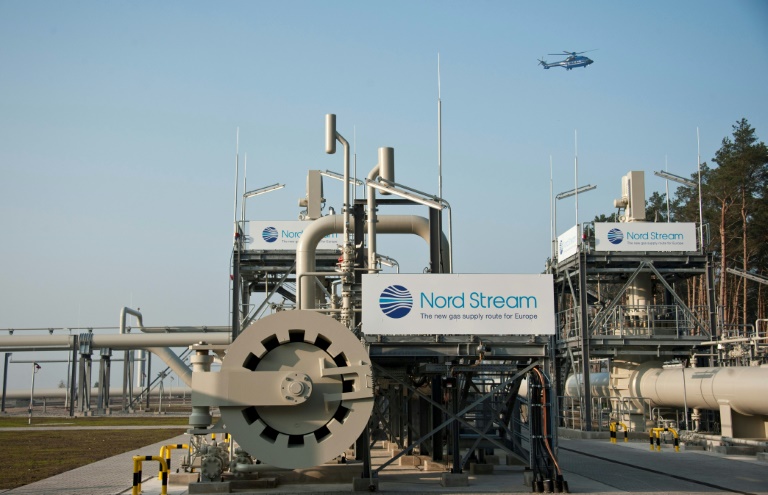
The European single currency caught an early updraft from a Bloomberg News article saying Russia’s Gazprom would resume deliveries through the Nord Stream 1 pipeline Thursday, albeit at reduced capacity.

Moscow shut down deliveries to Germany for technical reasons last week, but there had been fears it would keep the taps off in retaliation for European sanctions over its invasion of Ukraine.

The German pipeline manager on Wednesday said Russian gas deliveries are expected to resume at the previous level.

Taking no chances, the European Commission on Wednesday urged EU countries to reduce their demand for natural gas by 15 percent over the coming winter months to overcome Russia’s energy supply “blackmail.”

In a statement, the EU’s executive arm also asked member states to give it special powers to force through needed demand reductions if Russia cuts Europe’s gas lifeline.

“Russia is blackmailing us. Russia is using energy as a weapon and therefore, in any event, whether it’s a partial major cut off of Russian gas or total cut off… Europe needs to be ready,” Commission president Ursula von der Leyen told reporters.

Oil prices retreated modestly.

– Key figures at around 2030 GMT –

New York – Dow: UP 0.2 percent at 31,874.84 (close)

New York – S&P 500: UP 0.6 percent at 3,959.9 (close)

New York – Nasdaq: UP 1.6 percent at 11,897.65 (close)

London – FTSE 100: DOWN 0.4 percent at 7,267.97 (close) 

Frankfurt – DAX: DOWN 0.2 percent at 13,281.98 (close)

Paris – CAC 40: DOWN 0.3 percent at 6,184.66 (close)

EURO STOXX 50: DOWN less than 0.1 percent at 3,585.24 (close)

Tokyo – Nikkei 225: UP 2.7 percent at 27,680.26 (close)

Hong Kong – Hang Seng Index: UP 1.1 percent at 20,890.22 (close)

Shanghai – Composite: UP 0.8 percent at 3,304.72 (close)

Euro/dollar: DOWN at $1.0175 from $1.0226 Tuesday

Pound/dollar: DOWN at $1.1975 from $1.2002 

Euro/pound: DOWN at 84.96 pence from 85.19 pence

Dollar/yen: DOWN at 138.26 yen from 138.21 yen

West Texas Intermediate: DOWN 1.5 percent at $102.61 per barrel

Brent North Sea crude: DOWN 0.6 percent at $106.69 per barrel

burs-rl/pvh/hs/to
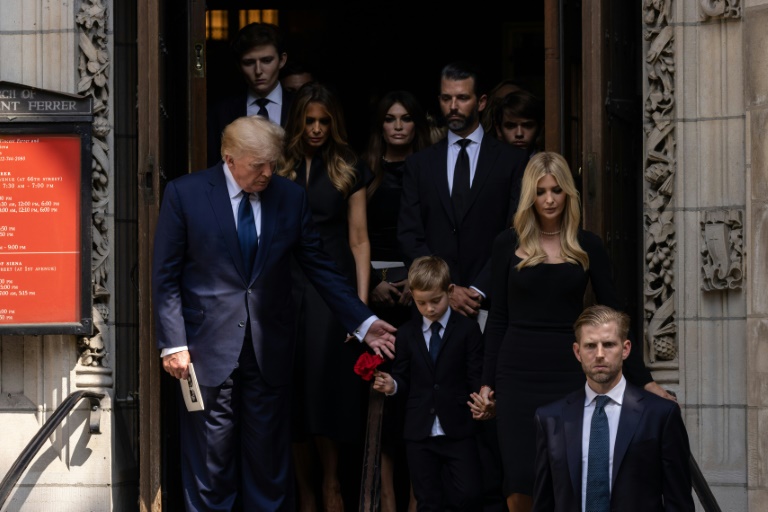
Trumps bid farewell to Ivana at funeral in New York

Ex-president Donald Trump and his eldest children gathered at a church in New York on Wednesday to say goodbye to his first wife Ivana who died last week aged 73.

Don Jr, Ivanka and Eric Trump joined their father and former first lady Melania for their mother’s funeral service at St. Vincent Ferrer Church on Manhattan’s Upper East Side.

The siblings and their partners and children looked on solemnly as Ivana Trump’s casket was carried into the church for the 1:30 pm (17:30 pm) service.

Donald Trump and Melania entered by a side door, an AFP photographer saw, as the funeral took place under heightened security.

Inside, Eric Trump told mourners that his Czech-born mom had been “the embodiment of the American dream” and “a force of nature,” the New York Post reported.

Ivanka Trump described her mother as a “trailblazer” during the Catholic service that was billed as a “celebration of life,” the tabloid added.

Ivana Trump, the first wife of the former US president, died of “blunt impact injuries” on Thursday, reportedly caused by a fall down the stairs at her home.

She was a model who grew up under communist rule in the former Czechoslovakia before marrying Donald Trump, then a budding real estate developer, in 1977.

Throughout the ’80s, the Trumps were one of New York’s highest-profile couples, their extravagant lifestyle exemplifying the flashy excesses of the decade.

Their power and celebrity grew as Donald Trump’s property business soared, with Ivana Trump taking on number of key roles in the business.

Their high-profile split in the early ’90s, rumored to have been caused in part by Donald Trump’s affair with actress Marla Maples, provided juicy content for New York’s tabloids.

Ivana Trump went on to enjoy a successful business career of her own, developing clothing, jewelry and beauty products and penning a number of books.

She was married four times in her life, once before her marriage to Donald Trump and twice after.

Alleged shooter of Lady Gaga's dog walker freed by mistake

US authorities were on Wednesday searching for the suspect accused of shooting Lady Gaga’s dog walker in 2021, after admitting he was accidentally released from custody months ago.

James Howard Jackson, 19, is charged with shooting Ryan Fischer with a handgun near Sunset Boulevard in Los Angeles during an attempted kidnapping of the star’s valuable French bulldogs.

Jackson was released in April due to a “clerical error,” the US Marshals Service acknowledged, describing him as armed and dangerous.

It offered $5,000 for information about Jackson, one of three men charged with attempted murder and robbery over the attack.

Two of the suspects got out of a vehicle and demanded Fischer hand over the pets at gunpoint. Fischer was shot in a struggle before the men fled with two of the dogs, Koji and Gustav.

A third dog, Miss Asia, ran away during the encounter before returning to Fischer, who suffered serious chest injuries.

Police said they do not believe the suspects targeted the dogs because of their famous owner, but because they are a coveted breed that can sell for thousands of dollars.

At the time, the three men were described by Los Angeles police as “documented gang members.”

A 50-year-old woman handed the two missing pets in to the police two days after the theft and was later also arrested. Lady Gaga had offered a $500,000 reward for the dogs’ safe return.

Webb telescope may have already found most distant known galaxy

Just a week after its first images were shown to the world, the James Webb Space Telescope may have found a galaxy that existed 13.5 billion years ago, a scientist who analyzed the data said Wednesday.

Known as GLASS-z13, the galaxy dates back to 300 million years after the Big Bang, about 100 million years earlier than anything previously identified, Rohan Naidu of the Harvard Center for Astrophysics told AFP.

“We’re potentially looking at the most distant starlight that anyone has ever seen,” he said.

The more distant objects are from us, the longer it takes for their light to reach us, and so to gaze back into the distant universe is to see into the deep past.

Though GLASS-z13 existed in the earliest era of the universe, its exact age remains unknown as it could have formed anytime within the first 300 million years.

GLASS-z13 was spotted in so-called “early release” data from the orbiting observatory’s main infrared imager, called NIRcam — but the discovery was not revealed in the first image set published by NASA last week.

When translated from infrared into the visible spectrum, the galaxy appears as a blob of red with white in its center, as part of a wider image of the distant cosmos called a “deep field.”

Naidu and colleagues — a team totaling 25 astronomers from across the world — have submitted their findings to a scientific journal. 

For now, the research is posted on a “preprint” server, so it comes with the caveat that it has yet to be peer-reviewed — but it has already set the global astronomy community abuzz.

“Astronomy records are crumbling already, and more are shaky,” tweeted NASA’s chief scientist Thomas Zurbuchen.

“Yes, I tend to only cheer once science results clear peer review. But, this looks very promising,” he added.

Naidu said another team of astronomers led by Marco Castellano that worked on the same data has achieved similar conclusions, “so that gives us confidence.”

– ‘Work to be done’ –

One of the great promises of Webb is its ability to find the earliest galaxies that formed after the Big Bang, 13.8 billion years ago.

Because these are so distant from Earth, by the time their light reaches us, it has been stretched by the expansion of the universe and shifted to the infrared region of the light spectrum, which Webb is equipped to detect with unprecedented clarity.

Naidu and colleagues combed through this infrared data of the distant universe, searching for a telltale signature of extremely distant galaxies.

Below a particular threshold of infrared wavelength, all photons — packets of energy — are absorbed by the neutral hydrogen of the universe that lies between the object and the observer.

By using data collected through different infrared filters pointed at the same region of space, they were able to detect where these drop-offs in photons occurred, from which they inferred the presence of these most distant galaxies.

“We searched all the early data for galaxies with this very striking signature, and these were the two systems that had by far the most compelling signature,” said Naidu.

One of these is GLASS-z13, while the other, not as ancient, is GLASS-z11.

“There’s strong evidence, but there’s still work to be done,” said Naidu.

In particular, the team wants to ask Webb’s managers for telescope time to carry out spectroscopy — an analysis of light that reveals detailed properties — to measure its precise distance.

“Right now, our guess for the distance is based on what we don’t see — it would be great to have an answer for what we do see,” said Naidu.

Already, however, the team have detected surprising properties. 

For instance, the galaxy is the mass of a billion Suns, which is “potentially very surprising, and that is something we don’t really understand” given how soon after the Big Bang it formed, Naidu said.

Launched last December and fully operational since last week, Webb is the most powerful space telescope ever built, with astronomers confident it will herald a new era of discovery.

The complex negotiations to get grain out of Ukraine

Talks are progressing on the opening of sea corridors to allow 20 million tonnes of grain still blocked in Ukraine and the upcoming harvests to be shipped around the world.

But even if an agreement is reached, it will not provide any immediate relief for importing countries.

– Crucial negotiations –

Negotiations have intensified since the beginning of June, with Turkey acting as mediator between Russia and Ukraine, which together account for around 30 percent of global trade in crops.

The talks are crucial insofar as no other country has come forward so far able to make up for the shortfall on the market of initially 25 million tonnes of Ukraine grain. And prices for agricultural commodities were already high before Russia invaded Ukraine on February 24, notably as a result of the post-Covid economic recovery.

The war has sparked a surge in the price of grains such as wheat and corn to levels unsustainable for countries dependent on their import, such as Egypt, Lebanon and Tunisia.

In recent weeks, prices have progressively receded again on the prospect of the upcoming harvest, fears of recession and the progress made in the negotiations regarding the sea corridors. 

Negotiations have accelerated in recent days: Turkey said an agreement in principle had been reached on creating a protected sea corridor. 

Russian President Vladimir Putin said “progress” had been made in discussions before telling reporters that any deal hinged on the West’s willingness to yield some ground.

“We will facilitate the export of Ukrainian grain, but we are proceeding from the fact that all restrictions related to possible deliveries for the export of Russian grain will be lifted,” he said.

However, market experts say that no sanctions directly target Russian agricultural goods, but are nonetheless penalised by sanctions on the country’s banking sector.

– What is Turkey’s role? – 

“There’s only a handful of countries — Turkey is one, Qatar is another — that’s able to kind of speak to almost everybody and avoid major blowback,” said Colin Clarke, director of research at the US-based Soufan Group.

Turkish President Recep Tayyip Erdogan has “proven that he can do it and that’s why he’s been a trusted broker not only by the Russians, but I think begrudgingly NATO countries — that’s the best that they have,” the expert said.

Turkey had “a strong hand to play here”, Clarke continued.

“Erdogan gets to play the hero, he gets to tell everybody that he’s working to solve the global food crisis, but we know that Turkey is doing a lot to obstruct negotiations in other areas. 

“They’ve got their concerns, and their priorities don’t always align with the priorities of the international community, the priorities of NATO, or even the priorities of their allies.” 

– What sort of deal? –

As much as 90 percent of Ukrainian exports of wheat, corn and sunflower were transported by sea, mostly from the port of Odessa, which accounts for 60 percent of all port activity in the country.

Any agreement to resume large-scale shipping will have several stages: the de-mining of the ports that Ukrainians mined; the loading of the ships, which could be put under the supervision of the UN; the inspection of the shipments; and the escorting of the boats, as demanded by Russia to ensure that the cargoes do not include weapons, said Edward de Saint-Denis, trader at Plantureux and Associates.

Diplomatic sources say however that complete de-mining is not necessary as safe transit routes remain in the measures meant to protect coastal areas from invasion.

A number of other points remain very controversial: if Moscow manages to control — and even seize — boats, will the checks be carried out in Ukrainian or international waters? Which vessels will be authorised to transport the shipments and what will the nationality of their crews be? 

“Russians don’t want Ukrainians and vice versa,” de Saint-Denis said. 

At one point, Turkey suggested using its fleet, but a compromise could be reached to use “flags of convenience”, according to one market observer.

– What are the consequences? –

“In the very short term, agreement would bring down prices, but in terms of the flow of grain shipments, nothing would change immediately,” said Edward de Saint-Denis.

“One or two months would be needed to de-mine the ports,” the expert said. 

And the loading areas would have to be renovated, notably in Odessa where part of the port administration was damaged in the fighting, he said.

Despite the various possible obstacles, agricultural market analyst, Gautier Le Molgat said that it was now “in everyone’s interests that maritime traffic resumes on the Black Sea: first and foremost for the Ukrainians, but also for the Russians, who have an exceptional harvest to export”.

Americans in Paris get more bang for their buck as euro slides

As the dollar enjoys near-parity with the euro, Americans returning to Paris in droves after two years of Covid restrictions find that their greenbacks go a much longer way than they used to.

The euro slipped to parity with the dollar for the first time in nearly 20 years this month, as a cut in Russian gas supplies to Europe heightened fears of a recession in the eurozone.

It has since recovered a touch, to around $1.02 per euro, but remains a huge bargain for visitors, giving tourists from dollar countries a spending power boost of well over 10 percent from six months ago.

“It seems like visiting a local vacation spot in the US,” said John Perides, a retired engineer from Philadelphia as he made his way among the souvenir shops and cafes in the capital’s Latin Quarter with his wife and a group of friends.

“Our dollar has gone much further,” the 75-year-old told AFP, adding he was happy that the bill for 12 days of holidays had come to no more than $5,000 per person.

Traci Pawlowski, a 55-year-old molecular geneticist from San Diego, said the favourable exchange rate made prices “very affordable” and “comparable to the US”.

Restaurant prices, in particular, were now “comparable to California”, she said.

– ‘Kind of depends’ –

Annabel Granger, an 18-year-old student from Virginia, said she found Paris “to be a little bit less expensive” but, she added, “it kind of depends on where you go”.

Pittsburgh student Jahzara Green, also 18, said the Paris experience compared very favourably to a previous trip.

“I’ve been to Europe before and I could definitely tell the difference. It was way more expensive then, but now it’s like the same,” she said.

Vanguelis Panayotis, a French tourism expert running MKG Consulting, said he had detected “a clear impact” from the weaker dollar, especially on demand for high-end hotels.

Americans are big spenders when travelling to Paris, he observed. “They come here to consume.”

Didier Arino, CEO of Protourisme, a consultancy, said “they are filling the luxury hotels in the absence of the Chinese and the Russians”.

But some say US tourists, with their above-average spending power, don’t feel the benefit of their stronger currency as much as less wealthy visitors might.

“It has no impact,” said Jean-Francois Rial, boss of the Voyageurs du Monde group and head of the Paris tourist office.

Americans travelling to Paris tend to be “very rich” and mostly immune to currency fluctuations, he said.

Instead they were catching up on travel after two years without. “Plus they booked their trips several months ago when the dollar was not that strong,” Rial said.

US airline bookings to Paris were up by 11 percent between April and July, compared to the same period in 2019, according to Paris tourist office figures, pointing to a bumper season for the French capital.

burs-jh/rl

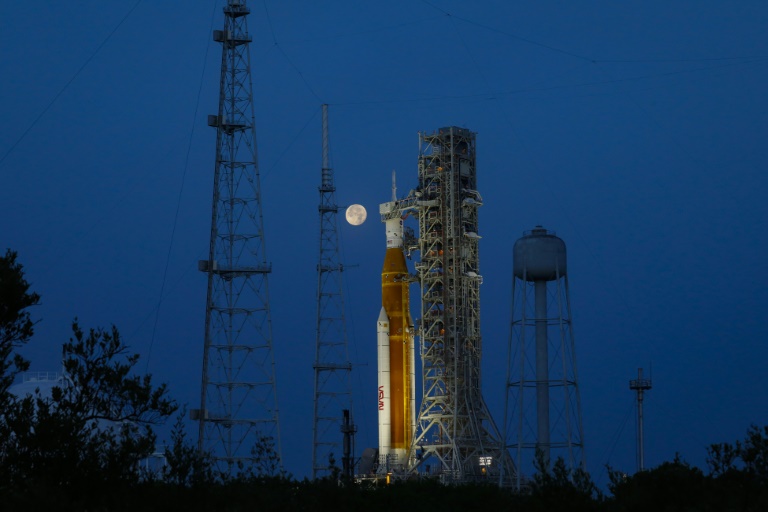
NASA's new Moon rocket to launch as soon as August 29

Mark your calendars: NASA’s Artemis program to return to the Moon could launch its first uncrewed test flight as soon as August 29, the agency said Wednesday.

Artemis-1 is the first in a series of missions as the United States seeks to return humans to the Moon, build a sustained presence there, and use the lessons gained to plan a trip to Mars sometime in the 2030s.

NASA associate administrator Jim Free told reporters the first window of possible launch dates for the giant Space Launch System (SLS) and Orion crew capsule were August 29, September 2, and September 5. 

The decision follows final checks on the ground at the Kennedy Space Center in Florida known as “wet dress rehearsals.” 

The last of these tests, carried out in June, met 90 percent of the team’s goals, and on Wednesday Cliff Lanham, senior vehicle operations manager, said engineers have now replaced faulty seals that had caused a hydrogen leak on SLS during the final trial.

Artemis-1 is set to journey around the far side of the Moon in a mission lasting four to six weeks — longer than any ship for astronauts has done without docking, before returning home faster and hotter than every vessel before.

It will also deploy a number of small satellites called CubeSats to perform experiments in space.

Artemis mission manager Mike Sarafin told reporters: “Our first and our primary objective is to demonstrate Orion’s heat shield in lunar reentry conditions.”

When the capsule returns from the Moon, it will be traveling about 24,500 miles an hour (39,400 kilometers per hour) and experience temperatures half as hot as the Sun outside its heat shield.

The second objective is to demonstrate the flight worthiness of the rocket and crew capsule as they perform all their maneuvers over the course of the mission.

Finally, NASA will look to successfully retrieve Orion after splashdown, and thoroughly inspect it.

Artemis-2 will be the first crewed test, flying around the Moon but not landing, while Artemis-3 will see the first woman and first person of color touch down on the lunar south pole.

Ukrainian first lady to US Congress: 'Stop this terror'

Ukraine’s first lady made an emotional pitch Wednesday to US lawmakers for more weapons to fight Russian invaders, saying she spoke for millions of parents fearing for their children.

Taking a cue from her husband President Volodymyr Zelensky, who showed graphic images during his virtual appearance before the US Congress, Olena Zelenska — who appeared in person — displayed images of joyful children who were killed or maimed by Russia.

Among them was Liza Dmitrieva, a four-year-old with Down’s syndrome pictured in her mother’s video happy on her stroller an hour before she was killed by a Russian strike last week in Vinnytsia.

“We want every father and every mother to be able to tell their child, ‘Go to sleep peacefully, there will be no more air strikes, no more missile strikes.’ Is this too much to wish for?” Zelenska said.

Zelenska, stepping into a more public role after staying sheltered immediately following Russia’s February 24 invasion, acknowledged it was unusual for a first lady to seek weapons but said it was vital.

Ukraine needs air-defense systems “in order for rockets not to kill children in their strollers,” she said.

“Help us to stop this terror against Ukrainians,” she said.

She invoked both the memory of the September 11 terrorist attacks and the US Declaration of Independence’s call for all people to enjoy “life, liberty and the pursuit of happiness.”

US lawmakers will go on recess next week and “this is normal,” she said.

“It is precisely this normalcy that we are deprived of now. Will my son be able to return to school in the fall? I don’t know, like millions of mothers in Ukraine.”

Both President Joe Biden, whom she met Tuesday, and the US Congress have been enthusiastic about supplying weapons to Ukraine, approving a $40 billion package in May.

But with Russian forces advancing in the east, Ukraine has been seeking to secure a more steady flow of weapons including longer-range precision rockets.

US lawmakers applauded Zelenska as she thanked them for assistance and said, “While Russia kills, America saves.”

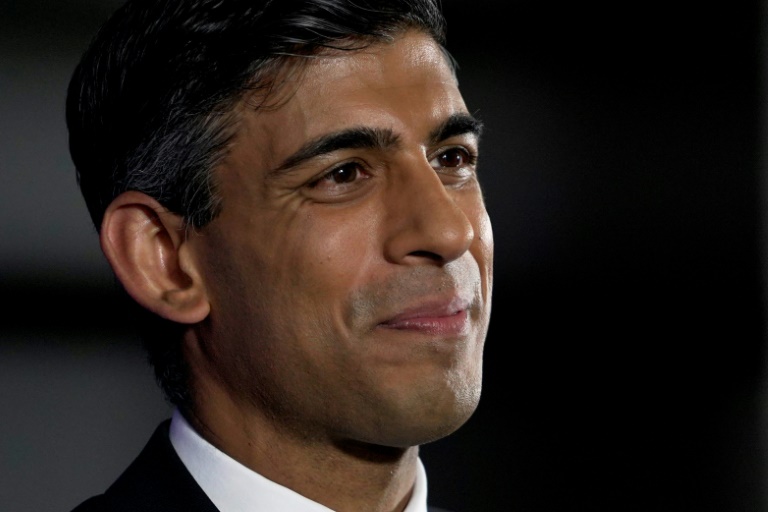
Squeaky-clean Sunak bids to become UK's first Hindu PM

Before his spectacular falling-out with Boris Johnson, former finance minister Rishi Sunak was on a rapid rise that could still end with him installed as Britain’s first prime minister of colour.

It would be a historic landmark, if the Hindu descendant of immigrants from Britain’s old empire in India and East Africa were to take command of the world’s fifth largest economy.

But after making the final run-off following a series of votes by Conservative MPs, Sunak must first convince the party’s grassroots members — and hope Johnson loyalists overlook his role in toppling the scandal-tainted leader.

A details-oriented policy wonk, Sunak, 42, was an early backer of Brexit, and took over as chancellor of the exchequer in February 2020. 

It was a baptism of fire for the Tory rising star, as the Covid pandemic erupted.

He was forced to craft an enormous economic support package at breakneck speed, which he now says needs to be paid off.

In India, Sunak has been better known through his wife Akshata Murty. She is the daughter of Indian tycoon Narayana Murthy, the billionaire co-founder of information-technology group Infosys. 

The Sunaks met while studying in California and they have two young daughters — along with a photogenic dog. 

The ex-minister’s Instagram-friendly profile earned him the media nickname of “Dishy Rishi”.

But Sunak, already wealthy through his pre-politics career in hedge funds, must battle against criticism that he is out of touch with ordinary Britons struggling with a cost-of-living crisis.

This week, video footage emerged of a 21-year-old Sunak describing his mix of friends following his education at Winchester College, one of Britain’s most exclusive private schools, and Oxford University.

“I have friends who are aristocrats, I have friends who are upper class, I have friends who are, you know, working class,” he said, before adding: “Well, not working class.”

– Partygate fine –

Until last year, Sunak held a US Green Card — which critics said suggested a lack of long-term loyalty to Britain. 

And he is bound to face fresh questions over Murty’s failure until recently to pay UK taxes on her Infosys returns, which opinion polls suggest was viewed with deep disfavour by voters.

Sunak has already been marked by the scandals of Johnson’s tumultuous premiership. 

In 2020, he marked the Hindu festival of Diwali by lighting oil lamps on the front step of the chancellor’s official residence at 11 Downing Street — while urging other Hindus to stick to England’s Covid lockdown.

That same evening of November 13, 2020, Johnson and his partner Carrie were allegedly violating the lockdown by partying with friends to celebrate the downfall of his then-chief advisor, Dominic Cummings.

The apparent rule-breaking and history of mendacity attached to the “Partygate” premier are in contrast to the teetotal Sunak, who admits only to a fondness for Coca-Cola and sugary confectioneries. 

But he still ended up with a police fine for Partygate, after joining a birthday gathering for Johnson when he arrived early for a Downing Street meeting.

– Waiter to wealth –

Sunak was barely known to the British public when Johnson made him chancellor, after only five years in Conservative politics. 

He was the first person born in the 1980s to hold one of the so-called four great offices of state: prime minister, chancellor, foreign secretary and home secretary.

He represents the constituency of Richmond in Yorkshire, northern England — a safe Conservative seat he took over in 2015 from former party leader and foreign secretary William Hague, who described Sunak as “exceptional”.

Sunak swears his oath of allegiance as an MP on the Bhagavad Gita. Theresa May gave him his first job in government in January 2018, making him a junior minister for local government, parks and troubled families.

Sunak’s grandparents were from Punjab in northern India and emigrated to Britain from eastern Africa in the 1960s.

They arrived with “very little”, Sunak told MPs in his maiden speech in 2015.

His father was a family doctor in Southampton on the southern English coast, and his mother ran a local pharmacy.

Sunak waited tables in a local Indian restaurant, before progressing to Oxford and then Stanford University in California.

Both his own family’s experience, and that of his wife’s, are a “very Conservative” story of hard work and aspiration, Sunak said at a bad-tempered candidates’ debate last week.

The coming weeks will decide if that resonates enough with most of the Tory rank and file.

European stocks retreat, euro dips

European stocks retreated Wednesday as the EU took precautionary measures in the face of reduced Russian gas supplies.

The euro bobbed about before settling lower ahead of a key ECB meeting on Thursday.

Oil prices slid on renewed recession worries, while US stocks added to a rally the previous day, which helped Asian stocks move higher.

US stocks had rebounded strongly Tuesday as companies’ earnings soothed concerns about the impact on their bottom lines from soaring inflation and rising interest rates.

While several firms — such as Apple and Johnson & Johnson — have indicated they have concerns about the outlook, there is a feeling that the sell-off across markets could be reaching a bottom.

And some commentators have suggested the second half could see a healthy rally, despite official data continuing to show inflation rising strongly worldwide.

UK annual inflation hit a new 40-year high at 9.4 percent in June on surging motor fuel and food prices.

The same month, inflation in South Africa soared to its highest level in 13 years at 7.4 percent.

Against a backdrop of decades-high inflation also in the eurozone, all eyes were on the European Central Bank, which is widely expected to announce on Thursday its first rate hike in more than a decade.

Officials have their work cut out for them as they must also try not to drive a stake through the eurozone economy, which has also been hammered by an energy crisis.

Talk of a half-point hike — instead of the quarter-point lift most expect — has boosted the euro against the dollar since last week falling below parity for the first time in 20 years.

Markets have been increasingly pricing in a half-point hike, although officials had previously indicated a quarter-point rise was most likely.

“The central bank has left the door open to super-charging the lift-off previously but given its past tendency to proceed with extreme caution, it would send quite the message about how concerned they’ve become,” said market analyst Craig Erlam at trading platform OANDA.

The European single currency caught an early updraft from a Bloomberg News article saying Russia’s Gazprom would resume deliveries through the Nord Stream 1 pipeline Thursday, albeit at reduced capacity.

Moscow shut down deliveries to Germany for technical reasons last week, but there had been fears it would keep the taps off in retaliation for European sanctions over its invasion of Ukraine.

On Wednesday the German pipeline manager said Russian gas deliveries are expected to resume at the previous level.

Taking no chances, the European Commission on Wednesday urged EU countries to reduce their demand for natural gas by 15 percent over the coming winter months to overcome Russia’s energy supply “blackmail”.

In a statement, the EU’s executive arm also asked member states to give it special powers to force through needed demand cuts if Russia cuts the Europe’s gas lifeline.

“Russia is blackmailing us. Russia is using energy as a weapon and therefore, in any event, whether it’s a partial major cut off of Russian gas or total cut off… Europe needs to be ready,” Commission president Ursula von der Leyen told reporters.

The commission’s moves saw both European stocks and euro slide lower. 

– Key figures at around 1530 GMT –

New York – Dow: UP 0.2 percent at 31,875.93 points

EURO STOXX 50: DOWN less than 0.1 percent at 3,585.24

London – FTSE 100: DOWN 0.4 percent at 7,267.97 (close) 

Frankfurt – DAX: DOWN 0.2 percent at 13,281.98 (close)

Paris – CAC 40: DOWN 0.3 percent at 6,184.66 (close)

Tokyo – Nikkei 225: UP 2.7 percent at 27,680.26 (close)

Hong Kong – Hang Seng Index: UP 1.1 percent at 20,890.22 (close)

Shanghai – Composite: UP 0.8 percent at 3,304.72 (close)

Euro/dollar: DOWN at $1.0202 from $1.0226 Tuesday

Pound/dollar: DOWN at $1.1980 from $1.2002 

Euro/pound: DOWN at 85.15 pence from 85.19 pence

Dollar/yen: DOWN at 138.04 yen from 138.21 yen

West Texas Intermediate: DOWN 0.9 percent at $103.25 per barrel

Brent North Sea crude: DOWN 0.8 percent at $106.55 per barrel

burs-rl/pvh

Close Bitnami banner
Bitnami