US Business

Court battle opens in Musk, Twitter buyout fight

The high stakes court battle between Elon Musk and Twitter kicked off on Tuesday, as the social media firm tries to force the entrepreneur to honor their $44 billion buyout deal.

The first hearing was centering on Twitter’s push to set a trial date for as early as September in a case focused on Musk’s move to walk away on allegations the platform misled him about its tally of fake accounts.

Billions of dollars are at stake, but so is the future of the platform that Musk has said should allow any legal speech, an absolutist position that has sparked fears the network could be used to incite violence.

The hearing is being held in the eastern state of Delaware.

“Questions have been raised about Twitter’s future, and they don’t want this to drag on for very long,” said Carl Tobias, a University of Richmond law professor. 

Musk’s legal team has filed papers arguing that date is far too soon for such a complex matter, and instead proposed mid-February.

Twitter lawyers noted the deal is supposed to close toward the end of October, just six months after Musk launched an unsolicited bid that the company’s board first resisted but then supported.

The world’s richest person has backed away from the deal in recent months as tech stocks have tumbled, and Twitter’s value has fallen well below the $54.20 per share he offered.

– Musk willingness to fight –

Rather than Silicon Valley, where Twitter is based, the company has lodged its lawsuit against Musk in Delaware.

The firm is incorporated in the tiny state like scores of other companies, and the case will happen in the Delaware Chancery Court that has deep experience in business disputes.

“The Chancery Court, which handles most of these matters, is very expert in corporate law, and more particularly, mergers and acquisitions. So this is the place to go,” Tobias added.

Kathaleen McCormick, the judge overseeing the case, comes with a no-nonsense reputation.

She also reportedly has the distinction of previously ordering a reluctant buyer into completing a corporate merger.

A forced closing of the Twitter deal is a scenario that some analysts consider possible.

“(Wall) Street and legal experts across the board view Twitter as having a ‘strong iron fist upper hand,’ heading into the Delaware court battle after months of this fiasco and nightmare,” analyst Dan Ives wrote last week.

He also noted that less likely options include Musk paying a $1 billion breakup fee and being able to walk away, or winning outright on his fake-account argument.

After pausing the deal in May, Musk’s lawyers announced in July he was “terminating” the agreement because of skepticism over Twitter’s false or spam accounts tally and allegations the firm was not forthcoming with details.

Tuesday’s hearing will be just the first step in what could be a lengthy legal fight that could end in a trial, but also a settlement.

“Musk has shown his willingness to take things all the way to the end in Delaware court,” said Adam Badawi, a University of California at Berkeley law professor.

“I think settling is not necessarily his instinct.”

Court battle opens in Musk, Twitter buyout fight

The high stakes court battle between Elon Musk and Twitter kicked off on Tuesday, as the social media firm tries to force the entrepreneur to honor their $44 billion buyout deal.

The first hearing was centering on Twitter’s push to set a trial date for as early as September in a case focused on Musk’s move to walk away on allegations the platform misled him about its tally of fake accounts.

Billions of dollars are at stake, but so is the future of the platform that Musk has said should allow any legal speech, an absolutist position that has sparked fears the network could be used to incite violence.

The hearing is being held in the eastern state of Delaware.

“Questions have been raised about Twitter’s future, and they don’t want this to drag on for very long,” said Carl Tobias, a University of Richmond law professor. 

Musk’s legal team has filed papers arguing that date is far too soon for such a complex matter, and instead proposed mid-February.

Twitter lawyers noted the deal is supposed to close toward the end of October, just six months after Musk launched an unsolicited bid that the company’s board first resisted but then supported.

The world’s richest person has backed away from the deal in recent months as tech stocks have tumbled, and Twitter’s value has fallen well below the $54.20 per share he offered.

– Musk willingness to fight –

Rather than Silicon Valley, where Twitter is based, the company has lodged its lawsuit against Musk in Delaware.

The firm is incorporated in the tiny state like scores of other companies, and the case will happen in the Delaware Chancery Court that has deep experience in business disputes.

“The Chancery Court, which handles most of these matters, is very expert in corporate law, and more particularly, mergers and acquisitions. So this is the place to go,” Tobias added.

Kathaleen McCormick, the judge overseeing the case, comes with a no-nonsense reputation.

She also reportedly has the distinction of previously ordering a reluctant buyer into completing a corporate merger.

A forced closing of the Twitter deal is a scenario that some analysts consider possible.

“(Wall) Street and legal experts across the board view Twitter as having a ‘strong iron fist upper hand,’ heading into the Delaware court battle after months of this fiasco and nightmare,” analyst Dan Ives wrote last week.

He also noted that less likely options include Musk paying a $1 billion breakup fee and being able to walk away, or winning outright on his fake-account argument.

After pausing the deal in May, Musk’s lawyers announced in July he was “terminating” the agreement because of skepticism over Twitter’s false or spam accounts tally and allegations the firm was not forthcoming with details.

Tuesday’s hearing will be just the first step in what could be a lengthy legal fight that could end in a trial, but also a settlement.

“Musk has shown his willingness to take things all the way to the end in Delaware court,” said Adam Badawi, a University of California at Berkeley law professor.

“I think settling is not necessarily his instinct.”
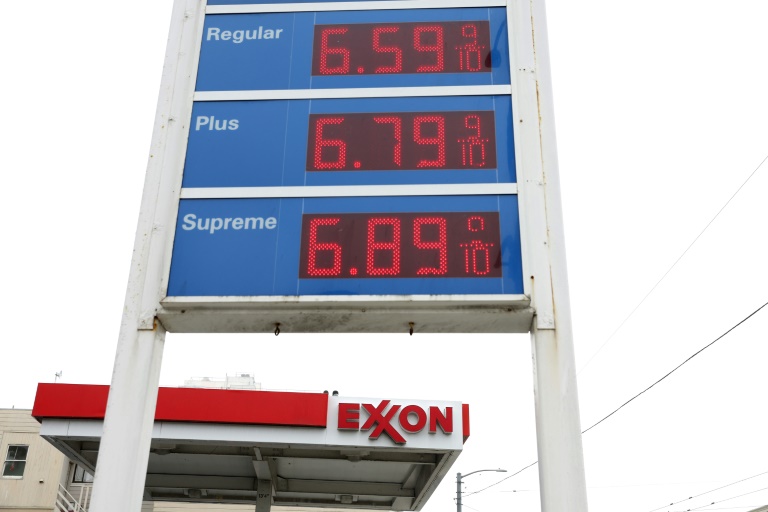
Biden highlights decline in US gasoline prices

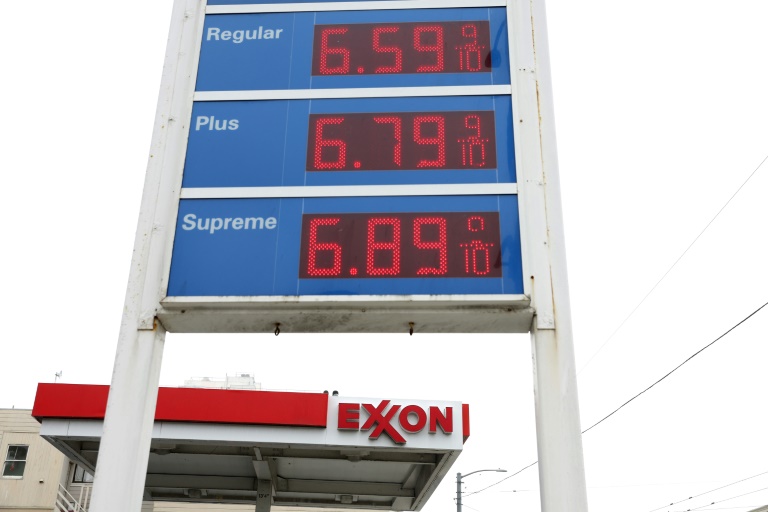
US gasoline prices have fallen from historic highs earlier in the summer, a retreat highlighted by a politically beset White House as a sign of moderating inflation.

President Joe Biden, who has seen his approval rating tumble amid the worst pricing pressures in decades, took to Twitter to point out that prices at the pump have fallen for more than a month, saving the average driver about $25 a month.

“I know those extra dollars and cents mean something. It’s breathing room,” Biden tweeted Monday night. “And we’re not done working to get prices even lower.”

Since hitting an all-time high of $5.016 a gallon on June 14, prices have fallen the last 35 days amid rising worries over economic growth and an easing in the physical crude oil market.

Gasoline prices are now at a national average of $4.495 per gallon, down 10 percent from a month ago but up 42 percent from the year-ago level, according to the American Automobile Association.

The biggest factor in the pullback has been the drop in crude oil prices due to worries that a slowing economy or recession will dent energy demand. 

Crude prices rose to around $130 a barrel soon after the Russian invasion of Ukraine prompted fears of the loss of a major supply source at a time of rising demands.

Analysts say those fears were generally not realized and that most Russian crude oil has continued to flow to buyers in markets such as India and China.

Compared with March, US crude oil production has also risen about 400,000 barrels a day, according to US data.

The added US production, coupled with more Saudi oil added in the recent period, means the tightness of the crude market “has eased,” said Again Capital’s John Kilduff, who also cited as a factor unusually tepid gasoline consumption shown in the most recent weekly US energy report. 

Some of the drop in gasoline use likely is a response to price. But it also reflects shifting labor practices after the pandemic.

“Up until the pandemic, work from home was kind of considered an outlier,” said Bill O’Grady, chief market strategist of Confluence Investment Management.

Under today’s more flexible arrangements, “when the gasoline price goes up, instead of coming in five days a week, you may only come in three or two,” O’Grady said.

– Will prices keep falling? –

A White House memo predicted gasoline prices would continue to fall through the “near term,” highlighting Biden’s actions such as a historically large release of oil from the Strategic Petroleum Reserve — which analysts think had its primary impact as soon as it was announced in late March.  

The White House memo also noted that the decline in gasoline prices has gotten a fraction of the media coverage that the run-up in prices earlier in the spring received.

“Despite the data, you wouldn’t know gas prices are coming down from watching the evening news or reading the paper,” the memo said.

Kilduff also expects gasoline prices to fall further, noting a long-running seasonal trend that typically sees gasoline prices retreat after July 4.

“My forecast is for prices to continue to slide lower into the fall,” Kilduff said, adding that prices will remain high by historical standards.

While O’Grady thinks prices will continue to fall, he added that there is always a risk in late summer that Gulf of Mexico hurricanes could impair key refineries.

“That can send gasoline prices up significantly,” he said.

Biden highlights decline in US gasoline prices

US gasoline prices have fallen from historic highs earlier in the summer, a retreat highlighted by a politically beset White House as a sign of moderating inflation.

President Joe Biden, who has seen his approval rating tumble amid the worst pricing pressures in decades, took to Twitter to point out that prices at the pump have fallen for more than a month, saving the average driver about $25 a month.

“I know those extra dollars and cents mean something. It’s breathing room,” Biden tweeted Monday night. “And we’re not done working to get prices even lower.”

Since hitting an all-time high of $5.016 a gallon on June 14, prices have fallen the last 35 days amid rising worries over economic growth and an easing in the physical crude oil market.

Gasoline prices are now at a national average of $4.495 per gallon, down 10 percent from a month ago but up 42 percent from the year-ago level, according to the American Automobile Association.

The biggest factor in the pullback has been the drop in crude oil prices due to worries that a slowing economy or recession will dent energy demand. 

Crude prices rose to around $130 a barrel soon after the Russian invasion of Ukraine prompted fears of the loss of a major supply source at a time of rising demands.

Analysts say those fears were generally not realized and that most Russian crude oil has continued to flow to buyers in markets such as India and China.

Compared with March, US crude oil production has also risen about 400,000 barrels a day, according to US data.

The added US production, coupled with more Saudi oil added in the recent period, means the tightness of the crude market “has eased,” said Again Capital’s John Kilduff, who also cited as a factor unusually tepid gasoline consumption shown in the most recent weekly US energy report. 

Some of the drop in gasoline use likely is a response to price. But it also reflects shifting labor practices after the pandemic.

“Up until the pandemic, work from home was kind of considered an outlier,” said Bill O’Grady, chief market strategist of Confluence Investment Management.

Under today’s more flexible arrangements, “when the gasoline price goes up, instead of coming in five days a week, you may only come in three or two,” O’Grady said.

– Will prices keep falling? –

A White House memo predicted gasoline prices would continue to fall through the “near term,” highlighting Biden’s actions such as a historically large release of oil from the Strategic Petroleum Reserve — which analysts think had its primary impact as soon as it was announced in late March.  

The White House memo also noted that the decline in gasoline prices has gotten a fraction of the media coverage that the run-up in prices earlier in the spring received.

“Despite the data, you wouldn’t know gas prices are coming down from watching the evening news or reading the paper,” the memo said.

Kilduff also expects gasoline prices to fall further, noting a long-running seasonal trend that typically sees gasoline prices retreat after July 4.

“My forecast is for prices to continue to slide lower into the fall,” Kilduff said, adding that prices will remain high by historical standards.

While O’Grady thinks prices will continue to fall, he added that there is always a risk in late summer that Gulf of Mexico hurricanes could impair key refineries.

“That can send gasoline prices up significantly,” he said.

Steve Bannon: Loyal to Trump, from White House to court

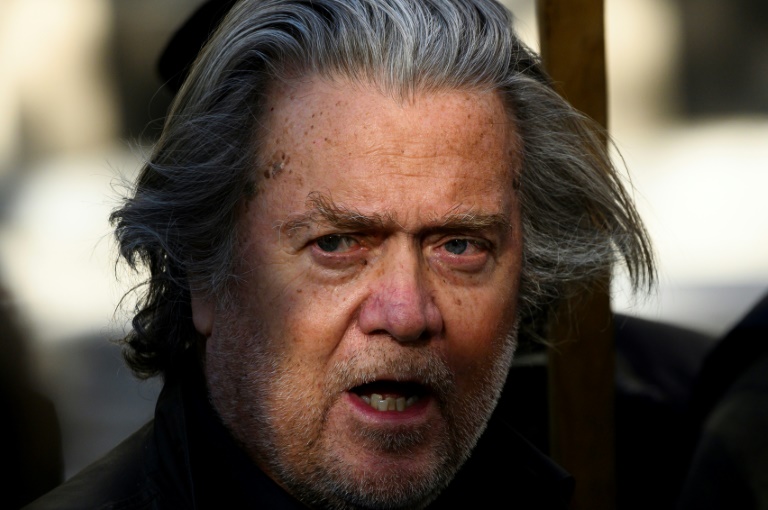
Steve Bannon — the anti-establishment outsider who helped bring Donald Trump to the White House — is now on trial for refusing to testify about the January 6, 2021 assault on the US Capitol.

The 68-year-old former investment banker rose to prominence as the head of far-right news outlet Breitbart before latching onto the Trump phenomenon and guiding the billionaire to the presidency.

Trump rewarded Bannon by naming him chief strategist, a major victory for the alt-right that sent shudders through the political mainstream.

He held the post for less than a year before being fired, but Bannon’s loyalty to Trump survived.

He vowed to fight for Trump from outside the White House, pushed the president’s discredited allegations of fraud in the 2020 election, and refused to testify to lawmakers investigating the Capitol attack, claiming to be covered by presidential executive privilege.

Bannon recently reversed course and agreed to testify after allegedly receiving Trump’s blessing, but it was too late.

If founded guilty, he faces up to a year in prison for each of two charges of contempt of Congress.

After serving in the US Navy and making his name at Goldman Sachs during the 1980s boom years, Bannon founded his own investment bank before selling it to Societe Generale in 1998 and going on to be a Hollywood producer.

Some of his projects were standard entertainment fare, but documentaries on late president Ronald Reagan, populist darling Sarah Palin and the Tea Party movement brought him into right-wing circles.    

He became an investor in Andrew Breitbart’s eponymous media venture, which aimed to buck what its founder saw as the progressive left’s grip on the news agenda. 

Democrats and liberals were in the site’s crosshairs, but moderate Republican lawmakers also felt its lash, accused of failing to stand up to president Barack Obama.

– Outsider to insider –

Breitbart died in 2012 and Bannon took over, promoting Trump’s candidacy before officially joining his campaign.

He was one of the most influential figures in the White House, and was behind some of Trump’s most controversial moves, including his ban on some travelers from abroad and pulling the United States out of the Paris climate change agreement.

After frequent clashes, including with Trump himself, Bannon was pushed out in August 2017, returning to Breitbart.

His participation in Michael Wolff’s gossipy and damaging book “Fire and Fury” angered the president, who dubbed him “Sloppy Steve” and suggested he “cried when he got fired and begged for his job” — but their relationship survived.

Bannon stepped down from Breitbart in early 2018.

In 2020, he was charged with conspiracy to commit wire fraud over funds raised to build a wall on the border with Mexico — a flagship Trump policy that the president had falsely promised would be paid for by the US’s southern neighbor.

Trump pardoned Bannon — who had pleaded not guilty to the fraud charge — on his last day in office, two weeks after Trump supporters stormed the US Capitol in an attempt to prevent the certification of Joe Biden’s election victory.

Bannon was one of dozens of people called to testify before the House committee about the assault. 

Investigators believe that he and other Trump advisors could have information on links between the White House and the rioters.

According to the House committee, Bannon spoke with Trump on January 5 — the same day he told listeners of his podcast that “all hell is going to break loose tomorrow.”

Stocks advance despite Apple report concerns

Stock markets mostly advanced on Tuesday despite fresh recession worries on a report tech titan Apple may scale back hiring and investment.

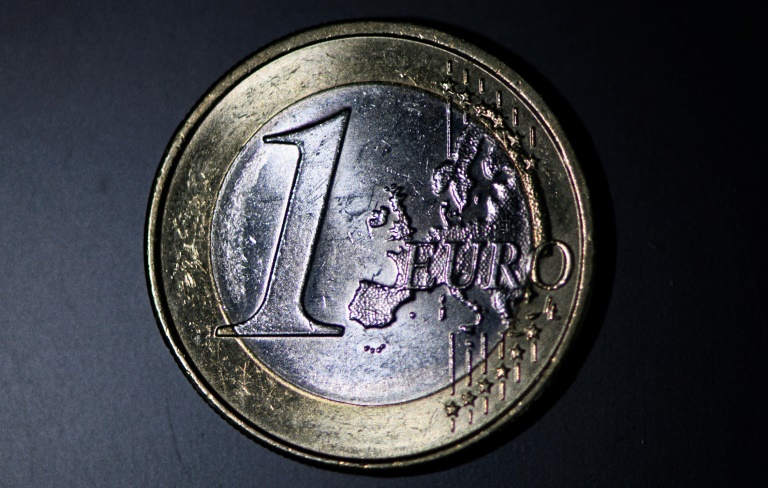
Meanwhile, the euro rallied against the dollar as traders looked ahead to a key European Central Bank meeting later this week, while oil gave up some of its strong gains on Monday.

European stocks were higher in afternoon trading, with London up 0.5 percent and both Frankfurt and Paris climbing 0.7 percent.

Wall Street opened higher, with the blue-chip Dow adding 0.7 percent, and the broader S&P 500 and tech-heavy Nasdaq Composite rising more than one percent.

Asian equity indices closed mixed after an overnight sell-off on Wall Street fuelled by fresh recession worries on the Bloomberg report on Apple’s plans.

“Apple put the cat among the pigeons following a media report that it plans to pull back hiring and growth spending next year in anticipation of the possible economic downturn,” noted Richard Hunter, head of markets at Interactive Investor.

Apple’s shares were 0.4 percent up shortly after trading began.

The euro meanwhile jumped around one percent against the dollar, as traders mulled whether the European Central Bank could hike interest rates more than expected to fight runaway inflation.

The ECB has signalled it would raise eurozone interest rates on Thursday for the first time in more than a decade but is under pressure to do more to tackle spiralling prices.

It intends to raise borrowing costs by a quarter point, the first such move since 2011. 

“In all likelihood, the ECB will raise interest rates by 25 basis points this week and follow this up with a 50-basis-point move in September,” noted Matthew Ryan, head of market strategy at financial firm Ebury.

“That said, we do not rule out a 50-basis-point rate hike at this week’s meeting. 

“We have already seen most major central banks deliver bumper rate increases in recent weeks in an attempt to control rampant price growth,” Ryan added.

The Federal Reserve’s aggressive rate tightening this year has sent the dollar soaring against most other currencies in recent weeks.

Last week, the euro fell below parity with the dollar for the first time in nearly 20 years, also on growing fears of a eurozone recession as high inflation hampers growth. 

On Tuesday, the dollar briefly hit a record high above 80 rupees, with the Indian unit hammered by massive outflows of capital as the economy struggles.

While some are predicting inflation may have reached its peak, oil prices — the key driver of soaring costs — remain elevated.

Both main contracts fell Tuesday after rocketing more than five percent Monday on expectations that Saudi Arabia would not open up the taps further, with a plea by US President Joe Biden seeming to have fallen on deaf ears.

Traders were keeping a nervous eye on Europe, where a 10-day maintenance shutdown of the Nord Stream 1 pipeline from Russia is due to end this week.

Many fear Vladimir Putin will keep it shut in retaliation for sanctions imposed on Moscow for invading Ukraine. 

That would deal another blow to the already creaking eurozone economy and could send crude prices soaring.

Supply fears are trumping worries about a demand hit in China from another possible lockdown in Shanghai as officials struggle to contain another Covid-19 outbreak.

– Key figures at around 1330 GMT –

London – FTSE 100: UP 0.5 percent at 7,258.68 points

Frankfurt – DAX: UP 0.7 percent at 13,050.89

Paris – CAC 40: UP 0.7 percent at 6,131.94

EURO STOXX 50: UP 0.7 percent at 3,537.00

New York – Dow: UP 0.7 percent at 31,293.30

Tokyo – Nikkei 225: UP 0.7 percent at 26,961.68 (close)

Hong Kong – Hang Seng Index: DOWN 0.9 percent at 20,661.06 (close)

Shanghai – Composite: FLAT percent at 3,279.43 (close)

Euro/dollar: UP at $1.0246 from $1.0146 on Monday

Pound/dollar: UP at $1.2019 from $1.1950 

Euro/pound: UP at 85.21 pence from 84.88 pence

Dollar/yen: DOWN at 137.49 yen from 138.13 yen

West Texas Intermediate: DOWN 1. percent at $101. per barrel

Brent North Sea crude: DOWN 1. percent at $105. per barrel

burs-rl/bp

Biden sets up sanctions in ramped-up effort on US detainees

President Joe Biden on Tuesday opened the way for sanctions against governments that unjustly imprison Americans and ordered more detailed travel warnings after a series of high-profile detentions.

Biden signed an executive order billed as expanding the set of tools for the US government in what Secretary of State Antony Blinken said was a “relentless” effort to free citizens overseas.

“When Americans are taken captive abroad, we must do everything in our power to secure their release,” Blinken said in a statement.

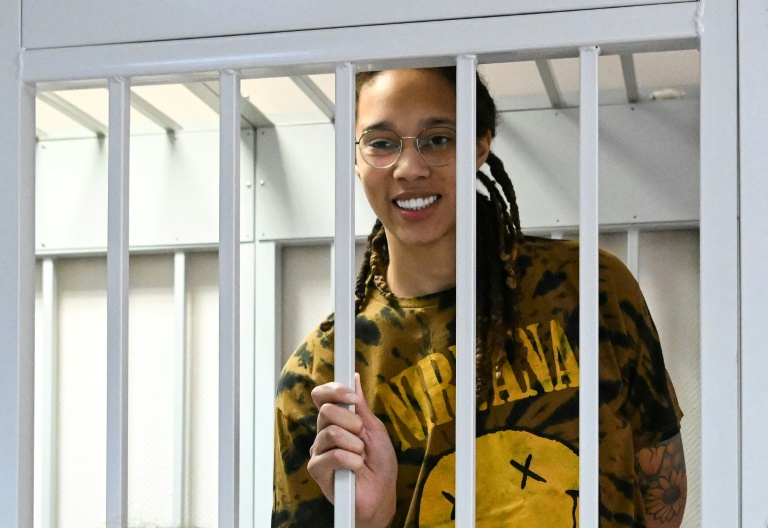
The move comes after wide media coverage of the detention in Russia on drug charges of basketball star Brittney Griner, whose wife initially said Biden was not doing enough.

The executive order authorizes government agencies to impose financial sanctions or travel bans on foreign officials or non-state actors involved in unjust detentions of Americans.

“Using sanctions may not always help secure someone’s release, so we will therefore be judicious and strategic in our use of this authority,” a US official told reporters on condition of anonymity.

“But the families of those held know their loved ones’ case(s) best, and we intend to hear from them, hear their good ideas and listen to their recommendations,” he said.

The State Department, in its travel advisories for Americans, will also begin to highlight in which nations there is an elevated risk of unjust detention.

The initial group of nations that will bear a “D” mark for detention risk will be China, Iran, Myanmar, North Korea, Russia and Venezuela, another official said.

Successive administrations have made the plight of prisoners and hostages a top priority. 

Despite soaring tensions over the Ukraine war, the Biden administration in April arranged with Russia to swap Trevor Reed, an ex-Marine jailed for allegedly attacking police while drunk, for a Russian pilot convicted of drug smuggling.

In Iran, the Biden administration has insisted it cannot revive a languishing nuclear deal without the release of jailed Americans.

One of them, Siamak Namazi, a businessman convicted on charges he denies of seeking to topple the clerical state, recently spoke out from prison and urged Biden to secure his freedom regardless of nuclear diplomacy.

At least 11 Americans are known to be held in Venezuela, although two others were freed in March after rare US contact with President Nicolas Maduro, a leftist leader considered illegitimate by Washington.

Ukraine lawmakers vote to sack prosecutor general, security chief

Ukrainian lawmakers on Tuesday endorsed the president’s decision to sack the country’s top prosecutor and security chief, rubber stamping Ukraine’s largest political shake-up since Russia invaded.

The overhaul was confirmed as Russian President Vladimir Putin was in Tehran with his Turkish counterpart to discuss a possible agreement to unblock Black Sea exports of Ukrainian grain.

Several Ukrainian deputies writing on social media at the parliamentary session in Kyiv said lawmakers had overwhelmingly backed President Volodymyr Zelensky’s shock call to remove the officials.

“Parliament voted to dismiss Iryna Venediktova as prosecutor general,” said David Arakhamia, a lawmaker affiliated to Zelensky. Other deputies said the plea to remove security chief Ivan Bakanov secured the necessary 226 votes.

Zelensky asked parliament to approve the dismissals less than 48 hours after announcing late Sunday that he was suspending the senior law enforcement officials and that 650 cases of suspected treason were under investigation.

He replaced Bakanov on Monday and described the shake up in the security services as an “audit” and said that 28 security officials were facing dismissal.

“Different levels, different directions. But the grounds are similar — unsatisfactory job performance,” Zelensky said.

Venediktova, who met regularly with counterparts from EU countries and the United States wrote on social media on Monday that she had “things to be proud of in her post and showed good results”.

– Tehran summit –

Putin and Turkish President Recep Tayyip Erdogan, who arrived in Tehran on Monday, were due to meet in the Iranian capital on Tuesday to discuss mechanisms to export grain from Ukraine.

On Wednesday, Russian and Ukrainian delegations are due to meet in Istanbul alongside Turkish and UN representatives, with hopes rising for an announced accord.

The EU’s foreign policy chief Josep Borrell warned this week that the grain impasse was “an issue of life and death for many human beings.”

NATO member Turkey has been using its good relations with both the Kremlin and Kyiv to try to broker an agreement on a safe way to deliver the grain.

Along the Black Sea coast, Kyiv said Tuesday that Russian forces had rocked the southern and coastal region of Odessa with a barrage of seven cruise missiles, wounding at least six people including a child. 

“One (missile) was shot down by air defences. Six hit a village. As a result, several residential buildings and other facilities were destroyed and caught fire,” the Ukraine presidency said.

The Russian defence ministry claimed that strikes on Odessa had destroyed a stockpile of Western-supplied weapons.

– Kramatorsk shelled –

Russian Defence Minister Sergei Shoigu ordered Russian troops earlier this week to prioritise the destruction of long-range artillery supplied by the United States and Ukraine’s other Western allies.

Observers credit the weapons with altering battlefield dynamics, giving Ukraine the capacity to hit Russian arms depots and command posts deep inside territory controlled by Moscow.

The heaviest fighting in recent weeks, however, has centred not on the south but in Ukraine’s eastern Donbas region. 

Kramatorsk, one of the last-remaining Donbas cities under Ukrainian control, was hit by Russian strikes on Tuesday, AFP journalists said.

The head of the region, Pavlo Kyrylenko, said one person was killed, and distributed video of the attack showing flames jumping from the inside a residential building.

AFP journalists said a four-story residential building was hit and saw panicked neighbours seeking medical attention from rescue workers in the aftermath.

One man with a bloodied head lay on the ground, before being taken away by the emergency services.

“He was just walking by and was hit,” said one woman, who declined to give her name, visibly shaken after the bombardment.

Russian strikes on Monday killed six people in the town of Toretsk, which has a population of around 30,000 and is not far from Kramatorsk.

burs-jbr/jm

Brad Pitt says retirement still a long way off

Brad Pitt scotched talk of imminent retirement as he travelled to Paris for the premiere of his Jackie Chan-inspired action caper “Bullet Train”. 

The 58-year-old had worried fans that his acting days may be numbered after a GQ interview last month in which he said he was in the “last semester” of his career. 

But Pitt told AFP: “I’m not getting out by any means.

“It seems that might have been taken as a statement of retirement. That’s not what I was saying,” he said. 

“I’m over that hump of middle age and so I’m looking at that last leg… how do I want to spend that time? At my age, you’ve made enough mistakes… now there’s a comfort in applying that kind of wisdom.”

“Bullet Train”, which is being released around the world over the next two weeks, sees Pitt trying something new in an action comedy from the director of “John Wick”, David Leitch. 

Pitt plays a reluctant hit-man fighting off rivals on a Japanese train. 

“It’s  much more fun than the regular punch-up. It’s infused with humour and character,” he said. 

“I can’t say enough about Jackie Chan and what he’s done, and to be in that arena, even close to that, is something I hadn’t done before.” 

Pitt will next be seen in “Babylon” about Hollywood’s golden age, directed by Damien Chazelle (“La La Land”). 

That will partner him again with Margot Robbie — the pair starred in Quentin Tarantino’s “Once upon a Time in Hollywood”, which won Pitt an Oscar in 2020. 

But Pitt said he takes particular enjoyment from production duties with his company Plan B. 

The company has three best picture Oscar winners to its name — “The Departed”, “Twelve Years a Slave” and “Moonlight” — and will soon release the hotly tipped “Blonde” about Marilyn Monroe.

“I really like what we’ve been able to do on the producing end. You get to be part of stories, foster new talent,” he said. 

Unlike other major movie stars such as Tom Cruise, Pitt is not as wedded to the nostalgia of movie theatres. 

“I like the dichotomy, the streamer as well as the theatre experience, because films were getting so expensive to do and to market that it was either big tent-pole movies or very small intimate movies and there was no room for anythings in-between. Streamers have opened it up for more voices,” he said. 

Nonetheless, Pitt said he had recently loved going to watch “Elvis” in a cinema. 

“I’m a big fan of Austin Butler, I think he’s going to do great work,” said Pitt of the film’s star.  

“It was so much fun to be there again. There’s a place for both.”

Boeing wins $8bn order in latest boost for MAX jets

US planemaker Boeing won a fresh boost Tuesday for its crisis-hit MAX aircraft, as investment fund 777 Partners ordered up to 66 of the passenger aircraft worth a combined $8 billion.

The announcement, on the second day of Farnborough airshow, comprises a firm order for 30 medium-haul single-aisle 737 MAX-8-200s plus options to purchase up to 36 more from the same family.

The Miami-based fund operates Flair Airlines in Canada and Bonza Aviation in Australia.

Josh Wander, the fund’s managing partner and co-founder, said the MAX-8-200 jets — configured with more seats than the MAX-8 — would help ramp up the capacity of both carriers.

Tuesday’s news takes the fund’s total Boeing order book to 134 models in the 737 MAX family.

“This new order marks another milestone in the robust growth of our aviation businesses and concurrently, our partnership with Boeing,” Wander added in a statement.

The MAX jet, which suffered two deadly crashes in 2018 and 2019, is experiencing a rush of interest at this year’s Farnborough, southwest of London.

US airline Delta on Monday announced a deal to buy 100 MAX passenger aircraft worth a combined $13.5 billion.

Japan’s ANA has agreed to buy 20 of MAX 8 jets worth $2.4 billion.

Close Bitnami banner
Bitnami