US Business

Delaware: small US state is the stage for Musk, Twitter battle

A high-stakes court battle between Elon Musk and Twitter began Tuesday in Delaware, a tiny slice of America’s east coast best known as the nation’s oldest state.

Yet it’s also the legal home for many corporations, drawn by its reputation as a tax haven and expertise in settling business disputes.

Here’s a closer look at Delaware:

– Fortune 500 –

Twitter chose in 2007 to incorporate in Delaware, less than two hours’ drive northeast of Washington, instead of California, where the social network has its headquarters.

The one-to-many messaging platform is not alone: beverage giant Coca-Cola, mega-retailer Walmart and aerospace titan Boeing are all registered in Delaware.

In fact, more than 1.6 million companies have taken up legal residence in the state, according to official data from the Delaware Business Service. 

That’s far more than the state’s population of about 970,000.

More than two-thirds of businesses on the Fortune 500 list of the largest US companies have chosen Delaware as their legal base.

A post office box is often the only physical presence many of those companies have in the state.

– Taxes and transparency –

Among the reasons that companies register in Delaware is the state’s reputation for the ease and speed with which it can process a business registration.

For $1,000, the Delaware government’s division of corporations can register a new entity in one hour. 

In other states, the average processing fee is $100-$200 but takes a full business day.

This procedural ease also comes with limited transparency: Delaware does not require the name of the actual beneficiary at the time of registration, thus allowing companies to guarantee almost total secrecy to their owners.

As a result, shell companies flourish on US soil, as revealed by the Panama Papers in 2016.

The lack of transparency is matched by an advantageous tax policy for companies.

If a company does not conduct its operations in the state — which is the case for a majority of major names registered there — then it does not have to pay income tax. 

Instead, the organization pays a much more modest franchise tax.

As a result, Delaware is often considered a tax haven for companies — despite the state’s insistence to the contrary.

– Legal system –

With this glut of businesses, a whole legal system has developed in Delaware, giving it a reputation for expertise in handling corporate litigation.

The Musk-Twitter case will be heard in the Delaware Court of Chancery, a court specializing in business law that was established in 1792, modeled on a British court of the same name.

“The Delaware Court of Chancery is widely recognized as the nation’s preeminent forum for the determination of disputes involving the internal affairs of the thousands upon thousands of Delaware corporations and other business entities,” the court says on its website.

The court notes that its decisions largely turn on the concept of fiduciary duty, which is the commitment to act in the best interest of someone or something else.

And, most notably in the United States, the court does not use a jury to decide a case.

During the first hearing Tuesday, Judge Kathaleen McCormick set the Musk-Twitter trial to begin in October.


October trial set in Musk, Twitter buyout battle

Twitter notched an early win Tuesday in its fight with Elon Musk, after a judge agreed to a fast-track trial on whether to force the Tesla chief to complete his $44 billion buyout of the social network.

Musk’s lawyers had pushed for a February 2023 date, but the court in the eastern US state of Delaware hewed closely to the uncertainty-wracked platform’s desire for speed and set an October start.

Billions of dollars are at stake, but so is the future of Twitter, which Musk has said should allow any legal speech — an absolutist position that has sparked fears the network could be used to incite violence.

Judge Kathaleen McCormick, who set a five-day trial and left the sides to work with the court to fix the exact date, noted that the “risk of irreparable harm” generally grows the longer a merger remains in limbo.

Musk’s team argued fiercely against an relatively quick date, saying the core issues are simply too complex.

“Billions of actions on their platform have to be analyzed in order for us to get to the bottom of the real issue,” said Musk lawyer Andrew Rossman.

“The real issue here is what’s the percentage of real users on the Twitter platform versus spam or false accounts,” he added.

After pausing the deal in May, Musk moved in early July to “terminate” his unsolicited buyout bid after he accused the platform of misleading him on the number of its so-called “bot” accounts, and not being forthcoming with details.

Twitter has argued his claims are simply an effort by him to back out of the deal, and its lawyer William Savitt said “the continued uncertainty caused by Musk’s purported termination inflicts harm on Twitter every day, every hour of every day.”

Experts watching the trial saw the relatively rapid timeline as a triumph for the social network, which is limping along while the buyout endgame remains unclear.

“I think it was pretty favorable for Twitter. She didn’t give them exactly what they wanted, but she gave them a pretty speedy trial,” said Adam Badawi, a University of California at Berkeley law professor.

The social network’s lawyers had asked for a September date, just months after Musk launched a bid that the company’s board initially resisted but then supported.

The world’s richest person has backed away from the deal in recent months as tech stocks have tumbled, and Twitter’s value has fallen well below the $54.20 per share he offered.

– Musk willingness to fight –

Rather than Silicon Valley, where Twitter is based, the company has lodged its lawsuit against Musk in Delaware.

The firm is incorporated in the tiny state like scores of other companies, and the case will be heard in the Delaware Chancery Court, which has deep experience in business disputes.

“The Chancery Court, which handles most of these matters, is very expert in corporate law, and more particularly, mergers and acquisitions. So this is the place to go,” said Carl Tobias, a University of Richmond law professor.

McCormick, who ran the hearing remotely after she tested positive for Covid-19, comes with a no-nonsense reputation.

She also reportedly has the distinction of previously ordering a reluctant buyer into completing a corporate merger.

A forced closing of the Twitter deal is a scenario that some analysts consider possible.

“(Wall) Street and legal experts across the board view Twitter as having a ‘strong iron fist upper hand,’ heading into the Delaware court battle after months of this fiasco and nightmare,” analyst Dan Ives wrote last week.

He also noted that less likely options include Musk paying a $1 billion break-up fee and being able to walk away, or winning outright on his fake account argument.

Tuesday’s hearing was just the first step in what could be a lengthy legal fight that could end in a trial, but also a settlement.

“Musk has shown his willingness to take things all the way to the end in Delaware court,” said Badawi, the Berkeley law professor.

“I think settling is not necessarily his instinct.”

October trial set in Musk, Twitter buyout battle

Twitter notched an early win Tuesday in its fight with Elon Musk, after a judge agreed to a fast-track trial on whether to force the Tesla chief to complete his $44 billion buyout of the social network.

Musk’s lawyers had pushed for a February 2023 date, but the court in the eastern US state of Delaware hewed closely to the uncertainty-wracked platform’s desire for speed and set an October start.

Billions of dollars are at stake, but so is the future of Twitter, which Musk has said should allow any legal speech — an absolutist position that has sparked fears the network could be used to incite violence.

Judge Kathaleen McCormick, who set a five-day trial and left the sides to work with the court to fix the exact date, noted that the “risk of irreparable harm” generally grows the longer a merger remains in limbo.

Musk’s team argued fiercely against an relatively quick date, saying the core issues are simply too complex.

“Billions of actions on their platform have to be analyzed in order for us to get to the bottom of the real issue,” said Musk lawyer Andrew Rossman.

“The real issue here is what’s the percentage of real users on the Twitter platform versus spam or false accounts,” he added.

After pausing the deal in May, Musk moved in early July to “terminate” his unsolicited buyout bid after he accused the platform of misleading him on the number of its so-called “bot” accounts, and not being forthcoming with details.

Twitter has argued his claims are simply an effort by him to back out of the deal, and its lawyer William Savitt said “the continued uncertainty caused by Musk’s purported termination inflicts harm on Twitter every day, every hour of every day.”

Experts watching the trial saw the relatively rapid timeline as a triumph for the social network, which is limping along while the buyout endgame remains unclear.

“I think it was pretty favorable for Twitter. She didn’t give them exactly what they wanted, but she gave them a pretty speedy trial,” said Adam Badawi, a University of California at Berkeley law professor.

The social network’s lawyers had asked for a September date, just months after Musk launched a bid that the company’s board initially resisted but then supported.

The world’s richest person has backed away from the deal in recent months as tech stocks have tumbled, and Twitter’s value has fallen well below the $54.20 per share he offered.

– Musk willingness to fight –

Rather than Silicon Valley, where Twitter is based, the company has lodged its lawsuit against Musk in Delaware.

The firm is incorporated in the tiny state like scores of other companies, and the case will be heard in the Delaware Chancery Court, which has deep experience in business disputes.

“The Chancery Court, which handles most of these matters, is very expert in corporate law, and more particularly, mergers and acquisitions. So this is the place to go,” said Carl Tobias, a University of Richmond law professor.

McCormick, who ran the hearing remotely after she tested positive for Covid-19, comes with a no-nonsense reputation.

She also reportedly has the distinction of previously ordering a reluctant buyer into completing a corporate merger.

A forced closing of the Twitter deal is a scenario that some analysts consider possible.

“(Wall) Street and legal experts across the board view Twitter as having a ‘strong iron fist upper hand,’ heading into the Delaware court battle after months of this fiasco and nightmare,” analyst Dan Ives wrote last week.

He also noted that less likely options include Musk paying a $1 billion break-up fee and being able to walk away, or winning outright on his fake account argument.

Tuesday’s hearing was just the first step in what could be a lengthy legal fight that could end in a trial, but also a settlement.

“Musk has shown his willingness to take things all the way to the end in Delaware court,” said Badawi, the Berkeley law professor.

“I think settling is not necessarily his instinct.”

Biden highlights decline in US gasoline prices

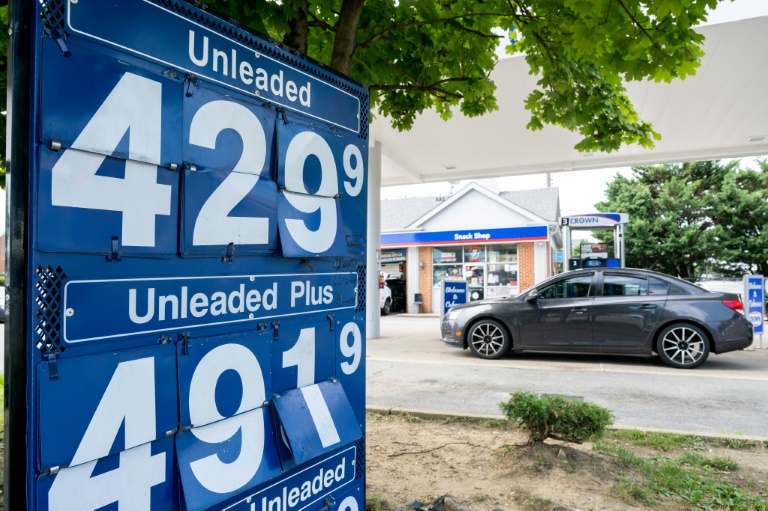
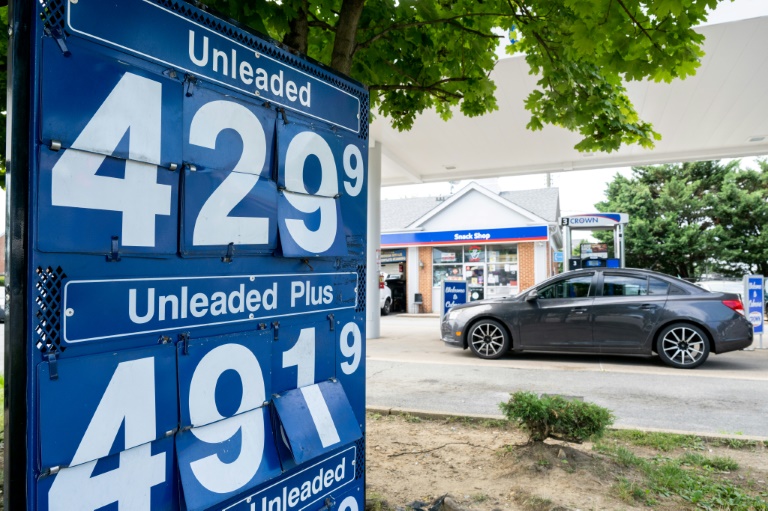
US gasoline prices have fallen from historic highs earlier in the summer, a retreat highlighted by a politically beset White House as a sign of moderating inflation.

President Joe Biden, who has seen his approval rating tumble amid the worst pricing pressures in decades, took to Twitter to point out that prices at the pump have fallen for more than a month, saving the average driver about $25 a month.

“I know those extra dollars and cents mean something. It’s breathing room,” Biden tweeted Monday night. “And we’re not done working to get prices even lower.”

Since hitting an all-time high of $5.016 a gallon on June 14, prices have fallen the last 35 days amid rising worries over economic growth and an easing in the physical crude oil market.

Gasoline prices are now at a national average of $4.495 per gallon, down 10 percent from a month ago but up 42 percent from the year-ago level, according to the American Automobile Association.

“The price went down a little bit,” said Rigobert Fokoua, 50, an independent contractor. “I’m feeling okay because before I was putting (in) like $80 a day, but today I can put in $60, it’s a little bit better.”

Fokoua was filling up at a Rockville, Maryland gas station, where a gallon of regular went for $4.39 Tuesday, down from more than $5 a few weeks ago.

“I noticed that in the last couple of weeks, it (the gas price) actually went down,” said Brendan Anderson, 24, who works in training and development in the entertainment industry.

“I figured the demand has decreased slightly just because less consumers are purchasing gas going out.” 

– Supply and demand –

The biggest factor in the pullback has been the drop in crude oil prices due to worries that a slowing economy or recession will dent energy demand. 

Crude prices rose to around $130 a barrel soon after the Russian invasion of Ukraine prompted fears of the loss of a major supply source at a time of rising demands.

Analysts say those fears were generally not realized and that most Russian crude oil has continued to flow to buyers in markets such as India and China.

Compared with March, US crude oil production has also risen about 400,000 barrels a day, according to US data.

The added US production, coupled with more Saudi oil added in the recent period, means the tightness of the crude market “has eased,” said Again Capital’s John Kilduff, who also cited as a factor unusually tepid gasoline consumption shown in the most recent weekly US energy report. 

Some of the drop in gasoline use likely is a response to price. But it also reflects shifting labor practices after the pandemic.

“Up until the pandemic, work from home was kind of considered an outlier,” said Bill O’Grady, chief market strategist of Confluence Investment Management.

Under today’s more flexible arrangements, “when the gasoline price goes up, instead of coming in five days a week, you may only come in three or two,” O’Grady said.

– Further to fall? –

A White House memo predicted gasoline prices would continue to fall through the “near term,” highlighting Biden’s actions such as a historically large release of oil from the Strategic Petroleum Reserve — which analysts think had its primary impact as soon as it was announced in late March.  

The White House memo also noted that the decline in gasoline prices has gotten a fraction of the media coverage that the run-up in prices earlier in the spring received.

“Despite the data, you wouldn’t know gas prices are coming down from watching the evening news or reading the paper,” the memo said.

Kilduff also expects gasoline prices to fall further, noting a long-running seasonal trend that typically sees gasoline prices retreat after July 4.

“My forecast is for prices to continue to slide lower into the fall,” Kilduff said, adding that prices will remain high by historical standards.

While O’Grady thinks prices will continue to fall, he added that there is always a risk in late summer that Gulf of Mexico hurricanes could impair key refineries.

“That can send gasoline prices up significantly,” he said.

Biden highlights decline in US gasoline prices

US gasoline prices have fallen from historic highs earlier in the summer, a retreat highlighted by a politically beset White House as a sign of moderating inflation.

President Joe Biden, who has seen his approval rating tumble amid the worst pricing pressures in decades, took to Twitter to point out that prices at the pump have fallen for more than a month, saving the average driver about $25 a month.

“I know those extra dollars and cents mean something. It’s breathing room,” Biden tweeted Monday night. “And we’re not done working to get prices even lower.”

Since hitting an all-time high of $5.016 a gallon on June 14, prices have fallen the last 35 days amid rising worries over economic growth and an easing in the physical crude oil market.

Gasoline prices are now at a national average of $4.495 per gallon, down 10 percent from a month ago but up 42 percent from the year-ago level, according to the American Automobile Association.

“The price went down a little bit,” said Rigobert Fokoua, 50, an independent contractor. “I’m feeling okay because before I was putting (in) like $80 a day, but today I can put in $60, it’s a little bit better.”

Fokoua was filling up at a Rockville, Maryland gas station, where a gallon of regular went for $4.39 Tuesday, down from more than $5 a few weeks ago.

“I noticed that in the last couple of weeks, it (the gas price) actually went down,” said Brendan Anderson, 24, who works in training and development in the entertainment industry.

“I figured the demand has decreased slightly just because less consumers are purchasing gas going out.” 

– Supply and demand –

The biggest factor in the pullback has been the drop in crude oil prices due to worries that a slowing economy or recession will dent energy demand. 

Crude prices rose to around $130 a barrel soon after the Russian invasion of Ukraine prompted fears of the loss of a major supply source at a time of rising demands.

Analysts say those fears were generally not realized and that most Russian crude oil has continued to flow to buyers in markets such as India and China.

Compared with March, US crude oil production has also risen about 400,000 barrels a day, according to US data.

The added US production, coupled with more Saudi oil added in the recent period, means the tightness of the crude market “has eased,” said Again Capital’s John Kilduff, who also cited as a factor unusually tepid gasoline consumption shown in the most recent weekly US energy report. 

Some of the drop in gasoline use likely is a response to price. But it also reflects shifting labor practices after the pandemic.

“Up until the pandemic, work from home was kind of considered an outlier,” said Bill O’Grady, chief market strategist of Confluence Investment Management.

Under today’s more flexible arrangements, “when the gasoline price goes up, instead of coming in five days a week, you may only come in three or two,” O’Grady said.

– Further to fall? –

A White House memo predicted gasoline prices would continue to fall through the “near term,” highlighting Biden’s actions such as a historically large release of oil from the Strategic Petroleum Reserve — which analysts think had its primary impact as soon as it was announced in late March.  

The White House memo also noted that the decline in gasoline prices has gotten a fraction of the media coverage that the run-up in prices earlier in the spring received.

“Despite the data, you wouldn’t know gas prices are coming down from watching the evening news or reading the paper,” the memo said.

Kilduff also expects gasoline prices to fall further, noting a long-running seasonal trend that typically sees gasoline prices retreat after July 4.

“My forecast is for prices to continue to slide lower into the fall,” Kilduff said, adding that prices will remain high by historical standards.

While O’Grady thinks prices will continue to fall, he added that there is always a risk in late summer that Gulf of Mexico hurricanes could impair key refineries.

“That can send gasoline prices up significantly,” he said.

October trial set in Musk, Twitter buyout battle

Twitter and Elon Musk were ordered Tuesday to trial in October over whether the Tesla chief can be forced to complete his $44 billion deal to buy the social network, an early win for the uncertainty-wracked platform.

A judge in the eastern US state of Delaware ruled against Musk’s push for a February date, while hewing closely to Twitter’s desire for an expedited schedule.

Billions of dollars are at stake, but so is the future of the platform that Musk has said should allow any legal speech, an absolutist position that has sparked fears the network could be used to incite violence.

“We urge the court to enter a prompt schedule and give multiple grounds for that,” Twitter lawyer William Savitt argued, noting “the continued uncertainty caused by Musk’s purported termination inflicts harm on Twitter every day, every hour of every day.”

Musk’s team had argued fiercely against an expedited trial date, saying Twitter’s preferred date in September was simple too fast for such a complex matter.

The judge did not set an exact date, leaving it to the parties to converge on the timing.

Twitter lawyers noted the deal is supposed to close toward the end of October, just six months after Musk launched an unsolicited bid that the company’s board first resisted but then supported.

The world’s richest person has backed away from the deal in recent months as tech stocks have tumbled, and Twitter’s value has fallen well below the $54.20 per share he offered.

– Musk willingness to fight –

Rather than Silicon Valley, where Twitter is based, the company has lodged its lawsuit against Musk in Delaware.

The firm is incorporated in the tiny state like scores of other companies, and the case will be heard in the Delaware Chancery Court, which has deep experience in business disputes.

“The Chancery Court, which handles most of these matters, is very expert in corporate law, and more particularly, mergers and acquisitions. So this is the place to go,” said Carl Tobias, a University of Richmond law professor.

Kathaleen McCormick, the judge overseeing the case, comes with a no-nonsense reputation.

She also reportedly has the distinction of previously ordering a reluctant buyer into completing a corporate merger.

A forced closing of the Twitter deal is a scenario that some analysts consider possible.

“(Wall) Street and legal experts across the board view Twitter as having a ‘strong iron fist upper hand,’ heading into the Delaware court battle after months of this fiasco and nightmare,” analyst Dan Ives wrote last week.

He also noted that less likely options include Musk paying a $1 billion breakup fee and being able to walk away, or winning outright on his fake-account argument.

After pausing the deal in May, Musk’s lawyers announced in July he was “terminating” the agreement because of skepticism over Twitter’s false or spam accounts tally and allegations the firm was not forthcoming with details.

Tuesday’s hearing will be just the first step in what could be a lengthy legal fight that could end in a trial, but also a settlement.

“Musk has shown his willingness to take things all the way to the end in Delaware court,” said Adam Badawi, a University of California at Berkeley law professor.

“I think settling is not necessarily his instinct.”

October trial set in Musk, Twitter buyout battle

Twitter and Elon Musk were ordered Tuesday to trial in October over whether the Tesla chief can be forced to complete his $44 billion deal to buy the social network, an early win for the uncertainty-wracked platform.

A judge in the eastern US state of Delaware ruled against Musk’s push for a February date, while hewing closely to Twitter’s desire for an expedited schedule.

Billions of dollars are at stake, but so is the future of the platform that Musk has said should allow any legal speech, an absolutist position that has sparked fears the network could be used to incite violence.

“We urge the court to enter a prompt schedule and give multiple grounds for that,” Twitter lawyer William Savitt argued, noting “the continued uncertainty caused by Musk’s purported termination inflicts harm on Twitter every day, every hour of every day.”

Musk’s team had argued fiercely against an expedited trial date, saying Twitter’s preferred date in September was simple too fast for such a complex matter.

The judge did not set an exact date, leaving it to the parties to converge on the timing.

Twitter lawyers noted the deal is supposed to close toward the end of October, just six months after Musk launched an unsolicited bid that the company’s board first resisted but then supported.

The world’s richest person has backed away from the deal in recent months as tech stocks have tumbled, and Twitter’s value has fallen well below the $54.20 per share he offered.

– Musk willingness to fight –

Rather than Silicon Valley, where Twitter is based, the company has lodged its lawsuit against Musk in Delaware.

The firm is incorporated in the tiny state like scores of other companies, and the case will be heard in the Delaware Chancery Court, which has deep experience in business disputes.

“The Chancery Court, which handles most of these matters, is very expert in corporate law, and more particularly, mergers and acquisitions. So this is the place to go,” said Carl Tobias, a University of Richmond law professor.

Kathaleen McCormick, the judge overseeing the case, comes with a no-nonsense reputation.

She also reportedly has the distinction of previously ordering a reluctant buyer into completing a corporate merger.

A forced closing of the Twitter deal is a scenario that some analysts consider possible.

“(Wall) Street and legal experts across the board view Twitter as having a ‘strong iron fist upper hand,’ heading into the Delaware court battle after months of this fiasco and nightmare,” analyst Dan Ives wrote last week.

He also noted that less likely options include Musk paying a $1 billion breakup fee and being able to walk away, or winning outright on his fake-account argument.

After pausing the deal in May, Musk’s lawyers announced in July he was “terminating” the agreement because of skepticism over Twitter’s false or spam accounts tally and allegations the firm was not forthcoming with details.

Tuesday’s hearing will be just the first step in what could be a lengthy legal fight that could end in a trial, but also a settlement.

“Musk has shown his willingness to take things all the way to the end in Delaware court,” said Adam Badawi, a University of California at Berkeley law professor.

“I think settling is not necessarily his instinct.”

US overdose deaths shot up for Black, Native people during pandemic

Overdose deaths increased 44 percent for Black people and 39 percent for American Indians in 2020 compared to 2019, as the Covid-19 pandemic disrupted access to care and exacerbated racial inequality, an official report showed Tuesday.

“Racism, a root cause of health disparities, continues to be a serious public health threat that directly affects the well-being of millions of Americans,” US Centers for Disease Control and Prevention (CDC) acting principal deputy director Debra Houry said in a briefing.

“The disproportionate increase in overdose death rates among Black and American Indian/Alaskan Native people may partly be due to health inequities, like unequal access to substance use treatment and treatment biases.”

Recent increases in deaths were largely driven by illegally manufactured fentanyl and fentanyl analogs (IMFs), according to the report from the CDC.

Before the pandemic, the overdose death rate was similar for Black, Native and white people, at 27, 26 and 25 per 100,000 people in 2019.

But that changed dramatically in 2020, when the respective figures were 39, 36 and 31 per 100,000 people.

Though the increase among white people was not as great as for Black people and American Indians, the new rate is still a historic high.

Among key findings, the overdose death rate among Black males 65 years and older was nearly seven times that of their white counterparts.

Black people 15-24 years old experienced the largest rate increase, 86 percent, compared to changes seen in other groups.

“There was a substantially lower percentage of people in racial and ethnic minority groups showing evidence of ever receiving treatment for substance use, compared to white people,” CDC health scientist Mbabazi Kariisa said during the briefing.

In fact, most people who died by overdose had no evidence of getting prior substance use treatment before their death.

Areas with a wider income gap between rich and poor had the highest death rates.

Being impoverished “can lead to lack of stable housing, reliable transportation and health insurance, making it even more difficult for people to access treatment, and other support services,” said Kariisa.

In terms of recommendations, Houry said it was vital to raise awareness about the lethality of the illicit drug supply, particularly fentanyl — and encouraging the public to carry the life-saving treatment Naloxone.

Improving access to treatment and offering structural support, such as transport assistance and child care, can improve care access.

“Combining culturally appropriate traditional practices, spirituality and religion with evidence based substance use disorder treatment also helps raise awareness and reduce stigma,” she said.

“While we have made so much progress in treating substance use disorders as chronic conditions, rather than moral failings, there is still so much more work to do, including making sure that all people who need these services can get them,” Houry concluded.

Stocks advance, euro rallies

Stock markets mostly advanced on Tuesday, while the euro rallied against the dollar as traders looked ahead to a key European Central Bank meeting later this week.

European stocks closed higher, with Frankfurt’s DAX jumping 2.7 percent on hopes that Russia will resume gas deliveries by pipeline later this week. 

“The nature of today’s gains was initially cautious and incremental in nature … We got additional traction in the afternoon session on reports out of Moscow which indicated that gas flows out of the Nord Stream 1 pipeline would resume as scheduled on Thursday, albeit at a lower capacity,” said market analyst Michael Hewson at CMC Markets.

Russia has halted gas deliveries to Germany via the Nord Stream 1 pipeline, ostensibly due to technical problems, but there have been widespread concerns Moscow won’t restart deliveries on Thursday as scheduled in retaliation for European sanctions over Ukraine.

Deliveries via the pipeline are critical for Europe to fill its reserves to a sufficient level to make it through the winter without supply disruptions.

Markets have been worried Russia turning off the taps will push European economies into recession, particularly Germany, where several major industrial sectors are heavily dependent upon gas imports.

Wall Street’s main stock indices were also strongly higher in late morning trading amid another raft of earnings reports and more signs the housing market is slowing from its torrid pace.

Asian equity indices closed mixed after an overnight sell-off on Wall Street fuelled by fresh recession worries on a Bloomberg report that iPhone-maker Apple plans to slow hiring and spending.

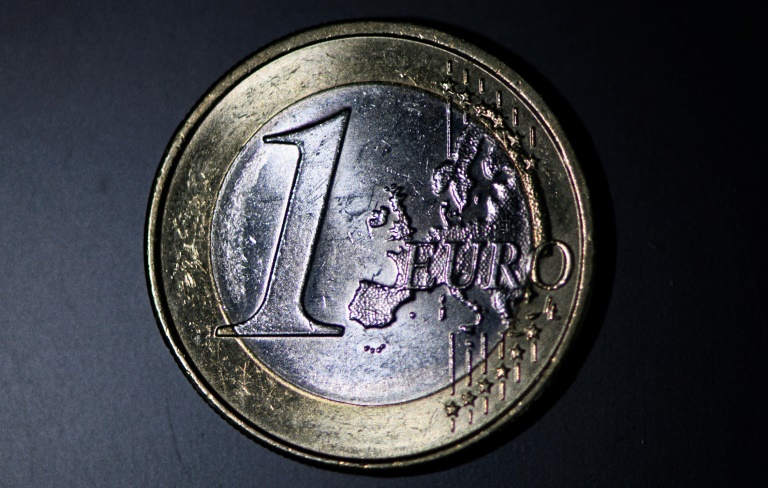
The euro meanwhile jumped around one percent against the dollar, as traders mulled whether the European Central Bank could hike interest rates more than expected to fight runaway inflation.

The ECB has signalled it would raise eurozone interest rates on Thursday for the first time in more than a decade but is under pressure to do more to tackle spiralling prices.

It intends to raise borrowing costs by a quarter point, the first such move since 2011. 

“In all likelihood, the ECB will raise interest rates by 25 basis points this week and follow this up with a 50-basis-point move in September,” noted Matthew Ryan, head of market strategy at financial firm Ebury.

“That said, we do not rule out a 50-basis-point rate hike at this week’s meeting. 

“We have already seen most major central banks deliver bumper rate increases in recent weeks in an attempt to control rampant price growth,” Ryan added.

The Federal Reserve’s aggressive rate tightening this year has sent the dollar soaring against most other currencies in recent weeks.

Last week, the euro fell below parity with the dollar for the first time in nearly 20 years, also on growing fears of a eurozone recession as high inflation hampers growth. 

On Tuesday, the dollar briefly hit a record high above 80 rupees, with the Indian unit hammered by massive outflows of capital as the economy struggles.

While some are predicting inflation may have reached its peak, oil prices — the key driver of soaring costs — remain elevated.

But both main contracts dipped Tuesday after rocketing more than five percent Monday on expectations that Saudi Arabia would not open up the taps further, with a plea by US President Joe Biden seeming to have fallen on deaf ears.

– Key figures at around 1330 GMT –

New York – Dow: UP 1.7 percent at 31,596.54 points

EURO STOXX 50: UP 2.2 percent at 3,587.44

London – FTSE 100: UP 1.0 percent at 7,296.28 (close) 

Frankfurt – DAX: UP 2.7 percent at 13,308.41 (close)

Paris – CAC 40: UP 1.8 percent at 6,201.22 (close)

Tokyo – Nikkei 225: UP 0.7 percent at 26,961.68 (close)

Hong Kong – Hang Seng Index: DOWN 0.9 percent at 20,661.06 (close)

Shanghai – Composite: FLAT percent at 3,279.43 (close)

Euro/dollar: UP at $1.0235 from $1.0146 on Monday

Pound/dollar: UP at $1.2019 from $1.1950 

Euro/pound: UP at 85.14 pence from 84.88 pence

Dollar/yen: DOWN at 137.86 yen from 138.13 yen

West Texas Intermediate: DOWN 0.7 percent at $101.85 per barrel

Brent North Sea crude: DOWN 0.6 percent at $105.64 per barrel

burs-rl/cdw

Airbus tails Boeing in Farnborough jet orders tussle

European planemaker Airbus trailed its fierce US rival Boeing in an orders battle on the second day of the Farnborough airshow on Tuesday, as southern England buckled under a record heatwave.

Airbus finally opened its orders account with a $1.1-billion order for 12 Airbus A220-300 passenger jets from Delta Airlines.

The new jets are due for delivery from 2026, and bring its total firm A220 order to 107 of the single-aisle aircraft.

However, Boeing already had the upper hand after clinching a $13.5-billion order for Boeing’s crisis-hit MAX from Delta on the first day of Farnborough on Monday.

The US carrier ordered 100 medium-haul MAX jets with an option for 30 more, and swiftly afterwards Japan’s ANA agreed to buy 20 MAX 8 jets worth $2.4 billion.

The MAX jet, which suffered two deadly crashes in 2018 and 2019, is experiencing a rush of interest at this year’s five-day Farnborough spectacle southwest of London.

Independent aviation analyst Howard Wheeldon said customers were giving the MAX a thumbs-up, at an airshow where Boeing normally saves its biggest deal for the end.

“This is a vote of confidence and a sign that they are now moving forward from the MAX crisis and in the right direction,” Wheeldon told AFP.

Boeing then won another massive boost Tuesday as investment fund 777 Partners ordered up to 66 of the MAX passenger aircraft worth a combined $8 billion.

It also sealed a $1.5-billion deal with leasing company AerCap for five more 787 Dreamliner jets.

Customers are expected to win a discount on list prices as is traditionally the case for big orders.

– Emissions –

Wheeldon sounded a note of caution over the post-Covid recovery despite growing sector-wide optimism over the outlook at the airshow.

“There will be other orders but none of this suggests that the industry itself is moving forward,” added Wheeldon.

“Ticket prices have risen steeply and aircraft are far from full. Shortage of staff and other skills continues to impact and there are no quick fixes.

“This is an industry that has been in turmoil because of Covid but also one that knows the pressures from other factors such as climate change and rising costs are not easily solved.”

Aviation analyst John Strickland said the latest edition of Farnborough — the first since 2018 — was not “flush” with orders.

But “it marks a moment of rehabilitation for Boeing”, he added.

Farnborough this year partly focuses on the themes of decarbonisation and sustainability in a sector often criticised for its impact on emissions and climate change.

The UK government has launched a new “Jet Zero” strategy and vowed that aviation emissions should not return to pre-Covid levels. 

The plan, presented by Transport Secretary Grant Shapps at Farnborough, requires UK domestic aviation and English airports to attain net zero carbon emissions by 2040.

Yet environmental campaign group Greenpeace has slammed the strategy as a short-term move that shifted responsibility away from government.

Greenpeace UK programme director Emily Armistead dismissed the plan as “vague aspirations to technological innovation”, which would fail to cut emissions in the short to medium term.

She accused the government of failing to have the courage to regulate aviation emissions.

“This isn’t a plan to do that, just a delaying tactic and a very expensive waste of time,” she added.

Close Bitnami banner
Bitnami