US Business

Harrowing video aired at death penalty trial of US school shooter

A harrowing video of the Valentine’s Day 2018 shooting at a high school in Florida that left 17 people dead was played at the sentencing trial on Monday of the man who admitted to carrying out the massacre.

Nikolas Cruz pleaded guilty in October to 17 counts of murder and 17 counts of attempted murder for the attack at Marjory Stoneman Douglas High School in Parkland, Florida.

A 12-person jury is to decide whether the now 23-year-old should receive the death penalty or a life sentence for what prosecutor Mike Satz called a “cold, calculated, manipulative and deadly” massacre.

“I’m going to speak to you about the unspeakable, about this defendant’s goal-directed, planned, systematic murder, mass murder, of 14 children, an athletic director, a teacher and a coach,” Satz said in opening arguments.

A cell phone video recorded by a student, Danielle Gilbert, was played for the jury. The audio was made available to the public gallery and reporters.

Screams, cries and moans were punctuated by multiple shots as students huddled in their classroom trying to seek cover from bullets coming through the door.

“This can’t be real,” someone was heard whispering.

Gilbert, who broke down in tears as the video was played, said one person was killed in the classroom and three wounded.

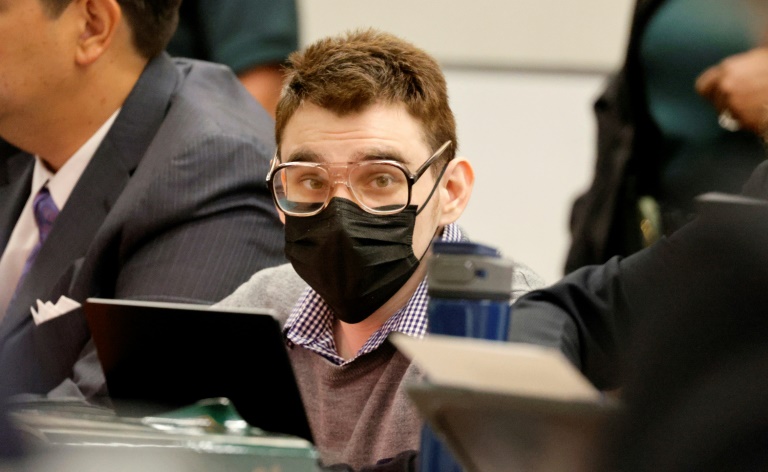
Cruz, who was wearing a black Covid mask, covered his face with his hands and stared down at the table in front of him as the video was played.

Several anguished relatives of the victims fled the courtroom while others wept openly and hugged their loved ones.

– ‘Next school shooter’ –

Satz, the prosecutor, told the jury that three days before the shooting, Cruz made a cellphone video in which he said  “I’m going to be the next school shooter of 2018.”

“My goal is at least 20 people with an AR-15 and some tracer rounds,” Cruz said in the video. “It’s going to be a big event and when you see me on the news, you’ll know who I am.”

Satz said that Cruz, after fleeing the school, ordered a drink at a Subway sandwich shop and then went to a McDonald’s, where he asked the brother of a girl he had just shot for a ride.

The boy, who was not aware at the time that Cruz was the assailant, declined. Cruz was arrested shortly afterwards.

The trial in Fort Lauderdale is the rare instance of a mass shooter facing a jury, as they often either take their own lives or are killed by police.

The death penalty requires that the jury be unanimous. Cruz will otherwise be handed life without parole.

The Florida shooting stunned a country accustomed to gun violence and sparked new efforts, led by students from the school itself, to get lawmakers to pass tougher gun control laws.

– ‘March for Our Lives’ –

Parkland survivors founded “March for Our Lives,” organizing a rally that drew hundreds of thousands of people to the nation’s capital, Washington, in 2018.

Thousands turned out for demonstrations organized by the group last month following two other mass shootings: one at a Texas elementary school that killed 19 children and two teachers, and another at a New York supermarket that left 10 Black people dead.

Those shootings helped galvanize support for the first significant federal bill on gun safety in decades.

President Joe Biden signed the bill into law in June but it fell far short of steps he had called for, including a ban on assault weapons.

Cruz bought the AR-15 semi-automatic he used in the attack legally, despite having a documented history of mental health problems.

Expelled from school for disciplinary reasons, Cruz was known to be fixated on firearms — and had been identified as a potential threat to his classmates.

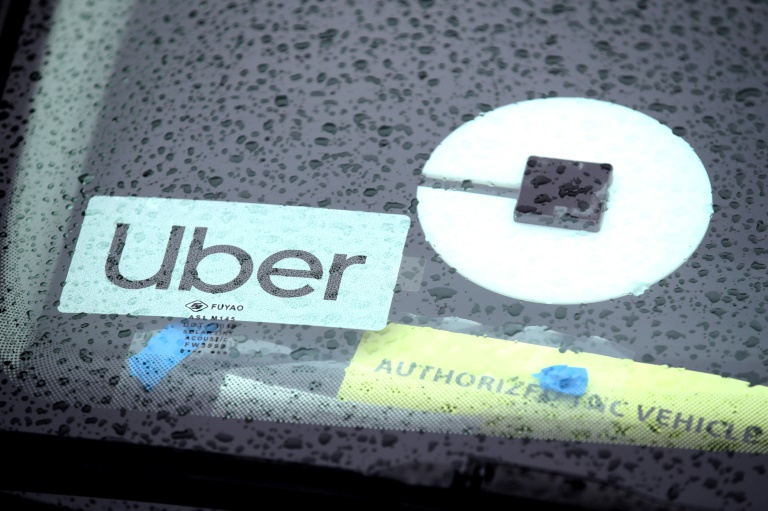
On the day of the attack, he arrived at the school in an Uber, began shooting indiscriminately at students and staff, and fled nine minutes later, leaving behind a scene of carnage.

The Justice Department reached a $127.5 million settlement in March with survivors and relatives of Parkland victims who had accused the FBI of negligence for failing to act on tips received prior to the attack that Cruz was dangerous.
Indian rupee breaches 80 per dollar, hits new record low

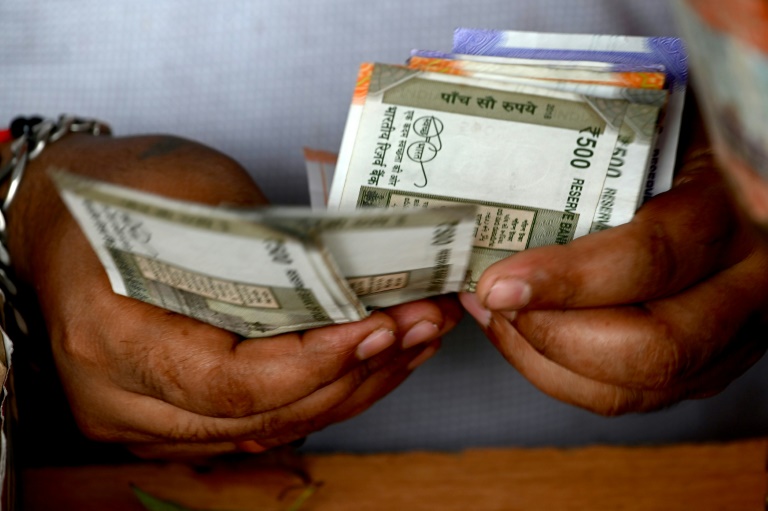
The Indian rupee fell to more than 80 per US dollar for the first time on record Tuesday, as the greenback extended its rally and foreign capital outflows intensified.

The rupee hit 80.0600 against the greenback soon after trading started, compared with the previous close of 79.9775, Bloomberg data showed.

High inflation and rising interest rates in the United States coupled with fears of an impending recession in the world’s biggest economy have fuelled a broad dollar rally in recent weeks as investors turn increasingly risk-averse.

Tighter US monetary policy has exacerbated outflows from emerging markets such as India, where foreign investors have withdrawn a net $30.8 billion in debt and equity this year.

Data released last week showed that US consumer price inflation hit a fresh four-decade high in June, exceeding market forecasts and stoking expectations of another large Federal Reserve rate hike next week.

In a written statement to the Indian parliament on Monday, finance minister Nirmala Sitharaman attributed the rupee’s sharp fall to external reasons.

“Global factors such as the Russia-Ukraine conflict, soaring crude oil prices and tightening of global financial conditions are the major reasons for the weakening of the Indian Rupee against the US dollar,” she said.

At the same time, the Indian currency has strengthened against the British pound, the Japanese yen and the euro in 2022 so far, Sitharaman added.

But higher crude prices have resulted in a deteriorating trade balance in a country that imports 80 percent of its oil.

India’s merchandise trade deficit widened to a record $26.18 billion in June, official data showed last week, largely because of higher crude and coal import prices.

In its monthly economic review, the Ministry of Finance said costlier imports could widen the current account deficit and cause the rupee to depreciate further.

“The near-term outlook for the rupee will continue to be weak as it tracks developments on the oil and gas front in international markets,” forex market expert K Harihar told AFP.

“The weakness will persist until trade deficit numbers come down or capital inflows counter it,” he said, adding that the rupee could fall to 81 per US dollar without an agreement between Europe and Russia on gas supply.

The rupee’s move followed Russia’s Gazprom telling Europe late Monday that it cannot guarantee gas supplies following maintenance work on its Nord Stream pipeline.

Consumer price inflation in India, the world’s sixth-largest economy, cooled off slightly to 7.01 percent in June after hitting an eight-year high of 7.79 percent in April.

But price rises have persisted well above the central bank’s two-to-six percent target range despite consecutive interest rate hikes in May and June.

The central bank has also sold more than $34 billion of its foreign currency reserves in an effort to stabilise the rupee.

India’s benchmark Sensex index opened lower, but recovered to trade 0.17 percent higher on Tuesday morning.

SAS and pilots' unions reach agreement, ending strike

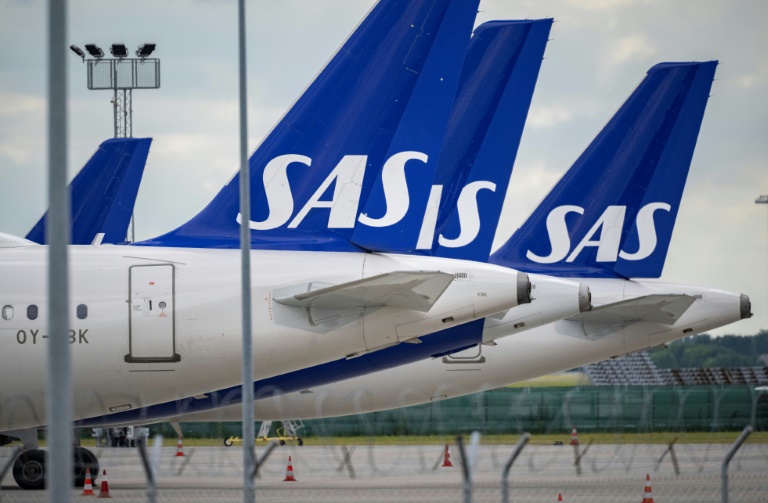
Scandinavian airline SAS and the unions representing their pilots said Tuesday that they had reached an agreement, ending a two-week strike that has cost the ailing airline between $9 and $12 million a day.

The agreement ending the strike after 15 days was confirmed by both the company and the unions after a negotiation session ran through Monday and into the early hours of Tuesday.

“I am pleased to report that we now have come to an agreement with all four pilot unions for SAS Scandinavia and the strike has ended,” chief executive Anko van der Werff said in a statement.

“Finally, we can resume normal operations and fly our customers on their much longed-for summer holidays. I deeply regret that so many of our passengers have been impacted by this strike,” he added.

A new agreement, covering the next five and half years, means that “flights operated by SAS Scandinavia will resume according to their regular traffic program as soon as possible”, the company said.

“SAS pilots have taken responsibility to sign a new agreement with SAS and the strike will cease,” the Swedish Air Line Pilots Association (SPF) said in a separate statement, adding that it had been “an extraordinary and very demanding negotiation.”

Pilots have been striking since July 4, when nearly 1,000 of them walked off the job after talks broke down. 

They were protesting against salary cuts demanded by management as part of a restructuring plan aimed at ensuring the survival of the company, and the firm’s decision not to re-hire pilots laid off during the Covid-19 pandemic. 

– Survival at stake –

Under the new deal, 450 pilots will be re-hired.

One day after the strike began SAS announced it was filing for Chapter 11 bankruptcy protection in the United States, and van der Werff last week warned that the prolonged strike was putting the Chapter 11 process in jeopardy and, “ultimately, the survival of the company at stake”.

When the stoppage was in its tenth day, SAS said it had already cost roughly 1 to 1.3 billion Swedish kronor ($94 million to $123 million, or 94 million to 123 million euros), with more than 2,500 flights cancelled.

The CEO also said the strike also had “a severe impact on our possibilities to succeed with SAS Forward”, the cost-saving programme launched by the ailing company in February. 

While the airline said it could meet its obligations in the near term it warned cash reserves “will erode very quickly in the face of a continuing pilot strike”.

SAS, which employs nearly 7,000 people, mainly in Denmark, Norway and Sweden, is also seeking to raise about 9.5 billion kronor in fresh capital.

“We now get on with the important work of progressing our transformation plan SAS FORWARD and building a strong and competitive SAS for generations to come,” van der Werff said Tuesday.

The summer is shaping up to be difficult overall for European airlines and airports, who are faced with staff shortages that are affecting air traffic. 

After widespread job losses linked to Covid-19, airlines and airports are struggling to recruit new staff in many countries.

'Thrones' and 'Rings' fans ready for battle as Comic-Con returns

Comic-Con finally returns to San Diego this week, where new “Lord of the Rings” and “Game of Thrones” TV series will compete before tens of thousands of cosplaying geeks and nerds at the world’s most famous pop culture gathering.

Disney and its Marvel superheroes will also preview their upcoming films and shows to adoring fans at the sprawling convention, which has not taken place in full for three years due to the pandemic. 

“I think it’ll look like Comic-Con from 2019,” said the event’s communications chief David Glanzer, even if guests — whether dressed as hobbits, dragons or princesses — will be required to wear face masks.

“We weathered it. And now coming back, maybe we’re gonna have tears of joy… it’s very emotional,” he told AFP.

In addition to 135,000 screaming fans, the comic book, science fiction and fantasy extravaganza draws Hollywood’s biggest studios and their A-list stars to show off upcoming titles — kicking off this year with Paramount’s “Dungeons and Dragons: Honor Among Thieves.”

Marking the first time the world’s most popular role-playing game has received a mega-budget silver-screen adaptation, the movie out next March stars Chris Pine, Hugh Grant and former “Bridgerton” heartthrob Rege-Jean Page.

But the week’s headlines are set to be dominated by two huge fantasy series coming to television screens soon: Amazon Prime’s “Lord of the Rings: The Rings of Power” and HBO’s “House of the Dragon.” 

“The Rings of Power” is Amazon’s enormously ambitious saga taking place in the world of J.R.R. Tolkien’s books, set long before the events of Peter Jackson’s Oscar-winning trilogy of films.

The series — playing out across five seasons, the first of which launches September 2 — is reported to have cost Amazon well over $1 billion, and is said to be a personal obsession of founder Jeff Bezos.

Much of that cost went into buying the Tolkien universe rights and on lavish production values, with a healthy sum set aside for “activations,” or immersive fan experiences, at Comic-Con.

Amazon on Friday will bring its cast of hobbits, elves and dwarves to the venue’s cavernous Hall H, where fans who line up for hours or even days anticipate seeing the first detailed look at the series.

– Rings v Thrones – 

The following day, “House of the Dragon” — the first spin-off to “Game of Thrones” set in George RR Martin’s fictional world of Westeros, out August 21 — will be unveiled by HBO.

Martin has played down talk of a rivalry between the two mega-franchises, insisting, “I want both shows to find an appreciative audience, and give them great television. Great fantasy.”

“The more fantasy hits we have, the more great fantasy we are likely to get,” he wrote in a blog post.

But HBO hopes its prequel can match the wild popularity of the original “Thrones,” which over eight seasons became appointment viewing, spawned countless imitations and delivered 59 Emmys — a record for a drama at television’s equivalent of the Oscars.

Starring Matt Smith, Rhys Ifans and Emma D’Arcy, “House of the Dragon” tells the story of the murderous, dragon-breeding Targaryen family, some 300 years before the events of “Thrones.”

Its stars will appear in Hall H immediately after a movie presentation from HBO’s sister company Warner Bros Pictures, which is set to feature Dwayne “The Rock” Johnson, who is promoting his upcoming superhero flick “Black Adam.”

Elsewhere, Disney is keeping its own Hall H presentation under wraps, but rumors abound that it will finally show off its much-anticipated “Black Panther 2” sequel.

The week will also feature a send-off for AMC’s “The Walking Dead,” as the juggernaut zombie TV series bows out with its final season — and launches a new spin-off, the anthology-style “Tales of the Walking Dead.”

But for Glanzer, the blockbuster studio showcases are secondary to what Comic-Con is all about: a community for its fans. 

“To be able to see people have a good time, enjoying comics and popular art is a gift that I look forward to. I really, really do… We get to come home,” he said.

“What better thing to be able to do than that — and share it with your friends.”

Asian markets drop as Apple report fans economic worries

Most stocks fell Tuesday after a Wall Street sell-off fuelled by fresh recession worries following a report that Apple planned to ease back on spending due to uncertainty over the economic outlook.

The drop across most markets in Asia also came as oil held a Monday surge caused by fading expectations that Joe Biden had convinced Saudi Arabia to pump more to ease a supply crisis and temper prices.

The losses among equities ate into Monday’s gains, which came after a forecast-beating US retail sales report suggested consumers — the key driver of growth — remained resilient despite decade-high inflation and rising interest rates.

And analysts warned that with the earnings season just getting under way, there could be more pain ahead for investors as firms report falling profits or warn about the outlook.

In a sign of concern among big-cap firms about an economic slowdown or recession, Bloomberg News said tech titan Apple was pulling back on hiring and some investments. 

The news follows similar belt-tightening moves by other Silicon Valley giants including Alphabet, Amazon and Facebook parent Meta.

“With Apple putting up their hand and acknowledging they have too many staff, it is a clear sign of caution from the mega-cap heavyweight giants amid an uncertain time,” said SPI Asset Management’s Stephen Innes.

“Investors are hoping for a ‘kitchen-sink’ quarter where corporates flush out all the bad news at once — but I am not sure that will happen, and I think this makes it difficult to put an absolute bottom on the equity selloff.”

The report led to a reversal on Wall Street, with all three main indexes ending in negative territory, having enjoyed most of the day well up.

And Asia struggled Tuesday.

Hong Kong, Shanghai, Sydney, Seoul, Singapore, Taipei, Wellington and Manila all fell, though Tokyo rose as investors there returned from a long weekend to play catch-up with Monday’s regional rally.

Innes added that markets were likely to face pressure for some time as central banks continue to lift borrowing costs to fight inflation, risking an economic downturn.

“The probability of recession is dominating US discussions, as inflation might have peaked in June while the Fed still has a couple of massive hikes ahead before possibly pausing,” he said.

“We always hear that the rate hikes are in the price, but they are always a shock when the market actualises the reality, especially when they are of the jumbo variety.”

While some are predicting inflation may have reached its peak, oil prices — the key driver of soaring prices — continues to hold its strength, despite recent losses.

Both main contracts rocketed more than five percent Monday on expectations that Riyadh will not open up the taps further, with Biden’s plea seeming to have fallen on deaf ears.

Traders are also keeping a nervous eye on Europe, where a 10-day maintenance shutdown of the Nord Stream 1 pipeline from Russia is due to come to an end.

Many fear Vladimir Putin will keep it shut down in retaliation for sanctions imposed on Moscow for its invasion of Ukraine. That would deal another blow to the already creaking eurozone economy and could send crude prices soaring.

Supply fears are trumping worries about a demand hit in China from another possible lockdown in Shanghai as officials struggle to contain another Covid-19 outbreak.

– Key figures at around 0230 GMT –

Tokyo – Nikkei 225: UP 0.7 percent at 26,977.37 (break)

Hong Kong – Hang Seng Index: DOWN 0.7 percent at 20,701.98

Shanghai – Composite: DOWN 0.2 percent at 3,270.56

Euro/dollar: DOWN at $1.0140 from $1.0146 on Monday

Pound/dollar: DOWN at $1.1940 from $1.1950 

Euro/pound: DOWN at 84.84 pence from 84.88 pence

Dollar/yen: UP at 138.24 yen from 138.13 yen

West Texas Intermediate: DOWN 0.2 percent at $102.45 per barrel

Brent North Sea crude: DOWN 0.2 percent at $106.02 per barrel

New York – Dow: DOWN 0.7 percent at 31,072.61 (close)

London – FTSE 100: UP 0.9 percent at 7,223.24 (close)

Jury selected for contempt trial of Trump aide Steve Bannon

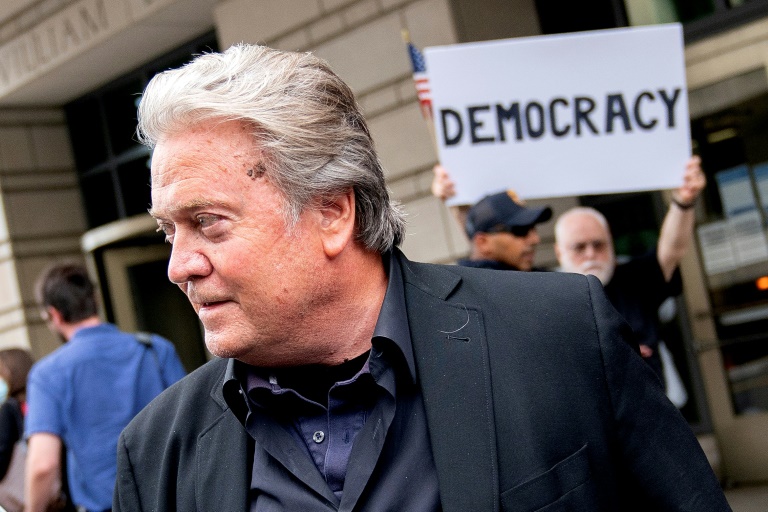
A jury was selected Monday for the trial of former Donald Trump advisor Steve Bannon for defying a subpoena to testify before lawmakers investigating the attack on the US Capitol.

Bannon, who led Trump’s successful 2016 presidential election campaign, was among dozens of people called by a congressional committee to testify about the 2021 storming of Congress by Trump supporters.

The 68-year-old refused the summons and was indicted on two charges of contempt of Congress.

A 22-person jury was selected on Monday to hear the case. The panel will be cut down to 12 jurors and two alternates on Tuesday, and opening arguments will begin in what is expected to be a speedy trial.

Bannon’s lawyers sought to delay the start of the trial so it would not take place at the same time as the House committee’s public hearings into the Capitol attack, but the judge refused the request last week.

Thousands of Trump supporters, many associated with ultra-nationalist and white supremacist groups, stormed the Capitol on January 6, 2021 in an effort to block the certification of Democrat Joe Biden’s election victory. 

They had been egged on by Trump in a fiery speech near the White House, during which he repeated his false claims of election fraud.

According to the House committee probing the riot, Bannon spoke to Trump the previous day.

Investigators believe Bannon and other Trump advisors could have information on links between the White House and the rioters.

After refusing to testify for months, Bannon finally agreed this month to cooperate with the House investigation, a move prosecutors said was a “last-ditch attempt to avoid accountability” by stalling his trial for contempt.

Judge Carl Nichols ruled the trial should go ahead anyway, saying, “I see no reason for extending this case any longer.”

If convicted of contempt, Bannon faces a minimum sentence of 30 days and a maximum of one year in prison on each count.

He was Trump’s strategy chief at the White House before being sacked in 2017.

Bannon was charged with conspiracy to commit wire fraud and money laundering after allegedly defrauding thousands of donors to a campaign to fund Trump’s anti-migrant wall along the southern border.

In Trump’s final hours in office, he pardoned Bannon.

More than 850 people have been arrested in connection with the attack on Congress. The assault left at least five people dead and 140 police officers injured.

Trump was impeached for a historic second time by the House after the riot — he was charged with inciting an insurrection — but was acquitted by the Senate.

Heatwave-hit Farnborough airshow basks in bumper Boeing order

Britain’s Farnborough airshow flew into view Monday under a sweltering heatwave, as US planemaker Boeing basked in the glow of the first gigantic order in global aviation’s first get-together since Covid.

Visitors flocked to air-conditioned chalets and exhibition halls to escape the intense heat on the first day of one of the world’s biggest civil and defence shows, while queues snaked for ice cream vans under dizzying air displays.

Tens of thousands of visitors are expected at this year’s event, which coincides with Britain’s first-ever “extreme heat” red alert that has been declared for both Monday and Tuesday, when temperatures set to soar further.

“People who come to visit are really happy to visit. Some of the stays are a little longer than they would normally be because it’s pretty relaxing inside,” said John Paul Frasier, adviser for Canadian manufacturer De Havilland Aircraft, speaking to AFP inside its business chalet.

“It’s pretty challenging and we know that tomorrow is going to be a little bit warmer.”

The business terraces were meanwhile deserted as some plucky visitors — clad in hats, shorts and sunglasses — headed to the tarmac to watch the commercial and military jets soar across the skies.

– Beads of sweat –

“It the hottest I’ve seen, we just have to power through,” said Aaron Rutter, vice president of sales at Lisi Aerospace, with beads of sweat dropping from his forehead as he watched Boeing’s new 777X jumbo jet make a series of twists and turns across the sky.

“There a few crazy (ones) of us out there. It’s all relative,” added Rutter, who hails from Arizona and kept his black jacket on.

This is the first Farnborough since 2018 because the 2020 edition was cancelled as the Covid health emergency ravaged the aviation sector.

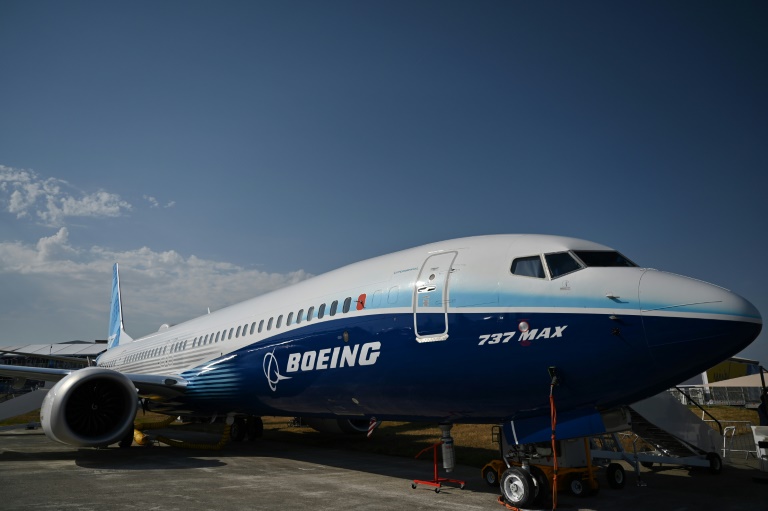
Boeing fired the first shot on Monday in its traditional orders battle with European rival Airbus, clinching a $13.5-billion deal for 100 MAX planes from Delta Airlines in a huge vote of confidence for the crisis-hit jet — and for the industry’s broader recovery from Covid.

Delta lodged its first-ever order for medium-haul MAX 10 aircraft, with options for 30 more of the fuel-efficient planes as it seeks to replace its ageing fleet and cut emissions.

The blockbuster deal marks a huge turnaround for the MAX jet which had suffered two deadly crashes in 2018 and 2019.

– Decarbonisation –

Delta, which has 222 Airbus aircraft due for delivery, was until now the only large US airline that had not yet ordered MAX jets.

The MAX 10 is the largest version of Boeing’s new generation of single-aisle aircraft, and competes with the commercially-successful Airbus A321.

Delta boss Ed Bastian added that the aircraft would help it improve fuel efficiency and secure a “more sustainable future for air travel”.

The news comes as airlines worldwide seek to replace ageing fleets with fuel-efficient planes that emit less carbon dioxide.

Airbus and a number of major airlines signed letters of intent to explore the possibility of capturing CO2 emissions from the air and storing them underground.

Boeing revealed also that Japanese airline ANA had agreed to purchase 20 of its smaller MAX 8 jets — worth $2.4 billion — plus two 777-8 freight planes.

– ‘Handing over controls’ –

Outgoing British Prime Minister Boris Johnson opened the prestigious five-day event as the aviation sector plots its post-Covid recovery.

The event coincides with fast-moving political turmoil in Britain after Johnson’s recent announcement that he is stepping down as Conservative party leader, sparking a divisive contest to replace him also as prime minister.

“This government believes in aviation and its power to bring jobs and growth to the entire country,” Johnson said Monday in opening remarks, before alluding to his exit from Downing Street.

“After three years in the cockpit… I am now handing over the controls seamlessly to someone else. I don’t know who,” he added, sparking laughter from delegates.

Uber settles US lawsuit over disabled rider 'wait fees'

Uber will offer several million dollars in compensation to tens of thousands of passengers with disabilities who were charged extra fees, US prosecutors said Monday.

The case brought by the US Department of Justice centered on disabled passengers allegedly being made to pay wait charges because they needed extra time to board vehicles.

Under the settlement, Uber will issue credits to more than 65,000 eligible riders that are worth double the amount of wait time fees they were ever charged, which could potentially amount to millions of dollars.

The ride-share company also agreed to pay over $1.7 million to riders who complained to Uber about the fees, and $500,000 to other impacted people.

“People with disabilities should not be made to feel like second-class citizens or punished because of their disability, which is exactly what Uber’s wait time fee policy did,” said assistant attorney general Kristen Clarke.

Uber said it was “pleased” by the settlement.

“Prior to this matter being filed we made changes so that any rider who shares that they have a disability would have wait time fees waived automatically,” the company said.

Uber charges a fee if a driver has to wait more than two minutes to pick up any passenger, but the Department of Justice said applying those fees to riders with disabilities amounts to unlawful discrimination.

Under the terms of a two-year agreement, Uber will continue to waive wait time fees for riders who need more time to board because of disabilities, and ensure refunds are easily available in event such fees are wrongly charged, prosecutors said.

Uber settles US lawsuit over disabled rider 'wait fees'

Uber will offer several million dollars in compensation to tens of thousands of passengers with disabilities who were charged extra fees, US prosecutors said Monday.

The case brought by the US Department of Justice centered on disabled passengers allegedly being made to pay wait charges because they needed extra time to board vehicles.

Under the settlement, Uber will issue credits to more than 65,000 eligible riders that are worth double the amount of wait time fees they were ever charged, which could potentially amount to millions of dollars.

The ride-share company also agreed to pay over $1.7 million to riders who complained to Uber about the fees, and $500,000 to other impacted people.

“People with disabilities should not be made to feel like second-class citizens or punished because of their disability, which is exactly what Uber’s wait time fee policy did,” said assistant attorney general Kristen Clarke.

Uber said it was “pleased” by the settlement.

“Prior to this matter being filed we made changes so that any rider who shares that they have a disability would have wait time fees waived automatically,” the company said.

Uber charges a fee if a driver has to wait more than two minutes to pick up any passenger, but the Department of Justice said applying those fees to riders with disabilities amounts to unlawful discrimination.

Under the terms of a two-year agreement, Uber will continue to waive wait time fees for riders who need more time to board because of disabilities, and ensure refunds are easily available in event such fees are wrongly charged, prosecutors said.

US gun lobby hails 'hero' who shot dead gunman in mall attack

The US gun lobby on Monday seized on the “heroic” acts of a civilian who used a pistol to shoot dead a young man who had opened fire in a shopping mall, pushing its case in the midst of a fierce debate over the regulation of firearms.

On Sunday evening, Jonathan Sapriman, a 20-year-old white man whose motives remain unknown, opened fire with a semi-automatic rifle in an Indiana shopping mall.

He killed a 30-year-old man and a couple seated in a restaurant space, and injured two more, before being shot dead himself by Elisjsha Dicken, a 22-year-old customer who was carrying an unlicensed pistol, as recently authorized under local laws.

“Many more people would have died last night if not for a responsible armed citizen that took action very quickly within the first two minutes of the shooting,” said Greenwood police chief James Ison during a press briefing.

Ison said the shooter appeared to have prepared for his deadly assault by dropping his cell phone in a toilet and burning his computer in an oven before he set out. He also had a second assault rifle, a pistol and a large amount of ammunition, the police official said.

The powerful lobby group, the National Rifle Association (NRA), immediately seized on the tragedy to reassert its line that an armed public is good for public security. 

“We will say it again: The only way to stop a bad guy with a gun is a good guy with a gun,” the NRA said on Twitter.

Another group pushing against any restrictions on firearms ownership, the CCRKBA, echoed the NRA line.

“We carry guns to defend ourselves and others from criminals and crazy people in sudden emergencies,” its chief, Alan Gottlieb, said in a statement.

“That courageous young man is rightfully being hailed as a hero,” he said.

Kris Brown, president of the Brady Campaign, which is pushing for stricter gun-control laws, hit back on Twitter. “Let me be clear: If more guns made us safer, America would be the safest country in the WORLD,” he said.

In the same vein, Shannon Watts, founder of the organization Moms Demand Action, shared graphs placing the United States at the head of the developed countries in terms of weapons per capita but also for deaths by firearms. 

Nearly 400 million guns were in circulation among the civilian population in the United States in 2017, or 120 guns for every 100 people, according to the Small Arms Survey project. 

More than 24,000 people have been shot dead since the start of the year, including 13,000 by suicide, according to the Gun Violence Archives site. 

Several of the recent gun rampages, including the shooting in a school in Texas and a supermarket frequented by African-Americans in Buffalo, caused particular shock across the country, prompting lawmakers to agree in June, for the first time in 30 years, to pass modest reform of gun laws.

Close Bitnami banner
Bitnami