US Business

Amanda Lee named first female pilot in US navy aviation team

The US Navy’s famed aerial display team, the Blue Angels, named Lieutenant Amanda Lee on Monday as its first female pilot to fly fighter aircraft.

Lee, of Mounds View, Minnesota, was one of six new officers selected for the 2023 air show season, the navy said in a statement.

After a five-month training program, she will fly F/A-18 “Super Hornet” for the navy’s elite demonstration team founded in 1946.

Lee was commissioned as an officer in 2013 after being trained as an aviation electronics technician, the navy said.

She became a naval aviator in 2016.

Lee, whose call sign is “Stalin,” will be the first woman to fly fighter aircraft for the Blue Angels.

Another woman, Marine Major Katie Cook, joined the Blue Angels in 2015 and flew C-130 support aircraft known as “Fat Albert.”

Mixed day for global stocks as oil prices rise again

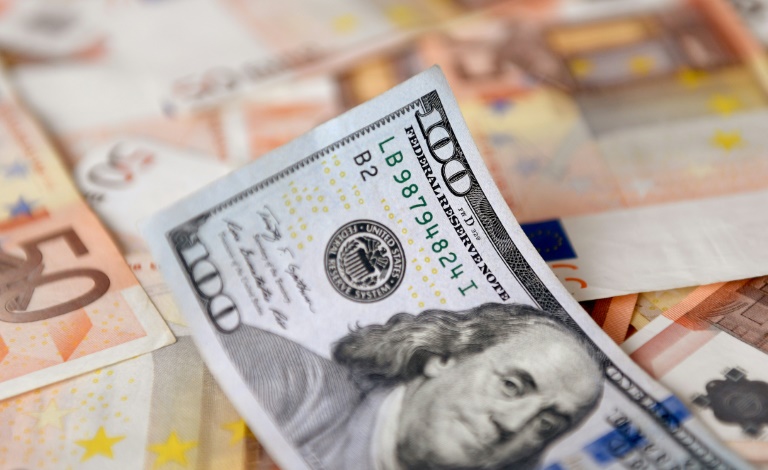
Wall Street stocks fell Monday after an early rally petered out, while the dollar weakened and oil prices continued to recover after recent declines.

Following upbeat sessions on European and Asian equity markets, New York appeared poised to extend Friday’s positive momentum following commentary from banks expressing confidence in US economic resiliency.

But the trend reversed after Bloomberg News reported that Apple was pulling back on some investments in preparation for a potential economic slowdown. Apple shares fell more than two percent.

“Investors are becoming cautious again,” said Peter Cardillo of Spartan Capital Securities. “I guess investors are looking for more convincing data that the earnings season is not going to be all that bad.”

The broad-based S&P 500 fell gradually throughout the day, ending with a loss of 0.8 percent.

The session opened a heavy calendar of earnings reports, with results from Netflix, Johnson & Johnson and Tesla in the coming days.

– ECB to act –

The European Central Bank is set on Thursday to raise its interest rates for the first time in more than a decade.

To try and counteract a steep rise in prices, the central bank has said it intends to raise borrowing costs by a quarter point, the first such move since 2011. 

The ECB’s delay in acting compared with other central banks that have announced multiple increases — coupled with fears of a eurozone recession — saw the euro fall to parity with the dollar last week.

But on Monday, the European single currency was up around 0.6 percent against the dollar, while the British pound climbed 0.7 percent.

Meanwhile, crude prices jumped more than five percent, lifting West Texas Intermediate back above $100 a barrel and pushing Brent futures further above that key level.

“Oil prices are soaring again today, buoyed by an apparent easing in economic fears, stronger risk appetite and a failure by the White House to get any concrete commitment to increase oil output during the Middle East visit,” said market analyst Craig Erlam at trading platform OANDA.

“When the biggest talking point from President (Joe) Biden’s meeting with Saudi Crown Prince Mohammed bin Salman is a fist bump photo, you know it probably hasn’t gone to plan,” he added.

– Key figures at around 2040 GMT –

New York – Dow: DOWN 0.7 percent at 31,072.61 (close)

New York – S&P 500: DOWN 0.8 percent at 3,830.85 (close)

New York – Nasdaq: DOWN 0.8 percent at 11,360.05 (close)

London – FTSE 100: UP 0.9 percent at 7,223.24 (close)

Frankfurt – DAX: UP 0.7 percent at 12,959.81 (close)

Paris – CAC 40: UP 0.9 percent at 6,091.91 (close)

EURO STOXX 50: UP 1.0 percent at 3,511.86 (close)

Hong Kong – Hang Seng Index: UP 2.7 percent at 20,846.18 (close)

Shanghai – Composite: UP 1.6 percent at 3,278.10 (close)

Tokyo – Nikkei 225: Closed for a holiday

Euro/dollar: UP at $1.0146 from $1.0080 on Friday

Pound/dollar: UP at $1.1950 from $1.1855 

Euro/pound: DOWN at 84.88 pence from 85.03 pence

Dollar/yen: DOWN at 138.13 yen from 138.68 yen

Brent North Sea crude: UP 5.1 percent at $106.27 per barrel

West Texas Intermediate: UP 5.1 percent at $102.60 per barrel

burs-jmb/hs

Harrowing video aired at death penalty trial of US school shooter

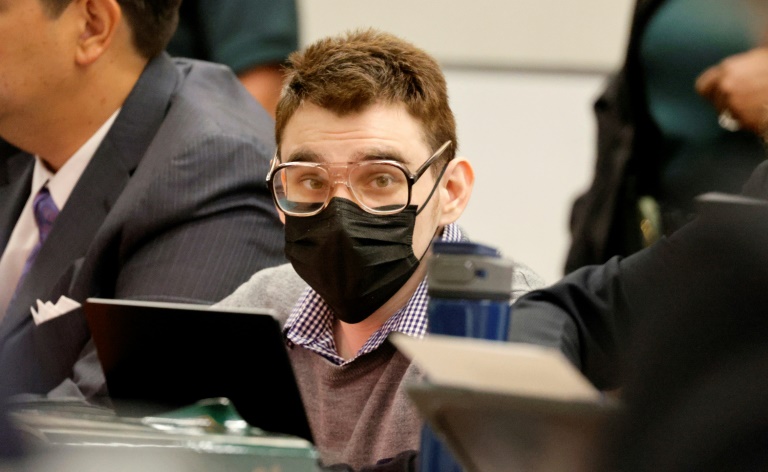
A harrowing video of the Valentine’s Day 2018 shooting at a high school in Florida that left 17 people dead was played at the sentencing trial on Monday of the troubled young man who admitted to carrying out the massacre.

Nikolas Cruz pleaded guilty in October to 17 counts of murder and 17 counts of attempted murder for the attack at Marjory Stoneman Douglas High School in Parkland, Florida.

A 12-person jury is to decide whether the now 23-year-old should receive the death penalty or a life sentence for what prosecutor Mike Satz called a “cold, calculated, manipulative and deadly” massacre.

“I’m going to speak to you about the unspeakable, about this defendant’s goal-directed, planned, systematic murder, mass murder, of 14 children, an athletic director, a teacher and a coach,” Satz said in opening arguments.

A cell phone video recorded by a student, Danielle Gilbert, was played for the jury. The audio was made available to the public gallery and reporters.

Screams, cries and moans were punctuated by multiple shots as students huddled in their classroom trying to seek cover from bullets coming through the door.

“This can’t be real,” someone was heard whispering.

Gilbert, who broke down in tears as the video was played, said one person was killed in the classroom and three wounded.

Cruz, who was wearing a black Covid mask, covered his face with his hands and stared down at the table in front of him as the video was played.

Several anguished relatives of the victims fled the courtroom while others wept openly and hugged their loved ones.

– ‘Next school shooter’ –

Satz, the prosecutor, told the jury that three days before the shooting, Cruz made a cellphone video in which he said  “I’m going to be the next school shooter of 2018.

“My goal is at least 20 people with an AR-15 and some tracer rounds,” Cruz said in the video. “It’s going to be a big event and when you see me on the news, you’ll know who I am.”

Satz said that Cruz, after fleeing the school, ordered a drink at a Subway sandwich shop and then went to a McDonald’s, where he asked the brother of a girl he had just shot for a ride.

The boy, who was not aware at the time that Cruz was the assailant, declined. Cruz was arrested shortly afterwards.

The trial in Fort Lauderdale is the rare instance of a mass shooter facing a jury, as they often either take their own lives or are killed by police.

The death penalty requires the jury to be unanimous. Cruz will otherwise be handed life without parole.

The Florida shooting stunned a country accustomed to gun violence and sparked new efforts, led by students from the school itself, to get lawmakers to pass tougher gun control laws.

– ‘March for Our Lives’ –

Parkland survivors founded “March for Our Lives,” organizing a rally that drew hundreds of thousands of people to the nation’s capital, Washington, in 2018.

Thousands turned out for demonstrations organized by the group last month following two other mass shootings: one at a Texas elementary school that killed 19 children and two teachers, and another at a New York supermarket that left 10 Black people dead.

Those shootings helped galvanize support for the first significant federal bill on gun safety in decades.

President Joe Biden signed the bill into law in June but it fell far short of steps he had called for, including a ban on assault weapons.

Cruz bought the AR-15 semi-automatic he used in the attack legally, despite having a documented history of mental health problems.

Expelled from school for disciplinary reasons, Cruz was known to be fixated on firearms — and had been identified as a potential threat to his classmates.

On the day of the attack, he arrived at the school in an Uber, began shooting indiscriminately at students and staff, and fled nine minutes later, leaving behind a scene of carnage.

The Justice Department reached a $127.5 million settlement in March with survivors and relatives of Parkland victims who had accused the FBI of negligence for failing to act on tips received prior to the attack that Cruz was dangerous.


America's Fauci to retire by end of Biden's current term

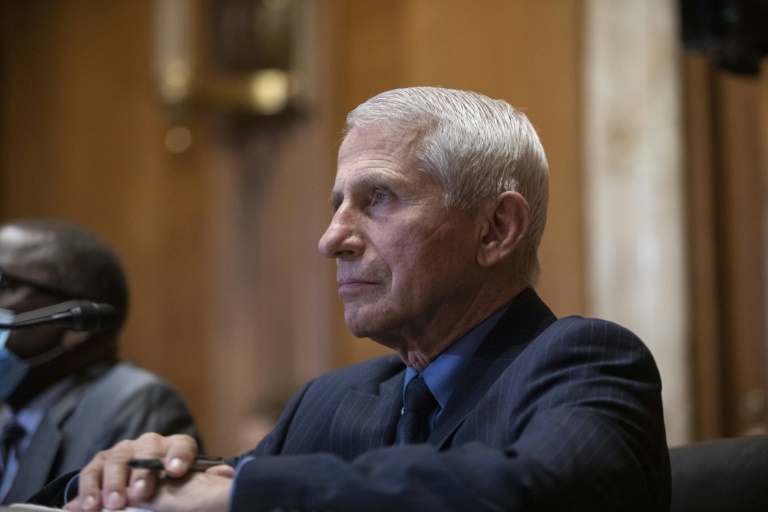
Anthony Fauci, who has helmed the United States’ response to infectious disease outbreaks since the 1980s, will retire by the end of President Joe Biden’s current term, he said in interviews Monday.

The 81-year-old told Politico and CNN he would step down from his position as director of the National Institute of Allergy and Infectious Diseases (NIAID) to pursue other avenues sometime before January 2025.

“Obviously, you can’t go on forever. I do want to do other things in my career, even though I’m at a rather advanced age,” Fauci, who is also Biden’s chief medical advisor, said to CNN.

He told Politico he did not plan to stay in office long enough to see out Covid-19 because the disease was not going away soon. 

“I think we’re going to be living with this,” said Fauci, who was appointed director of the National Institutes of Health’s NIAID in 1984 and has served under seven presidents.

When Covid first spread globally from China, he became a trusted source of reliable information, reassuring the public with his calm and professorial demeanor during frequent media appearances. 

But his honest takes on America’s failures to get to grips with the virus brought Fauci into conflict with former president Donald Trump, and turned the physician-scientist into a hated figure for some on the right.

Fauci now lives with security protection after his family received death threats and harassment.

But he was conciliatory toward his former nemesis Trump in his Politico interview.

“We developed an interesting relationship,” said the Italian-American.

“Two guys from New York, different in their opinions and their ideology, but still, two guys who grew up in the same environments of this city. I think that we are related to each other in that regard.”

During the 1980s, Fauci became a lightning rod for criticism that the government was not doing enough to stem the rise of HIV-AIDS — but later forged a close collaboration with activists.

His accomplishments include implementing a fast-track system that widened access to antiretroviral medicines, and working with former president George H.W. Bush to plough in more resources.

Under president George W. Bush, Fauci was the architect of the President’s Emergency Plan For AIDS Relief (PEPFAR), credited with saving millions of lives in sub-Saharan Africa.

As a scientist, he is credited with developing effective treatments for formerly fatal inflammatory diseases, as well as for contributions into understanding how HIV destroys the body’s defenses. 

Despite his many duties, he continues to treat patients at the NIH’s Clinical Center in Bethesda, Maryland.

Uber settles US lawsuit over disabled rider 'wait fees'

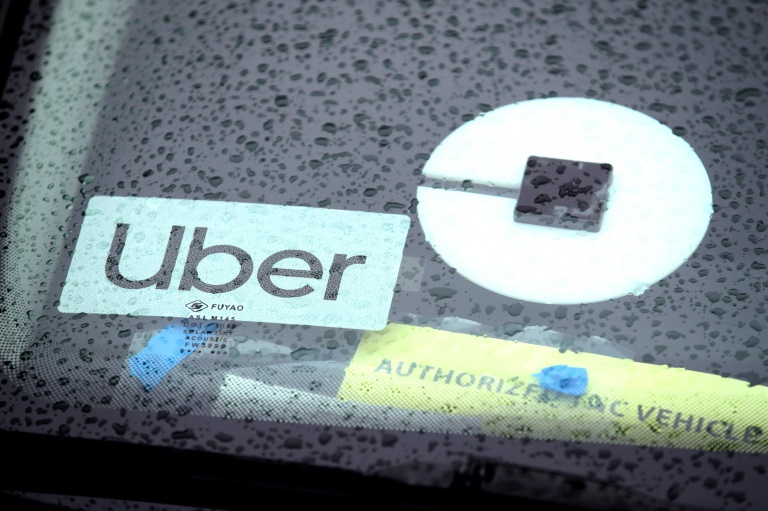
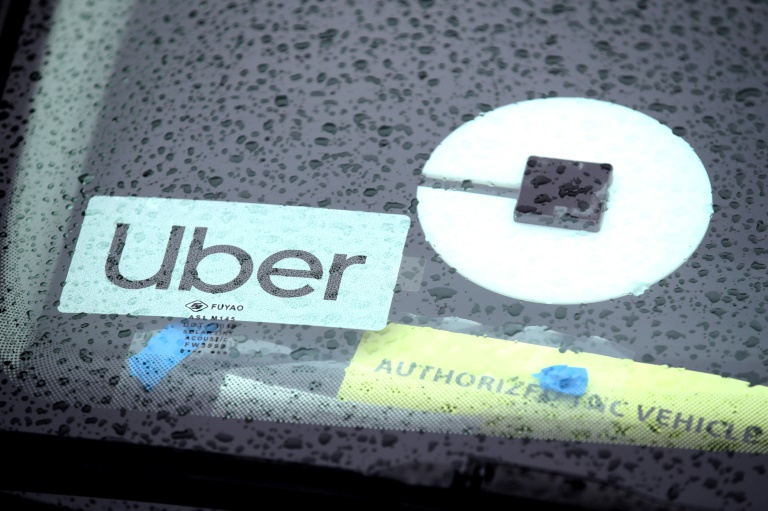
Uber will offer several million dollars in compensation to tens of thousands of passengers with disabilities who were charged extra fees, US prosecutors said Monday.

The case brought by the US Department of Justice centered on disabled passengers allegedly being made to pay wait charges because they needed extra time to board vehicles.

Under the settlement, Uber will issue credits to more than 65,000 eligible riders that are worth double the amount of wait time fees they were ever charged, which could potentially amount to millions of dollars.

The ride-share company also agreed to pay over $1.7 million to riders who complained to Uber about the fees, and $500,000 to other impacted people.

“People with disabilities should not be made to feel like second-class citizens or punished because of their disability, which is exactly what Uber’s wait time fee policy did,” said assistant attorney general Kristen Clarke.

Uber said it was “pleased” by the settlement.

“Prior to this matter being filed we made changes so that any rider who shares that they have a disability would have wait time fees waived automatically,” the company said.

Uber charges a fee if a driver has to wait more than two minutes to pick up any passenger, but the Department of Justice said applying those fees to riders with disabilities amounts to unlawful discrimination.

Under the terms of a two-year agreement, Uber will continue to waive wait time fees for riders who need more time to board because of disabilities, and ensure refunds are easily available in event such fees are wrongly charged, prosecutors said.

Uber settles US lawsuit over disabled rider 'wait fees'

Uber will offer several million dollars in compensation to tens of thousands of passengers with disabilities who were charged extra fees, US prosecutors said Monday.

The case brought by the US Department of Justice centered on disabled passengers allegedly being made to pay wait charges because they needed extra time to board vehicles.

Under the settlement, Uber will issue credits to more than 65,000 eligible riders that are worth double the amount of wait time fees they were ever charged, which could potentially amount to millions of dollars.

The ride-share company also agreed to pay over $1.7 million to riders who complained to Uber about the fees, and $500,000 to other impacted people.

“People with disabilities should not be made to feel like second-class citizens or punished because of their disability, which is exactly what Uber’s wait time fee policy did,” said assistant attorney general Kristen Clarke.

Uber said it was “pleased” by the settlement.

“Prior to this matter being filed we made changes so that any rider who shares that they have a disability would have wait time fees waived automatically,” the company said.

Uber charges a fee if a driver has to wait more than two minutes to pick up any passenger, but the Department of Justice said applying those fees to riders with disabilities amounts to unlawful discrimination.

Under the terms of a two-year agreement, Uber will continue to waive wait time fees for riders who need more time to board because of disabilities, and ensure refunds are easily available in event such fees are wrongly charged, prosecutors said.

US bank results highlight risk and resiliency

Despite mounting worries over inflation, just-released bank earnings painted a resilient picture of the US economy and consumer, generating talk that any recession might be milder than earlier downturns.

Reports from six US banking giants showed a significant drop in profits from the heady year-ago period, with most of the group establishing fresh provisions in case of defaults.

Executives expressed caution about what’s to come in light of the growing hit from higher gasoline and food prices, along with the burden of increased lending costs following several Federal Reserve interest rate hikes and persistent supply chain problems.

But banks still haven’t seen a significant rise in charge-offs from bad loans. They say many households still have a buffer of savings after conserving funds during the height of the pandemic when the federal government had generous relief programs.

Citigroup Chief Financial Officer Jane Fraser noted “sharply lower” consumer confidence compared with earlier in the year.

“That said, while sentiment has shifted, little of the data I see tells me the US is on the cusp of a recession,” Fraser said Friday, adding that households savings provided “a cushion for future stress” amid a tight job market. 

Fraser contrasted the backdrop in the United States with Europe, where vulnerability to Russian energy could make for a “difficult winter.” 

Executives acknowledged that the rising price of fuel and other essential goods poses burden to low-income households who are cutting back.

But most of the bank’s clients are not in this situation now.

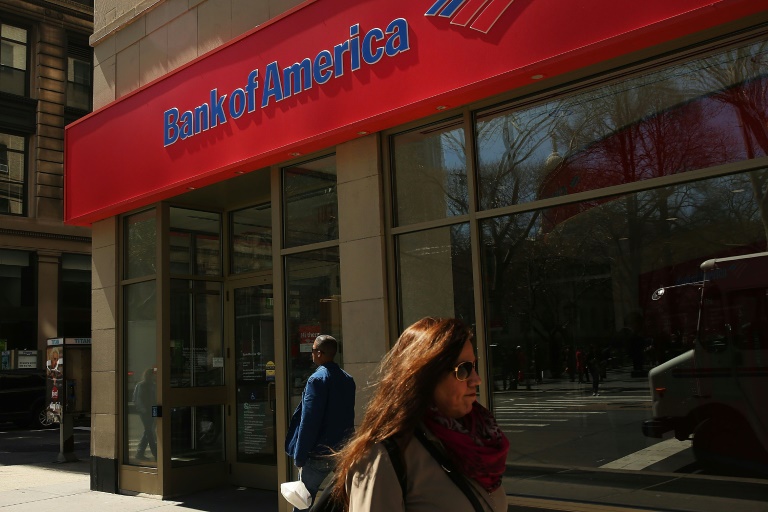
“US consumers remain quite resilient,” Bank of America Chief Executive Brian Moynihan said Monday. “Consumers continue to spend at a healthy pace even as some time has passed since the receipt of any stimulus.”

JPMorgan Chase Chief Executive described the consumer as “in great shape,” which means that even if there is a recession, they’re entering it in “far better shape” compared with 2008 or 2009.

– Muted tone –

On Monday Bank of America reported $6.2 billion in second-quarter profits, a 34 percent drop compared with the year-ago period when results were lifted by a large reserve release amid a strengthening macroeconomic backdrop.

In spite of weakness in some parts of the business, results were boosted by higher net interest income following Fed rate hikes. 

Bank of America also enjoyed growth in overall loans and pointed to “improvement” in overall asset quality.

At Goldman Sachs — the final of the US banking giants to report — profits fell 48 percent to $2.8 billion, again due in part to its decision to set aside $667 million in provisions for credit losses.

Operations were mixed, with a big jump in revenues tied to trading amid volatile markets offsetting the hit from a drop in revenues connected to mergers and acquisition advising and loan underwriting. 

The reports came on the heels of similar releases last week from JPMorgan Chase, Citigroup, Morgan Stanley and Wells Fargo.

Stuart Plesser, a senior director at S&P Global Ratings described the industry’s overall tone as muted.

“They’re not saying anything’s disastrous, they’re not optimistic, either,” Plesser said.

“If you read the news, you got this possibility with inflation, the higher rate increases and all the other issues, but you can’t point to anything in the results,” he added.

US bank results highlight risk and resiliency

Despite mounting worries over inflation, just-released bank earnings painted a resilient picture of the US economy and consumer, generating talk that any recession might be milder than earlier downturns.

Reports from six US banking giants showed a significant drop in profits from the heady year-ago period, with most of the group establishing fresh provisions in case of defaults.

Executives expressed caution about what’s to come in light of the growing hit from higher gasoline and food prices, along with the burden of increased lending costs following several Federal Reserve interest rate hikes and persistent supply chain problems.

But banks still haven’t seen a significant rise in charge-offs from bad loans. They say many households still have a buffer of savings after conserving funds during the height of the pandemic when the federal government had generous relief programs.

Citigroup Chief Financial Officer Jane Fraser noted “sharply lower” consumer confidence compared with earlier in the year.

“That said, while sentiment has shifted, little of the data I see tells me the US is on the cusp of a recession,” Fraser said Friday, adding that households savings provided “a cushion for future stress” amid a tight job market. 

Fraser contrasted the backdrop in the United States with Europe, where vulnerability to Russian energy could make for a “difficult winter.” 

Executives acknowledged that the rising price of fuel and other essential goods poses burden to low-income households who are cutting back.

But most of the bank’s clients are not in this situation now.

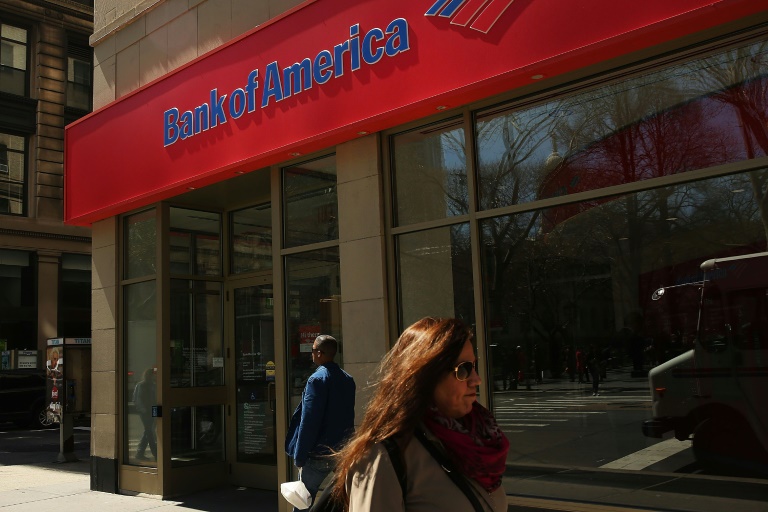
“US consumers remain quite resilient,” Bank of America Chief Executive Brian Moynihan said Monday. “Consumers continue to spend at a healthy pace even as some time has passed since the receipt of any stimulus.”

JPMorgan Chase Chief Executive described the consumer as “in great shape,” which means that even if there is a recession, they’re entering it in “far better shape” compared with 2008 or 2009.

– Muted tone –

On Monday Bank of America reported $6.2 billion in second-quarter profits, a 34 percent drop compared with the year-ago period when results were lifted by a large reserve release amid a strengthening macroeconomic backdrop.

In spite of weakness in some parts of the business, results were boosted by higher net interest income following Fed rate hikes. 

Bank of America also enjoyed growth in overall loans and pointed to “improvement” in overall asset quality.

At Goldman Sachs — the final of the US banking giants to report — profits fell 48 percent to $2.8 billion, again due in part to its decision to set aside $667 million in provisions for credit losses.

Operations were mixed, with a big jump in revenues tied to trading amid volatile markets offsetting the hit from a drop in revenues connected to mergers and acquisition advising and loan underwriting. 

The reports came on the heels of similar releases last week from JPMorgan Chase, Citigroup, Morgan Stanley and Wells Fargo.

Stuart Plesser, a senior director at S&P Global Ratings described the industry’s overall tone as muted.

“They’re not saying anything’s disastrous, they’re not optimistic, either,” Plesser said.

“If you read the news, you got this possibility with inflation, the higher rate increases and all the other issues, but you can’t point to anything in the results,” he added.

US promises $1.2 bn to feed Horn of Africa, urges others to help

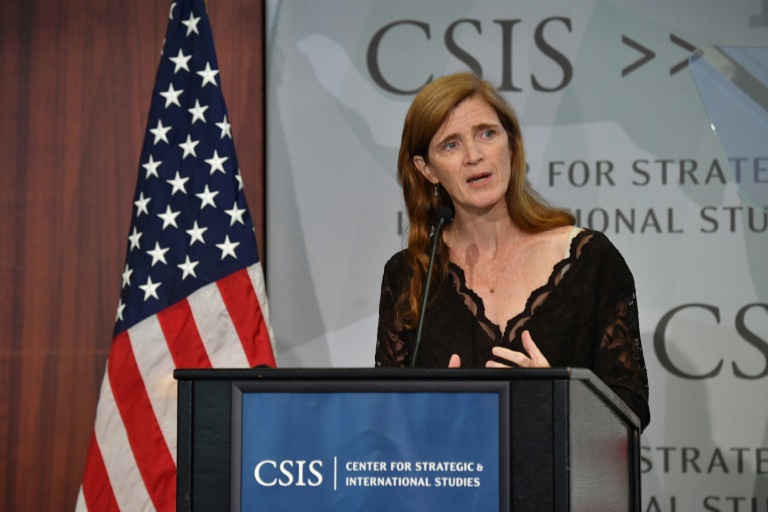
US aid chief Samantha Power on Monday promised $1.18 billion to help avert famine in the Horn of Africa and urged other nations including China to do more to fight a food crisis aggravated by Russia’s invasion of Ukraine.

Power voiced alarm that the war as well as climate change were worsening hunger around the world, just after a decade of progress had been “obliterated” by the Covid pandemic.

“Today we are confronting something even more devastating as not only are tens of millions more people facing that grave hunger, many of them are at risk of outright starvation,” she said at the Center for Strategic and International Studies.

Power, administrator of the US Agency for International Development, said the situation was especially dire in turbulent Somalia, conflict-hit Ethiopia and Kenya, the so-called Horn of Africa which is forecast to experience its fifth straight drought later this year.

Announcing a visit to the Horn of Africa this weekend, Power said that at least 1,103 children there are known to have died and some seven million other children are severely malnourished.

Power said the $1.18 billion in US aid would include emergency food — notably sorghum, a locally used grain more readily available than wheat — as well as a peanut-based supplement for malnourished children and veterinary services for dying livestock.

“Now we need others to do more, before a famine strikes, before millions more children find themselves on the knife’s edge,” she said.

Global prices of food have skyrocketed due to the war in Ukraine, a leading wheat exporter, with Russian warships blocking ports as Kyiv lays mines to avert a feared amphibious assault.

Power criticized the “sinister” policies of Russia but also pinned blame on China — seen by the United States as a leading global competitor — over its trade restrictions on fertilizer and “hoarding” of grain.

If China released fertilizer or grain to the global market or World Food Programme, it would “significantly relieve pressure on food and fertilizer prices and powerfully demonstrate the country’s desire to be a global leader and a friend to the world’s least developed economies,” she said.

She also issued a tacit criticism of India, which is seen by Washington as an emerging ally but has declined to shun historic partner Russia and has imposed its own export ban on wheat.

Praising Indonesia for lifting restrictions on palm oil, Power said, “We encourage other nations to make similar moves, especially since several of the countries instituting such bans have been unwilling to criticize the Russian government’s belligerence.”

“Countries that have sat out this war must not sit out this global food crisis,” she said.

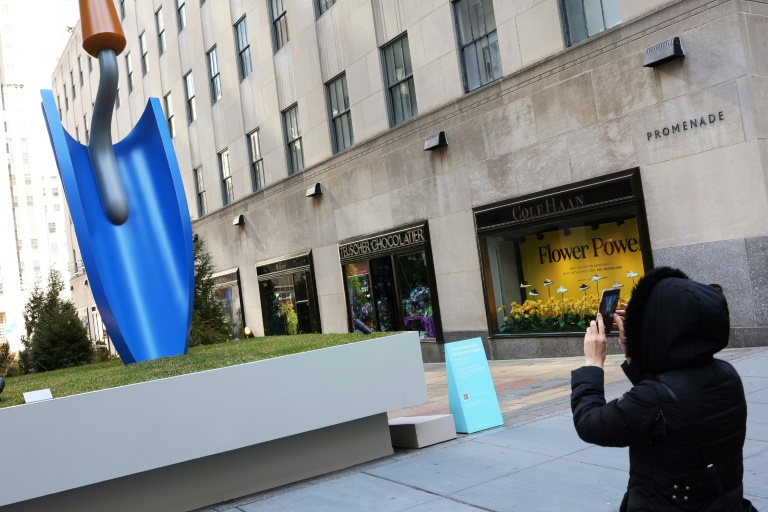
Pop art sculptor Claes Oldenburg dies aged 93

US-based pop art sculptor Claes Oldenburg, known for his giant work depicting everyday objects such as hamburgers, lipstick and electric plugs, has died aged 93.

Oldenburg’s sculpture was critically acclaimed and widely popular over his long career, often striking a lighthearted tone and seen by millions in open-air sites such as public squares.

Oldenburg was born in 1929 in Stockholm and moved to New York in 1956.

The Pace Gallery, which represented him, confirmed his death, hailing him as “one of the most radical artists of the 20th century (for) his inextricable role in the development of pop art.”

It said he had been recovering from a fall and passed away at his home and studio in New York. 

Other monumental objects that Oldenburg sculpted include ice cream cones in New York, a clothespin in Philadelphia that marked the 1976 bicentennial of the US Declaration of Independence, and a cherry balanced on a spoon in Minneapolis.

“My intention is to make an everyday object that eludes definition,” he was quoted as saying in The New York Times.

Close Bitnami banner
Bitnami