US Business

Boeing wins $13.5-bn MAX jets deal as Farnborough opens

US aerospace giant Boeing on Monday fired the first shot in an orders battle with European rival Airbus at Farnborough airshow, clinching a $13.5-billion deal for 100 MAX planes from Delta Airlines in a huge vote of confidence for the crisis-hit jet.

The deal marks a huge turnaround for the MAX jet which had suffered two deadly crashes in 2018 and 2019.

Outgoing British Prime Minister Boris Johnson meanwhile opened the prestigious five-day event as the avation sector plots its recovery from heavy Covid fallout.

US carrier Delta lodged its first ever order for medium-haul MAX aircraft, with options for 30 more of the fuel-efficient planes as it seeks to replace its ageing fleet and cut damaging emissions.

Boeing revealed also that Japanese airline ANA had agreed to purchase 20 of its smaller MAX 8 jets — worth $2.4 billion — plus two 777-8 freight planes.

– ‘More sustainable future’ –

“The Boeing 737-10 will be an important addition to Delta’s fleet as we shape a more sustainable future for air travel, with an elevated customer experience, improved fuel efficiency and best-in-class performance,” said Delta chief executive Ed Bastian.

The news comes as airlines worldwide seek to replace ageing fleets with fuel-efficient planes that emit less carbon dioxide.

The first visitors to Farnborough, southwest of London, were meanwhile hit by scorching temperatures amid Europe’s ongoing heatwave.

Defence aerospace companies are also expected to emerge as big winners, with Russia’s invasion of Ukraine boosting spending on nations’ armed forces.

Russian companies have been banned from Farnborough due to the war.

The event coincides with fast-moving political turmoil in Britain after Johnson’s recent announcement that he is stepping down as Conservative party leader, sparking a fractious contest to replace him also as prime minister.

– ‘Handing over controls’ –

“This government believes in aviation and its power to bring jobs and growth to the entire country,” Johnson said Monday as the event opened. 

“After three years in the cockpit… I am now handing over the controls seamlessly to someone else. I don’t know who,” he added, sparking laughter from delegates.

Johnson also said that the government was “investing massively in defence”.

This year’s event — one of the world’s largest civilian and defence shows — is the first global aviation get-together since the Paris airshow in 2019, before Covid hit.

Farnborough was cancelled in 2020 as the Covid health crisis grounded aircraft and ravaged the sector.

Global air traffic is gradually recovering and in May reached more than two-thirds of its pre-pandemic level, according to the International Air Transport Association.

That recovery has however faced headwinds from rocketing inflation fuelled by historically high energy prices and higher wages, while staff shortages constrain airports and spark flight cancellations.

– Air displays –

Ahead of the event, Britain issued a historic red warning for extreme heat, with southern England temperatures potentially exceeding 40C on Monday or Tuesday for the first time.

It comes as visitors to Farnborough will witness air displays by Britain’s Red Arrows and South Korea’s Black Eagles, as well as from the US-made F-35 stealth fighter.

Airbus and Boeing are showcasing their latest twin-aisle passenger aircraft, the A350-900 and the 777X.
Goldman Sachs profits tumble despite strong trading results

Goldman Sachs reported a 48 percent drop in quarterly earnings Monday after setting aside more funds in case of bad loans, but shares rose as it topped analyst estimates.

The US investment bank became the latest financial heavyweight to suffer a decline in second-quarter results as the weakening macroeconomic environment prompts them to hold funds in case of defaults.

Operations were mixed, but Goldman scored a big jump in revenues tied to trading amid volatile markets.

Profits were $2.8 billion for the second quarter following an eight percent slide in revenues to $11.9 billion.

Goldman established $667 million in provisions, a shift from the year-ago period when earnings were boosted by $92 million in reserve releases.

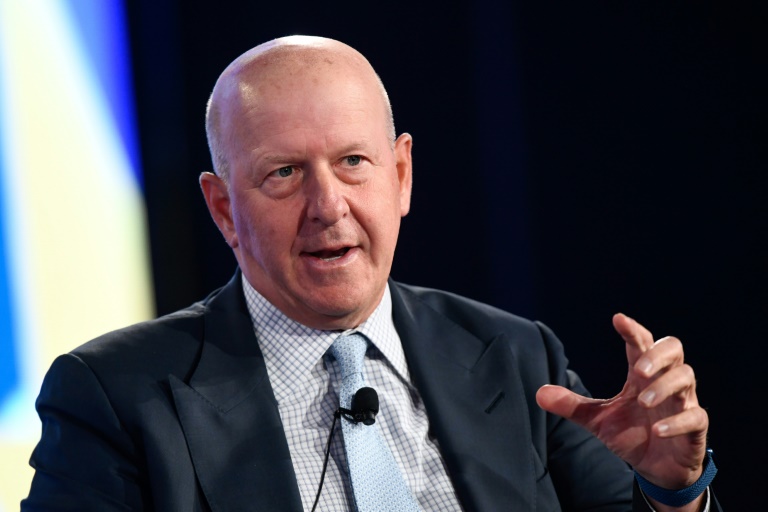
Goldman Chief Executive David Solomon referred in a press release to “increased volatility and uncertainty” in the environment, praising the bank’s performance “in these challenging markets.” 

Other bank executives last week alluded to similar worries amid rising inflation, the war in Ukraine and other factors, but said the US economy still appeared to be on solid footing for now.

In terms of operations, Goldman suffered a drop in revenues connected to mergers and acquisition advising and loan underwriting. 

The bank’s own investments in equities reported a $221 million loss in the period. But Goldman scored an increase in its consumer banking.

Shares rose 3.8 percent to $305.05 in pre-market trading.

Stocks climb, dollar slides as risk appetite returns

Stock markets rallied and the dollar slid against the euro and pound on Monday on returning risk appetite as recession fears eased slightly.

Oil prices jumped almost two percent, even though investors continued to fret over Russia’s war in Ukraine, a Covid spike in China and central banks quickly raising interest rates.

“After a volatile week which ended on a high note, the positive momentum has spilled over across the major global markets,” noted Richard Hunter, head of markets at Interactive Investor.

“Investors will nonetheless remain on high alert this week, as further economic data provides further colour, while the need for caution against a further possible supply shock for oil and the likelihood of an interest rate hike from the ECB (European Central Bank) increases.”

Wall Street raced higher on Friday after June retail sales came in above forecasts and banking giant Citigroup’s April-June results beat expectations.

The positivity extended into Monday, with strong gains for Asian and European stock markets.

While a strong set of economic data has of late boosted bets on the US Federal Reserve lifting borrowing costs more, the latest figures were not seen as being large enough to warrant a sharper rate hike next week — easing recession fears.

Market analysts widely expect the US central bank to announce a 75 basis-point lift, though some have suggested a one percentage-point increase could be on the cards to try and cool decades-high inflation.

– ECB to act –

The ECB is set on Thursday to raise its interest rates for the first time in more than a decade.

To try and counteract a steep rise in prices, the central bank has said it intends to raise borrowing costs by a quarter point, the first such move since 2011. 

The ECB’s delay in acting compared with other central banks that have announced a series of increases — coupled with fears of a eurozone recession — saw the euro fall to parity with the dollar last week.

But on Monday, the European single currency was up 0.7 percent against the dollar, which slumped one percent versus the British pound.

– Key figures at around 1045 GMT –

London – FTSE 100: UP 1.3 percent at 7,250.29 points

Frankfurt – DAX: UP 1.3 percent at 13,034.22

Paris – CAC 40: UP 1.4 percent at 6,119.30

EURO STOXX 50: UP 1.4 percent at 3,525.71

Hong Kong – Hang Seng Index: UP 2.7 percent at 20,846.18 (close)

Shanghai – Composite: UP 1.6 percent at 3,278.10 (close)

Tokyo – Nikkei 225: Closed for a holiday

New York – Dow: UP 2.2 percent at 31,288.26 (close)

Euro/dollar: UP at $1.0159 from $1.0088 on Friday

Pound/dollar: UP at $1.1977 from $1.1865 

Euro/pound: DOWN at 84.81 pence from 85.00 pence

Dollar/yen: DOWN at 138.19 yen from 138.54 yen

Brent North Sea crude: UP 2.3 percent at $103.49 per barrel

West Texas Intermediate: UP 2.0 percent at $99.58 per barrel

China urges banks to support property sector after mortgage boycott

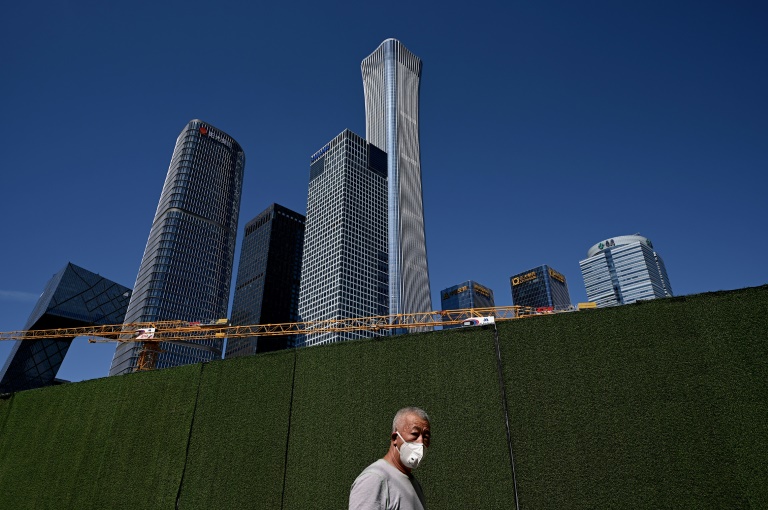
China’s banking regulator has urged lenders to extend more credit to real estate developers, as a growing number of homebuyers withhold mortgage payments on unfinished housing projects across 50 cities.

Furious at postponed deliveries of pre-sold homes, unclear delivery times and halted construction, homebuyers were last week reported to have halted payments for already sold units in at least 100 residential projects, according to data from industry groups and analysts.

The boycott has worsened fears of financial contagion in the country’s troubled real estate sector, which is estimated to account for 18-30 percent of GDP and is a key driver of growth in the world’s second-largest economy.

Analysts have called it a “vicious cycle” that would further dampen consumer confidence, following last week’s dismal Q2 growth figures that were the worst since the pandemic. 

China’s Banking and Regulatory Insurance Commission urged banks to “effectively meet the reasonable financing needs of real estate companies, vigorously support rental housing construction” and support project mergers and acquisitions, a representative said in a state media interview published Sunday.

They were also asked to “do a good job in customer service… abide by contracts, fulfill commitments, and protect the legitimate rights and interests of financial consumers”.

These measures were required to “maintain the stable and orderly operation of the real estate market”, the unnamed official said.

Authorities launched a crackdown on excessive debt in the property sector in 2020, leaving giants like Evergrande and Sunac struggling to make payments and forcing them to renegotiate with creditors as they teetered on the edge of bankruptcy.

– ‘Vicious cycle’ –

“The recent mortgage boycott revealed the spillover in the property sector rout from the bond defaults to unfinished real estate projects,” said Ken Cheung, chief Asian FX strategist at Japanese bank Mizuho. 

“This forms a vicious cycle in the property sector. With falling confidence on the property sector outlook, home buyers delay their purchases and property prices drop.” 

Regulators met banks last week to discuss the growing consumer mortgage boycott, Bloomberg News reported, as more major Chinese developers teeter on the brink of default. 

The developments come at a time of slowing growth for China and weak property sales, adding to the risk to stability ahead of the Communist Party’s 20th Congress in the autumn, when President Xi Jinping is expected to be given a third term.

“Deposits and advance payments for real estate development enterprises fell by 37.9 percent year-on-year in the first half of 2022,” Rajiv Biswas, Asia-Pacific chief economist at S&P Global Market Intelligence, told AFP.

He warned that the weaker property sector outlook would “add to the downside risks facing China’s economy”.

Johannesburg transport project digs into wounds of the past

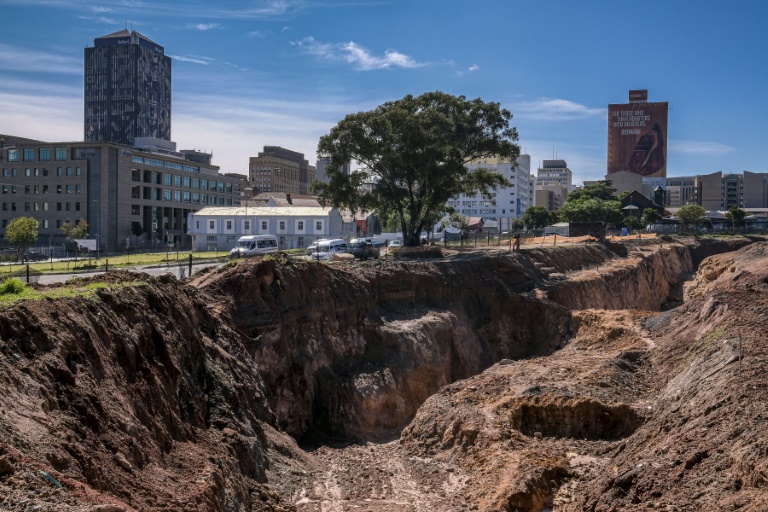
Off Johannesburg’s main highway, surrounded by skyscrapers, heavy machinery has unearthed one of the city’s original wounds — a deep gash left by the 1880s gold rush. 

The entire city centre is built over tunnels dug by generations of miners who extracted gold from the richest deposits the world has ever discovered. 

The city of around six million grew around cavernous pits and mountainous dumps, which eventually became the physical barriers of racial segregation. 

Now the rather poetic challenge of healing wounds both social and geological has fallen to property developers, who are turning this symbol of division into a bus terminal, connecting the city and the region. 

“This is a gateway site,” said Richard Bennett, marketing director for iProp, the company tasked with rehabilitating the site. 

“It will allow the South African populace in Johannesburg and surrounds to gain easy access to public or effective transport.”

– Connections –  

In the 1880s, the mine was one of the first places where prospectors dug with pickaxes, and eventually dynamite, hauling the gold 40 metres (130 feet) back up to the ground. 

After the easiest finds were depleted, this crevice — which looks like a canyon in the middle of the city — was simply filled with sand and used as a parking lot. 

The sand has now been hauled off, readying the pit to be refilled with a cement-like material that is to support the construction of a new, large bus terminal. 

The gold once mined there fuelled both fabulous wealth and deep social divides that persist to this day. 

But the future of the city depends on connecting people with better transport and more walkable streets, said David van Niekerk, CEO of the Johannesburg Inner City Partnership, a group working to revive the city centre after decades of official neglect. 

“Mixing is an important concept for the future of this city, and mixing in the widest possible sense,” van Niekerk said.

“The vision that I certainly have for this city is to turn it into a walkable city,” he added. 

“A city that’s walkable is a city that works for everyone, and I’m talking about from the homeless person to the major international corporate investor, and everyone in between.”

It’s a big challenge in a starkly divided country. 

A World Bank study last year found that the top one percent of South Africans own 55 percent of the nation’s wealth. 

The wealth of the poorest half of the country is actually negative — their debts outweigh their assets. 

The top 0.01 percent, or about 3,500 people, own more than the bottom 90 percent, representing 32 million people.

– Miners’ suffering –

Much of that inequality stems from the early days of mining, which took a tremendous and largely uncounted toll on the mostly black miners, while a few owners — wealthy whites — pocketed most of the profits.   

“Those early mines were done very chaotically and very hastily. There were no proper plans, and a lot of people died… in rockfalls and such,” said author Fred Khumalo. 

His novel “The Longest March” centred on black mine workers in early Johannesburg who lived in compounds where “the conditions were really appalling,” he said. 

“People slept on cement blocks. There were no cushions, no mattress whatsoever. The blankets they provided were flimsy, and Johannesburg winters can be cold. People fell sick, and some of them died from exposure.” 

As the city braced for war between British and white Afrikaners settlers in 1899, the mines shut down and food supplies were cut off, leading to riots. 

– Segregation –

In later decades, black mine workers who built homes nearby were forcibly removed as the gold digging expanded. 

When apartheid fully took hold, blacks were pushed to designated areas to the outskirts of the city with poor access to transport — and needed a “pass book” to access the city at all. 

Almost three decades after the end of white rule, transport links remain patchy and residents of black townships who can afford it drive cars into the city, clogging its roads.

A new transit hub could help ease some of that traffic, as thousands of commuters would replace the migrant workers who once toiled there. 

“In a way, it’s a philosophical level, paying tribute to how those spaces were created in the first place,” Khumalo said. 

“The prosperity of this country owes a lot to what happened back then.”

Panama government and protesters strike deals to clear key highway

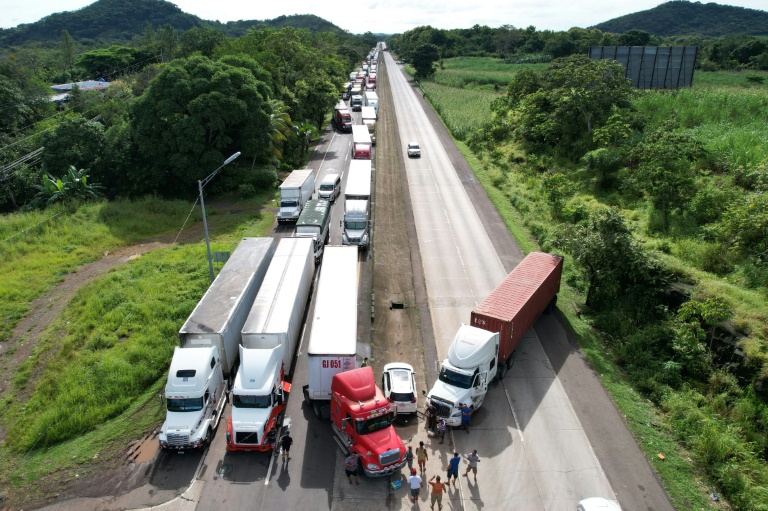
Panama’s government and indigenous leaders reached a second deal Sunday to clear all remaining demonstrators from the Panamerican Highway in exchange for lower fuel prices, ending a two-week blockade that had stymied food deliveries.

The government released footage from the signing of an initial agreement in far-west Chiriqui province, where most of the Central American country’s food is produced, and of a blocked section of the highway being cleared.

Angered by high prices and corruption, protesters had clogged the highway linking Panama to the rest of Central America over the past two weeks. Large trucks and banner-waving demonstrators paralyzed the strategic route, making it hard for the country of 4.4 million to feed itself. 

To avert the crisis, a second deal was signed later Sunday in Santiago de Veragua, a city 250 kilometers (155 miles) northwest of Panama City, the epicenter of the negotiations and a protester stronghold.

“Many Panamanians have suffered from these stoppages,” said Vice-President Jose Gabriel Carrizo after signing the agreement. “This is a huge government effort.”

The deal establishes the fixed price of fuel for 91 and 95 octane gasoline and diesel, and is effective from July 18.

“The traffic of cars and heavy equipment in Veraguas is free,” Eduardo Cortés, who participated in the demonstrations on the highway, told AFP by phone.

The proposal of 3.25 dollars per gallon (3.78 liters), was better than the 3.30 offered in the deal made earlier in the day with the indigenous community of the Ngabe-Bugle Comarca in Chiriqui.

“This has not been easy, we have made progress with (reducing the cost of) the basic food basket,” said Luis Sanchez, a spokesman for the organizations promoting the protests.

In Panama City, a hundred people gathered on the waterfront to demonstrate. They all wore black, in contrast with the white suits worn by lawmakers during official ceremonies.

Food costs are “higher than what is earned. We have a big social problem,” lawyer Jaqueline Hurtado told AFP. “People are fed up and have taken to the streets to demonstrate for things to change.”

Retiree Iliana Arango said: “In my 68 years of life, I am tired of seeing governments that promise, go up, steal, go down, the next one follows and here we are lacking everything, medicine, education, food.”

Year-on-year inflation in Panama of 4.2 percent was recorded in May, along with an unemployment rate of about 10 percent and fuel price hikes of nearly 50 percent since January. 

Despite its dollarized economy and high growth figures, the country has a high rate of social inequality. 

Economic woes have led to a shortage of fuel in some parts of the country, and stalls at food markets in the capital have run out of products to sell. 

US school shooter faces death penalty at sentencing trial

A young man who gunned down 17 people at his former high school in Parkland, Florida goes on trial Monday, with jurors set to hand down either the death penalty or a life sentence.

Nikolas Cruz took an AR-15 assault rifle into Marjory Stoneman Douglas High School on Valentine’s Day in 2018 and killed 17 students and staff members.

Cruz — who was 19 at the time — has already pleaded guilty to 17 counts of first-degree murder and 17 counts of attempted murder for those wounded during the massacre.

The trial is being held to determine his sentence. The death penalty requires a unanimous decision by the jury; Cruz will otherwise be handed life without parole.

The Florida shooting stunned a country accustomed to gun violence and sparked new efforts, led by students from the school itself, to get lawmakers to pass tougher gun control laws.

Parkland survivors founded “March for Our Lives,” organizing a rally that drew hundreds of thousands of people to Washington, DC in 2018.

Thousands turned out for demonstrations organized by the group last month following two other mass shootings: one at a Texas elementary school that killed 19 young children and two teachers, and another at a New York supermarket that left 10 Black people dead.

Those shootings helped galvanize support for the first significant federal bill on gun safety in decades.

– More than 24,000 dead –

President Joe Biden signed the bill into law in late June. It  included enhanced background checks for younger buyers and federal cash for states introducing “red flag” laws that allow courts to temporarily remove weapons from people who are considered a threat.

Cruz bought the weapon he used in the 2018 attack legally, despite having a documented history of mental health problems.

Expelled from school for disciplinary reasons, Cruz was known to be fixated on firearms — and had reportedly been identified as a potential threat to his classmates.

On the day of the attack Cruz arrived at the school in an Uber, began shooting indiscriminately at students and staff, and fled nine minutes later, leaving behind a scene of carnage.

He was arrested nearby shortly afterward.

Footage recovered from his phone showed he had filmed his plans to attack his former school, saying his goal was to kill “at least 20 people.”

Cruz told a detective after his arrest that he heard demons ordering him to “buy weapons, kill animals and destroy everything.”

According to the Gun Violence Archive website, more than 24,000 people have been killed by firearms in the United States so far this year, including more than 13,000 who died by suicide.

Sudan's gold rush wreaks havoc on health

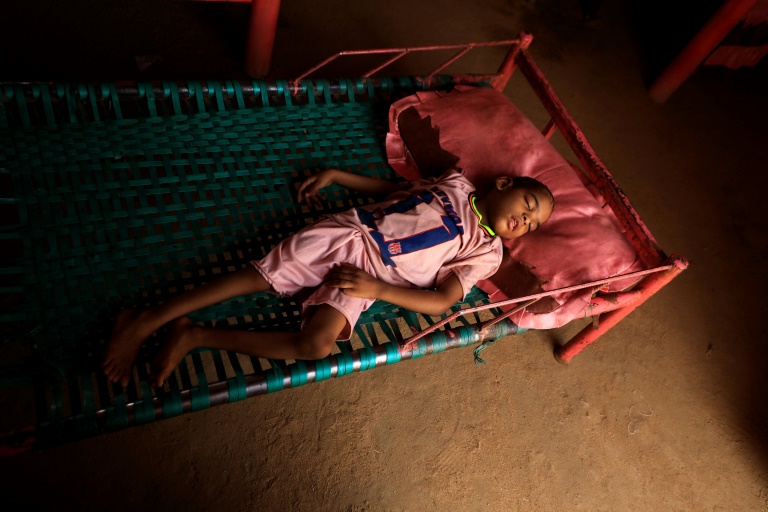
Sudanese mother Awadya Ahmed has long wondered why her youngest child Talab was born blind and unable to walk; now she suspects the piles of poisonous waste left by gold miners.

In recent years, a growing number of traditional miners have flocked to her village hoping to strike it rich.

But they leave behind hazardous white-powdered waste laden with toxic chemicals including mercury used in the gold extraction process.

The waste is dumped near farmland, water sources and residential areas.

“His four brothers were born in good health, but Talab is the only one born after mining residues spread,” Ahmed, 45, told AFP at her home in Banat village, in River Nile state north of Khartoum. 

The four-year-old lay beside her, unable to move.

Artisanal gold mining is widespread across much of Sudan, employing more than two million people and producing about 80 percent of the gold extracted nationwide, according to experts.

Sudan is one of the world’s poorest countries, and mining remains a source of fast profits attracting many.

The industry has flourished since oil-rich South Sudan broke away in 2011 during the rule of now-ousted president Omar al-Bashir, a period marked by economic hardship, government mismanagement, corruption and international sanctions.

– ‘Harmful to health’ –

But chemical contamination from artisanal gold extraction poses clear health dangers.

Mercury damages the nervous, digestive and immune systems and can be fatal. It also threatens the development of children in the womb and early in life, according to the World Health Organization.

Ahmed is not the only one of Banat’s 8,000 residents to have observed birth defects and miscarriages.

In a nearby house, Awad Ali says his daughter was “a very normal child,” until she turned two. “Then she became unable to move or walk, stand up or sit down,” he said.

Community leader Algaily Abdelaziz said the problems began five years ago.

“Since we saw these waste deposits appear, children have been born with deformities, and there have been still-births,” Abdelaziz said, noting 22 children had been born in the village with deformities including blindness and brain damage.

Saleh Ali Saleh, from Khartoum’s Neelain University’s Faculty of Petroleum and Minerals, notes that it is well known “that mercury is harmful to health”.

A January report by Saleh and other Sudanese researchers found that around 450,000 tonnes of mining waste — rife with mercury — dot the lush green landscape of River Nile state.

Samples of blood, urine, drinking water and soil from several parts of the state have shown high levels of mercury traces, according to the report.

“People, frankly, are not concerned with removing the waste,” said Ali Mohammed Ali, head of the Sudanese Environment Conservation Society. 

The process “requires special treatment” and is “ideally carried out away from residential areas or water sources,” he added.

Such safety measures are far from the minds of miners.

Around 50 kilometres (30 miles) from Banat, Mohammed Issa mixed mercury with sand in a large metal bowl with his bare hands, hoping to separate gold from other minerals.

“That’s how people do it here,” the 25-year-old said.

Issa said he abandoned a meagre life of farming and herding in North Kordofan state to search for the precious metal.

– Years to fix –

In 2019, Sudan’s now-deposed transitional government issued a decree banning the use of mercury and cyanide after protests against their use at gold mines.

The decision has rarely been enforced and miners continue to use the chemicals in more secluded outlying areas, Saleh said.

Political and economic turmoil in Sudan has piled pressure on households already struggling to make ends meet.

The country’s economic crisis worsened after an October military coup led by army chief Abdel Fattah al-Burhan. 

The coup triggered cuts to crucial international aid and fed into spiralling prices of basic commodities.

Sudan is one of Africa’s top gold producers, generating 30.3 tonnes of gold in the first half of 2021 alone, according to official figures — which do not include the artisanal output.

The Central Bank puts Sudan’s gold revenues in the first quarter of this year at $720 million, reflecting the official output.

The state-run company supervising mining activities declined multiple requests for comment by AFP.

The lucrative business has long been controlled by shadowy companies with links to the security services which flourished under Bashir.

Saleh warns there will be no quick fix.

“The damage already done to the environment cannot be treated easily,” said Saleh.

“If we managed to stop today, it will still take us years and years to contain the impact of artisanal mining.”

For little Talab, it is already too late.

China urges banks to support property sector after mortgage boycott

China’s banking regulator has urged lenders to extend more credit to real estate developers, as a growing number of homebuyers withhold mortgage payments on unfinished housing projects across 50 cities.

Furious at postponed deliveries of pre-sold homes, unclear delivery times and halted construction, homebuyers were last week reported to have halted payments for already sold units in at least 100 residential projects, according to data from industry groups and analysts.

The boycott has worsened fears of financial contagion in the country’s troubled real estate sector, which is estimated to account for 18-30 percent of GDP and is a key driver of growth in the world’s second-largest economy.

China’s Banking and Regulatory Insurance Commission urged banks to “effectively meet the reasonable financing needs of real estate companies, vigorously support rental housing construction” and support project mergers and acquisitions, a representative said in a state media interview published Sunday.

They were also asked to “do a good job in customer service … abide by contracts, fulfill commitments, and protect the legitimate rights and interests of financial consumers”.

These measures were required to “maintain the stable and orderly operation of the real estate market”, the unnamed official said.

Authorities launched a crackdown on excessive debt in the property sector in 2020, leaving giants like Evergrande and Sunac struggling to make payments and forcing them to renegotiate with creditors as they teetered on the edge of bankruptcy.

Regulators met banks last week to discuss the growing consumer mortgage boycott, Bloomberg News reported, as more major Chinese developers teeter on the brink of default. 

The developments come at a time of slowing growth for China and weak property sales, adding to the risk to stability ahead of the Communist Party’s 20th Congress in the autumn, when President Xi Jinping is expected to be given a third term.

Farnborough airshow opens amid heatwave

Global aviation’s Farnborough airshow opens Monday amid a sweltering heatwave, with the sector aided by a modest recovery in air traffic and with Ukraine boosting defence budgets.

Tens of thousands of visitors will flock to the five-day show, held southwest of London, as weather forecasters warn of scorching record temperatures in England.

“It’s going to be the hottest Farnborough ever, so if you are going there, take plenty of water, take a hat — and don’t be surprised if you see either very sweaty people or people in shorts,” said analyst Richard Evans at air transport data specialist Ascend by Cirium.

Britain’s Met Office has issued a historic red warning for extreme heat, with southern England temperatures potentially exceeding 40C on Monday or Tuesday for the first time.

Organisers insist the show must go on “as planned” and will provide water refill points, shaded areas and air conditioning throughout exhibition halls.

This year’s event, one of the largest civilian and defence shows, is the first global aviation get-together since the Covid pandemic hit.

“This is the first major global airshow for three years since Paris 2019,” Farnborough chief executive Gareth Rogers told AFP.

The biennial Farnborough show was cancelled in 2020 as the Covid health crisis grounded aircraft and ravaged the sector.

Global air traffic is gradually recovering and in May reached more than two-thirds of its pre-pandemic level, according to estimates from the International Air Transport Association (IATA).

That recovery has however faced headwinds from rocketing inflation fuelled by historically high energy prices and higher wages, while staff shortages constrain airports and spark flight cancellations.

At Farnborough, US titan Boeing and its European arch-rival Airbus will battle for supremacy as they declare their latest multi-billion-dollar jet orders.

The show will this year zero in also on green themes of decarbonisation and sustainability, as many carriers seek to replace ageing fleets with modern fuel-efficient aircraft that emit less carbon dioxide.

Farnborough visitors will be thrilled by air displays by Britain’s Red Arrows and South Korea’s Black Eagles, as well as the US-made F-35 stealth fighter.

Airbus and Boeing will also showcase their latest twin-aisle passenger aircraft, the A350-900 and the 777X.
Meanwhile, Russia’s war on Ukraine has sparked an upsurge in defence spending as nations seek to bolster armed forces.

“Anecdotally we are certainly seeing a greater interest in the defence element of the show,” said Rogers.

Defence agreements are however not announced at Farnborough, unlike commercial civil aviation deals.

Close Bitnami banner
Bitnami