US Business

China banks vow to repay more customers after protests

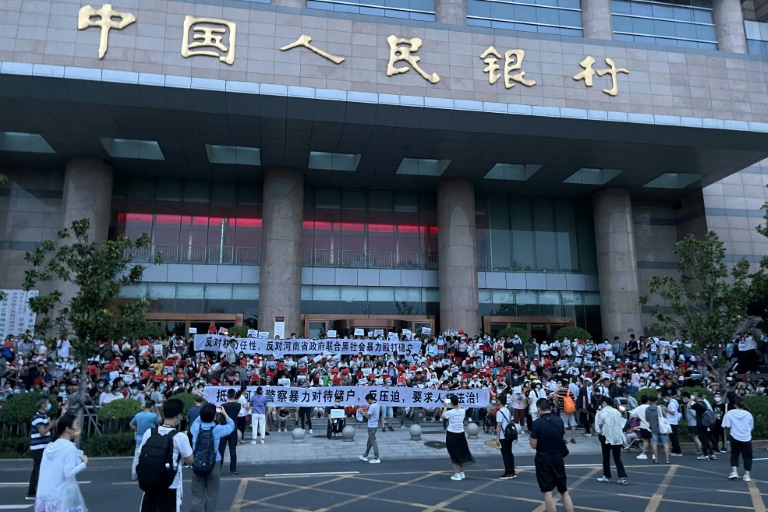
Chinese regulators have promised to repay more victims of one of the country’s biggest-ever banking scandals, after hundreds of thousands of customers were left without access to funds, triggering rare mass protests.

China’s rural banking sector has been hit hard by Beijing’s efforts to rein in a property bubble and spiralling debt, in a financial crackdown that rattled the world’s second-largest economy.

Four banks in Henan province froze cash withdrawals in mid-April as regulators scrutinised alleged mismanagement, leaving billions of yuan in savings locked up and sparking sporadic demonstrations. 

Authorities later named those firms and another rural bank in nearby Anhui province as involved in a scheme to defraud investors — and promised victims would start to get their money back. 

“Henan New Fortune Group manipulated five village banks in Henan and Anhui to illegally absorb and occupy public funds … and covered up illegal activities,” an unnamed China Banking and Insurance Regulatory Commission representative told state media Sunday, citing a three-month initial police investigation. 

“The next stage will be to begin advance payment work for customers with over 50,000 yuan (deposited).” 

The Henan banking scandal has dealt an unprecedented blow to public confidence in China’s financial system owing to the size and scale of the fraud, analysts say, with the banks involved allegedly operating illegally for more than a decade,

Chinese authorities are desperate to avoid disruptions to social stability just months away from a major congress of the ruling Communist Party. 

A July 10 mass demonstration in Henan’s provincial capital Zhengzhou was violently quashed, with demonstrators forced onto buses by police and beaten, according to eyewitness accounts given to AFP and verified photos on social media.

Shortly afterwards, Henan’s provincial banking regulator said customers with deposits of less than 50,000 yuan ($7,500) would be repaid starting Friday.

But in one WeChat group containing hundreds of depositors, only a handful reported successfully receiving their funds back, according to messages seen by AFP.

A few customers reported receiving their deposits Friday, while others complained that the designated mobile app had bugs and would not let them register, according to local media.

The funds being repaid came from some of the seized assets of Henan New Fortune Group, the company accused by police of manipulating the banks, state broadcaster CCTV reported last week.

Regulators have said depositors will be paid in batches, but did not announce a specific timeframe for the repayment of accounts with more than 50,000 yuan in funds. 

Asian markets track Wall St higher on easing recession fears

Stocks rose in Asia on Monday following a rally on Wall Street in response to data indicating US consumers remained resilient to surging inflation and higher interest rates, easing concerns about a possible recession.

Speculation that Saudi Arabia will lift oil production after Joe Biden’s visit last week also provided some relief as crude prices — a key driver of inflation in recent months — dropped.

Still, investors continue to fret over the economic outlook with Russia’s war in Ukraine showing no sign of ending, China locks down cities to fight a new Covid flare-up and central banks quickly tighten monetary policy.

All three main indexes in New York raced higher on Friday after June retail sales came in above forecasts and banking giant Citigroup’s April-June results beat expectations.

While a strong set of economic data has of late boosted bets on the Federal Reserve lifting borrowing costs more, the latest figures were not seen as being big enough to warrant a sharper rate hike next week.

Market analysts widely expect the bank to announce a 75 basis point lift, though some have suggested a one percentage point increase could be on the cards. 

Policymakers have made it clear their main goal is bringing inflation down from a four decade high, even if that stunts growth or even causes a recession.

“Overall the robust US data… eased concerns about an imminent recession but is also unlikely to mount an additional case for a 100 basis point Fed hike,” said SPI Asset Management’s Stephen Innes.

“And it was about as goldilocks of a mix of headline data risk as one could have expected given the Fed’s dilemma of balancing inflation versus growth.”

In early trade, Hong Kong, Shanghai, Sydney, Seoul, Singapore, Taipei, Jakarta and Wellington were all up. Tokyo was closed for a holiday.

However, uncertainty remains rife on trading floors, with a new spike in Covid cases in China causing concern that officials will impose fresh lockdowns in major cities including Shanghai and Beijing. 

A two-month shutdown in Shanghai earlier this year hammered the world’s number two economy and severely hit global supply chains.

Lanzhou, the capital of northwestern Gansu province, has ordered its 4.4 million residents to stay home, while a county in Anhui province went into lockdown from Friday.

Beihai in the southern Guangxi region on Saturday also announced lockdowns in parts of two districts that are home to more than 800,000 people.

The expected blow to demand from the world’s top crude importer has weighed on prices of the commodity, with both main contracts giving up most of the gains seen after Russia’s invasion of Ukraine.

Adding to downward pressure on oil is speculation Saudi Arabia will lift production after Biden’s visit, during which he called on the kingdom to help ease the price pressure that has sent inflation rocketing.

SPI’s Innes added that with a deal between OPEC and other major producers ending soon, output could see a big rise.

“As long as the agreement is in effect, Saudi Arabia has made it transparent that individual producers with spare capacity should not exceed their quota to offset underproduction elsewhere within the group.

“From October, however, this changes.”

Meanwhile, Libya is set to see a boost to output as months of outages come to an end, while the lifting of US sanctions on Venezuela could lead to a return of capacity from the South American country.

– Key figures at around 0230 GMT –

Hong Kong – Hang Seng Index: UP 0.8 percent at 20,455.99 

Shanghai – Composite: UP 0.5 percent at 3,245.53

Tokyo – Nikkei 225: Closed for a holiday

Euro/dollar: UP at $1.0107 from $1.0088 Friday

Pound/dollar: UP at $1.1898 from $1.1865 

Euro/pound: DOWN at 84.96 pence from 85.00 pence

Dollar/yen: DOWN at 138.13 yen from 138.54 yen

West Texas Intermediate: DOWN 0.8 percent at $96.81 per barrel

Brent North Sea crude: DOWN 0.3 percent at $100.89 per barrel

New York – Dow: UP 2.2 percent at 31,288.26 (close)

London – FTSE 100: UP 1.7 percent at 7,159.01 (close)

Oil dispute sharpens Baghdad-Kurd tensions amid deadlock

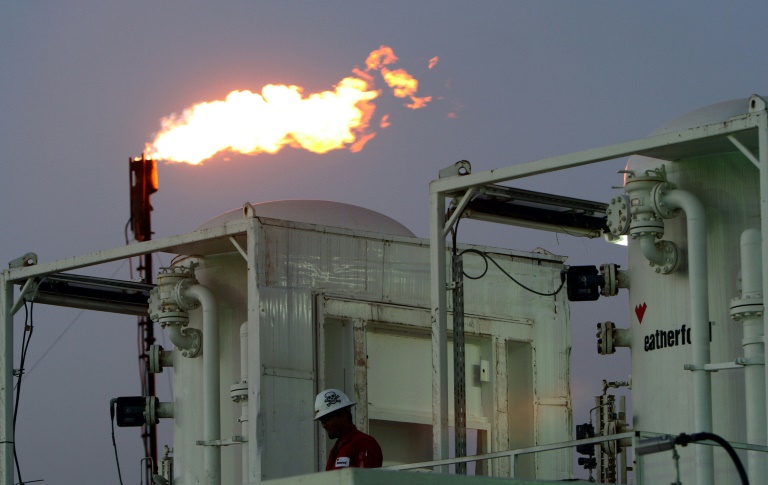
Iraq’s oil wealth is rekindling tensions between federal authorities and the autonomous Kurdish region, in a row that could compromise the lifeline industry and keep investors away, analysts say.

The long-simmering dispute came to a head in February — at a time of political deadlock in Baghdad — when the federal supreme court ordered Kurdistan to hand over oil extracted from its territories to the federal authorities.

Then earlier this month, a commercial court in the Iraqi capital annulled contracts between the Kurds and foreign firms, after the oil ministry in Baghdad filed a judicial complaint.

Authorities in the Kurdistan capital Arbil have cried foul, accusing Baghdad of heaping “unjust pressure” on them and announcing their own legal action.

Iraq, the second largest producer in the Organization of the Petroleum Exporting Countries, sits on enormous oil reserves, and revenues from the sector feed 90 percent of the federal government budget.

It exports an average of 3.3 million barrels of crude oil per day (bpd), while production in Kurdistan amounts to just over 450,000 bpd.

The February ruling stated that a 2007 law adopted by Arbil to regulate oil and gas was unconstitutional.

But analysts say politics play a major role in the dispute in Iraq, whose political barons have failed to reach agreement on choosing a president and a prime minister since October legislative elections.

“When it comes to oil, each side uses their respective powers as carrots and sticks depending on the political atmosphere of the day,” said Bilal Wahab of The Washington Institute for Near East Policy.

“At times when there was political accord, the courts were rather quiet. When there was political discord, however, the reverse was true,” he told AFP.

– ‘Reputation being damaged’ – 

The nullification of oil contracts between the Kurds and four international oil companies (IOCs) from Canada, Britain, Norway and the United States at the start of July has inflamed the row.

“For Baghdad to be chasing IOCs out of Iraqi Kurdistan does not serve to show Iraq as a major producer welcoming of foreign investment,” cautioned Yesar al-Maleki, an analyst at the Middle East Economic Survey.

In a fightback, the Kurdish regional authorities in June initiated judicial proceedings against the federal government.

One lawsuit targets Oil Minister Ihsan Ismail, accused by the Kurds of trying to “intimidate” foreign firms operating in the Kurdistan region of northern Iraq.

The Kurdish autonomous government has accused Baghdad of taking “illegal” and “politically motivated” actions.

For Wahab, Kurdish and federal government officials fail to appreciate “how much they are damaging the overall reputation of Iraq’s energy industry”.

“Questioning the sanctity of contracts … adds legal risk to a slew of other regulatory and governance risks that ail the Iraqi energy industry,” he added.

The dispute, he said, “repels much-needed foreign investment”.

Oil revenues are critical for Iraq, a country faced with widespread corruption but also mired in a financial crisis and in need of funds to rebuild infrastructure after decades of conflict.

– ‘Compromise’? –

Despite the legal actions, Kurdistan says it is open to a negotiated solution.

It is working on setting up two companies specialised in oil exploration and marketing that would coordinate with Baghdad, a spokesperson for the Arbil government said.

Baghdad’s oil ministry, meanwhile, marked a small victory after oil giants Baker Hughes, Halliburton and Schlumberger committed not to initiate new projects in Kurdistan.

The ministry says the companies are also working to “liquidate and close” existing contracts.

Baghdad has fought to regain control of output from lucrative oil fields in Kurdistan since the autonomous region began marketing oil independently more than a decade ago.

But under a current deal, the Kurdish region delivers 250,000 barrels per day to Baghdad, in return for a share of federal funds to pay the salaries of Kurdish civil servants.

In recent weeks, tensions have risen further after a series of unclaimed rocket attacks targeting oil and gas installations in Kurdistan.

Experts say the assaults aim to put pressure on the Kurdistan Democratic Party (KDP), the largest in Kurdistan. 

The KDP is allied to Shiite leader Moqtada Sadr, whose bloc won 73 seats in the October polls, making it the largest faction in the 329-seat parliament.

The party is eyeing the Iraqi presidency for one of its members, although traditionally the job has been held by a member of the rival Patriotic Union of Kurdistan.

“The timeline of events evidently shows that this whole crisis started because the KDP took the side of the Sadrist movement… opposing the Iran-backed Shiite Coordination Framework,” Maleki said.

He expects a “compromise” will be reached to resolve the oil dispute because “Iraq is a country of compromise”.

“Until then, the supreme court ruling will hang like the sword of Damocles over the Kurdish regional government,” he said.

US doctors embroiled in sudden legal uncertainty over abortions

Days after the US state of Ohio banned abortions once a fetal heartbeat is detected, doctor Mae Winchester had a patient who needed to terminate her pregnancy to save her life. 

Her patient, who was 19 weeks pregnant, asked if “legally she was going to be OK and if legally I was going to be OK,” Winchester told AFP.

It wouldn’t have been a question when the nationwide right to abortion was still protected under the US constitution.

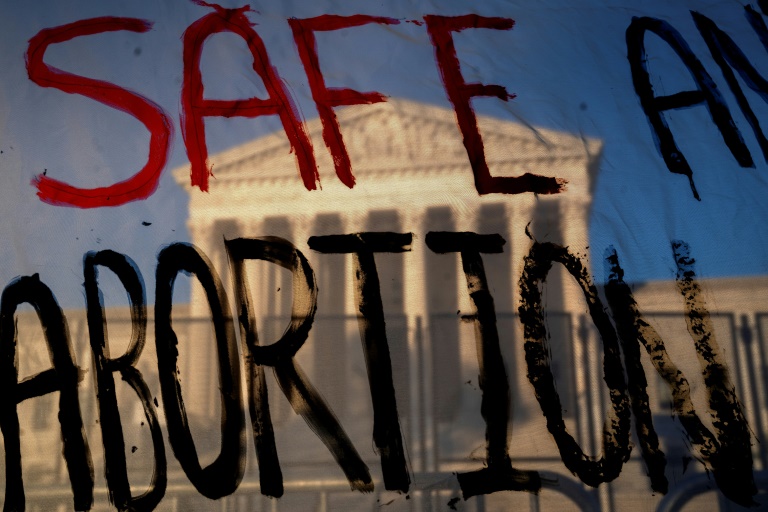
But the Supreme Court overturned the 1973 Roe v. Wade ruling on June 24 — and some states, including Ohio, moved quickly to restrict the procedure, sometimes only with exceptions for medical necessity.

Doctors across the country were thrust into an ambiguous legal landscape that they say threatens both their ability to do their jobs and their patients’ health. 

While her patient had a clear medical emergency, with the rug pulled out from under the nearly 50-year-old right, that night Winchester made a call to the hospital’s lawyers.

“I know what I need to do medically. But from a legal standpoint, how do I protect her? How do I protect myself? How do I protect our institution? Our nurses and anesthesiologist that are going to be involved with this case? It affects everybody,” she said.

Such concerns echoed by doctors from varying specialities caught in the crosshairs of new laws, as well as health care lawyers working to help providers navigate the shifting ground.

“It’s a bizarre situation where doctors have to be nervous even when they’re providing legitimate care for potentially life-threatening conditions,” said Harry Nelson, managing partner at health care law firm Nelson Hardiman, which advises physicians.

– Lose license? Face jail? –

The penalties in new legislation can be severe and not limited to losing one’s medical license, but also possible felony charges, years in jail and thousands of dollars in fines.

Even the threat of litigation will take a toll, said Nelson, noting that few organisations and individuals can withstand the financial, logistical and mental cost “without a significant level of stress.”

Some authorities in states with tight abortion restrictions have said the concern is misplaced because of laws’ exceptions for medical endangerment, with anti-abortion advocates accusing opponents of “fear mongering.”

But the risk is taken seriously by the Department of Health and Human Services.

It has said the Emergency Medical Treatment and Labor Act (EMTALA) supersedes state abortion laws if the procedure is needed to stabilize a pregnant patient — a move praised by abortion rights supporters, who have pressured President Joe Biden’s administration to preserve access to the procedure.

But the guidance has come under fire, with Texas Attorney General Ken Paxton suing the administration, saying it “seeks to transform every emergency room in the country into a walk-in abortion clinic.”

It’s unclear how zealous prosecutors will be, and a group of some 90 elected prosecutors from across the country as of July 14 have already said they will not pursue abortion cases.

But in Indiana, where abortion is still legal up to 22 weeks and the Republican-dominated legislature is considering tighter abortion restrictions, a doctor has already been threatened with investigation over performing the procedure for a 10-year-old rape victim who had to cross from neighboring Ohio.

The obstetrician-gynecologist (OB-GYN) was accused of not reporting the case, as state law requires in case of sex crimes involving minors — an accusation has been disproved.

Nelson and other lawyers said much of the rhetoric amounts to “scare tactics” and political capitalization to garner support around one of the most hot-button issues in the country.

But he underscored that in states like Texas, Idaho and Oklahoma, which allow for civil lawsuits against anyone who knowingly “aids or abets” an abortion, there is real risk from “single issue agitated people who are… looking to make examples.”

– ‘Rock and a hard place’ –

It’s not only OB-GYNs who may be caught in the net, with doctors voicing fear over the impact on care for pregnant patients with diseases such as cancer, the treatment for which could harm a pregnancy.

Health care providers in states where abortion access is still available also are seeking advice, Nelson said, as anti-abortion leaders eye cross-border care as their next battleground.

“Because every situation is so different it’s really hard for us to write guidelines, and everybody is asking for guidelines,” said Wisconsin-based OB-GYN Kristin Lyerly, a legislative chair for the American College of Obstetricians and Gynaecologists (ACOG).

ACOG has joined some 75 other health care organizations in condemning legislative interference in the patient-doctor relationship after the Supreme Court ruling.

“Pregnancy management is complicated but doctors have to do it, not politicians,” Lyerly told AFP.

Since Roe v Wade was overturned she’s heard from colleagues feeling “stuck between a rock and hard place.” 

“What are you supposed to do? Commit malpractice or go to jail for being a criminal for performing an abortion?”

'Water police' patrol drought-hit Los Angeles streets

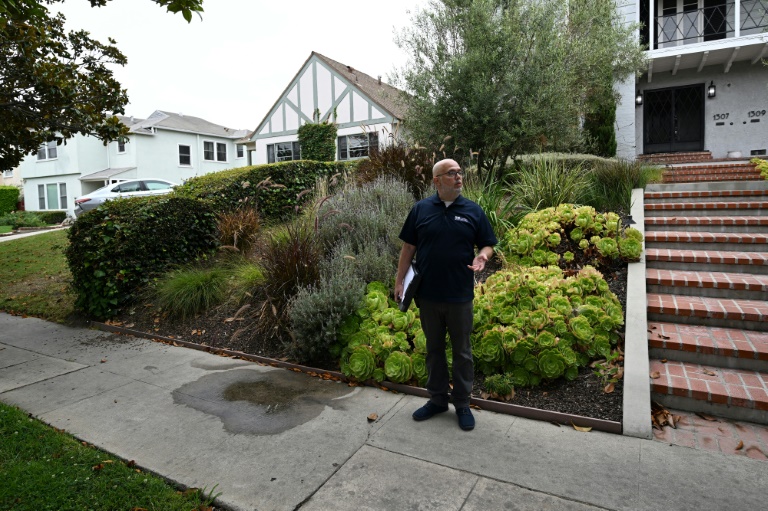
Damon Ayala patrols the streets of drought-stricken Los Angeles every day, inspecting the sidewalks. Each time he sees a puddle, he stops.

He is part of the city’s Department of Water and Power team, which looks into hundreds of community complaints filed by neighbors each week about water waste.

“It’s not extreme, but it’s something that we want them to take a look at,” he says of one pool of water.

“Looks like they have drip irrigation on this side. So there might be just a broken connector.”

Ayala’s patrol comes as California and the western United States are in the grip of a severe, years-long drought.

Scientists say global warming driven by human activity, including the unchecked burning of fossil fuels, is creating a greater number of extreme events.

With reservoirs and rivers at historic lows, Los Angeles authorities have brought in water restrictions, such as limiting lawn irrigation to as little as eight minutes, twice per week.

Ayala notes down the addresses of properties where he finds evidence of infringement. The first violation prompts a warning.

“A lot of times they don’t know about the ordinance, and that’s our job to educate them,” he said.

Repeat offenders are fined between $200 and $600.

“We’re not looking really for their money — that doesn’t get us more water. We’re trying to get behavioral change,” he said.

“So that way we can capture the water savings from making those changes.”

After a fifth infraction, a device is installed which physically restricts a household’s supply, although Ayala says that step has rarely been necessary.

“We’ve been in serious drought situations in the past in the city of Los Angeles, and its citizens responded,” he said.

“And we expect them to respond this time around too.”

– ‘Obvious choice’ –

The water department says it is beginning to see results.

Officials noted a reduction in residential water demand in June, compared to the same month last year.

But as the drought worsens, more permanent changes to the city’s landscape could become necessary.

Famous for its rows of palm trees, Los Angeles has also traditionally been known for its lush, green lawns, maintained with automatic sprinklers.

Residents are increasingly replacing their thirsty lawns with plants native to this desert region.

“When we think of how much water gets used in a residential setting, over 50 per cent is actually used outdoors,” said Pamela Berstler, executive director of urban landscaping firm G3 Garden Group.

She and her colleague Marianne Simon teach classes as part of a city program to encourage Angelenos to trade in their lawns for alternatives.

South Los Angeles residents Gabriel Golden and Danielle Koplinkase, joined the program a few years ago.

“The environmental impact of watering a lawn, not only in the midst of a draught but also living in a very dry climate, made this an obvious choice,” they said.

“We also sought to inspire our neighbors and community by going to a drought tolerant and native garden.”

Native plants such as California oak, and flowers that only require a few drops of water each week to thrive, now adorn the couple’s garden.

“There are parts of southern California where they have cut the water down to one day of watering per week,” said Simon.

“And the reality is that these kinds of gardens would be fine on that amount of water — in fact, could do with less — but our traditional lawns can’t survive on that.”

– ‘Short-sighted’ –

Other popular alternatives include artificial lawns or gravel, although Simon stresses the environmental benefits of maintaining some form of vegetation.

“The problem is that we are so short-sighted and so narrow in our vision that all we can see is saving the water,” she said.

A planted area can be cooler by “easily 20 degrees” Fahrenheit (10 degrees Celsius) than a gravel replacement, and “there’s the ability to hold on to rain when we do get it so that we can replenish aquifers.”

As she speaks, a nearby sprinkler turns on under the blazing California sun, spraying a lawn during prohibited hours.

With the thermometer hovering around 97 degrees F, water falling on the wilted, uneven grass and trickling down the sidewalk evaporates within minutes.

“It’s heartbreaking to see, but it’s also a lesson,” she said, pointing to the withered garden.

“That should be our past and this should be our future,” Simon added, looking back at the native plants.

Report finds 'lackadaisical' police response to Texas school shooting

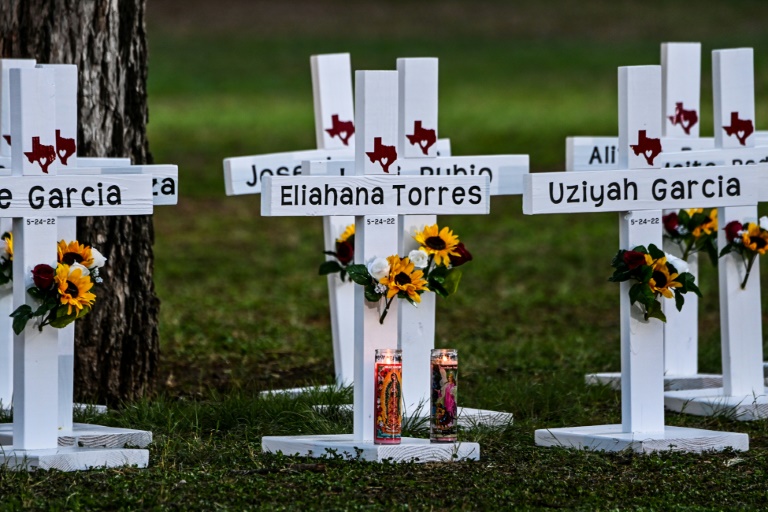
Texas state lawmakers on Sunday slammed law enforcement’s slow response to the shooting in Uvalde, where a gunman killed 19 children and two teachers, saying more decisive action could have saved lives.

A total of 376 officers — border guards, state police, city police, local sheriff departments and elite forces — responded to the May 24 massacre at Robb Elementary School, members of the southern US state’s House of Representatives said in a preliminary report.

But, the lawmakers charged, the situation was “chaotic” due to the officers’ “lackadaisical approach” to subduing the gunman.

Seventy-three minutes elapsed between the first officers’ arrival and the shooter’s death, an “unacceptably long period of time.”

“The void of leadership could have contributed to the loss of life,” the report said.

While the report acknowledged it was likely that most of the victims died immediately after the first shots were fired, some died while being transferred to the hospital. 

“It is plausible that some victims could have survived if they had not had to wait 73 additional minutes for rescue,” the report said.

According to the text, which does not incriminate certain police teams over others, law enforcement officers “failed to adhere to their active shooter training, and they failed to prioritize saving the lives of innocent victims over their own safety.”

Steve McCraw, Texas’s public safety chief, has previously described the police response to the attack as an “abject failure,” focusing most of his criticism on Uvalde school district police chief Pete Arredondo.

Arredondo, who has been suspended pending the investigation result, “did not assume his preassigned responsibility of incident command” and made analytical errors because he did not have all the necessary information, the Texas lawmakers said.

But no other officers offered to help or replace him, the report said. “There was an overall lackadaisical approach by law enforcement at the scene.”

“The scene was chaotic, without any person obviously in charge or directing the law enforcement response.”

The lawmakers presented their findings to the victims’ relatives, who have for weeks denounced a lack of transparency from authorities regarding the shooting and accused them of seeking to cover up police failures in the case.

After the report was published, local media reported that Uvalde police lieutenant Mariano Pargas had been suspended while the city investigated his role in the shooting response.

Pargas was acting city police chief the day of the attack.

Public criticism of Texas authorities surged last week after the release of surveillance camera video obtained by local media.

The footage shows the shooter arriving at Robb Elementary school with a semi-automatic rifle and the officers’ long wait in the hallway before finally breaching the classroom where the gunman was holed up.

Protesters in Panama leave part of key highway

Panama’s government and indigenous leaders reached a deal Sunday to clear demonstrators from part of the Panamerican Highway in exchange for lower fuel prices, but other stretches of the strategic route remained blocked by protesters demanding more concessions.

The government released footage of the agreement being signed in a church in far west Chiriqui province, where most of the Central American country’s food is produced, and of a blocked section of the highway being cleared.

Two weeks of revolt in Chiriqui and elsewhere in Panama over high prices and corruption have made it hard to feed the country.

Despite this deal, most of Panama’s part of the Panamerican Highway, which links the country of 4.4 million people to the rest of Central America, remained clogged with large trucks and banner-waving demonstrators on Sunday.

“The Panamanian people deserve respect, this is a mockery,” said Luis Sanchez, a spokesman for the organizations promoting the protests.

In Panama City, a hundred people gathered on the waterfront to demonstrate. They all wore black, in contrast with the white suits worn by lawmakers during official ceremonies.

Food costs are “higher than what is earned. We have a big social problem,” lawyer Jaqueline Hurtado told AFP. “People are fed up and have taken to the streets to demonstrate for things to change.”

Retiree Iliana Arango said: “In my 68 years of life, I am tired of seeing governments that promise, go up, steal, go down, the next one follows and here we are lacking everything, medicine, education, food.”

Delegations from the government and demonstrators met again in a school in the town of Santiago de Veraguas, 250 kilometers (155 miles) southwest of Panama City.

“We ask all sides that today we be able to reach an agreement and above all clear the roads,” government ombudsman Eduardo Leblanc said at the talks.

A deal was reached Saturday to lower the price of gasoline, but the demonstrators are holding out for cuts in the prices of some 40 consumer products and medicines.

“We are keeping up the fight,” protesting farmer Juan Morales said in Capira, near Panama City.

Year-on-year inflation in Panama of 4.2 percent was recorded in May, along with an unemployment rate of about 10 percent and fuel price hikes of nearly 50 percent since January. 

Despite its dollarized economy and high growth figures, the country has a high rate of social inequality. 

Economic woes have led to a shortage of fuel in some parts of the country, and stalls at food markets in the capital have run out of products to sell. 

Long lines in New York for monkeypox vaccine

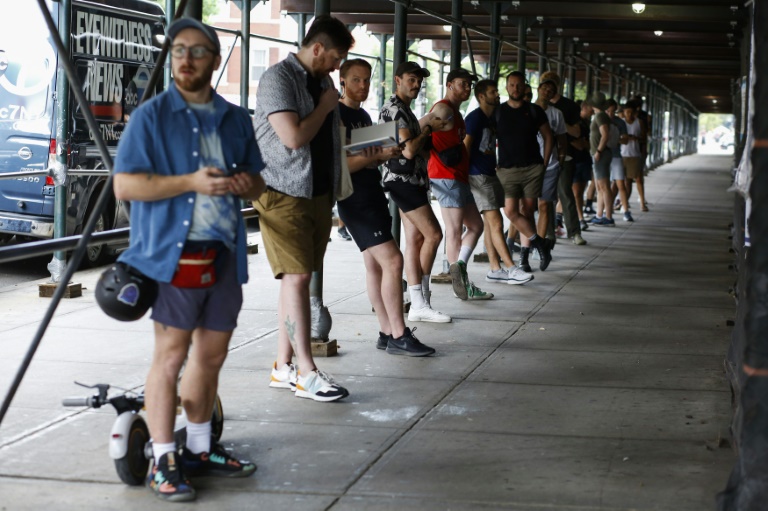
On a hot Sunday afternoon in New York, the epicenter of the US monkeypox outbreak, a long line of men aged 20 to 40 wait for a vaccine to protect themselves and their loved ones against the virus.

With its rows of tables and chairs and stacks of medical equipment, the vaccination center — a high school in Bushwick, Brooklyn — is reminiscent of a vaccine spot for Covid-19, a virus for which New York was also the US epicenter.

Everyone who spoke to AFP while waiting in line said they felt lucky to have gotten an appointment, as New York lacks doses. On Friday, 9,200 time slots became available on the city’s dedicated website at 6:00 pm.

They were all gone in seven minutes.

Three days earlier, site traffic was so high that the page crashed.

“It was frustrating, largely because especially with Covid, you’d think that we would have more of a structured process or vaccine rollout,” Aidan Baglivo, 23, told AFP. “There just wasn’t really anything.”

– ‘Shouldn’t be an issue’ –

The city of more than eight million people saw monkeypox infections climb last week, with 461 cases recorded Friday since the US outbreak began in May.

That number is up from 223 cases on Monday.

Baglivo, a data analyst, noted that people who are the most connected on social media have the highest chances of getting a vaccine appointment.

Robert, who declined to give his last name, told AFP he sat at his computer refreshing the website “like a crazy person” until he got a slot.

“This shouldn’t be an issue because there’s already a vaccine, and it (the rollout) should be… more efficient to prevent it from becoming more of an issue,” said the 28-year-old. Neither his partner nor his best friend have been able to get a vaccine.

“Every additional day where there’s not more people being vaccinated is a bummer.”

Anyone can catch monkeypox, which spreads through close physical contact, but the Jynneos vaccine is currently reserved for men who have sex with men, who make up the vast majority of cases.

Many LGBTQ people, of which there is a large population in New York, worry their community will be further stigmatized because of the virus.

– ‘Important to be proactive’ –

Nathan Tylutki, a 42-year-old actor, wonders if “there would be a quicker response to developing more vaccines if it wasn’t affecting queer people.”

In his opinion, there isn’t a lot of anti-vaccine sentiment in the LGBTQ community “because we’ve seen disease, we know what the AIDS epidemic” was like.

“We know that it’s important to be proactive about these kinds of things,” he told AFP.

Monkeypox is characterized by lesions on the skin — which can appear on the genitals or the mouth  — and is often accompanied by fever, sore throat and pain in the lymph nodes. It usually clears up on its own but can be extremely painful.

New York, on the US East Coast, has already either administered or scheduled 21,500 vaccines and hopes to speed up the process, promising more than 30,000 jabs for the whole state.

But due to a lack of doses, the Bushwick site is not expected to reopen Monday.

City health commissioner Ashwin Vasan said Sunday that New York needs tens of thousands more vaccines.

In line at the Bushwick site, fitness instructor Leroy Jackson has another concern.

“I am one of maybe two or three Black people on this line” out of more than 100, said the 27-year-old.

Access to appointments for minorities and underprivileged groups is even more limited, he pointed out.

Zelensky sacks 2 top Ukraine officials as EU mulls Russia sanctions

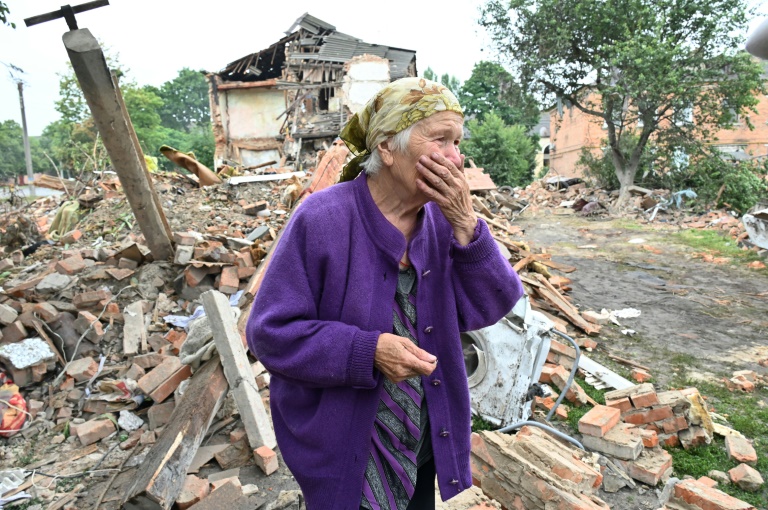
Ukraine faced new turmoil Sunday with President Volodymyr Zelensky announcing he sacked his top two law enforcement officials, in the government’s most serious shakeup since Russia launched its deadly invasion in February.

The domestic crisis came as the European Union prepared to discuss tightening sanctions against Russia on Monday, and as Kyiv accused Moscow of launching fresh strikes on multiple residential areas in eastern and southern Ukraine.

The new attacks came after Moscow announced it would step up its military operations and Ukraine accused Russia of installing missile launchers at Europe’s largest nuclear plant.

Zelensky said he was firing prosecutor general Iryna Venediktova and security chief Ivan Bakanov amid a high number of cases of suspected treason by Ukrainian law enforcement officials. 

In a national address, Zelensky said over 650 cases of suspected treason and aiding and abetting Russia by Ukrainian security officials are currently being investigated, including 60 cases of officials who he said have remained in territories occupied by Russia and are “working against our state.”

“Such a great number of crimes against the foundations of national security and the connections established between Ukrainian law enforcement officials and Russian special services pose very serious questions to the relevant leaders,” Zelensky said. 

“Each such question will be answered.”

Zelensky also highlighted the devastating military might Moscow has used against Ukraine, saying that as of Sunday Russian forces have launched more than 3,000 cruise missiles on targets in Ukraine.

– ‘High price’ –

With the conflict grinding on and increasingly spilling out into global energy and food crises, EU foreign ministers are considering banning gold purchases from Russia.

And more Russian figures could also be placed on the EU blacklist. 

“Moscow must continue to pay a high price for its aggression,” European Commission President Ursula von der Leyen said after forwarding the proposed measures. 

Brussels is expected to hold initial sanctions discussions Monday, but not make a same-day decision, according to a senior EU official.

The heaviest fighting continues to focus on the industrial east of Ukraine, and on Sunday, Donetsk regional governor Pavlo Kyrylenko accused Moscow of shelling “civilian infrastructure, especially education institutions”.

But Igor Besukh, a chef in the local city of Kramatorsk, just 20 kilometres (12 miles) from the frontline, was determined to stay strong in the face of Russian attacks.

Even after a Friday missile strike on Kramatorsk, which he admits scared him, Besukh continued operating his sushi restaurant, one of the few places still open in the city.

“War is war, but lunch must be served on time,” he said, quoting a popular saying.

– ‘Massive shelling’ –

Near Ukraine’s Black Sea coast, the southern city of Mykolaiv came under “massive shelling” Sunday, regional governor Vitaliy Kim said.

Kim added that several residential areas were shelled in the region a day earlier, with three people killed in the village of Shevchenkove and one woman killed in Shyrokiv where a “residential building was destroyed”.

In a BBC television interview broadcast Sunday, the head of Britain’s armed forces, Admiral Tony Radakin, estimated that 50,000 Russian soldiers had been killed or wounded in the invasion with nearly 1,700 Russian tanks and some 4,000 armoured fighting vehicles destroyed.

Radakin suggested that Russia’s land forces may pose less of a threat now, but more than 20 weeks since the invasion began, Moscow said Saturday it would step up its military operations.

Defence Minister Sergei Shoigu “gave the necessary instructions to further increase” military pressure, according to his ministry.

The orders come after Ukraine’s atomic energy agency accused Russians of installing missile launchers at the Zaporizhzhia nuclear plant and using the facility to shell the Dnipro region.

Russia’s defence ministry said in its daily briefing Sunday that it destroyed a “warehouse for Harpoon anti-ship missiles delivered to Ukraine by NATO” in the port city of Odessa.

Ukraine denied the claim, saying Russia destroyed the “storage facility” of a company with no military links.

Hundreds of kilometres from the frontline, Ukraine said missile strikes earlier in the week left 24 dead in the central city Vinnytsia, triggering international condemnation.

Russia’s defence ministry said it had targeted a meeting in Vinnytsia of the “command of the Ukrainian Air Force with representatives of foreign arms suppliers”. 

But a senior US defence official said on condition of anonymity that he had “no indication” there was a military target nearby.

Meanwhile, in Russia, police on Sunday detained journalist Marina Ovsyannikova, who in March interrupted a live TV broadcast to denounce the military action in Ukraine, her lawyer said.

No official statement has been made, but her detention comes days after Ovsyannikova, 44, demonstrated alone near the Kremlin holding a placard criticising Russia’s invasion and President Vladimir Putin.

J Lo and Ben Affleck tie the knot in Vegas

Celebrity couple Jennifer Lopez and Ben Affleck got married this weekend in Las Vegas, 18 years after their first romance failed, court records showed.

The couple tied the knot Saturday, according to a marriage license they filed in Clark County, Nevada, that was seen by AFP.

It lists the parties to the nuptials as Affleck, Benjamin Geza and Lopez, Jennifer and gives the latter’s “new name” as Affleck, Jennifer.

The pair — he is 49 and she is 52 — first met on the set of the widely panned movie “Gigli” in 2002.

They became a media sensation as they dated but postponed their planned 2003 nuptials, then announced their relationship was over in early 2004.

“Bennifer” — the couple’s public nickname from their first highly publicized relationship — set the internet alight last year when photos of them together again began circulating. 

Lopez and Affleck announced their engagement in April.

Lopez posted a video of herself appearing emotional and admiring a green ring in her newsletter, “On The JLo.” US media reported that the ring was an emerald-cut pale green diamond.

This is the fourth marriage for Lopez and the second for Affleck.

Lopez discussed her renewed relationship with Affleck in an interview with People in February.

“It’s a beautiful love story that we got a second chance,” she said.

Lopez was previously married to actor Ojani Noa, dancer Cris Judd and singer Marc Anthony, with whom she shares 14-year-old twins Max and Emme.

Affleck was married to actress Jennifer Garner and they are the parents of Violet, 16, Seraphina, 13, and Samuel, 10.

The gossip news outlet TMZ said the couple have been “seemingly inseparable” since they got back together, shopping together for a house and sometimes bringing their kids along.

TMS said that last month Lopez’s car was seen outside a huge mansion in Beverly Hills, with several moving trucks outside it and also at each of their current homes.

Of the wedding, TMZ put it this way: “They did it like a couple of kids looking to elope, saying “I do” out in the desert.”

Close Bitnami banner
Bitnami