US Business

Turkish businessman Korkmaz extradited to US from Austria

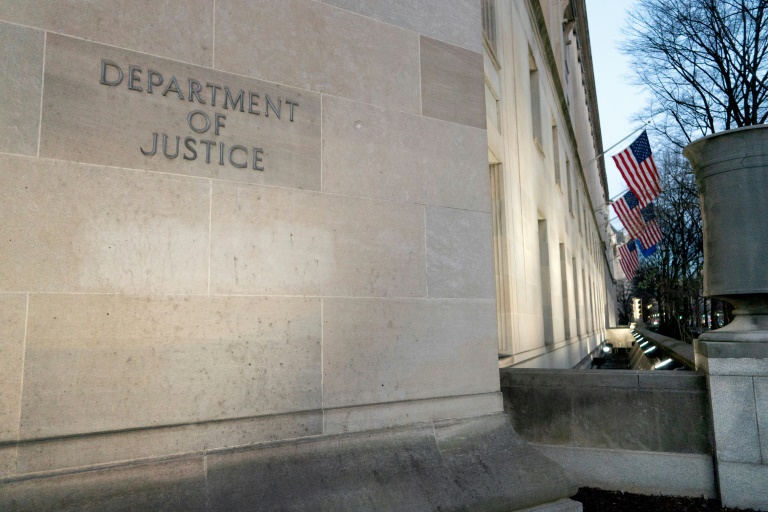
A Turkish businessman wanted on money laundering, wire fraud and obstruction charges was extradited from Austria to the United States on Friday, the Justice Department said.

Sezgin Baran Korkmaz was escorted by US Marshals to Utah, where he has been indicted for allegedly laundering more than $133 million through bank accounts he controlled in Turkey and Luxembourg.

Korkmaz was arrested in Austria in June of last year and had been fighting extradition to the United States, telling a Turkish reporter from jail that he would rather face justice at home, where he is also wanted for money laundering and fraud.

According to a US indictment, Korkmaz and co-conspirators were involved in a scheme to defraud the US Treasury by filing false claims for more than $1 billion in tax credits allegedly for the production and sale of biodiesel by their company, Washakie Renewable Energy LLC.

Jacob and Isaiah Kingston pleaded guilty in July 2019 to federal charges and testified in 2020 at the trial in Utah of another co-conspirator, Levon Termendzhyan, who was convicted of all charges.

Korkmaz and his co-conspirators allegedly used proceeds from the fraud to acquire luxury homes, businesses such as Biofarma, the Turkish airline Borajet, a yacht named the Queen Anne, a hotel in Turkey and a villa and apartment on the Bosporus in Istanbul, according to the US authorities.

Working with officials in Lebanon, US Marshals seized the Queen Anne in July 2021 and sold it for $10.11 million.

The Justice Department said Korkmaz faces a maximum penalty of 20 years in prison for each count of money laundering conspiracy, wire fraud and obstruction of an official proceeding.

The United States had been insisting on his extradition from Austria because the likelihood of Ankara extraditing him should he have been sent back to Turkey was low.

A large part of the reason lies in Washington’s refusal to hand over a US-based Turkish cleric President Recep Tayyip Erdogan believes plotted a failed coup against him in 2016.

According to the Organised Crime and Corruption Reporting Project, Korkmaz played a role in Ankara’s efforts to curry favor with president Donald Trump in his first years in the White House.

The investigative group also alleged that Korkmaz facilitated a 2018 trip for Americans linked to Trump who sought to secure detained US pastor Andrew Brunson’s release from Turkey.

The pastor’s fate became a major issue for Trump, who thrust him to the fore of US-Turkish relations until Brunson’s eventual release in late 2018.
US struggles to meet monkeypox vaccine demand

The United States, which is forecasting an increase in monkeypox cases in the coming weeks, does not currently have enough vaccines to meet demand, a top health official said Friday.

Concern has grown especially in New York, the epicenter of the US outbreak of the virus, with nearly 390 cases counted as of July 14. The United States has seen a total of 1,470 cases.

The illness is characterized by lesions on the skin — which can appear on the genitals or the mouth  — and is often accompanied by fever, sore throat and pain in the lymph nodes. It usually clears up on its own but can be extremely painful.

“I want to acknowledge that at this time the demand for vaccines from jurisdictions is higher than our current available supply,” Rochelle Walensky, director of the Centers for Disease Control and Prevention (CDC), said. “And we know that this is frustrating.”

“We don’t yet have all the vaccine that we would like in this moment,” she told reporters during a press conference, warning that authorities “anticipate an increase in cases in the coming weeks.”

New York public health authorities were forced to apologize earlier this week when a government website became overwhelmed as thousands tried to log on to book vaccine appointments at once. 

“Vaccine supply is extremely limited, extremely constrained, all across this country, and especially here in New York,” the head of the city’s public health department Ashwin Vasan said Thursday.

– Close contact –

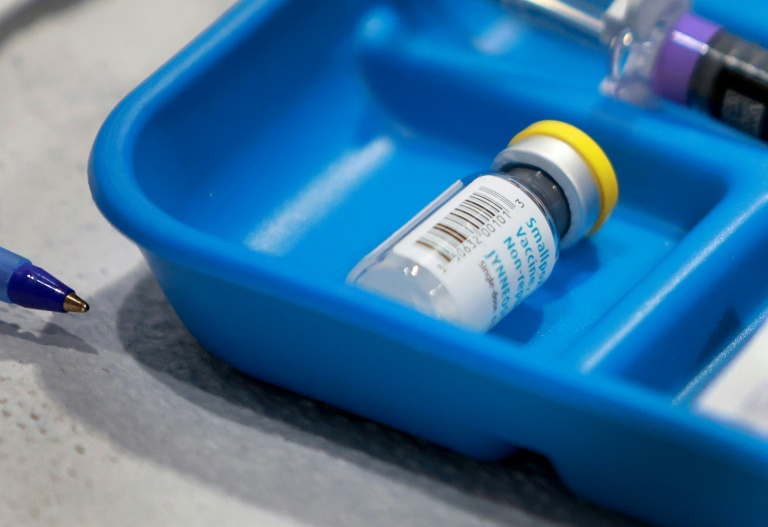
In May, when the outbreak began in the United States, there were only 2,000 doses of the Jynneos vaccine — the only specifically approved against monkeypox — available in the country. 

Since then, 156,000 doses have been distributed nationwide. More than 130,000 doses have been added to the strategic national stockpile and are expected to start being disseminated Monday. 

The next round of vaccine distribution will prioritize hardest-hit regions first, Walensky said. 

“I anticipate that there will be a lot more supply for New York City,” she added.

Furthering shortages, a shipment of 786,000 doses has been stuck in Denmark awaiting inspection from the Food and Drug Administration (FDA). The review is now complete, according to FDA official Peter Marks, and “we told the manufacturer (Bavarian Nordic) that they may ship the vaccine,” he said.

Additionally, the US Department of Health and Human Services announced Friday they had ordered another 2.5 million doses of the Jynneos vaccine, set to arrive in 2023. That order follows another made earlier this month, which is expected to arrive later this year. 

The two-injection vaccine is currently recommended for anyone who has been in close contact with someone infected with monkeypox. For now, the virus is mostly circulating among the LGBTQ community, especially gay and bisexual men.

Monkeypox spreads through close physical contact, by touching objects that have previously been handled by an infected person, or by close face-to-face interaction.

Committee probing US Capitol attack to hold primetime hearing

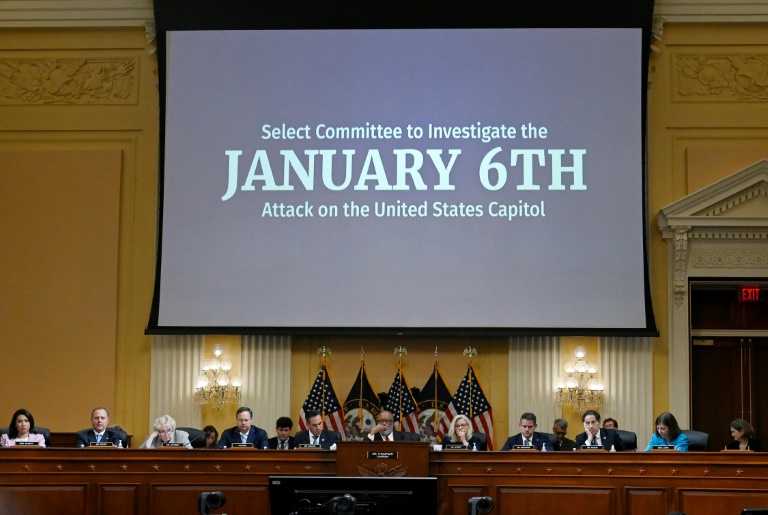
The US House committee investigating the January 6 assault on the US Capitol by Donald Trump supporters plans to hold a primetime hearing on Thursday.

The committee said the televised public hearing, its eighth, will take place at 8:00 pm in Washington (0000 GMT). The committee’s opening hearing was also held in primetime, when television audiences are largest.

Committee members have said the session is expected to focus on Trump’s actions on January 6, when thousands of his supporters stormed Congress in a bid to prevent certification of the results of the November 2020 election won by Democrat Joe Biden.

“You will hear that Donald Trump never picked up the phone that day to order his administration to help,” Representative Liz Cheney, a Republican member of the committee, said at the last hearing. 

“For multiple hours, Donald Trump refused to intervene to stop it,” Cheney said.

During its seventh hearing on Tuesday, the committee made up of seven Democrats and two Republicans examined the impact of a tweet Trump sent on December 19, 2020 urging his supporters to descend on Washington on January 6 for a rally he promised would be “wild.”

Members of right-wing militia groups and other Trump supporters saw the tweet from the then-president as a “call to arms,” lawmakers said.

The committee is trying to determine whether Trump or his associates had a role in planning or encouraging the violent insurrection, and has subpoenaed numerous advisors and aides to the former president.

More than 850 people have been arrested in connection with the attack on Congress, which left at least five people dead and 140 police officers injured.

Trump was impeached for a historic second time by the House after the riot — he was charged with inciting an insurrection — but was acquitted by the Senate.

Russia 'fully' responsible for death of British captive in east Ukraine

The United Kingdom said Friday the Kremlin was “fully responsible” for the death of a British captive in east Ukraine as rescue workers in Vinnytsia scoured debris for missing people after devastating Russian rocket attacks.

The comments from British Foreign Secretary Liz Truss came as Kyiv announced it had taken delivery of sophisticated rocket-launcher systems, part of a growing Western-supplied arsenal that Ukraine says is changing dynamics on the battlefield.

“I am shocked to hear reports of the death of British aid worker Paul Urey while in the custody of a Russian proxy in Ukraine,” Truss said. 

“Russia must bear the full responsibility for this,” she said.

Rescue workers were still clearing debris throughout the day in the wake of devastating Russian strikes in the central Ukrainian city of Vinnytsia that killed nearly two dozen people, including three children.

Russia claimed the strikes — hundreds of kilometres away from frontline fighting — had killed Ukrainian military officials and foreign arms suppliers.

But among those killed was four-year-old Liza Dmitrieva, who had Down’s syndrome and whose death spurred an outpouring after footage her final moments alive went viral on social media.

Ukrainian President Volodymyr Zelensky said in response that “no other country in the world poses the same kind of terrorist threat as Russia”.

Eighteen people were unaccounted for and more than 70 were hospitalised, the presidency said. Some 400 people were involved in clean-up operations, the emergency services announced Friday.

– Outpouring for slain toddler –

The missile strikes on Vinnytsia are the latest attacks to carry a heavy civilian toll and come less than a week after strikes on Chasiv Yar in the Donetsk region left nearly 50 dead.

Officials initially believed four-year-old Liza’s mother had been killed too, but announced Friday she was alive in a “critical” condition after surgery.

First Lady Olena Zelenska said early Friday she was “horrified” by Liza’s death and images of her overturned pushchair released by local authorities.

Moscow said it had targeted Ukraine military officials meeting to discuss arms supplies and aircraft repairs with foreign representatives.

“As a result of the strike, the participants of the meeting were destroyed,” the Russian defence ministry said.

But a senior US defence official rejected the claim, telling reporters: “I have no indication that there was a military target anywhere near that.”

Moscow launched its invasion on February 24 and the conflict has killed thousands of people, destroyed cities and forced millions to flee their homes.

Ukraine has repeatedly urged allies to supply it with advanced, long-range precisions artillery systems that would allow it to target Russian forces deeper inside Ukrainian-held territory.

Defence Minister Oleksiy Reznikov said Friday Ukraine had taken delivery of a first batch of sophisticated M270 rocket systems, adding to a growing arsenal of Western-supplied artillery Kyiv says is changing dynamics on the battlefield.

“They will be good company for Himars on the battlefield,” Oleksiy said, referring to US precision rocket systems recently deployed in the conflict.

The heaviest fighting recently in Ukraine has focused on the industrial Donbas region in the east, where a grinding trench war and artillery duels are morphing into a war of attrition.

– ‘Clearing’ Donbas town Siversk –

Moscow-backed separatists said Friday they were closing in on their next target, Siversk, after wresting control of sister cities Lysychansk and Severodonetsk two weeks ago.

And Donetsk separatist official Daniil Versonov said rebel fighters were “clearing” eastern districts of Siversk in small groups.

A strike Friday hit the central square in Kramatorsk, a major city and an administrative centre of the Donbas, where the town hall and cultural centre are located. Authorities said no one was hurt since it happened during the curfew.

Genya, a 72-year-old resident, described seeing from his balcony “something burning in the middle of the square then it exploded”.

The pro-Moscow authorities also announced British citizen Urey had died in their captivity on July 10. They say he was a veteran of conflicts in Afghanistan and the Middle East.

Truss said however Urey “was in Ukraine to try and help the Ukrainian people in the face of the unprovoked Russian invasion,” echoing claims from NGOs and a legion of foreign fighters backing Kyiv.

Negotiations to end the conflict collapsed early in the war but Russian and Ukrainian delegations met in Istanbul this week to discuss unblocking Ukraine’s grain exports.

The countries at war are among the world’s largest producers and the conflict has pushed up prices with Ukraine unable to export grain through its Black Sea ports. 

A Russian military spokesman said Friday however an agreement to unblock grain exports from Ukrainian ports would be ready “soon”.

burs-jbr/raz

US House passes bills to protect abortion access, Senate approval unlikely

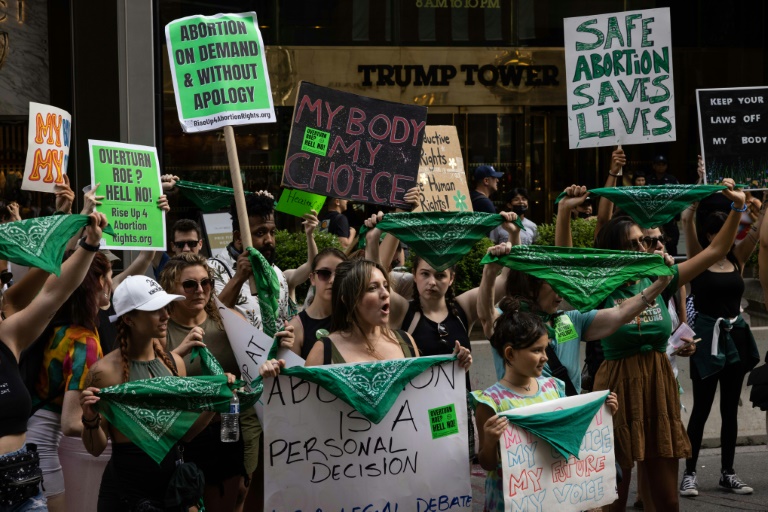
The US House of Representatives adopted two bills on Friday aimed at protecting access to abortion after the Supreme Court ruled that individual states can ban or restrict the procedure.

The legislation passed by the Democratic-controlled House is unlikely, however, to advance in the Senate, where 10 Republican votes would be needed to bring the measures to the floor.

“Just three weeks ago, the Supreme Court took a wrecking ball to fundamental rights by overturning Roe v. Wade,” Democratic House Speaker Nancy Pelosi said, referring to the landmark case that enshrined legal access to abortion.

“That is why today, our pro-choice, pro-women Democratic majority stands resolute,” Pelosi said. “We will take further action to defend women’s reproductive freedom.”

The first bill, the “Women’s Health Protection Act,” adopted only with Democratic support, would legalize abortion throughout the United States.

The House passed a similar bill last year but it failed in the Senate.

The other bill adopted on Friday would provide legal protection to women who leave one state to undergo an abortion in another.

Several conservative states have already banned abortion since the Supreme Court ruling, and about half of the 50 US states are expected to impose near or total bans in weeks or months to come.

Democratic President Joe Biden denounced last month’s abortion ruling by the conservative-dominated Supreme Court and has urged Americans to turn out in large numbers to vote in November’s midterm elections.

The party in power tends to perform poorly in the midterms, however, and Democrats risk losing their majority in the House and their slim hold on the Senate.

After sensational trial, Johnny Depp releases an album

Fresh off his highly publicized, controversial defamation suit, actor Johnny Depp sought to show his creative career was back on track Friday, releasing an album with English rocker Jeff Beck.

The 13-track album “18” on which Depp sings and plays guitar features mainly covers, and so far it has been critically panned. 

It’s a record unlikely to figure prominently in the repertoire of Beck, the 78-year-old former member of The Yardbirds.

The album includes renditions of Marvin Gaye’s “What’s Going On” and John Lennon’s “Isolation,” as well as the Velvet Underground classic “Venus In Furs.”

The choice to include a song focused on sado-masochism might seem bizarre to some, given the ultra-mediatized trial centered on alleged domestic abuse between Depp and his ex-wife Amber Heard, the actor best known for her role in “Aquaman.”

The album also includes two songs the 59-year-old “Pirates of the Caribbean” star penned himself: “This is a Song for Miss Hedy Lamarr,” and “Sad Motherfuckin’ Parade.”

“Erased by the same world that made her a star / Spun out of beauty, trapped by its web,” Depp sings of Lamarr, who secluded herself in the final years of her life.

– Bad Boys, Hollywood Vampires –

Depp and Beck met in 2016, bonding “over cars and guitars” before the latter said he began to appreciate “Depp’s serious songwriting skills and ear for music.”

They began working on this LP in 2019.

It’s far from Depp’s first foray into music: the actor for more than a decade has recorded and toured with the Hollywood Vampires, a supergroup he started with Alice Cooper and Joe Perry.

Beck is currently on tour in Europe with Depp as a special guest.

This spring Depp won $15 million in the defamation suit against Heard, who was awarded $2 million.

The jury found that Heard, 36, defamed Depp in describing herself as a “public figure representing domestic abuse” in a 2018 op-ed published in The Washington Post, although she did not identify the actor by name. Depp held he suffered reputational damage following its publication.

Heard received $2 million in damages because the jury found that one of Depp’s lawyers had defamed her.

The six-week trial gained widespread attention not least because it was televised and livestreamed, with clips making their way to social media as Heard became a target of online vitriol and mockery.

In its aftermath Depp is embarking on a return to acting, set to star in the forthcoming French movie “La Favorite.”

He will play King Louis XV, with filming locations including Versailles.

US House committee to consider assault weapons ban

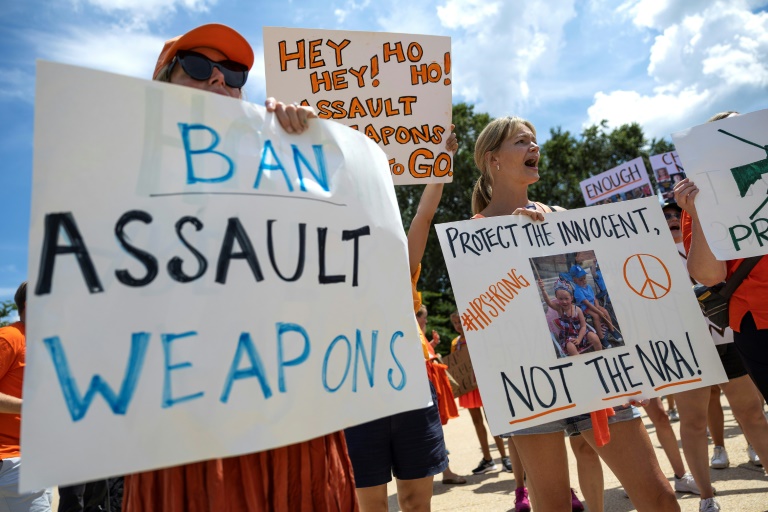
A committee of the US House of Representatives is set to vote next week for the first time in nearly 20 years on a bill that would ban assault weapons.

“Our country has witnessed senseless killing after senseless killing and each time one fact has remained remarkably consistent — the weapon of choice for mass slaughter is a high-powered assault weapon,” Jerold Nadler, the chairman of the House Judiciary Committee, said in a statement.

The Democrat from New York said the bill, which would ban the sale, import, manufacture or transfer of certain semi-automatic weapons, would be considered by the committee on Wednesday.

If the “Assault Weapons Ban of 2021” passes the Democratic-controlled committee it would go to the full House, where Democrats are in the majority.

It would be likely doomed to fail in the Senate, however.

Democrats have 50 seats in the 100-member Senate and 10 Republican votes would be needed to bring the measure to the floor.

Nadler said it is “beyond frightening and disturbing that a weapon that was designed as a tool of war has found its way into the hands of 18 year olds and onto our streets.”

An 18-year-old in Texas killed 19 children and two teachers in Uvalde, Texas, on May 24 using a semi-automatic rifle he purchased legally.

“Any weapon that allows for the quick and efficient slaughter of children in our schools has no place in our communities,” Nadler said.

Nancy Pelosi, the Democratic speaker of the House, said there is “great support in our caucus for an assault weapons ban.”

Congress passed a 10-year ban on assault rifles and certain high-capacity magazines in 1994.

But lawmakers let it expire in 2004 without renewing the ban and sales of those weapons have soared since then.

After the Uvalde massacre, President Joe Biden appealed to lawmakers to again ban assault rifles or at least raise the minimum age for buying them from 18 to 21.

But Republican lawmakers, who see such a restriction as going against the constitutional right to bear arms, have refused to go along with Biden’s proposal.

Survivors of recent mass shootings and relatives of people killed in them pleaded with lawmakers at the US Capitol on Wednesday to ban the powerful assault weapons used in the attacks.

US retail sales zoom higher in June despite high prices

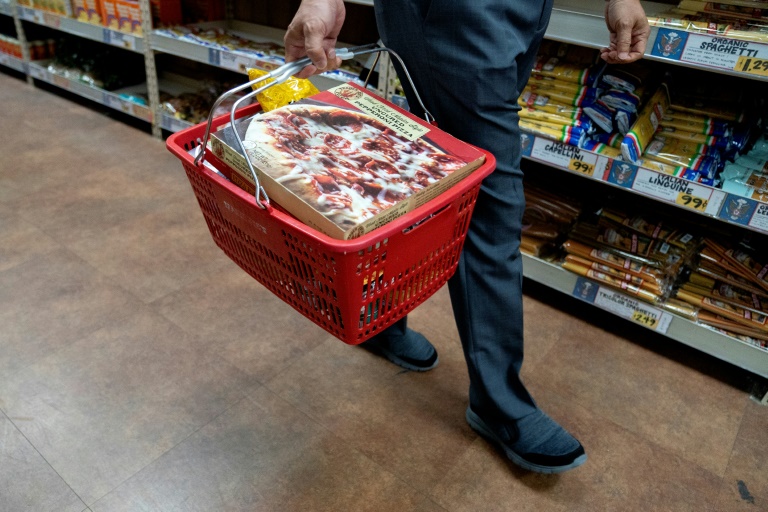
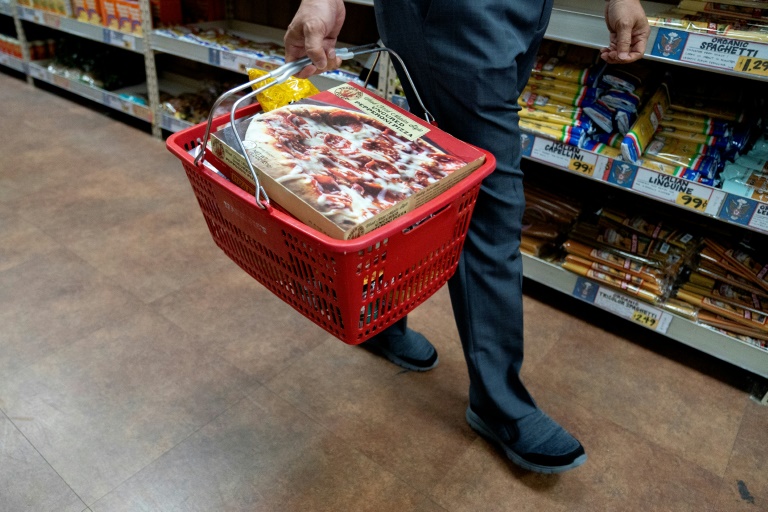
US retail sales shot up in June amid the ongoing surge in prices, according to new data Friday that spelled more bad news for the Federal Reserve as it struggles to rein in rampant inflation.

The data showed that after pausing in May, American consumers last month were still eating out and buying furniture and cars, even amid the fastest inflation in more than four decades. 

That poses a challenge for the US central bank, which has been hoping to see more decisive signs that its aggressive interest rate hikes were starting to take the economy off the boil and tamp down high prices.

Increased costs for gas, food and housing have squeezed American families and heaped pressure on President Joe Biden, whose approval ratings have taken a battering from the relentless rise in prices and fears of recession.

While inflation was already picking up speed last year as the world’s largest economy emerged from the pandemic and demand outstripped supply, the price surge worsened in the wake of the Russian invasion of Ukraine that has led to increased costs for energy and food.

Meanwhile, the US manufacturing sector, which has struggled with global pandemic supply constraints, saw output drop again in June, according to new Fed data Friday.

But consumers appear to be feeling a bit better about the current state of the economy, according to a new survey, defying expectations of a continued slump.

– Back with a vengeance –

After total retail sales dipped 0.1 percent in May, they recovered with a vengeance last month, climbing one percent to $680.6 billion, the Commerce Department said.

Record gas prices at the pump in June were a major factor, boosting sales at gasoline stations 3.6 percent in the month, and an eye-watering 49.1 percent over the past year, the report said.

But the data showed increases were widespread, and sales were still up 0.7 percent even when gasoline is removed from the calculation.

As inflation picked up speed, the Fed started raising the benchmark borrowing rate in March, and last month increased it by 0.75 percentage point, the biggest hike in nearly 30 years. 

But talk has now shifted to the possibility of a massive, full-point increase later this month, and higher borrowing costs have raised fears that the Fed’s efforts could push the economy into recession.

Fed Governor Christopher Waller on Thursday said he could favor the mega step — which would be the biggest such move in four decades — if there were no signs of cooling in the retail sales data and the new home sales report due out in two weeks.

In other data, manufacturing output fell 0.5 percent in June, the second consecutive drop, which led to decline overall industrial production, according to the Fed.

But the University of Michigan’s consumer sentiment index rose unexpectedly rose by 2.2 percent in July to a still-low 51.1, amid a big jump in feelings about the current situation, but another dip in the expectations index.

The preliminary reading showed current assessments of personal finances continued to deteriorate, reaching its lowest point since 2011, survey director Joanne Hsu said, noting a worrying trend of shoppers buying now to get ahead of price increases.

– Mega rate hike in play –

The Fed’s policy-setting Federal Open Market Committee is due to meet July 26-27 to debate the next move in its war on inflation.

Kathy Bostjancic of Oxford Economics said the strong sales data “keeps the Fed in an aggressive policy tightening mode — the debate at the July FOMC meeting will be between a 75bps or 100bps rate hike.”

High prices mean Americans have to shift spending more to necessities.

Neil Saunders, Managing Director of GlobalData, noted that “consumers did not buy more stuff in June — they bought less product but paid more for it. This is not a comfortable position.”

Waller downplayed recession fears saying the very US strong job market means the Fed can slow the economy without causing a downturn or a huge increase in joblessness.

Economist Nancy Vanden Houten agreed the United States “still has a fighting chance to avoid a recession, but the pathway to a soft landing is admittedly narrowing.”

US retail sales zoom higher in June despite high prices

US retail sales shot up in June amid the ongoing surge in prices, according to new data Friday that spelled more bad news for the Federal Reserve as it struggles to rein in rampant inflation.

The data showed that after pausing in May, American consumers last month were still eating out and buying furniture and cars, even amid the fastest inflation in more than four decades. 

That poses a challenge for the US central bank, which has been hoping to see more decisive signs that its aggressive interest rate hikes were starting to take the economy off the boil and tamp down high prices.

Increased costs for gas, food and housing have squeezed American families and heaped pressure on President Joe Biden, whose approval ratings have taken a battering from the relentless rise in prices and fears of recession.

While inflation was already picking up speed last year as the world’s largest economy emerged from the pandemic and demand outstripped supply, the price surge worsened in the wake of the Russian invasion of Ukraine that has led to increased costs for energy and food.

Meanwhile, the US manufacturing sector, which has struggled with global pandemic supply constraints, saw output drop again in June, according to new Fed data Friday.

But consumers appear to be feeling a bit better about the current state of the economy, according to a new survey, defying expectations of a continued slump.

– Back with a vengeance –

After total retail sales dipped 0.1 percent in May, they recovered with a vengeance last month, climbing one percent to $680.6 billion, the Commerce Department said.

Record gas prices at the pump in June were a major factor, boosting sales at gasoline stations 3.6 percent in the month, and an eye-watering 49.1 percent over the past year, the report said.

But the data showed increases were widespread, and sales were still up 0.7 percent even when gasoline is removed from the calculation.

As inflation picked up speed, the Fed started raising the benchmark borrowing rate in March, and last month increased it by 0.75 percentage point, the biggest hike in nearly 30 years. 

But talk has now shifted to the possibility of a massive, full-point increase later this month, and higher borrowing costs have raised fears that the Fed’s efforts could push the economy into recession.

Fed Governor Christopher Waller on Thursday said he could favor the mega step — which would be the biggest such move in four decades — if there were no signs of cooling in the retail sales data and the new home sales report due out in two weeks.

In other data, manufacturing output fell 0.5 percent in June, the second consecutive drop, which led to decline overall industrial production, according to the Fed.

But the University of Michigan’s consumer sentiment index rose unexpectedly rose by 2.2 percent in July to a still-low 51.1, amid a big jump in feelings about the current situation, but another dip in the expectations index.

The preliminary reading showed current assessments of personal finances continued to deteriorate, reaching its lowest point since 2011, survey director Joanne Hsu said, noting a worrying trend of shoppers buying now to get ahead of price increases.

– Mega rate hike in play –

The Fed’s policy-setting Federal Open Market Committee is due to meet July 26-27 to debate the next move in its war on inflation.

Kathy Bostjancic of Oxford Economics said the strong sales data “keeps the Fed in an aggressive policy tightening mode — the debate at the July FOMC meeting will be between a 75bps or 100bps rate hike.”

High prices mean Americans have to shift spending more to necessities.

Neil Saunders, Managing Director of GlobalData, noted that “consumers did not buy more stuff in June — they bought less product but paid more for it. This is not a comfortable position.”

Waller downplayed recession fears saying the very US strong job market means the Fed can slow the economy without causing a downturn or a huge increase in joblessness.

Economist Nancy Vanden Houten agreed the United States “still has a fighting chance to avoid a recession, but the pathway to a soft landing is admittedly narrowing.”

'Booked, blessed and busy': Lizzo returns

Lizzo’s summer turned up a notch Friday, with the poster child of self-love dropping her long-awaited album “Special” fresh off an Emmy nomination and ahead of a forthcoming tour.

The 12-track record brings back the soulful pop-rap blends that made the effervescent performer a household name with her messages of body positivity, feminist empowerment and sexual freedom.

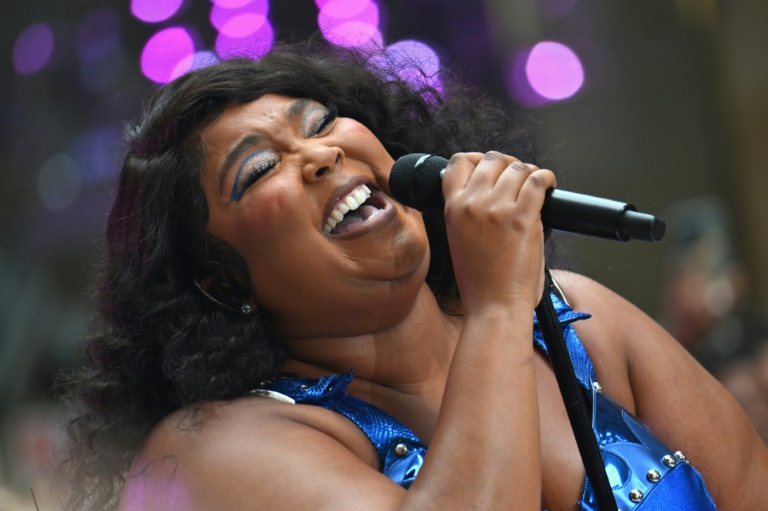
The hitmaker, whose 2017 song “Truth Hurts” became a viral sleeper smash and boosted her to global fame two years later, promoted the release of her fourth album with a “Today” show performance in Manhattan outside of NBC’s studios.

“I’m so proud of this album,” she told the show Friday. “It was three years in the making. It’s literally a classic, no-skips album. It’s the best thing I’ve ever done.”

Lizzo’s week had already kicked off to a banner start after she scored an Emmy Awards nomination for her show “Watch Out for the Big Grrrls,” a reality show where she searches for her tour’s back-up dancers.

“We didn’t do this for awards, we did this for ourselves. For the lives we touched making this… To shake up the industry.. and show the world how BEAUTIFUL AND TALENTED WE AREEEEE!” she posted on Instagram after learning of the nomination.

“BIG GRRRLS ARE BOOKED, BLESSED AND BUSY.”

The 34-year-old artist born Melissa Viviane Jefferson debuted in 2013 but did not achieve mainstream success until the release of her third album “Cuz I Love You,” which found runaway success and earned the Detroit-born, Houston-raised performer eight Grammy nominations with three wins.

She’s set to kick off a North American tour in September, with stops including New York’s Madison Square Garden and Los Angeles’ Kia Forum.

“It takes 10 years to become an overnight success,” she told Today. 

“I needed to discover my self-love,” she continued, elated fans cheering her along. “The music that’s connecting to people is about my self-love.”

Close Bitnami banner
Bitnami