US Business

US renews space flights with Russia in rare cooperation

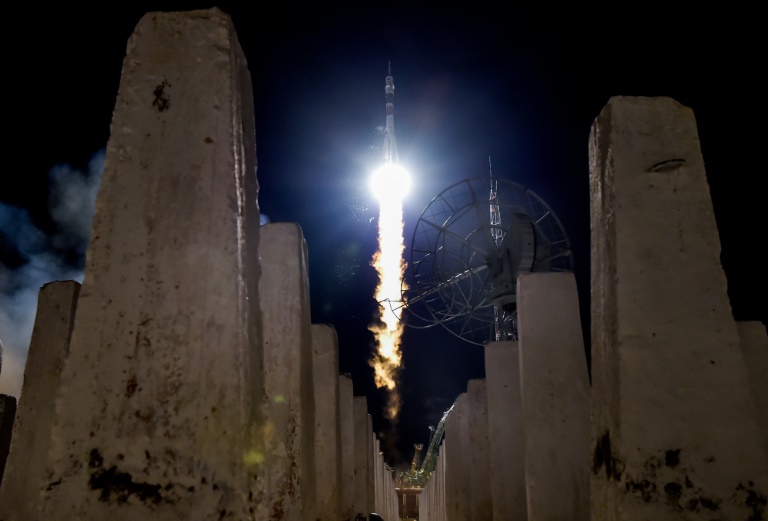
The United States and Russia said Friday they would renew flights together to the International Space Station, preserving one of the last areas of cooperation amid Western attempts to isolate Moscow over the invasion of Ukraine.

“To ensure continued safe operations of the International Space Station, protect the lives of astronauts and ensure continuous US presence in space, NASA will resume integrated crews on US crew spacecraft and the Russian Soyuz,” the US space agency said in a statement.

NASA said that astronaut Frank Rubio would fly with two Russian cosmonauts on a Soyuz rocket scheduled to launch on September 21 from Kazakhstan, with another astronaut, Loral O’Hara, taking another mission in early 2023.

In a first, Russian cosmonauts will join NASA astronauts on SpaceX’s new Crew-5 which will launch in September from Florida with a Japanese astronaut also on the mission.

Another joint mission on the SpaceX Crew-6 will fly out in early 2023, NASA said.

The move comes despite the European Space Agency earlier this week terminating its relationship with Russia on a mission to put a rover on Mars, infuriating Russian space chief Dmitry Rogozin who banned cosmonauts on the ISS from using a European-made robotic arm.

But hours before NASA’s announcement, President Vladimir Putin dismissed Rogozin, a firebrand nationalist and ardent backer of the Ukraine invasion who once quipped that US astronauts should get to the space station on trampolines rather than Russian rockets.

Roscosmos, the Russian space agency, said the agreement with NASA was in the interests of both countries and “will promote cooperation” on space.

“The agreement seeks to guarantee that in the event of an emergency caused by the cancellation or major delay in a Russian or American space launch, at least one Roscomos cosmonaut and one NASA astronaut will be present to service the Russian and American sections respectively,” it said.

NASA said that the ISS was set up for joint participation by the United States and Russia along with Europe, Japan and Canada.

“The station was designed to be interdependent and relies on contributions from each space agency to function. No one agency has the capability to function independent of the others,” NASA said.

– ‘Dear friends’ in space –

Soyuz rockets were the only way to reach the space station until SpaceX, run by the billionaire Elon Musk, debuted a capsule in 2020.

The last NASA astronaut to take a Soyuz to the station was NASA astronaut Mark Vande Hei in 2021. 

He returned to Earth in March this year alongside Russian cosmonauts, also on a Soyuz. 

Speaking to reporters afterward, Vande Hei said that the cosmonauts remained his “very dear friends” despite their nations’ tense relationship.

“We supported each other throughout everything,” he said. “And I never had any concerns about my ability to continue working with them.”

The United States has imposed sweeping sanctions on Russia after Putin on February 24 invaded Ukraine, defying Western warnings.

The sanctions, which include tough restrictions on financial interactions, have led to an exodus of leading US brands from Russia including Starbucks and McDonald’s.

But the International Space Station is unique. It was launched in 1998 at a time of hope for US-Russia cooperation following their Space Race competition during the Cold War.

The ISS is expected to wind down in the next decade.

Rogozin had warned that Western sanctions could affect cooperation.

“If you block cooperation with us, who will save the ISS from uncontrolled deorbiting and falling on US or European territory?” Rogozin wrote in a tweet earlier this year.

Kremlin spokesman Dmitry Peskov did not indicate that his removal meant Putin was unhappy with Rogozin.

One independent media outlet said he would be promoted and could be put in charge of occupied territories in Ukraine.
US renews space flights with Russia in rare cooperation

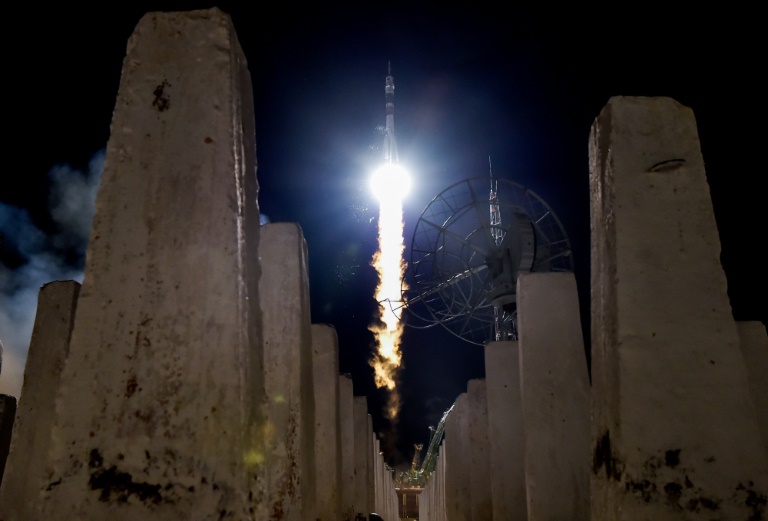
The United States and Russia said Friday they would renew flights together to the International Space Station, preserving one of the last areas of cooperation amid Western attempts to isolate Moscow over the invasion of Ukraine.

“To ensure continued safe operations of the International Space Station, protect the lives of astronauts and ensure continuous US presence in space, NASA will resume integrated crews on US crew spacecraft and the Russian Soyuz,” the US space agency said in a statement.

NASA said that astronaut Frank Rubio would fly with two Russian cosmonauts on a Soyuz rocket scheduled to launch on September 21 from Kazakhstan, with another astronaut, Loral O’Hara, taking another mission in early 2023.

In a first, Russian cosmonauts will join NASA astronauts on SpaceX’s new Crew-5 which will launch in September from Florida with a Japanese astronaut also on the mission.

Another joint mission on the SpaceX Crew-6 will fly out in early 2023, NASA said.

The move comes despite the European Space Agency earlier this week terminating its relationship with Russia on a mission to put a rover on Mars, infuriating Russian space chief Dmitry Rogozin who banned cosmonauts on the ISS from using a European-made robotic arm.

But hours before NASA’s announcement, President Vladimir Putin dismissed Rogozin, a firebrand nationalist and ardent backer of the Ukraine invasion who once quipped that US astronauts should get to the space station on trampolines rather than Russian rockets.

Roscosmos, the Russian space agency, said the agreement with NASA was in the interests of both countries and “will promote cooperation” on space.

“The agreement seeks to guarantee that in the event of an emergency caused by the cancellation or major delay in a Russian or American space launch, at least one Roscomos cosmonaut and one NASA astronaut will be present to service the Russian and American sections respectively,” it said.

NASA said that the ISS was set up for joint participation by the United States and Russia along with Europe, Japan and Canada.

“The station was designed to be interdependent and relies on contributions from each space agency to function. No one agency has the capability to function independent of the others,” NASA said.

– ‘Dear friends’ in space –

Soyuz rockets were the only way to reach the space station until SpaceX, run by the billionaire Elon Musk, debuted a capsule in 2020.

The last NASA astronaut to take a Soyuz to the station was NASA astronaut Mark Vande Hei in 2021. 

He returned to Earth in March this year alongside Russian cosmonauts, also on a Soyuz. 

Speaking to reporters afterward, Vande Hei said that the cosmonauts remained his “very dear friends” despite their nations’ tense relationship.

“We supported each other throughout everything,” he said. “And I never had any concerns about my ability to continue working with them.”

The United States has imposed sweeping sanctions on Russia after Putin on February 24 invaded Ukraine, defying Western warnings.

The sanctions, which include tough restrictions on financial interactions, have led to an exodus of leading US brands from Russia including Starbucks and McDonald’s.

But the International Space Station is unique. It was launched in 1998 at a time of hope for US-Russia cooperation following their Space Race competition during the Cold War.

The ISS is expected to wind down in the next decade.

Rogozin had warned that Western sanctions could affect cooperation.

“If you block cooperation with us, who will save the ISS from uncontrolled deorbiting and falling on US or European territory?” Rogozin wrote in a tweet earlier this year.

Kremlin spokesman Dmitry Peskov did not indicate that his removal meant Putin was unhappy with Rogozin.

One independent media outlet said he would be promoted and could be put in charge of occupied territories in Ukraine.
Stocks jump as US consumers keep spending

Stocks soared Friday after the latest data showed that US consumers continue to spend more in the latest signal of the strength of the economy despite high inflation and rising interest rates.

Better-than-expected results from Citigroup also helped allay somewhat concerns about what waits in store for investors as companies begin to report their next quarterly results.

The euro held above $1.00, having sunk below parity this week on fears Russia would cut off Europe’s gas supplies in retaliation for Ukraine war sanctions, pushing the region into recession.

Oil prices rebounded having slumped Thursday on renewed fears of a global recession that would dent demand for energy.

Wall Street pushed higher on a better-than-expected 1.0 percent rise in retail sales in June.

While not adjusted for inflation, sales were still up 0.7 percent even when gasoline was removed from the calculation, according to the Commerce Department data.

“This could be good news for US GDP which suggests that the economy may well avoid a contraction in (the second quarter), and ergo a technical recession,” said analyst Michael Hewson at CMC Markets.

The figure was also looked at through the prism of how it might affect the US Federal Reserve’s decision later this month on raising interest rates, with the solid growth giving policymakers licence to hike rates more aggressively.

“The key takeaway from the report is that it was strong enough to keep concerns about weakening consumer spending at bay for the time being,” said analysts at Briefing.com.

Markets had taken a major knock this week from news that US inflation zoomed to a 40-year high of 9.1 percent in June on energy costs.

After rate hikes by several countries, investors now expect the Federal Reserve to lift rates later this month by 75 basis points as officials battle decades-high inflation, though some observers suggest a one-percentage-point move could even be on the cards.

While experts warn that raising US rates risks hammering the economy, the Fed has made it clear the number-one priority is bringing down prices.

The retail sales figures join other data showing that the US economy is holding up relatively well so far despite high inflation and rising interest rates.

Meanwhile, Citigroup’s net profits fell by 25 percent to $4.5 billion, yet earnings per share easily beat expectations. The banking group took in more revenue and benefited from rising interest rates.

Citigroup shares jumped more than 10 percent.

Wall Street stumbled Thursday with sentiment weighed down by disappointing reports from JPMorgan Chase & Co. and Morgan Stanley.

Those compounded worries that company profits would be hit by the fallout from a number of issues including rocketing consumer prices, monetary policy tightening and the war in Ukraine.

European stocks finished the day sharply higher.

In Asia, Hong Kong and mainland Chinese equity markets led losses after data showed China’s economy grew just 0.4 percent in the second quarter, battered by Covid lockdowns in major cities including Shanghai and Beijing.

The reading was well off the 1.6-percent growth predicted by analysts in an AFP survey.

Elsewhere, traders are keeping tabs on US President Joe Biden’s visit to the Middle East as he tries to persuade Saudi Arabia to bring down high oil prices by pumping more crude.

– Key figures at around 1530 GMT –

New York – Dow: UP 1.9 percent at 31,225.63 points

EURO STOXX 50: UP 2.4 percent at 3,477.20

London – FTSE 100: UP 1.7 percent at 7,159.01 (close)

Frankfurt – DAX: UP 2.8 percent at 12,864.72 (close)

Paris – CAC 40: UP 2.0 percent at 6,036.00 (close)

Tokyo – Nikkei 225: UP 0.5 percent at 26,788.47 (close)

Hong Kong – Hang Seng Index: DOWN 2.2 percent at 20,297.72 (close)

Shanghai – Composite: DOWN 1.6 percent at 3,228.06 (close)

Euro/dollar: UP at $1.0098 from $1.0022 Thursday

Pound/dollar: UP at $1.1863 from $1.1826 

Euro/pound: UP at 85.07 pence from 84.72 pence

Dollar/yen: DOWN at 138.53 yen from 138.93 yen

West Texas Intermediate: UP 2.9 percent at $98.53 per barrel

Brent North Sea crude: UP 2.8 percent at $101.90 per barrel

burs-rl/bp

Western nations condemn Russia over Ukraine at G20 Indonesia talks

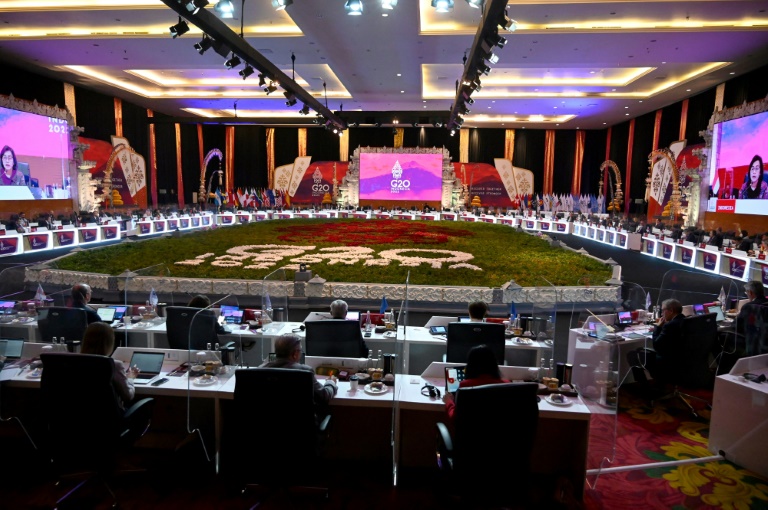
Western finance chiefs condemned Moscow’s invasion of Ukraine at G20 talks in Indonesia Friday, accusing Russia of sending a “shockwave” through the world economy and its technocrats of complicity in the war’s alleged atrocities.

The two-day meeting on the island of Bali began under the shadow of a Russian military assault that has roiled markets, spiked food prices and stoked breakneck inflation, a week after Moscow’s top diplomat walked out of talks with the forum’s foreign ministers.

“Russia is solely responsible for negative spillovers to the global economy,” US Treasury Secretary Janet Yellen told the Russian delegation in the opening session, according to a US official, who spoke on condition of anonymity.  

“Russia’s officials should recognise that they are adding to the horrific consequences of this war through their continued support of the Putin regime. You share responsibility for the innocent lives lost,” Yellen added, according to the official.

The official did not comment on whether the Russian delegation responded. Russian officials did not immediately respond to an AFP request for comment. 

Russia calls its invasion of Ukraine a “special military operation” and blames subsequent Western sanctions for blocked food shipments and rising energy prices.

“Russia tried to say that the world economic situation had nothing to do with the war,” a French delegation source told AFP.

Australian Treasurer Jim Chalmers condemned Russia’s “immoral transgression” against Ukraine, saying that Moscow must take the blame for the impacts on the global economy caused by the war.

“Russia’s unjust actions have had terrible human cost but they’ve also increased global uncertainty,” Chalmers said, according to a transcript. “Russia must take full responsibility.”

Canadian Finance Minister Chrystia Freeland told Russia’s delegation they were responsible for “war crimes” in Ukraine because of their support for the invasion, a Canadian official said. 

“It is not only generals who commit war crimes, it is the economic technocrats who allow the war to happen and to continue,” said Freeland, according to the official.

Both Russian Finance Minister Anton Siluanov and Ukrainian Finance Minister Serhiy Marchenko participated virtually in the meeting. 

Moscow sent Russian Deputy Finance Minister Timur Maksimov to attend the talks in person. He was in the room as Western officials expressed their condemnation, according to a source present at the talks.

Ukraine’s Marchenko said Russia’s invasion of Ukraine “clearly marks the end of the existing world order”, and blamed Moscow for the world facing hunger, inflation and energy insecurity.

“We need to stop the cause of these problems. The true practical solution… is imposing more severe targeted sanctions,” he told ministers, according to the Ukrainian finance ministry.

– ‘Weaponising’ food –

Indonesian Finance Minister Sri Mulyani Indrawati warned her counterparts that failure to tackle energy and food crises would be “catastrophic”.

The meeting has largely focused on those impacts of the war that are weighing on an already brittle global recovery from the Covid-19 pandemic.

“(Russian President Vladimir) Putin’s actions… amounts to using food as a weapon of war,” Yellen said in an afternoon seminar.

In another session, she said Russia’s “unjustified war” has sent a “shockwave” through the global economy. 

Indrawati said members had “identified the urgent need for the G20 to take concrete steps” to address food insecurity and to help countries in need.

Yellen has pressed G20 allies for a price cap on Russian oil to choke off Putin’s war chest and pressure Moscow to end its invasion while bringing down energy costs.

In April, the US treasury secretary led a multinational walkout of finance officials as Russian delegates spoke at a G20 meeting in Washington, but there was no such action on Friday.

There is unlikely to be a final communique issued when talks end on Saturday because of the disagreements with Russia.

– ‘Act together’ – 

G20 chair Indonesia -– which pursues a neutral foreign policy –- refrained from disinviting Russia despite Western pressure.

Chinese Finance Minister Liu Kun, Britain’s new Finance Minister Nadhim Zahawi and European Central Bank President Christine Lagarde attended the meeting virtually. 

World Bank chief executive David Malpass did not attend, while International Monetary Fund chief Kristalina Georgieva appeared in person after saying Wednesday that the global economic outlook had “darkened significantly” because of Moscow’s invasion.

The meeting is a prelude to the leaders’ summit on the Indonesian island in November that was meant to focus on the global recovery from the Covid-19 pandemic.

Other issues being tackled by the ministers included digital financial inclusion –- with more than a billion of the world’s population still without access to a bank account -– and the deadline for an international tax rules overhaul.

Western nations condemn Russia over Ukraine at G20 Indonesia talks

Western finance chiefs condemned Moscow’s invasion of Ukraine at G20 talks in Indonesia Friday, accusing Russia of sending a “shockwave” through the world economy and its technocrats of complicity in the war’s alleged atrocities.

The two-day meeting on the island of Bali began under the shadow of a Russian military assault that has roiled markets, spiked food prices and stoked breakneck inflation, a week after Moscow’s top diplomat walked out of talks with the forum’s foreign ministers.

“Russia is solely responsible for negative spillovers to the global economy,” US Treasury Secretary Janet Yellen told the Russian delegation in the opening session, according to a US official, who spoke on condition of anonymity.  

“Russia’s officials should recognise that they are adding to the horrific consequences of this war through their continued support of the Putin regime. You share responsibility for the innocent lives lost,” Yellen added, according to the official.

The official did not comment on whether the Russian delegation responded. Russian officials did not immediately respond to an AFP request for comment. 

Russia calls its invasion of Ukraine a “special military operation” and blames subsequent Western sanctions for blocked food shipments and rising energy prices.

“Russia tried to say that the world economic situation had nothing to do with the war,” a French delegation source told AFP.

Australian Treasurer Jim Chalmers condemned Russia’s “immoral transgression” against Ukraine, saying that Moscow must take the blame for the impacts on the global economy caused by the war.

“Russia’s unjust actions have had terrible human cost but they’ve also increased global uncertainty,” Chalmers said, according to a transcript. “Russia must take full responsibility.”

Canadian Finance Minister Chrystia Freeland told Russia’s delegation they were responsible for “war crimes” in Ukraine because of their support for the invasion, a Canadian official said. 

“It is not only generals who commit war crimes, it is the economic technocrats who allow the war to happen and to continue,” said Freeland, according to the official.

Both Russian Finance Minister Anton Siluanov and Ukrainian Finance Minister Serhiy Marchenko participated virtually in the meeting. 

Moscow sent Russian Deputy Finance Minister Timur Maksimov to attend the talks in person. He was in the room as Western officials expressed their condemnation, according to a source present at the talks.

Ukraine’s Marchenko said Russia’s invasion of Ukraine “clearly marks the end of the existing world order”, and blamed Moscow for the world facing hunger, inflation and energy insecurity.

“We need to stop the cause of these problems. The true practical solution… is imposing more severe targeted sanctions,” he told ministers, according to the Ukrainian finance ministry.

– ‘Weaponising’ food –

Indonesian Finance Minister Sri Mulyani Indrawati warned her counterparts that failure to tackle energy and food crises would be “catastrophic”.

The meeting has largely focused on those impacts of the war that are weighing on an already brittle global recovery from the Covid-19 pandemic.

“(Russian President Vladimir) Putin’s actions… amounts to using food as a weapon of war,” Yellen said in an afternoon seminar.

In another session, she said Russia’s “unjustified war” has sent a “shockwave” through the global economy. 

Indrawati said members had “identified the urgent need for the G20 to take concrete steps” to address food insecurity and to help countries in need.

Yellen has pressed G20 allies for a price cap on Russian oil to choke off Putin’s war chest and pressure Moscow to end its invasion while bringing down energy costs.

In April, the US treasury secretary led a multinational walkout of finance officials as Russian delegates spoke at a G20 meeting in Washington, but there was no such action on Friday.

There is unlikely to be a final communique issued when talks end on Saturday because of the disagreements with Russia.

– ‘Act together’ – 

G20 chair Indonesia -– which pursues a neutral foreign policy –- refrained from disinviting Russia despite Western pressure.

Chinese Finance Minister Liu Kun, Britain’s new Finance Minister Nadhim Zahawi and European Central Bank President Christine Lagarde attended the meeting virtually. 

World Bank chief executive David Malpass did not attend, while International Monetary Fund chief Kristalina Georgieva appeared in person after saying Wednesday that the global economic outlook had “darkened significantly” because of Moscow’s invasion.

The meeting is a prelude to the leaders’ summit on the Indonesian island in November that was meant to focus on the global recovery from the Covid-19 pandemic.

Other issues being tackled by the ministers included digital financial inclusion –- with more than a billion of the world’s population still without access to a bank account -– and the deadline for an international tax rules overhaul.

Citigroup results boosted by trading, higher interest rates

Citigroup reported better-than-expected results Friday following a strong performance in trading, as executives described US consumption as healthy despite rising inflation.

The big US bank, like its peers, also suffered a drop in second-quarter profits compared with the year-ago period, which was boosted by the return of funds set aside early in the pandemic in case of loan defaults.

But unlike JPMorgan Chase and others, Citigroup still topped analyst expectations, in part due to higher profits in lending after Federal Reserve interest rate hikes. 

Chief Financial Officer Mark Mason told reporters that Citi’s credit card business also had a “very, very strong performance,” indicating consumers remain on solid footing for now.

“There’s a lot of liquidity that still remains with consumers,” he said on a media conference call. “Obviously that is allowing for a bit more flexibility than they otherwise would have.”

But the continued spending is “hard to square” with data showing eroding consumer sentiment due to inflation, Mason acknowledged.

Citi reported profits of $4.5 billion, down 27 percent from the year-ago period on revenues of $19.6 billion, up 11 percent.

Citi had a net build of credit reserves of $375 million in case of bad loans.

Mason said the company “feels appropriately reserved” in case of a downturn, but saw no “signs of immediate credit loss concerns.”

Elevated volatility in financial markets lifted revenues tied to trading in equities, commodities and other financial markets, offsetting a drop in merger and acquisition activity.

As with JPMorgan, Citigroup is suspending its share buybacks in light of new US stress test requirements to hold more capital in case of a downturn.

Mason said the decision also reflected uncertainty about the macroeconomy.

“We’re worried about the prospect of a recession,” he said. “We’re worried about rate increases to kind of stabilize things as we manage through this environment and the uncertainty that comes with that.”

Wells Fargo also reported a drop in second-quarter profits.

Earnings at the California-based bank were $3.1 billion, down 48 percent from the year-ago level on a 16 percent drop in revenues to $17.0 billion.

But investors were cheered by Wells’ forecast of a 20 percent jump in 2022 net interest income from last year’s level in light of Fed interest rate hikes.

Citigroup shares soared 9.7 percent to $48.40 in morning trading, while Wells Fargo jumped 6.6 percent to $41.28.

Black man shot by US police had 46 bullet wounds: medical examiner

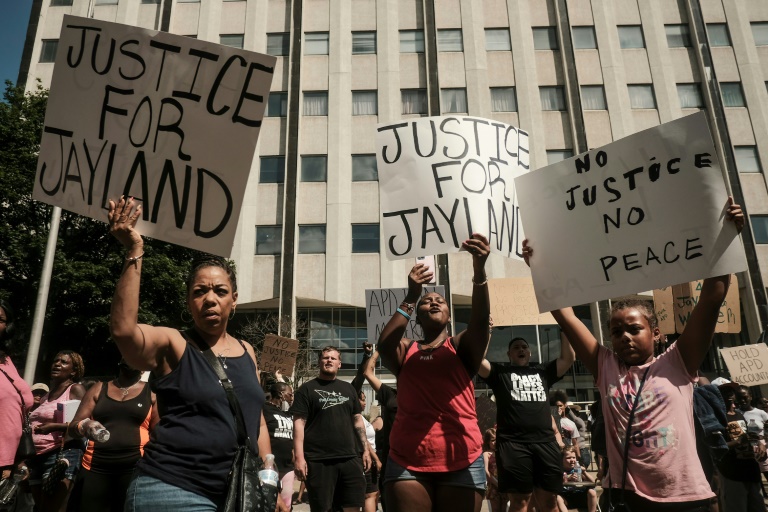
A 25-year-old Black man shot and killed by police in Akron, Ohio, while fleeing a traffic stop had 46 gunshot wounds, the medical examiner’s office said Friday.

A summary of the autopsy findings on Jayland Walker was released by Summit County medical examiner Lisa Kohler, the Akron Beacon Journal newspaper reported.

The release of body camera footage of Walker’s June 27 shooting sparked several days of angry protests in Akron, a city of 190,000 people in northern Ohio.

Walker had 46 gunshot wounds including graze injuries and 15 exit wounds, the medical examiner said. Twenty-six bullets were recovered from his body.

“We are not able to say which bullet killed him,” the Beacon Journal quoted Kohler as saying. “He had several devastating injuries.”

She said a toxicology report on Walker for drugs or alcohol came back negative.

According to police, they attempted to stop Walker for a minor traffic violation and he fled on foot after firing a shot from his car.

A handgun and ammunition clip was recovered from his vehicle, police said.

Eight police officers opened fire on Walker. They have been placed on leave pending an investigation.

Walker’s shooting was the latest in a grim litany of Black people dying at the hands of police in the United States that has ignited widespread protests against racism and demands for police reform.

The push for change gained momentum after a white Minneapolis police officer knelt on the neck of George Floyd, a 46-year-old Black man, until he died in May 2020.

Floyd’s death, which was filmed by a bystander in a video that went viral, sparked months of protests against racial injustice and police brutality in the United States and around the world.

US to resume International Space Station flights with Russia

The United States said Friday it would resume flights to the International Space Station with Russia, despite its attempts to isolate Moscow over the invasion of Ukraine.

“To ensure continued safe operations of the International Space Station, protect the lives of astronauts and ensure continuous US presence in space, NASA will resume integrated crews on US crew spacecraft and the Russian Soyuz,” US space agency NASA said in a statement.

NASA said that astronaut Frank Rubio would fly with two Russian cosmonauts on a Soyuz rocket scheduled to launch on September 21 from Kazakhstan, with another astronaut, Loral O’Hara, taking another mission in early 2023.

In a first, Russian cosmonauts will join NASA astronauts on SpaceX’s new Crew-5 which will launch in September from Florida with a Japanese astronaut also on the mission.

Another joint mission on the SpaceX Crew-6 will fly out in early 2023, NASA said.

The move comes despite the European Space Agency earlier this week terminating its relationship with Russia on a mission to put a rover on Mars, infuriating Russian space chief Dmitry Rogozin who banned cosmonauts on the ISS from using a European-made robotic arm.

But hours before NASA’s announcement, President Vladimir Putin dismissed Rogozin, a firebrand nationalist and ardent backer of the Ukraine invasion who once quipped that US astronauts should get to the space station on trampolines rather than Russian rockets.

NASA said that the International Space Station was always designed to be operated jointly with participation from the space agencies of the United States, Russia, Europe, Japan and Canada.

“The station was designed to be interdependent and relies on contributions from each space agency to function. No one agency has the capability to function independent of the others,” it said.

– New ways to blast off –

Soyuz rockets were the only way to reach the space station until SpaceX, run by the billionaire Elon Musk, debuted a capsule in 2020.

The last NASA astronaut to take a Soyuz to the station was NASA astronaut Mark Vande Hei in 2021. 

He returned to Earth in March this year alongside Russian cosmonauts, also on a Soyuz. 

Speaking to reporters afterward, Vande Hei said that the cosmonauts remained his “very dear friends” despite their nations’ tense relationship.

“We supported each other throughout everything,” he said. “And I never had any concerns about my ability to continue working with them.”

The United States has imposed sweeping sanctions on Russia after Putin on February 24 invaded Ukraine, defying Western warnings.

The sanctions, which include tough restrictions on financial interactions, have led to an exodus of leading US brands from Russia including Starbucks and McDonald’s.

But the International Space Station is unique. It was launched in 1998 at a time of hope for US-Russia cooperation following their Space Race competition during the Cold War.

The ISS is expected to wind down in the next decade.

Rogozin, the outgoing head of Russian space agency Roscosmos, had warned that Western sanctions could affect cooperation.

“If you block cooperation with us, who will save the ISS from uncontrolled deorbiting and falling on US or European territory?” Rogozin wrote in a tweet earlier this year — noting that the station does not fly over much of Russia.

Kremlin spokesman Dmitry Peskov did not indicate that his removal meant Putin was unhappy with Rogozin.

One independent media outlet said he would be promoted and could be put in charge of occupied territories in Ukraine.
US to resume International Space Station flights with Russia

The United States said Friday it would resume flights to the International Space Station with Russia, despite its attempts to isolate Moscow over the invasion of Ukraine.

“To ensure continued safe operations of the International Space Station, protect the lives of astronauts and ensure continuous US presence in space, NASA will resume integrated crews on US crew spacecraft and the Russian Soyuz,” US space agency NASA said in a statement.

NASA said that astronaut Frank Rubio would fly with two Russian cosmonauts on a Soyuz rocket scheduled to launch on September 21 from Kazakhstan, with another astronaut, Loral O’Hara, taking another mission in early 2023.

In a first, Russian cosmonauts will join NASA astronauts on SpaceX’s new Crew-5 which will launch in September from Florida with a Japanese astronaut also on the mission.

Another joint mission on the SpaceX Crew-6 will fly out in early 2023, NASA said.

The move comes despite the European Space Agency earlier this week terminating its relationship with Russia on a mission to put a rover on Mars, infuriating Russian space chief Dmitry Rogozin who banned cosmonauts on the ISS from using a European-made robotic arm.

But hours before NASA’s announcement, President Vladimir Putin dismissed Rogozin, a firebrand nationalist and ardent backer of the Ukraine invasion who once quipped that US astronauts should get to the space station on trampolines rather than Russian rockets.

NASA said that the International Space Station was always designed to be operated jointly with participation from the space agencies of the United States, Russia, Europe, Japan and Canada.

“The station was designed to be interdependent and relies on contributions from each space agency to function. No one agency has the capability to function independent of the others,” it said.

– New ways to blast off –

Soyuz rockets were the only way to reach the space station until SpaceX, run by the billionaire Elon Musk, debuted a capsule in 2020.

The last NASA astronaut to take a Soyuz to the station was NASA astronaut Mark Vande Hei in 2021. 

He returned to Earth in March this year alongside Russian cosmonauts, also on a Soyuz. 

Speaking to reporters afterward, Vande Hei said that the cosmonauts remained his “very dear friends” despite their nations’ tense relationship.

“We supported each other throughout everything,” he said. “And I never had any concerns about my ability to continue working with them.”

The United States has imposed sweeping sanctions on Russia after Putin on February 24 invaded Ukraine, defying Western warnings.

The sanctions, which include tough restrictions on financial interactions, have led to an exodus of leading US brands from Russia including Starbucks and McDonald’s.

But the International Space Station is unique. It was launched in 1998 at a time of hope for US-Russia cooperation following their Space Race competition during the Cold War.

The ISS is expected to wind down in the next decade.

Rogozin, the outgoing head of Russian space agency Roscosmos, had warned that Western sanctions could affect cooperation.

“If you block cooperation with us, who will save the ISS from uncontrolled deorbiting and falling on US or European territory?” Rogozin wrote in a tweet earlier this year — noting that the station does not fly over much of Russia.

Kremlin spokesman Dmitry Peskov did not indicate that his removal meant Putin was unhappy with Rogozin.

One independent media outlet said he would be promoted and could be put in charge of occupied territories in Ukraine.

Trump fraud probe testimony delayed over Ivana's death

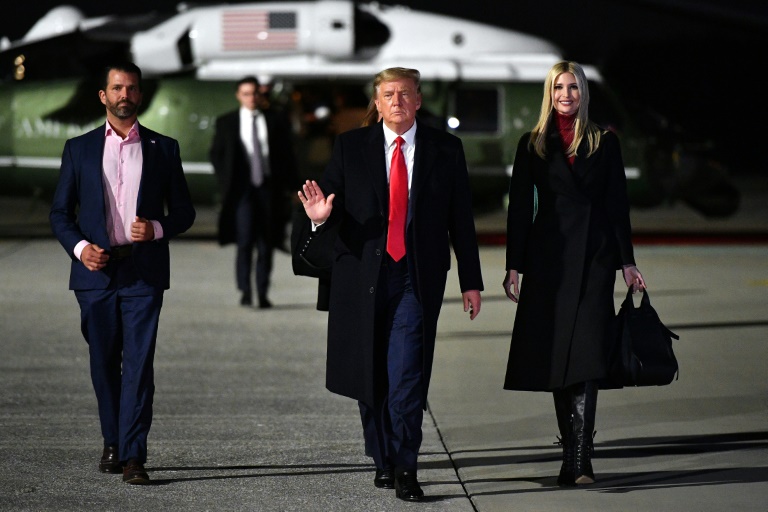
Ex-president Donald Trump’s deposition in New York’s civil probe into alleged fraud at his family business has been postponed following the death of his first wife, a justice official said Friday.

Trump and his eldest children, Donald Jr and Ivanka, had been due to start testifying under oath in New York Attorney General Letitia James’s probe on Friday.

But a spokesperson for James said the depositions had been delayed because of the death Thursday of Ivana Trump, who was Donald Jr and Ivanka’s mother.

“In light of the passing of Ivana Trump yesterday, we received a request from counsel for Donald Trump and his children to adjourn all three depositions, which we have agreed to,” the spokesperson said in a statement emailed to AFP.

“This is a temporary delay and the depositions will be rescheduled as soon as possible. There is no other information about dates or otherwise to provide at this time. 

“We offer our condolences to the Trump family,” she added.

Ivana Trump died aged 73 at her home in Manhattan. Police are investigating whether she accidentally fell down the stairs and the city’s medical examiner is due to determine the cause of death.

James suspects the Trump Organization fraudulently overstated the value of real estate properties when applying for bank loans, while understating them with the tax authorities in order to pay less in taxes.

The Trumps have denied any wrongdoing, but in June a judge ruled that investigators would have a week to quiz the trio from July 15.

If James, a Democrat, finds any evidence of financial misconduct, she can sue the Trump Organization for damages but cannot file criminal charges because it is a civil investigation.

James’s probe is one of several legal battles in which Trump is embroiled, threatening to complicate any bid for another run for the White House in 2024.

The Trump Organization is also under investigation by the Manhattan district attorney for possible financial crimes and insurance fraud.

Last July, the Trump Organization and its long-serving finance chief, Allen Weisselberg, pleaded not guilty in a New York court to 15 felony fraud and tax evasion charges.

Weisselberg’s trial is due to begin this year.

Trump, 76, has so far kept Americans guessing about whether he intends to seek the Republican nomination again.

Close Bitnami banner
Bitnami