US Business

JPMorgan Chase reports lower profits, gives cautious economic outlook

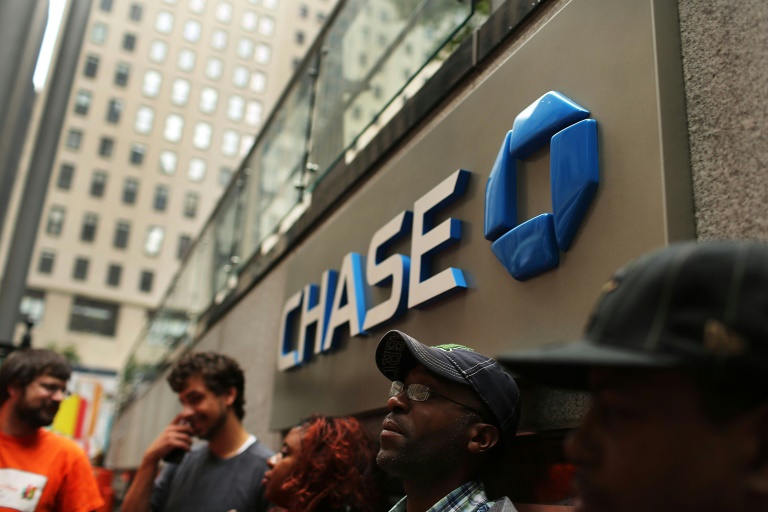
JPMorgan Chase reported a drop in second-quarter profits on Thursday as it warned of a weakening global economic outlook that prompted it to set aside additional funds to cover potential bad loans.

Executives sketched out a complex economic picture, with US households still relatively well off in terms of savings, a strong job market and robust consumer spending.

But headwinds — including high inflation, geopolitical uncertainty and fast-changing Federal Reserve policy to sharply curtail liquidity — “are very likely to have negative consequences on the global economy sometime down the road,” said Chief Executive Jamie Dimon in an earnings press release.

While consumers are “in very good shape,” there are “a serious set of issues” that threaten the outlook, Dimon told reporters on a conference call.

These include the worry that Russia will cut off Germany’s natural gas supply and the possibility that the Federal Reserve’s aggressive plan may not be sufficient to rein in inflation.

“The markets will be volatile,” Dimon predicted. “You can’t have all these kind of things going on and not have volatile markets.”

The big US bank’s earnings came in at $8.6 billion for the second quarter, down 28 percent from the year-ago period in results that missed analyst expectations.

Revenues were $30.7 billion, up one percent.

The bank said it added $428 million in credit reserves due to a “modest deterioration in the economic outlook.” In the year-ago period, JPMorgan’s profits were boosted by a $3 billion release in reserves.

The bank experienced $657 million in charge-offs for bad loans, up only modestly from the level in the previous quarter.

JPMorgan enjoyed a boost from higher net interest income following Fed interest rate increases. But the bank also incurred higher expenses on salaries, technology and marketing.

In corporate and investment banking, JPMorgan posted higher revenues in its trading businesses, but lower investment banking fees.

JPMorgan temporarily suspended share buybacks to meet new federal stress test requirements for managing risk assets, Dimon said.

– Consumers still spending –

The results came as the Labor Department reported another large spike in wholesale prices, one day after US consumer prices jumped the most in more than four decades.

Rising prices are the heart of investor fears about the consumer-driven US economy.

But JPMorgan Chief Financial Officer Jeremy Barnum said “there’s essentially no evidence” at this point of a drop-off in consumption.

The bank’s credit card data confirms that consumers are spending more on food and gasoline, but that they are still also spending on travel and dining.

“That indicates to us that consumers still don’t feel so pinched by inflation that they’re cutting back on discretionary spending, and that’s a relatively positive sign,” Barnum said.

Persistently high inflation has also raised fears that the Fed will adopt an even tougher line on monetary policy after the central bank announced a 0.75-percentage-point hike, its biggest since 1994.

The latest inflation readings have prompted talk of a potential one percent increase at the Fed meeting later this month — one that Federal Reserve Governor Christopher Waller said Thursday he would support.

Dimon said the 20 percent drop in the stock market in 2022 and the anemic state of initial public offerings and other corners of the financial system are evidence of the hit from the Fed shift.

But the impacts could worsen if the US central bank is unable to slow the economy with a “soft landing,” Dimon said.

Shares fell 4.6 percent to $106.78 in morning trading.

EU to seek cuts in heating, cooling of buildings to save gas

The European Commission is expected next week to ask EU countries to reduce heating and cooling of public buildings and offices to cut demand for gas, according to a document seen by AFP.

In order to better to withstand the drastic fall in Russian gas supplies, which could be cut off altogether, the commission is expected to urge governments across the 27-nation bloc to set limits on the amount of energy used by public buildings, offices, commercial properties and outdoor terraces.

For optimal energy use, it will recommend the rules require that public buildings be heated to no more than 19 degrees Celsius (66 degrees Fahrenheit) and cooled by air conditioning units set no lower than 25°C (77°F°).

“Energy saved during the summer is energy that can be used in winter,” the commission points out in the document.

Energy experts say lowering the thermostat by one degree could cut a building’s heating bill by about 10 percent. Air conditioning units generally struggle and fail to cool a room below 20°C so they waste energy trying. 

The recommendation is part of a series of measures Brussels is investigating to cut the EU’s gas consumption by 25 to 60 billion cubic metres (880 to 2,120 billion cubic feet) per year. 

The EU imported around 140 bcm of gas by pipeline from Russia last year, according to the International Energy Agency.

“Acting now could reduce the impact of a sudden supply disruption by one third,” says the document, which is due to be published on July 20 and could be modified in the interim.

It calculates that 11 billion cubic metres of gas could be directly saved from reducing excessive heating and cooling, and between four and 40 bcm via reduced electricity demand. Another 10-11 bcm could be saved from use by industries, which have already slowed production due to soaring prices.

The document urges EU governments, where this is “technically feasible and enforceable” to introduce binding limits on heating and cooling in “public buildings, offices, commercial buildings (in particular large buildings) … and open spaces like outdoor terraces”. 

“The role of public authorities in leading by example and as an important gas consumer -– 30 percent of the energy consumption — is key in this regard,” the document states.

The commission says that during the “gas winter” — October to March — “large savings can be achieved by deploying alternative heat sources for district heating, heat pumps in households” and energy saving campaigns urging the public to turn their thermostats down by one degree Celsius this winter.

But such “protected” energy customers — under EU legislation that means households, district heating that cannot switch to other fuels and certain essential social services — represent just 37 percent of total EU gas consumption. And simulations show these customers would be the last to be seriously affected by large-scale Russian gas disruptions, the commission says.

It is therefore concentrating most of its efforts on power stations and industry, which use huge amounts of gas.

“Abrupt cuts could damage specific branches of those industries which have little room to switch to other fuels — because gas is being used as feedstock for industrial processes –- or to reduce production without heavy damage,” the commission warns.

“It would be significantly less costly to moderately reduce natural gas demand for a longer period of time, starting earlier, than having to drastically curtail demand suddenly and without proper preparation,” it explains.

By way of encouragement, Brussels urges EU governments to set up “auction systems”, perhaps involving several countries, to compensate industrial consumers who agree to reduce their gas consumption.

If there is a total cut in Russian gas supply from July onwards, EU states might only be able to replenish 65-71 percent of their gas reserves percent before winter, the commission said, quoting forecasts by European gas transmission system operators (ENTSOG).

The commission’s energy saving proposals are due to be discussed by EU energy ministers at a meeting in Brussels on July 26.

Amazon offers to settle EU antitrust cases over rival data

Amazon has offered a settlement against EU charges that the online giant undermined rivals by misusing the sensitive information of independent sellers to benefit its own retail business, the EU said Thursday.

The offer by Amazon is a huge step by the US-based behemoth that has denied for years accusations by rivals and regulators that it unfairly uses the troves of data parked on its platform to benefit its own products and services.

In its offer, the US tech giant commits to stop using non-public data such as sales performance and revenue that are “relating to or derived from the activities of independent sellers on its marketplace,” an EU statement said.

Amazon also made an offer to end a second EU investigation on whether its hugely popular Prime service unfairly pushes buyers towards sellers using Amazon’s logistics service.

This probe also looked into the Buy Box in which a user can swiftly make a purchase, skipping through the inconvenience of several screens and choices.

The company said it would display an alternative offer in the Buy Box feature if there is a substantial difference in price or delivery from the first one.

Amazon said while “we… disagree with several conclusions the European Commission made, we have engaged constructively with the Commission to address their concerns.”

This will “preserve our ability to serve European customers and the more than 185,000 European small and medium-sized businesses selling through our stores”.

– ‘Win-win’ –

The EU said it was asking rivals for feedback on Amazon’s concessions by September 9 and, if approved, they would remain in place for five years under close monitoring by Brussels.

Many of these accusations towards Amazon are being answered separately in the EU’s landmark Digital Markets Act (DMA), a major EU legislation set to come into force next year.

The DMA imposes a long list of do’s and don’ts on tech giant gatekeepers, including how they handle the sensitive data of competitors who use their platforms.

Alfonso Lamadrid, a competition lawyer at Garrigues in Brussels said the settlement offer was “a win-win” for both the Commission and Amazon.

On the one hand, it kept the commission from potentially fighting a long battle in court, and “at the same time the commitments essentially anticipate what Amazon would have needed to do to comply with the upcoming DMA,” he said.

Amazon had previously settled a case with the EU commission over e-books and still faces scrutiny with national regulators in Germany, as well as non-EU Britain.

The commission said the settlement would not apply in Italy, where Amazon paid a huge fine and changed its business practices over similar concerns.

US vows to use all means to stop Iran nuclear bomb in new Israel pact

The US and Israel signed a new security pact on Thursday reinforcing their common front against Iran, as President Joe Biden pledged to use “all” American power to stop the Islamic republic from acquiring nuclear weapons.

The declaration was inked by Israeli Prime Minister Yair Lapid and Biden, who was making his first trip to the Middle East as president.

It commits the United States to “never to allow Iran to acquire a nuclear weapon”, stating that it “is prepared to use all elements of its national power to ensure that outcome”.

A landmark deal that imposed curbs on Iran’s suspect nuclear programme in exchange for sanctions relief was torpedoed in 2018 by former US president Donald Trump. Efforts to revive the accord have been stalled since March.

Asked on Thursday how long the US was prepared to give those efforts, Biden said “we’re not going to wait forever” for a response from the Islamic republic.

A day after Israeli officials presented Biden with their latest military hardware, the president said the two countries would co-operate on developing “high-energy laser weapon systems”.

Israel, which has the Middle East’s sole but undeclared nuclear arsenal, is staunchly opposed to the deal with Iran, which has always denied seeking the bomb.

Lapid warned “words” and “diplomacy” were not enough to thwart Iran’s alleged nuclear ambitions.

“The only thing that will stop Iran is knowing that if they continue to develop their nuclear programme the free world will use force,” he said.

Iran’s ultra-conservative President Ebrahim Raisi warned the US and its allies that his country “will not accept any crisis or insecurity in the region”.

“Any mistake made in this region will be met with a harsh and regrettable response,” Raisi said in televised remarks.

– Saudi oil –

Biden touched down in Israel on Wednesday, his 10th visit to the Jewish state since 1973, when he came as a newly elected senator.

He held talks with Israeli President Isaac Herzog later Thursday and was due to meet an old acquaintance, opposition leader Benjamin Netanyahu.

On Friday the US president will travel to the occupied West Bank to meet Palestinian president Mahmud Abbas, before Air Force Once makes the first publicly acknowledged direct flight from Israel to Saudi Arabia.

Biden said the journey itself “represents important progress”, following Israel launching diplomatic ties in 2020 with Riyadh’s Gulf neighbours the United Arab Emirates and Bahrain.

“Israel’s integration in the region, Israel’s peace with its neighbours, these are essential goals,” Biden said.

Russia’s invasion of Ukraine will be a top priority for the president’s meetings with Arab leaders, with volatile oil prices due to be the focus of talks with Saudi officials in particular.

The president will seek to persuade Saudi Arabia to pump more oil in order to drive down prices, which have fuelled US inflation to the highest levels in decades.

– ‘Israel wants peace’ –

On Thursday, Biden reaffirmed Washington’s policy of pressing for “a two-state solution for two people, both of whom have deep and ancient roots in this land, living side by side in peace and security.”

But he made it clear he has no plans to reverse Trump’s controversial decision to recognise Jerusalem as Israel’s capital.

Lapid is serving as caretaker prime minister ahead of elections in November — Israel’s fifth vote in less than four years — and is therefore not expected to launch new talks with Palestinians.

“I haven’t changed my position,” the centrist politician said alongside Biden. “A two-state solution is a guarantee for a strong, democratic state of Israel, with the Jewish majority.”

A US official said the administration would announce during the visit “a significant funding package” for hospitals that serve Palestinians in Israeli-annexed east Jerusalem, which Palestinians claim as their future capital.

It will also announce measures towards providing 4G internet access in the West Bank and Israeli-blockaded Gaza Strip, the official said, addressing a persistent Palestinian frustration.

But long-term peace negotiations were not on this week’s agenda, the official said.

“We are not going to come in with a top down peace plan because we don’t believe that would be the best approach.”

aue-bs/rsc/dv

Stocks, oil drop on fresh inflation spikes

Stock markets mostly retreated Thursday as fresh evidence of runaway global inflation ramped up expectations of more aggressive interest rate hikes by central banks.

Eurozone inflation will end the year at 7.6 percent, much higher than previously forecast, the EU said Thursday.

The prediction comes one day after US inflation came in at a blistering 9.1 percent last month, the highest level for more than 40 years, as the Ukraine war fuelled energy prices.

US producer prices rose by a faster-than-expected 1.1 percent in June from the previous month, data released Thursday showed.

Market watchers are now wondering whether the Federal Reserve could hike US borrowing costs by a full percentage point at a scheduled policy meeting this month.

The central bank in June unveiled its first 75 basis-point rise in three decades and is one of dozens to hike rates. 

Singapore and the Philippines became the latest to tighten policy Thursday, a day after Canada, New Zealand, Chile and South Korea announced hikes.

The US inflation reading followed last week’s news of a surprise spike in jobs creation, which suggested the world’s top economy was withstanding the rate hikes, giving the Fed more room for further increases.

“Stubbornly high inflation increases the risk that the (Fed) continues to hike aggressively and triggers a recession,” said Kristina Clifton at Commonwealth Bank of Australia, adding that belief was picking up momentum on trading floors.

The European Commission on Thursday slashed growth forecasts for the eurozone, saying the consequences from the war in Ukraine were continuing to destabilise the economy.

Growing fears of a global recession sent oil prices tumbling, with the main US contract, WTI, losing more than five percent.

Federated Hermes senior economist Silvia Dall’Angelo said that while commodity prices were off their recent peaks, they remained elevated amid risks of further supply shocks.

The Fed’s drive to tighten monetary policy continues to send the dollar higher, and on Wednesday it finally rose above parity with the euro for the first time since late 2002, before falling again.

The euro fell back below parity once again shortly after US markets opened.

Europe’s main stock indices were down around 1.5 percent in afternoon trading, with Milan down more than three percent over fears political tensions within Prime Minister Mario Draghi’s coalition government could bring it crashing down and spark snap elections.

Former anti-establishment Five Star Movement did not support the government in a confidence vote, despite Draghi’s warning that his cabinet would not carry on without it.

On Wall Street stocks tumbled with the Dow falling two percent as data showed wholesale price rises accelerating and bank earnings disappointing. 

JPMorgan Chase reported a drop in second-quarter profits, reflecting the impact of a weakening macroeconomic outlook that led it to set aside funds in case of bad loans.

The big US bank’s earnings came in at $8.6 billion for the quarter, down 28 percent from the year-ago period in results that missed analyst expectations.

Chief Executive Jamie Dimon said key elements in the US economy remained healthy, but that macroeconomic headwinds including inflation “are very likely to have negative consequences on the global economy sometime down the road”.

The bank’s shares fell 3.8 percent as trading got underway.

– Key figures at around 1330 GMT –

London – FTSE 100: DOWN 1.5 percent at 7,052.94 points

Frankfurt – DAX: DOWN 1.6 percent at 12,548.59

Paris – CAC 40: DOWN 1.4 percent at 5,917.51

EURO STOXX 50: DOWN 1.5 percent at 3,401.76

New York – Dow: DOWN 2.0 percent at 30,155.37

Tokyo – Nikkei 225: UP 0.6 percent at 26,643.39 (close)

Hong Kong – Hang Seng Index: DOWN 0.2 percent at 20,751.21 (close)

Shanghai – Composite: DOWN 0.1 percent at 3,281.74 (close)

Euro/dollar: DOWN at $0.9956 from $1.0061 Wednesday

Pound/dollar: DOWN at $1.1770 from $1.1893 

Euro/pound: DOWN at 84.57 pence from 84.59 pence

Dollar/yen: UP at 139.21 yen from 137.36 yen

West Texas Intermediate: DOWN 5.2 percent at $91.32 per barrel

Brent North Sea crude: DOWN 4.4 percent at $95.21 per barrel

burs-rl/bp

UN urges Africa to swap commodities for tech

The UN’s trade body on Thursday said African economies were vulnerable to a triple shock as it urged governments to pave the way for tech startups that would  ease dependence on commodities.

“A recent analysis by the UN Global Crisis Response Group on Food, Energy and Finance, which analyses the global economic cost by the war in Ukraine, indicates that Africa and especially sub-Saharan Africa is now one of the world’s most exposed regions to the current crisis,” Rebeca Grynspan, secretary-general of the United Nations Conference on Trade and Development (UNCTAD), said at the launch of the body’s latest Africa report. 

“One out of two Africans — that means over 600 million people — are severely vulnerable to food, energy and finance shocks, all at once,” she added.

The report recommended diversifying away from both commodities exports, on which many African economies continue to depend, and traditional service sectors — such as travel and transport — towards more knowledge-intensive services.

“We have been talking about diversification as long as I can remember, and how Africa can diversify its economy, and the fact is  that we’ve been looking at it through the lens of diversifying within the commodity sector,” said Paul Akiwumi, a director with UNCTAD. 

“Now it’s also very timely because of technology,” he added.

He pointed to budding fintech, healthtech, agritech, e-mobility and other tech-focused sectors in African countries.  

“Africa has a growing educated middle class who need these jobs, and these types of small and medium size enterprises provide high skilled jobs — operational officers, finance officers, government liaison relations officers, software engineers, HR managers, administrative accountants,” he said. 

Akiwumi said governments must provide entrepreneurs the necessary regulatory frameworks, as well as training and capacity building. 

He also said they must implement the African Continental Free Trade Area (AfCFTA) agreement, a trade pact that came into force last year, to scale up developments across the continent.

Russian strikes kill 20 as Zelensky urges 'special tribunal' for Moscow

Russian missiles struck Vinnytsia in central Ukraine Thursday, killing at least 20 people including three children, in what President Volodymyr Zelensky called “an open act of terrorism”.

The midday attack on the city hundreds of kilometres from the frontlines and invading Russian troops came as EU officials convened in The Hague to discuss war crimes in Ukraine.

The charred remains of upturned cars surround by burnt debris were seen in images distributed by officials next to a business gutted by a fire with brown smoke billowing nearby.

“There were eight rockets, two of which hit the centre of the city. Twenty people have died, including three children. There a large, large number of wounded,” Zelensky said during an address European official at The Hague.

The Ukrainian leader led a moment of silence before urging European and International Criminal Court officials during an address to open a “special tribunal” into Russia’s invasion.

“I believe it is inevitable that International Criminal Court will bring accountability to those guilty of crimes under its jurisdiction: war crimes, crimes against humanity, genocide.”

– War crimes tribunal –

The ICC in The Hague opened an investigation into possible war crimes in Ukraine just days after Moscow’s forces invaded and it dispatched dozens of investigators to the country to gather evidence.

Russia invaded on February 24 and the conflict has seen thousands of people killed, destroyed cities and forced millions to flee their homes.

“Every day, Russia kills civilians, kills Ukrainian children, carries out missile attacks on the civilian facilities where there is no military target. What is this, if not an open act of terrorism?” Zelensky said after the Vinnytsia attack.

A Ukraine military spokesman said its forces had managed to knock out two from a barrage of cruise missiles that were launched from a Russian submarine in the Black Sea and caused widespread damage in Vinnytsia.

Deadly strikes in central Ukraine have become relatively rare, but the war has raged around cities like Mykolaiv in the south which the presidency said was hit by a “massive missile strike”.

“Two schools, transport infrastructure and a hotel were damaged,” the presidency said in its morning military update early Thursday.

The skeletal insides of one building gutted by the strikes were visible in images distributed by local officials, with municipal workers clearing bricks and rubble strewn after the attack.

The heaviest fighting in Ukraine, however, has focused recently on the industrial Donbas region in the east.

– ‘Total victory’ –

Moscow-backed troops there said Thursday they were closing in on their next target, after wresting control of sister cities Lysychansk and Severodonetsk two weeks ago.

“Siversk is under our operational control, which means that the enemy can be hit by our aimed fire all over the area,” a pro-Moscow rebel official, Daniil Bezsonov, was cited as saying by Russian state-run news agency TASS.

In a Ukrainian trench position along the eastern frontline, a 25-year-old soldier who goes by the nom de guerre Moryak was working to fortify defences.

“We hide when they shell, we dig when it’s calm,” another soldier nearby told AFP journalists.

A fellow serviceman in their trench dismissed the idea Ukrainian and Russian forces could reach an agreement to halt fighting, explaining their goal was “total victory”.

– High-stakes grain talks –

Several rounds of negotiations to end the fighting at the beginning of the conflict fell through, but delegations from Kyiv and Moscow met in Istanbul this week to discuss unblocking Ukraine’s grain exports.

The meeting involving UN and Turkish officials ended after more than three hours with an agreement to meet again in Turkey next week.

Zelensky said “the entire world” was counting on the negotiations to finalise a deal.

The conflict has pushed up grain prices and Europe is suffering from sky-rocketing energy bills stemming from sanctions on Russia and Moscow’s move to limit gas flows to Europe.

US Treasury Secretary Janet Yellen said Thursday that Russia’s war in Ukraine posed the “greatest challenge” to the global economy, as G20 ministers prepare to start talks in Indonesia.

The European Commission meanwhile slashed growth forecasts for the eurozone, saying the consequences from the war in Ukraine were continuing to destabilise the economy because of record high inflation.

burs-jbr/cdw

US firm named in Beirut blast lawsuit denies wrongdoing

A US firm targeted in a $250 million lawsuit over the 2020 port explosion in Beirut that killed more than 200 people has denied any wrongdoing in the tragedy.

TGS, a US-Norwegian geophysical services group, said it is aware of the suit filed this week in a Texas court by nine plaintiffs who are all US citizens, but said it has not yet been formally served with the papers.

“We deny each and every allegation raised in the lawsuit, and intend to vigorously defend this matter in court,” TGS said in a statement issued late Wednesday.

TGS owns the British firm Spectrum Geo, which a decade ago chartered the Rhosus ship, which was carrying the ammonium nitrate that was subsequently unloaded at Beirut port and exploded on August 4, 2020.

Besides the fatalities, the blast wounded thousands of people and ravaged entire neighborhoods. It was described as one of the largest non-nuclear explosions in recent history.

Accountability Now, a Swiss foundation assisting the plaintiffs, said Spectrum had “entered into a series of highly profitable but suspicious contracts” with the energy ministry in Beirut to transport seismic survey equipment from Lebanon allegedly to Jordan aboard the Rhosus.

The minister at the time was Gebran Bassil, President Michel Aoun’s son-in-law, who has denied any wrongdoing in connection with the explosion.

Spectrum had chartered the derelict Moldovan-flagged Rhosus — but the ship never actually set sail. 

The Lebanese investigation into the blast has faced systematic and blatant political obstruction from day one.

In its statement, TGS said it had carried out a comprehensive investigation of the circumstances that brought the Rhosus to the port of Beirut and that Spectrum had no responsibility for the explosion.

“We are confident that we will prevail in this matter,” TGS said.

US vows to use all means to stop Iran nuclear bomb in new Israel pact

The US and Israel signed a new security pact on Thursday reinforcing their common front against Iran, as President Joe Biden pledged to use “all” American power to stop the Islamic republic from acquiring nuclear weapons.

The Jerusalem Declaration on joint security was inked by Israeli Prime Minister Yair Lapid and Biden, as the US leader was making his first trip to the Middle East as president.

It commits the United States to “never to allow Iran to acquire a nuclear weapon”, stating that it “is prepared to use all elements of its national power to ensure that outcome”.

A landmark deal that imposed curbs on Iran’s suspect nuclear programme in exchange for sanctions relief was torpedoed in 2018 by former US president Donald Trump. Efforts to revive the accord have been stalled since March.

Asked on Thursday how long the US was prepared to give those efforts, Biden said “we’re not going to wait forever” for a response from the Islamic republic.

Israel, which has the Middle East’s sole but undeclared nuclear arsenal, is staunchly opposed to the deal with Iran, which has always denied seeking the bomb.

Lapid warned “words” and “diplomacy” were not enough to thwart Iran’s alleged nuclear ambitions.

“Diplomacy will not stop them. The only thing that will stop Iran is knowing that if they continue to develop their nuclear program the free world will use force. The only way to stop them is to put a credible military threat on the table,” Lapid told reporters alongside Biden.

Iran’s ultra-conservative President Ebrahim Raisi warned Wednesday that if Biden’s trip to the Middle East was aimed at safeguarding Israel’s security, he was destined to fail.

US “efforts will not create security for the Zionists in any way,” said.

– Saudi oil –

Biden touched down in Israel on Wednesday, his 10th visit to the Jewish state since 1973, when he came as a newly elected senator.

He is scheduled to meet Israeli President Isaac Herzog and an old acquaintance, opposition leader Benjamin Netanyahu later Thursday, before holding talks with Palestinian president Mahmud Abbas in the occupied West Bank on Friday.

Air Force One will then make the first publicly acknowledged direct flight between Israel and Saudi Arabia, where Biden will meet Arab leaders.

Russia’s invasion of Ukraine will remain a top priority for the Biden administration during his regional tour, with volatile oil prices due to be the focus of talks with Saudi officials.

The president will seek to persuade Saudi Arabia to pump more oil in order to drive down prices, which have fuelled US inflation to the highest levels in decades.

– ‘Israel wants peace’ –

Since landing, Biden has repeatedly renewed Washington’s long-standing call for a two-state solution to the Israeli-Palestinian conflict, but made clear Thursday that he has no plans to reverse Trump’s controversial decision to recognise Jerusalem as Israel’s capital.

Lapid is serving as caretaker prime minister ahead of elections in November — Israel’s fifth vote in less than four years — and is therefore not expected to launch new talks with Palestinians.

But the centrist premier restated his support for a two-state solution.

“I haven’t changed my position. A two-state solution is a guarantee for a strong, democratic state of Israel, with the Jewish majority.”

“We send with you, to all the nations of the region, including of course the Palestinians, a message of peace. Israel wants peace and believes in peace. We will never yield an inch of our security,” Lapid said alongside Biden.

A US official said the administration would announce during the visit “a significant funding package” for hospitals that serve Palestinians in Israeli-annexed east Jerusalem, which Palestinians claim as their future capital.

It will also announce measures towards providing 4G internet access in the West Bank and Israeli-blockaded Gaza Strip, the US official said, addressing a persistent Palestinian frustration.

But, with Israel in political limbo ahead of its election, Biden is not expected to push Lapid for significant policy changes regarding the Palestinians.

“We are not going to come in with a top down peace plan because we don’t believe that would be the best approach,” the US official said.

But, “if the two parties are prepared to talk, we will be there,” the official added.

aue-bs/dv

Russian strikes kill 17 in central Ukraine

Russian missiles struck Vinnytsia in central Ukraine Thursday, killing at least 17 people including a child, in what President Volodymyr Zelensky called “an open act of terrorism”.

The midday attack on the city hundreds of kilometres from the frontlines and invading Russian troops came as EU officials convened in The Hague to discuss war crimes in Ukraine.

The charred remains of several upturned cars were seen in images distributed by officials next to a business gutted by a fire with brown smoke billowing from the impact site.

“At least 17 people have died, including two children. Dozens are injured. Residential buildings, administrative and commercial buildings have suffered significant destruction and damage,” Ukraine’s prosecutor general said in statement.

Zelensky, who had called for a tribunal in The Hague to hold Moscow accountable for war crimes, described Russia as a “killer country” after the attack.

“Every day, Russia kills civilians, kills Ukrainian children, carries out missile attacks on the civilian facilities where there is no military target. What is this, if not an open act of terrorism?” the Ukraine leader said on social media.

– War crimes tribunal? –

In opening remarks at the Hague conference organised by the International Criminal Court and the European Commission, Ukraine Foreign Minister Dmytro Kuleba said Russia should be held responsible for its actions in Ukraine. 

“All we want is the crime of aggression to not remain unpunished,” he told EU and ICC officials.

In a later tweet, Kuleba described the Vinnytsia attack as “a war crime”.

The International Criminal Court in The Hague opened an investigation into possible war crimes in Ukraine just days after Moscow’s forces invaded and it dispatched dozens of investigators to the country to gather evidence.

Russia invaded Ukraine on February 24 and the conflict has seen thousands of people killed, destroyed cities and forced millions to flee their homes.

Deadly Russian strikes in central Ukraine have become relatively rare, but the war has raged around cities like Mykolaiv in the south which the presidency said was hit by a “massive missile strike”.

“Two schools, transport infrastructure and a hotel were damaged,” the presidency said in its morning military update early Thursday.

The skeletal insides of one building gutted by the strikes were visible in images distributed by local officials, with municipal workers clearing bricks and rubble strewn after the attack.

The heaviest fighting in Ukraine however has focused recently on the industrial Donbas region in the east.

– ‘Total victory’ –

Moscow-backed troops there said Thursday they were closing in on their next target, after wresting control of sister cities Lysychansk and Severodonetsk two weeks ago.

“Siversk is under our operational control, which means that the enemy can be hit by our aimed fire all over the area,” a pro-Moscow rebel official, Daniil Bezsonov, was cited as saying by Russian state-run news agency TASS.

In a Ukrainian trench position along the eastern frontline, a 25-year-old soldier who goes by the nom de guerre Moryak was working to fortify defences.

“We hide when they shell, we dig when it’s calm,” he told AFP journalists.

A fellow serviceman in their trench dismissed the idea Ukrainian and Russian forces could reach an agreement to halt fighting, explaining their goal was “total victory”.

– High-stakes grain talks –

Several rounds of negotiations to end the fighting at the beginning of the conflict fell through, but delegations from Kyiv and Moscow met in Istanbul this week to discuss unblocking Ukraine’s grain exports.

The high-stakes meeting involving UN and Turkish officials in Istanbul broke up after slightly more than three hours with an agreement to meet again in Turkey next week.

“The success of this story is needed not only for our state, but also — without exaggeration — for the entire world,” Zelensky said in his evening address Wednesday after the talks.

The conflict in Ukraine has pushed up grain prices and Europe is suffering from sky-rocketing energy bills stemming from sanctions on Russia and Moscow’s move to limit gas flows to Europe.

US Treasury Secretary Janet Yellen said Thursday that Russia’s war in Ukraine posed the “greatest challenge” to the global economy, as G20 ministers prepare to start talks in Indonesia.

The European Commission meanwhile slashed growth forecasts for the eurozone, saying the consequences from the war in Ukraine were continuing to destabilise the economy because of record high inflation.

burs-jbr/bp

Close Bitnami banner
Bitnami