US Business

JPMorgan Chase reports lower profits, gives cautious economic outlook

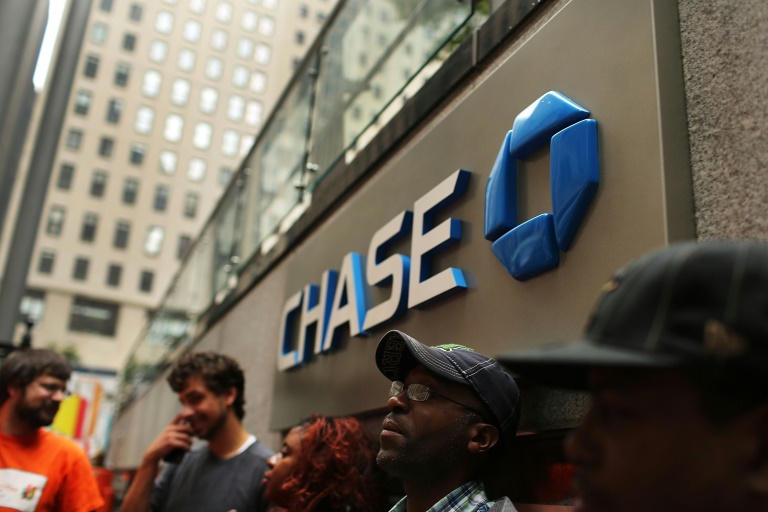
JPMorgan Chase reported a drop in second-quarter profits on Thursday, reflecting the impact of a weakening macroeconomic outlook that led it to set aside funds in case of bad loans.

The big US bank’s earnings came in at $8.6 billion for the quarter, down 28 percent from the year-ago period in results that missed analyst expectations.

Revenues were $30.7 billion, up one percent.

Chief Executive Jamie Dimon said key elements in the US economy remained healthy, such as the job market and consumer spending. 

But headwinds — including high inflation, geopolitical uncertainty and fast-changing Federal Reserve policy to sharply curtail liquidity — “are very likely to have negative consequences on the global economy sometime down the road,” Dimon said.

The bank added $428 million in credit reserves due to a “modest deterioration in the economic outlook.” In the year-ago period, JPMorgan’s profits were boosted by a $3 billion release in reserves.

JPMorgan enjoyed a boost from higher net interest income following Fed interest rate increases. But the bank also incurred higher expenses on salaries, technology and marketing.

In corporate and investment banking, JPMorgan posted higher revenues in its trading businesses, but lower investment banking fees.

Dimon said the bank performed well in the quarter and was “prepared for whatever happens” in the global economy.

JPMorgan temporarily suspended share buybacks to meet new federal stress tests requirements for managing risk assets, Dimon said.

Shares fell 2.8 percent to $108.82 in pre-market trading.

Russia's war in Ukraine 'greatest challenge' to global economy: Yellen

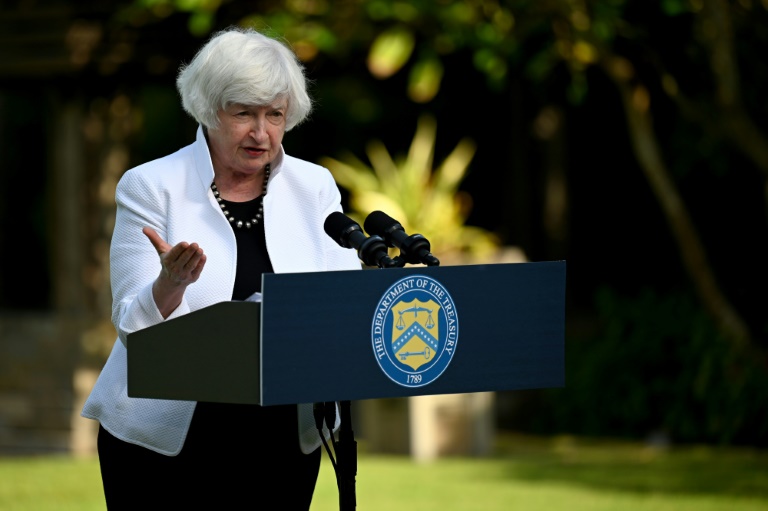
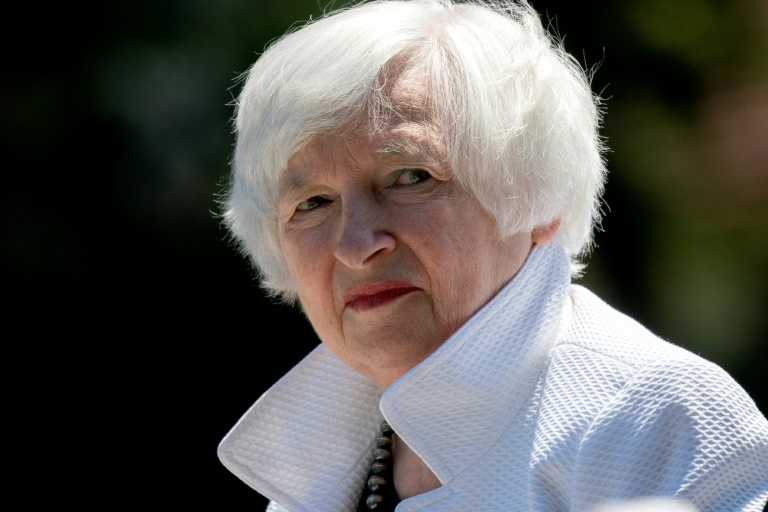
Russia’s war in Ukraine poses the greatest threat to the global economy, US Treasury Secretary Janet Yellen said Thursday as G20 ministers prepare to start talks in Indonesia.

Moscow’s invasion has sent inflation soaring at a time when the world is struggling to recover from the Covid-19 pandemic, endangering the gains of the past two years and threatening widespread hunger and poverty.

“Our greatest challenge today comes from Russia’s illegal and unprovoked war against Ukraine,” she said on the resort island of Bali ahead of a meeting between finance ministers from the world’s top economies and central bank governors on Friday and Saturday.

“We are seeing negative spillover effects from that war in every corner of the world, particularly with respect to higher energy prices, and rising food insecurity,” she added.

“Representatives of Putin’s regime have no place at this forum.”

Yellen said she will continue to press G20 allies at the meeting for a price cap on Russian oil to choke off Putin’s war chest and pressure Moscow to end its invasion while bringing down energy costs.

“A price cap… is one of our most powerful tools to address the pain that Americans and families across the world are feeling at the gas pump and the grocery store,” she said.

“A limit on the price of Russian oil would deny Putin revenue his war machine needs.”

She expressed hope that India and China would join such a cap, saying it “would serve their own interests” to put downward pressure on prices for consumers globally.

– Silent on walkout –

But she refused to be drawn on whether Western officials will stage a multi-nation walkout when Russian officials speak, as they did at a G20 meeting in Washington in April.

“It cannot be business as usual,” she said. “I can tell you that I can certainly expect to express in the strongest possible terms my views on Russia’s invasion.”

“I expect that many of my colleagues will do the same.”

Russian Finance Minister Anton Siluanov will only attend the talks virtually, a week after Foreign Minister Sergei Lavrov found himself outnumbered by G20 counterparts in their criticism of Moscow’s military assault.

Ukraine is a vital exporter of wheat, grains and sunflower oil, but shipments have been disrupted since Russia invaded in February, creating a policy headache for world leaders as well as the risk of a humanitarian crisis.

The Treasury chief, who arrived in Indonesia after meeting her Japanese counterpart in Tokyo, said it was “troubling” to see the impacts of the war, contributing to higher energy prices, food insecurity and the rising prospect of hunger globally.

She said she will press G20 countries to do more for developing countries “given the deteriorating global economic conditions” since Moscow’s invasion.

“A key objective of this trip is to push G20 creditors including China to finalise debt restructuring for developing countries now facing debt distress,” she said.

Turning to Sri Lanka, whose leader fled the country this week after mass protests over the country’s dire economic crisis, Yellen said she hoped Beijing — a major creditor of the South Asian island — would step in to help.

“Sri Lanka is clearly unable to repay that debt and it’s my hope that China will work with Sri Lanka to restructure the debt,” she said.

– Global outlook ‘darkened’ –

Yellen’s comments echo the head of the International Monetary Fund, who said Wednesday that the global economic outlook had “darkened significantly” because of Moscow’s invasion, just months after it revised down its global growth forecast for 2022 and 2023.

The IMF is “projecting a further downgrade to global growth” in 2022 and 2023, Kristalina Georgieva said in a blog post published ahead of this weekend’s meeting.

The risk of “social instability” was also increasing because of rising food and energy prices, she wrote.

But there was substantive progress made in attempts to break the impasse on Wednesday after Russia and Ukraine met in Turkey for their first direct talks since March on a deal to relieve the food crisis caused by blocked Black Sea grain exports.

UN Secretary General Antonio Guterres called it a “ray of hope to ease human suffering and alleviate hunger around the world” ahead of another planned round of talks next week.

Kevin Spacey pleads not guilty to sexual assault in UK

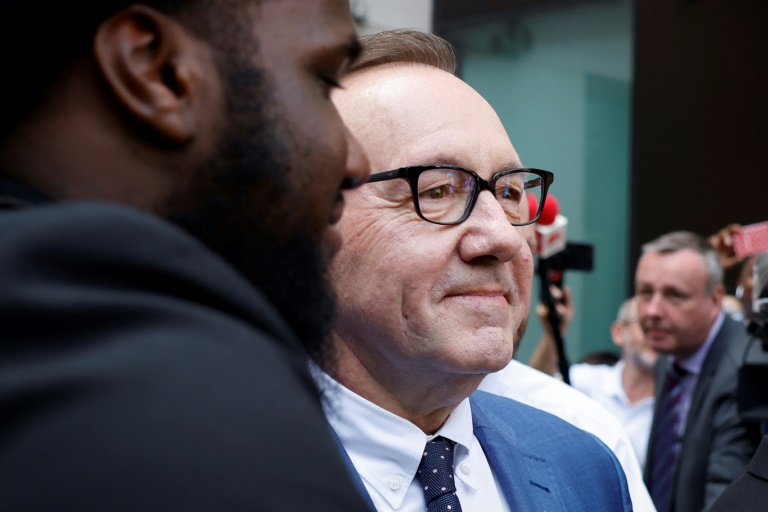
Hollywood star Kevin Spacey on Thursday pleaded not guilty at London’s Old Bailey court to four charges of sexual assault against three men.

The 62-year-old star was wearing a blue suit and blue tie as he stood in the dock at the UK’s top criminal court.

He spoke to confirm his name and age before pleading not guilty to four charges of sexual assault and one count of causing a person to engage in penetrative sexual activity without consent.

The Crown Prosecution Service, which is responsible for bringing prosecutions in England and Wales, said in May that it had authorised charges against Spacey.

A two-time Oscar winner for “The Usual Suspects” and “American Beauty”, he was formally charged by police in the British capital the following month and voluntarily appeared in court within days.

At a hearing last month, Spacey’s lawyer Patrick Gibbs told the court his client “strenuously denies any and all criminality in this case”.

“He needs to answer these charges if he is to proceed with his life,” Gibbs added at the time.

The deputy chief magistrate at the initial hearing was told that the actor lives in the United States, where he has family and a nine-year-old dog.

The magistrate formally withdrew an arrest warrant that had been issued two weeks prior after learning Spacey had travelled to London to appear in person.

Reporting restrictions prevent the media going into detail about the charges to avoid prejudicing a jury at any trial.

– ‘Prove my innocence’ –

The first two charges of sexual assault date from March 2005 in London and concern the same man, who is now in his 40s.

The third is alleged to have happened in London in August 2008 against a man who is now in his 30s. 

Spacey has also been charged “with causing a person to engage in penetrative sexual activity without consent” against the man in his 30s.

The fourth sexual assault is alleged to have occurred in Gloucestershire, western England, in April 2013 against a third man, who is also now in his 30s.

None of the alleged victims can be identified under English law.

After the prosecutors’ May announcement, Spacey said he was “disappointed” with the decision.

“I will voluntarily appear in the UK as soon as can be arranged and defend myself against these charges, which I am confident will prove my innocence.”

Spacey was artistic director of The Old Vic theatre in London between 2004 and 2015.

Allegations against him emerged in the wake of the #MeToo movement that saw numerous claims of sexual assault and harassment in the movie industry.

That prompted an investigation by London’s Metropolitan Police and a review by The Old Vic of his time in charge there.

Claims against Spacey in 2017 led to the end of his involvement in the filming of the final season of the Netflix drama “House of Cards”.

He was also dropped from a Gore Vidal biopic on the TV streaming network and as the industrialist J. Paul Getty in “All the Money in the World”.

Russia's war in Ukraine 'greatest challenge' to global economy: Yellen

Russia’s war in Ukraine poses the greatest threat to the global economy, US Treasury Secretary Janet Yellen said Thursday as G20 ministers prepare to start talks in Indonesia.

Moscow’s invasion has sent inflation soaring at a time when the world is struggling to recover from the Covid-19 pandemic, endangering the gains of the past two years and threatening widespread hunger and poverty.

“Our greatest challenge today comes from Russia’s illegal and unprovoked war against Ukraine,” she said on the resort island of Bali ahead of a meeting between finance ministers from the world’s top economies and central bank governors on Friday and Saturday.

“We are seeing negative spillover effects from that war in every corner of the world, particularly with respect to higher energy prices, and rising food insecurity,” she added.

“The international community must be clear-eyed about holding Putin accountable for  the global economic and humanitarian consequences of his war.”

Yellen said she will continue to press G20 allies at the meeting for a price cap on Russian oil to choke off Putin’s war chest and pressure Moscow to end its invasion while bringing down energy costs.

“A price cap… is one of our most powerful tools,” she said, adding that a limit would deny Putin “the revenue his war machine needs”.

She expressed hope that India and China would join such a cap, saying it “would serve their own interests” to put downward pressure on prices for consumers across the world.

But she refused to be drawn on whether Western officials will stage a multi-nation walkout when Russian officials speak, as they did at a G20 meeting in Washington in April.

“It cannot be business as usual,” she said. “I can tell you that I can certainly expect to express in the strongest possible terms my views on Russia’s invasion… to talk about its impact on Ukraine and the entire global economy and to condemn it.”

“I expect that many of my colleagues will do the same.”

– Global outlook ‘darkened’ –

Russia’s finance minister will not attend the Bali talks, instead addressing it virtually, a week after Foreign Minister Sergei Lavrov found himself outnumbered by G20 counterparts in their criticism of Moscow’s military assault.

Yellen’s comments echo the head of the International Monetary Fund, who said Wednesday that the global economic outlook had “darkened significantly” because of Moscow’s invasion, just months after it revised down its global growth forecast for 2022 and 2023.

The IMF is “projecting a further downgrade to global growth” in 2022 and 2023, Kristalina Georgieva said in a blog post published ahead of this weekend’s meeting.

The risk of “social instability” was also increasing because of rising food and energy prices, she wrote.

But there was substantive progress made in attempts to break the impasse on Wednesday after Russia and Ukraine met in Turkey for their first direct talks since March on a deal to relieve the food crisis caused by blocked Black Sea grain exports.

UN Secretary General Antonio Guterres called it a “ray of hope to ease human suffering and alleviate hunger around the world” ahead of another planned round of talks next week.

Chinese homebuyers halt mortgage payments on unfinished projects

Chinese homebuyers in dozens of cities have stopped making mortgage payments for unfinished projects, according to data from industry groups, worsening fears of financial contagion in the country’s troubled real estate sector.

Authorities launched a crackdown on excessive debt in the property sector in 2020, and giants such as Evergrande and Sunac have since struggled to make payments and renegotiate with creditors, leaving them teetering on the edge of bankruptcy.

In the latest blow, a growing number of homebuyers have refused to pay mortgages if developers do not resume construction on units already sold.

As of Wednesday, homebuyers had halted payments for units in at least 100 residential property projects in 50 cities, according to data from research firm China Real Estate Information Corporation (CRIC).

This was up from 28 projects on Monday and 58 on Tuesday, according to a report by analysts at financial firm Jefferies.

“The names on the list doubled every day in the past three days,” they said.

These include projects that have experienced significant delays and others that have yet to reach their delivery date, the report said, adding that the incident will dampen buyer sentiment and weigh on a recovery in sales.

The housing ministry held emergency meetings with financial regulators and major Chinese banks this week to discuss the mortgage strikes, Bloomberg News reported Thursday, citing people familiar with the matter.

The regulators requested that local authorities and banks notify them of affected developments in their jurisdictions over fears that more buyers may jump on the bandwagon, the report said.

If every homebuyer defaulted, non-performing loans will increase by 388 billion yuan ($58 billion), Jefferies said.

The buyers’ actions came after postponed deliveries of pre-sold homes, unclear delivery times and halted construction, Nomura analysts said in a report Thursday.

“Pre-sales are the most common way of selling homes in China, so the stakes there are high,” it said.

“We are especially concerned about the financial impact of the homebuyers’ ‘stopping mortgage repayments’ movement, as China’s property downturn may finally adversely affect onshore financial institutions.”

The developments come at a time of slowing growth for China and weak property sales, adding to the risk to stability ahead of the Communist Party’s 20th Congress this fall, when President Xi Jinping is expected to be given a third term.

Asian markets swing as US inflation spikes see rate hike bets soar

Asian markets were mixed Thursday as another forecast-busting US inflation print ramped up bets on a quick series of sharp interest rate hikes by the Federal Reserve as other central banks also race to tighten.

The keenly awaited consumer price index came in at a blistering 9.1 percent in June, the highest since November 1981, as energy costs continued to rocket on the back of rising demand and weak supplies partly caused by the Ukraine war.

Months of soaring inflation have rocked global markets as central banks, fearing prices will run too high, are forced to quickly withdraw the ultra-cheap cash policies put in place at the start of the pandemic.

But that has fanned fears that policymakers could go too far and tip leading economies into recession.

Wednesday’s CPI reading was followed by speculation the Fed could hike borrowing costs a full percentage point at its next meeting this month, with some top officials refusing to rule it out just yet.

The bank last month unveiled its first 75 basis point rise for three decades and is one of dozens to hike rates. Singapore and the Philippines became the latest to tighten policy on Thursday, a day after Canada, New Zealand, Chile and South Korea announced hikes.

The inflation reading followed Friday’s surprise spike in US jobs creation, which suggested the world’s top economy was withstanding the rate hikes, giving the Fed more room for further increases.

“Stubbornly high inflation increases the risk that the (Fed) continues to hike aggressively and triggers a recession,” said Kristina Clifton at Commonwealth Bank of Australia, adding that that belief was picking up momentum on trading floors.

– ‘Glimmers of hope’ –

And Federated Hermes senior economist Silvia Dall’Angelo said the reading suggested “inflation will likely remain sticky at elevated levels for the balance of the year, as external and domestic price pressures continue to pass through to consumer prices”.

She added that while commodity prices were off their recent peaks, they were still elevated and were at risk of further supply shocks.

With the jobs market still strong and inflation resiliently high, “the Fed will likely resort to hawkish rhetoric and further front-loading of tightening at least until late autumn, as it fights to maintain its credibility”, she said.

Wall Street’s three main indexes ended in the red, though they were off their intra-day lows on hopes the Fed will see results by the end of the year and begin to cut rates in the new year.

Asia was mixed, with Tokyo, Sydney, Wellington, Taipei and Jakarta all up but Hong Kong, Shanghai, Singapore, Seoul, Mumbai, Bangkok and Manila down.

London, Paris and Frankfurt opened lower.

“The more prolonged inflation remains high, the more central banks will need to tighten, and the slower growth will become,” said SPI Asset Management’s Stephen Innes.   

But while there is a general sense of gloom, eToro global markets strategist Ben Laidler said there were some “glimmers of hope” in the CPI data.

“Recent falls in super-charged oil and agricultural prices, along with a decline in airfares, provide hope we are near the peak of headline inflation,” he said in a note, adding that inflation was “the most important number in global markets right now”.

“But early signs of easing inflation pressure give some hope of an end to dramatic interest rate hikes and stronger financial markets by Christmas.”

The Fed’s drive to tighten monetary policy continues to send the dollar higher, and on Wednesday it finally broke parity with the euro before easing slightly.

Still, an energy crisis in the eurozone and the European Central Bank’s decision to move slower in lifting rates, has led commentators to forecast the single currency could fall to as low as $0.95.

The greenback also broke the 138 yen mark for the first time since late 1998 as the Bank of Japan refuses to shift from its ultra-loose monetary policies to support the country’s torpid economy.

– Key figures at around 0720 GMT –

Tokyo – Nikkei 225: UP 0.6 percent at 26,643.39 (close)

Hong Kong – Hang Seng Index: DOWN 0.4 percent at 20,723.96

Shanghai – Composite: DOWN 0.1 percent at 3,281.74 (close)

London – FTSE 100: DOWN 0.1 percent at 7,152.29

Euro/dollar: DOWN at $1.0005 from $1.0061 Wednesday

Pound/dollar: DOWN at $1.1837 from $1.1893 

Euro/pound: DOWN at 84.54 pence from 84.59 pence

Dollar/yen: UP at 138.74 yen from 137.36 yen

West Texas Intermediate: DOWN 0.2 percent at $96.10 per barrel

Brent North Sea crude: UP 0.1 at $99.63 per barrel

New York – Dow: DOWN 0.7 percent at 30,772.79 (close)

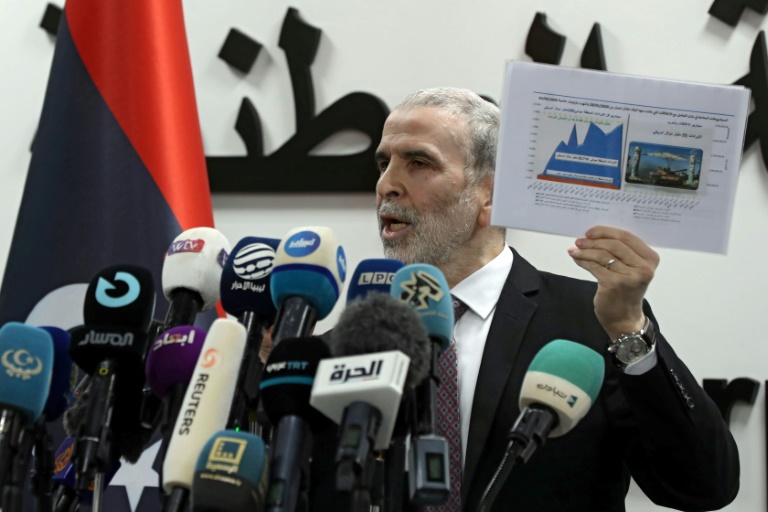
Libya's oil firm chief resists move to replace him

Libya’s Tripoli-based government has named a new head of the state oil company to replace veteran technocrat Mustafa Sanalla, who refused to give up his post.

Unlike many other Libyan state bodies, the National Oil Corporation, led by Sanalla since 2014, has largely managed to remain neutral in the face of political wrangling.

But petrol is at the heart of political rivalries in Libya, which has two governments, one in Tripoli led by Abdulhamid Dbeibah, appointed last year as part of a United Nations-backed peace process to end more than a decade of violence in the North African country.

Dbeibah has refused to cede power to Fathi Bashagha, named in February as prime minister by a parliament based in Libya’s east and backed by military strongman Khalifa Haftar.

According to a July 7 decree made public on Wednesday, Farhat Bengdara and four others will from now on make up the “board of directors of the National Oil Corporation”.

Bengdara, 57, was governor of Libya’s central bank from 2006 to 2011 before he joined the revolt which overthrew dictator Moamer Kadhafi.

An ad hoc committee that was on Wednesday to organise the handover at the head of the NOC had to suspend its work because of employee reluctance — including from the very top.

Sanalla said late Wednesday he would not give up his post.

“This institution belongs to all Libyans and not to you,” he said in a live video address to Dbeibah.

“The mandate of your government has expired,” he said, emphasising the technical and apolitical nature of the oil firm.

Sanalla has positioned himself as an interlocutor with foreign powers and oil firms. He has also skillfully mediated disputes to keep Libya’s crude flowing during times of war, as well as boosting production during peacetime.

However, Dbeibah’s Oil and Gas Minister Mohammed Aoun has on several occasions attempted to oust Sanalla.

In an April interview with AFP, Aoun accused Sanalla of not respecting laws governing the sector “and exceeding his prerogatives”.

Bengdara is reputedly close to the United Arab Emirates which backs Libya’s eastern camp. Sanalla accused the UAE of involvement in his sacking.

Despite sitting on Africa’s biggest proven oil reserves, war-battered Libya suffers chronic power outages and rising poverty. This has fuelled public anger that has piled pressure on both the Tripoli-based administration and its eastern rival.

On Wednesday the NOC said it was lifting a force majeure at two eastern export terminals. They had been blockaded for three months by groups demanding Dbeibah’s departure.

US, Israel to sign security pledge as Biden visits Jerusalem

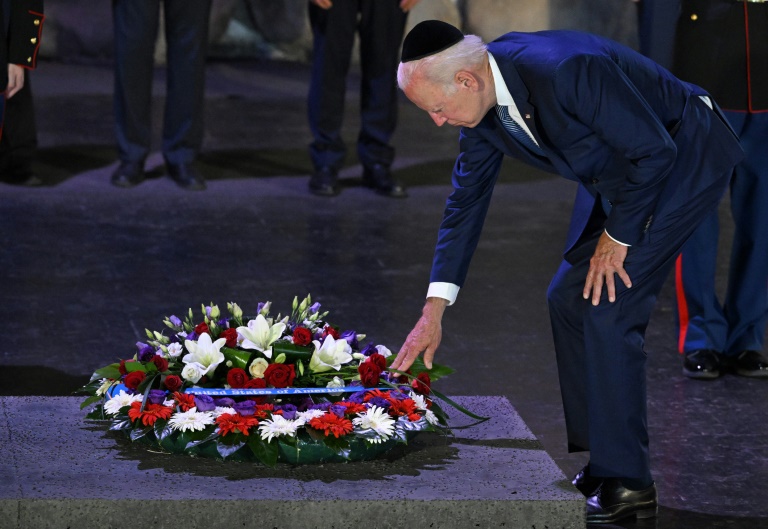
US President Joe Biden and Israel’s Prime Minister Yair Lapid will sign a security “declaration” on Thursday affirming their united front against Iran, an American official said, as Biden holds bilateral talks in Jerusalem.

“This declaration is pretty significant and it includes a commitment to never allow Iran to acquire a nuclear weapon and to address Iran’s destabilising activities, particularly threats to Israel,” said a Biden administration official, who requested anonymity.

Biden touched down at Ben Gurion Airport near Tel Aviv on Wednesday for the first Middle East tour of his presidency, which will see him meet Israeli and Palestinian leaders before flying to Saudi Arabia.

Lapid, Israel’s caretaker leader ahead of an election in November, had previously said Iran would top the agenda in his talks with the US president.

The declaration they sign would reaffirm “unbreakable bonds between our countries and expanding on the long standing security relationship between the United States and Israel”, said the US official.

An Israeli official, also speaking on condition of anonymity, said the document was “going to be a living testimony to the unique quality, health, scope, depth and intimacy of the US-Israel relationship.”

Israel is staunchly opposed to a nuclear deal Iran signed with world powers in 2015 and which Biden is trying to get back on track after his predecessor Donald Trump withdrew US support.

Biden said pulling out of the landmark accord was a “gigantic mistake”.

Iran is “closer to a nuclear weapon now than they were before”, the US president said in an interview aired Wednesday by Israel’s Channel 12.

Asked whether the United States would use force to prevent Iran from acquiring nuclear weapons, Biden said: “If that was the last resort, yes.”

– Saudi oil talks –

The president’s meeting with Lapid will be followed by multilateral talks on investment with India and the United Arab Emirates, which will join remotely.

In addition to meeting with Israeli President Isaac Herzog, Biden will hold brief talks with Israeli opposition leader Benjamin Netanyahu.

The right-wing former prime minister is readying for another election campaign, with Israelis set to go to the polls for the fifth time in less than four years on November 1.

Biden is marking his tenth visit to Israel and is well-acquainted with Netanyahu.

Russia’s invasion of Ukraine will remain a top priority for the Biden administration during his regional tour, with volatile oil prices due to be the focus of talks with Saudi officials.

The president will seek to persuade Saudi Arabia to pump more oil in order to drive down prices, which have fuelled US inflation to the highest levels in decades.

Israel has sought a delicate balance towards the Ukraine war, conscious of Russian forces in neighbouring Syria, its million citizens with ties to the former Soviet Union, and its firm US alliance.

Israeli officials have condemned the conflict in broad terms but the government has refused to send weapons to the Ukrainian army.

– No ‘top down peace plan’ –

The president on Wednesday renewed Washington’s long-standing call for a two-state solution, but has not reversed Trump’s controversial decision to recognise Jerusalem as Israel’s capital.

Biden is due to meet Palestinian president Mahmud Abbas on Friday in Bethlehem, in the occupied West Bank, and pledge US financial support.

The US official that would include “a significant funding package” for hospitals that serve Palestinians in Israeli-annexed east Jerusalem, which Palestinians claim as their future capital.

Biden’s administration will also announce measures towards providing 4G internet access in the West Bank and Israeli-blockaded Gaza strip, the US official said, addressing a long-standing Palestinian frustration.

But, with Israel in political limbo ahead of the November 1 election, Biden is not expected to push Lapid for significant policy changes regarding the Palestinians.

“We are not going to come in with a top down peace plan because we don’t believe that would be the best approach,” the US official said.

But, “if the two parties are prepared to talk, we will be there, and we will be there to help,” the official added.

aue-rsc/bs/dv

Chinese homebuyers halt mortgage payments on unfinished projects

Chinese homebuyers in dozens of cities have stopped making mortgage payments for unfinished projects, according to data from industry groups, worsening fears of financial contagion in the country’s troubled real estate sector.

Authorities launched a crackdown on excessive debt in the property sector in 2020, and giants such as Evergrande and Sunac have since struggled to make payments and renegotiate with creditors.

In the latest blow, a growing number of homebuyers have refused to make mortgage payments if developers do not resume construction on units already sold.

As of Wednesday, homebuyers had halted payments for units in at least 100 residential property projects in 50 cities, according to data from research firm China Real Estate Information Corporation (CRIC).

This was up from 28 projects on Monday and 58 on Tuesday, according to a report by analysts at financial firm Jefferies.

“The names on the list doubled every day in the past three days,” they said.

These include projects that have experienced significant delays and others that have yet to reach their delivery date, the report said, adding that the incident will dampen buyer sentiment and weigh on a recovery in sales.

If every homebuyer defaulted, non-performing loans will increase by 388 billion yuan ($58 billion), Jefferies said.

The buyers’ actions came after postponed deliveries of pre-sold homes, unclear delivery times and halted construction, Nomura analysts said in a report on Thursday.

“Pre-sales are the most common way of selling homes in China, so the stakes there are high,” it said.

“We are especially concerned about the financial impact of the homebuyers’ ‘stopping mortgage repayments’ movement, as China’s property downturn may finally adversely affect onshore financial institutions.”

The developments come at a time of slowing growth for China and weak property sales, adding to the risk to stability ahead of the Communist Party’s 20th Congress this fall, when President Xi Jinping is expected to be given another term.

Saudi mindset shows signs of shift towards Israel

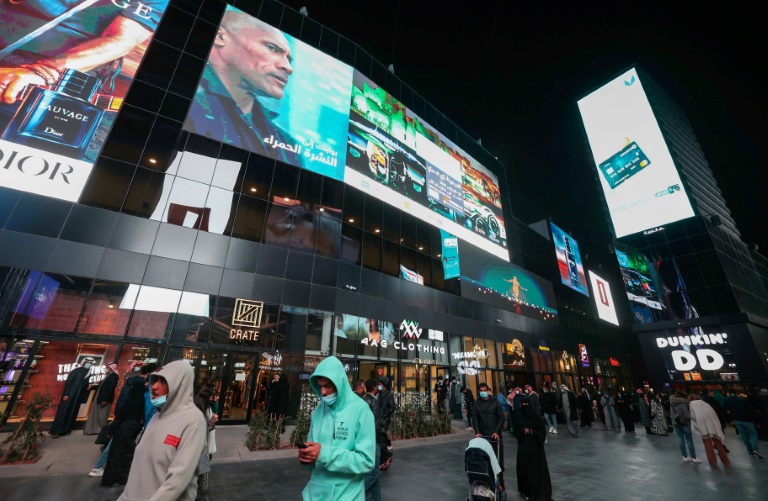
Israeli journalist Yoav Limor did not know what to expect when he travelled with a colleague this month to Saudi Arabia, a country long notorious for promoting anti-Israel sentiment in textbooks and in sermons by some imams.   

They were in for “a pleasant surprise”, he wrote in a subsequent column for the Israel Hayom newspaper, as Saudi market vendors and taxi drivers mostly greeted them with curiosity rather than disdain.

“Some smiled and shook their head in disbelief or worry. Others were curious and struck up a conversation,” wrote Limor, adding that “no one made us feel unwelcome”.

US President Joe Biden’s trip to the Middle East, which began on Wednesday, has fuelled speculation of a possible breakthrough in normalising ties between Israel and Saudi Arabia, which does not recognise the Jewish state. 

The kingdom has repeatedly said it would stick to the decades-old Arab League position of not establishing official ties with Israel until the conflict with the Palestinians is resolved. 

Analysts stress that, despite growing behind-the-scenes business and security contacts, any immediate gains are likely to be more incremental than the US-brokered Abraham Accords which created ties between Israel and two of the kingdom’s neighbours, the United Arab Emirates and Bahrain.

Yet the experience of Limor, who qualified for a tourist visa because he holds a non-Israeli passport, hints at changes in Saudi public opinion that officials hope could one day lay the groundwork for a formal bilateral relationship.

US officials say it shows meaningful progress towards the kind of deal that would, for Israel, represent the ultimate diplomatic prize. 

“For too many decades, the Kingdom of Saudi Arabia was a great exporter of Jew-hatred,” said Deborah Lipstadt, Washington’s special envoy to combat anti-Semitism, in a speech this month after visiting the kingdom in June. 

“But what I found is something quite different, something that has changed there dramatically in the last few years.”

– ‘Potential ally’ –

Signs of that transformation appeared well before the Abraham Accords pushed by the Trump administration, which Riyadh has so far refused to join. 

Saudi textbooks once denigrated Jews and other non-Muslims by depicting them as animals and asserted that “disobedience is the characteristic of the Jews”. 

But they have been undergoing revisions for years, as documented by the Israeli nonprofit group IMPACT-SE which monitors textbook content. 

At this point, anti-Jewish material has been “largely removed, which is greatly to be admired”, the group said in a June report. 

The Saudi education ministry did not respond to a request for comment on the textbooks. 

Anti-Israeli speech by imams is also “generally rare”, and the Islamic affairs ministry has encouraged a “rejection of bigotry”, the US State Department said in its latest human rights report on Saudi Arabia.

Mohammed al-Issa, a Saudi cleric who heads the Muslim World League, won praise from Israel in January 2020 after he travelled to Poland for events marking 75 years since liberation of the Nazi death camp Auschwitz. 

King Salman hosted Jerusalem-based rabbi David Rosen the following month, and during Ramadan that year the Saudi-controlled MBC network aired a television show in which a character brushed aside the taboo of doing business with Israel. 

Further examples have cropped up since the Abraham Accords were unveiled in August 2020. 

Israeli drivers participated in the January 2021 Dakar Rally in Saudi Arabia, and the Arab News, the kingdom’s main English-language daily, has published Israeli opinion writers. 

In a sign that the Saudi leadership may no longer fear a fierce backlash to eventual normalisation, state media in March quoted Crown Prince Mohammed bin Salman, the de facto ruler, describing Israel as a “potential ally”.

– ‘I do not like them’ –

What impact these moves have had on public opinion can be difficult to gauge in an absolute monarchy which places strict limits on political expression. 

There is little chance of Riyadh shifting its focus to ties with Israel “while ignoring the Palestinian issue”, nor is that something ordinary Saudis would want, said Mohammed Alyahya, a fellow at the Belfer Center at Harvard University. 

“The public sentiment has changed, but I don’t think it’s changed in such a way that people don’t care about Palestine anymore, or people don’t hold Israel to account for crimes it commits,” Alyahya said. 

The kingdom’s internal dynamics are different from those of its neighbours, said Brian Katulis of the Middle East Institute in Washington. 

“I don’t see a broad wellspring of more openness that you see in places like the Emirates that are much smaller, where you can do sort of interfaith things and have a synagogue. I think that’s slower to happen in a place like Saudi Arabia right now,” Katulis said.

Saudi officials have been tight-lipped on potential outcomes from Biden’s visit and did not respond to a request for comment on possible agreements concerning Israel. 

Whatever emerges –- like allowing direct flights from Israel to Saudi Arabia for Muslim pilgrims –- is likely to stop well short of full normalisation. 

That may be all many Saudis can stomach for now.

“It is impossible for me to go to Israel one day. I do not like them,” said Abo Rashed, an auto parts salesman in the capital who referred to Israelis as “occupiers”.

“But the government knows better. They will choose whatever is best for the people and the country.”

Close Bitnami banner
Bitnami