US Business

Musk says doing 'best' to boost birth rates

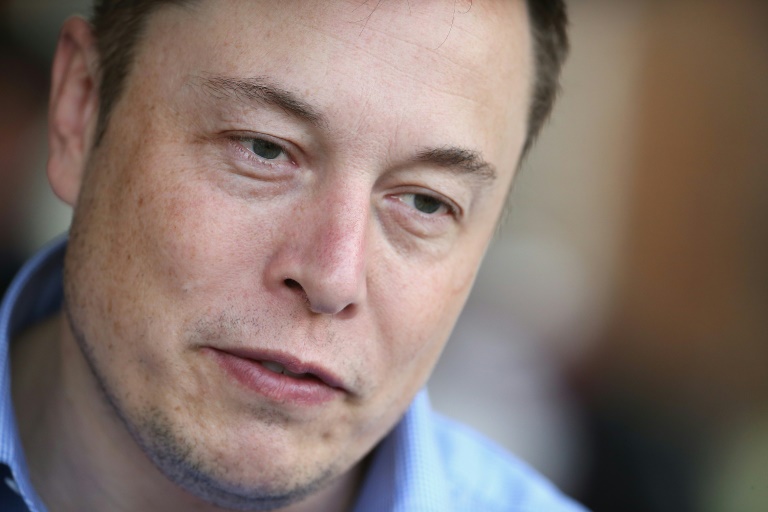
Elon Musk said Thursday that he was helping combat falling birth rates after it was reported that he had twins last year with an executive at one of his companies.

“Doing my best to help the underpopulation crisis,” tweeted the billionaire tech entrepreneur, who has fathered 10 children.

“A collapsing birth rate is the biggest danger civilization faces by far,” Musk added.

He posted another tweet that read: “I hope you have big families and congrats to those who already do!”

The comments came a day after online outlet Insider reported that Musk had twins with 36-year-old Canadian Shivon Zilis, an executive at Neuralink, Musk’s brain-implant maker.

She has also worked at other Musk companies including OpenAI and electric car manufacturer Tesla, Insider said.

In April, Zilis and Musk filed a petition with a Texas court for the children to “have their father’s last name and contain their mother’s last name as part of their middle name,” Insider reported, referring to court documents obtained by the publication. 

The petition was granted in May, the site said. 

The babies, which Insider says were born in November, arrived just weeks before Musk, 51, and music artist Grimes had their second child via surrogate. 

They welcomed a baby girl named Exa Dark Sideræl Musk — although the parents will mostly call her Y.

In total, the chief of Tesla and SpaceX has fathered 10 children, one of whom died shortly after birth.

In May, Musk tweeted a graphic from the Wall Street Journal showing that the average number of babies a US woman has in her lifetime fell from more than 3.5 in 1960 to a little over 1.5 in 2021.

He noted that it was below the 2.1 level that is needed for a generation to replace itself.

“USA birth rate has been below min sustainable levels for ~50 years,” Musk wrote alongside.

Last month, one of his children who recently turned 18 filed a petition in a California court to change her name and gender identity to female.

She cited “the fact that I no longer live with or wish to be related to my biological father in any way, shape or form” as one of the reasons for the name change, according to the court document.

WNBA star Griner pleads guilty to drug charges in Russia

US basketball star Brittney Griner pleaded guilty Thursday to drug smuggling charges in a Russian court but denied intending to break the law in a case that has further inflamed tensions between Moscow and Washington. 

The two-time Olympic gold medallist and WNBA champion, detained days before Russia sent troops to Ukraine, faces up to a decade behind bars for bringing vape cartridges with cannabis oil into the country.

The star told a court in the town of Khimki outside Moscow that she “would like to plead guilty” to all the charges and stressed she had “no intention” of breaking any Russian law.

“I was in a rush packing. And the cartridges accidentally ended up in my bag.”

The athlete, who is six-foot-nine (2.06 metres) tall, wore a red T-shirt and matching trousers. She walked into the court room with her tattooed arms handcuffed to a Russian guard. 

Her lawyer Alexander Boykov called for “as soft a sentence as possible.” 

He said Griner had “appreciated” receiving a letter from US President Joe Biden, who said on Wednesday that he would make bringing her home a “priority.”

Moscow hit back, saying that US “hype” over Griner would not help her case.

“The hype and working on the public, with all the love for this genre among modern politicians, currently only disturbs (the court process),” Deputy Foreign Minister Sergei Ryabkov said.

“It does not just distract from the case but creates interference in the core sense of the word. Silence is needed here.” 

In a call with Griner’s wife, Biden said the star was “wrongfully detained under intolerable circumstances”. 

The US leader said he had written to the WBNA star, after she had sent him a hand-written letter presented to the White House on July 4, US Independence Day. 

“I realise you are dealing with so much, but please don’t forget about me and the other American Detainees,” Griner wrote.

– ‘Bring us home’ –

“Please do all you can to bring us home.”

But Ryabkov said letters between the two would not help the star’s fate.

“It is not correspondence of this kind that can help, but a serious perception by the American side of the signals they received from Moscow, through specialised channels,” he said. 

The 31-year-old basketball star was detained in February in the days before Russia sent troops to Ukraine, with the United States and its allies imposing unprecedented economic sanctions on Moscow in response.

Her case has become a new sticking point in relations between the United States and Russia, with Washington putting its special envoy in charge of hostages on the case. 

Griner came to Russia in February to play club basketball during the US off-season — a common path for American stars seeking additional income.

She was detained at a Moscow airport after she was found carrying vape cartridges with cannabis oil in her luggage. 

US authorities initially kept a low profile on the case, which was not made known to the general public until March 5 but have since upped the ante.

Russian law is strict in such cases and other foreigners have recently been handed heavy sentences on drug-related charges.

Last month, a Moscow court sentenced a former US diplomat, Marc Fogel, to 14 years in prison for “large-scale” cannabis smuggling.

Russia and the United States regularly clash over the detention of each other’s citizens and sometimes exchange them in scenes reminiscent of the Cold War.

The next hearing in the case will be held on July 14.

New giant dinosaur predator discovered with tiny arms, like T. rex

Paleontologists said Thursday they had discovered a new giant carnivorous dinosaur species that had a massive head and tiny arms, just like Tyrannosaurus rex.

The researchers’ findings, published in the journal Current Biology, suggest that small forelimbs were no evolutionary accident, but rather gave apex predators of the time certain survival advantages.

Meraxes gigas — named after a fictional dragon in the Game of Thrones book series — was dug up over the course of four years during field expeditions in the northern Patagonia region of Argentina, starting with the skull which was found in 2012.

“We won the lottery and found it literally on the first morning,” senior author Peter Makovicky from the University of Minnesota told AFP.

The fossilized remains were remarkably well preserved. The skull is just over four feet long (127 centimeters), while the entire animal would have been some 36 feet long, and weighed four metric tons.

Its arms were two feet long, “so it’s literally half the length of the skull and the animal would not have been able to reach its mouth,” said Makovicky.

T. rex didn’t get its tiny arms from M. gigas. The latter went extinct 20 million years before the former arose, and the two species were far apart on the evolutionary tree. 

Instead, the authors believe the fact that tyrannosaurids, carcharodontosaurids — the group Meraxes belonged to — and a third giant predator species called abelisaurids all evolved tiny arms points to certain benefits.

Makovicky believes that as their heads grew larger, it became the dominant tool of their predatory arsenal, taking on the function that forelimbs would have had in smaller species. 

His co-author Juan Canale, the project lead  at Ernesto Bachmann Paleontological Museum in Neuquen, Argentina, went further in suggesting other advantages.

– Mating and movement support –

“I’m convinced that those proportionally tiny arms had some sort of function. The skeleton shows large muscle insertions and fully developed pectoral girdles, so the arm had strong muscles,” he said in a statement.

“They may have used the arms for reproductive behavior such as holding the female during mating or support themselves to stand back up after a break or a fall.”

Meraxes roamed the Earth between 90 to 100 million years ago during the Cretaceous, at a time when the region was wetter, more forested, and much closer to the sea, said Makovicky.

They would have preyed on a menagerie of contemporary sauropods — some of whom were discovered at the same site.

The individual lived to around 40 years — a ripe old age for dinosaurs — and its skull was replete with crests, furrows, bumps and small hornlets.

“It certainly would have looked very imposing and gargoyle like,” said Makovicky.

“Those are the kinds of features that in living animals are often under sexual selection,” speculating the species used their massive skulls as “billboards” for advertising to would-be mates.

Russia occupies 22% of Ukraine farmland: NASA

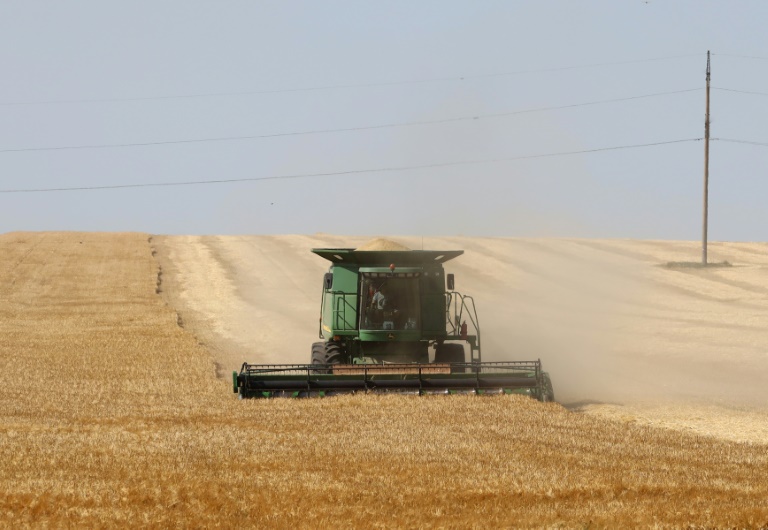
Russian forces now occupy about 22 percent of Ukraine’s farmland since the February 24 invasion, impacting one of the major suppliers to global grain and edible oils markets, NASA said Thursday.

Satellite data analyzed by scientists at the US space agency shows that Russia’s occupation of eastern and southern Ukraine gives it control of land that produces 28 percent of the country’s winter crops, mainly wheat, canola, barley, and rye, and 18 percent of summer crops, mostly maize and sunflower.

The war’s disruption of harvesting and planting — including farmers fleeing the war, the lack of labor and fields pockmarked by shelling — could have a heavy impact on global food supplies, NASA scientists said.

“The world’s breadbasket is at war,” said Inbal Becker-Reshef, director of NASA’s Harvest program, which uses US and European satellite data to study global food production.

According to US data, before the war Ukraine supplied 46 percent of the sunflower oil traded on global markets, nine percent of the wheat, 17 percent of the barley, and 12 percent of maize.

Russia’s invasion has blocked exports of food from Odessa, the main port on the Black Sea, and destroyed storage and transport infrastructure in some areas.

That means farmers in the entire country, but especially in occupied areas, have less options for getting their output into storage and to markets.

And it also threatens the planting of winter crops in the fall.

“We’re in the beginning stages of a rolling food crisis that will likely affect every country and person on Earth in some way,” said Becker-Reshef.

Enigmatic US monument felled by blast

A mysterious granite monument in the US state of Georgia that was engraved with advice on how to protect humanity — and which was called satanic by some critics — has been destroyed in an explosion.

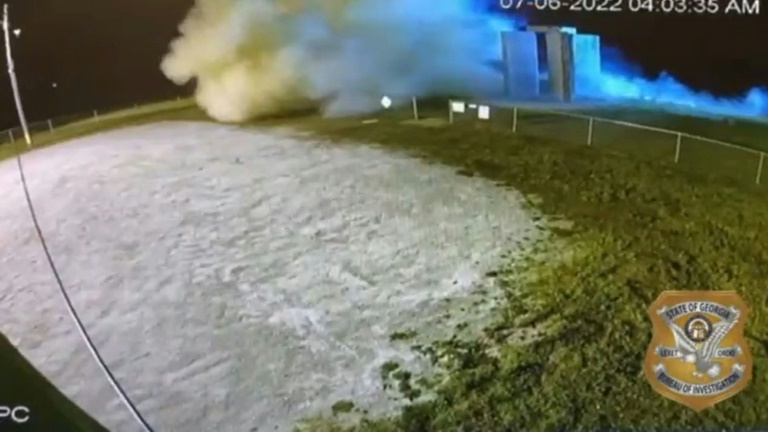
The state’s Bureau of Investigation released surveillance video showing the blast in the early hours of Wednesday that brought down one of the slabs that made up the so-called Georgia Guidestones.

A second video shows a gray car leaving the scene. The rest of the monument was later demolished for safety reasons, the bureau said.

The motive for blowing up the monument in Elber County was not immediately known.

The site drew thousands of visitors annually and became the subject of right wing conspiracy theories.

Sometimes called the American Stonehenge, the nearly 20 foot high (six meter) monument was erected in 1980 and it is not known who was behind the project.

Located about 100 miles (160 kilometers) east of Atlanta, it was commissioned by a person or group using the pseudonym RC Christian.

The monument featured a 10-part message advocating protection of mankind in eight languages, said the tourism web site Explore Georgia.

The message etched into the granite said in part: “Maintain humanity under 500,000,000 in perpetual balance with nature; Guide reproduction wisely, improving fitness and diversity; Unite humanity with a living new language,” the Elber County Chamber of Commerce says on its website.

In the gubernatorial primary in Georgia in May, Republican candidate Kandiss Taylor called the monument satanic and made destroying it part of her platform.

“God is God all by Himself. He can do ANYTHING He wants to do,” Taylor wrote on social media Wednesday after the monument was brought down. “That includes striking down Satanic Guidestones.”

Stocks climb on recession watch; pound gains on Johnson exit

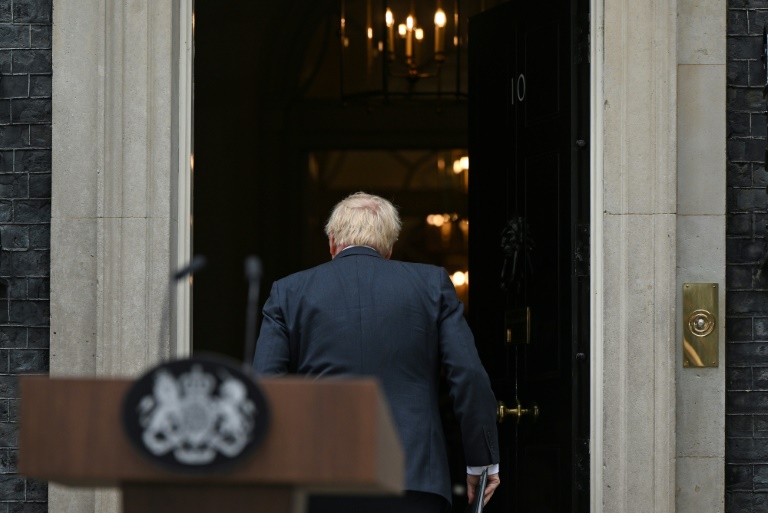
Stock markets recovered further Thursday as investors weighed recession risks, while the pound rallied on the resignation of Britain’s scandal-hit Prime Minister Boris Johnson as leader of the Conservative party.

Elsewhere, oil prices climbed with both main contracts back over $100 per barrel, and the euro remained around 20-year lows versus the dollar.

“Stocks bounce as pressure points ease,” said independent markets analyst Stephen Innes. 

The Federal Reserve on Wednesday stressed its readiness to continue hiking US interest rates to tackle soaring inflation.

Minutes of their last meeting made clear that officials did not plan to let up in efforts this year to try to cool prices.

Inflation stands at the highest levels since the early 1980s both in the United States and Britain, where attention Thursday was firmly on political upheaval gripping the nation.

The pound rallied against the dollar and euro on Johnson’s resignation as Conservative party leader — paving the way for a successor to replace him as prime minister.

Gains by London’s blue-chip FTSE 100 stock index accelerated following Johnson’s announcement, standing up 1.3 percent in afternoon trading.

Dozens of ministers have quit his scandal-hit government since Tuesday, including former finance chief Rishi Sunak.

“The pound is pushing higher, hitting session highs inching closer back up to… $1.20, a critical support level it broke below this week amid the political and economic uncertainty,” said Victoria Scholar, head of investment at Interactive Investor. 

“The currency market is relieved that Johnson is finally resigning, removing some of the political uncertainty that was priced into the pound and paving the way for a new prime minister,” she added. 

Berenberg Bank Senior Economist Kallum Pickering said that “the UK economy and its financial markets look set to benefit from more stable leadership.”

The euro meanwhile remained under $1.02 — a level it slumped under this week on its way to hitting a 20-year low.

The European single currency is being hammered by growing fears of a recession for the eurozone and the likelihood of more aggressive US interest-rate hikes.

In afternoon trading, Paris stocks were up 1.5 percent and Frankfurt rose 1.7 percent.

Wall Street stocks rose at the opening bell, with the Dow adding 0.7 percent.

– Key figures at around 1330 GMT –

London – FTSE 100: UP 1.3 percent at 7,199.16 points

Frankfurt – DAX: UP 1.7 percent at 12,808.56

Paris – CAC 40: UP 1.5 percent at 6,001.94

EURO STOXX 50: UP 1.7 percent at 3,479.42

New York – Dow: UP 0.7 percent at 31,254.17

Tokyo – Nikkei 225: UP 1.5 percent at 26,490.53 (close)

Hong Kong – Hang Seng Index: DOWN UP 0.3 percent at 21,643.58 (close)

Shanghai – Composite: UP 0.3 percent at 3,364.40 (close)

Pound/dollar: UP at $1.1967 from $1.1921 Wednesday

Euro/pound: DOWN at 85.02 pence from 85.43 pence

Euro/dollar: DOWN at $1.0175 from $1.0186

Dollar/yen: DOWN at 135.79 yen from 135.93 yen

Brent North Sea crude: UP 2.4 percent at $103.06 per barrel

West Texas Intermediate: UP 2.8 percent at $101.32 per barrel

Deadly wave of strikes as Russia grinds towards Sloviansk

Russian forces left a trail of destruction in their wake Thursday as they grinded deeper into Donbas with their sights set on the industrial hub of Sloviansk in eastern Ukraine as their next target.

Moscow’s slow push came as diplomatic tensions mounted between Ankara and Kyiv, where Ukrainian officials accused Turkey of ignoring calls to seize grain being transported by a Russian ship.

Russian forces killed at least seven civilians and injured others in the last 24 hours throughout the battle-scarred Donetsk region, the region’s head Pavlo Kyrylenko said Thursday, in Moscow’s latest wave of deadly attacks.

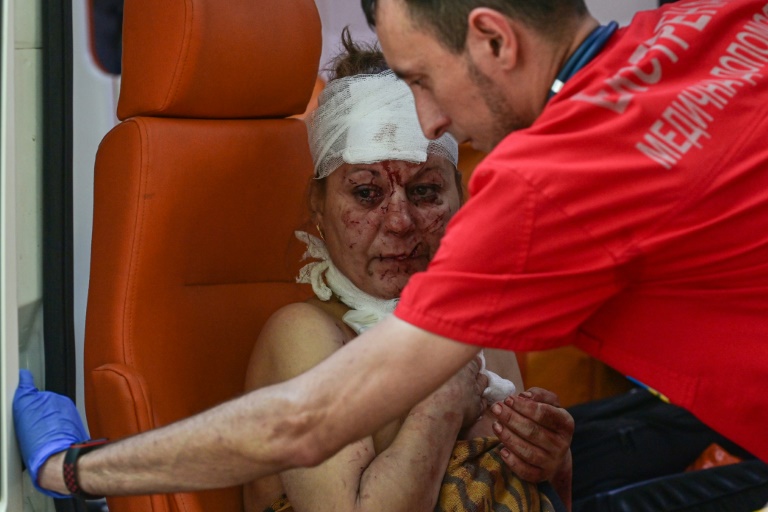
Kramatorsk, Ukraine’s de-facto administrative centre in Donetsk was struck by Russia on Thursday, AFP journalists said, killing at least one civilian and injuring several others.

The explosion left a large crater in a courtyard between a hotel and residential buildings and several cars were on the fire.

The fatalities came after Ukrainian officials re-issued urgent pleas for civilians in the war-torn region to flee as Russian forces turn on Sloviansk.

Vitaliy, a Ukrainian plumber, told AFP in the industrial hub that his wife and her daughter from a previous marriage, who is six months pregnant, were evacuated from the city the day before.

“I sent my wife (away), and I have no more choice: tomorrow I will join the army.”

The town has been hit repeatedly by Russian bombardments and on Wednesday a marketplace and its surrounding streets were badly damaged in a barrage of rockets.

– ‘Well fortified’ –

Despite the threat of intensifying Russian bombardments as Moscow turns its military focus on the city, some residents vowed to stay.

“We have basements, we will hide there,” said 72-year-old greengrocer Galyna Vasyliivna.

“What we can do? We have nowhere to go, nobody needs us.”

Mayor Vadym Lyakh said around 23,000 people remained out of a pre-war population of 110,000 and claimed Russia had been unable to surround the city.

“Evacuation is ongoing. We take people out every day,” he said, explaining that fleeing civilians are being brought by bus to the city of Dnipro, further west.

“The city is well fortified,” he said.

Sloviansk in the Donetsk region is next in Russia’s line of fire after their capture of the nearby sister cities of Severodonetsk and Lysychansk in the Lugansk region.

The fall of Lysychansk last week after the Ukrainian army also retreated from Severodonetsk has freed up Russian troops, who switched their attention to the Donbas after being beaten back from around the capital Kyiv and Ukraine’s second city Kharkiv early in the invasion.

Otherwise, a diplomatic crisis flared between Ukraine and Turkey over the apparent transport by Russia of grain allegedly stolen from Ukraine.

– ‘Deeply disappointed’ –

Kyiv alleges that a 7,000-tonne vessel, the Zhibek Zholy, set off from Ukraine’s Kremlin-occupied port of Berdyansk after picking up confiscated wheat and called last week for Turkey to seize it.

The marinetraffic.com website showed on Thursday the vessel moving away from Turkey’s Black Sea port of Karasu before apparently switching off its transponder and disappearing from view.

Ukraine said it was “deeply disappointed” that Turkey had not acted on its request to seize the ship.

The incident points to Turkey’s complicated role in the war, where President Recep Tayyip Erdogan has a close but tumultuous relationship with Moscow but also supplies combat drones to Ukraine.

Despite Ukraine’s recent territorial losses, President Volodymyr Zelensky in an evening address on Wednesday praised new heavy Western artillery for boosting Ukraine’s firepower.

“The weapons we have received from our partners have started working very powerfully. Their accuracy is exactly as it should be,” he said.

“Our defenders inflict notable blows on warehouses and other points which are important for the logistics of the occupiers,” he said.

The EU meanwhile set out a harder focus on energy given the war with European Commission chief Ursula von der Leyen warning of the need to “prepare for further disruptions of gas supply, even a complete cut-off from Russia”.

The European Union has launched a 300-billion-euro ($310-billion) plan to wean itself off Russian fossil fuel supplies.

burs-jbr/jm

Stocks climb on recession watch; pound gains before Johnson exit

Stock markets recovered further Thursday as investors weighed recession risks, while the pound rallied as Britain’s scandal-hit Prime Minister Boris Johnson prepared to quit as leader of the Conservative party.

Elsewhere, oil prices climbed and the euro remained around 20-year lows versus the dollar.

“Stocks bounce as pressure points ease,” noted independent markets analyst Stephen Innes. 

The Federal Reserve on Wednesday stressed its readiness to continue hiking US interest rates to tackle soaring inflation.

Minutes of their last meeting made clear that officials did not plan to let up in efforts this year to try and cool prices.

Inflation stands at the highest levels since the early 1980s both in the United States and Britain, where attention Thursday was firmly on political upheaval gripping the nation.

The pound rallied against the dollar and euro, with Johnson set to resign later in the day as Conservative party leader, according to local media — paving the way for a successor to replace him as prime minister.

Dozens of ministers have quit his scandal-hit government since Tuesday, including former finance chief Rishi Sunak.

“The pound is pushing higher, hitting session highs inching closer back up to… $1.20, a critical support level it broke below this week amid the political and economic uncertainty,” said Victoria Scholar, head of investment at Interactive Investor. 

“The currency market is relieved that Johnson is finally resigning, removing some of the political uncertainty that was priced into the pound and paving the way for a new prime minister,” she added. 

The euro meanwhile remained under $1.02 — a level it slumped under this week on its way to hitting a 20-year low.

The European single currency is being hammered by growing fears of a recession for the eurozone and the likelihood of more aggressive US interest-rate hikes.

– Key figures at around 1115 GMT –

London – FTSE 100: UP 1.0 percent at 7,181.59 points

Frankfurt – DAX: UP 1.4 percent at 12,776.75

Paris – CAC 40: UP 1.3 percent at 5,990.05

EURO STOXX 50: UP 1.4 percent at 3,470.81

Tokyo – Nikkei 225: UP 1.5 percent at 26,490.53 (close)

Hong Kong – Hang Seng Index: DOWN UP 0.3 percent at 21,643.58 (close)

Shanghai – Composite: UP 0.3 percent at 3,364.40 (close)

New York – Dow: UP 0.2 percent at 31,037.68 (close)

Pound/dollar: UP at $1.1978 from $1.1921 Wednesday

Euro/pound: DOWN at 85.05 pence from 85.43 pence

Euro/dollar: UP at $1.0189 from $1.0186

Dollar/yen: DOWN at 135.83 yen from 135.93 yen

Brent North Sea crude: UP 0.8 percent at $101.45 per barrel

West Texas Intermediate: UP 0.7 percent at $99.26 per barrel

Stocks enjoy bounce, sterling and FTSE up as Johnson to resign

Equities rose Thursday following a recent sharp drop, though recession fears continue to cast a shadow over markets with the euro stuck around 20-year lows and crude struggling to bounce back from this week’s hefty selling.

London’s FTSE rose more than one percent and the pound was slightly higher as traders kept an eye on events in Westminster where Boris Johnson was said to have decided to step down as leader of the ruling Conservative Party.

UK stocks were up more than one percent in early trade, while sterling rose towards $1.20, though the currency remains under pressure from an ongoing economic crisis.

Expectations for a contraction in some of the world’s leading economies have increased in recent weeks owing to central bank interest rate hikes aimed at taming decades-high inflation, while a new Covid flare-up in China has added to the angst.

The surge in inflation has been caused by soaring energy costs and rising post-lockdown demand, but observers said concerns about a contraction — along with signs that consumers were being put off by high prices — were weighing on the oil market.

Both main contracts fluctuated Thursday but have fallen about 10 percent this month, dipping below $100 for the first time since April.

Data on Wednesday showed US demand appeared to be waning as stockpiles rose, confounding expectations for a drop, while there are also some concerns that the China outbreaks — including another spike in Shanghai — could see major cities put into lockdown again.

Still, Vandana Hari, of Vanda Insights, said: “There isn’t much rational assessment going on — it’s panic selling.

“The fears may not end but could get brushed aside when supply constraints are back to the fore. The market balance is tight.”

While the drop in prices could temper inflation and give central banks some room to ease up on their rate hike cycle, the Federal Reserve remains on course for several more increases.

On Wednesday, minutes from its June policy meeting indicated officials were set for a second straight three-quarter-point rate hike this month, saying they were worried “inflation pressures had yet to show signs of abating”.

They also noted a need to maintain credibility among Americans, saying there was “a significant risk… that elevated inflation could become entrenched if the public began to question the resolve of the Committee”.

“It was clear from the minutes that the committee members remained highly focused on culling inflation, even if it was at the expense of a sharp economic slowdown,” said Jeffrey Halley at OANDA. 

“The minutes touched on the need for credibility and as such, I believe there will be no wimp-out by the (policy board) at the end of this month, as that would achieve exactly the opposite, plus interest.”

– Johnson under pressure –

Despite the prospect of higher borrowing costs, Wall Street ended higher.

And Asia rose thanks to bargain-buying and a pick-up in tech firms following a positive earnings forecast from Samsung Electronics.

Tokyo, Shanghai, Sydney, Seoul, Singapore, Taipei, Mumbai, Bangkok and Jakarta all rose though Wellington and Manila fell.

Hong Kong edged up, helped by news that the city’s new government had suspended a five-day flight ban on airlines that bring in Covid cases. Cathay Pacific rose more than three percent.

Paris and Frankfurt were on the front foot.

London’s FTSE was given a lift by hopes that a new government will press ahead with economy-boosting measures, though gains were tempered by an expected period of uncertainty in British politics.

Johnson’s reported decision came after dozens of cabinet members — including his finance minister and foreign secretary — stepped down and others called for him to leave, leaving his position untenable.

But he will likely stay on until the autumn as a caretaker prime minister while the ruling Conservative Party selects a new leader.

The Fed’s determination to lift rates has sent the greenback soaring, with the euro particularly hit by the European Central Bank’s much slower response to inflation.

The single currency hit a 20-year low $1.0162 Wednesday, with fears for the eurozone economy rising as it faces a severe energy crunch owing to sanctions on Russia, while there is a possibility Moscow will cut off its gas supplies.

The ECB has said it will start hiking rates this month but analysts said uncertainty remained, as officials had to balance supporting the currency with avoiding a fragmentation, in which members’ borrowing costs diverge too much.

Now there is a growing belief the euro will soon fall to parity.

“I’m getting really worried about the recent speeches that have come out the past couple of days that show that there are a lot of concerns and a lot of disagreement” within the ECB governing council, said Vasileios Gkionakis of Citigroup.

“If the ECB wants to tame inflation and support exchange rates… then it needs to do two things: hike rates and come up with an effective anti-fragmentation mechanism,” he told Bloomberg.

– Key figures at around 0840 GMT –

Tokyo – Nikkei 225: UP 1.5 percent at 26,490.53 (close)

Hong Kong – Hang Seng Index: DOWN UP 0.3 percent at 21,643.58 (close)

Shanghai – Composite: UP 0.3 percent at 3,364.40 (close)

London – FTSE 100: UP 1.3 percent at 7,196.41

Pound/dollar: UP at $1.1994 from $1.1921 

Euro/dollar: UP at $1.0209 from $1.0186 on Wednesday

Euro/pound: DOWN at 85.23 pence from 85.43 pence

Dollar/yen: UP at 136.04 yen from 135.93 yen

West Texas Intermediate: UP 0.6 percent at $99.09 per barrel

Brent North Sea crude: UP 0.6 percent at $101.29 per barrel

New York – Dow: UP 0.2 percent at 31,037.68 (close)

Taliban excavate ex-leader Mullah Omar's 'getaway car'

The car used by Taliban founder Mullah Omar to escape being targeted by US forces after the 9/11 attacks has been excavated in eastern Afghanistan, where it lay buried for more than two decades, officials said.

The white Toyota Corolla was buried in a village garden in Zabul province by former Taliban official Abdul Jabbar Omari, who ordered it to be dug up this week. 

“It is still in good condition, only its front is a bit damaged,” Rahmatullah Hammad, the director of information and culture of Zabul province, told AFP.

“This vehicle was buried by the mujahideen as a memorial to Omar in 2001 to avoid it being lost,” he said.

Taliban media officials published pictures of the car being dug from its vehicular grave by men using hand shovels.

The Taliban want the car to be displayed in the capital’s national museum as a “great historical monument”, Hammad added.

The Taliban were formed in Kandahar by Mullah Omar, who led the hardline Islamist movement to power in 1996 after a bloody civil war, and imposed a strict interpretation of Islamic law on the country. 

Afghanistan then became a sanctuary for jihadist groups, including Osama bin Laden and Al-Qaeda, the architects of the September 11 attacks.

When the Taliban refused to hand over bin Laden, the US and its allies launched air strikes on Afghanistan, before invading, removing the Taliban from power and installing a new government.

Taliban officials said this week that Mullah Omar made his getaway from Kandahar in the Toyota Corolla.

He died in hiding in 2013, although officials kept his death secret for several years.

After two decades of attempting to hold back a bloody insurgency, Washington withdrew the last of its troops last year as the Taliban swept across the country, seized Kabul and returned to power. 

Close Bitnami banner
Bitnami