US Business

Hong Kong suspends 'not effective' Covid flight ban

Hong Kong’s new government on Thursday suspended a longstanding flight route ban that penalised airlines for bringing in coronavirus cases and severely impeded travel into the city, saying it was “not very effective”.

The financial hub has become increasingly isolated under harsh pandemic restrictions as it mirrors a lighter version of China’s strict zero-Covid policy, with the once busy Hong Kong airport now a relative aviation graveyard. 

On Thursday, new city leader John Lee’s government said the “circuit breaker” rule was being suspended to “achieve the most in fighting the pandemic with the minimum cost on the society”.

“At the current stage, continued implementation of the ‘circuit breaker’ mechanism is not very effective in preventing imported cases,” the government said. 

“Large number of passengers will have their itineraries disrupted due to the mechanism, and as the supply of seats on planes and quarantine hotel rooms fall short, the social costs generated will be remarkably high.” 

Travelling to Hong Kong will still pose a challenge as the city holds on to its mandatory seven-day hotel quarantine for all arrivals. 

Rooms at the designated hotels are booked up for months in advance.

Previous city leader Carrie Lam introduced the rule last April which banned airlines bringing in more than a handful of infected passengers from flying the designated route for a fixed period. 

The penalty was reduced from two weeks to a shorter five-day suspension during its one-year imposition. 

It was heavily criticised by industry representatives who said Hong Kong was in danger of losing its position as a global aviation hub.

So far in 2022 there had been more than 100 flight route bans, even though the coronavirus had become endemic within Hong Kong after a mass outbreak at the start of the year. 

Reopening Hong Kong’s border both with mainland China and the rest of the world was one of former top-cop John Lee’s main campaign objectives before being selected to run the city by a small committee of Beijing loyalists in May. 

But it is unclear how his ad ministration can achieve both objectives at the same time. 

Lee told the city’s legislature on Wednesday that Hong Kong was not ready to abandon its  zero-Covid policy. 

Hong Kong is currently facing an uptick of Covid-19 cases with numbers at their highest level since April. 
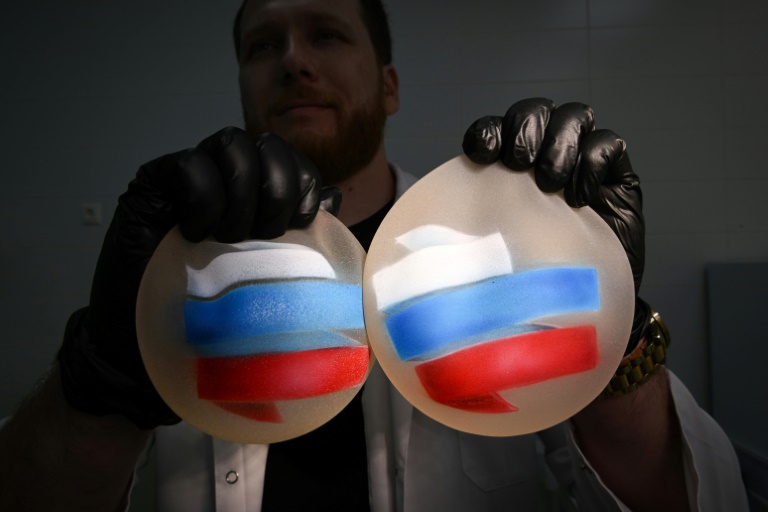
Russia's plastic surgery sector feels pinch from western sanctions

When it comes to looking good, Russian women are happy to splash out, even on a bit of nip-and-tuck plastic surgery.

But Western sanctions in the wake of Russia’s military intervention in Ukraine mean that supplies of products such as botox and breast implants — largely imported from countries such as the United States and Germany — could become increasingly hard to get hold of. 

Anastasia Yermakova, 37, is worried: she had her last injection of botox (botulinum toxin) in February to reduce facial wrinkles.

“My beautician assures us that she still has stocks of botox,” she told AFP.

“But I worry,” she said, arguing that local botox replacements are of inferior quality. 

Russia ranks ninth globally in the number of aesthetic procedures carried out annually — 621,600 in 2020, according to the International Society of Aesthetic Plastic Surgery. 

And the Russian aesthetic medicines sector was worth $969 million in 2021, up two percent from the year before, according to the Russian consultancy Amiko.

Soon after President Vladimir Putin sent troops into Ukraine on February 24, US drugmaker AbbVie, which is behind the wrinkle treatment Botox, withdrew from the flourishing Russian market over what it called “tragic events” in Ukraine. 

As a result, Botox stocks are “melting”, Yuliya Frangulova, co-founder of the National Association of Aesthetic Medicine Clinics, told AFP.

Frangulova said it is “causing concern of clinic managers accustomed to using this reference product”.

– ‘Say goodbye to fillers’ –

“In March, we saw a panic among patients, doctors and suppliers,” said Oksana Vlasova, director of development at the Grandmed beauty clinic in Russia’s second city Saint Petersburg. 

“The demand exploded, the stocks of botox were emptying.”

In April and May, there were no botox imports at all, said Nikolay Bespalov of RNC Pharma which analyses the Russian pharmaceutical market. 

He hopes supplies could resume “towards the end of the summer.”

Russians are also running out of some Western-made face fillers, in particular injections of hyaluronic acid to plump up lips — a very popular procedure in the country. 

“We are also forced to say goodbye” to fillers from AbbVie, Vlasova said, hoping that European producers can fill in the gap.

It is also getting harder to get breast implants — due to a lack of Russian producers. 

All breast implants in Russia are imported, with 60 percent coming from the United States and 13 percent from Germany, according to industry estimates.

The sanctions do not target the supply of implants, but the disrupted logistics and other factors affected both breast reconstruction and aesthetic operations.

In March, prices of implants rose threefold, before stabilising at a level 20 percent higher than before the start of Moscow’s military intervention in Ukraine, plastic surgeon Evgeny Dobreikin told AFP.

– Patriotic breasts –

Alexander Saversky, president of the League of Patient Advocates, fears that cheap but potentially dangerous products could soon start arriving in clinics, recalling the scandal of the French firm PIP’s poor quality breast implants. 

Saversky predicted that the problems will soon apply to the rest of the health industry. 

“In a few months, the shortages of medical equipment in Russia, 80 percent of which is imported from abroad, will be critical,” he said.

Soaring inflation and uncertain future also create problems for beauty professionals, as Russians have begun to tighten their belts.

In Saint Petersburg, Vlasova has already seen a drop in her clientele.

“The population’s income has gone down,” she said.

“People are reducing their expenses.” 

But in the midst of dark times, plastic surgeon Dobreikin sees an opportunity.

He wants to win new clients with patriotic themes. 

In late May, he floated the idea of “RosGrud” (Russian Breasts) implants, which instead of being translucent are in the colours of the Russian flag or military fatigues. 

One of his clients, Nastella Sokolova, a 28-year-old designer, is enthusiastic. 

“It’s my way of defending my homeland,” she said.

The surgeon is now looking to find a supplier abroad who is willing to create such implants for him.

Dobreikin warns wits against mocking his project, alluding to harsh penalties introduced in the country for anyone criticising the army. 

“Perhaps those who are against our patriotic implants are also against our country?”

One year after Haiti's president assassinated, investigation stalls

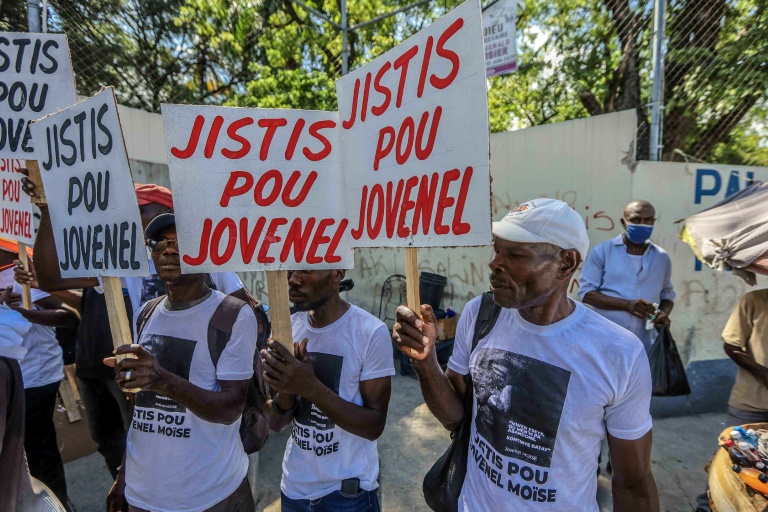
One year after Haitian president Jovenel Moise was shot to death at his home in Port-au-Prince, no suspected mastermind or motive has yet been identified, with the investigation stalling amid a crumbling political environment.

Moise was assassinated in the early hours of July 7, 2021, when a commando group entered the president’s private home and shot him 12 times, killing him. 

The same day, Haitian police mobilized exceptionally quickly to arrest about 20 people, including 18 former Colombian soldiers presumed to be hired as mercenaries.

But that initial speed has since been followed by a crawling legal process in Haiti and the United States.

The sluggishness has only worsened in recent weeks as the prosecutor’s offices in the Haitian capital have for the last month been invaded by one of the many gangs plaguing the country, whole sections of which are controlled by the often violent criminal bands. 

The inquiry’s delays have also further complicated Haiti’s existing political crisis. 

The Caribbean island nation’s presidency has been vacant since Moise’s death, with no date set for a vote to fill the office. 

No fewer than five successive judges have been in charge of the case, but none of them have issued any charges for the 40 people currently imprisoned in connection with it.

Prime Minister Ariel Henry, who was named to his post just two days before Moise’s death, is suspected of speaking with one of the prime suspects via telephone just hours after the attack — a line of investigation which he calls a “distraction.”

Parliament has not functioned properly in two years, as Moise had not organized elections since he himself took office in 2017. And without a head of state to appoint judges, the country’s judicial system has also flagged.

– Suspects charged in US –

With confidence in their own government all but gone, many Haitians have instead placed their hopes in the hands of the American judicial system.

Three suspects have been charged in Miami, Florida, where Haitian police also say the plot originated. Those suspects are: Colombian Mario Palacios, who is believed to be one of the five armed men who ultimately gained access to the room where Moise was killed, Colombian-Haitian citizen Rodolphe Jaar and former Haitian senator John Joel Joseph.

A fourth man was arrested at an airport in Istanbul in November, though Turkish courts rejected Haiti’s extradition request for him just this week.

Despite the case’s progress in the United States, a judge in April ruled to seal the evidence, citing two of the suspects’ previous involvement as informants for the US Drug Enforcement Agency and the FBI.

A Haitian judicial source, speaking on condition of anonymity, lamented the US move, telling AFP: “A whole section of this story will remain unknown.” 

UN Security Council to vote on extending Syria cross-border aid

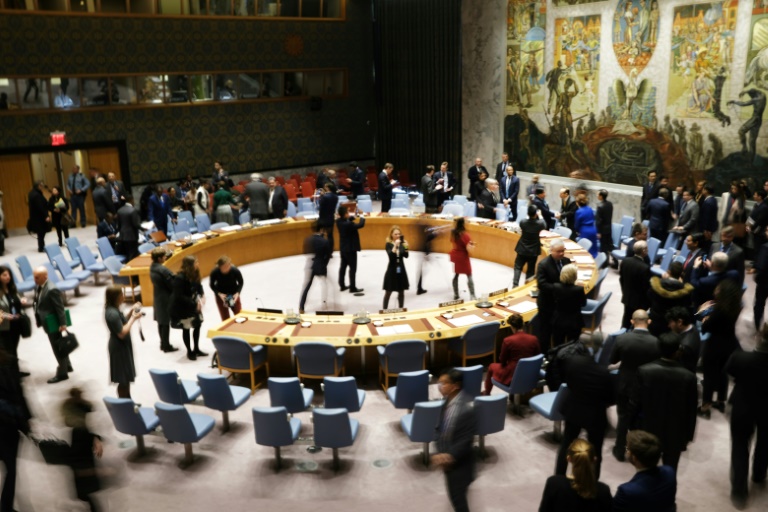
The United Nations Security Council votes Thursday on extending its authorization of aid transfers across Syria’s border without approval from Damascus, with Russia seeking a six-month prolongation while Western nations want a full year.

The UN resolution permitting aid deliveries across the Syrian-Turkish border at Bab al-Hawa has been in effect since 2014, but is set to expire on Sunday.

Norway and Ireland, two non-permanent members of the 15-country Security Council, have drafted a resolution that would extend the authorization until July 10, 2023.

Nearly 10,000 trucks loaded with humanitarian aid passed through Bab al-Hawa last year, bound for the rebel-held Idlib region in northwestern Syria. It is the only crossing through which aid can be brought into Idlib without navigating areas controlled by Syrian government forces.

The resolution, which was obtained by AFP, calls on “all parties to ensure full, safe and unhindered access by all modalities, including cross-line, for deliveries of humanitarian assistance to all parts of Syria.”

Russia, a veto-holding Security Council member and ally of Damascus, has hinted in recent months that it would oppose an extension, having already forced a reduction in the number of allowed border crossings on the grounds that it violates Syria’s sovereignty.

According to diplomats, Russia ultimately put its own draft resolution on the table, which includes an extension of six months. 

In an attempt to persuade Moscow, Norway and Ireland have inserted several amendments touching on the transparency of humanitarian shipments, possible contributions to Syria’s reconstruction, and on the need to develop aid deliveries via government-controlled territory.

Russia has long called for the West to participate in Syria’s reconstruction, but some council members, most vocally France, have refused until political reforms have been enacted.

However, during a Security Council meeting in June, a majority of countries — including the United States — offered support for financing so-called “early recovery projects” in Syria.

In this vein, the resolution by Norway and Ireland calls for “further international initiatives to broaden the humanitarian activities in Syria, including water, sanitation, health, education, and shelter early recovery projects.”

By Wednesday evening, few diplomats dared to predict whether the additions would be enough to convince Russia to agree to a full-year extension.

But some told AFP that a last-minute compromise was possible, by making the six-month extension renewable for an additional six months practically by default.

Sri Lanka hikes interest rates, warns trouble ahead

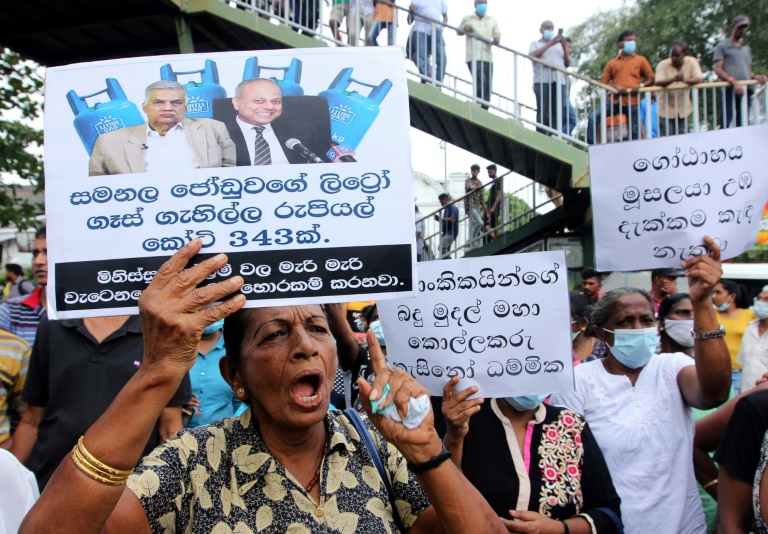
Cash-strapped Sri Lanka raised interest rates one percentage point Friday, the second sharp hike in three months, as the central bank warned of 80 percent inflation and a painful recession.

The Central Bank of Sri Lanka ramped up its benchmark deposit and lending rates to 14.5 percent and 15.5 percent respectively, after data showed inflation soared to a record 54.6 percent last month.

Officials said the hike was aimed at containing runaway prices, which were forecast to rise 80 percent by year’s end, and reduce any build-up of demand pressures in the shattered economy.

Acute shortages of food and fuel, alongside lengthy electricity blackouts, have led to months of widespread anti-government demonstrations calling for President Gotabaya Rajapaksa’s resignation.

The central bank said the economy could go into a recession this year, having grown 3.7 percent last year and contracted 3.6 percent in 2020.

Prime Minister Ranil Wickremesinghe told parliament the economy could shrink as much as 7.0 percent.

The bank said economic activity in the second quarter of this year had been severely affected by electricity and fuel shortages, while all non-essential offices and schools have been told to shut in a bid to reduce commuting and save scarce energy.

The country is officially out of petrol and diesel, while fresh supplies are at least two weeks away.

The government defaulted on its $51 billion foreign debt in April and is negotiating a possible bailout with the International Monetary Fund.

“Significant progress has been made with respect to negotiations with the IMF towards reaching a staff-level agreement on the Extended Fund Facility (EFF) arrangement in the near term,” the central bank said.

It added that negotiations were also underway with several bilateral and multilateral partners to secure bridging financing.

Recession fears drag on euro and crude, Asian markets mixed

Crude extended the week’s losses Thursday, while the euro struggled to recover from 20-year lows and equities were mixed as recession fears continued to cast a pall across trading floors.

Expectations for a contraction in some of the world’s leading economies, including China, where a new Covid-19 flare-up has generated angst, have increased in recent weeks owing to central bank interest rate hikes aimed at taming decades-high inflation.

The surge in inflation has been caused by soaring energy costs and rising post-lockdown demand, but observers said concerns about a contraction — along with signs that consumers were being put off by high prices — were weighing on the oil market.

Both main contracts were down more than one percent Thursday and have fallen about 10 percent this month. They are now below $100 for the first time since April.

Data on Wednesday showed US demand appeared to be waning as stockpiles rose, confounding expectations for a drop, while there are also some concerns that the China outbreaks — including another spike in Shanghai — could see major cities put into lockdown again.

Still, Vandana Hari, of Vanda Insights, said prices would likely rebound.

“There isn’t much rational assessment going on — it’s panic selling,” she said. “The fears may not end but could get brushed aside when supply constraints are back to the fore. The market balance is tight.”

While the drop in prices could temper inflation and give central banks some room to ease up on their rate hike cycle, the Federal Reserve remains on course for several more increases.

On Wednesday, minutes from its June policy meeting indicated officials were set for another three-quarter-point rate hike this month — after the first such lift in 28 years in June — saying they were worried “inflation pressures had yet to show signs of abating”.

They also noted a need to maintain credibility among Americans, saying there was “a significant risk… that elevated inflation could become entrenched if the public began to question the resolve of the Committee”.

The increases were likely to continue through to the end of the year, the minutes showed.

Despite the prospect of higher borrowing costs, Wall Street’s three main indexes ended on a positive note.

But Asia struggled to pick up the baton, with the region’s markets mixed.

Tokyo, Shanghai, Sydney, Seoul, Taipei and Jakarta all rose but Hong Kong, Singapore, Wellington and Manila fell.

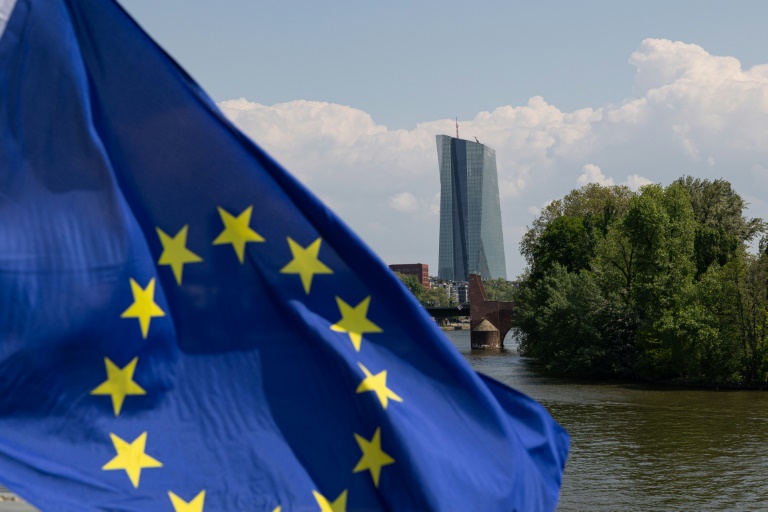
The Fed’s determination to ramp up rates has sent the dollar soaring against most other currencies, with the euro particularly under pressure due to the European Central Bank’s much slower response to the spike in prices.

The single currency hit a 20-year low against the greenback this week, with fears for the eurozone economy growing as it faces a severe energy crunch owing to sanctions on Russia, while there is a possibility Moscow will cut off its gas supplies.

And while the ECB has said it will start hiking rates this month, analysts said there was a lot of uncertainty, as officials had to balance supporting the currency with avoiding a fragmentation, in which members’ borrowing costs diverge too much.

Now there is a growing belief the euro will fall to parity with the dollar within weeks.

“I’m getting really worried about the recent speeches that have come out the past couple of days that show that there are a lot of concerns and a lot of disagreement” within the ECB governing council, said Vasileios Gkionakis of Citigroup.

“If the ECB wants to tame inflation and support exchange rates … then it needs to do two things: hike rates and come up with an effective anti-fragmentation mechanism,” he told Bloomberg.

And Kit Juckes at Societe Generale added that the currency “remains effectively unbuyable this summer”. 

“Europe’s energy dependency on Russia is falling, but not fast enough to avoid recession if the (gas) pipeline is closed. If that happens, the (euro) will likely lose another 10 percent or so.”

– Key figures at around 0300 GMT –

Tokyo – Nikkei 225: UP 0.7 percent at 26,298.66 (break)

Hong Kong – Hang Seng Index: DOWN 0.6 percent at 21,459.42

Shanghai – Composite: UP 0.3 percent at 3,356.82

Euro/dollar: UP at $1.0193 from $1.0186 on Wednesday

Pound/dollar: UP at $1.1937 from $1.1921 

Euro/pound: DOWN at 85.40 pence from 85.43 pence

Dollar/yen: DOWN at 135.64 yen from 135.93 yen

West Texas Intermediate: DOWN 1.0 percent at $97.54 per barrel

Brent North Sea crude: DOWN 1.1 percent at $99.54 per barrel

New York – Dow: UP 0.2 percent at 31,037.68 (close)

London – FTSE 100: UP 1.2 percent at 7,107.77 (close)

US women prepare for what comes after abortion ruling

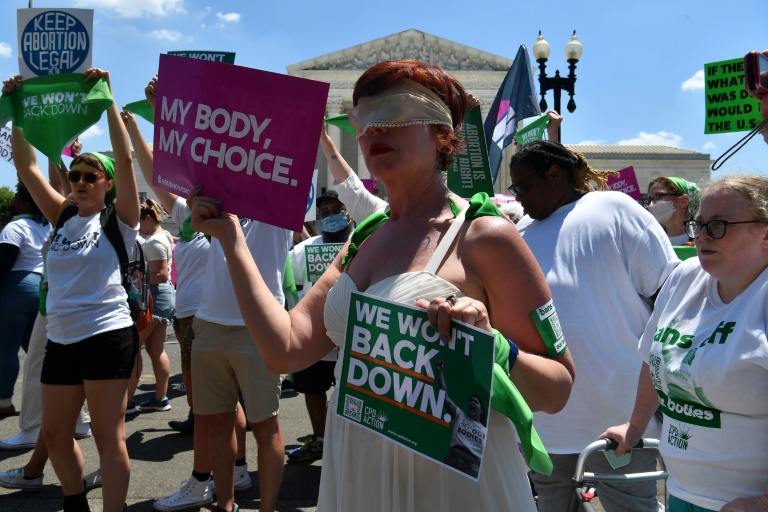
The US Supreme Court ruling that overturned the nationwide right to abortion has spurred a rush to prepare for an America where the procedure is banned in many states.

“Birth control,” “IUD” and even medical sterilization have all jumped in internet search trends, and drugstore chains have limited purchases of so-called morning-after pills to cope with demand.

Three women spoke to AFP about how they have made their own plans as legal battles over abortion laws ramp up in states across the country.

– Stocking up –

When the court last month threw out the 1973 ruling that made abortion legal across the United States, Sarah Kratzer worried Texas would go beyond abortion and start rolling back access to emergency contraception.

Restricting birth control or morning-after pills is a distant prospect, but one that many people fear.

Kratzer, 39, is a stay-at-home mom in San Antonio, Texas, the southern US state with some of the strictest anti-abortion laws in the country.

She told AFP she began stocking up on emergency contraceptive pills in May, after a draft court opinion leaked.

She received three packs of pills for free from a local rally of the nationwide “Bans Off Our Bodies” protest, which she attended with one of her daughters. She also ordered several more packs from Walmart.

Although Kratzer can no longer have kids herself for health reasons, the pills she has stored up are for her three children — ages 15, 19 and 20.

“They still have rights to be able to decide, ‘Yes, I want this child’ or ‘No, I don’t want this child,'” she told AFP.

Sex education is limited in some Texas public schools, so she’s also teaching her children how to track their ovulation cycles and use spermicides, and has bought ovulation tests and pregnancy tests.

Emergency contraception pills have a shelf life of three to four years, and Kratzer hopes the ones she and many others have stockpiled will provide enough time for the United States to reinstate abortion rights — though that may be unlikely.

If not “I will be going to other countries and picking (emergency contraception) up and finding a way to bring it back,” she said.

– IUD, and moving abroad –

Kayla Pickett is also worried about what other rights the Supreme Court might overturn, beyond abortion.

“No telling what else they are going to do,” the nursing student told AFP.

She and her boyfriend live in Akron, Ohio, a state that has banned abortion after six weeks. Pickett, 22, and her 21-year-old boyfriend plan to move to Colorado next year, and then abroad.

“Me and my boyfriend are both African-American,” Pickett said. “We want to be in a state that we have rights in and know if anything else happens, me and him will be good.”

The couple had discussed moving out of Ohio for the past few years, but the Supreme Court ruling prompted them to go one step further: “Once we (are) more financially stable, we plan to move out of the USA,” she said.

In the meantime, Pickett has joined others rushing to get an IUD (intrauterine device). She began making plans for the procedure in May, after the draft ruling leaked.

Pickett has used hormonal birth control since she was 15, but she wanted to switch to something more long-term in case Ohio tries to roll back birth control access, too.

IUDs last for five to 10 years before they need to be replaced. Pickett got hers inserted last week at a local Planned Parenthood.

“I just want to be ready,” she said.

– Sterilization –

When Meagan McKernan learned about the ruling, she felt terror, fury — but also “sheer relief” that she had a strategy in place.

She has already begun the process for “getting my tubes tied,” she explained. Her pre-operative consultation is on July 9.

McKernan, 33, who works for an online auction company, does not want children.

She had her first pregnancy scare in early May, around the same time as the Supreme Court draft opinion on abortion leaked, and remembers feeling “terrified.”

“The fact that my choices would be more limited, terrified me even more,” she told AFP.

“I need a permanent solution so that I never have to feel this way again.”

McKernan admitted to feeling nervous about the procedure, but also excited and validated that her gynecologist quickly agreed with her decision.

She acknowledged, too, the “privilege” of having the financial flexibility to have the procedure, which can cost up to $6,000 out of pocket, and of living in a state where optional tubal ligation is accessible.

McKernan lives in Connecticut, near the border with New York, and recognizes that she is in a relatively safe area when it comes to abortion rights. But she still feels a sense of urgency around her procedure.

“I don’t want any other possible right to choose what’s best for me to be taken away,” she said.

Samsung Electronics forecasts 11.4% rise in 2Q profits

Samsung Electronics expects operating profits in the second quarter to rise 11.4 percent, the South Korean tech giant said in a statement Thursday, despite ongoing global supply chain woes.  

The world’s biggest smartphone maker forecast 2022 second-quarter operating profits of about 14 trillion won ($10.7 billion), up from 12.6 trillion won in the same quarter last year.

Samsung expected sales in the April-June period to have increased by 21 percent on-year to 77 trillion won. The figure would represent a downgrade from its first-quarter sales of 77.8 trillion won.  

Analysts said Samsung was helped by its continued strong performances in the memory chip business, making up for declines in smartphone sales over the period.  

“Samsung’s smartphone shipments for the second quarter are expected to be just over 60 million units, which is worse than expected,” Park Sung-soon, an analyst at Cape Investment & Securities, told AFP.  

Samsung shipped 74.5 million smartphones in the first quarter, according to global research firm Counterpoint, topping the global shipments market with 23 percent, trailed by Apple’s 18 percent. 

With memory chips now used in a wide-ranging array of devices and cloud servers — essential for remote working in the pandemic era — the sector has become less dependent on seasonally driven demand for gadgets such as smartphones and laptops. 

But concerns are growing over uncertainty in the global economic outlook due to Russia’s ongoing war in Ukraine and mounting fears of recession driven by inflationary pressure. 

Under such circumstances, it will be “hard for consumer demand for IT gadgets to improve in the coming months”, analyst Park said. 

Samsung Electronics is the flagship subsidiary of the giant Samsung group, by far the largest of the family-controlled empires known as chaebols that dominate business in South Korea.

The conglomerate’s overall turnover is equivalent to about one-fifth of South Korea’s gross domestic product.

-First maker-

The world’s biggest memory chip maker, Samsung Electronics has aggressively stepped up investment in its semiconductor business as the world battles chip shortages that have hit everything from cars and home appliances to smartphones and gaming consoles.

Last week, the company became the first chipmaker in the world to mass-produce advanced 3-nanometre microchips as it sought to match and eventually outpace Taiwan’s TSMC in the race to manufacture the most advanced microchips.  

The new chips will be smaller, more powerful and efficient, and will be used in high-performance computing applications before being put into gadgets such as mobile phones.

The news came after its May announcement of a 450 trillion won investment over the next five years to “bring forward the mass production of chips based on the 3-nanometer process”.  

The vast majority of the world’s most advanced microchips are made by just two companies — Samsung and TSMC — both of which are running at full capacity to alleviate a global shortage.

Samsung is the market leader in memory chips, but it has been scrambling to catch up with TSMC in the advanced foundry business.

The supply of memory chips has garnered global geopolitical significance, with leading governments scrambling to secure advanced chip supplies. 

That was demonstrated in May when US President Joe Biden kicked off a South Korea tour by visiting Samsung’s sprawling Pyeongtaek chip plant.  

Russia’s invasion of Ukraine has “further spotlighted the need to secure our critical supply chains”, Biden said at the plant, underscoring the importance of bolstering technology partnerships among “value-sharing” countries.  

US sanctions network selling Iranian oil

The US Treasury said Wednesday it was freezing the assets of members of an international network for violating oil sanctions on Tehran by selling millions of dollars’ worth of Iranian petrochemical products to East Asia.

The sanctions target Iranian petrochemical firms and alleged front companies in China and the United Arab Emirates for Iran’s state-owned company and Triliance, a Hong Kong-based company already under US sanctions for its dealings with Iran.

Washington had earlier imposed sanctions on Iranian petrochemical producers in mid-June, as well as on Chinese and Indian brokers, expanding pressure amid a deadlock in negotiations on restoring a 2015 deal to curb Iran’s nuclear program.

“While the United States is committed to achieving an agreement with Iran that seeks a mutual return to compliance with the Joint Comprehensive Plan of Action, we will continue to use all our authorities to enforce sanctions,” the Treasury said, referring to the nuclear deal.

Wednesday’s announcement came ahead of a highly anticipated visit next week by President Joe Biden to Israel and Saudi Arabia when efforts to contain the nuclear threat from Iran will be top of the agenda.

Sanctions were also imposed on China-based broker Jeff Gao and Indian national Mohammad Shaheed Ruknooddin Bhore for allegedly managing business for Triliance.

All of the targets’ property and interests in the United States will be frozen, and US-based people and companies are blocked from conducting business dealings with them.

– Stalled nuclear talks –

The US State Department announced it was imposing parallel sanctions on 15 individuals and firms based in Iran, the UAE, and east and southeast Asia for distributing Iranian oil and petrochemical products.

“The United States has been sincere and steadfast in pursuing a path of meaningful diplomacy to achieve a mutual return to full implementation of the Joint Comprehensive Plan of Action,” Secretary of State Antony Blinken said in a statement.

“It is Iran that has, to-date, failed to demonstrate a similar commitment to that path.”

In April 2021, Biden’s administration kickstarted a new round of negotiations with Iran in Vienna with the aim of returning the United States to the nuclear deal, including through lifting sanctions on Iran.

But the ever-delicate dialogue has been stalled since March.

The 2015 agreement with world powers, formally known as the Joint Comprehensive Plan of Action or JCPOA, gave Iran sanctions relief in exchange for curbs on its nuclear program to guarantee that Tehran could not develop a nuclear weapon — something it has always denied wanting to do.

But in 2018, then-president Donald Trump withdrew the United States from the accord and reimposed heavy economic sanctions that prompted Iran to begin rolling back on its own commitments.

Iran’s foreign minister said in June the “train has still not derailed” in negotiations aiming to restore the JCPOA, despite the US sanctions imposed that month on the Islamic republic.

Apple devices getting beefed-up defense against spyware

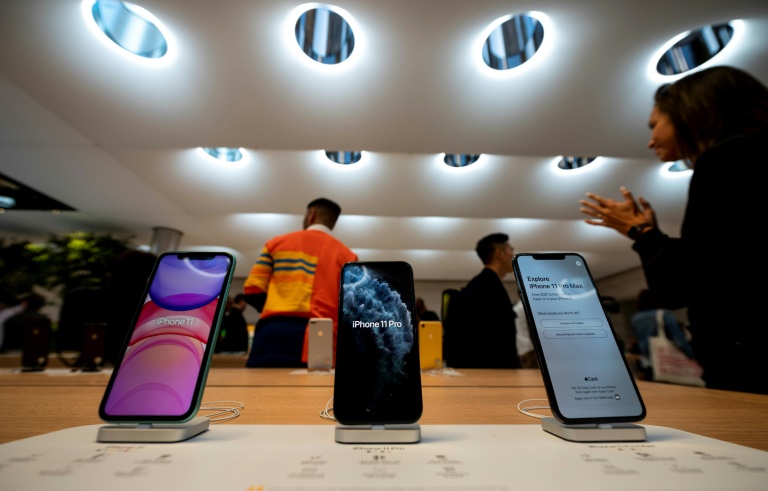
Apple on Wednesday unveiled a new way for activists, journalists and other targets of state-sponsored espionage to protect themselves from spyware.

A Lockdown Mode being added to iPhones, iPads, and Mac computers is intended to counter threats from a thriving industry that provides sophisticated espionage tools to governments.

“While the vast majority of users will never be the victims of highly targeted cyberattacks, we will work tirelessly to protect the small number of users who are,” Apple head of security engineering Ivan Krstic said in a blog post.

The tech giant is upping the bounty it pays researchers for uncovering vulnerabilities in its software when it comes to Lockdown Mode, raising the maximum reward to $2 million.

Concerns over digital snooping have been fueled by media outlets reporting that Pegasus spyware made by NSO Group in Israel was being used by governments to surveil opponents, activists and journalists.

Apple is suing NSO Group in US federal court, saying the Israeli firm’s spyware was used to attack a small number of iPhone users worldwide.

“State-sponsored actors like the NSO Group spend millions of dollars on sophisticated surveillance technologies without effective accountability,” Apple senior vice president of software engineering Craig Federighi said when the suit was filed late last year.

“That needs to change.”

Pegasus infiltrates mobile phones to extract data or activate a camera or microphone to spy on their owners.

NSO Group says the software is only sold to government agencies to target criminals and terrorists with the green light of Israeli authorities.

A Spanish court last month said a judge wants to visit Israel to quiz the NSO Group’s top executive over a top-level hacking scandal involving the Spanish premier’s phone.

Meanwhile, Google last month said that an Italy-based firm’s hacking tools were used to spy on Apple and Android smartphones in Italy and Kazakhstan, casting a light on a “flourishing” spyware industry.

Google’s threat analysis team said spyware made by RCS Lab targeted the phones using a combination of tactics including unusual “drive-by downloads” that happen without victims being aware.

Google said it warned Android users targeted by the spyware and ramped up software defenses.

The Google threat team is tracking more than 30 companies that sell surveillance capabilities to governments, according to the Alphabet-owned tech titan.

“The commercial spyware industry is thriving and growing at a significant rate,” Google said.

Apple’s Lockdown Mode is designed to block or disable some features and capabilities to prevent them being taken advantage of by spyware.

The extreme, optional mode “hardens device defenses and strictly limits certain functionalities, sharply reducing the attack surface that potentially could be exploited by highly targeted mercenary spyware,” Apple said.

Close Bitnami banner
Bitnami