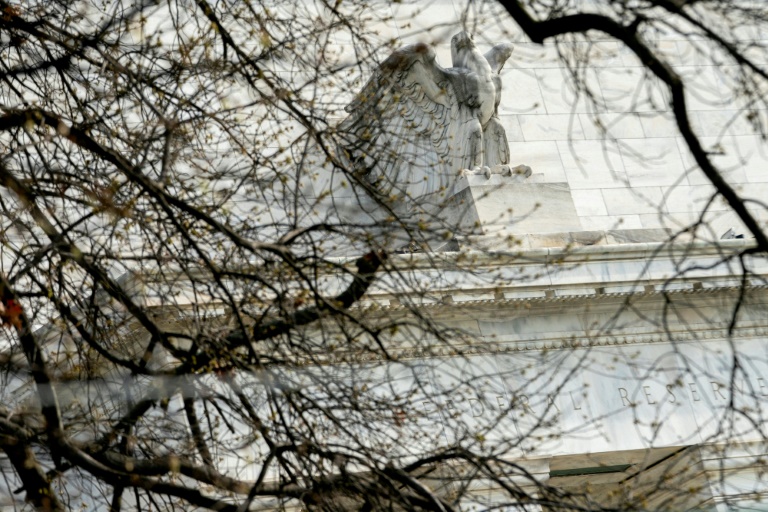
US Business

Fed flags risk US inflation could become entrenched: minutes

US central bankers last month flagged the concern that sky-high inflation could become a permanent fixture, and stressed their readiness to continue raising interest rates to tamp down price pressures, according to the minutes of the latest policy meeting released Wednesday.

The Federal Reserve last month implemented the most aggressive interest rate increase in nearly 30 years, as policymakers cited worries that price pressures had shown no signs of easing, according to the record of the June 14-15 meeting.

The members of the Fed’s policy-setting Federal Open Market Committee raised the benchmark borrowing rate three-quarters of a point and at the time said another similar increase was possible later this month, after data showing consumer prices surged 8.6 percent in the 12 months to May — the highest in more than four decades.

Officials were concerned “that inflation pressures had yet to show signs of abating,” further evidence “inflation would be more persistent than they had previously anticipated,” the minutes said.

Many policymakers said there was “a significant risk… that elevated inflation could become entrenched if the public began to question the resolve of the Committee.”

But the minutes made clear the officials don’t plan to let up in their efforts to cool the economy, at least through the end of the year.

With the high prices for food, energy, housing and other goods squeezing American families, Fed officials stressed the moves were “essential in restoring price stability.”

Still, there remains a risk inflation will continue to accelerate amid the uncertainty surrounding how long the Russian invasion of Ukraine and Covid-19 lockdowns in China will continue to exacerbate price pressures, the report said.

– Looking backwards –

Officials acknowledged they might have to be even more aggressive in tightening monetary policy “if elevated inflation pressures were to persist.”

However, economists note that more recent data and surveys show price pressures easing and housing demand slowing, while even job openings in the red-hot US labor market dipped.

“Not sure people realize how dramatically the runaway inflation narrative has now collapsed,” Nobel-prize winning economist and columnist Paul Krugman said on Twitter.

He said retail gasoline prices have not reflected the cooling at the wholesale level. 

Oil prices have retreated for the past two days, with the US benchmark WTI below $100 for the first time in about two months.

But, he tweeted, “a lot of economic commentators have been waiting years for the chance to posture sternly against runaway inflation, and really, really won’t want to back down.”

Ian Shepherdson of Pantheon Macroeconomics also noted that while the minutes point to an economy still expanding, that “growth picture is way out of date” as recent figures show second-quarter GDP likely fell again.

– ‘Upside’ risks –

The Fed’s super-sized rate hike last month came with the central bank under intense pressure to curb soaring prices that have left millions of Americans struggling to make ends meet and sent President Joe Biden’s approval ratings plunging.

Following the meeting, Fed Chair Jerome Powell said it was “essential” to lower inflation, but stressed that the goal is to achieve that without derailing the US economy.

The minutes confirmed the feeling another hike of 50 or 75 basis points is likely this month, but Shepherdson noted that officials said they would be “nimble” in the face of new data.

“In other words, 75bp is not a done deal. We very much hope that the sobering data since the June meeting will push members towards the smaller hike,” he said.

US central bankers began raising interest rates off zero in March as buoyant demand from American consumers for homes, cars and other goods clashed with transportation and supply chain snarls.

Inflation got dramatically worse after Russia invaded Ukraine in late February, and US gasoline prices topped $5.00 a gallon for the first time, though they have since retreated slightly.

The Fed minutes said inflation risks remain “skewed to the upside.”
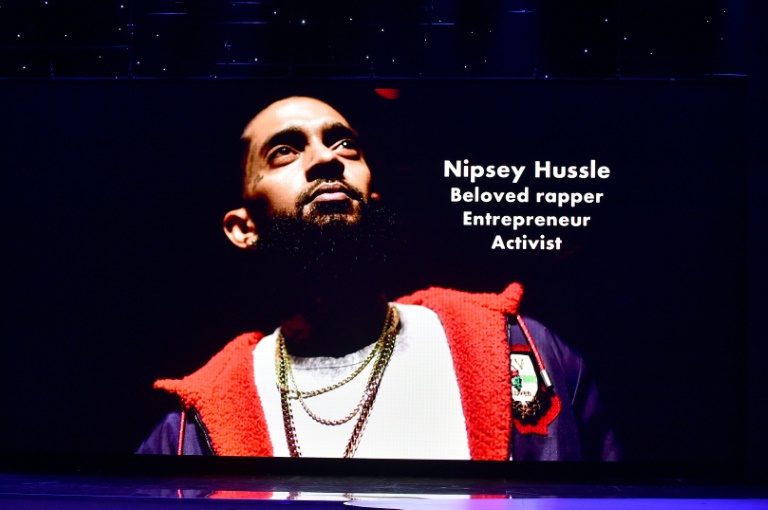
Nipsey Hussle killer convicted of first-degree murder

The man who shot dead Grammy-winning rapper Nipsey Hussle in broad daylight on a Los Angeles street in 2019 was convicted of first-degree murder Wednesday.

Eric Holder did not deny killing Hussle — a fast-rising star whose death sent shockwaves through the music community — but his lawyers had argued it was an impulsive crime that took place in the “heat of passion.”

Instead, a jury found Holder had acted with premeditation as he fired at Hussle 10 times following a dispute between the two men over claims the assailant was “snitching.”

Holder will be sentenced September 15.

The violent killing of Hussle, a former gang member, in front of a clothing store he owned triggered widespread grief in his native Los Angeles and among his superstar peers, who hailed his musical talents and community activism.

Raised in the city’s Crenshaw district, Hussle, who was 33 when he died, had transformed the block he used to hustle on into a retail, job-creating hub for his Marathon Clothing company.

But he remained linked to the gang-ridden world he grew up in.

During opening statements in the trial, prosecutor John McKinney said Hussle had told Holder there were rumors Holder had been “snitching,” before Holder left the parking lot where the two were talking.

When he returned a short time later, Holder “pulls out not one but two guns and starts shooting” in an “explosion of violence.”

In his closing argument, prosecutor McKinney called the killing “cold-blooded” and “calculated,” saying Holder had “quite a bit of time for premeditation and deliberation.”

But Holder’s attorney told jurors the killing was “an act of impulse and rashness” which should have been charged as manslaughter.

The month after his 2019 killing, thousands of people gathered for a service in Hussle’s honor, with Stevie Wonder and Snoop Dogg among those paying tribute, and former president Barack Obama penning a letter that was read during the service. 

“While most folks look at the Crenshaw neighborhood where he grew up and see only gangs, bullets and despair, Nipsey saw potential,” wrote Obama. 

“He saw hope. He saw a community that, even through its flaws, taught him to always keep going.”

Hussle was posthumously honored with two Grammy Awards in 2020 for best rap performance for “Racks in the Middle” and for best rap/sung performance for “Higher.”

Fed flags risk US inflation could become entrenched: minutes

US central bankers last month flagged the concern that sky-high inflation could become persistent and reiterated their willingness to continue raising interest rates to tamp down price pressures, according to the minutes of the latest policy meeting released Wednesday.

The Federal Reserve last month implemented the most aggressive interest rate increase in nearly 30 years, as policymakers cited worries that price pressures had shown no signs of easing, according to the record of the June 14-15 meeting.

The members of the Fed’s policy-setting Federal Open Market Committee raised the benchmark borrowing rate three-quarters of a point and at the time said another similar increase was possible later this month, after data showing consumer prices surged 8.5 percent in the 12 months to May — the highest in more than four decades.

Officials were concerned “that inflation pressures had yet to show signs of abating,” which a number saw as further evidence “inflation would be more persistent than they had previously anticipated,” the minutes said.

And many policymakers said there was “a significant risk… that elevated inflation could become entrenched if the public began to question the resolve of the Committee.”

But the minutes made clear the officials are resolved to continue efforts to cool the economy at least through the end of the year.

With the high prices for food, energy, housing and other goods squeezing American families, Fed officials “stressed that appropriate firming of monetary policy, together with clear and effective communications, would be essential in restoring price stability.”

Still, there remains a risk inflation will continue to accelerate amid the uncertainty surrounding how long the effect of the Russian invasion of Ukraine and Covid-19 lockdowns in China will continue, as those factors have exacerbated price pressures, the report said.

Officials acknowledged they might have to be even more aggressive in tightening monetary policy “if elevated inflation pressures were to persist.”

– Upside risks –

The super-sized 0.75-percentage-point hike last month came with the Fed under intense pressure to curb soaring prices that have left millions of Americans struggling to make ends meet and sent President Joe Biden’s approval ratings plunging.

Following the meeting, Fed Chair Jerome Powell said it was “essential” to lower inflation, but stressed that the goal is to achieve that without derailing the US economy.

However, he acknowledged there is always a risk of going too far, and concerns about a US and global recession have sent global stock markets on a downward slide in recent weeks.

Biden has endorsed the Fed’s effort and is hoping for success as his Democrats face the possibility of losing control of Congress in key midterm elections in November.

US central bankers began raising interest rates off zero in March as buoyant demand from American consumers for homes, cars and other goods clashed with transportation and supply chain snarls in parts of the world where Covid-19 remains a challenge.

That fueled inflation, which got dramatically worse after Russia invaded Ukraine in late February and Western nations imposed steep sanctions on Moscow, sending food and fuel prices up at a blistering rate.

That caused US gasoline prices to top $5.00 a gallon, but they have since retreated slightly.

But the Fed minutes said inflation risks remain “skewed to the upside.”
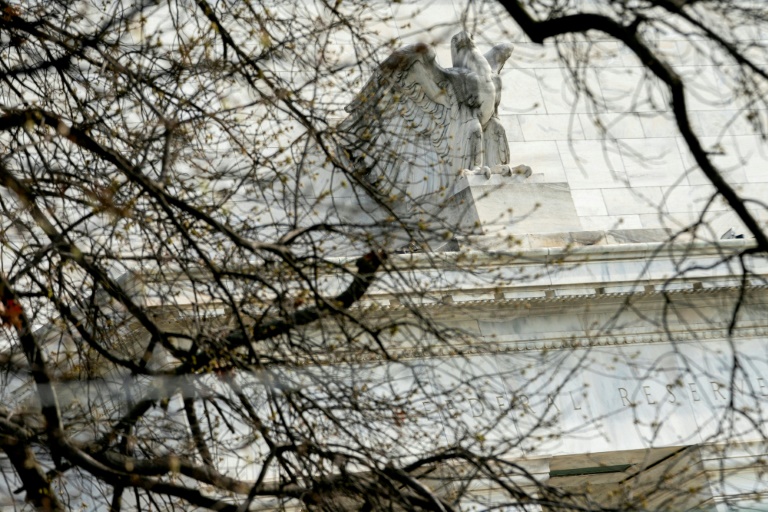
Officials said that later this year they will be “well positioned” to gauge the extent to which further rate hikes will be needed.

Fed flags risk US inflation could become entrenched: minutes

US central bankers last month flagged the concern that sky-high inflation could become persistent and reiterated their willingness to continue raising interest rates to tamp down price pressures, according to the minutes of the latest policy meeting released Wednesday.

The Federal Reserve last month implemented the most aggressive interest rate increase in nearly 30 years, as policymakers cited worries that price pressures had shown no signs of easing, according to the record of the June 14-15 meeting.

The members of the Fed’s policy-setting Federal Open Market Committee raised the benchmark borrowing rate three-quarters of a point and at the time said another similar increase was possible later this month, after data showing consumer prices surged 8.5 percent in the 12 months to May — the highest in more than four decades.

Officials were concerned “that inflation pressures had yet to show signs of abating,” which a number saw as further evidence “inflation would be more persistent than they had previously anticipated,” the minutes said.

And many policymakers said there was “a significant risk… that elevated inflation could become entrenched if the public began to question the resolve of the Committee.”

But the minutes made clear the officials are resolved to continue efforts to cool the economy at least through the end of the year.

With the high prices for food, energy, housing and other goods squeezing American families, Fed officials “stressed that appropriate firming of monetary policy, together with clear and effective communications, would be essential in restoring price stability.”

Still, there remains a risk inflation will continue to accelerate amid the uncertainty surrounding how long the effect of the Russian invasion of Ukraine and Covid-19 lockdowns in China will continue, as those factors have exacerbated price pressures, the report said.

Officials acknowledged they might have to be even more aggressive in tightening monetary policy “if elevated inflation pressures were to persist.”

– Upside risks –

The super-sized 0.75-percentage-point hike last month came with the Fed under intense pressure to curb soaring prices that have left millions of Americans struggling to make ends meet and sent President Joe Biden’s approval ratings plunging.

Following the meeting, Fed Chair Jerome Powell said it was “essential” to lower inflation, but stressed that the goal is to achieve that without derailing the US economy.

However, he acknowledged there is always a risk of going too far, and concerns about a US and global recession have sent global stock markets on a downward slide in recent weeks.

Biden has endorsed the Fed’s effort and is hoping for success as his Democrats face the possibility of losing control of Congress in key midterm elections in November.

US central bankers began raising interest rates off zero in March as buoyant demand from American consumers for homes, cars and other goods clashed with transportation and supply chain snarls in parts of the world where Covid-19 remains a challenge.

That fueled inflation, which got dramatically worse after Russia invaded Ukraine in late February and Western nations imposed steep sanctions on Moscow, sending food and fuel prices up at a blistering rate.

That caused US gasoline prices to top $5.00 a gallon, but they have since retreated slightly.

But the Fed minutes said inflation risks remain “skewed to the upside.”
Officials said that later this year they will be “well positioned” to gauge the extent to which further rate hikes will be needed.

Suspected jihadists storm Nigeria prison, free hundreds

Suspected Boko Haram jihadists using guns and explosives blasted their way into a prison near Nigeria’s capital, freeing dozens of their jailed comrades and hundreds of other inmates, the government said on Wednesday.

Tuesday night’s brazen attack on the outskirts of Abuja came just hours after an ambush on a presidential security convoy in the northwest, in a startling illustration of Nigeria’s security challenges.

Residents reported a series of loud explosions and gunfire late Tuesday around the Kuje medium-security prison just 40 kilometres (25 miles) away from the capital and the Aso Rock presidential villa.

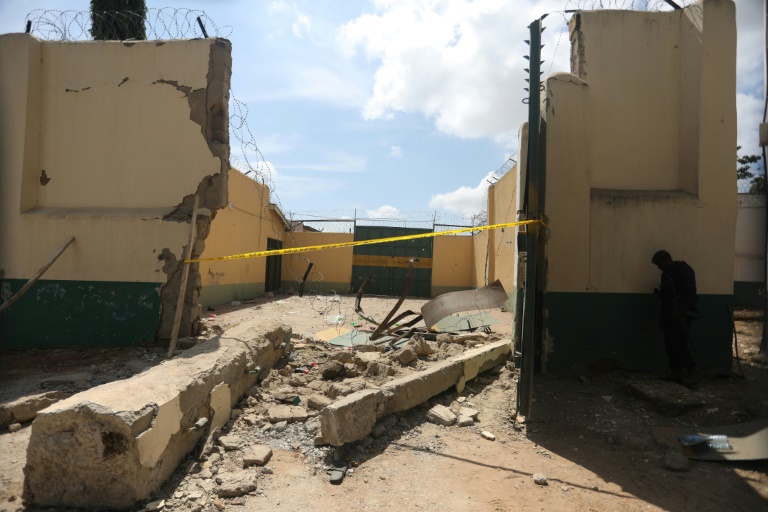
President Muhammadu Buhari on Wednesday briefly visited the prison, where the burnt-out wreckage of a bus and cars marked the scene of the attack, and yellow police tape was stretched across a destroyed section of the prison perimeter.

“I am disappointed with the intelligence system. How can terrorists organize, have weapons, attack a security installation and get away with it?” Buhari said in a statement after the visit.

The Nigerian leader, who has been under pressure over the country’s security challenges, was due to leave on an official trip to Senegal soon after the prison visit.

One security official was killed when the gunmen breached the jail using high-grade explosives.

“We understand they are Boko Haram, they came specifically for their co-conspirators,” senior interior ministry official Shuaibu Belgore told reporters on a visit to the prison.

Close to 600 inmates had been recaptured by Wednesday evening while less than 100 were still on the run, Nigeria’s correctional services spokesman Abubakar Umar said.

Boko Haram is one of the jihadist groups involved in Nigeria’s grinding 13-year conflict in the country’s northeast.

Nigerian officials sometimes also use “Boko Haram” as a general phrase to refer to jihadists or other armed groups.

– ‘All escaped’ –

Defence Minister Bashir Magashi told reporters that Boko Haram militants had “mostly likely” carried out the attack and that all 64 jailed jihadists in the prison had escaped.

“None of them are inside the prison, they have all escaped,” he said.

Commanders of another jihadist group Ansaru, including the group’s chief Khalid Barnawi, had also been kept in Kuje prison since their conviction in 2017.

“We heard shooting on my street. We thought it was armed robbers,” one local Kuje resident said. “The first explosion came after the shooting. Then a second one sounded and then a third.”

Some prisoners surrendered while others were recaptured with military roadblocks set up around the penitentiary, officials said.

Security forces sent back around 19 recaptured inmates in a black van on Wednesday morning, an AFP correspondent at the site said.

Former top police commander Abba Kyari, who was being held in Kuje awaiting trial in a high-profile drug smuggling case, was still in custody, Umar said. 

– ‘Ambush positions’ –

Nigeria’s security forces are battling Boko Haram and Islamic State West Africa Province (ISWAP) jihadists in the country’s northeast, where the conflict has killed 40,000 people and displaced 2.2 million more.

The overstretched military is also fighting heavily armed criminal gangs known locally as bandits who terrorise communities in northwest and central states with raids and mass kidnappings for ransom.

In the country’s southeast, troops are dealing with separatist militias who demand an independent territory for the local ethnic Igbo people.

The Kuje prison raid took place soon after gunmen also ambushed an advance presidential security detail preparing for Buhari’s visit to his home state of northwestern Katsina.

Buhari was not in the convoy, but two officials were slightly wounded in the attack. It was not clear who was responsible.

“The attackers opened fire on the convoy from ambush positions but were repelled,” the presidency said in a statement.

Attacks on prisons in Nigeria have happened in the past, with gunmen seeking to free inmates.

More than 1,800 prisoners escaped last year after heavily armed men attacked a prison in southeast Nigeria using explosives.

The attackers blasted their way into the Owerri prison in Imo state, engaging guards in a gun battle before storming the prison. Imo state lies in a region that is a hotbed for separatist groups.

US July 4 parade gunman considered second attack

Robert Crimo, the 21-year-old man arrested for a mass shooting at a July 4 parade in an affluent Chicago suburb, has confessed and admitted he considered a second attack while on the run, officials said Wednesday.

Illinois State Police also addressed mounting questions about how Crimo, who had a history of mental health problems and threatening behavior, was allowed to legally purchase at least five firearms.

After fleeing the parade shooting scene in Highland Park, Illinois on Monday, Crimo drove to nearby Madison, Wisconsin, where he thought about carrying out another attack, police said.

“He did see a celebration that was occurring in Madison and he seriously contemplated using the firearm he had in his vehicle to commit another shooting,” police spokesman Christopher Covelli told reporters.

Prosecutor Ben Dillon said during a bond hearing for Crimo that he had confessed to police that he carried out the shooting in Highland Park, which left seven people dead and dozens injured.

Judge Theodore Potkonjak ordered Crimo, who has been charged with seven counts of first-degree murder, to be held without bail and to appear on July 28 for a preliminary hearing.

Crimo, dressed in a black shirt, appeared by video and listened impassively as prosecutors recounted the details of the shooting.

He was asked by the judge if he had a lawyer and responded that he did not. The judge appointed a public defender for him.

Dillon, the prosecutor, said Crimo had “provided a voluntary statement confessing to his actions.”

Crimo climbed on to a rooftop overlooking the parade route armed with a semi-automatic rifle, he said.

“(He) dressed up as a girl and covered his tattoos with makeup” to conceal his identity, Dillon added.

Crimo has several distinctive facial tattoos including the word “Awake” above his left eyebrow and the number “47” on his temple.

– History of mental health issues –

Dillon said Crimo emptied three 30-round magazines from his rifle into the parade crowd before fleeing.

Police said Crimo dropped his rifle in an alley and then drove to Madison armed with another gun in his car.

He considered attacking a celebration there but “indications (are) that he didn’t put enough planning forward to commit another attack,” Covelli said.

Crimo returned to the Chicago area and was captured about eight hours after the initial attack following a brief car chase.

Covelli said no motive had been provided for the attack in Highland Park, which he said Crimo planned for several weeks.

According to police, Crimo has a history of mental health issues and threatening behavior, but his firearms were purchased legally.

Police were called to Crimo’s home twice in 2019: once in April to investigate a suicide attempt and again in September because a relative said he had threatened to “kill everyone” in the family.

Police removed 16 knives, a dagger and a sword from the home but did not make any arrests, and no formal complaint was filed.

The Illinois State Police said the weapons were returned later that same day after Crimo’s father said they were his. 

In December 2019, Crimo, who was then 19, applied for a firearms permit which was sponsored by his father because he was under the age of 21, police said.

Because no formal complaints had been lodged in connection with the earlier incidents, there were no grounds to deny the permit, police said. Crimo subsequently purchased several other weapons.

Crimo, whose father unsuccessfully ran for mayor and owns a deli in Highland Park, was an amateur musician billing himself as “Awake the Rapper.”

The authorities are investigating online posts and videos made by Crimo which include violent content alluding to guns and shootings.

One YouTube video posted eight months ago featured cartoons of a gunman and people being shot.

“I need to just do it,” a voice-over says. “It is my destiny. Everything has led up to this. Nothing can stop me, not even myself.”

The shooting is the latest in a wave of gun violence plaguing the United States, where about 40,000 deaths a year are caused by firearms, according to the Gun Violence Archive.

The divisive debate over gun control was reignited by two massacres in May that saw 10 Black people gunned down at a New York supermarket, and 19 children and two teachers slain at an elementary school in Texas.

Spain eyes vibrant summer after 'dazzling' visitor surge

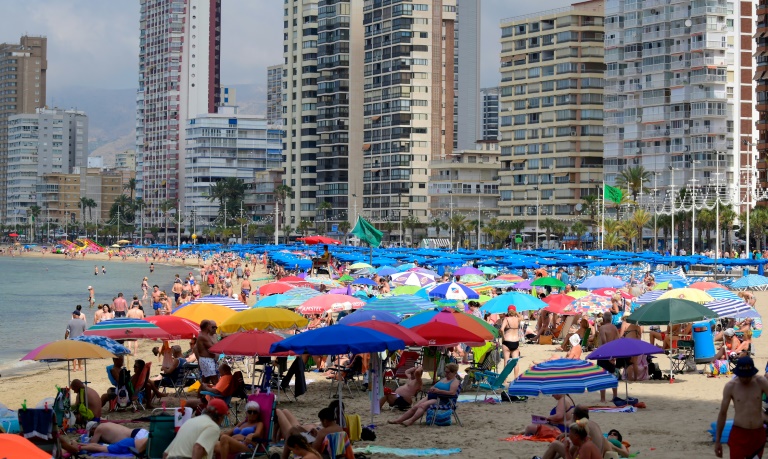
Spain said Wednesday it was hoping to reach its record visitor numbers of 2019 after two years of pandemic restrictions, although soaring inflation figures suggest tough times will return after the season ends. 

Before the pandemic hit in 2020, Spain was the world’s second-favourite holiday destination and this year it looks set to reclaim its place, the Exceltur tourism association said. 

Thanks to the “travel frenzy sweeping across Europe” Spain had seen a “dazzling surge in tourist numbers”, it said.

According to Spain’s tourism ministry, 22.7 million tourists visited the country in the first five months of 2022, seven times the number in the same period a year earlier, with the trend set to continue into the summer. 

“The number of bookings confirms Spain as a favourite international destination and indicates a good outlook for the high season,” Tourism Minister Reyes Maroto said on Monday. 

“After two long years.. we are finally going to see a summer like in previous years,” said Fernando Valdes, a top official at the tourism ministry.

This year, Spain’s tourism activity is expected to “reach a level similar to that of 2017, when the sector performed very well,” said Caixabank analyst Javier Ibanez. 

“The sectoral indicators paint a very positive picture.”

Exceltur said July and August could even be “similar” to levels reached in 2019, which was a record year for Spain in terms of visitors. 

“European and national demand is very high”, with the surge in activity expected to impact “the entire (tourism) sector”, said the association’s vice president Jose Luis Zoreda. 

And this view is shared across the sector, particularly by those along the coast. 

– Best-ever summer? –

“Everything suggests this is going to be one of our best-ever summers thanks to the post-pandemic syndrome,” said Diego Salinas, head of Abreca, an association representing bars, restaurants and cafes in Benidorm, a mass tourism hub on Spain’s southeastern coast.  

For the tourism sector which accounted for 13 percent of jobs and 12.5 percent of Spain’s GDP before the pandemic, this long-awaited revival is a huge relief, even if many players have struggled to recruit staff, notably on the coast and in big cities. 

Exceltur believes tourism will generate some 151.8 billion euros ($155 billion) this year — fully 10 billion more than initially expected. 

Such a figure would be slightly lower than the 155 billion euros reached in 2019 but far outstripping the 52 billion of 2020 or the 88 billion generated a year later. 

The destinations which are likely to benefit most from this visitor surge are the Andalusian coastline, which is expecting 7.4 percent more visitors than in 2019, with a 3.5 percent increase in the Canary Islands and 3.6 percent rise in the Balearic Islands. 

And the sub-sectors with the most optimistic outlook include leisure parks and car hire firms.

– Overcrowding risks –

But this strong recovery is not without its concerns, notably linked to the overcrowding at several airports in recent weeks which has revived the controversy over Spain’s mass-tourism model. 

This “intense and unexpected explosion in demand” could lead to moments of “saturation” that might create tension between residents and tourists, admitted Exceltur’s Zoreda, warning it could impact on “the sector’s reputation”. 

There is also the uncertainty created by spiralling global inflation which has seen food and energy prices soar and is severely limiting company margins, Exceltur said. 

And will this surge in prices also impact on the sector’s recovery by undermining consumer purchasing power?

While the sector has so far shown resilience, the economic slowdown caused by the war in Ukraine “will affect” tourism, says Caixabank’s Ibanez. 

It is an outlook also shared by Exceltur. 

“There are many geopolitical and economic uncertainties in the medium term for tourism,” it acknowledged.

“The extraordinary takeoff this summer will have to coexist with the turbulence that could be felt in the autumn.”

Evacuations as Russia advances in Ukraine's Donbas

The evacuation of civilians from Sloviansk continued Wednesday as Russian troops pressed towards the eastern Ukrainian city in their campaign to control the Donbas region, as Ireland’s prime minister visited Kyiv to voice solidarity.

Sloviansk has been subjected to heavy bombardment in recent days as Russian forces push westwards on day 133 of the invasion.

“Twenty years of work; everything is lost. No more income, no more wealth,” Yevgen Oleksandrovych, 66, told AFP as he surveyed the site of his car parts shop, destroyed in Tuesday’s strikes.

AFP journalists saw rockets slam into Sloviansk’s marketplace and surrounding streets, with firefighters scrambling to put out the resulting blazes.

Around a third of the market in Sloviansk appeared to have been destroyed, with locals coming to see what was left among the charred wreckage.

The remaining part of the market was functioning, with a trickle of shoppers coming out to buy fruit and vegetables.

– Sloviansk ‘well fortified’: mayor –

“I will sell it out and that’s it, and we will stay home. We have basements, we will hide there. What we can do? We have nowhere to go, nobody needs us,” said 72-year-old greengrocer Galyna Vasyliivna.

Mayor Vadym Lyakh said that around 23,000 people out of 110,000 were still in Sloviansk but claimed Russia had been unable to surround the city.

“Since the beginning of hostilities, 17 residents of the community have died, 67 have been injured,” he said.

“Evacuation is ongoing. We take people out every day.” Many of the evacuees were taken by bus to the city of Dnipro, further west.

“The city is well fortified. Russia does not manage to advance to the city,” the mayor said.

Vitaliy, a plumber, said his wife and their daughter, who is six months pregnant, were evacuated from Sloviansk on Wednesday.

“I am afraid for my wife,” he told AFP.

“Here, after what happened yesterday, they hit the city centre; need to leave.

“I sent my wife, and I have no more choice: tomorrow I will join the army.”

– Russians push west –

The eastern Donbas is mainly comprised of the Lugansk region, which Russian forces have almost entirely captured, and the Donetsk region to its southwest — the current focus of Moscow’s attack and the location of Sloviansk.

The fall of Lysychansk in Lugansk on Sunday, a week after the Ukrainian army also retreated from the neighbouring city of Severodonetsk, has freed up Russian troops to advance west on Kramatorsk and Sloviansk — Donetsk’s two largest cities still under Ukrainian control.

On Tuesday, they were first closing in on the smaller city of Siversk — which lies between Lysychansk and Sloviansk — after days of shelling there.

Donetsk governor Pavlo Kyrylenko said Russian forces killed five civilians and injured 21 in the region on Tuesday.

Lugansk governor Sergiy Gayday insisted that Russia did not control the entire Lugansk region, saying: “Fighting still keeps going in two villages.”

– Irish PM sees ‘evil’ –

Irish Prime Minister Micheal Martin was in Ukraine on Wednesday to voice Dublin’s solidarity and discuss how Ireland can support the country’s needs.

He visited Borodyanka and Butcha outside Kyiv, two towns that have become symbols of the alleged war crimes committed by Russian soldiers in this conflict.

“In the 21st century, to see such evil — very very difficult to comprehend. This war must stop,” he told Irish broadcaster RTE.

After talks later with Ukrainian President Volodymyr Zelensky, Martin said Moscow’s actions could not be allowed to stand.

“Russia’s brutal war against this beautiful democratic country is a gross violation of international law. It is an affront to everything that Ireland stands for,” he said.

Zelensky said Russia was not yet thinking about peace because “they don’t feel pressure of sanctions for the moment since some allies hesitate to activate sanctions”.

He is pressing Western allies for upgraded anti-missile systems.

“Our priority is sky security. We count on the arrival of powerful air defence systems. It will allow women and kids to get back home,” Zelensky said.

– Russia toughens laws –

Ireland supports Ukraine’s push for membership of the European Union.

Two hit and captured Russian armoured vehicles went on display in Warsaw’s historic Castle Square, under the message that Ukrainians are not just defending freedom and democracy in their own country but for Europe as a whole. 

The EU on Wednesday set out a harder focus on energy given Russia’s war in Ukraine.

“We need to prepare for further disruptions of gas supply, even a complete cut-off from Russia,” European Commission chief Ursula von der Leyen told the European Parliament.

The EU has launched a 300-billion-euro ($310-billion) plan to wean itself off Russian fossil fuel supplies.

Russia’s parliament on Wednesday introduced harsh prison terms for calls to act against national security, and for maintaining “confidential” cooperation with foreigners and helping them to act against Russia’s interests.

Rights activists fear the new legislation will be used to snuff out any last vestiges of dissent.

Lawmakers also approved legislation to create a patriotic youth movement, in a move reminiscent of Soviet-era youth organisations.

Meanwhile former Russian president Dmitry Medvedev invoked the possibility of nuclear war if the International Criminal Court moves to punish Moscow for alleged crimes in Ukraine since the February 24 invasion.

“The idea to punish a country that has the largest nuclear arsenal is absurd,” said Medvedev, a close ally of President Vladimir Putin.

“And potentially creates a threat to the existence of mankind.”

burs-rjm/gw

Biden speaks with wife of basketball star detained in Russia

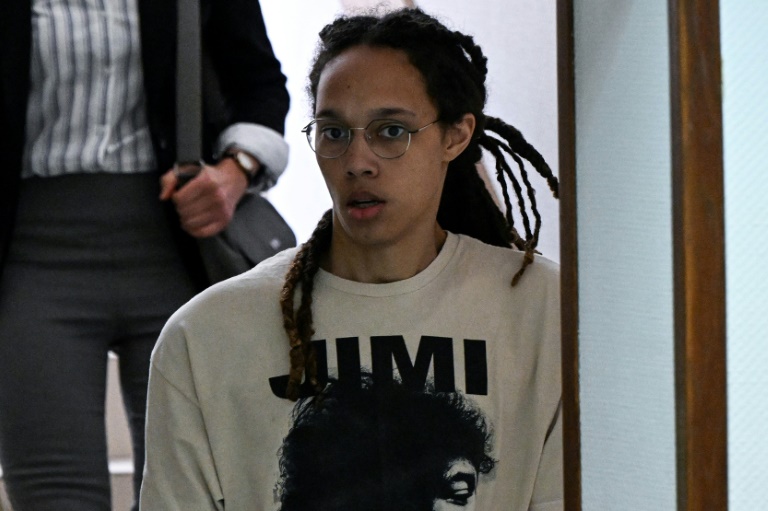
President Joe Biden spoke with the wife of women’s basketball star Brittney Griner on Wednesday, telling her that he is working to secure her spouse’s release from Russian detention, the White House said.

Two-time Olympic champion Griner — who has been held in Russia since February — faces up to 10 years in prison on charges of smuggling cannabis vape cartridges into the country.

“President Biden, joined by Vice President Harris, spoke today with Cherelle Griner, the wife of Brittney Griner who is wrongfully detained in Russia under intolerable circumstances,” the White House said in a statement.

“The president called Cherelle to reassure her that he is working to secure Brittney’s release as soon as possible,” and read her a draft of a letter he is sending to the WNBA star, it added.

Griner, 31, was detained in the days before Russia began its full-on assault on Ukraine, after which the United States and its allies imposed unprecedented economic sanctions on Moscow.

Her case has become one of many sticking points in relations between the United States and Russia, with Washington putting its special envoy in charge of hostages on the case.

Griner had asked Biden to help free her from Russian prison in a hand-written letter presented to the White House on US Independence Day.

“I realize you are dealing with so much, but please don’t forget about me and the other American Detainees,” Griner wrote. “Please do all you can to bring us home.”

British Airways cuts 10,300 more flights through October

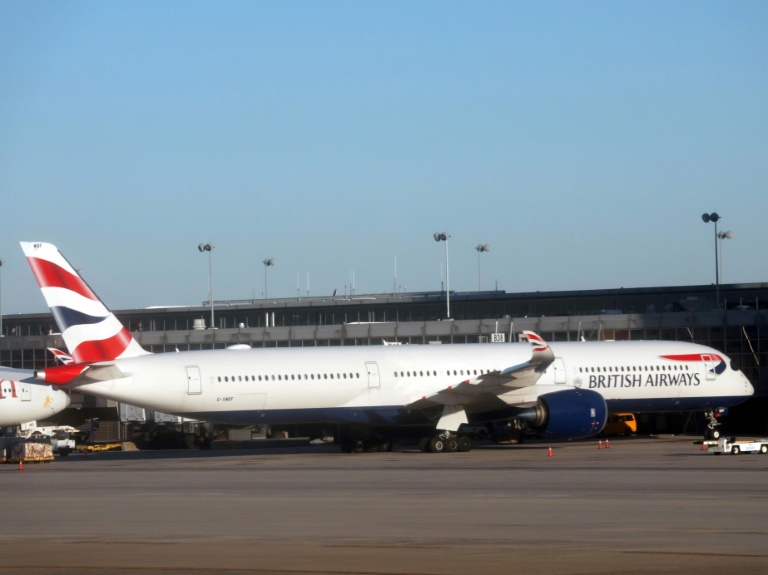
British Airways on Wednesday axed another 10,300 short-haul flights up to the end of October, with the aviation sector battling staff shortages and booming demand as the pandemic recedes.

The carrier, which is owned by conglomerate International Airlines Group (IAG), added in a statement that it had now cancelled 13 percent of its total summer schedule.

BA has been among the worst affected by sector-wide turmoil, as carriers race to meet soaring demand after the lifting of Covid travel restrictions. 

“The whole aviation industry continues to face into significant challenges and we’re completely focussed on building resilience into our operation to give customers the certainty they deserve,” the airline said in a statement, having already announced hundreds of flight cancellations this summer.

The latest move meanwhile comes less than two weeks after BA staff at London Heathrow airport voted to strike over pay this summer as surging inflation erodes wages and sparks growing UK industrial unrest.

The carrier’s Heathrow ground staff voted by more than 90 percent in favour of walkouts.

Wednesday’s news also comes after the British government recently offered “slot alleviation measures” which allow carriers to temporarily reduce schedules while retaining valuable take-off and landing slots.

“While taking further action is not where we wanted to be, it’s the right thing to do for our customers and our colleagues,” BA added on Wednesday.

“This new flexibility means that we can further reduce our schedule and consolidate some of our quieter services so that we can protect as many of our holiday flights as possible.”

The group sought to reassure customers but conceded it would have a considerable impact on travel plans.

“While most of our flights are unaffected and the majority of customers will get away as planned, we don’t underestimate the impact this will have and we’re doing everything we can to get their travel plans back on track,” BA added.

“We’re in touch to apologise and offer rebooking options for new flights with us or another airline as soon as possible or issue a full refund.”

In a vote of confidence in the aviation sector’s long-term recovery, IAG last week ordered 11 Airbus A320neo aircraft and three A321neos worth $1.7 billion.

The London-listed conglomerate recently forecast a return to annual profit after narrowing Covid-induced losses as travel curbs were eased.

The group collapsed into annual losses in 2020 and 2021 as Covid ravaged global demand for international air travel, forcing BA and its peers to slash thousands of jobs.

IAG owns various airlines that also include Ireland’s Aer Lingus and Spain’s Iberia.

Close Bitnami banner
Bitnami