US Business

Oil slides below $100, euro sags

Recession worries pushed the price of Brent oil briefly back under $100 on Wednesday and the euro moved closer to parity with the dollar.

European stocks rebounded thanks to lower bond yields and bargain hunting, while US stocks dipped ahead of the release of the minutes of the latest US Federal Reserve meeting.

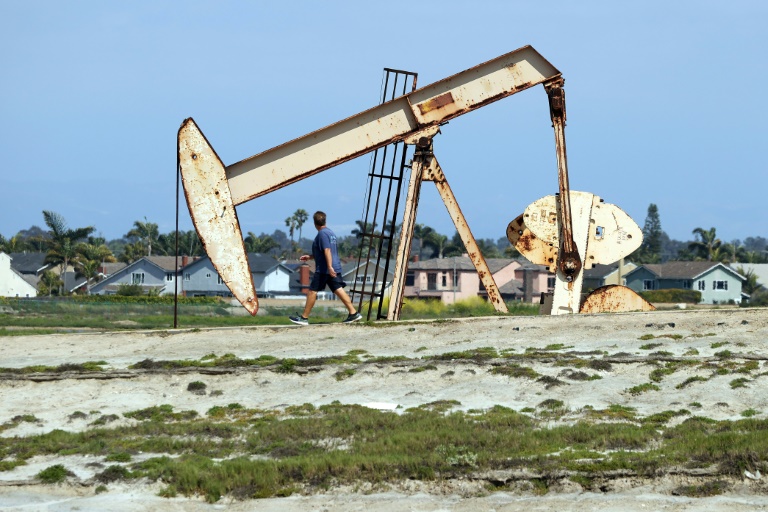
Europe’s benchmark crude oil contract, Brent North Sea, fell briefly under $100 per barrel in afternoon deals, following its US counterpart WTI which slumped below the symbolic level on Tuesday when prices plunged by nearly 10 percent on concerns that a slowing global economy will dent demand for petroleum products.

Citi analysts have forecast that Brent could strike $65 later this year in the event of a prolonged worldwide economic downturn.

Meanwhile, the euro hit a fresh 20-year low point under $1.02 — the European single currency fast closing in on parity as traders eye recession for the eurozone and the ECB’s slower moves to raise interest rates than the US Fed.

“A dip in government bond yields has paved the way for bargain hunters to swoop in and snap up European equities,” said market analyst David Madden at Equiti Capital.

Investors worried rising bond yields would crimp the ability of eurozone governments to support their economies. 

Paris stocks rose 2.0 percent while Frankfurt climbed 1.6 percent.

Nevertheless, “the mood remains febrile”, said Chris Beauchamp, chief market analyst at online trading platform IG.

“The drop in the euro and weakness in yields shows that investors remain very nervous about the economic prospects of the global economy, and the opportunistic bargain hunting in stocks may not have much staying power,” he warned.

London’s benchmark FTSE 100 index managed to gain 1.2 percent despite the political turmoil after UK Prime Minister Boris Johnson was rocked by the resignation of finance minister Rishi Sunak.

Johnson vowed to stay in office and quickly appointed new ministers.

“Political risks do not seem to be having a major impact on UK assets,” noted Markets.com analyst Neil Wilson.

“There are far too many bigger things on our minds right now — inflation, the economy slowing down, strikes.”

Britain is in the midst of nationwide strikes — affecting in particular the transport sector — as wages are eroded by the rocketing inflation.

The pound dipped below $1.18, however.

Elsewhere Wednesday, Asian equity markets closed mostly lower amid a fresh flare-up of coronavirus cases in parts of China that has seen some cities locked down as part of officials’ zero-Covid policy.

Wall Street stocks were lower in late morning trading as investors awaited key economic releases and the release of the minutes of the Federal Reserve’s last policy meeting.

Investors will be scrutinising the document for any signs that falling commodity prices might lead the Fed to be less aggressive with raising interest rates, which would lower the risk of pushing the US economy into recession.  

– Key figures at around 1530 GMT –

New York – Dow: DOWN 0.4 percent 30,850.00 points

EURO STOXX 50: UP 1.8 percent at 3,421.55

London – FTSE 100: UP 1.2 percent at 7,107.77 (close) 

Frankfurt – DAX: UP 1.6 percent at 12,594.52 (close)

Paris – CAC 40: UP 2.0 percent at 5,912.38 (close)

Tokyo – Nikkei 225: DOWN 1.2 percent at 26,107.65 (close)

Hong Kong – Hang Seng Index: DOWN 1.2 percent at 21,586.66 (close)

Shanghai – Composite: DOWN 1.4 percent at 3,355.35 (close)

Euro/dollar: DOWN at $1.0175 from $1.0266 on Tuesday

Euro/pound: DOWN at 85.49 pence from 85.85 pence

Dollar/yen: DOWN at 135.72 yen from 135.87 yen

Pound/dollar: DOWN at $1.1897 from $1.1956

Brent North Sea crude: DOWN 2.5 percent at $100.20 per barrel

West Texas Intermediate: DOWN 2.8 percent at $96.73 per barrel

burs-rl/har
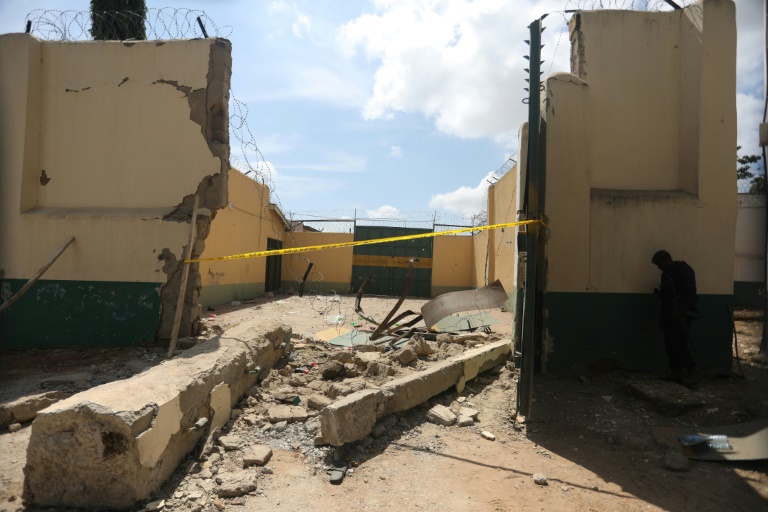
Suspected jihadists raid Nigeria prison, free hundreds

Suspected Boko Haram jihadists using guns and explosives have blasted their way into a prison near Nigeria’s capital, freeing hundreds of inmates in an operation to release jailed comrades, the government said Wednesday.

Tuesday night’s brazen attack on the outskirts of Abuja came hours after an ambush on a presidential security convoy in the northwest, in a startling illustration of the struggle Nigeria faces to overcome a security crisis.

Residents reported loud explosions and gunfire late Tuesday near the Kuje medium-security prison just outside the capital.

President Muhammadu Buhari on Wednesday briefly visited the prison, where the burnt-out wreckage of a bus and cars marked the scene of the attack, and yellow police tape was stretched across a destroyed part of the prison perimeter.

“We understand they are Boko Haram, they came specifically for their co-conspirators,” senior interior ministry official Shuaibu Belgore told reporters on a visit to the prison.

He said around 300 inmates had been recaptured or had surrendered out of about 600 who had escaped initially.

Boko Haram is one of the jihadist groups involved in Nigeria’s grinding 13-year conflict in the country’s northeast.

But Nigerian officials sometimes use “Boko Haram” as a general phrase to refer to jihadists or other armed groups.

– ‘All escaped’ –

Defence Minister Bashir Magashi told reporters that Boko Haram militants had “mostly likely” carried out the attack and that all 64 jailed jihadists in the prison had escaped.

“None of them are inside the prison, they have all escaped,” he said.

Commanders of another jihadist group Ansaru, including the group’s chief Khalid Barnawi, had also been kept in Kuje prison since their conviction in 2017.

One security official was killed when the gunmen breached the jail using high-grade explosives.

“We heard shooting on my street. We thought it was armed robbers,” a local resident said. “The first explosion came after the shooting. Then a second one sounded and then a third.”

Some prisoners surrendered while others were recaptured with military roadblocks set up around the penitentiary.

Security forces sent back around 19 recaptured inmates in a black van on Wednesday morning, an AFP correspondent at the site said.

Former top police commander Abba Kyari, who was being held in Kuje awaiting trial in a high-profile drug smuggling case, was still in custody, corrections service spokesman Abubakar Umar said. 

– ‘Ambush positions’ –

Nigeria’s security forces are battling Boko Haram and Islamic State West Africa Province (ISWAP) jihadists in the country’s northeast, where the conflict has killed 40,000 people and displaced 2.2 million more.

The overstretched military is also battling heavily armed criminal gangs known locally as bandits who terrorise communities in the northwest and central states with raids and mass kidnappings for ransom.

In the country’s southeast, troops are dealing with separatist militias who demand an independent territory for the local ethnic Igbo people.

The Kuje prison raid took place soon after gunmen also ambushed an advance presidential security detail preparing for Buhari’s visit to his home state of northwestern Katsina.

Buhari was not in the convoy, but two officials were slightly wounded in the attack. It was not clear who was responsible.

“The attackers opened fire on the convoy from ambush positions but were repelled,” the presidency said in a statement.

Attacks on prisons in Nigeria have happened in the past, with gunmen seeking to free inmates.

More than 1,800 prisoners escaped last year after heavily armed men attacked a prison in southeast Nigeria using explosives.

The attackers blasted their way into the Owerri prison in Imo state, engaging guards in a gun battle before storming the prison. Imo state lies in a region that is a hotbed for separatist groups.

Biden to tout economic battle plan in US heartland

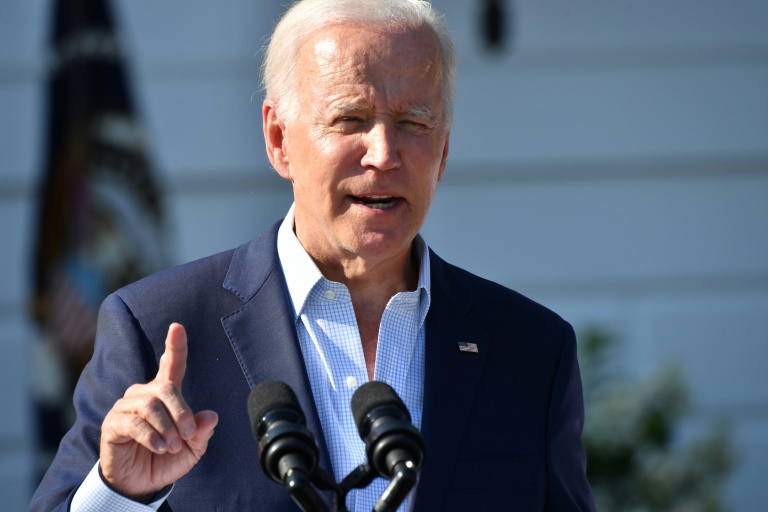
President Joe Biden will tout his economic vision in the US industrial heartland Wednesday, as spiraling inflation and a stalled domestic agenda undermine his pledge of commitment to blue-collar America.

The Democratic leader’s trip to Cleveland, Ohio, comes amid steady job growth and unemployment at just 3.6 percent — but sky-high living costs threaten his party’s prospects in November’s midterm elections.

Meanwhile, a program of interest rate hikes from the Federal Reserve has sparked ominous warnings from economists and investors that the world’s largest economy is headed for a significant slowdown or recession.

White House officials told local media that Biden would discuss the “overall economic challenges” facing the United States, including the Covid-19 pandemic, the war in Ukraine and global inflation.

But they added that he would also credit the $1.9 trillion American Rescue Plan, a coronavirus relief package passed in March last year, for record job growth and providing “dignity at work and dignity in retirement.”

Biden has made inflation his top priority, though lawmakers among the president’s own Democratic rank-and-file are increasingly voicing frustration over the White House’s struggle for a coherent battle plan.

Others have criticized what they see as Biden’s lack of leadership on a host of progressive touchstones, including climate change, abortion rights and gun violence.

“There’s the administrative part of the job and the political part of the job,” Democratic strategist Joel Payne told political outlet The Hill. 

“And it seems like this president is leaning more in the administrative role at a time when his coalition is thirsty for political clarity and leadership.”

At a Cleveland high school, the president will announce a lifeline for troubled pensions that will help up to three million workers and retirees avoid benefit cuts as steep as 70 percent.

The visit will be the sixth of Biden’s presidency to the battleground state, a key midterm target won easily by Republican former president Donald Trump in the last two elections.

– ‘Sounding the alarm’ –

Democrat Tim Ryan is running neck and neck with Republican J.D. Vance, the author of the memoir “Hillbilly Elegy” for an open seat that could determine control of the evenly-divided Senate.  

Biden’s efforts to appeal to the working class in America’s “Rust Belt” took a hit recently as Intel postponed the groundbreaking for a computer chip plant near the state capital of Columbus. 

The decision came with planned investment of more than $50 billion in the semiconductor industry stalled in Congress, undermining Biden’s efforts to showcase his commitment to US manufacturing.

Meanwhile Biden has been buffeted by recent setbacks, including the Supreme Court’s evisceration of abortion rights and several recent mass shootings that shocked and angered the country.

“We have been sounding the alarm about this for a long time,” leftist New York lawmaker Alexandria Ocasio Cortez tweeted in the wake of the Supreme Court’s ruling gutting abortion rights. 

“We simply cannot make promises, hector people to vote, and then refuse to use our full power when they do. We still have time to fix this and act. But we need to be brave.”

A Gallup survey published this week found just 23 percent of Americans have confidence in the presidency, compared with 38 percent 12 months ago. Another from Monmouth University found 88 percent believe the country is headed in the wrong direction.

“This is a president that has been working tirelessly, day in and day out, since he’s walked into this administration fighting for the American public,” White House Press Secretary Karine Jean-Pierre said Tuesday. 

“That is what matters to him. That is what is important… delivering every way that he can to make sure that we get things done.”

Fuel prices soar in Ethiopia as subsidies cut

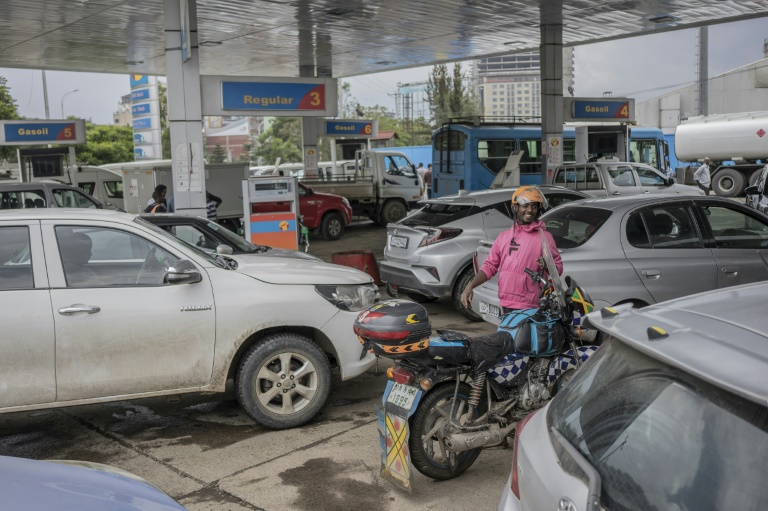
Fuel prices soared in Ethiopia on Wednesday after the government reduced subsidies, adding to economic hardship for people already struggling with high inflation.

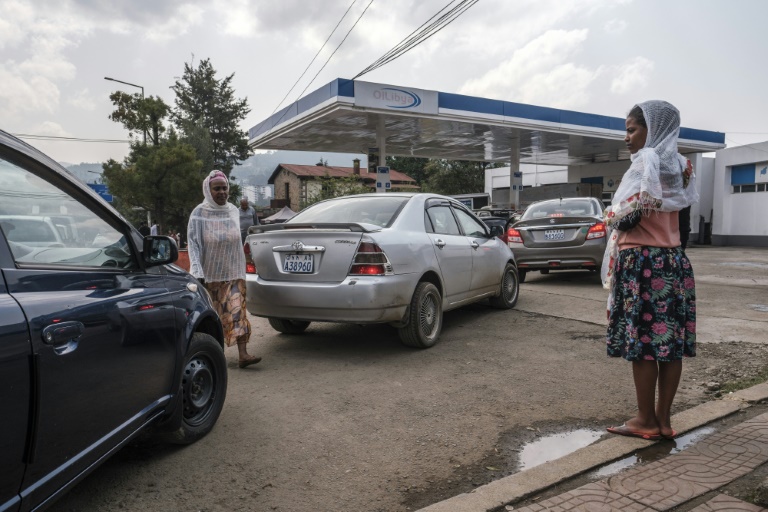
There were long queues at petrol stations in the capital Addis Ababa, with drivers reporting shortages as they tried to fill up their tanks.

The price of petrol at the pump jumped almost 30 percent to 48.83 biir (about 94 US cents) while diesel went up almost 40 percent to 49.02 birr under the new price regime that will run to August 6, the trade ministry said.

The federal government — which had already hiked prices in May — plans to lift fuel subsidies progressively, according to the Addis Fortune business newspaper.

Prices of fuel, food and other basic goods have rocketed globally because of the Ukraine war, hitting vulnerable countries in Africa and elsewhere.

The trade ministry said the cost of fuel for Ethiopian consumers should be almost double if it was calculated on current global prices.

“But considering the state the country is in, the government is covering 75 percent of the (price) difference while it was decided that the remaining 25 percent would be transferred to consumers,” it said.

Henok Girma, 26, said he had been waiting in line at a petrol station in Addis Ababa for an hour and a half.

“At most of the gas stations, there is a long queue. I don’t know what the problem but there is a shortage,” he said. 

“Whenever I want to fill up with gas, I will have to wake up early in the morning or wait like this for hours.” 

Businessman Mekibib Abebe added: “Sometimes you can wait for half a day and may not find fuel at the end.

“The obligation of the government is to provide fuel, or at least control how gas stations provide fuel properly.” 

The Horn of Africa country of more than 110 million people has seen inflation hovering at around 35 percent over the past six months, with food prices in particular registering a sharp rise.

The global surge in prices for basic goods has also eaten into the foreign exchange reserves of the largely importing nation.

In a report covering the first quarter of 2022, Ethiopian investment fund Cepheus Capital said that in December, foreign currency reserves at the central bank were at their lowest in a decade.

Imports of petroleum products in the first nine months of the 2021/2022 fiscal year had jumped by 75 percent to $2.2 billion, and those of cereals by 121 percent to $1.8 billion, it said.

Long winter: South Africans struggle with rolling blackouts

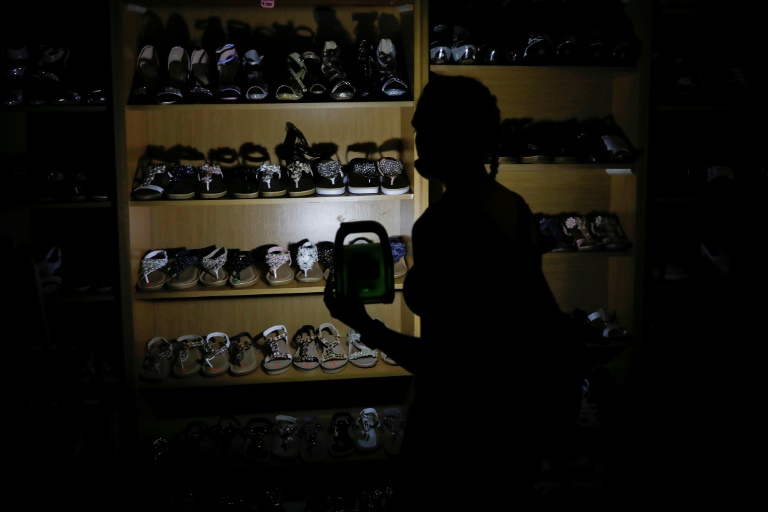
Unable to switch on lights or heaters, cook dinner or charge their phones, South Africans are spending their mid-winter evenings plunged in darkness and low-tech living.

Power outages, known here as load shedding, intensified late last month after strikes erupted at the nation’s monopoly energy provider Eskom, leaving coal plants unable to operate or undergo maintenance. 

Electricity cuts in South Africa are a notorious, years-old problem.

But the frequency of power losses — two to three times per day and lasting up to four hours at a time — is the worst since a bleak episode in December 2019, and many people are livid.

“It’s like we’re back to apartheid life, whereby we’re back to candles, paraffin stoves,” said Rebecca Bheki-Mogotho, a Johannesburg city employee.

Her comparison was with life under South Africa’s former segrationist regime, which deprived the black majority of basic infrastructure and services.

The leading economy on the continent, South Africa relies on coal to generate more than 80 percent of its electricity. 

The country has plenty of coal, but most of its plants are ageing, need repair or are scheduled to be decommissioned in the coming decades.

“We didn’t do what we should have done in the past five to 10 years,” energy analyst Clyde Mallinson told AFP. 

“We’ve got ourselves caught in a situation where we are desperately trying to plug what’s broken rather than get ahead of it.”

– 101 days of blackouts –

The wage dispute that compounded the crisis concluded Tuesday with Eskom employees accepting a seven percent increase, which the electricity provider said in a statement “will be a struggle for Eskom to afford.”

But even with workers back on the job, Eskom warned it would “still take some time” for the system to recover due to the backlog of maintenance.

The public entity is already laden with debt and struggling to recover from years of alleged mismanagement and corruption, which made it a key entity investigated during a four-year public inquiry into state graft.

To bridge the severe gap in supply, Eskom is relying on back-up gas turbines that blast through 14 litres of diesel (3.7 gallons) per second. Seven of these turbines were in operation Friday. 

The cost of using diesel as a substitute fuel has been stratospheric. 

Eskom CEO Andre de Ruyter said the company spent 1.54 billion rand ($93.8 million) in June alone — more than double its original budget. 

It has also spent more than double its annual budget for diesel only halfway into the year.  

The big splurge is still not enough to avoid outages that can cause havoc, from delays at intersections with downed traffic lights to faults at substations prolonging blackouts. 

In April, the company warned the country could see as many as 101 days of load shedding this year due to breakdowns.

– Delayed renewables –

At least 10,000 MW of renewable wind and solar energy should have been brought online since 2015 to keep pace with demand, Mallinson said. 

An intensive building strategy to make that up in the next two years would relieve the issue. 

“We have to build rapidly, like our lives depend on it,” Mallinson said. 

The mining industry, the country’s economic backbone, has begun investing in self-generation with renewables, Henk Langenhoven, chief economist at the trade grouping Minerals Council South Africa, told AFP.

“As the problems… with the core energy supply from Eskom are rising and the shortfalls are increasing, the pressure and the inclination to actually move that way is actually getting stronger,” Langenhoven said.

Eskom’s senior officials have similarly made repeated calls for the swift development of new energy sources. 

But in February, Energy Minister Gwede Mantashe declared coal would remain “a mainstay” for South Africa’s electricity mix for the “foreseeable future”. 

This comes despite South Africa being promised at least $8.5 billion from rich nations at the UN climate summit last November to aid its low-carbon transition.

The country’s energy burden is only expected to grow in the coming years. 

Power demands could triple by 2040 as transportation and other industries move to electrification, Mallinson said. 

Without rapid investment, load shedding will remain a fixture. 

Guitarist Santana collapses on stage after he 'forgot to eat and drink water'

Acclaimed American guitarist Carlos Santana was taken to a hospital after he collapsed on stage during an open-air concert in Michigan late Tuesday.

The 74-year-old wrote on Facebook that he got “dehydrated and passed out” after he “forgot to eat and drink water.”

“We are good, just taking it easy,” Santana said in the post, updating fans after the incident.

The guitar great was performing at the Pine Knob Music Theatre in Clarkston, 40 miles (64 kilometers) outside of Detroit when he became ill.

His manager, Michael Vrionis, said in a statement on Santana’s website that the musician “was over-taken by heat exhaustion and dehydration” during the show.

“Carlos was taken to the emergency department at McLaren Clarkston (hospital) for observation and is doing well,” he said.

Vrionis added however that a concert planned for Burgettstown, in Pennsylvania on Wednesday “will be postponed to a later date.”

Santana, who was born in Mexico, is widely considered to be one of the greatest guitarists ever and has won 10 Grammy Awards.

He shot to fame in the late 1960s and ’70s with his eponymous band that pioneered a new style of music that blended rock and roll with Latin American jazz. 

OPEC head Barkindo dies at 63 in 'shock' to oil cartel

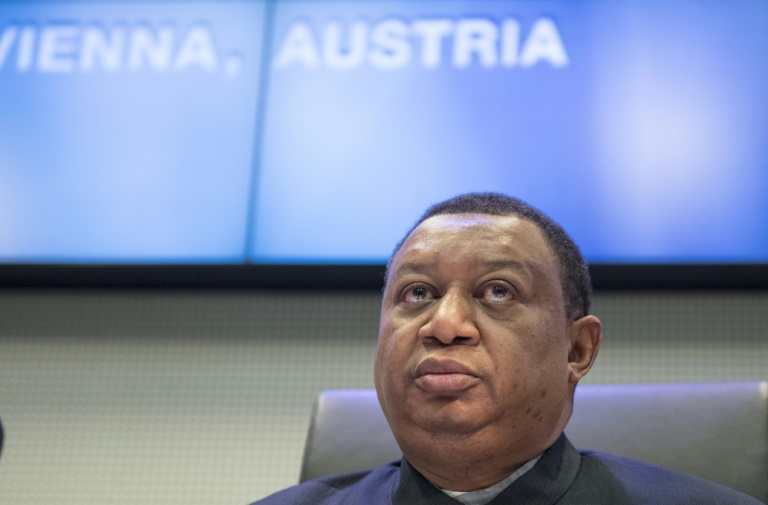
OPEC’s secretary general, Nigeria’s Mohammad Barkindo, has died at the age of 63, leaving the oil cartel in “shock” on Wednesday at a tumultuous time for the markets.

Barkindo had headed the Organization of the Petroleum Exporting Countries since 2016 and was scheduled to be replaced by Kuwait’s Haitham Al-Ghais next month. 

Under his stewardship, the cartel forged ties with Russia and nine other oil-producing countries to form a wider group known as OPEC+ in a bid to better stabilise oil markets.

After OPEC+ slashed output during the pandemic to boost prices, the 23-member group’s moves have not calmed markets — with record high prices — in recent months amid the war in Ukraine.

Barkindo died late Tuesday and will be buried on Wednesday in his home town of Yola, according to the Nigerian National Petroleum Corporation’s chief executive Mele Kyari.

“Certainly a great loss to his immediate family, the NNPC, our country Nigeria, the OPEC and the global energy community,” Kyari wrote, without providing any further details about the circumstances of Barkindo’s death.

– ‘Trailblazer’ –

“This tragedy is a shock to the OPEC Family,” Vienna-based OPEC tweeted.

“We express our sorrow and deep gratitude for the over 40 years of selfless service that… Barkindo gave to OPEC. His dedication and leadership will inspire OPEC for many years to come.”

In a statement, OPEC described Barkindo as “a trailblazer widely admired and respected throughout the globe. A dear friend to many.”

Only a few hours earlier, Barkindo — who had not shown any sign of being ill — had met Nigerian President Muhammadu Buhari in Abuja, where Buhari praised Barkindo’s “distinguished achievements at OPEC”. 

“You were able to successfully navigate the organisation through turbulent challenges,” Buhari had said.

Barkindo himself in a speech last year described serving as OPEC secretary general for two terms as an “honour of a lifetime”.

The OPEC secretary general does not wield any executive power, but is the cartel’s public face and frequently has to act as a diplomat to bring together the different, sometimes conflicting interests of the various member countries.  

For analysts, Barkindo’s death will not have an impact on OPEC’s strategy in the long-term.

“But in the short-to-medium run, it will increase uncertainty about OPEC’s next steps and add to the price volatility as he was a figure of unity for OPEC,” said Swissquote analyst Ipek Ozkardeskaya. 

Spi Asset Management analyst, Stephen Innes, described Barkindo as “a very important figurehead and a stabilising force behind OPEC.” 

“But his death is unlikely to change OPEC direction despite more outside politics entering the picture,” the expert said, predicting that his successor, Haitham Al-Ghais “augurs for the status quo given Kuwait close ties with Saudi Arabia, which wields the most influence” within the group.

– ‘True friend’ to Russia –

In a message to Nigeria’s Buhari, Russian leader Vladimir Putin hailed Barkindo’s “important” and “personal contribution” to the creation of OPEC+, saying Russia would remember him “as a true friend of our country”.

Russian Deputy Prime Minister in charge of Energy, Alexander Novak, said Barkindo “defended a constructive dialogue with our country”.

Iraqi Oil Minister Ihsan Ismail said in a statement that Barkindo “wanted to strengthen OPEC’s role in stabilising global markets and addressing challenges affecting the oil sector and the global economy.”

Born on April 20, 1959, Barkindo graduated from Ahmadu Bello University in Nigeria’s Kaduna State with a degree in political science.

He later obtained an MBA in finance and banking in the United States and studied petroleum economics at Oxford.

He became Nigeria’s representative at OPEC in 1986. Starting from 1992 he occupied a number of positions within NNPC, including as its head from 2009 to 2010. 

burs-jza/rl

Amazon, Just Eat deal to offer free Grubhub delivery in US

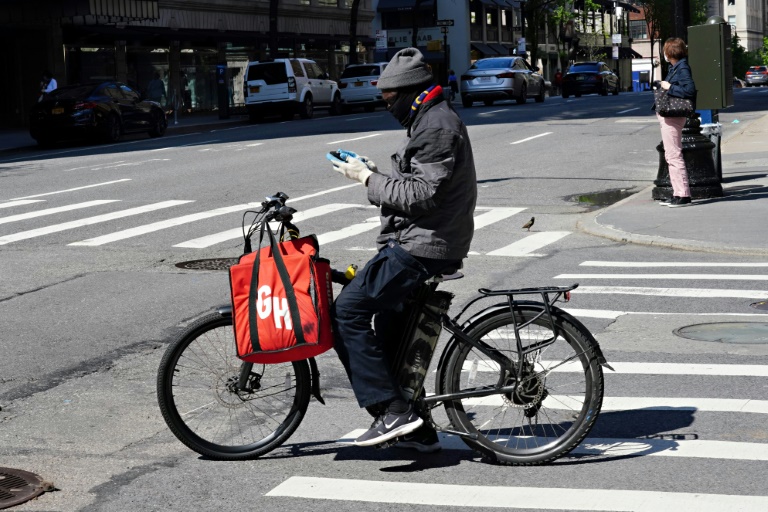
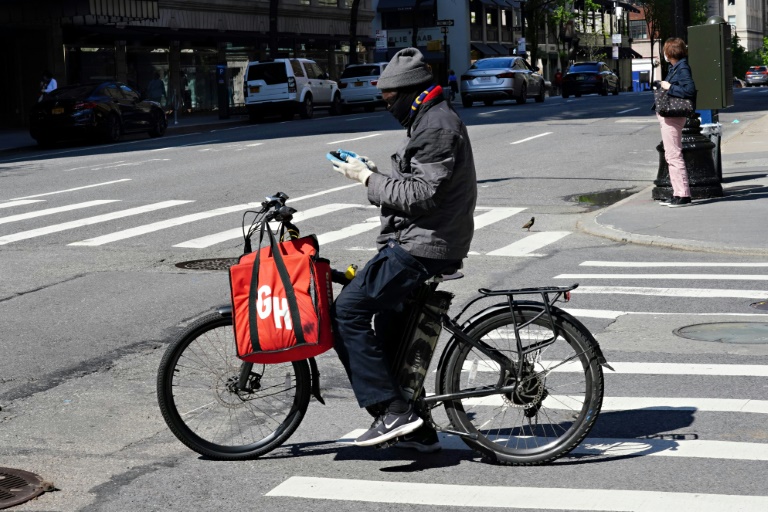
Amazon Prime customers in the United States will be able to receive a year of free restaurant delivery through Grubhub+ under a deal announced Wednesday by Just Eat Takeaway.com.

Prime members will have access to hundreds of thousands of restaurants on Grubhub, the American affiliate of Anglo-Dutch company Just Eat Takeaway. 

The deal should expand Grubhub+ membership while having a neutral effect on 2022 earnings, Just Eat Takeaway said in a news release. In exchange, Amazon will receive warrants for two percent of Grubhub’s common equity, with the potential for up to 13 percent more of Grubhub equity, depending on the number of new customers added through the venture.

The Amazon venture “will help Grubhub continue to deliver on our long-standing mission to connect more diners with local restaurants,” said Grubhub Chief Executive Adam DeWitt. “Amazon has redefined convenience with Prime and we’re confident this offering will expose many new diners to the value of Grubhub+ while driving more business to our restaurant partners and drivers.”

In April, Just Eat Takeaway said it was considering either selling Grubhub or a venture with a strategic partner following criticism from some shareholders that it should focus on Europe.

Just Eat Takeaway bought Grubhub in 2020 for $7.3 billion. The US wing of the company lost 403 million euros last year.

Just Eat Takeaway said Wednesday it continues to “actively explore the partial or full sale of Grubhub,” adding that there was no certainty a deal would happen.

Shares of Just Eat Takeaway surged around 20 percent to 16.46 euros. Shares have fallen more than 66 percent since the beginning of the year.

Amazon, Just Eat deal to offer free Grubhub delivery in US

Amazon Prime customers in the United States will be able to receive a year of free restaurant delivery through Grubhub+ under a deal announced Wednesday by Just Eat Takeaway.com.

Prime members will have access to hundreds of thousands of restaurants on Grubhub, the American affiliate of Anglo-Dutch company Just Eat Takeaway. 

The deal should expand Grubhub+ membership while having a neutral effect on 2022 earnings, Just Eat Takeaway said in a news release. In exchange, Amazon will receive warrants for two percent of Grubhub’s common equity, with the potential for up to 13 percent more of Grubhub equity, depending on the number of new customers added through the venture.

The Amazon venture “will help Grubhub continue to deliver on our long-standing mission to connect more diners with local restaurants,” said Grubhub Chief Executive Adam DeWitt. “Amazon has redefined convenience with Prime and we’re confident this offering will expose many new diners to the value of Grubhub+ while driving more business to our restaurant partners and drivers.”

In April, Just Eat Takeaway said it was considering either selling Grubhub or a venture with a strategic partner following criticism from some shareholders that it should focus on Europe.

Just Eat Takeaway bought Grubhub in 2020 for $7.3 billion. The US wing of the company lost 403 million euros last year.

Just Eat Takeaway said Wednesday it continues to “actively explore the partial or full sale of Grubhub,” adding that there was no certainty a deal would happen.

Shares of Just Eat Takeaway surged around 20 percent to 16.46 euros. Shares have fallen more than 66 percent since the beginning of the year.

Fuel prices soar in Ethiopia as subsidies cut

Fuel prices soared in Ethiopia on Wednesday after the government reduced subsidies, adding to economic hardship for people already struggling with high inflation.

The price of petrol at the pump jumped almost 30 percent to 48.83 biir (about 94 US cents) while diesel went up almost 40 percent to 49.02 birr under the new price regime that will run to August 6, the trade ministry said.

The federal government plans to lift fuel subsidies progressively, according to the Addis Tribune business newspaper.

Prices of fuel, food and other basic goods have rocketed globally because of the Ukraine war, badly hitting vulnerable countries in Africa and elsewhere.

The trade ministry said the cost of fuel for Ethiopian consumers should be almost double if it was calculated on current global prices.

“But considering the state the country is in, the government is covering 75 percent of the (price) difference while it was decided that the remaining 25 percent would be transferred to consumers,” it said.

The country of more than 110 million people has seen inflation hovering at around 35 percent over the past six months, with food prices in particular registering a sharp rise.

Close Bitnami banner
Bitnami