US Business

European stocks rebound, euro extends dollar slump

European stock markets rebounded on Wednesday, recovering some ground following sharp losses the previous session on fears of a global recession.

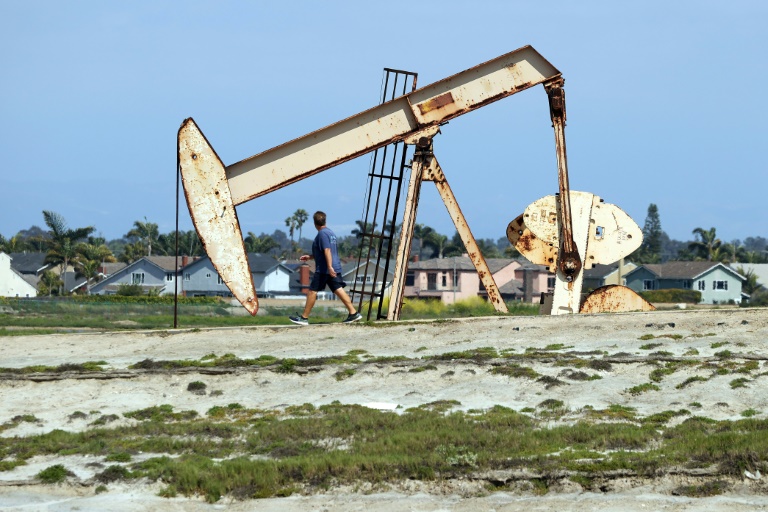
Oil prices recovered slightly, but WTI remained under $100 per barrel.

The euro hit a fresh 20-year low point under $1.02 — the European single currency fast closing in on parity as traders eye recession for the eurozone and aggressive interest-rate hikes in the United States to combat decades-high inflation.

“Worries about a big global slowdown are still gripping financial markets and that nervousness is unlikely to dissipate any time soon,” noted Susannah Streeter, senior analyst at Hargreaves Lansdown.

Crude futures had slumped nearly 10 percent Tuesday, while Europe’s main stock markets lost about three percent.

But on Wednesday, London’s benchmark FTSE 100 index was up 1.8 percent around midday — and the pound was mixed against main rivals — after UK Prime Minister Boris Johnson was rocked by the resignation of finance minister Rishi Sunak.

“Political risks do not seem to be having a major impact on UK assets,” noted Markets.com analyst Neil Wilson.

“There are far too many bigger things on our minds right now — inflation, the economy slowing down, strikes.”

Britain is in the midst of nationwide strikes — affecting in particular the transport sector — as wages are eroded by the rocketing inflation.

Britain’s health secretary, Sajid Javid, joined Sunak in resigning Tuesday, with both ministers saying they could no longer tolerate the culture of scandal that has stalked Johnson for months.

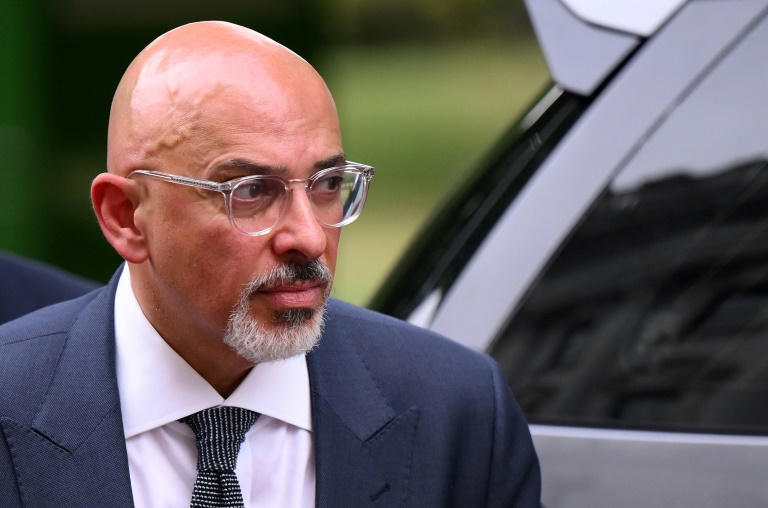
The embattled prime minister moved quickly to replace them, picking Iraqi-born Nadhim Zahawi as his new chancellor of the exchequer, who steps up from his role as education minister.

Elsewhere Wednesday, Asian equity markets closed mostly lower amid a fresh flare-up of coronavirus cases in parts of China that has seen some cities locked down as part of officials’ zero-Covid policy.

Investors are meanwhile growing increasingly concerned that sharp interest rate hikes could trigger a global recession.

Sentiment was slightly boosted by speculation that US President Joe Biden could remove some tariffs on Chinese goods.

– Key figures at around 1100 GMT –

London – FTSE 100: UP 1.8 percent at 7,149.18 points

Frankfurt – DAX: UP 1.5 percent at 12,589.97

Paris – CAC 40: UP 1.6 percent at 5,890.19

EURO STOXX 50: UP 1.6 percent at 3,413.27

Tokyo – Nikkei 225: DOWN 1.2 percent at 26,107.65 (close)

Hong Kong – Hang Seng Index: DOWN 1.2 percent at 21,586.66 (close)

Shanghai – Composite: DOWN 1.4 percent at 3,355.35 (close)

New York – Dow: DOWN 0.4 percent 30.967,82 (close)

Euro/dollar: DOWN at $1.0199 from $1.0266 on Tuesday

Euro/pound: DOWN at 85.55 pence from 85.85 pence

Dollar/yen: DOWN at 135.41 yen from 135.87 yen

Pound/dollar: DOWN at $1.1921 from $1.1956

Brent North Sea crude: UP 1.1 percent at $103.91 per barrel

West Texas Intermediate: UP 0.3 percent at $99.76 per barrel
OPEC secretary general Barkindo dies unexpectedly at 63

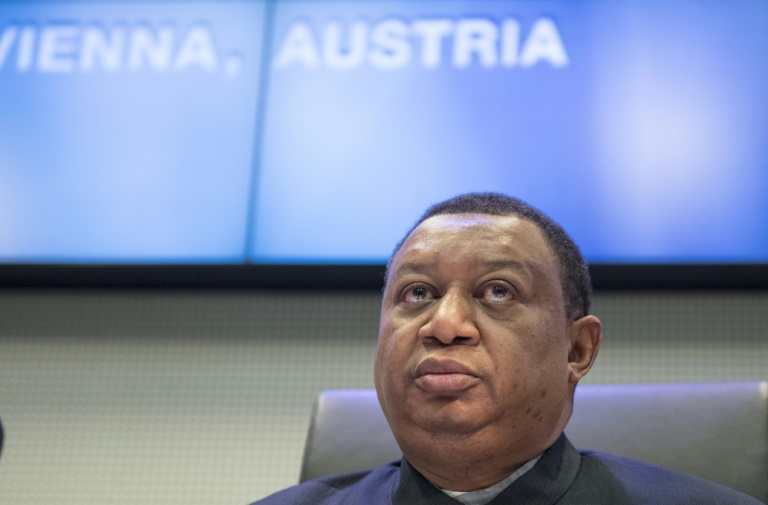
OPEC Secretary General, Nigeria’s Mohammad Barkindo, has died unexpectedly at the age of 63, it was announced on Wednesday, leaving the oil cartel without a head at a tumultuous time for the markets.

Barkindo had headed the Organization of the Petroleum Exporting Countries since 2016 and was scheduled to be replaced by Kuwait’s Haitham Al-Ghais next month. 

Under his stewardship, the cartel forged ties with 10 other oil-producing countries, such as Russia, to form a wider group known as OPEC+ in a bid to better tame global oil prices, rocked by the challenges of the coronavirus pandemic and more recently the war in Ukraine.  

“We lost our esteemed Dr (Mohammad) Sanusi Barkindo. He died at about 11:00 pm yesterday 5th July 2022,” the Nigerian National Petroleum Corporation’s chief executive Mele Kyari tweeted, without providing any further details about the circumstances of Barkindo’s death.

“Certainly a great loss to his immediate family, the NNPC, our country Nigeria, the OPEC and the global energy community. Burial arrangements will be announced shortly,” Kyari wrote.

“This tragedy is a shock to the OPEC Family,” Vienna-based OPEC tweeted.

“We express our sorrow and deep gratitude for the over 40 years of selfless service that… Barkindo gave to OPEC. His dedication and leadership will inspire OPEC for many years to come.”

Only a few hours earlier, Barkindo — who had not shown any sign of being ill — had met Nigerian president Muhammadu Buhari in Abuja, where Buhari praised Barkindo’s “distinguished achievements at OPEC. 

– ‘Trailblazer’ –

“You were able to successfully navigate the organisation through turbulent challenges,” Buhari had said.

In a statement, OPEC expressed its “immense sorrow and sadness” at the news, describing Barkindo as “a trailblazer widely admired and respected throughout the globe. A dear friend to many.”

Born on April 20, 1959, Barkindo graduated in political science and completed his studies in Oxford and Washington. 

He became Nigeria’s representative at OPEC in 1986. Starting from 1992 he occupied a number of positions within NNPC, and took over as the oil major’s chief executive in 2009/10. 

The OPEC secretary general does not wield any executive power, but is the cartel’s public face and frequently has to act as a diplomat to bring together the different, sometimes conflicting interests of the various member countries.  

For analysts, Barkindo’s death will not have an impact on OPEC’s strategy in the long-term.

“But in the short-to-medium run, it will increase uncertainty about OPEC’s next steps and add to the price volatility as he was a figure of unity for OPEC,” said Swissquote analyst, Ipek Ozkardeskaya. 

Spi Asset Management analyst, Stephen Innes, described Barkindo as “a very important figurehead and a stabilising force behind OPEC. 

“But his death is unlikely to change OPEC direction despite more outside politics entering the picture,” the expert said, predicting that his successor, Haitham Al-Ghais “augurs for the status quo given Kuwait close ties with Saudi Arabia, which wields the most influence” within the group.

New UK finance chief Zahawi inherits economic crisis

Britain’s new finance minister, Iraqi-born Nadhim Zahawi, has inherited a cost-of-living crisis that risks pushing the UK economy into recession. 

The former education minister was parachuted into the Treasury late Tuesday after predecessor Rishi Sunak’s shock resignation over the culture of scandal plaguing Prime Minister Boris Johnson.

Johnson also lost his health minister, Sajid Javid. 

Zahawi takes charge with UK inflation at a 40-year peak of 9.1 percent, a level set to hit double figures this year on soaring energy and food prices according to the Bank of England (BoE).

“I’ve got to make sure we get through… (this) inflation, which can be a really painful thing if we let it get out of control,” the 55-year-old told Sky News Wednesday.

The self-made millionaire co-founded the prominent polling company YouGov and was active in local Conservative politics in London before becoming an MP in 2010.

The BoE on Tuesday warned that the global economic outlook had “deteriorated markedly” owing to runaway prices fuelled by Russia’s invasion of Ukraine.

The central bank has hiked British interest rates five times since December in a bid to tame inflation.

The UK government has meanwhile sought to ease the financial pain with a raft of measures, including a slight reduction on fuel tax.

However, critics said the moves fall well short of what is needed to help cash-strapped households and businesses.

– ‘Tough decisions’ –

“You don’t go into this job to have an easy life,” Zahawi added Wednesday. 

“You make some tough decisions every day. And sometimes it’s easy to walk away but actually, it’s much tougher to deliver for the country.”

Zahawi denied threatening to quit the government if not given the top Treasury job.

“I want to make sure that not only do we rebuild the economy, we’ve got to grow the economy,” added the new chancellor of the exchequer.

Zahawi refused to comment to reporters as he left a meeting in 10 Downing Street Tuesday, including on whether he would uphold Sunak’s pleas for fiscal discipline against Johnson’s free-spending instincts.

In early London trading Wednesday, the benchmark FTSE 100 stocks index jumped 1.6 percent and the pound steadied against the dollar.

The FTSE had tumbled almost three percent and sterling slumped nearly two percent against the dollar Tuesday on growing fears of a global recession.

“Political risks do not seem to be having a major impact on UK assets,” noted Markets.com analyst Neil Wilson.

“There are far too many bigger things on our minds right now — inflation, the economy slowing down, strikes.”

Britain is in the midst of nationwide strikes — affecting in particular the transport sector — as wages are eroded by the rocketing inflation. 

Teachers and workers in the state-run National Health Service are mulling whether to join aviation, legal, postal and railway staff in walking out.

– Covid vaccine role –

Zahawi won widespread praise for overseeing Britain’s pandemic vaccines rollout.

But like Sunak, his private wealth has drawn adverse attention, including when he claimed parliamentary expenses for heating his horse stables in 2013.

Zahawi was born in Baghdad to a Kurdish family who moved to Britain when he was a child, not speaking any English.

He has credited the poems of Philip Larkin for helping improve his knowledge of the English language before going on to study chemical engineering at University College London.

Zahawi is MP for Stratford-on-Avon, which includes William Shakespeare’s birthplace Stratford-upon-Avon.

July 4 gunman charged with seven counts of murder

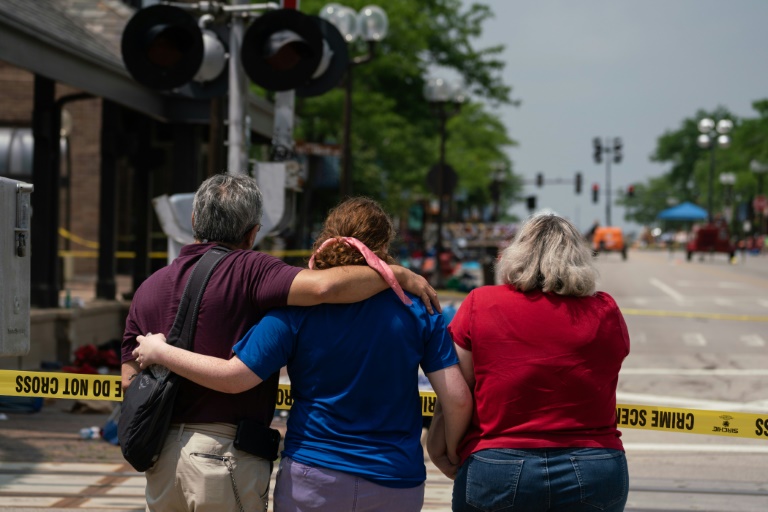
A 21-year-old man who allegedly opened fire on a July 4 parade in a Chicago suburb while disguised in women’s clothing was charged with seven counts of first-degree murder on Tuesday, prosecutors said.

Robert Crimo, 21, was arrested Monday, hours after the attack on an Independence Day crowd.

“There will be more charges,” Lake County State’s Attorney Eric Rinehart told reporters. “We anticipate dozens of more charges centered around each of the victims.”

Police spokesman Christopher Covelli said the death toll rose to seven on Tuesday after one of the victims died in hospital. More than 35 people were wounded.

Among the dead were Kevin McCarthy, 37, and his wife, Irina, 35 — the parents of a two-year-old boy who was found wandering alone after the shooting, according to CBS News.

Covelli said no motive had been established for the attack, which sent panicked parade-goers fleeing for their lives.

“We do believe Crimo pre-planned this attack for several weeks,” and that he acted alone, he said.

“We have no information to suggest at this point it was racially motivated, motivated by religion or any other protected status,” he added.

He said Crimo has a history of mental health issues and threatening behavior.

Police had been called to Crimo’s home twice in 2019: once to investigate a suicide attempt and the second time because a relative said he had threatened to “kill everyone” in the family, he said.

Police removed 16 knives, a dagger and a sword from the home but did not make any arrests, he said.

Covelli said Crimo used a fire escape to access the roof of a building overlooking the parade route and fired more than 70 rounds from a rifle “similar to an AR-15” — one of several guns he had purchased legally.

“Crimo was dressed in women’s clothing and investigators believe he did this to conceal his facial tattoos and his identity and help him during the escape with the other people who were fleeing the chaos,” he said.

– ‘Still reeling’ –

Covelli said Crimo went to his mother’s nearby home after the shooting and borrowed her car. He was captured about eight hours later after a brief chase.

He also said the authorities were investigating disturbing online posts and videos made by Crimo.

The shooting has left the upscale suburb in shock.

“We’re all still reeling,” Mayor Nancy Rotering told NBC’s Today show. “Everybody knows somebody who was affected by this directly.”

The mayor said she personally knew the suspected gunman when he was a young boy in the Cub Scouts.

“How did somebody become this angry, this hateful to then take it out on innocent people who literally were just having a family day out?” 

Crimo, whose father unsuccessfully ran for mayor and owns a store in Highland Park called Bob’s Pantry and Deli, was an amateur musician billing himself as “Awake the Rapper.”

The younger Crimo’s online postings include violent content that alluded to guns and shootings.

One YouTube video posted eight months ago featured cartoons of a gunman and people being shot.

“I need to just do it,” a voice-over says.

It adds: “It is my destiny. Everything has led up to this. Nothing can stop me, not even myself.”

Crimo, who has the word “Awake” tattooed over an eyebrow, is seen sporting an “FBI” hat in numerous photos and a Trump flag as a cape in one picture.

The shooting is the latest in a wave of gun violence plaguing the United States, where about 40,000 deaths a year are caused by firearms, according to the Gun Violence Archive.

– ‘Epidemic of gun violence’ –

The deeply divisive debate over gun control was reignited by two massacres in May that saw 10 Black people gunned down at a New York supermarket, and 19 children and two teachers slain at an elementary school in Texas.

Vice President Kamala Harris, who was in Chicago Tuesday for a summit of the nation’s largest teachers’ union, said the Texas shooting was a reminder “of the risks that our children and our educators face every day,” and renewed a call for Congress to ban assault weapons.

Speaking later at the scene of the Highland Park shooting, Harris said: “The whole nation should understand… that this could happen anywhere, in any peace-loving community.”

In another July 4 shooting, two police officers were wounded when they came under fire during a fireworks show in Philadelphia, officials said.

In Highland Park, Emily Prazak, who marched in the parade, described the mayhem.

“We heard the pop, pop, pop, pop, pop, and I thought it was fireworks,” Prazak said.

Cassie Goldstein, another survivor of the attack, told local media she had seen her mother die as they fled the shooting.

“I started running with her, we were next to each other, and he shot her in the chest, and she fell down and I knew she was dead,” the 22-year-old told NBC News.

“So I just told her that I loved her, but I couldn’t stop because he was still shooting everyone next to me.”

Francisco Toledo, whose 78-year-old father Mario was killed in the shooting, told AFP he felt the gunman had been “deceived… by an evil spirit.”

“I have been asked questions: ‘What would you do if you had him here in front of you?’ I wouldn’t ask him anything, I would tell him to repent,” he said. 

President Joe Biden vowed to keep fighting “the epidemic of gun violence.”

Last week, he signed the first significant federal bill on gun safety in decades, just days after the Supreme Court ruled that Americans have a fundamental right to carry a handgun in public.

Spain's labour market buoyed by key reform

Six months after Spain pushed through a key reform aimed at reducing labour market insecurity, the number of temporary contracts has fallen sharply, giving the government some welcome breathing space in a difficult economic context.

Long one of the European nations with the highest number of temporary contracts, Spain saw its unemployment figures fall for the sixth consecutive month in June, with the Labour Minister Yolanda Diaz hailing “historic” data on Monday as evidence of “a paradigm shift”.

By the end of June, the number of jobseekers in Spain stood at 2.88 million down from 2.92 million a month earlier and the lowest monthly figure since the start of the financial crisis in 2008. 

The drop was due to a significant increase in jobs, with 783,595 permanent contacts signed in June, the highest monthly figure ever recorded. 

“This is a record number of permanent contracts, representing more than 44 percent” of the total number of new jobs, she said. 

At this time of the year, when there is a surge of temporary positions in tourism and agriculture, permanent contracts usually only account for 10 percent of new jobs. 

“We have 740,000 more people… with permanent contracts than before the pandemic,” said Prime Minister Pedro Sanchez said this week. 

Writing on Twitter, Diaz said the increase “clearly shows the effect of the labour reform.”

But she cautioned: “There is still a lot to do, but we are showing that there is an alternative model to job insecurity: decent work with rights.”

– Addressing a key weakness –

The reform, which took effect on January 1 following a hard-fought deal negotiated between the government, employers’ groups and unions, limits the back-to-back use of temporary contracts and makes permanent contracts the rule rather than the exception. 

This reform “was requested by Brussels”, explained Carlos Victoria, a researcher at the Esade business school, after many Spanish companies got into a habit of “filling existing positions with temporary contracts”.

According to Eurostat, nearly 22 percent of Spanish employees had a temporary contract before the pandemic, compared to an EU average of 14.4 percent. 

For many economists, this phenomenon — brought about by a 2012 law by a conservative government to boost employment after the financial crisis — has been one of the main weaknesses of the Spanish labour market.

But observers are divided whether the reform can cure the fragility in the Spanish labour market. 

– ‘Dressed up’ reality? – 

For the UGT General Union of Workers, the results of the first half of 2022 “confirm that the new labour reform is proving to be effective in improving the quality of employment”. 

But the USO union said that 60 percent of the permanent contracts signed in June were for “part-time” work, or so-called “discontinuous fixed contracts” where an employee becomes a permanent staff member, but only works during certain months of the year. 

“The permanent discontinuous contracts are the new temporary contracts… completely perverting” the figures, said USO’s secretary-general Joaquin Perez. 

For the right-wing opposition Popular Party, the reform was more a bit of window-dressing.

“There is a reality that is dressed up,” said the PP’s number two, Cuca Gamarra, who accused the government this week of presenting what appeared to be permanent contracts “which in essence were not”. 

The increase in discontinuous fixed contracts, however, was only a part of the story, according to Esade researcher Victoria.  

The labour reform had led to “a net creation of permanent employment” and “greater protection, and even greater stability” for temporary workers, he said.

Nothing suggests, however, that the trend will continue in the coming months. 

“We are in a period of great economic uncertainty”, notably with very high inflation, Victoria said.

Asia stocks drop, euro stuck at 20-year low on recession fear

Equities mostly fell in Asia on Wednesday and the euro wallowed at a 20-year low as recession fears flowed through markets, while political uncertainty hit the pound as UK Prime Minister Boris Johnson suffered a series of resignations.

Adding to the uncertainty was a fresh flare-up of coronavirus cases in parts of China that has seen some cities locked down as part of officials’ zero-Covid policy, reviving bad memories about strict measures in Shanghai and Beijing earlier this year that hammered the economy.

Investors are growing increasingly concerned that sharp central bank interest rate hikes aimed at fighting decades-high inflation will lead to a contraction in leading economies, while a worsening energy crisis is compounding the problem in Europe.

While there was a little help from speculation that US President Joe Biden was considering removing some Trump-era tariffs on Chinese goods, equities struggled.

Hong Kong, Tokyo, Shanghai, Sydney, Seoul, Taipei and Jakarta all sank, though Wellington, Bangkok, Manila and Mumbai saw gains.

London, Paris and Frankfurt rose after suffering hefty losses Tuesday.

Investors were racing “to price in both a US recession… and also the potential for wider virus restrictions in China following overnight developments”, OANDA’s Jeffrey Halley said.

“The prospect of more covid zero restrictions in China is an unwelcome dose of reality for Asia and is certainly carrying more weight, although Asian currency weakness is also in play,” he said in a note.

Both main crude contracts edged up after being pummelled Tuesday, when WTI sank nearly nine percent below $100 a barrel for the first time since April and Brent shed around 10 percent.

Those losses came on expectations that any recession will slam demand, despite tight supplies caused by Russia’s war in Ukraine.

And Citigroup said in a note that a recession could lead prices to drop as low as $65 this year if OPEC and other major producers do not step in to provide support and companies do not invest.

There are also signs that the high cost of fuel is hurting demand, in turn pushing prices down. Earlier this week, the head of Asia at crude trading giant Vitol said he saw signs consumers were beginning to feel the pressure of high prices — a phenomenon known as demand destruction.

– Euro-dollar parity eyed –

Still, Goldman Sachs said it thought the commodity would remain elevated.

“While the odds of a recession are indeed rising, it is premature for the oil market to be succumbing to such concerns,” the bank’s analysts including Damien Courvalin said in a note. 

“The global economy is still growing, with the rise in oil demand this year set to significantly outperform GDP growth.”

Commentators said falling oil prices and the prospect of a recession could give central banks room to ease up on their monetary tightening campaigns, which could provide some relief to equities.

US Treasury yields, a proxy for interest rates and a go-to in times of uncertainty, have tumbled on the prospect of a contraction in recent days.

“Markets are saying recession is coming, inflation will slow down, commodities will fall and the Fed will cut rates in 2023,” said Gang Hu, at Winshore Capital Partners.

He said it was hard to go against the view “because this storyline is consistent. It can be a self-fulfilling process”.

The euro remained stuck at 2002 lows and appeared to be heading towards parity with the dollar after hitting a 20-year low owing to the European Central Bank’s decision not to lift interest rates until this month, lagging the Fed’s fast pace of hikes that have sent the dollar soaring.

The continent also faces an energy crisis caused by sanctions on Russian fuel over its invasion of Ukraine.

“The euro has depreciated sharply due to a toxic cocktail of negative drivers,” said SPI Asset Management’s Stephen Innes.

“An oddly hesitant ECB contrasts with a more aggressive Fed, worries about natural gas supply disruption and economic recession are deepening.” 

And he warned further falls could be on the way for the single currency. 

“We have unlikely reached maximum uncertainty and total negativity, which opens the door to a test below sub-parity. So with the euro-dollar in the mid-1.02s, it might not be too late to punch your ticket for a ride on the parity party bandwagon.”

The pound briefly fell to a two-year low of $1.1899 after Johnson’s finance chief and interior minister both resigned — followed by several aides — saying they could no longer tolerate the culture of scandal that has stalked Number 10 for several months.

The news got worse Wednesday with news that two more ministers had stepped down, leaving Johnson fighting for his political life.

– Key figures at around 0810 GMT –

Tokyo – Nikkei 225: DOWN 1.2 percent at 26,107.65 (close)

Hong Kong – Hang Seng Index: DOWN 1.2 percent at 21,586.66 (close)

Shanghai – Composite: DOWN 1.4 percent at 3,355.35 (close)

London – FTSE 100: UP 2.4 percent at 7,195.65

Euro/dollar: DOWN at $1.0258 from $1.0266 Tuesday

Euro/pound: DOWN at 85.70 pence from 85.85 pence

Dollar/yen: UP at 135.43 yen from 135.87 yen

Pound/dollar: UP at $1.1964 from $1.1956

West Texas Intermediate: UP 1.7 percent at $101.18 per barrel

Brent North Sea crude: UP 2.2 percent at $105.06 per barrel

New York – Dow: DOWN 0.4 percent 30.967,82 (close)

Twitter challenges Indian orders to block content: reports

Twitter is challenging the Indian government’s orders to block content on its social media site in court, local media reported Wednesday citing legal documents. 

The suit is the latest showdown between Twitter and Indian authorities, which have been accused of muzzling criticism both on and offline.

In the case filed with a court in Bangalore, the social media giant alleged that the basis on which multiple accounts and content flagged by the government was either “overbroad and arbitrary” and “disproportionate”, the Indian Express daily reported.

The social media giant submitted to the Karnataka state high court that the ministry had failed to prove how some of the content it wanted taken down violated IT rules, the newspaper quoted sources as saying.

Last week Twitter confirmed that India had directed it to locally censor accounts and dozens of posts, including some talking about declining internet freedom in the world’s biggest democracy.

Others were accounts operated by the Pakistani government, sparking an angry response from Islamabad.

Twitter and the Indian government declined to comment on the court case.

Prime Minister Narendra Modi’s Hindu nationalist government has sought in recent years to have more control over content on social media in India, where Twitter has over 20 million users.

Last year as India saw massive anti-government protests by farmers, Twitter was ordered to take down dozens of accounts for supporting the demonstrations. 

But the US firm reinstated them, angering the government.

An Indian climate activist was also arrested in February 2021 on sedition charges for helping to edit a protest “tool kit” that was tweeted by Greta Thunberg.

New Delhi has accused Twitter of deliberately ignoring new IT rules — which critics fear could be used to silence dissent — that came into force in May 2021.

That same month, police paid a visit to its offices in the country after a tweet by a spokesperson for Modi’s Bharatiya Janata Party was labelled as “manipulated media” on the platform.

Just before that, the government ordered Twitter and Facebook to remove dozens of posts critical of Modi’s handling of the coronavirus pandemic.

July 4 gunman charged with seven counts of murder

A 21-year-old man who allegedly opened fire on a July 4 parade in a wealthy Chicago suburb while disguised in women’s clothing was charged with seven counts of first-degree murder on Tuesday, prosecutors said.

Robert Crimo, 21, was arrested on Monday, several hours after the attack on a festive Independence Day crowd.

“There will be more charges,” Lake County State’s Attorney Eric Rinehart told reporters. “We anticipate dozens of more charges centered around each of the victims.”

Police spokesman Christopher Covelli said the death toll rose to seven on Tuesday after one of the wounded victims died in hospital. More than 35 people were injured.

Among the dead were Kevin McCarthy, 37, and his wife, Irina, 35 — the parents of a two-year-old boy who was found wandering alone after the shooting, according to CBS News.

Covelli said no motive had been established for the attack, which sent panicked parade-goers fleeing for their lives.

“We do believe Crimo pre-planned this attack for several weeks,” and that he acted alone, he said.

“We have no information to suggest at this point it was racially motivated, motivated by religion or any other protected status,” he added.

He said Crimo has a history of mental health issues and threatening behavior.

Police had been called twice to Crimo’s home in 2019, once to investigate a suicide attempt and the second time because a relative said he had threatened to “kill everyone” in the family, he said.

Police removed 16 knives, a dagger and a sword from the home but did not make any arrests, he said.

Covelli said Crimo used a fire escape to access the roof of a building overlooking the parade route and fired more than 70 rounds from a rifle “similar to an AR-15,” one of several guns he had purchased legally.

“Crimo was dressed in women’s clothing and investigators believe he did this to conceal his facial tattoos and his identity and help him during the escape with the other people who were fleeing the chaos,” he said.

– ‘Still reeling’ –

Covelli said Crimo went to his mother’s nearby home after the shooting and borrowed her car. He was captured about eight hours later after a brief chase.

He also said the authorities were investigating disturbing online posts and videos made by Crimo.

The shooting has left the upscale suburb in shock.

“We’re all still reeling,” Mayor Nancy Rotering told NBC’s Today show. “Everybody knows somebody who was affected by this directly.”

The mayor said she personally knew the suspected gunman when he was a young boy in the Cub Scouts.

“How did somebody become this angry, this hateful to then take it out on innocent people who literally were just having a family day out?” Rotering asked.

Crimo, whose father unsuccessfully ran for mayor and owns a store in Highland Park called Bob’s Pantry and Deli, was an amateur musician billing himself as “Awake the Rapper.”

The younger Crimo’s online postings include violent content that alluded to guns and shootings.

One YouTube video posted eight months ago featured cartoons of a gunman and people being shot.

“I need to just do it,” a voice-over says.

It adds: “It is my destiny. Everything has led up to this. Nothing can stop me, not even myself.”

Crimo, who has the word “Awake” tattooed over an eyebrow, is seen sporting an “FBI” hat in numerous photos and a Trump flag as a cape in one picture.

The shooting is the latest in a wave of gun violence plaguing the United States, where approximately 40,000 deaths a year are caused by firearms, according to the Gun Violence Archive.

– ‘Epidemic of gun violence’ –

The deeply divisive debate over gun control was reignited by two massacres in May that saw 10 Black people gunned down at an upstate New York supermarket, and 19 children and two teachers slain at an elementary school in Texas.

Vice President Kamala Harris, who was in Chicago Tuesday for a summit of the nation’s largest teachers’ union, said the Texas shooting was a reminder “of the risks that our children and our educators face every day,” and renewed a call for Congress to ban assault weapons.

Speaking later at the scene of the Highland Park shooting, Harris said: “The whole nation should understand… that this could happen anywhere, in any peace-loving community.”

The Highland Park shooting cast a pall over Independence Day, when towns and cities across the United States hold parades and people attend barbecues, sporting events and fireworks displays.

In another July 4 shooting, two police officers were wounded when they came under fire during a fireworks show in Philadelphia, officials said.

In Highland Park, Emily Prazak, who marched in the parade, described the mayhem.

“We heard the pop, pop, pop, pop, pop, and I thought it was fireworks,” Prazak said.

Cassie Goldstein, another survivor of the attack, told local media she had seen her mother die as they fled the shooting.

“I started running with her, we were next to each other, and he shot her in the chest, and she fell down and I knew she was dead,” the 22-year-old told NBC News.

“So I just told her that I loved her, but I couldn’t stop because he was still shooting everyone next to me.”

President Joe Biden vowed to keep fighting “the epidemic of gun violence.”

Last week, he signed the first significant federal bill on gun safety in decades, just days after the Supreme Court ruled that Americans have a fundamental right to carry a handgun in public.

Evacuation calls as Russians advance in Ukraine's Donbas

Ukrainian officials have called on civilians to urgently evacuate the city of Sloviansk as Russian troops press towards it in their campaign to secure the Donbas region.

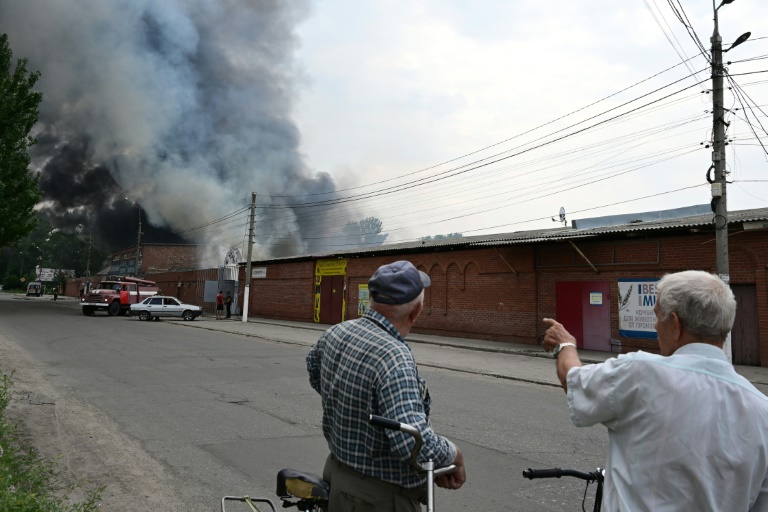
Sloviansk has been subjected to “massive” Russian bombardment in recent days, with at least two people killed and seven others wounded in an attack on a marketplace Tuesday.

Pavlo Kyrylenko, governor of the Donetsk region, which includes Sloviansk, told Ukrainian media his “main advice is evacuate!”

“This week there hasn’t been a day without shelling,” he said Tuesday evening, adding that the city was now within range of Russian multiple-rocket launchers.

“The enemy is shelling chaotically, the attacks are aimed at destroying the local population,” he said

“So, once again, the main advice is to evacuate.”

AFP journalists on the ground in Sloviansk saw rockets slam into the marketplace and surrounding streets, with firefighters scrambling to put out the resulting fires.

Kyrylenko also reported shelling across “the entire frontline” in the eastern Donbas region, where Russia has refocused its efforts since abandoning its initial aim of capturing Kyiv, following tough Ukrainian resistance.

Donbas is mainly comprised of Lugansk, which Russian forces have almost entirely captured, and Donetsk to its southwest — the current focus of Moscow’s attack

The fall of Lysychansk in the region on Sunday, a week after the Ukrainian army also retreated from the neighbouring city of Severodonetsk, has freed up Russian troops to advance on Kramatorsk and Sloviansk.

– ‘Our task is to hold on’ –

On Tuesday, they were first closing in on the smaller city of Siversk — which lies between Lysychansk and Sloviansk — after days of shelling there.

Two Ukrainian Red Cross minibuses were heading there to evacuate willing civilians, according to AFP reporters.

“Heavy fighting is taking place on the outskirts of Lugansk region near Lysychansk,” Lugansk governor Sergiy Gaiday said on Telegram. 

“The occupiers are withdrawing equipment to the Donetsk region.”

To the southwest, in the Moscow-occupied Kherson region, Russian troops have deployed helicopters and artillery to try to stem Ukrainian counter-attacks.

A spokesman for Ukraine’s defence ministry said Tuesday that Russian forces outside Donbas were “trying to bind our troops in order to prevent them from moving to the battle areas”. 

Kherson city, which lies close to Moscow-annexed Crimea, was the first major city to fall to Russian forces in February, and has seen a campaign of so-called Russification since.

Ukrainian President Volodymyr Zelensky, speaking in his evening address Tuesday, said he was continuing to press for upgraded anti-missile systems as air siren alerts sounded across much of the country, including the capital.

“The Russian army does not take any breaks,” he said.

“Our task is to hold on.”

– ‘Timely, correct’ –

Moscow’s invasion has encouraged both Sweden and Finland to drop decades of military non-alignment and become part of NATO, which kicked off their accession process on Tuesday.

In Brussels, NATO Secretary-General Jens Stoltenberg and the foreign ministers of Sweden and Finland hailed the move as “historic”.

“The membership of both Finland and Sweden will not only contribute to our own security but to the collective security of the alliance,” said Finland’s Pekka Haavisto, after protocols were signed launching the required ratification process.

Ukrainian Defence Minister Oleksii Reznikov welcomed Tuesday’s “timely (and) correct” step, adding on Twitter: “Who will be next…?”

And in a sign of regional tension over the invasion, Latvia announced Tuesday it would reinstate compulsory military service.

“The current military system of Latvia has reached its limit. Meanwhile, we have no reason to think that Russia will change its behaviour,” Latvian Defence Minister Artis Pabriks told reporters.

NATO offered Ukraine a path towards membership in 2008 but that stalled amid strong Russian opposition and has been further complicated by its invasion.

With the war well into its fifth month, Kyiv’s allies meeting in the Swiss city of Lugano committed Tuesday to supporting Ukraine through what is likely to be a lengthy and expensive eventual recovery. 

Two days of talks involving representatives from some 40 countries agreed on the need for reforms to boost transparency and tackle corruption, as they heard rebuilding the war-ravaged country could cost at least $750 billion.

More than 10,000 civilian deaths or injuries have been documented across Ukraine as of July 3, according to UN rights chief Michelle Bachelet, who said the real figure is likely to be much higher.

At least 335 children were among the 4,889 dead, she said, demanding an end to “unbearable” civilian suffering and slamming the “senseless war”.

Sri Lankans return to cooking with firewood as economy burns

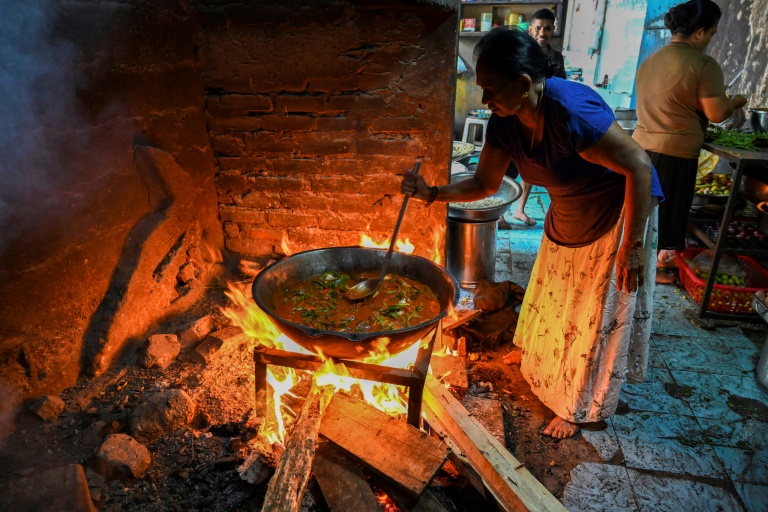
As once relatively wealthy Sri Lanka suffers a dire economic crisis with shortages of everything from medicines to gas, people are returning to cooking with firewood.

The switch began at the beginning of the year when more than 1,000 kitchens exploded across the country, killing at least seven people and injuring hundreds more.

The reason was suppliers looking to cut costs and increasing the proportion of propane, which raised the pressure to dangerous levels.

But now, along with much else in the country of 22 million people, gas is either unavailable or too expensive for most.

Some tried to shift to kerosene oil cookers, but the government did not have dollars to import it along with petrol and diesel, which are also in short supply.

And those who bought electric cookers were in for a rude shock when the government imposed lengthy power blackouts as it ran out of dollars to import fuel for generators.

Niluka Hapuarachchi, 41, was miraculously unharmed when her gas range exploded soon after cooking Sunday lunch in August.

“Fortunately, no one was there at the time. There were pieces of glass all over the floor. The glass-top stove had exploded. I will never use gas for cooking. It is not safe. We are now on firewood,” she said, despite moves to address the propane problem.

Roadside eatery owner M.G. Karunawathi, 67, also switched to wood and said it was a choice between closing her business or putting up with smoke and soot.

“We suffer (smoke inhalation) when cooking with firewood, but we have no choice,” Karunawathi told AFP. “It is also difficult to find firewood and it is also becoming very expensive.”

– Pain into 2023 –

Sri Lanka used to be a middle-income country, with GDP per head comparable to the Philippines and living standards the envy of neighbouring India.

But with economic mismanagement and the crucial tourism industry hammered by Covid-19, the nation has run out of dollars needed to pay for most imports.

And the pain will likely continue for some time, with Prime Minister Ranil Wickremesinghe in parliament on Tuesday saying: “We will have to face difficulties in 2023 as well.

“This is the truth. This is the reality.”

Unofficial inflation is now second only to Zimbabwe, and the United Nations estimates about 80 percent of people skip meals because they cannot afford food.

Before the crisis, almost all households in Colombo could afford to use gas, but now woodcutter Selliah Raja, 60, is doing a roaring trade.

“Earlier we had just one customer — a restaurant that had a wood-fired oven — but we now have so many, we can’t meet the demand,” Raja told AFP.

He says his timber suppliers in the provinces have doubled their prices because of the sharp rise in demand and skyrocketing transport costs.

“Earlier, land owners paid us to uproot rubber trees that are no longer productive,” lumberjack Sampath Thushara told AFP in the tea-and-rubber-growing southern village of Nehinna.

“Today, we have to pay to get these trees.”

Foraging for wood can also be dangerous in the snake- and insect-infested forests. Last week, a father of three died from wasp stings in central Sri Lanka and four others were hospitalised.

Demand is also surging for alternative energy, and entrepreneur Riyad Ismail, 51, has seen sales light up for the hi-tech firewood stove he invented in 2008.

He has attached a small battery-powered electric fan to blow air into the barrel-shaped stove to ensure better burning, thus reducing smoke and soot associated with traditional firewood burners.

His upmarket “Ezstove” and the mass-market “Janalipa”, which uses coconut charcoal, promises a minimum 60 percent savings compared with cooking with gas.

Both his stoves — which cost around $20 and $50, respectively — have become big sellers with buyers having to go on a waiting list.

It has been so successful, Ismail says, there are several copies on the market.

“You will see many renditions of my design… other people are piggybacking (on the design),” Ismail said while making chicken satay.

Close Bitnami banner
Bitnami