US Business

US court rules distributors not responsible for opioid crisis

The three largest drug distributors in the United States have won a major court victory, with a judge ruling that they were not responsible for record opioid addiction in one part of West Virginia state.

About 10 percent of Cabell County’s population is or has been addicted to opioids — at a huge economic and social cost, acknowledged Judge David Faber.

But “while there is a natural tendency to assign blame in such cases, they must be decided not based on sympathy, but on the facts and the law,” he wrote in a decision released Monday night.

The “plaintiffs failed to show that the volume of prescription opioids distributed in Cabell/Huntington was because of unreasonable conduct” by defendants AmerisourceBergen, Cardinal Health and McKesson, Faber wrote.

Tasked with supplying pharmacies, the three firms delivered more than 51 million doses of pain medication in the county between 2006 and 2014, and local authorities accused them of turning a blind eye to suspicious order volumes.

But “there is nothing unreasonable about distributing controlled substances to fulfill legally written prescriptions,” Faber said.

He put the blame on manufacturers who “aggressively market prescription opioids,” rather than the companies that distributed them.

After becoming addicted to pain pills, many people increased their consumption and eventually turned to illicit drugs such as heroin and fentanyl, an extremely powerful synthetic opioid.

The opioid crisis, which has caused more than 500,000 deaths over 20 years in the United States, has triggered a flurry of lawsuits from victims as well as cities, counties and states impacted by the fallout.

The suit filed by Cabell County and the city of Huntington had become a symbol of authorities’ efforts to make companies pay for the social and economic cost of the crisis.

Between May 3 and July 28, 2021, 70 witnesses testified as part of the lawsuit in federal court in Charleston, West Virginia.

While the hearings were still ongoing, the three distributors and pharmaceutical company Johnson & Johnson agreed to pay $26 billion to end a series of legal actions in a settlement that is still being finalized.

Markets slump as recession fears grip investors

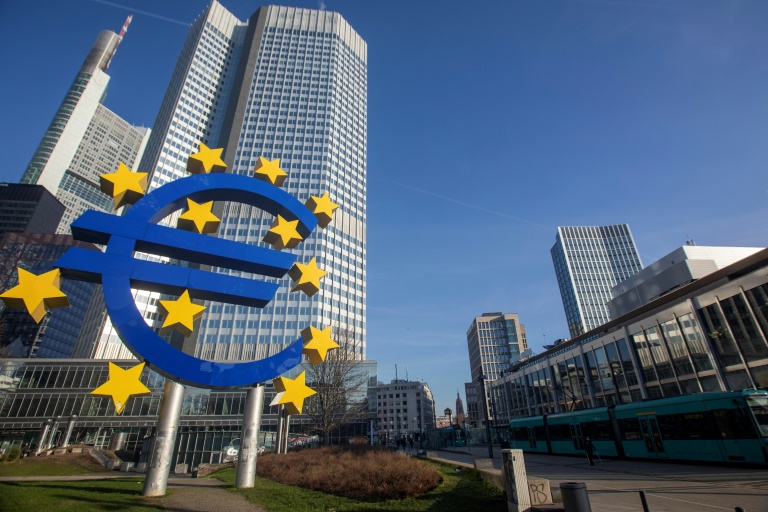
Stock markets sank and oil prices plummeted Tuesday as fears mounted that major economies will slide into recession as inflation soars, with the euro slumping towards parity with the dollar.

“Fears about the health of the world economy are circulating and that is why we are seeing major declines in stocks, energies, and industrial metals,” said market analyst David Madden at Equiti Capital.

“Worries about rising inflation, higher interest rates and slower economic growth are hanging over the markets,” he said.

European stock markets fell nearly three percent, while on Wall Street the Dow was down around two percent in late morning trading.

The euro sank to a 20-year dollar low of $1.0238 on recession fears and as investors eyed aggressive interest rate hikes by the US Federal Reserve in its fight against inflation, in contrast with the European Central Bank, seen as planning more modest increases.

The pound also slumped to a two-year low near $1.19.

The main international crude oil contract, Brent North Sea, fell nearly 10 percent, while the main US contract WTI, fell nearly nine percent to under $100 per barrel.

“There are increasing worries the elevated energy prices will chip away at demand, hence the fall in the oil contracts, said Madden.

Sentiment in Europe was shaken from the latest survey data showing economic growth in the eurozone floundered in June.

S&P Global’s closely-watched monthly purchasing managers’ index (PMI), which measures corporate confidence, fell to 52.0 in June from 54.8 in May.

Nevertheless, the reading, which was a 16-month low, remains above the 50-point level signalling expansion.

“Growing fears of a recession are hammering the euro lower, whilst the dollar is soaring on bets that the Fed will keep hiking rates aggressively to tame inflation,” City Index analyst Fiona Cincotta told AFP.

“Today’s PMI data from Europe have highlighted the risk of slowing growth at the end of the second quarter and raise the prospect of a contraction in activity in the coming months.”

Walid Koudmani, chief market analyst at XTB, said “the ECB is caught between a rock and a hard place as it needs to raise interest rates to tackle inflation and boost its currency while simultaneously supporting struggling economies which are just recovering after two years of pandemic related issues.”

The mood on trading floors has become increasingly gloomy in recent months as observers warn that sharp interest rate hikes aimed at curbing price rises could cause a contraction, compounding uncertainty caused by Russia’s war in Ukraine.

By contrast, most Asian stock markets closed higher on growing speculation that US President Joe Biden is about to roll back some of the Trump-era tariffs on Chinese goods.

Investors were keeping tabs also on fresh Covid outbreaks in China that have triggered city-scale lockdowns.

– Key figures at around 1530 GMT –

Euro/dollar: DOWN at $1.0243 from $1.0431 Monday

Pound/dollar: DOWN at $1.1908 from $1.2116

Euro/pound: DOWN at 86.03 pence from 86.09 pence

Dollar/yen: UP at 135.73 yen from 135.69 yen

Brent North Sea crude: DOWN 9.6 percent at $102.57 per barrel

West Texas Intermediate: DOWN 8.8 percent at $98.94 per barrel

New York – Dow: DOWN 2.1 percent 30,447.97 points

EURO STOXX 50: DOWN 2.3 percent at 3,389.69

London – FTSE 100: DOWN 2.9 percent at 7,025.47 (close)

Frankfurt – DAX: DOWN 2.9 percent at 12,401.20 (close)

Paris – CAC 40: DOWN 2.7 percent at 5,794.96 (close)

Tokyo – Nikkei 225: UP 1.0 percent at 26,423.47 (close)

Hong Kong – Hang Seng Index: UP 0.1 percent at 21,853.07 (close)

Shanghai – Composite: FLAT at 3,404.03 (close)

burs-rl/cdw

Ford's US car sales rise despite semiconductor crunch

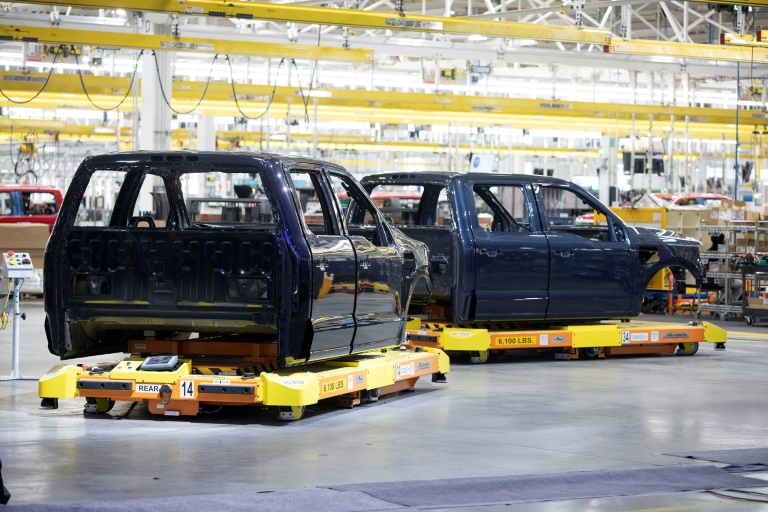
Ford reported higher US auto sales Tuesday, bucking an industry-wide trend of declines in the latest quarter amid crimped supply of semiconductor and other key parts.

The Michigan giant delivered 483,688 vehicles, up two percent from the year-ago level.

While citing a continuation of supply constraints that have dogged the industry over the last year, Ford described vehicle demand as “strong.” 

Ford’s sales were dominated by larger vehicles, including pickup trucks and sport utility vehicles. The burden of limited inventories has been cushioned by strong pricing.

“Amid industry-wide supply constraints, Ford outperformed the industry driven by strong F-Series, Explorer and new Expedition and Navigator SUV sales,” said Andrew Frick, a vice president in sales and distribution at Ford Blue’s, the company’s division focused on internal combustion vehicles.

The results included the first deliveries of the new F-150 Lightning electric pickup truck, which added 2,296 units to the total.

Ford’s sales figures came as rivals General Motors, Toyota and FCA (Stellantis) all reported quarterly sales drops of at least 15 percent amid supply chain problems.

Ford's US car sales rise despite semiconductor crunch

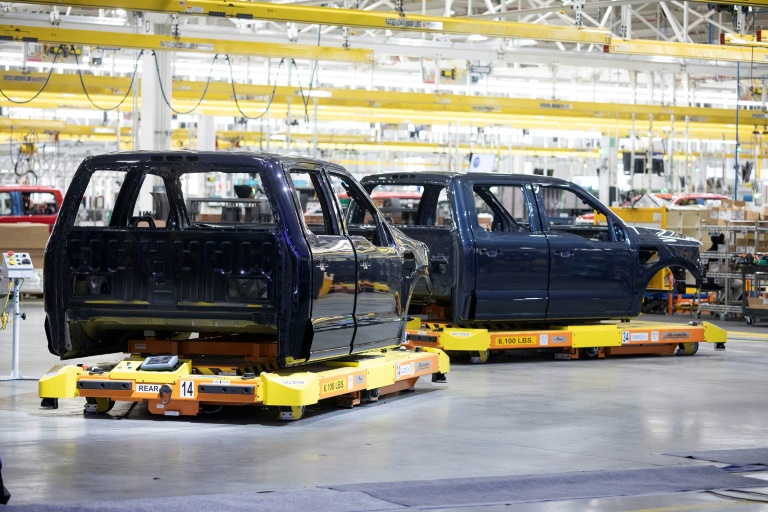
Ford reported higher US auto sales Tuesday, bucking an industry-wide trend of declines in the latest quarter amid crimped supply of semiconductor and other key parts.

The Michigan giant delivered 483,688 vehicles, up two percent from the year-ago level.

While citing a continuation of supply constraints that have dogged the industry over the last year, Ford described vehicle demand as “strong.” 

Ford’s sales were dominated by larger vehicles, including pickup trucks and sport utility vehicles. The burden of limited inventories has been cushioned by strong pricing.

“Amid industry-wide supply constraints, Ford outperformed the industry driven by strong F-Series, Explorer and new Expedition and Navigator SUV sales,” said Andrew Frick, a vice president in sales and distribution at Ford Blue’s, the company’s division focused on internal combustion vehicles.

The results included the first deliveries of the new F-150 Lightning electric pickup truck, which added 2,296 units to the total.

Ford’s sales figures came as rivals General Motors, Toyota and FCA (Stellantis) all reported quarterly sales drops of at least 15 percent amid supply chain problems.

Chicago suburb in shock after mass shooting during July 4 parade

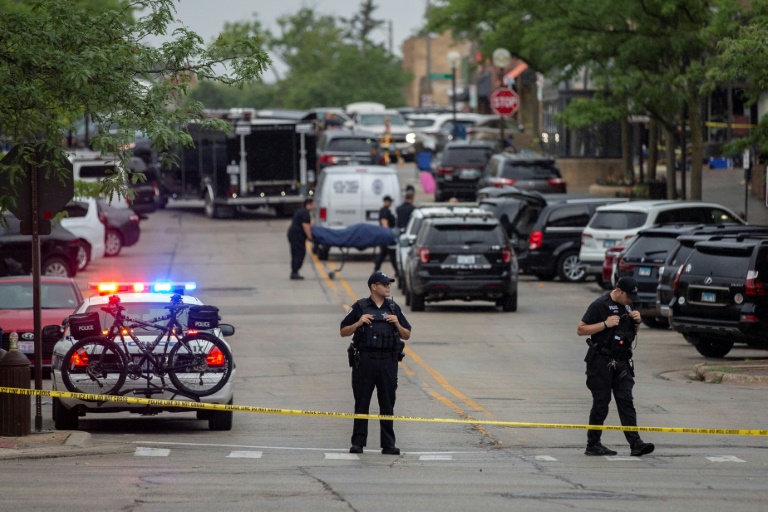
A wealthy Chicago suburb was reeling Tuesday from a devastating shooting that saw gunfire tear through a July 4 holiday crowd, as online posts and videos pointed to the troubled mind of the 21-year-old suspected gunman.

Robert “Bobby” Crimo III, who grew up in Highland Park, where the shooting occurred, was arrested on Monday after six people were killed and two dozen injured during an Independence Day parade.

Crimo was taken into custody after law enforcement launched a  massive manhunt for the gunman who sprayed paradegoers with dozens of semi-automatic rounds from a rooftop, turning the celebration into a scene of death and trauma.

“We’re all still reeling,” Highland Park Mayor Nancy Rotering told NBC’s Today show on Tuesday.

“Unbelievable shock,” Rotering said. “Everybody knows somebody who was affected by this directly.”

Rotering said she personally knew the suspected gunman when he was a young boy in the Cub Scouts and she was a Cub Scout leader.

“How did somebody become this angry, this hateful to then take it out on innocent people who literally were just having a family day out?” Rotering asked.

David Baum, a doctor whose two-year-old was in the parade, witnessed the shooting and helped treat some of the injured.

“The people who were gone were blown up by that gunfire,” Baum told CNN. “The horrific scene of some of the bodies is unspeakable for the average person.”

On Tuesday, police and FBI agents looking for evidence were sifting through belongings left behind by members of the crowd as they fled.

Strollers, bicycles, folding chairs and other items littered the parade route through the main street of Highland Park as American flags flapped in the breeze from brick buildings.

– Disturbing online content –

Crimo, whose father unsuccessfully ran for mayor and owns a store in Highland Park called Bob’s Pantry and Deli, was an amateur musician billing himself as “Awake the Rapper.”

The younger Crimo’s online postings include violent content that alluded to guns and shootings.

One YouTube video posted eight months ago featured cartoons of a gunman and people being shot.

A voice-over says “I need to just do it.”

It adds: “It is my destiny. Everything has led up to this. Nothing can stop me, not even myself.”

Crimo, who has the word “Awake” tattooed over an eyebrow, is seen sporting an “FBI” baseball cap in numerous photos and is wearing a Trump flag as a cape in one picture.

Rotering, the mayor, said the firearm used in the shooting was “legally obtained.”

“This nation needs to have a conversation about these weekly events involving the murder of dozens of people with legally obtained guns,” she said. “We need to re-examine the laws.”

The shooting is the latest in a wave of gun violence plaguing the United States, where approximately 40,000 deaths a year are caused by firearms, according to the Gun Violence Archive.

The deeply divisive debate over gun control was reignited by two massacres in May that saw 10 Black people gunned down at an upstate New York supermarket and 21 people, mostly young children, slain at an elementary school in Texas.

The Highland Park shooting cast a pall over Independence Day, when towns and cities across the country hold similar parades and people attend barbecues, sporting events and fireworks displays.

In another July 4 shooting, two police officers were wounded when they came under fire during a fireworks show in Philadelphia, local officials said.

– ‘Pop, pop, pop’ –

In Highland Park, Emily Prazak, who marched in the parade, described the mayhem.

“We were getting ready to march down the street and then all the sudden waves of these people started… like running towards us. And right before that happened, we heard the pop, pop, pop, pop, pop, and I thought it was fireworks,” Prazak told AFP.

Don Johnson said he initially thought it was a car backfiring.

“And finally, I heard the screams from a block down and people running and carrying their kids and everything, and we ran into the gas station, and we were in there for three hours,” Johnson told AFP.

“I’ve seen scenes like this over and over again on the TV and in different communities, and didn’t think it was going to happen here ever,” he said.

Five of the six people killed, all adults, died at the scene. The sixth was taken to the hospital but succumbed to wounds there.

Highland Park Hospital, where most of the victims were taken, said it had received 25 people with gunshot wounds aged eight to 85.

President Joe Biden voiced his shock and vowed to keep fighting “the epidemic of gun violence.”

“I’m not going to give up,” he said.

Last week, Biden signed the first significant federal bill on gun safety in decades, just days after the Supreme Court ruled that Americans have a fundamental right to carry a handgun in public.


Disputed Russian cargo ship still stranded off Turkish coast

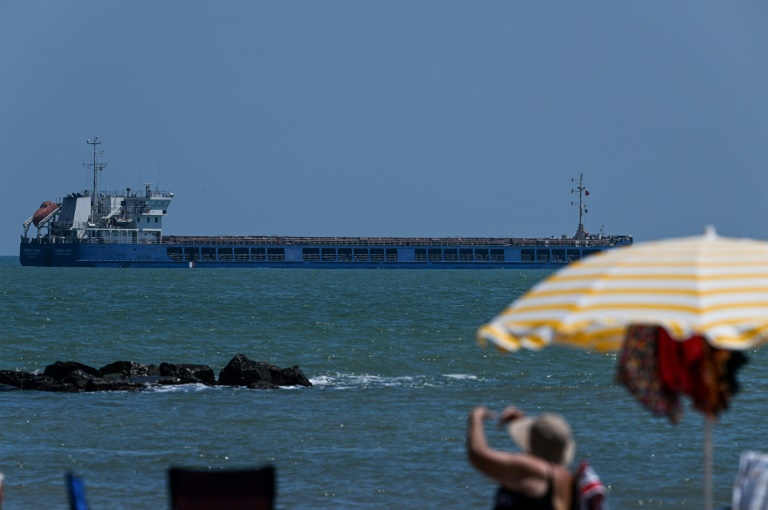
A Russian-flagged cargo ship at the centre of a fight over grain between Kyiv and Moscow remained anchored Tuesday off Turkey’s Black Sea coast — a full four days after its unexpected arrival.

Ukraine alleges that the Zhibek Zholy had set off from its Kremlin-occupied port of Berdyansk after picking up confiscated wheat.

Moscow concedes that the 7,000-tonne vessel was sailing under the Russian flag but denies any wrongdoing.

And NATO-member Turkey has said nothing official in public as it tries to maintain open relations with both Moscow and Kyiv while facing Ukrainian pressure to seize the ship.

The saga started when a Kremlin-installed leader in southeastern Ukraine last Thursday announced the launch of the first official grain shipments across the Black Sea since Russia invaded its neighbour in February.

Russia claims to have “nationalised” Ukrainian state assets and to be buying crops from local farmers. Ukraine says its grain is being stolen and used to fund Russia’s war effort.

Marine traffic websites then showed the Zhibek Zholy reaching Turkey’s Black Sea port of Karasu and stopping about a kilometre (half a mile) off shore.

The ship’s arrival was announced by Ukraine’s ambassador to Turkey — one of the most vocal officials in the entire dispute.

He asked Turkey on Twitter to take “corresponding measures” and then told Ukrainian state television the vessel had been impounded by local coastguards.

Turkish officials still offered no comment even though the 140-metre (460-foot) ship was now clearly visible by holidaymakers lounging on Karasu’s sandy beach.

– ‘It never moved’ –

Russian Foreign Minister Sergei Lavrov conceded to reporters on Monday that the Zhibek Zholy had not reached its intended destination.

But he also played down Moscow’s role or the ship’s importance to Russia’s efforts to resume marine traffic from parts of Ukraine now under its control.

“We have to look into this situation,” said Lavrov.

“The ship really does appear to be Russian, sailing under the Russian flag. I think it belongs to Kazakhstan, while the cargo was being shipped under contract between Estonia and Turkey.”

Kazakhstan said the ship was controlled by its national rail company but insisted it should bear no blame.

“There should be no consequences for Kazakhstan,” Kazakh industry minister Kairbek Uskenbayev told reporters.

“There were no restrictions on the Russian company that is currently leasing this ship.”

A Turkish diplomatic source told AFP on condition of anonymity that an “inspection” of the ship’s cargo was still underway.

But beachgoers watching the diplomatic drama unfold before them in Karasu — a town of 30,000 that swells during the summer tourism season — say little has happened on the ship since it showed up.

“It never moved,” said local pensioner Salise Aktan.

“On Sunday, a boat approached the ship and then left,” added fellow beachgoer Gulay Erol.

“I don’t know why,” the 33-year-old said.

– ‘Balanced policy’ –

Turkey’s four-day silence underscores the difficulty of its position in the war.

Turkish President Recep Tayyip Erdogan has had a tumultuous but close working relationship with Russian counterpart Vladimir Putin.

He has tried to use that access to thrust Turkey into the middle of diplomatic negotiations and talks on resuming grain shipments from Ukrainian ports.

But his Russian relationship is complicated by Turkey’s international commitments as a member of the NATO defence bloc.

Turkey’s Foreign Minister Mevlut Cavusoglu said last month that Ankara was investigating reports of Russian-seized Ukrainian grain reaching its Black Sea shores.

But he added that Turkey had been unable to find any stolen Ukrainian grain shipments.

Ankara also supplies combat drones to Ukraine that have proved effective in helping slow Russia’s advance across the Donbas war zone.

Erdogan told a NATO summit in Madrid last week that his country was trying to pursue “a balanced policy” because of its heavy reliance on Russian energy.

Turkish defence officials met with a Ukrainian delegation on Monday.

No details from those talks were announced.

Euro slumps as recession risk stalks eurozone

The euro on Tuesday slumped to its lowest level since 2002 and European stock markets sank as growing recession risks sent shockwaves around the region.

The shared currency fell as low as $1.0261, threatening a push towards dollar parity.

It also dived as investors eyed aggressive interest rate hikes by the US Federal Reserve in its fight against inflation, in contrast with the European Central Bank, seen as planning more modest increases.

The pound also slumped to a two-year low below $1.20.

Stock indices in Frankfurt, London and Paris shed more than two percent in afternoon trading on heightened fears of a prolonged economic downturn across Europe.

Economic growth in the eurozone floundered in June, a key survey showed Tuesday, hit by soaring consumer prices.

S&P Global’s closely-watched monthly purchasing managers’ index (PMI), which measures corporate confidence, fell to 52.0 in June from 54.8 in May.

Nevertheless, the reading, which was a 16-month low, remains above the 50-point level signalling expansion.

“Growing fears of a recession are hammering the euro lower, whilst the dollar is soaring on bets that the Fed will keep hiking rates aggressively to tame inflation,” City Index analyst Fiona Cincotta told AFP.

“Today’s PMI data from Europe have highlighted the risk of slowing growth at the end of the second quarter and raise the prospect of a contraction in activity in the coming months.”

Walid Koudmani, chief market analyst at XTB, said “the ECB is caught between a rock and a hard place as it needs to raise interest rates to tackle inflation and boost its currency while simultaneously supporting struggling economies which are just recovering after two years of pandemic related issues.”

By contrast, most Asian stock markets closed higher on growing speculation that US President Joe Biden is about to roll back some of the Trump-era tariffs on Chinese goods.

Such speculation failed to boost Wall Street, with the Dow slumping 1.5 percent in opening trading as US investors came back from a three-day holiday weekend.

The mood on trading floors has become increasingly gloomy in recent months as observers warn that sharp interest rate hikes aimed at curbing price rises could cause a contraction, compounding uncertainty caused by Russia’s war in Ukraine.

Investors were keeping tabs also on fresh Covid outbreaks in China that have triggered city-scale lockdowns.

Oil prices slumped more than five percent as recession worries outweighed supply concerns.

– Key figures at around 1330 GMT –

Euro/dollar: DOWN at $1.0263 from $1.0431 Monday

Pound/dollar: DOWN at $1.1945 from $1.2116

Euro/pound: DOWN at 85.92 pence from 86.09 pence

Dollar/yen: UP at 135.83 yen from 135.69 yen

London – FTSE 100: DOWN 2.2 percent at 7,074.46 points

Frankfurt – DAX: DOWN 2.6 percent at 12,448.15

Paris – CAC 40: DOWN 2.6 percent at 5,802.75

EURO STOXX 50: DOWN 1.8 percent at 3,406.91

New York – Dow: DOWN 1.5 percent 30,637.91

Tokyo – Nikkei 225: UP 1.0 percent at 26,423.47 (close)

Hong Kong – Hang Seng Index: UP 0.1 percent at 21,853.07 (close)

Shanghai – Composite: FLAT at 3,404.03 (close)

Brent North Sea crude: DOWN 5.6 percent at $106.93 per barrel

West Texas Intermediate: DOWN 5.1 percent at $102.91 per barrel

burs-rl/ri

Ukraine, allies map out road to reconstruction

Ukraine and its allies agreed Tuesday to a set of principles for rebuilding the war-torn country, including the need for broad reforms to boost transparency and root out corruption.

Wrapping up a two-day conference in the southern Swiss city of Lugano, leaders from some 40 countries signed the Lugano Declaration committing to support Ukraine through a likely long and expensive recovery.

Ukrainian President Volodymyr Zelensky warned from Kyiv that the work ahead was “colossal”, and the duty of the “whole democratic world”.

His prime minister, Denys Shmyhal, who led a large delegation to Lugano, cautioned  that recovery from the massive destruction wrought since Russia’s full-scale invasion just four months ago would cost at least $750 billion.

He said the adoption of the declaration and of a set of seven founding principles for Ukraine’s reconstruction “gives great hope”.

“We shall be victorious, we will renew our country,” he told reporters. “We have to make everything that was destroyed better than it was.”

Swiss President Iganzio Cassis, who co-hosted the conference, hailed the declaration as a “key first step on the long road of Ukraine’s recovery”.

“Our work prepares for the time after the war even as the war is still raging,” he told the closing ceremony following a minute of silence for that war’s many victims. 

– ‘Make corruption impossible’ –

Among the principles agreed upon Tuesday was that Ukraine itself must be in the driving seat on how to rebuild, and also that the recovery process must go hand-in-hand with far-reaching reforms.

“The rule of law must be systematically strengthened and corruption eradicated,” the document said.

With billions of dollars in aid and assistance flowing into Ukraine, lingering concerns about widespread corruption have driven calls Kyiv to do more to ensure transparency and accountability.

The former Soviet state has long been ranked among the world’s most corrupt countries by Transparency International. In Europe, only Russia and Azerbaijan ranked worse.

Shmyhal insisted Tuesday that Ukraine had already taken great strides to fix the problem, including by broad digitalisation of public services and the awarding of contracts in sectors like construction, to reduce “human interaction” and the possibilities for corrupt transactions.

The goal, he said, is “not to fight corruption, but make corruption impossible.”

As for who will pay for the towering costs, Shmyhal suggested much of this amount could be covered using seized Russian assets. He pointed out that such assets frozen by Ukraine’s partners so far amounted to $300-500 billion.

“Unprovoked aggression should be paid by the aggressor,” he said. “Russia should pay for this.”

At his side, the Swiss president, whose country has long been a choice destination for Russian oligarchs to invest and stash away their fortunes, stressed the importance of respecting property rights and the rule of law.

Shmyhal on Monday laid out the government’s three-phase reconstruction plan, focused on the immediate needs of those affected by the war, followed by the financing of thousands of longer-term reconstruction projects, and ultimately on transforming Ukraine into a European, green and digital country.

To push the message, a number of ministers, as well as First Lady Olena Zelenska, also spoke Monday to lay out the massive reconstruction needs, as well as their vision for a new Ukraine. 

– ‘For the long-haul’ –

The Ukrainians have proposed that allied countries “adopt” specific regions of Ukraine, and lead the recovery there to render it more efficient.

Britain has proposed taking on the Kyiv region, while France would concentrate on the heavily-hit Chernihiv region. Australia and Denmark are also among countries that have voiced interest in leading specific reconstruction efforts.

“We understand that this is for the long-haul, and we are ready,” high-level French diplomat Francois Delattre told AFP.

Lugano was seen as a first step towards the rebuilding of Ukraine, and there are already several follow-up conferences planned, with one led by the EU in a few months.

London has agreed to host a Ukraine Recovery Conference next year, while Germany has said it can host the 2024 edition.

“I am confident that in a year we will no longer talk about a draft plan, but about results, successful projects and realised opportunity,” Shmyhal said.

Fighting rages in eastern Ukraine as NATO pushes expansion

Fighting raged on Tuesday in and around Ukraine’s eastern Donbas region as Russian troops tried to build on recent battlefield gains, while NATO pressed ahead with Finland and Sweden’s momentous membership bids.

With the war well into its fifth month, Kyiv’s allies committed on Tuesday to supporting Ukraine through what is likely to be a lengthy and expensive recovery, agreeing on the need for broad reforms to boost transparency and tackle corruption.

The two days of talks in the Swiss city of Lugano heard that rebuilding the war-ravaged country is estimated to cost at least $750 billion.

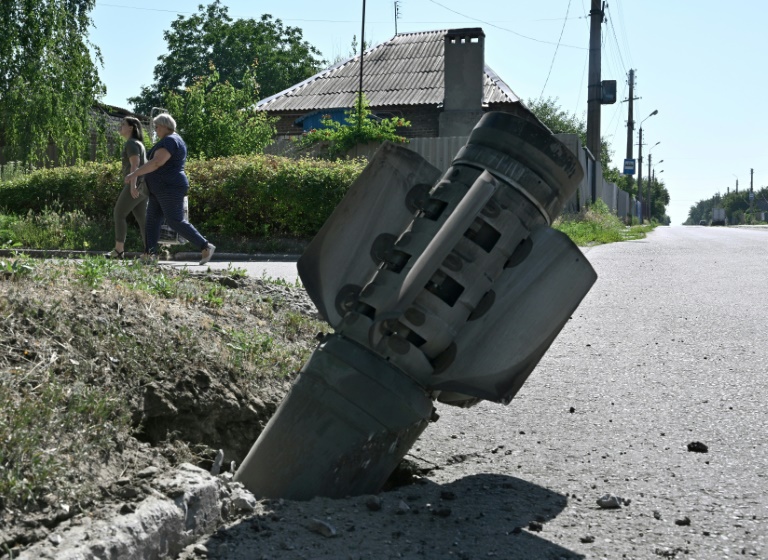
But on the battlefield the conflict continued to wreak devastation, with the Ukrainian president’s office reporting Russian shelling and missile strikes in several regions overnight.

Kremlin forces were pounding their next key target, the city of Sloviansk in Donetsk, with “massive” shelling, the city’s mayor said on Tuesday. 

At least two people were killed and seven others wounded in strikes that targeted the city’s central market, authorities said.

Donetsk is the southwestern half of the Donbas which, unlike the northeastern half — Lugansk –, has not been almost entirely captured by Russia.

Russian bombardments have killed at least six people and injured another 19 since Sunday in Sloviansk, which had a pre-war population of around 100,000. 

In Moscow, the defence ministry reported that Russian forces had targeted the city of Kharkiv with “high-precision” weapons over the past 24 hours, killing up to 150 Ukrainian servicemen.

Russia also said it was investigating the torture of Russian soldiers held prisoner in Ukraine that were recently released as part of a prisoner swap. 

– ‘Fighting continues’ –

In Brussels, NATO Secretary General Jens Stoltenberg and the foreign ministers of Sweden and Finland hailed Tuesday as “historic” when they kicked off accession procedures for the two countries that will expand the military alliance to 32 members.

“The membership of both Finland and Sweden will not only contribute to our own security but to the collective security of the alliance,” said Finland’s Pekka Haavisto, after protocols were signed launching the required ratification process.

Sweden and Finland both announced their intention to drop decades of military non-alignment and become part of NATO in the wake of Russia invading Ukraine in February.

After abandoning its initial war aim of capturing Kyiv following tough Ukrainian resistance, Russia has since focused its efforts on securing control of the Donbas.

Ukraine said its forces were still defending “a small part” of Lugansk province, despite Moscow saying its troops were now in full control there after capturing the strategic city of Lysychansk, near the border with Donetsk.

The fall of Lysychansk on Sunday, a week after the Ukrainian army also retreated from the neighbouring city of Severodonetsk, frees up Russian forces to advance on Kramatorsk and Sloviansk in Donetsk.

“Fighting continues on the administrative borders of the region,” the Ukrainian president’s office said on Tuesday.

In a sign Moscow was trying to consolidate supply lines for its ongoing push, Ukraine’s armed forces said Russian troops in Lugansk were “taking measures” to restore transport infrastructure behind the fighting lines.

– ‘Provocations’ –

Russian forces heading west were also closing in on the small city of Siversk — which lies between Lysychansk and Sloviansk — after days of shelling there.

Two Ukrainian Red Cross minibuses were heading there to evacuate willing civilians, according to AFP reporters on the ground.

To the southwest, in the Moscow-occupied Kherson region, Russia’s troops were deploying helicopters and various artillery to try to stem Ukrainian counter-attacks.

“Ukrainian aviation and missile and artillery units continue to strike enemy depots and invaders’ concentrations, in particular in the Kherson region,” Ukraine’s armed forces said.

The intensifying battles in southern Ukraine come as Kremlin-installed authorities in Kherson announced that an official from Russia’s powerful FSB security services had taken over control of the regional government there. 

Kherson city, which lies close to Moscow-annexed Crimea, was the first major city to fall to Russian forces in February. 

Moscow has since launched a campaign of so-called Russification, trying to introduce the ruble, giving out Russian passports and opening a first Russian bank at the end of June.

Ukrainian President Volodymyr Zelensky has been reiterating calls for more weapons from the West so Kyiv can keep up the resistance and its counter-offensives to regain lost territories.

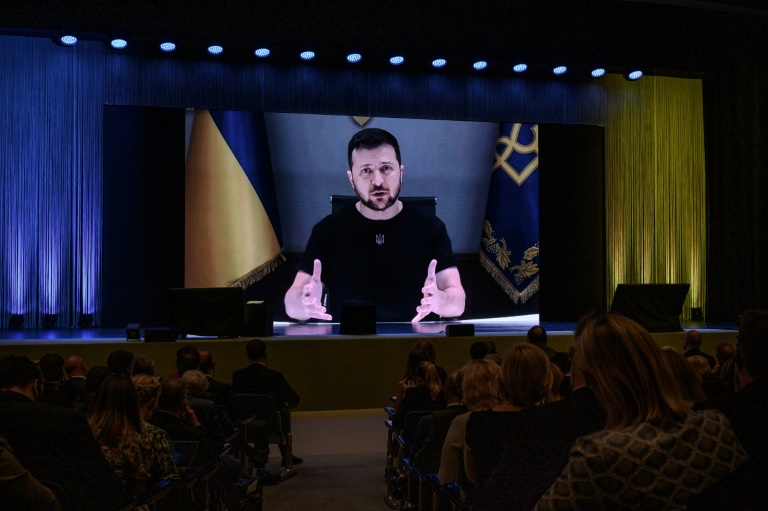
Appearing by video on Tuesday at an annual forum hosted by The Economist magazine, he predicted Belarus — an ally of Moscow — would not be drawn into the war but “provocations” by its northern neighbour was likely to continue.

Belarusian leader Alexander Lukashenko said on Saturday his army had intercepted missiles fired at his country by Ukrainian forces last week.

Meanwhile, as the meeting of Ukraine’s allies in Switzerland ended, leaders from some 40 countries signed the Lugano Declaration pinpointing principles for rebuilding Ukraine.

“Our work prepares for the time after the war even as the war is still raging,” said Swiss President and co-host Ignazio Cassis.

Fighting rages in eastern Ukraine as NATO pushes expansion

Fighting raged Tuesday in and around Ukraine’s eastern Donbas region as Russian troops tried to build on recent battlefield gains, while NATO pressed ahead with Finland and Sweden’s historic membership bids.

With the war now well into its fifth month, Kyiv’s allies committed Tuesday to support Ukraine through what is expected to be a long and expensive recovery, and agreed on the need for broad reforms to boost transparency and battle corruption.

The talks in Switzerland heard that the rebuilding of war-shattered Ukraine is estimated to cost at least $750 billion.

But on the battlefield the conflict continued to wreak devastation, with Ukraine’s presidency reporting Russian shelling and missile strikes in several regions overnight.

In Moscow, the defence ministry reported that over the past 24 hours, Russian forces have targeted the city of Kharkiv with “high-precision” weapons killing up to 150 Ukrainian servicemen.

The attack followed shelling in Donetsk, which Russian President Vladimir Putin on Monday ordered his troops to continue assaulting as they bid to take total control of the Donbas.

In Brussels, NATO chief Jens Stoltenberg announced the process to ratify Sweden and Finland as the newest members of the military alliance had formally launched.

“With 32 nations around the table, we will be even stronger and our people will be even safer as we face the biggest security crisis in decades,” he said in a joint press statement with the Swedish and Finnish foreign ministers.

Sweden and Finland both announced their intention to drop decades of military non-alignment status and become part of NATO in the wake of Russia’s invasion of Ukraine in February.

– ‘Fighting continues’ –

After abandoning its initial war aim of capturing Kyiv following tough Ukrainian resistance, Russia has focused its efforts on securing control of the Donetsk and Lugansk areas which make up the Donbas region.

Ukraine said its forces were still defending “a small part” of Lugansk province — the northeastern portion of the Donbas — despite Moscow claiming that its troops were now in full control there.

Russia on Sunday captured the strategic city of Lysychansk, near the border between Lugansk and Donetsk, after the Ukrainian army said it had retreated to save  lives among outnumbered and outgunned forces.

Lysychansk’s fall — one week after the army also retreated from the neighbouring city of Severodonetsk — frees up Russian forces to advance on Kramatorsk and Sloviansk in Donetsk.

“Fighting continues on the administrative borders of the region,” the Ukrainian presidency said Tuesday.

In a sign Moscow was trying to consolidate supply lines for the next push, Ukraine’s armed forces said Russian forces in Lugansk were “taking measures” to restore transport infrastructure behind the fighting lines.

In Sloviansk, about 75 kilometres (45 miles) west of Lysychansk in Donetsk, the situation was calm mid-morning Tuesday, while artillery fire could heard outside the city, AFP reporters on the ground noted.

Further east, Russian forces were closing in on the small city of Siversk — the first on the road from Lugansk —  after days of shelling.

Two Ukrainian Red Cross minibuses were headed there to evacuate willing civilians, according to AFP reporters.

– ‘Accountable’ –

To the southwest in the Moscow-occupied Kherson region, Russia’s troops were deploying helicopters and various artillery to try to stem Ukrainian counter-attacks.

“Ukrainian aviation and missile and artillery units continue to strike enemy depots and invaders’ concentrations, in particular in the Kherson region,” Ukraine’s armed forces added.

The intensifying battles in southern Ukraine come as Kremlin-installed authorities in Kherson announced that an official from Russia’s powerful FSB security services had taken over control of the government there. 

Kherson city, which lies close to Moscow-annexed Crimea, was the first major city to fall to Russian forces in February. 

Moscow has since launched a campaign of so-called Russification, trying to introduce the ruble, giving out Russian passports and opening a first Russian bank at the end of June.

Ukrainian President Volodymyr Zelensky on Monday reiterated calls for an increased supply of weapons from the West so Kyiv can keep up the resistance and its counter-offensives to regain lost territories.

At the meeting of Ukraine’s allies in Lugano he also urged the democratic world to unite in rebuilding his country.

Leaders from dozens of countries, international organisations and businesses signed off Tuesday on a declaration spelling out the principles and priorities of the reconstruction effort.

Prime Minister Denys Shmyhal told the recovery conference the estimated $750 billion recovery bill should in part be funded by the confiscated assets of Russia and Russian oligarchs.

“The Russian authorities unleashed this bloody war. They caused this massive destruction, and they should be held accountable for it,” he said.

Close Bitnami banner
Bitnami