US Business

Eurozone inflation hits record, as gas crunch looms

Eurozone inflation accelerated to another record high in June, official data showed on Friday, as Russia’s war in Ukraine drives up energy prices and hammers the European economy.

The EU’s Eurostat data agency said the increase in consumer prices in the 19 countries that use the euro reached 8.6 percent in June, leaping from the previous record of 8.1 percent a month earlier.

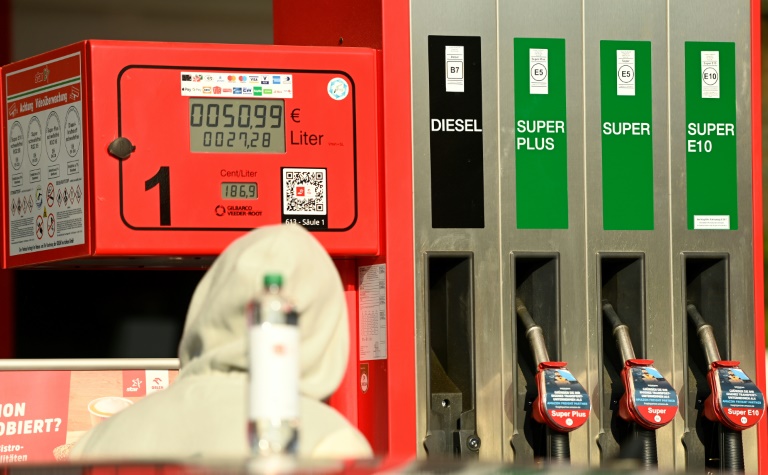
Consumer prices in the eurozone have hit records since November, buffeted by sky-high energy prices, which jumped by 41.9 percent over one year, caused by the fallout of Russia’s invasion of its neighbour Ukraine.

But analysts also pointed to the rise in food prices, which accelerated by 8.9 percent, showing that the inflation problem was spreading through the economy.

“Historically, we have never had such a high figure for the contribution of food. It will have a big impact,” said Philippe Waechter of Ostrum Asset Management.

The European Central Bank has said it will do whatever it takes to bring inflation back to its target level, with political pressure high to bring energy and food prices into check.

“With eurozone inflation now becoming more broad-based in nature, the outlook for the Eurozone for the rest of 2022 continues to look bleak,” warned Pushpin Singh, Economist at the Centre for Economics and Business Research.

“This comes amid a mounting possibility of a severe gas crisis in Europe, with Russia using gas exports as a means to counter sanctions,” he added.

– Rate hike –

As the conflict rages on, Russia has shown an increased willingness to cut off gas supplies to Europe, a danger that has raised the prospect of energy rationing in the eurozone to get through next winter.

Some analysts took solace in the core inflation data, which excludes energy and food prices and came in at 3.7 percent, a tiny drop from the previous month.

But this would not be enough to change the course decided at the ECB’s last meeting, when policymakers agreed to the bank’s first interest rate hike in more than a decade.

The quarter-point raise, set to take place at its next meeting on July 21, will raise rates from their historic lows.

“We will go as far as necessary to ensure that inflation stabilises at our two percent target over the medium term,” ECB head Christine Lagarde said on Tuesday.

The ECB is being pressured by some to go faster in halting inflation and choose a path more akin to the United States where the Federal Reserve has warned it may trigger a recession to cool prices.

Trial of US basketball star Griner opens in Russia

The trial of US basketball star Brittney Griner, detained in Russia since February, opened on Friday as tensions rage over Moscow’s offensive in Ukraine.

“The trial has started,” Polina Vdovtsova, the spokeswoman for the court in the town of Khimki outside Moscow, told reporters.

Griner, a two-time Olympic gold medallist and WNBA champion, faces up to 10 years in prison on charges of drug smuggling. 

The trial was partially closed, with a limited media presence, which Vdovtsova said was “on the request of the defence, the request of Griner herself”.

The six-foot-nine star was brought into court in handcuffs. She wore a white T-shirt with US music icon Jimi Hendrix on it.

The 31-year-old came to Russia in February to play there during the US off-season, and was detained at a Moscow airport after she was found carrying vape cartridges with cannabis oil in her luggage.

Griner was detained days before Russian President Vladimir Putin defied US warnings and sent troops into Ukraine, prompting Western powers to impose sweeping sanctions on Moscow.

US authorities initially kept a low profile on the case, which was not made known to the general public until March 5.

But against the backdrop of sinking relations, Washington now says that Russia “wrongfully detained” the basketball star and put its special envoy in charge of hostages on the case.

The WNBA has also said it is working to bring Griner home.

She was due to play club basketball in Russia before the resumption of the US season, a common practice for American stars seeking additional income.

– Tough sentences –

Russian law is strict in such cases and other foreigners have recently been handed heavy sentences on drug-related charges.

Last month a Moscow court sentenced a former US diplomat, Marc Fogel, to 14 years in prison for “large-scale” cannabis smuggling.

Russia and the United States regularly clash over the detention of each other’s citizens and sometimes exchange them in scenes reminiscent of the Cold War.

In April, former US Marine Trevor Reed, serving a nine-year sentence in Russia for violence, was exchanged for Russian pilot Konstantin Yaroshenko, imprisoned in the US since 2010 for drug trafficking.

Other exchanges of this type could be the subject of possible talks, observers say.

Among the names most mentioned is that of Paul Whelan, an American sentenced to 16 years in prison for espionage, and the Russian arms trafficker Viktor Bout, nicknamed “The Merchant of Death”, who is serving a 25-year sentence in the US.

In January 2020, Putin pardoned a young Israeli-American woman, Naama Issachar, imprisoned in Russia for “drug trafficking” after then-Israeli leader Benjamin Netanyahu met with him in Moscow, and brought her home.

She was stopped in April 209 during a transit at Moscow’s Sheremetyevo airport while flying between India and Israel via the Russian capital.

Authorities said they found nine grams of cannabis in her luggage.

Amazon secure Champions League rights in UK for first time

Amazon has secured live rights to the Champions League in the UK for the first time from 2024.

The technology giant will have the first pick of matches on a Tuesday, with BT Sport retaining the rest of the rights to the Champions League, Europa League and Europa Conference League.

The UK deal is understood to be worth around £500 million ($607 million) a year to UEFA for the three seasons between 2024 and 2027 — an increase of 20 percent on the current cycle.

Amazon already holds the UK rights to 20 Premier League matches per season.

“The addition of UEFA Champions League football is a truly momentous moment for Prime Video in the UK,” said Alex Green, the managing director of Amazon Prime Video Sport Europe.

A new format to the Champions League will begin in the 2024/25 season with the competition expanded to 36 teams and all clubs playing eight group games.

The “Swiss Model” revamp will see the number of games in the competition overall increase from 125 to 189.

UEFA is aiming for total broadcast revenue from this cycle to reach $5 billion per season, up from the current $3.6 billion a year.

Discussions are ongoing between UEFA, the European Clubs Association and the European Leagues group over how that revenue will be divided up.

Jacco Swart, managing director of the European Leagues, has called for a fairer distribution among all European clubs to protect the competitive balance of competition.

However, Manchester United’s chief financial officer, Cliff Baty, argued the top clubs deserve their greater share.

“The pie is getting bigger,” said Baty. “The reason the broadcasters are paying that much money is for the product, frankly at the Champions League level.”

Japan warns on 'interests' after Russia gas project decree

Japan’s energy “interests must not be undermined”, Tokyo said Friday, after Moscow issued a decree transferring operations of a key oil and gas project to a new Russian company.

Japanese trading houses Mitsui and Mitsubishi Corp own 12.5 and 10 percent stakes respectively in the Sakhalin-2 project, but the future of their investments appears uncertain after the Russian move.

The decree calls for the establishment of a new Russian operator and requires existing foreign shareholders to apply for the right to participate in the new firm, with Moscow deciding on their inclusion.

Japanese government spokesman Seiji Kihara said Friday morning that Tokyo was “closely examining the impact on liquified natural gas (LNG) imports”.

“Speaking generally, we believe our resource interests must not be undermined,” he added, declining to give further comment.

Later Friday, Prime Minister Fumio Kishida said the government did not think the decree “will immediately stop LNG imports,” on which Japan is heavily dependent.

“We think we need to carefully monitor how the decree will affect our contract,” he told reporters.

Japan’s economy minister meanwhile said Tokyo would look into alternative suppliers.

“In the mid-to-long term, we will do everything we can to ensure a stable supply of energy, including through alternative procurement from LNG suppliers other than Russia, buying from the spot market, and reducing demand when necessary,” Koichi Hagiuda told journalists.

He said Japan would also look into boosting renewable and nuclear energy, which remains controversial in the country after the 2011 Fukushima disaster.

The Russian decree says the move is a reaction to the “unfriendly actions” of countries that are imposing “restrictive measures” on Russia over its invasion of Ukraine.

It warns the Russian government will carry out a “financial, environmental and technical audit” of foreign stakeholders and identify any “damages” they have caused.

Those accused of such damages may be obliged to pay unspecified compensation, it adds.

Energy resource-poor Japan relies heavily on LNG imports and had previously ruled out withdrawal from the Sakhalin-2 project despite joining Western-led energy sanctions on Russia over the invasion of Ukraine.

Spokesmen for Mitsubishi and Mitsui would say only that the firms were examining the details of the decree in coordination with the government.

The other major stakeholder in the project is oil giant Shell, which has already committed to selling its 27.5 percent stake.

“As a shareholder, Shell has always acted in the best interests of Sakhalin-2 and in accordance with all applicable legal requirements,” the British group said Friday. 

“We are aware of the decree and are assessing its implications,” it added.

Shell in May announced it had taken a hit totalling $1.6 billion linked to Sakhalin-2.

Japan is heavily dependent on imported fossil fuels, in part because many of its nuclear reactors have been offline since the Fukushima disaster.

Russia supplies nearly nine percent of Japan’s LNG demands, with Australian exports accounting for about 40 percent of the market.

Japan is currently sweltering through a record heatwave and the government has warned several times in recent days of a power crunch in the Tokyo region.

On Friday, it began a three-month period in which it is asking residents to conserve power, with fears of shortages during the summer heat.

burs-sah/bcp/rfj/ssy

Metaverse years from being global phenomenon, says pioneer

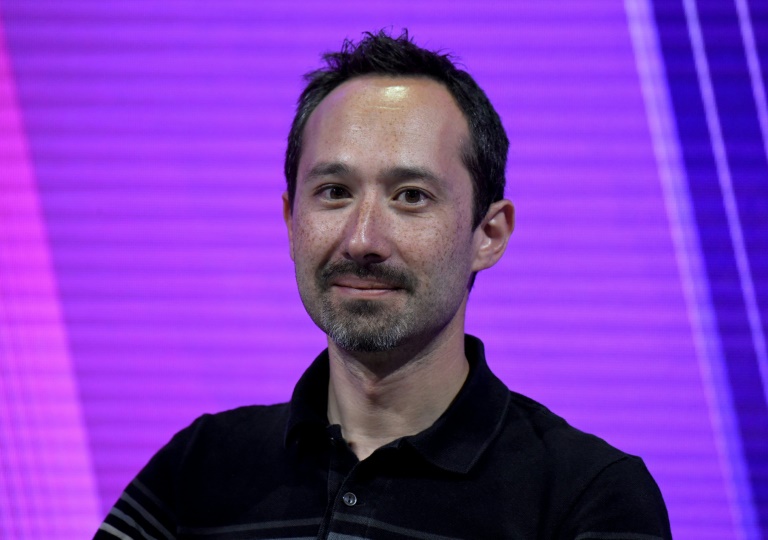
Big brands are rushing to the metaverse but the path to profit is still unclear and mass adoption may be years away, one of the sector’s biggest players, Sebastien Borget, told AFP in an interview.

Borget is co-founder of The Sandbox, a platform that began life as a game for mobile phones and PCs but is transforming itself into a virtual world where anyone can buy land in the form of digital tokens.

Fashion brands like Gucci and Adidas, financial firms Axa and HSBC, and Warner Music are among those who have already chosen to set up shop in The Sandbox.

“Above all, it is a place for creativity and experience,” said Frenchman Borget, distancing himself from the idea that it is simply a commercial venture.

“Brands don’t go there to monetise, we don’t know how to do that.”

Enthusiasts are convinced that internet users in the near future will shop, mingle with friends or go to concerts in platforms like The Sandbox or its main competitor Decentraland.

Users will strap on virtual reality headsets, buy and sell in cryptocurrencies and have all their transactions stored on the blockchain — a kind of digital ledger.

At least that is the theory.

– Digital owners –

The Sandbox is still largely a quest game where players hop through landscapes illustrated in block graphics, collecting treasures and vanquishing enemies.

Players are also encouraged to build their own worlds and invent games.

The metaverse version — where players largely do the same thing but can earn cryptocurrency rewards and buy extra kit for their avatars — has only opened to the public for special events.

Some 350,000 people visited during its last opening in March, said Borget, far short of his aim to attract “hundreds of millions”. 

“We hope to achieve this within five to 10 years,” he said.

But there is still plenty of public scepticism about the metaverse and the wider web3 phenomenon — an idea for a blockchain-based internet centred on individuals rather than big social media platforms.

Cryptocurrency trading underpins the commercial side of web3, but the main coins are wildly unstable and transactions can suck up a huge amount of energy.

The crypto ecosystem is largely unregulated, has gaping security flaws and little in the way of insurance, leaving users open to fraud and scams.

But Borget is confident that the offer of a space for individuals to socialise, trade, play — and crucially own their digital footprint — will win out.

“For the first time, users have ownership of their digital content,” he said. 

“The avatar, the wearables, the equipment, the land, the houses… everything belongs to them. They can dispose of it as they want.”

– Early adopters –

Despite his focus on the social and creative aspects, The Sandbox has a clear commercial motive.

It takes five percent commissions on all transactions as well as pocketing profit from the sale of virtual land. Its revenue was $200 million last year.

Plenty of major companies have jumped in, Borget highlighting that The Sandbox has only 166,464 plots of virtual land on offer.

“This map has a finite number of plots, which is not the case for all decentralised virtual worlds,” said Borget. 

“We have sold 70 percent of them so far.”

The firm’s sales of virtual land topped $500 million last year and Borget claimed his metaverse had 64 percent market share.

But Borget said brands were still searching for the best way to develop their virtual shops and offices.

“Brands were slow to embrace the web,” he said. 

“With web3 they are trying to get in a little earlier so as not to repeat their past mistakes.”

Horseshoe crabs: 'Living fossils' vital for vaccine safety

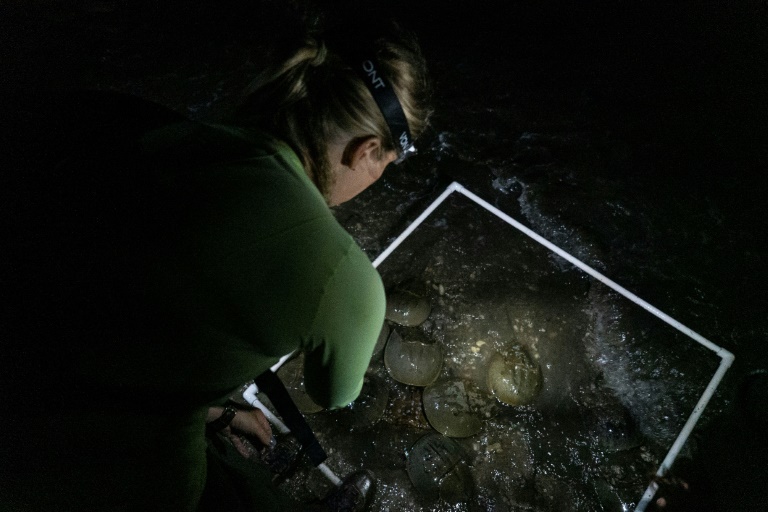
On a bright moonlit night, a team of scientists and volunteers head out to a protected beach along the Delaware Bay to survey horseshoe crabs that spawn in their millions along the US East Coast from late spring to early summer.

The group make their way up the shoreline laying a measuring frame on the sand, counting the individuals inside it to help generate a population estimate, and setting right those unfortunate enough to have been flipped onto their backs by the high tide.

With their helmet-like shells, tails that resemble spikes and five pairs of legs connected to their mouths, horseshoe crabs, or Limulidae, aren’t immediately endearing.

But if you’ve ever had a vaccine in your life, you have these weird sea animals to thank: their bright blue blood, which clots in the presence of harmful bacterial components called endotoxins, has been essential for testing the safety of biomedical products since the 1970s, when it replaced rabbit testing.

“They’re really easy to love, once you understand them,” Laurel Sullivan, who works for the state government to educate members of the public about the invertebrates, tells AFP.

“They’re not threatening at all. They’re just going about their day, trying to make more horseshoe crabs.”

For 450 million years, these otherworldly creatures have patrolled the planet’s oceans, while dinosaurs arose and went extinct, and early fish transitioned to the land animals that would eventually give rise to humans.

Now, though, the “living fossils” are listed as vulnerable in America and endangered in Asia, as a result of habitat loss and overharvesting for use in food, bait, and the pharmaceutical industry, which is on a major growth path, especially in the wake of the Covid pandemic.

Recruiting citizen scientists helps engage the public while also scaling up the government’s data collection efforts, explains the survey project’s environment scientist Taylor Beck.

– Vital ecological role- 

“Crabs” are something of a misnomer for the animals, which are in fact more closely related to spiders and scorpions, and are made up of four subspecies: one that inhabits the Eastern and Gulf coasts of North America, and the other three in Southeast Asia.

Atlantic horseshoe crabs have 10 eyes and feed by crushing up food, such as worms and clams, between their legs then passing the food to their mouths.

Males are noticeably smaller than females, whom they swarm in groups of up to 15 when breeding. Males grasp females as they head to shore, where the females deposit golf ball-size clusters of 5,000 eggs for the males to spray their sperm on.

Millions of these eggs, tiny green balls, are inadvertently churned up onto the beach surface, where they are a vital food source for migrating shorebirds, including the near-threatened Red Knot.

Nivette Perez-Perez, manager of community science at the Delaware Center for the Inland Bays, points out a vast band of eggs that stretch nearly the whole beach at the James Farm Ecological Preserve.

As she gestures, aptly-named laughing gulls with bright orange beaks swoop down to feast. 

Like others in the area, Perez-Perez long ago succumbed to the crabs’ charms. 

“You’re so cute,” she tells a female she has picked up to point out its anatomical features.

– Just flip ’em –


Breeding is a dangerous business for horseshoe crabs as it’s on the beach that they are at their most vulnerable: as the tide washes in, some end up on their backs, and while their long hard tails can help some right themselves, not all are so lucky. 

Around 10 percent of the population is lost each year  as their exposed undersides bake in the Sun.

In 1998, Glenn Gauvry, founder of the Ecological Research & Development Group, helped start the “Just flip ’em” campaign, encouraging members of the public to do their part by gently picking up upturned crabs that are still alive.

“Where it matters most of all, is changing the heart,” he tells AFP on Delaware Bay’s Pickering Beach, proudly sporting a “Just flip ’em” baseball cap festooned with horseshoe crab pins.

“If we can’t get people to care and to connect to these animals, then they’re less likely to want legislation to protect them.”

Every year around 500,000 horseshoe crabs are harvested and bled for a chemical called Limulus Amebocyte Lysate, vital for testing against a type of bacteria that can contaminate medications, needles and devices like hip replacements.

Estimates place the mortality rate of the process at 15 percent, with survivors released back to sea.

A new synthetic alternative called recombinant factor C appears promising, but faces regulatory challenges. 

Horseshoe crabs are a “finite source with a potentially infinite demand, and those two things are mutually exclusive,” Allen Burgenson, of Swiss biotech Lonza, which makes the new test, told AFP.  

Crypto lending world sways under risk and turmoil

Starting with the lofty goal of competing with traditional banks, cryptocurrency lending giants and their clients now face financial ruin due to their appetite for risk and a paucity of regulatory guardrails.

Celsius Network, which suspended withdrawals in mid-June, had advertised a seemingly difficult-to-reconcile mix of interest rates, charging just 0.1 percent for loans, but paying more than 18 percent on deposits.  

Weeks later, savings accounts, that amounted to $11.8 billion in mid-May, remained frozen.

“Celsius is going bankrupt one way or another,” said Omid Malekan, a professor at Columbia University. “Even if they recoup 98 cents on the dollar for their depositors, no one would ever want to use it.” 

Since then, other operators have faced a similar fate, from CoinFlex to Babel Finance, which also tried their hand at lending and had to freeze withdrawals, while Voyager Digital had to limit them.

These platforms allowed clients to deposit cryptocurrencies, and either receive interest or borrow digital money by using their savings as collateral. 

“It’s a real shame things got to this point,” said one Celsius user contacted on the Reddit platform, who claimed to have over $350,000 tied up on with the lender.

“Clearly Celsius should have planned for this kind of scenario,” the user added, speaking on condition of anonymity.

The devastating sequence started with the sharp decline of cryptocurrencies, including bitcoin which lost nearly 60 percent of its value in the past six months.

The plummeting value — which dropped as global inflation accelerated and Russia’s invasion of Ukraine rattled the world economy — led to a chain reaction and forced borrowers to provide new financial guarantees or immediately repay loans.

Some borrowers, such as the Singaporean investment firm Three Arrows Capital which is now in liquidation, could not provide the creditors enough cash to cover withdrawals and froze client accounts.

“The majority of these companies had provided uncollateralized or undercollateralized loans,” said Antoni Trenchev, co-founder of Nexo, another crypto platform that he said avoided trouble by following a stricter lending policy and “prudent risk management.” 

Unlike banks, these lenders were not required to hold cash in reserve against bad loans.

– ‘Deep need for regulation’ –

A handful US states have opened or expanded investigations into Celsius, and some, including Alabama, last year ordered the platform to stop lending to their residents.

“I do expect there to be a very strong crackdown across the board,” Malekan said. “There’s a lot of fodder there for governments to go after.”

Despite the turbulence, most observers expect cryptocurrencies to recover from the current lending trouble and don’t believe this spells an end for loans in the sector. 

“It’s not the worst crisis crypto has had,” said Charles Jansen at S&P Global Ratings. 

Malekan said the situation offers an opportunity to weed out weaker firms.

“During a bear market, you learn which were the projects that have a core value proposition and solve an actual problem, versus which are the ones that were just a pipe dream.”

Some, like Trenchev, expect a major consolidation in the sector with healthy operators gobbling up those that are struggling.

The episode also has raised awareness of the risks of a lack of government oversight. 

“There is a deep need for regulation, which is something that everybody in the field agrees on,” said Jansen, whose company is vying to be recognized as risk assessor in the crypto world.

In the absence of a specific regulatory framework market watchdog, the Securities and Exchange Commission, has been taking the lead but largely with punitive steps.

Several bills have been introduced in the US Congress in recent months that aim to address the need for closer oversight, but a bipartisan Senate proposal from Republican Cynthia Lummis and Democrat Kirsten Gillibrand has been gaining momentum. 

The bill has been well received by the crypto community, especially because it empowers the sector’s preferred regulator, the Commodity Futures Trading Commission, over the SEC. 

Some critics see the proposal as too accommodating. 

“It’s bipartisan in the sense that senators from different parties are giving the crypto industry pretty much what it wants,” tweeted Hilary Allen, a professor at American University’s Washington College of Law. 

“It gives most jurisdiction over crypto assets to the CFTC, which has no investor protection mandate and far fewer resources than the SEC,” she added. 

Asian markets drop with traders gripped by recession fear

Asian markets struggled again Friday following another selloff on Wall Street fuelled by recession fears, with warnings of a bleak outlook for the global economy as central banks slam on the brakes to battle soaring inflation.

Data showing US consumers — the backbone of the world’s top economy — were growing increasingly reticent about spending dealt a fresh blow to equities Thursday, with the S&P 500 suffering its worst January-June since 1970.

With the war in Ukraine showing no sign of ending — keeping energy costs elevated — there is an expectation that borrowing costs will continue to rise and send economies into recession.

“If anyone thinks that equities can rally into the back of the year, they are making the assumption that the Fed is going to let go of its entire focus on price stability and step back from that,” Seema Shah, at Principal Global Investors, told Bloomberg Television.

“We have a very different view. We think things are going to get pretty tough.”

After a broad retreat on Thursday in Asia, markets battled to recover but with little conviction.

Tokyo, Shanghai, Seoul, Sydney, Mumbai, Singapore, Jakarta and Wellington all fell, though there were small gains in Bangkok.

Taipei shed more than three percent to fall into a bear market — a 20 percent drop from its recent peak.

Hong Kong was closed for a holiday.

London, Paris and Frankfurt extended losses at the open.

Losses across world markets this week come after a rally last week fuelled by hopes that an economic slowdown or signs of recession would lead central banks to ease off their monetary tightening drive.

But comments from top finance chiefs, including Federal Reserve boss Jerome Powell, suggest they are willing to endure the pain of a contraction as long as they can rein in prices — which are rising at their fastest pace in 40 years.

“With central banks shifting towards accepting that monetary tightening is impossible without some economic damage, the market narrative has swung 180 degrees this week,” said SPI Asset Management’s Stephen Innes.

He added that sharp rate hikes by the Fed and other central banks were being front-loaded in the hope inflation will ease earlier and allow them to cut borrowing costs more quickly.

“The hope is that by the November midterm elections, when the economy has chilled enough, it will be possible to pause or at least significantly slow further hikes to allow investors to enjoy a Santa Claus rally; otherwise, it could be a winter of discontent,” Innes said.

But markets strategist Louis Navellier suggested that the economy was not in as bad a shape as feared.

“The amazing thing is that we are not in an ‘earnings recession’ and the analyst community remains largely positive,” he said in a note.

“Frankly, the analyst community is smarter than the macro strategists that keep calling for a recession. The bottom line is fear sells, so negative news continues to overpower positive analyst comments.”

Oil prices fell, putting the commodity on course for a third successive week of losses owing to concerns that a recession will hit demand.

That has overshadowed a tight market caused by sanctions on Russia over its Ukraine invasion and an expected jump in demand from China as it emerges from its Covid lockdowns.

Innes added: “With energy bulls having a good run this year, investors seem more inclined to take money off the table in the face of growing uncertainty as the energy crisis moves onto the global recession phase.

“As the adage goes, the best cure for high prices is high prices.”

The grim economic outlook also weighed on Bitcoin, which was struggling below $20,000, having fallen as low as $18,632 earlier.

– Key figures at around 0720 GMT –

Tokyo – Nikkei 225: DOWN 1.7 percent at 25,935.62 (close)

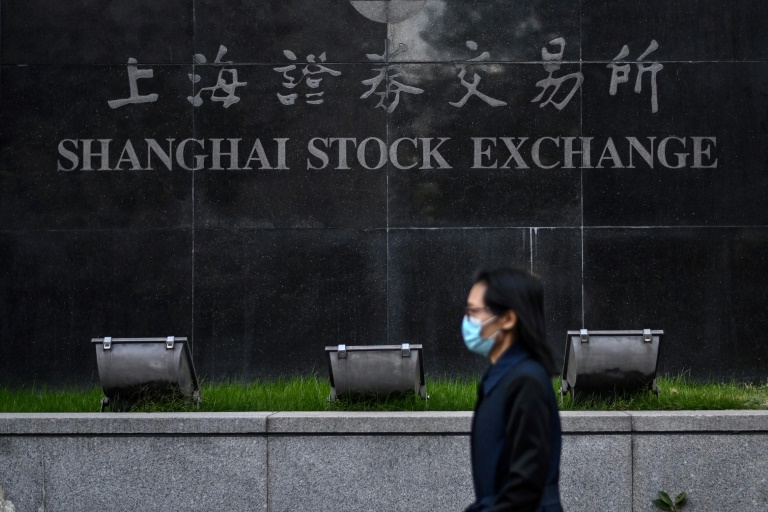
Shanghai – Composite: DOWN 0.3 percent at 3,387.64 (close)

London – FTSE 100: DOWN 0.8 percent at 7,112.31

Hong Kong – Hang Seng Index: Closed for a holiday

West Texas Intermediate: DOWN 0.6 percent at $105.16 per barrel

Brent North Sea crude: DOWN 0.4 percent at $108.59 per barrel

Dollar/yen: DOWN at 134.85 yen from 135.75 yen Thursday

Euro/dollar: DOWN at $1.0453 from $1.0487 

Pound/dollar: DOWN at $1.2115 from $1.2177

Euro/pound: UP at 86.25 pence from 86.08 pence

New York – Dow: DOWN 0.8 percent at 30,775.43 (close)

Bankrupt Sri Lanka's inflation jumps beyond 50%

Sri Lanka’s inflation hit a ninth consecutive record in June, official data showed Friday, rising to 54.6 percent a day after the IMF asked the bankrupt nation to rein in galloping prices and corruption.

It was the first time the increase in the Colombo Consumer Price Index (CCPI) crossed the psychologically important 50 percent mark, according to the department of census and statistics.

The figures came hours after the International Monetary Fund urged Sri Lanka to contain spiralling inflation and address corruption as part of efforts to salvage the troubled economy, which has been ravaged by a foreign exchange crisis.

The IMF ended 10 days of in-person discussions with Sri Lankan authorities in Colombo on Thursday following the country’s request for a possible bailout.

The CCPI has been setting new monthly highs since October, when year-on-year inflation stood at just 7.6 percent. In May it reached 39.1 percent.

The rupee has lost more than half its value against the US dollar this year.

Private economists say consumer prices are rising even faster than shown in official statistics.

According to an economist at Johns Hopkins university, Steve Hanke, who tracks price increases in the world’s troublespots, Sri Lanka’s current inflation is 128 percent, second only to Zimbabwe’s 365 percent.

Faced with an acute energy shortage, Sri Lanka is observing a shutdown of non-essential state institutions for two weeks, along with the closure of schools to reduce commuting.

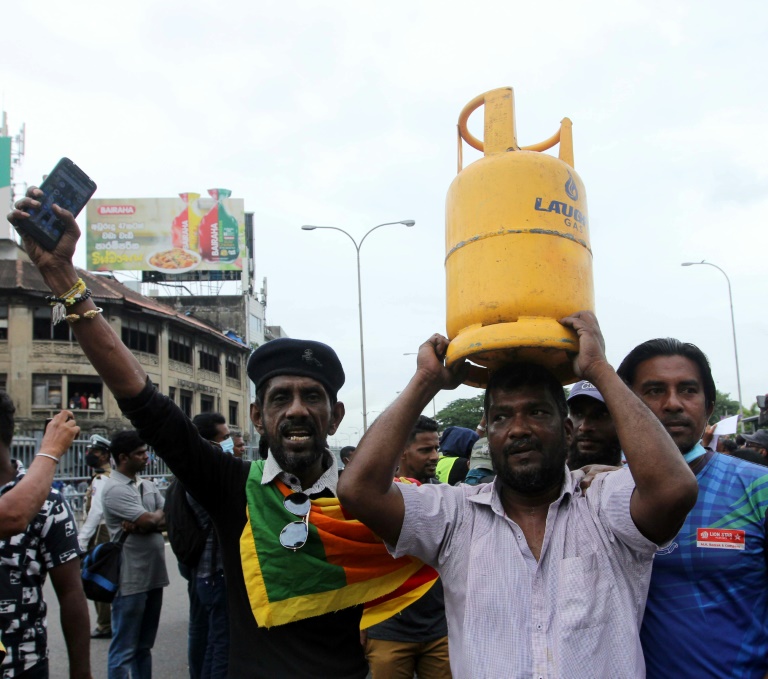
The country’s 22 million people have been enduring acute shortages of essentials — including food, fuel and medicines — for months.

Protests are continuing outside President Gotabaya Rajapaksa’s office demanding his resignation over the unprecedented economic turmoil and his mismanagement.

Sri Lanka went to the IMF in April after the country defaulted on its $51 billion external debt.

World Bank creates fund to better prevent, respond to pandemics

The World Bank’s board on Thursday approved creation of a fund meant to finance investments in strengthening the fight against pandemics.

The fund will support prevention, preparedness and response (PPR), with a focus on low- and middle-income countries, the bank said in a statement.

“The devastating human, economic, and social cost of Covid-19 has highlighted the urgent need for coordinated action to build stronger health systems and mobilize additional resources,” it said.

The World Bank added that the fund, which it aims to open later this year, was developed under the leadership of the United States, Italy and Indonesia as part of their G20 presidencies, and with broad support from the G20.

It will be used in a number of areas, including disease surveillance, with more than $1 billion in commitments already announced.

“The World Bank is the largest provider of financing for PPR with active operations in over 100 developing countries to strengthen their health systems,” World Bank President David Malpass said in the statement.

The so-called financial intermediary fund (FIF) will provide financing to “complement the work of existing institutions in supporting low- and middle-income countries and regions to prepare for the next pandemic,” the World Bank said.

The World Health Organization is a stakeholder in the project and will provide technical expertise, its president Tedros Adhanom Ghebreyesus said.

US President Joe Biden said more than 1 million Americans and millions of people around the world have lost their lives to Covid-19, underscoring the importance of boosting investment in pandemic preparedness.

“When it comes to preparing for the next pandemic, the cost of inaction is greater than the cost of action,” Biden said in a statement late Thursday. “Investing in preparedness now is the right thing and the smart thing to do.”

In a separate statement earlier in the day, US Treasury Secretary Janet Yellen called the fund “a major achievement that will help low- and middle-income countries be better prepared for the next pandemic.”

“Even as we continue to work to end Covid-19, today’s decision by World Bank shareholders will help bolster capacity to prevent, detect, and respond to future pandemics,” she said.

A spokesperson for the World Bank told AFP that if the Covid-19 pandemic is still ongoing when the fund is implemented, it could be used to provide support against the current as well as future pandemics.

Close Bitnami banner
Bitnami