US Business

NYPD unit that inspired 'Law & Order: SVU' faces gender bias probe

The US Justice Department will investigate the New York police agency that inspired the hit TV show “Law & Order: Special Victims Unit,” over its treatment of sexual assault victims.

Two federal prosecutors in New York announced Thursday in a joint statement that the Special Victims Department (SVD) would be investigated to determine whether it “engages in a pattern or practice of gender-biased policing.”

Allegations against the agency “include failing to conduct basic investigative steps and instead shaming and abusing survivors and re-traumatizing them during investigations,” the statement said.

“Victims of sex crimes deserve the same rigorous and unbiased investigations of their cases that the NYPD affords to other categories of crime,” Damian Williams, the US attorney for the Southern District of New York, said in the statement.

His Eastern District counterpart Breon Peace added that in recent months “we have learned concerning information from a variety of sources of historical issues about the way the Special Victims Division has conducted its investigations for many years.”

The Justice Department said it plans to conduct a comprehensive review of the SVD’s policies, procedures, and training for investigations of sexual assault crimes.

New York Mayor Eric Adams, who is the city’s former police chief, as well as the current chief Keechant Sewell said they will cooperate with the probe.

The NYPD is the largest municipal police force in the United States with some 36,000 uniformed officers and 19,000 administrative employees.

“Law & Order: Special Victims Unit” is part of the wildly popular “Law & Order” TV franchise, and has been on air on NBC since 1999. 

With no fewer than 23 seasons, it is the longest-running prime-time series in US TV history — and NBC said on Wednesday that season 24 will launch in September this year.

Ketanji Brown Jackson sworn in as first Black woman on US Supreme Court

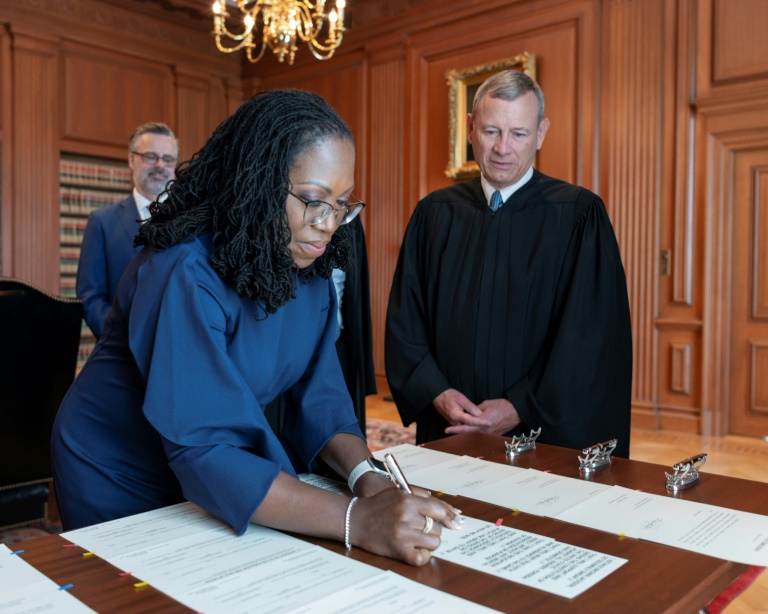
The United States made history on Thursday as Ketanji Brown Jackson was sworn in as the first Black woman to serve on the Supreme Court.

The 51-year-old’s appointment by Democratic President Joe Biden means white men are not in the majority on the nation’s highest court for the first time in 233 years.

While her confirmation is a milestone, it won’t change the 6-3 conservative majority on the court, which has come under fire for recent rulings broadening the right to bear arms, eviscerating abortion rights and limiting the government’s power to curb greenhouse gases.

Jackson’s “historic swearing in today represents a profound step forward for our nation, for all the young, Black girls who now see themselves reflected on our highest court, and for all of us as Americans,” Biden said in a statement Thursday.

“The Supreme Court just gained a colleague with a world-class intellect, the dignified temperament the American people expect of a justice, and the strongest credentials imaginable,” he said.

“Amid this court’s cruel assault on Americans’ health, freedom and security, she will be a much needed force for equal justice for all,” Nancy Pelosi, the top Democrat in Congress, said in a statement.

Jackson spoke only to say her oaths during Thursday’s brief ceremony.

She had picked up support from three Senate Republicans during a grueling and at times brutal confirmation process, delivering Biden a bipartisan 53-47 approval for his first Supreme Court nominee.

Jackson’s swearing-in marks a major moment for Biden, who chaired the Senate Judiciary Committee in the 1980s and ’90s, meaning he has the unprecedented distinction of both naming and overseeing the appointment of a Supreme Court justice.

The appointment presents an opportunity for his administration to pivot from a spate of bad news in recent months, with Biden’s poll ratings still languishing below 40 percent amid runaway inflation ahead of midterm elections in November.

Crucially, it has allowed Biden to show the Black voters who rescued his floundering 2020 primary campaign that he can deliver for them.

At 42 days from nomination to confirmation, the process was among the shortest in history, although longer than it took to seat Donald Trump’s last court pick during his presidency, Amy Coney Barrett.

Biden also thanked the justice who Jackson replaced, Steven Breyer, for his years on the court. 

“Justice Breyer’s integrity and his commitment to ensuring our nation’s laws worked for the people have made him beloved by his colleagues and deeply respected across our country. I thank him again for his many years of exemplary service,” Biden said in the statement released by the White House. 

As the final word on all civil and criminal legal disputes, as well as guardian and interpreter of the Constitution, the Supreme Court seeks to ensure equal justice under the law.

Four of the justices on the nine-member court are now women, making it the most diverse bench in history — although they all attended the elite law schools of Harvard or Yale.

Stocks and oil sink on recession fears

World stock markets mostly sank Thursday on intensifying recession fears, while oil prices receded after an OPEC decision to proceed with a limited boost to output.

London ended the day down two percent, with both Frankfurt and Paris close behind.

That followed a largely downbeat performance in Asia, although Shanghai rose after data showed a forecast-beating improvement in China’s services sector on easing Covid restrictions.

Later on, Wall Street joined the sell-off, with major indices falling around one percent, concluding the S&P 500’s worst first six months of a year since 1970.

Crude futures slumped as major oil producers led by Saudi Arabia and Russia kept to a decision on a limited boost to output despite the risk that high oil prices may help push the global economy into recession.

– ‘Terrible mood’ –

“Stock markets have fallen heavily in June so it seems only fitting that they’re ending the month with big losses as reality continues to bite,” said Craig Erlam, senior market analyst at trading platform OANDA.

Stock markets are “in a terrible mood across Europe,” said AJ Bell investment director Russ Mould.

“There really is a lack of good news for investors to cling onto, and the near-term outlook looks bleak.”

The threat of an extended period of elevated inflation and painful interest rate hikes has left traders fretting over the threat of a prolonged economic downturn, while the Ukraine war continues to sow uncertainty.

The surge in inflation to multi-decade highs has forced central banks to swiftly raise interest rates, dealing a hefty blow to equities as companies faces higher borrowing costs.

Sweden’s central bank on Thursday announced its biggest hike in 22 years, raising its main rate by 50 basis points to 0.75 percent.

There had been hope that policymakers would ease off their hikes as economies show signs of slowing, but analysts say some officials are less concerned about a recession than letting prices run out of control.

US data released Thursday showed that a key annual inflation measure held steady at 6.3 percent in May, but spending rose just 0.2 percent in May, less than half the increase in April and part of a steady downward drift as consumers pull back amid surging prices.

But when inflation is taken into account, the data show a decline in real consumer spending, analysts said.

Two weeks ago, the Federal Reserve enacted a supersized three-quarters of a point interest rate hike, the biggest increase in nearly 30 years. Markets are weighing whether to expect the same thing in July.

“Inflation came in a little bit better than expected today but probably not good enough to prevent the Federal Reserve to raise interest rates 75 basis at the next meeting,” said Tom Cahill of Ventura Wealth Management. 

“At the same time we had the personal spending coming in negative for the month in real terms,” Cahill said. “People are starting to get the sense that perhaps the Federal Reserve is going to push the economy into recession.”

– Key figures at around 2050 GMT –

New York – Dow: DOWN 0.8 percent at 30,775.43 (close)

New York – S&P 500: DOWN 0.9 percent at 11,028.74 (close)

New York – Nasdaq: DOWN 1.3 percent at 11,028.74 (close)

London – FTSE 100: DOWN 2.0 percent at 7,169.28 (close) 

Frankfurt – DAX: DOWN 1.7 percent at 12,783.77 (close)

Paris – CAC 40: DOWN 1.8 percent at 5,922.86 (close)

EURO STOXX 50: DOWN 1.7 percent at 3,443.86 (close)

Tokyo – Nikkei 225: DOWN 1.5 percent at 26,393.04 (close)

Hong Kong – Hang Seng Index: DOWN 0.6 percent at 21,859.79 (close)

Shanghai – Composite: UP 1.1 percent at 3,398.62 (close)

Brent North Sea crude: DOWN 1.5 percent at $116.26 per barrel

West Texas Intermediate: DOWN 1.8 percent at $109.78 per barrel

Euro/dollar: DOWN at $1.0487 from $1.0442 Wednesday

Pound/dollar: UP at $1.2177 from $1.2124

Euro/pound: DOWN at 86.08 pence from 86.12 pence

Dollar/yen: DOWN at 135.75 yen from 136.59 yen

burs-jmb/st

US Supreme Court limits government powers to curb greenhouse gases

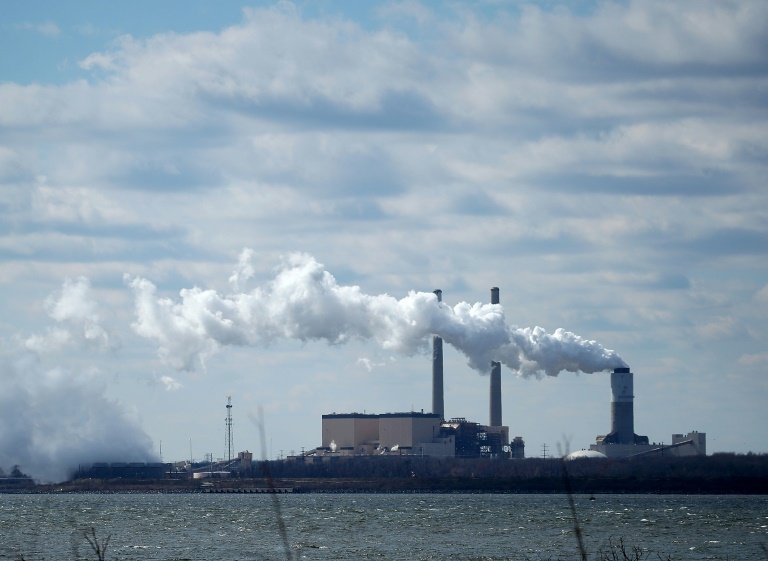
The US Supreme Court ruled Thursday that the government’s key environmental agency cannot issue broad limits on greenhouse gases, sharply curtailing the power of President Joe Biden’s administration to battle climate change.

By a majority of 6-3, the high court found that the Environmental Protection Agency did not have the power to set sweeping caps on emissions from coal-fired power plants, which produce nearly 20 percent of the electricity consumed in the United States.

The decision sets back Biden’s hopes of using the EPA to bring down emissions to meet global climate goals, set in 2015 under the Paris Agreement on climate change.

It was a significant victory for the coal mining and coal power industry, which was targeted that same year for tough limits by the administration of then-president Barack Obama in an effort to slash carbon pollution.

It also marked a victory for conservatives fighting government regulation of industry, with the court’s majority including three right-wing justices named by former president Donald Trump, who had sought to weaken the EPA.

Biden called it “another devastating decision that aims to take our country backwards.”

“We cannot and will not ignore the danger to public health and existential threat the climate crisis poses.”

Stephane Dujarric, spokesman for UN Secretary General Antonio Guterres, said it was “a setback in our fight against climate change.”

– Caps ‘may be sensible but …’ –

In the case pitting West Virginia and other coal-mining states against the government, the court said that while EPA had the power to regulate individual plants, Congress had not given it such expansive powers to set limits covering all electricity generating units.

The majority justices said they recognized that putting caps on carbon dioxide emissions to move away from coal power “may be a sensible solution” to global warming.

But they said the case involved a “major question” of US governance with broad consequences, and that the EPA would have to be specifically delegated such powers by the legislature.

The three-member liberal minority of the court castigated the majority for overruling powers they said EPA did in fact have to address “the most pressing environmental challenge of our time.” 

“The stakes here are high,” Justice Elena Kagan wrote. “Whatever else this court may know about, it does not have a clue about how to address climate change.”

– Excessive regulation –

Conservatives applauded the decision as a strike against overregulation.

“The Court has undone illegal regulations issued by the EPA without any clear congressional authorization and confirmed that only the people’s representatives in Congress —  not unelected, unaccountable bureaucrats — may write our nation’s laws,” wrote Senate Republican leader Mitch McConnell, who represents Kentucky, a state with a significant coal mining industry.

Michelle Bloodworth, president of America’s Power, a coal industry lobby, cheered  the ruling.

“We are pleased the court agreed with us that EPA does not have unlimited authority to do anything it wants to do,” she said in a statement.

“Coal-fired power plants provide affordable and reliable electricity,” she added.

But House Democratic leader Nancy Pelosi called it a “radical” decision by “pro-pollution justices.”

“By restricting the EPA’s authority, the Republican supermajority on the court has bowed to the dirty energy special interests who seek to poison the air our children breathe and the water they drink with impunity,” she said in a statement.

Environmental groups called on the Democratic-controlled Congress to take more action on climate change, with more investments in things like clean energy and public transit. 

“This means Congress has an even stronger imperative to act boldly — and fast,” the Sierra Club said.

– Court conservatives show muscle – 

Thursday’s decision capped a term for the court in which the new conservative majority flexed its muscles in ways that will have profound effects on American society.

Two similar 6-3 decisions last week shook the country. One expanded the rights of gun owners to wear their guns wherever they go, with few limitations.

The second ended a half-century-old constitutional right to abortion, setting off a chain reaction in which more than half of the 50 states are moving to ban or severely restrict the practice.

The EPA ruling, too, could have profound impacts. 

Conservative Justice Neil Gorsuch wrote separately that the decision was a statement that no government agency can make policies with far-reaching effect without express empowerment by Congress.

“When an agency claims the power to regulate vast swaths of American life, it not only risks intruding on Congress’s power, it also risks intruding on powers reserved to the States,” Gorsuch wrote.

But critics said that ignores the deep divisions in Congress that have stifled important policy debates.

“By insisting instead that an agency can promulgate an important and significant climate rule only by showing ‘clear congressional authorization’ at a time when the court knows that Congress is effectively dysfunctional, the court threatens to upend the national government’s ability to safeguard the public health and welfare,” said Richard Lazarus, a professor at Harvard law school.

US Supreme Court limits government powers to curb greenhouse gases

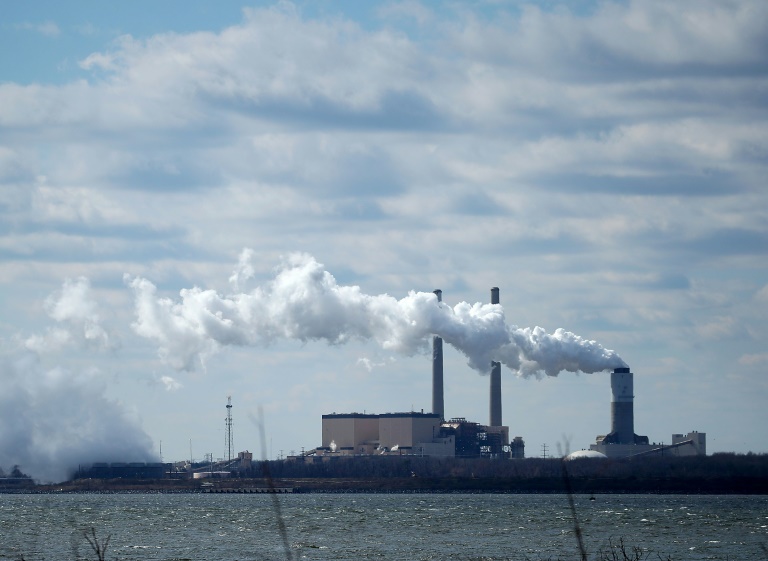
The US Supreme Court ruled Thursday that the government’s key environmental agency cannot issue broad limits on greenhouse gases, sharply curtailing the power of President Joe Biden’s administration to battle climate change.

By a majority of 6-3, the high court found that the Environmental Protection Agency did not have the power to set sweeping caps on emissions from coal-fired power plants, which produce nearly 20 percent of the electricity consumed in the United States.

The decision sets back Biden’s hopes of using the EPA to bring down emissions to meet global climate goals, set in 2015 under the Paris Agreement on climate change.

It was a significant victory for the coal mining and coal power industry, which was targeted that same year for tough limits by the administration of then-president Barack Obama in an effort to slash carbon pollution.

It also marked a victory for conservatives fighting government regulation of industry, with the court’s majority including three right-wing justices named by former president Donald Trump, who had sought to weaken the EPA.

Biden called it “another devastating decision that aims to take our country backwards.”

“We cannot and will not ignore the danger to public health and existential threat the climate crisis poses.”

Stephane Dujarric, spokesman for UN Secretary General Antonio Guterres, said it was “a setback in our fight against climate change.”

– Caps ‘may be sensible but …’ –

In the case pitting West Virginia and other coal-mining states against the government, the court said that while EPA had the power to regulate individual plants, Congress had not given it such expansive powers to set limits covering all electricity generating units.

The majority justices said they recognized that putting caps on carbon dioxide emissions to move away from coal power “may be a sensible solution” to global warming.

But they said the case involved a “major question” of US governance with broad consequences, and that the EPA would have to be specifically delegated such powers by the legislature.

The three-member liberal minority of the court castigated the majority for overruling powers they said EPA did in fact have to address “the most pressing environmental challenge of our time.” 

“The stakes here are high,” Justice Elena Kagan wrote. “Whatever else this court may know about, it does not have a clue about how to address climate change.”

– Excessive regulation –

Conservatives applauded the decision as a strike against overregulation.

“The Court has undone illegal regulations issued by the EPA without any clear congressional authorization and confirmed that only the people’s representatives in Congress —  not unelected, unaccountable bureaucrats — may write our nation’s laws,” wrote Senate Republican leader Mitch McConnell, who represents Kentucky, a state with a significant coal mining industry.

Michelle Bloodworth, president of America’s Power, a coal industry lobby, cheered  the ruling.

“We are pleased the court agreed with us that EPA does not have unlimited authority to do anything it wants to do,” she said in a statement.

“Coal-fired power plants provide affordable and reliable electricity,” she added.

But House Democratic leader Nancy Pelosi called it a “radical” decision by “pro-pollution justices.”

“By restricting the EPA’s authority, the Republican supermajority on the court has bowed to the dirty energy special interests who seek to poison the air our children breathe and the water they drink with impunity,” she said in a statement.

Environmental groups called on the Democratic-controlled Congress to take more action on climate change, with more investments in things like clean energy and public transit. 

“This means Congress has an even stronger imperative to act boldly — and fast,” the Sierra Club said.

– Court conservatives show muscle – 

Thursday’s decision capped a term for the court in which the new conservative majority flexed its muscles in ways that will have profound effects on American society.

Two similar 6-3 decisions last week shook the country. One expanded the rights of gun owners to wear their guns wherever they go, with few limitations.

The second ended a half-century-old constitutional right to abortion, setting off a chain reaction in which more than half of the 50 states are moving to ban or severely restrict the practice.

The EPA ruling, too, could have profound impacts. 

Conservative Justice Neil Gorsuch wrote separately that the decision was a statement that no government agency can make policies with far-reaching effect without express empowerment by Congress.

“When an agency claims the power to regulate vast swaths of American life, it not only risks intruding on Congress’s power, it also risks intruding on powers reserved to the States,” Gorsuch wrote.

But critics said that ignores the deep divisions in Congress that have stifled important policy debates.

“By insisting instead that an agency can promulgate an important and significant climate rule only by showing ‘clear congressional authorization’ at a time when the court knows that Congress is effectively dysfunctional, the court threatens to upend the national government’s ability to safeguard the public health and welfare,” said Richard Lazarus, a professor at Harvard law school.

The US Supreme Court: nine judges with strong convictions

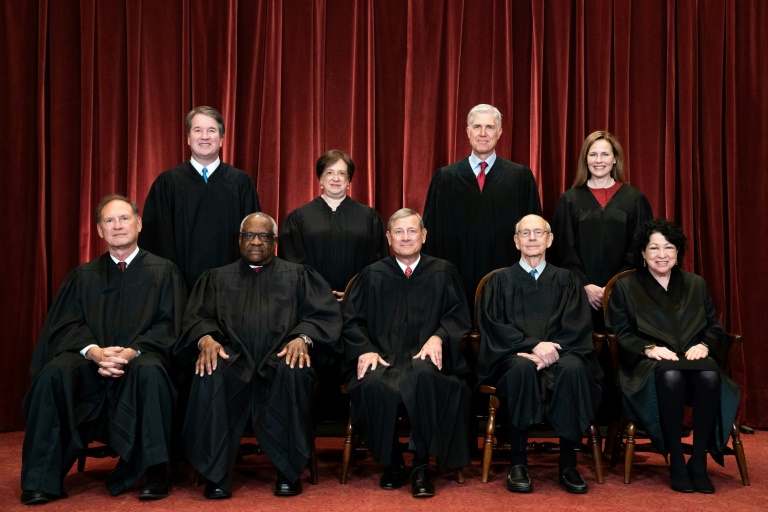
Behind the sharply crafted decisions of the US Supreme Court, which completed a tumultuous term on Thursday, are nine brilliant legal minds, each with strong convictions that can lead to decisions which profoundly shape American society.

Here is a look at the nine justices serving lifetime appointments on America’s highest court:

– Clarence Thomas: court’s conservative anchor – 

At 74, Clarence Thomas has for years been the court’s only African-American — he will be joined next term by Ketanji Brown Jackson. 

After 31 years, he is its longest serving member — and its most conservative.

Chosen for the court in 1991, he was confirmed despite explosive allegations made in televised hearings that he had sexually harassed a former assistant, Anita Hill. He stridently denied her charges, calling the experience a “high-tech lynching.”

For years, Thomas’s deep conservatism consigned him to the court’s minority. 

But he is enjoying a bit of a renaissance since former president Donald Trump named three more right-leaning justices.

Last week, Thomas demonstrated that feeling when he authored a major decision which said Americans had the right to carry guns outside of their homes, despite the public favoring more gun regulations.

He was also an anchor of the majority that ruled that the US constitution does not guarantee the right to abortion, setting off bans on the procedure in many states.

Even then, he went much further than his fellow conservative justices, saying he thought the court should review the rights to contraception or same-sex marriage.

US media have revealed his wife Ginni took part in Trump-led efforts to illegally overturn the results of the November 2020 election. 

Despite his wife’s involvement, Thomas did not recuse himself when Trump’s lawyers asked the Supreme Court  to shield Trump documents from investigation. Instead, Thomas was the sole justice to support the petition.

– Samuel Alito, abrasive conservative – 

Samuel Alito, 72 and on the court since 2006, is only slightly less conservative than Thomas, but is sharply acerbic in his views, both during hearings and in his written opinions.

In the court’s most earth-shattering ruling in June, Alito didn’t hedge his words, saying the 1973 Roe v. Wade decision that declared women had guaranteed rights to abortion was “egregiously wrong.”

The Roe decision — made of course by nine other Supreme Court justices — lacked “any grounding in the constitutional text, history, or precedent,” he said.

– Neil Gorsuch, iconoclast – 

As soon as he arrived at the White House in January 2017, Trump nominated Neil Gorsuch to the Supreme Court, praising his impeccable record as a conservative.

With his deep voice and neatly coiffed hair,  the 54-year-old has adhered to expectations, aligning with other conservatives, though with one notable exception: in 2020, he brought together the court’s liberals to defend LGBTQ people against workplace discrimination.

Contradicting his fellow conservatives, he said the 1964 Civil Rights Act, which outlawed discrimination based on race, religion, sex or national origin, also bans discrimination on the basis of sexual orientation.

Gorsuch has also sided with liberals in defending the rights of Native Americans under treaties signed with the US government that were later frequently ignored or violated.

– Brett Kavanaugh, Trump’s second pick –

Brett Kavanaugh, 57, is the second justice named by Trump.

He entered the court in 2018 tainted by accusations that he committed sexual assault as a young man — claims he vigorously denied during his confirmation hearings, but which have followed him in his first years on the bench.

He has generally sided with the conservative bloc on rulings, but frequently adds his own arguments and interpretation to add legal nuances.

– Amy Coney Barrett, face of the religious right –

The death of liberal feminist champion Ruth Bader Ginsburg opened the door for Trump to appoint a third justice, and he chose another woman. 

But Amy Coney Barrett hews to the right as much as Ginsburg did left, and solidified the conservatives’ 6-3 majority on the court.

The fervent Catholic, 50, is the mother of seven children and brings a commitment to both the legal views of American religious conservatives and the “power of prayer.”

– John Roberts, chief justice outflanked –


John Roberts, 67,  is chief justice of the court, a position that should allow him to set its direction by arbitrating any deep divides among justices to avoid sharp turns in jurisprudence.

But now that the conservative wing dominates the court even without his support, his power has been neutralized.

A modest Catholic conservative who opposed gay marriage, Roberts has tried to engineer a balancing act, siding several times in key cases with the three liberal justices.

But, as the decision to overturn abortion rights showed, the five others can now ignore the less radical path he often offers.

– Powerless: the three liberals –

The court’s liberal wing has been led by the oldest justice, Stephen Breyer, 83, a bespectacled progressive who has shown little patience for right-wing politics entering legal debates.

Breyer retired on Thursday as the current session ended, and his successor, the 51-year-old Jackson, was sworn in as the first-ever Black female justice.

With her arrival, the court’s liberal wing will be all-female: Jackson, Elena Kagan, 62, and Sonia Sotomayor, 68, herself the first Hispanic woman on the court.

Given Roberts’ inability to tame the conservatives, their voices are likely to go unheard in the most divisive cases in the coming years.


Ketanji Brown Jackson sworn in as first Black woman on US Supreme Court

The United States made history on Thursday as Ketanji Brown Jackson was sworn in as the first Black woman to serve on the Supreme Court.

The 51-year-old’s appointment by Democratic President Joe Biden means white men are not in the majority on the nation’s highest court for the first time in 233 years.

While her confirmation is a milestone, it won’t change the 6-3 conservative majority on the court, which has come under fire for recent rulings broadening the right to bear arms, eviscerating abortion rights and limiting the government’s power to curb greenhouse gases.

“As Justice Ketanji Brown Jackson takes her seat on the Supreme Court, our nation takes an historic step toward realizing our highest ideals,” Nancy Pelosi, the top Democrat in Congress, said in a statement.

“Amid this court’s cruel assault on Americans’ health, freedom and security, she will be a much needed force for equal justice for all.”

Jackson spoke only to say her oaths during Thursday’s brief ceremony.

She had picked up support from three Senate Republicans during a grueling and at times brutal confirmation process, delivering Biden a bipartisan 53-47 approval for his first Supreme Court nominee.

Jackson’s swearing-in marks a major moment for Biden, who chaired the Senate Judiciary Committee in the 1980s and 90s, meaning he has the unprecedented distinction of both naming and overseeing the appointment of a Supreme Court justice.

The appointment presents an opportunity for his administration to pivot from a spate of bad news in recent months, with Biden’s poll ratings still languishing below 40 percent amid runaway inflation ahead of midterm elections in November.

Crucially, it has allowed Biden to show the Black voters who rescued his floundering 2020 primary campaign that he can deliver for them.

At 42 days, the confirmation was among the shortest in history, although longer than it took to seat Donald Trump’s last court pick during his presidency, Amy Coney Barrett.

As the final word on all civil and criminal legal disputes, as well as guardian and interpreter of the Constitution, the Supreme Court seeks to ensure equal justice under the law.

Four of the justices on the nine-member court are now women, making it the most diverse bench in history — although they all attended the elite law schools of Harvard or Yale.

Washington blocks more than $1 bn in Russian oligarch's US assets

The United States on Thursday blocked a US-based company worth more than $1 billion linked to Russian oligarch Suleiman Kerimov, saying the ally of President Vladimir Putin used it to funnel and invest shadowy funds.

The Treasury Department said that Kerimov, a billionaire active in Russian politics, secretly managed the Delaware-based Heritage Trust which put its money into a number of large public companies.

Heritage Trust, set up in 2017, brought money into the United States through shell companies and under-the-radar foundations established in Europe, Treasury Department officials said. 

Treasury Secretary Janet Yellen vowed that the United States would keep taking action “even as Russian elites hide behind proxies and complex legal arrangements.” 

The United States will “actively implement the multilaterally coordinated sanctions imposed on those who fund and benefit from Russia’s war against Ukraine,” she said in a statement. 

The action comes weeks after Fiji handed to the United States a $300 million superyacht linked to Kerimov, who has been under US sanctions since 2018 over alleged money laundering and his role in the Russian government. 

The United States and European nations have stepped up a crackdown on Russian oligarchs following Putin’s February 24 invasion of Ukraine, which triggered a slew of Western sanctions. 

Kerimov, originally from the Russian republic of Dagestan in the Caucasus, rose to become one of the world’s richest people after the fall of the Soviet Union. 

His family controls major gold producer Polyus. The Group of Seven industrial democracies on Sunday agreed on a ban on gold exports from Russia. 

The Bloomberg Billionaires Index, in newly updated figures, ranked him as the world’s 127th richest person with a worth of $13.3 billion.

Kerimov triggered an international incident in 2017 when he was arrested by French authorities upon flying to Nice, over allegations of tax fraud and the suspicious purchases of five luxury villas. 

Russia summoned a French envoy to protest and the charges were eventually dismissed but French prosecutors reopened an investigation in 2019. 

BBC News in April said it had seen leaked documents showing Kerimov’s elaborate efforts to hide his wealth, which allegedly included putting a Swiss tattoo artist in charge of a company that transferred more than $300 million.

US inflation high but stable in May as spending slows

A key US inflation measure showed price increases held steady in the 12 months ended in May, while consumer spending growth slowed sharply, a good sign in the battle against soaring prices.

Any sign of moderation will be a boon to President Joe Biden whose approval ratings have tumbled, as his administration has struggled to find effective tools to help American families feeling the pain of surging gasoline, food and housing prices.

The trend also offers comfort to the Federal Reserve, showing its aggressive interest rate strategy is starting to have an impact to quell the fastest surge in inflation in more than 40 years.

The personal consumption expenditures (PCE) price index rose 6.3 percent compared to May 2021, still high but the same pace as in the prior month, the Commerce Department reported Thursday.

The index jumped 0.6 percent compared to April, much faster than in the prior month, but slightly below what economists had projected.

But spending edged up just 0.2 percent, less than half the increase in April and part of a steady downward drift as consumers pull back amid surging prices.

Buoyed by a stockpile of savings, helped by massive government aid, consumers have been the lynchpin in the rapid US recovery from the pandemic downturn.

But strong demand clashed with global supply chain snarls and the world’s largest economy has been battered for months by a cresting inflation wave, made more painful by the surge in energy prices sparked by the Russian invasion of Ukraine in late February.

Excluding volatile food and energy prices, “core” PCE rose 0.3 percent in the month, the same as in April, while the 12-month pace slowed slightly to 4.7 percent, the report said.

– Fed inflation battle –

Brian Deese, head of the White House National Economic Council, noted that the three-month annual average for core PCE fell to four percent from 5.2 percent.

“That is important moderation that we’re seeing,” he said on CNBC. 

However, he said the headline continues to be driven by higher energy prices.

Energy prices jumped four percent in the month, after dropping in April, and are 35.8 percent higher than May 2021, the data showed.

The PCE price index is the Federal Reserve’s preferred inflation gauge, as it reflects consumers’ actual spending, including shifts to lower cost items, unlike the more well-known consumer price index, which jumped 8.6 percent in May.

PCE also gives less weight to things like rent, vehicles and airline fares, which have contributed to the blistering pace of the CPI rise.

The Fed early this month announced the biggest hike in the benchmark lending rate in nearly 30 years, a three-quarter point increase that was the third step in its counteroffensive against rising inflation, as it aims to cool demand.

Policymakers have signaled there is a good chance of another similar increase in late July, followed by more big steps in coming months.

That has raised concerns the Fed could push the economy into a recession — a price Fed Chair Jerome Powell signaled the central bank is willing to pay to control inflation.

– Slower spending –

The signs of consumers pulling back will weigh on second quarter GDP growth, after the Commerce Department revised first-quarter consumer spending sharply lower, cutting it to 1.8 percent from 3.1 percent, as the economy contracted 1.6 percent.

Diane Swonk of Grant Thornton estimates that “consumers have drained about $600 billion of the excess $2.5 trillion in savings they amassed during the pandemic to deal with the bite of higher prices.”

The key driver of the slower consumption growth in May was the sharp drop in spending on big-ticket manufactured items, that economists note reflects a pull back on vehicle sales.

Spending on services rose 0.7 percent in the month, the same as in April.

US inflation high but stable in May as spending slows

A key US inflation measure showed price increases held steady in the 12 months ended in May, while consumer spending growth slowed sharply, a good sign in the battle against soaring prices.

Any sign of moderation will be a boon to President Joe Biden whose approval ratings have tumbled, as his administration has struggled to find effective tools to help American families feeling the pain of surging gasoline, food and housing prices.

The trend also offers comfort to the Federal Reserve, showing its aggressive interest rate strategy is starting to have an impact to quell the fastest surge in inflation in more than 40 years.

The personal consumption expenditures (PCE) price index rose 6.3 percent compared to May 2021, still high but the same pace as in the prior month, the Commerce Department reported Thursday.

The index jumped 0.6 percent compared to April, much faster than in the prior month, but slightly below what economists had projected.

But spending edged up just 0.2 percent, less than half the increase in April and part of a steady downward drift as consumers pull back amid surging prices.

Buoyed by a stockpile of savings, helped by massive government aid, consumers have been the lynchpin in the rapid US recovery from the pandemic downturn.

But strong demand clashed with global supply chain snarls and the world’s largest economy has been battered for months by a cresting inflation wave, made more painful by the surge in energy prices sparked by the Russian invasion of Ukraine in late February.

Excluding volatile food and energy prices, “core” PCE rose 0.3 percent in the month, the same as in April, while the 12-month pace slowed slightly to 4.7 percent, the report said.

– Fed inflation battle –

Brian Deese, head of the White House National Economic Council, noted that the three-month annual average for core PCE fell to four percent from 5.2 percent.

“That is important moderation that we’re seeing,” he said on CNBC. 

However, he said the headline continues to be driven by higher energy prices.

Energy prices jumped four percent in the month, after dropping in April, and are 35.8 percent higher than May 2021, the data showed.

The PCE price index is the Federal Reserve’s preferred inflation gauge, as it reflects consumers’ actual spending, including shifts to lower cost items, unlike the more well-known consumer price index, which jumped 8.6 percent in May.

PCE also gives less weight to things like rent, vehicles and airline fares, which have contributed to the blistering pace of the CPI rise.

The Fed early this month announced the biggest hike in the benchmark lending rate in nearly 30 years, a three-quarter point increase that was the third step in its counteroffensive against rising inflation, as it aims to cool demand.

Policymakers have signaled there is a good chance of another similar increase in late July, followed by more big steps in coming months.

That has raised concerns the Fed could push the economy into a recession — a price Fed Chair Jerome Powell signaled the central bank is willing to pay to control inflation.

– Slower spending –

The signs of consumers pulling back will weigh on second quarter GDP growth, after the Commerce Department revised first-quarter consumer spending sharply lower, cutting it to 1.8 percent from 3.1 percent, as the economy contracted 1.6 percent.

Diane Swonk of Grant Thornton estimates that “consumers have drained about $600 billion of the excess $2.5 trillion in savings they amassed during the pandemic to deal with the bite of higher prices.”

The key driver of the slower consumption growth in May was the sharp drop in spending on big-ticket manufactured items, that economists note reflects a pull back on vehicle sales.

Spending on services rose 0.7 percent in the month, the same as in April.

Close Bitnami banner
Bitnami