US Business

US Supreme Court lets Biden end Trump-era immigration rule

The US Supreme Court on Thursday gave the administration of President Joe Biden the green light to end the so-called Remain in Mexico policy instituted by Donald Trump as part of his hardline approach to immigration.

Under the policy, some non-Mexicans who entered the United States illegally across the southern border were sent back to Mexico to wait while their immigration cases played out in court, rather than being detained or provisionally released.

Since the beginning of his term, Biden has been trying to wind down the policy as part of what he claims is a more humane take on immigration.

Advocates for migrants said the policy exposed asylum-seekers to dangerous conditions in Mexico as overwhelmed US courts slowly work through a backlog of cases.

Thursday’s ruling in favor of the Biden administration was split 5-4, with Chief Justice John Roberts joining fellow conservative Brett Kavanaugh and the court’s three liberal justices in the majority.

Roberts, who authored the majority opinion, argued that federal immigration law allows the executive branch to return asylum seekers to Mexico, but does not force it to do so.

“Congress conferred contiguous-territory return authority in expressly discretionary terms,” the opinion states.

Biden’s attempt to terminate the policy, instituted by Trump in 2019, was challenged by a group of Republican-governed states led by Texas. 

These states argued that his move violated US immigration law by forcing authorities to release migrants they had detained onto US territory. They also said that Biden officials had not followed proper administrative procedure.

A lower court in August 2021 ruled against the Biden administration and the case eventually ended up before the nation’s highest court.

At first, the Supreme Court simply refused to freeze the lower court ruling, forcing the administration to restart the policy, formally called Migration Protection Protocols (MPP), while it pressed ahead with its appeal.

From the start of the policy in January 2019 until its suspension under Biden, nearly 70,000 people were sent back to Mexico, according to the American Immigration Council.

Since its most recent reinstatement, far fewer migrants have been sent back through the program.

During Biden’s tenure as president, more than 200,000 people attempting to enter the country illegally have been interdicted at the border each month and sent back, under MPP or a separate Covid-related policy blocking people at the border.

Illegal border crossings are often dangerous, both for the physical conditions in the region and mistreatment by human traffickers. This week 53 people died after being packed inside a tractor trailer truck without air conditioning that was later abandoned in San Antonio, Texas.

The American Civil Liberties Union praised the court’s ruling on Thursday.

“The Supreme Court was right to reject the spurious argument that this cruel policy is statutorily required,” said Judy Rabinovitz of the ACLU Immigrants’ Rights Project.

America's trailblazing new justice has seen real impact of the law

Ketanji Brown Jackson does not have the background typical of US Supreme Court judges, and not just because she will be first Black woman ever to serve at the pinnacle of the legal profession.

While many judges have made their mark as prosecutors, Jackson — who was sworn in on Thursday — spent two years as a federal public defender representing clients who could not afford their own lawyer.

The 51-year-old — who replaces retiring fellow Democratic appointee Stephen Breyer — has served on the US Sentencing Commission, an independent agency addressing disparities in jail terms.

And she has personal experience with the harsh sentences meted out for drug crimes in the United States — an uncle was sentenced to life in prison in 1989 for cocaine possession.

“For Ketanji, the law isn’t just an abstract set of concepts… Her family’s experience does inform her awareness of the real impact the law has on people’s lives,” a friend and former colleague from the public defender’s office told The Washington Post.

Jackson noted her non-traditional background in her 2021 Senate confirmation hearing for a seat on the US Circuit Court of Appeals.

“I’ve experienced life in perhaps a different way than some of my colleagues because of who I am, and that might be valuable — I hope it would be valuable — if I was confirmed to the court,” she said at the time.

Jackson spent more than 20 hours being grilled by senators in April this year as part of her Supreme Court confirmation process on her sentencing record, past statements and political views.

“I have dedicated my career to ensuring that the words engraved on the front of the Supreme Court building — equal justice under law — are a reality and not just an ideal,” the trailblazing jurist said.

– ‘Lovely one’ –

Her nomination hearings teased out Jackson’s approach to a wide array of legal matters, but also shone a light on the kind of person friends and family see when she is not in her judge’s robes.

They also allowed Jackson to flesh out her perspective on a milestone for Black American girls who rarely see powerful role models that look like them.

“Since I was nominated to this position, I have received so many notes and letters and photos from little girls around the country who tell me that they are so excited for this opportunity,” Jackson told senators.

Raised with an African given name that means “lovely one,” Ketanji Onyika Brown moved at a young age from the nation’s capital to the Miami suburbs.

Her interest in the law was inspired in part by her father, who earned his law degree after working as a teacher and went on to be the chief attorney for the Miami-Dade school system in Florida.

Jackson told the Senate Judiciary Committee she had learned the value of diligence and tenacity from her family, including uneducated grandparents who were the “hardest working people I’ve ever known.”

“I stand on the shoulders of people from that generation,” she said.

On her own role as a mother of two grown-up children and one of the country’s most high profile judges, she was disarmingly candid.

“Juggling motherhood and job responsibilities, I didn’t always get the balance right,” she said in an acknowledgement that will have struck a chord with working mothers nationwide.

– Political awakening –

Jackson’s political awakening began in the late 1980s, when a fellow freshman at Harvard hung a Confederate flag from his window and she joined protests of the “huge affront.”

She pursued her dream of becoming a lawyer after graduating in 1996, the year she married medic Patrick Jackson.

She worked for a series of elite law firms in Boston and Washington and as a law clerk for Breyer in 1999 and 2000.

Jackson became an assistant special counsel with the US Sentencing Commission in 2003 and worked for the Office of the Federal Public Defender in Washington from 2005 to 2007.

While she was at the public defender’s office, her father’s incarcerated older brother, Thomas Brown Jr, reached out to her asking for help getting him out of prison, according to the Post.

She passed on his appeal to a top private law firm and Brown eventually had his sentence commuted, in November 2016 by Barack Obama — one of hundreds of nonviolent drug offenders who had their sentences reduced during his presidency.

Her most notable ruling came in 2019 when she said a former White House counsel to president Donald Trump had to obey a congressional subpoena.

“Presidents are not kings,” Jackson wrote.

In March 2021, she was nominated by Biden to serve as a US Circuit Judge for the US Court of Appeals for the District of Columbia, a position seen as a springboard to the Supreme Court.

“I don’t think that race plays a role in the kind of judge that I have been and would be,” Jackson said during her Senate confirmation hearing.

“I’m looking at the arguments, the facts and the law. I’m methodically and intentionally setting aside personal views, any other inappropriate considerations.” 

US Supreme Court limits government powers to curb greenhouse gases

The US Supreme Court ruled Thursday that the government’s key environmental agency cannot issue broad limits on greenhouse gases, sharply curtailing the power of President Joe Biden’s administration to battle climate change.

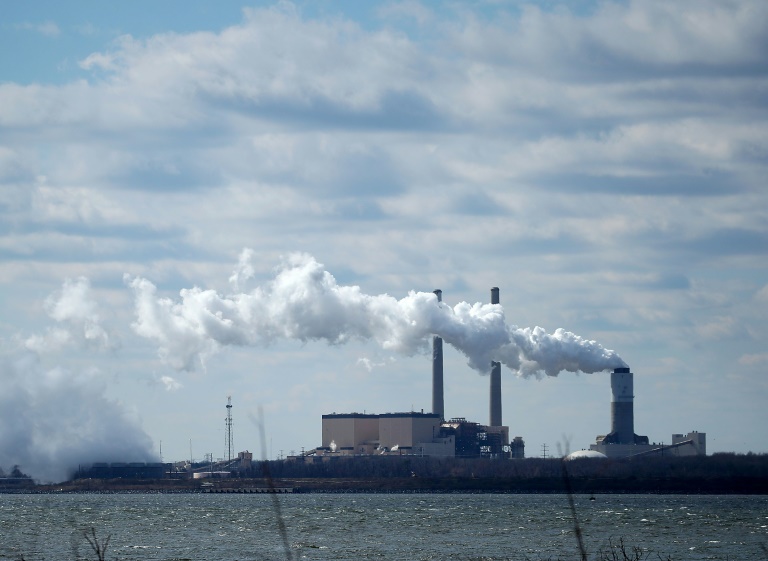
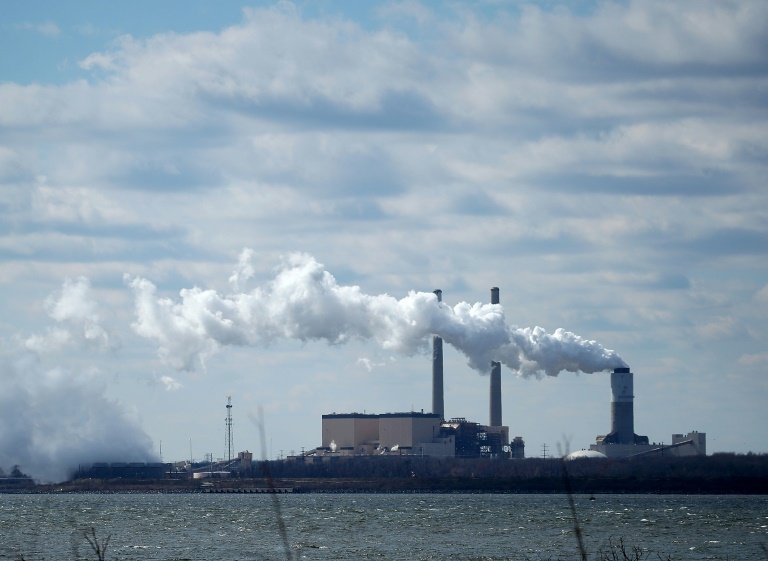
By a majority of 6-3, the high court found that the Environmental Protection Agency did not have the power to set sweeping caps on emissions from coal-fired power plants, which produce nearly 20 percent of the electricity consumed in the United States.

The decision sets back Biden’s hopes of using the EPA to bring down emissions to meet global climate goals, set in 2015 under the Paris Agreement on climate change.

It was a significant victory for the coal mining and coal power industry, which was targeted that same year for tough limits by the administration of then-president Barack Obama in an effort to slash carbon pollution.

It also marked a victory for conservatives fighting government regulation of industry, with the court’s majority including three right-wing justices named by former president Donald Trump, who had sought to weaken the EPA.

Conservatives cheered the decision, while the Biden administration blasted it for undermining the fight against global warming.

“This is another devastating decision from the Court that aims to take our country backwards,” the White House said in a statement.

– Caps ‘may be sensible but …’ –

In the case pitting West Virginia and other coal-mining states against the government, the court said that while EPA had the power to regulate individual plants, Congress had not given it such expansive powers to set limits for all electricity generating units.

The majority justices said they recognized that putting caps on carbon dioxide emissions to transition away from coal-generated electricity “may be a sensible solution” to global warming.

But they said the case involved a “major question” of US governance and jurisprudence and that the EPA would have to be specifically delegated such powers by the legislature.

“A decision of such magnitude and consequence rests with Congress itself, or an agency acting pursuant to a clear delegation from that representative body,” they said.

The three-member liberal minority of the court castigated the majority for overruling powers they said EPA did in fact have.

“Today, the court strips the Environmental Protection Agency of the power Congress gave it to respond to ‘the most pressing environmental challenge of our time,'” they said in a dissent written by Justice Elena Kagan.

“The stakes here are high,” Kagan wrote. “Whatever else this court may know about, it does not have a clue about how to address climate change.”

– Excessive regulation –

Conservatives and Republicans applauded the decision.

“The Court has undone illegal regulations issued by the EPA without any clear congressional authorization and confirmed that only the people’s representatives in Congress —  not unelected, unaccountable bureaucrats — may write our nation’s laws,” wrote Senate Republican leader Mitch McConnell, who represents Kentucky, a state with a significant coal mining industry.

Republican Representative Yvette Herrell called it a “huge win” for the American people.

“The EPA was created to control toxic pollutants, not CO2. The insane mission creep of regulating normal atmospheric gasses threatened the livelihood and prosperity of countless Americans,” she said in a tweet.

But Senate Democratic leader Chuck Schumer said the decision “will cause more needless deaths” from pollution and “exacerbate the climate crisis.”

Dan Lashof, director of the US arm of the World Resources Institute, said the ruling backed an effort by coal companies and Republican-led states “to cripple the EPA’s ability to address climate change.”

The ruling “makes it much harder for the agency to achieve its core mission to protect human health and the environment,” he said in a statement.

– Court conservatives show muscle – 

Thursday’s decision capped a term for the court in which the new conservative majority flexed its muscles in ways that will have profound effects on American society.

Two similar 6-3 decisions last week shook the country. One expanded the rights of gun owners to wear their guns wherever they go, with few limitations.

The second ended a half-century-old constitutional right to abortion, setting off a chain reaction in which more than half of the 50 states are moving to ban or severely restrict the practice.

The EPA ruling, too, could have profound impacts. 

Conservative Justice Neil Gorsuch wrote separately that the decision was a statement that no government agency can make policies with far-reaching effect without express empowerment by Congress.

“When an agency claims the power to regulate vast swaths of American life, it not only risks intruding on Congress’s power, it also risks intruding on powers reserved to the States,” Gorsuch wrote.

“The Court has taken a real step to check not only the EPA but all administrative agencies,” said conservative law expert Ilya Shapiro.

US Supreme Court limits government powers to curb greenhouse gases

The US Supreme Court ruled Thursday that the government’s key environmental agency cannot issue broad limits on greenhouse gases, sharply curtailing the power of President Joe Biden’s administration to battle climate change.

By a majority of 6-3, the high court found that the Environmental Protection Agency did not have the power to set sweeping caps on emissions from coal-fired power plants, which produce nearly 20 percent of the electricity consumed in the United States.

The decision sets back Biden’s hopes of using the EPA to bring down emissions to meet global climate goals, set in 2015 under the Paris Agreement on climate change.

It was a significant victory for the coal mining and coal power industry, which was targeted that same year for tough limits by the administration of then-president Barack Obama in an effort to slash carbon pollution.

It also marked a victory for conservatives fighting government regulation of industry, with the court’s majority including three right-wing justices named by former president Donald Trump, who had sought to weaken the EPA.

Conservatives cheered the decision, while the Biden administration blasted it for undermining the fight against global warming.

“This is another devastating decision from the Court that aims to take our country backwards,” the White House said in a statement.

– Caps ‘may be sensible but …’ –

In the case pitting West Virginia and other coal-mining states against the government, the court said that while EPA had the power to regulate individual plants, Congress had not given it such expansive powers to set limits for all electricity generating units.

The majority justices said they recognized that putting caps on carbon dioxide emissions to transition away from coal-generated electricity “may be a sensible solution” to global warming.

But they said the case involved a “major question” of US governance and jurisprudence and that the EPA would have to be specifically delegated such powers by the legislature.

“A decision of such magnitude and consequence rests with Congress itself, or an agency acting pursuant to a clear delegation from that representative body,” they said.

The three-member liberal minority of the court castigated the majority for overruling powers they said EPA did in fact have.

“Today, the court strips the Environmental Protection Agency of the power Congress gave it to respond to ‘the most pressing environmental challenge of our time,'” they said in a dissent written by Justice Elena Kagan.

“The stakes here are high,” Kagan wrote. “Whatever else this court may know about, it does not have a clue about how to address climate change.”

– Excessive regulation –

Conservatives and Republicans applauded the decision.

“The Court has undone illegal regulations issued by the EPA without any clear congressional authorization and confirmed that only the people’s representatives in Congress —  not unelected, unaccountable bureaucrats — may write our nation’s laws,” wrote Senate Republican leader Mitch McConnell, who represents Kentucky, a state with a significant coal mining industry.

Republican Representative Yvette Herrell called it a “huge win” for the American people.

“The EPA was created to control toxic pollutants, not CO2. The insane mission creep of regulating normal atmospheric gasses threatened the livelihood and prosperity of countless Americans,” she said in a tweet.

But Senate Democratic leader Chuck Schumer said the decision “will cause more needless deaths” from pollution and “exacerbate the climate crisis.”

Dan Lashof, director of the US arm of the World Resources Institute, said the ruling backed an effort by coal companies and Republican-led states “to cripple the EPA’s ability to address climate change.”

The ruling “makes it much harder for the agency to achieve its core mission to protect human health and the environment,” he said in a statement.

– Court conservatives show muscle – 

Thursday’s decision capped a term for the court in which the new conservative majority flexed its muscles in ways that will have profound effects on American society.

Two similar 6-3 decisions last week shook the country. One expanded the rights of gun owners to wear their guns wherever they go, with few limitations.

The second ended a half-century-old constitutional right to abortion, setting off a chain reaction in which more than half of the 50 states are moving to ban or severely restrict the practice.

The EPA ruling, too, could have profound impacts. 

Conservative Justice Neil Gorsuch wrote separately that the decision was a statement that no government agency can make policies with far-reaching effect without express empowerment by Congress.

“When an agency claims the power to regulate vast swaths of American life, it not only risks intruding on Congress’s power, it also risks intruding on powers reserved to the States,” Gorsuch wrote.

“The Court has taken a real step to check not only the EPA but all administrative agencies,” said conservative law expert Ilya Shapiro.

Salmonella found in world's biggest chocolate plant

Production has been halted in the world’s biggest chocolate plant, run by Swiss giant Barry Callebaut in the Belgian town of Wieze, after salmonella contaminations were found, the firm said Thursday. 

A company spokesman told AFP that production had been protectively halted at the factory, which produces liquid chocolate in wholesale batches for 73 clients making confectionaries.

The company said that 72 of the 73 companies have confirmed that they halted deliveries of potentially contaminated chocolate in time to prevent any hitting the shops and were waiting for a response from the last client.

There have been no reports so far of any chocolate consumers being exposed to salmonella, which causes salmonellosis, a disease that causes diarrhoea and fever but is only dangerous in the most extreme cases.

“All products manufactured since the test have been blocked,” spokesman Korneel Warlop said. 

“Barry Callebaut is currently contacting all customers who may have received contaminated products. Chocolate production in Wieze remains suspended until further notice.”

Most of the products discovered to be contaminated are still on the site, he said.

But the firm has contacted all its clients and asked them not to ship any products they have made with chocolate made since June 25 at these Wieze plant, which is in Flanders, northwest of Brussels.

“Food safety is of the utmost importance for Barry Callebaut and this contamination is quite exceptional. We have a well-defined food safety charter and procedures,” the firm said.

– Green light –

Belgium’s food safety agency AFSCA has been informed and a spokesman told AFP it had opened an investigation. 

An AFSCA spokesman said investigators would “gather all the information in order to trace the contamination”.

The Wieze plant does not make chocolates to be sold directly to consumers, and the firm has no reason to believe that any contaminated goods made by clients have yet made it onto shop shelves.

The scare comes a few weeks after a case of chocolates contaminated with salmonella in the Ferrero factory in Arlon in southern Belgium manufacturing Kinder chocolates. 

Belgian health authorities said on June 17 that they had given the green light to restart the Italian giant’s factory for a three-month test period.

Swiss group Barry Callebaut supplies cocoa and chocolate products to many companies in the food industry, including industry giants such as Hershey, Mondelez, Nestle or Unilever. 

World number one in the sector, its annual sales amounted to 2.2 million tonnes during the 2020-2021 financial year. 

Over the past financial year, the group, which has a head office is in Zurich, generated a net profit of 384.5 million Swiss francs ($402 million) for 7.2 billion francs in turnover. 

The group employs more than 13,000 people, has more than 60 production sites worldwide.

Stocks and oil sink on recession fears

World stock markets mostly sank Thursday on intensifying recession fears, while oil prices receded after an OPEC decision to proceed with a limited boost to output.

London ended the day down two percent, with both Frankfurt and Paris close behind.

That followed a largely downbeat performance in Asia, although Shanghai rose after data showed a forecast-beating improvement in China’s services sector on easing Covid restrictions.

Wall Street’s main indices also fell, with the Dow down 0.9 percent in late morning trading.

Crude futures slumped as major oil producers led by Saudi Arabia and Russia kept to a decision on a limited boost to output despite the risk that high oil prices may help push the global economy into recession.

– ‘Terrible mood’ –

“Stock markets have fallen heavily in June so it seems only fitting that they’re ending the month with big losses as reality continues to bite,” said Craig Erlam, senior market analyst at trading platform OANDA.

Stock markets are “in a terrible mood across Europe”, said AJ Bell investment director Russ Mould.

“There really is a lack of good news for investors to cling onto, and the near-term outlook looks bleak.”

The threat of an extended period of elevated inflation and painful interest rate hikes has left traders fretting over the threat of a prolonged economic downturn, while the Ukraine war continues to sow uncertainty.

“Recession continues to be the primary concern at the moment… as countries continue to grapple with spiralling inflation and cost-of-living crises,” said Mihir Kapadia, head of Sun Global Investments.

The surge in inflation to multi-decade highs has forced central banks to swiftly raise interest rates, dealing a hefty blow to equities as companies faces higher borrowing costs.

The Federal Reserve is next month expected to announce a successive 75-basis-point hike in US interest rates.

Sweden’s central bank on Thursday announced its biggest hike in 22 years, raising its main rate by 50 basis points to 0.75 percent.

There had been hope that policymakers would ease off their hikes as economies show signs of slowing, but analysts say some officials are less concerned about a recession than letting prices run out of control.

– Risk of ‘going too far’ –

Fed boss Jerome Powell, speaking at a European Central Bank conference Wednesday, hinted again that such hikes could lead to economic contraction.

“Is there a risk that we would go too far? Certainly there’s a risk,” Powell said.

“The bigger mistake to make… would be to fail to restore price stability,” he insisted.

ECB President Christine Lagarde stated this week that the guardian of the euro would go “as far as necessary” to fight inflation that was set to remain “undesirably high” for “some time to come”.

US data released Thursday showed that a key annual inflation measure held steady at 6.3 percent in May, but real spending by consumers declined by 0.4 percent month-over-month.

Briefing.com analyst Patrick O’Hare said the decline “will fuel concerns about the Fed continuing to tighten into a slowing economic environment.”

– Key figures at around 1530 GMT –

New York – Dow: DOWN 0.9 percent at 30,754.90 points

EURO STOXX 50: DOWN 1.6 percent at 3,449.46

London – FTSE 100: DOWN 2.0 percent at 7,169.28 (close) 

Frankfurt – DAX: DOWN 1.7 percent at 12,783.77 (close)

Paris – CAC 40: DOWN 1.8 percent at 5,922.86 (close)

Tokyo – Nikkei 225: DOWN 1.5 percent at 26,393.04 (close)

Hong Kong – Hang Seng Index: DOWN 0.6 percent at 21,859.79 (close)

Shanghai – Composite: UP 1.1 percent at 3,398.62 (close)

Brent North Sea crude: DOWN 1.2 percent at $114.87 per barrel

West Texas Intermediate: DOWN 2.7 percent at $106.85 per barrel

Euro/dollar: DOWN at $1.0457 from $1.0442 Wednesday

Pound/dollar: UP at $1.2152 from $1.2124

Euro/pound: DOWN at 86.06 pence from 86.12 pence

Dollar/yen: DOWN at 135.89 yen from 136.59 yen

burs/rl/lth

Smugglers and shelters — San Antonio, hub city for US immigration

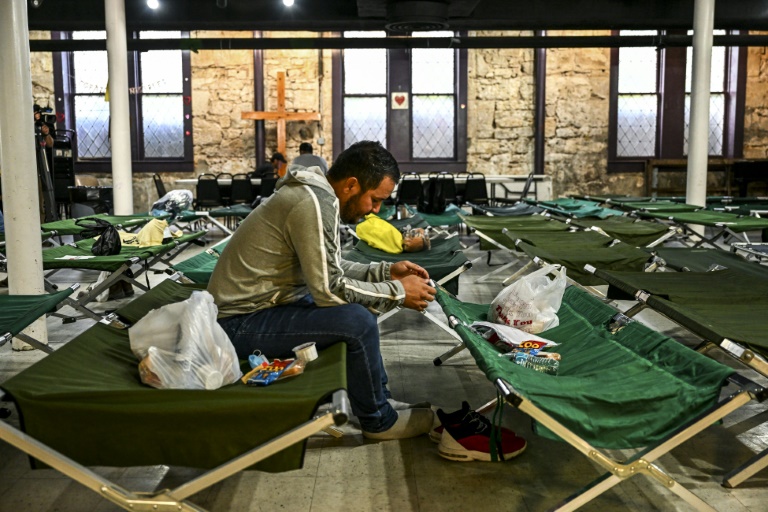
Dozens of migrants wait in line outside a shelter in San Antonio, most of them young men but also women and children, hoping for a hot meal and a roof over their head.

Every year thousands like them pass through this Texas city on the frontline of America’s struggle to cope with waves of migrants seeking to escape poverty and violence and find a better life in the United States.

The city is 240 kilometers (150 miles) from the border with Mexico and is often the first stop on an odyssey across the country as migrants fight to remain in America and settle down to a new life.

This week it was also the scene of a horrific discovery that laid bare the price that some pay — 53 people died after being left inside a big-rig truck abandoned next to train tracks and junk yards in San Antonio.

One of those waiting outside the shelter after putting up with hours in the rain is Edwin Sanchez, 42, a Venezuelan who left home on May 12 and has been in San Antonio for five days.

He hopes to make it soon to New York, where he says an acquaintance has promised him a job.

“We are hoping to get a little help,” Sanchez said.

He got through a border crossing despite Title 42, a Covid-era rule still in place under which people arriving at the border can be turned back without being able to apply for asylum.

The policy is applied unevenly: it is rarely used against people from Venezuela or Cuba, which have leftist governments seen by US officials as authoritarian, but it is often applied against Mexicans and Central Americans.

No matter how people get in, if they traveled through northeast Mexico there is a good chance they stop off in San Antonio.

– ‘At the crossroads’-  

The city has an airport, a bus station and is well connected to the rest of the country, said Roger Enriquez, a professor of criminology at the University of Texas, San Antonio.

“It is at the crossroads of two major highways: the I-10, which links California to Florida, and the I-35, which runs from the southern border in Laredo all the way to Minnesota in the north. It is the perfect place to stop over,” said Enriquez.

But the location also suits people-smugglers who take advantage of the fact that most of the population of San Antonio is Latino, so migrants being brought in illegally can blend in, said Enriquez.

As many arrive with little but the clothes on their back, charities try to help them.

One of them is Corazon (Heart) Ministries, which runs the night shelter that Edwin Sanchez was waiting to enter.

It opens every evening at 7:00 pm and closes the next day at 8:00 am, offering people dinner and a place to sleep, said director Monica Sosa.

As she speaks, shortly before opening time, volunteers set up cots with the red logo of the American Red Cross.

The shelter supposedly has room for 150 people but there are always more to take care of, some times as many as 400. Many migrants end up sleeping on the floor or in a nearby park.

“Our resources are very limited. We need more support,” said Sosa.

– A city of smugglers – 

Austin Hernandez, a 20 year old Honduran, has been in San Antonio for four days and has not yet managed to land a bed in the shelter.

He says he wished he could get more help but does not lose hope of making it to the state capital Austin, which is only 130 kilometers away.

“The trip was very hard. I was robbed, I begged for food in the streets. I have endured cold, rain and slept in the rough,” Hernandez said of his trek.

He said he made the trip without the help of smugglers known as coyotes. But often, facing tight security at the border, migrants do put their lives in the hands of traffickers.

The discovery Monday of the abandoned tractor trailer in San Antonio highlighted that clandestine trips are highly lucrative for smugglers.

“It is estimated that the coyotes can charge from $8,000 to $10,000 per person, and they can put as many as 100 people in a truck. That’s a million dollars,” said Enriquez.

“I am surprised there are not more tragedies due the danger and the risks these people are taking.”

Bullish Biden vows to stay course in Ukraine against Russia

A bullish President Joe Biden on Thursday announced $800 million in new weapons for Ukraine and said the United States will support Kyiv “as long as it takes” in its war against Russia.

As Western-armed Ukrainian forces notched up a victory by recapturing strategic Snake Island in the Black Sea, and NATO leaders expressed strong unity during their Madrid summit, Biden made clear he intends to keep the pressure on President Vladimir Putin.

“Before the war started, I told Putin that if he invaded Ukraine, NATO would not only get stronger but would get more united,” an energised looking Biden told a press conference.

He spoke before returning to Washington after the NATO summit and a meeting of G7 leaders earlier in Germany, where he did not hold a press conference and kept a relatively low profile.

The Democrat announced yet another $800 million disbursement of US funding for Ukraine’s military in “the next few days”.

This will include “advanced Western air defence systems for Ukraine, more artillery and ammunition, counter-battery radar, additional ammunition for the HIMARS multiple launch rocket systems that we’ve already given Ukraine and more HIMARS coming from other countries as well.”

The latest arms, which notably focus on the deadly and highly accurate HIMARS systems, come on top of a staggering list of weaponry that has already transformed Ukraine’s forces, allowing them to fight head-to-head with the Russian invaders.

Biden said international contributions now amounted to “nearly 140,000 anti-tank systems, more than 600 tanks, nearly 500 artillery systems, more than 600,000 rounds of artillery ammunition, as well as advanced multiple launch rocket systems, anti-ship systems and air defence systems”.

– ‘Stick with Ukraine’ –

With nearly $7 billion in donated arms, the US is “leading the way”, Biden declared.

The US president has encountered sporadic pressure in Western capitals and in the Washington foreign policy establishment to steer Ukraine to a compromise, given ever growing economic fallout for ordinary Americans and Europeans. 

The war is also causing dangerous disruptions to global food supplies with the Russian attack against Ukraine’s agricultural industry.

But Biden spurned any suggestion of easing off in his press conference, saying that Russia was already badly damaged and would never be allowed to win.

“We are going to stick with Ukraine, and all of the alliance are going to stick with Ukraine, as long as it takes to make sure they are not defeated by Russia,” he said.

“Ukraine has already dealt a severe blow to Russia,” Biden said.

He mentioned the recapture of Snake Island by Ukraine and said Russia is “paying a very, very heavy price” on the battlefield.

“I don’t know how it’s going to end, but it will not end with a Russian defeat of Ukraine in Ukraine,” he said.

Declaring that Moscow “has already lost its international standing,” Biden also painted a dire picture of Russian economic prospects under the weight of Western sanctions, saying Moscow had defaulted on its debt and “they’ve lost 15 years of gains”.

US tells pharmas to make Covid boosters targeting BA.4 and BA.5

The US Food and Drug Administration on Thursday told vaccine makers that Covid boosters for this fall and winter should include components targeting the BA.4 and BA.5 sublineages of Omicron.

Earlier this week, a panel of medical experts convened by the agency voted in favor of updating Covid vaccines against Omicron, with most indicating they would favor shots that target the latest iterations rather than its original form, BA.1, fearing the latter would be too out-of-date.

BA.4 and BA.5, which are more transmissible and immune evasive, now comprise more than 52 percent of US Covid cases, according to an official tracker.

“We have advised manufacturers seeking to update their Covid-19 vaccines that they should develop modified vaccines that add an omicron BA.4/5 spike protein component to the current vaccine composition to create a two component (bivalent) booster vaccine,” the FDA said in a statement.

These vaccines would also need to target the original Wuhan strain, in order to increase the breadth of immune response.

Pfizer and Moderna, which produce messenger RNA Covid vaccines, have developed and tested vaccines against BA.1, and representatives of both companies indicated during the experts’ meeting they would need around three months to produce BA.4 and BA.5 vaccines at scale. 

Pfizer shared early results showing its BA.4/5 vaccine produced a strong antibody response in mice, but it hasn’t yet been trialed in humans.

Novavax, which makes a protein subunit vaccine, said it could offer BA.4/5 vaccines by the end of the year.

The FDA said in its new statement that the companies would need to submit human data prior to authorization.

The “primary series” or first shots a person receives would remain against the original strain, the FDA added.

While previous “variants of concern” like Alpha and Delta eventually petered out, Omicron and its sublineages have dominated throughout 2022, to the point it comprises the vast majority of all Covid in the world, FDA official Jerry Weir told the expert meeting this week.

This makes it more likely that the virus’s future evolution will also occur along the Omicron branch of the Covid family tree, he added.

Earlier this month, the World Health Organization also recommended the use of Omicron boosters after a primary series against the original strain.

Malta to review application of abortion ban after US tourist case

Malta’s health minister said Thursday he had ordered a review of how the country’s abortion ban was applied, after the treatment of a pregnant American tourist sparked headlines worldwide.

“I have asked our staff to see whether we have parts of our law which preclude our doctors from giving treatment where it is needed in any instance,” Chris Fearne told reporters.

It was the first public comment by a Maltese government minister since the case of US tourist Andrea Prudente last week shone a spotlight on Malta’s total ban on terminations.

She suffered a partial miscarriage while on holiday and the foetus was given no chance of survival. But because it still had a heartbeat, she was denied an abortion despite fears she could contract a life-threatening infection.

In the end, she and her partner flew to Spain where Prudente was given an abortion, but not before the case sparked headlines around the world and protests in Malta, the only EU nation with a total prohibition.

Her partner Jay Weeldreyer told AFP that doctors were “playing chicken” with her life.

“Certainly there shouldn’t be any part of Maltese law which precludes or interferes with our doctors and professionals from saving lives,” Fearne, who was formerly a surgeon, said when asked about the case.  

“That is clear, and I have asked our technical and legal staff to see whether this is the case with Maltese law in its entirety.”

Currently doctors who administer abortions can be jailed for up to four years and banned from practising medicine for life.

“I have assurances from the State Advocate (Malta’s highest legal officer) that, in cases like this, they do not take any action against medical professionals giving treatment and doing their utmost to save lives,” Fearne said.

He added: “This is not an isolated case… it has happened before and it will happen again.”

However, there was no suggestion from his comments that the review would lead to changes in the law.

Abortion is a thorny issue in Catholic-majority Malta, and is rarely discussed among politicians.

Only one of Malta’s 79 MPs — Rosianne Cutajar, a backbench lawmaker with the governing Labour party — has spoken out about the case, telling parliament this week that no woman should risk losing her life in Malta because of the abortion law.

More than 130 doctors in Malta filed a legal protest Monday against the abortion ban, warning it represented an obstacle to proper medical care.

Close Bitnami banner
Bitnami