US Business

Salmonella found in world's biggest chocolate plant

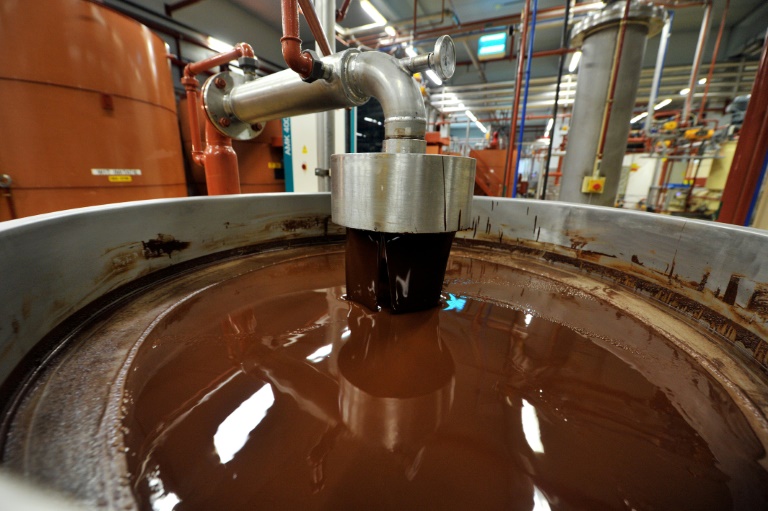
Salmonella bacteria have been discovered in the world’s biggest chocolate plant, run by Swiss giant Barry Callebaut in the Belgian town of Wieze, the firm said Thursday.

A company spokesman told AFP that production had been halted at the factory, which produces liquid chocolate in wholesale batches for 73 clients making confectionaries.

“All products manufactured since the test have been blocked,” spokesman Korneel Warlop said. 

“Barry Callebaut is currently contacting all customers who may have received contaminated products. Chocolate production in Wieze remains suspended until further notice.”

Most of the products discovered to be contaminated are still on the site, he said.

But the firm has contacted all its clients and asked them not to ship any products they have made with chocolate made since June 25 at these Wieze plant, which is in Flanders, northwest of Brussels.

Belgium’s food safety agency AFSCA has been informed and a spokesman told AFP it had opened an investigation.

The Wieze plant does not make chocolates to be sold directly to consumers, and the firm has no reason yet to believe that any contaminated goods made by clients have yet made it onto shop shelves.

The scare comes a few weeks after a case of chocolates contaminated with salmonella in the Ferrero factory in Arlon in southern Belgium manufacturing Kinder chocolates. 

Belgian health authorities announced on June 17 that they had given the green light to restart the Italian giant’s factory for a three-month test period.

Swiss group Barry Callebaut supplies cocoa and chocolate products to many companies in the food industry, including industry giants such as Hershey, Mondelez, Nestle or Unilever. 

World number one in the sector, its annual sales amounted to 2.2 million tonnes during the 2020-2021 financial year. 

Over the past financial year, the group, which has a head office is in Zurich, generated a net profit of 384.5 million Swiss francs ($402 million) for 7.2 billion francs in turnover. 

The group employs more than 13,000 people, has more than 60 production sites worldwide.

UK urged to cleanse 'stain' of dirty Russian money

For all its tough talk against Russia, the UK’s government is failing to enforce its promises to clean up dirty foreign money, a hard-hitting report by MPs said Thursday.

It was “shameful” that after years of warnings, the government only began to clamp down on the illicit flows when Russia invaded Ukraine in February, the report by the House of Commons Foreign Affairs Committee said.

The government has brought in new legislation to prevent corrupt funds being laundered through Britain’s property market.

But it has failed to back this up with enough resources or powers for anti-corruption bodies such as the National Crime Agency and Serious Fraud Office, the report said.

“Without the necessary means and resources, enforcement agencies are toothless,” it said.

“The threat illicit finance poses to our national security demands a response that is seen to be serious.”

Rich Russians have long found it easy to acquire expensive properties in London, or a world-class education for their children in Britain’s private schools, or control of Premier League football clubs.

According to multiple studies into the “Londongrad” phenomenon, they were enabled by a service industry encompassing blue-chip bankers, accountants, lawyers, property agents and public relations advisors.

And since Prime Minister Boris Johnson entered Downing Street in 2019, his Conservative party has stepped up a drive to entice cash-rich donors, including from wealthy backers originally from Russia.

Following the invasion of Ukraine, Johnson’s government has sanctioned dozens of wealthy, Kremlin-connected Russians and says their money is no longer welcome in Britain.

– Truss pushes back –

However, according to the MPs, “corrupt money has continued to flow into the UK”.

The committee called for the government to publish a review into a “golden visa” programme that enabled thousands of Russians to establish residency, or even citizenship, in Britain from the 1990s.

The scheme only ended in the week before Russia invaded Ukraine, and the report demanded to know what the government intends to do about Russians who obtained visas “without due diligence”.

One beneficiary of the scheme was the sanctioned oligarch Roman Abramovich, who has been forced to sell Chelsea football club.

Johnson meanwhile is refusing to release intelligence advice he received about his controversial appointment of Evgeny Lebedev, a Russian-born newspaper baron and son of Russian tycoon Alexander Lebedev, to the House of Lords.

“The UK’s status as a safe haven for dirty money is a stain on our reputation,” the Foreign Affairs Committee’s Conservative chairman, Tom Tugendhat, said.

“The government must bring legislation in line with the morals of the British people and close the loopholes that allow for such rife exploitation,” he said.

Foreign Secretary Liz Truss rejected the committee’s criticisms, without addressing its point that the government had failed to act in the years prior to Russia’s war.

“We passed emergency legislation as soon as this appalling war was perpetrated, as soon as Russia invaded Ukraine, and we’ve been able to hit Russia hard with sanctions,” she told Sky News.

“We have sanctioned, as a country, more individuals and entities in Russia than any other government in the world.”

Markets mostly down on recession fear, China data lends some light

Most markets fell again Thursday as traders fear that hefty rate hikes to rein in soaring inflation will spark a recession, though a slight improvement in Chinese data provided a little cheer.

The rally enjoyed across the world last week appears to have given way to nervousness about the economic outlook, while the Ukraine war continues to sow uncertainty.

The surge in inflation to multi-decade highs has forced central banks to swiftly tighten pandemic-era monetary policies, dealing a hefty blow to equities, particularly tech firms who are susceptible to higher borrowing costs.

The Federal Reserve has already sharply lifted rates and is expected to announce a second successive 75-basis-point lift next month.

There had been hope that policymakers would ease off their hikes as economies show signs of slowing, but analysts say some officials are less concerned about a recession than letting prices run out of control.

Fed boss Jerome Powell this month admitted the moves could lead to a contraction.

On Wednesday, Cleveland Fed chief Loretta Mester said she was keen to see the benchmark rate hit 3-3.5 percent this year and “a little bit above four percent next year”.

“There are risks of recession,” she told CNBC. “We’re tightening monetary policy. My baseline forecast is for growth to be slower this year.”

The threat of an extended period of elevated inflation and rate hikes has left traders weary, and markets in the red.

“With rapidly slowing US growth momentum and a Fed committed to restoring price stability, a mild recession, starting in the fourth quarter of 2022, is now most likely,” Nomura’s Andrew Ticehurst said.

“High US inflation appears to be a political as well as economic problem, and we don’t expect the Fed to be quick to blink as risk assets wobble.”

– China support hope –

Wall Street ended on a tepid note Wednesday, unable to bounce back from the previous day’s plunge.

And Asia also struggled, with Hong Kong, Tokyo, Sydney, Seoul, Singapore, Taipei, Manila and Wellington all down. London, Paris and Frankfurt tumbled.

However, Shanghai ended more than one percent higher. That came after official figures showed a forecast-beating improvement in China’s services sector thanks to the easing of painful Covid-19 restrictions in major cities including Shanghai and Beijing.

The non-manufacturing Purchasing Managers’ Index surged to 54.7 points in June, the first time it has been above the 50-point growth mark since February.

The manufacturing gauge hit 50.2, which was also its first time in growth since February and provided some hope that the world’s number two economy could be picking up after the pain caused by lockdowns.

SPI Asset Management strategist Stephen Innes added that the government and People’s Bank of China could now have some room to provide growth support.

“With (consumer price) inflation low in China relative to its peers, there is plenty of scope for monetary and fiscal conditions to loosen in the second half of the year, supporting activity,” he said in a note.

Crude extended Wednesday’s loss as data showed demand in the United States appeared to be softening even as the driving season gets under way, and as recession fears begin to kick in.

“The higher price environment appears to be doing its job when it comes to demand,” Warren Patterson, of ING Group NV, said.

The drop comes as OPEC and other major producers including Russia prepare to meet on their output agreement, with most predicting they are unlikely to open the taps further.

“I am not expecting any surprises from the group. I would imagine it will be a fairly quick meeting,” Patterson said.

– Key figures at around 0810 GMT –

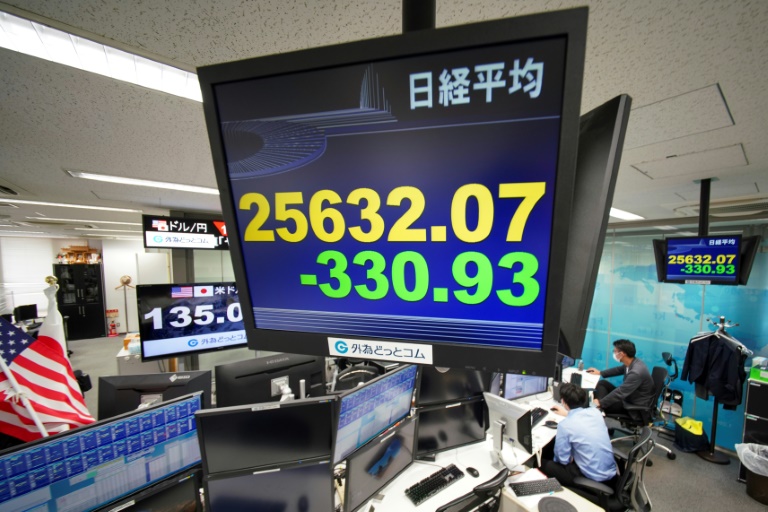
Tokyo – Nikkei 225: DOWN 1.5 percent at 26,393.04 (close)

Hong Kong – Hang Seng Index: DOWN 0.6 percent at 21,859.79 (close)

Shanghai – Composite: UP 1.1 percent at 3,398.62 (close)

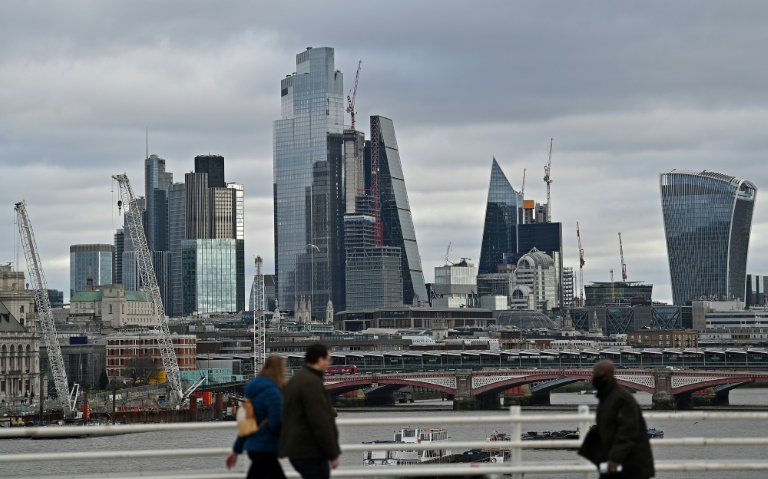
London – FTSE 100: DOWN 1.7 percent at 7,190.99

West Texas Intermediate: DOWN 0.2 percent at $109.57 per barrel

Brent North Sea crude: DOWN 0.8 percent at $115.35 per barrel

Dollar/yen: DOWN at 136.23 yen from 136.66 yen Wednesday

Euro/dollar: UP at $1.0445 from $1.0444 

Pound/dollar: UP at $1.2154 from $1.2119

Euro/pound: DOWN at 85.95 pence from 86.15 pence

New York – Dow: UP 0.3 percent at 31,029.31 (close)

Japan's Kirin offloads Myanmar beer business over coup

Japanese drinks giant Kirin said Thursday it has agreed to a buyout of its shares in a Myanmar joint venture with a junta-linked conglomerate as it seeks to exit the market after the 2021 coup.

Days after the putsch in February last year, Kirin announced it would end its joint venture Myanmar Brewery with the junta-linked MEHPCL, saying it was “deeply concerned by the recent actions of the military in Myanmar”.

But it struggled to disentangle itself from the secretive conglomerate and contested a bid by MEHPCL to dissolve the joint venture as it feared liquidation proceedings would not be fair.

Kirin said Thursday it has agreed a share buyback worth about 22.4 billion yen ($164 million) to transfer its 51 percent stake back into the subsidiary, ending the joint venture.

The deal remains to be approved and a date for the share transfer has not yet been set.

“We are relieved to settle this matter within the announced deadline by the most appropriate means among several options,” Yoshinori Isozaki, Kirin’s president and CEO, said in a statement.

But activists said the decision to sell the shares in Myanmar Brewery and the smaller Mandalay Brewery back to the company effectively hands control and revenue to the junta.

Justice for Myanmar spokeswoman Yadanar Maung called the deal “a windfall for the Myanmar military”, warning it would “ensure a continued stream of revenue to finance atrocity crimes”.

“Kirin must reverse this deplorable decision or be held accountable for aiding and abetting the military’s ongoing international crimes,” she added.

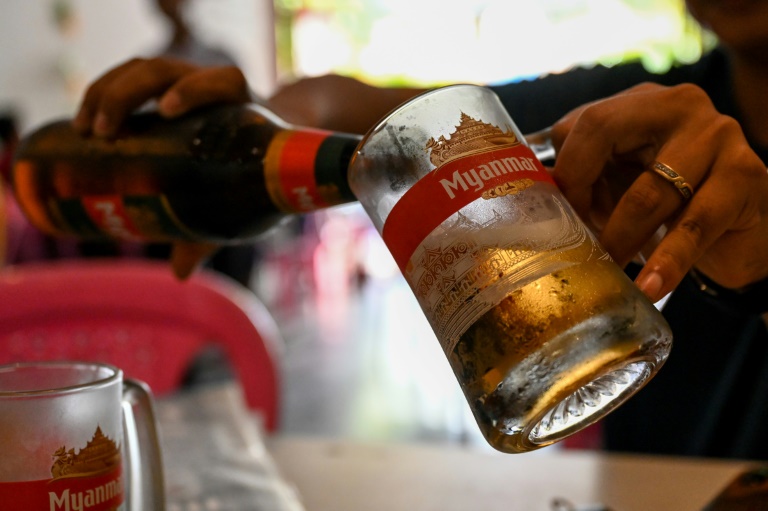
According to figures published by Kirin in 2018, Myanmar Brewery — whose beverages include the ubiquitous Myanmar Beer brand — boasted a market share of nearly 80 percent.

Investors piled into Myanmar after the military relaxed its iron grip in 2011, paving the way for democratic reforms and economic liberalisation.

But a raft of foreign companies have exited the market since the military seized power from Aung San Suu Kyi’s government, including oil giants TotalEnergies and Chevron and Norwegian telecoms operator Telenor.

Kirin’s Myanmar business generated 32.6 billion yen ($240 million at today’s rates) in revenue in 2019-20, less than two percent of the firm’s annual sales.

The Japanese giant had been under pressure even before the coup over its ties to the military, and launched an investigation after rights groups called for transparency into whether money from its joint venture had funded rights abuses.

Samsung begins production of advanced 3nm chips

Samsung Electronics became the first chipmaker in the world to mass produce advanced 3-nanometre microchips, the company said Thursday, as it seeks to catch up with Taiwan’s TSMC.

The new chips will be smaller, more powerful and efficient, and will be used in high-performance computing applications before being put into gadgets such as mobile phones.

“Compared to 5nm process, the first-generation 3nm process can reduce power consumption by up to 45%, improve performance by 23% and reduce area by 16%,” Samsung said in a statement.

The South Korean conglomerate last month announced a five-year plan to invest 450 trillion won (US$356 billion), saying it would “bring forward the mass production of chips based on the 3-nanometer process”.

The vast majority of the world’s most advanced microchips are made by just two companies — Samsung and Taiwan’s TSMC — both of which are running at full capacity to alleviate a global shortage.

Samsung is the market leader in memory chips but it has been scrambling to catch up with TSMC in the advanced foundry business.

TSMC dominates more than half of the global foundry market, with clients including Apple and Qualcomm, while Samsung trails with around 16 percent market share, according to TrendForce.

TSMC plans to begin volume production of 3-nanometre technology in the second half of this year, and entered the development stage of 2-nanometre technology last year, according to the company’s 2021 annual report.

Japan's Kirin offloads Myanmar beer business over coup

Japanese drinks giant Kirin said Thursday it has agreed to a buyout of its shares in a Myanmar joint venture with a junta-linked conglomerate, completing its exit from the market over the 2021 coup.

Days after the putsch in February 2021, Kirin announced it would end its joint venture Myanmar Brewery with the junta-linked MEHPCL, saying it was “deeply concerned by the recent actions of the military in Myanmar”.

But it struggled to disentangle itself from the secretive conglomerate and contested a bid by MEHPCL to dissolve the joint venture as it feared liquidation proceedings would not be fair.

Kirin said Thursday that a share buyback agreement worth about 22.4 billion yen ($164 million) had been reached to transfer its 51 percent stake back into the subsidiary, ending the joint venture.

“We are relieved to settle this matter within the announced deadline by the most appropriate means among several options,” Yoshinori Isozaki, Kirin’s president and CEO, said in a statement.

According to figures published by Kirin in 2018, Myanmar Brewery — whose beverages include the ubiquitous Myanmar Beer brand — boasted a market share of nearly 80 percent.

But Kirin had been under pressure even before the coup over its ties to the military, and launched an investigation after rights groups called for transparency into whether money from its joint venture had funded rights abuses.

Investors piled into Myanmar after the military relaxed its iron grip in 2011, paving the way for democratic reforms and economic liberalisation.

They poured money into telecoms, infrastructure, manufacturing and construction projects — before the coup upended the democratic interlude and damaged the economy.

But a raft of foreign companies have exited the market since the military seized power from Aung San Suu Kyi’s government, including oil giants TotalEnergies and Chevron and Norwegian telecoms operator Telenor.

Kirin’s Myanmar business generated 32.6 billion yen ($240 million at today’s rates) in revenue in 2019-20, less than two percent of the firm’s annual sales.

Japan's Kirin offloads Myanmar beer business over coup

Japanese drinks giant Kirin said Thursday it has agreed to a buyout of its shares in a Myanmar joint venture with a junta-linked conglomerate, completing its exit from the market over the 2021 coup.

Days after the putsch in February 2021, Kirin announced it would end its joint venture Myanmar Brewery with the junta-linked MEHPCL, saying it was “deeply concerned by the recent actions of the military in Myanmar”.

But it struggled to disentangle itself from the secretive conglomerate and contested a bid by MEHPCL to dissolve the joint venture as it feared liquidation proceedings would not be fair.

Kirin said Thursday that a share buyback agreement worth about 22.4 billion yen ($164 billion) had been reached to transfer its 51 percent stake back into the subsidiary, ending the joint venture.

“We are relieved to settle this matter within the announced deadline by the most appropriate means among several options,” Yoshinori Isozaki, Kirin’s president and CEO, said in a statement.

According to figures published by Kirin in 2018, Myanmar Brewery — whose beverages include the ubiquitous Myanmar Beer brand — boasted a market share of nearly 80 percent.

But Kirin had been under pressure even before the coup over its ties to the military, and launched an investigation after rights groups called for transparency into whether money from its joint venture had funded rights abuses.

Investors piled into Myanmar after the military relaxed its iron grip in 2011, paving the way for democratic reforms and economic liberalisation.

They poured money into telecoms, infrastructure, manufacturing and construction projects — before the coup upended the democratic interlude and damaged the economy.

But a raft of foreign companies have exited the market since the military seized power from Aung San Suu Kyi’s government, including oil giants TotalEnergies and Chevron and Norwegian telecoms operator Telenor.

Kirin’s Myanmar business generated 32.6 billion yen ($240 million at today’s rates) in revenue in 2019-20, less than two percent of the firm’s annual sales.

Services, manufacturing rebound in China after Covid curbs eased

China’s factory and services activity picked up in June, official data showed Thursday, fuelled by the easing of Covid-19 restrictions in major cities such as Shanghai and Beijing.

The non-manufacturing Purchasing Managers’ Index (PMI), a key gauge of activity in the world’s second-biggest economy, defied expectations and surged to 54.7 points in June after three months of sluggish performance.

It was the first time since February that the reading was above the 50-point mark separating growth from contraction. It sat at 47.8 in May.

“As the situation of domestic epidemic prevention and control continued to improve and a package of policies… to stabilise the economy was implemented at a quicker pace, the overall recovery of our country’s economy has accelerated,” National Bureau of Statistics (NBS) senior statistician Zhao Qinghe said in a statement.

In particular, business activity in industries severely hit by the pandemic such as rail and air transport picked up in June, the statement said.

Construction activity also helped fuel the PMI boost.

But the “surprisingly rapid recovery in services” likely reflects a one-off boost from reopening, said Julian Evans-Pritchard, senior China economist at Capital Economics.

Manufacturing PMI rose to 50.2 points in June — similar to analyst expectations — up from 49.6 in May.

As work resumed after Covid lockdowns, production and demand in the sector picked up and delivery times improved, according to the NBS.

China is the only major economy still pursuing a zero-Covid approach of eliminating outbreaks as they emerge, using snap lockdowns and mass testing.

While the country is shortening quarantine times for new international arrivals, President Xi Jinping warned this week that China “would have faced unimaginable consequences” had it adopted a herd immunity or hands-off approach, signalling the government would persist with its current policy.

The approach has taken a harsh toll on the economy, with shops and factories forced to stop operations and supply chains strained.

The non-manufacturing rebound in June was “mainly due to more construction activity”, said Iris Pang, chief economist for Greater China at ING.

“We think that it will be challenging for the government to achieve the 5.5 percent GDP target set in March. There will need to be a lot more infrastructure activity if the government is to achieve this target.”

Asian markets mostly down but China data offers some light

Most Asian markets fell again Thursday as traders fear that hefty rate hikes to rein in soaring inflation will spark a recession, though a slight improvement in Chinese data did provide some cheer.

The rally enjoyed across the world last week appears to have given way to nervousness about the economic outlook, while the Ukraine war continues to sow uncertainty.

The surge in inflation to multi-decade highs has forced central banks to swiftly tighten pandemic-era monetary policies, dealing a hefty blow to equities, particularly tech firms who are susceptible to higher borrowing costs.

The Federal Reserve has already sharply lifted rates and is expected to announce a second successive 75-basis-point lift next month.

There had been hope that policymakers would ease off their hikes as economies show signs of slowing, but analysts say some officials are less concerned about a recession than letting prices run out of control.

Fed boss Jerome Powell this month admitted the moves could lead to a contraction, suggesting he was not averse to it.

On Wednesday, Cleveland Fed chief Loretta Mester said was keen to see the benchmark rate hit 3-3.5 percent this year and “a little bit above four percent next year”.

“There are risks of recession,” she told CNBC. “We’re tightening monetary policy. My baseline forecast is for growth to be slower this year.”

The threat of an extended period of elevated inflation and rate hikes has left traders weary, and markets in the red.

While Wall Street ended on a tepid note Wednesday it was unable to bounce back from the previous day’s plunge.

And Asia also struggled, with Tokyo, Sydney, Seoul, Singapore, Taipei, Manila and Wellington all down.

– China support hope –

However, Hong Kong and Shanghai edged up. That came after official figures showed a forecast-beating improvement in China’s services sector thanks to the easing of painful Covid-19 restrictions in major cities including Shanghai and Beijing.

The non-manufacturing Purchasing Managers’ Index surged to 54.7 points in June, the first time it has been above the 50-point growth mark since February.

The manufacturing gauge hit 50.2, which was also its first time in growth since February and provided some hope that the world’s number two economy could be picking up after the pain caused by lockdowns.

“As the situation of domestic epidemic prevention and control continued to improve and a package of policies… to stabilise the economy was implemented at a quicker pace, the overall recovery of our country’s economy has accelerated,” National Bureau of Statistics statistician Zhao Qinghe said.

And SPI Asset Management strategist Stephen Innes added that the government and People’s Bank of China could now have some room to provide growth support.

“With (consumer price) inflation low in China relative to its peers, there is plenty of scope for monetary and fiscal conditions to loosen in the second half of the year, supporting activity,” he said in a note.

Crude fluctuated after dropping on Wednesday as data showed demand in the United States appeared to be softening even as the driving season gets under way, and as recession fears begin to kick in.

“The higher price environment appears to be doing its job when it comes to demand,” Warren Patterson, of ING Groep NV, said.

The drop comes as OPEC and other major producers including Russia prepare to meet on their output agreement, with most predicting they are unlikely to open the taps further.

“I am not expecting any surprises from the group. I would imagine it will be a fairly quick meeting,” Patterson said.

– Key figures at around 0300 GMT –

Tokyo – Nikkei 225: DOWN 0.9 percent at 26,561.05 (break)

Hong Kong – Hang Seng Index: UP 0.3 percent at 22,048.60

Shanghai – Composite: UP 0.8 percent at 3,387.96

West Texas Intermediate: UP 0.2 percent at $109.95 per barrel

Brent North Sea crude: DOWN 0.4 percent at $115.77 per barrel

Dollar/yen: DOWN at 136.56 yen from 136.66 yen Wednesday

Euro/dollar: UP at $1.0456 from $1.0444 

Pound/dollar: UP at $1.2139 from $1.2119

Euro/pound: DOWN at 86.13 pence from 86.15 pence

New York – Dow: UP 0.3 percent at 31,029.31 (close)

London – FTSE 100: DOWN 0.2 percent at 7,312.32 (close)

Cairo's floating heritage risks being towed away by grand projects

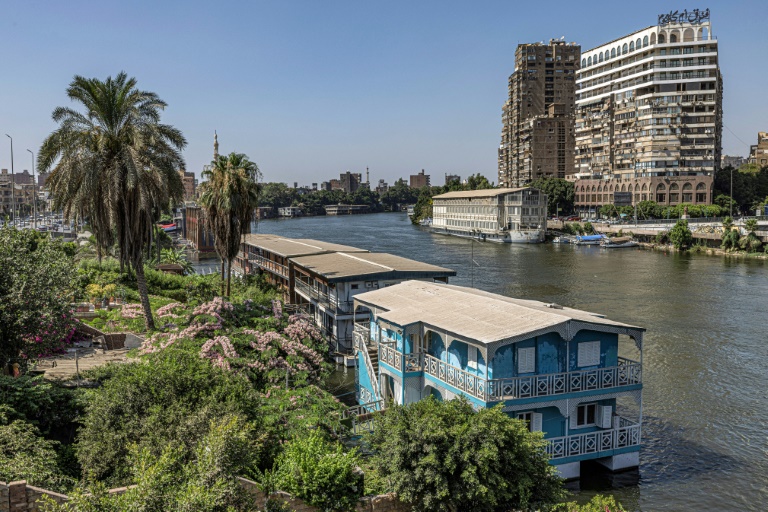
Dozens of vibrantly coloured floating homes have for decades dotted the banks of the River Nile, rare havens of leafy seclusion in the Egyptian capital’s hustle and bustle — but maybe not for much longer.

Residents of the 30 or so houseboats  that remain moored on the banks of the Nile last week received eviction orders, giving them less than two weeks before their homes are taken away to be demolished.

“Buying this houseboat was my dream,” celebrated British-Egyptian novelist Ahdaf Soueif told AFP. “I furnished it to accommodate my grandchildren and spend my last days here.”

The boats have long occupied a special place in the Egyptian collective consciousness, having been the centrepiece of conversations in Nobel Prize laureate Naguib Mahfouz’s “Chitchat on the Nile”, as well as various classics from the golden age of Egyptian cinema.

But while many have campaigned to protect the houseboats for their historic value, the authorities have argued they are an eyesore standing in the way of the state’s grand development plans.

Residents have been offered no alternative accommodation or compensation, unlike others who previously faced evictions, and many have nowhere else to go.

For Manar, a 35-year-old engineer who poured everything into buying her houseboat four years ago, it’s a devastating blow.

“I sold my apartment, my father sold his car, and we used my two retired parents’ severance pay,” said Manar, who did not wish to give her full name.

“People from the slums have been rehoused, the state even moved graves when it built a road through a cemetery, but for us, nothing.”

– ‘Uncivilised sight’ –

Barely a week after the eviction order, some boats have already been towed off and impounded in a state marina, despite petitions and campaigning, even by pro-government television pundits.

Soon, the sight of these houses, perched on metal caissons along the banks of the working-class neighbourhood of Imbaba opposite the upscale island of Zamalek, will only remain a memory.

The first warning came in 2020, when the governor of Cairo “suspended new houseboat parking authorisations”.

Residents had since received no news, until the eviction order came on June 20, leaving them “with no time to file an appeal”, according to one resident.

Adding to the pressures, authorities have been demanding parking and registration fees amounting to between 400,000 and one million pounds per residence ($21,000 to $53,000) — about 20 times more than previous annual fees.

Ayman Anwar, head of the state-affiliated Central Administration for the Protection of the Nile River in Cairo, said residents were given ample warning.

“In 2020, the state banned the use of barges as dwellings, because they are an uncivilised sight and pollute the Nile,” he said on a talk show this week.

The process echoes previous forced evictions and demolitions in Cairo’s central neighbourhoods, such as Bulaq and Maspero.

But while it may have started in poor informal settlements, the steamroller of development has now made its way into more affluent neighbourhoods and homes.

The only alternative appears to be to transform every houseboat into a commercial enterprise.

“At my age, to become a cafe manager?” exclaimed Soueif, who is in her 70s. “It’s forced eviction, no matter what you call it.”

– ‘A lost cause’ –

The banks of the Nile were once among the few public spaces where residents of Cairo –- a sprawling megalopolis of more than 20 million people –- could escape the din.

Dotted with cafes, visitors from across social strata would sip tea and juice by the water, for a modest price.

On the opposite bank of the Nile, the development Mamsha Ahl Masr (“the Egyptian people’s promenade” in Arabic) has drawn a lukewarm response.

The promenade is heralded by the state as one of many “megaprojects” launched by President Abdel Fattah al-Sisi and executed by the army, the crowning jewel of which is a sparkling new capital, rising out of the sands 50 kilometres (30 miles) east of Cairo.

“It’s a disaster,” Soueif said. “Every square inch must be profitable. There is no more public space, people can no longer be outside without paying.”

But the promenade, with its restaurants, a planned marina and open-air theatre, will “guarantee public access to the Nile”, the government insists.

Awad, who has lived with his family on their houseboat for 25 years, says “a square metre of commercial space is worth 1,000 pounds, so of course they’d rather rent the space out to cafes than keep us”.

“It’s tragic,” said Awad, who also did not wish to give his last name.

Now in his sixties, he laments the loss of “pieces of Cairo’s heritage” dating back to the times of the late King Farouk as well as Umm Kalthoum and Mounira al-Mahdiyya, iconic divas of the 20th century.

“It’s a lost cause. We can’t do anything, we are told that it’s a decision from above,” he said, cigarette in hand, gesturing towards the sky.

Close Bitnami banner
Bitnami