US Business

Across the Missouri-Illinois border, an abortion sanctuary in US Midwest

Abortion is now banned in Lori Lamprich’s home state of Missouri, but that hasn’t stopped her taking women to their appointments — she drives them across the Mississippi River to Illinois, where it remains legal.

“I’m here to fight the power and do what I can and resist these laws that I think are completely inhumane and unfair,” the 39-year-old tells AFP at her house in St. Louis, a city of 300,000 people.

As a resident of the “Gateway to the West,” Lamprich finds herself well-positioned to help the thousands of Missourians who seek abortions every year, many of whom travel hundreds of miles for the procedure.

On her side of the river, in St. Louis proper, abortion is now illegal — with no exceptions for incest or rape — after Missouri became the first state to act following the Supreme Court’s decision to strike down Roe v. Wade, the 1973 ruling which enshrined the right to abortion in the US, on Friday.

But reproductive rights are protected in the city’s greater metro areas across the water in Democratic-run Illinois, which is bracing itself for an influx of women from neighboring conservative Midwestern states that are restricting abortions.

Lamprich has been driving women to clinics for two years as a volunteer with the Midwest Access Coalition (MAC), which was founded in 2014 to help people in a region where abortion policies have long been among the most restrictive in the country.

MAC provides travel and accommodation to mostly lower income women seeking the costly procedure.

Lamprich got involved with the organization after having an abortion 15 years ago, and says it “breaks” her heart that women no longer have access to the same care she received.

“It absolutely strengthens my resolve,” Lamprich says of the justices’ ruling.

– ‘Safe haven’ –

Until Friday, she could have taken patients to Missouri’s last remaining abortion clinic: Planned Parenthood in St Louis. But doctors there performed their final procedure shortly after the court’s ruling came down, as dueling demonstrations took place outside.

Now, the two nearest clinics are in Illinois: Hope Clinic for Women ten miles (16 kilometers) away in Granite City and Planned Parenthood 15 miles away in Fairview Heights, which was opened in 2019 in anticipation of the ban.

At Hope Clinic, volunteers escort patients inside, shielding them with umbrellas from anti-abortion protesters who hold signs showing a bloody fetus.

“It’s not really a big victory,” a Catholic priest who declined to give his name, said of the Supreme Court ruling.

“Abortion is still available, just drive around here or there,” he told AFP.

Inside, phones ring off the hook. One caller says she would be traveling five hours for her appointment.

The clinic has performed abortions on women from 19 different states this year. It sees between 4,500 and 5,000 women annually but co-owner Julie Burkhart expects the number could quickly double or triple. 

“We are anticipating quite a dramatic increase in our patient load,” she said, adding that the clinic is hiring more staff and increasing patient days.

Illinois governor J.B Pritzker has pledged his state will remain a “safe haven” for reproductive rights in the Midwest. All bordering states — including Indiana, Kentucky, Iowa and Wisconsin – have restricted abortion or are expected to.

– ‘Too important’ –

More than 46,000 abortions were performed in Illinois in 2020, according to official data, a fifth of them on women from out-of-state, including 6,500 from Missouri.

Planned Parenthood estimates an additional 20,000 to 30,000 people could travel to Illinois every year.

“It’s an incredible weight to place on one state,” says Sandy Pensoneau-Conway, an advocate for Choices, a Memphis-based clinic that is opening a new site 200 miles (320 kilometers) north in Carbondale, in southern Illinois, to help meet demand.

An abortion typically costs between $500 and $2,500. With women having to travel further, the non-profit MAC may have to seek additional funds to cover increased transport and hotel costs.

Lamprich gives rides to one or two women a month on average but expects to soon be needed every weekend and is willing to make the ten-hour round trip to Chicago if the clinics near St. Louis get overwhelmed.

Experts warn that states might try to prosecute people who help women cross state lines for an abortion. If they do, Lamprich won’t be deterred.

“This is too important to me,” she concludes.
Taliban to meet US on releasing frozen Afghan funds after quake

The United States and the Taliban plan talks Thursday in Qatar on unlocking some of Afghanistan’s reserves following a devastating earthquake, officials said, with Washington seeking ways to ensure the money goes to help the population.

The White House said it is working “urgently” on the effort, but a member of the Afghan central bank’s board said it could take time to finalise.

The Taliban’s foreign minister, Amir Khan Muttaqi, arrived in the Qatari capital Doha along with finance ministry and central bank officials for talks, Taliban foreign ministry spokesman Hafiz Zia Ahmed said.

The State Department said its envoy on Afghanistan, Tom West, would take part and said the United States was focused on a range of interests including human rights and opening schools for girls.

“None of these engagements should be seen as ‘legitimising’ the Taliban or its so-called government but are a mere reflection of the reality that we need to have such discussions in order to advance US interests,” said a spokesperson for the US State Department, which does not recognize Taliban rule over Afghanistan.

The Taliban took over in August 2021 after the United States gave up a 20-year military effort.

Washington at the time froze $7 billion in reserves and the international community halted billions in direct aid that Afghanistan and its population of roughly 40 million people had relied on.

The currency has collapsed and the country descended into a serious economic crisis, although some assistance has been restored.

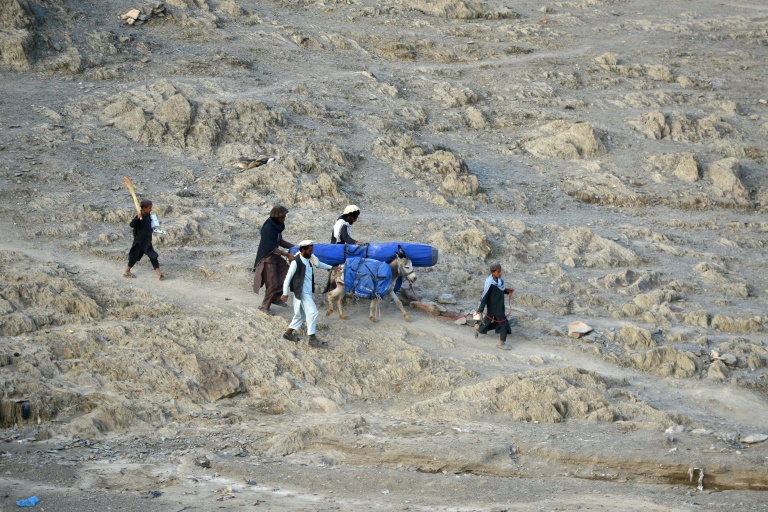
Last week’s 5.9-magnitude earthquake in eastern Afghanistan, which killed more than 1,000 people and left tens of thousands homeless, adds urgency to the funding debate.

“Negotiations are underway and it is our expectation that a final proposal under discussion will be finalised,” said Shah Mehrabi, member of the Supreme Council of the Central Bank of Afghanistan.

However, details on “the mechanism to transfer the reserves to the Central Bank has not been finalised,” he told AFP. 

“It is going to take a while. These things do not happen overnight.”

– ‘Get these funds moving’ –

White House Press Secretary Karine Jean-Pierre said over the weekend that efforts were underway “to get these funds moving” from the frozen reserves.

“We are urgently working to address complicated questions about the use of these funds to ensure they benefit the people of Afghanistan and not the Taliban,” she told reporters travelling with President Joe Biden to Europe.

In question are $3.5 billion in frozen reserves, half the total blocked by the US government.

“I have argued that these reserves should be released to the Central Bank,” said Mehrabi, who also is an economics professor at Montgomery College in the suburbs of the US capital. 

He proposed a “limited, monitored release of reserves” of about $150 million each month to pay for imports.

That would help “stabilise prices and help meet the needs of ordinary Afghans so that they can afford to buy bread, cooking oil, sugar and fuel,” alleviating the misery of families facing high inflation, he said.

Use of the funds “can be independently monitored and audited by external auditing firms with an option to terminate in the event of misuse,” he said.

The United Nations has warned that half the country is threatened with food shortages.

The United States earlier said it was contributing nearly $55 million to relief efforts made more urgent by the earthquake, directing aid to groups working in Afghanistan.

The Taliban are still considered a terrorist group by the United States, which has insisted that any improvement of relations would be dependent on meeting key concerns, including on the treatment of women.

Biden in February gave the green light for the other half of the frozen reserves to go to compensating survivors and families of the victims of the September 11, 2001 attacks, which triggered the invasion in which the United States toppled the Taliban and kept afloat a pro-Western government for two decades.

OPEC+ expected to stay course on oil output boost

Major oil producers led by Saudi Arabia and Russia are expected to stick to a previously decided output boost at their meeting on Thursday, despite pressure to further increase production.

Russia’s invasion of Ukraine has exacerbated concerns about oil supplies, sending prices to record highs this year.

Hard on the heels of an EU ban on Russian oil imports over the invasion, the OPEC+ cartel agreed at their last meeting in early June to open the taps wider than expected.

But prices continue to be high, and analysts say a respite is not in sight when the 23 members of OPEC+ meet via video conference from 1100 GMT.

“We should expect a rubber stamp,” said Jeffrey Halley, an analyst with Oanda. “Given that OPEC+ can’t even meet its present targets, and hasn’t for a long time, I expect no bearish surprises.”

The 13 members of the Organization of the Petroleum Exporting Countries, chaired by Saudi Arabia, and their 10 partners, led by Russia, drastically slashed output in 2020 as the coronavirus pandemic and the resulting lockdowns sent demand plummeting.

Since May last year, they have been gradually increasing output again. In recent months, the US and other top oil consumers have increased their pleas to open the tabs more widely.

But several OPEC+ members have been failing to meet the output quotas, while Iran and Venezuela — and now also Russia — are blocked by sanctions. 

– ‘Political theatre’ –

The United Arab Emirates said this week it was close to its oil output ceiling, ahead of a regional visit by US President Joe Biden, who is expected to lobby for increased production.

Biden will visit neighbouring Saudi Arabia, the world’s biggest oil exporter, as part of his tour next month.

“President Biden’s July trip to Saudi Arabia is mostly for political theatre and won’t really lead to a meaningful increase beyond the planned OPEC+ boost of 648,000 barrels per day of supply in July and August,” said Edward Moya, another analyst from Oanda.

On Monday, at the meeting of the G7 club of industrialised nations in Germany, French President Emmanuel Macron was caught on camera telling Biden details of a conversation with UAE leader Sheikh Mohamed bin Zayed Al-Nahyan.

According to Macron, Sheikh Mohamed said the UAE was at its “maximum” capacity and Saudi Arabia also faced a limit for raising production.

G7 leaders agreed to work on a price cap for Russian oil as part of efforts to cut the Kremlin’s revenues.

As prices soar, OPEC, which was set up to “ensure the stabilisation of oil markets”, has been sticking to its strategy.

“There is little chance OPEC does anything to give relief to the market,” said Ipek Ozkardeskaya, a senior analyst with Swissquote Bank.

Analysts have warned that only a recession may be able to bring down prices.

Texans mourn migrants who died in sweltering truck tragedy

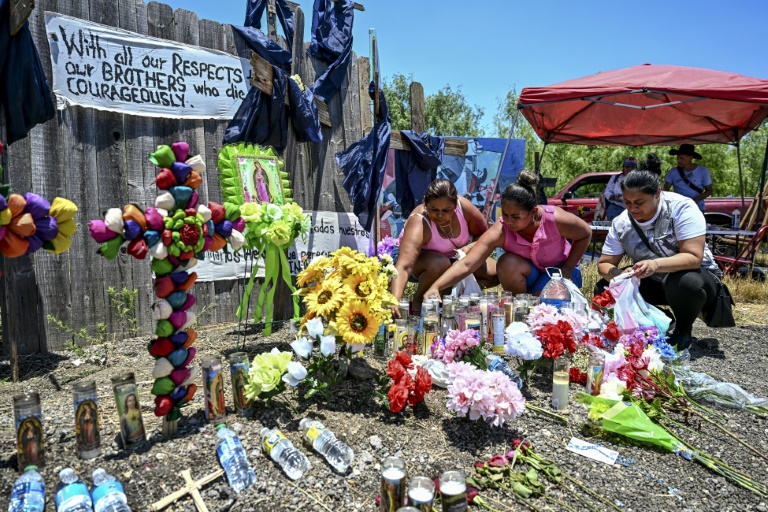
Texas residents gathered under a scorching sun Wednesday to mourn the 53 migrants who died this week after they were abandoned in a trailer in soaring temperatures, leaving tokens of flowers, candles and bottles of water. 

The mourners, several of whom said they or their loved ones had also migrated to the United States illegally, gathered at the site in San Antonio where the truck was found on Monday to erect large wooden crosses and pay their respects.

Immigration authorities have said 53 people died, many of dehydration and heatstroke after they were shut inside the trailer with no water during a day when ambient temperatures rose to 103 degrees Fahrenheit (39.4 degrees Celsius).

Eleven others are still being treated in local hospitals, authorities said. 

“All of this breaks my heart because I have family who have been through the same thing,” said Veronica Vazquez, 37. 

“All my cousins, my uncles, came to the United States illegally, some over the river and others through the desert,” she said.

Roberto Alvarez, who lives in the area, brought roses and candles. 

The 48-year-old himself came to the United States as an undocumented immigrant.

“You put yourself a little bit in their place… because you also lived through it,” he said.

According to Francisco Garduno, head of Mexico’s National Migration Institute, the dead included 27 Mexicans, 14 Hondurans, seven Guatemalans, and two Salvadorans.

The nationalities of the other three were not yet revealed.

Four men have been arrested and charged over the incident so far, according to a statement from the district attorney’s office of western Texas.

The office said a 45-year-old named Homero Zamorano had been arrested at the scene, where he was spotted “hiding in the brush after attempting to abscond.”

He was also spotted on surveillance footage driving the truck at an immigration checkpoint, the statement said, adding that he has been charged with one count of alien smuggling resulting in death, and faces life in prison or execution if convicted. 

Garduno said the suspected driver had initially pretended to be one of the survivors.

– High on meth? –

The local daily San Antonio Express-News reported the man was “very high on meth,” citing a law enforcement officer.

Federal law enforcement agents arrested two other men Tuesday at the address linked to the tractor-trailer’s registration, court documents showed.

Juan Francisco D’Luna-Bilbao and Juan Claudio D’Luna-Mendez, both Mexican nationals who overstayed US tourist visas, were charged with illegal possession of multiple firearms, the documents alleged. They face up to ten years in prison.

The fourth man, Christian Martinez, was arrested in eastern Texas on Tuesday, the district attorney’s statement said.

He was charged with one count of conspiracy to transport illegal aliens resulting in death, and also faces life in prison or potentially the death penalty, it said.

Officials from Mexico, Guatemala and Honduras, who met at Mexico’s embassy in Washington, issued a joint statement in which they pledged to help the victims and their families.

They said that they would form a rapid action group to target and dismantle human trafficking networks.

San Antonio police were first alerted to the trailer on Monday, after a worker near an isolated road in San Antonio heard a cry for help and went to investigate.

'No progress made' on Iran nuclear talks: US State Department

Indirect talks in Qatar’s capital between Iran and the US on reviving a 2015 nuclear deal have concluded with “no progress made”, a State Department spokesperson said late Wednesday.

The negotiations in Doha were an attempt to reboot long-running European Union-mediated talks on a return to the 2015 agreement between Tehran and world powers.

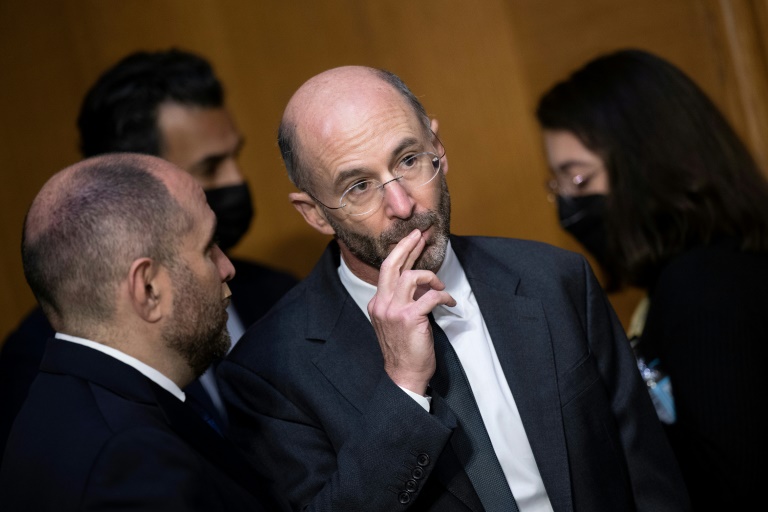
No time limit was previously announced on the most-recent negotiations, which had been taking place in a Doha hotel with special envoy Robert Malley heading the US delegation.

But by Wednesday night, a US State Department spokesperson said the “indirect discussions in Doha have concluded”. 

“While we are very grateful to the EU for its efforts, we are disappointed that Iran has, yet again, failed to respond positively to the EU’s initiative and therefore that no progress was made,” the spokesperson told AFP in an email. 

EU coordinator Enrique Mora had earlier said the parties engaged in “two intense days of proximity talks” in Doha that had “not yet” yielded the progress the EU team sought.

“We will keep working with even greater urgency to bring back on track a key deal for non-proliferation and regional stability,” he said on Twitter earlier in the day, posting a photo of himself meeting with Iran’s chief negotiator Ali Bagheri.

The comments came after Iran’s foreign ministry spokesman Nasser Kanani said that the talks would last only two days.

The parties have “exchanged views and proposals on the remaining issues”, he said.

An EU source told AFP that the discussions, which come two weeks before US President Joe Biden makes his first official visit to the region, were supposed to last several days.

– ‘Red lines’ –

Foreign Minister Hossein Amir-Abdollahian had said Iran was “serious” about finalising a deal in Doha, but that it wouldn’t cross its “red lines”.

“If the American side has serious intentions and is realistic, an agreement is available at this stage and in this round of negotiations,” he was quoted as saying by state news agency IRNA earlier Wednesday.

IRNA has previously described the “red lines” as lifting all sanctions related to the nuclear agreement, creating a mechanism to verify they have been lifted and making sure the US does not withdraw once again from the deal.

Washington has “made clear our readiness to quickly conclude and implement a deal on mutual return to full compliance”, the US State Department spokesperson said after indirect talks concluded. 

“Yet in Doha, as before, Iran raised issues wholly unrelated to the JCPOA (Iran nuclear deal) and apparently is not ready to make a fundamental decision on whether it wants to revive the deal or bury it,” the spokesperson said. 

Differences between Tehran and Washington have notably included Iran’s demand that its Islamic Revolutionary Guard Corps be removed from a US terror list.

– ‘Trump method’ –

The arch-rivals have been meeting indirectly — passing messages from different areas of the same hotel — to try to break an impasse in attempts to restart the 2015 agreement.

That deal, which lifted sanctions in return for Iran curbing its nuclear programme, was abandoned unilaterally in 2018 by former US president Donald Trump, who reimposed biting sanctions.

Iranian officials earlier said they were hoping for progress in Qatar — but warned the Americans to abandon the “Trump method” of negotiating.

“We hope that, God willing, we can reach a positive and acceptable agreement if the United States abandons the Trump method,” Iranian government spokesman Ali Bahadori-Jahromi said.

He described the method as “non-compliance with international law and past agreements and disregard for the legal rights of the Iranian people”.

The international talks on reviving the deal began in April 2021 in Vienna, before the process stalled in March.

burs/th/dwo/dhc/cwl

'No progress made' on Iran nuclear talks: US State Department

Indirect talks in Qatar’s capital between Iran and the US on reviving a 2015 nuclear deal have concluded with “no progress made”, a State Department spokesperson said late Wednesday.

The negotiations in Doha were an attempt to reboot long-running European Union-mediated talks on a return to the 2015 agreement between Tehran and world powers.

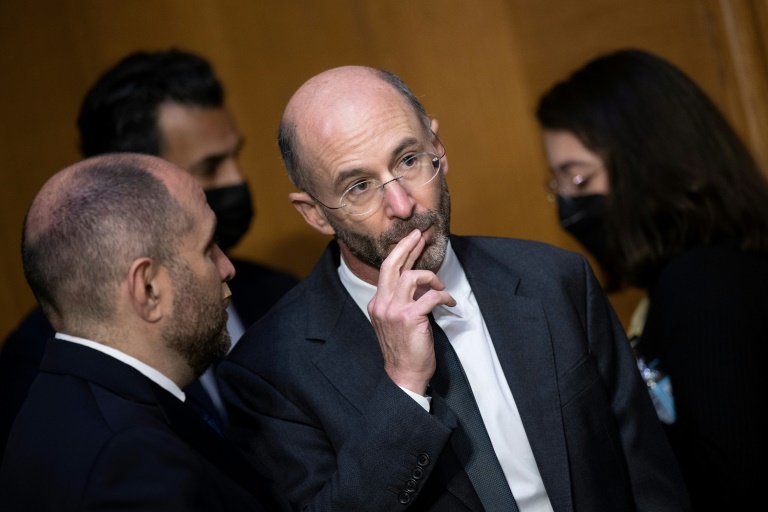
No time limit was previously announced on the most-recent negotiations, which had been taking place in a Doha hotel with special envoy Robert Malley heading the US delegation.

But by Wednesday night, a US State Department spokesperson said the “indirect discussions in Doha have concluded”. 

“While we are very grateful to the EU for its efforts, we are disappointed that Iran has, yet again, failed to respond positively to the EU’s initiative and therefore that no progress was made,” the spokesperson told AFP in an email. 

EU coordinator Enrique Mora had earlier said the parties engaged in “two intense days of proximity talks” in Doha that had “not yet” yielded the progress the EU team sought.

“We will keep working with even greater urgency to bring back on track a key deal for non-proliferation and regional stability,” he said on Twitter earlier in the day, posting a photo of himself meeting with Iran’s chief negotiator Ali Bagheri.

The comments came after Iran’s foreign ministry spokesman Nasser Kanani said that the talks would last only two days.

The parties have “exchanged views and proposals on the remaining issues”, he said.

An EU source told AFP that the discussions, which come two weeks before US President Joe Biden makes his first official visit to the region, were supposed to last several days.

– ‘Red lines’ –

Foreign Minister Hossein Amir-Abdollahian had said Iran was “serious” about finalising a deal in Doha, but that it wouldn’t cross its “red lines”.

“If the American side has serious intentions and is realistic, an agreement is available at this stage and in this round of negotiations,” he was quoted as saying by state news agency IRNA earlier Wednesday.

IRNA has previously described the “red lines” as lifting all sanctions related to the nuclear agreement, creating a mechanism to verify they have been lifted and making sure the US does not withdraw once again from the deal.

Washington has “made clear our readiness to quickly conclude and implement a deal on mutual return to full compliance”, the US State Department spokesperson said after indirect talks concluded. 

“Yet in Doha, as before, Iran raised issues wholly unrelated to the JCPOA (Iran nuclear deal) and apparently is not ready to make a fundamental decision on whether it wants to revive the deal or bury it,” the spokesperson said. 

Differences between Tehran and Washington have notably included Iran’s demand that its Islamic Revolutionary Guard Corps be removed from a US terror list.

– ‘Trump method’ –

The arch-rivals have been meeting indirectly — passing messages from different areas of the same hotel — to try to break an impasse in attempts to restart the 2015 agreement.

That deal, which lifted sanctions in return for Iran curbing its nuclear programme, was abandoned unilaterally in 2018 by former US president Donald Trump, who reimposed biting sanctions.

Iranian officials earlier said they were hoping for progress in Qatar — but warned the Americans to abandon the “Trump method” of negotiating.

“We hope that, God willing, we can reach a positive and acceptable agreement if the United States abandons the Trump method,” Iranian government spokesman Ali Bahadori-Jahromi said.

He described the method as “non-compliance with international law and past agreements and disregard for the legal rights of the Iranian people”.

The international talks on reviving the deal began in April 2021 in Vienna, before the process stalled in March.

burs/th/dwo/dhc/cwl

UK urged to cleanse 'stain' of dirty Russian money

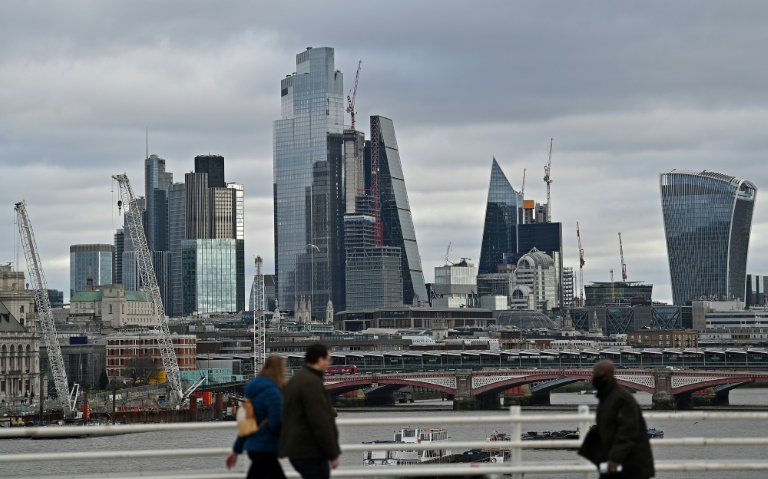
For all its tough talk against Russia, the UK’s government is failing to enforce its promises to clean up dirty foreign money, a hard-hitting report by MPs said Thursday.

It was “shameful” that after years of warnings, the government only began to clamp down on the illicit flows when Russia invaded Ukraine in February, the report by the House of Commons Foreign Affairs Committee said.

The government has brought in new legislation to prevent corrupt funds being laundered through Britain’s property market.

But it has failed to back this up with enough resources or powers for anti-corruption bodies such as the National Crime Agency and Serious Fraud Office, the report said.

“Without the necessary means and resources, enforcement agencies are toothless,” it said.

“The threat illicit finance poses to our national security demands a response that is seen to be serious.”

Rich Russians have long found it easy to acquire expensive properties in London, or a world-class education for their children in Britain’s private schools, or control of Premier League football clubs.

According to multiple studies into the “Londongrad” phenomenon, they were enabled by a service industry encompassing blue-chip bankers, accountants, lawyers, property agents and public relations advisors.

And since Prime Minister Boris Johnson entered Downing Street in 2019, his Conservative party has stepped up a drive to entice cash-rich donors, including from wealthy backers originally from Russia.

Following the invasion of Ukraine, Johnson’s government has sanctioned dozens of wealthy, Kremlin-connected Russians and says their money is no longer welcome in Britain.

However, according to the MPs, “corrupt money has continued to flow into the UK”.

The committee called for the government to publish a review into a “golden visa” programme that enabled thousands of Russians to establish residency, or even citizenship, in Britain from the 1990s.

The scheme only ended in the week before Russia invaded Ukraine, and the report demanded to know what the government intends to do about Russians who obtained visas “without due diligence”.

One beneficiary of the scheme was the sanctioned oligarch Roman Abramovich, who has been forced to sell Chelsea football club.

Johnson meanwhile is refusing to release intelligence advice he received about his controversial appointment of Evgeny Lebedev, a Russian-born newspaper baron, to the House of Lords.

“The UK’s status as a safe haven for dirty money is a stain on our reputation,” the Foreign Affairs Committee’s Conservative chairman, Tom Tugendhat, said.

“The government must bring legislation in line with the morals of the British people and close the loopholes that allow for such rife exploitation,” he said.

US secures 105 million doses of Pfizer vaccine for fall

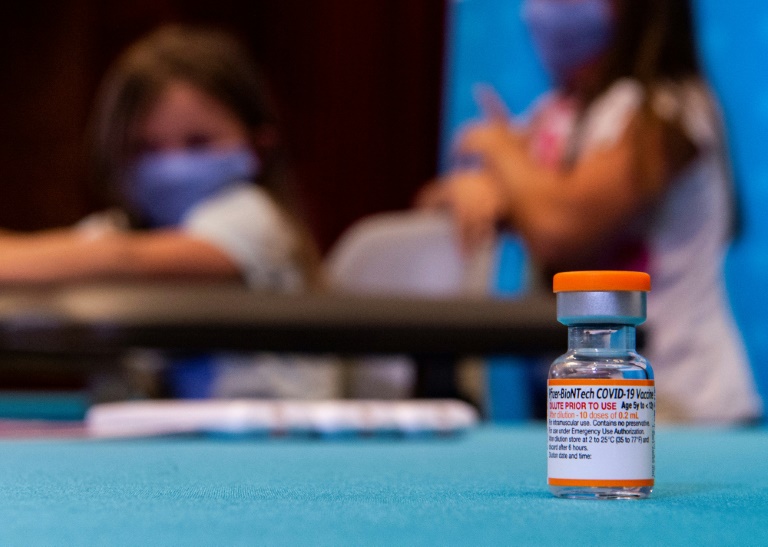
The United States on Wednesday announced an agreement with Pfizer and BioNTech for 105 million doses of Covid vaccine for Americans this fall.

The $3.2 billion contract, signed between the companies and the US health and defense departments, includes vaccines for babies, young children, teens and adults, and may include Omicron-specific vaccines, which a panel of government experts recommended on Tuesday.

Delivery will begin in late summer and continue into the fourth quarter, the companies said. The contract gives the US the option to procure up to 300 million doses.

“The Biden-Harris Administration is committed to doing everything we can to continue to make vaccines free and widely available to Americans – and this is an important first step to preparing us for the fall,” Health and Human Services Secretary Xavier Becerra said in a statement.

President Joe Biden’s administration has asked Congress for $23.5 billion in additional Covid funding, but a bill has not yet been passed.

As a result, the federal government “was forced to reallocate $10 billion in existing funding, pulling billions of dollars from Covid-19 response efforts” the statement said, with the new vaccines procured through this reallocation.

White House officials have previously said that without new funding, future vaccines might only be given for free to those at highest risk.

Webb telescope: NASA to reveal deepest image ever taken of Universe

NASA administrator Bill Nelson said Wednesday the agency will reveal the “deepest image of our Universe that has ever been taken” on July 12, thanks to the newly operational James Webb Space Telescope.

“If you think about that, this is farther than humanity has ever looked before,” Nelson said during a press briefing at the Space Telescope Science Institute in Baltimore, the operations center for the $10 billion observatory that was launched in December last year and is now orbiting the Sun a million miles (1.5 million kilometers) away from Earth. 

A wonder of engineering, Webb is able to gaze further into the cosmos than any telescope before it, thanks to its enormous primary mirror and its instruments that focus on infrared, allowing it to peer through dust and gas.

“It’s going to explore objects in the solar system and atmospheres of exoplanets orbiting other stars, giving us clues as to whether potentially their atmospheres are similar to our own,” added Nelson, speaking via phone while isolating with Covid.

“It may answer some questions that we have: Where do we come from? What more is out there? Who are we? And of course, it’s going to answer some questions that we don’t even know what the questions are.” 

Webb’s infrared capabilities allow it to see deeper back in time to the Big Bang, which happened 13.8 billion years ago. 

Because the Universe is expanding, light from the earliest stars shifts from the ultraviolet and visible wavelengths it was emitted in, to longer infrared wavelengths — which Webb is equipped to detect at an unprecedented resolution.

At present, the earliest cosmological observations date to within 330 million years of the Big Bang, but with Webb’s capacities, astronomers believe they will easily break the record.

– 20 year life –

In more good news, NASA deputy administrator Pam Melroy revealed that, thanks to an efficient launch by NASA’s partner Arianespace, the telescope could stay operational for 20 years, double the lifespan that was originally envisaged.

“Not only will those 20 years allow us to go deeper into history, and time, but we will go deeper into science because we have the opportunity to learn and grow and make new observations,” she said.

NASA also intends to share Webb’s first spectroscopy of a faraway planet, known as an exoplanet, on July 12, said NASA’s top scientist Thomas Zurbuchen. 

Spectroscopy is a tool to analyze the chemical and molecular composition of distant objects and a planetary spectrum can help characterize its atmosphere and other properties such as whether it has water and what its ground is like.

“Right from the beginning, we’ll look at these worlds out there that keep us awake at night as we look into the starry sky and wonder as we’re looking out there, is there life elsewhere?” said Zurbuchen.

Nestor Espinoza, as STSI astronomer, told AFP that previous exoplanet spectroscopies carried out using existing instruments were very limited compared to what Webb could do.

“It’s like being in a room that is very dark and you only have a little pinhole you can look through,” he said, of current technology. Now, with Webb, “You’ve opened a huge window, you can see all the little details.”

Webb telescope: NASA to reveal deepest image ever taken of Universe

NASA administrator Bill Nelson said Wednesday the agency will reveal the “deepest image of our Universe that has ever been taken” on July 12, thanks to the newly operational James Webb Space Telescope.

“If you think about that, this is farther than humanity has ever looked before,” Nelson said during a press briefing at the Space Telescope Science Institute in Baltimore, the operations center for the $10 billion observatory that was launched in December last year and is now orbiting the Sun a million miles (1.5 million kilometers) away from Earth. 

A wonder of engineering, Webb is able to gaze further into the cosmos than any telescope before it, thanks to its enormous primary mirror and its instruments that focus on infrared, allowing it to peer through dust and gas.

“It’s going to explore objects in the solar system and atmospheres of exoplanets orbiting other stars, giving us clues as to whether potentially their atmospheres are similar to our own,” added Nelson, speaking via phone while isolating with Covid.

“It may answer some questions that we have: Where do we come from? What more is out there? Who are we? And of course, it’s going to answer some questions that we don’t even know what the questions are.” 

Webb’s infrared capabilities allow it to see deeper back in time to the Big Bang, which happened 13.8 billion years ago. 

Because the Universe is expanding, light from the earliest stars shifts from the ultraviolet and visible wavelengths it was emitted in, to longer infrared wavelengths — which Webb is equipped to detect at an unprecedented resolution.

At present, the earliest cosmological observations date to within 330 million years of the Big Bang, but with Webb’s capacities, astronomers believe they will easily break the record.

– 20 year life –

In more good news, NASA deputy administrator Pam Melroy revealed that, thanks to an efficient launch by NASA’s partner Arianespace, the telescope could stay operational for 20 years, double the lifespan that was originally envisaged.

“Not only will those 20 years allow us to go deeper into history, and time, but we will go deeper into science because we have the opportunity to learn and grow and make new observations,” she said.

NASA also intends to share Webb’s first spectroscopy of a faraway planet, known as an exoplanet, on July 12, said NASA’s top scientist Thomas Zurbuchen. 

Spectroscopy is a tool to analyze the chemical and molecular composition of distant objects and a planetary spectrum can help characterize its atmosphere and other properties such as whether it has water and what its ground is like.

“Right from the beginning, we’ll look at these worlds out there that keep us awake at night as we look into the starry sky and wonder as we’re looking out there, is there life elsewhere?” said Zurbuchen.

Nestor Espinoza, as STSI astronomer, told AFP that previous exoplanet spectroscopies carried out using existing instruments were very limited compared to what Webb could do.

“It’s like being in a room that is very dark and you only have a little pinhole you can look through,” he said, of current technology. Now, with Webb, “You’ve opened a huge window, you can see all the little details.”

Close Bitnami banner
Bitnami