US Business

Turkey seeks extraditions from Finland, Sweden under NATO deal

Turkey said Wednesday it would seek the extradition of 33 alleged Kurdish militants from Sweden and Finland under a deal to secure Ankara’s support for the Nordic countries’ NATO membership bids.

President Recep Tayyip Erdogan dropped weeks of resistance to the two countries’ NATO ambitions at crunch talks held on the eve of an alliance summit Wednesday focused on Russia’s invasion of Ukraine.

Erdogan emerged from the meeting declaring victory after securing a 10-point agreement under which the two countries vowed to join Turkey’s fight against outlawed Kurdish militants and to quickly extradite suspects.

Turkey put the deal to the immediate test by announcing that it would seek the extradition of 12 suspects from Finland and 21 from Sweden.

“We will seek the extradition of terrorists from the relevant countries within the framework of the new agreement,” Justice Minister Bekir Bozdag said in a statement.

“We ask them to fulfil their promises.”

The unnamed suspects were identified as being members of the outlawed Kurdistan Workers’ Party (PKK) and a group led by a US-based Muslim preacher that Erdogan blames for a failed 2016 coup attempt.

The European Union and Washington both recognise the PKK as a terrorist organisation because of the brutal tactics it employed during a decades-long insurgency against the Turkish state.

But the agreement also stipulates that Sweden and Finland vow to “not provide support” to the YPG — a PKK offshoot in Syria that played an instrumental role in the US-led alliance against the Islamic State group.

Sweden and Finland abandoned decades of military non-alignment in response to Russia’s invasion of Ukraine and asked to join the US-led alliance in May.

– ‘Got what it wanted’ –

Their applications appeared to be headed for swift approval until Erdogan stepped in.

The Turkish leader accused Finland and particularly Sweden of providing a haven to Kurdish fighters and financing terror.

Erdogan also wanted the two countries to lift embargoes on weapons deliveries they imposed in response to Turkey’s 2019 military incursion into Syria.

The memorandum appears to address many of Erdogan’s concerns.

It says Finland and Sweden pledge to “address Turkey’s pending deportation or extradition requests of terror suspects expeditiously and thoroughly”.

“Finland and Sweden confirm that the PKK is a proscribed terrorist organisation,” says the agreement.

“Finland and Sweden commit to prevent activities of the PKK and all other terrorist organisations and their extensions, as well as activities by individuals… linked to these terrorist organisations.”

Erdogan’s office hailed the agreement as a full victory.

“Turkey got what it wanted,” his office declared in a statement.

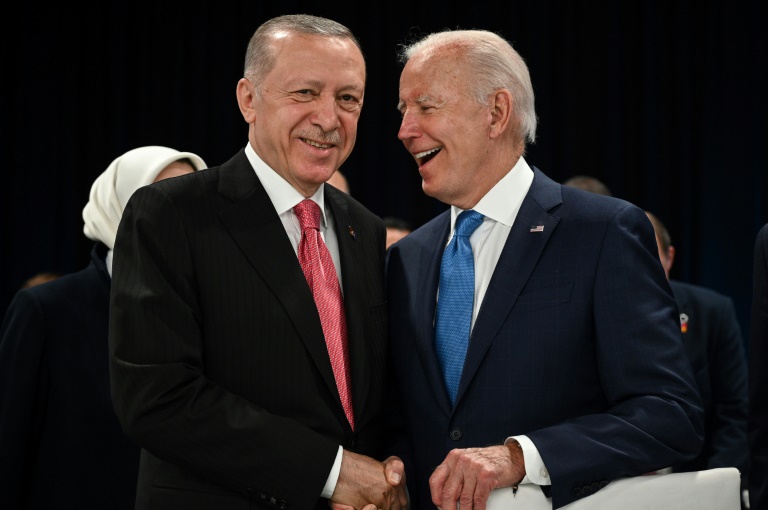
Erdogan also secured the promise of a long-sought meeting with US President Joe Biden on the sidelines of the NATO talks.

A US officials told reporters that Biden was “keen” to improve relations with Turkey after a difficult spell caused in part by Turkey’s crackdown on human rights.
Germany plans return to debt-limit rules in 2023

Germany will reinstate its so-called debt brake in 2023 after suspending it for three years to cope with the impact of the coronavirus pandemic, sources in the finance ministry said Wednesday.

The government will borrow 17.2 billion euros ($18.1 million) next year, adhering to the rule enshrined in the constitution that normally limits Germany’s public deficit to 0.35 percent of overall annual economic output, despite new spending as a result of Russia’s war in Ukraine, the sources said.

The new borrowing set out in a draft budget to be presented to the cabinet on Friday is almost 10 billion euros higher than a previous figure for 2023 announced in April.

However, “despite a considerable increase in costs, the debt brake will be respected,” one of the sources said.

After taking on almost 140 billion euros of new debt in 2022, Germany will next year benefit from the end of many expenses related to the coronavirus pandemic, as well as higher tax revenues, the sources added.

Although Germany is traditionally a frugal nation, the government broke its own debt rules at the start of the coronavirus pandemic and unleashed vast financial aid to steer the economy through the crisis.

The government has this year unveiled a multi-billion-euro support package to help companies in Europe’s biggest economy weather the fallout from the Ukraine war and sanctions against Russia.

Berlin has also spent billions to diversify its energy supply to reduce its dependence on Russia, as well as investing heavily in plans to tackle climate change and push digital technology.

– ‘Wrong instrument’ –

The pledge to return to the debt brake from 2023 was a key point in the coalition agreement signed by the Social Democrats (SPD), the Greens and the liberal FDP as they formed a government in late 2021.

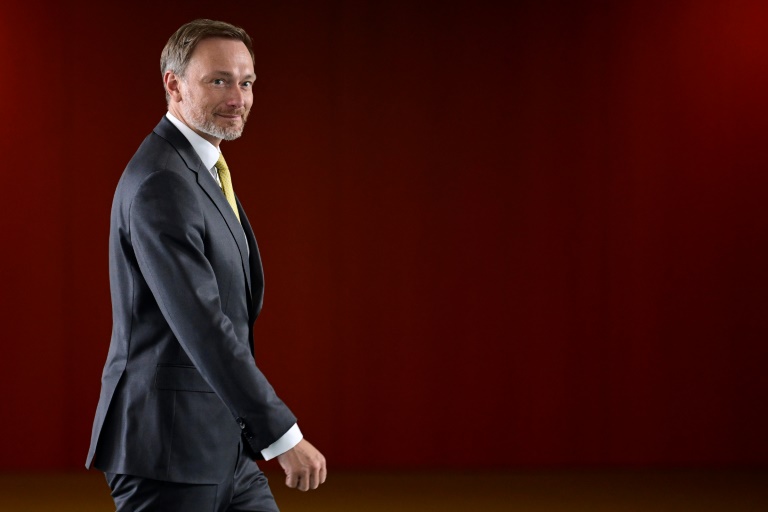
The policy was a key demand of the FDP’s Christian Lindner, now finance minister.

But pressure has mounted in recent weeks for the rule to be suspended for longer — even from within the coalition government. 

“We need to discuss the debt brake,” SPD co-president Saskia Esken said last week, calling for the rule to be waived into 2023.

“In times of crisis, austerity is the wrong instrument,” said the Green party’s Sven-Christian Kindler, who sits on the Bundestag’s budget committee. 

However, Lindner insisted this week in an interview with the ZDF broadcaster that “the return to the debt brake is not negotiable”. 

The minister pointed to rising interest rates in Europe, which is expected to cost Germany an extra 12 billion euros in 2023. 

Discussions on the draft budget in parliament, which are due to begin in September, are set to be heated.

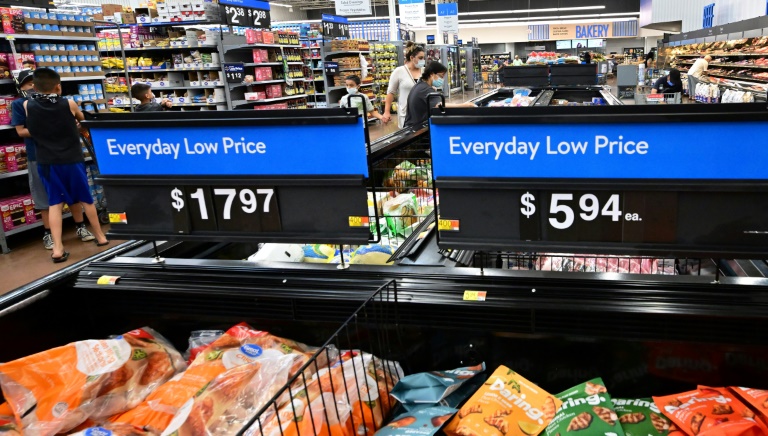
How long will it take to get over the inflation hump?

Inflation has surged back to levels not seen in many developed economies since the 1970s and 1980s. Economists and central bankers at the European Cental Bank’s conference in Portugal warn it will take time before price rises cool.

– How did we get here? –

For the ECB, established in 1998 to oversee the European single currency, the burst of inflation is without precedent.

“The current levels of food and industrial goods inflation have not been seen since the mid-1980s,” ECB President Christine Lagarde said in her remarks at the conference on Tuesday.

Likewise, the “increase in the relative price of energy in recent months is much higher than the individual spikes that occurred in the 1970s” during the oil shock, Lagarde said.

The take-off in inflation, over eight percent in the eurozone in May, was at the end of a “a sequence that happens in a chaotic world”, Richard Baldwin, an economics professor at the Graduate Institute of Geneva, told AFP.

The supply shock caused by the the outbreak of the coronavirus pandemic in 2020 had been followed by a “demand twist” where people used their money more on goods, Baldwin said.

Instead of seeing this fading, the Russian invasion in Ukraine is causing “a huge spike in fuel and food prices” and heaping pressure on inflation, he said.

But it is not just energy. As health restrictions fall away, consumers are turning back to services, while the pent-up demand for tourism is being released, Lagarde noted.

“There is no playbook for this inflation,” said economist Baldwin.

– How long will it stay like this? –

With no end in sight for the war in Ukraine, the disruptions caused to the supply of energy could keep prices high for some time to come.

Domestic factors could also prop up high inflation rates, with workers demanding higher and higher compensation to make up for the rising cost of living.

Adding to the pressure are low unemployment rates, handing more leverage to workers looking for pay rises.

– What can central banks do? – 

The message put out by central banks is one of their most powerful tools to calm markets and control prices.

But the task at hand “has become quite difficult in view of high inflation numbers” and as “people feel high inflation every day when they’re buying food or going to the gas station”, Isabel Schnabel, a member of the ECB’s executive board, told AFP.

“We can do little about current inflation, but we will take decisive measures so that inflation returns to our (two-percent) target over the medium term,” Schnabel said.

“Once inflation is there and it starts to increase the expectations and wages, monetary policy should act,” Sebnem Kalemli-Ozcan, an economic professor at the University of Maryland, told AFP.

That is what the ECB has planned to do, announcing an interest rate hike for July, its first in over a decade. But the Frankfurt-based institution has to be careful not to completely choke off sputtering growth.

“The question is not if the prices will go down after some time, but what will happen to growth,” Kalemli-Ozcan said.

That is why comparisons are being made with the 1970s and the “stagflation type of situation” where inflation persisted while growth rates faltered, she said. “In Europe there is a risk of stagflation.”

Allies freeze $330 bn of Russian assets since Ukraine invasion: task force

A sanctions task force of leading Ukraine allies has frozen more than $330 billion in financial resources owned by Russia’s elite and the central bank since Moscow’s troops invaded, the group announced Wednesday. 

The Russian Elites, Proxies, and Oligarchs Task Force (REPO) said in a joint statement that they had blocked $30 billion in assets of Russian oligarchs and officials, and immobilized $300 billion owned by the Russian central bank.

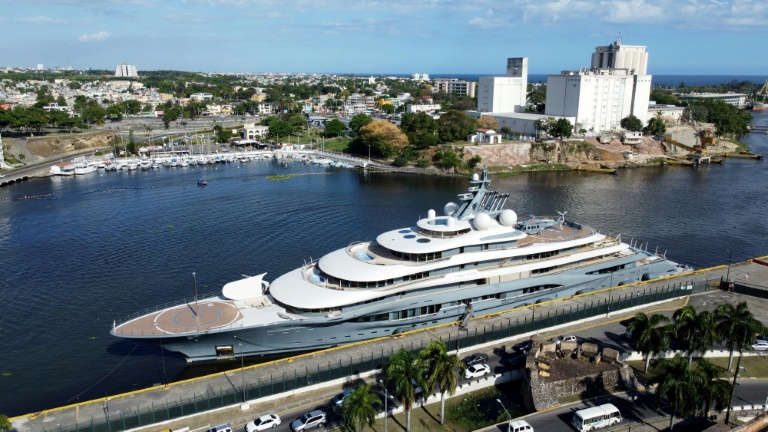
They have also detained at least five luxury yachts and frozen opulent real estate owned by the country’s billionaires. 

“Together, we will ensure that our sanctions continue to impose costs on Russia for its unprovoked and continuing aggression in Ukraine,” the group said in a statement released by the US Treasury.

REPO was formed on March 17, three weeks after the invasion of Ukraine, to increase pressure on Moscow economically in hopes of getting Russian President Vladimir Putin to end the war.

Its members include top finance and justice officials of the United States, Australia, France, Canada, Germany, Japan, Italy, Britain and the European Commission.

They have moved steadily to take hold of luxury estates and mega-yachts of Russian billionaires known to have ties to Putin.

But they have also worked to isolate Moscow in the global financial system, making it harder for the Kremlin to use its money on the global markets.

They have constrained Moscow’s ability to acquire advanced technologies. 

On Sunday Britain, Canada, Japan and the United States jointly announced they would ban the purchase of gold from Russia in order to prevent the country and its tycoons from using the metal to avoid sanctions.

REPO warned it would continue to pursue the assets of wealthy and powerful Russians.

“REPO’s work is not yet complete,” they said. “We continue to increase Russia’s cost of its war.”

Aquaculture drives aquatic food yields to new high

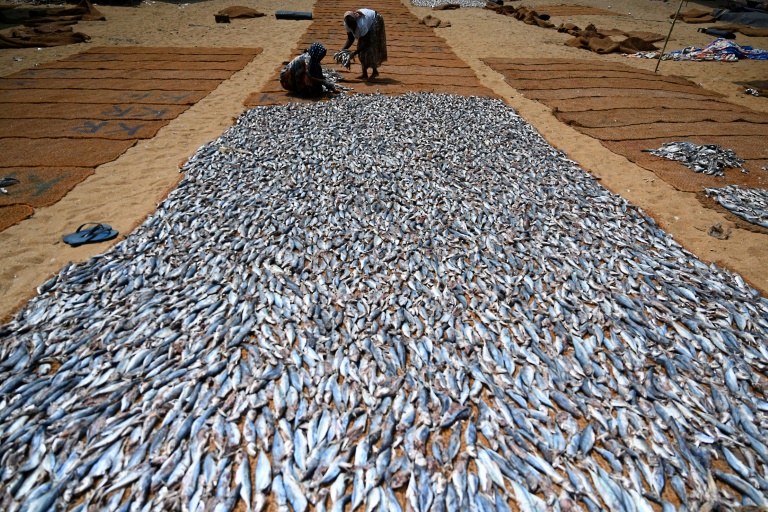
The amount of fish, shellfish and algae caught in the wild and farmed in aquaculture hit a record 214 million tonnes in 2020, the Food and Agriculture Organization said Wednesday.

Driven by a sustained surge in aquaculture, the new record is good news for a world facing price hikes and food shortages due to the war in Ukraine, disrupted supply chains, and inflation. 

“The growth of fisheries and aquaculture is vital in our efforts to end global hunger and malnutrition,” said FAO director Qu Dongyu.

But overfished oceans, climate change and pollution — if left unaddressed — could threaten that potential, the UN agency warned in its 2022 state of the world fisheries report.

“Aquaculture growth has often occurred at the expense of the environment,” it said. 

“Sustainable aquaculture development remains critical to supply the growing demand for aquatic food.”  

Production of aquatic animals in 2020 — totalling 178 million tonnes — was evenly divided between fisheries and aquaculture.

The remaining 36 million tonnes was algae production.

Yields of fish, shrimp and other shellfish destined for human consumption is more than 60 percent higher than during the 1990s, far outpacing population growth, according to the report, released during the UN Ocean Conference in Lisbon.

On average, people worldwide consume over 20 kilos (44 pounds) of aquatic foods per year today, more than double the amount 50 years ago.

Globally, 17 percent of the protein consumed by humans comes from aquatic sources. In many Asian and African countries, that figure rises to more than 50 percent, according to the report.

Wild and farmed food from the seas and inland waters are also a critical source of essential omega-3 fatty acids and micronutrients, recent research has shown.

“Aquatic foods are increasingly recognised for their key role in food security and nutrition,” Qu said. 

Nearly 90 percent of aquatic animal production is for human consumption, with the rest destined for non-food uses such as fishmeal and fish oil.

Asian countries were the source of 70 percent of the world’s fisheries and aquaculture of aquatic animals in 2020. 

China remaining by far the top fisheries producer, followed by Indonesia, Peru, Russia, the United States and Vietnam.

So-called capture fisheries in the wild — which have stagnated since the mid-1990s — dropped by four percent in 2020 compared to the average of the previous three years.

Part of the drop can be attributed to disruptions caused by the Covid pandemic, but long-term decline is due to overfishing.

“The FAO estimates that 34 percent of caught fish come from overfished stocks,” University of British Columbia economist and fisheries expert Rashid Sumaila told AFP.

“But they are very conservative,” he added. “Independent studies put that figure at 50 percent.”

Equity market losses driven by recession, inflation fears

Fears of a recession caused by sharp interest rate hikes aimed at fighting soaring inflation sent Asian and European markets tumbling Wednesday, tracking a sharp drop on Wall Street.

The hefty selling came after more than a week of gains across the world caused by hopes that any signs of contraction could give central banks room to ease up on their pace of monetary tightening.

The fluctuations on trading floors show how tough it has become for investors to find their feet, just as financial policymakers struggle to find a balance between containing prices and maintaining economic growth.

Wednesday’s selling came after New York’s three main indexes tanked in reaction to data showing confidence among US consumers — who are a crucial driver of the world’s top economy — had fallen to its lowest level in more than a year.

The mood-sapping reading was partly driven by a feeling inflation would persist, suggesting consumers are not sure the Federal Reserve’s aggressive efforts to tame inflation will work.

The news overshadowed a surprise move by China to slash the quarantine period for incoming travellers, raising hopes for further relaxations that can allow the country’s giant economy to recover more quickly.

Hong Kong led losses as tech firms took a beating, while Tokyo, Shanghai, Sydney, Seoul, Mumbai, Manila, Taipei, Jakarta, Bangkok and Wellington were also well down.

London, Paris and Frankfurt all fell in the morning.

Top Fed officials on Tuesday tried to play down the chances of a recession, with the heads of the Fed in San Francisco and New York saying they were upbeat a soft landing could be achieved.

“I see us tapping on the brakes to slow to a more sustainable pace, rather than slamming on the brakes, going over the handlebars and having the proverbial recession,” San Francisco’s Mary Daly told an online event hosted by LinkedIn.

“I wouldn’t be surprised, and it’s actually in my forecast, that growth will slip below two percent, but it won’t actually pivot down into negative territory for a long period of time.”

– ‘Not looking pretty’ –

But analysts were more sceptical, with Sim Moh Siong at Bank of Singapore saying “low US consumer expectations suggest weaker growth in (the second half of 2022) as well as growing risk of recession by year end”.

The Conference Board’s chief economist Dana Peterson warned the United States will likely see a recession in late 2022.

And Emily Weis, at State Street Corp, said: “The Fed still believes it can thread that very fine line between tightening financial conditions while not hurting the economy too much.

“We’re still not sure they’re going to be able to pull that off. That’s what we’ve seen reflected in the markets over the last month or so.”

Meanwhile there was a word of warning for the outlook as companies begin to feel the pinch.

“With investors laser-focused on US growth and inflation data, both of which tanked stocks (Tuesday), do not forget earnings cuts are now coming through — the red ink is flowing through stocks, sectors, and aggregated strategy models,” said Stephen Innes at SPI Asset Management.

“All regions, countries, industries, and stocks are getting printed red with broad strokes. It is not looking pretty.” 

Oil prices dipped though remain elevated following a run-up in recent days on expectations that demand will continue to rise — despite recessionary talk — and supplies remain tight owing to the ban on imports from Russia.

And while G7 leaders agreed to work on a price cap for Russian oil as part of efforts to cut the Kremlin’s revenues, observers warned that will not likely have a massive impact on prices.

“The easing of China’s zero-Covid policy helped oil to the third day of gains following a decent correction in recent weeks,” said Craig Erlam at OANDA. 

“As did reports that the UAE and Saudi Arabia are producing near capacity, in stark contrast to claims that both are holding back and could do more.”

He added that OPEC and other major producers were 2.7 million barrels per day below target in May, “taking the total shortfall under the agreement to more than half a billion”.

“Even sanctions being lifted on Iran and Venezuela can’t do much against that backdrop. It may well take a recession to return oil prices to sustainable levels any time soon,” he warned.

– Key figures at around 0810 GMT –

Tokyo – Nikkei 225: DOWN 0.9 percent at 26,804.60 (close)

Hong Kong – Hang Seng Index: DOWN 1.9 percent at 21,996.89 (close)

Shanghai – Composite: DOWN 1.4 percent at 3,361.52 (close)

London – FTSE 100: DOWN 0.4 percent at 7,296.70

Dollar/yen: DOWN at 136.10 yen from 136.20 yen Friday

Pound/dollar: DOWN at $1.2191 from $1.2187

Euro/dollar: DOWN at $1.0513 from $1.0525

Euro/pound: DOWN at 86.23 pence from 86.32 pence

West Texas Intermediate: DOWN 0.3 percent at $111.47 per barrel

Brent North Sea crude: DOWN 0.4 percent at $117.55 per barrel

New York – Dow: DOWN 1.6 percent at 30,946.99 (close)

Ukraine war dominates crucial NATO summit

NATO leaders were set Wednesday to invite Finland and Sweden to join after Turkey dropped objections, as the alliance looked to revamp its defences at a summit dominated by the war in Ukraine.  

More than four months after Russia invaded Ukraine, upending the European security landscape, leaders gather in Madrid for what NATO chief Jens Stoltenberg called a “historic and transformative summit” for the alliance’s future. 

Ukrainian President Volodymyr Zelensky is set to address the meeting via videolink to renew Kyiv’s pleas for accelerated weapons deliveries from its allies. 

NATO countries, which have already committed billions of dollars in military assistance to Kyiv, will agree a “comprehensive assistance package to Ukraine, to help them uphold the right for self-defence”.

“We meet in the midst of the most serious security crisis we have faced since the Second World War,” Stoltenberg said.” 

“We’ll state clearly that Russia poses a direct threat to our security.”

NATO is due to launch the largest revamp of its defence and deterrence capabilities since the end of the Cold War by strengthening the forces on its eastern flank and massively ramping up the number of troops it has at high readiness.

“Russia now is an aggressor in Ukraine, Russia attacked Ukraine and Russia is a threat for Europe but not only for Europe, for all NATO,” Poland President Andrzej Duda said. 

“This is very clear situation now.”

– Turkey drops opposition –

Beyond Ukraine, the summit will see a revamp of NATO’s strategic concept — which outlines its main security tasks, but has not been revised since 2010 — to mention challenges posed by China for the first time.

Finland and Sweden will be invited to join the alliance at the summit after Turkish President Recep Tayyip Erdogan on Tuesday lifted his opposition following crunch talks with the leaders of the two Nordic countries in Madrid.

The move is a blow to Russia’s President Vladimir Putin, who launched his war in Ukraine saying he wanted to stop NATO expansion but is now set to see his border with the alliance more than double. 

Erdogan had stubbornly refused to back the applications from the Nordic pair — lodged in response to Russia’s war on Ukraine — despite pressure for a change of course from his NATO allies.

But Erdogan’s office said it had agreed to support them as Ankara had “got what it wanted”.

Ankara had accused Finland, and especially Sweden, of offering a safe haven to Kurdish militants who have been waging decades-long insurgency against the Turkish state.

US President Joe Biden congratulated Turkey, Finland and Sweden on reaching an agreement. 

“As we begin this historic NATO summit in Madrid, our alliance is stronger, more united and more resolute than ever,” he said in a statement. 

But it will still take months for Finland and Sweden to officially join NATO, as their entry needs to be ratified by the parliaments of the 30 member states. 

– ‘Stop Russian terror’ –

The summit comes as war rages across Ukraine, particularly in the eastern Donbas region where Moscow has been focusing its offensive after failing to capture Kyiv in the conflict’s early days. 

There was global outrage Monday after a missile strike on a shopping mall in the central city of Kremenchuk killed at least 18 people and injured dozens. 

Russia claims its missile salvo was aimed at an arms depot. But AFP talked to civilians in Kremenchuk, and none of them knew of any weapons store in the neighbourhood.

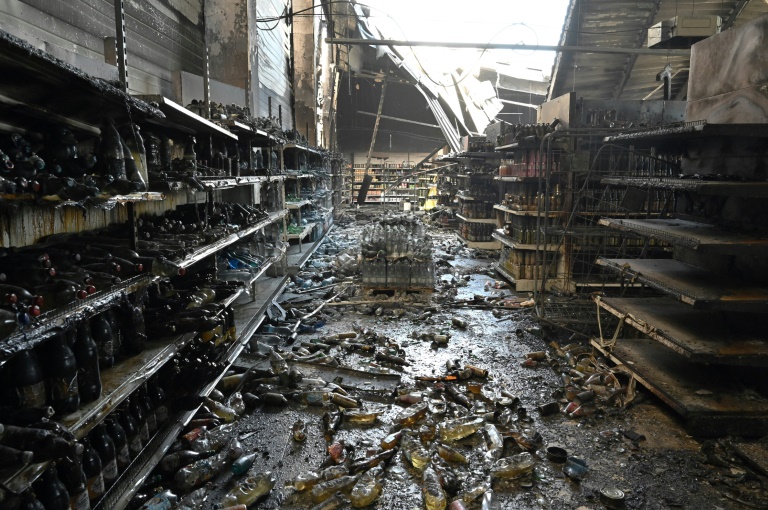
“Everything burned, really everything, like a spark to a touchpaper. I heard people screaming. It was horror,” witness Polina Puchintseva said.

All that was left of the mall was charred debris, chunks of blackened walls and lettering from a smashed storefront.

“Only total insane terrorists, who should have no place on Earth, can strike missiles at civilian objects,” said Zelensky on his social media channels. 

“Russia must be recognised as a state sponsor of terrorism. The world can and therefore must stop Russian terror,” he added.

Addressing the UN Security Council Tuesday, Zelensky called for the United Nations to visit the site so they can independently assess whether the destruction was caused by a Russian missile strike.

At their summit in Germany, G7 leaders agreed to impose new sanctions targeting Moscow’s defence industry, raising tariffs and banning gold imports from the country.

But the Kremlin was unfazed, insisting that Ukrainian forces had to surrender to end the fighting.

“The Ukrainian side can stop everything before the end of today,” Kremlin spokesman Dmitry Peskov said.

“An order for the nationalist units to lay down their arms is necessary,” he said, adding Kyiv had to fulfil a list of Moscow’s demands.

burs-del/yad

US opens probe after 51 migrants die in sweltering trailer

The death toll of undocumented migrants who were abandoned in a scorching-hot trailer in Texas rose to 51 Tuesday, as President Joe Biden blamed “criminal” professional smugglers for the tragedy.

Rebeca Clay-Flores, a Bexar County official, reported the new tally of “39 men and 12 women” dead, following the Monday discovery of the tractor-trailer on an isolated road in her district.

She did not say how many survivors remained in hospital, but the number could be around 11 based on initial figures that officials gave, including possibly four children.

The Department of Homeland Security announced it had opened a criminal investigation, as Biden took aim at human smuggling gangs.

“The tragic loss of life in San Antonio, Texas that took place yesterday is horrifying and heartbreaking,” he said in a statement.

“This incident underscores the need to go after the multi-billion dollar criminal smuggling industry preying on migrants and leading to far too many innocent deaths,” he said.

– Intense heat –

Federal law enforcement agents on Tuesday arrested two men at the address linked to the tractor-trailer’s registration, court documents showed.

Juan Francisco D’Luna-Bilbao and Juan Claudio D’Luna-Mendez, both Mexican nationals whose US tourist visas had expired, were illegally in possession of multiple firearms, the documents alleged.

A third person, suspected of being the driver of the tractor-trailer, was arrested nearby while “very high on meth,” reported the local daily San Antonio Express-News, citing a law enforcement officer.

According to Mexican President Andres Manuel Lopez Obrador, of the dead whose identities are known, 22 were from Mexico, seven from Guatemala and two from Honduras.

“It’s a tremendous misfortune,” he told reporters.

It was the deadliest single incident involving migrants along the southern border in memory, and drew more attention to the risks that hundreds of thousands of people face seeking to enter the United States from Mexico without permission.

On Monday, the high temperature in San Antonio was 103 degrees Fahrenheit (39.4 degrees Celsius), and the temperature in the unvented trailer would have been much higher.

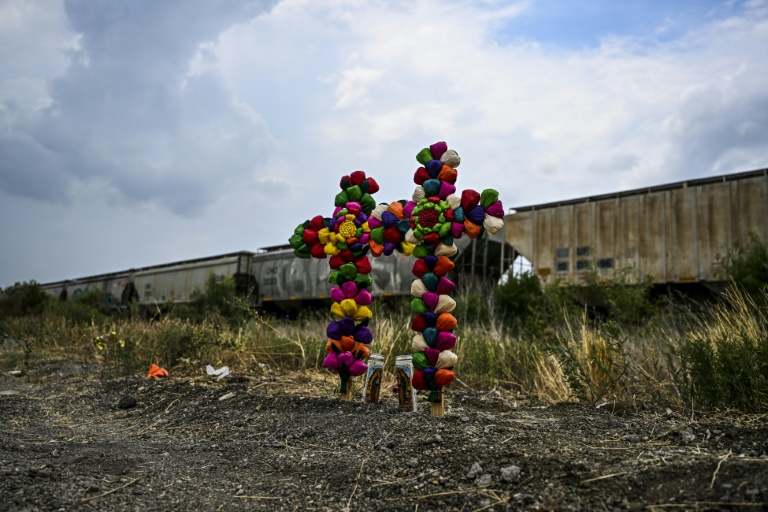
By Tuesday afternoon, authorities had removed the trailer from where it had been abandoned with its human cargo, on a narrow road sandwiched between train tracks and auto junkyards.

Replacing it were makeshift crosses adorned with artificial flowers.

“I feel that if these people walk hundreds of miles to get over here, it wouldn’t hurt us to walk maybe one mile to put the crosses and candles,” said Angelita Olvera, who lives nearby.

“Hopefully, whoever had them in the trailer will pay the consequences,” she said.

– Common route –

San Antonio Police Chief William McManus said authorities were first alerted to the trailer by an emergency call at about 5:50 pm local time (2250 GMT) on Monday.

“A worker who works in one of the buildings up here behind me heard a cry for help,” he told reporters. 

The worker “came out to investigate, found a trailer with the doors partially open, opened them up to take a look, and found a number of deceased individuals inside,” McManus said.

The tragedy came five years after 10 migrants were found dead in a trailer with broken air conditioning and clogged ventilation holes near San Antonio. 

In recent weeks Border Patrol officers have discovered other attempts to bring undocumented travelers into the country in large trucks.

On June 14, 80 people from Mexico, Guatemala, Honduras and El Salvador were discovered inside a tractor-trailer when it was inspected by agents at a highway checkpoint north of Laredo, a border hub in south Texas.

Three weeks earlier, agents intercepted a trailer with 48 people inside near Sierra Blanca in western Texas.

Jesus Thompson, 60, lives just across the train track from where the people in the trailer were found.

“People from Mexico and Guatemala come here to seek the American dream,” he said. 

“I would tell the people who are there and who are fleeing to think about it before coming here, because there is a tremendous risk, and especially now that the weather is very hot.”

– Political issue –

The case immediately became a focus of politics when Republicans attacked Democratic President Biden for allegedly being soft on immigration.

“These deaths are on Biden. They are a result of his deadly open border policies,” said Texas Governor Greg Abbott.

Under Biden, more than 200,000 people attempting to enter the country illegally have been interdicted at the border each month and sent back.

But there is no good estimate of the thousands more that succeed in staying inside the country.

Biden said he had already launched an anti-smuggling campaign that focused on the networks and arrested 2,400 people in recent months.

“Exploiting vulnerable individuals for profit is shameful, as is political grandstanding around tragedy,” he said.

The migration issue will be a key agenda item when Biden hosts his Mexican counterpart Lopez Obrador for talks on July 12.

Hong Kong's blurring border with China a sign of things to come

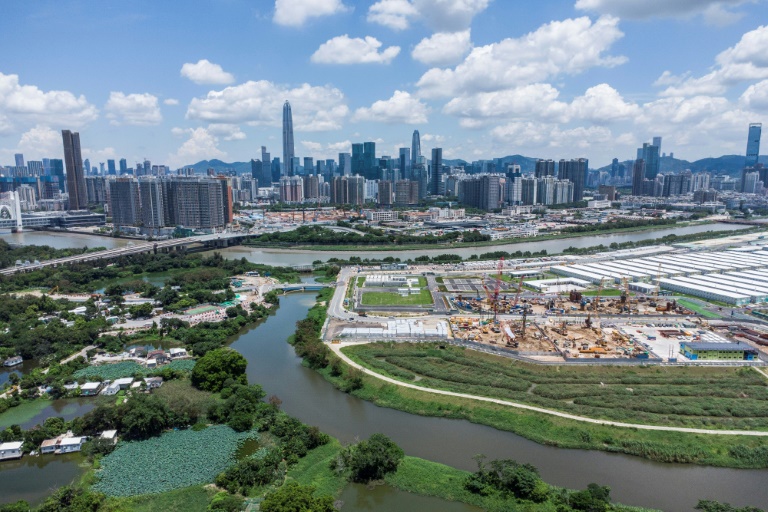
From the hill in northernmost Hong Kong where Jasper Law stood, the border with China was obvious — a narrow river dividing farmlands and fishponds from the gleaming skyscrapers of megacity Shenzhen.

Friday is the 25th anniversary of Hong Kong’s transition from British to Chinese rule.

While the view from the hilltops of Lok Ma Chau suggests Hong Kong remains clearly distinct from mainland China, the territory is fast being subsumed into Beijing’s blueprint for southern China.

And as the border is chipped away, the lack of public consultation has done little to ease the lingering discomfort some Hong Kongers feel about living on the mainland’s doorstep.

“In the 25 years since the handover, the border has become more and more blurry,” said Law, a pro-democracy politician from the border area.

The softening boundary has preoccupied many Hong Kongers.

And it was one of the catalysts for the huge democracy protests in the finance hub three years ago, a movement initially triggered by an attempt to allow extraditions to China’s mainland.

Beijing’s subsequent crackdown has only sped up Hong Kong’s absorption.

– Security agents roam free –

The integration of Hong Kong’s population and economy with mainland China has been under way for decades.

Between 1997 and 2021, more than 1.1 million people migrated from China via a limited-quota “one-way permit” scheme, almost a seventh of Hong Kong’s current population.

Mandarin was increasingly pushed in schools, sparking resentment among those who felt the city’s distinct Cantonese culture was being eroded. 

Hong Kong’s borders were also tweaked, most notably in the 2010s with an expansion of China’s high-speed rail into the city.

Part of the terminus in Hong Kong came under Chinese jurisdiction, meaning the mainland’s Communist Party-controlled legal system applied there.

Beijing’s imposition of a sweeping national security law to curb dissent following the 2019 protests has further eroded the legal firewall between Hong Kong and the mainland.

Under the law, which was imposed by Beijing directly rather than passed through the legislature, the mainland’s security agents can now operate freely in Hong Kong, immune from the city’s laws.

Beijing says it can now also try the most serious national security offences in mainland China.

And the Covid-19 pandemic has further whittled away at the boundaries.

While the border has been mostly closed under China’s strict zero-Covid rules, mainland medics were granted exemptions to work in Hong Kong’s hospitals.

Construction teams were also sent across the border to build emergency health facilities, even constructing a new bridge with Shenzhen to ease their travel.

– ‘Power imbalance’ –

Hong Kong’s government now plans to transform the border area with a two-decade plan that will place integration with Shenzhen at the heart of economic development in the city’s northernmost areas, shifting focus away from Hong Kong’s glitzy Victoria Harbour.

Dubbed the “Northern Metropolis”, the HK$100 billion ($12.7 billion) project envisages building a new megacity next to Shenzhen — a new node in Beijing’s “Greater Bay Area” ambitions to create a Chinese Silicon Valley connecting Hong Kong and multiple cities in neighbouring Guangdong province.

The government says the new metropolis will create 650,000 new jobs as well as much-needed new homes in one of the world’s least affordable cities.

Veteran urban planner Kenneth To said he thought the government’s vision was far from coherent, and bemoaned the small circle of vested interests that dominated discussion on development in Hong Kong. 

“The power imbalance is worrying,” he told AFP.

But Jack Lam, a mobile phone accessories seller who lives in a district near the border, was more upbeat. 

“When the population increases, you can expect more development to come, there will be more people starting businesses for sure,” the 35-year-old said.

Ukraine war set to dominate crucial NATO summit

The Ukraine war will take centre stage at a NATO summit in Madrid on Wednesday, while Finland and Sweden will be formally invited to join the alliance after Turkey dropped its opposition. 

Four months after Russia invaded Ukraine, upending the European security landscape, more than 40 leaders will gather for what NATO chief Jens Stoltenberg called a “pivotal summit” for the alliance’s future. 

Ukrainian President Volodymyr Zelensky has been invited to participate and will speak twice via videolink, as Kyiv pushes for accelerated weapons deliveries from its allies. 

NATO countries, which have already committed billions of dollars in military assistance to Kyiv, will agree a “comprehensive assistance package to Ukraine, to help them uphold the right for self-defence”, said Stoltenberg.

“It is extremely important that we are ready to continue to provide support because Ukraine now faces brutality which we haven’t seen in Europe since the Second World War.” 

At the end of a G7 summit in Germany, French President Emmanuel Macron urged NATO allies to show they were united.

“The message that should come out of Madrid is a message of unity and strength for member countries, as well as for those that wish to join and whose applications we are supporting,” he said.

British Prime Minister Boris Johnson will urge his NATO allies to boost their defence spending in response to Russia’s invasion “to restore deterrence and ensure defence in the decade ahead”, his office said.

– Turkey drops opposition –

Beyond Ukraine, the summit will see a revamp of NATO’s strategic concept — which outlines its main security tasks, but has not been revised since 2010 — to mention challenges posed by China for the first time.

Finland and Sweden will be invited to join the alliance at the summit after Turkish President Recep Tayyip Erdogan on Tuesday lifted his opposition following crunch talks with the leaders of the two Nordic countries in Madrid.

Erdogan had stubbornly refused to back the applications from the Nordic pair — lodged in response to Russia’s war on Ukraine — despite pressure for a change of course from his NATO allies.

But Erdogan’s office said it had agreed to support them as Ankara had “got what it wanted”.

Ankara had accused Finland, and especially Sweden, of offering a safe haven to Kurdish militants who have been waging decades-long insurgency against the Turkish state.

US President Joe Biden congratulated Turkey, Finland and Sweden on reaching an agreement. 

“As we begin this historic NATO summit in Madrid, our alliance is stronger, more united and more resolute than ever,” he said in a statement. 

But it will still take months for Finland and Sweden to officially join NATO, as their entry into the alliance needs to be ratified by the parliaments of the 30 member states. 

– ‘Stop Russian terror’ –

The summit comes as war rages across Ukraine, particularly in the eastern Donbas region where Moscow has been focusing its offensive after failing to capture Kyiv in the conflict’s early days. 

There was global outrage Monday after a missile strike on a shopping mall in the central city of Kremenchuk killed at least 18 people and injured dozens. 

Russia claims its missile salvo was aimed at an arms depot. But AFP talked to civilians in Kremenchuk, and none of them knew of any weapons store in the neighbourhood.

“Everything burned, really everything, like a spark to a touchpaper. I heard people screaming. It was horror,” witness Polina Puchintseva said.

All that was left of the mall was charred debris, chunks of blackened walls and lettering from a smashed storefront.

“Only total insane terrorists, who should have no place on Earth, can strike missiles at civilian objects,” said Zelensky on his social media channels. 

“Russia must be recognised as a state sponsor of terrorism. The world can and therefore must stop Russian terror,” he added.

Addressing the UN Security Council Tuesday, Zelensky called for the United Nations to visit the site so they can independently assess whether the destruction was caused by a Russian missile strike.

At their summit in Germany, G7 leaders agreed to impose new sanctions targeting Moscow’s defence industry, raising tariffs and banning gold imports from the country.

But the Kremlin was unfazed, insisting that Ukrainian forces had to surrender to end the fighting.

“The Ukrainian side can stop everything before the end of today,” Kremlin spokesman Dmitry Peskov said.

“An order for the nationalist units to lay down their arms is necessary,” he said, adding Kyiv had to fulfil a list of Moscow’s demands.

burs-sr/je

Close Bitnami banner
Bitnami