US Business

Check out the world's ugliest dog, Mr Happy Face

With a tuft of punk-style hair and a tongue sticking perennially out the side of his mouth, a dog named Mr Happy Face has been crowned the world’s homeliest pooch.

This 17-year-old Chinese crested defeated nine competitors Friday in the World’s Ugliest Dog Contest, a decades-old event held annually in Petaluma, California.

The champ was adopted as a rescue last year by a 41-year-old Arizona musician, Jeneda Benally.

“During the pandemic, I had hoped to either have a baby or adopt a dog. Since having a baby would have been an act of God, I opted to adopt a dog,” Benally said as she introduced this one at the contest.

At the shelter she said she was told about an older dog with health problems, a creature that “could be inbred because he was so ugly.”

“The shelter staff tried to prepare me for what I was about to see. I saw a creature who was indeed old, needed a second chance and deserved to be loved,” said the proud owner.

She said Mr. Happy Face had previously lived with a person who hoarded and conditions were abominable. “He was a survivor of abuse and neglect,” she said.

Vets said that with his poor health the dog might only live a few weeks.

“Love, kindness and mommy kisses have helped him defy the anticipated short life that we all expected him to have with our family,” Benally added.

“His hobbies include sleeping, snoring, woofing in his sleep and making odd sounds when he is happy.”

Contest organizers say this of the contest itself: “Dogs of all breeds and sizes have warmed our hearts and filled our lives with unconditional love. This world-renowned event celebrates the imperfections that make all dogs special and unique.”

FBI seizes Basquiat paintings amid doubts over authenticity

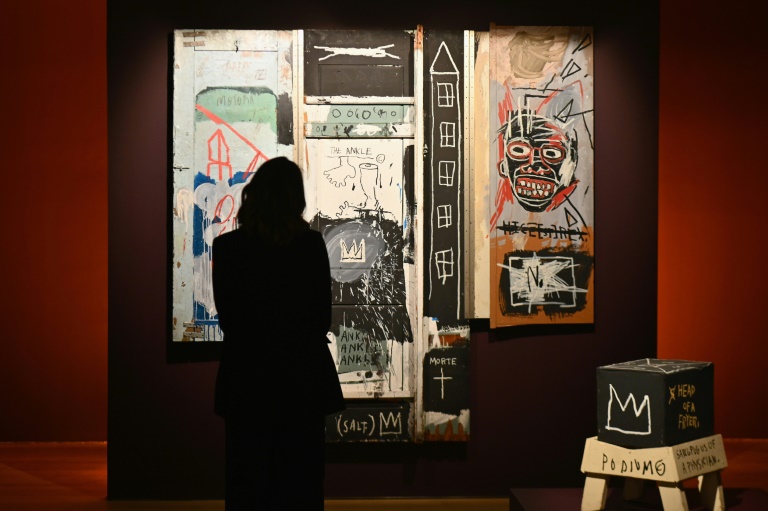
FBI agents seized all 25 works at a Jean-Michel Basquiat exhibit in Florida amid questions about their authenticity, the museum which was showing them said Saturday.

The Orlando Museum of Art said it had complied with a request for access to works at the show called “Heroes and Monsters: Jean-Michel Basquiat” and that the paintings are now in the hands of the Federal Bureau of Investigation.

“It is important to note that we still have not been led to believe the Museum has been or is the subject of any investigation,” museum spokeswoman Emilia Bourmas-Fry said in an email sent to AFP.

The exhibit had been due to close June 30. The museum said it would keep cooperating. The FBI did not immediately reply to AFP’s request for comment.

The paintings were done on scavenged pieces of cardboard and were largely unseen until this exhibit began in February, The New York Times reported in a story on Friday’s confiscation of the works.

The Times said that it had learned last month that one of the works was painted on the back of a shipping box that bore instructions to “Align top of FedEx Shipping Label here.”

But the instructions were in a typeface that was not used until 1994, six years after the artist died, the paper said, quoting a designer who worked for Federal Express.

The FBI seized the paintings with a warrant based on a 41-page affidavit that said the agency’s probe had unearthed “false information related to the alleged prior ownership of the paintings,” the Times said.

The probe also revealed “attempts to sell the paintings using false provenance, and bank records show possible solicitation of investment in artwork that is not authentic.”

The owners of the works as well as the director of the museum, Aaron De Groft, say Basquiat made these paintings in 1982 and sold them to a now deceased television screenwriter named Thad Mumford for $5,000, the Times said. They said Mumford put them in a storage unit and apparently forgot about them for 30 years.

But in the affidavit related to the search warrant, FBI special agent Elizabeth Rivas states that she interviewed Mumford in 2014 and learned that “Mumford never purchased Basquiat artwork and was unaware of any Basquiat artwork being in his storage locker,” the Times said.

If authentic the paintings would be worth around $100 million, it added, quoting art experts. 

Crossing the line: Texans facing ban at home seek abortions next door

When 30-year-old “F” learned that she was pregnant for the eighth time, she just wanted to cry.

A homemaker dependent on her husband’s income, she agonized for three weeks about what to do, but always came to the same conclusion: “I can’t have this child.”

But then she was hit by a second problem.

F’s home state of Texas recently made getting an abortion a lot harder, one of a number of conservative parts of the United States where the political tide has turned against the procedure — despite broad support for abortion rights among the American public.

A new law bans almost all abortions after six weeks, before many women know they’re pregnant — meaning that in Texas, terminating a pregnancy often means traveling out of state. 

Following Friday’s Supreme Court ruling, striking down the national right to an abortion and allowing states to enact tough restrictions or outright bans, that will be the reality for millions more women.

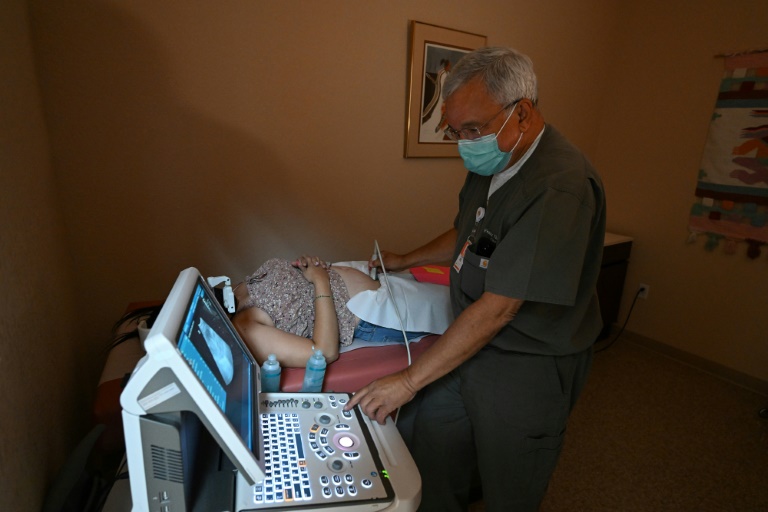
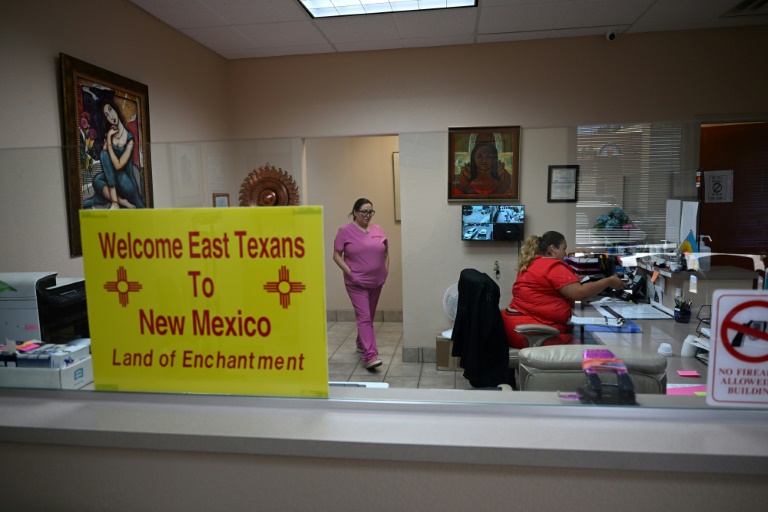
For F, it’s a relatively short drive — 45 minutes from her El Paso home sits the small New Mexico town of Santa Teresa, where the Women’s Reproductive Health Clinic has been operating since 2015 under the state’s more liberal laws.

– Attacks –

Some have travelled much further.

“The hardest part for me was figuring out how I was gonna get here,” says Ehrece, a 35-year-old engineer who came more than 600 miles (1,000 kilometers) from Dallas on a journey that ended with a taxi ride.

“I had the cab driver drop me off at the gas station down the street. And then I kind of walked here, so no one would know where I was going.”

Ehrece, who is in a stable relationship and says she doesn’t want children yet for professional reasons, has good reasons to be cautious.

Texas’ new law allows individuals to sue anyone involved — no matter how tangentially — in an abortion. That includes not only the doctor or nurse who gives care, but even the Uber driver who takes the woman to the clinic.

“They don’t make it easy for you,” said Emily, a 35-year-old yoga teacher who doesn’t want to become a mother. 

“You’re worried that someone’s going to attack you outside the clinic or some nut with a gun is going to come in.”

– ‘How many weeks?’ –

The protesters who gather outside the clinic don’t scare owner Dr Franz Theard.

The 73-year-old obstetrician has been performing abortions since the 1980s; when he began it was amid a wave of violent attacks in the United States that left doctors dead or wounded.

“We’ve been very fortunate that the state of New Mexico has very liberal laws,” he told AFP.

“We have certification for everything. But they’re not hounding us every day. 

“We have to provide reports in Texas, we have to give a report every month of every patient.”

Theard no longer performs surgical abortions, prescribing only abortion by pill: one tablet of Mifepristone, which prevents the pregnancy from progressing, and four tablets of Misoprostol the next day, to induce bleeding. 

In the waiting room, assistant Rocio Negrete fields calls from prospective patients.

“How many weeks along are you?” she asks. “We have appointments but we can only see you if it’s up to week 10.”

Surgical abortions are available in New Mexico later into pregnancy, but abortion by pill is only allowed to around week 10.

Negrete says she is taking an increasing number of calls from people in other states.

But some women, out of fear or for economic reasons — the procedure costs $700 — cross another border in search of alternatives. 

– ‘It’s exhausting’ –

Half an hour’s drive south takes you to the Mexican border town of Ciudad Juarez, where a box of 28 Misoprostol tablets — labelled as treatment for ulcers — is available for between $20 and $50 at numerous pharmacies.

Mifepristone is harder to come by, but AFP did find it.

“Women buy this and don’t know how to take it,” said one pharmacist in Ciudad Juarez with a box of Misoprostol in his hands. 

“It’s a danger, they can hemorrhage, so it’s better to see a doctor.” 

Back in Santa Teresa, all the women a reporter spoke to said it was vital legal abortions remained available.

“If a woman wants to have an abortion, then she’s going to have one,” said Ehrece.

“There’s going to be all types of illegal things going on where women can potentially kill themselves because there’s no one to support them, and there’s nowhere that they can go where you can safely do something about it.”

“It’s exhausting. Honestly, it doesn’t make sense that in this age — in 2022 — we can’t make our own free decisions about what we want to do.”

For teen Texas couple, abortion means overnight drive to New Mexico

A few months after they began dating, 17-year-old “M” discovered she and her 19-year-old boyfriend were pregnant.

There was never any doubt about what they needed to do: “We didn’t want a child,” she said.

With a green light for an abortion in their conservative home state of Texas unlikely, a nine-hour overnight drive to New Mexico was their only practical option.

The couple, who live in San Antonio and requested anonymity because of the political controversy surrounding the procedure, began dating just a month before Texas adopted one of the most restrictive anti-abortion laws in the United States.

The state banned the procedure from the moment a heartbeat can be detected in the womb, or about six weeks into a pregnancy, before many women know they are pregnant.

After the Supreme Court’s Friday decision striking down the nationwide right to abortion, nearly half of US states are expected to curtail access to the procedure in some form, with multitudes more women likely to make journeys similar to M’s.

– Six weeks is ‘nothing’ –

Initially, Texas’ new abortion restrictions weren’t something M gave much thought to.

“You don’t think it affects you until you’re standing in those shoes,” she said.

“Six weeks is nothing,” added L, clutching his girlfriend’s hand. “By the time you realize how late you are, it’s been almost six weeks.” 

M says she is just too young to be a mother, while her partner, who works in a convenience store, said money is the main impediment.

“I grew up in a poor home, with just my mom, I know what it’s like. I don’t want a son or daughter to go through what I went through, I want to give them better opportunities,” he said.

“In four or five years, maybe, but not now,” he added.

The couple used an online abortion finder that locates the nearest clinic depending on age, place of residence and date of last period. 

They quickly ruled out the few options in Texas. 

“We didn’t want to take the risk that the heartbeat would be detected and we would be prevented from having an abortion,” said M.

The service also suggested three clinics in Louisiana, to the east of Texas. But none had immediate openings.  

Finally it offered the Women’s Reproductive Clinic in New Mexico, a state where abortion is protected by law.

They called and got an appointment for that same Friday. But a round trip of 1,200 miles (1,900 kilometers) was no small thing.

The couple mapped out a plan: They would leave Thursday at 10:00 pm, when L’s shift ended and return Friday morning straight after the consultation.

“New Mexico welcomes you,” read a sky blue billboard on the side of the road as they crossed the state line.

Five minutes later they arrived at the clinic — a small brown commercial building in the town of Santa Teresa, just north of the Mexico border.

As they parked, two protestors shouted at them from the curb to reconsider. 

“They tried to come over and talk to us but it’s not their decision to make,” said L, whose leg shook non-stop in the waiting room.

– ‘A little scary’ –

M entered the office alone where an ultrasound showed she was around eight weeks pregnant — well within New Mexico’s legal limit for the pill.  

At the clinic she listened to detailed instructions and signed documents that were filed next to the image of her ultrasound in a fuchsia folder.

“You’re going to take one pill now. Tomorrow at home you are going to place another four under your upper lip,” explained the medical assistant during a fifteen minute consultation. 

“You are going to bleed and feel abdominal pain, it is normal. 

“We will call you in two days to see how you are doing.” 

In another office obstetrician Franz Theard was waiting with the single Mifepristone tablet, a medicine that blocks the production of the hormones the uterus needs to maintain the pregnancy.

He also gave her an envelope with instructions, an emergency telephone number and the four Misoprostol pills, which promote bleeding. 

“It’s a little scary,” M said as she returned to the waiting room. 

“I didn’t take my [birth control] pills properly, but now we’ve learned our lesson,” she said, squeezing her boyfriend’s arm.

“I’m not doing anything wrong, but you see people judging, they make you feel embarrassed.”  

Despite the prospect of another nine hours on the road, L said he was not tired. 

“I’m ready to go home and put this in the past.” 

Americans seeking abortion get help from Mexico

Facing high medical costs and pressure to reconsider, a single mother living in California turned to activists across the border in Mexico who helped her have an abortion.

“We’re supposed to be in a free country, in a state where you can smoke marijuana, but abortion is still somewhat taboo,” the 31-year-old said, shortly before the US Supreme Court ended the nationwide right to the procedure.

The woman, of Mexican descent, believes terminating a pregnancy will now become ever harder, although the liberal West Coast states of California, Oregon and Washington jointly vowed to defend abortion rights.

The Supreme Court’s decision on Friday to overturn the nationwide right to abortion gives all 50 states the freedom to ban the procedure, and nearly half are expected to do so in some form.

Even before the ruling, accessing a safe abortion in the United States was already “complicated if you don’t have money,” said the mother of three, who works in a restaurant in San Diego.

She initially visited two clinics in the United States, but at both the cost of the procedure was almost $1,000, which she could not afford.

At one of the facilities, which had religious links, she was discouraged from having an abortion.

“They told me there were other options, that I could give it up for adoption. But I was determined, desperate,” she told AFP by telephone, explaining that she got pregnant because contraceptives failed.

– ‘Huge setback’ –

Through a friend, the woman learned about Colectiva Bloodys, a non-government organization in Tijuana just south of San Diego that is part of a cross-border network providing free assistance to women in the United States who cannot access an abortion.

“I was surprised that they helped me from Mexico. I thought that we were more liberal here,” she said.

“Everything moved very quickly there. In less than a day they said ‘here’s the solution,'” the woman said.

She was sent a combination of medication that ends a pregnancy by causing the uterus to contract, a method considered safe by the World Health Organization (WHO), mainly for up to 12 weeks of pregnancy.

The NGO responded quickly to any follow-up questions and “was always supportive,” she added.

Colectiva Bloodys has sent these treatments to conservative-led US states such as Oklahoma, Texas and Georgia for a few years and expects more requests following the Supreme Court ruling, said one of its members, Crystal Perez Lira.

“It’s very unfortunate, a huge setback; but we are going to have the capacity and the will” to offer support, Perez Lira said.

Mexican activists had already been surprised by the amount of interest from women in the United States in the cross-border network, launched in January in the face of obstacles to accessing a safe abortion.

“As of May, we had assisted 200 women who crossed the border and sent 1,000 sets of medicine. We didn’t expect so many,” said Veronica Cruz, founder of Las Libres, one of some 30 groups in the network.

– Financial constraints –

While the activists had expected mainly Latinas to seek their help, they have also been approached by non-Spanish speakers.

“Most turn to us for financial reasons. Over there the medication costs about $600 or they have to wait weeks to get it from organizations. We give it for free,” Cruz said.

Some of the women seeking assistance in Mexico are reluctant to go to a clinic in the United States because they lack the necessary immigration documents.

“We don’t invade their privacy. We don’t question their legal status or their nationality,” said Perez Lira.

In contrast to the US ruling, Mexico’s Supreme Court last year declared the laws criminalizing abortion unconstitutional, authorizing it de facto throughout the conservative Latin American country. 

In Mexico City, which decriminalized abortion in 2007 and provides free care regardless of place of residence, authorities pledged to support women from the United States following the court ruling.

“It’s truly regressive, sad and outrageous that in a country where these rights had been recognized they are going backwards. We’ll be ready to help,” the city’s health secretary, Oliva Lopez Arellano, told AFP.

“We have the capacity for around 25,000 legal terminations a year and now we’re at half that,” she said.

One in 10 of the 247,000 abortions carried out in the city in the past 15 years have been for migrants heading to the United States, most of them Central Americans, she added.

In addition to Mexico City, eight more of Mexico’s 32 states have decriminalized abortion.

US girds for second day of protest against abortion ruling

Abortion rights supporters prepared to fan out across America Saturday for a second day of protest against the Supreme Court’s thunderbolt ruling, as state after conservative state moved swiftly to ban the procedure.

Deeply polarized America woke up to a new level of division: between states that will now or soon deny the right to abortion, enshrined for 50 years, and those that still allow it.

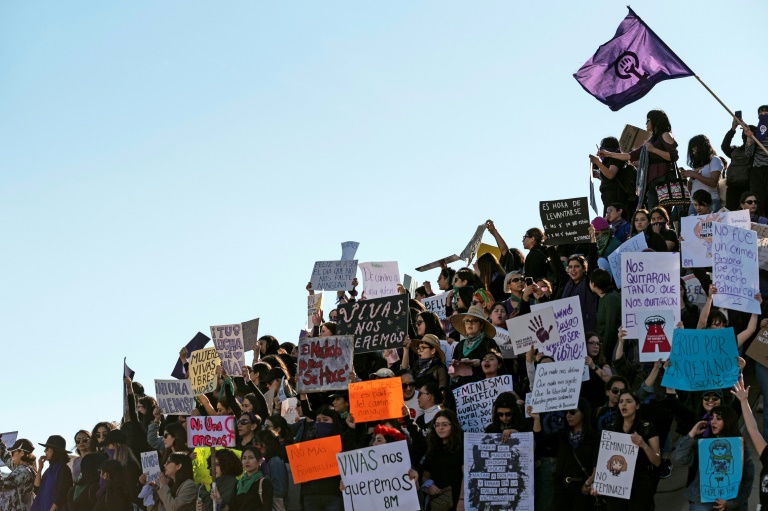
Dozens of new protests were planned Saturday from coast to coast, a day after demonstrations across the country that were largely peaceful — although police fired tear gas on protesters in Phoenix, Arizona and police in riot gear moved to disperse a hard core of protesters in downtown Los Angeles.

Fueling the mobilization, many fear that the Supreme Court, with a clear conservative majority made possible by Donald Trump, might now set its sights on rights like same-sex marriage and contraception.

At least eight right-leaning states imposed immediate abortion bans — with a similar number to follow suit in coming weeks — after the court eliminated constitutional protections for the procedure, drawing criticism from some of America’s closest allies around the world.

The court overturned the landmark 1973 Roe v. Wade decision enshrining a woman’s right to an abortion, saying individual states can restrict or ban the procedure themselves.

President Joe Biden, who called the ruling a “tragic error” stemming from “extreme ideology,” spoke out again Saturday morning as he signed a gun control bill, calling the decision shocking.

“I know how painful and devastating the decision is for so many Americans,” Biden said at the White House.

Of the state laws taking effect to ban or severely restrict abortion, Biden added: “My administration is going to focus on how they’re administered and whether they violate other laws.”

On Friday Biden urged Congress to restore abortion protections as federal law, and said Roe would be “on the ballot” in November’s midterm elections.

– ‘You have failed us’ –

Hundreds of people demonstrated into the night outside the fenced-off Supreme Court on Friday — and were set to return on Saturday.

In Missouri — which immediately banned abortion, making no exception for rape or incest — protesters gathered Friday night in St. Louis at what had been the state’s last abortion clinic.

Pamela Lukehart choked back tears as she recalled how things were before abortion became a legal right.

“Women died getting abortions back then,” the 68-year-old told AFP, her voice breaking. “We were trying to protect women’s rights, women’s lives, and now they’ve taken all that away from us.”

As of Saturday morning, at least eight states had already banned abortion — Alabama, Arkansas, Kentucky, Louisiana, Missouri, Oklahoma, South Dakota and Utah.

The court tossed out the legal argument in Roe v. Wade that women had the right to abortion based on the constitutional right to privacy with regard to their own bodies.

Altogether about two dozen states are now expected to severely restrict or outright ban and criminalize abortions.

Women in those states will either have to continue with their pregnancy, undergo a clandestine abortion, obtain abortion pills, or travel to another state where it remains legal.


While the ruling represents a victory in the struggle against abortion by the religious right, leaders of the largely Christian conservative movement said it does not go far enough and they will push for a nationwide ban.

Several Democratic-ruled states, anticipating an influx of patients, have already taken steps to facilitate abortion and three of them — California, Oregon and Washington — issued a joint pledge to defend access in the wake of the court’s decision.

bur-dw/ec

Fresh transport strikes hit UK, mainland Europe

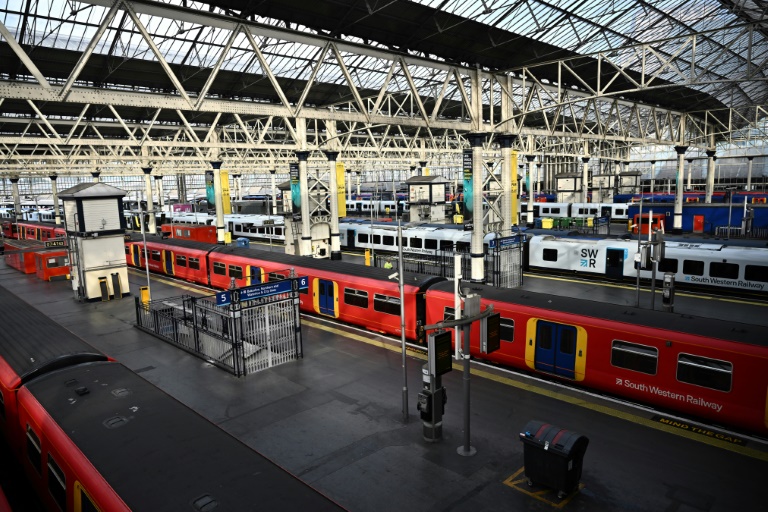
Britain’s railway system once again came to a virtual standstill on Saturday and flights in Europe were disrupted as strikes in the travel sector hit the continent.

Tens of thousands of rail workers in the UK staged the latest day-long walkout over pay and job security, hampering weekend plans for those already hit by similar strikes on Tuesday and Thursday. 

Only around a fifth of services are set to operate on heavily reduced hours, with those still running starting much later in the morning than usual and set to end as early as 6:30 pm (1730 GMT).

The RMT rail union insists this week’s actions are necessary as wages have failed to keep pace with UK inflation, which has hit a 40-year high and is on course to keep rising.

It also wants a threat of compulsory redundancies withdrawn.

RMT secretary general Mick Lynch said its members are “standing up for all working people trying to get a pay rise and some job security”.

“In a modern economy, workers need to be properly rewarded for their work, enjoy good conditions and have the peace of mind that their job will not be taken away from them,” he added.

Network Rail chief executive Andrew Haines said: “Unfortunately, the RMT’s decision to carry out another day of needless and premature strike action means our passengers will suffer again on Saturday.

“A fraction of trains will run compared to a usual Saturday service, with trains starting later in the morning and finishing much earlier in the evening.”

– Airline strikes –

Britain, like much of Europe, is suffering from rocketing inflation and stagnant economic growth, raising the prospect of a summer of strikes across the continent.

Staff from budget Irish airline Ryanair staged strikes in Spain, Italy, France, Portugal and Belgium on Saturday, forcing the cancellation of two flights between Lisbon and Brussels.

In Belgium, the walkout meant that only 41 percent of Ryanair flights left Charleroi airport near Brussels on Saturday and overall the budget carrier had been forced to cancel 127 flights between Friday and Sunday, an airport spokeswoman told AFP.

The situation in Belgium was further complicated by a three-day strike by Brussels Airlines staff ending Saturday that has forced the carrier owned by German giant Lufthansa to cancel 60 percent — or some 300 — of its flights since Thursday.

Ryanair staff staged their second day of action in Spain, resulting in flight delays but so far no cancellations. 

One of the unions calling the strike said that, as of 10:00 am (0800 GMT), “there have been 15 delayed flights, both arrivals and departures. 

“It is expected that this situation will increase throughout the day and tomorrow, as Ryanair’s maximum profit system of leaving the minimum time between flights will cause delays,” it added.

The aviation sector is struggling to recover from the pandemic, which led to mass layoffs as international travel was put on hold.

Faced with staff shortages, Amsterdam’s Schiphol Airport was forced to announce earlier this month that it would be limiting traveller numbers this summer and cancelling flights.

The shortages have already caused hundreds of flights to be cancelled, while huge queues have angered travellers. 

Biden signs first significant US gun control law in decades

President Joe Biden on Saturday signed into law the first significant federal bill on gun safety in decades, saying that while it falls short of what’s really needed it will “save lives.”

“While this bill doesn’t do everything I want, it does include actions I’ve long called for that are going to save lives,” he said at the White House before leaving for two major diplomatic summits in Europe.

The gun legislation includes enhanced background checks for younger buyers and federal cash for states introducing “red flag” laws that allow courts to temporarily remove weapons from those considered a threat.

Billions of dollars have been allocated to crack down on “straw purchasers” who buy firearms for people not allowed to own them, and to curb gun trafficking.

However, much tougher measures wanted by Biden and other Democrats did not make it in, including a ban on military style rifles often used by the lone gunmen who typically carrying out mass shootings. Also absent is a longtime push for mandatory background checks on all gun purchases.

Reeling off a list of notorious mass shootings, Biden said the message from victims “was ‘do something…, for God’s sake just do something.’ Well today, we did.”

Referring to political gridlock in a near evenly divided Congress, Biden said the new law, which had rare strong support from both Republicans and Democrats, was “monumental.”

“When it seems impossible to get anything done in Washington, we are doing something consequential,” he said. “I know there’s much more work to do and I’m never going to give up.”

As he inked his signature on the document, Biden added again: “God willing, this is going to save a lot of lives.”

Fresh transport strikes hit UK, mainland Europe

Britain’s railway system once again came to a virtual standstill on Saturday and flights in Europe were disrupted as strikes in the travel sector hit the continent.

Tens of thousands of rail workers in the UK staged the latest day-long walkout over pay and job security, hampering weekend plans for those already hit by similar strikes on Tuesday and Thursday. 

Only around a fifth of services are set to operate on heavily reduced hours, with those still running starting much later in the morning than usual and set to end as early as 6:30 pm (1730 GMT).

The RMT rail union insists this week’s actions are necessary as wages have failed to keep pace with UK inflation, which has hit a 40-year high and is on course to keep rising.

It also wants a threat of compulsory redundancies withdrawn.

RMT secretary general Mick Lynch said its members are “standing up for all working people trying to get a pay rise and some job security”.

“In a modern economy, workers need to be properly rewarded for their work, enjoy good conditions and have the peace of mind that their job will not be taken away from them,” he added.

Network Rail chief executive Andrew Haines said: “Unfortunately, the RMT’s decision to carry out another day of needless and premature strike action means our passengers will suffer again on Saturday.

“A fraction of trains will run compared to a usual Saturday service, with trains starting later in the morning and finishing much earlier in the evening.”

Britain, like much of Europe, is suffering from rocketing inflation and stagnant economic growth, raising the prospect of a summer of strikes across the continent.

Staff from budget Irish airline Ryanair staged strikes in Spain, Italy, France, Portugal and Belgium on Saturday, forcing the cancellation of two flights between Lisbon and Brussels.

Ryanair staff staged their second day of action in Spain, resulting in delays to flights but so far no cancellations. 

One of the unions calling the strike said that, as of 10:00 am (0800 GMT), “there have been 15 delayed flights, both arrivals and departures. 

“It is expected that this situation will increase throughout the day and tomorrow, as Ryanair’s maximum profit system of leaving the minimum time between flights will cause delays,” it added.

The aviation sector is struggling to recover from the pandemic, which led to mass layoffs as international travel was put on hold.

Faced with staff shortages, Amsterdam’s Schiphol Airport was forced to announce earlier this month that it would be limiting traveller numbers this summer and cancelling flights.

The shortages have already caused hundreds of flights to be cancelled, while huge queues have angered travellers. 

US braces for more protests after Supreme Court abortion ruling

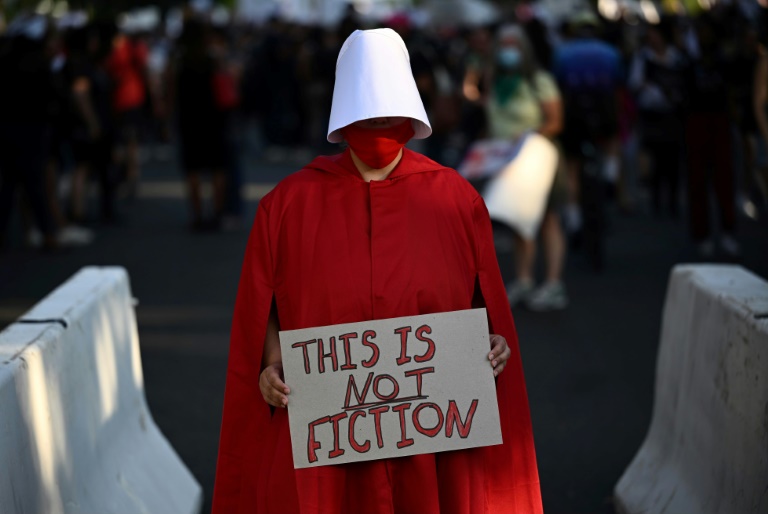
Protesters were expected to pour onto streets across the United States on Saturday as anger flared over the Supreme Court’s decision to strike down the right to abortion.

Several right-leaning states imposed immediate bans on abortion after the court on Friday shredded five decades of constitutional protections for the procedure, prompting leaders around the world to voice concern.

The conservative-dominated court overturned the landmark 1973 “Roe v. Wade” decision enshrining a woman’s right to an abortion, saying individual states could restrict or ban the procedure themselves.

“The Constitution does not confer a right to abortion,” the court said in a 6-3 ruling on one of America’s most bitterly divisive issues. “The authority to regulate abortion is returned to the people and their elected representatives.”

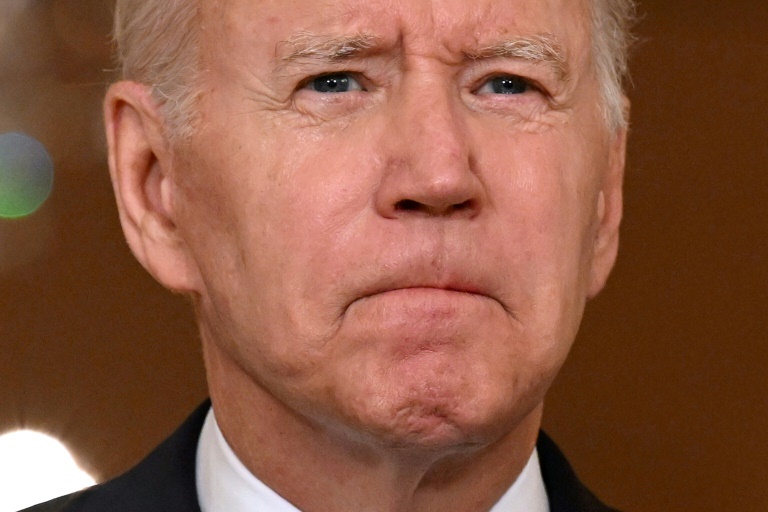
A somber President Joe Biden called the ruling a “tragic error” stemming from “extreme ideology”.

“The health and life of women in this nation are now at risk,” Biden said, warning that other rights such as same-sex marriage and contraception could be threatened next.

The Democratic president urged Congress to restore abortion protections as federal law and said Roe would be “on the ballot” in November’s midterm elections.

Criticism of the Supreme Court decision also came from abroad, including from US allies like Britain, whose Prime Minister Boris Johnson called it “a big step backwards.”

Canada’s leader Justin Trudeau said it was “horrific”, and French President Emmanuel Macron voiced his “solidarity with women whose freedoms are today challenged.”

Acknowledging the international concerns, US Secretary of State Antony Blinken insisted his department would “remain fully committed to helping provide access to reproductive health services and advancing reproductive rights around the world.”

– ‘You have failed us’ –

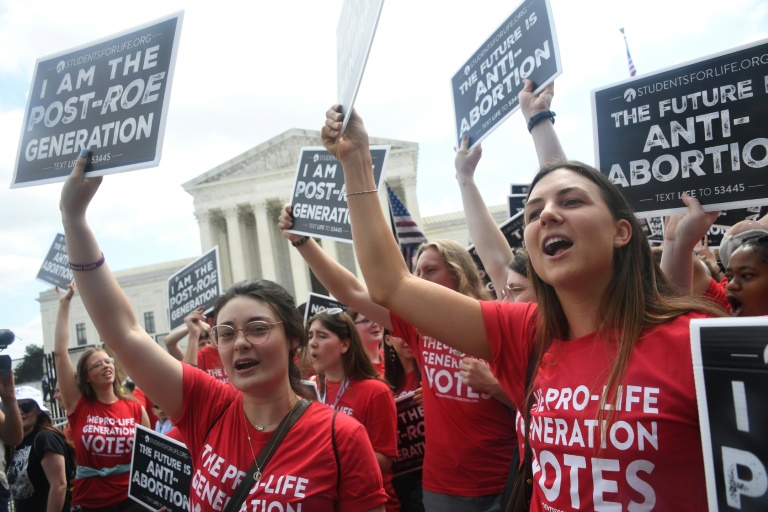
Hundreds of people — some weeping for joy and others with grief — gathered outside the fenced-off Supreme Court on Friday as the ruling came down.

“It’s hard to imagine living in a country that does not respect women as human beings and their right to control their bodies,” said Jennifer Lockwood-Shabat, 49, a mother of two daughters who was choking back tears.

“You have failed us,” read a sign held up by one protester. “Shame,” said another.

But Gwen Charles, a 21-year-old opponent of abortion, was jubilant.

“This is the day that we have been waiting for,” Charles told AFP. “We get to usher in a new culture of life in the United States.”

Just hours after the ruling, Missouri banned abortion — making no exception for rape or incest — and so did South Dakota, except where the life of the mother is at risk.

Protesters took to the streets in St. Louis to decry the ban, gathering at what had been Missouri’s last abortion clinic.

“It’s absolutely disturbing,” said Lilian Dodenhoff, 32, standing outside the facility. “So I just immediately reached out to people that I knew shouldn’t be alone right now.”

As of Friday evening, at least seven states had already banned abortion — Alabama, Arkansas, Kentucky, Louisiana, Missouri, Oklahoma, and South Dakota.

Many more are expected to follow suit or severely restrict the procedure. 

Protesters also marched in New York, Boston and other US cities as anger grew. 

“Abortion is a human right, not just for the rich and white,” protesters in New York chanted on Friday.

Democratic Governor Kathy Hochul met the crowd at Union Square, telling reporters abortion rights were “secure” in New York, and that the state would be a “safe harbor” for those unable to receive the procedure in their own states.

“We took action already, we allocated $35 million to support our abortion providers to be able to help our sisters across this nation find their way here,” she said. “This is their safe harbor.”

There were incidents at some demonstrations on Friday, including one in the Iowa city of Cedar Rapids, where a pickup truck drove through a group of protesters, running over at least one woman’s foot, according to local media reports.

In Arizona, CNN reported that authorities used tear gas to disperse protesters on Friday night after they “repeatedly pounded on the glass doors of the State Senate Building,” according to Arizona Department of Public Safety spokesperson Bart Graves.

– ‘Egregiously wrong’ –

In the majority opinion, Justice Samuel Alito said Roe v. Wade was “egregiously wrong.”

“Abortion presents a profound moral issue on which Americans hold sharply conflicting views,” he said. “The Constitution does not prohibit the citizens of each State from regulating or prohibiting abortion.”

The court tossed out the legal argument in Roe v. Wade that women had the right to abortion based on the constitutional right to privacy with regard to their own bodies.

While the ruling represents a victory for the religious right, leaders of the Christian conservative movement said it does not go far enough and they will push for a nationwide ban.

“While it’s a major step in the right direction, overturning Roe does not end abortion,” said the group March for Life.

“God made the decision,” said former Republican president Donald Trump while praising the ruling.

The decision was made possible by Trump’s nomination to the court of three conservative justices — Neil Gorsuch, Brett Kavanaugh and Amy Coney Barrett.

– ‘Will not stop there’ –

The three liberal justices on the court dissented from the ruling.

“One result of today’s decision is certain: the curtailment of women’s rights, and of their status as free and equal citizens,” they said.

Abortion providers could now face criminal penalties and “some States will not stop there,” they warned.

According to the Guttmacher Institute, 13 states have adopted so-called “trigger laws” that will ban abortion virtually immediately.

Ten others have pre-1973 laws that could go into force or legislation that would ban abortion after six weeks, before many women know they are pregnant.

Women in states with strict anti-abortion laws will either have to continue with their pregnancy, undergo a clandestine abortion, obtain abortion pills, or travel to another state where it remains legal.
Close Bitnami banner
Bitnami