US Business

African economies see reasons for optimism despite crises

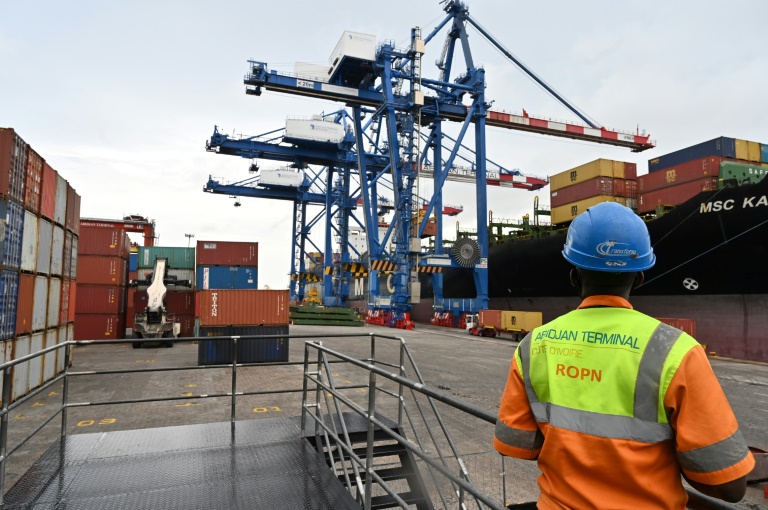
From Covid-19 to the war in Ukraine, external crises have put pressure on African economies, but many on the continent see opportunities to undertake radical reforms.

Africa already showed some resilience during the pandemic as its economic contraction was less severe than in the rest of the world, shrinking by two percent compared to 3.3 percent globally in 2020.

While Russia’s invasion of Ukraine is weighing on the world economy, Africa faces a better outlook again in 2022.

“Africa is headed towards growth of around 3.7 percent, while in North America and Europe there is a real risk of recession”, said economist Lionel Zinsou, formerly prime minister of Benin.

“We haven’t been the biggest victims of the pandemic, and we won’t be the biggest victims of the collateral consequences of the war in Ukraine”, added Zinsou.

The conflict in Europe has fuelled a surge in global inflation, but Zinsou said growing prices for raw materials will compensate for the higher costs of imports in Africa.

Another positive signal is that investor confidence in Africa is up to a higher level than that before the pandemic.

Of 190 business owners in Africa who were questioned, 78 percent voiced confidence about their development prospects — compared to 61 percent before the Covid crisis, according to a report by the Deloitte accountancy firm.

– ‘Opportunity to transform’ –

The fallout from the war in Ukraine, however, remains a threat as it has driven up prices for wheat and other key agricultural products, sparking fears of famine in some countries.

“We are concerned about the slowdown in global growth and the availability for Africa of certain products such as wheat or fertilisers”, Ivory Coast President Alassane Ouattara said during the Africa CEO Forum in Abidjan this month.

Makhtar Diop, general director of the International Finance Corporation (IFC), a branch of the World Bank, said African economies “have taken a hit and haven’t regained their pre-2019 growth rates”.

“The situation remains particularly difficult with inflation which disproportionally affects the poorest populations,” he added.

But some see the situation as a chance for African countries to map out new strategies. 

“We lose a good part of our crops each year due to lack of electricity and cold chain,” said Zinsou, referring to the transport of goods that need to be kept cool across the supply chain.

These losses could be reduced through infrastructure investment, he added.

For Diop, “every crisis is an opportunity to transform the situation structurally. There is potential for the economic transformation of African countries by increasing the added value created on the continent.”

– ‘Gain independence’ –

Some countries have stepped up the pace in recent years. Ivory Coast has built new cashew processing plants, while Nigeria is building a major oil refinery in Lagos. 

In Guinea, foreign companies have recently been tasked with building bauxite processing plants. 

“One of the consequences of the pandemic is that many groups wanted to depend less on foreign imports,” said Emmanuel Gadret, head of Deloitte in francophone Africa. 

Georges Wega, deputy director of international banking networks for the Africa region at France’s Societe Generale financial group, believes that Africa has “a lot of potential” to finance its essential projects.

“This is the time for Africa to gain its independence in many aspects. We need to rely more on funds raised on the continent versus external debt,” he said. 

The African Continental Free Trade Area (AfCFTA), which aims to harmonise customs tariffs across the continent, which is gradually happening, holds out hopes of boosting intra-African trade.

“Africa has been extraordinarily responsive (to the pandemic), financially and technically, and it will be again,” said Zinsou. 

Markets rise as recession talk tempers rate hike expectations

Stocks climbed Friday following another rally on Wall Street as investors try to process central bank moves to fight soaring inflation and the growing possibility that those measures will induce a recession.

Global markets have been thrown into turmoil for months by a perfect storm of crises that have left observers predicting a sharp contraction, including the Ukraine war, China’s lockdown-induced economic troubles, supply chain snarls and spiking energy costs.

Expectations that the Federal Reserve and other central banks will have to keep lifting rates have left many traders fretting that the pain could go on for some time, with sovereign bond yields — key gauges to future rates — continuing to climb.

This week Fed boss Jerome Powell told lawmakers a recession was “certainly a possibility” and suggested officials were ready to press on with big rate hikes, following a three-quarter point lift this month.

However, analysts said speculation that a recession is on the way has helped push yields down in recent days and led traders to scale back their expectations for the length of rate hikes.

Demand concerns have also helped send oil prices — a key driver of inflation — lower with both main contracts down around 15 percent over the past week.

Added to the mix this week are comments from President Xi Jinping suggesting an end to China’s tech crackdown as well as possible new measures aimed at boosting the economy.

“As we have been saying for some time now, for stocks to return to any semblance of form, it would likely require an unlikely upbeat mix of a seamless China growth recovery, a top in US bond yields, and much softer oil prices,” said Stephen Innes at SPI Asset Management.

“While a tall order and still a near-term unlikely combination scenario, the fall in commodity prices, especially oil, should be music to the Fed’s ears, so some could be ticking one or two of those boxes off.”

In early Asia trade investors took their cue from Wall Street, where all three main indexes closed with healthy gains, including a more than one percent advance on the Nasdaq.

Hong Kong was among the biggest winners thanks to a rally in tech giants including Alibaba, Tencent and NetEase.

Tokyo, Mumbai, Shanghai, Sydney, Seoul, Singapore, Taipei, Manila and Jakarta were also well up, while in Europe London, Paris and Frankfurt all rose in the morning.

Lower expectations for US rates and bets on a recession also saw the dollar drop against the safe haven yen, having surged to a 24-year high on the Japanese unit at the start of the week.

“Assuming that the Fed will have to change course sooner than late 2023 isn’t an unreasonable assumption,” said OANDA’s Jeffrey Halley. 

“The Fed and a procession of central banks around the world got inflation completely wrong and have been scrambling to reverse the mistake. Given their track record, assuming they are going to be wrong the other way is completely reasonable in that context.”

– Key figures at around 0810 GMT –

Tokyo – Nikkei 225: UP 1.2 percent at 26,491.97 (close)

Hong Kong – Hang Seng Index: UP 2.1 percent at 21,719.06 (close)

Shanghai – Composite: UP 0.9 percent at 3,349.75 (close)

London – FTSE 100: UP 0.6 percent at 7,063.88

Dollar/yen: DOWN at 134.51 yen from 134.94 yen late Thursday

Pound/dollar: UP at $1.2269 from $1.2259

Euro/dollar: UP at $1.0528 from $1.0526

Euro/pound: DOWN at 85.77 pence from 85.80 pence

West Texas Intermediate: UP 0.1 percent at $104.33 per barrel

Brent North Sea crude: DOWN 0.2 percent at $109.88 per barrel

New York – Dow: UP 0.6 percent at 30,677.36 (close)

Ukraine forces to retreat from battleground city: governor

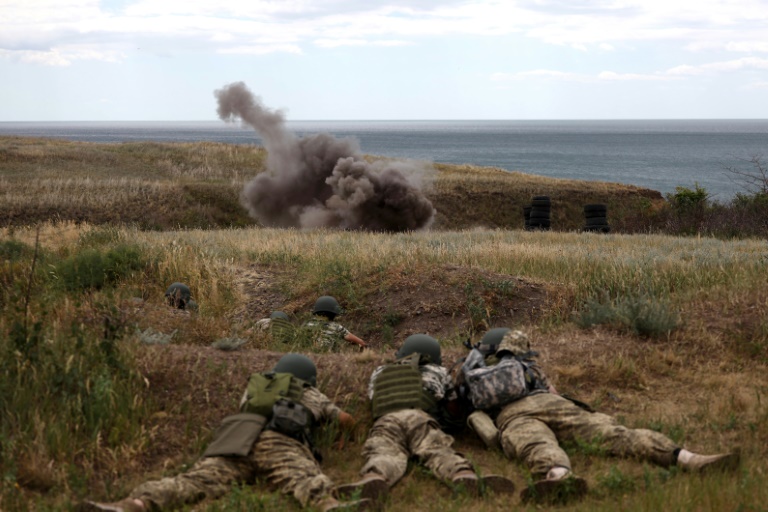
Ukrainian forces will retreat from Severodonetsk in the face of a brutal Russian offensive that is reducing the battleground eastern city to rubble, a senior Ukrainian official said Friday.

The news came shortly after the European Union made a strong show of support for Ukraine, granting the former Soviet republic candidate status, although there is still a long path ahead to membership.

Capturing Severodonetsk has become a key goal of the Russians as they focus their offensive on eastern Ukraine after being repelled from Kyiv and other areas following their February invasion. 

The strategically important industrial hub has been the scene of weeks of street battles as the outgunned Ukrainians put up a fierce defence. 

But Sergiy Gaiday — governor of Lugansk, which includes the city — said the Ukrainian military would have to retreat. 

“They have received an order” to withdraw, he said on Telegram. 

“Remaining in positions that have been relentlessly shelled for months just doesn’t make sense.”

The city has been “nearly turned to rubble” by continual bombardment, he added. 

“All critical infrastructure has been destroyed. Ninety percent of the city is damaged, 80 percent (of) houses will have to be demolished,” he said. 

The Ukrainians had already been pushed back from much of the city, leaving them in control of only industrial areas. 

Capturing Severodonetsk and its twin city of Lysychansk would give the Russians control of Lugansk, and allow them to push further into the wider Donbas.

– Lysychansk under fire –

Gaiday said the Russians were now advancing on Lysychansk, which has been facing increasingly heavy Russian bombardment. 

AFP journalists driving out of the city Thursday twice had to jump out of cars and lie on the ground as Russian forces shelled its main supply road. 

They saw dark smoke rising over the road ahead, and heard artillery fire and saw flashes of light, while the road was strewn with trees felled by shelling.

The situation for those that remain in the city is bleak.

Liliya Nesterenko said her house had no gas, water or electricity and she and her mother were cooking on a campfire. She was cycling along the street, and had come out to feed a friend’s pets. 

But the 39-year-old was upbeat about the city’s defences: “I believe in our Ukrainian army, they should (be able to) cope.

“They’ve prepared already.”

A representative of pro-Russian separatists in Ukraine earlier told AFP the resistance of Ukrainian forces trying to defend Lysychansk and Severodonetsk was “pointless and futile”.

“At the rate our soldiers are going, very soon the whole territory of the Lugansk People’s Republic will be liberated,” said Andrei Marochko, a spokesman for the Moscow-backed army of Lugansk.

In the southern Kherson region, a Moscow-appointed official was killed in an explosion, Russian news agencies reported, the latest in a string of attacks on pro-Kremlin officials in Ukrainian regions under Russian control.

Interfax reported an explosive device was planted in the car of the victim, who was likely the head of the region’s department of youth policy, family and sports.

With Ukraine pleading for accelerated weapon deliveries, the United States announced it was sending another $450 million in fresh armaments, including Himars rocket systems, which can launch multiple missiles at extended range. 

– ‘Historic’ EU decision –

At a Brussels summit Thursday, EU leaders granted candidate status to Ukraine, as well as Moldova.

Ukraine’s President Volodymyr Zelensky hailed the news as “a unique and historic moment”, adding: “Ukraine’s future is within the EU.”

French President Emmanuel Macron said the decision by EU leaders sent a “very strong signal” to Russia that Europeans support the pro-Western aspirations of Ukraine.

President Vladimir Putin had declared Ukraine to be part of Moscow’s sphere and insisted he was acting due to attempts to bring the country into NATO, the Western alliance that comes with security guarantees.

European powers before the invasion had distanced themselves from US support for Ukraine’s NATO aspirations, and EU membership is at least years away.

Ukraine and Moldova will have to go through protracted negotiations and the European Union has laid out steps that Kyiv must take even before that, including bolstering the rule of law and fighting corruption.

Western officials have accused Russia of weaponising its key exports of gas as well as grain from Ukraine, contributing to global inflation and rising hunger in the world.

A US official warned of new retaliatory measures against Russia at the Group of Seven summit being attended by President Joe Biden in Germany starting Sunday.

Germany ratcheted up an emergency gas plan to its second alert level, just one short of the maximum that could require rationing in Europe’s largest economy, after Russia slashed supplies.

“Gas is now a scarce commodity,” German Economy Minister Robert Habeck told reporters, urging households to cut back on use. 

burs-sr/axn

Ukraine forces to retreat from battleground city: governor

Ukrainian forces will retreat from Severodonetsk in the face of a brutal Russian offensive that is reducing the battleground city to rubble, a senior Ukrainian official said Friday.

The news came shortly after the European Union made a strong show of support for Ukraine, granting the former Soviet republic candidate status, although there is still a long path ahead to membership.

Capturing Severodonetsk, in the Donbas region, has become a key goal of the Russians as they focus their offensive on eastern Ukraine after being repelled from Kyiv following their February invasion. 

The strategically important industrial hub has been the scene of weeks of street battles as the outgunned Ukrainians put up a fierce defence. 

But Sergiy Gaiday — governor of Lugansk, which includes the city — said the Ukrainian military would have to retreat. 

“They have received an order to do so,” he said on Telegram. 

“Remaining in positions that have been relentlessly shelled for months just doesn’t make sense.”

The city has been “nearly turned to rubble” by continual bombardment, he added. 

“All critical infrastructure has been destroyed. Ninety percent of the city is damaged, 80 percent (of) houses will have to be demolished,” he said. 

The Ukrainians had already been pushed back from much of the city, leaving them in control of only industrial areas. 

Capturing Severodonetsk and its twin city of Lysychansk would give the Russians control of Lugansk, and allow them to push further into the wider Donbas.

– Lysychansk under fire –

Gaiday said the Russians were now advancing on Lysychansk, which has been facing increasingly heavy Russian bombardment. 

AFP journalists driving out of the city Thursday twice had to jump out of cars and lie on the ground as Russian forces shelled the city’s main supply road. 

They saw dark smoke rising over the road ahead, and heard artillery fire and saw flashes of light, while the road was strewn with trees felled by shelling.

The situation for those that remain in the city was increasingly bleak.

Liliya Nesterenko said her house had no gas, water or electricity and she and her mother were cooking on a campfire. She was cycling along the street, and had come out to feed a friend’s pets. 

But the 39-year-old was upbeat about the city’s defences: “I believe in our Ukrainian army, they should (be able to) cope.

“They’ve prepared already.”

A representative of pro-Russian separatists in Ukraine earlier told AFP the resistance of Ukrainian forces trying to defend Lysychansk and Severodonetsk was “pointless and futile”.

“At the rate our soldiers are going, very soon the whole territory of the Lugansk People’s Republic will be liberated,” said Andrei Marochko, a spokesman for the Moscow-backed army of Lugansk.

With Ukraine pleading for accelerated weapon deliveries, the United States announced it was sending another $450 million in fresh armaments, including Himars rocket systems. 

The systems can simultaneously launch multiple precision missiles at an extended range.

– ‘Historic’ EU decision –

At a Brussels summit Thursday, EU leaders granted candidate status to Ukraine, as well as Moldova.

Ukraine’s President Volodymyr Zelensky hailed the news as “a unique and historic moment”, adding: “Ukraine’s future is within the EU.”

French President Emmanuel Macron said the decision by EU leaders sent a “very strong signal” to Russia that Europeans support the pro-Western aspirations of Ukraine.

President Vladimir Putin had declared Ukraine to be part of Moscow’s sphere and insisted he was acting due to attempts to bring the country into NATO, the Western alliance that comes with security guarantees.

European powers before the invasion had distanced themselves from US support for Ukraine’s NATO aspirations, and EU membership is at least years away.

Ukraine and Moldova will have to go through protracted negotiations and the European Union has laid out steps that Kyiv must take even before that, including bolstering the rule of law and fighting corruption.

Western officials have also accused Russia of weaponising its key exports of gas as well as grain from Ukraine, contributing to global inflation and rising hunger in the world.

A US official warned of new retaliatory measures against Russia at the Group of Seven summit being attended by President Joe Biden in Germany starting Sunday.

Germany ratcheted up an emergency gas plan to its second alert level, just one short of the maximum that could require rationing in Europe’s largest economy, after Russia slashed supplies.

“Gas is now a scarce commodity,” German Economy Minister Robert Habeck told reporters, urging households to cut back on use. 

Demand for gas is lower in the summer but shortages could cause problems with heating in the winter.

A Kremlin spokesman reiterated its claim that the supply cuts were due to maintenance and that necessary equipment from abroad had not arrived.

burs-sr/axn

US Senate advances breakthrough bill on gun safety

US senators advanced a bipartisan bill late Thursday addressing the epidemic of gun violence convulsing the country, approving a narrow package of new firearms restrictions and billions of dollars in mental health and school security funding.

The reforms — which are almost certain to be rubber-stamped by the House of Representatives on Friday — fall short of the demands of gun safety advocates and President Joe Biden, but have been hailed as a life-saving breakthrough after almost 30 years of inaction by Congress.

“This bipartisan legislation will help protect Americans,” Biden said in a statement shortly after the Senate vote. “Kids in schools and communities will be safer because of it.”

The Bipartisan Safer Communities Act, which was backed by all 50 Democratic senators and 15 Republicans, includes enhanced background checks for buyers under the age of 21, $11 billion in funding for mental health and $2 billion for school safety programs.

It also provides funding to incentivize states to implement “red flag” laws to remove firearms from people considered a threat.

And it closes the so-called “boyfriend” loophole, under which domestic abusers could avoid a ban on buying firearms if they were not married to or living with their victim.

“Tonight, the United States Senate is doing something many believed was impossible even a few weeks ago: we are passing the first significant gun safety bill in nearly 30 years,” Senate Democratic majority leader Chuck Schumer said after the legislation passed.

“The gun safety bill we are passing tonight can be described with three adjectives: bipartisan, common sense, lifesaving.”

His Republican counterpart Mitch McConnell said the legislation would make America safer “without making our country one bit less free.”

“This is a common-sense package. Its provisions are very, very popular. It contains zero new restrictions, zero new waiting periods, zero mandates and zero bans of any kind for law-abiding gun owners.”

The National Rifle Association and many Republicans in both chambers of Congress opposed the bill but it is endorsed by advocacy groups working in policing, domestic violence and mental illness.

The Senate and House are on a two-week recess starting next week but the Democratic-controlled House is expected to approve the Senate’s bill with little drama before members leave town on Friday night.

– ‘Historic day’ –

The breakthrough is the work of a cross-party group of senators who have been hammering out the details and resolving disputes for weeks.

The lawmakers had been scrambling to finish the negotiations quickly enough to capitalize on the momentum generated by the fatal shooting of 19 children in Uvalde, Texas and of 10 Black people at a supermarket in Buffalo, upstate New York, both last month.

Chris Murphy, the senator leading negotiations for Democrats, hailed a “historic day.”

“This will become the most significant piece of anti-gun-violence legislation Congress has passed in three decades,” he said on the Senate floor. 

“This bill also has the chance to prove to the weary American public that democracy is not so broken, that it is able to rise to the moment.”

The last significant federal gun control legislation was passed in 1994, introducing a national background check system and banning the manufacture for civilian use of assault rifles and large capacity ammunition clips.

But it expired a decade later and there has since been no serious movement on reform, despite rising gun violence.

Biden had pushed for more substantial reforms, including a reinstatement of the ban on assault rifles — which were used in both the Texas and New York shootings — and high-capacity magazines.

But the political challenge of legislating in a 50-50 Senate, where most bills require 60 votes to pass, means that more wide-ranging reforms are unrealistic.

“The morning after the tragedy in Uvalde, the United States Senate faced a choice,” Schumer added. 

“We could surrender to gridlock… Or we could choose to try and forge a bipartisan path forward to pass a real bill, as difficult as that may have seemed to many.”

The vote came as a boon for gun safety activists hours after they were dismayed by a Supreme Court ruling that Americans have a fundamental right to carry a handgun in public.

The 6-3 decision struck down a more than century-old New York law that required a person to prove they had a legitimate self-defense need to receive a permit to carry a concealed handgun outside the home.

Supreme Court says Americans have right to carry guns in public

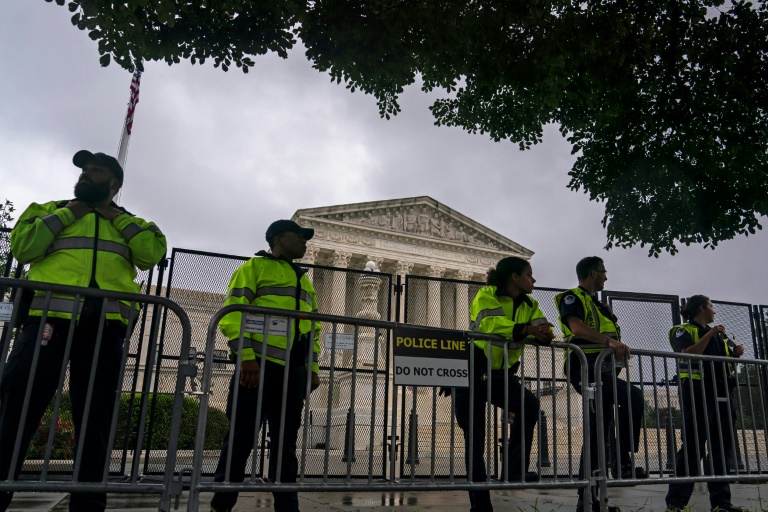
The US Supreme Court ruled Thursday that Americans have a fundamental right to carry a handgun in public, a landmark decision with far-reaching implications for states and cities across the country confronting a surge in gun violence.

The 6-3 decision strikes down a more than century-old New York law that required a person to prove they had a legitimate self-defense need to receive a permit to carry a concealed handgun outside the home.

Five other states, including California, and Washington, the nation’s capital, have similar laws and the ruling will curb their ability to restrict people from carrying guns in public.

Democratic President Joe Biden denounced the decision, saying it “contradicts both common sense and the Constitution, and should deeply trouble us all.”

“We must do more as a society -— not less -— to protect our fellow Americans,” Biden said. “I call on Americans across the country to make their voices heard on gun safety.”

Despite growing calls for limits on firearms after two horrific mass shootings in May, the court sided with plaintiffs who said the US Constitution guarantees the right to own and carry guns.

The ruling is the first by the court in a major Second Amendment case since 2008, when it ruled that Americans have a right to keep a gun at home for self-defense.

It was a stunning victory for the National Rifle Association lobby group, which brought the case along with two New York men who had been denied gun permits.

“Today’s ruling is a watershed win for good men and women all across America and is the result of a decades-long fight the NRA has led,” NRA executive vice president Wayne LaPierre said in a statement.

“The right to self-defense and to defend your family and loved ones should not end at your home.”

– ‘Dark day’ –

New York Governor Kathy Hochul called it a “dark day,” and vowed to enact gun control legislation.

“It is outrageous that at a moment of national reckoning on gun violence, the Supreme Court has recklessly struck down a New York law that limits those who can carry concealed weapons,” Hochul said.

California’s governor Gavin Newsom termed the decision “shameful.”

“This is a dangerous decision from a court hell-bent on pushing a radical ideological agenda and infringing on the rights of states to protect our citizens from being gunned down in our streets, schools, and churches,” Newsom tweeted.

Justice Clarence Thomas wrote the majority opinion and was joined by the other five conservatives on the court, three of whom were nominated by former Republican president Donald Trump.

Thomas said the New York law prevents “law-abiding citizens with ordinary self-defense needs from exercising their Second Amendment right to keep and bear arms in public for self-defense.”

“We conclude that the State’s licensing regime violates the Constitution,” Thomas said.

New York prohibits open carrying of handguns and rifles and the court ruling does not affect that since it was narrowly focused on the state requirements for a permit to carry a concealed handgun.

Just hours after the court ruling, the Senate moved in a different direction, passing a rare bipartisan bill that includes modest gun control measures.

“The gun safety bill we are passing tonight can be described with three adjectives: bipartisan, commonsense, lifesaving,” said Senate Majority Leader Chuck Schumer.

The breakthrough is the work of a cross-party group of senators who have been hammering out the details and resolving disputes for weeks.

The lawmakers had been scrambling to finish the negotiations quickly enough to capitalize on the momentum generated by the fatal shooting of 19 children in Uvalde, Texas and of 10 Black people at a supermarket in Buffalo, upstate New York, both last month.

In both cases, the gunmen were teens and used AR-15 style assault weapons.

– Liberals dissent –

The New York state law the Supreme Court overturned dated to 1913 and had stood based on the understanding that individual states had the right to regulate gun usage and ownership.

It said that to be given a permit to carry a concealed handgun outside the home, an applicant must clearly demonstrate “proper cause” — that it is explicitly needed for self-defense.

Gun-rights advocates said that violated the Second Amendment, which says “the right of people to keep and bear arms shall not be infringed.”

The three liberal justices on the Supreme Court dissented to the ruling.

“Many states have tried to address some of the dangers of gun violence,” Justice Stephen Breyer said. “The Court today severely burdens states’ efforts to do so.”

Half of the 50 US states allow permitless carry of concealed firearms in public places while the other 25 allow it in some form.

Over the past two decades more than 200 million guns have hit the US market, led by assault rifles and personal handguns, feeding a surge in murders, mass shootings and suicides.

Asian markets rise as recession talk tempers rate hike expectations

Stocks rose in Asia on Friday following another rally on Wall Street as investors try to process central bank moves to fight soaring inflation with the growing possibility that those measures will induce a recession.

Global markets have been thrown into turmoil for months by a perfect storm of crises that have left observers predicting a sharp contraction, including the Ukraine war, China’s lockdown-induced economic troubles, supply chain snarls and spiking energy costs.

Expectations that the Federal Reserve and other central banks will have to keep lifting rates have left many traders fretting that the pain could go on for some time, with sovereign bond yields — key gauges to future rates — continuing to climb.

This week Fed boss Jerome Powell told lawmakers a recession was “certainly a possibility” and suggested officials were ready to press on with big rate hikes, following a three-quarter point lift this month.

However, analysts said speculation that a recession is on the way has helped push yields down in recent days and led traders to scale back their expectations for the length of rate hikes.

Demand concerns have also helped send oil prices — a key driver of inflation — lower with both main contracts around 15 percent over the past week.

Added to the mix this week are comments from President Xi Jinping suggesting an end to China’s tech crackdown as well as possible new measures aimed at boosting the economy.

“As we have been saying for some time now, for stocks to return to any semblance of form, it would likely require an unlikely upbeat mix of a seamless China growth recovery, a top in US bond yields, and much softer oil prices,” said Stephen Innes at SPI Asset Management.

“While a tall order and still a near-term unlikely combination scenario, the fall in commodity prices, especially oil, should be music to the Fed’s ears, so some could be ticking one or two of those boxes off.”

In early Asia trade investors took their cue from Wall Street, where all three main indexes closed with healthy gains, including a more than one percent advance on the Nasdaq.

Hong Kong, Tokyo, Shanghai, Sydney, Seoul, Singapore, Taipei, Manila and Jakarta were well up.

Markets are negotiating “a fraught transition from ‘front-loaded’ synchronised tightening towards demand destruction and peak ‘price-pressure’,” Citigroup Inc. strategists William O’Donnell and Edward Acton wrote in a note.

– Key figures at around 0230 GMT –

Tokyo – Nikkei 225: UP 0.7 percent at 26,362.24 (break)

Hong Kong – Hang Seng Index: UP 1.1 percent at 21,499.82

Shanghai – Composite: UP 0.7 percent at 3,343.83

Dollar/yen: DOWN at 134.84 yen from 134.94 yen late Thursday

Pound/dollar: UP at $1.2277 from $1.2259

Euro/dollar: UP at $1.0533 from $1.0526

Euro/pound: DOWN at 85.78 pence from 85.80 pence

West Texas Intermediate: UP 0.1 percent at $104.34 per barrel

Brent North Sea crude: DOWN 0.1 percent at $110.05 per barrel

New York – Dow: UP 0.6 percent at 30,677.36 (close)

London – FTSE 100: DOWN 1.0 percent at 7,020.45 (close)

Germany raises gas alert level after Russia cuts supply

Germany moved closer to rationing natural gas on Thursday as it raised the alert level under an emergency plan after Russia slashed supplies to the country.

“Gas is now a scarce commodity in Germany,” Economy Minister Robert Habeck told reporters at a press conference.

Russia was using gas “as a weapon” against Germany in retaliation for the West’s support for Ukraine following Moscow’s invasion, Habeck said, with the aim of “destroying” European unity.

But the Kremlin dismissed Germany’s suggestion there were political motives behind the limits to supply as “strange”.

Germany, like a number of other European countries, is highly reliant on Russian energy imports to meet its needs.

Triggering the “alarm” level — the second of three steps under the emergency plan — brings Germany a step closer to the final stage that could see gas rationing in Europe’s top economy.

The increased level reflected a “significant deterioration of the gas supply situation”, Habeck said.

“If we do nothing now, things will get worse,” Habeck said.

– Russian rebuttal –

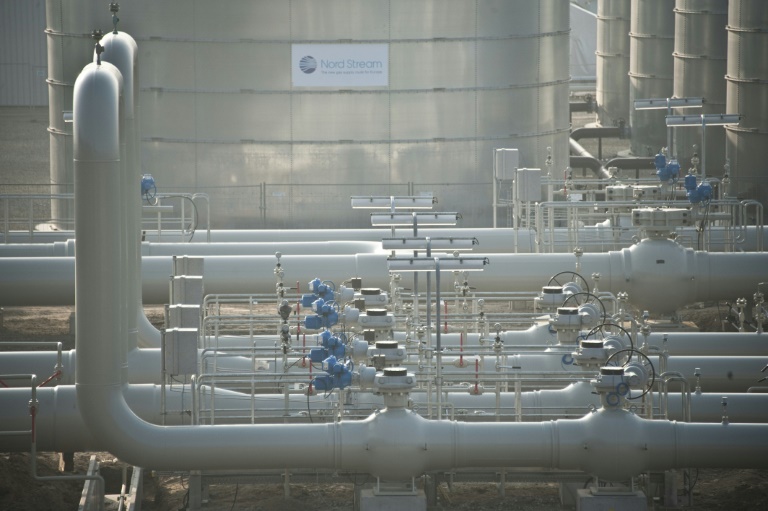
Russian energy giant Gazprom cut supplies to Germany via the Nord Stream pipeline by 60 percent last week, blaming the new limits on delayed repairs.

Germany has dismissed the technical justification provided by Gazprom, instead calling the move a “political decision”. 

Kremlin spokesman Dmitry Peskov said Thursday there was “no double meaning” in the supply decision.

“Our German partners are well aware of the technological servicing cycles of a pipeline,” he said.

“It’s strange to call it politics.”

In recent weeks, Gazprom has stopped deliveries to a number of European countries, including Poland, Bulgaria, Finland and the Netherlands.

Supplies of gas to Europe’s largest economy were “secure”, Habeck said, but action was still required to prepare for the winter ahead.

To mitigate the risks from a supply cut, the government mandated gas storage facilities be filled to 90 percent by the beginning of December.

Currently, the country’s stores stand just under 60 percent full, above the average level of previous years.

In France, the government said Thursday it aimed to fill its natural gas reserves by autumn as it too braces for a drop in supply from Russia.

France will also build a new floating terminal to receive more liquefied natural gas (LNG) supplies by ship, Prime Minister Elisabeth Borne announced.

The terminal is to be positioned off Le Havre on France’s northern coast.

“We can do without Russian gas,” French Energy Transition Minister Agnes Pannier-Runacher said later on BFM Business TV.

“This assumes that the LNG tankers arrive on time and that we can comfortably fill our strategic storage,” she added.

The European Bank for Reconstruction and Development (EBRD) meanwhile said it would lend 300 million euros to Moldova to for gas purchases.

– Supply stoppage –

The German government expects supply to stop between July 11 and July 25 for annual maintenance on the Nord Stream pipeline.

If deliveries do not resume after the service period, Germany could face a shortage of gas as soon as “mid-December”.

Since the outbreak of the war in Ukraine, Germany has managed to reduce the share of its natural gas supplied by Russia from 55 percent to around 35 percent.

The government has found new sources of supply, accelerated plans to import gas in the form of LNG by sea, and put aside 15 billion euros ($15.8 billion) to buy gas to fill storage facilities.

Germany also decided to reactivate mothballed coal-fired power plants to take the burden for electricity generation off gas.

In contrast, the government shrugged off calls to extend the operational lifetime of its nuclear power plants.

Prolonging the use of the final reactors set to be taken off the grid at the end of the year was “not an option”, it said Wednesday.

Germany had to look to see what “energy saving potential” existed, Habeck said Thursday. 

Households could “make a difference” by conserving energy, after Germany launched a campaign to encourage fuel-saving measures, he said, while industry could also make a further contribution.

EU grants candidate status to Ukraine as US ships weapons

European Union leaders granted candidate status Thursday to Ukraine and Moldova in a strong show of support against Russia’s invasion, as the United States said it was sending Kyiv more high-precision rocket systems.

The West’s latest attempts to rally behind Ukraine came as Russia closed in on key cities in the country’s embattled east and prompted growing global concerns with restrictions in gas and grain exports.

Ukraine’s President Volodymyr Zelensky hailed the EU decision on his country and Moldova as “a unique and historic moment”, although the two former Soviet republics face a long path before joining the bloc and its benefits of free movement and a common market.

“Ukraine’s future is within the EU,” said Zelensky, who had been working the phones for weeks.

“We will win, rebuild, enter the EU and then will rest. Or probably we will not rest.”

French President Emmanuel Macron said that the decision by EU leaders sent a “very strong signal” to Russia that Europeans support the pro-Western aspirations of Ukraine.

President Vladimir Putin had declared Ukraine to be part of Moscow’s sphere and insisted he was acting due to attempts to bring the country into NATO, the Western alliance that comes with security guarantees.

European powers before the invasion had distanced themselves from US support for Ukraine’s NATO aspirations and EU membership is at least years away.

Ukraine and Moldova will have to go through protracted negotiations and the European Union has laid out steps that Kyiv must take even before that, including bolstering the rule of law and fighting corruption.

– Weapons to fight Russian gains –

The White House announced that it was sending another $450 million in fresh weapons to Ukraine including new High Mobility Artillery Rocket systems, which have been at the top of Kyiv’s wish list.

The so-called Himars system can simultaneously launch multiple precision missiles at an extended range.

An initial four units have already been delivered, with Ukrainian soldiers being trained to operate the equipment, after President Joe Biden’s administration said Kyiv had offered assurances it would not fire into Russia.

Ukraine’s needs have been increasingly urgent as Russia — which failed to take Kyiv immediately after invading on February 24 — advances in the east, tightening its grip on strategically important Severodonetsk and its twin city Lysychansk across the Donets river.

Taking the cities would give Moscow control of the whole of Lugansk, allowing Russia to press further into the Donbas region and potentially farther west.

Ukraine acknowledged Thursday that it had lost control of two areas from where it was defending the cities, with Russian forces now closer to encircling the industrial hubs.

Britain’s defence ministry said some Ukrainian units had probably been forced to withdraw “to avoid being encircled”. 

“Russia’s improved performance in this sector is likely a result of recent unit reinforcement and heavy concentration of fire,” it said in its latest intelligence update.

A representative of pro-Russian separatists in Ukraine told AFP the resistance of Ukrainian forces trying to defend Lysychansk and Severodonetsk was “pointless and futile.”

“At the rate our soldiers are going, very soon the whole territory of the Lugansk People’s Republic will be liberated,” said Andrei Marochko, a spokesman for the army of Lugansk.

The Russian army also said Thursday that its bombings in the southern city of Mykolaiv had destroyed 49 fuel storage tanks and three tank repair depots, after strikes killed several Ukrainian troops Wednesday.

– ‘Only grannies left’ –

The northeastern city of Kharkiv near the Russian border was nearly empty on Wednesday, AFP reporters said, a day after shelling by Moscow’s forces killed five people there.

“Last night the building next to mine collapsed from the bombardment while I was sleeping,” said Leyla Shoydhry, a young woman in a park near the opera house.

Roman Pohuliay, a 19-year-old in a pink sweatshirt, said most residents had fled the city.

“Only the grannies are left,” he said.

In the central city of Zaporizhzhia, women were training to use Kalashnikov assault rifles in urban combat as Russian forces edged nearer.

“When you can do something, it’s not so scary to take a machine gun in your hands,” said Ulyana Kiyashko, 29, after moving through an improvised combat zone in a basement.

– ‘Weaponising’ grain and gas –

Western officials have also accused Russia of weaponising its key exports of gas as well as grain from Ukraine, contributing to global inflation and rising hunger in the world.

“We are very clear that this grain crisis is urgent, that it needs to be solved within the next month,” British Foreign Secretary Liz Truss said on a visit to Turkey.

“Otherwise we could see devastating consequences,” she said.

Ukraine’s Foreign Minister Dmytro Kuleba urged African nations to pressure Russia for a safe route for grain.

“African capitals matter and they do influence Russia’s position,” he told African journalists.

A US official warned of new retaliatory measures against Russia at the Group of Seven summit being attended by Biden in Germany starting Sunday.

Germany ratcheted up an emergency gas plan to its second alert level, just one short of the maximum that could require rationing in Europe’s largest economy, after Russia slashed its supplies.

“Gas is now a scarce commodity,” Economy Minister Robert Habeck told reporters, urging households to cut back on use. Demand for gas is lower in the summer but shortages could cause heating shortages in the winter.

France is aiming to have its gas storage reserves at full capacity by early autumn, and will build a new floating methane terminal to get more energy supplies by sea, Prime Minister Elisabeth Borne said.

A Kremlin spokesman reiterated its claim that the supply cuts were due to maintenance and that necessary equipment from abroad had not arrived.

burs-sct/dw

Chile workers end strike at world's largest copper producer

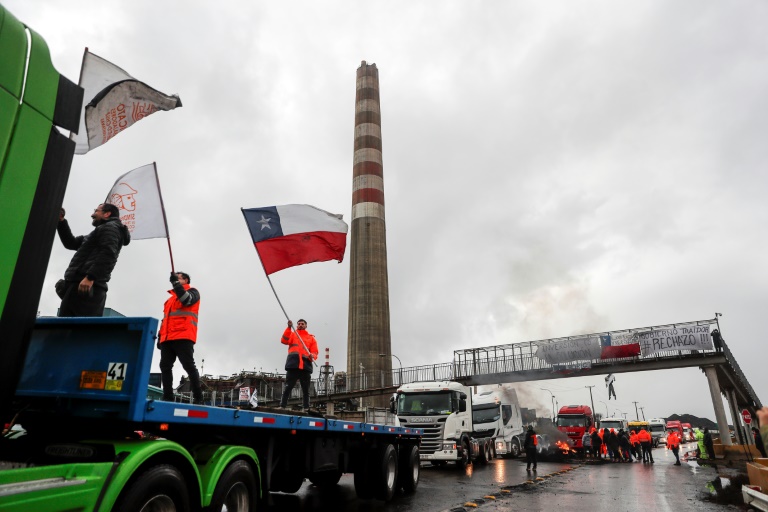
Workers at Chile’s state mining company Codelco, the world’s largest copper producer, called off an open-ended strike Thursday after reaching agreement with the government.

The strike by some 40,000 mine workers to protest the closure of a foundry in one of Chile’s most polluted regions, was ended after one day, the FTC labor federation announced.

The FTC had agreed with the company to work jointly towards closing the Ventanas foundry, over a period of time, in an area dubbed “Chile’s Chernobyl.”

Codelco announced it would close the Ventanas foundry after an incident on June 9 when 115 people, mostly school children, suffered sulfur dioxide poisoning released by heavy industry in the area around Quintero and Puchuncavi, home to some 50,000 people.

It was the second such incident in just three days.

Greenpeace described the area around the Ventanas plant as “Chile’s Chernobyl” following a serious incident in 2018 when around 600 people  received medical treatment for symptoms such as vomiting blood, headaches, dizziness and paralysis of the extremities.

Unions, however, described the announced closure as “arbitrary” and demanded the government spend money instead on bringing the plant up to environmental standards.

Pollution accumulated in the area of Quintero and Puchuncavi after the government decided in 1958 to convert it into an industrial center that now hosts four coal-fired power stations and oil and copper refineries.

Close Bitnami banner
Bitnami